Blue Cheese Scrambled Eggs

title 1
Blue Cheese Scrambled Eggs
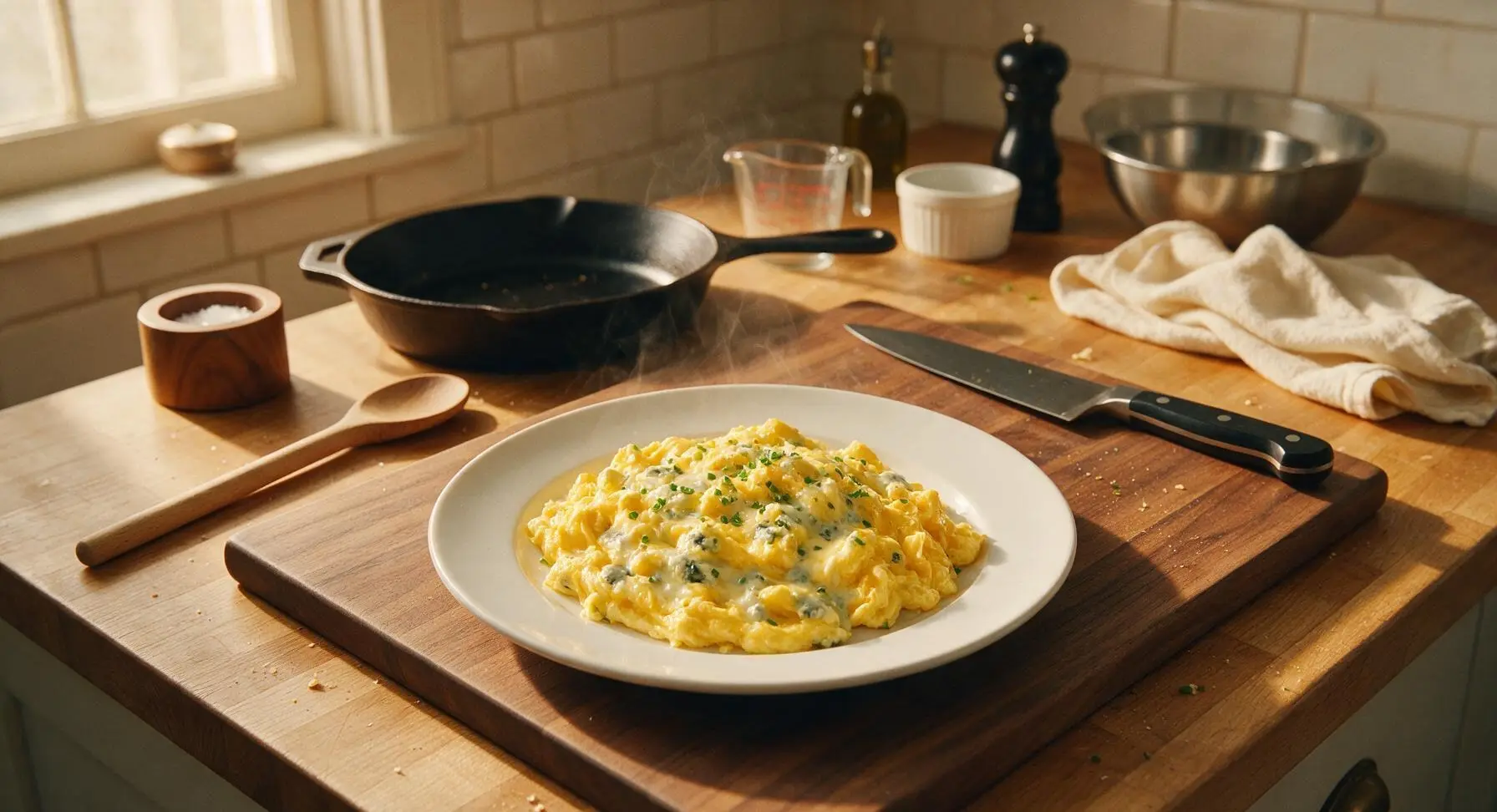
⏱️ cook time 5 minutes
🍽️ servings 2
⚡ Difficulty easy

intro

Silky, low-and-slow soft scrambled eggs laced with tangy, melted blue cheese, finished with bright chives for a rich, indulgent quick meal ready in 10 minutes.

Ingredients
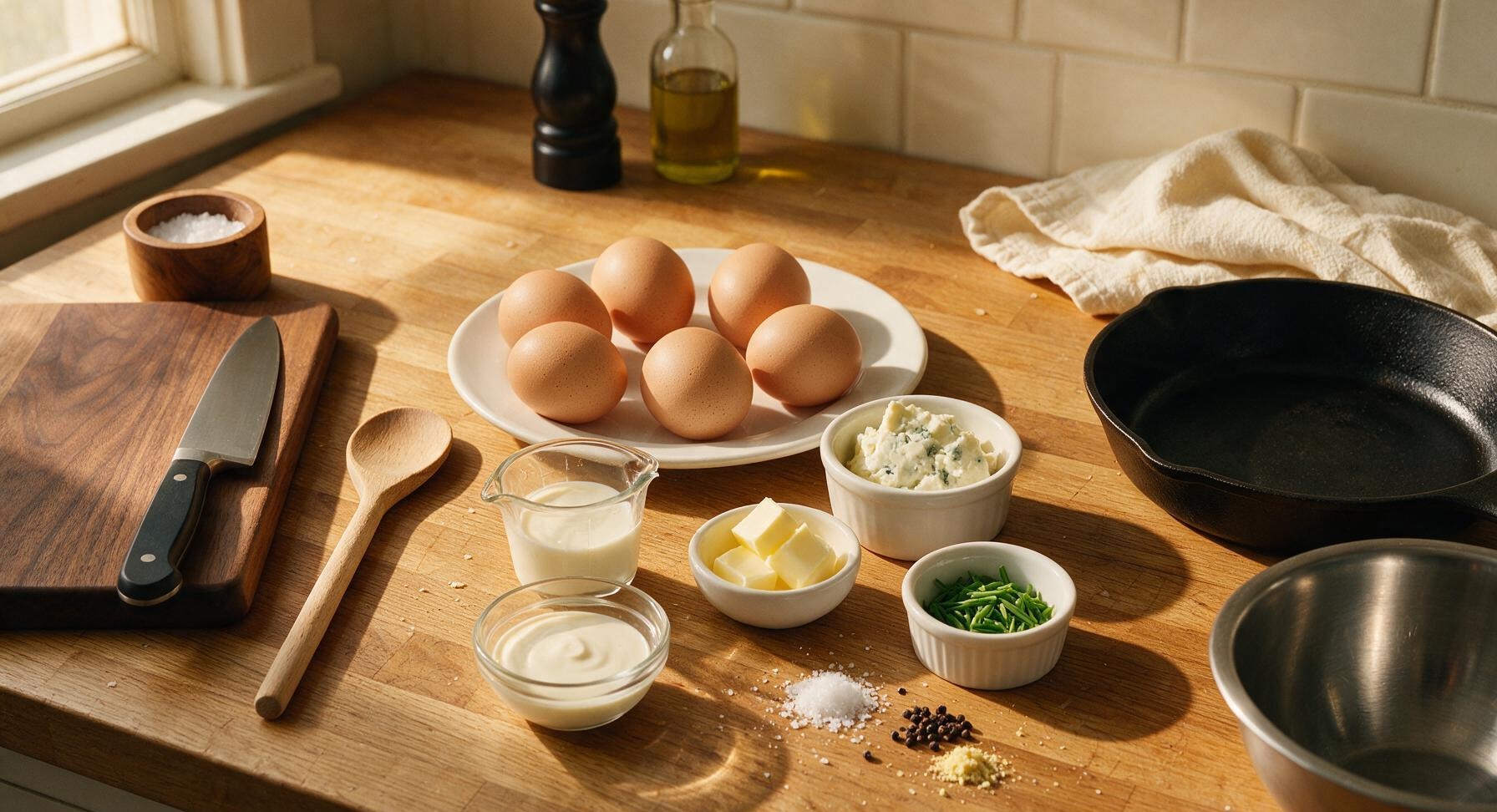
Large grade A eggs 6 (about 300g)
Creamy blue cheese (Gorgonzola dolce or mild Roquefort) 1/3 cup (50g)
Unsalted butter 2 tbsp (28g)
Heavy cream 2 tbsp (30ml)
Fresh chives 1 tbsp (3g, snipped)
Kosher salt 1/4 tsp
Freshly ground black pepper 1/8 tsp
Freshly grated nutmeg (optional) 1 pinch (<1/16 tsp)

Steps

1

Prep All Ingredients

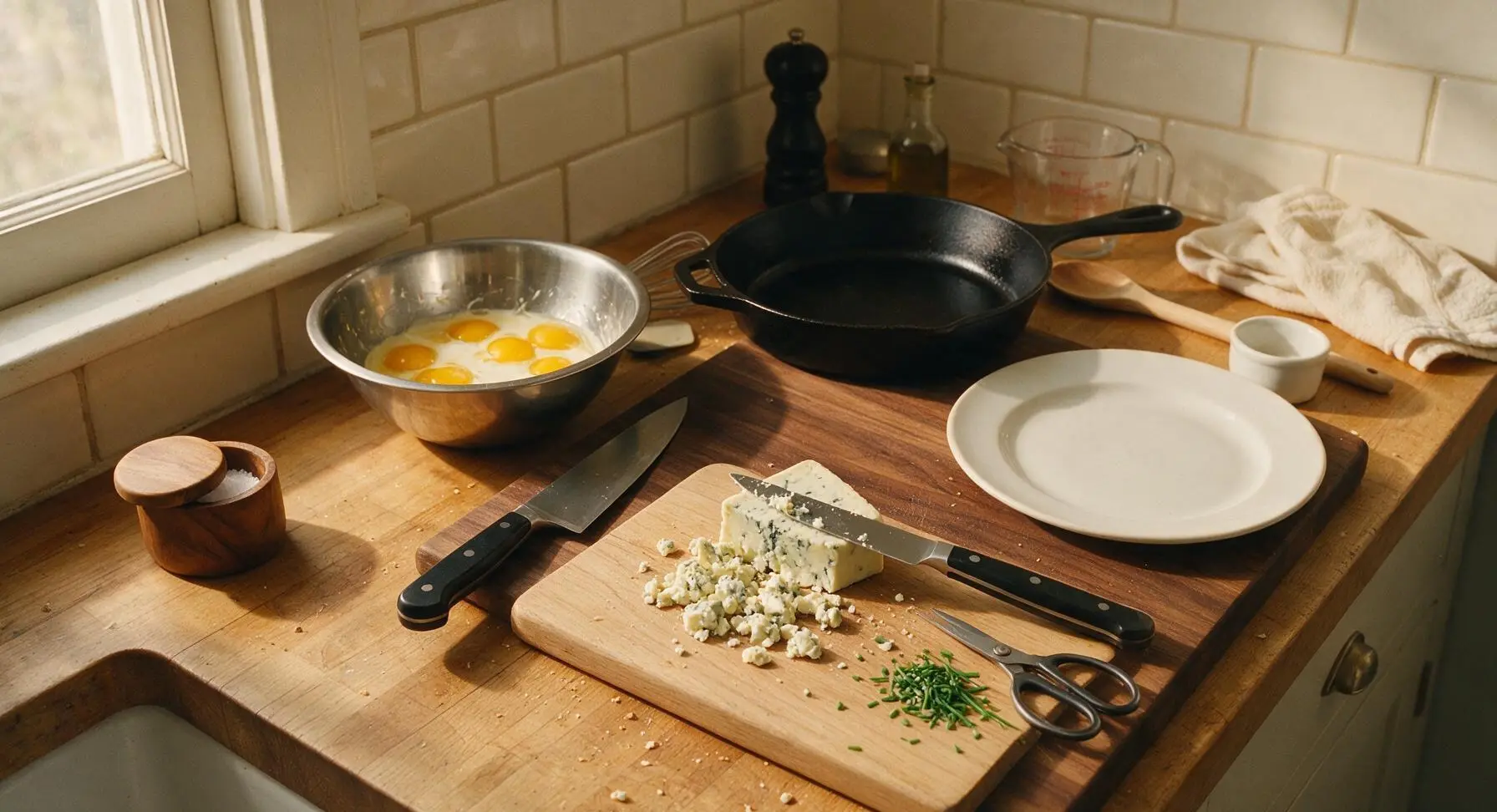
First, crumble the blue cheese into rough 1cm pieces using the cheese knife on the beech cutting board, setting half of the crumbles aside in the small white ramekin for garnish. Snip the chives into 3mm pieces with the kitchen shears, discarding any tough woody ends. Crack all 6 eggs into the glass mixing bowl, add the heavy cream, kosher salt, black pepper, and optional pinch of freshly grated nutmeg. Do not add blue cheese to the egg mixture at this stage.
Step 1
step1:Prep All Ingredients
2

Whisk Egg Mixture

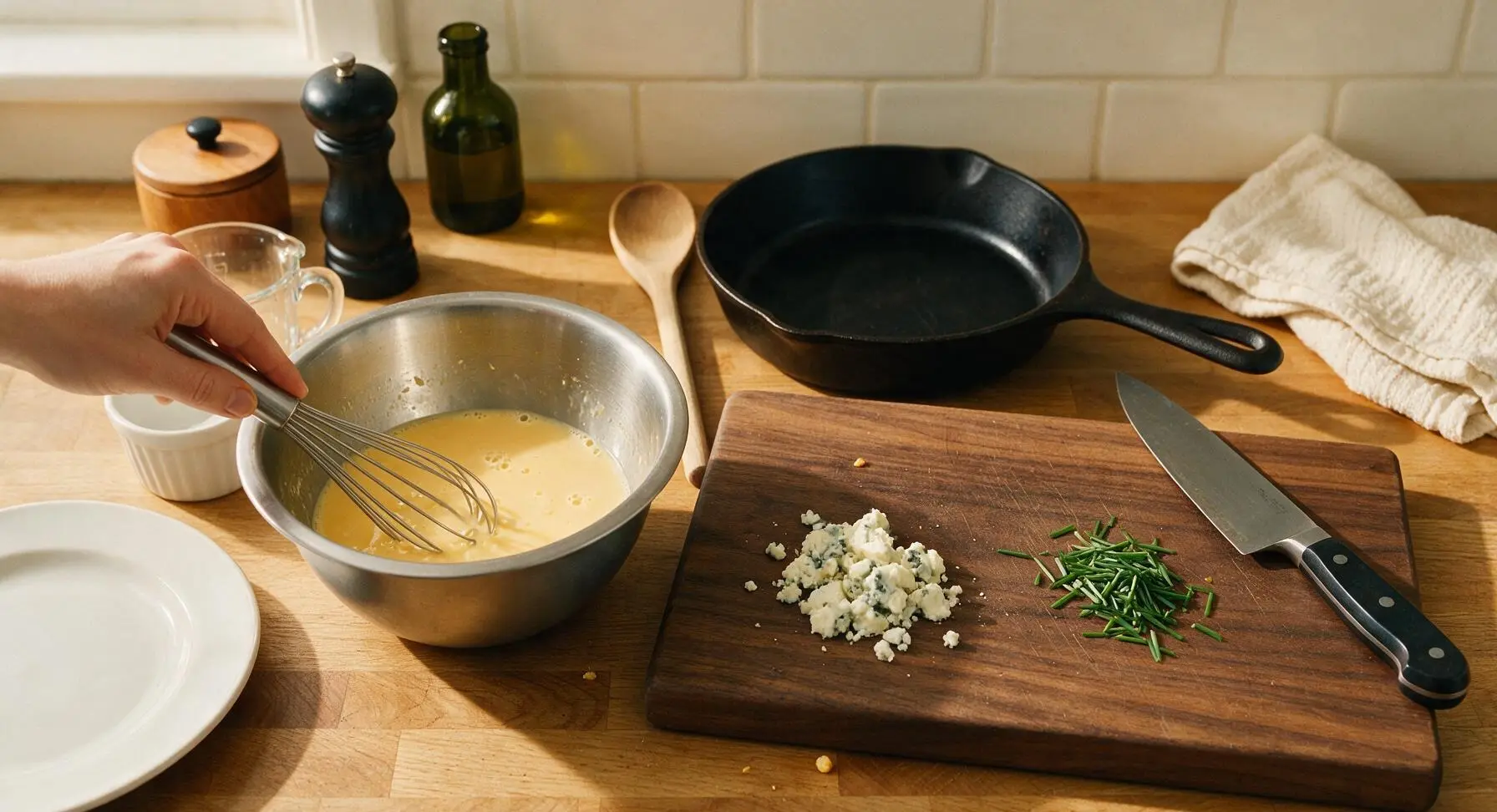
Use the stainless steel wire whisk to beat the egg mixture for 20-30 seconds, just until the yolks and whites are fully combined into a uniform pale golden liquid, with a few small bubbles forming on the surface. Do not over-whisk to a frothy, airy consistency, as this will produce dry, fluffy rather than silky, dense curds.
Step 2
step2:Whisk Egg Mixture
3

Melt Butter in Pan

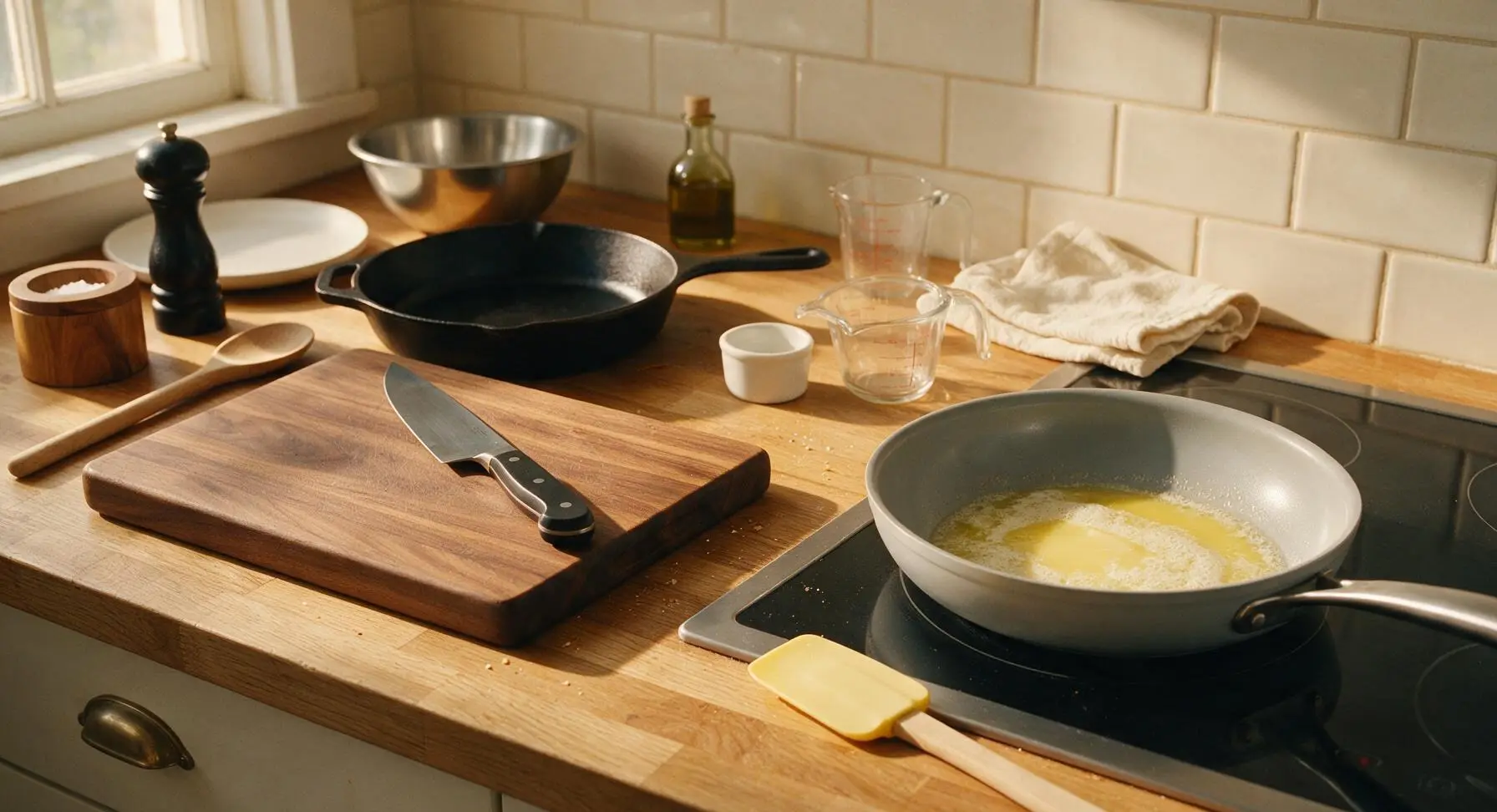
Retrieve the 20cm non-stick skillet and place it on the integrated induction burner set to low heat (120C / 250F). Add the 2 tablespoons of unsalted butter to the pan, and let it melt slowly over 1-2 minutes, swirling the pan occasionally, until the butter is fully liquid and foamy but not golden or browned. If the butter starts to brown, reduce the heat immediately to avoid a nutty, burnt flavor that clashes with the blue cheese.
Step 3
step3:Melt Butter in Pan
4

Cook Eggs Gently

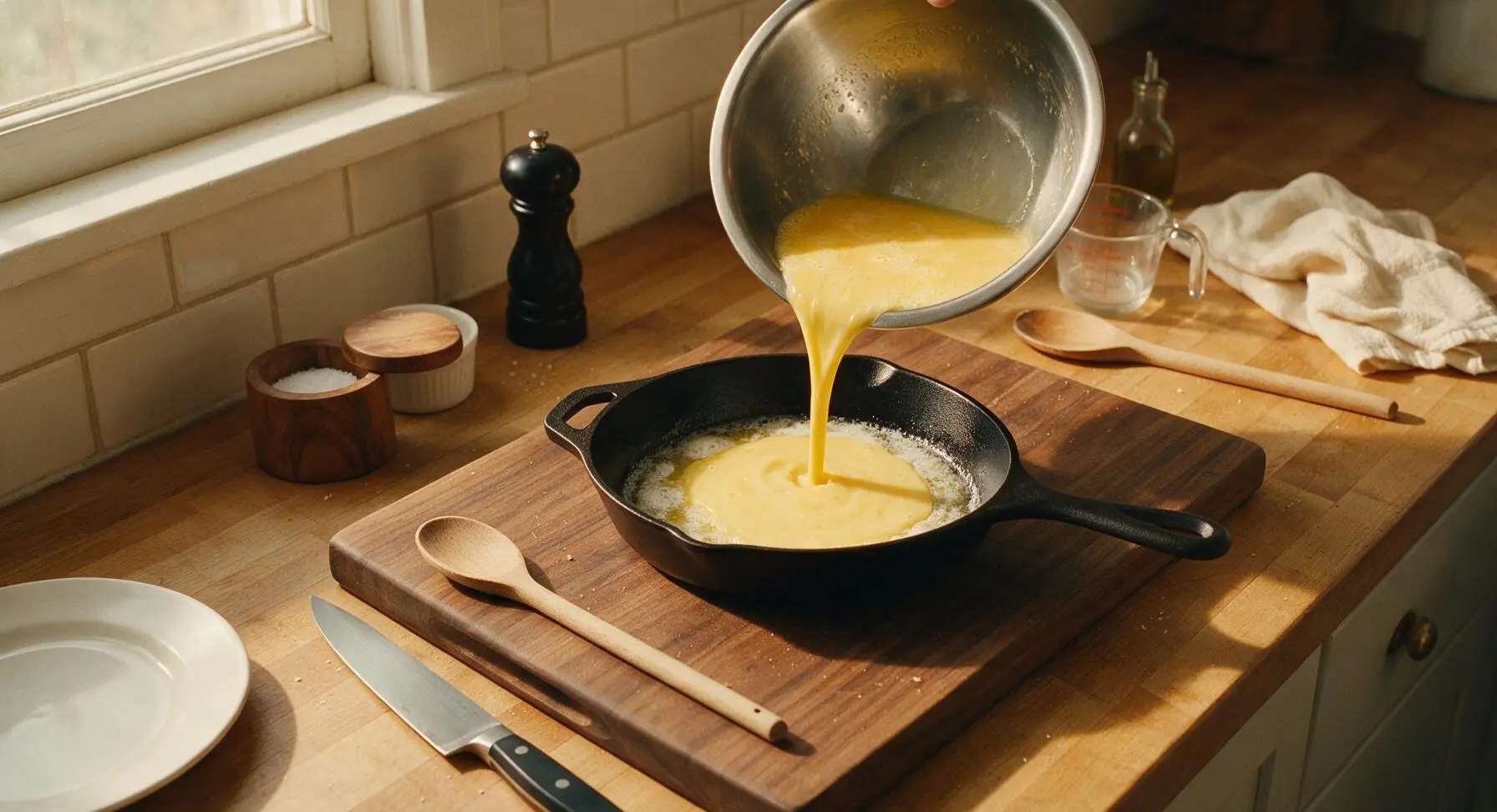
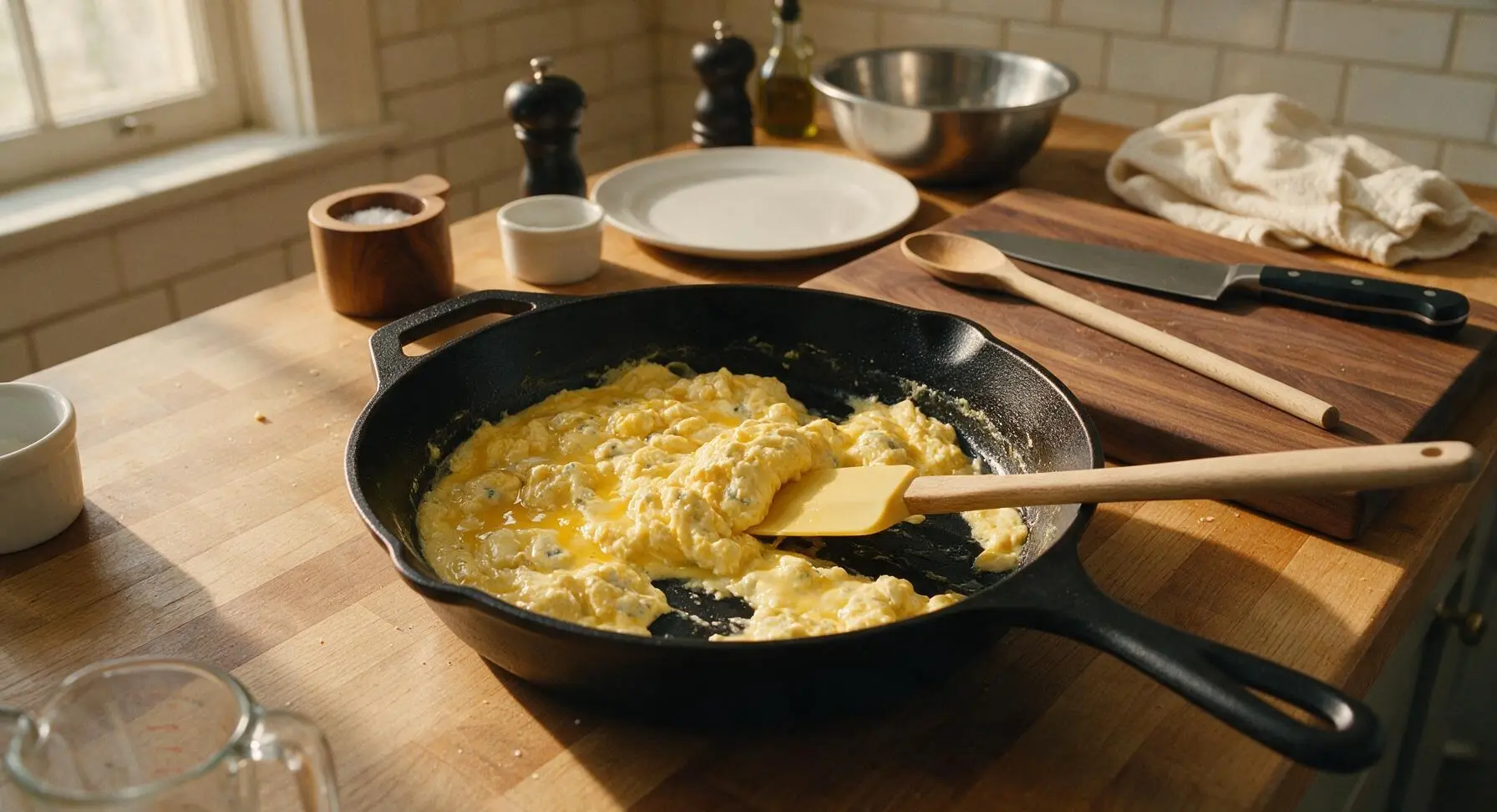
Pour the whisked egg mixture into the skillet with the melted butter. Let the eggs sit undisturbed for 15-20 seconds, until the very edges start to set into soft, pale curds. Use the pale yellow silicone spatula to gently push the set curds from the edge of the pan toward the center, tilting the pan to let uncooked, runny egg flow into the empty spaces left by the moved curds. Repeat this slow push-and-tilt motion every 10-15 seconds for 3 minutes total, keeping the heat on low the entire time.
Step 4
step4:Cook Eggs Gently
Step 4
step4:Cook Eggs Gently
5

Fold in Blue Cheese

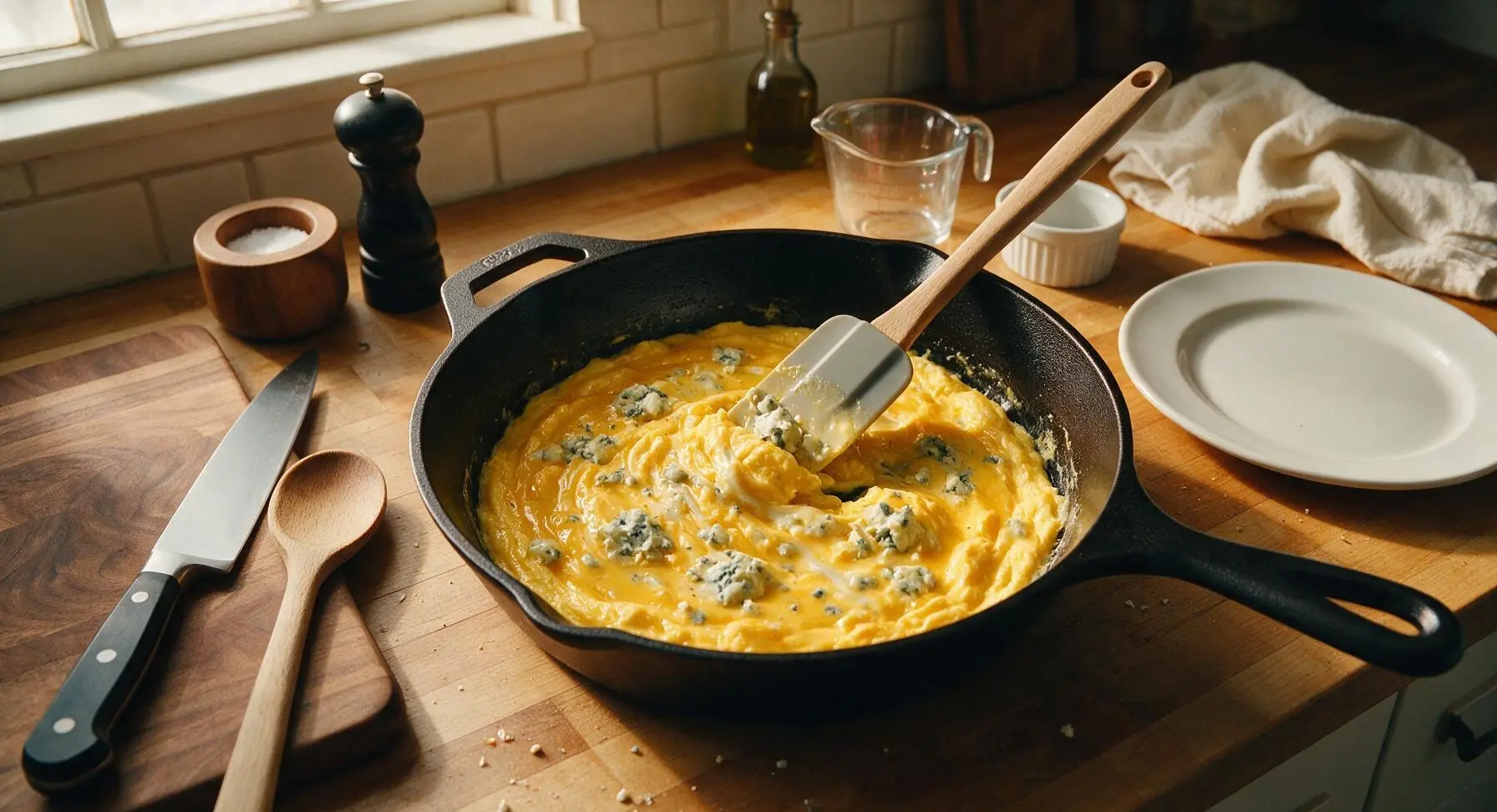
When the eggs are 70% set (still slightly runny in spots, with soft, moist curds that hold their shape but jiggle when the pan is tilted), add the non-reserved half of the crumbled blue cheese to the pan. Gently fold the cheese into the eggs with the silicone spatula for 30 seconds, letting the residual heat of the eggs melt the cheese slightly. Do not over-stir, as this will break down the soft curds into small, grainy pieces.
Step 5
step5:Fold in Blue Cheese
6

Finish to Soft Set

Continue cooking the eggs for 1 final minute, repeating the gentle push-and-tilt motion, until the eggs are 90% set: soft, moist, and slightly underdone in the center, with no pools of runny liquid left. Turn off the heat immediately — residual pan heat will finish cooking the eggs in 30 seconds, and waiting for fully set eggs in the pan will result in rubbery, dry curds.
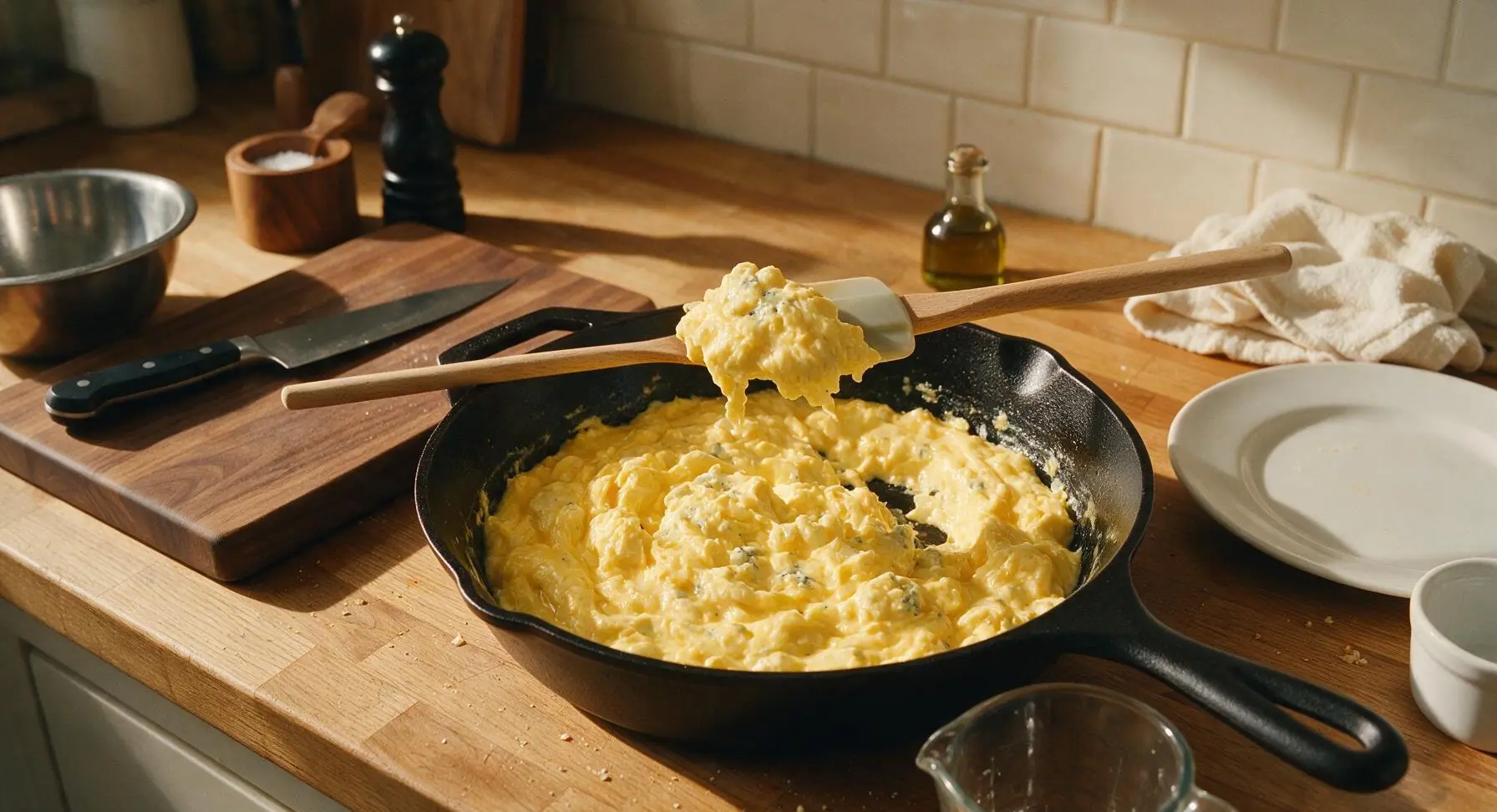
Step 6
step6:Finish to Soft Set
7

Plate and Garnish

Transfer the finished scrambled eggs to the center of the matte cream ceramic breakfast plate, mounding them gently into a soft, loose pile rather than pressing them flat. Top the eggs with the reserved crumbled blue cheese, the remaining snipped chives, and a light twist of fresh black pepper from the grinder. Serve immediately, as scrambled eggs continue to firm up as they cool.
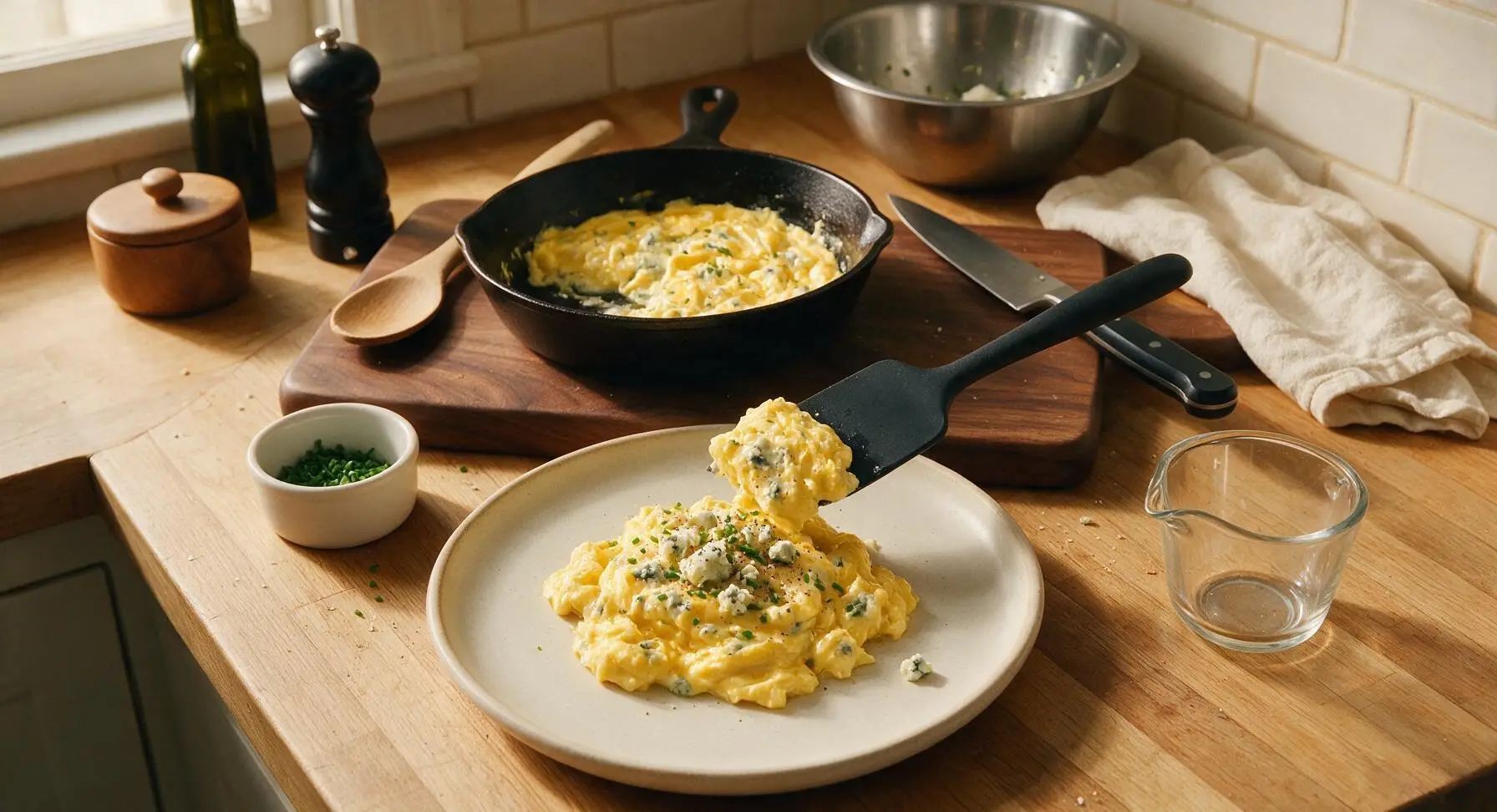
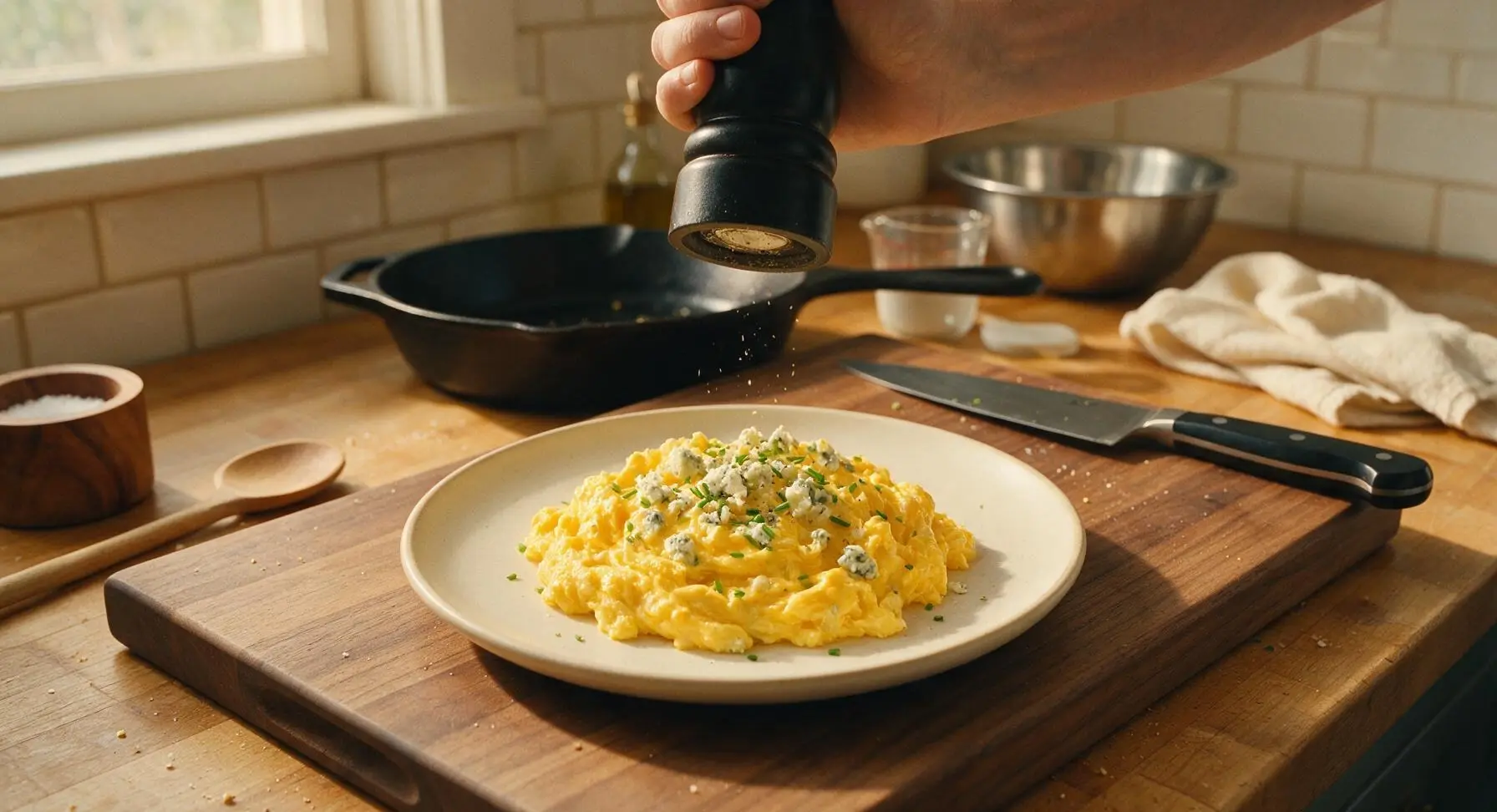
Step 7
step7:Plate and Garnish
Step 7
step7:Plate and Garnish

Tips

1.Keep heat consistently low: High heat causes eggs to seize into rubbery, dry curds in seconds, and will make blue cheese separate and release bitter, oily compounds instead of melting into a creamy coating. Low heat ensures soft, velvety curds every time.
2.Reserve half the blue cheese for garnish: Adding all cheese during cooking can mellow the bright tang too much, and the cold, firm crumbles on top add a pleasant textural contrast against the warm, creamy eggs. It also creates a more visually appealing dish with visible blue cheese pieces.
3.Pull eggs off heat before they look fully done: Eggs retain heat and continue cooking for 30-60 seconds after being removed from the pan (called carryover cooking). If eggs look perfectly set in the pan, they will be overcooked and dry by the time they reach the table.
✨ You May Also Like

Breakfast
🍜 United States

Crisp-edged, fluffy lard griddle cakes are a nostalgic homestyle staple, with rich savoriness from rendered lard, perfect topped with maple syrup or savory gravy.

⏱️ 25 minuteBreakfast ★ 4.8
Breakfast
🍜 United States

Flaky, buttery homemade buttermilk biscuits smothered in creamy, peppery pork sausage gravy: a beloved, hearty Southern American comfort food classic.

⏱️ 35 minuteBreakfast ★ 4.8
Breakfast
🍜 United States

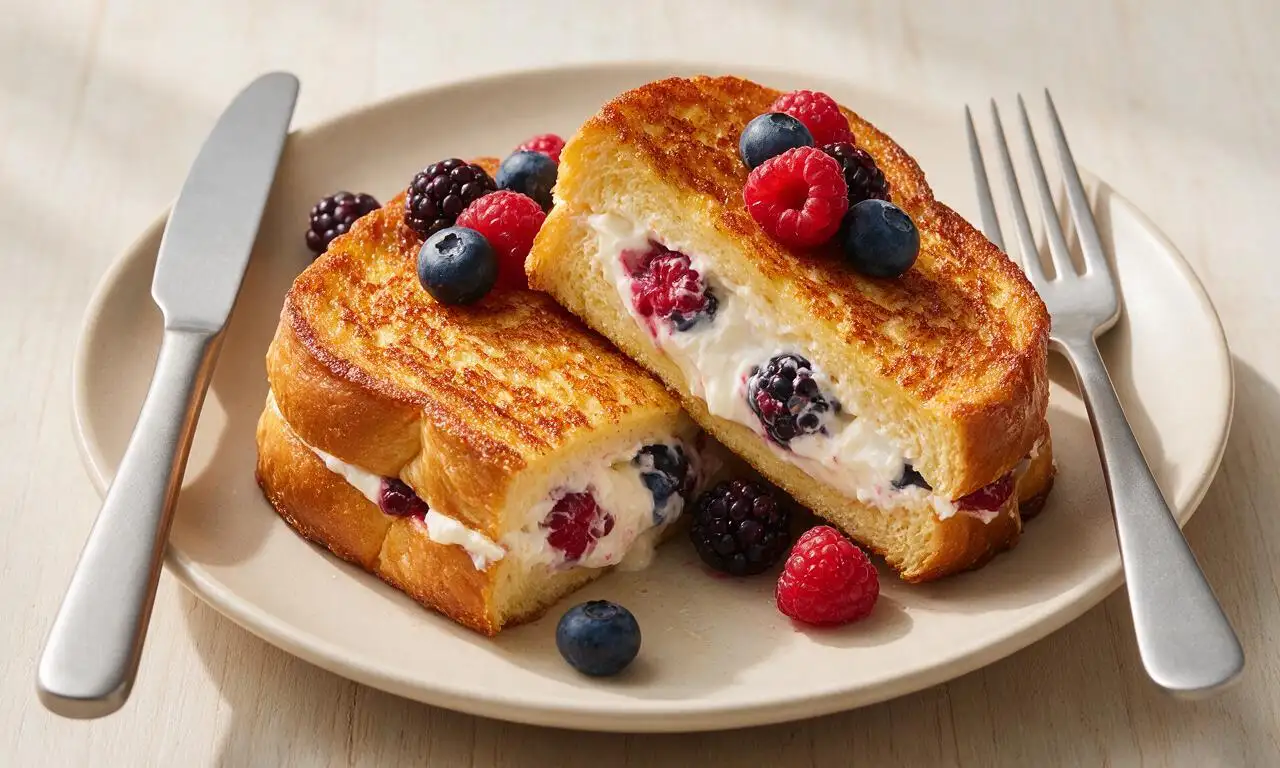
Golden, custardy brioche stuffed with sweet cream cheese and fresh berries, pan-fried to crisp perfection. An indulgent, cozy breakfast perfect for slow weekend mornings.

⏱️ 30 minuteBreakfast ★ 4.7
Breakfast
🍜 United States

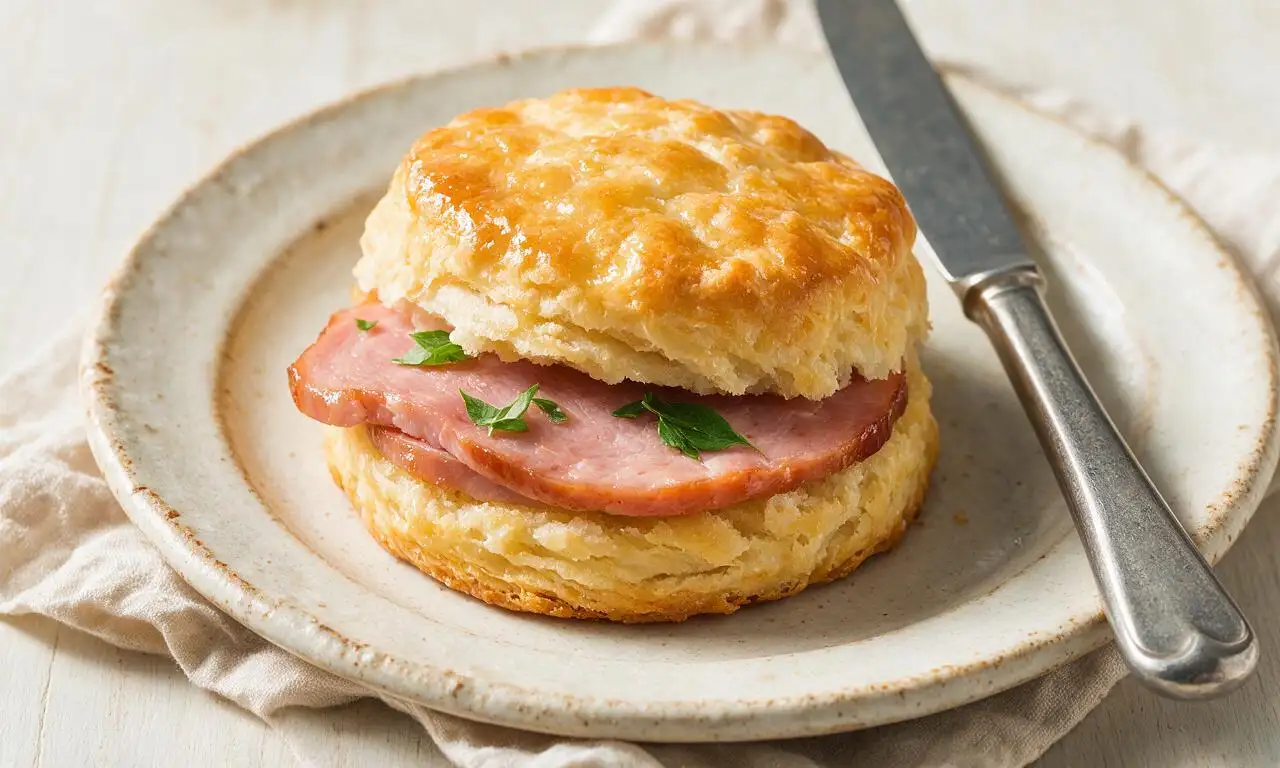
Flaky, buttery Southern-style biscuits stuffed with savory salty country ham, a portable, satisfying classic perfect for casual on-the-go meals.

⏱️ 25 minuteBreakfast ★ 4.8
Breakfast
🍜 United States

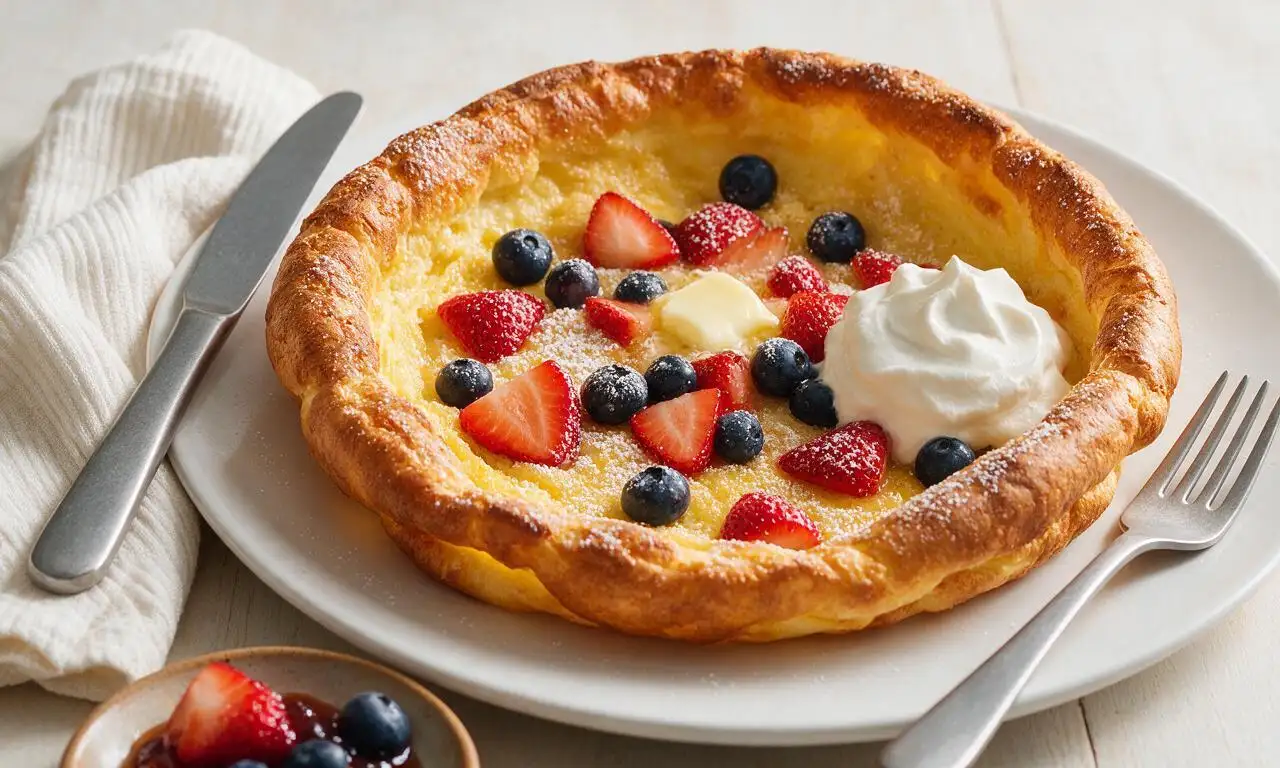
Iconic puffy baked pancake popularized in Seattle, with crisp golden edges and soft custardy center, served warm with classic sweet toppings.

⏱️ 35 minuteBreakfast ★ 4.6
Breakfast
🍜 United States

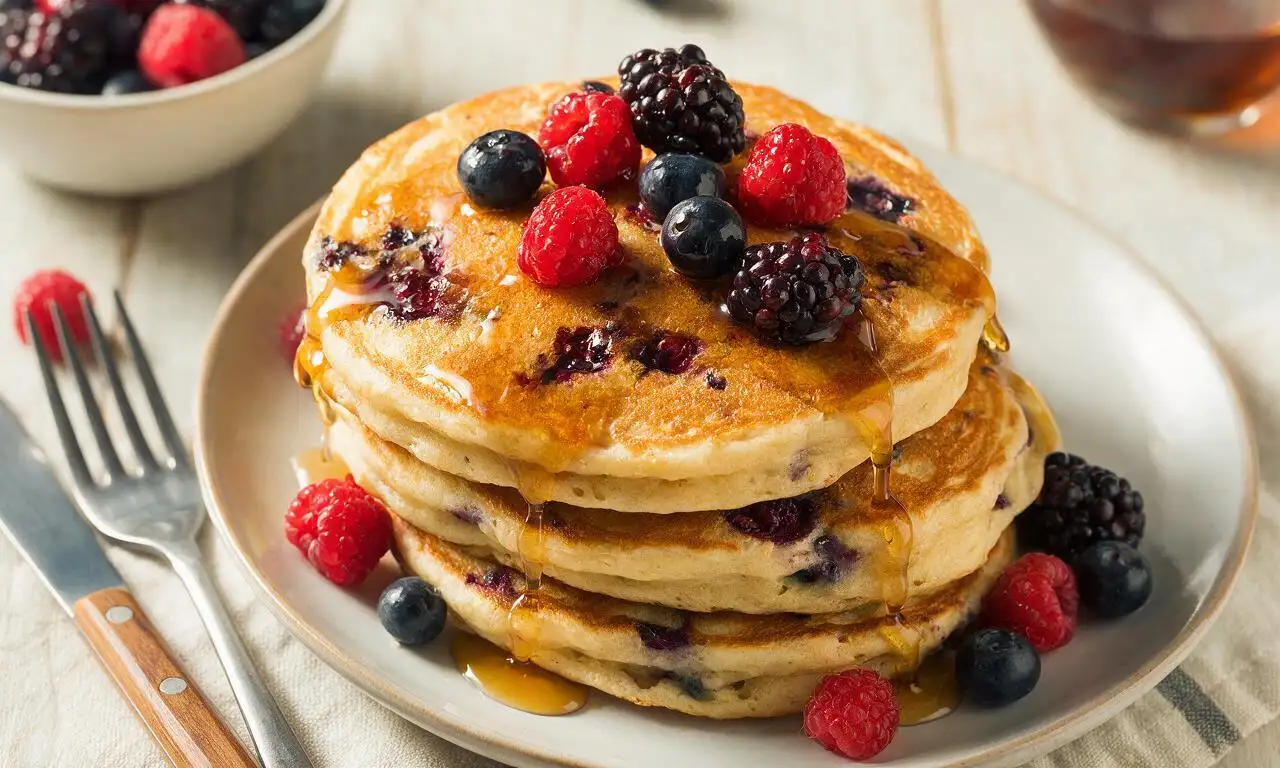
Fluffy, golden pancakes studded with juicy peak-summer mixed berries, drizzled with maple syrup for a bright, comforting, crowd-pleasing family breakfast.

⏱️ 25 minuteBreakfast ★ 4.7

Blue Cheese Scrambled Eggs:Frequently Asked Questions

1.Why is low-and-slow cooking non-negotiable for this blue cheese scrambled eggs recipe? ▾
High heat turns eggs rubbery and grainy, and can cause blue cheese to seize up and turn bitter instead of melting smoothly. Cooking over medium-low, stirring gently, builds soft, velvety curds, lets the cheese melt evenly into every bite, and takes just 8 to 10 minutes total with zero burnt, browned edges.
2.Can I use a sharp, crumbly blue cheese instead of Gorgonzola dolce or mild Roquefort? ▾
You can, but expect a much punchier, saltier final flavor. Crumbly, sharp blue cheeses like aged Roquefort or domestic blue won’t melt as silkily into the eggs, either. If that’s all you have, cut the amount by 25% and crumble it extra fine to help it incorporate more evenly as the eggs cook.
3.Do I really need heavy cream, or can I swap it for milk or a dairy alternative? ▾
Heavy cream adds rich, lush fat that keeps eggs tender and balances the tang of the blue cheese. Whole milk works in a pinch, but will produce slightly less silky eggs. If using a plant-based alternative, pick unsweetened, full-fat oat creamer for the closest texture; skip skim milk or watery almond milk, which makes eggs watery and dilutes flavor.
4.How do I keep blue cheese from clumping up in the eggs? ▾
Crumble your blue cheese into tiny, pea-sized pieces before you start cooking, and add it halfway through the egg cooking process instead of right at the start or end. Stir gently as curds form, so the cheese melts gradually into the eggs instead of sinking to the pan bottom and forming hard, concentrated clumps.
5.Can I make these eggs ahead of time for meal prep? ▾
Soft scrambled eggs, especially with blue cheese, don’t hold up well to long storage or reheating—they turn rubbery, and the cheese can separate and turn greasy. This recipe comes together in 10 minutes total, so it’s best made fresh right before serving. If you must prep ahead, undercook eggs slightly, chill fast, and reheat very gently in 10-second microwave bursts.
6.What’s the best pan to use for perfectly silky scrambled eggs? ▾
Reach for a heavy-bottomed nonstick skillet, 8 to 10 inches wide, for the most consistent results. The heavy base distributes heat evenly so you don’t get hot spots that burn eggs, and the nonstick surface lets you stir soft curds easily without sticking, even with the small amount of unsalted butter used in this recipe.
7.I don’t have fresh chives—what’s a good substitute? ▾
Fresh chives add a bright, mild onion kick that cuts through the rich cheese and eggs, but if you don’t have them, swap in finely sliced green onion tops (the light green part, not the tough white bulb) or a sprinkle of finely chopped fresh parsley. Avoid dried chives, which have a flat, dusty flavor that lacks that bright finishing pop.
8.How many servings does this recipe make? ▾
This recipe works perfectly for 2 servings when made with 4 to 6 large grade A eggs, the standard batch size for a quick breakfast or light brunch. If you’re serving it as part of a bigger spread with toast, bacon, or fruit, you can stretch 6 eggs to 3 servings, since the blue cheese adds extra richness that keeps you full longer.
9.Should I whisk the eggs really hard before adding them to the pan? ▾
Whisk just until the yolks and whites are fully combined, with no streaks of clear white left—you don’t need to whip them until they’re frothy. Over-whisking adds too much air, which can make eggs turn fluffy but dry, instead of the dense, silky, melt-in-your-mouth texture that pairs so perfectly with creamy blue cheese.
10.Can I add extra mix-ins like bacon or caramelized onions to these eggs? ▾
Absolutely! Crispy, crumbled bacon, sautéed mushrooms, or slow-caramelized onions all pair beautifully with tangy blue cheese. Just make sure any add-ins are fully cooked before you stir them into the eggs halfway through cooking, so you don’t add excess water that makes soft scrambled eggs watery or breaks their silky texture.
11.Why does this recipe call for unsalted butter instead of salted butter? ▾
Blue cheese is naturally quite salty, so using unsalted butter lets you control the total sodium level of the dish so it doesn’t end up over-salted. If all you have is salted butter, skip adding any extra salt to the eggs before cooking, and taste right at the end—you’ll almost always find you don’t need extra salt at all.
12.How do I know when the eggs are done so I don’t overcook them? ▾
Pull the pan off the heat when the eggs form soft, moist curds that are just barely set, with no runny liquid left in the pan. Residual heat in the pan and eggs will keep cooking the curds for a minute after you take it off heat, so waiting until they look fully done in the pan will leave you with dry, overcooked eggs by serving.
13.Is there a way to make this recipe lower in fat without ruining the texture? ▾
You can cut the heavy cream by half and swap in half-and-half to trim some fat, but don’t skip it entirely, and don’t reduce the butter too much—those fats keep eggs tender and balance the blue cheese’s tang. You can also use 25% less blue cheese, since its bold, tangy flavor comes through even with a smaller quantity.
14.What should I serve with blue cheese scrambled eggs for a complete meal? ▾
These rich, tangy eggs pair perfectly with crusty sourdough toast or a buttery croissant to soak up every bite, plus a side of lightly dressed arugula to cut through the richness. For a heartier brunch, serve them alongside crispy bacon or roasted cherry tomatoes, and skip heavy, cheesy sides that make the meal feel overly rich.
15.Can I use liquid egg substitutes instead of whole grade A eggs for this recipe? ▾
Most liquid egg substitutes work for this recipe, but note that they often cook a little faster than fresh whole eggs, so turn the heat down a touch and keep a close eye on curds to avoid overcooking. You may also want an extra pinch of black pepper to amp up flavor, since egg substitutes can taste slightly flat next to bold blue cheese.
16.Why does my blue cheese sometimes taste bitter in the finished eggs? ▾
That almost always happens when the cheese is exposed to too-high heat, or added too early in the cooking process. Blue cheese has delicate mold cultures that turn bitter and acrid when burned or overheated, so add it halfway through low-and-slow cooking, and never crank the heat to high to rush the process along.

Comments (7)

2 days ago

OMG these blue cheese scrambled eggs are a total game changer! I threw these together for my family’s Saturday brunch and even my picky 7 year old asked for seconds. The tang of the blue cheese cuts through the richness of the eggs so perfectly, I can’t believe I never thought to add it before. 10/10, will be making this every weekend from now on!

yesterday

Wait did you crumble the blue cheese right in while the eggs were cooking or top it after? I’ve tried adding cheese too early before and it got all grainy!

yesterday

So glad your family loved them, Molly! @Jake T. I recommend crumbling the cheese in during the last 30 seconds of cooking, off the heat, to keep that creamy, tangy texture without getting grainy. Enjoy!

1 week ago

Super easy 5 minute recipe that saved my busy weekday breakfast meal prep! I make a batch of these on Sunday nights, portion them out, and grab one on my way out the door to work. The blue cheese adds so much flavor I don’t even need to add salt or hot sauce, which is a huge win for me. Only note: I used a milder gorgonzola once when I was out of regular blue cheese and it was still chef’s kiss.

5 days ago

Wait how do these reheat? I’ve had scrambled eggs get rubbery when I microwave them for meal prep before, would love to give this a shot!

3 days ago

Great tip about the gorgonzola swap, Brett! For anyone reheating, cover the portion with a damp paper towel and microwave in 20 second bursts, stirring in between, to keep the eggs fluffy instead of rubbery!

3 days ago

Made these for a potluck brunch last weekend and everyone was begging for the recipe! I served them with crispy bacon and toasted sourdough, and the combo was unreal. The blue cheese is strong enough that you don’t need a ton, so even people who think they don’t like blue cheese went back for more. SO good.

2 days ago

Love that these were a potluck hit! Serving them with sourdough and bacon is such a perfect call, that salty crunch pairs so well with the creamy eggs and tangy cheese.

2 hours ago

Took me all of 6 minutes total to whip these up for my wife and I this morning, super straightforward even for someone who burns toast half the time (oops). I added a sprinkle of chives on top because we had some in the fridge, and it paired amazingly. Only reason it’s not a 5 is I accidentally overcooked the eggs a tiny bit, totally my bad not the recipe’s fault!

30 minutes ago

So glad you two enjoyed them, Mike! The chive addition sounds delicious, I’ll have to add that as a serving suggestion next time I update the recipe. Pro tip for next time: pull the eggs off the heat when they’re still slightly runny, they’ll keep cooking for a minute from residual heat so you won’t overcook them!

yesterday

I was skeptical at first because blue cheese feels like such a fancy add-in for basic scrambled eggs, but wow this is now my go-to weekend breakfast. I made mine with a little drizzle of hot honey on top after seeing someone mention that hack online and it was life changing. Sweet, salty, tangy, chef’s kiss.

2 hours ago

OH the hot honey drizzle is genius! I put hot honey on everything but never thought to pair it with blue cheese eggs, trying that tomorrow morning for sure.

5 minutes ago

Quick, easy, packed with flavor? Sign me up. I ate these for dinner last night when I was too tired to cook a whole meal, threw a side of frozen hash browns in the air fryer and called it a night. Will definitely be keeping blue cheese in the fridge for late night egg runs from now on.

2 weeks ago

Made these while we were camping last weekend! Cooked ‘em up in a cast iron skillet over the campfire, and that little bit of smokiness from the fire paired so well with the bold blue cheese flavor. My whole campsite crew was raving, no fancy equipment needed at all which is perfect for camp cooking.