
Croissant

Croissant
⏱️ cook time 12 hours (includes 10 hours of inactive chilling and proofing time)
🍽️ servings 8
⚡ Difficulty hard

intro

Flaky, shatteringly crisp, buttery French croissants with golden exteriors and soft, airy layered interiors, perfect for pairing with coffee for a special morning treat.

Ingredients

All-purpose flour (11-12% protein content) 500 grams
Unsalted butter (for lamination block) 250 grams
Cold whole milk 295 ml (280ml for dough, 15ml/1 tbsp for egg wash)
Unsalted butter (softened, for dough base) 30 grams
Granulated sugar 50 grams
Instant dry yeast 7 grams (2 1/4 tsp)
Fine sea salt 10 grams (2 tsp)
Large egg (for egg wash) 1 (50 grams)

Steps

1

Mix Base Dough Ingredients

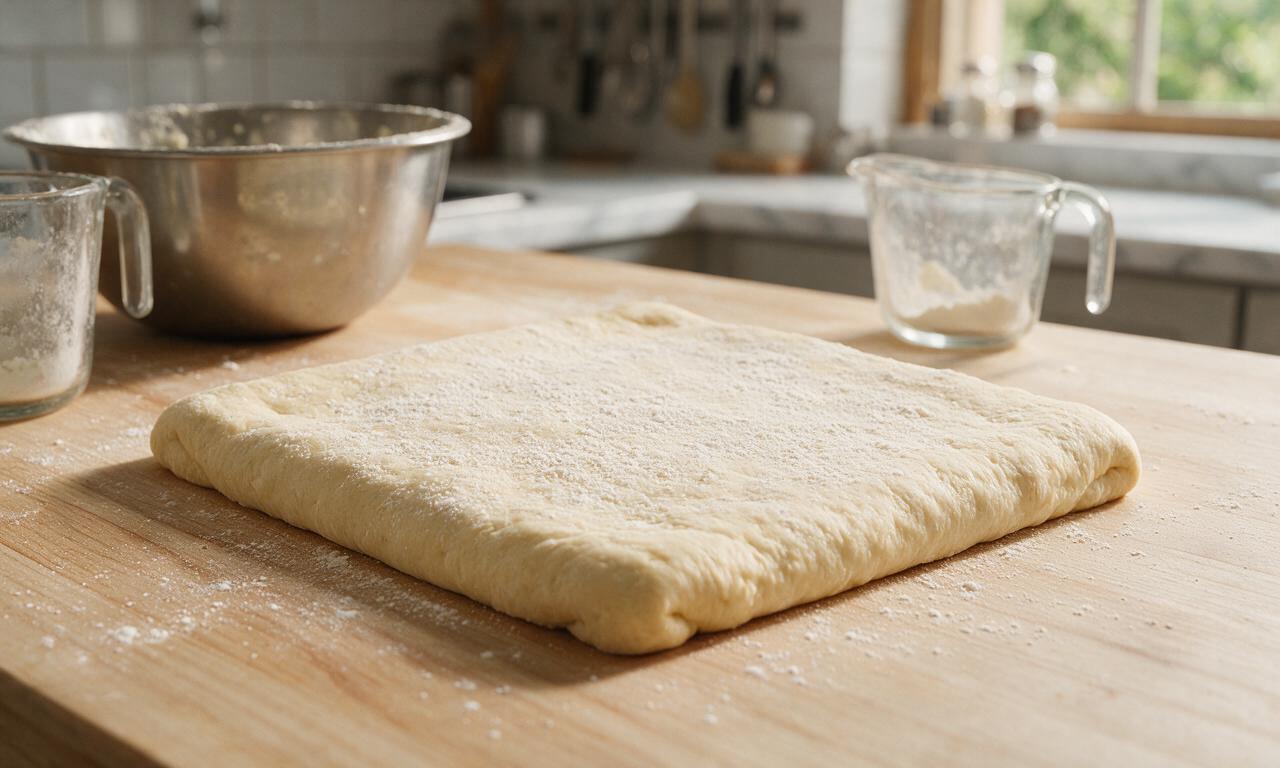
In a large mixing bowl, combine 500g all-purpose flour, 50g granulated sugar, 10g fine sea salt, and 7g instant yeast, whisking to evenly distribute ingredients. Add 280ml cold whole milk and 30g softened unsalted butter, then mix on low speed with a dough hook for 3 minutes until a shaggy, firm dough forms (do not overknead, as gluten will develop further during lamination). Shape the dough into a 20cm square, wrap tightly in plastic wrap, and chill in the refrigerator for 1 hour at 4°C (39°F).
Step 1
step1:Mix Base Dough Ingredients
2

Form Square Butter Block

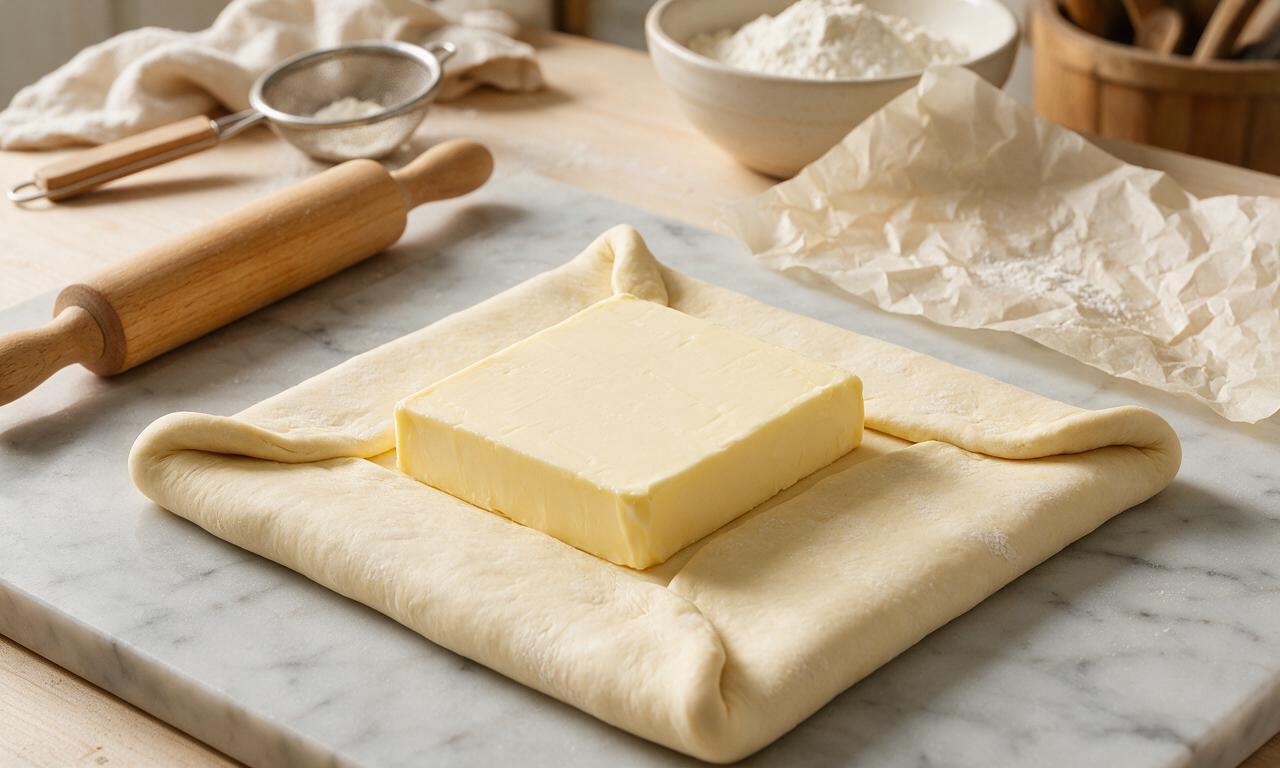
While the dough chills, place 250g cold unsalted butter between two sheets of parchment paper, and pound it with a rolling pin into a uniform 19cm square that is 1cm thick, keeping edges straight and even. Remove the chilled dough from the fridge, roll it out to a 40cm square on a lightly floured surface. Place the butter square diagonally in the center of the dough, then fold the four dough corners over the butter to fully enclose it, pinching all seams tightly shut to prevent butter leakage during rolling.
Step 2
step2:Form Square Butter Block
3

Roll and Fold Sealed Dough

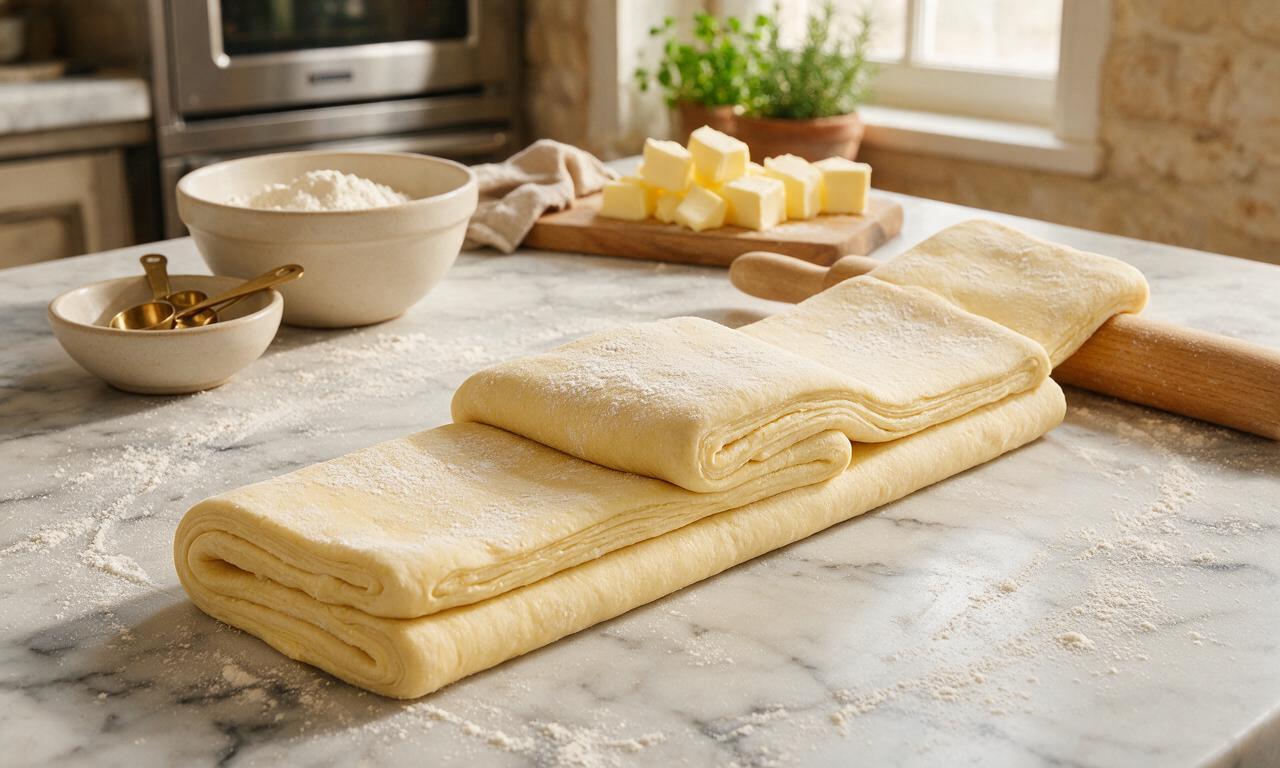
Roll the sealed dough packet out on a lightly floured surface into a long, even 60cm x 20cm rectangle, applying steady, even pressure to keep thickness consistent across the whole sheet. Complete the first letter fold: fold the top third of the rectangle down to the center, then the bottom third up over it like folding a business letter to create 3 distinct layers. Rotate the dough 90 degrees, roll it again to a 60cm x 20cm rectangle, and repeat the letter fold for the second turn. Wrap tightly in plastic, and chill for 1 hour at 4°C to relax gluten and keep butter solid.
Step 3
step3:Roll and Fold Sealed Dough
4

Complete Remaining Dough Turns

Remove the dough from the fridge, and repeat the rolling and letter fold process two more times for a total of 4 full turns, always rotating the dough 90 degrees before each roll to ensure even layer formation, and brushing off excess flour as you work to avoid tough, dry pastry. After the final fold, wrap the dough tightly and chill for a minimum of 2 hours (or up to 8 hours overnight) at 4°C to fully relax the gluten and prevent shrinkage during cutting and baking.
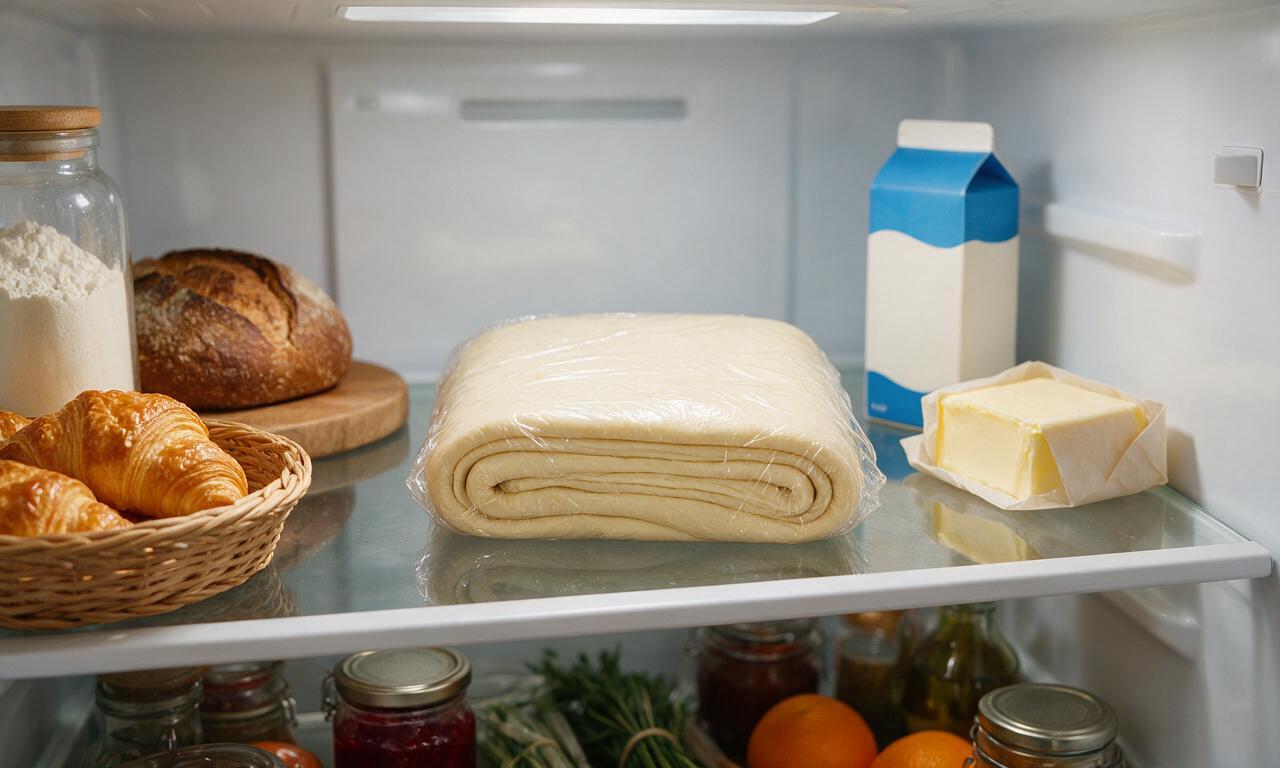
Step 4
step4:Complete Remaining Dough Turns
5

Roll and Trim Laminated Dough

Roll the chilled laminated dough out to a 3mm-thick, 35cm x 50cm rectangle on a lightly floured surface, trimming the ragged edges with a sharp knife to expose the distinct, even layers of dough and butter. Cut the dough into 8 equal isosceles triangles, each with a 10cm base and 20cm height. Make a 1cm small snip in the center of each triangle base, then gently stretch each triangle slightly and roll it from the wide base up to the pointed tip, tucking the tip under the croissant to hold its shape during baking. Curve the ends slightly inward to form the classic crescent shape.
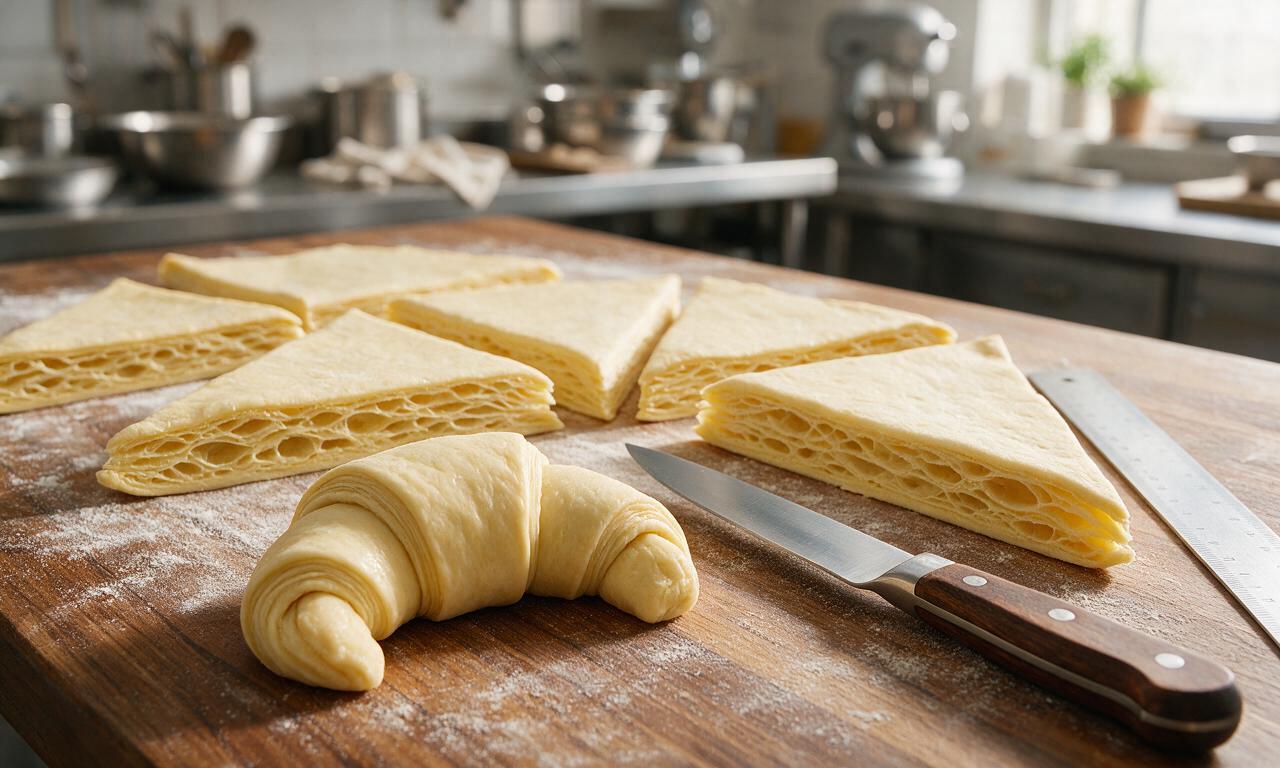
Step 5
step5:Roll and Trim Laminated Dough
6

Arrange and Proof Croissants

Arrange the shaped croissants 5cm apart on parchment-lined baking sheets, leaving room for expansion. Proof them in a warm, humid spot (24-26°C / 75-79°F, no hotter—higher heat will melt the butter layers) for 2 to 2.5 hours, until the croissants jiggle slightly when tapped, are visibly puffed, and show distinct layers at the cut edges. Preheat your oven to 200°C (400°F) while proofing finishes. Brush the tops of the proofed croissants gently with egg wash (1 whole egg beaten with 15ml/1 tbsp whole milk), then bake for 10 minutes at 200°C, reduce the oven temperature to 180°C (350°F), and bake for another 12-15 minutes until deep golden brown all over, with no pale doughy spots on the sides. Cool on a wire rack for 10 minutes before serving.

Step 6
step6:Arrange and Proof Croissants

Tips

1.Keep all ingredients, dough, and work surfaces cold during lamination: if butter softens and oozes out while rolling, chill the dough for 20 minutes before continuing, as melted butter will merge with dough and prevent distinct flaky layers from forming.
2.Never skip the required chilling time between folds: overworked, warm gluten will shrink during baking, leading to dense, misshapen croissants instead of tall, evenly layered pastries.
3.Avoid opening the oven door for the first 10 minutes of baking: a sudden drop in oven temperature will cause the delicate risen layers to deflate before they set into a crisp, shattery crust.

✨ You May Also Like

Desserts & Baking
🍜 Italy

Creamy, coffee-kissed classic Northern Italian no-bake dessert, with layers of rum-spiked mascarpone cream, soft ladyfingers, and a rich cocoa dusting.

⏱️ 4 hours 3Desserts & Baking ★ 4.8
Desserts & Baking
🍜 United States

Warm, spiced baked apples topped with a fluffy golden biscuit crust, this cozy dessert pairs perfectly with vanilla ice cream for cool-weather comfort.

⏱️ 55 minuteDesserts & Baking ★ 4.7
Desserts & Baking
🍜 United States

A star-spangled classic American blueberry pie with buttery flaky crust and bright sweet-tart filling, perfect for summer patriotic gatherings.

⏱️ 1 hour 25Desserts & Baking ★ 4.8
Desserts & Baking
🍜 United States

A beloved no-bake regional Maine candy with a chewy coconut-potato center coated in rich dark chocolate, a New England holiday staple since the 1870s.

⏱️ 2 hours 3Desserts & Baking ★ 4.9
Desserts & Baking
🍜 France

Luxuriously creamy, floral frozen custard made with aromatic Tahitian vanilla beans, boasting a smooth, rich texture that melts slowly on the tongue.

⏱️ 3 hours 3Desserts & Baking ★ 4.6
Desserts & Baking
🍜 United States

A jammy, warmly spiced twist on classic blueberry pie, spiked with smooth bourbon and baked in a flaky buttery crust, ideal for summer gatherings.

⏱️ 1 hour 20Desserts & Baking ★ 4.8

Croissant:Frequently Asked Questions

1.Why do I need 11-12% protein all-purpose flour instead of bread flour or cake flour?
That specific protein range strikes the perfect balance! Higher-protein bread flour creates tough, overly chewy, bready croissants, while low-protein cake flour can’t support the delicate layered structure during lamination and baking. 11-12% AP flour delivers that signature shatteringly crisp crust and light, airy interior without heaviness.
2.Why does the lamination block need to be unsalted butter kept ice cold?
Unsalted butter lets you fully control the recipe’s salt level, so concentrated baked layers don’t end up unpleasantly salty. Keeping the lamination block ice-cold is non-negotiable: if it softens and melts into the dough instead of staying in distinct, even sheets, you’ll lose that signature shattery, multi-layered texture entirely.
3.Can I use low-fat or skim milk instead of cold whole milk for the dough?
I don’t recommend it! Whole milk’s fat content tenderizes the dough, adds subtle richness, and feeds yeast to support even rising for those soft, airy interior layers. Skim or low-fat milk produces drier, less flavorful croissants with a tighter crumb, and won’t brown to that perfect golden exterior as evenly.
4.Why is there softened unsalted butter mixed into the dough base instead of using all butter for lamination?
That small amount of softened butter in the initial dough tenderizes the base crumb, makes the dough easier to roll out during lamination, and creates a softer, pillowy interior contrast to the crisp, buttery outer layers. Skipping it leaves dough too tight and elastic, leading to chewier, shrunken croissants.
5.What role does granulated sugar play, and can I cut back on it for less sweet croissants?
The small amount of granulated sugar feeds the yeast for a stronger, more even rise, adds subtle balanced sweetness that doesn’t overpower the butter, and supports that perfectly golden, crisp crust during baking. You can cut it by half for a more savory-leaning croissant, but don’t omit it entirely, as it aids browning and yeast function.
6.How do I prevent butter from oozing out while rolling and folding my lamination layers?
First, make sure your lamination butter and dough are always the same firm, cold consistency before you start rolling. If butter gets too soft, pop the whole dough slab in the fridge for 20-30 minutes to firm up between folds. Apply even, gentle pressure as you roll, and keep your work surface lightly floured to avoid sticking that tears layers.
7.Do I really need to rest the laminated dough in the fridge between fold sets?
Absolutely! That rest time does two critical jobs: it relaxes gluten in the dough so it doesn’t shrink back when rolled, and it keeps butter firm enough to stay in distinct layers instead of smushing into the dough. Skipping this rest leads to uneven layers, shrunken croissants, and butter leaks during baking, so don’t rush it.
8.Can I prep the dough ahead to bake fresh, hot croissants for a weekend morning?
Absolutely—this is one of my go-to pro tricks for low-fuss special mornings! After your final fold, cut and shape your croissants, then let them do a slow cold proof in the fridge for 8-12 hours overnight. The next morning, let them sit at room temp for 20 minutes, then bake for perfect fresh croissants.
9.How do I know my shaped croissants are done proofing and ready to go in the oven?
Properly proofed croissants will look visibly puffed, jiggle slightly when you gently tap the baking sheet, and show faint, distinct layers along their cut edges up close. If they’re still dense and firm, they need more time; if they feel floppy with soft, melty butter, they’ve over-proofed and will lose layers as they bake.
10.Why are my finished croissants dense instead of light and airy with open, flaky layers?
Dense croissants almost always trace back to one of three common missteps: your lamination butter was too soft and melted into the dough instead of forming separate sheets, you under-proofed the shaped croissants, or your oven wasn’t fully preheated so the dough didn’t get that initial high-heat spring. Fix those three for fluffy results every time.

Comments (10)

2 weeks ago

I've been making croissants for 40 years and this is hands down the most reliable classic recipe I've ever found. The ratios are perfect, the instructions for the folds are so clear even my teen granddaughter could follow along. We filled a few with dark chocolate for pain au chocolat and they were the star of our Sunday family dinner.

1 week ago

Oh the chocolate addition sounds genius! Did you add the chocolate before the final proof or right before baking? I want to try that for my next hiking trip snack pack!

6 days ago

We love hearing that, Grandma Jo! Adding chocolate is such a fun twist — for anyone curious, add the chopped chocolate sticks right before you roll the croissants into their crescent shape, before the final proof, so it melts perfectly into the layers.

1 week ago

Full transparency, I messed up the first two attempts at this. First time my butter block was too soft and oozed out, second time I underproofed them and they came out dense like dinner rolls. Third time? Absolute perfect croissants, golden and crispy on the outside, soft and airy on the inside. Don't get discouraged if your first batch doesn't work — this recipe is hard, but the payoff is insane.

5 days ago

Thank you for saying this! I failed my first batch last night and was so mad I almost threw my rolling pin across the kitchen. I'm gonna give it another go this weekend now that I know it's not just me messing up!

4 days ago

Steve is so right — laminated dough takes practice! Don't be hard on yourself if your first batch isn't bakery-perfect, even professional pastry chefs mess up folds sometimes. The best part is even the "ugly" croissants still taste amazing with all that butter.

5 days ago

Tried this for a potluck at work last week and people kept asking me where I bought them! I will say, don't skip the long chill times like I almost did on my first fold — I rushed it once and the butter oozed out everywhere mid-bake. Second time following the timeline exactly? Flaky perfection. Only reason it's not 5 stars is I wish there was a note about what temp to keep your kitchen at when rolling out the dough, mine was a little warm and made things tricky.

4 days ago

Great tip about not rushing the chill steps, Joe! For anyone baking in a warm kitchen, try keeping your rolling pin in the fridge for 30 mins before you start, and pop the dough back in the fridge for 15 mins if you feel the butter getting soft at any point. So glad your coworkers loved the final batch!

3 days ago

Made these for my monthly brunch club and everyone lost their minds. I did a little egg wash with a sprinkle of flaky sea salt on top before baking and it took them to the next level. My only complaint is that my house smelled like butter for 3 whole days after, but honestly that's a pro not a con if you ask me.

2 days ago

The flaky sea salt on top is such a brilliant upgrade, Mia! We're going to test that tip for our next batch and may even add it as a variation note in the recipe. So glad your brunch club loved them!

2 days ago

OMG y'all, I was SO intimidated by this recipe because I've never made laminated dough before, but these came out BETTER than the croissants I get at my local French bakery! The flaky layers, that rich buttery taste? Game changer. I blocked off a whole Saturday to do the chill steps and it was 100% worth it. My kids devoured half the batch before they even cooled all the way down.

1 day ago

Wait did you use salted or unsalted butter for the butter block? I'm trying this this weekend and don't want to mess it up!

1 day ago

So happy these were a hit with your family, Molly! Quick note for both of you: we always recommend high-quality unsalted butter for the butter block so you can control the salt level, and make sure it's nice and cold when you do your folds!

yesterday

I was shocked these actually turned out in my tiny dorm oven? I followed the instructions to a T, used the cheapest European style butter I could find at the corner market, and still got those perfect flaky layers that shatter when you bite into them. My roommate thought I ordered them from a fancy bakery until they saw me covered in flour at 9pm doing folds lmao. SO good.

2 hours ago

Made these for my partner's birthday breakfast in bed and I think I just earned partner of the year tbh. Served them with fresh jam and lattes, and they said it was better than the croissants we had on our trip to Paris last year. Who needs a fancy French vacation when you can make these at home?

1 hour ago

Aww that's so sweet! Did you do the crescent shape or leave them straight? I can never get the little crescent curve to look right without squishing the layers!

30 minutes ago

Uh, help? I'm 4 hours into this recipe and my dough keeps shrinking back when I try to roll it out for the folds. Did I overwork it? Is my butter too hard? I'm this close to giving up and going to the grocery store for croissants lol

10 minutes ago

Don't give up! That shrinking is totally normal — it means the gluten is tight, just cover it and pop it back in the fridge for 20 minutes to relax, it'll roll out like a dream after that. I had the exact same issue my first time making these!

5 minutes ago

Made a double batch of these for meal prep this week and they freeze so well! I just pop one in the toaster oven for 5 minutes on busy mornings and it tastes like I just pulled it from a Parisian cafe. Yes, the total time looks scary on paper, but most of it is just waiting around for the dough to chill — you don't have to be actively working the whole time. 10/10 will be making this monthly.

just now

Brought these to our neighborhood block party last weekend and they were gone in 10 minutes flat. Multiple neighbors asked for the recipe before I even got a second one for myself! I will say, clear your schedule for this — it's not a quick weeknight bake, but for a special occasion? Nothing beats it. Don't skimp on the good butter, it makes all the difference.