Coddled Eggs Scrambled Eggs

title 1
Coddled Eggs Scrambled Eggs
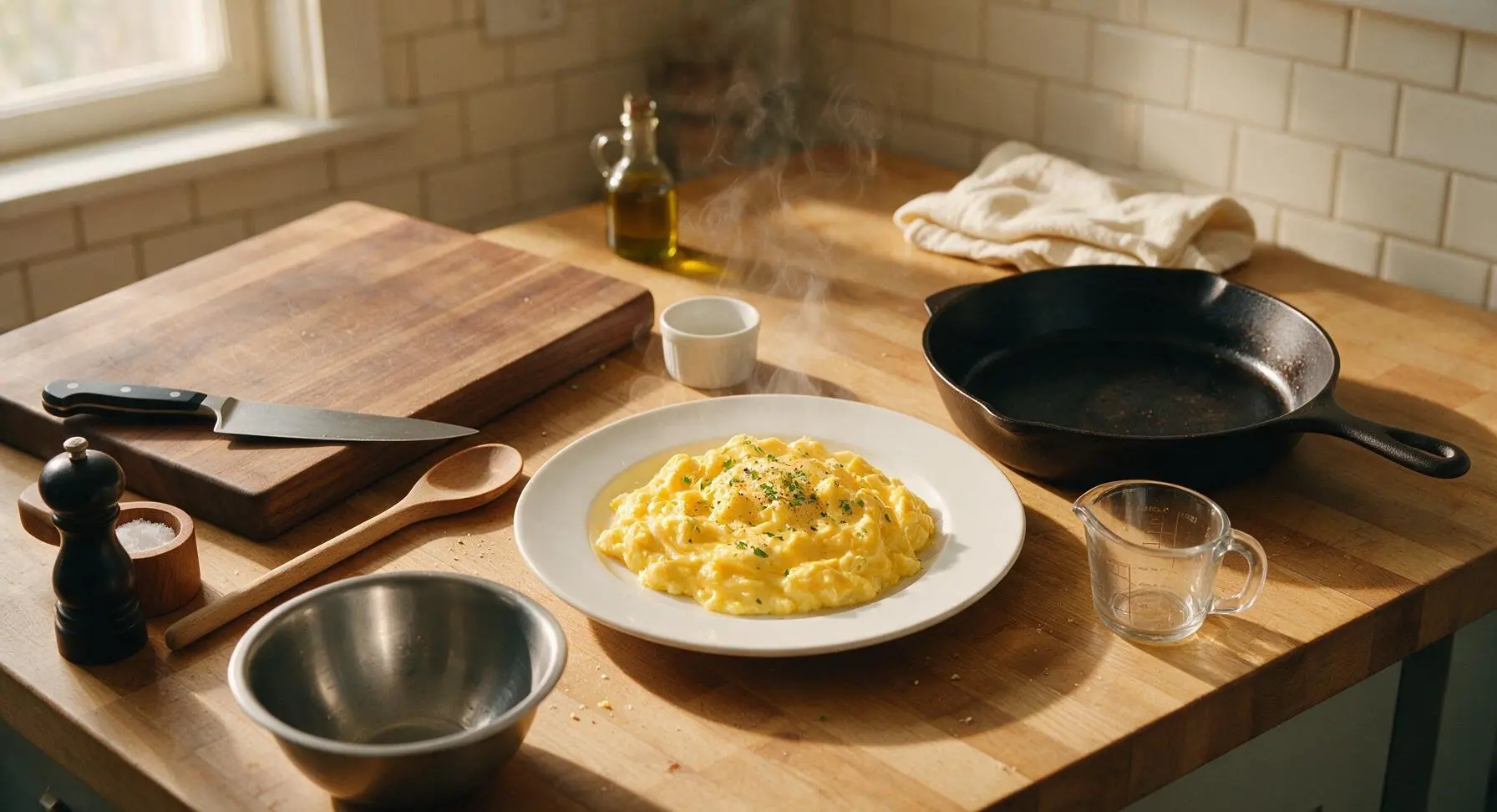
⏱️ cook time 8 minutes
🍽️ servings 2
⚡ Difficulty easy

intro

Silky, custardy coddled scrambled eggs with delicate, melt-in-your-mouth curds, no rubbery bits or browned edges—simple, luxurious comfort ready in minutes.

Ingredients
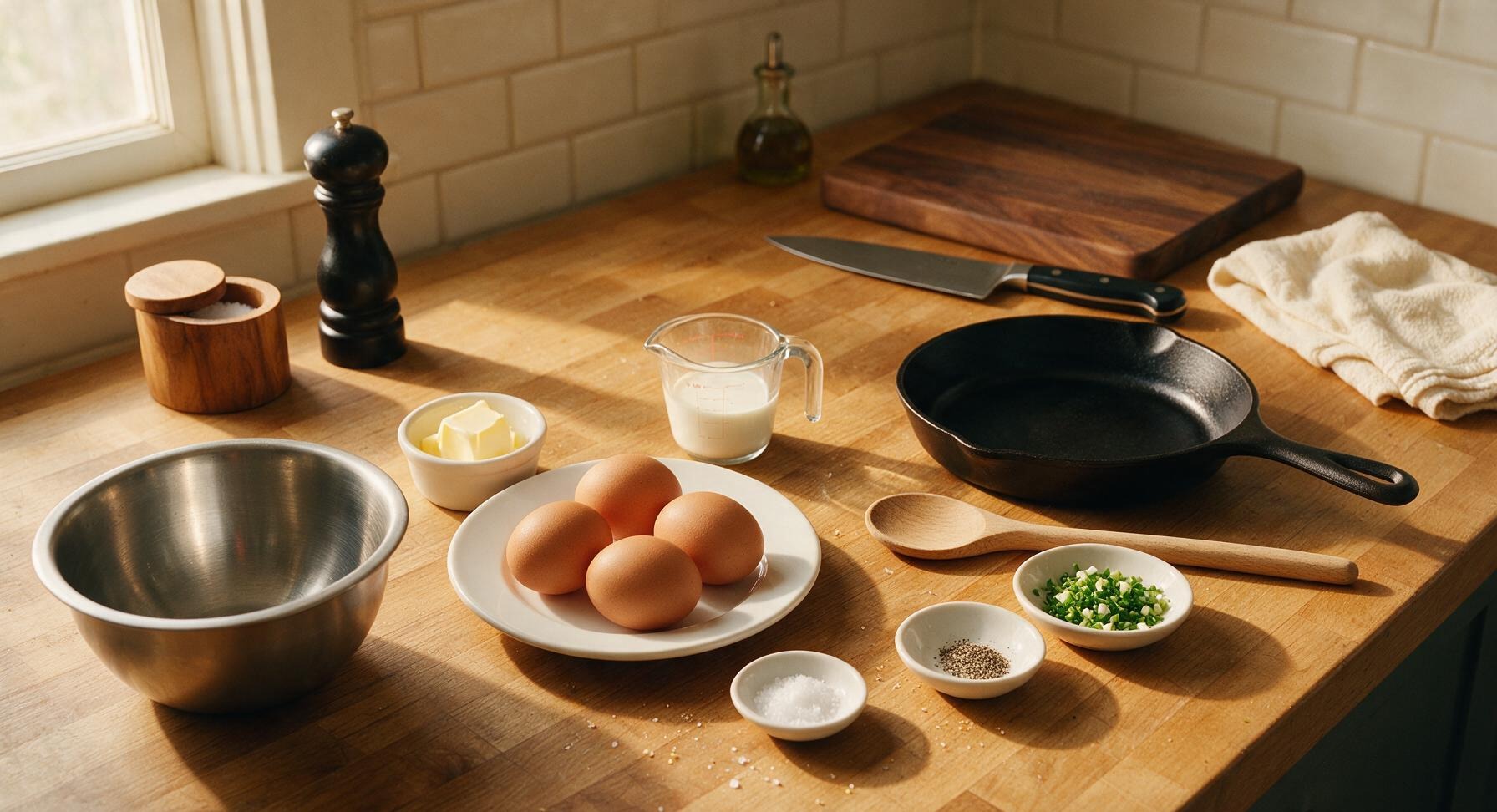
Large brown eggs 4 each
Unsalted butter 2 tbsp
Heavy whipping cream 2 tbsp
Fine sea salt 1/4 tsp
Freshly ground black pepper 1/8 tsp
Fresh chives 1 tbsp (chopped)
Flaky sea salt (for finishing) 1 pinch

Steps

1

Prep and Measure Ingredients

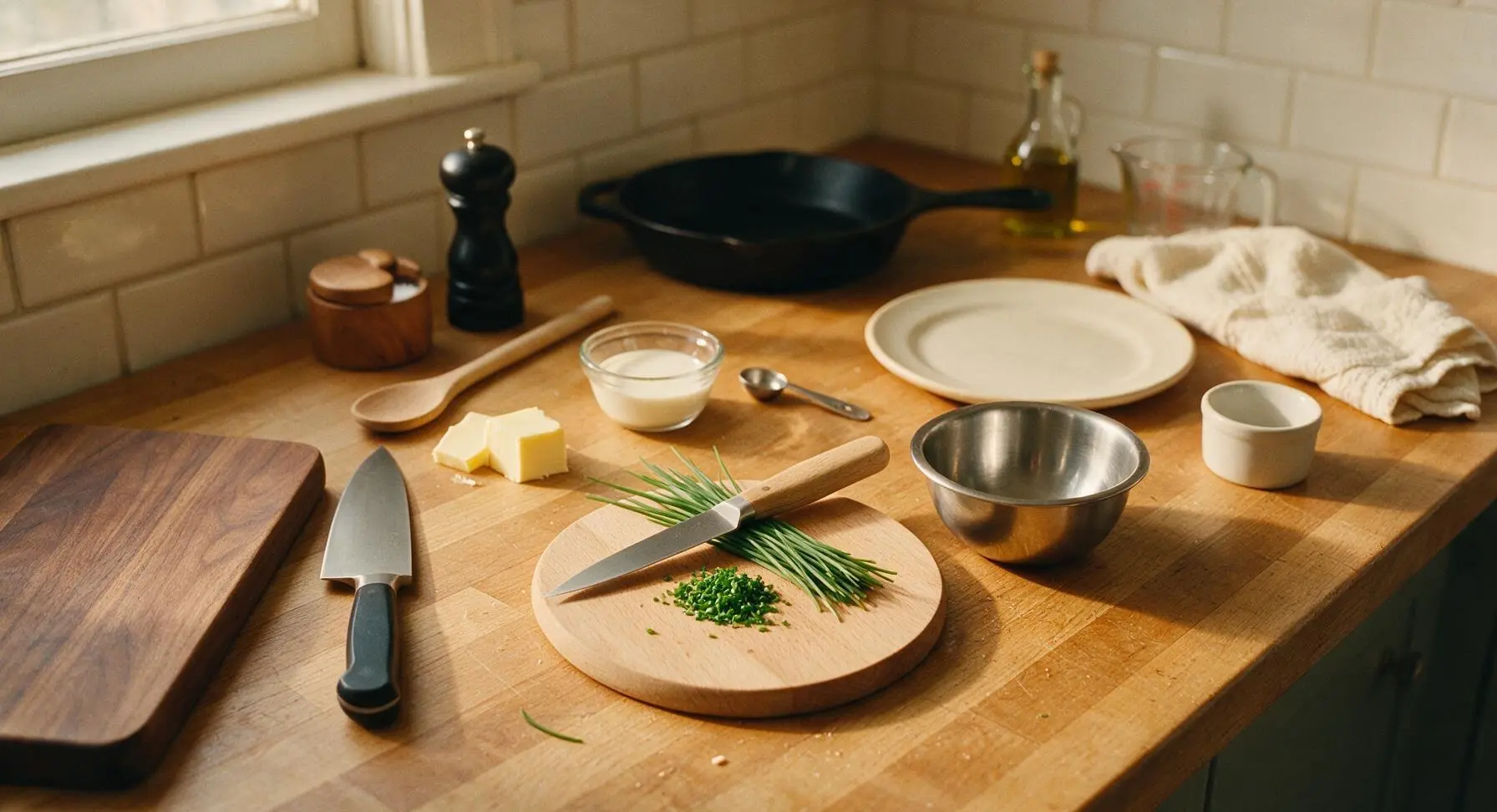
First, finely chop 1 tablespoon of fresh chives on the small beech wood cutting board using the paring knife, then transfer the chopped chives to the small clear glass ramekin and set aside. Use the stainless steel measuring spoons to portion 2 tablespoons unsalted butter, 2 tablespoons heavy cream, 1/4 teaspoon fine sea salt, and 1/8 teaspoon freshly ground black pepper. Crack all 4 large eggs into the small stainless steel mixing bowl, taking care not to drop any shell fragments into the bowl.
Step 1
step1:Prep and Measure Ingredients
2

Whisk Egg Base Gently

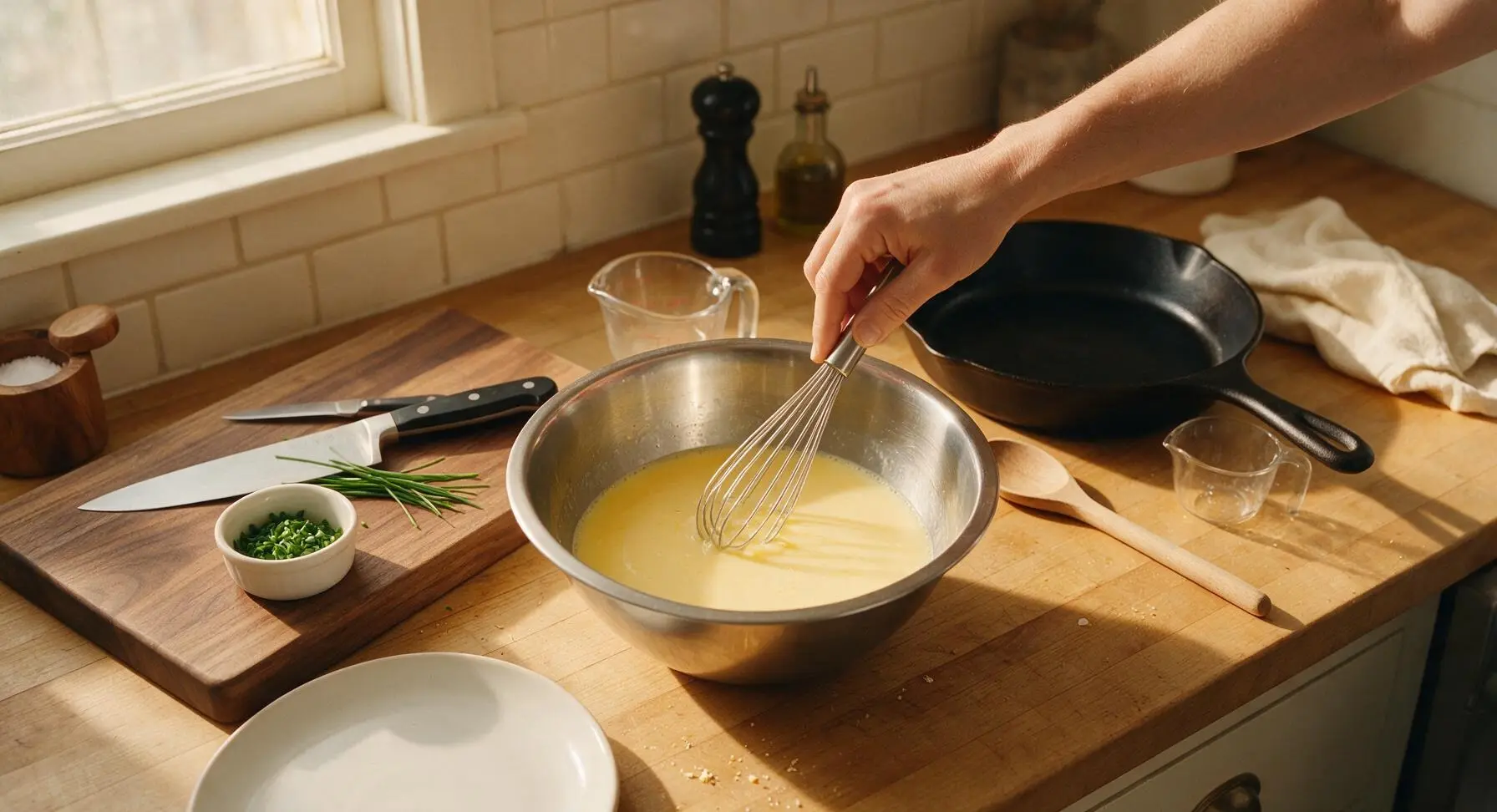
Add the measured heavy cream and fine sea salt to the cracked eggs in the mixing bowl. Use the small stainless steel wire whisk to stir the mixture slowly, just until the yolks and whites are fully combined into a uniform pale yellow liquid with no streaks of clear egg white remaining. Do not over-whisk: excessive mixing incorporates too much air, which creates fluffy, dry curds instead of the desired silky, dense coddled texture. Stop whisking before any froth forms on the surface.
Step 2
step2:Whisk Egg Base Gently
3

Strain For Smooth Texture

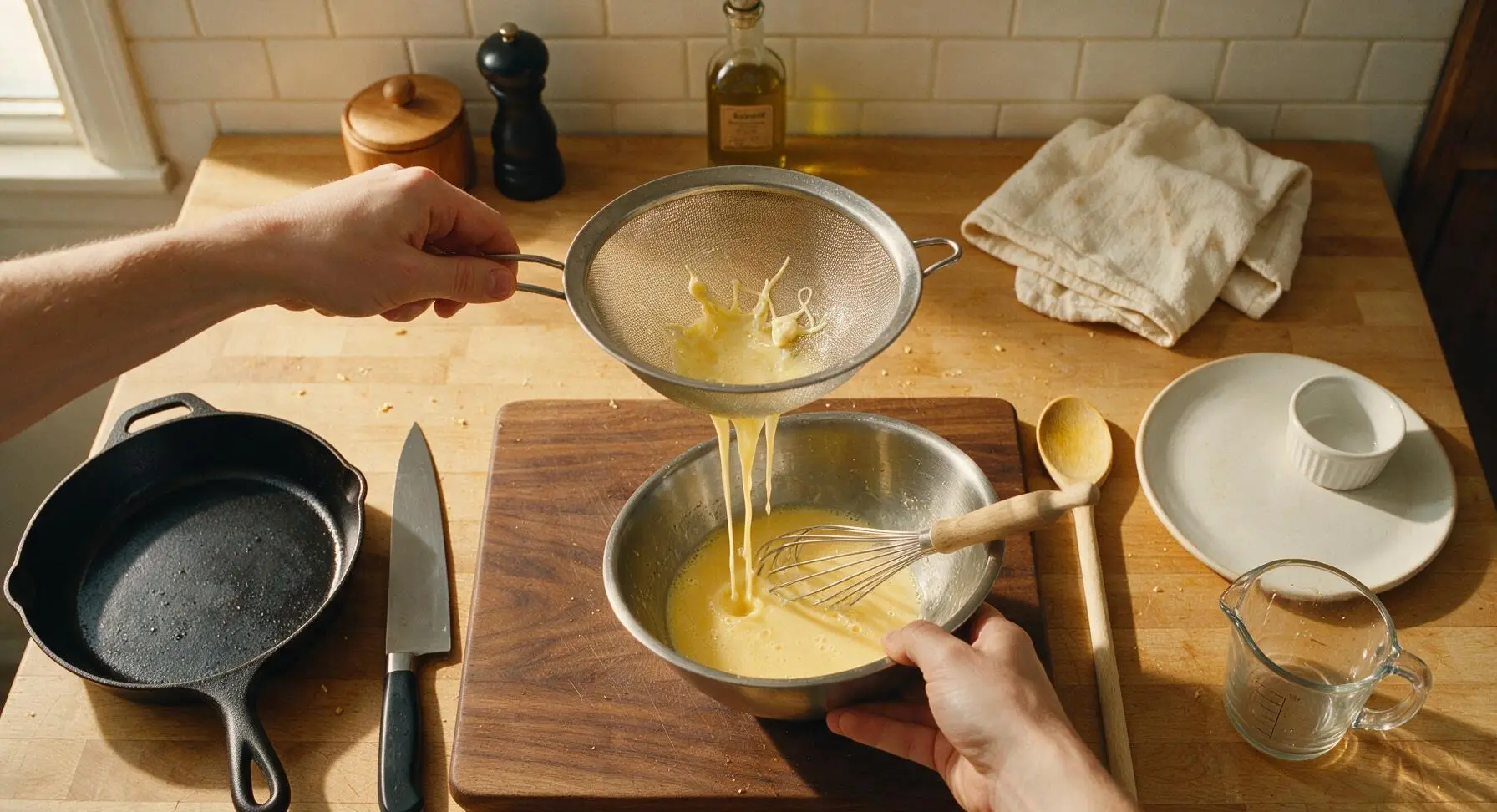
Hold the fine-mesh stainless steel sieve over the mixing bowl, and pour the whisked egg mixture through the sieve back into the bowl. The sieve will catch any stray shell fragments, stringy chalaza, and unincorporated blobs of egg white, which would otherwise create lumps in the finished eggs. Discard the small amount of solid material left in the sieve after straining.
Step 3
step3:Strain For Smooth Texture
4

Warm Pan Over Low Heat

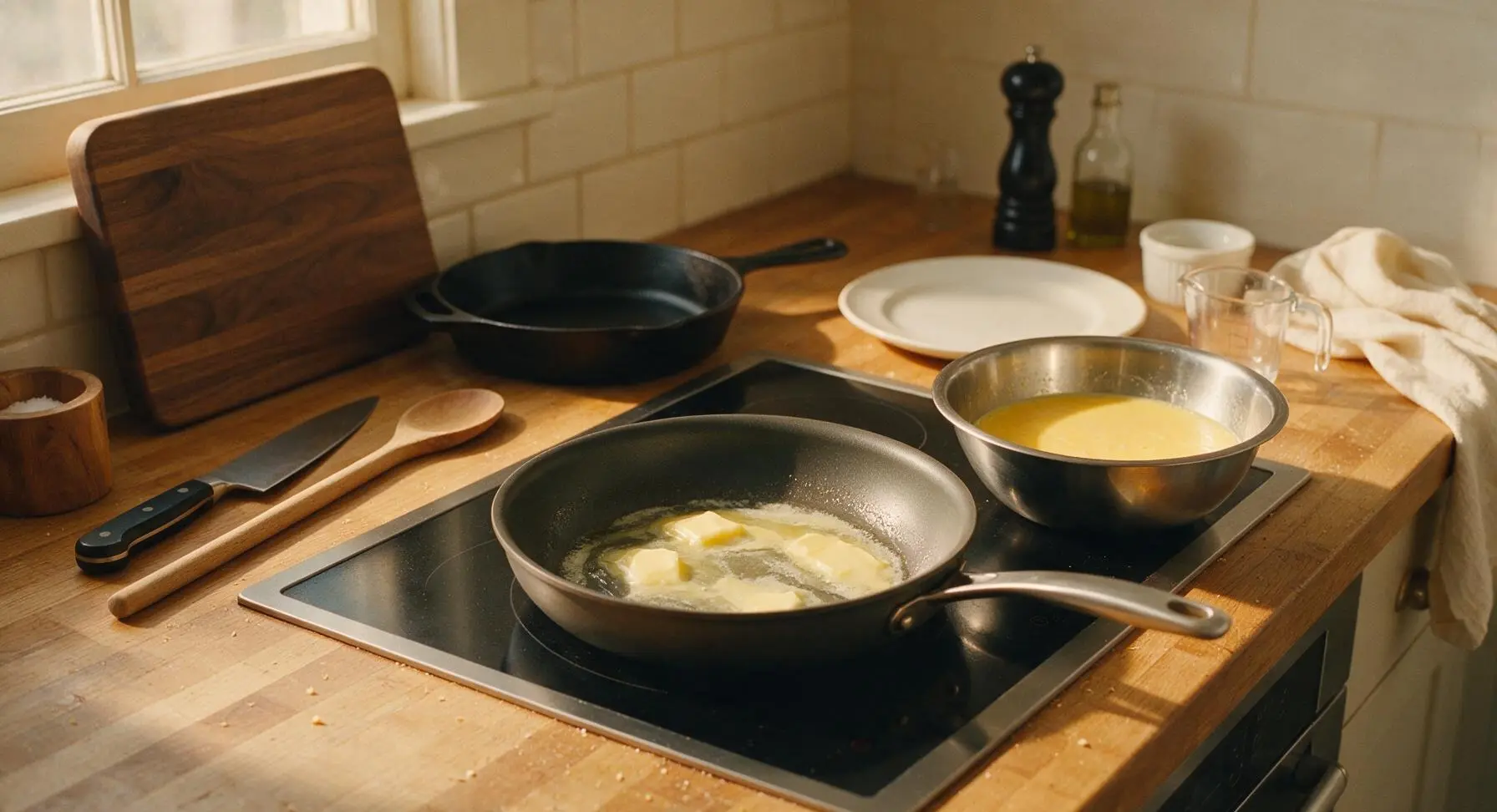
Place the 18cm heavy-bottomed non-stick skillet on the matte black induction cooktop, set to the lowest possible heat setting (target pan surface temperature of 150°F / 65°C, ideal for gentle coddling). Add the measured 2 tablespoons of unsalted butter to the pan, and allow it to melt slowly over 1-2 minutes without foaming, sizzling, or browning. If the butter sizzles immediately on contact, the pan is too hot: remove it from the heat for 30 seconds to cool before proceeding.
Step 4
step4:Warm Pan Over Low Heat
5

Slow-Cook Egg Curds

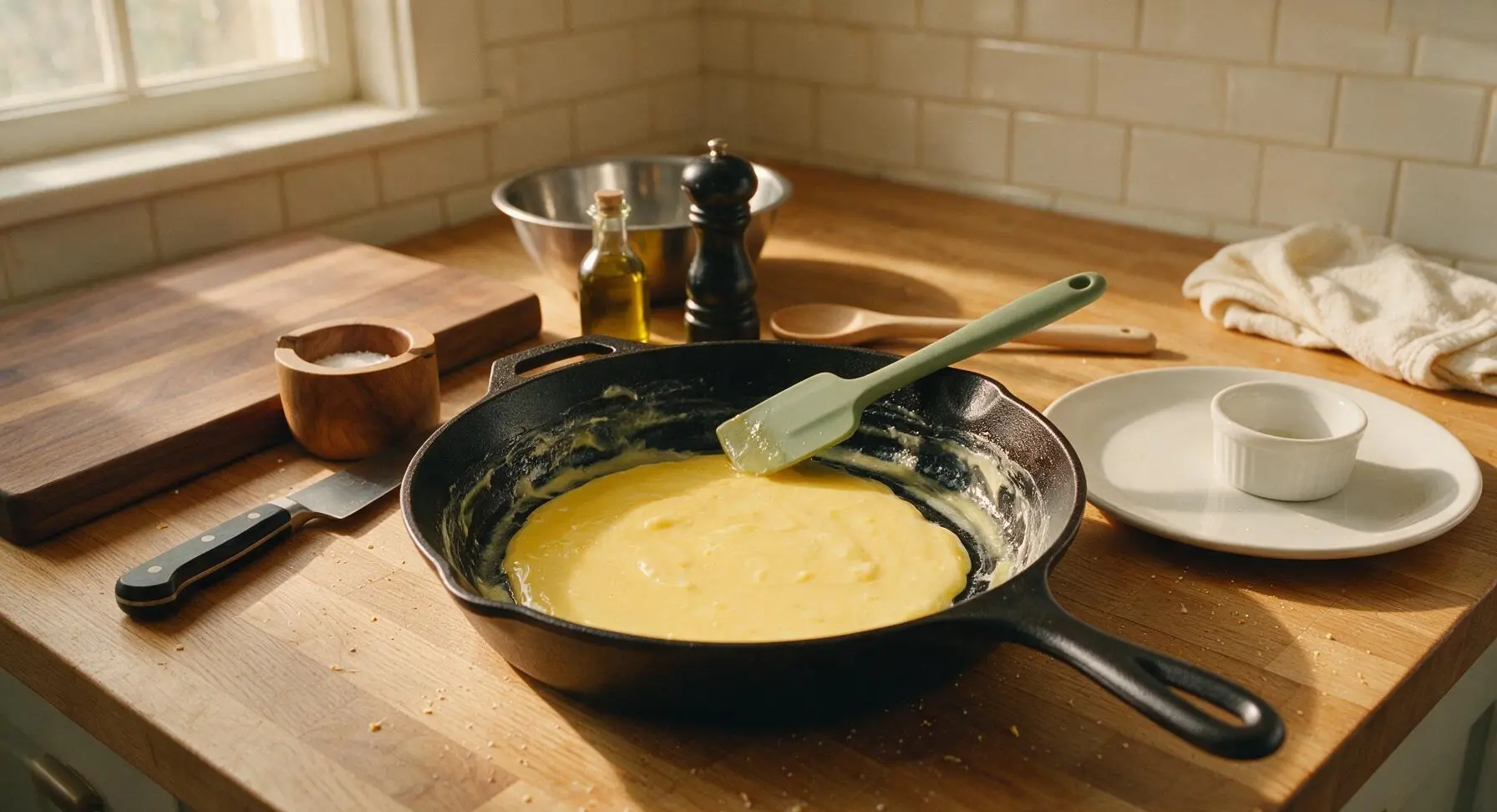
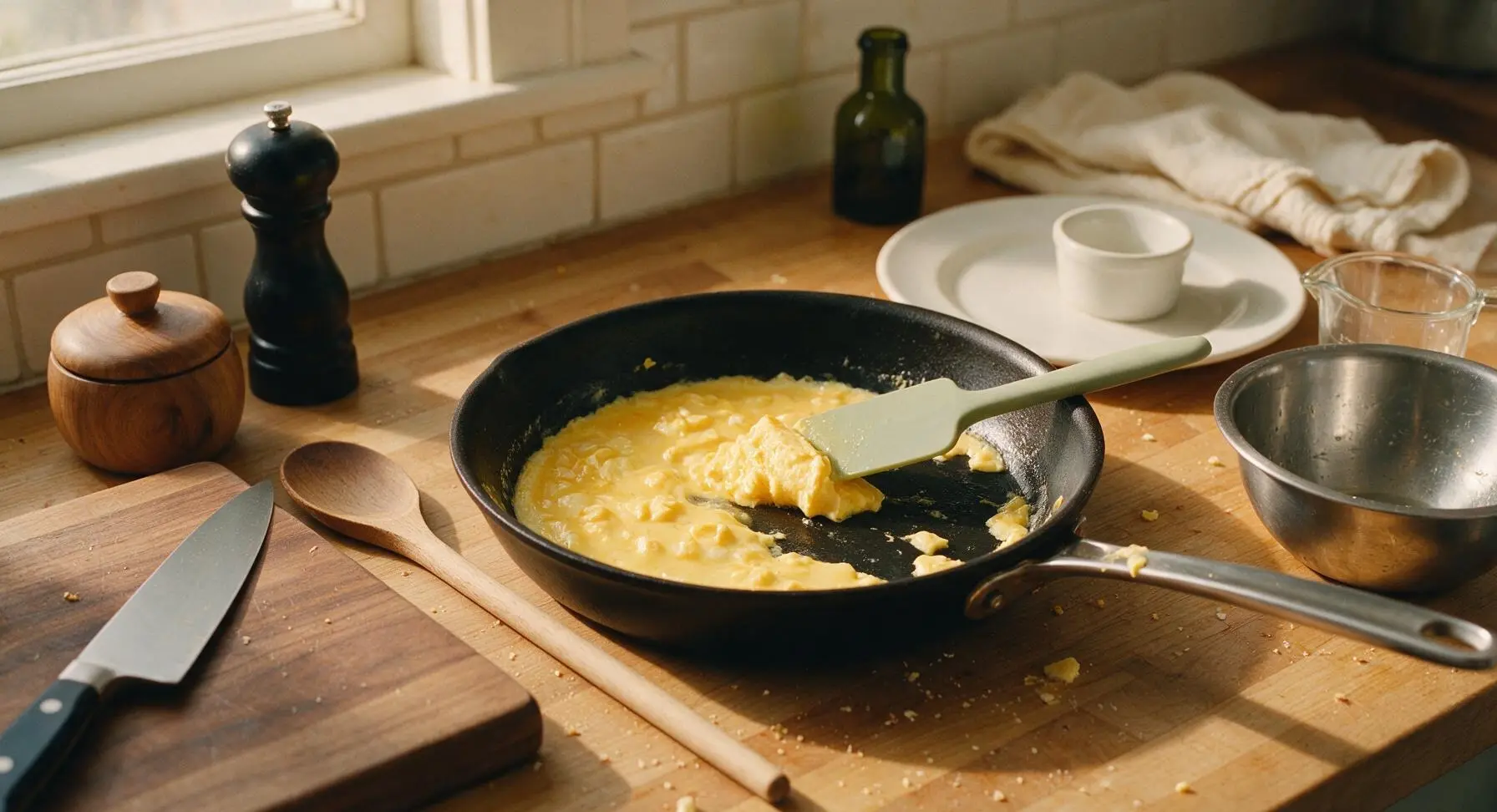
Pour the strained egg mixture into the warm, buttered pan. Let the eggs sit undisturbed for 45 seconds, then use the pale sage green silicone spatula to gently push the set, soft curds from the edge of the pan toward the center, allowing runny, uncooked egg to flow into the empty pan space. Continue this process, stirring very gently every 30 seconds, for 6 to 7 minutes total. The eggs will form small, tender, pale golden curds, and should remain slightly wet and under-set when removed from heat—residual pan heat will finish cooking them. Never turn the heat up, as this will cause tough, rubbery curds.
Step 5
step5:Slow-Cook Egg Curds
Step 5
step5:Slow-Cook Egg Curds
6

Season and Rest Eggs

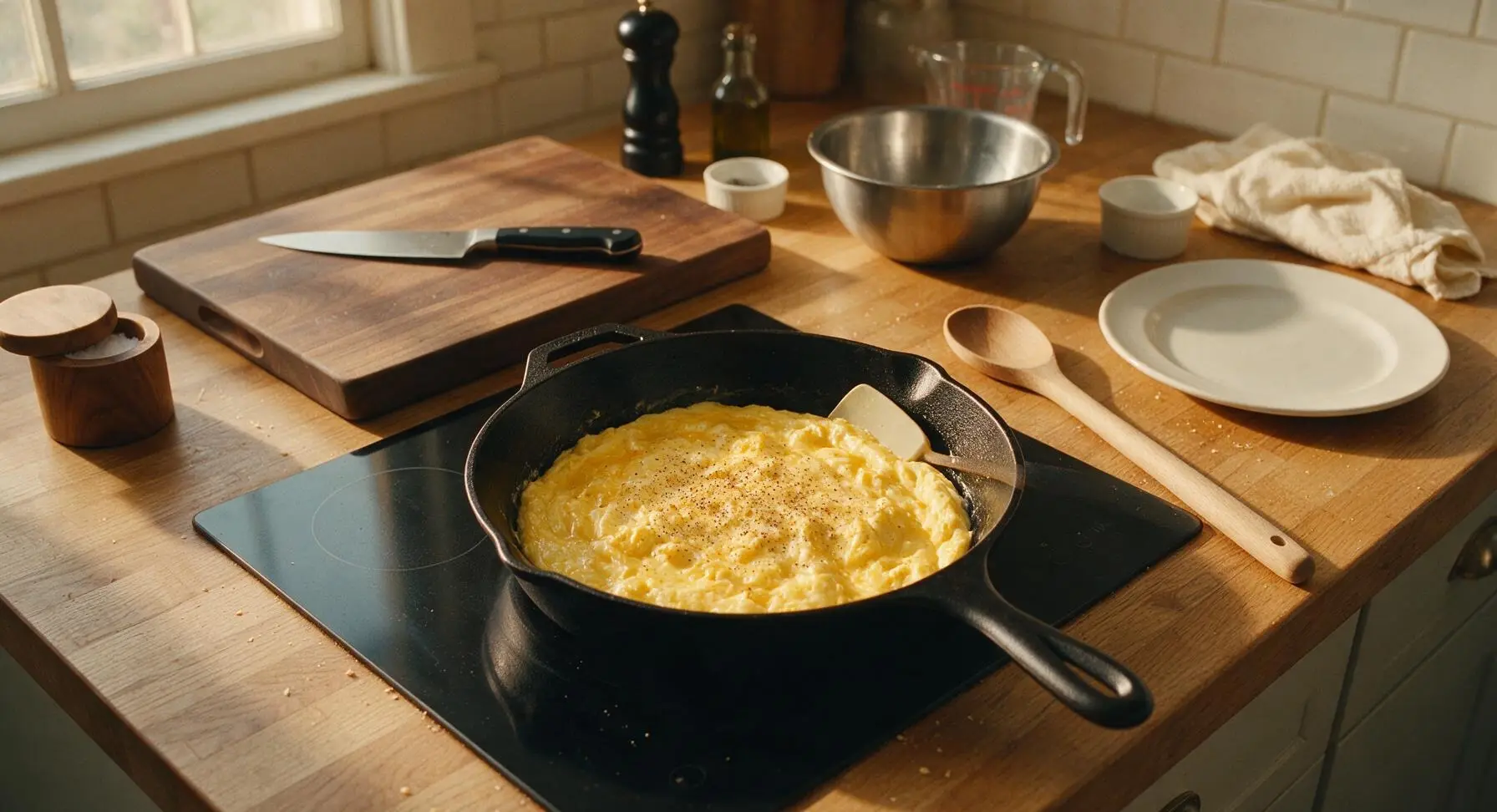
Once the eggs are 90% set (soft, slightly jiggly in the center, with no large pools of runny egg), remove the skillet from the induction cooktop and set it on the oak counter. Add the measured 1/8 teaspoon freshly ground black pepper, and gently fold the curds once more with the silicone spatula to distribute the pepper evenly. Let the eggs rest in the pan for 1 full minute to finish coddling in the residual heat, bringing them to the perfect silky consistency without overcooking.
Step 6
step6:Season and Rest Eggs
7

Plate and Garnish

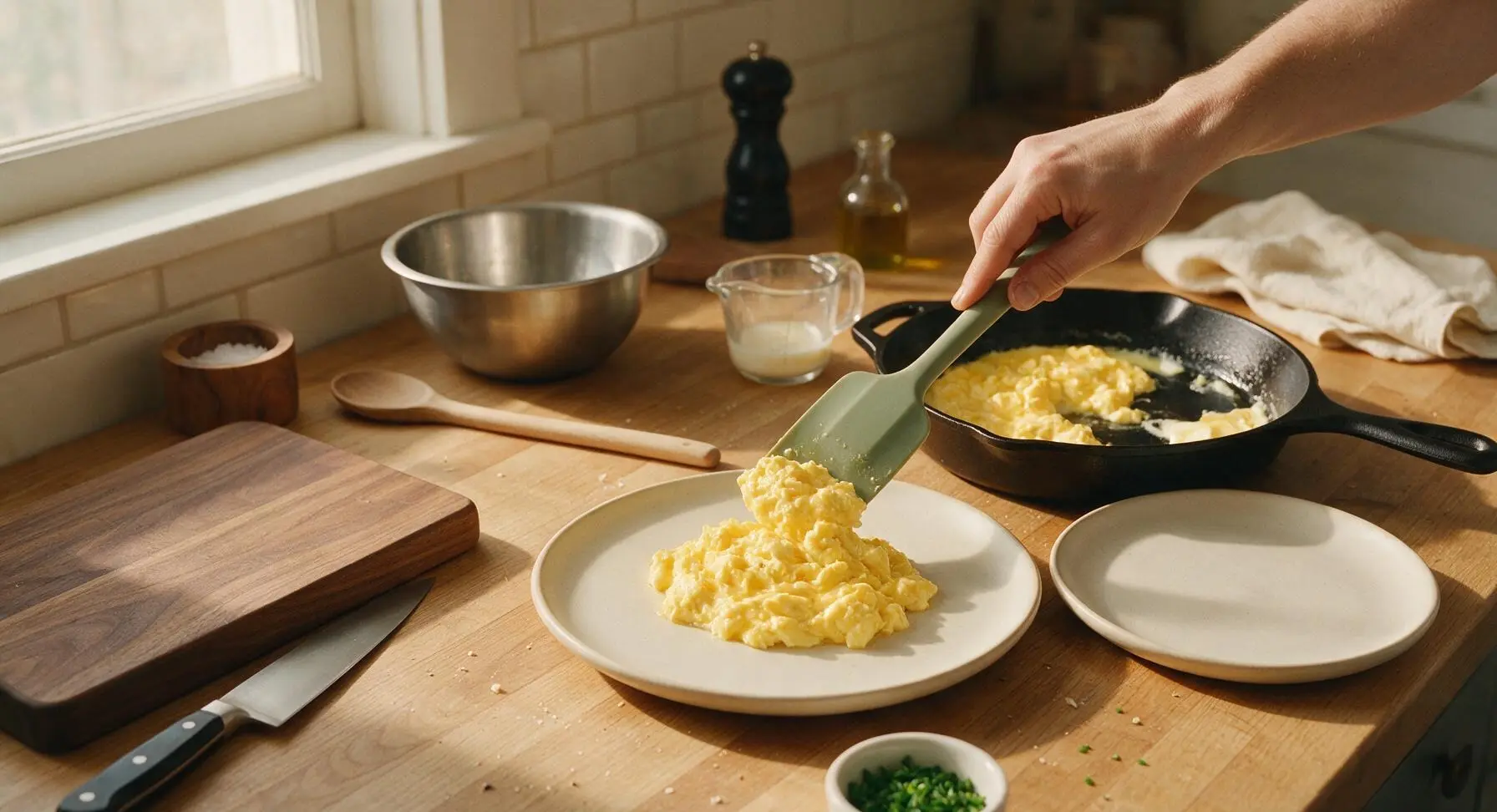
Divide the finished coddled scrambled eggs evenly between the two matte cream ceramic breakfast plates, mounding them gently in the center of each plate. Top each serving with a light sprinkle of the reserved chopped chives and a tiny pinch of flaky sea salt. Do not press or flatten the eggs, as this will break their delicate curd structure and release their moisture.
Step 7
step7:Plate and Garnish

Tips

1.Never turn the heat above the lowest setting when making coddled scrambled eggs: high heat causes egg proteins to seize and turn rubbery in seconds, while low slow cooking creates the signature melt-in-your-mouth custard texture.
2.Skip adding milk to your egg mixture: milk has a high water content that can separate during cooking and leave eggs watery, while heavy cream adds rich fat without excess water for a smoother, more luxurious finish.
3.Always remove eggs from the pan when they are slightly under-done: residual heat (called carryover cooking) will continue to set the curds for 1-2 minutes after removal from heat, so waiting until eggs look fully done in the pan will result in overcooked, dry curds.
✨ You May Also Like

Breakfast
🍜 United States

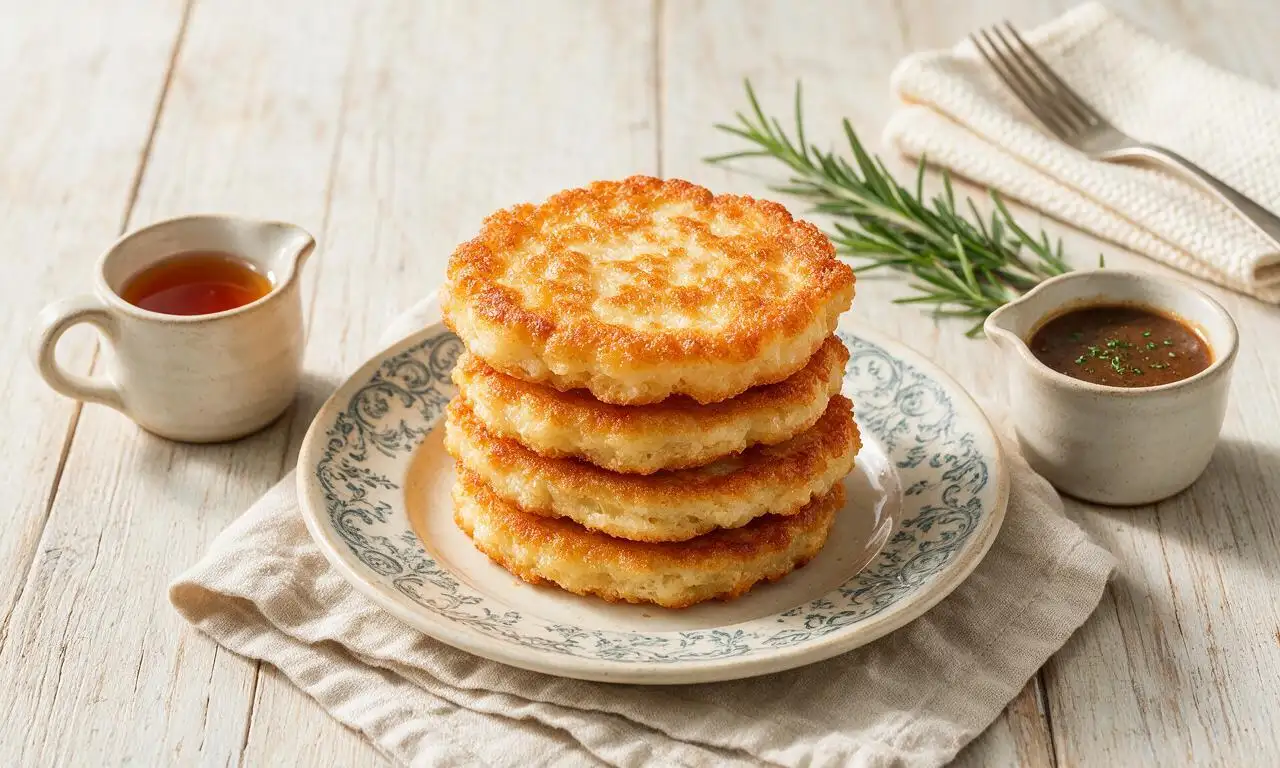
Crisp-edged, fluffy lard griddle cakes are a nostalgic homestyle staple, with rich savoriness from rendered lard, perfect topped with maple syrup or savory gravy.

⏱️ 25 minuteBreakfast ★ 4.8
Breakfast
🍜 United States

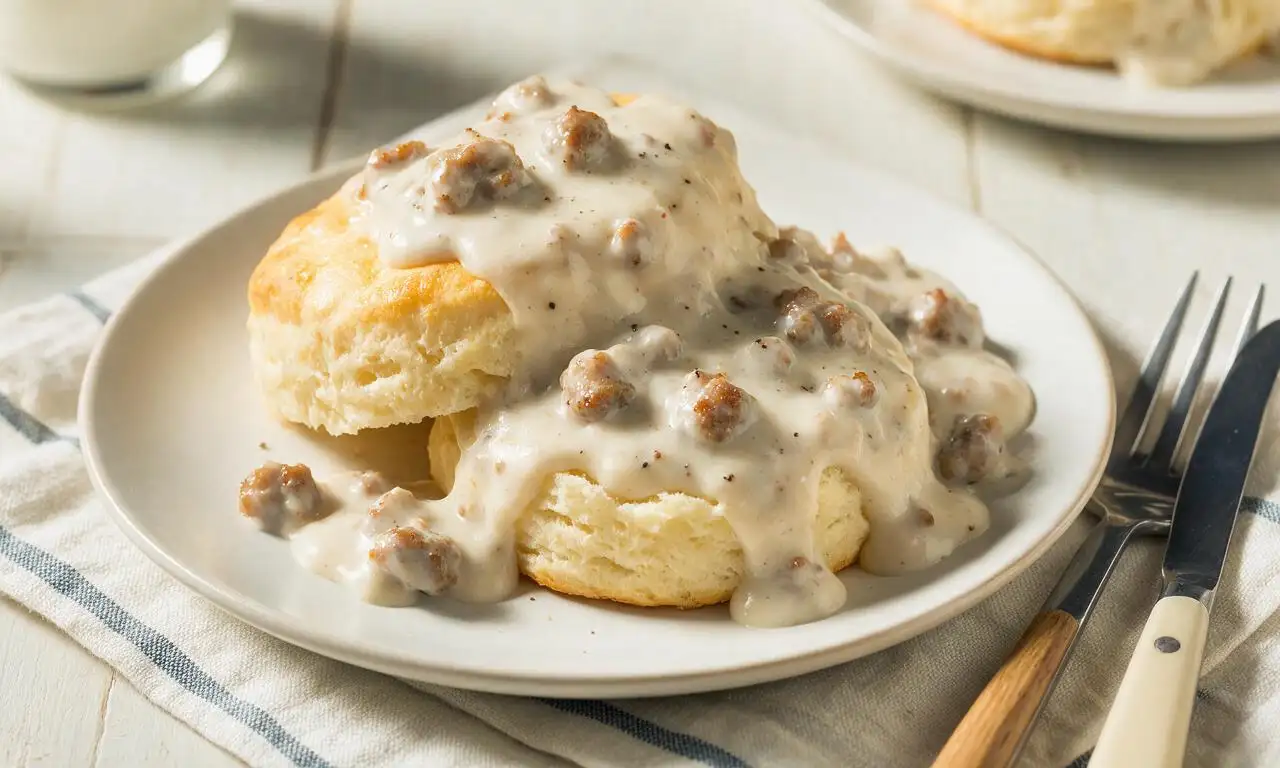
Flaky, buttery homemade buttermilk biscuits smothered in creamy, peppery pork sausage gravy: a beloved, hearty Southern American comfort food classic.

⏱️ 35 minuteBreakfast ★ 4.8
Breakfast
🍜 United States

Golden, custardy brioche stuffed with sweet cream cheese and fresh berries, pan-fried to crisp perfection. An indulgent, cozy breakfast perfect for slow weekend mornings.

⏱️ 30 minuteBreakfast ★ 4.7
Breakfast
🍜 United States

Flaky, buttery Southern-style biscuits stuffed with savory salty country ham, a portable, satisfying classic perfect for casual on-the-go meals.

⏱️ 25 minuteBreakfast ★ 4.8
Breakfast
🍜 United States

Iconic puffy baked pancake popularized in Seattle, with crisp golden edges and soft custardy center, served warm with classic sweet toppings.

⏱️ 35 minuteBreakfast ★ 4.6
Breakfast
🍜 United States

Fluffy, golden pancakes studded with juicy peak-summer mixed berries, drizzled with maple syrup for a bright, comforting, crowd-pleasing family breakfast.

⏱️ 25 minuteBreakfast ★ 4.7

Coddled Eggs Scrambled Eggs:Frequently Asked Questions

1.What’s the difference between coddled scrambled eggs and regular stovetop scrambled eggs? ▾
Unlike regular scrambled eggs cooked over medium-high heat for fast-setting, firm curds, coddled scrambled eggs use ultra-gentle low heat to form tiny, melt-in-your-mouth curds with a rich, custardy texture. When made correctly, there are zero browned edges or rubbery bits, resulting in a far more delicate, luxurious dish that takes barely any extra effort.
2.Can I use large white eggs instead of the large brown eggs called for in the recipe? ▾
Absolutely! Brown and white large eggs are nutritionally and flavor-identical when they come from the same grade and hen diet—their only difference is shell color. I call for large brown eggs because they often come from pasture-raised flocks with richer, brighter yolks, but any fresh, Grade A large white egg will work perfectly for that signature silky texture.
3.Do I have to use heavy whipping cream, or can I swap in regular milk? ▾
You can use milk, but I don’t recommend it if you want the signature custardy texture. Heavy whipping cream’s high fat content coats egg proteins to prevent them from seizing over heat, creating softer, richer curds. Whole milk works in a pinch for slightly thinner eggs, but skim milk will lead to tougher, watery results prone to overcooking.
4.What heat setting should I use to avoid rubbery bits or browned edges? ▾
Stick to the absolute lowest heat setting on your stovetop—this is non-negotiable for perfect coddled scrambled eggs. High heat makes egg proteins tighten fast, leading to rubbery curds and crispy brown edges before the center sets. Low heat lets curds form slowly and evenly for that delicate, melt-in-your-mouth texture with zero unpleasant overcooked bits.
5.Can I use salted butter instead of unsalted butter for this recipe? ▾
For a standard 2-serving batch (4 large eggs), use 2 tablespoons of cold unsalted butter cut into small cubes for the best results. You can swap in salted butter if that’s all you have—just cut the added fine sea salt in half to avoid over-salting, since salted butter usually contains around ¼ teaspoon of salt per tablespoon. Cold butter emulsifies better into the eggs for extra silkiness, so skip pre-melting it.
6.When should I add the salt to get the best, most tender texture? ▾
Add your fine sea salt right at the start, when you whisk the eggs with the heavy cream, instead of salting at the very end. Salt breaks down egg proteins slightly before cooking, which keeps curds extra tender and prevents them from clumping into tough, rubbery bits. If you forget to salt early, add it the second you take the pan off heat so it dissolves evenly.
7.How do I know when the coddled scrambled eggs are perfectly done? ▾
Pull the eggs off heat the second they form soft, wet, barely set curds with no loose runny liquid left in the pan—they’ll keep cooking for 30 to 60 seconds from residual pan heat (that’s carryover cooking!). If you wait until they look fully firm in the pan, they’ll end up overcooked, dry, and rubbery by the time they hit your plate.
8.Do I need a special double boiler to make coddled scrambled eggs? ▾
You don’t need a dedicated double boiler to nail this recipe! If you have one, it works great for ultra-gentle, even heat, but you can get identical results with a regular heavy-bottomed nonstick skillet on your lowest stovetop setting. The heavy pan base eliminates hot spots that cause browning or overcooking, so no fancy equipment is required.
9.Can I add mix-ins like cheese, fresh herbs, or veggies to these eggs? ▾
You absolutely can, just add them at the right time to avoid ruining the delicate texture. Fold in soft fresh herbs, grated mild cheese, or pre-cooked, cooled diced veggies the second you pull the pan off heat, so residual heat warms them through without making the eggs watery or tough. Skip raw veggies that will leach moisture as they cook.
10.Why are my coddled scrambled eggs turning out watery every time? ▾
Watery coddled eggs usually come down to one of two common issues: either you cooked them on too high heat, which makes egg proteins squeeze out moisture as they seize up, or you added too much low-fat dairy like skim milk instead of heavy cream. Stick to 1 tablespoon of cream per 2 large eggs and use low heat to eliminate watery results.
11.What’s the best way to serve these coddled scrambled eggs? ▾
Serve these eggs immediately off the heat, topped with a light crack of freshly ground black pepper and a tiny pinch of flaky sea salt if you’d like. They pair beautifully with buttery toasted sourdough, thin slices of smoked salmon, or a side of lightly sautéed greens. Skip heavy, spicy toppings that will overpower their delicate, custardy, luxuriously comforting flavor.

Comments (10)

yesterday

OMG these coddled scrambled eggs are SO good! I made them for my toddler this morning and he ate every single bite without throwing a fit, which is basically a miracle at our house. Took exactly 8 minutes like the recipe said, zero stress before school drop off. Total game changer for weekday breakfasts.

2 days ago

Wait, I always thought scrambled eggs had to be cooked fast on high heat? These came out so creamy I almost thought I messed up at first, but wow the texture is unreal. Only thing is I added a little extra shredded cheddar at the end, no regrets.

yesterday

So glad you loved the texture, Jake! Low, gentle heat is the secret to that silky, no-rubbery-bite result — adding cheddar sounds like a perfect call, we do that all the time at our house too!

3 days ago

Made these for a little brunch potluck with my neighbors this weekend and everyone was asking for the recipe! I topped mine with a sprinkle of chives and a tiny pinch of flaky sea salt, chef’s kiss. Only question — can I prep these ahead for meal prep for the week, or do they get weird reheated?

2 days ago

I reheated mine in the microwave for 30 seconds yesterday and they were still super creamy! Just don’t overheat them, that’s when eggs get rubbery.

yesterday

Great question, Mia! Greg is spot on — they reheat really well if you do it in short 20-30 second bursts in the microwave, stirring in between. We love making a big batch on Sundays for quick weekday breakfasts!

2 hours ago

Super easy recipe even for someone who burns toast regularly, lol. I’ve been trying to get better at making basic breakfasts and these turned out perfect on my first try. No weird ingredients, no fancy equipment needed. 10/10.

30 minutes ago

Wait, is coddled the same as soft scrambled? I’ve made soft scrambled eggs before but these sound even gentler? Maybe I’m overthinking it but I don’t want to mess these up for my wife’s birthday breakfast in the morning.

5 minutes ago

I made these last week! They’re even silkier than regular soft scrambled because you cook them super low and slow, no browning at all. Your wife is gonna love them, just don’t rush the cook time!

2 weeks ago

Oh honey, I’ve been making eggs like this for 40 years! It’s so nice to see people catching on to how good slow-cooked eggs are. I like to stir in a little dollop of cream cheese right at the end for extra richness, you all should try it.

1 week ago

Wait cream cheese?? That sounds insane, I’m definitely trying that this weekend. I bet it makes them so tangy and creamy!

5 days ago

Love that tip, Ellie! Cream cheese is such an underrated add-in for scrambled eggs, it adds the loveliest tang without making them watery. We’ll have to test that variation for a future recipe update!

5 days ago

Hmm, I tried this this morning and mine came out a little watery? Did I do something wrong? I cooked them for 8 minutes like the recipe said, maybe my stovetop runs hotter than most?

3 days ago

I had the same problem at first! Turns out I was adding salt too early — I wait to salt right at the end now and they turn out perfect every time.

yesterday

Sorry to hear they came out watery, Marcus! Nate’s salt tip is a great one, and you’re right that stovetop heat can vary a lot. If your burners run hot, turn it to the lowest possible setting and pull them off right when they’re just set, they’ll keep cooking a little from the residual heat!

just now

My kids loved it!!! They usually complain about eggs being “squishy” or “too dry” but they cleaned their plates and asked for seconds. I served them with buttered toast and fresh berries, such a easy win for a busy school morning. Will be making these every single week from now on.

1 week ago

As someone who does meal prep every Sunday, I was shocked how well these hold up! I made a batch last Sunday, ate them all through the week, and they were way better than the rubbery meal prep eggs I used to make in the oven. Game. Changer.

3 days ago

That makes us so happy to hear, Dev! We’re big meal prep fans over here too, so we tested this recipe specifically to make sure it works for make-ahead breakfasts without that sad rubbery texture. So glad it’s a hit for you!

5 minutes ago

Wait can you make these without a double boiler? I don’t have one right now and I’m craving these for breakfast, don’t wanna run to the store just for equipment.

just now

Totally! I just use a regular glass bowl set over a small pot of simmering water, that’s basically a DIY double boiler. Just make sure the water doesn’t touch the bottom of the bowl and you’re good to go.