1.What exactly are English cut beef short ribs, and how do they differ from other rib cuts?
▾
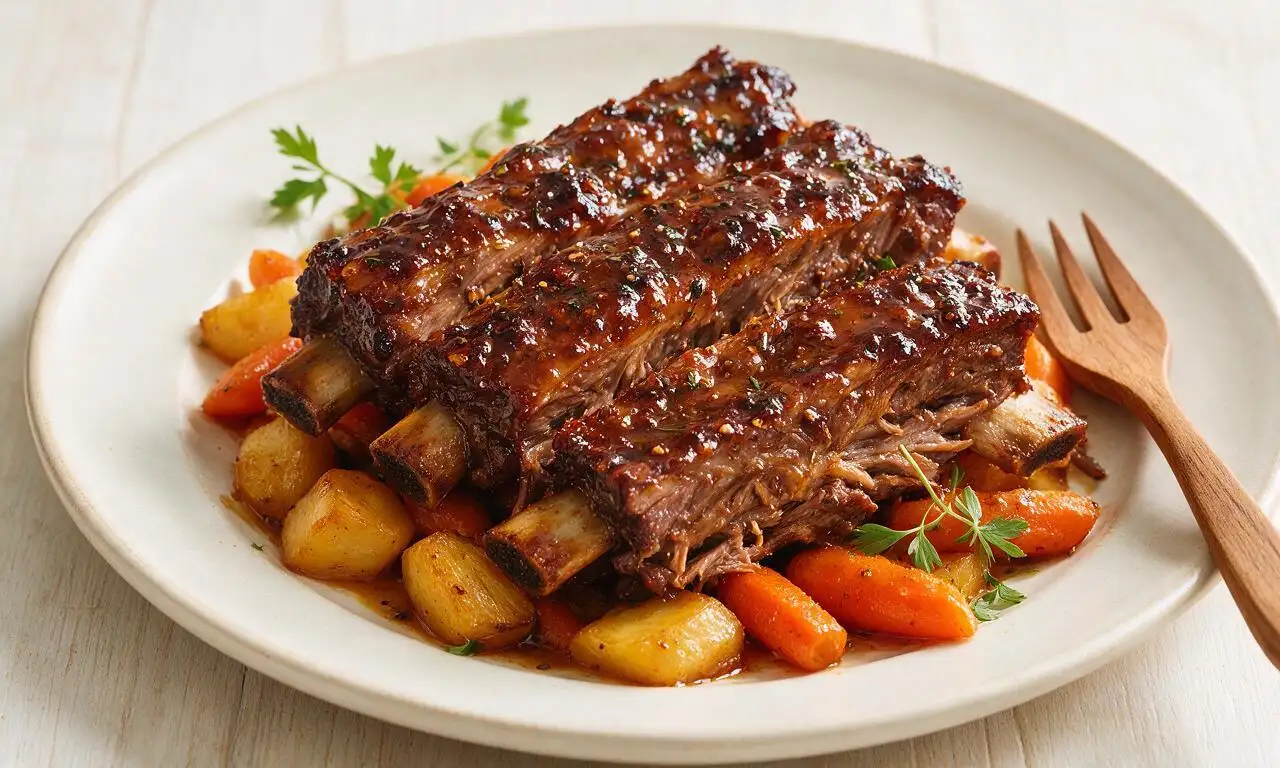
English cut beef short ribs are cut parallel to the bone into thick, 2–3 inch individual portions, each with a single segment of rib bone surrounded by well-marbled beef. Unlike thin, cross-cut flanken-style ribs, they have generous intramuscular fat and connective tissue that melts completely during slow roasting, creating that signature fall-off-the-bone, succulent texture this recipe is known for.
2.Can I use boneless short ribs for this recipe if I can’t find bone-in English cut?
▾
You can, but bone-in ribs are strongly preferred for deeper, richer flavor. If using boneless, trim any thick, tough surface fat, keep the base roast time the same, but add ½ cup low-sodium beef broth to the pan to replace the moisture and flavor bones would release. Check doneness 15 minutes early, as boneless cuts tend to cook slightly faster than bone-in.
3.How far in advance can I season the ribs before roasting?
▾
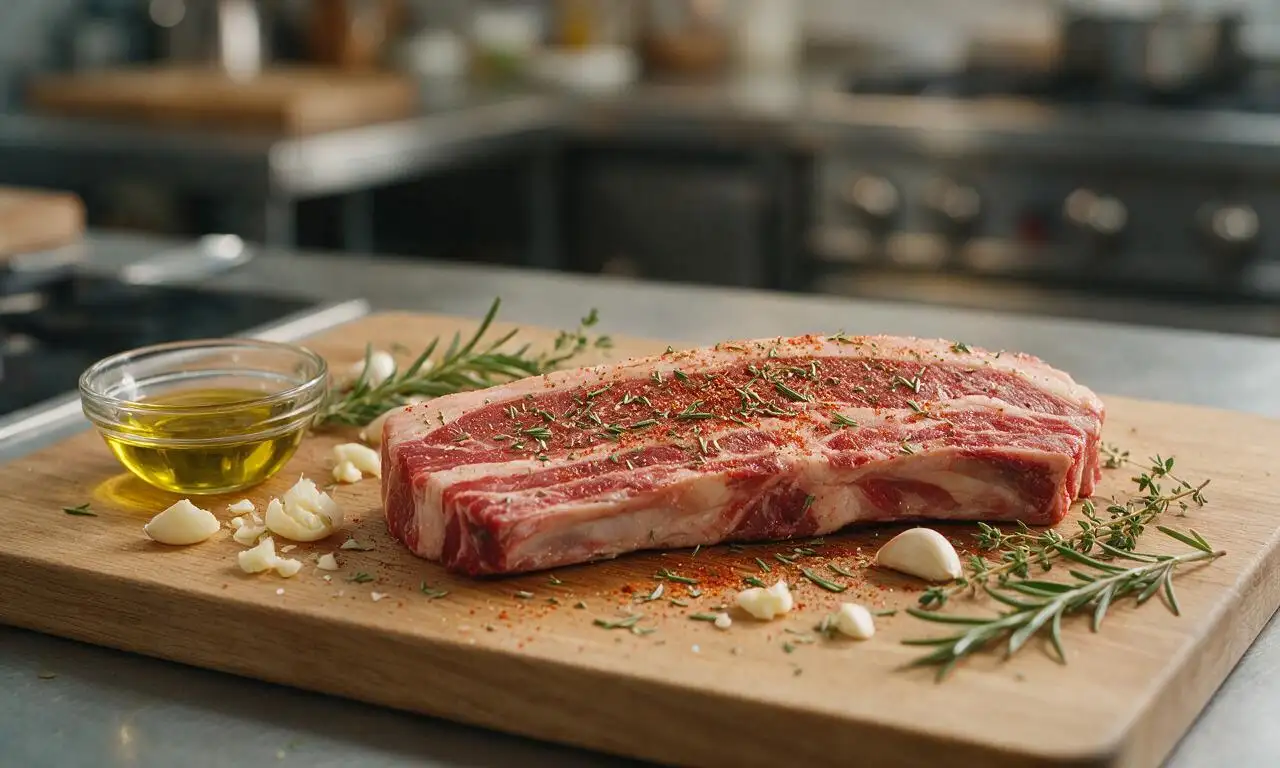
For the deepest, most even flavor, season ribs with kosher salt, pepper, and crushed garlic 12 to 24 hours before roasting, stored uncovered on a wire rack in the fridge. This dry brine lets salt penetrate the meat, tenderizes it, and helps form a crisp, herb-flecked crust as it roasts. If you’re short on time, seasoning right before putting them in the oven works too.
4.What oven temperature is best for true slow-roasted rib results?
▾
Stick to a steady 275°F (135°C) for this recipe—no higher. That low, even heat gently breaks down the tough connective tissue in the ribs without seizing the delicate muscle fibers, which gives you tender, juicy meat instead of tough, chewy ribs. Resist the urge to crank the heat to speed things up; low and slow is non-negotiable here.
5.The recipe says to roast over root vegetables—what veggies work best?
▾
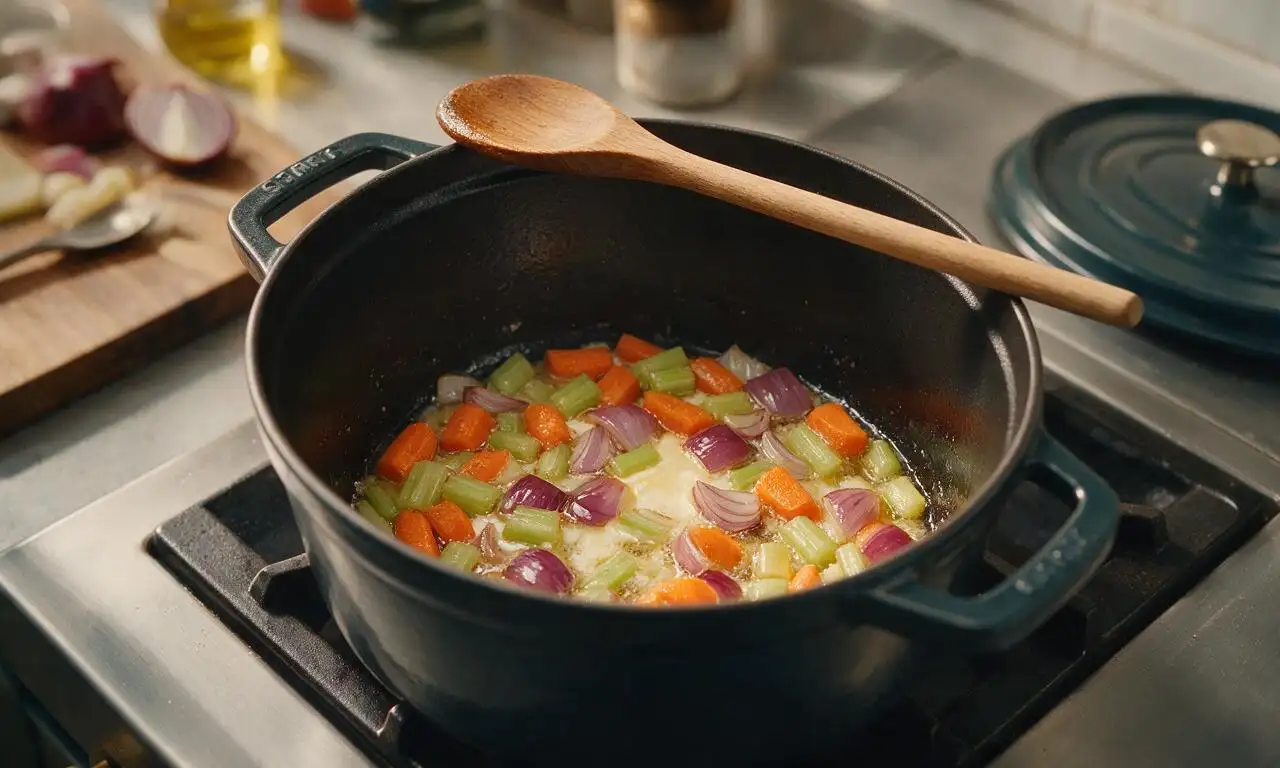
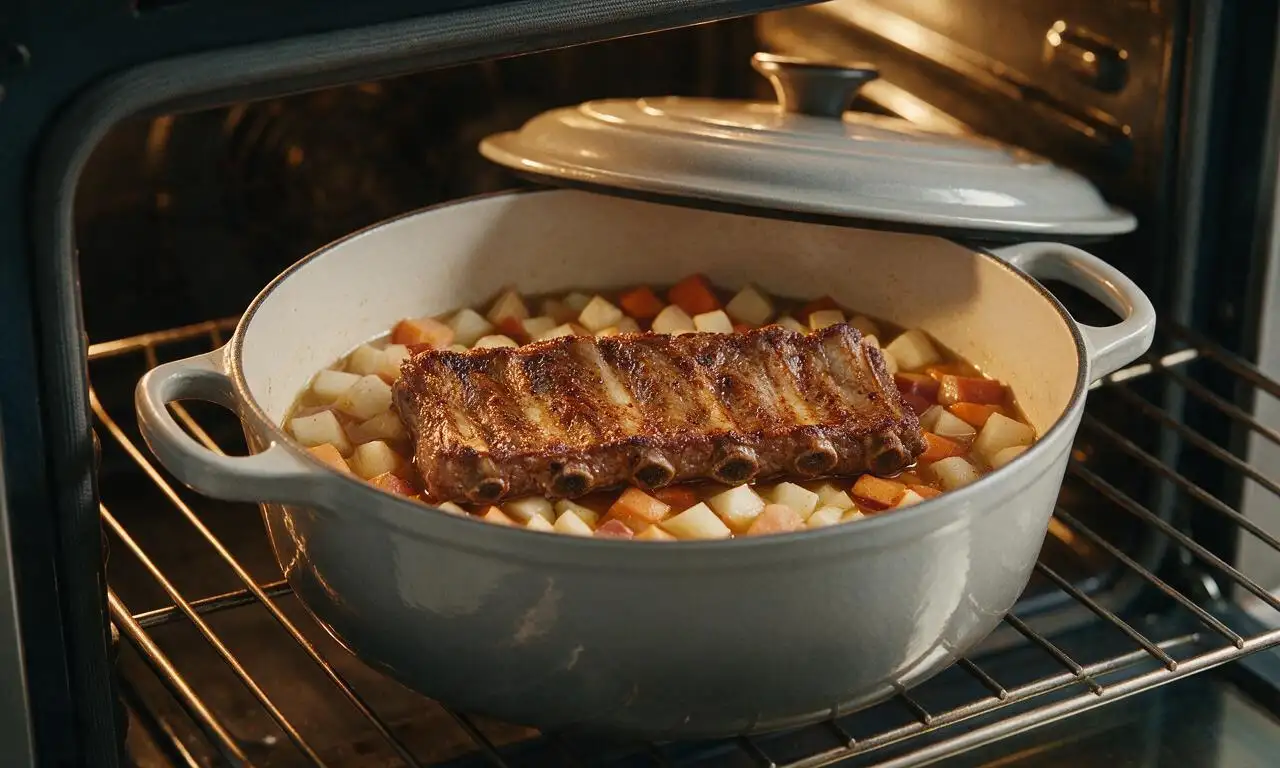
Stick to sturdy, low-moisture root veggies that hold up to long roast times: peeled carrot chunks, quartered yellow onions, parsnip segments, cubed rutabaga, and extra whole garlic cloves work beautifully. Toss them in a light drizzle of olive oil and pinch of salt before laying ribs directly on top, so they catch all the savory, beefy drippings as the ribs cook.
6.How long do these ribs take to cook fully?
▾
Plan on 3.5 to 4 hours total roast time at 275°F for standard 2–3 inch English cut ribs. You’ll know they’re done when a fork slides into the thickest part of the meat with zero resistance, and the meat pulls back from the end of the bone by about ½ inch. Don’t pull them early, as undercooked short ribs will be chewy and tough.
7.Do I need to sear the ribs before slow roasting them?
▾
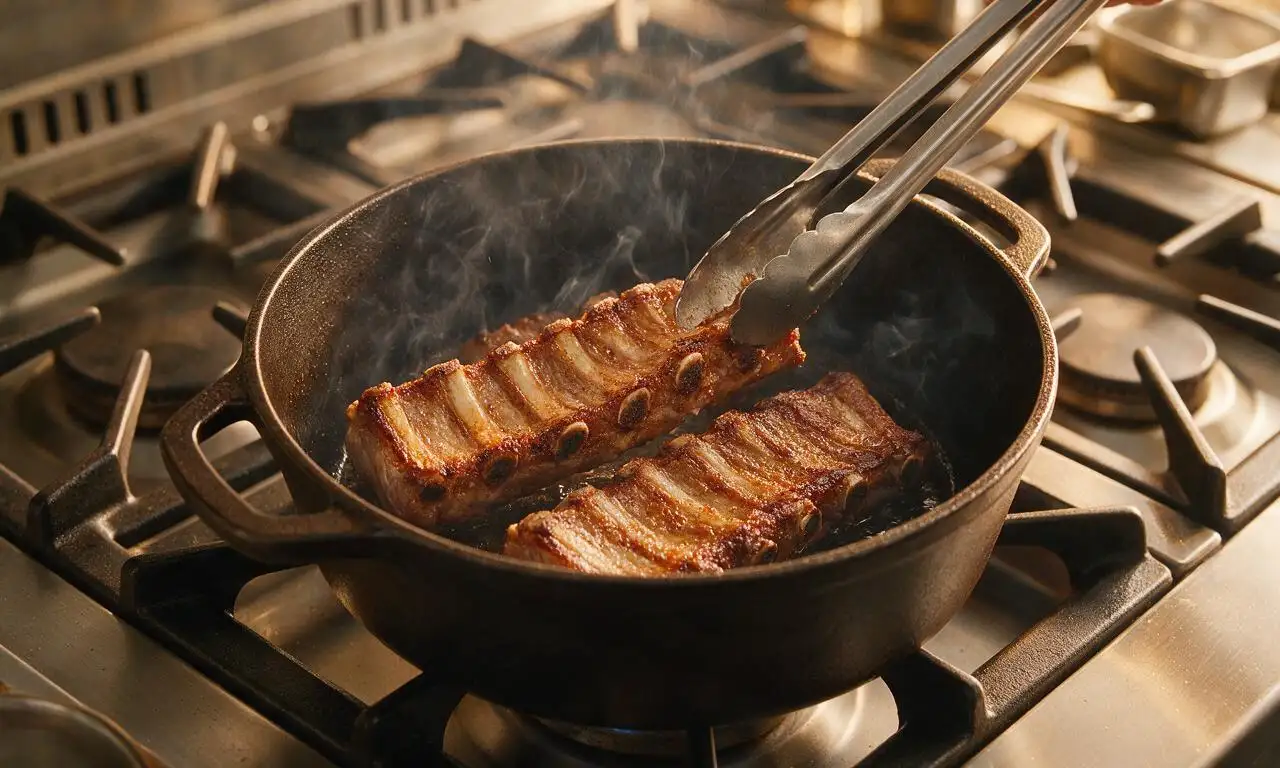
Searing is totally optional for this traditional preparation, but it does add an extra layer of deep, maillard-reaction flavor if you have 10 extra minutes. If you choose to sear, heat a thin layer of olive oil in a heavy skillet over high heat, and brown all sides of the seasoned ribs before setting them on the root veggies to roast.
8.Should I cover the ribs with foil while they roast?
▾
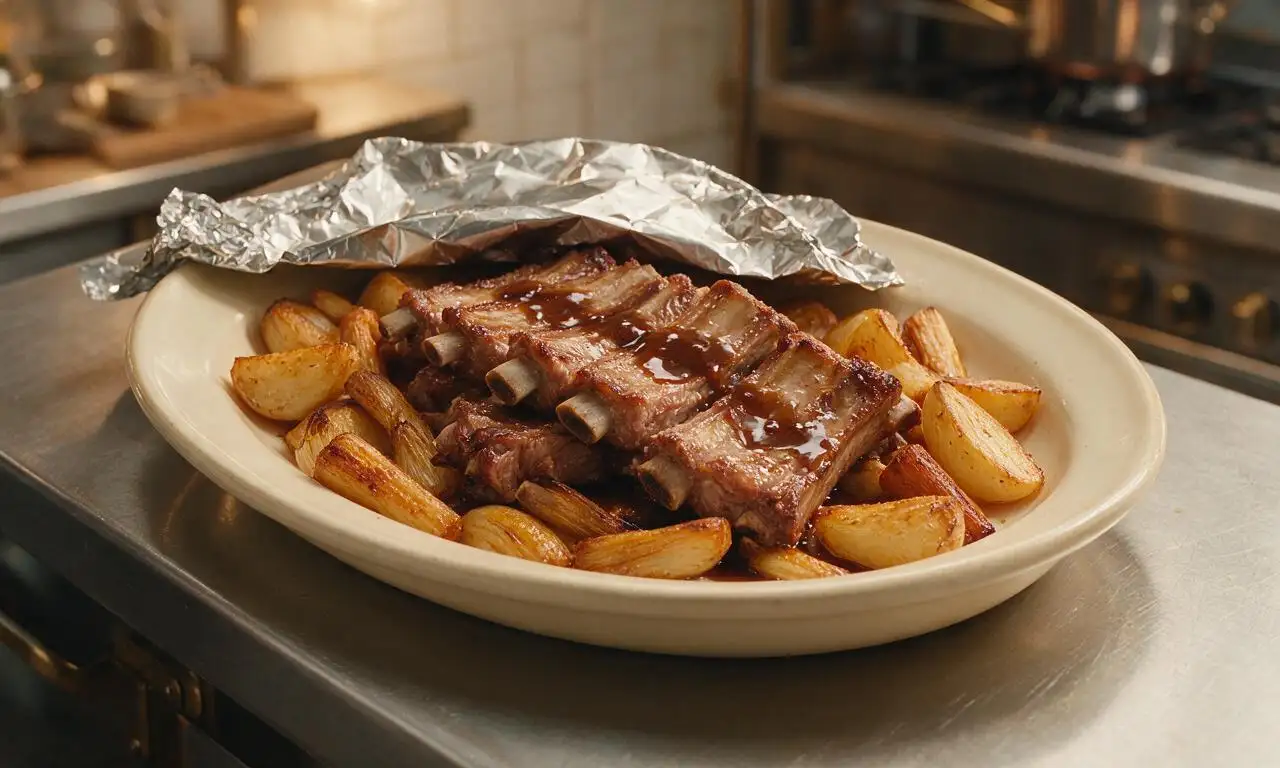
Cover the pan tightly with heavy-duty aluminum foil for the first 2.5 hours of roasting to trap steam and lock in moisture, which helps soften tough connective tissue faster. Remove the foil for the final hour of cooking to let the herb, garlic, and pepper crust crisp up, and let the top layer of meat caramelize for perfect textural contrast.
9.How do I get fall-off-the-bone texture without the meat turning mushy?
▾
The key is to pull the ribs the second they hit that sweet spot of doneness: when a fork twists easily in the meat but the ribs still hold their shape when you lift them with tongs. If you cook them 30+ minutes past that point, muscle fibers break down too much and turn mushy. Use the fork test instead of relying only on a timer.
10.What internal temperature confirms the ribs are properly done?
▾
Don’t rely on the standard 145°F beef doneness temp for these ribs—slow-roasted short ribs need to reach an internal temp of 200–205°F, measured at the thickest part away from the bone. At that temperature, all tough collagen melts into rich, silky gelatin, which creates that signature juicy, tender bite instead of chewy, underdone meat.
11.Can I make these ribs in a slow cooker instead of the oven?
▾
You absolutely can! Brown the seasoned ribs first if you’d like, then layer root veggies at the bottom of the slow cooker, set the ribs on top, and cook on LOW for 7–8 hours. For a crisp, roasted-style crust, transfer cooked ribs to a baking sheet and broil for 2–3 minutes right before serving.
12.The recipe calls for extra virgin olive oil—can I substitute a different fat?
▾
You can swap the olive oil for melted beef tallow, duck fat, or even neutral canola oil if that’s what you have on hand. Beef tallow in particular adds an extra rich, meaty depth that pairs beautifully with the ribs, but extra virgin olive oil is the traditional pick, and creates a bright, herby base for the garlic and pepper crust.
13.How much kosher salt should I use to season the ribs properly?
▾
Use roughly 1 teaspoon of kosher salt per pound of ribs, sprinkled evenly on all sides. If you’re using regular table salt instead of kosher, cut that amount in half, since table salt is much denser and saltier by volume. Err slightly on the generous side—well-marbled, slow-roasted beef needs enough salt to make its savory flavors pop.
14.Do I need to add extra liquid to the roasting pan?
▾
You won’t need extra liquid for the oven version if you’re roasting over root veggies! The ribs will release plenty of fat and savory juices as they cook, which will baste the veggies and keep the meat moist. If you notice veggies starting to scorch before the ribs are done, add ¼ cup of beef broth or water to the pan to prevent burning.
15.How should I store leftover ribs, and how long will they keep?
▾
Let leftover ribs and veggies cool completely within 2 hours of cooking, then transfer them to an airtight container and store in the fridge for up to 4 days. The flavors actually get better the next day as the garlic and pepper notes meld with the rendered beef fat. Reheat gently, covered, in a 300°F oven for 15–20 minutes to avoid drying the meat out.
16.Can I freeze these roasted ribs for later meals?
▾
Absolutely! Wrap individual rib portions tightly in plastic wrap, then seal them in a freezer-safe bag or container, and they’ll keep for up to 3 months in the freezer. Thaw them overnight in the fridge before reheating, and spoon any reserved pan drippings over the top as you reheat to lock in moisture and bring back that fresh-roasted flavor.
17.What’s the best way to get the garlic and pepper crust to stick to the ribs?
▾
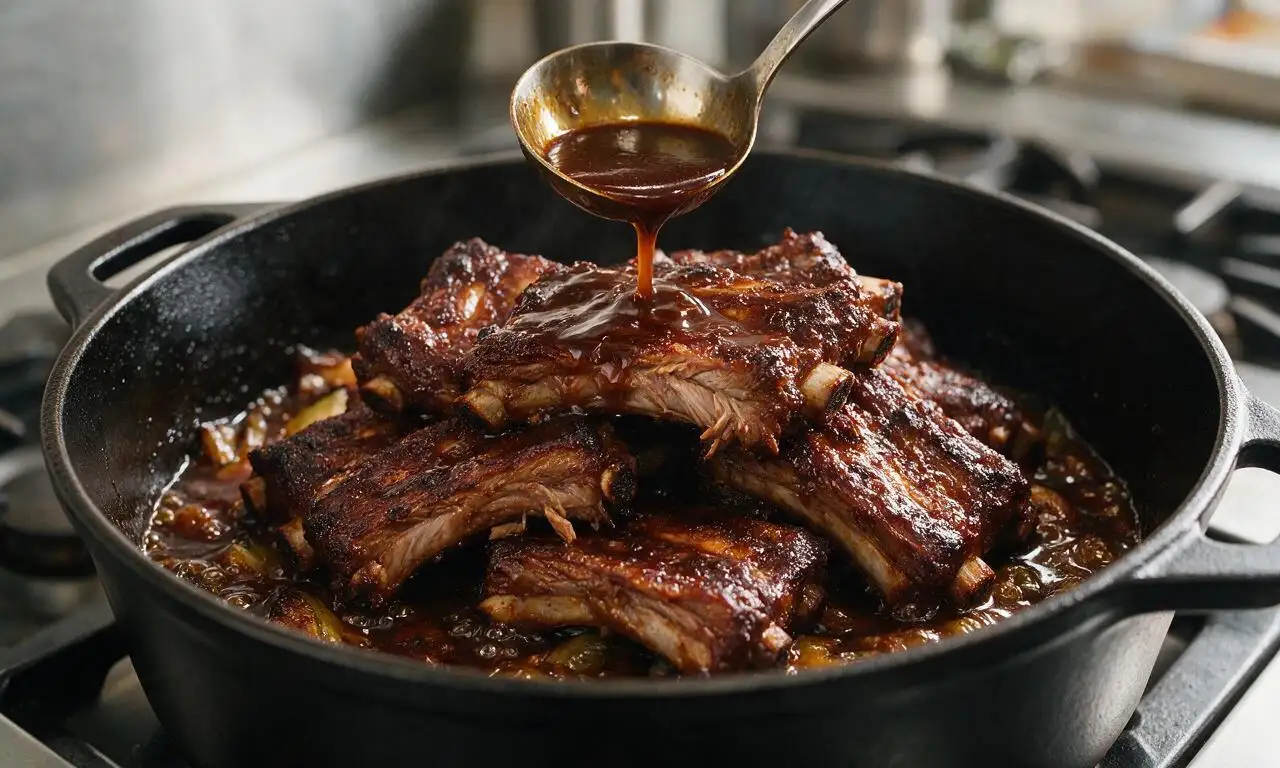
Pat the ribs completely dry with paper towels before rubbing them with olive oil, then press the crushed garlic, kosher salt, freshly ground black pepper, and herb crust seasoning firmly into all surfaces of the meat. The dry surface and olive oil act as a binder that keeps seasoning in place as it roasts, so you won’t lose all that flavorful crust to the pan drippings.
18.Why did my ribs turn out tough even after 4 hours of slow roasting?
▾
Tough ribs almost always come from one of two issues: either your oven ran hotter than its set temperature, which seized the muscle fibers before connective tissue could break down, or you pulled them too early. Double check your oven temp with an inexpensive oven thermometer, and don’t pull ribs until they hit 200–205°F and a fork slides in easily.
19.What traditional sides pair best with these slow-roasted ribs?
▾
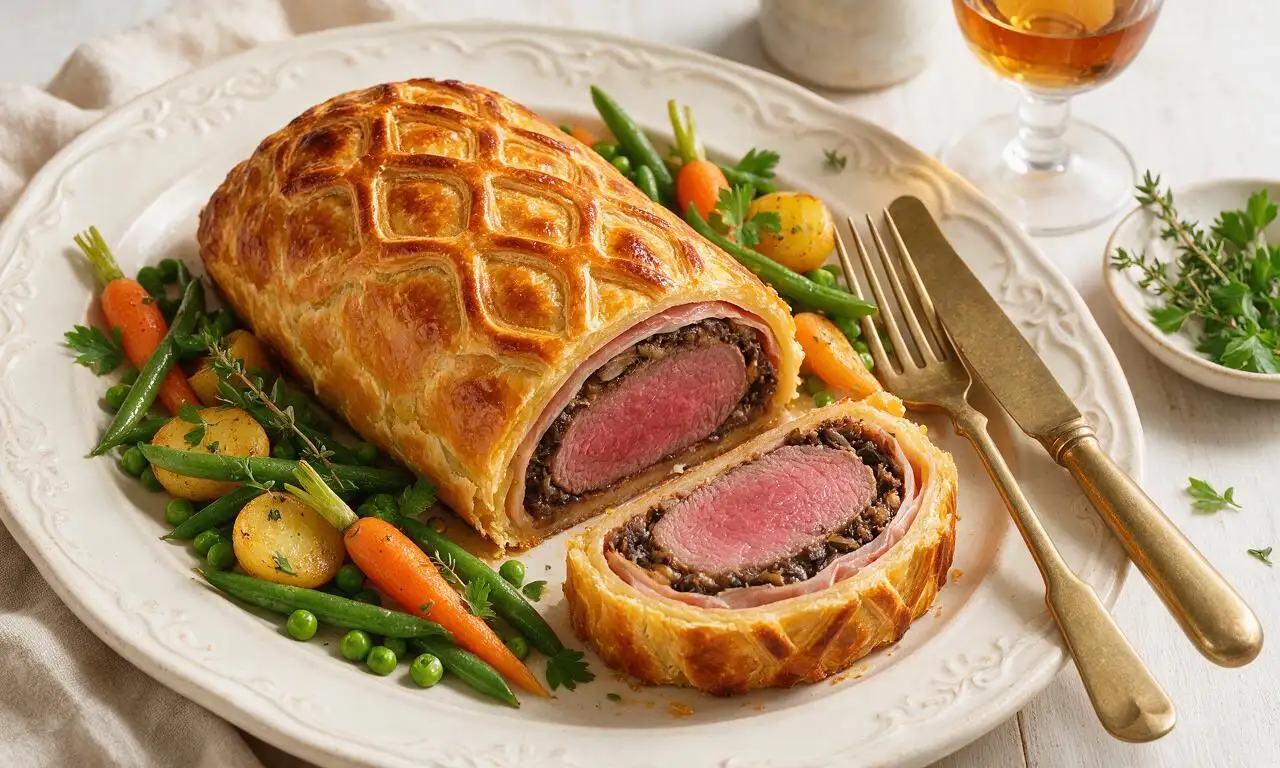
Stick to classic, complementary pairings for this hearty British roast: creamy horseradish sauce, buttery mashed potatoes, buttered steamed peas, or crisp Yorkshire pudding work perfectly. The bright, sharp bite of horseradish cuts through the rich, fatty beef beautifully, and it’s the longstanding, traditional accompaniment for this family-style meal.

OMG these ribs were a total game changer for our Sunday family dinner! I was nervous about the 3 hour cook time but it was so worth it — the meat fell right off the bone, no knife needed. My kids went back for seconds before I even sat down to eat! Only thing I adjusted was adding a little extra dry rub because we love spice in our house. 10/10 will be making these for our next neighborhood potluck too.
Tried these last night for date night and my partner is still raving about them! I will say the difficulty felt a little higher than medium for me because I’ve never roasted ribs before, I kept panicking that I was overcooking them, but the timing guide was spot on. The crust was perfect, the meat was juicy. SO good.
Meal prepped these on Sunday and ate them all week with roasted veggies and mashed potatoes! They reheat so much better than I thought ribs would, no weird rubbery texture at all. Saved me so much money on takeout this week, will absolutely be adding this to my regular rotation.
I’ve been making ribs for my family for 40+ years and I was skeptical about a new recipe, but let me tell you — this method beats my old one by a mile. The slow roast at low temp makes all the difference, no tough, chewy bits anywhere. My grandson said these are “the best ribs grandma has ever made” and I have to agree!
Made these for the guys on my crew after a long week on the job and there were zero leftovers. Solid recipe, no fancy frills, just straight up good ribs. I cooked ‘em on my old backyard offset smoker for the last 30 minutes to add a little smoke flavor and it worked like a charm.
So happy this recipe is naturally gluten free if you skip the optional Worcestershire swap (I used coconut aminos instead!) It’s so hard to find rib recipes that don’t call for weird filler sauces with gluten, and these tasted every bit as good as the restaurant ribs I used to get before going GF. Will make again.
Full transparency: I burned the first batch because I got distracted changing a diaper and forgot to turn the oven temp down. Tried again yesterday, followed the directions exactly, and my wife said I’m officially in charge of all rib cooks from now on. Win for dad life!
I was really excited for these but mine came out a little drier than I expected? I followed the cook time exactly, maybe my oven runs hot? I’m gonna give it another go next weekend because the flavor was incredible, I just need to tweak the temp for my weird old apartment oven.
Tested these out as a trial run for our college football tailgate next month and they’re gonna be a smash hit. I cut them into individual ribs after roasting, tossed them in a little extra BBQ sauce, and they were easy to hold and eat standing up, no messy plates needed. Total tailgate win.
Made these last night with roasted Brussels sprouts and garlic mashed potatoes for my parents’ anniversary dinner and everyone cleaned their plates. My dad is a super picky eater who swears “no ribs are as good as the ones he makes on the grill” and he even asked for the recipe! Wild.
Wait can I make these with a cheaper cut of ribs? English cut ribs were a little pricier at my grocery store this week and I’m cooking for a big group on a tight budget. Would the cook time work the same for a regular spare rib?
These fit perfectly into my low carb/keto meal plan if you skip the sugary BBQ sauce finish! I used a butter and garlic baste for the last 20 minutes and it was chef’s kiss. No weird sugary crash after eating, just rich, savory, tender meat. 10/10.
Made these for our town’s annual rib cook-off last weekend and won second place! The only reason I didn’t get first is because the winner used a super intense smoke flavor I don’t have the setup for, but so many people came up to ask me for the recipe. Total win in my book!