
garum sauce
intro
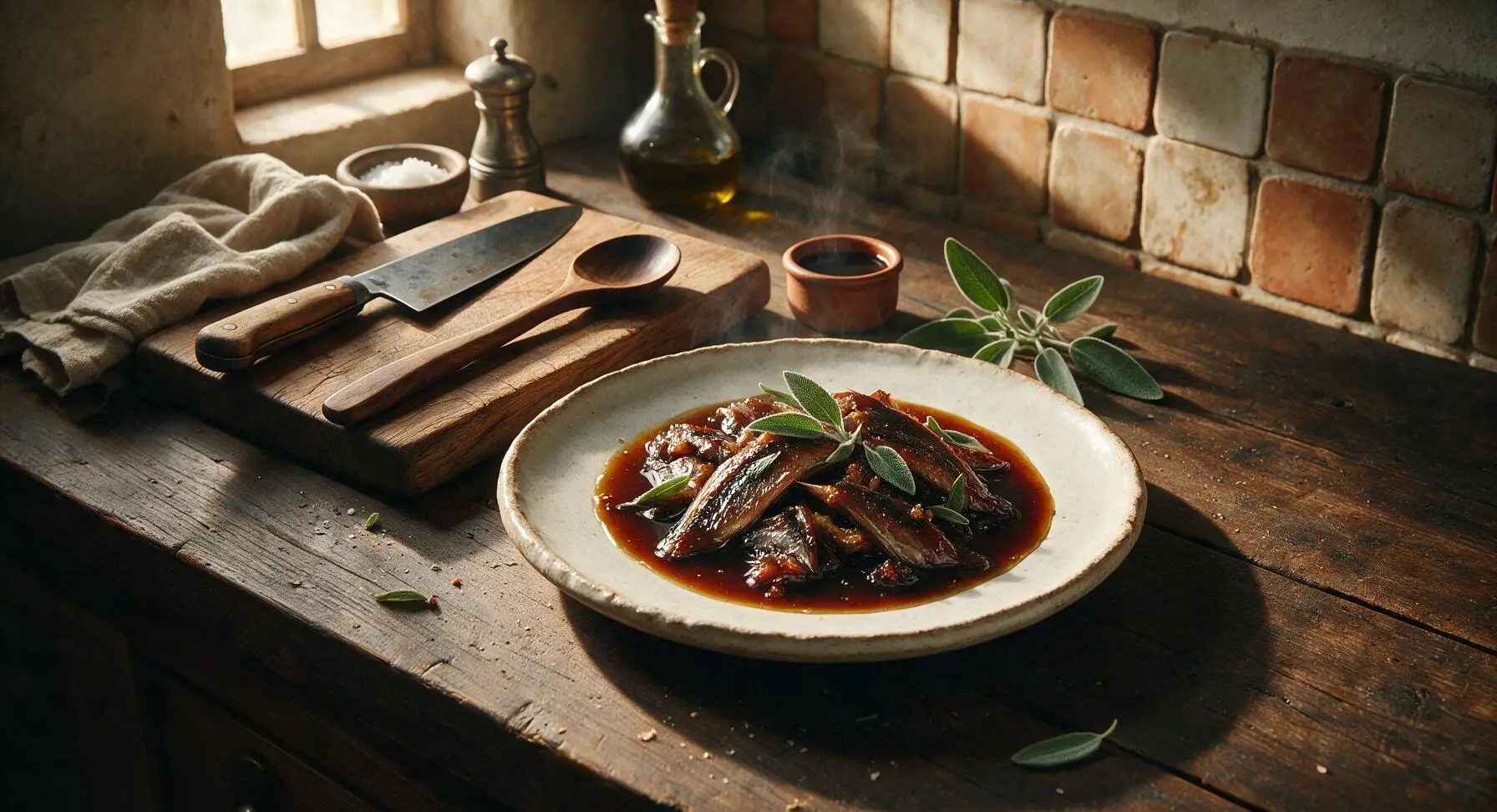
The umami-packed ancient Mediterranean fermented fish sauce, prized for its deep briny savoriness that elevates every dish it touches, made with time-honored methods.
Ingredients
Steps
Sanitize Fermentation Gear
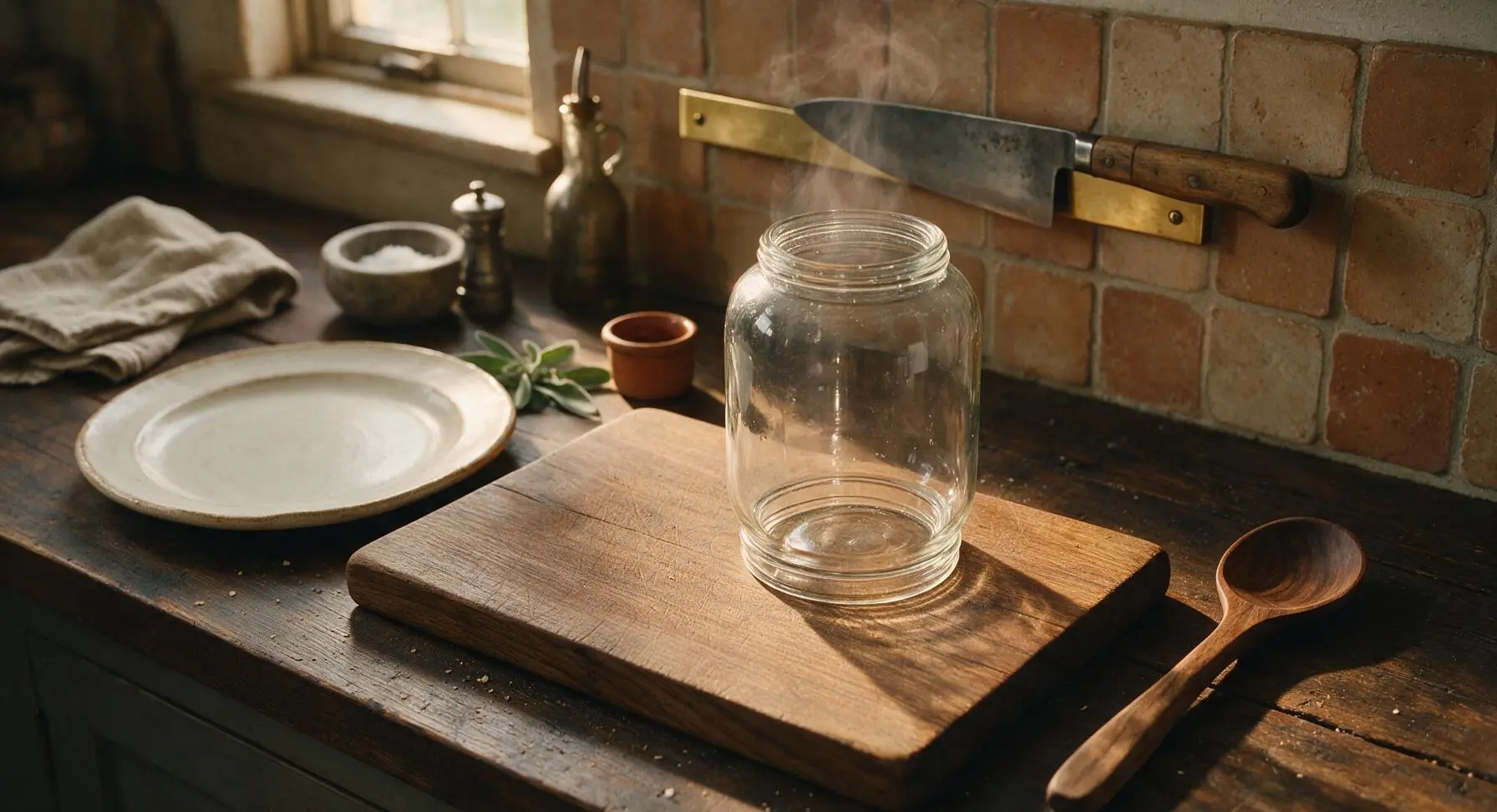
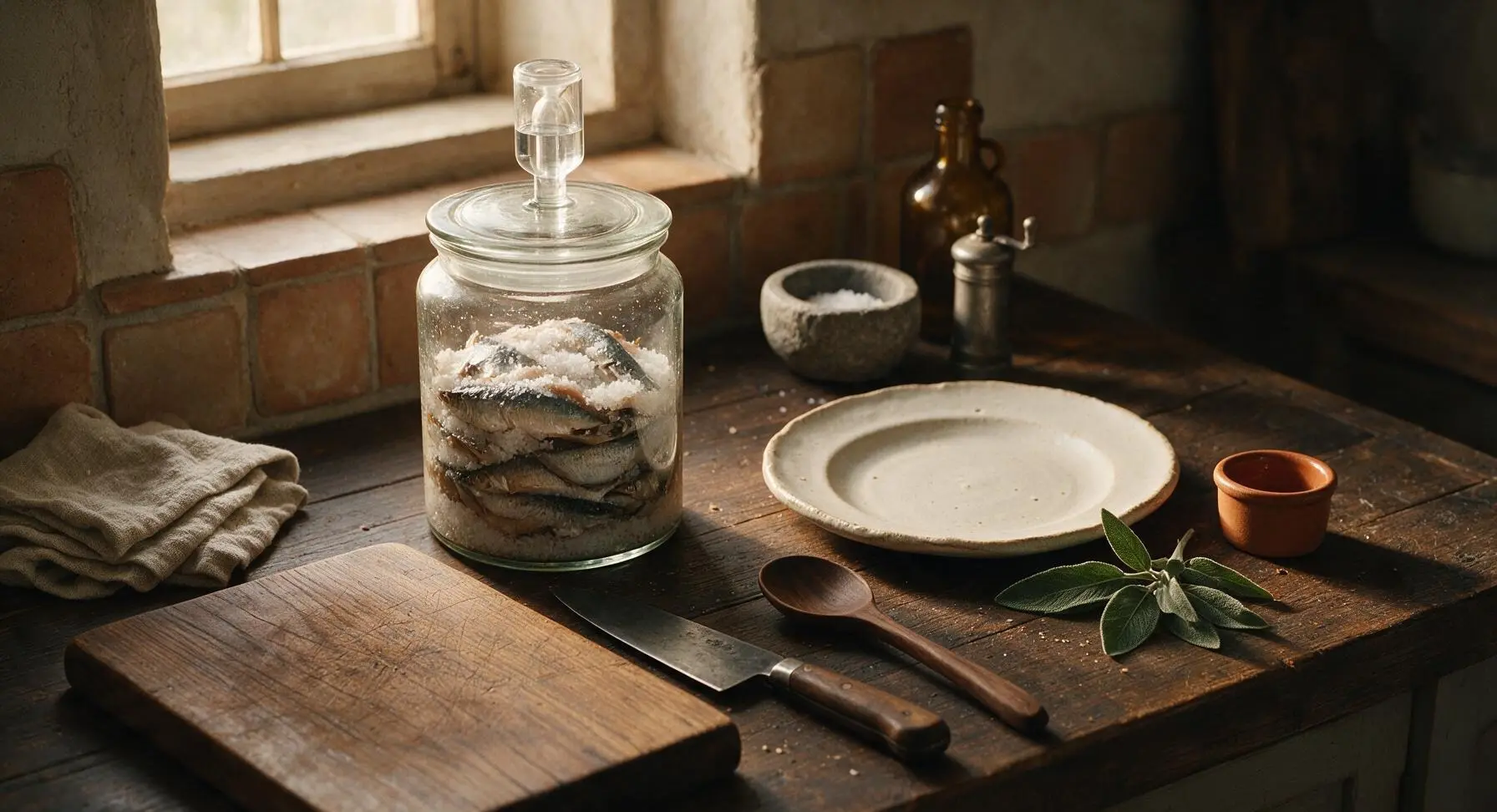
Wash the 2L clear glass fermentation jar, matching glass lid, and silicone airlock with hot soapy water, then rinse thoroughly with boiling water to eliminate unwanted bacteria that could cause spoilage. Dry all components completely with a clean lint-free cloth—no residual moisture should remain, as trapped water can introduce mold. Set the fully dry jar on the counter in its center-right position, next to the acacia cutting board spot.
Prep Fresh Anchovies
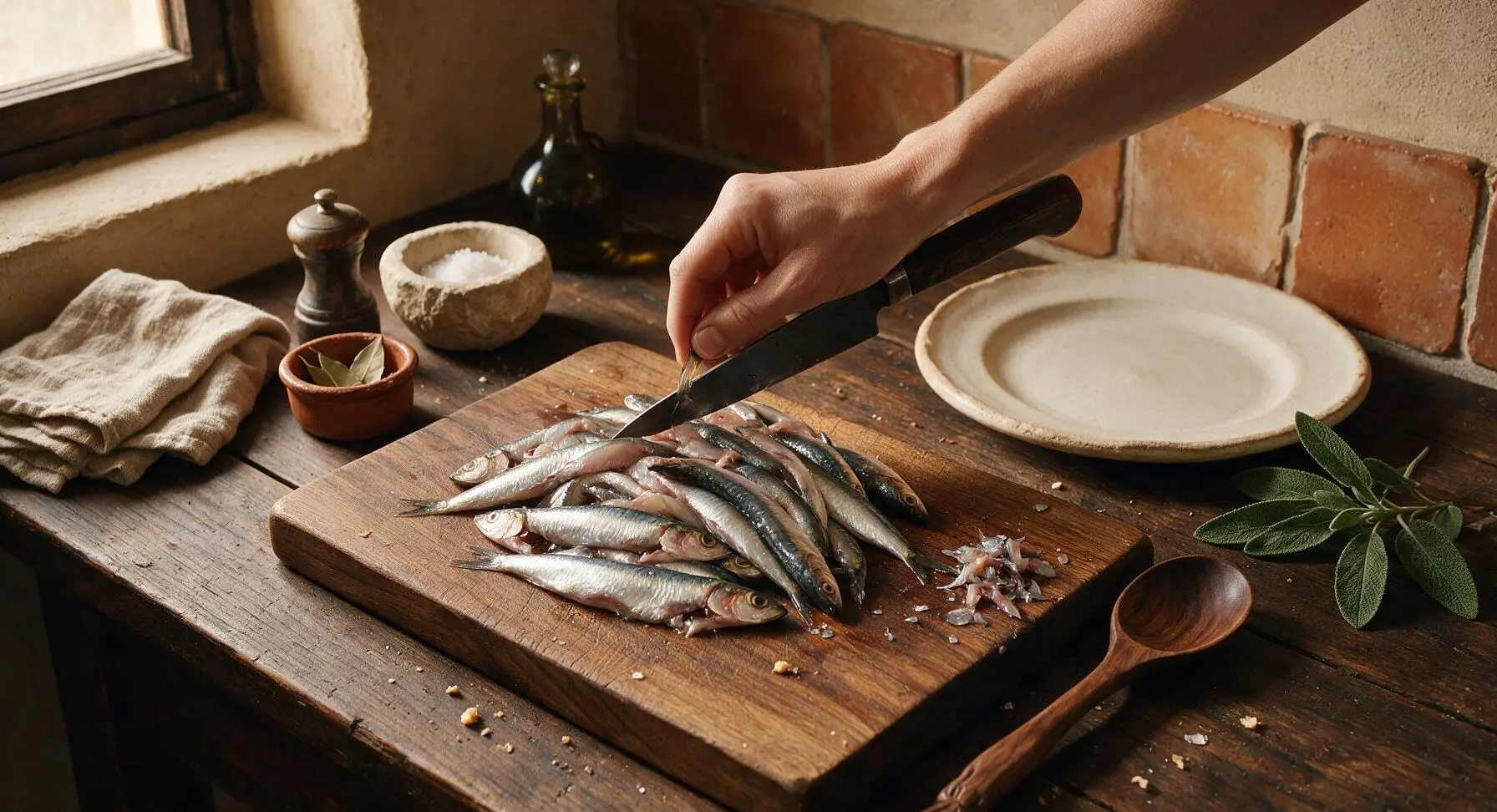
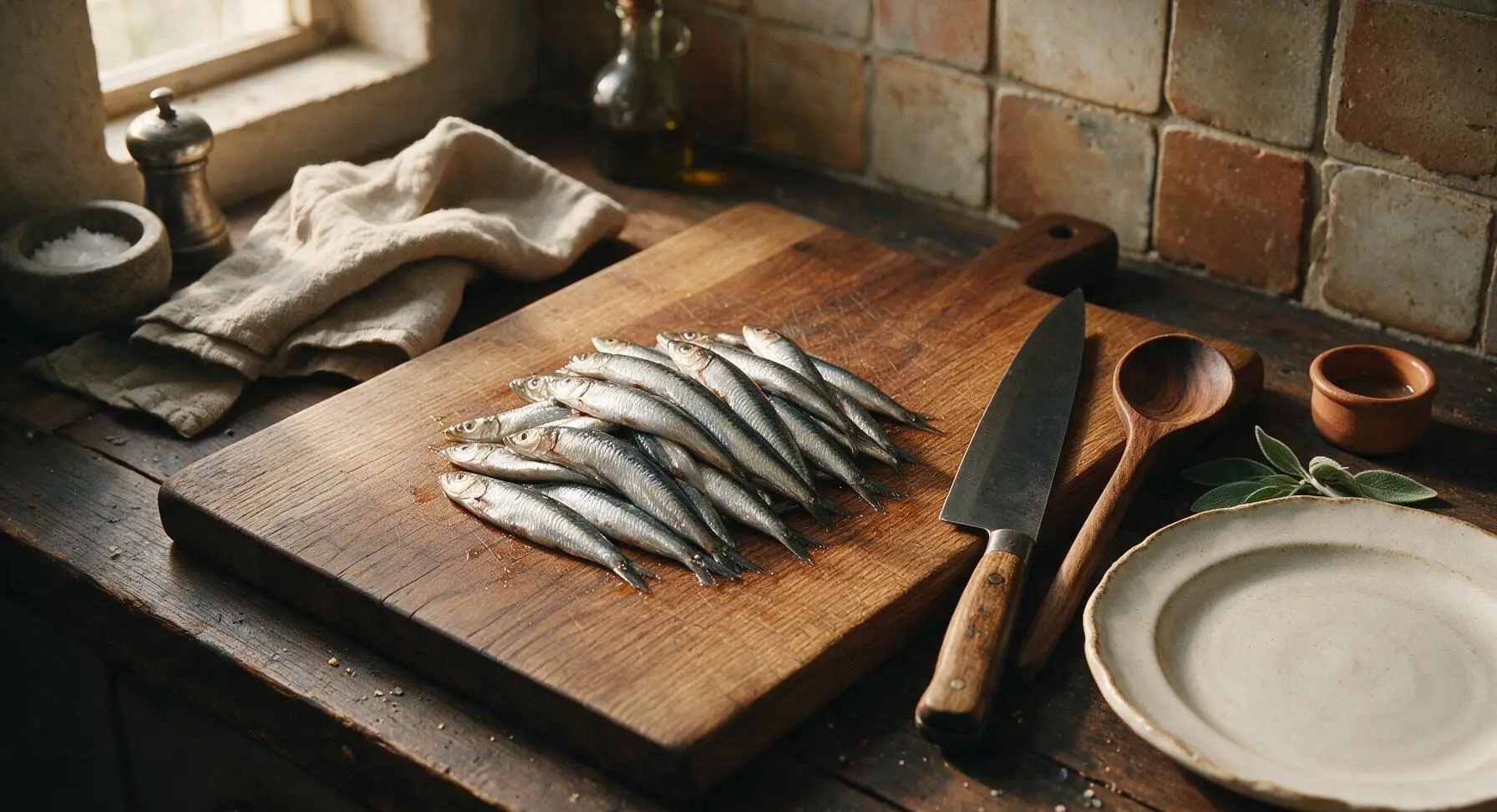
Rinse the 1kg gutted whole anchovies under cold running water, then pat completely dry with the linen towel. Lay the fish on the acacia cutting board, and use the walnut-handled chef knife to trim away any remaining scales, loose fins, or stray innards. Do not remove bones, skin, or heads, as these add deep umami and mineral notes during fermentation. Weigh the cleaned, dried fish on the matte white digital scale to confirm a 1kg yield.
Mix Aromatic Salt Blend
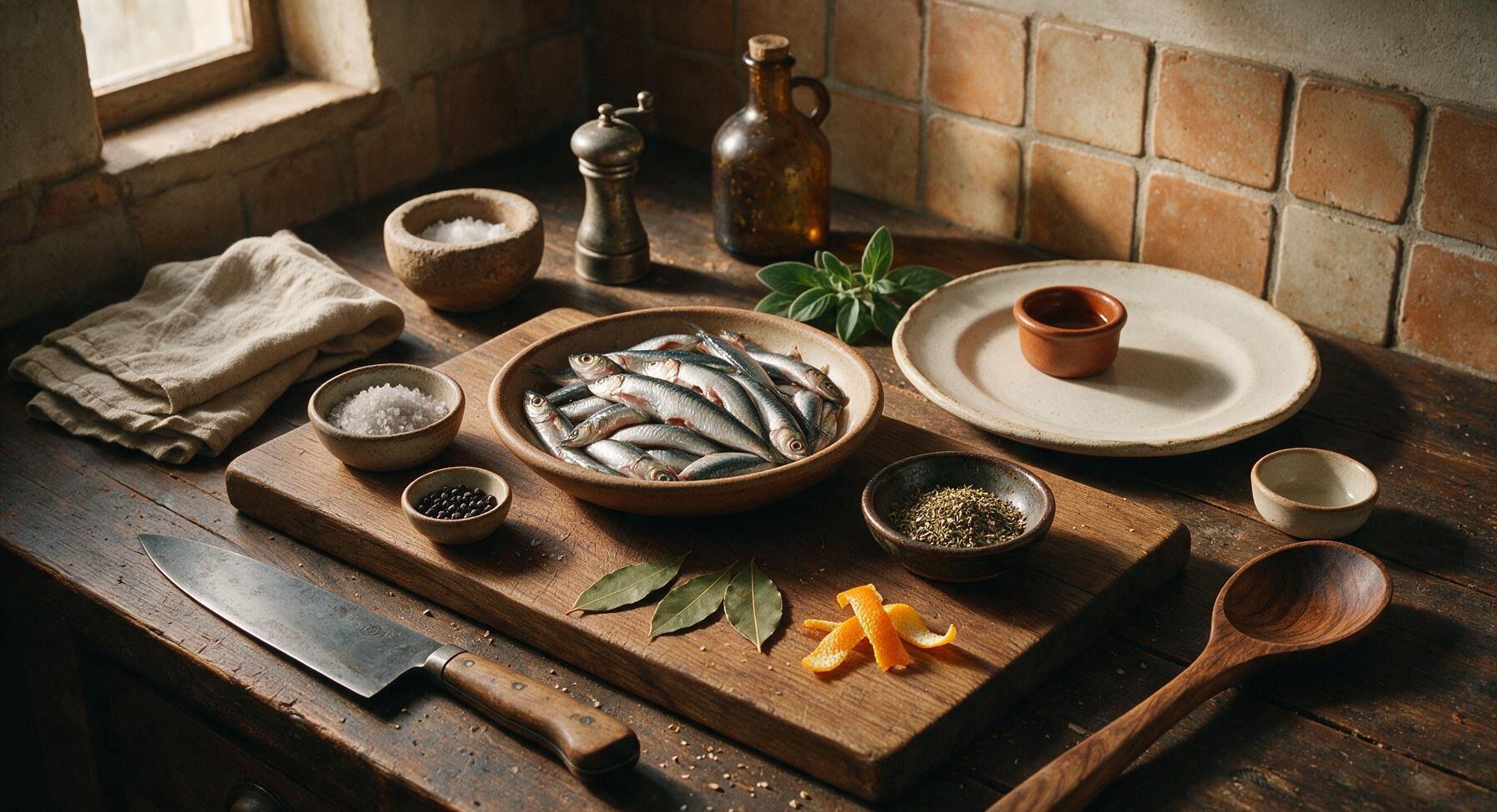
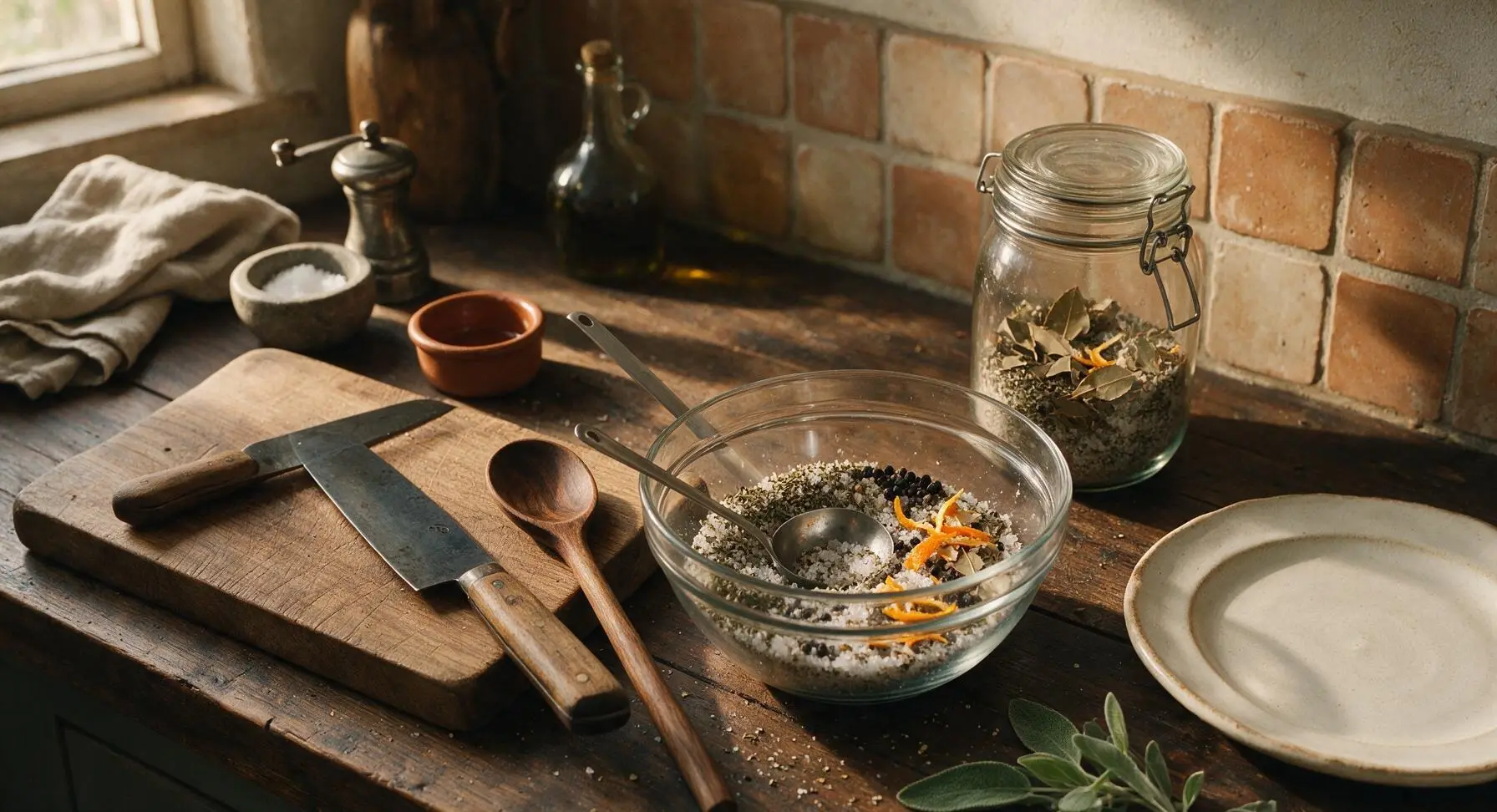
In the 18cm clear glass mixing bowl, combine 300g coarse gray sea salt, 2 tbsp dried oregano, 1 tbsp whole black peppercorns, 3 crumbled dried bay leaves, and 2 strips of orange zest (all white pith removed to avoid bitter flavor). Stir thoroughly with the long-handled stainless steel ladle to evenly distribute aromatics through the salt. This 3:10 salt-to-fish ratio prevents spoilage while allowing beneficial fermentation bacteria to thrive.
Layer Jar Ingredients
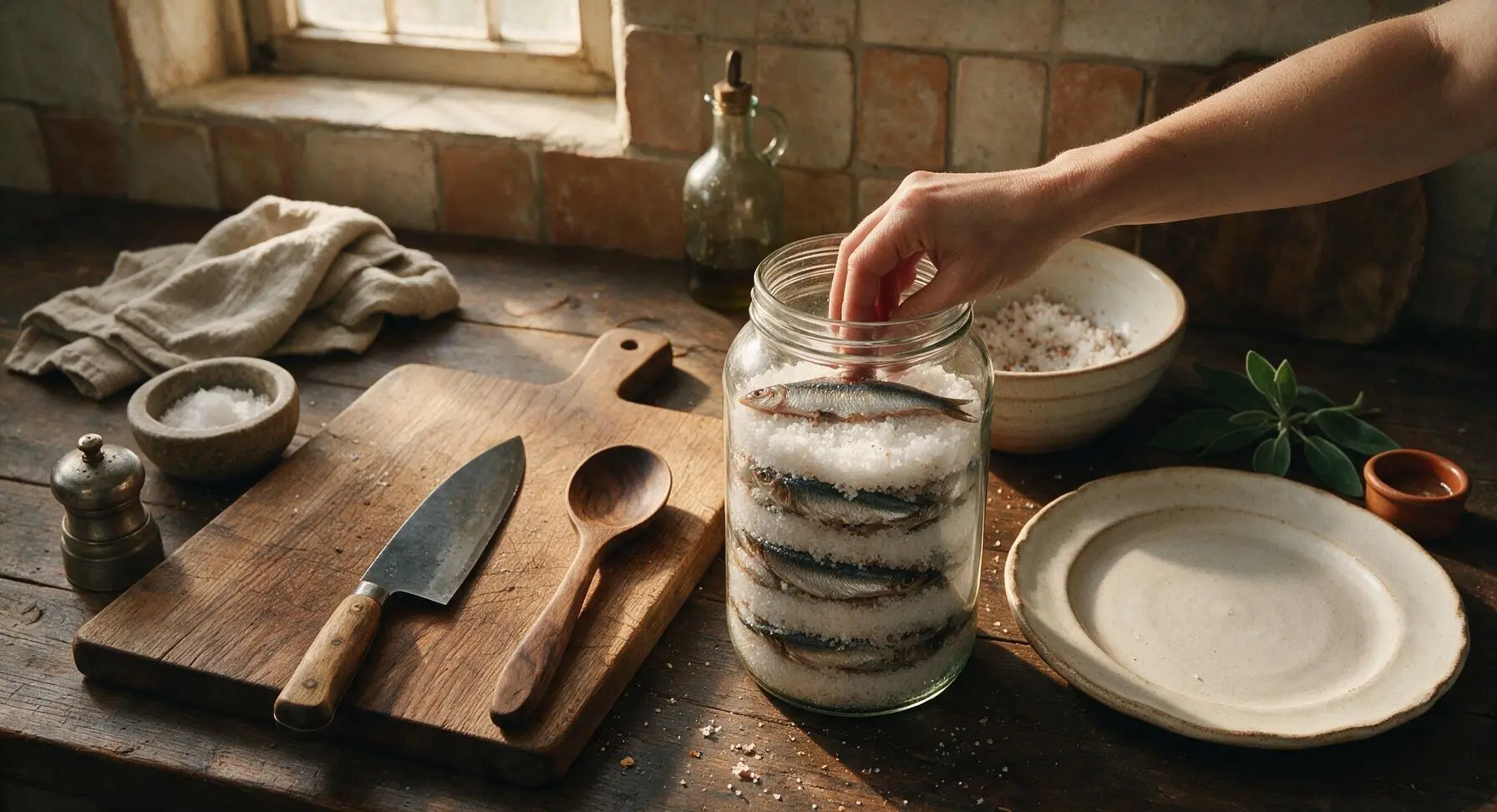
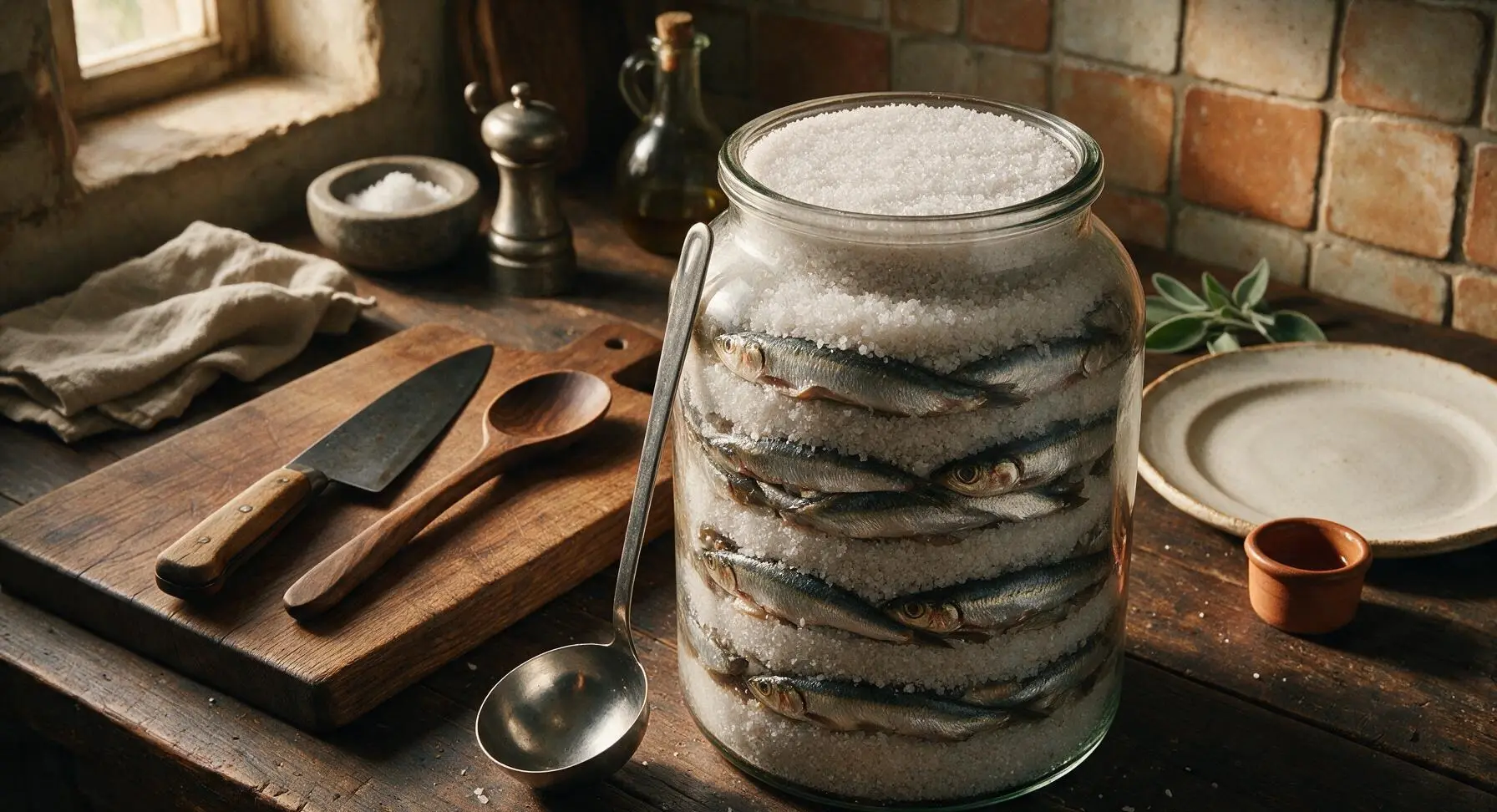
Add a 1cm thick layer of the aromatic salt blend to the bottom of the dry fermentation jar. Top with a single even layer of cleaned anchovies, laid flat to fully cover the salt. Repeat alternating layers of salt and fish, pressing down firmly with the flat end of the ladle after each layer to eliminate trapped air pockets, until all fish and salt are used. Finish with a final 2cm thick cap of salt on the very top to create an airtight seal for the ferment.
Seal For Fermentation
Wipe the jar rim completely clean with a dry paper towel to remove any stray salt or fish residue, then fit the glass lid and fill the silicone airlock with clean filtered water to the marked line. Move the sealed jar to a spot on the left counter near the window, where it will receive 4-6 hours of direct morning sun daily, with consistent temperatures between 18-24C (65-75F). Do not open the jar for the first 4 weeks to avoid introducing airborne contaminants.
Monitor Fermentation Progress
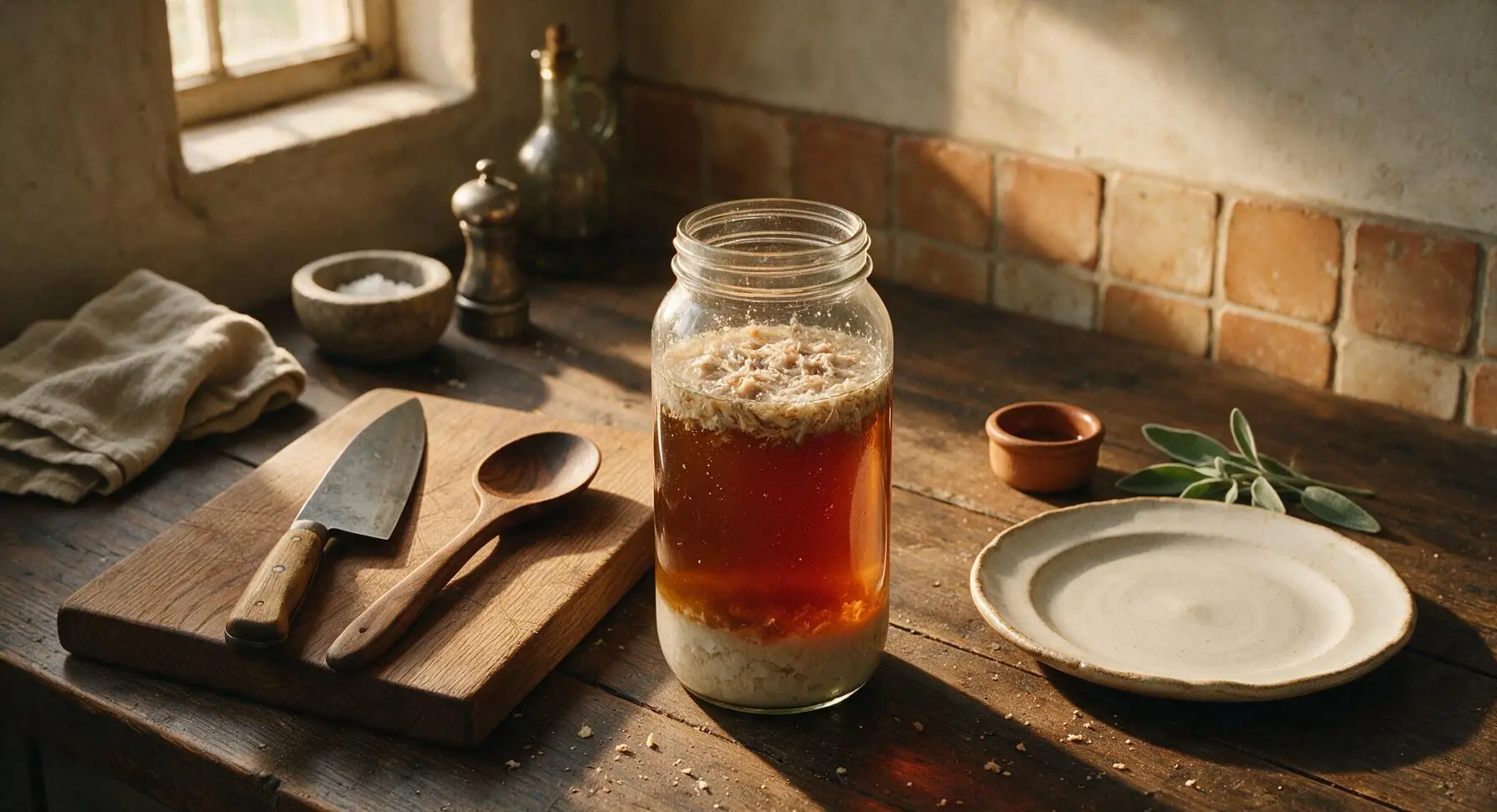
Check the jar every 2 weeks over the 3-month fermentation period to top up airlock water as needed. Over time, the fish will break down: solid matter will rise to form a pale cap on top, a thin layer of sediment will settle at the bottom, and a clear deep amber liquid (the garum) will form in the middle. The finished ferment will smell deeply briny, savory, and slightly nutty; discard the entire batch immediately if you detect foul, rotten odors or fuzzy green/white mold.
Strain Fermented Liquid
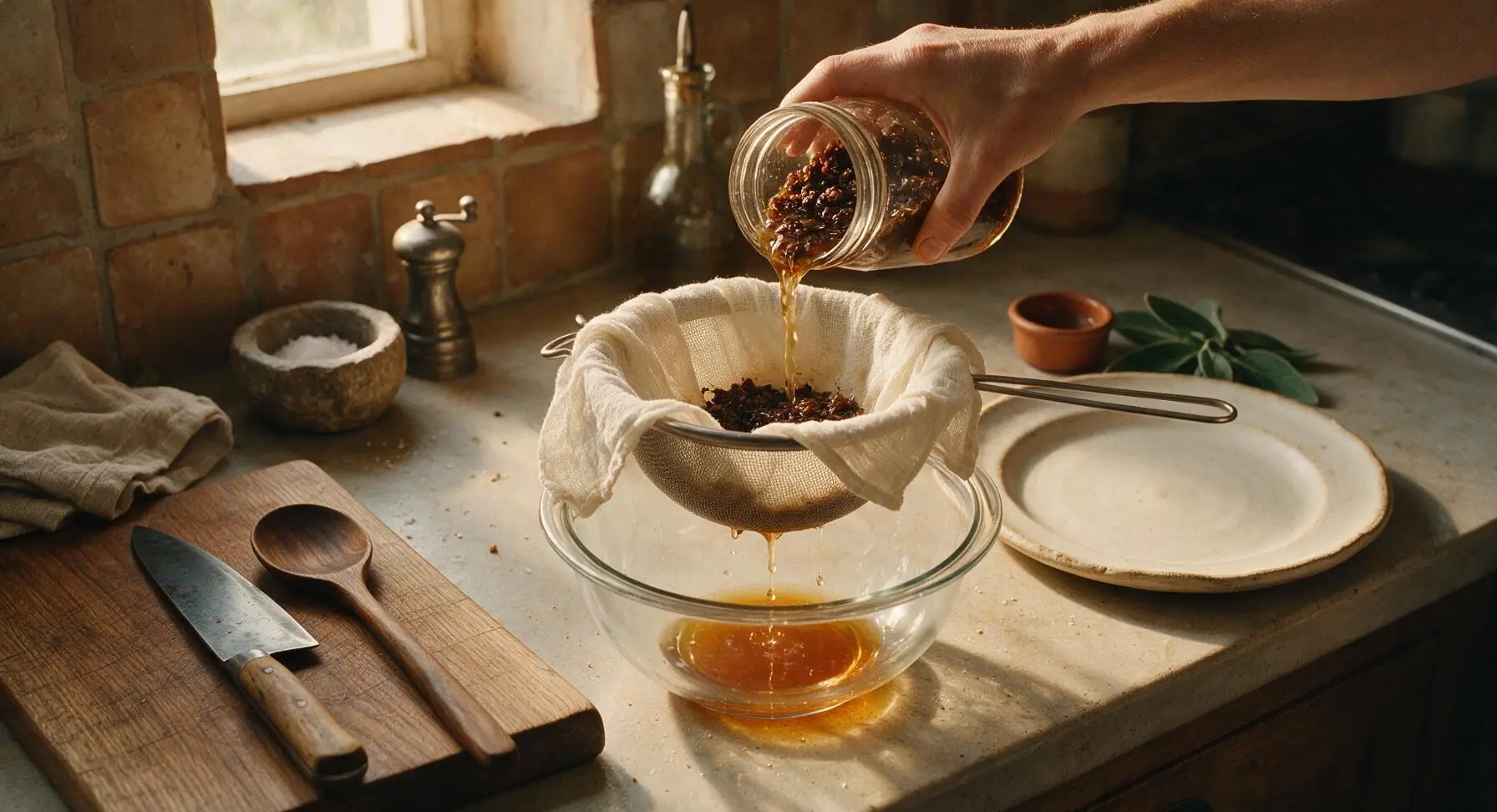
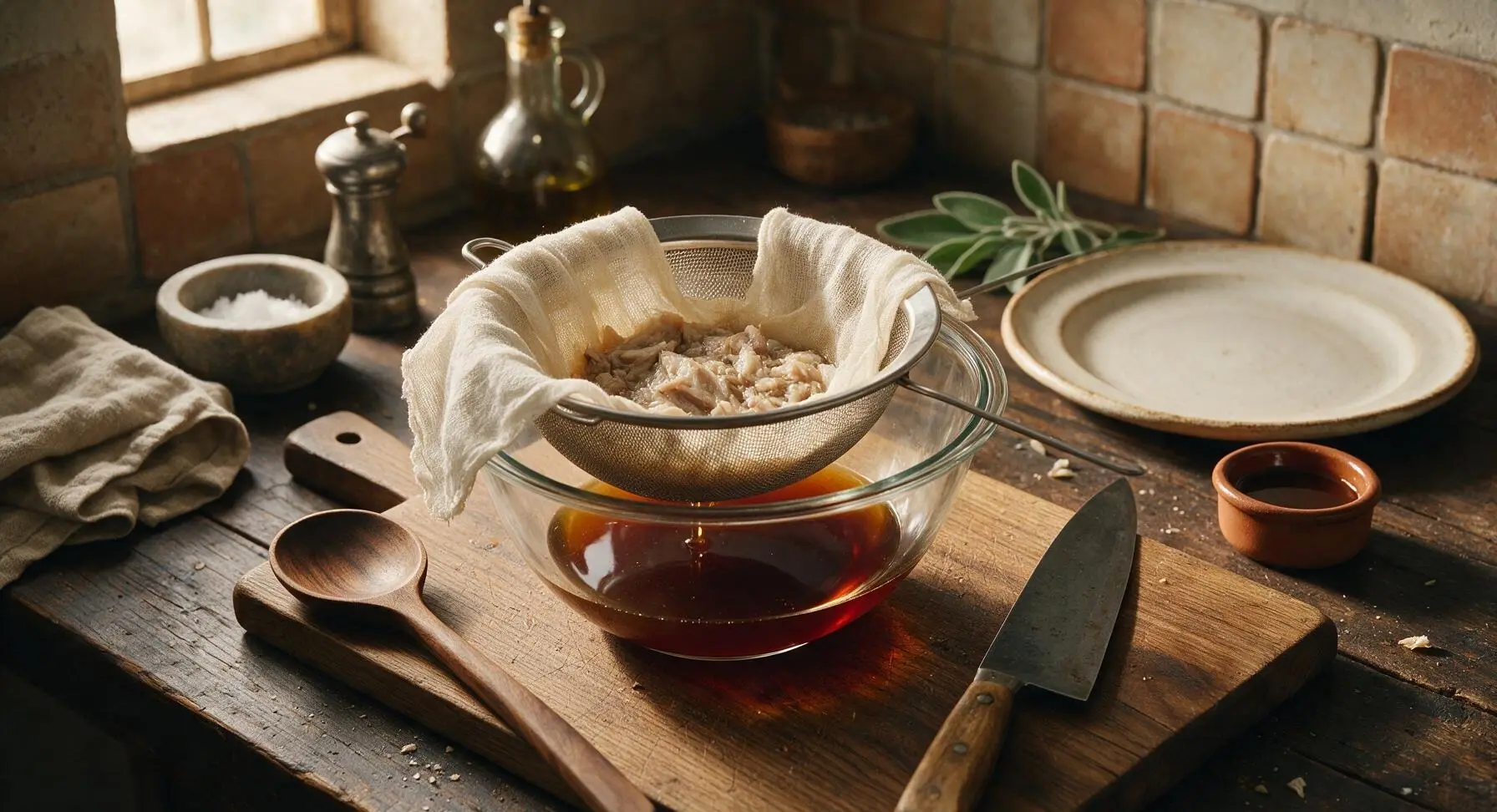
Set the 20cm stainless steel fine-mesh sieve over the clean glass mixing bowl, then line the sieve with two layers of unbleached cheesecloth. Carefully pour the full contents of the fermentation jar through the sieve, allowing the clear amber liquid to drain slowly into the bowl below. Gather the cheesecloth edges around the leftover solid fish matter and squeeze gently to extract all remaining liquid; discard the pressed solids.
Bottle Finished Garum
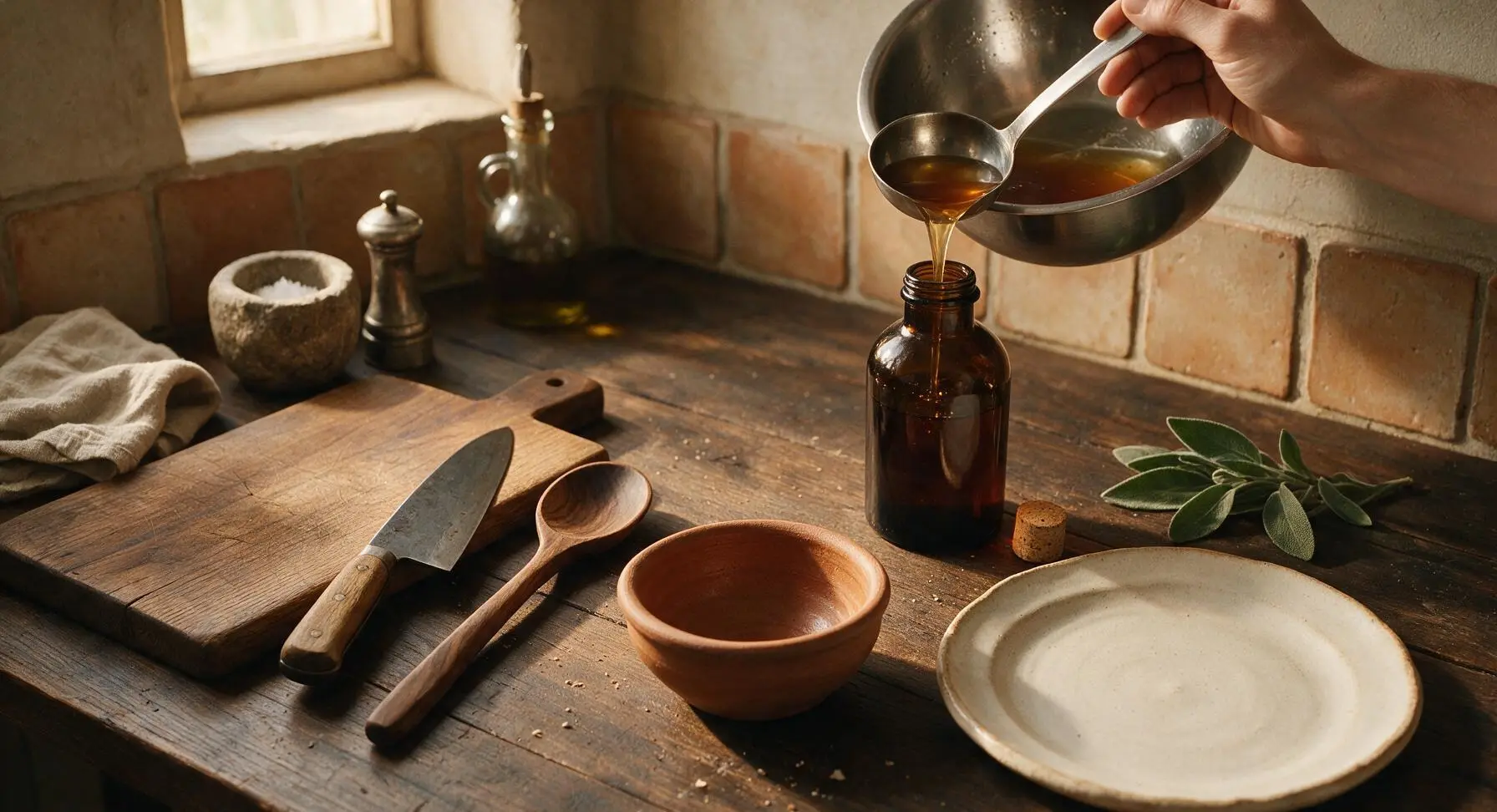
Use the clean stainless steel ladle to transfer the strained garum into the permanently placed dark amber glass storage bottle, then seal tightly with the natural cork. The finished sauce will keep in a cool, dark cabinet for up to 1 year, with no refrigeration needed due to its high salt content. For serving, pour a small amount into the terracotta sauce bowl placed center counter.
Tips
2.Learn to distinguish normal kahm yeast from dangerous mold: a thin, flat, pale cream yeast layer on the ferment surface is harmless and can be skimmed off before straining, but fuzzy, raised green, black, or white mold indicates spoilage, and the entire batch must be discarded to avoid foodborne illness.
3.Use garum as a concentrated umami booster, not a pouring sauce: 1-2 teaspoons is enough to add deep savoriness to pasta sauces, salad dressings, roasted vegetables, braised meats, or even Bloody Mary mixes. It replaces added salt in most recipes, so taste dishes before adding extra salt when cooking with garum.
OMG I’ve been obsessing over ancient Roman food for years and never had the guts to try making garum at home! This recipe is so straightforward even for a medium-skill project. 3 months feels like forever but I just bottled my first batch last week and it is a GAME CHANGER on roasted veggies, pasta, even Caesar dressing. My whole family was confused at first when I had a big jar of fermenting fish guts in the back of the pantry but now they’re asking me to drizzle it on everything! 10/10 worth the wait.
Wait, 3 months of fermenting? I thought this was a quick sauce for my weekend fish tacos! That’s a way bigger time commitment than I was expecting, I might stick to store bought fish sauce for now.
I brought a small jar of this to our last neighborhood potluck after making it over the summer, and people were losing their minds trying to guess what the secret umami kick was in the dip I brought! SO good, I will say I made the mistake of leaving the ferment jar in the sun for the first week and it got a little too funky, so definitely follow the note to keep it in a cool dark spot. My kids even loved when I tossed a tiny bit into their buttered pasta!
Got my batch started last month! I was super nervous I’d mess it up since I’ve never done any long ferment projects before, but the step-by-step instructions made it really hard to screw up. Quick question—there’s a little layer of pale scum on top right now, is that normal or did I contaminate it?
Made this for a Roman-themed dinner party I hosted last weekend and people went wild for the history lesson as much as the sauce! I will say the smell during the first few weeks is STRONG so warn your roommates or family before you pop that ferment jar in the pantry, I got so many side eye glances from my partner for the first month. Worth it for the end flavor though, absolute chef’s kiss.
I do big Sunday meal prep every week and I was worried this would be too fussy to fit into my routine, but most of the 3 months is totally hands off! I set a reminder on my phone to stir it once a week and that was literally all I had to do. It’s so nice to have a jar of this in the fridge to add a quick flavor boost to grain bowls, roasted chicken, even stir fries. Game changer for easy weeknight meals!
Tried this last year and messed up the salt ratio the first time, ended up with a rotten mess that I had to toss out. Tried again following the exact measurements on this recipe and it turned out perfect! Pro tip for new makers: don’t skimp on the salt, that’s what keeps the bad bacteria from growing while it ferments. I use a splash in my bloody marys now and it’s the best brunch hack ever.
I’m a pretty experienced home fermenter (sauerkraut, kimchi, hot sauce, you name it) so I thought garum would be a walk in the park. It’s definitely medium difficulty like the recipe says, don’t go into this thinking it’s as low effort as veggie ferments! The end result is so much better than the cheap fish sauce I used to buy at the grocery store, though. Rich, deep, not overly fishy at all.
I remember my grandma talking about her mom making a fermented fish sauce back in the old country, and I wanted to try making something similar to connect with that family history. This recipe tasted exactly like how she described it! I got a little teary when I took my first taste, it felt like a little piece of my family history in a jar. Absolutely perfect.
Wait, can I make this with gluten free soy sauce instead of the wine? I have a gluten sensitivity and I really want to try this but I don’t want to mess up the ferment! Also, has anyone tried adding a little chili flake to the ferment for a spicy version?
I’ve been making garum for 20 years using an old family recipe, and I have to say this version is spot on to the traditional Roman method! A lot of modern recipes cut corners and ferment it for 2 weeks which gives it that harsh, fishy taste, but the 3 month ferment is non-negotiable for that smooth, umami flavor. Great work on this recipe, I’ll be sharing it with my cooking class students.
I packed a tiny vial of this on my last backcountry camping trip and it was the best thing ever! A couple drops turned plain dehydrated rice and beans into a restaurant worthy meal after a long day of hiking. It’s shelf stable even after fermenting so it’s perfect for packing on trips where you can’t bring heavy seasonings. 10/10.
I was so nervous the whole house would smell like rotting fish for 3 months, but I followed the tip to seal the jar lid with a little tape and keep it in the back of the pantry, and I barely smelled it at all! My partner had no idea I was even making it until I pulled it out to toss with pasta last night, he was shocked how good it was. Even my super picky 7 year old asked for seconds!
Used this garum in my traditional Sunday gravy instead of the usual anchovy paste and my whole family said it was the best batch I’ve ever made! I was worried it would make the sauce taste fishy but it just added that deep, rich savoriness that you can’t put your finger on. My Italian grandma would be proud, even if it’s a Roman recipe instead of Neapolitan haha.
I was shocked how cheap this was to make! I got a whole bag of fatty fish trimmings from my local fish market for $3, used salt I already had in the pantry, and ended up with almost 2 quarts of garum that’s way better than the $12 bottle of fish sauce I used to buy at the specialty store. Total win for meal prep on a budget, I’ll be making this on repeat from now on.
Tried to rush the ferment and pulled mine at 6 weeks because I was impatient, and let me tell you—don’t do that. It was super harsh and overly fishy, I had to pour it out and start over. I’m on week 8 of my new batch and it’s already smelling so much smoother, can’t wait to hit that 3 month mark! Don’t be like me, trust the process y’all.