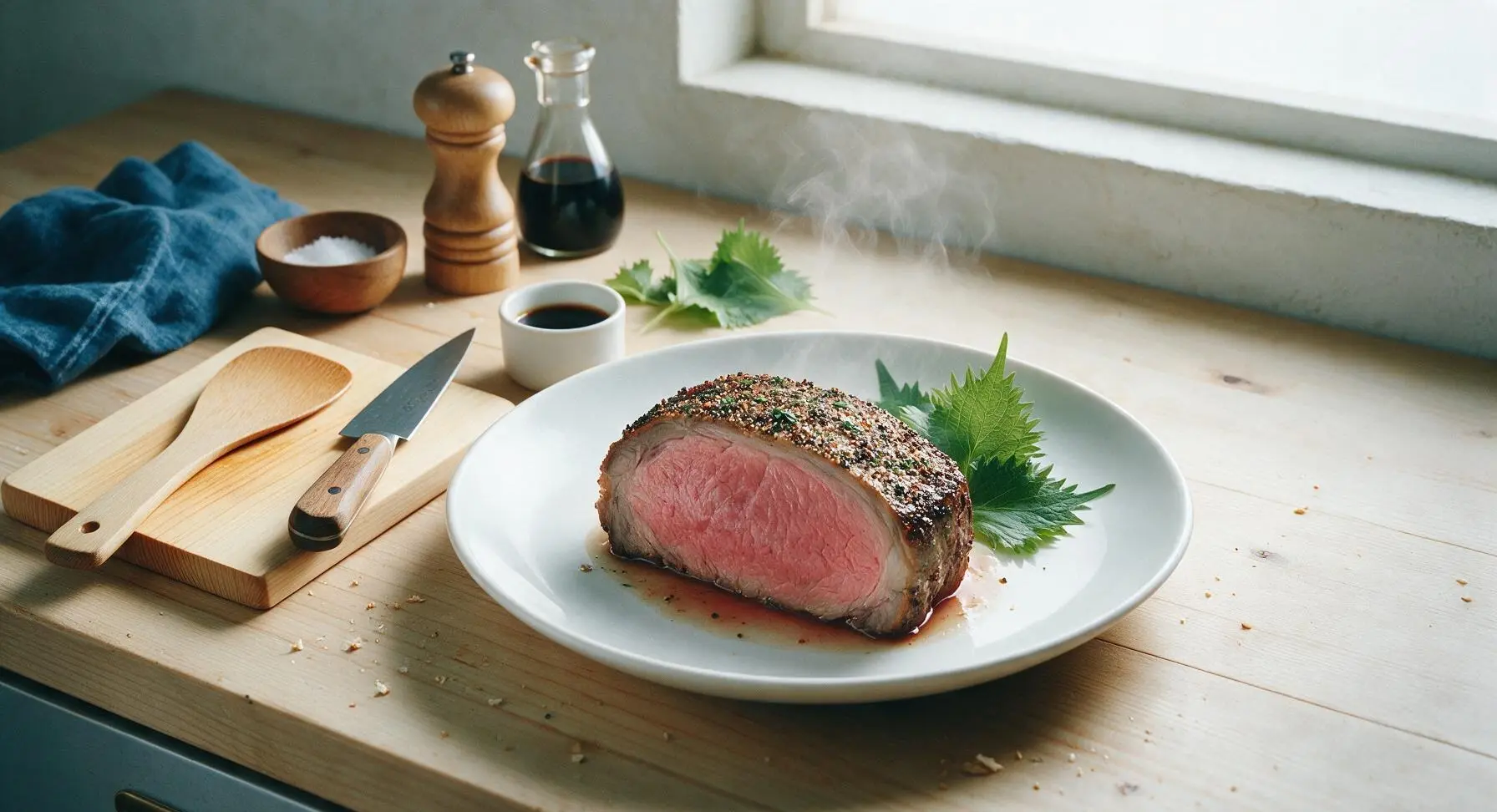
prime roast beef

title 1
prime roast beef
⏱️ cook time 1 hour 20 minutes
🍽️ servings 6
⚡ Difficulty medium

intro

Tender, juicy prime roast beef with a crisp pepper-herb crust and melt-in-your-mouth pink center, the iconic centerpiece for cozy, memorable family Sunday dinners.

Ingredients
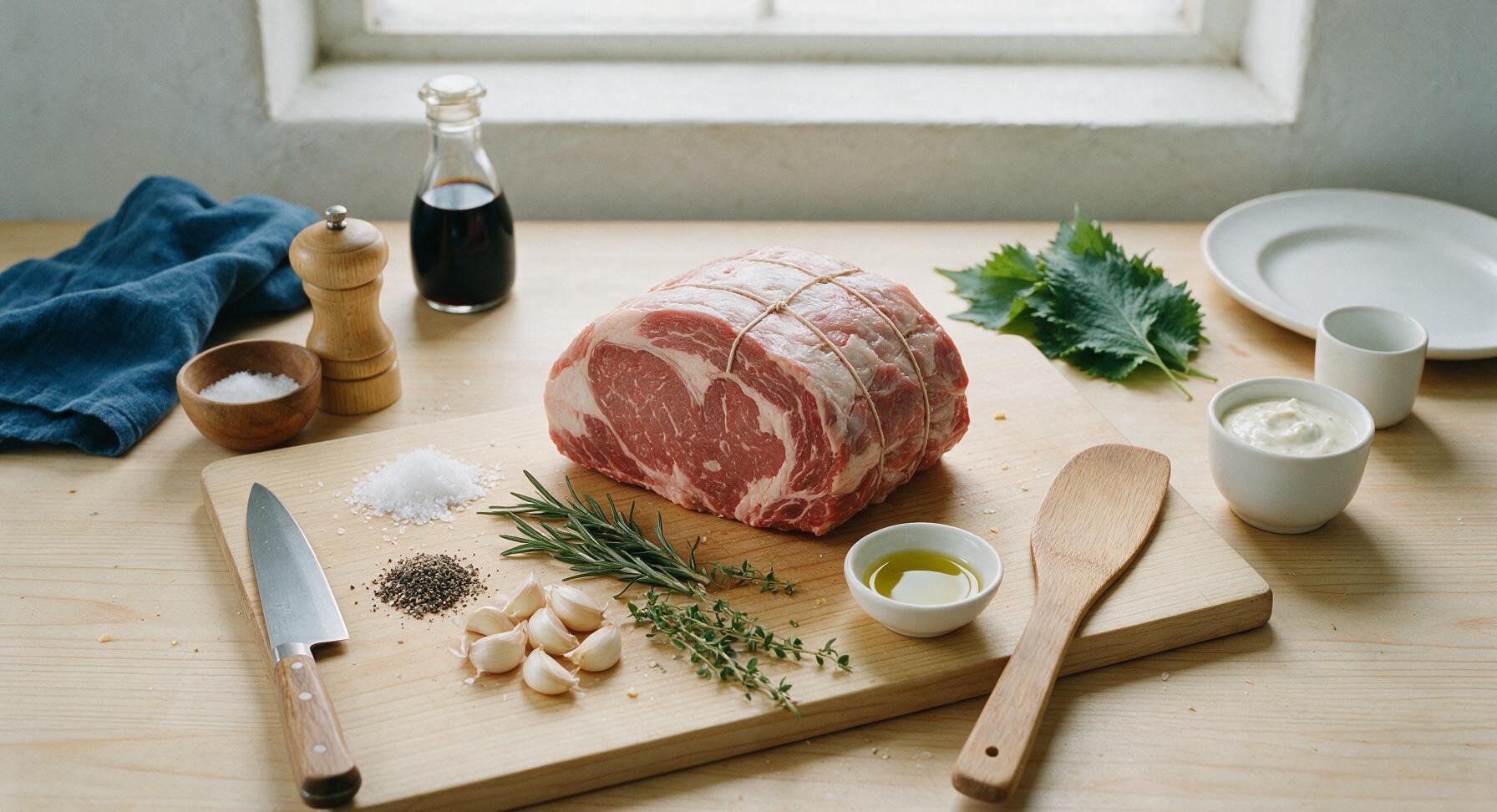
Boneless prime rib roast (tied for even cooking) 2kg (4.5lb)
Flaky sea salt 2 tablespoons
Coarsely ground black pepper 1 tablespoon
Fresh garlic cloves, crushed lightly 8 cloves
Fresh rosemary sprigs 3 sprigs
Fresh thyme sprigs 4 sprigs
Extra-virgin olive oil 2 tablespoons
Creamy horseradish sauce 120ml (1/2 cup)

Steps

1

Temper the Beef

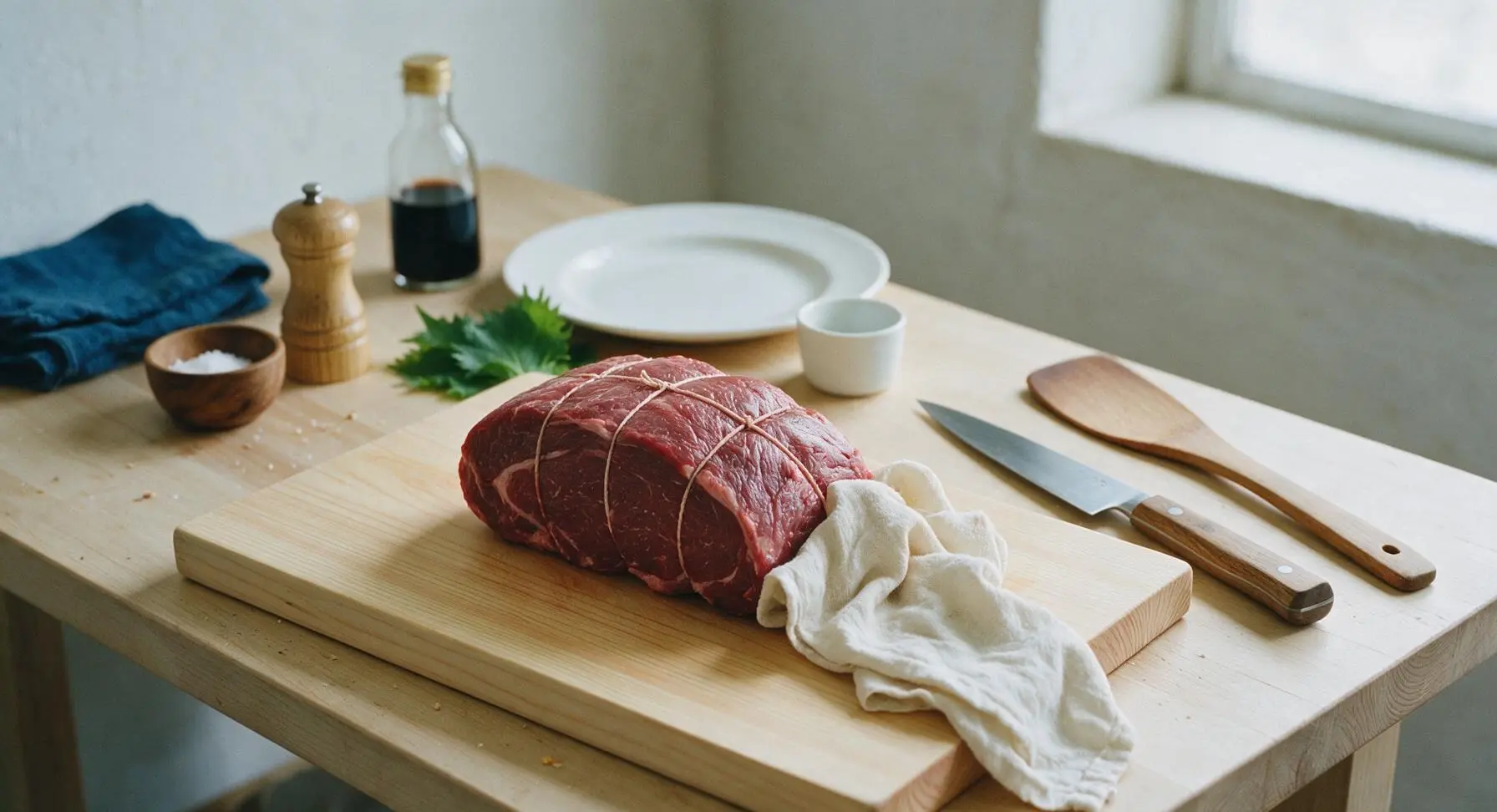
Remove the tied boneless prime rib roast from the refrigerator 1 hour before cooking, placing it on the acacia wood cutting board. Allowing the meat to rise to 15–18°C (60–65°F) room temperature ensures even cooking across the entire cut, eliminating the overcooked gray outer layer and underdone cold center common with roasts cooked straight from the fridge. Pat every surface of the roast completely dry with the cream cotton kitchen towel to remove excess surface moisture, which is critical for forming a crisp, caramelized crust.
Step 1
step1:Temper the Beef
2

Season the Roast

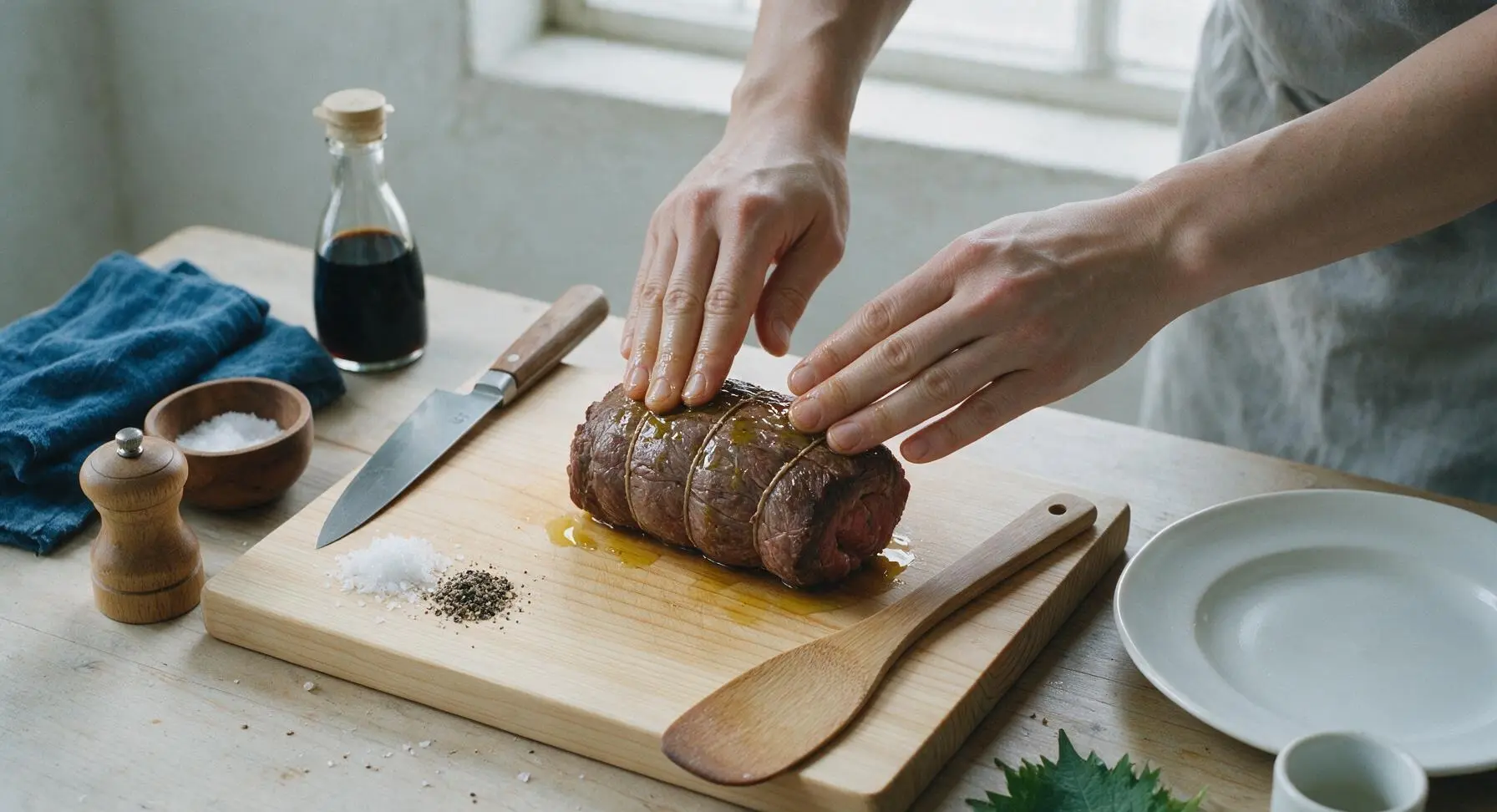
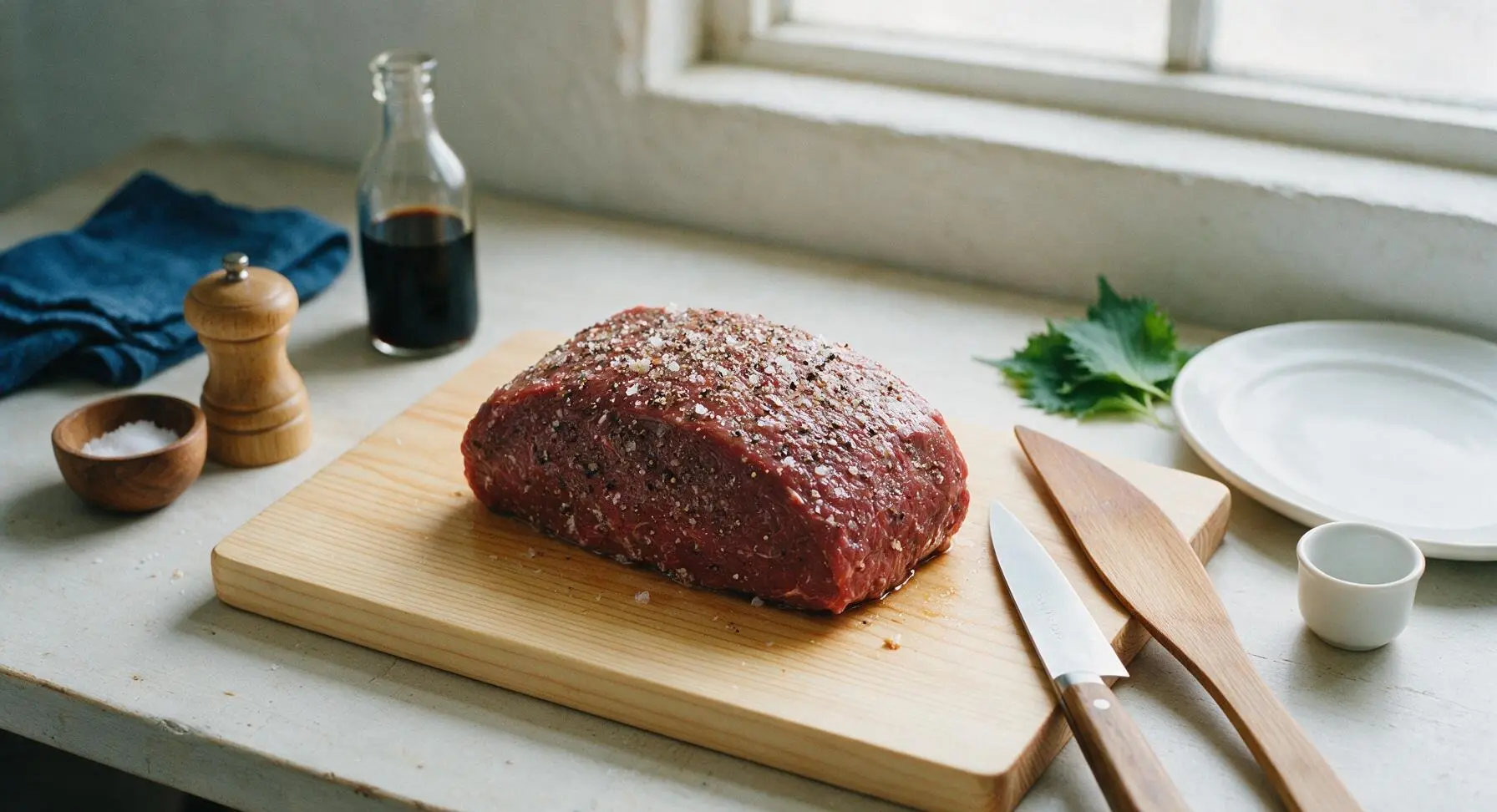
Drizzle 2 tablespoons of extra-virgin olive oil over the entire surface of the dried, room-temperature roast, rubbing it into every side with clean hands to help seasoning adhere. Combine 2 tablespoons flaky sea salt and 1 tablespoon coarsely ground black pepper, then sprinkle the mixture evenly over the top, bottom, and sides of the roast, pressing gently so the crystals stick. The entire roast should have a uniform, generous coating of seasoning, with no bare patches of meat visible.
Step 2
step2:Season the Roast
Step 2
step2:Season the Roast
3

Prep Roasting Setup

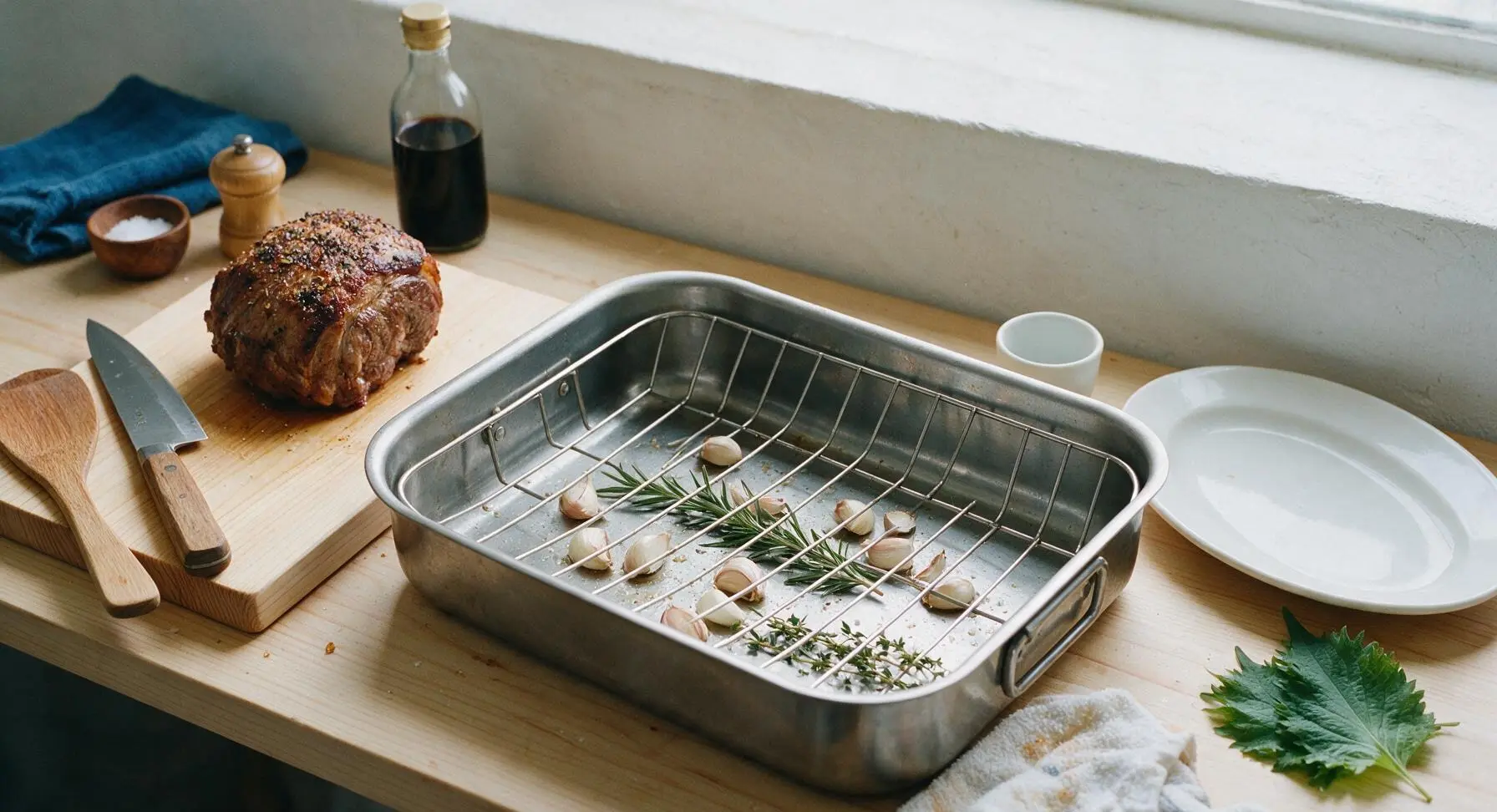
Place the stainless steel wire roasting rack inside the heavy-gauge stainless steel roasting pan. Scatter 8 lightly crushed garlic cloves, 3 rosemary sprigs, and 4 thyme sprigs across the pan bottom underneath the rack; the herbs and garlic will infuse the rising hot air with aroma as the roast cooks. The rack elevates the roast 3cm above the pan bottom, allowing hot oven air to circulate evenly around the meat and preventing the base from steaming instead of searing. Preheat the oven to 230°C (450°F).
Step 3
step3:Prep Roasting Setup
4

Sear at High Heat

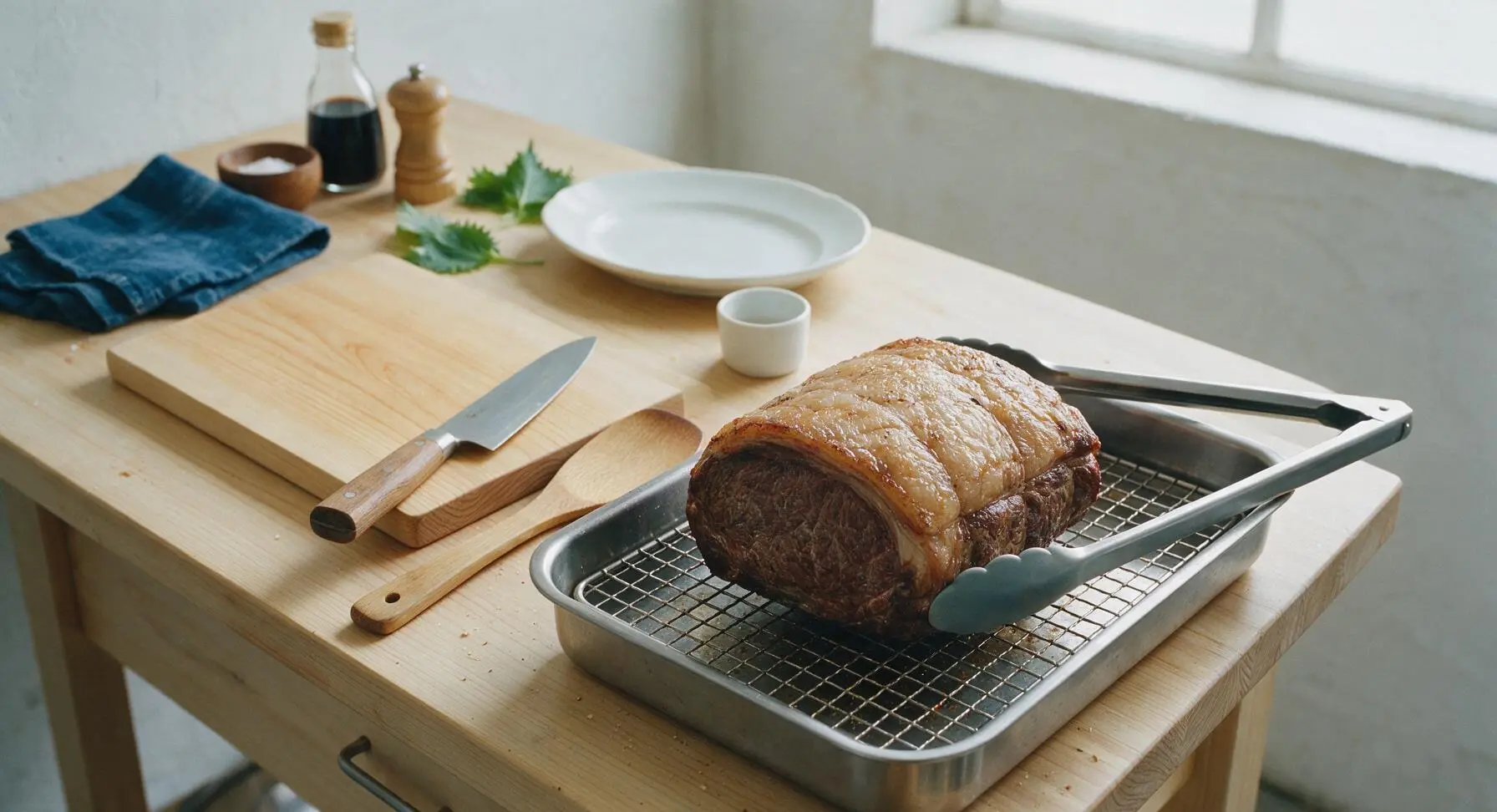
Set the seasoned roast fat-side up on the wire rack inside the prepared roasting pan, using the silicone-tipped stainless steel tongs to lift and position the meat without rubbing off seasoning. Place the pan on the middle oven rack, and sear for exactly 20 minutes at 230°C (450°F). This initial burst of high heat triggers Maillard browning on the meat surface, creating a deep, savory crisp crust before the oven temperature is lowered for gentle cooking.
Step 4
step4:Sear at High Heat
5

Slow Roast to Temp

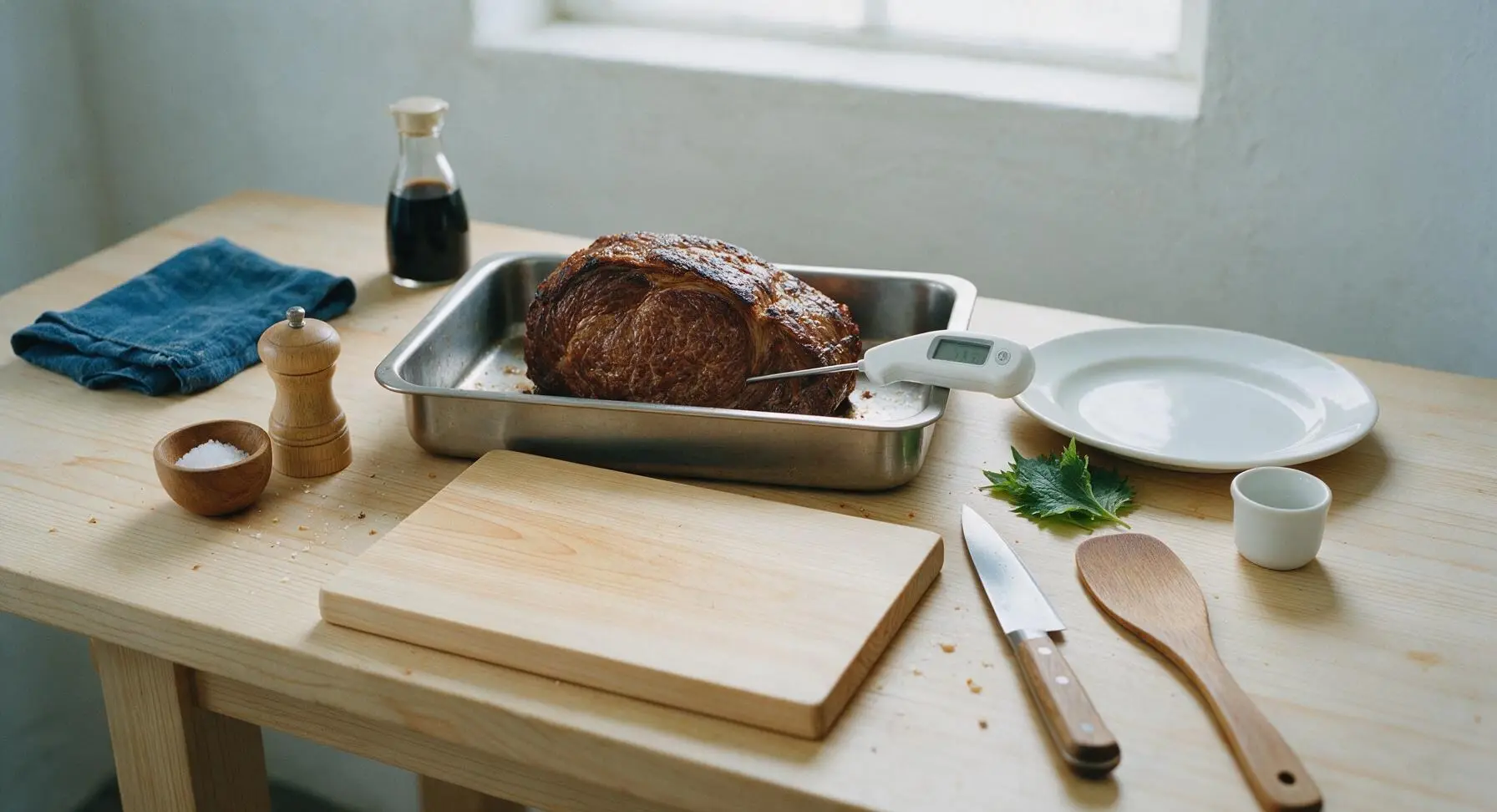
After the 20-minute sear, reduce the oven temperature to 160°C (325°F) without opening the oven door to avoid heat loss. Continue roasting for approximately 1 hour, checking doneness early to avoid overcooking. The roast is ready to remove when the digital instant-read meat thermometer, inserted into the thickest part of the meat (away from any fat marbling), reads 54°C (130°F) for perfect medium-rare. The meat will rise 3–5°C (5–10°F) in temperature during resting (carryover cooking), so removing it at this point ensures it will not be overdone.
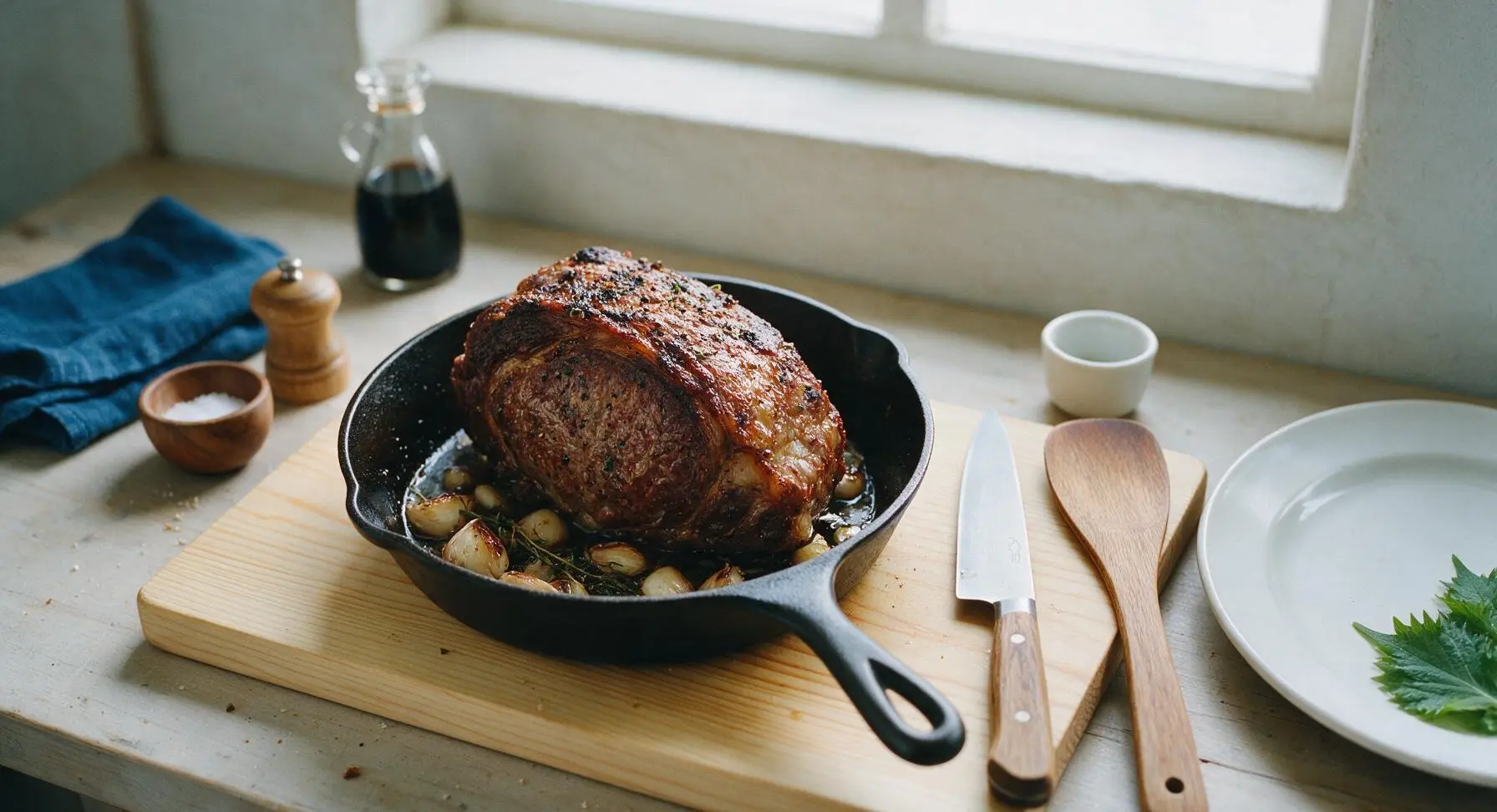
Step 5
step5:Slow Roast to Temp
Step 5
step5:Slow Roast to Temp
6

Rest the Roast

Once the roast reaches 54°C (130°F), use the stainless steel tongs to transfer it from the roasting rack back to the acacia wood cutting board. Tear a sheet of aluminum foil and loosely tent it over the roast, leaving a 2cm gap along the edges for steam to escape. Let the roast rest for a full 25–30 minutes before slicing: this resting period allows the tight, hot muscle fibers to relax and reabsorb savory juices, so every slice stays juicy instead of leaking all its juice onto the cutting board.
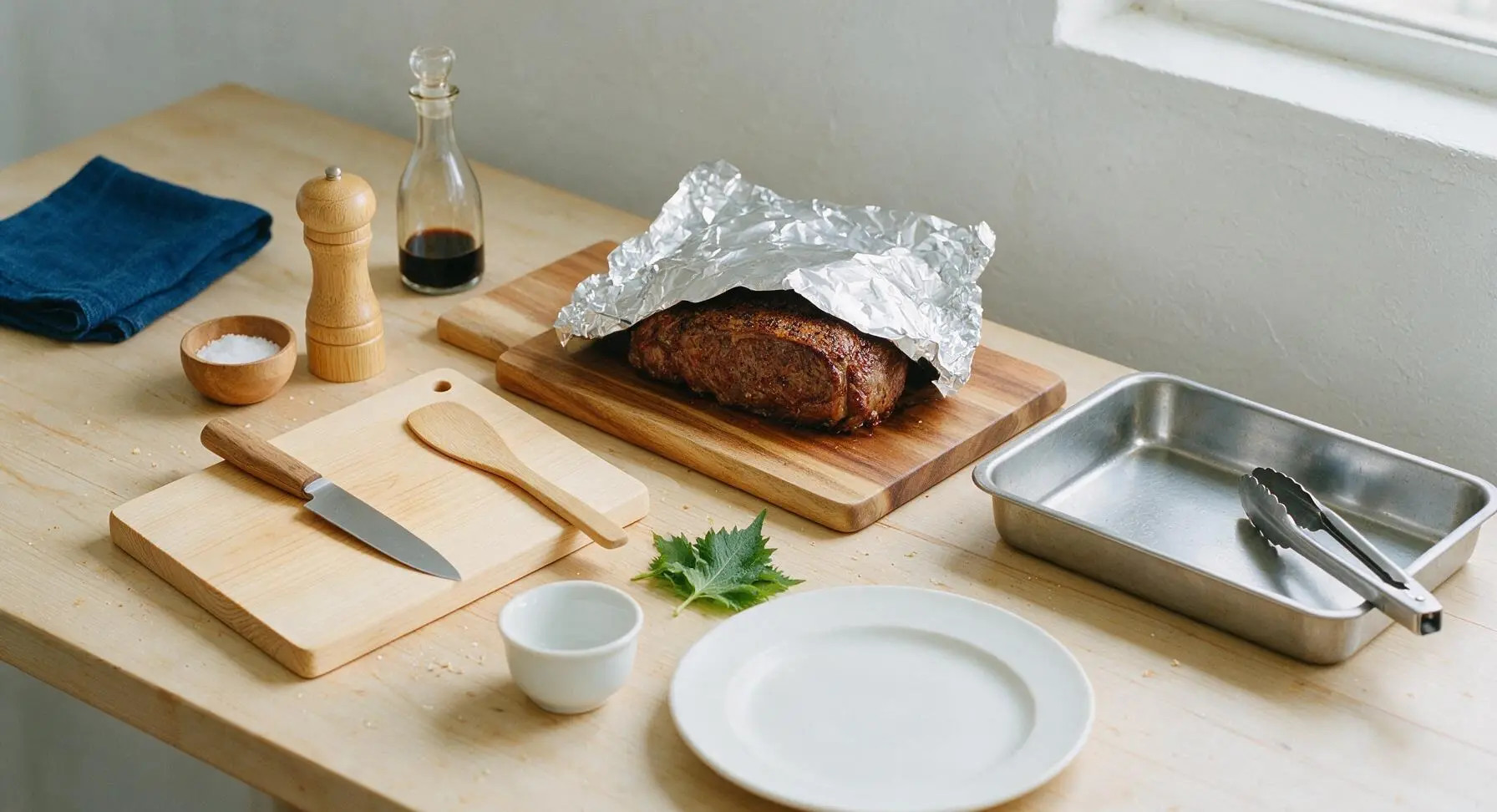
Step 6
step6:Rest the Roast
7

Slice and Plate

After resting, remove the foil tent and snip the kitchen twine holding the roast shape. Using the 6-inch stainless steel boning knife, slice the roast against the grain into 1cm (1/2 inch) thick even slices. Arrange the slices in a gently overlapping fanned arc across the large matte off-white ceramic serving platter, spoon 2 tablespoons of collected pan juices over the top, and set the small matte white ramekin of creamy horseradish sauce to the side for serving.
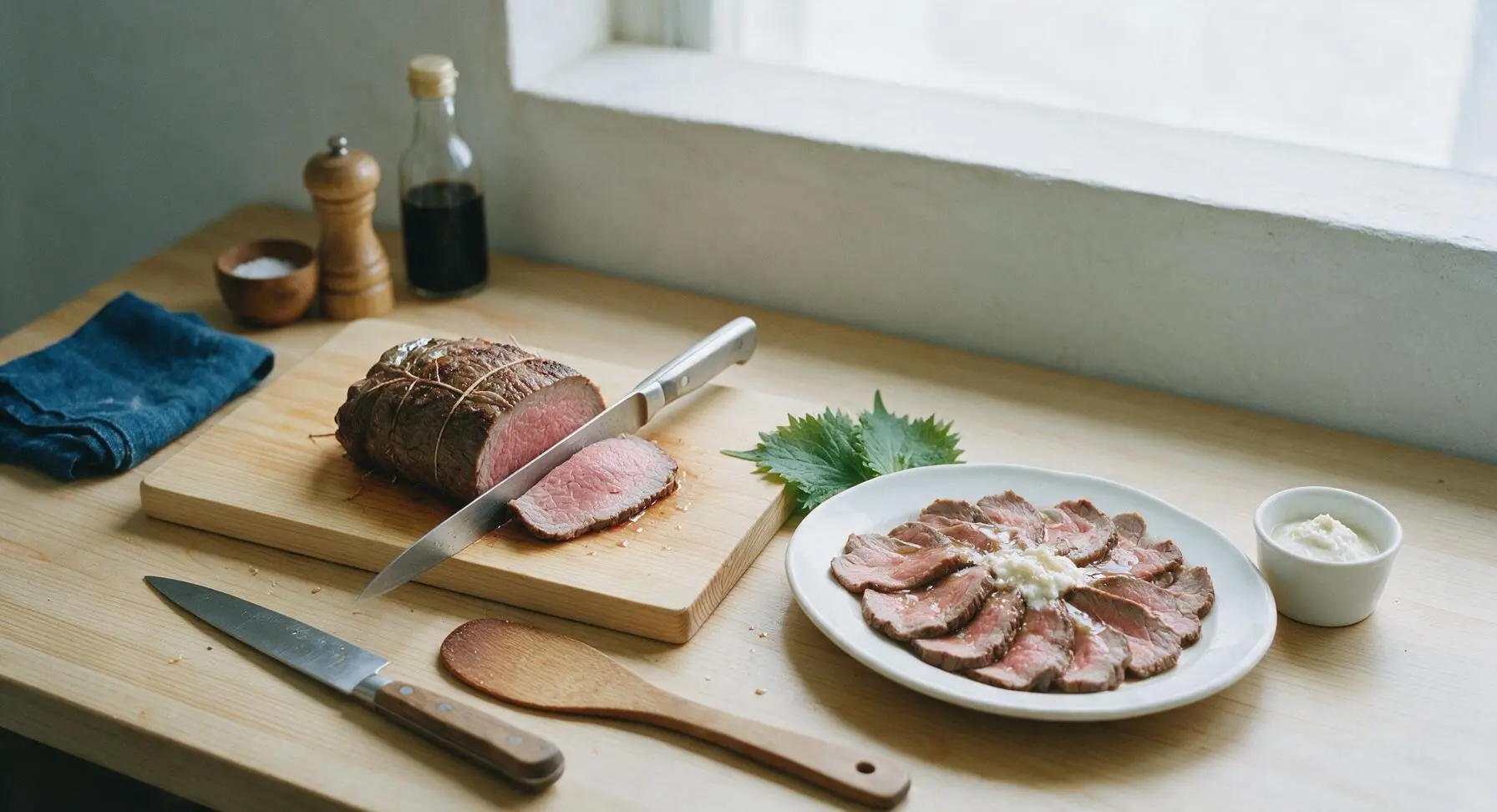
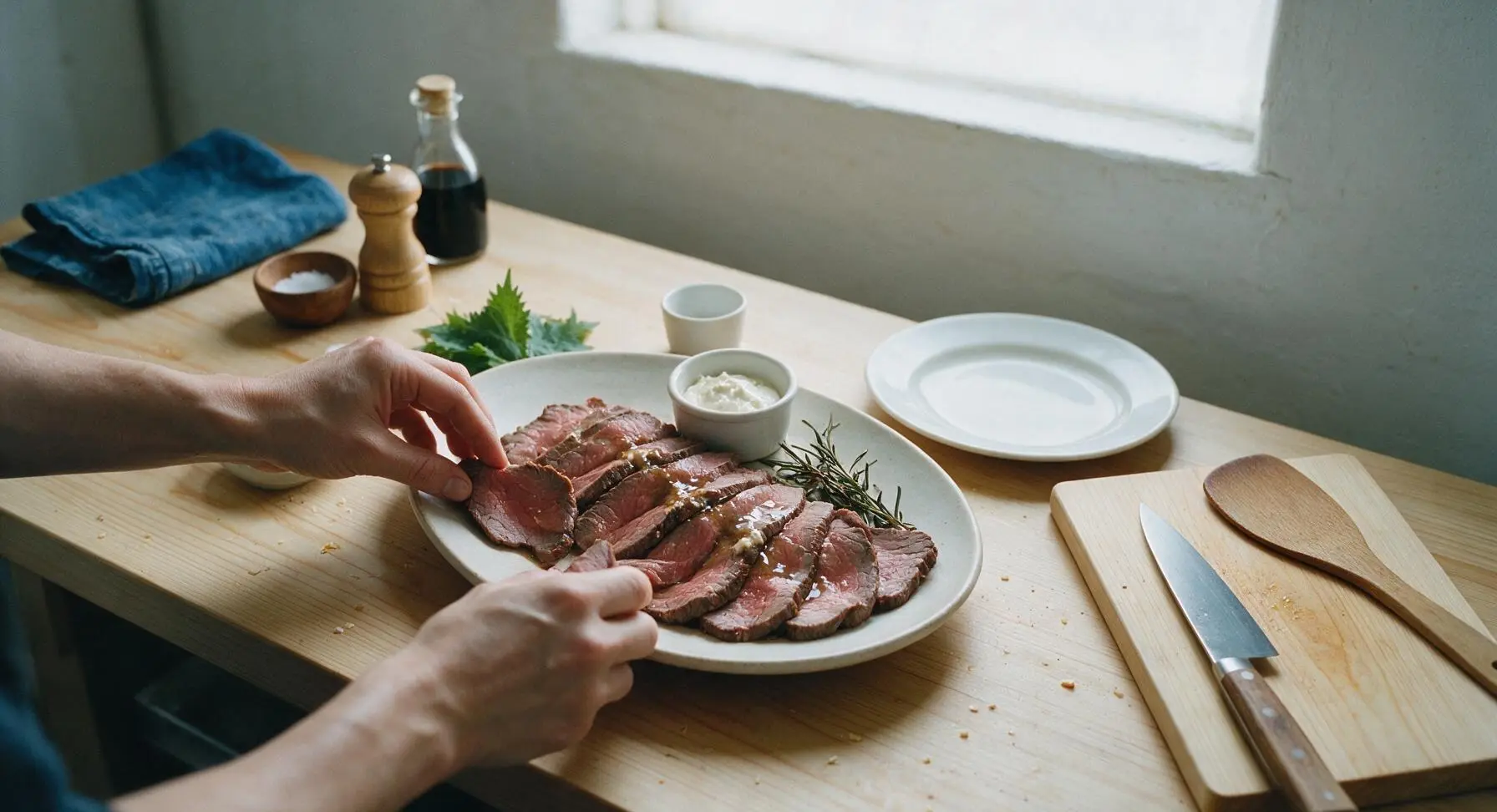
Step 7
step7:Slice and Plate
Step 7
step7:Slice and Plate

Tips

1.Never skip bringing the roast to room temperature before cooking: Cold meat cooks unevenly, leading to an overcooked gray outer layer and cold raw center even with perfect oven settings. The 1-hour counter rest is food-safe for whole beef cuts, as the dry surface prevents rapid bacteria growth.
2.Avoid wrapping the roast tightly in foil during resting: A tight seal traps steam that will soften the crisp, caramelized crust built during the high-heat sear. A loose foil tent holds in just enough heat without creating excess moisture that ruins crust texture.
3.Always slice against the grain: Identify the direction of the long, parallel muscle fibers on the cut end of the roast, and slice perpendicular to those fibers. This shortens the tough muscle strands, making every bite tender even if your cook temperature is slightly off.
✨ You May Also Like

Main Course
🍜 United Kingdom

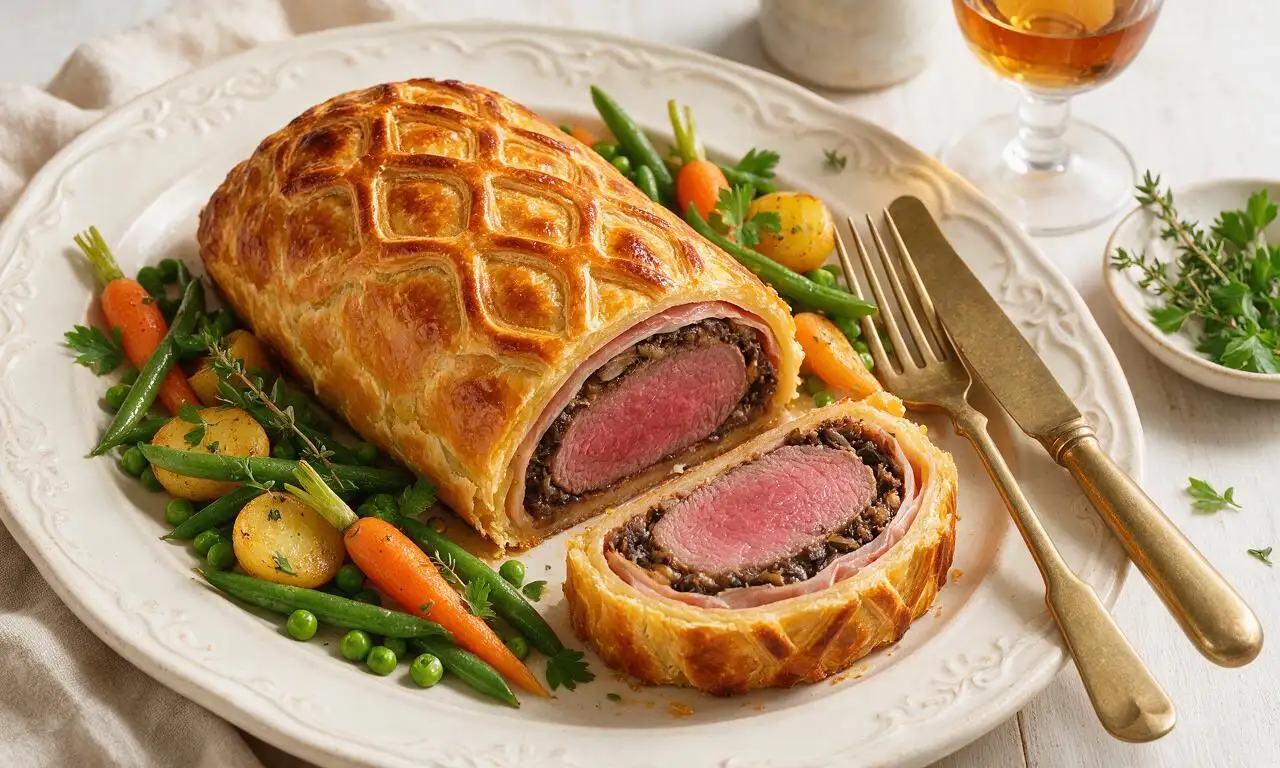
A showstopping classic of tender seared beef, savory mushroom duxelles, and crisp prosciutto wrapped in flaky golden puff pastry, baked to juicy perfection.

⏱️ 2 hours 1Main Course ★ 4.7
Main Course
🍜 India

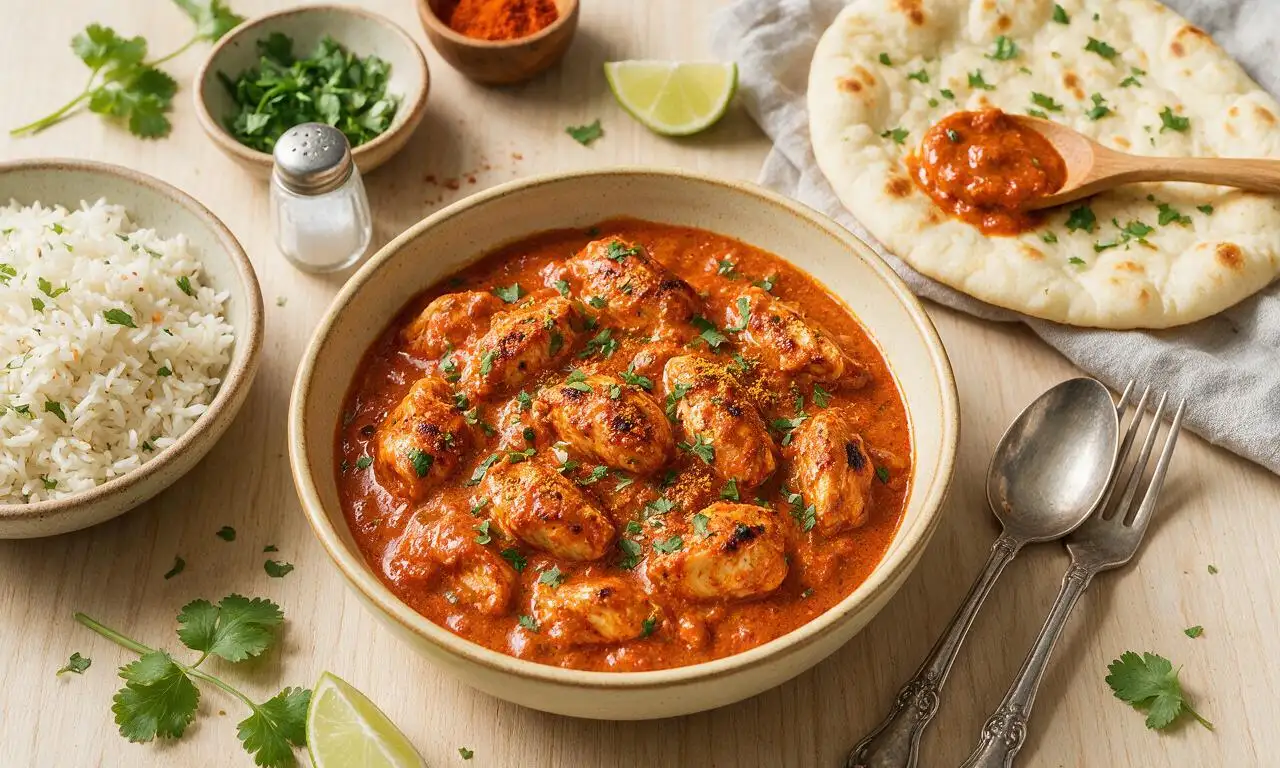
Tender charred marinated chicken simmered in a rich, spiced creamy tomato sauce, this iconic Anglo-Indian curry pairs perfectly with basmati rice or warm naan.

⏱️ 50 minuteMain Course ★ 4.6
Main Course
🍜 Thailand

Classic tangy, sweet, and savory Thai stir-fried rice noodles with shrimp, tofu, and crunchy garnishes, balancing all five core Thai flavor profiles.

⏱️ 30 minuteMain Course ★ 4.5
Main Course
🍜 United Kingdom

Crispy golden beer-battered cod and fluffy double-fried chips, served with tangy tartar sauce and malt vinegar: the timeless, beloved British pub comfort classic.

⏱️ 45 minuteMain Course ★ 4.7
Main Course
🍜 Mexico

Smoky, chile-marinated pork tacos with caramelized pineapple, fresh cilantro, and lime: a beloved classic Mexican street food perfect for casual summer gatherings.

⏱️ 1 hour 45Main Course ★ 4.8
Main Course
🍜 United States

Crunchy Fritos corn chips layered with savory beef chili and melted cheddar, topped with cool, zesty fixings for a beloved, cozy Tex-Mex comfort food.

⏱️ 35 minuteMain Course ★ 4.8

prime roast beef:Frequently Asked Questions

1.What cut of beef gives the juiciest results for perfect prime roast beef? ▾
Reach for a boneless prime-grade ribeye roast for best results—it has abundant, even intramuscular marbling that melts during cooking to keep meat tender and juicy. Always pick a roast tied at even intervals, or tie it yourself with kitchen twine, to hold its shape and cook uniformly edge to edge.
2.How far in advance should I season the roast before cooking? ▾
For the deepest, most evenly seasoned flavor, salt the roast with flaky sea salt 12 to 24 hours before cooking, leaving it uncovered on a wire rack in the fridge. This draws out moisture that dissolves the salt, which reabsorbs into the meat to season it all the way through, rather than just sitting on the surface.
3.Do I need to bring the roast to room temperature before putting it in the oven? ▾
Yes, absolutely! Let your tied roast rest on the counter for 1.5 to 2 hours before cooking so it comes up to a cool room temp (around 60°F internally). This cuts down total cook time, prevents outer layers from overcooking before the center warms, and helps you get that consistent, perfect pink center.
4.What oven temperature should I start with to get that crisp pepper-herb crust? ▾
Start with a high heat of 450°F for the first 15 to 20 minutes of cooking. This initial blast sears the outer surface of the roast, caramelizing the crushed garlic, rosemary, and coarse black pepper rub to create that shatteringly crisp crust, before you drop the oven temp to finish cooking gently.
5.How do I keep the garlic and rosemary from burning during the high-heat sear? ▾
Lightly crush garlic cloves instead of mincing them, and leave rosemary on whole sprigs rather than chopping it fine to prevent burning during that initial high-heat sear. Tuck rosemary sprigs under the kitchen twine holding the roast together so they stay pressed to the meat instead of falling onto the hot pan where they’ll scorch.
6.What internal temperature gives that iconic melt-in-your-mouth pink center? ▾
Pull the roast from the oven when an instant-read thermometer inserted into the thickest part (not touching fat or twine) reads 125°F for medium-rare, that perfect tender pink center. Remember the meat will keep cooking 5 to 10°F as it rests, so pulling it early avoids overcooked, gray, tough roast beef.
7.Why is resting the roast after cooking so important? ▾
Resting is non-negotiable for juicy roast beef! Let the cooked roast sit loosely tented with foil on a cutting board for 20 to 30 minutes before slicing. This gives muscle fibers time to relax and reabsorb all the hot, flavorful juices pushed to the surface during cooking, so they don’t run all over your cutting board.
8.Can I make this roast if I only have choice-grade ribeye instead of prime? ▾
You absolutely can! Prime grade has the most marbling, but a high-choice boneless ribeye roast will still turn out tender and juicy if you follow the seasoning, temperature, and resting steps. Just avoid very lean, lower-grade roasts with little visible white marbling, as those will turn out dry and tough no matter how you cook them.
9.How much coarse black pepper should I use for the crust? ▾
Use about 1 tablespoon of coarsely cracked, not finely ground, black pepper per 3 pounds of roast, pressed firmly into the surface along with flaky sea salt right before the roast goes into the oven. Coarse grind gives the crust that warm, noticeable peppery bite without making the rub overly harsh or powdery on the meat’s exterior.
10.Do I need to use a roasting rack when cooking this prime roast beef? ▾
A wire roasting rack set inside your roasting pan is highly recommended. It elevates the roast off the hot pan bottom so hot air circulates evenly around every side, which helps the pepper-herb crust crisp up all over instead of getting soggy on the pan side, and prevents the bottom edge from overcooking.
11.How long will a 4-pound boneless prime roast take to cook? ▾
After the initial 20-minute high-heat sear at 450°F, drop the oven to 325°F and plan for 13 to 15 minutes per pound for medium-rare doneness. A 4-pound roast will take roughly 1 hour and 15 minutes total, but always rely on internal temperature, not cook time, since every oven runs a little hot or cool.
12.Can I add other herbs to the crust besides rosemary? ▾
Fresh rosemary pairs perfectly with beef, but you can tuck a few fresh thyme sprigs under the twine with the rosemary if you’d like, or add a light sprinkle of smoked paprika to the pepper and salt rub. Just skip soft, delicate herbs like basil or parsley for the crust, as those will burn completely during the high-heat initial sear.
13.What should I do if my crust isn’t crisp enough when the roast nears its target temp? ▾
If the crust feels soft when the roast is almost at its target internal temp, crank the oven back up to 475°F for 3 to 5 minutes, watching closely, to crisp up the pepper and herb coating. Don’t leave it in longer than that, or you’ll overcook the tender pink center and risk burning the garlic and rosemary.
14.How thick should I slice the finished roast beef for serving? ▾
For the most tender, enjoyable bite, slice the rested roast against the grain into ¼-inch to ½-inch thick slices. Cutting against the grain shortens the long muscle fibers so every bite feels melt-in-your-mouth tender, even if you cooked the roast perfectly. Skip super thick 1-inch+ slices, as those can feel chewy even on prime cuts.
15.Can I cook this roast from frozen if I forget to thaw it ahead of time? ▾
I don’t recommend cooking this prime roast from frozen. The outside will overcook long before the frozen center comes up to temperature, and you won’t get a crisp, evenly browned pepper-herb crust. Thaw the roast slowly in the fridge for 2 to 3 days before cooking for the most consistent, juicy, even results.
16.Should I baste the roast while it cooks in the oven? ▾
Basting is totally optional for this recipe! The high initial sear builds great crust, and the marbling in prime rib keeps the meat moist on its own. If you want to baste, use rendered fat and juices from the pan, spooning it over the roast every 20 minutes after dropping the oven temp, but avoid opening the oven too often so temp stays consistent.
17.What’s the best way to store and reheat leftover prime roast beef? ▾
Let leftover roast cool completely within 2 hours of cooking, then wrap it tightly in plastic wrap or place it in an airtight container, and store it in the fridge for up to 4 days. For best texture, reheat slices gently in a low 250°F oven just until warmed through, rather than microwaving, which can make meat tough and rubbery.
18.Can I use regular table salt instead of flaky sea salt for seasoning? ▾
You can, but you’ll need to use far less—about 1 teaspoon of table salt per 3 pounds of roast, versus 1 tablespoon of flaky sea salt, because table salt is much denser and saltier by volume. Flaky sea salt sticks better to the roast surface for the crust and has a cleaner, brighter salty flavor that doesn’t overpower the beef and rosemary.

Comments (4)

2 days ago

OMG, this prime roast came out perfectly for our Sunday family dinner! I was so nervous I’d overcook it since my in-laws were coming over, but the cook time was spot on—crusty outside, juicy pink middle, everyone went back for seconds. My picky 7 year old even asked for extra! Total game changer, I’m never using another roast beef recipe again. SO good.

yesterday

Wait did you let it rest the full time the recipe says? I rushed the rest last time I made roast and all the juices ran out, curious if that’s part of why yours turned out so good!

30 minutes ago

So glad it was a hit with your family, Jen! Letting the roast rest 15-20 minutes after pulling it from the oven is key to locking in those juices, just like Tom mentioned—great call! If you make it for a holiday potluck later this year, the au jus from this recipe pairs amazing with creamy horseradish sauce too.

1 week ago

Tried this for my weekly meal prep last week, sliced it thin for sandwiches all week and it held up so much better than the deli roast beef I usually buy. Only thing I messed up was the seasoning—forgot to add the black pepper crust before searing, but it was still delicious. Medium difficulty felt totally doable even as someone who only cooks a couple nights a week.

5 days ago

Awesome to hear this worked for your meal prep, Mike! Next time try patting the roast completely dry before rubbing on the pepper and salt crust—it helps get that perfect crispy sear every time, even if you’re short on time on weeknights.

3 days ago

Brought this to our neighborhood block party potluck last weekend and people were begging for the recipe before I even set the platter down! Cooked it to 135°F internal temp like the directions said and it was the perfect medium rare, no gray overcooked edges at all. 10/10, will be making this for Thanksgiving dinner this year too.

yesterday

This was my first time ever making a roast beef for my boyfriend’s birthday dinner and I was panicking the whole time, but the step by step directions were so easy to follow! The only issue I had was my oven runs a little hot, so it cooked about 10 minutes faster than the 1 hour 20 minutes listed, but it still turned out amazing. My boyfriend said it was better than the prime rib we got at the steakhouse for our anniversary!

2 hours ago

Oh good to know about the oven temp difference! My oven is also super hot, I’ll make sure to check the internal temp 10 minutes early when I make this for my kid’s birthday dinner next week. Thanks for the tip!