
beef tenderloin
intro
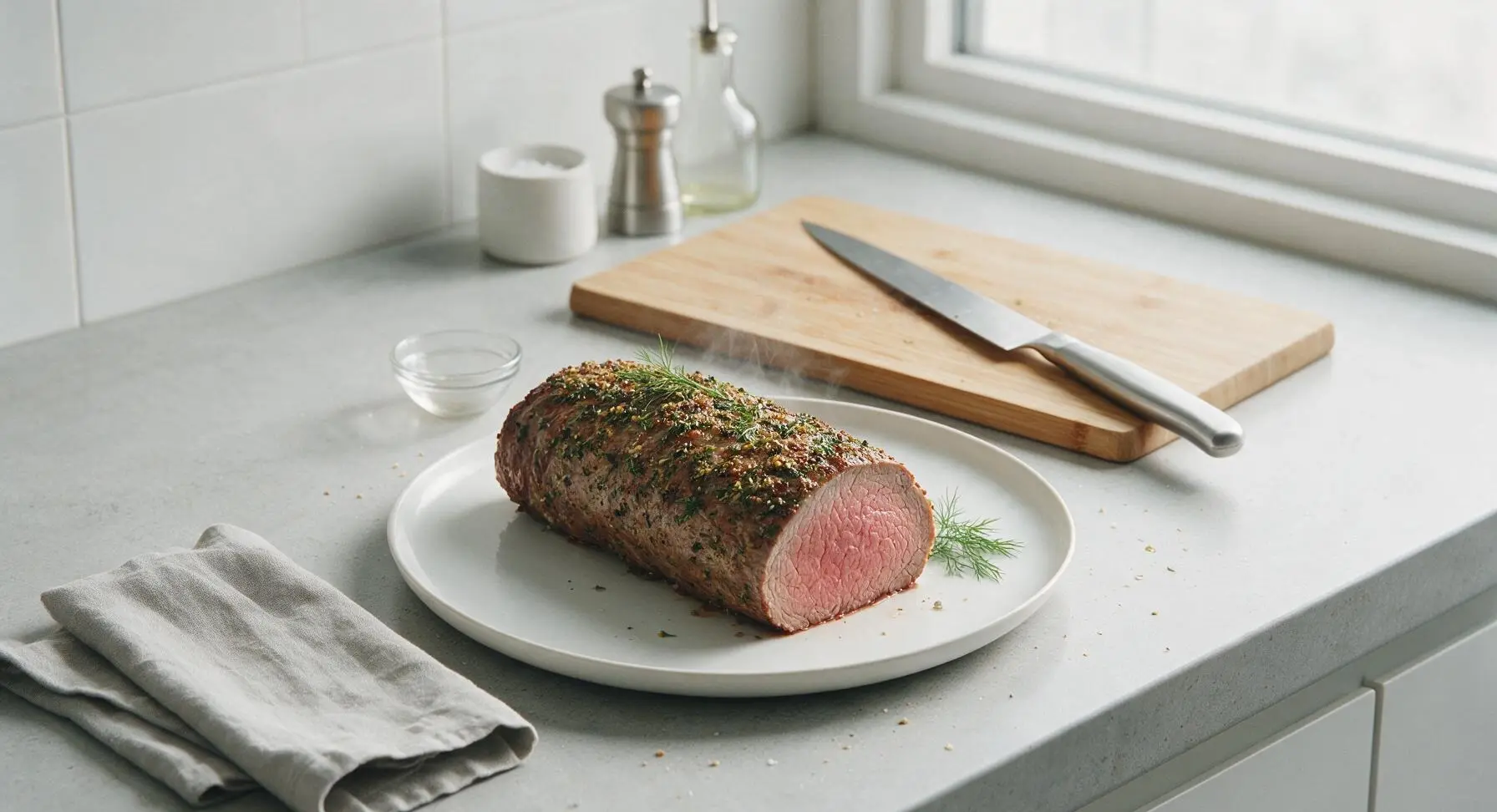
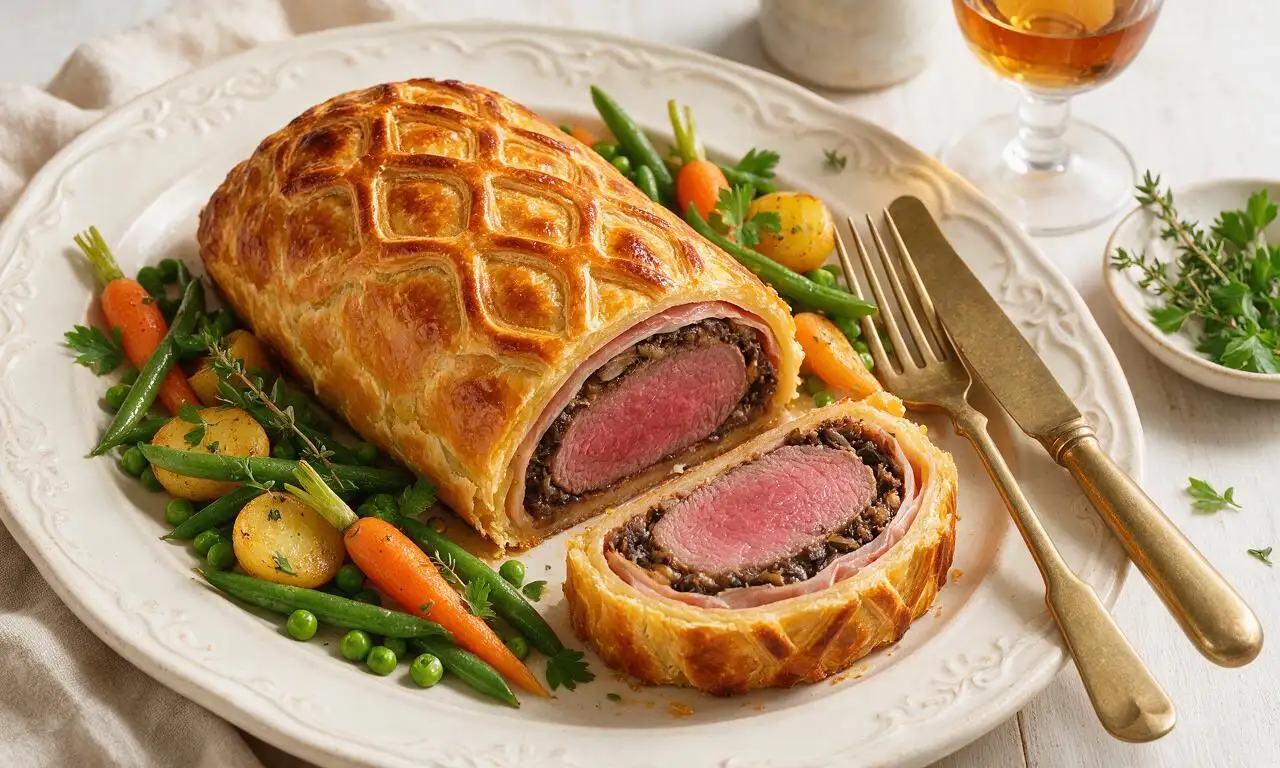
Buttery, herb-crusted beef tenderloin seared to golden perfection, roasted to juicy medium-rare, with melt-in-your-mouth texture ideal for festive holiday meals.
Ingredients
Steps
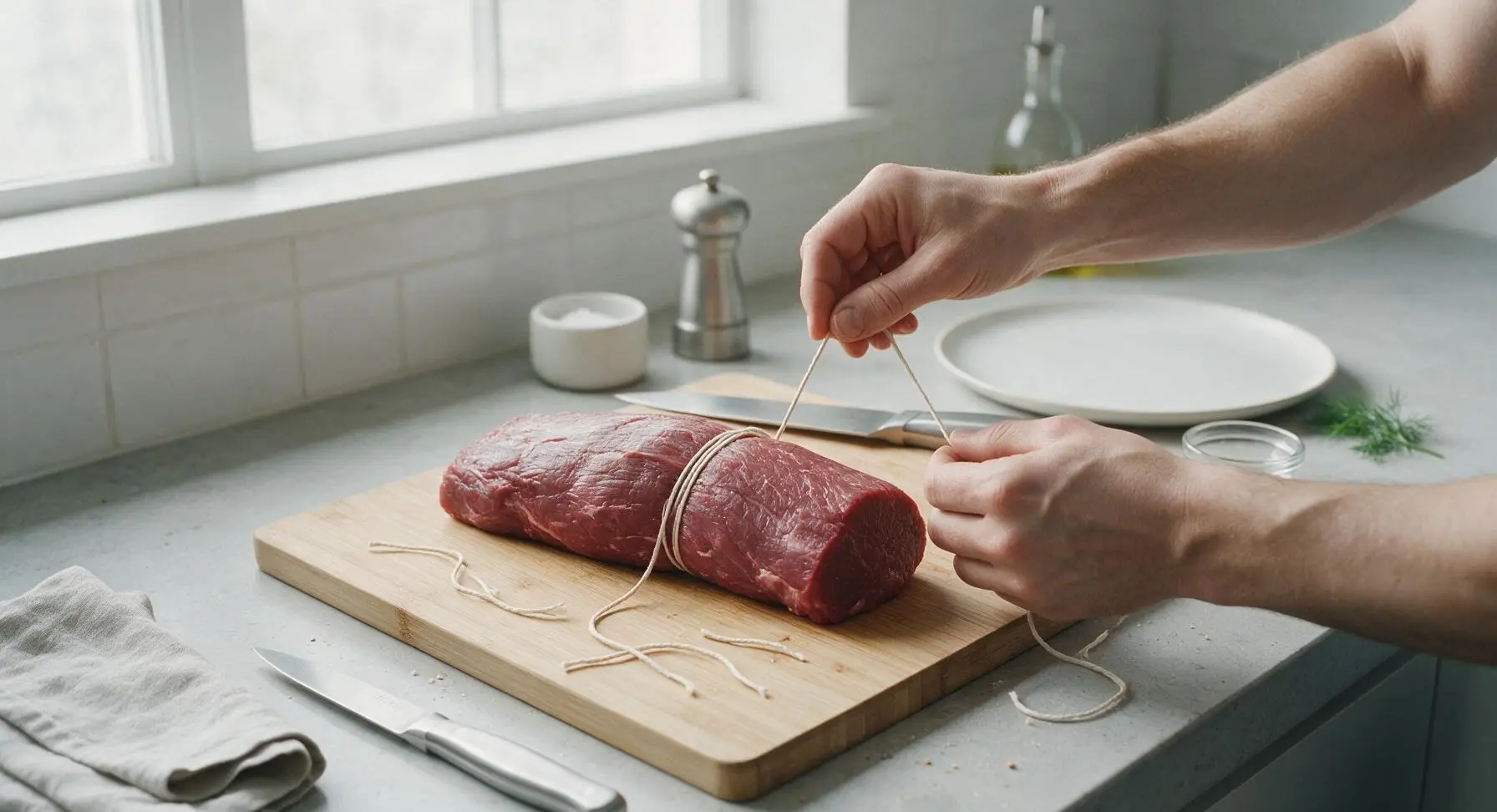
Tie the Tenderloin
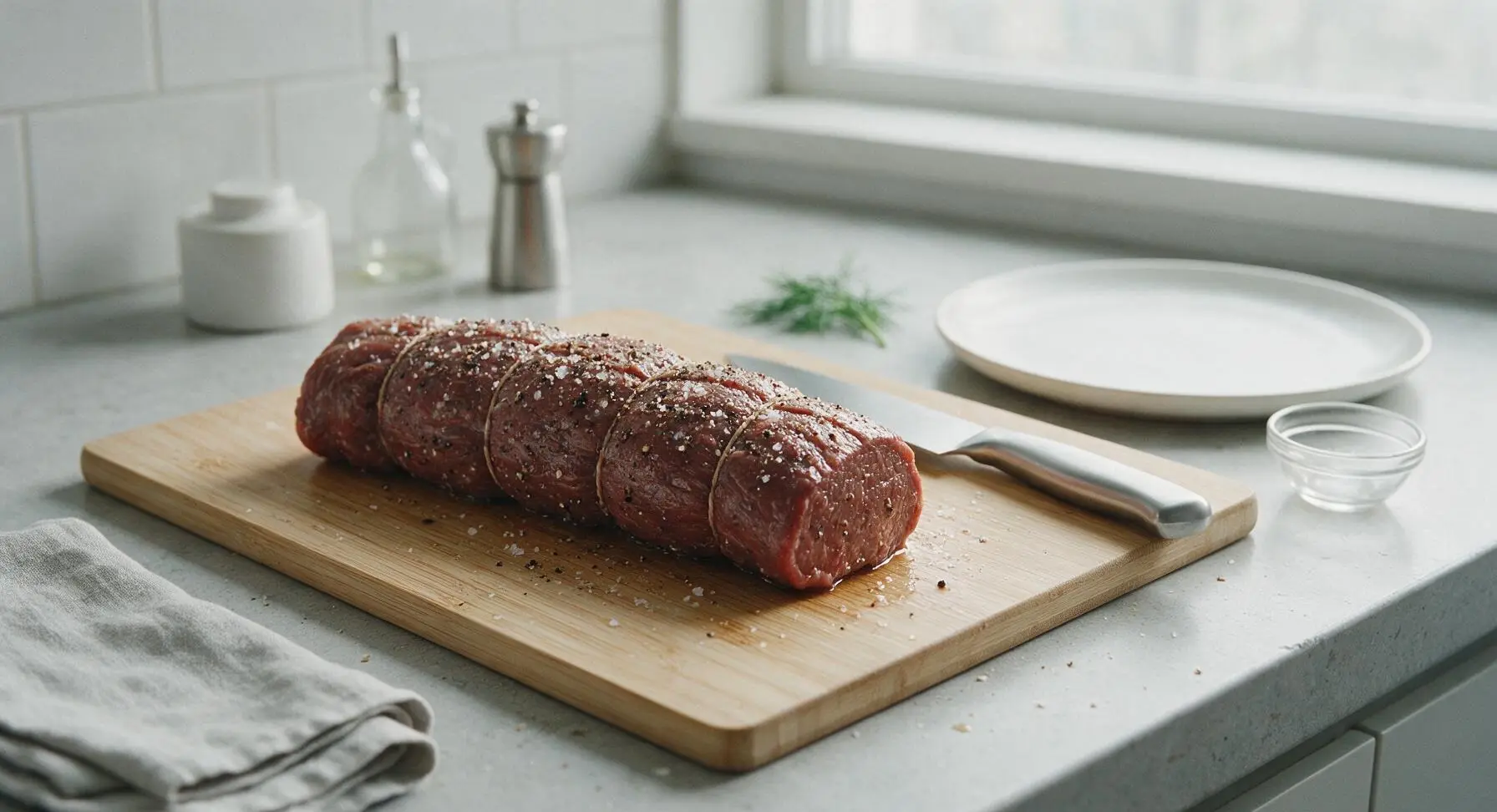
Pat the 900g trimmed beef tenderloin completely dry with paper towels. Cut 5 pieces of butcher's twine to 15cm lengths, and tie them snugly around the tenderloin at 4cm intervals, tucking the thin tapered end under to create an even, uniform cylindrical shape across the entire roast. This consistent thickness ensures even cooking, so no section overcooks before the center reaches target temperature. The tied roast should hold its round shape without loose, floppy ends when set on the cutting board.
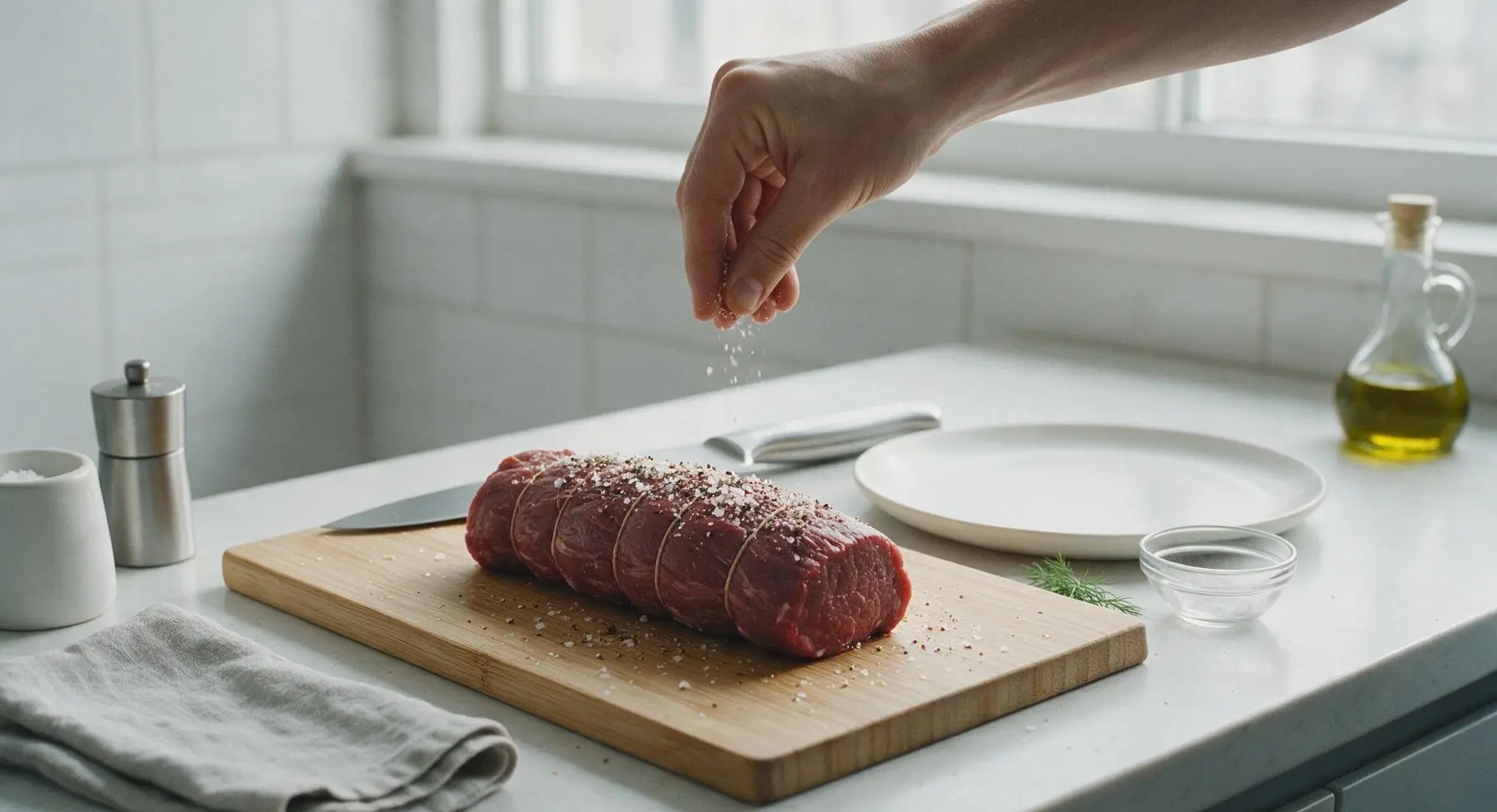
Season the Roast Evenly
Rub the entire surface of the tied tenderloin with 1 tbsp (15ml) extra virgin olive oil. Sprinkle 2 tsp (10g) flaky sea salt and 1 tsp (3g) coarsely ground black pepper evenly over all sides of the roast, pressing the seasoning gently into the meat surface to adhere. Let the seasoned roast rest at room temperature for 45 minutes to take the chill off, which promotes even cooking and prevents the meat from seizing when it hits the hot pan.
Sear to Golden Crust
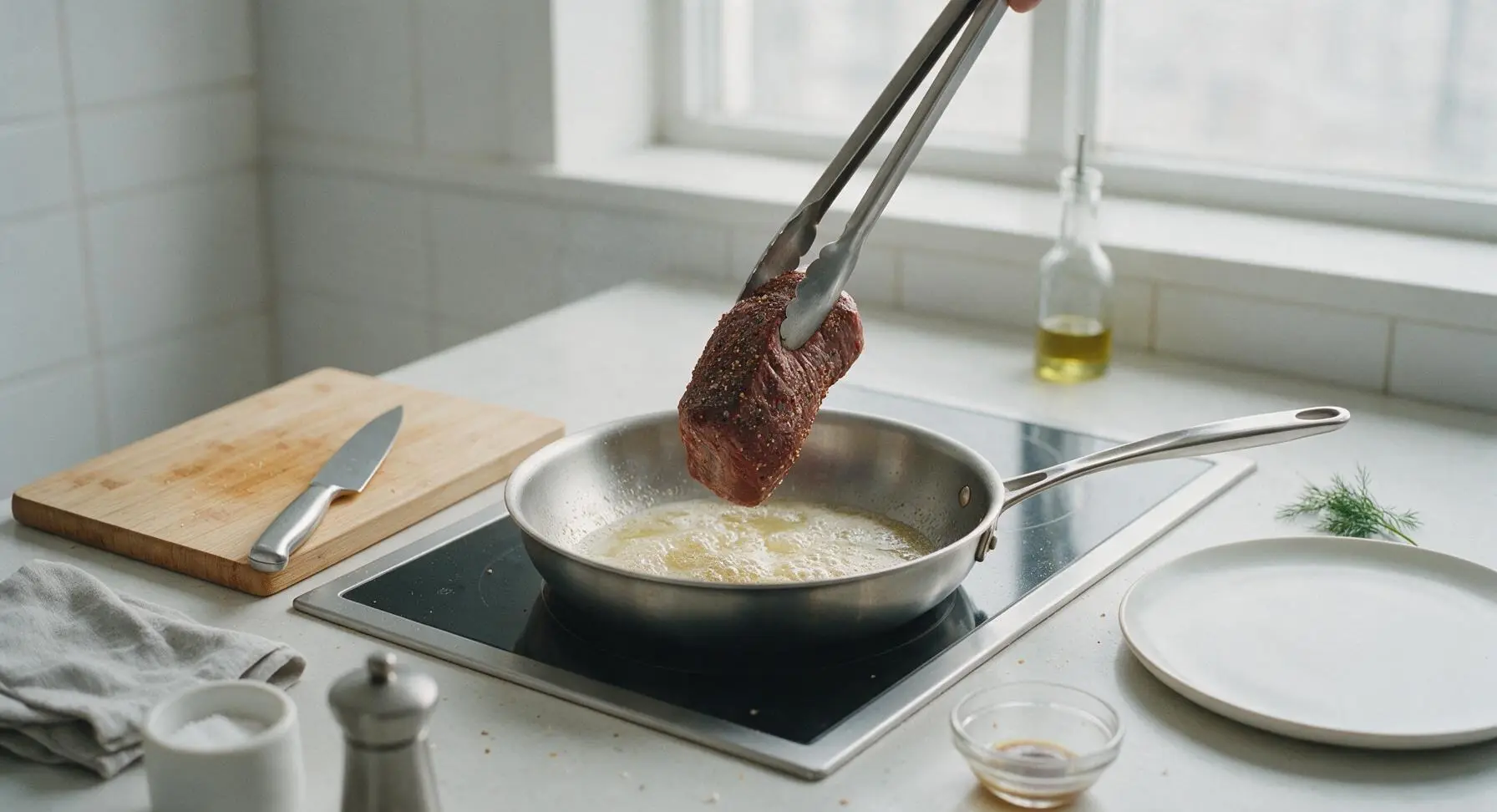
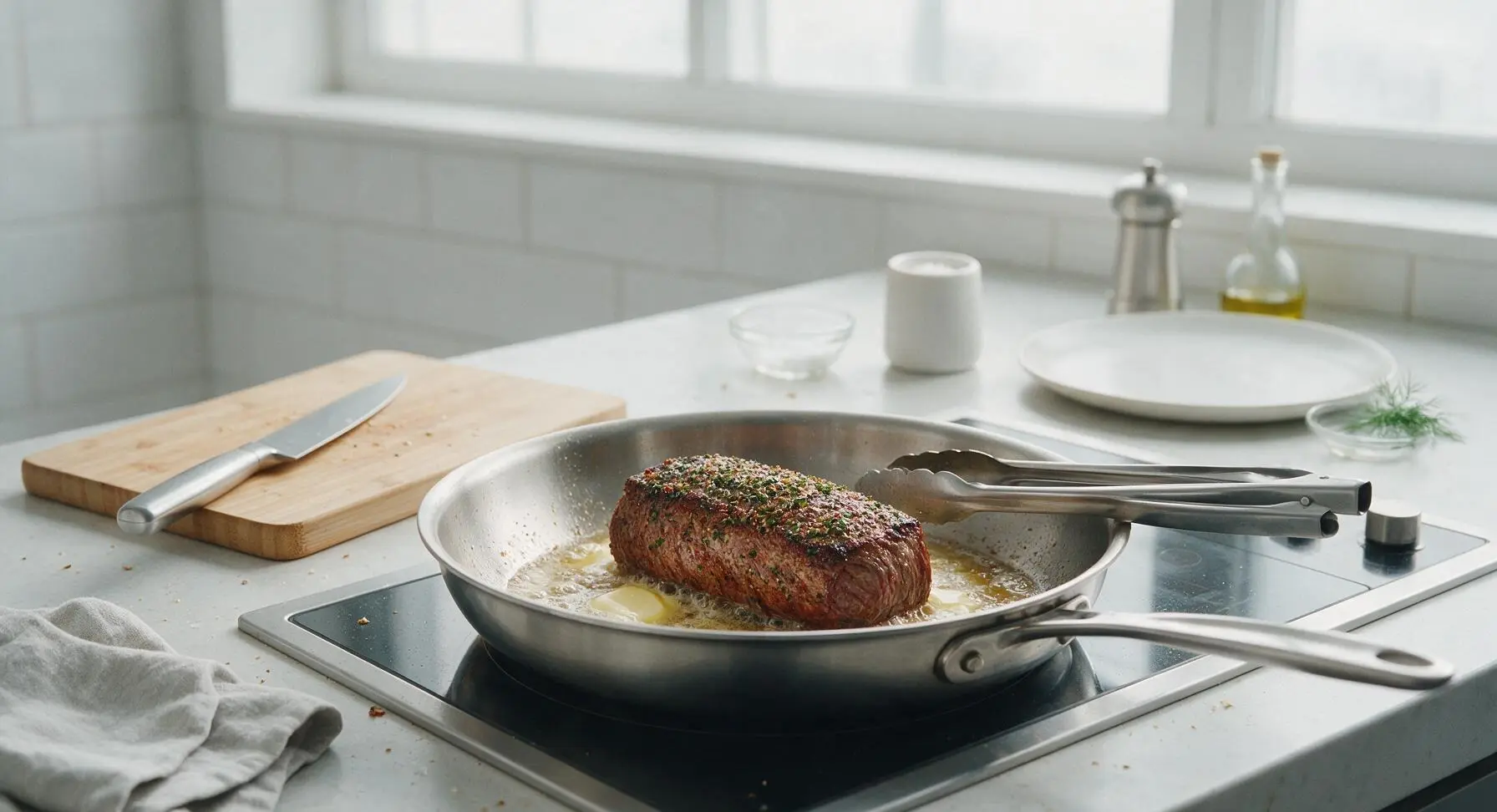
Place the 30cm stainless steel oven-safe skillet on the center induction stovetop zone over medium-high heat, and add 1 tbsp (15g) of the unsalted butter. Once the butter is foaming and just starting to turn pale golden, use the stainless steel tongs to set the tenderloin in the skillet. Sear for 2 minutes per side, turning to brown every surface (top, bottom, and all rounded sides) until a deep, even golden-brown crust forms across the entire roast, about 8 minutes total. Do not move the meat while each side sears to build a thick, crisp crust.
Baste with Herb Butter
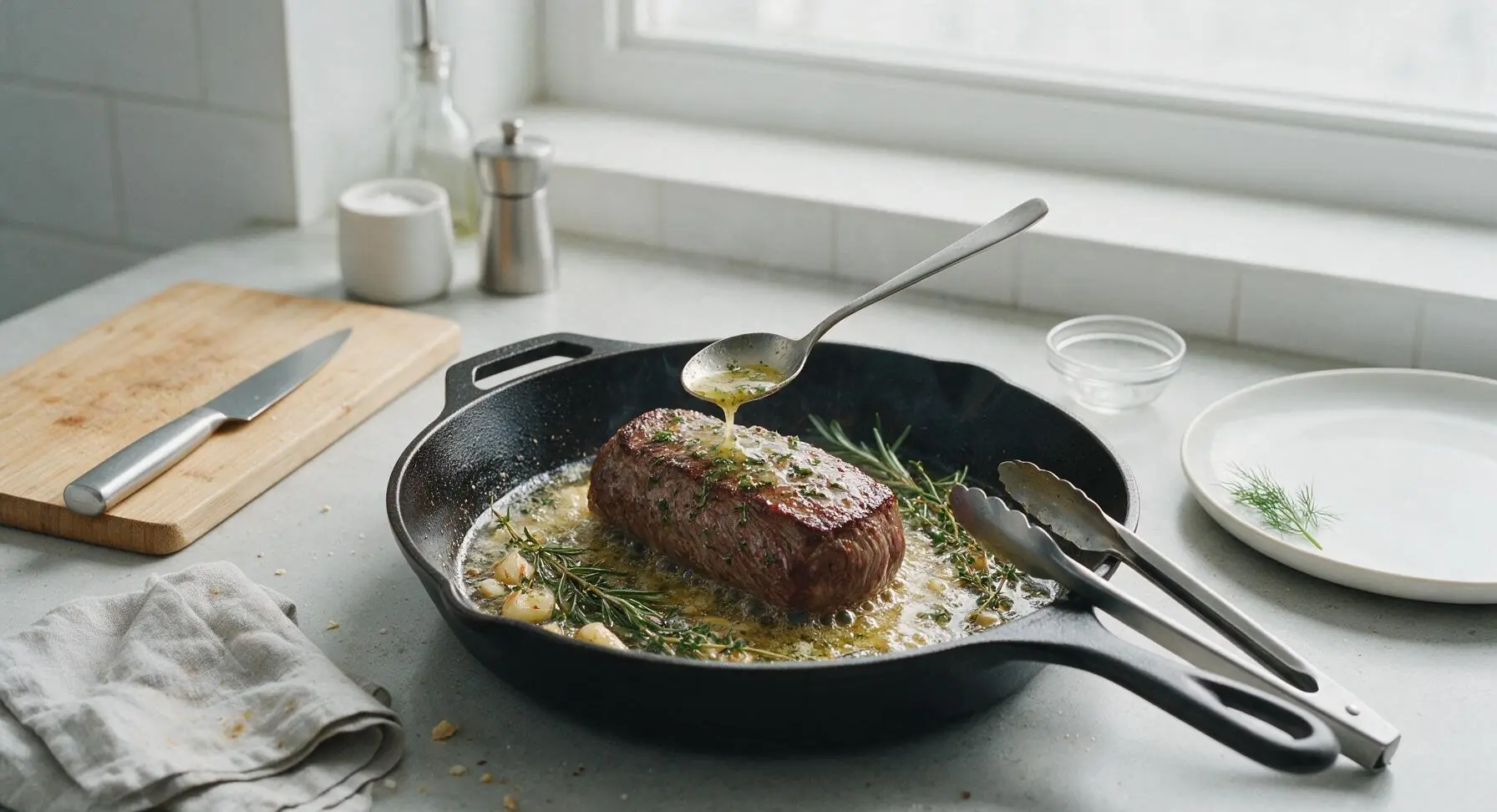
Reduce stovetop heat to medium. Add the remaining 3 tbsp (45g) unsalted butter, crushed garlic cloves, rosemary sprigs, and thyme sprigs to the skillet next to the tenderloin. Tilt the pan slightly so the melted butter pools at one edge, and use the small stainless steel spoon to repeatedly spoon the fragrant herb butter over the top of the roast for 3 full minutes, until the butter smells deeply of garlic and herbs and the garlic is pale golden. Do not let the garlic turn dark brown, as it will impart a bitter flavor to the meat.
Roast to Medium-Rare
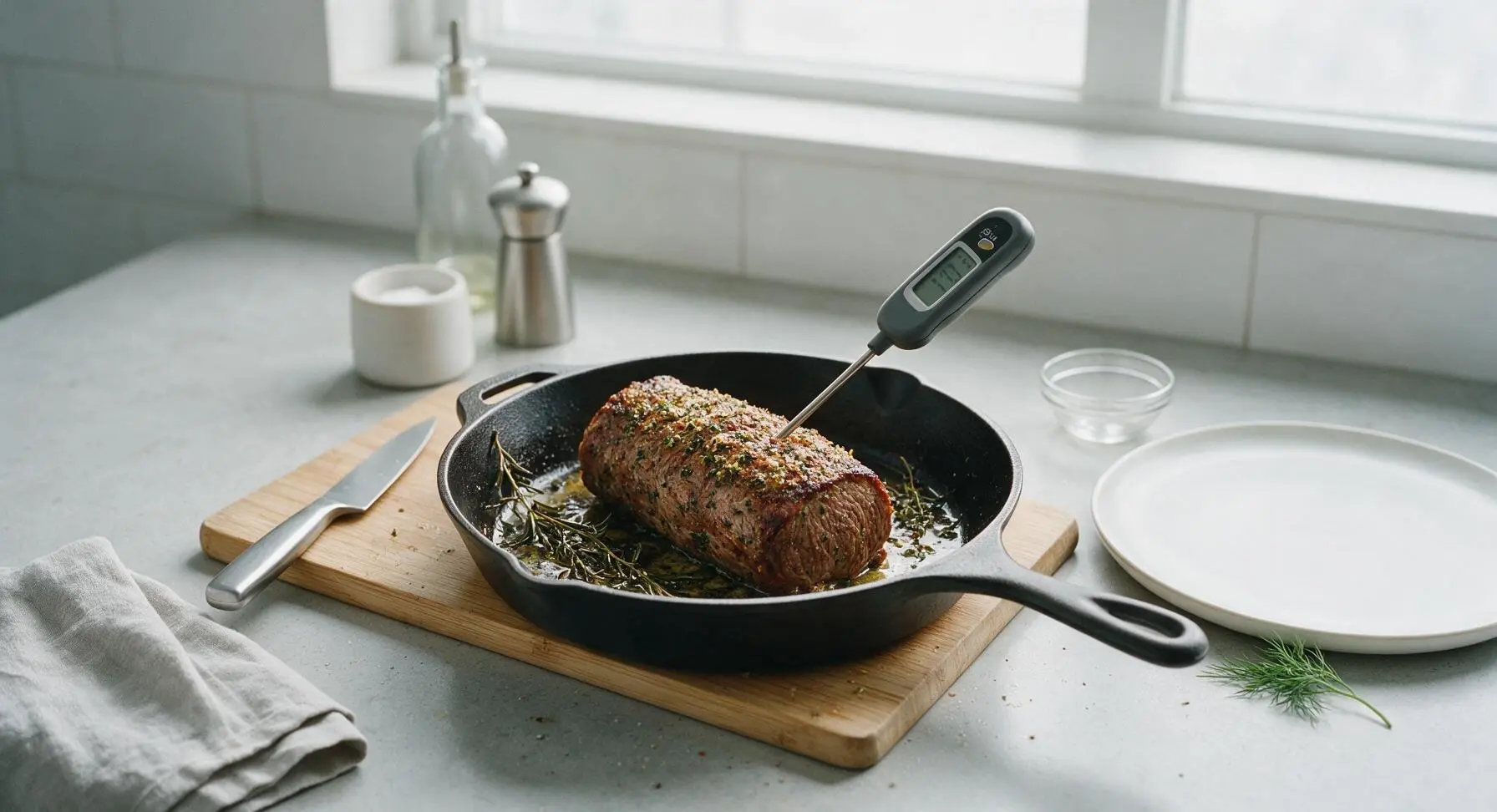
Carefully transfer the entire skillet with the tenderloin to a preheated 220C (425F) oven. Roast for 15-20 minutes, checking internal temperature with the digital instant-read thermometer after 15 minutes: remove the roast when the thickest part registers 57C (135F) for perfect medium-rare. The temperature will rise 5-7C (10-12F) during resting to reach a final 63-65C (145F), so do not cook the roast past 135F in the oven, as lean tenderloin will become dry if overcooked.
Rest Before Slicing
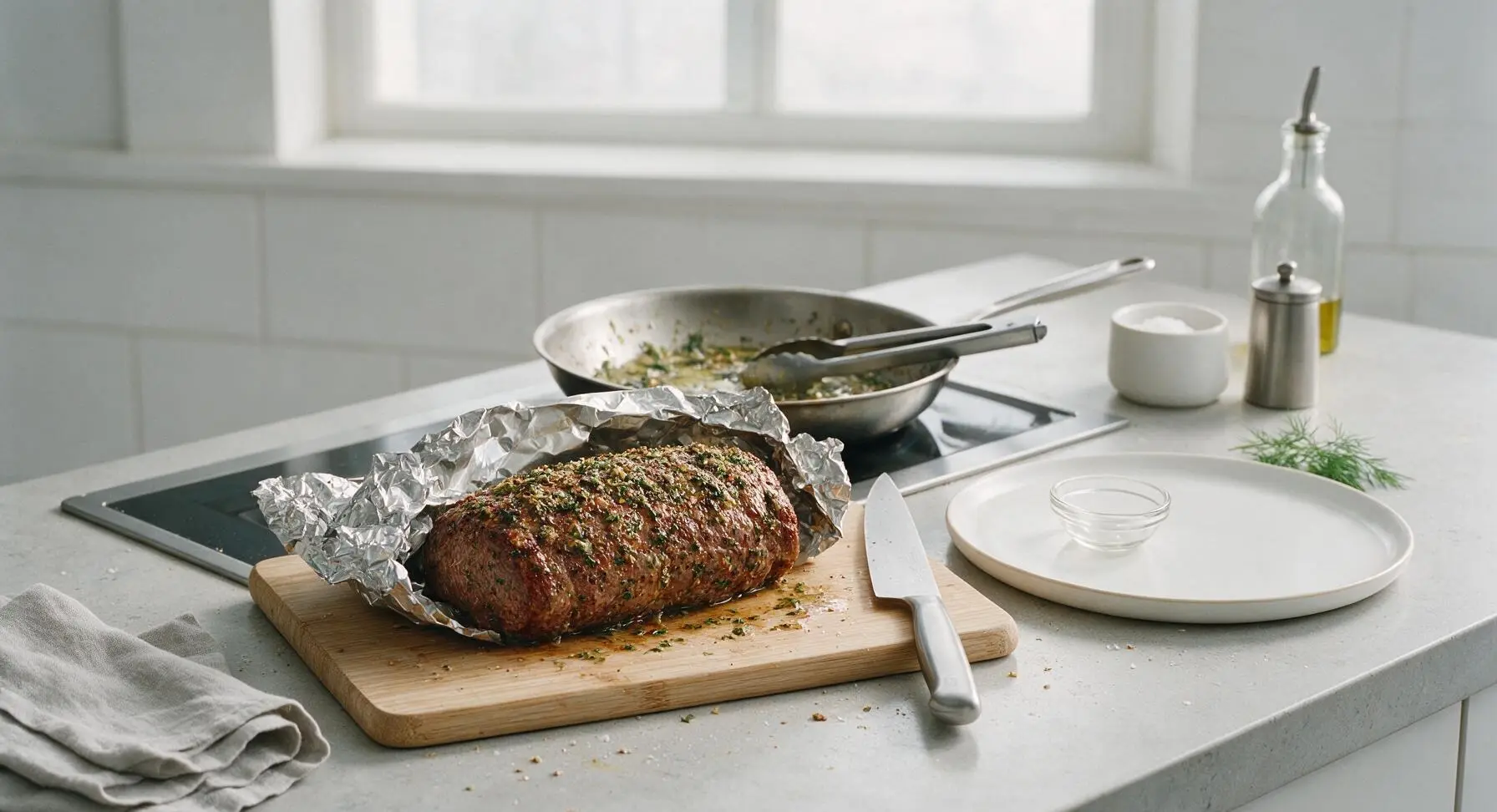
Use the tongs to transfer the roasted tenderloin from the skillet back to the light grey cutting board, now returned to front-center of the counter. Loosely tent the roast with a small sheet of aluminum foil. Let the roast rest for 15 full minutes to allow the muscle fibers to relax and redistribute juices, so every slice is juicy rather than having all juice run out onto the board when cut.
Slice and Plate Neatly
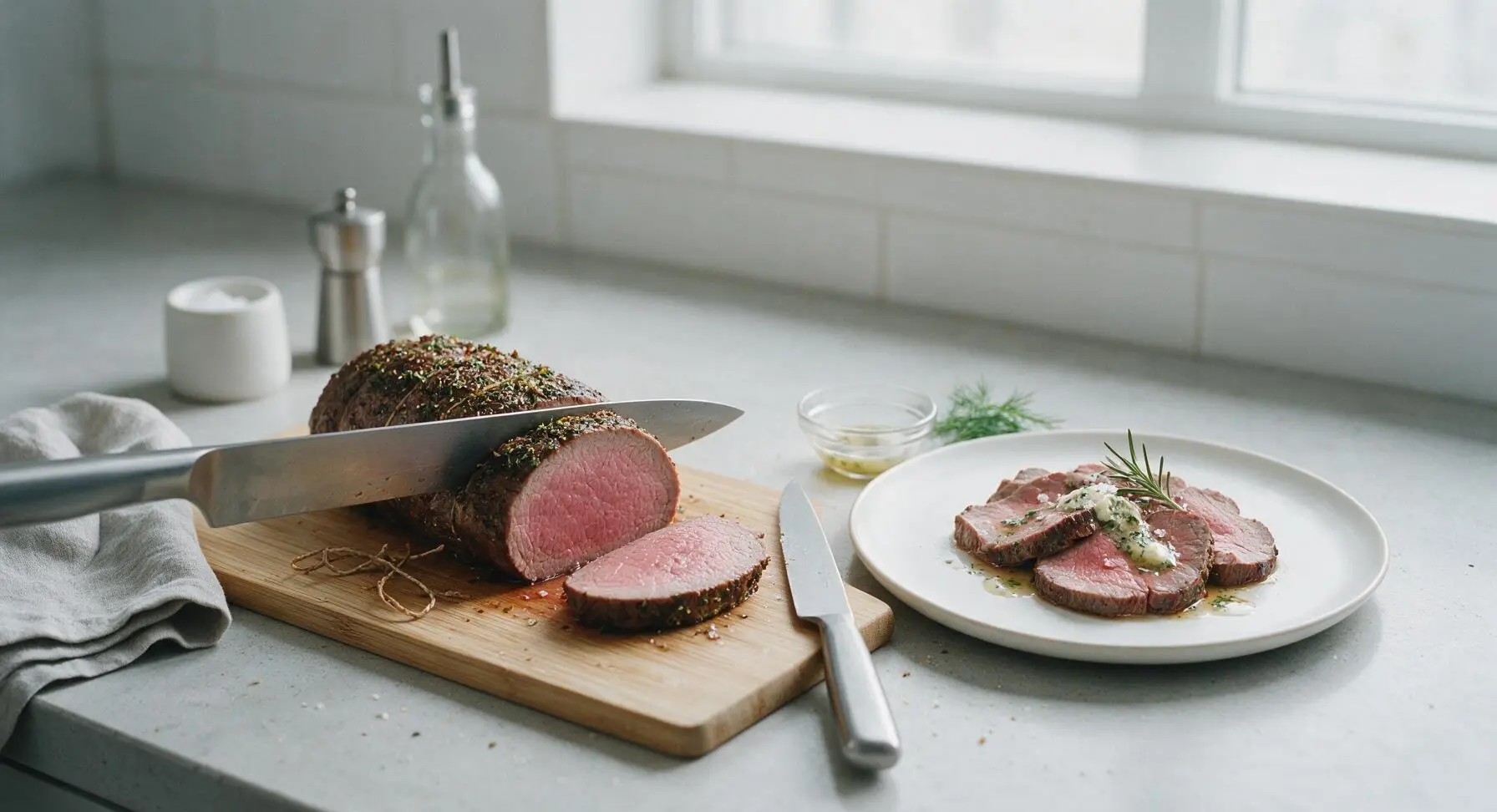
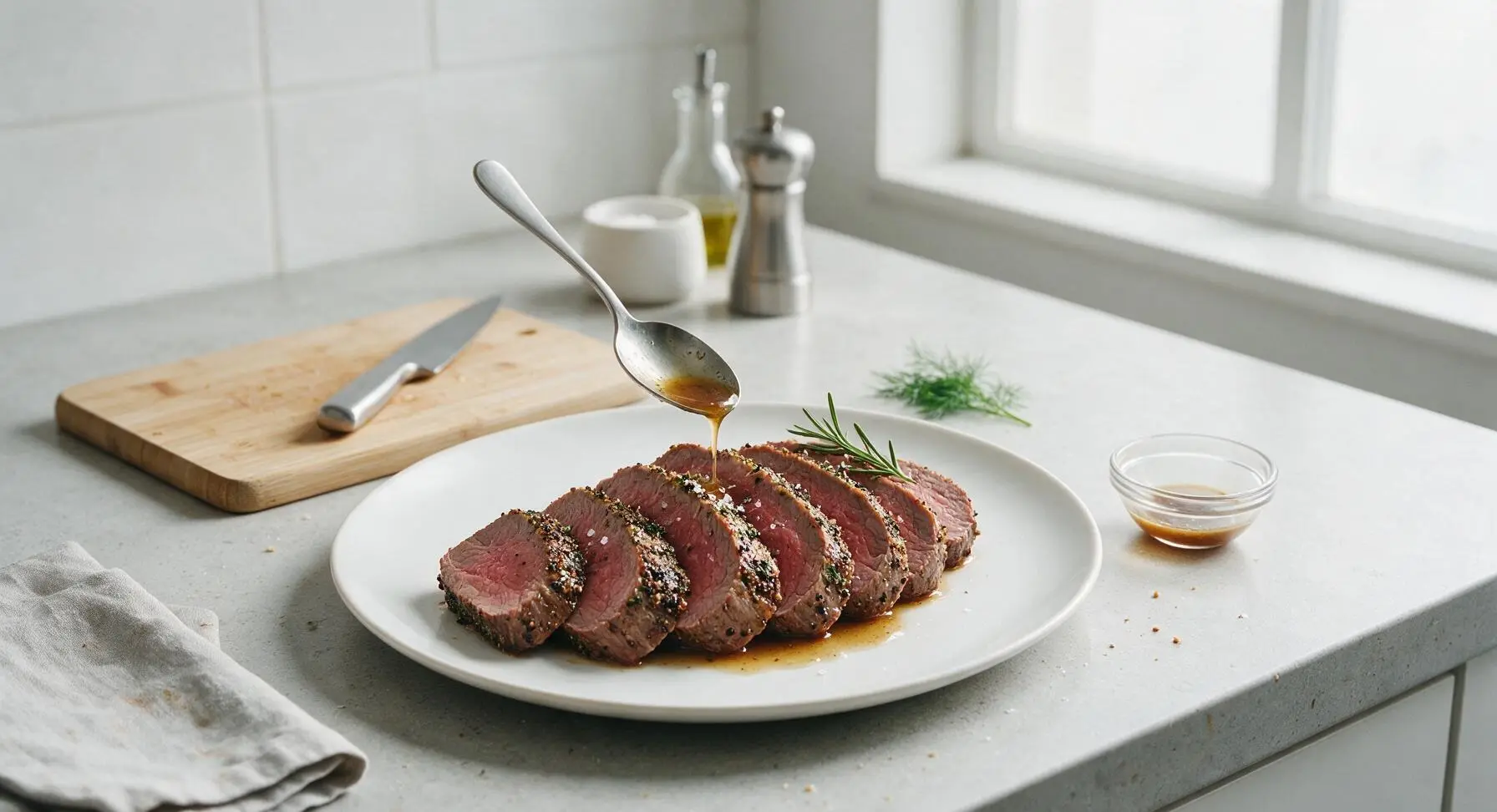
After resting, remove and discard the butcher's twine from the tenderloin. Use the 8-inch chef knife to slice the roast into even 2cm thick slices, cutting cleanly across the grain to ensure maximum tenderness. Arrange the slices fanned slightly on the cream white ceramic dinner plate, spoon 1-2 tbsp of the warm herb butter and pan jus over the top, garnish with a small fresh rosemary sprig, and finish with a tiny pinch of flaky sea salt.
Tips
2.Invest in an instant-read thermometer for this recipe: tenderloin is an extremely lean, expensive cut, and guessing doneness by touch or cook time can lead to overcooked, dry meat or undercooked centers. The thermometer removes all guesswork for perfect results every time.
3.Resist the urge to wipe the pan clean after searing: the browned bits (called fond) stuck to the bottom of the skillet melt into the herb butter during basting, adding deep, rich, beefy flavor to the jus that you cannot replicate with plain butter and herbs.



OMG this herb crust is a total game changer! I made this for my in-laws’ Sunday dinner and everyone was raving so hard I thought they’d ask for seconds before I even sat down. The 30 minute cook time is way shorter than my usual fussy tenderloin recipe too, total win for a busy weeknight when you still want to feel fancy. Only tiny mishap: I forgot to let the meat come to room temp first, oops, but it still turned out so juicy no one even noticed!
Made this for our neighborhood potluck last weekend and people were hovering around the platter before I even set it down! The garlicky herb crust gets so nice and crispy, it paired perfectly with the creamy horseradish sauce I served on the side. My kids even ate the leftover slices cold on sandwiches for their school lunches this week, total mom win. Quick question — does anyone know if this herb crust works on pork tenderloin too? I have one sitting in the freezer I need to use up this week.
I was so nervous to make beef tenderloin for my 5 year anniversary dinner because I always overcook red meat, but this recipe was so straightforward even I couldn’t mess it up! The 30 minute cook time is no joke — I used my meat thermometer like the directions said, pulled it at 135°F, let it rest for 10 minutes, and it was perfectly medium-rare all the way through. SO good, my partner said it tasted like something we’d pay $60 for at a fancy downtown steakhouse. 10/10 will be making this for every special occasion from now on, no more dropping a ton of money at restaurants for us!