
beef tenderloin sauce
intro
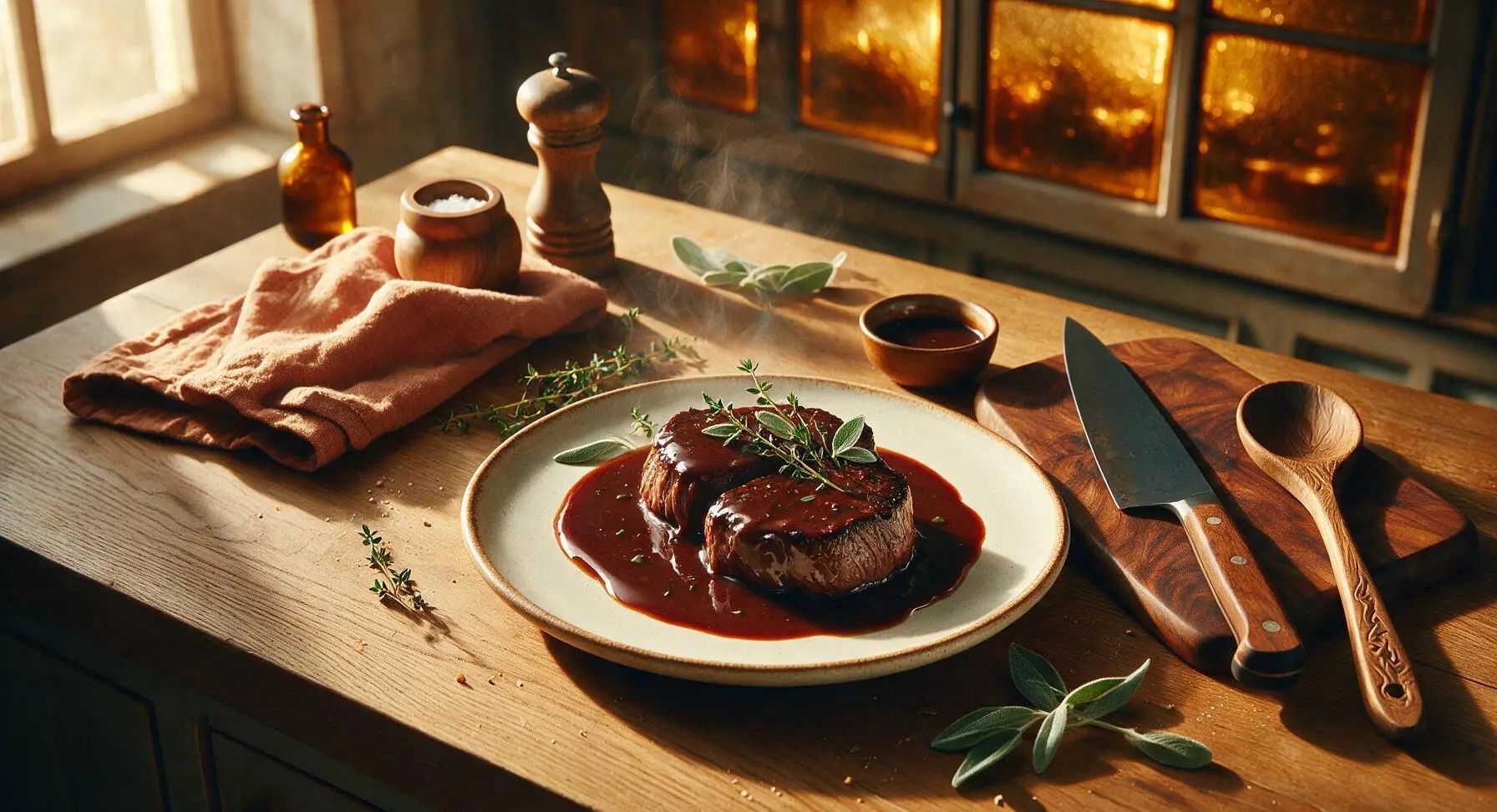
Silky, glossy red wine and butter reduction, deep with savoriness and bright with balanced acidity, crafted to complement delicate, buttery beef tenderloin without overpowering it.
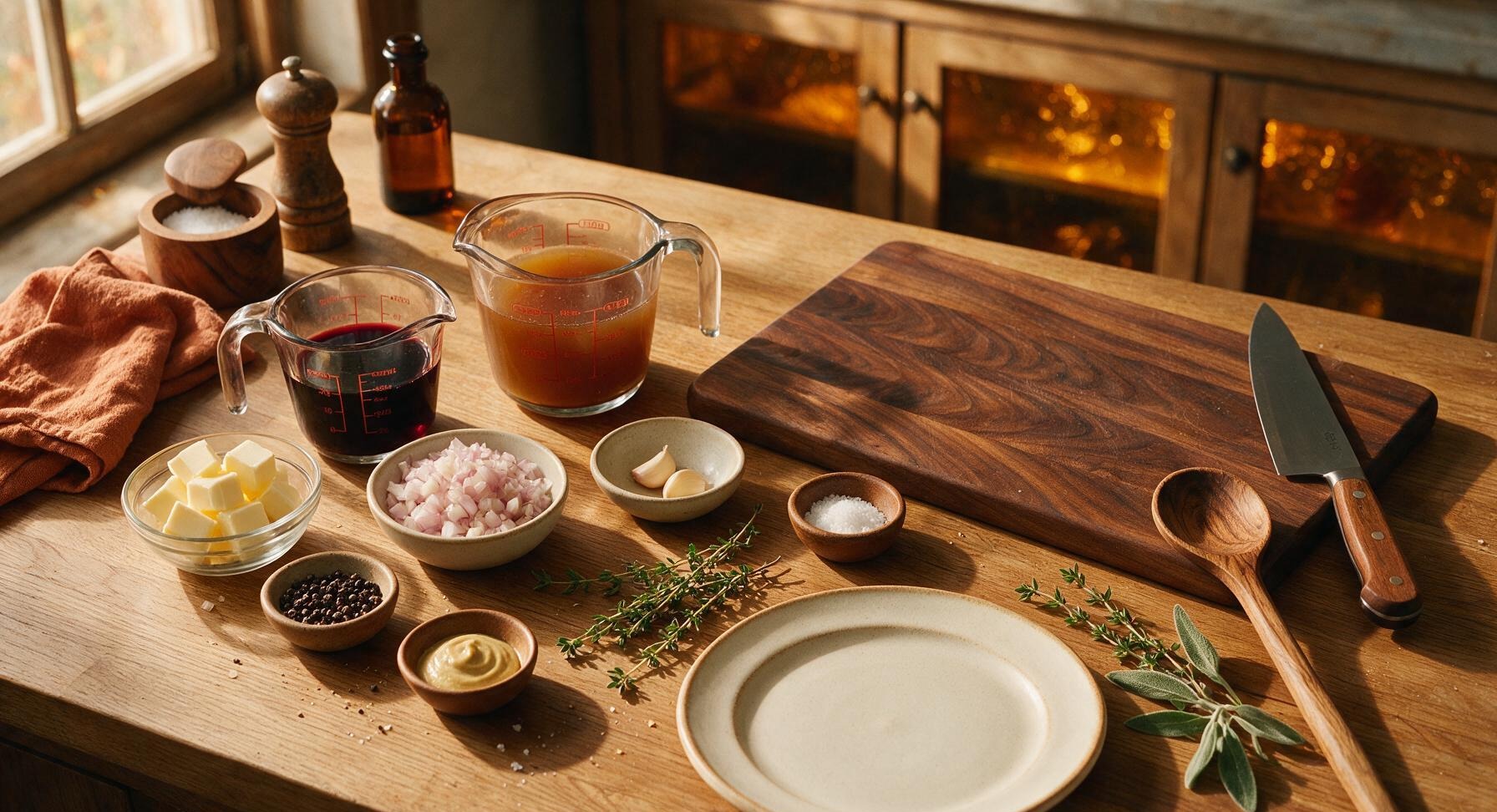
Ingredients
Steps
Prep Aromatic Base
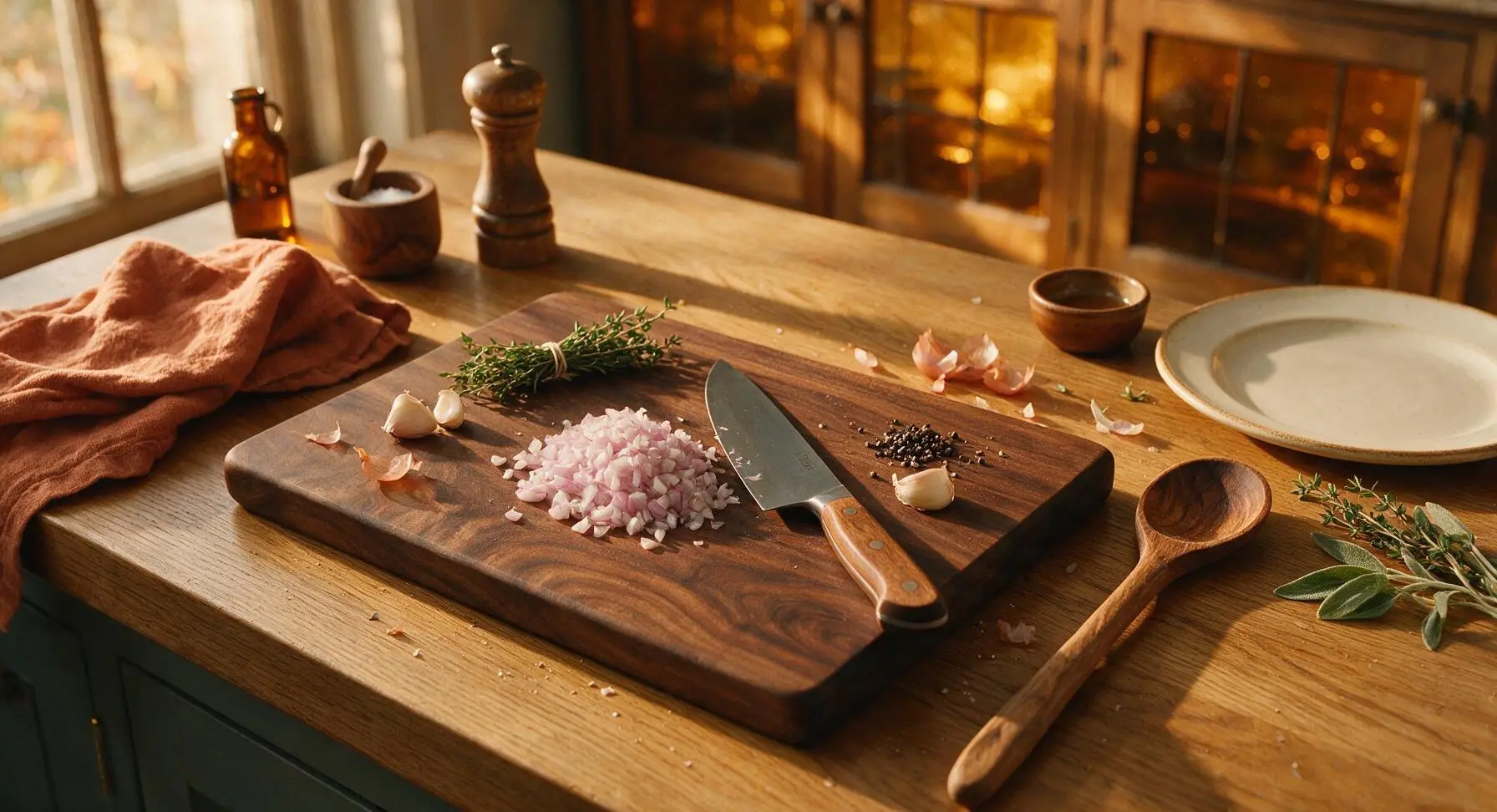
Place the honey oak cutting board at the center of the work zone. Using the 8-inch chef knife, peel and finely dice the 3 shallots into 3mm pieces, lightly crush the 2 garlic cloves with the flat of the knife, and crack 1 tsp whole black peppercorns with the knife edge. Gather 4 fresh thyme sprigs, tying 3 together with a small piece of kitchen twine, and set all prepped aromatics aside on the edge of the cutting board. This takes approximately 5 minutes; aim for evenly sized shallot dice to ensure even cooking without browning.
Sauté Shallot Aromatics
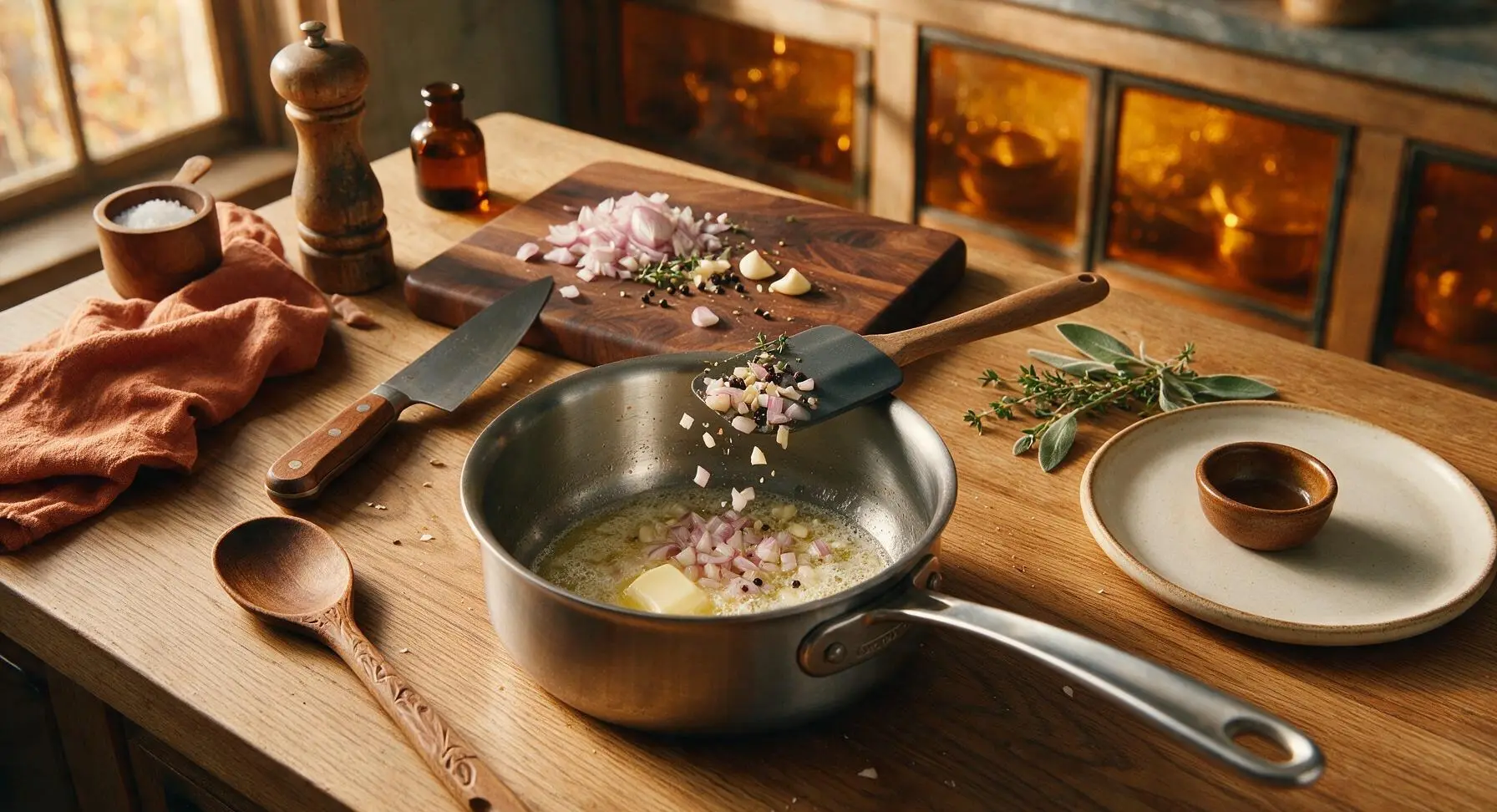
Place the 1-quart heavy-bottomed stainless steel saucepan on the burner over medium-low heat (325°F / 160°C). Add 1 tbsp of the cold unsalted butter to the pan, swirling until fully melted and foaming subsides. Add the diced shallots, crushed garlic, cracked peppercorns, and tied thyme bundle, stirring with the charcoal silicone spatula. Sauté for 3-4 minutes, until shallots are soft and translucent, with no brown color developing—browned shallots will add a bitter flavor to the finished sauce.
Deglaze with Red Wine
Pour 1 cup of dry red wine into the saucepan with the softened shallots, stirring with the silicone spatula to scrape up any tiny browned fond bits from the bottom of the pan. Increase heat to medium (375°F / 190°C) to bring the wine to a gentle, steady simmer. Do not boil rapidly, as this will make the wine taste harsh and acidic.
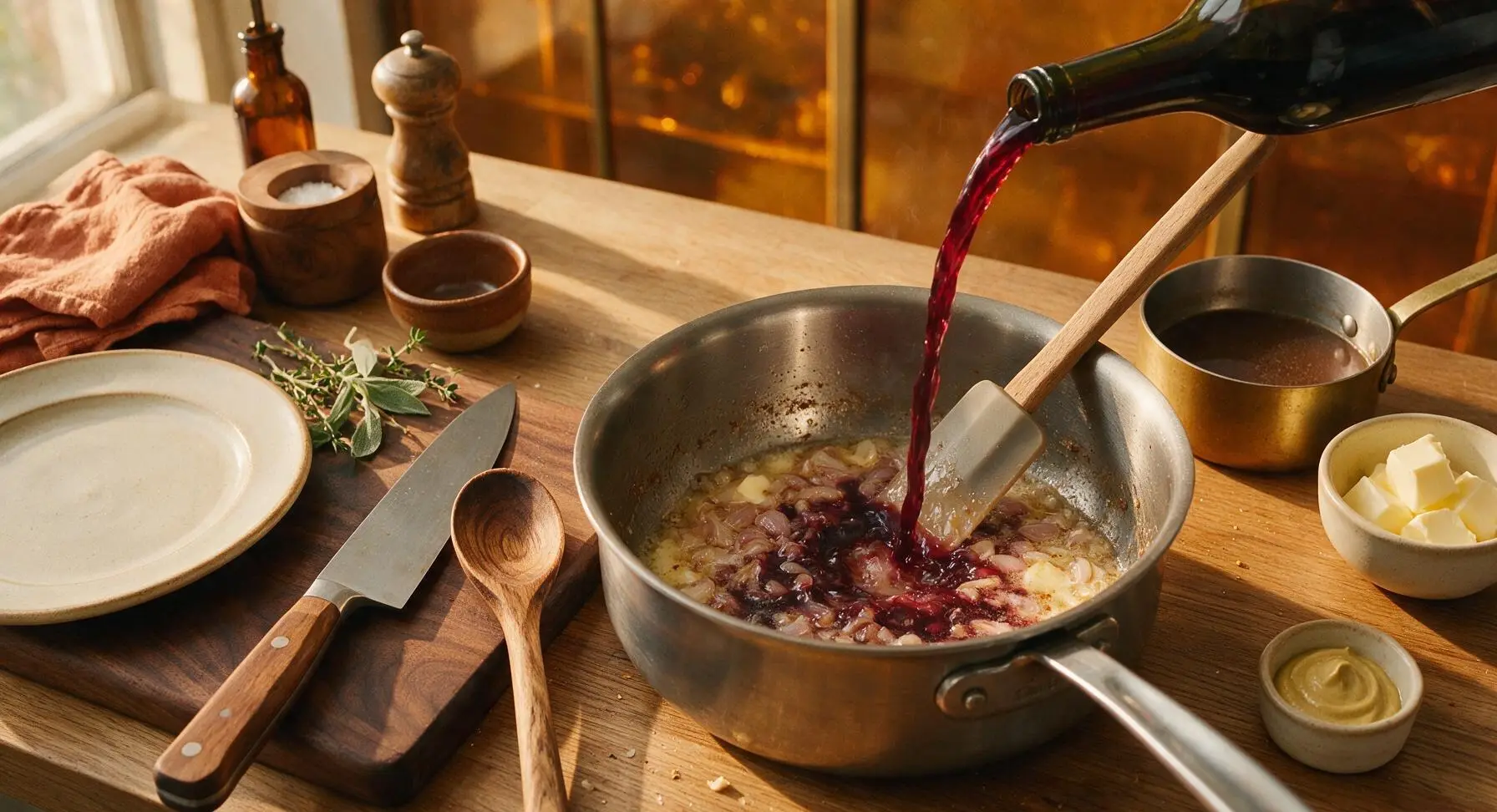
Reduce Wine by Half
Allow the wine to simmer uncovered for 8-10 minutes, until it is reduced by half, measuring approximately ½ cup of thick, fragrant liquid left in the pan. The bubbles will become slightly larger and slower to pop as the reduction thickens, and the sharp alcohol smell will fade to a rich, fruity wine aroma.
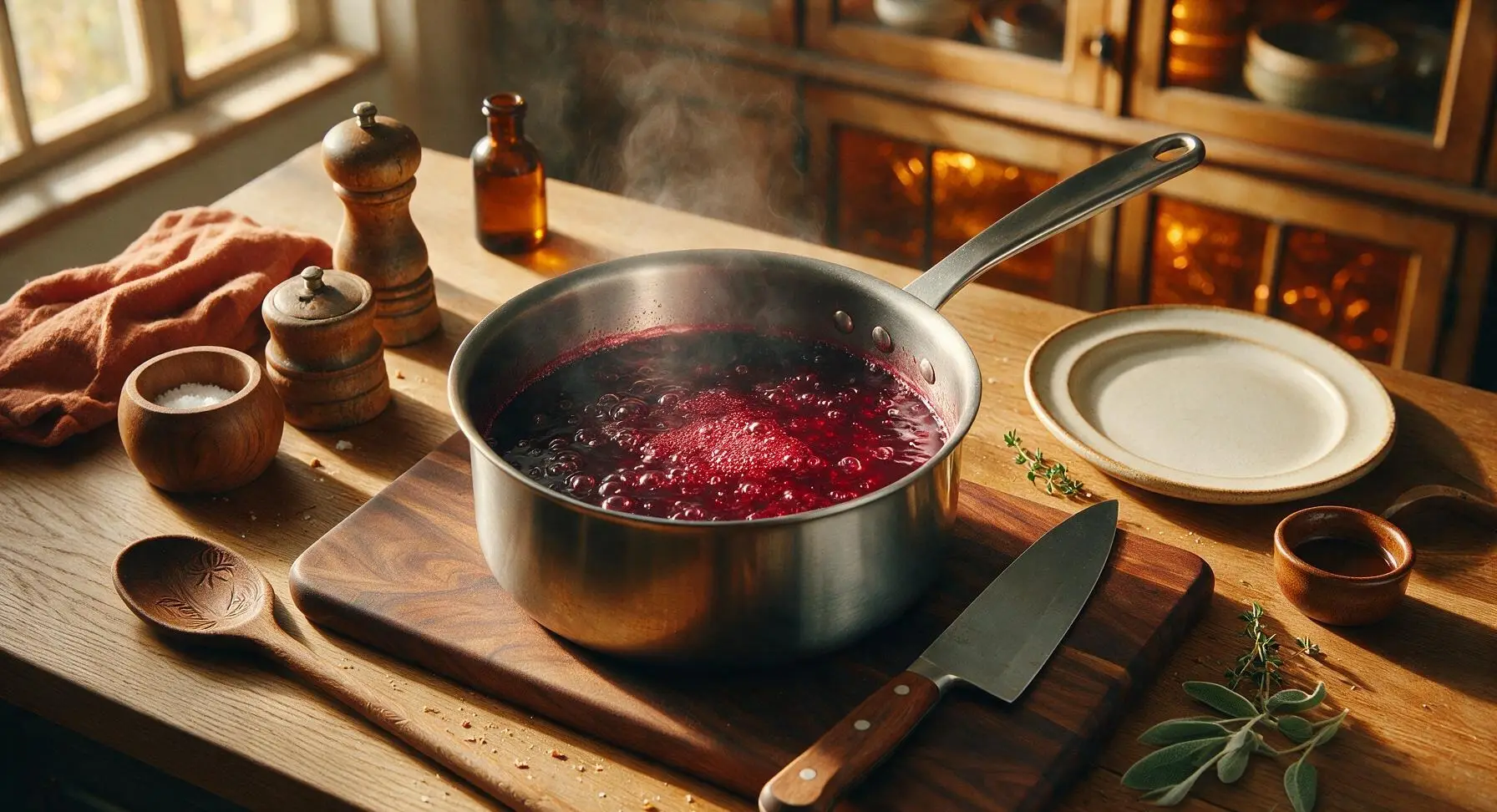
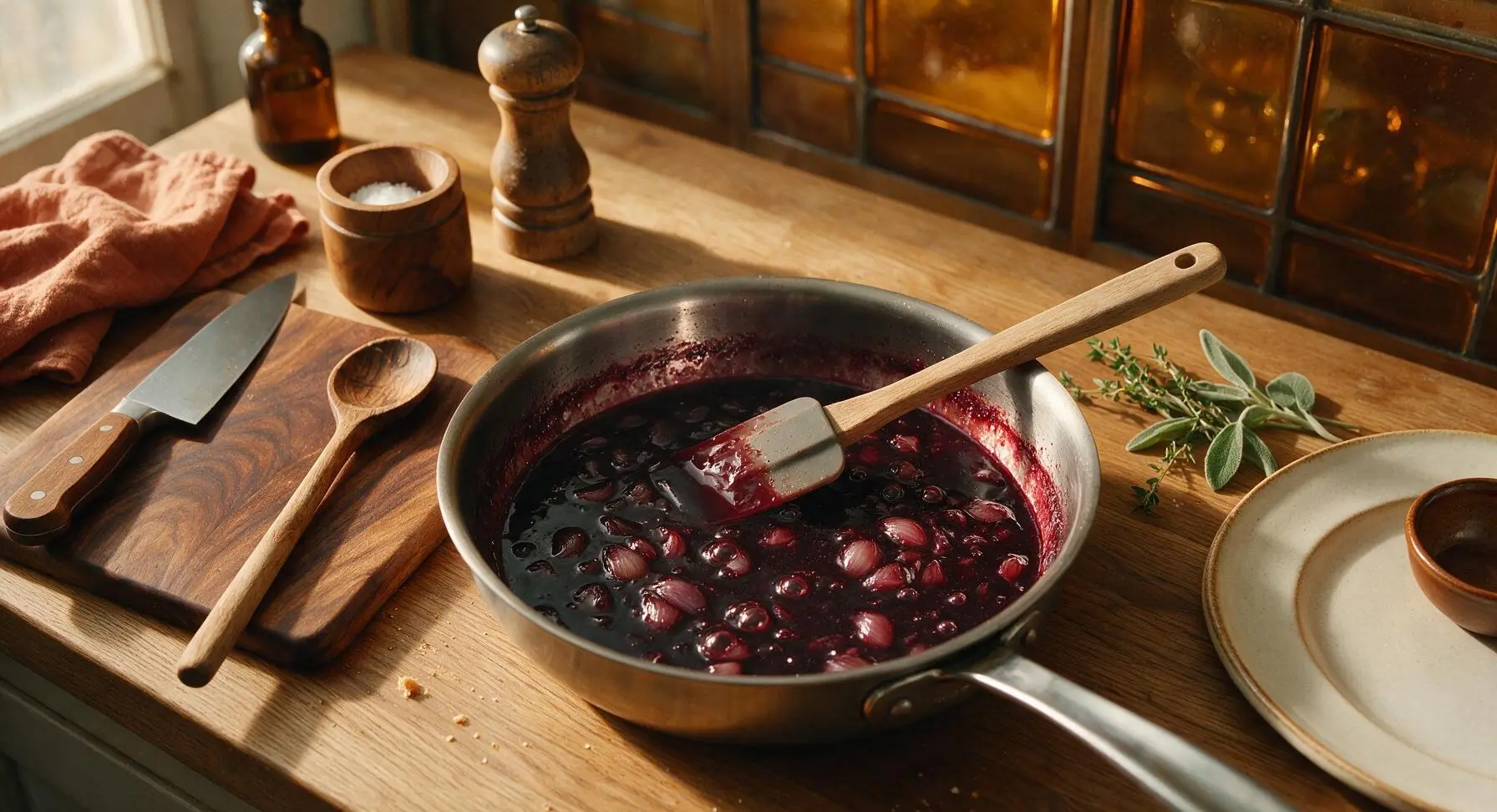
Simmer Beef Stock
Pour 1.5 cups of low-sodium beef stock into the reduced wine mixture, stirring to combine. Return to a gentle simmer, and cook uncovered for another 10-12 minutes, until the total volume of liquid is reduced to approximately ¾ cup, and the sauce coats the back of a spoon thickly enough that a line drawn with your finger through the sauce on the spoon holds its shape (nappé consistency).
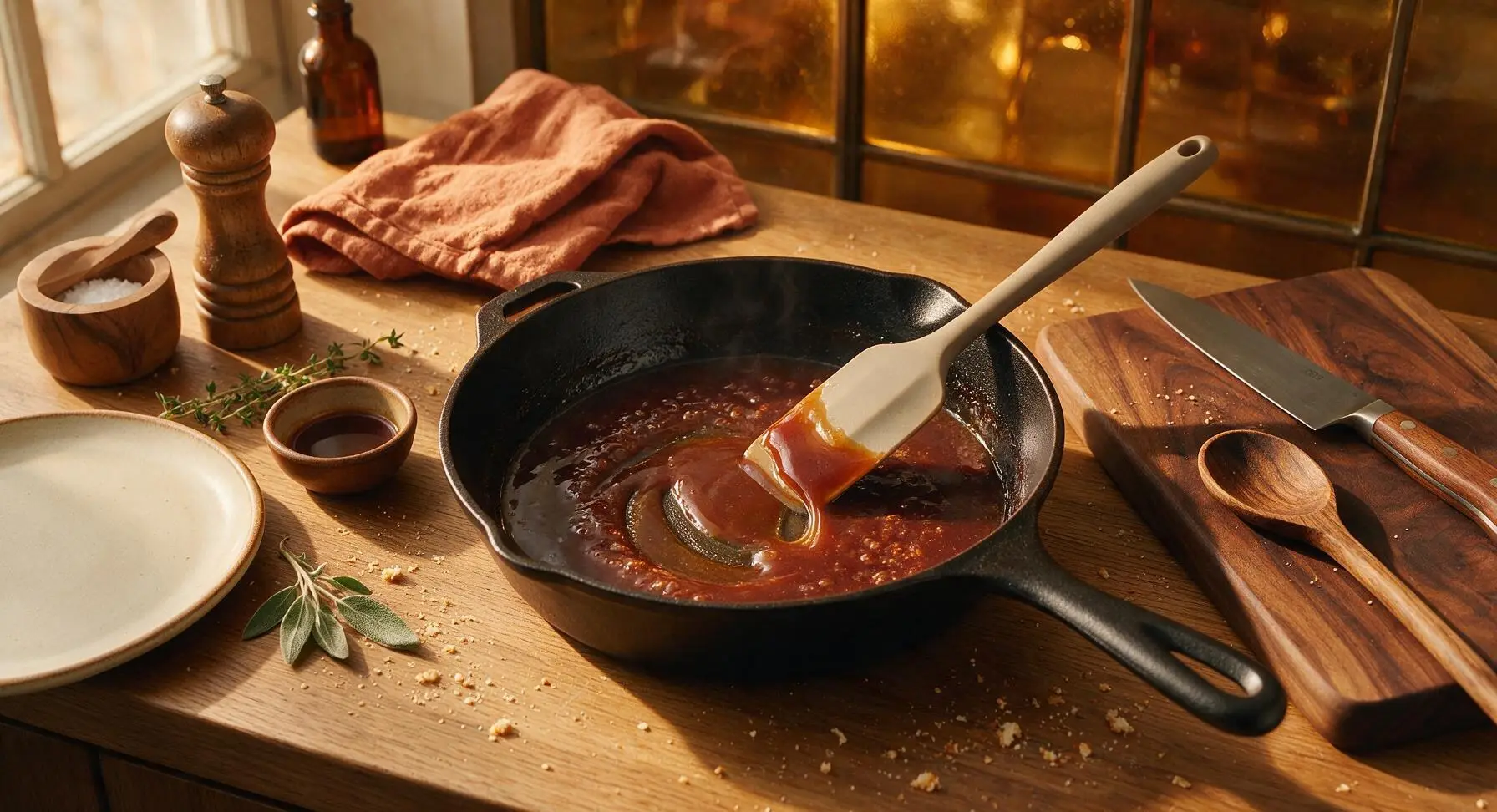
Strain Sauce Base
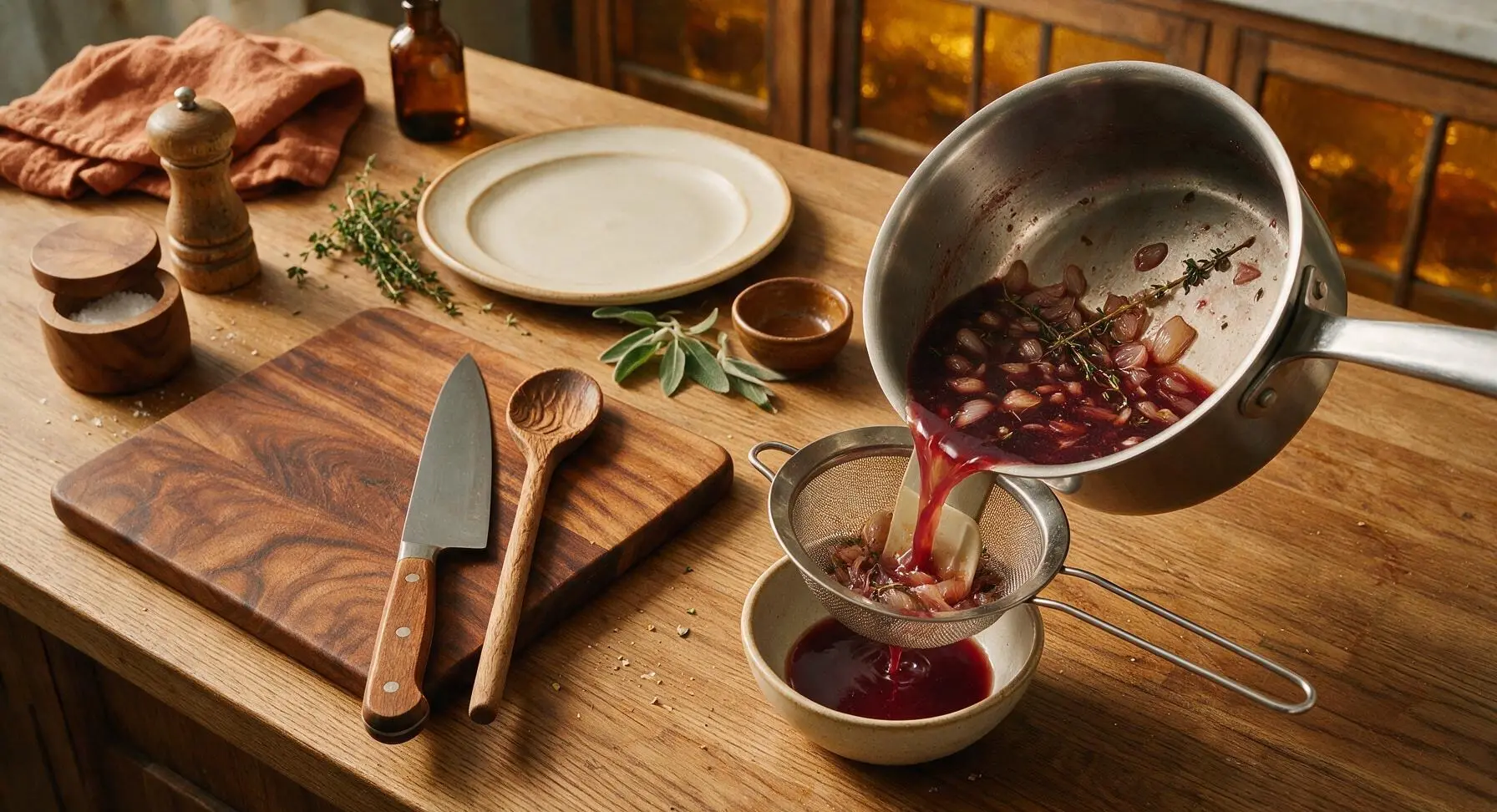
Remove the saucepan from heat. Place the 10cm fine-mesh stainless steel strainer over a small heatproof bowl, and pour the hot reduced sauce through the strainer, pressing gently on the shallots and herbs with the silicone spatula to extract all flavorful liquid, then discard the spent solids. Return the strained, smooth liquid back to the saucepan, set over the lowest heat setting.
Mount with Cold Butter
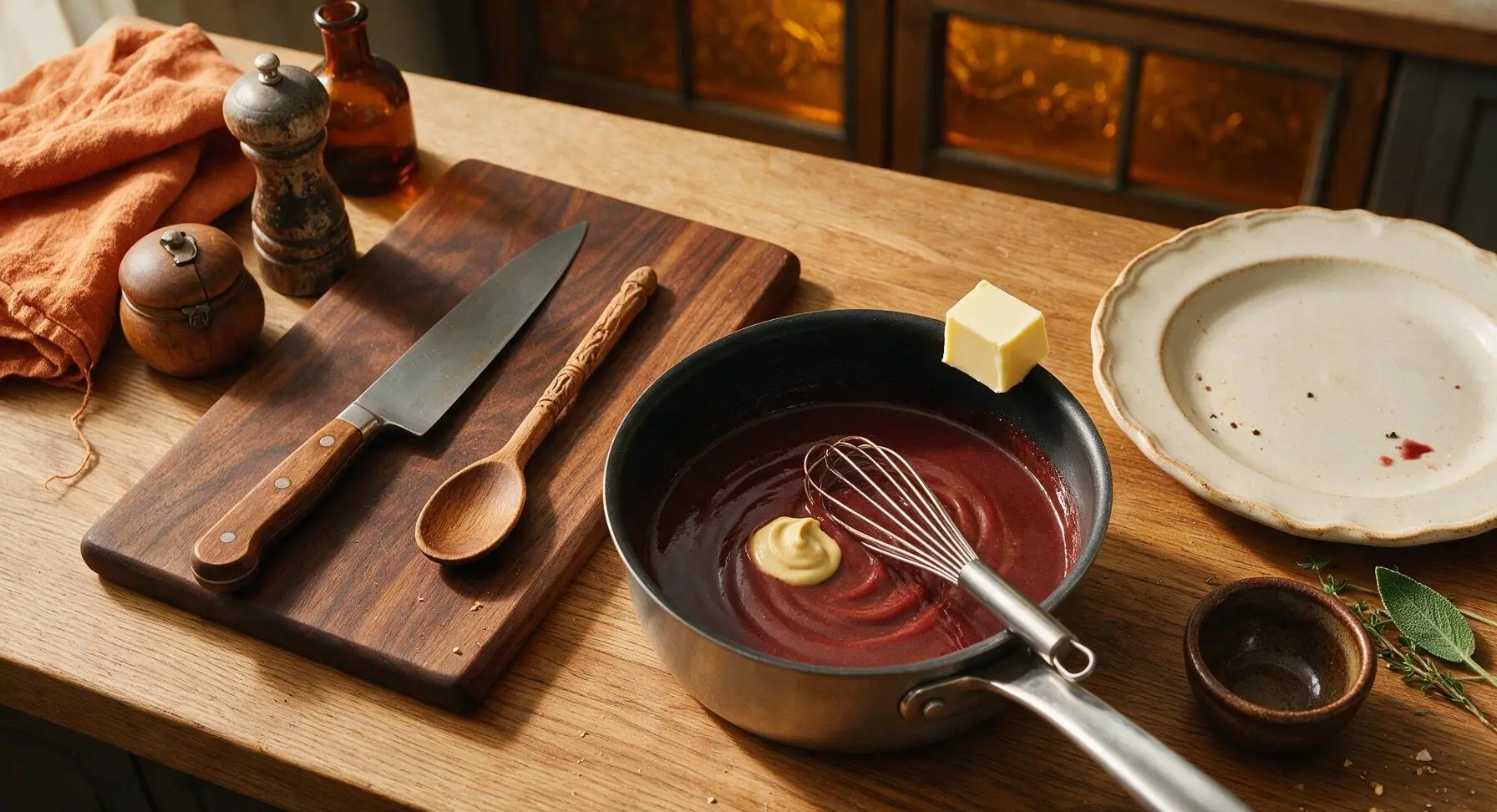
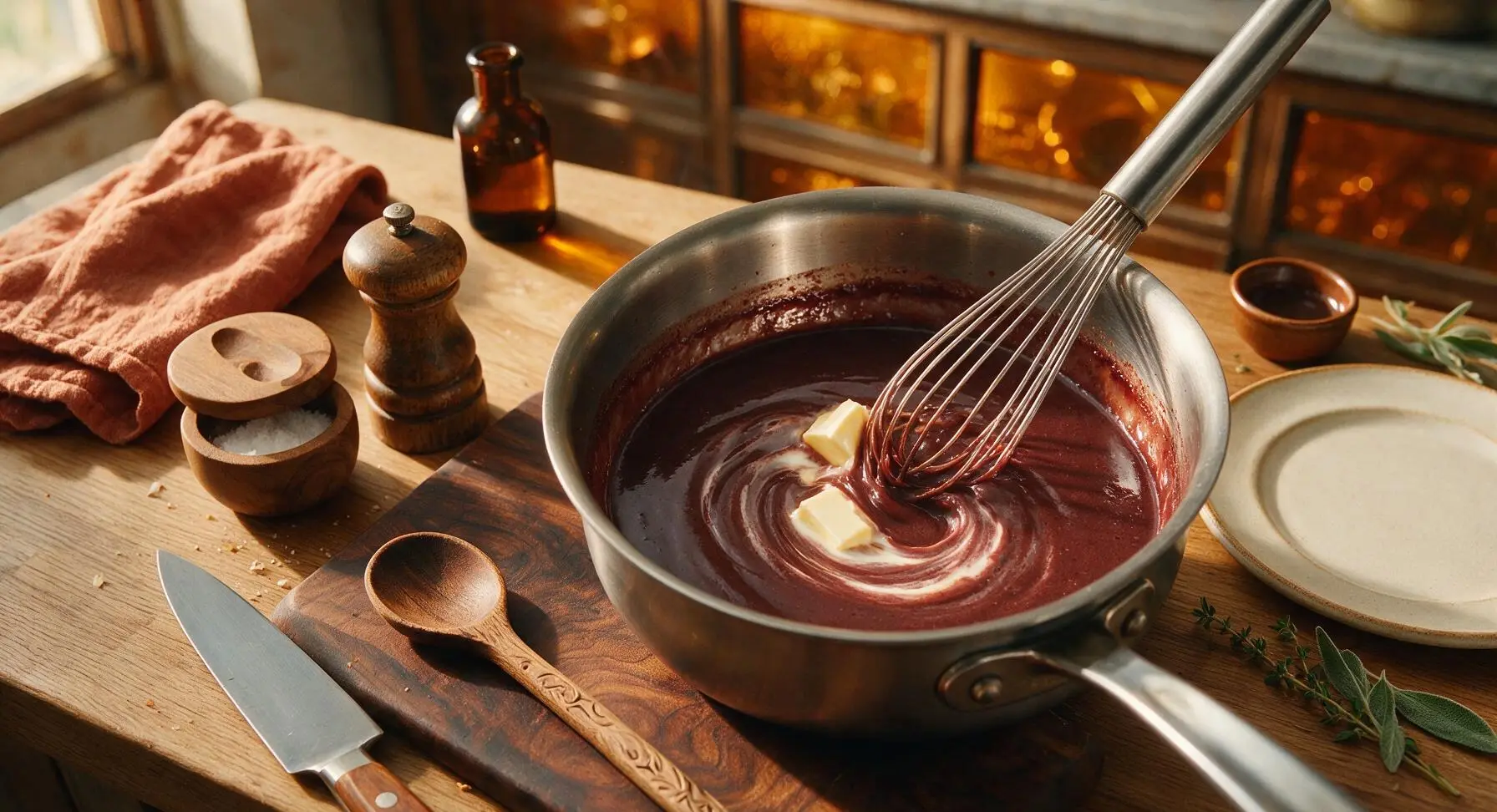
Remove the pan from direct heat. Add 1 tsp Dijon mustard to the strained sauce, whisking to combine with the stainless steel whisk. Add the remaining 5 tbsp of cold, cubed unsalted butter 1-2 cubes at a time, whisking constantly in a circular motion, adding more butter only once the previous pieces have fully melted and emulsified into the sauce. This creates a silky, glossy, rich texture; do not add all butter at once, as this can cause the sauce to break and separate.
Season and Finish Sauce
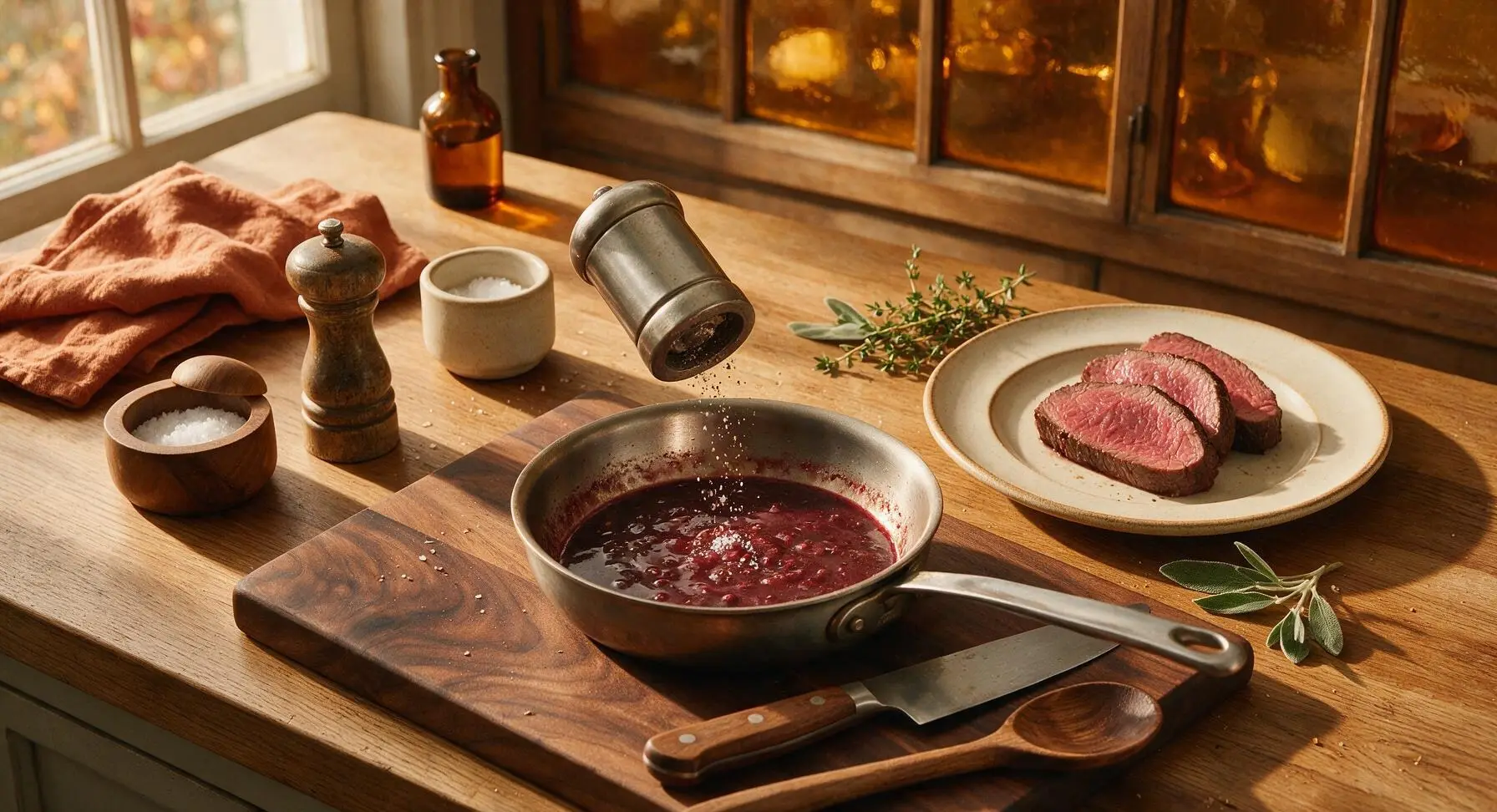
Taste the sauce, and add ½ tsp kosher salt (adjusting to taste, especially if using regular-sodium beef stock) and a light crack of fresh black pepper. The sauce should be silky, balanced, with bright wine acidity, deep beefy savoriness, and a rich buttery finish. Spoon immediately over seared, rested beef tenderloin slices to serve.
Tips
2.Avoid rapid boiling after adding butter: high heat will break the delicate butter emulsion, leading to a separated, oily sauce. Keep the burner on the lowest setting, or remove the pan from heat entirely, while whisking in butter cubes.
3.Use a drinkable dry red wine for the reduction: cooking burns off alcohol but concentrates the wine’s natural flavors, so using bitter, low-quality “cooking wine” will result in a flat, harsh-tasting sauce. Pinot Noir, Bordeaux, or Cabernet Sauvignon are all excellent choices.
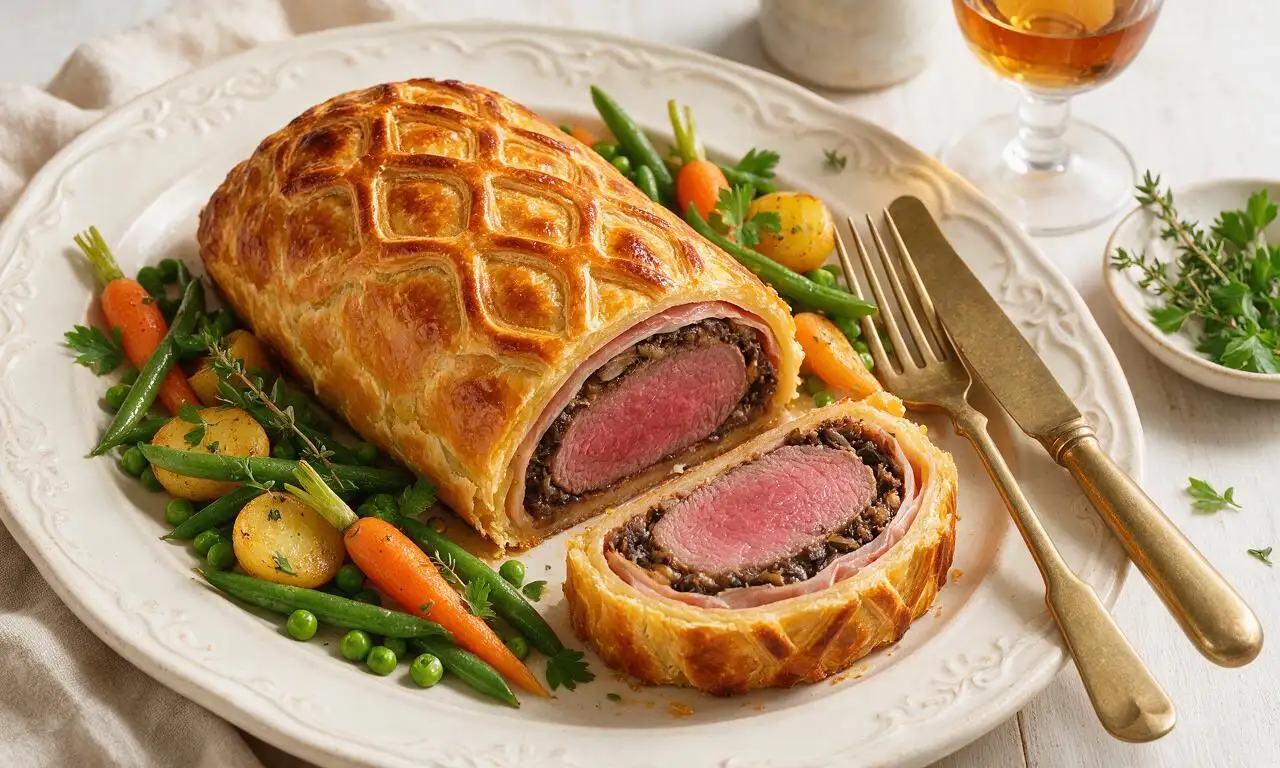

OMG this sauce was an absolute game changer for our anniversary dinner last night! I paired it with a 2lb beef tenderloin and roasted garlic mashed potatoes, and my husband kept going back for extra sauce. So rich, perfectly balanced, not too tangy from the wine at all. 10/10 will make again for our next fancy date night in.
Made this for my Sunday family dinner and everyone was raving! Only thing is I accidentally reduced the wine a little too much the first time, so it was a touch thicker than I wanted. Tasted amazing though, even with my little mishap.
Super excited to make this for my in-laws who are visiting next weekend! Quick question — do I really need to use a fancy expensive red wine for this, or will a $10 cab from the grocery store work just as well?
SO good. I was worried the butter would make it too heavy, but it’s got that perfect silky texture that coats every bite of tenderloin without feeling greasy. Served it with roasted asparagus for my birthday meal and couldn’t have asked for better.
Brought sliced tenderloin with this sauce to our neighborhood potluck last weekend and people were literally asking me for the recipe before they even finished their first plate! My kids even dipped their roasted broccoli in it, no lie. Absolute home run.
Okay, full transparency: I’ve never made a pan sauce before in my life and I was so intimidated by the medium difficulty rating. But this recipe was so easy to follow step by step, and it came out exactly like the photo! I felt like a real fancy chef serving it to my roommate.
Taste was great, but I felt like it was missing a little something? I followed the recipe exactly — maybe a touch more shallot? Or a pinch of fresh thyme? Not sure, just felt like it was a touch flat for me.
Made this for my boyfriend’s graduation dinner and he proposed halfway through the meal. Okay, fine, he was probably going to propose anyway, but this sauce definitely made the night 100x more special. Unreal flavor, so luxe.
Wait, does this sauce store well in the fridge? I want to make a big batch on Sunday to use with steak through the week, but I don’t want it to separate or get weird when I reheat it.
Honey, I’ve been making red wine sauce for beef for 40 years, and this recipe is better than my old go-to! I added a tiny bit of Dijon mustard like I always do, but otherwise followed it to the letter, and my grandkids practically licked their plates clean.
This sauce is chef’s kiss. I made it with a filet I seared in cast iron, used the fond from the pan like the recipe said, and it tasted like something I’d pay $40 for at a downtown steakhouse. 10/10, no notes.
So happy this sauce is naturally gluten free! I didn’t have to swap a single thing to make it work for my celiac diet, and it didn’t taste like a “diet” recipe at all. Served it over cauliflower mash too, chef’s kiss.
Made this for our watch party with tenderloin sliders and it was gone in 15 minutes flat. Only complaint is I should have made a double batch! People were drizzling it on everything, even the fries.
Quick PSA: don’t skip the step where you take the pan off the heat before whisking in the butter! I got distracted by my dog barking and added the butter while the pan was still screaming hot, and it broke on me. Tasted fine, just looked a little oily.
I was worried the red wine flavor would be too strong since I’m not a huge wine drinker, but it mellows out so much when you reduce it! It’s just this deep, savory, slightly sweet sauce that pairs perfectly with the buttery tenderloin. Even my friend who hates red wine asked for seconds.
This sauce feels so fancy but I already had almost all the ingredients in my fridge! Shallots, butter, leftover red wine from a party last weekend, a little beef stock… didn’t have to run to the store for a single thing. Such a win for a last minute special dinner.