
beef wellington sauce
intro
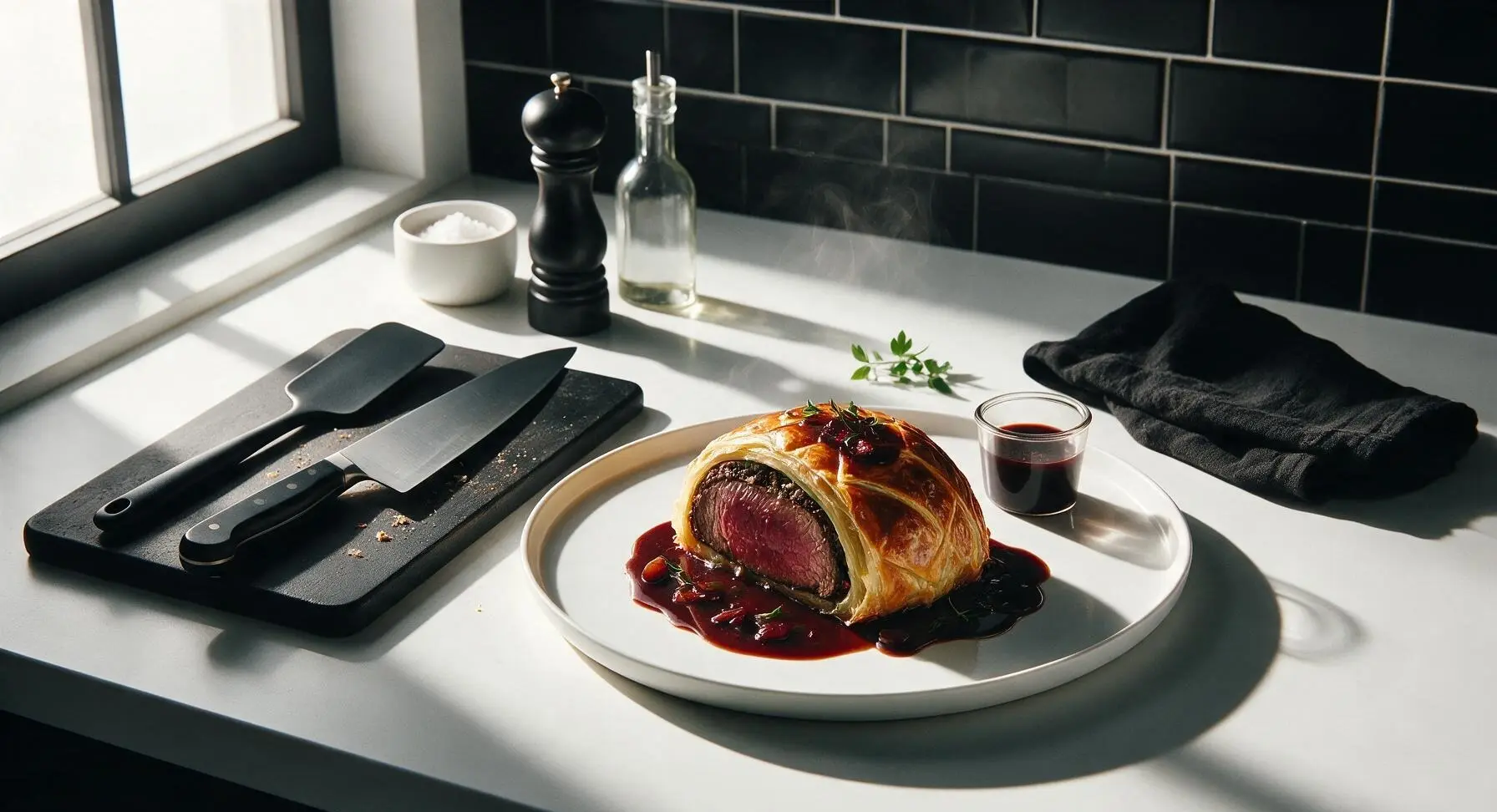
Silky, glossy red wine and Madeira reduction, rich with earthy aromatics—this luxe, iconic sauce is the perfect classic pairing for flaky, tender Beef Wellington.
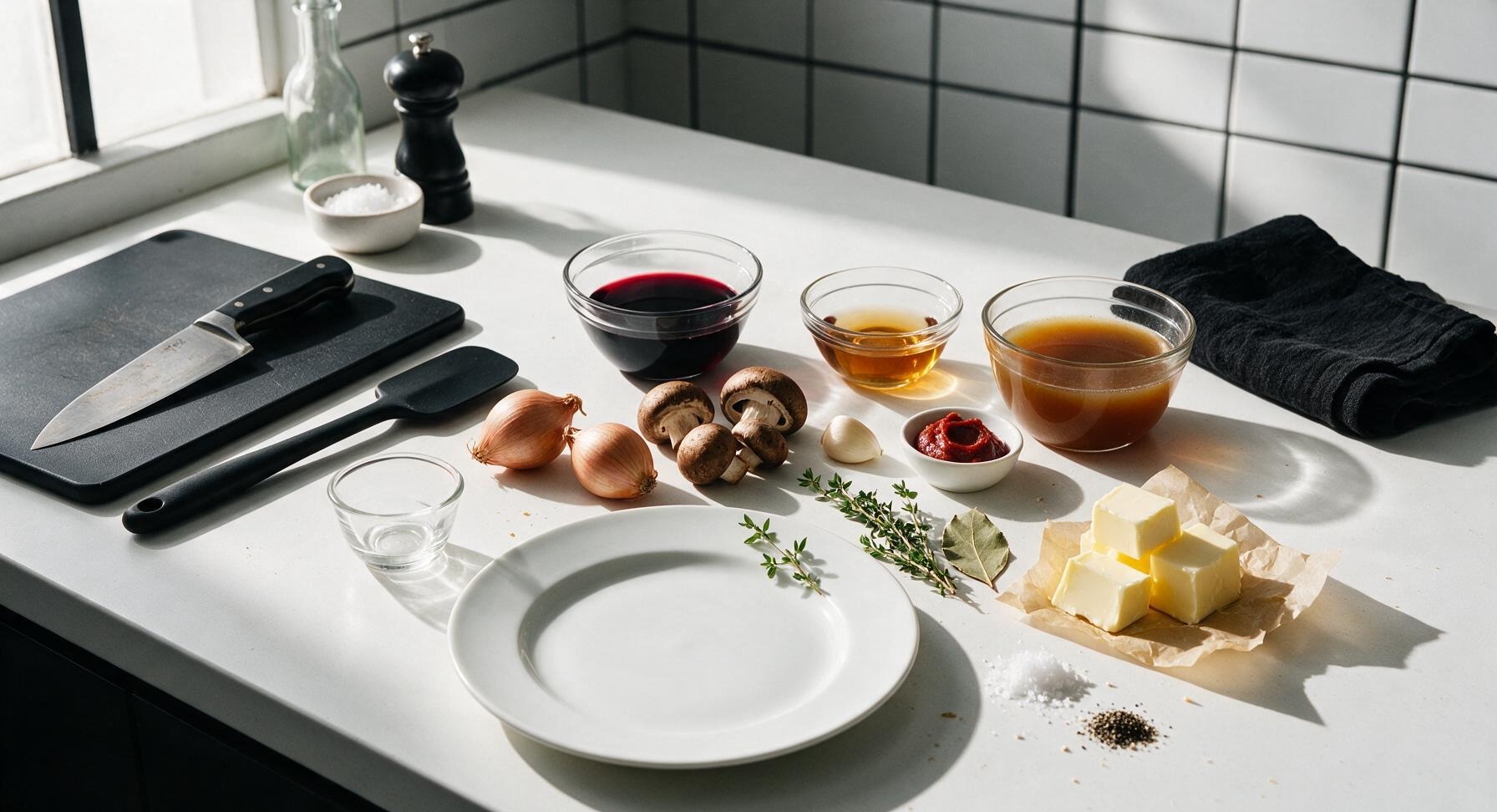
Ingredients
Steps
Prep Aromatic Base
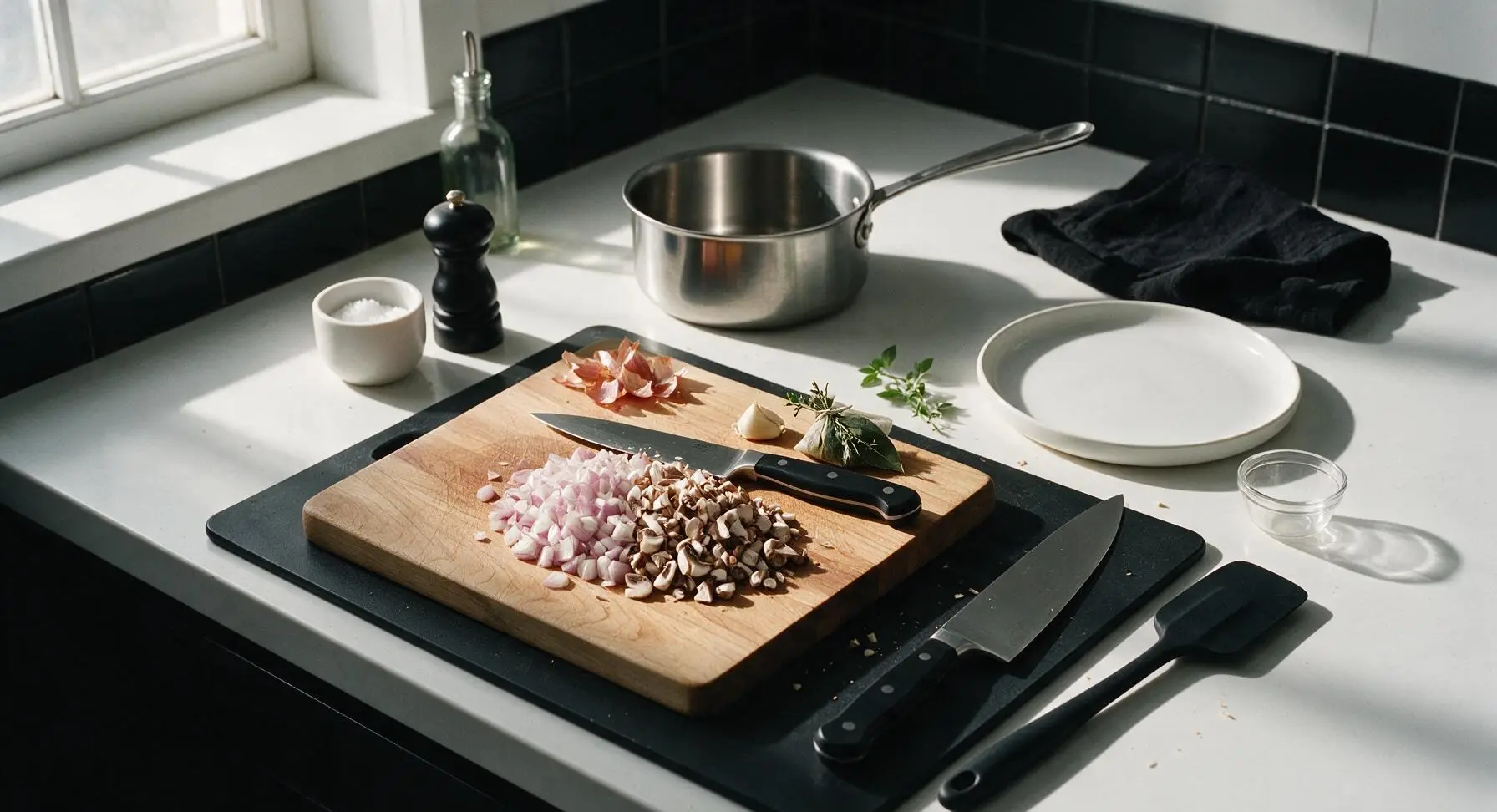
Place the maple cutting board in the center of the work zone. Use the oak-handled paring knife to finely dice 2 medium shallots into uniform 3mm pieces, finely chop 50g cremini mushrooms, and lightly crush 1 garlic clove (do not mince to a smooth paste, as this will burn easily). Gather 3 fresh thyme sprigs and 1 dried bay leaf, tying them together with a short length of kitchen twine to make an easy-to-remove herb sachet. Pile papery shallot scraps in a small pile at the corner of the board for later disposal.
Sauté Aromatic Base
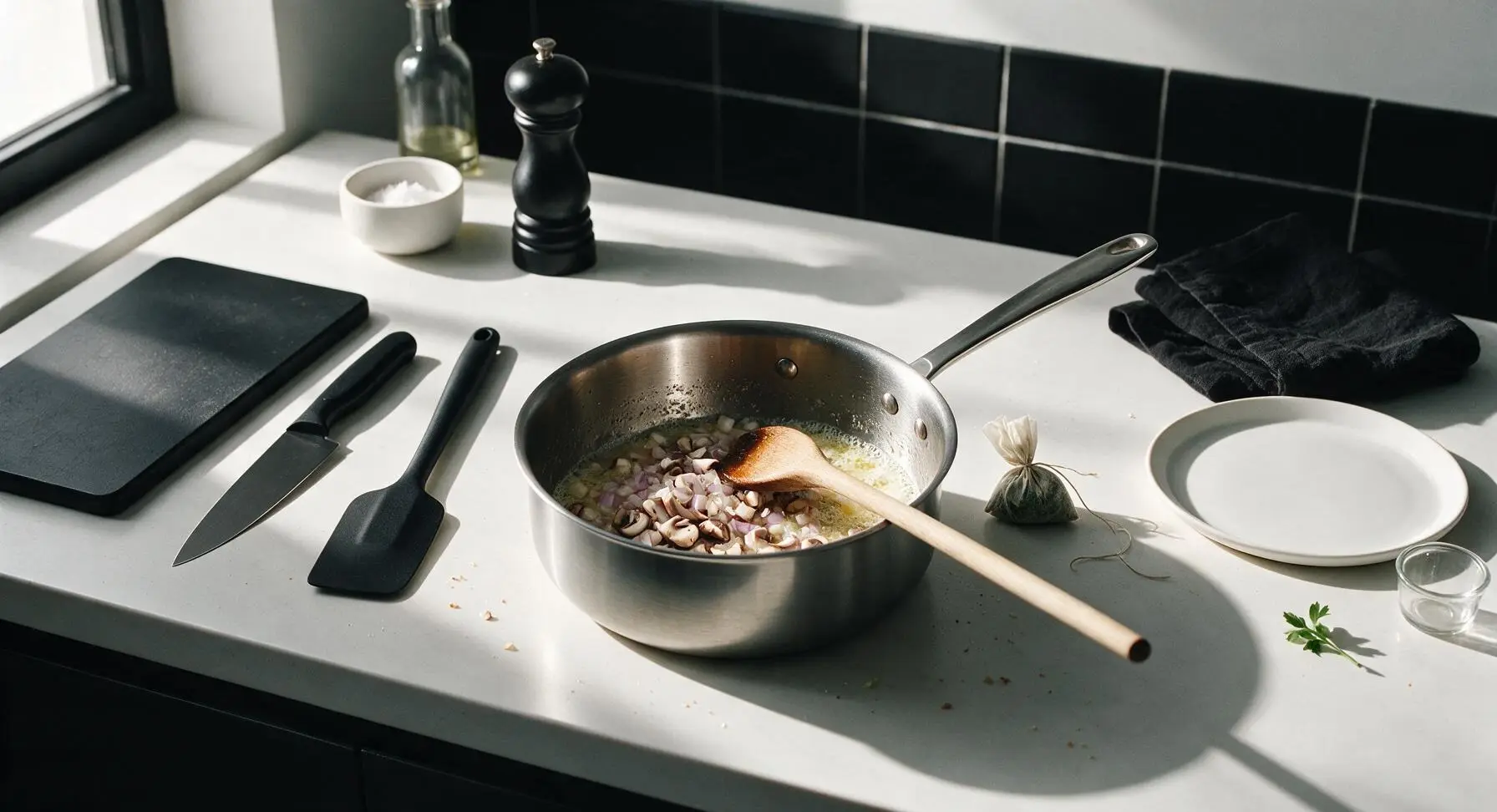
Place the 1.5L stainless steel saucepan over medium-low heat. Add 1 tbsp of cold unsalted butter, swirling until fully melted and foamy but not browned (about 1 minute). Add the diced shallots and chopped mushrooms, sautéing for 4 minutes until soft and translucent, with no sharp raw aroma. Add the crushed garlic clove and 1 tsp tomato paste, stirring constantly with the light oak wooden spoon for 1 minute until the tomato paste darkens to a deep rust red and smells sweet and fragrant, taking extreme care not to burn the garlic or paste, which will make the sauce bitter.
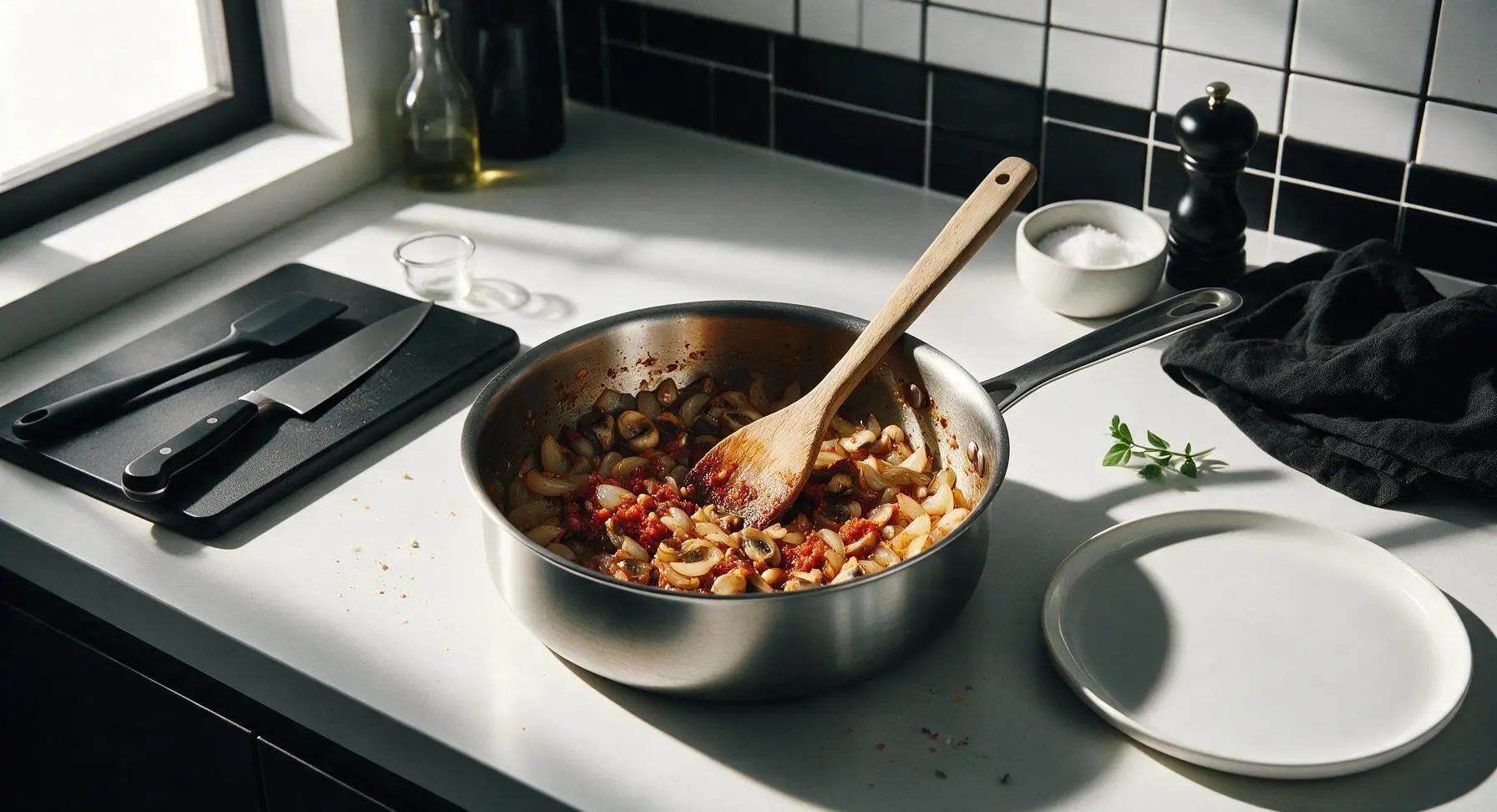
Deglaze with Wines
Slowly pour 120ml dry red wine and 80ml Sercial Madeira into the saucepan, stirring with the wooden spoon to scrape up all browned fond bits from the pan bottom—these bits are packed with deep, savory flavor. Increase heat to medium to bring the wine to a gentle, steady simmer, then add the tied herb sachet to the liquid. Let the wine reduce by two-thirds, about 8 minutes, until only 60-70ml of thick, syrupy liquid remains that coats the back of a spoon in a thin, even layer.
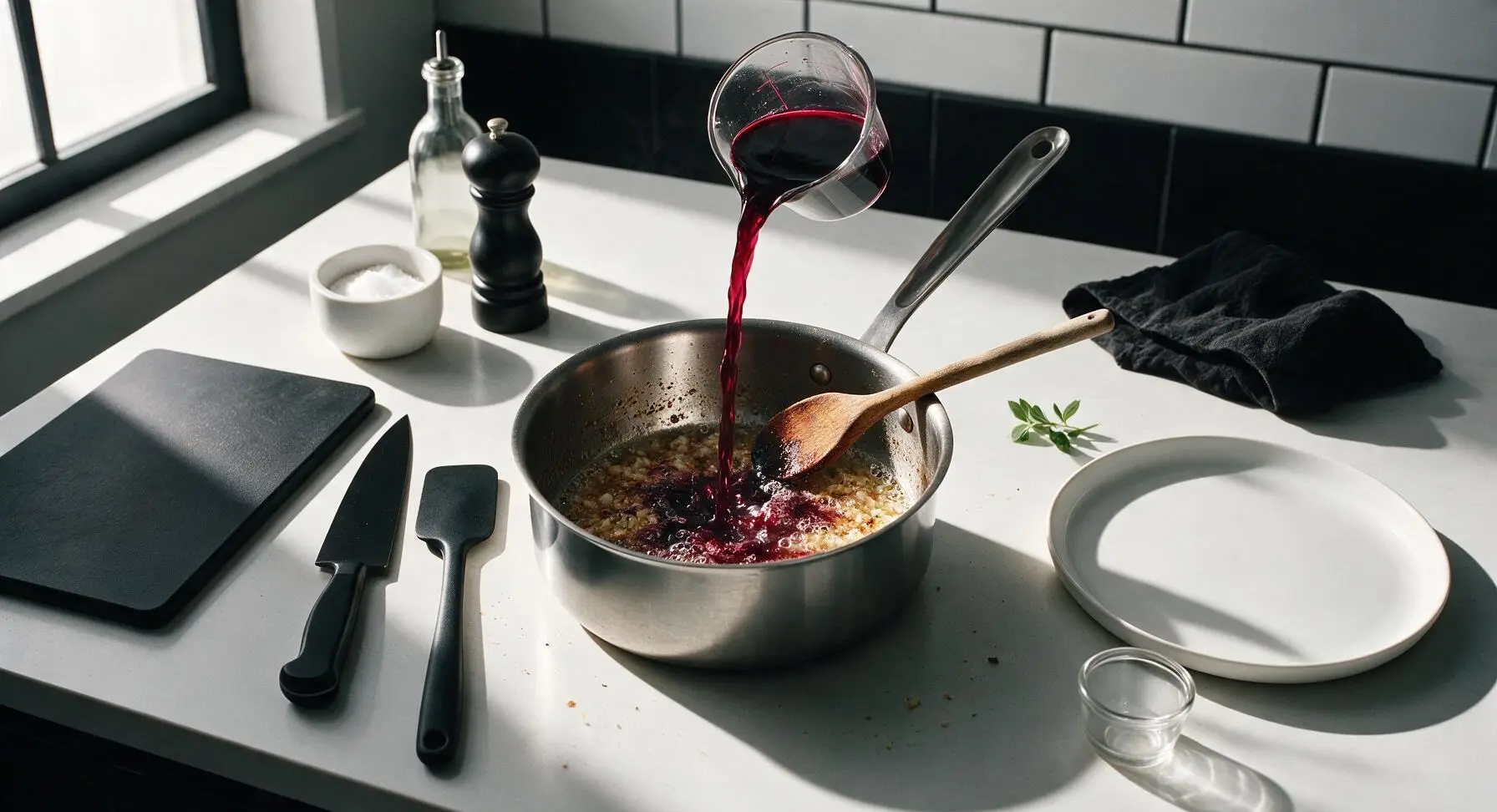
Simmer Beef Stock
Pour 240ml low-sodium beef stock into the reduced wine mixture, stirring to fully combine. Bring the liquid to a gentle rolling simmer (do not let it boil hard, as this will make the sauce cloudy) over medium-low heat, then reduce heat to low to maintain a slow, soft bubble. Let the sauce reduce by half, about 10 minutes, until it reaches a light nappé consistency: when you run a clean finger across the back of a sauce-coated spoon, the line left behind holds its shape cleanly without running.
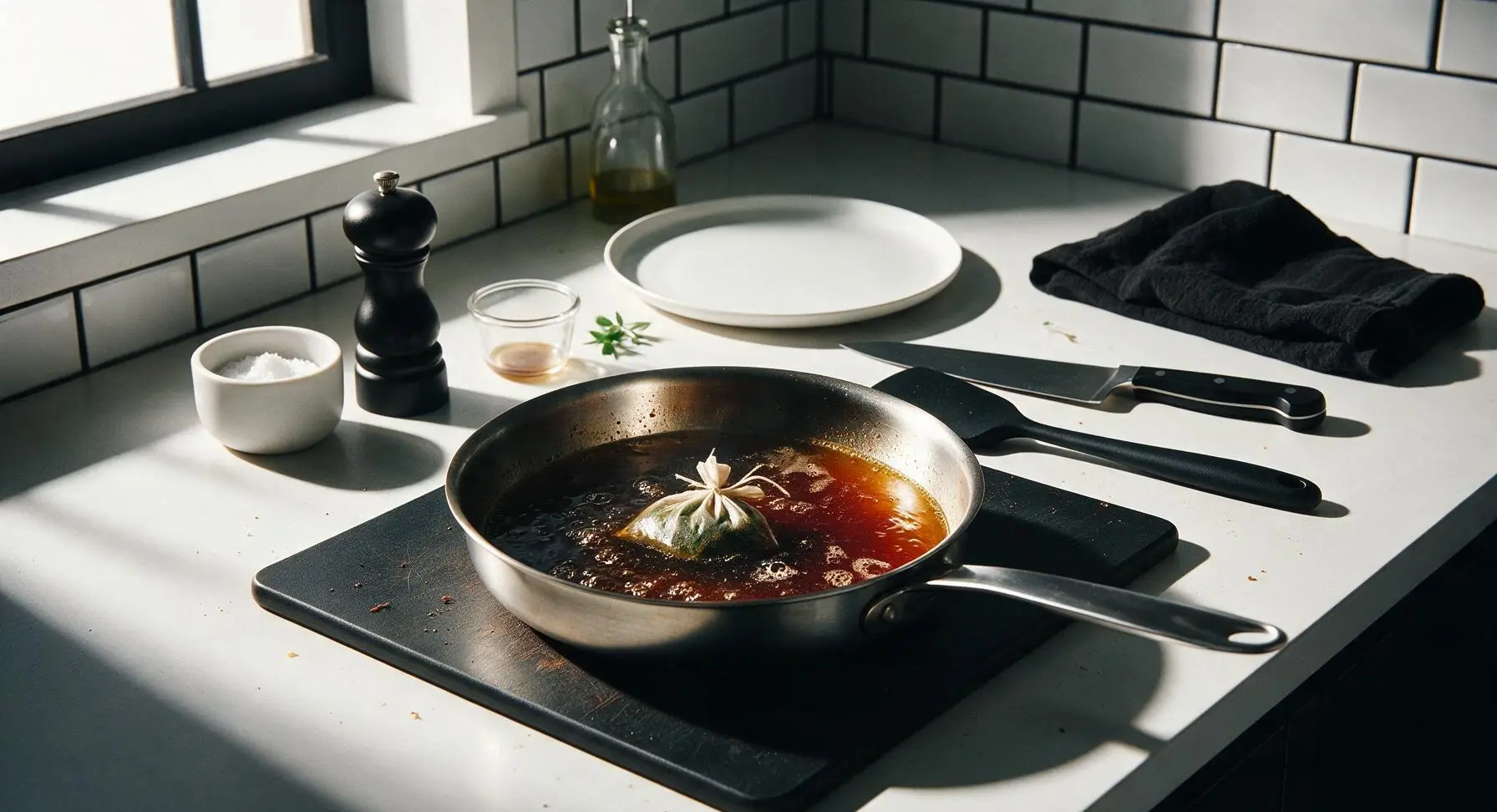
Strain Sauce Base
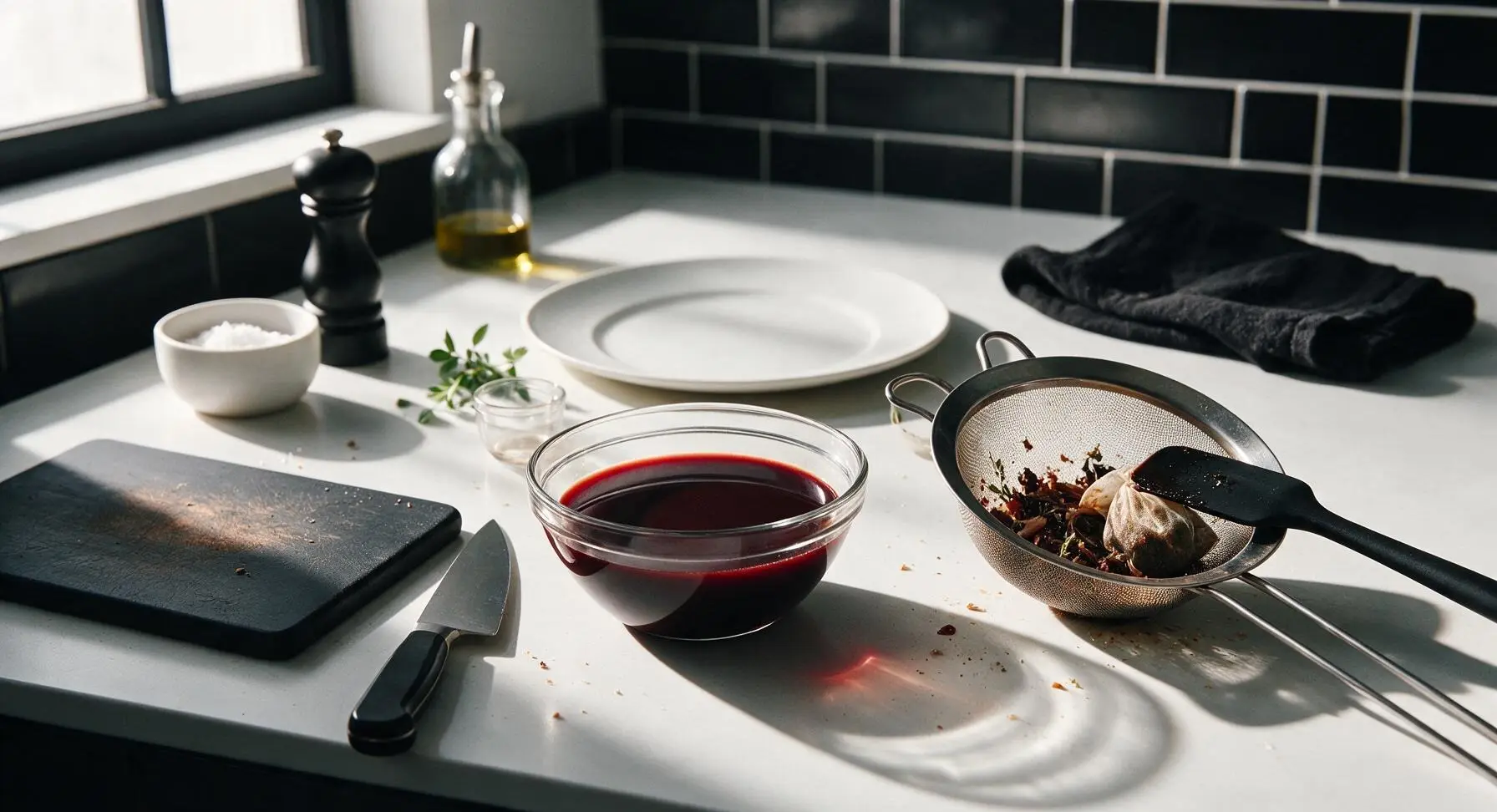
Remove the saucepan from heat. Set the fine-mesh stainless steel chinois strainer over the 12cm clear heatproof glass bowl. Pour the hot sauce mixture through the strainer, pressing gently on the cooked mushroom and shallot solids with the back of the silicone spatula to extract all flavorful liquid, then discard the spent solids and herb sachet. Do not press too hard on the solids, as this will force fine bits through the mesh and make the finished sauce cloudy.
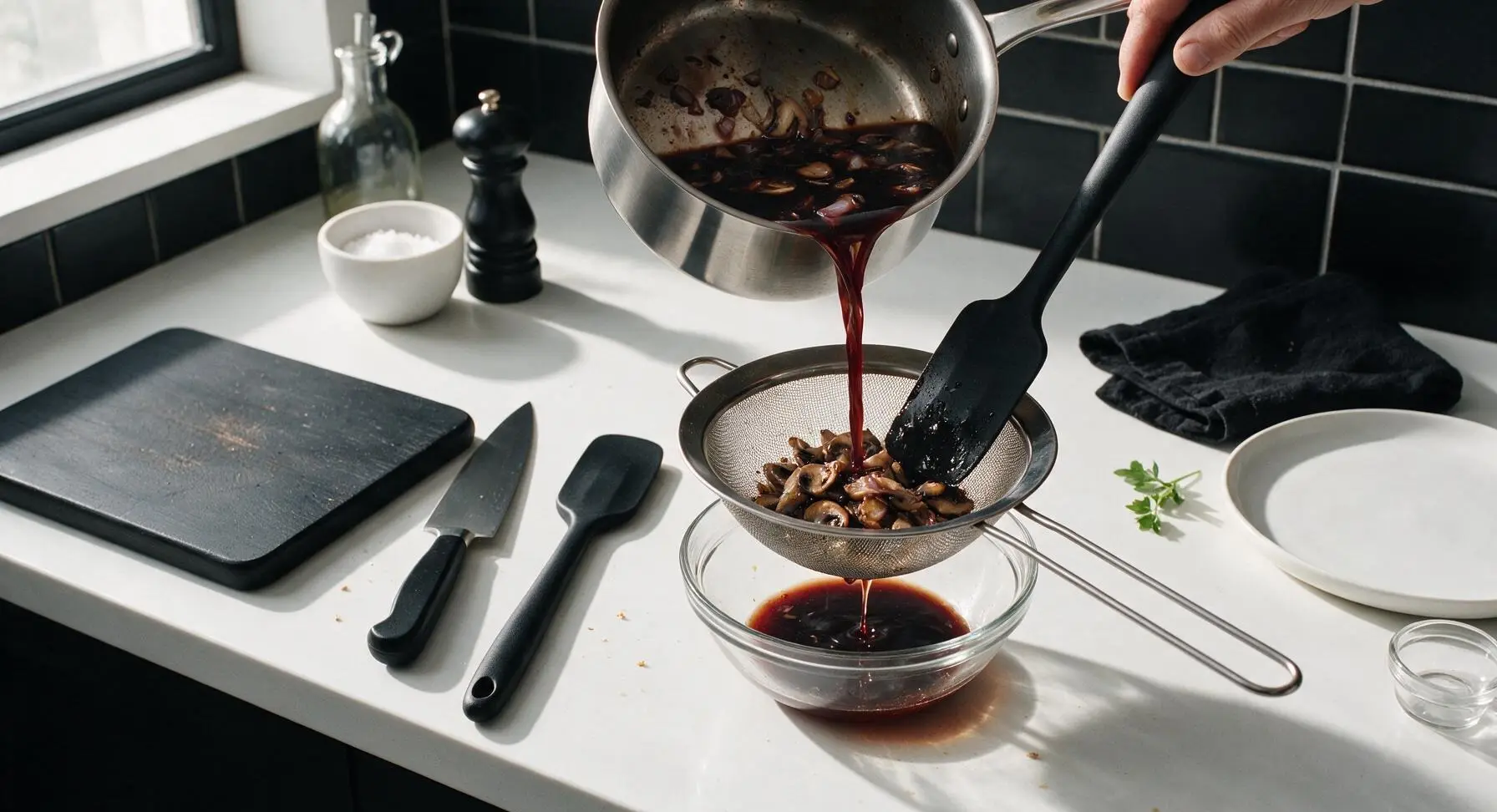
Mount with Cold Butter
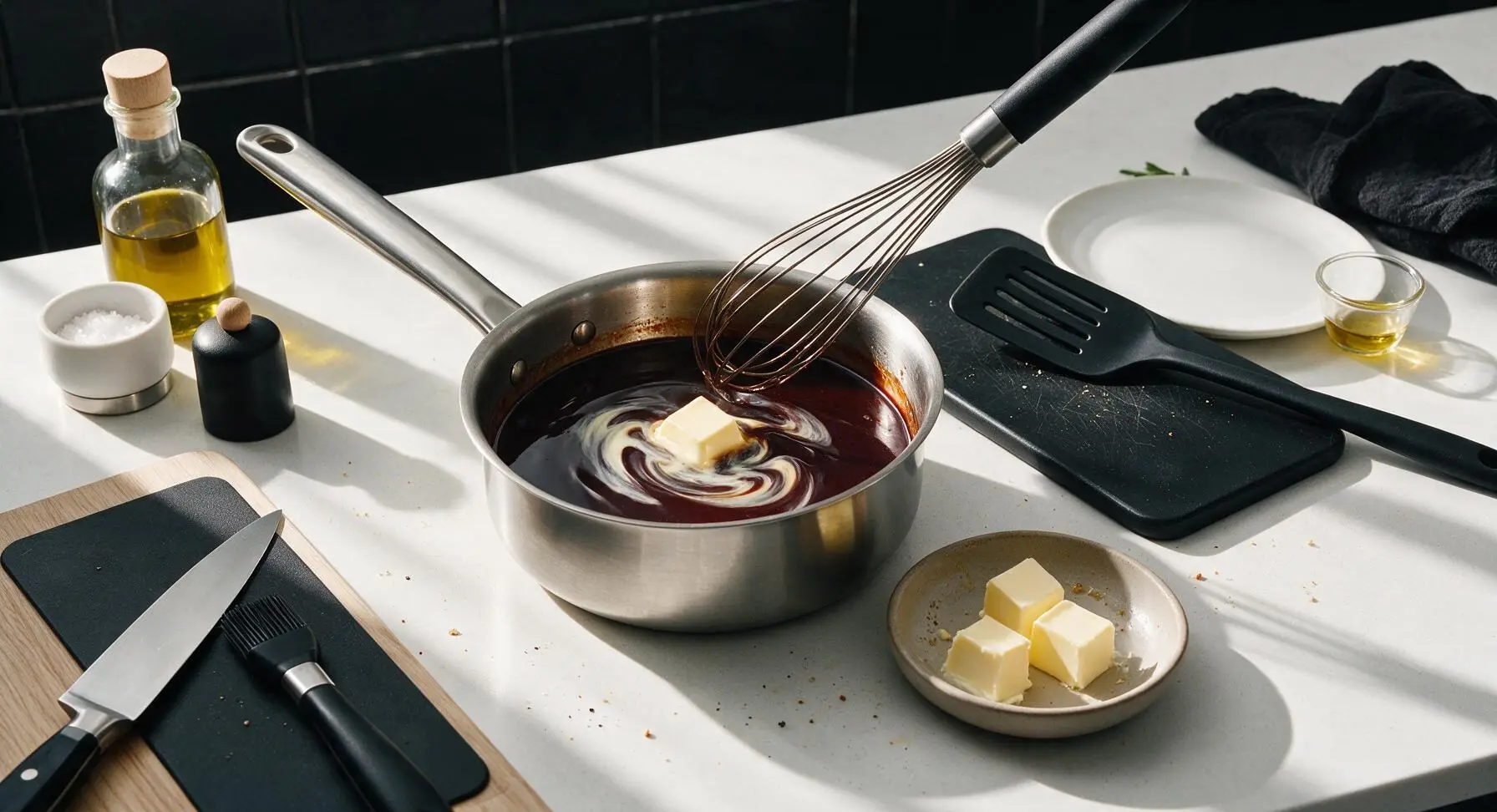
Pour the strained sauce back into the clean stainless steel saucepan, set over the lowest possible heat setting. Whisk in the remaining 2 tbsp of cold, cubed unsalted butter one piece at a time, adding the next cube only after the previous one has fully melted and emulsified into the sauce. Do not let the sauce boil after adding butter, as high heat will break the emulsion and leave the sauce greasy instead of silky. This step creates the sauce’s signature glossy, luxe texture.
Season and Plate
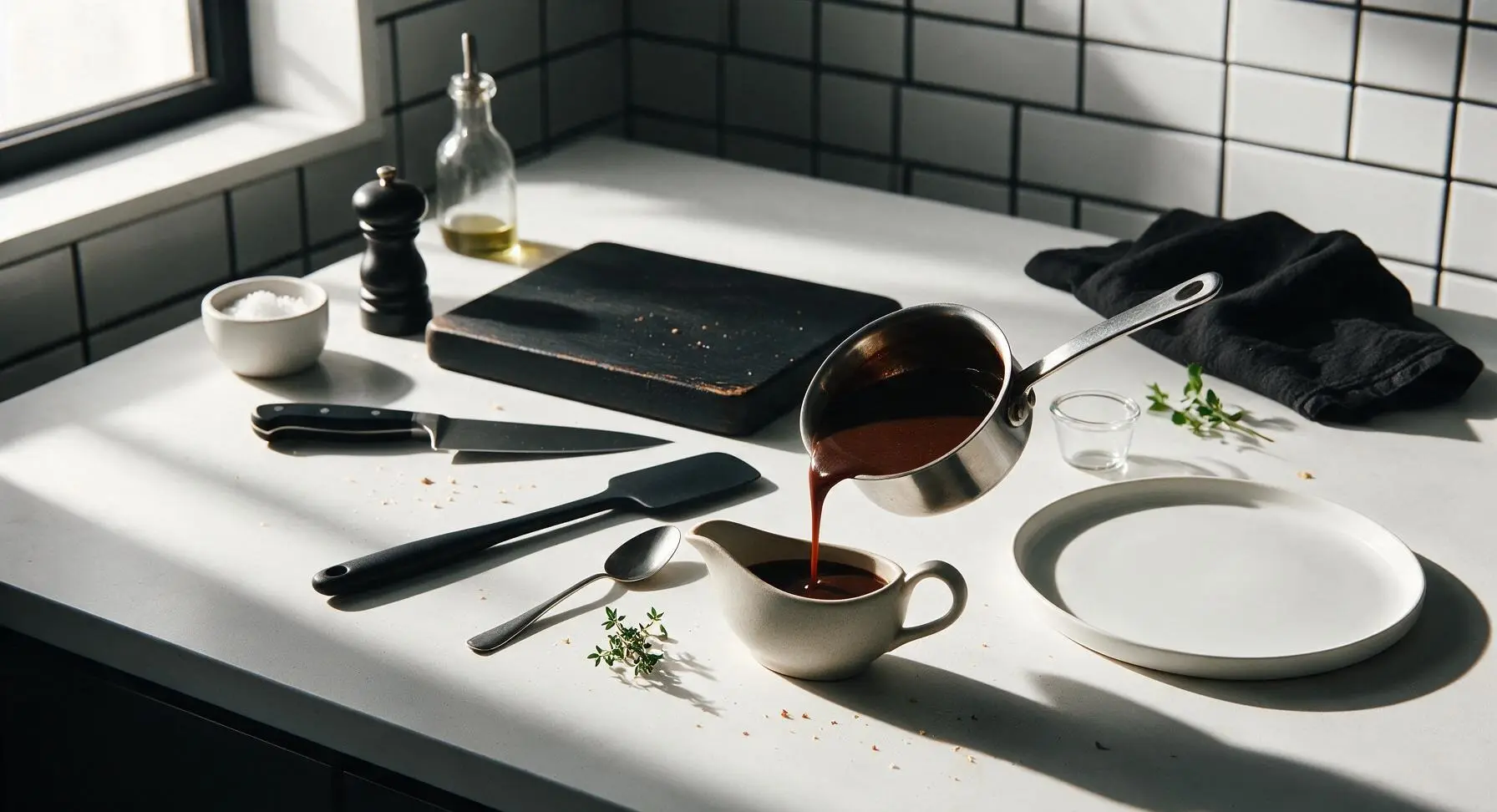
Season the finished sauce with 1/2 tsp kosher salt and 1/4 tsp freshly ground black pepper, tasting to adjust seasoning as needed. The sauce should taste deeply savory, with a subtle bright sweetness from the Madeira, and enough salt to cut through the richness of Beef Wellington’s buttery pastry and tender beef. Pour the finished sauce into the matte off-white ceramic sauce boat, top with a small fresh thyme sprig for garnish, and serve immediately while warm.
Tips
2.Avoid boiling the sauce at any stage after adding wine or butter: a hard boil will cook off the delicate, fruity notes of the Madeira, cloud the sauce, and break the butter emulsion, leading to a thin, greasy, dull-tasting final product.
3.Skip added thickeners like cornstarch or flour: a proper slow reduction of wine and gelatin-rich beef stock will create a perfectly thick, nappé consistency without added starch, resulting in a cleaner, more refined flavor that doesn’t leave a starchy aftertaste on the palate.
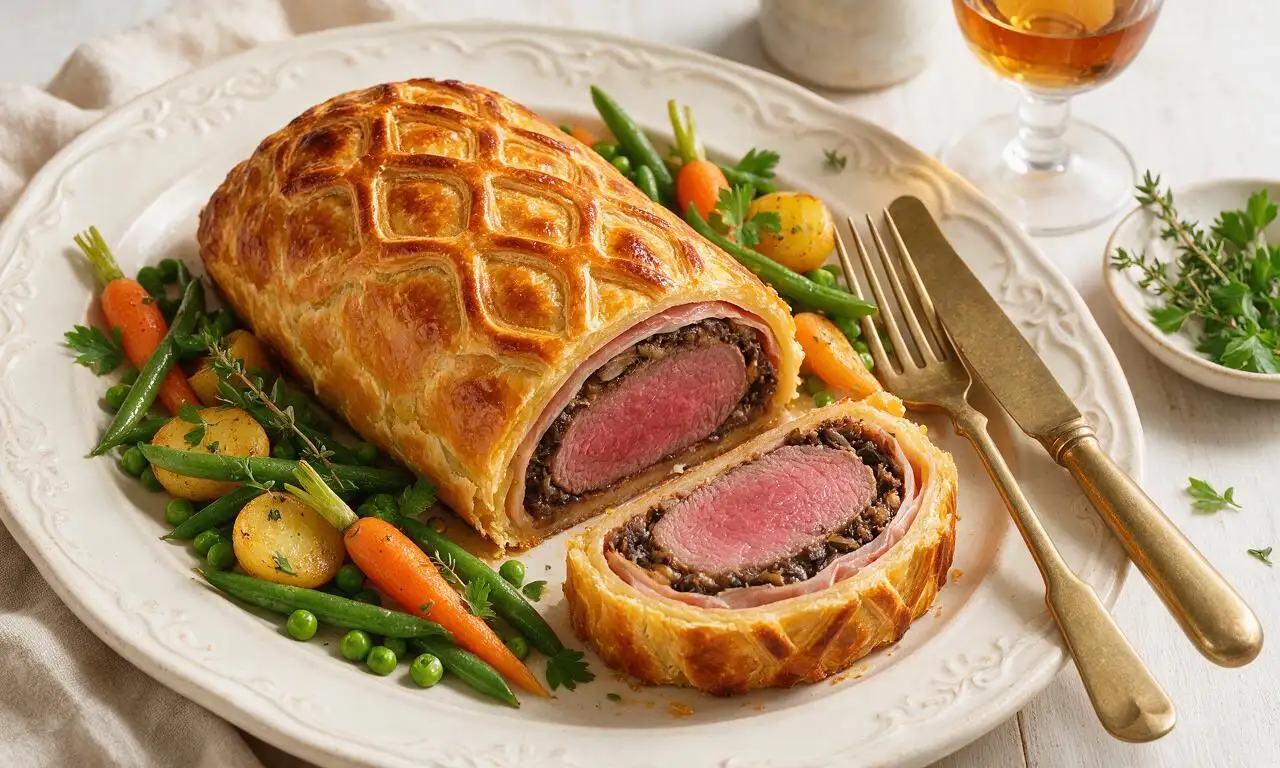




OMG, I made this for my husband’s 40th birthday dinner the other night and it was a total home run! I’ve always been intimidated by Beef Wellington because it feels like such a fancy, complicated restaurant dish, but the straightforward instructions and 25 minute cook time made it way less scary than I thought it would be. The red wine Madeira sauce is an absolute game changer. My super picky 10 year old son even asked for seconds, which literally never happens with anything that isn’t chicken nuggets. 10/10 will be making this for our extended family potluck next month!
Really solid recipe! The flavor on that red wine Madeira sauce was out of this world, though fair warning the medium difficulty rating is no joke — I messed up the puff pastry seal on my first try and a bunch of the beef juice leaked out while it baked. It still turned out SO good, even if it wasn’t perfectly pretty on the plate. Served it with roasted asparagus and garlic mashed potatoes for date night, and my girlfriend said it was better than the Beef Wellington we split at a fancy steakhouse downtown last month. Will definitely be trying it again now that I know to crimp the edges tighter!
Just pulled my first ever Beef Wellington out of the oven and I’m screaming, it turned out perfect!!! I was convinced I’d mess it up since I’ve never made anything this fancy before, but the cook time was exactly right for perfect medium-rare, no overcooked gray edges at all. That red wine Madeira sauce? *Chef’s kiss* SO rich and flavorful, I could practically drink it straight. Already sent the recipe to my mom and my sister, they’re both already asking when I’ll make it for our next family dinner.