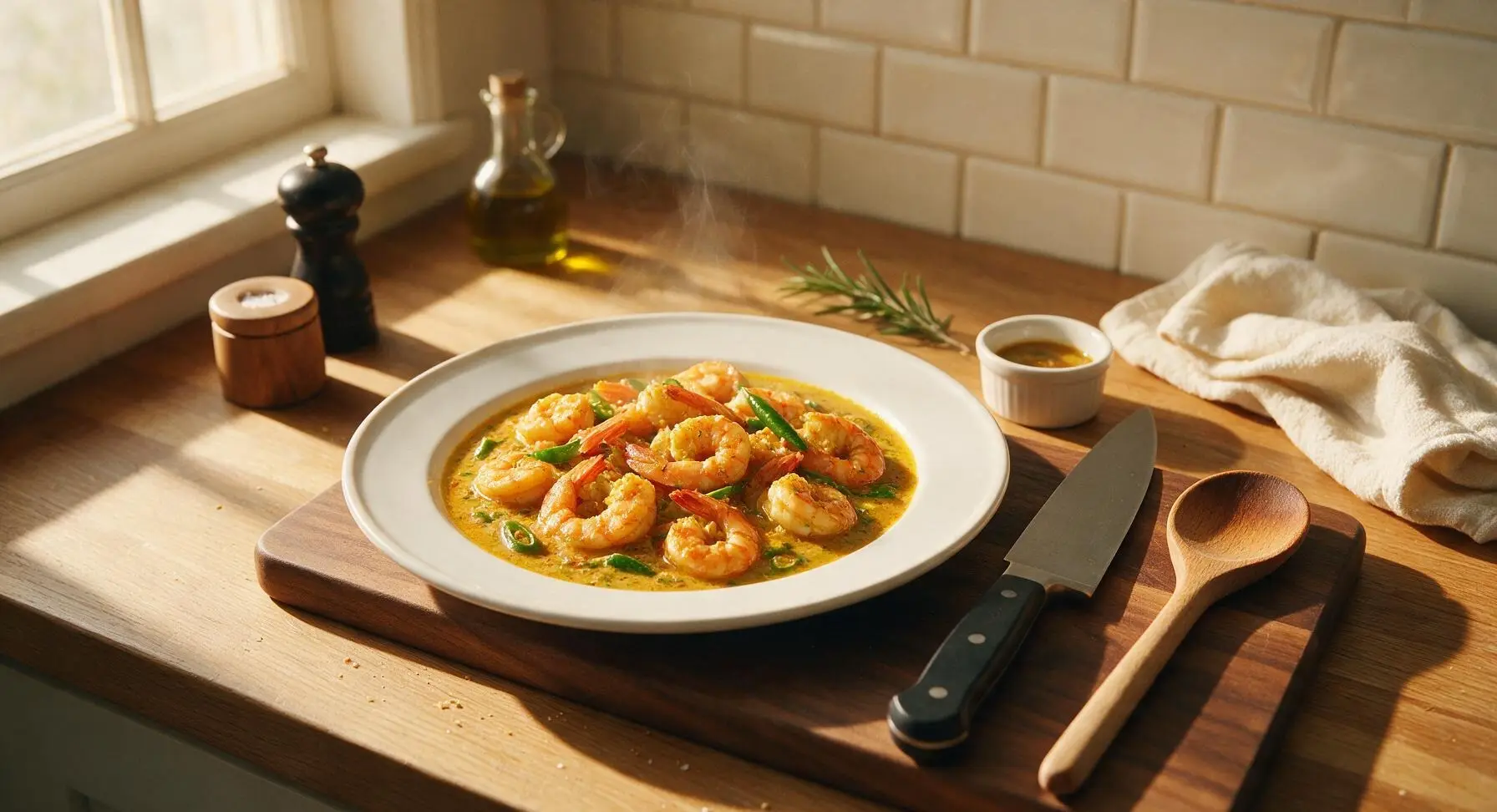
bengali prawn curry

title 1
bengali prawn curry
⏱️ cook time 25 minutes
🍽️ servings 4
⚡ Difficulty medium

intro

Tender juicy prawns simmered in a fragrant mustard-coconut gravy, bright with turmeric and green chilli—this iconic Bengali home-style curry is vibrant, comforting, and packed with bold coastal flavor.

Ingredients
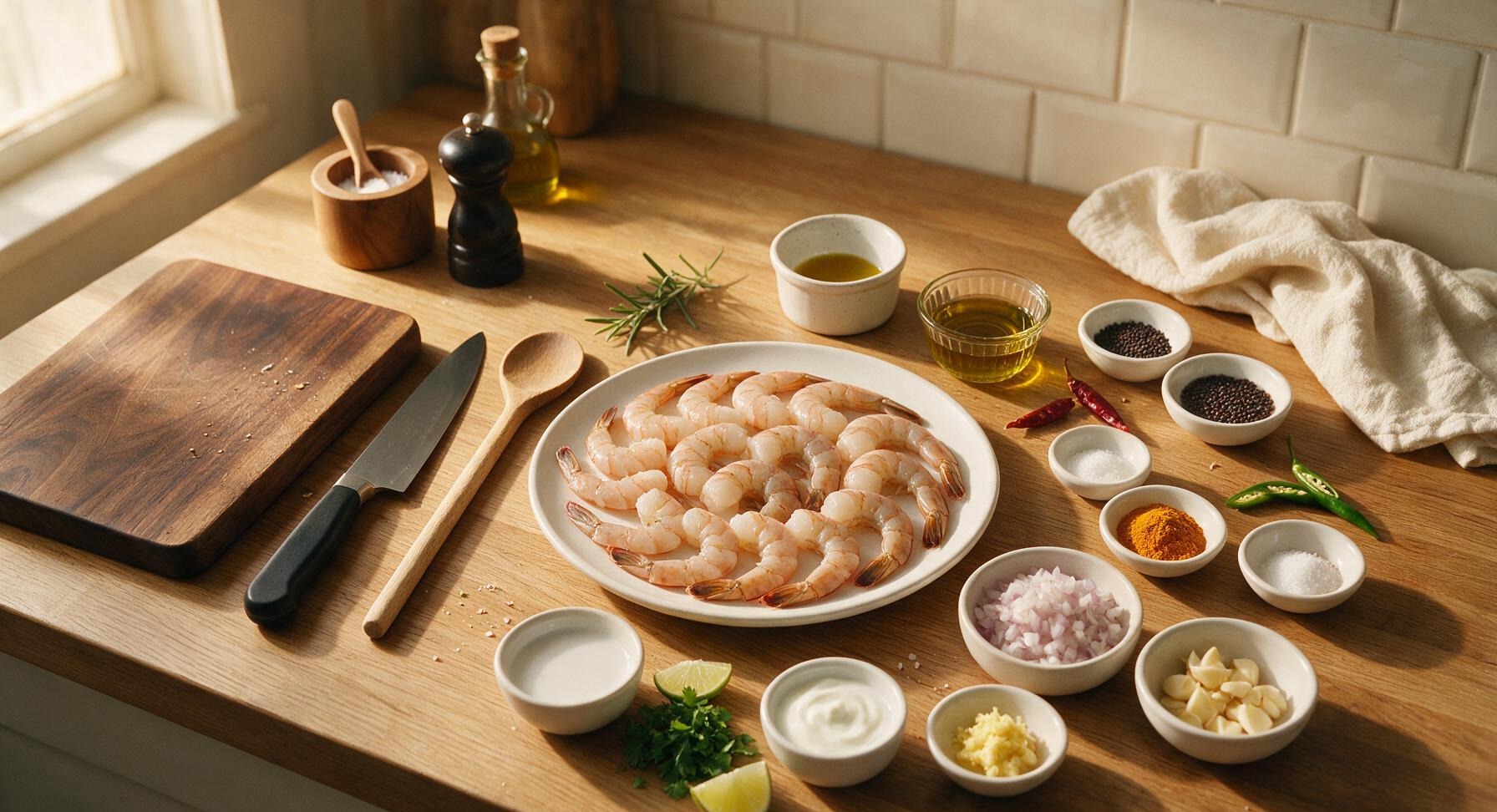
Large tiger prawns (peeled, deveined, tails intact) 500g
Cold-pressed mustard oil 3 tbsp + 1 tsp for finishing
Black mustard seeds 4 tsp total (1 tsp for tempering, 3 tsp soaked for paste)
Dried red chillies 2 whole
Medium yellow onion, finely chopped 1 (150g)
Garlic cloves, minced 4 (12g)
Fresh ginger, grated 1-inch knob (15g)
Ground turmeric 1 tsp total (divided)
Red chilli powder 1 tsp
Table salt 1 tsp, divided
Fresh green chillies, slit lengthwise 2
Thick coconut milk 100ml
Full-fat plain yoghurt, whisked smooth 2 tbsp
Fresh coriander, chopped 1 tbsp
Fresh lime wedge 1, for serving

Steps

1

Marinate the Prawns

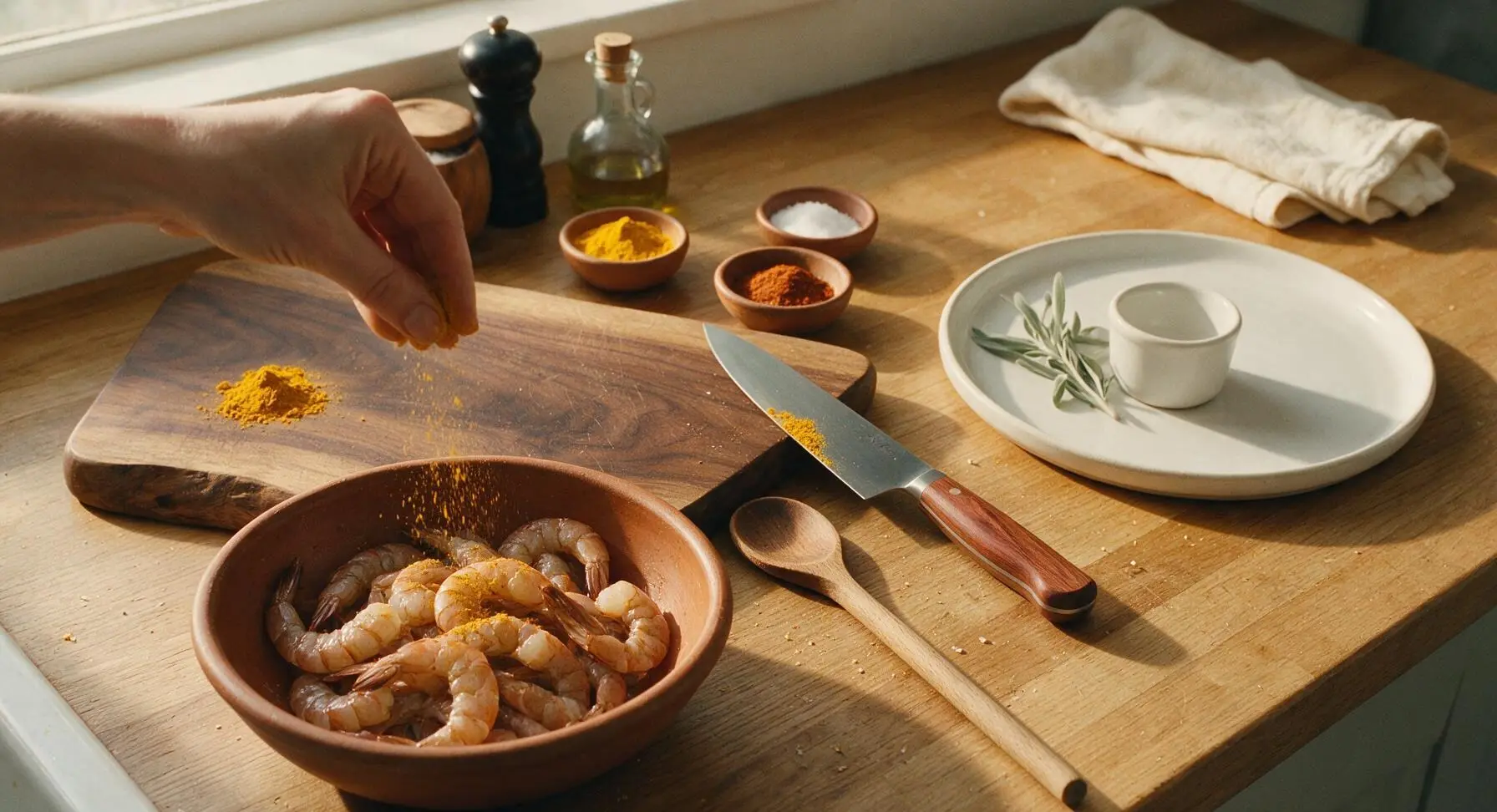
Pat the 500g peeled, deveined prawns completely dry with the cream linen towel. Place them in a small terracotta prep bowl, toss with 1/2 tsp ground turmeric and 1/4 tsp salt until evenly coated. Set aside to marinate for 10 minutes at room temperature—this firms the prawn texture and removes any raw seafood aftertaste.
Step 1
step1:Marinate the Prawns
2

Grind Mustard Paste

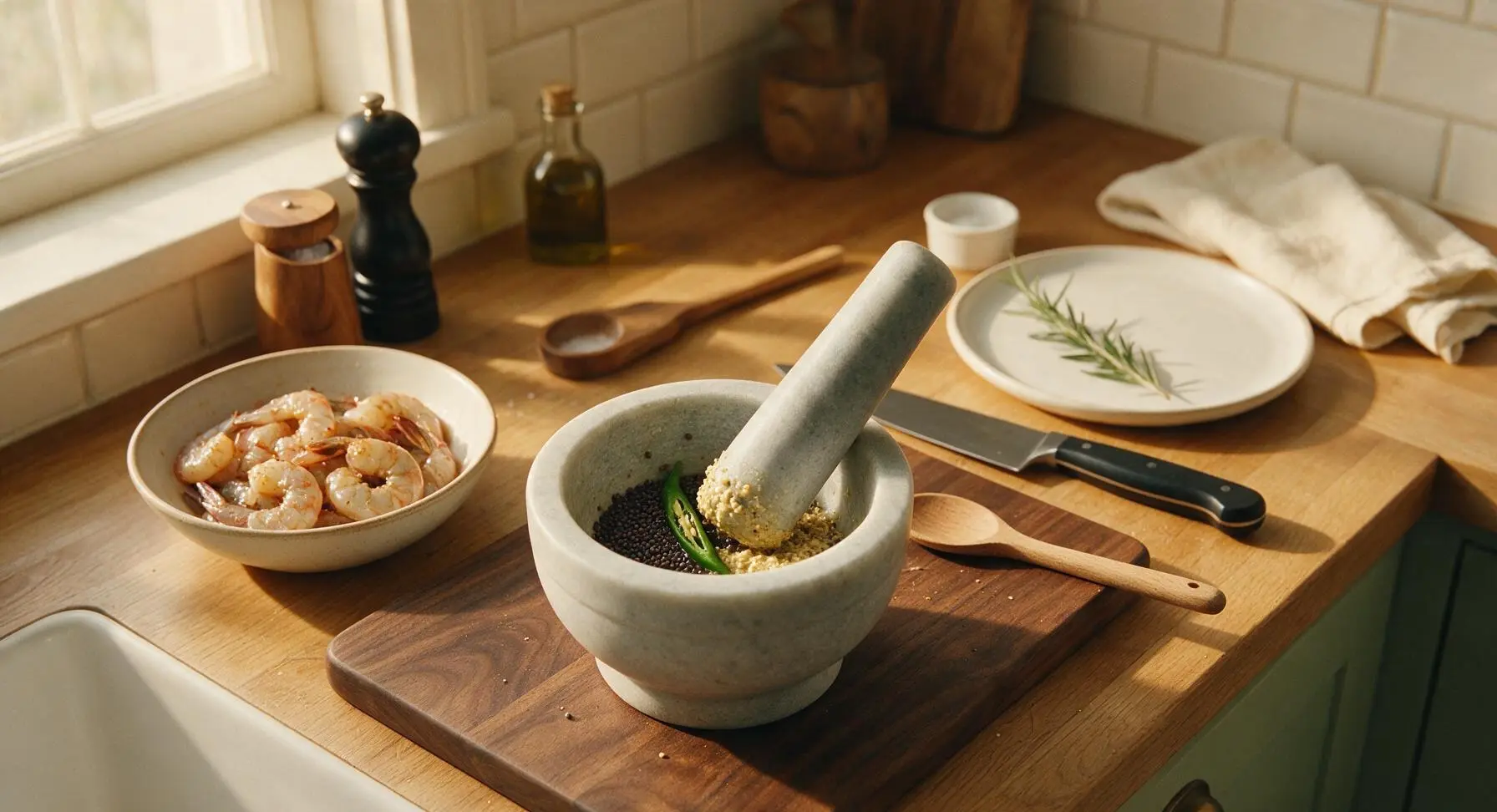
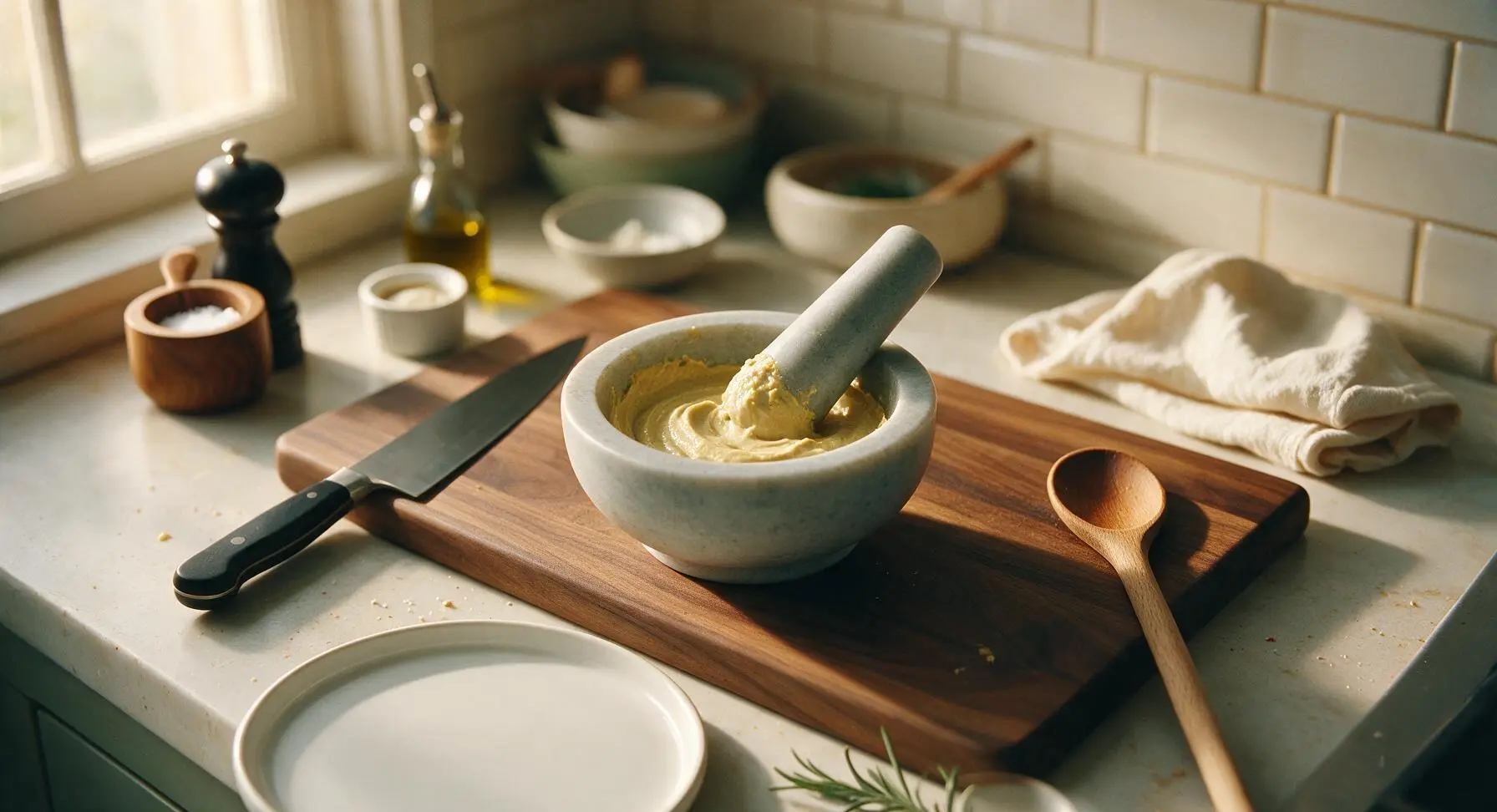
Drain the 3 tsp soaked black mustard seeds, add them to the pale grey soapstone mortar and pestle along with 1 slit green chilli and 2 tbsp cold water. Grind for 3-4 minutes until you have a smooth, slightly coarse pale yellow paste with no gritty seed bits remaining. Scrape the paste into a small prep bowl and set aside. Cold water prevents the mustard from turning bitter during grinding.
Step 2
step2:Grind Mustard Paste
Step 2
step2:Grind Mustard Paste
3

Temper Whole Spices

Place the 24cm seasoned carbon steel kadai on the center gas burner, heat over medium heat for 2 minutes. Add 3 tbsp mustard oil, heat until it shimmers and just starts to smoke slightly (this removes the raw mustard oil pungency, critical for authentic flavor). Turn heat to medium-low, add 1 tsp black mustard seeds and 2 dried red chillies. Cook for 30 seconds until the mustard seeds pop and splutter, and the chillies darken to a deep brick red.

Step 3
step3:Temper Whole Spices
4

Sauté Aromatic Base

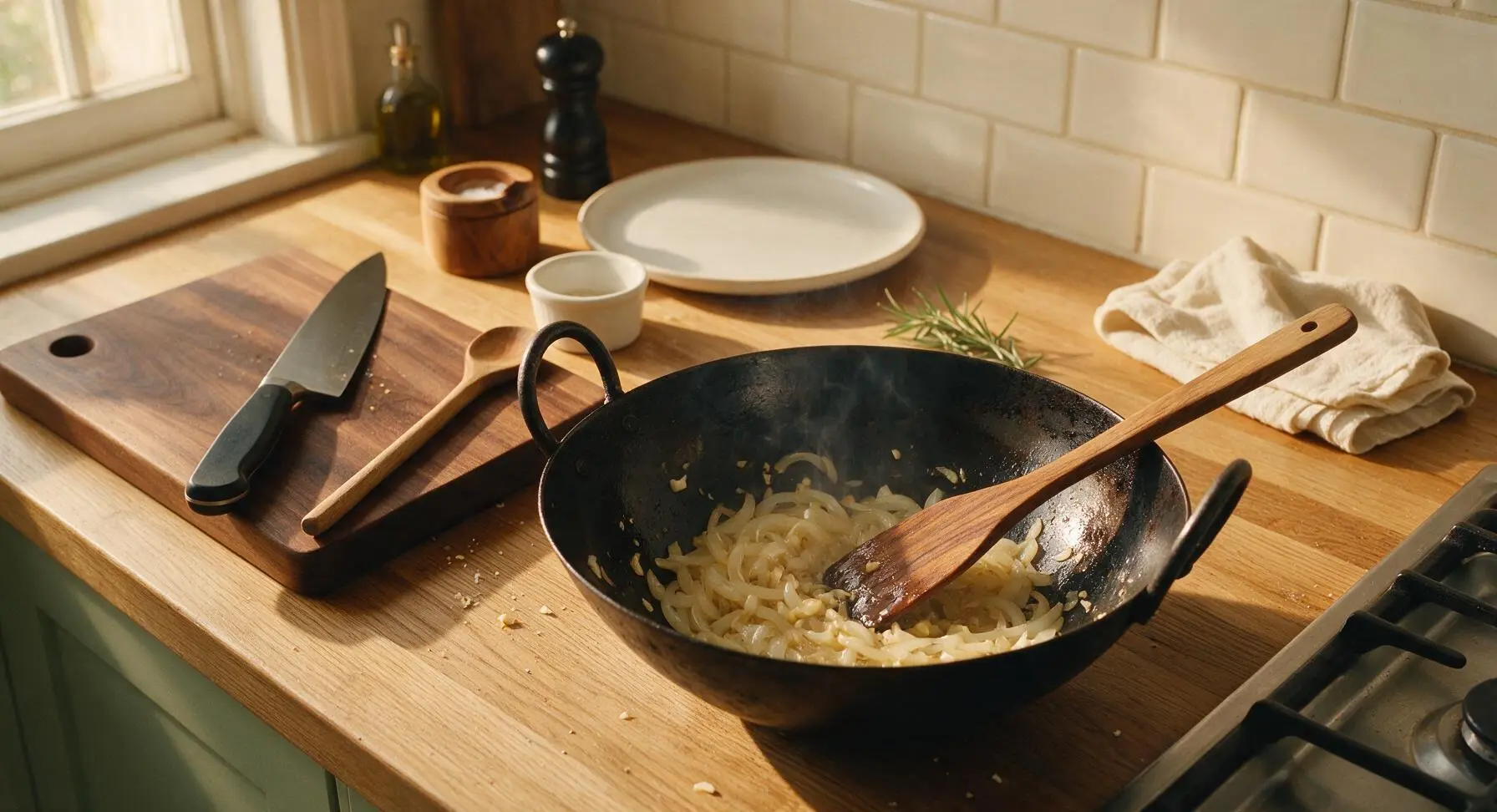
Add the finely chopped onion to the kadai, stir with the teak spatula to coat in oil. Cook for 6-7 minutes over medium-low heat, stirring occasionally, until the onions turn soft and pale golden brown at the edges. Add the minced garlic and grated ginger, stir continuously for 1 minute until fragrant—do not let the garlic burn, as it will turn the curry bitter.
Step 4
step4:Sauté Aromatic Base
5

Cook Ground Spices

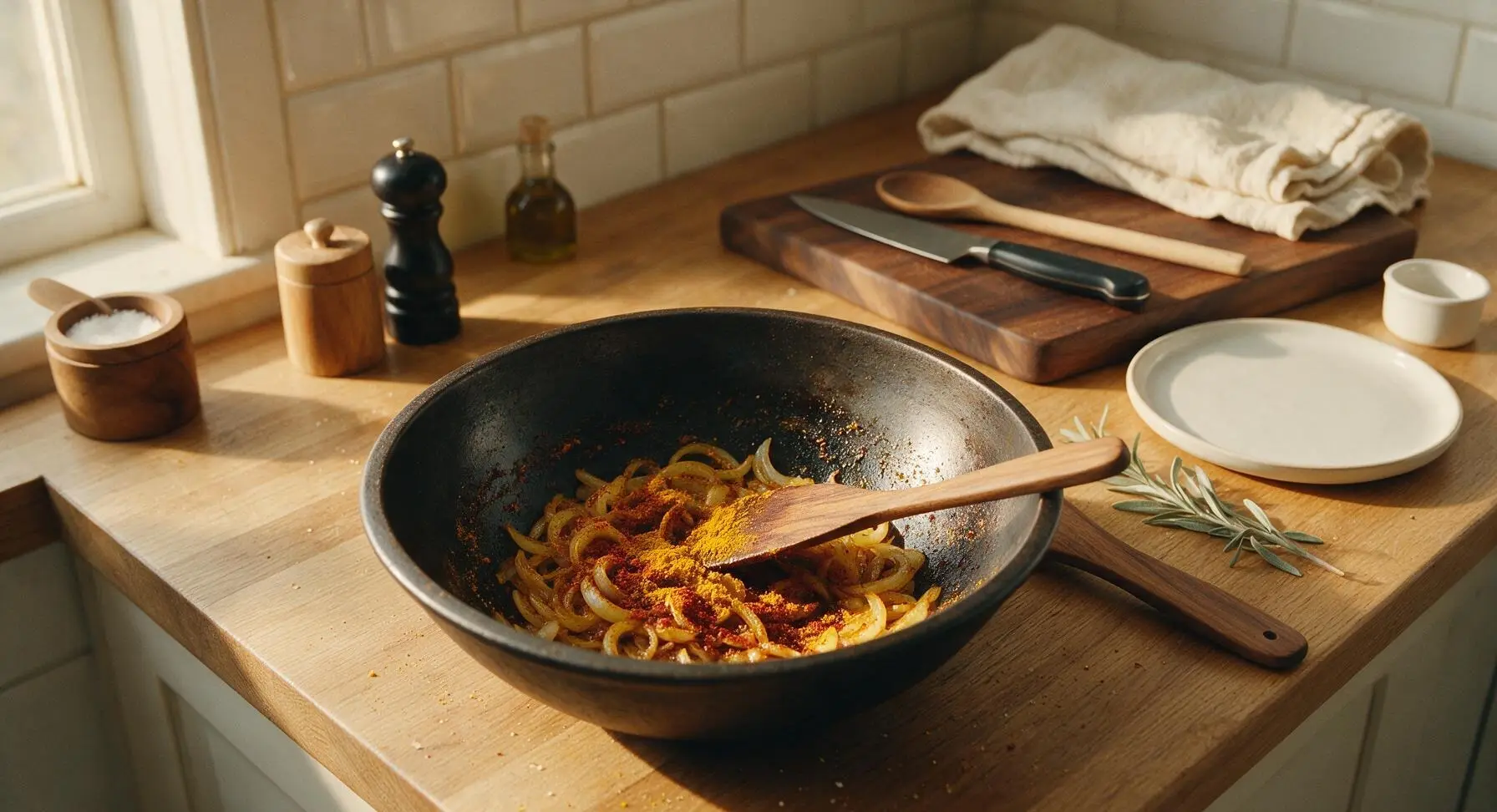
Add the remaining 1/2 tsp ground turmeric, 1 tsp red chilli powder, and remaining 3/4 tsp salt to the onion mixture. Stir constantly for 30 seconds until the spices are well coated in oil and release a warm, earthy aroma. Reduce heat to low to prevent the spices from burning.
Step 5
step5:Cook Ground Spices
6

Incorporate Mustard Paste

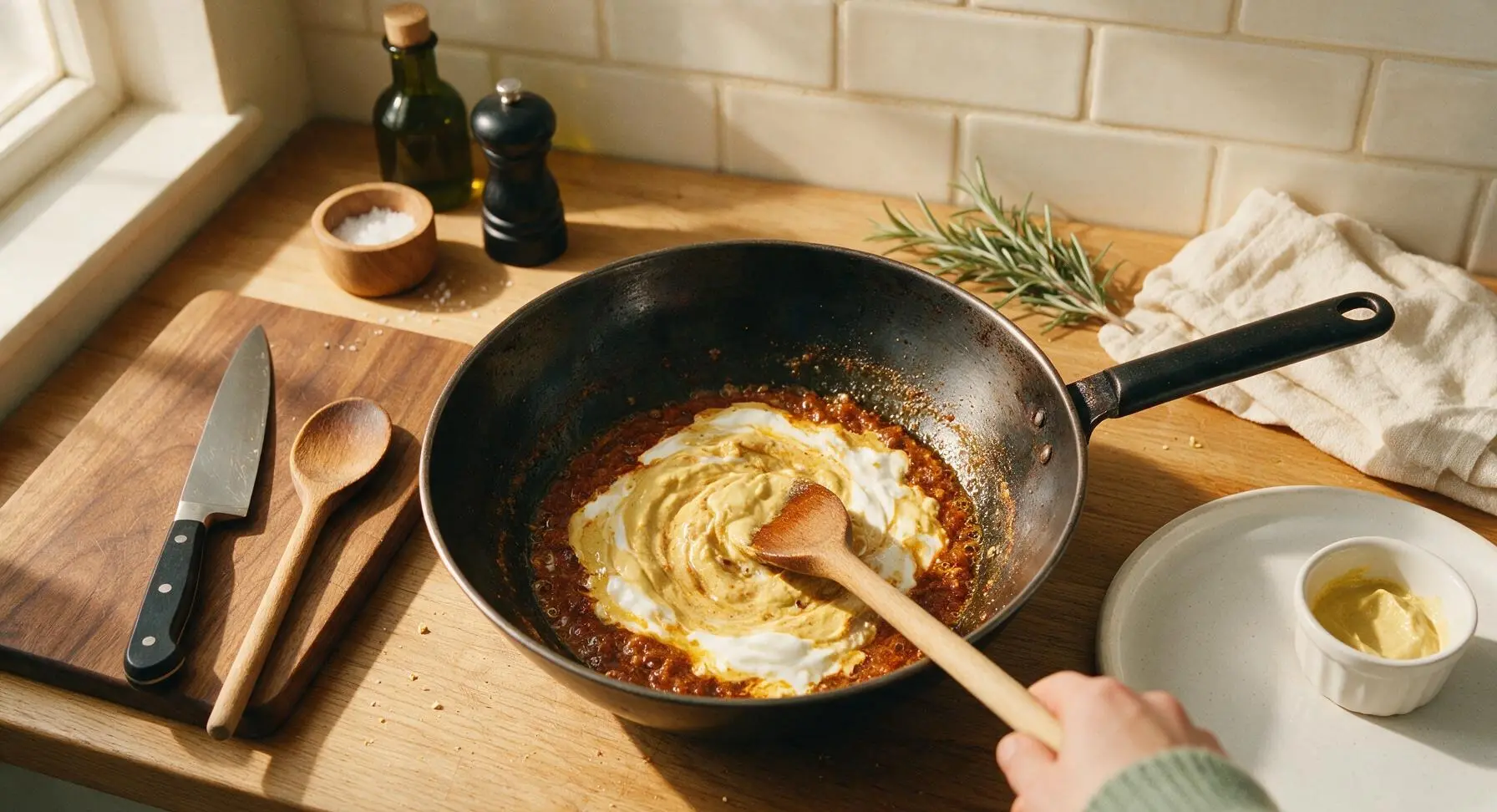
Add the freshly ground mustard paste and whisked plain yoghurt to the kadai, stir continuously for 2 minutes over low heat until the mixture is smooth and the oil starts to separate slightly from the masala at the edges of the pan. This slow cooking removes the sharp raw bite of the mustard.
Step 6
step6:Incorporate Mustard Paste
7

Simmer Prawns in Gravy

Pour in 100ml thick coconut milk and 50ml warm water, stir to combine, bring the gravy to a gentle simmer. Add the marinated prawns and remaining slit green chilli, stir gently to coat the prawns in gravy. Simmer uncovered for 5-6 minutes, stirring once halfway, until the prawns turn opaque pink-orange and curl into tight C-shapes. Do not overcook the prawns—they will turn rubbery if cooked longer than 7 minutes.

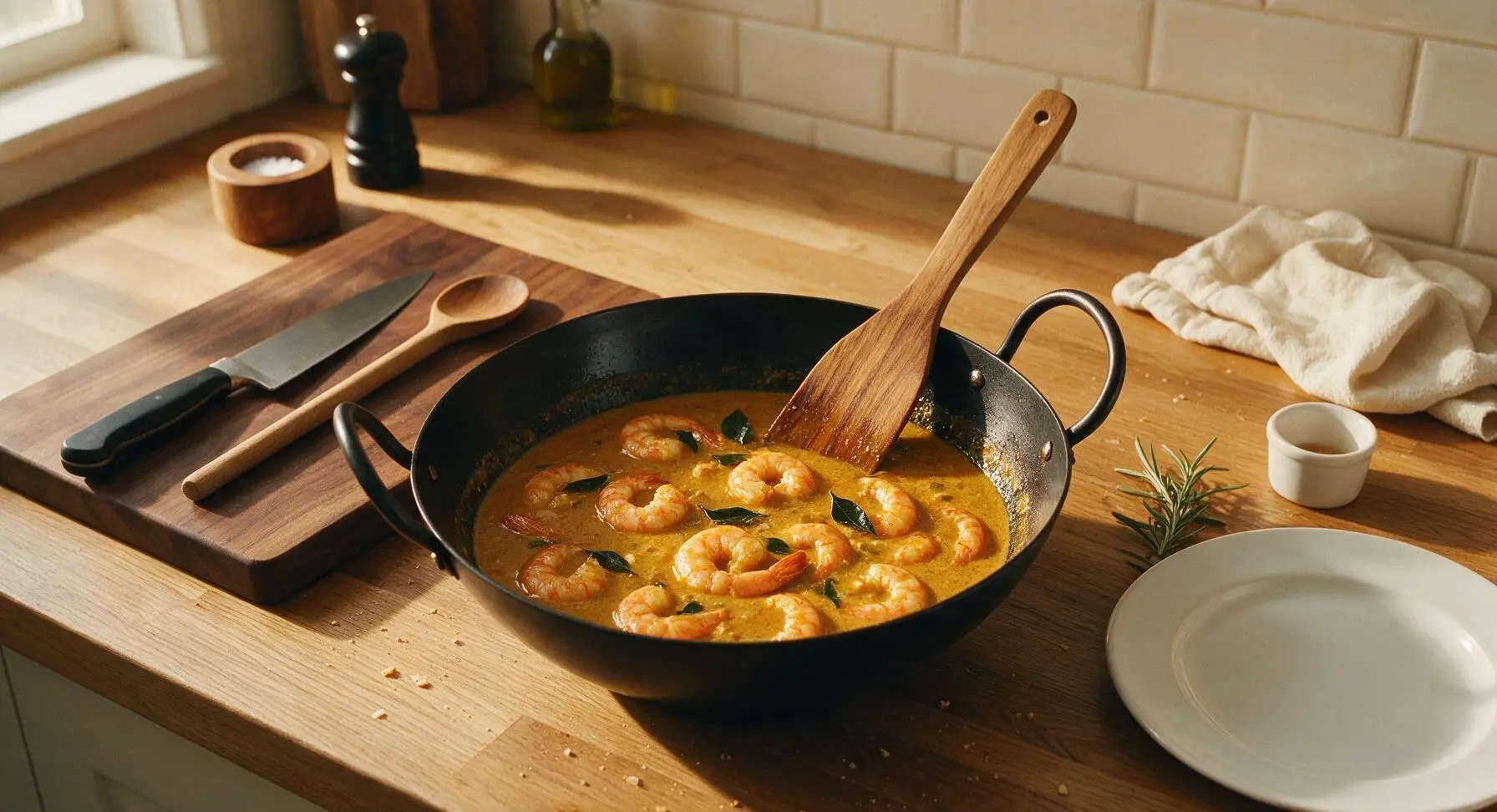
Step 7
step7:Simmer Prawns in Gravy
Step 7
step7:Simmer Prawns in Gravy
8

Rest and Garnish

Turn off the heat, taste and adjust salt if needed. Drizzle 1 tsp of raw mustard oil over the top of the curry, cover the kadai with a lid, and let it rest for 5 minutes to allow the flavors to meld together. Right before serving, scatter chopped fresh coriander over the top.
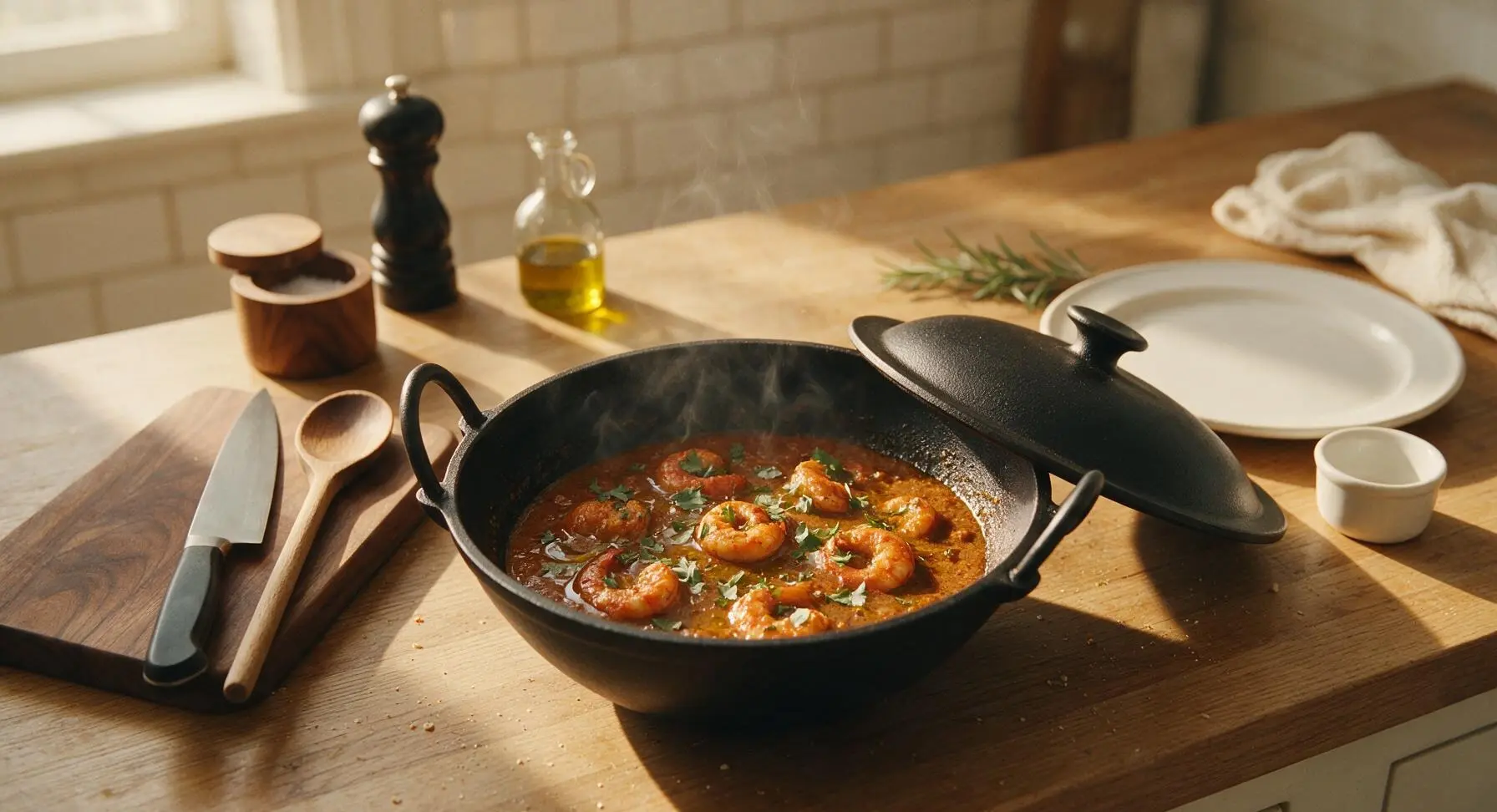
Step 8
step8:Rest and Garnish

Tips

1.Always heat mustard oil until it just starts to lightly smoke before adding tempering spices: raw cold-pressed mustard oil has a sharp, bitter pungency that is mellowed by high heat, creating the signature nutty, warm flavor central to Bengali curries.
2.Do not overcook the prawns: large tiger prawns only need 5-6 minutes of gentle simmering to turn juicy and tender; cooking longer than 7 minutes will cause the muscle fibers to tighten, resulting in rubbery, tough prawns.
3.Soak mustard seeds in cold water for 10 minutes before grinding, and use only cold water while grinding: hot or warm water will trigger bitter compounds in the mustard seeds, turning the paste unpleasantly sharp and ruining the delicate balance of the gravy.

✨ You May Also Like

Main Course
🍜 United Kingdom

A showstopping classic of tender seared beef, savory mushroom duxelles, and crisp prosciutto wrapped in flaky golden puff pastry, baked to juicy perfection.

⏱️ 2 hours 1Main Course ★ 4.7
Main Course
🍜 India

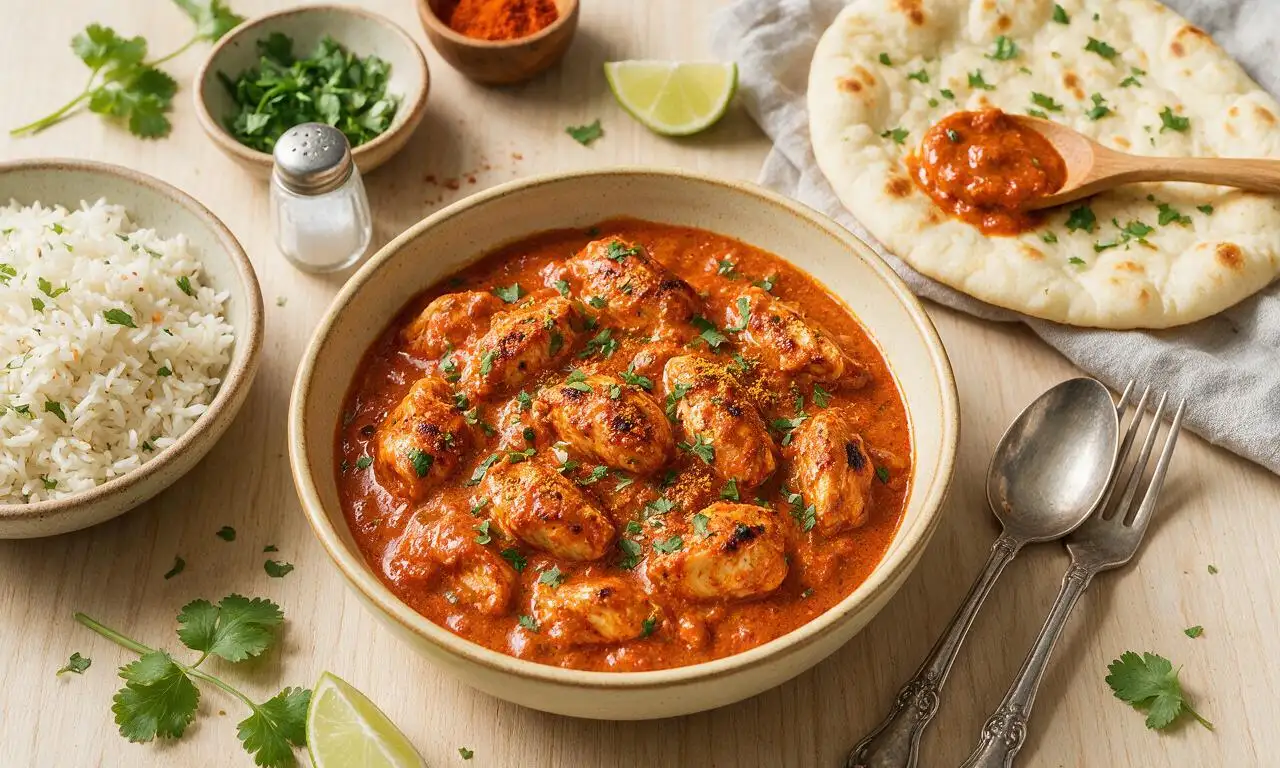
Tender charred marinated chicken simmered in a rich, spiced creamy tomato sauce, this iconic Anglo-Indian curry pairs perfectly with basmati rice or warm naan.

⏱️ 50 minuteMain Course ★ 4.6
Main Course
🍜 Thailand

Classic tangy, sweet, and savory Thai stir-fried rice noodles with shrimp, tofu, and crunchy garnishes, balancing all five core Thai flavor profiles.

⏱️ 30 minuteMain Course ★ 4.5
Main Course
🍜 United Kingdom

Crispy golden beer-battered cod and fluffy double-fried chips, served with tangy tartar sauce and malt vinegar: the timeless, beloved British pub comfort classic.

⏱️ 45 minuteMain Course ★ 4.7
Main Course
🍜 Mexico

Smoky, chile-marinated pork tacos with caramelized pineapple, fresh cilantro, and lime: a beloved classic Mexican street food perfect for casual summer gatherings.

⏱️ 1 hour 45Main Course ★ 4.8
Main Course
🍜 United States

Crunchy Fritos corn chips layered with savory beef chili and melted cheddar, topped with cool, zesty fixings for a beloved, cozy Tex-Mex comfort food.

⏱️ 35 minuteMain Course ★ 4.8

bengali prawn curry:Frequently Asked Questions

1.Can I use regular vegetable oil instead of cold-pressed mustard oil for this recipe? ▾
You can swap in neutral vegetable oil in a pinch, but you’ll miss the signature sharp, pungent depth that defines authentic chingri machher jhol. If you don’t have mustard oil, toast 1 extra teaspoon of black mustard seeds in your oil before adding aromatics to mimic that bright, zesty mustard note as closely as possible.
2.How do I keep my prawns from turning rubbery in this curry? ▾
Overcooking is the number one culprit for tough prawns! Sear your patted-dry prawns for just 1 minute per side first to lock in flavor, then let them finish simmering in the hot gravy for no more than 3 minutes total off high heat. Never boil the curry once prawns are added, as sustained high heat will make them chewy fast.
3.Can I substitute black mustard seeds if I don’t have them on hand? ▾
You can use a mix of ¾ teaspoon brown mustard seeds and ¼ teaspoon smooth Dijon mustard stirred into the gravy as a close stand-in. Skip plain yellow mustard seeds alone, as they are much milder and won’t deliver that sharp, slightly bitter kick that balances sweet coconut and briny prawns in this dish.
4.Do I have to leave the prawn tails intact for this recipe? ▾
Leaving tails on is totally optional! It’s mostly for presentation and adds a tiny pop of extra shellfish flavor as the curry simmers, but you can peel prawns fully if you prefer no-fuss eating. Just make sure to fully devein every prawn regardless of tail choice to avoid any gritty texture in the finished dish.
5.My mustard gravy turned out unpleasantly bitter—what did I do wrong? ▾
That usually happens when you burn mustard seeds during the initial tempering, or use old, rancid mustard oil. Next time, heat oil until it just shimmers, add seeds, and pull the pan off heat the second they pop and crackle. A pinch of sugar and extra splash of coconut milk will also mellow harsh bitter notes in a pinch.
6.What kind of coconut works best for the mustard-coconut gravy? ▾
Unsweetened full-fat canned coconut milk is the most reliable choice for a rich, smooth, creamy gravy that won’t curdle when simmered. Avoid sweetened shredded coconut or low-fat coconut milk, as the first adds unwanted sweetness and the second turns watery and thin, robbing your gravy of its luxurious velvety texture.
7.Can I adjust the spice level of this curry without losing authentic flavor? ▾
Absolutely! For less heat, seed your dried red chillies and green chillies before adding them, or cut total chilli quantity in half. For extra heat, toss in an extra slit green chilli right at the end of cooking for bright, fresh zing. Don’t skip turmeric entirely, though—it adds key earthy depth and that signature golden color.
8.What should I serve with Bengali prawn curry for a traditional meal? ▾
This light, fragrant curry pairs perfectly with steamed long-grain white rice, which soaks up every drop of tangy, coconutty gravy. For a fuller spread, add crisp fried poppadoms, a quick cucumber-tomato salad tossed with lime juice, or warm, flaky luchi (Bengali fried flatbread) for a special weekend meal.
9.Can I make this curry ahead of time for meal prep? ▾
You can make the gravy base 2–3 days ahead and store it in an airtight container in the fridge, but wait to add prawns until right before you serve. Prawns turn rubbery when reheated too long, so simmer them in warmed gravy for just 3 minutes before eating to keep them tender, rather than cooking them ahead.
10.Do I need to marinate the prawns before adding them to the curry? ▾
A quick 10-minute marinade of ¼ teaspoon turmeric and a pinch of salt right before searing adds great depth and helps prawns hold their shape, but you don’t need a long, complicated marinade. Skip acidic marinades with lemon or vinegar for this recipe, as they will cook prawns prematurely and lead to tough, mushy texture.
11.Why do I need to fry dried red chillies and mustard seeds first before adding other ingredients? ▾
That quick step, called tadka or tempering, blooms the fat-soluble aromatic compounds in the spices to release far more flavor than just stirring them into liquid gravy. It only takes 10–15 seconds, but it builds the layered, toasty spice base that makes this simple home-style curry taste rich and complex instead of flat.
12.Can I use frozen prawns for this recipe instead of fresh? ▾
Frozen prawns work perfectly here, as long as you thaw them completely and pat them very dry with paper towels before searing. Excess water from undried frozen prawns will make them steam instead of sear, diluting gravy flavor and leading to less juicy, less flavorful prawns. Choose frozen prawns with no added sodium solutions for best results.
13.My gravy turned out too thin—how can I fix it easily? ▾
Let the gravy simmer uncovered for 3–4 minutes over medium-low heat after cooking the onion and coconut base to thicken it before adding prawns. If it’s still too thin once prawns are cooked, stir in a tiny slurry of 1 teaspoon rice flour mixed with 2 teaspoons cold water, and simmer 1 minute—remember, traditional jhol is meant to be light, not thick.

Comments (3)

2 days ago

OMG, this Bengali prawn curry was a total game changer for our weeknight family dinner! I was worried it would be too fussy since it’s marked medium difficulty, but it came together in 25 minutes flat just like the recipe said. My kids loved it — even the two who usually turn their nose up at seafood went back for seconds and asked if I could pack the leftovers for their school lunch tomorrow. I stirred in a little extra coconut milk because my crew loves creamier curries, and it was absolute chef’s kiss.

1 day ago

Wait, adding extra coconut milk is such a good call! I made this last week and thought the broth was a tiny bit thin for my taste, I’m totally stealing that hack when I whip it up again this weekend.

1 day ago

So glad your whole family enjoyed this recipe, Mia! Adding a splash of extra coconut milk is such a tasty customization, it pairs beautifully with the warm mustard and turmeric notes in the traditional jhol. Thanks for sharing your tip with other home cooks!

3 days ago

Brought this curry to my neighborhood potluck over the weekend and people were hounding me for the recipe the second the serving platter was empty! I used jumbo prawns like the recipe suggested, and the light, fragrant broth was SO good paired with fluffy steamed basmati rice. My only regret is I didn’t make a double batch — it disappeared way faster than the tater tot casserole I usually bring to these things. This is definitely going on my regular meal prep rotation from now on.

2 days ago

That’s amazing to hear, Pete! This curry is always a crowd-pleaser at get-togethers, and serving it with basmati rice is the perfect pairing. Quick pro tip for your next potluck: a double batch feeds about 8 adults comfortably, so you won’t run out early next time!

2 hours ago

Took a swing at making this for my first time cooking any Bengali dish, and I was shocked how approachable it was even with the medium difficulty rating! The panch phoron gives it such a unique, bright flavor that I haven’t been able to replicate with any other curry recipe I’ve tried. I did accidentally overcook the prawns a tiny bit on my first go, so I’ll definitely keep a closer eye on that 25 minute cook time next round, but even with that little misstep it was totally delicious.