
best bread to make french toast
intro
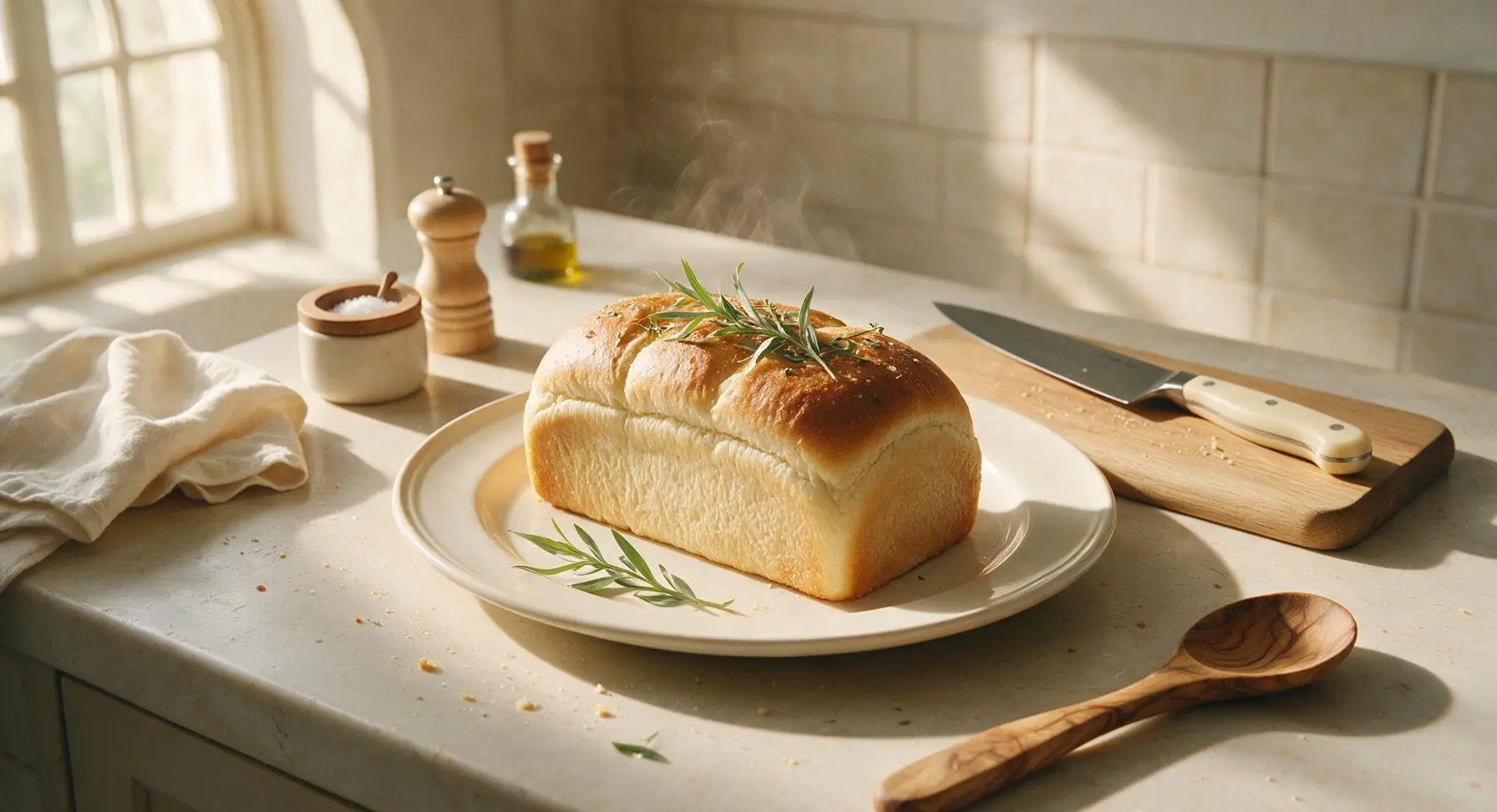
This tender, tight-crumb semi-enriched loaf is purpose-built for perfect French toast: sturdy enough to soak up vanilla custard without falling apart, with a thin golden crust that crisps beautifully.
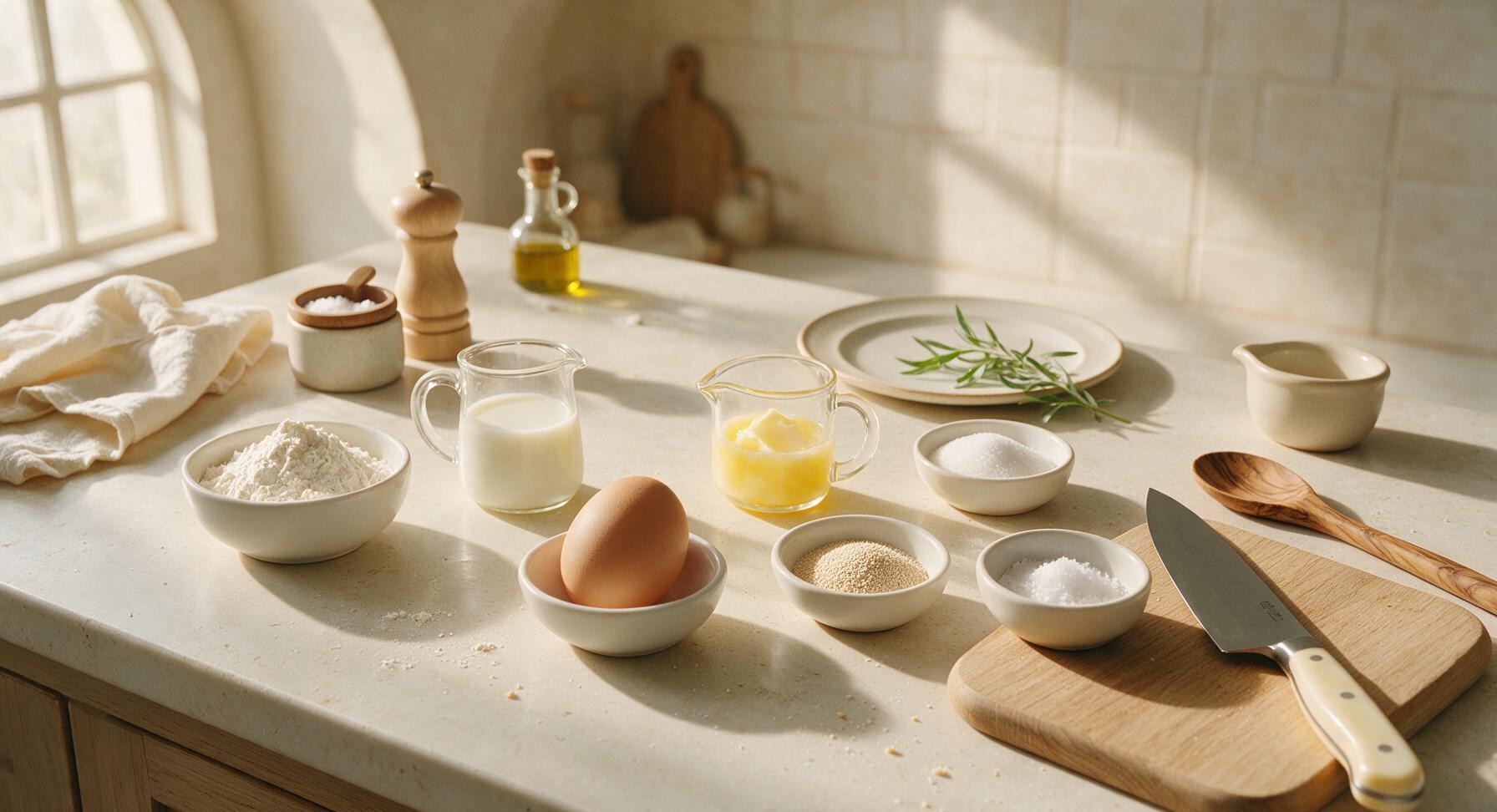
Ingredients
Steps
Activate the Yeast
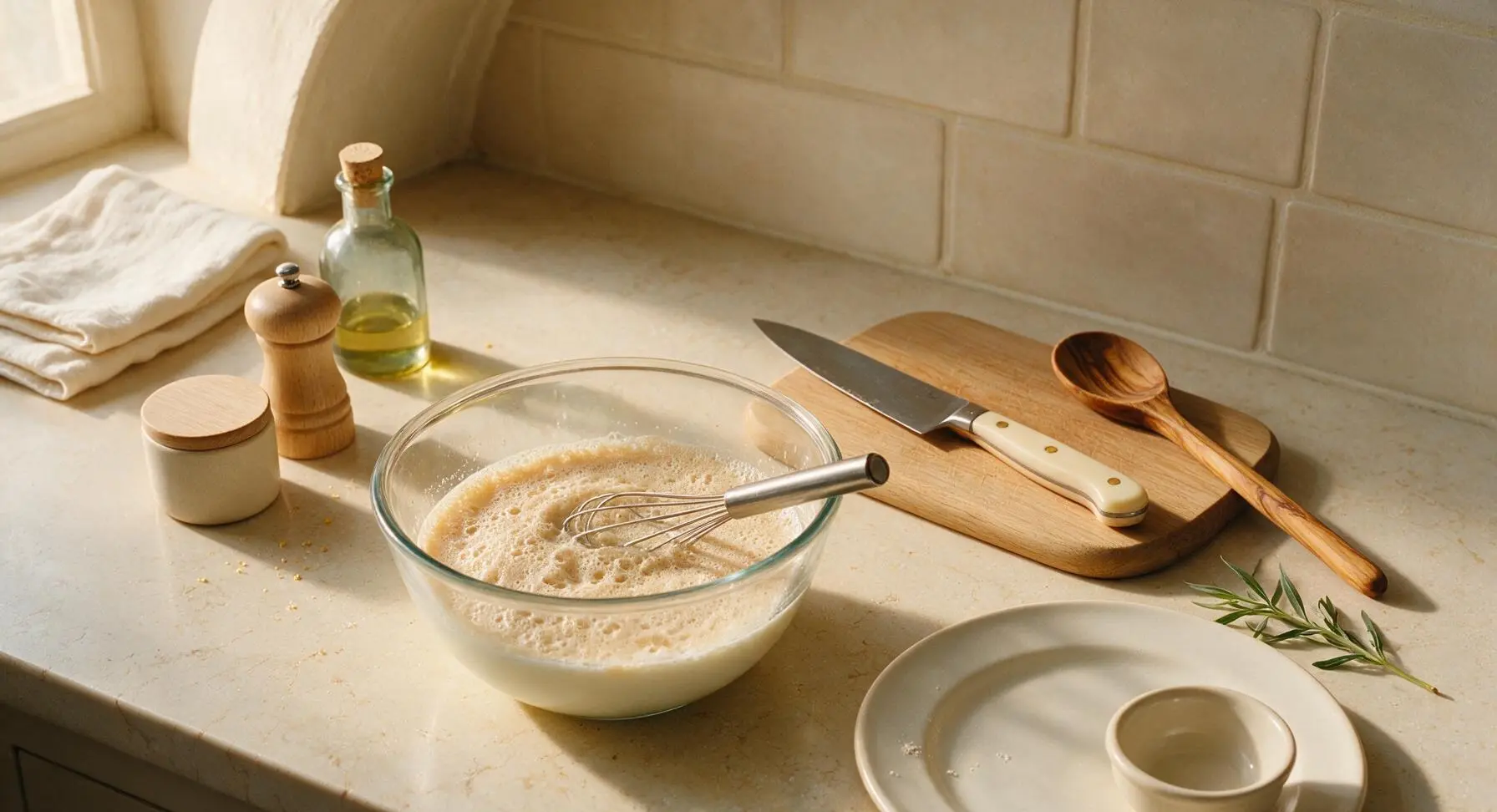
Pour the warmed whole milk into the glass mixing bowl. Stir in 1 teaspoon of the measured granulated sugar and the full amount of active dry yeast with the tip of the dough whisk. Let the mixture rest for 5-7 minutes at room temperature, until it forms a foamy, frothy layer on top that smells distinctly of bready yeast. If no foam forms after 10 minutes, your yeast is inactive and should be replaced to avoid a dense loaf.

Mix the Dough
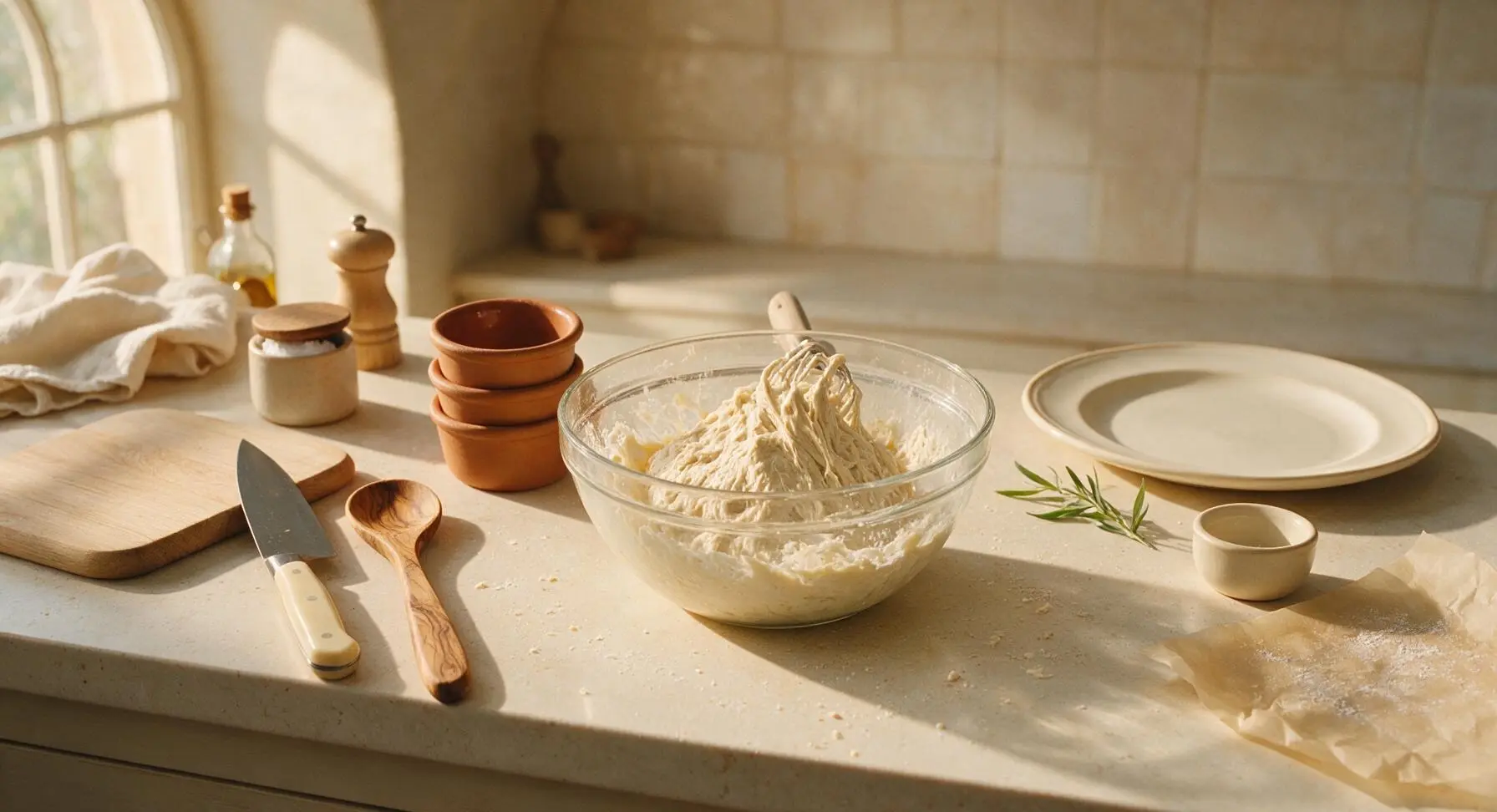
Add the remaining granulated sugar, cooled melted butter, room temperature egg, and fine sea salt to the activated yeast mixture. Whisk with the dough whisk until fully combined and smooth. Gradually add the bread flour ½ cup at a time, stirring continuously with the dough whisk, until a shaggy, sticky dough forms that pulls away from the sides of the bowl, with no dry flour pockets remaining.
Knead Until Smooth
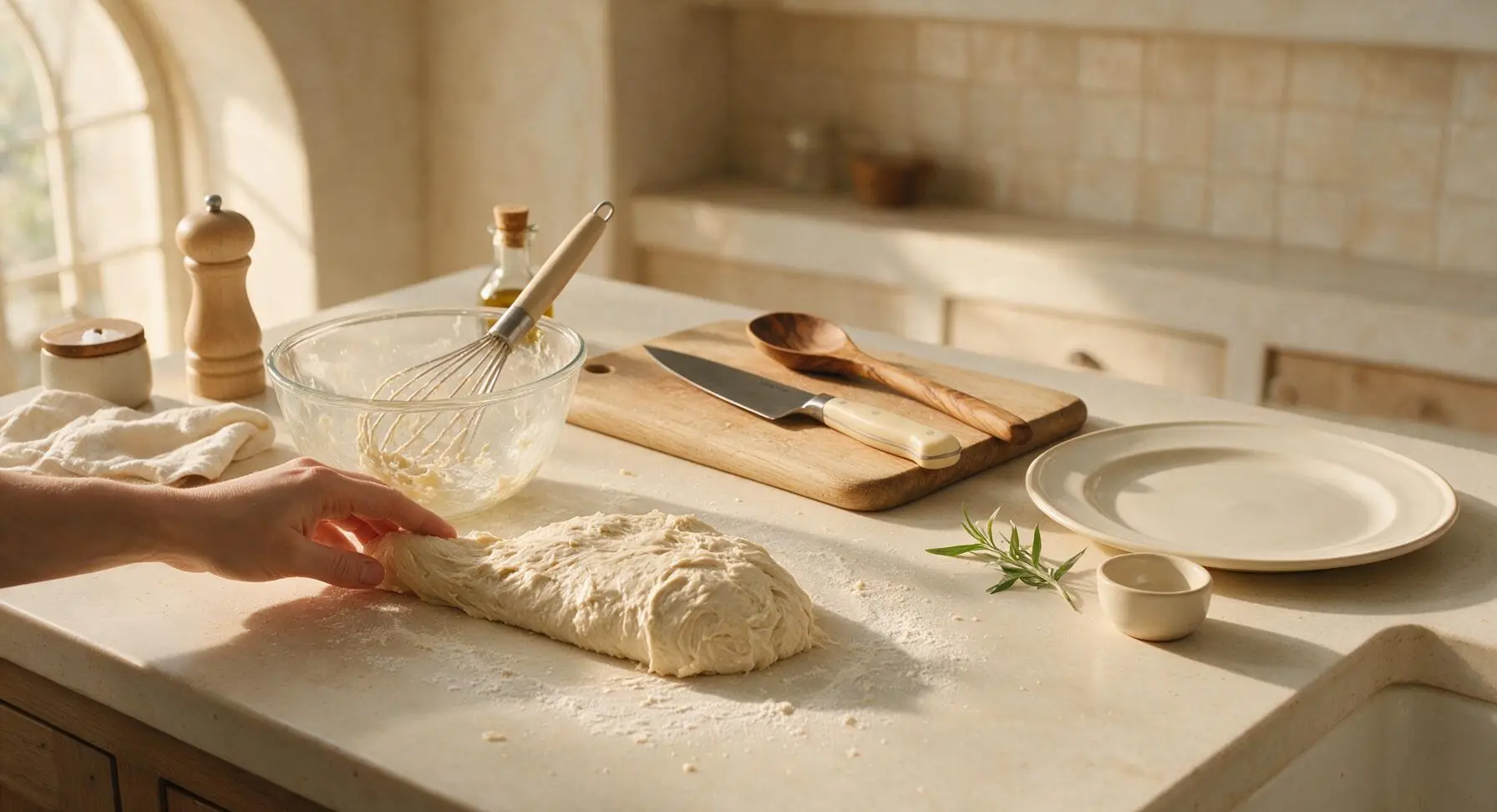
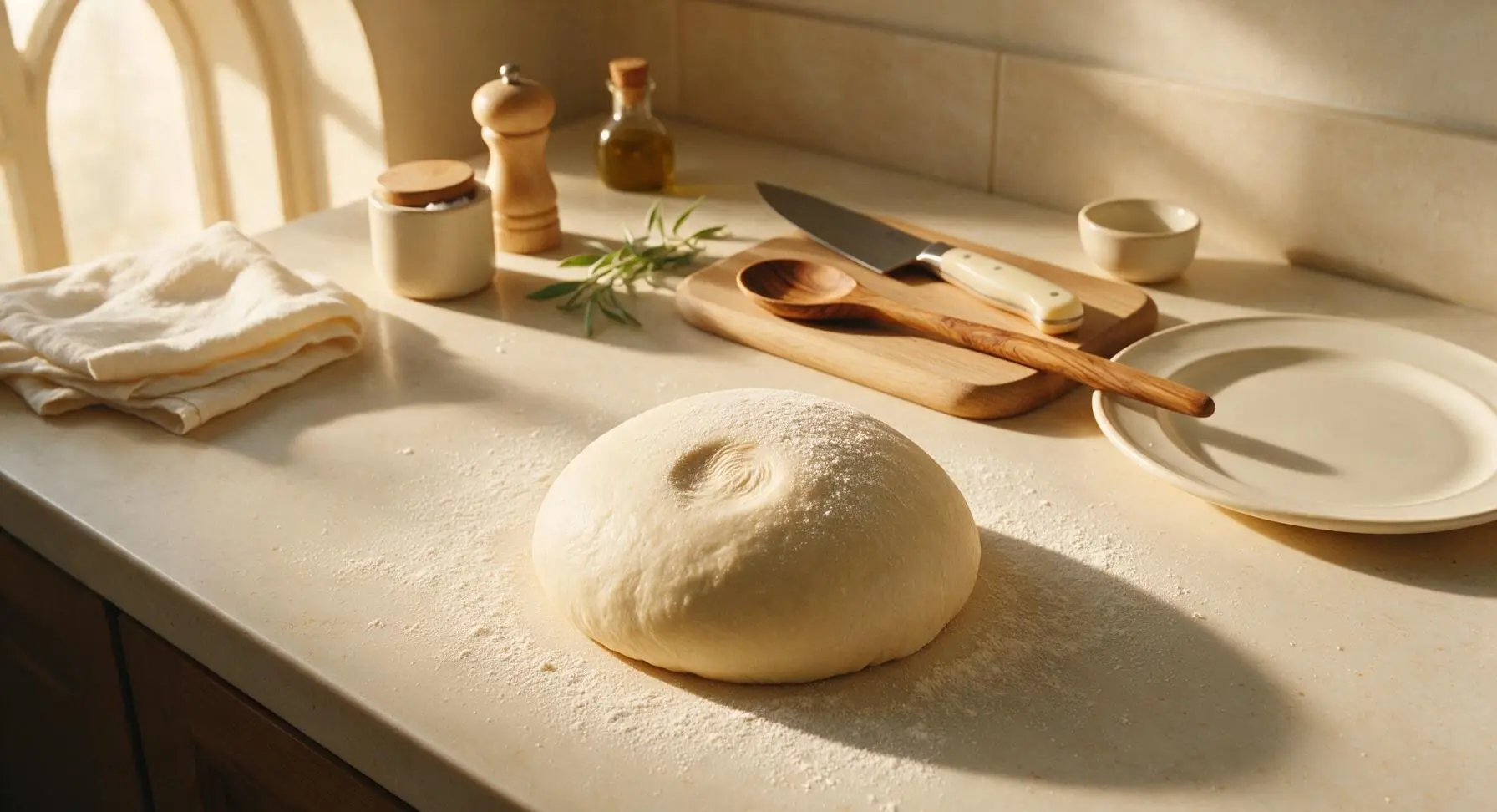
Lightly flour a 20cm section of the counter in front of the mixing bowl. Turn the shaggy dough out onto the floured surface, and knead by hand for 8-10 minutes, folding the dough over itself and pushing forward with the heel of your hand repeatedly. The dough is ready when it is smooth, elastic, and springs back slowly when poked with a finger, with no sticky residue left on your hands. Avoid adding too much extra flour, as this will make the finished loaf too dense for French toast.
First Dough Rise
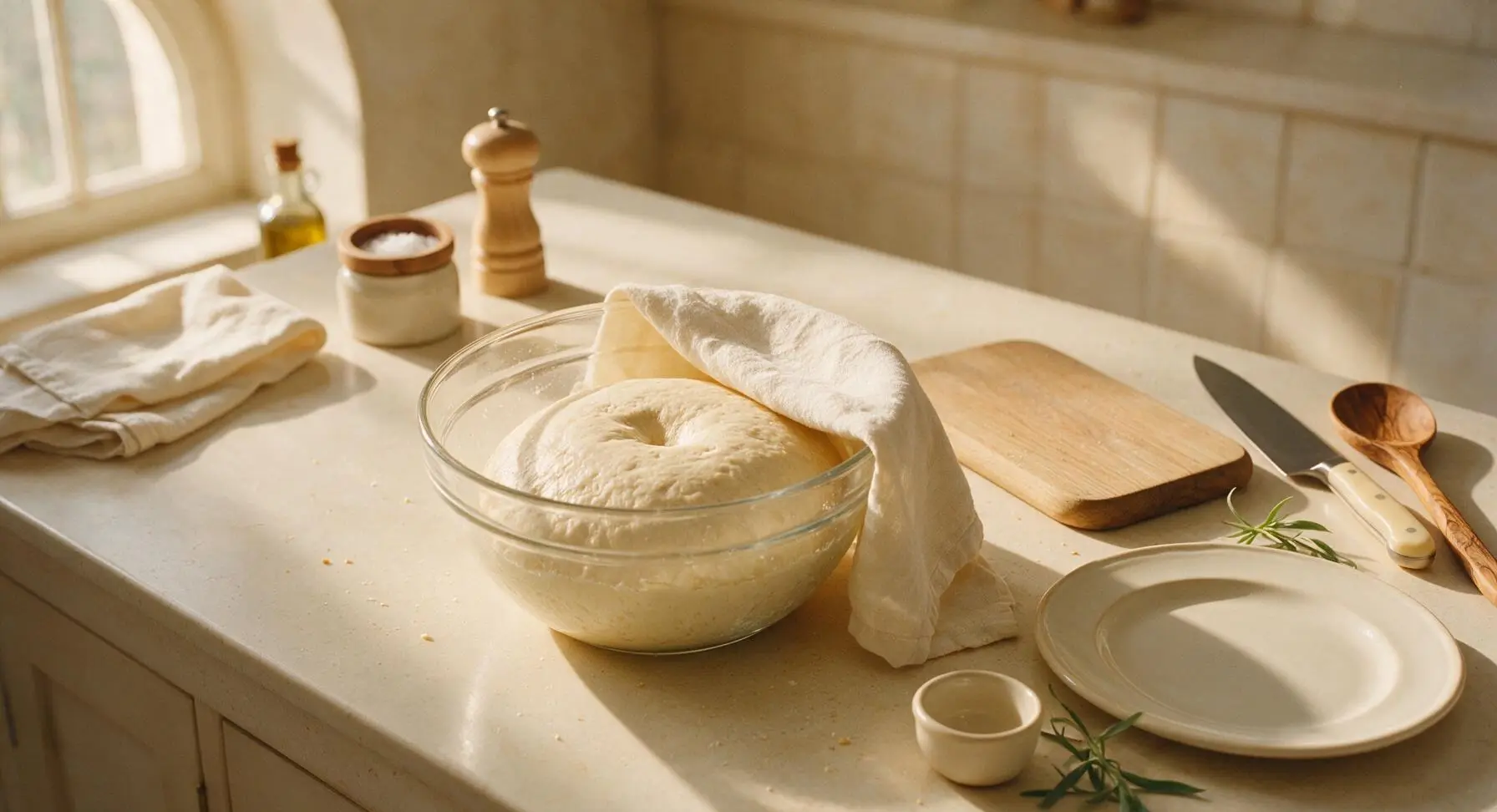
Wipe the glass mixing bowl clean, and lightly coat the interior with a thin layer of residual butter from the measuring creamer. Place the kneaded dough ball back into the bowl, turning once to coat the top in butter. Cover the bowl tightly with a damp corner of the fixed linen tea towel (pulled slightly over the bowl edge without moving the towel from its draped position) and let it rise in a warm, draft-free spot for 1 to 1 ½ hours, until the dough doubles in size, and an indent pressed 2cm into the dough remains without bouncing back.
Shape the Loaf
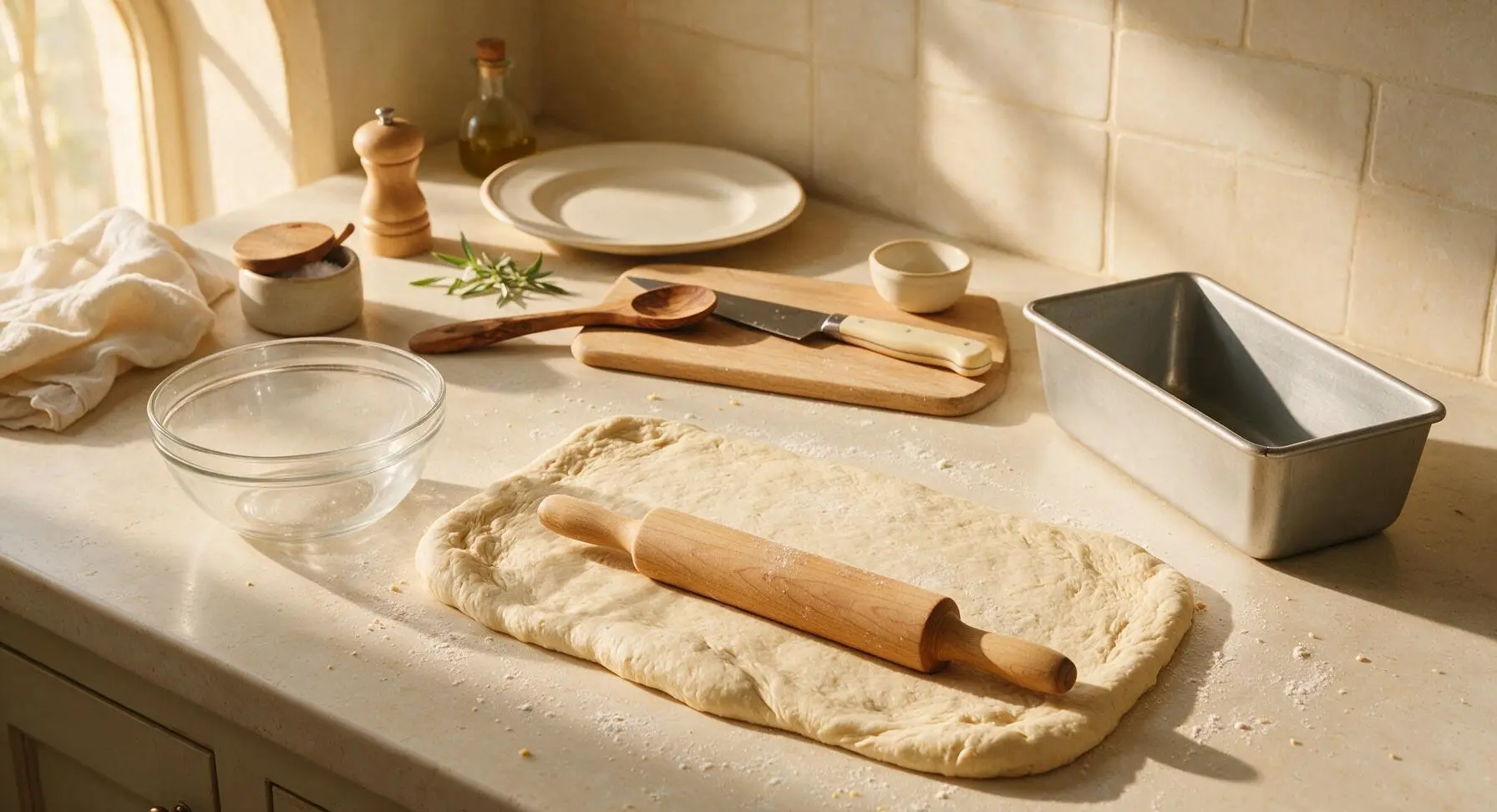
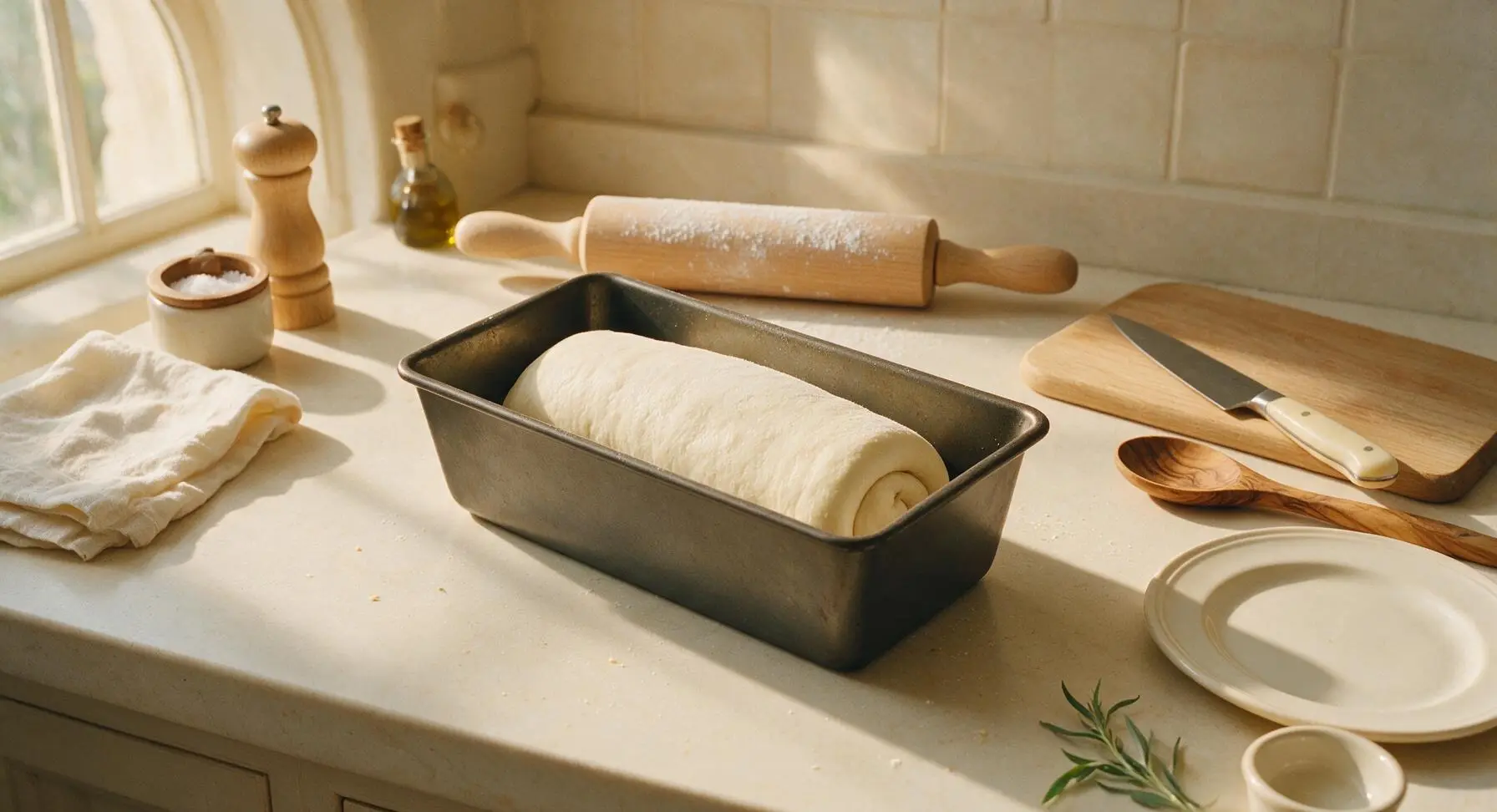
Punch the risen dough down firmly in the center to release all trapped air, then turn it out onto the very lightly floured counter. Use the maple rolling pin to roll the dough into a 20x30cm rectangle, with the short edge matching the length of the 9x5 loaf pan. Starting from the short edge, roll the dough tightly into a log, pinching the seam and the ends closed to seal. Place the log seam-side down into the lightly buttered loaf pan, pressing it gently so it touches all sides of the pan.
Proof and Bake
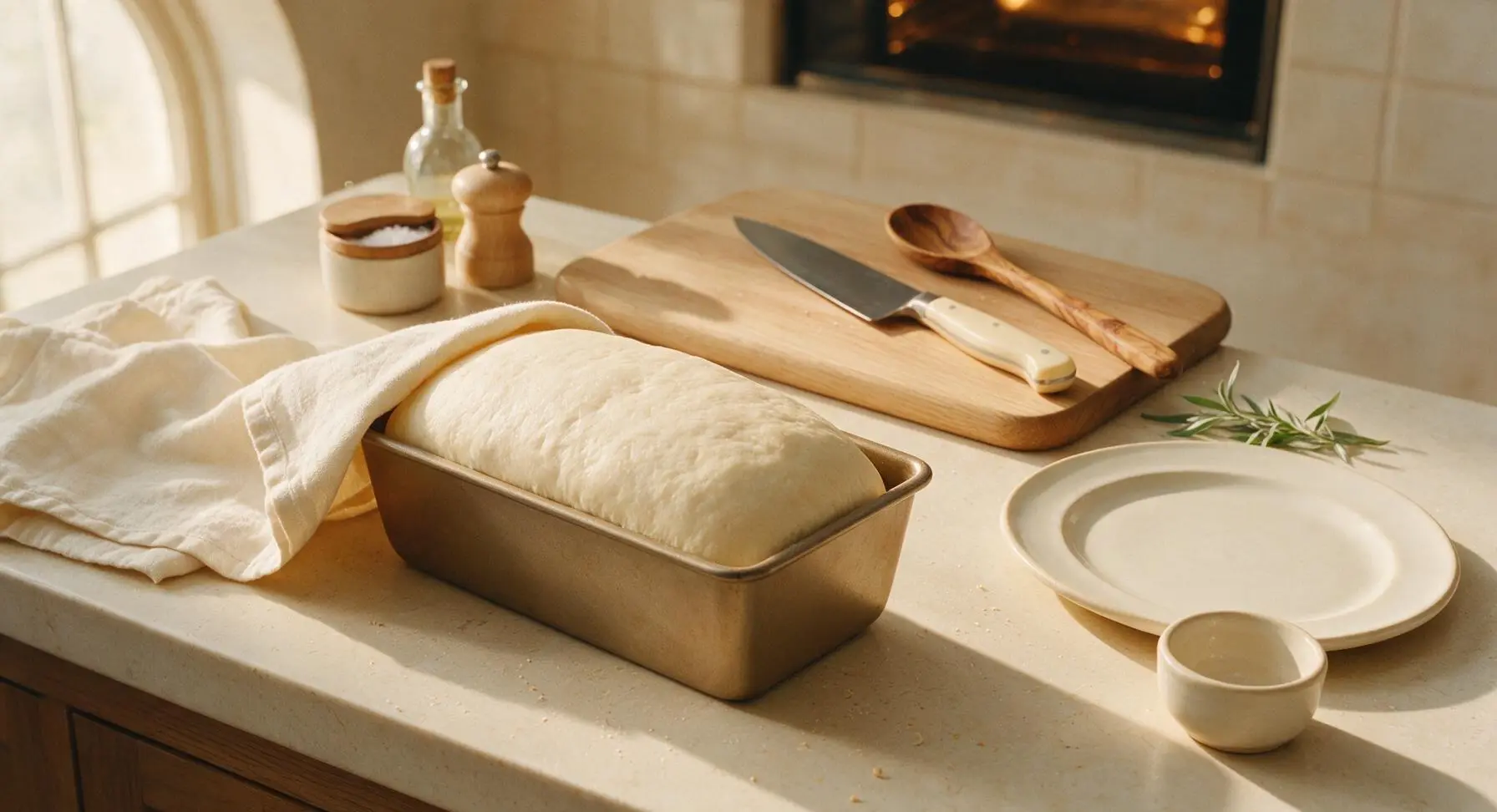
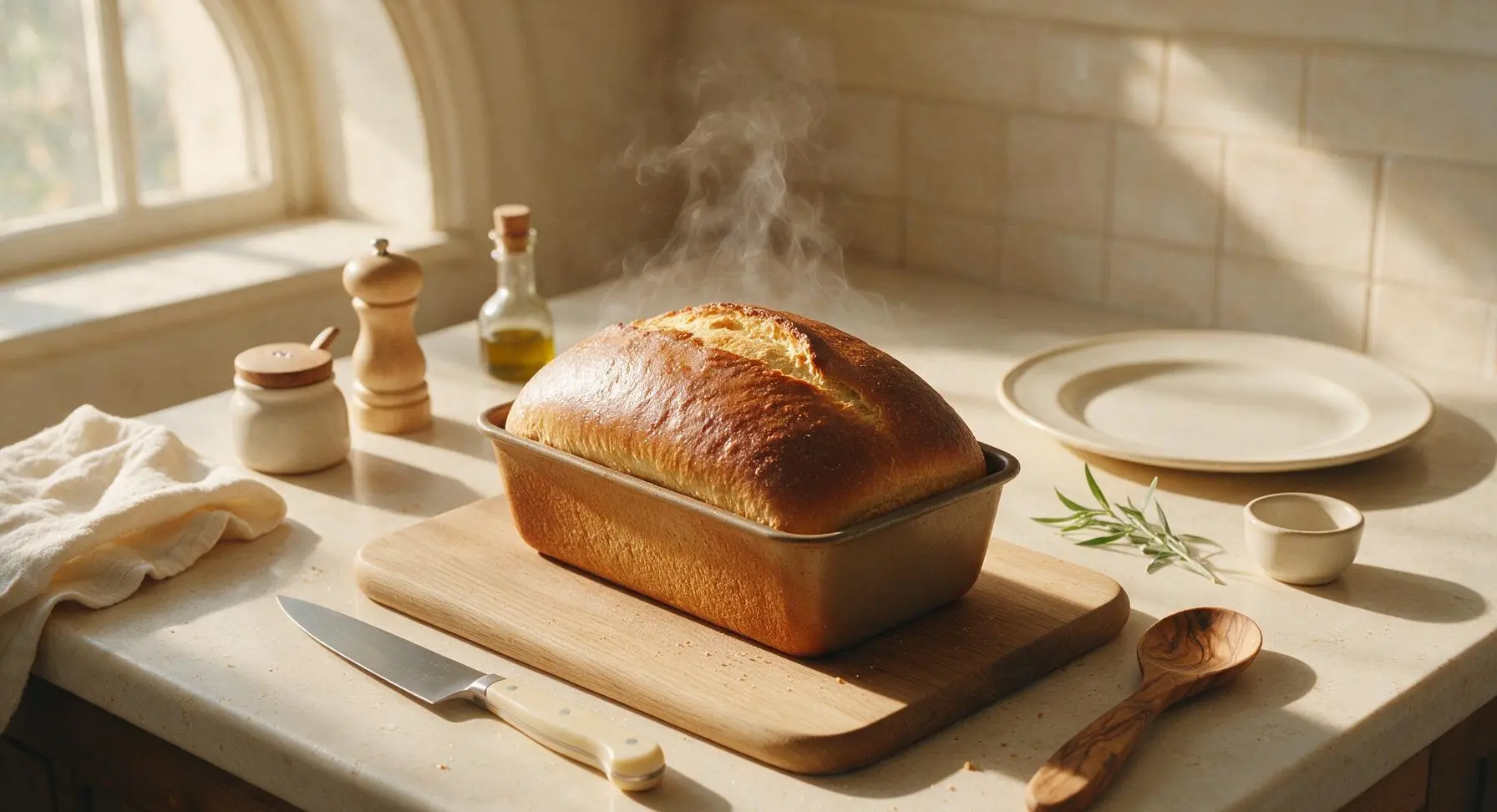
Cover the loaf pan loosely with the same corner of the linen towel, and let the dough rise a second time for 45-55 minutes, until the dough creeps 1cm above the top edge of the loaf pan, and a light poke leaves a slow-recovering indent. While the dough proofs, preheat the oven to 180C/350F. Once proofed, remove the towel, and bake the loaf for 32-35 minutes, until the top is deep golden brown, and the internal temperature of the loaf reaches 90C/195F when measured with a quick-read thermometer. The crust will sound hollow when tapped firmly on the bottom.
Cool and Slice
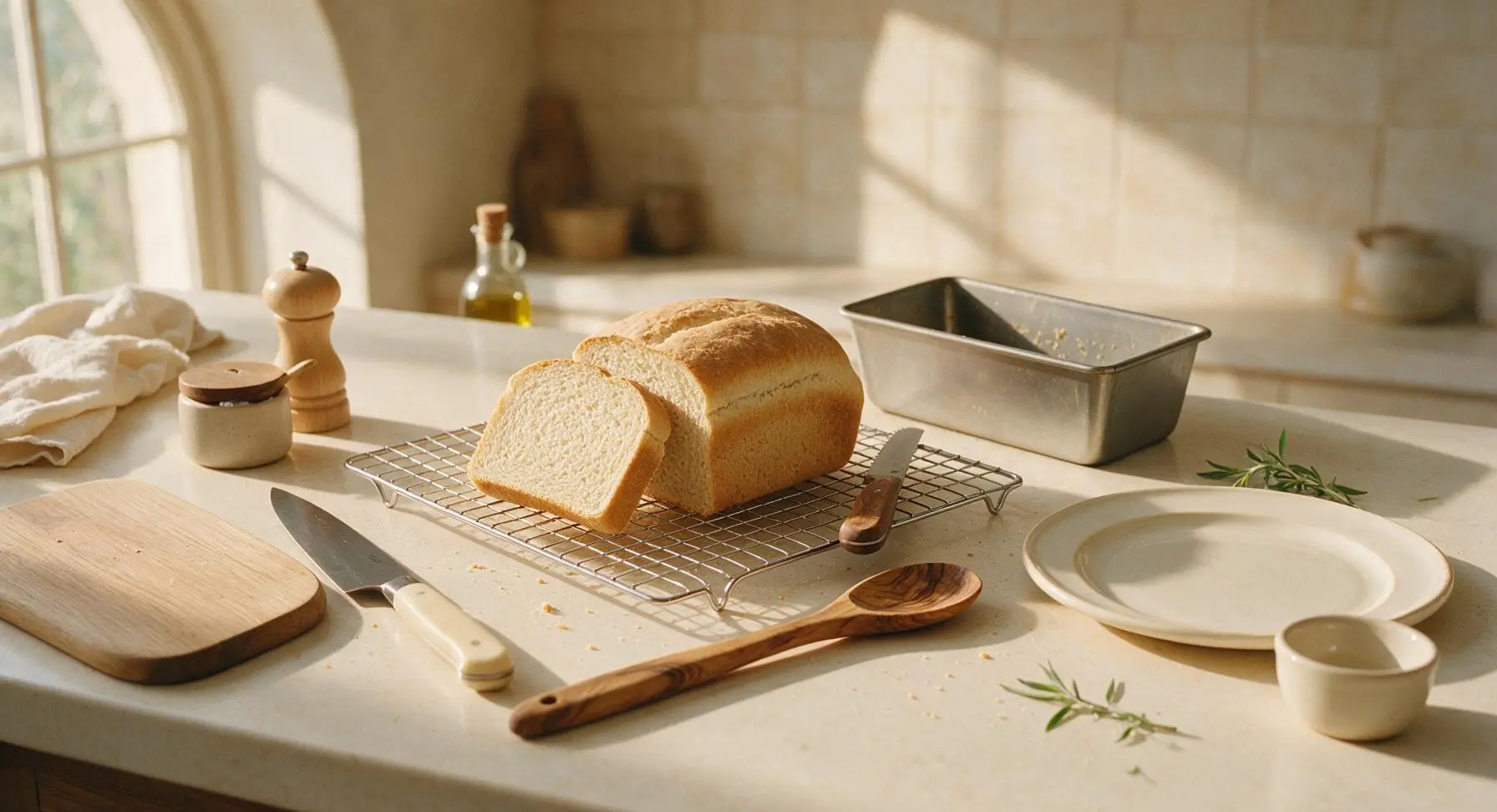
Let the loaf rest in the pan for 10 minutes, then turn it out onto the chrome wire cooling rack to cool completely to room temperature, about 1 hour. Do not slice the bread while warm, as this will cause the crumb to compress and become gummy. Once fully cool, use the serrated bread knife to cut the loaf into 1.5-inch thick slices, the ideal thickness for French toast that holds custard without falling apart.
Tips
2.Resist adding extra flour during kneading: too much flour creates a dense, tight crumb that cannot absorb custard properly, leading to dry, bland French toast. The dough will feel slightly sticky at first, but will smooth out as you knead without extra flour.
3.Freeze pre-sliced portions in an airtight zip-top bag for up to 3 months: you can cook slices directly from frozen (no thawing needed) by adding 1 extra minute of cook time per side, for quick, last-minute French toast.

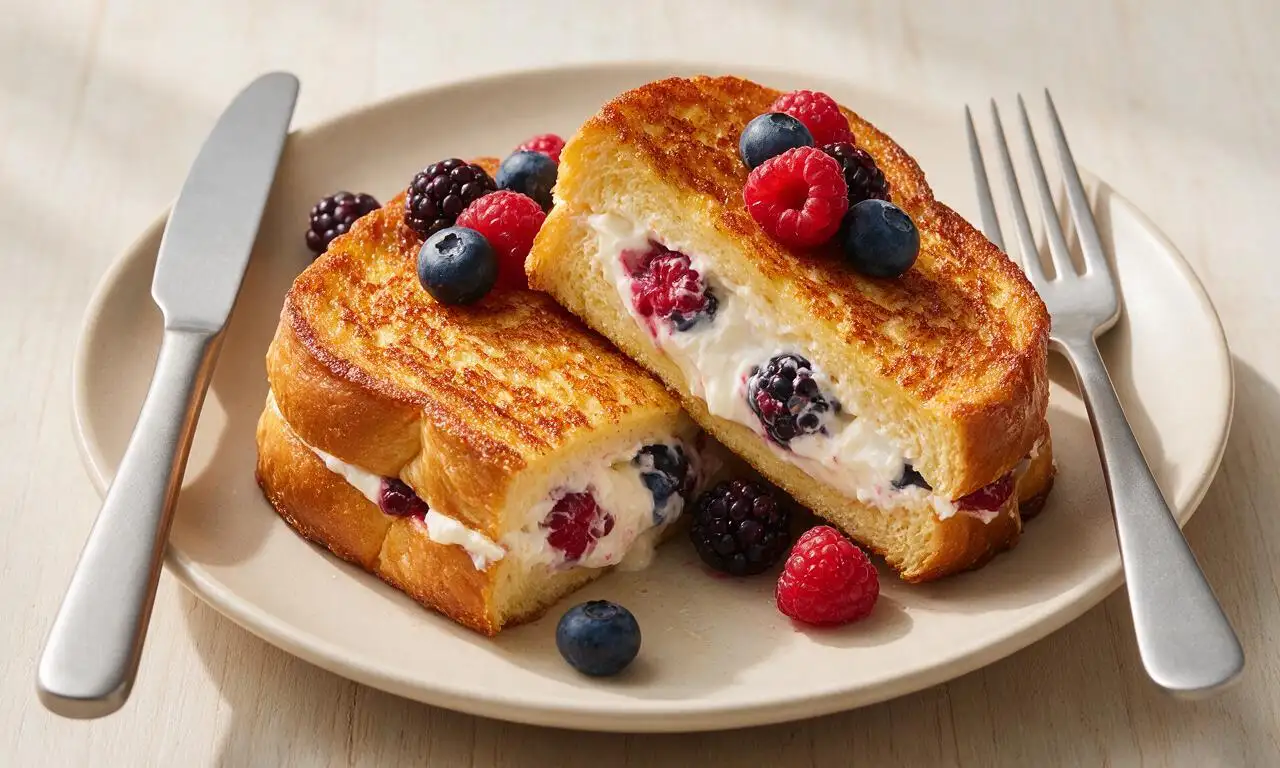


OMG this bread is an absolute game changer for French toast! I’ve been using regular sandwich bread for years and it always gets soggy halfway through cooking, but this semi-enriched loaf holds up perfectly and has that soft, buttery crumb that soaks up the custard just right. My kids devoured a whole batch last Saturday for brunch and begged me to make it again this weekend. SO good!
Tried this for our weekly Sunday potluck with the neighbors and it was a huge hit! Only reason I’m not giving 5 stars is I found the dough a little stickier than I expected when kneading, I had to add almost an extra 1/4 cup flour to get it to pull away from the bowl. Flavor was 10/10 though, everyone was asking for the recipe.
I make this every Sunday for meal prep for the week! It slices so evenly, toasts up great for regular toast too when I don’t feel like making French toast, and freezes like a dream. I pop a couple slices in the toaster straight from the freezer on busy weekday mornings and they’re perfect for quick egg sandwiches too. Total workhorse recipe.
Taste was great but cook time was way longer than 35 minutes for me? I had mine in the oven almost 50 minutes before the internal temp hit the recommended 190F, I almost burned the crust waiting for the center to set. Did I do something wrong?
First time baking any kind of yeast bread and this actually turned out?! I was so nervous it would be a flop since I don’t have a stand mixer, but I kneaded it by hand for like 12 minutes and it rose perfectly. Made French toast for my roommates this morning and they all said it’s better than the diner stuff down the street. Win!
I brought this bread turned French toast to my office breakfast potluck last week and people were literally coming back for thirds. I added a little cinnamon and vanilla to the dough itself instead of just the custard and it was chef’s kiss. Already got three texts from coworkers asking for the recipe link. 10/10 will make again.
Love the texture of this bread for French toast! My only note is I wish it was a little sweeter on its own – I added a tablespoon of honey to the dough on my second go around and it was perfect, didn’t even need extra syrup on the French toast. Would recommend for anyone who likes a less sweet base to customize.
I’ve been baking bread for 40 years and I have to say, this recipe is perfectly calibrated for French toast. Not too rich that it gets greasy when you cook it in butter, not too lean that it dries out. I sliced it thick, soaked it in a bourbon-spiked custard for Christmas brunch and every last slice was gone before I even got a second piece. Fantastic recipe.