
Bindaetteok Ribs
intro
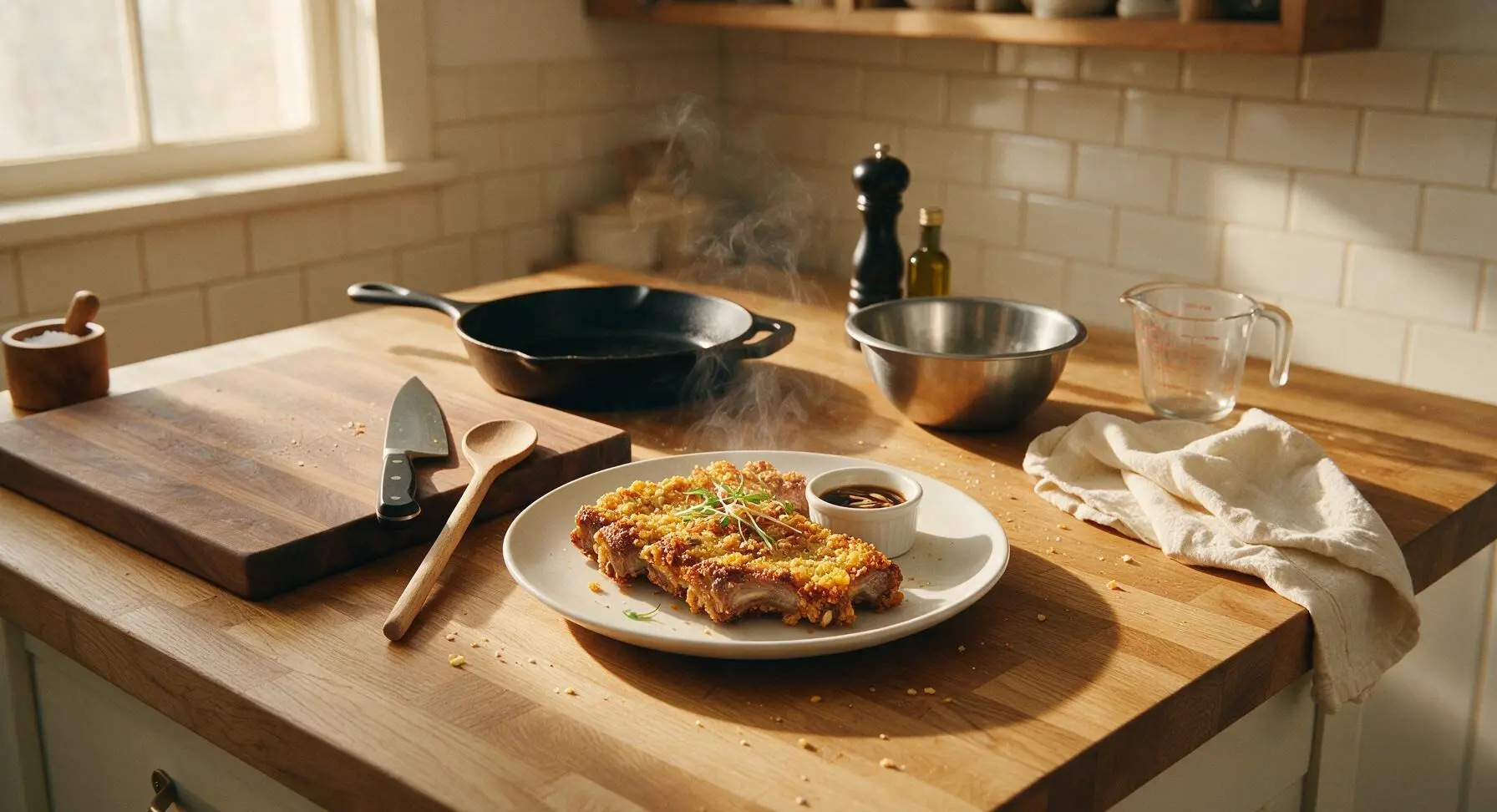
Tender, juicy pork ribs encased in a crispy, nutty golden mung bean crust inspired by classic bindaetteok pancake, served with tangy soy dipping sauce—cozy, shareable comfort food.
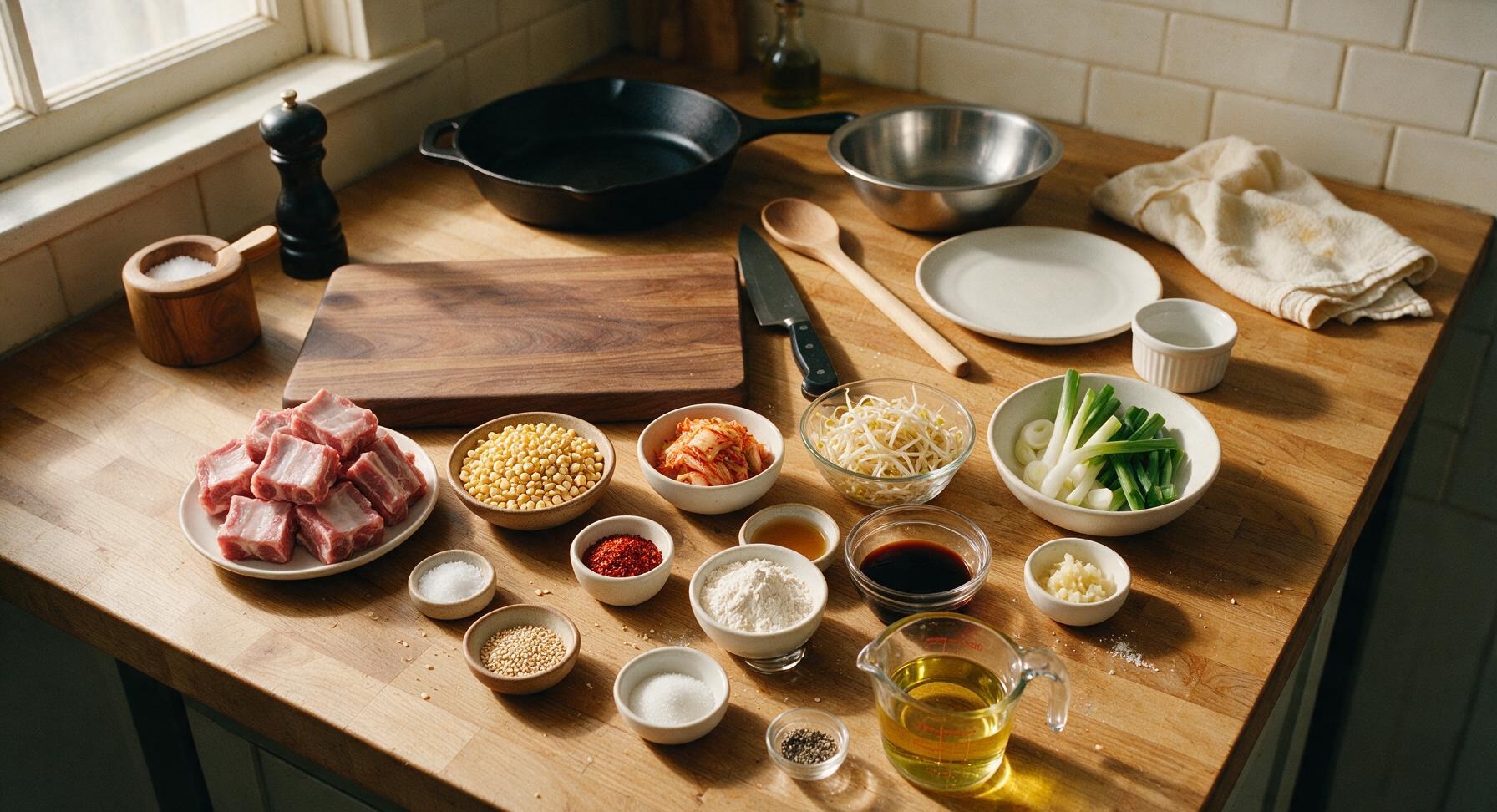
Ingredients
Steps
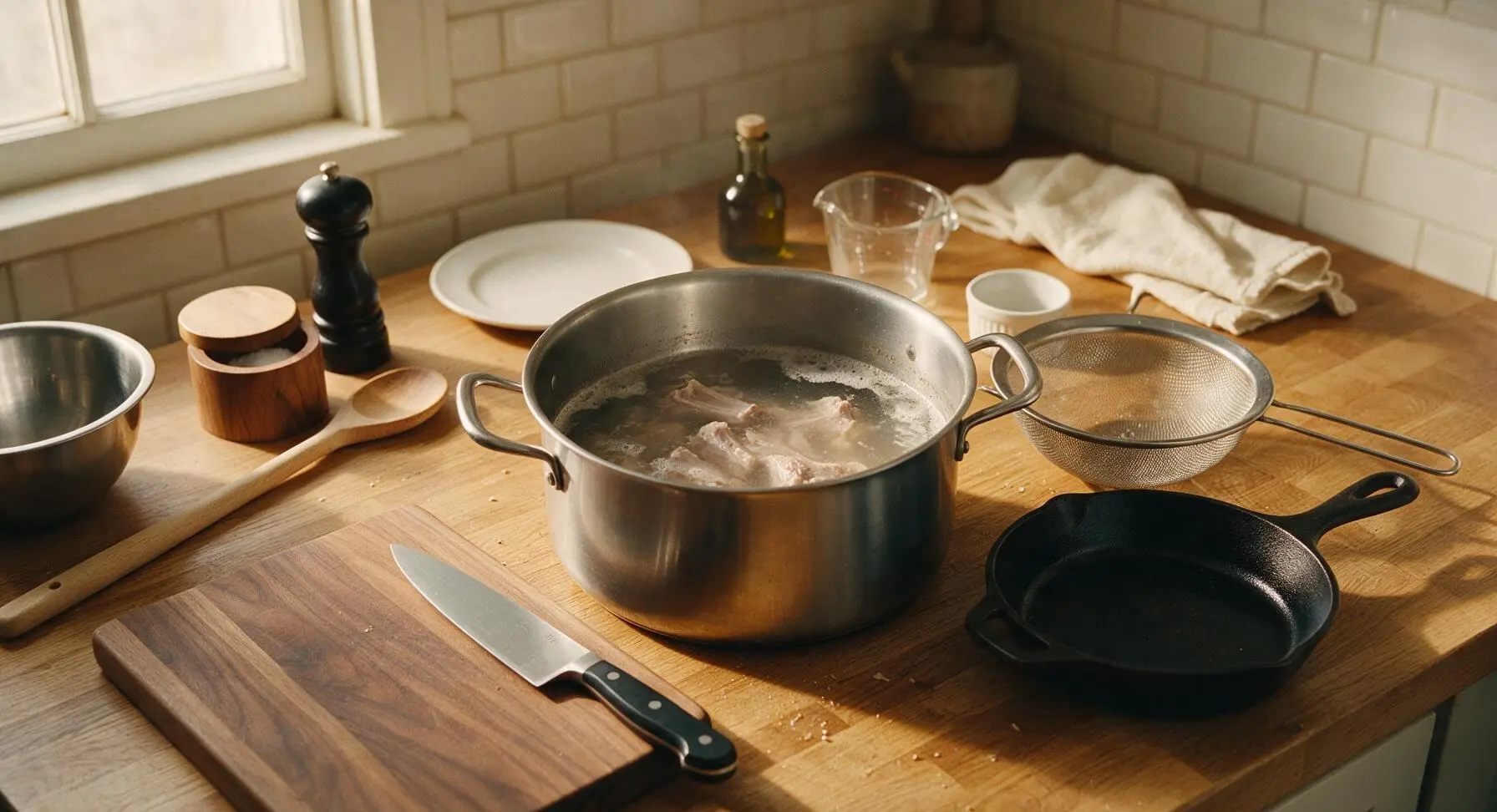
Parboil the Ribs
Rinse 800g cut pork spare ribs under cold running water to remove bone fragments, then place in the 6L stainless steel stock pot and cover with cold water by 5cm (2 inches). Bring to a rolling boil over medium-high heat, then reduce heat to maintain a gentle simmer for 20 minutes, skimming any grey foamy scum that rises to the surface. The ribs are ready when tender when pierced with a fork but not falling off the bone. Drain fully in the fine mesh colander, pat dry lightly with paper towel, and set aside to cool for 10 minutes.
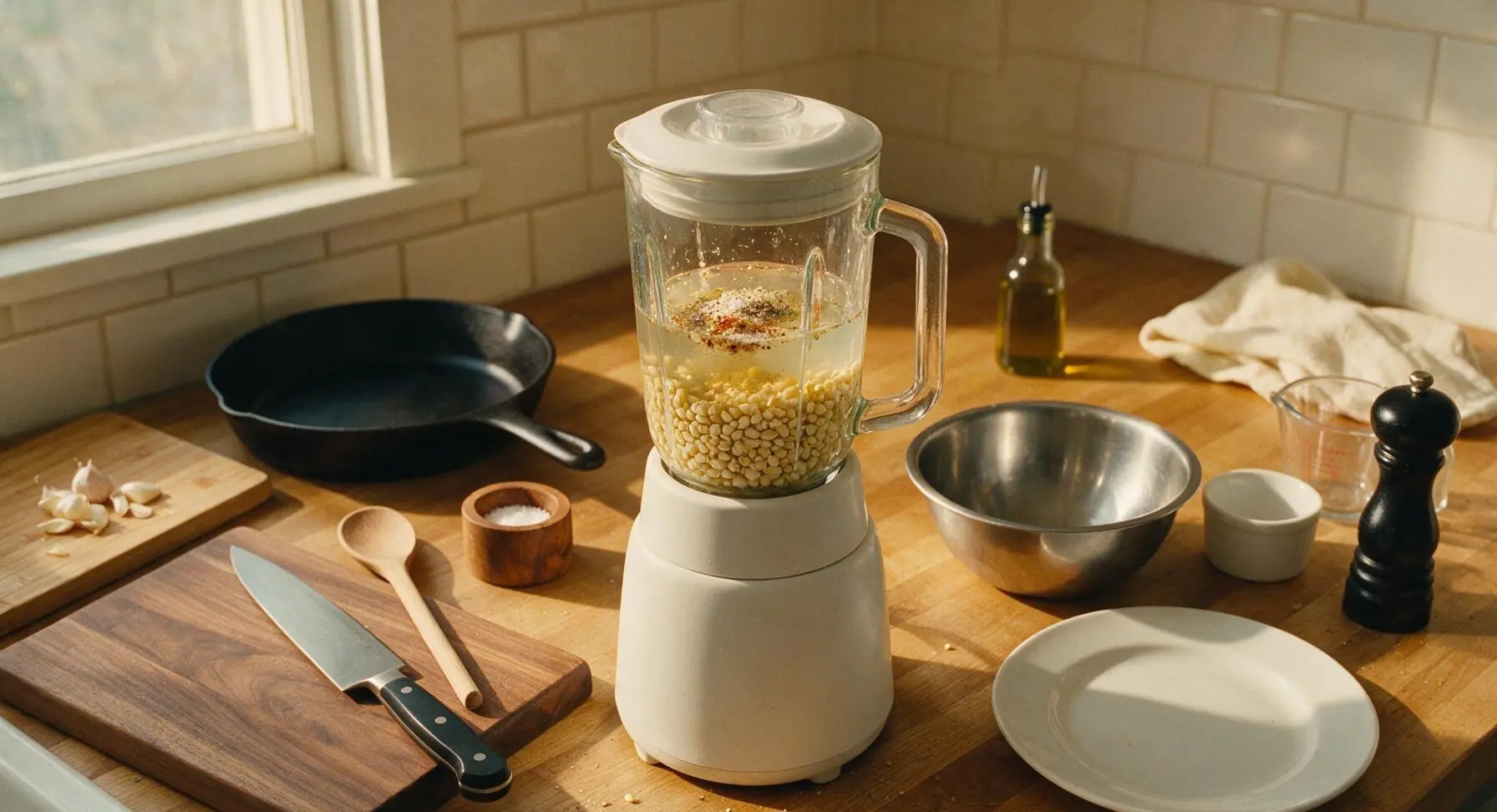
Blend Mung Bean Base
Drain 200g pre-soaked peeled split mung beans (soaked 4 hours or overnight in cold water) and add to the blender jar along with 120ml (1/2 cup) cold water, 1 tsp minced garlic, 1 tsp kosher salt, 1/2 tsp ground black pepper, and 1 tbsp toasted sesame oil. Blend on high for 45 seconds, stopping to scrape down jar sides once halfway, until the batter is thick and pale green with a slightly coarse, grainy texture—do not blend to a completely smooth puree, as tiny mung bean bits create extra crispiness. Pour finished batter into the medium stainless steel mixing bowl.
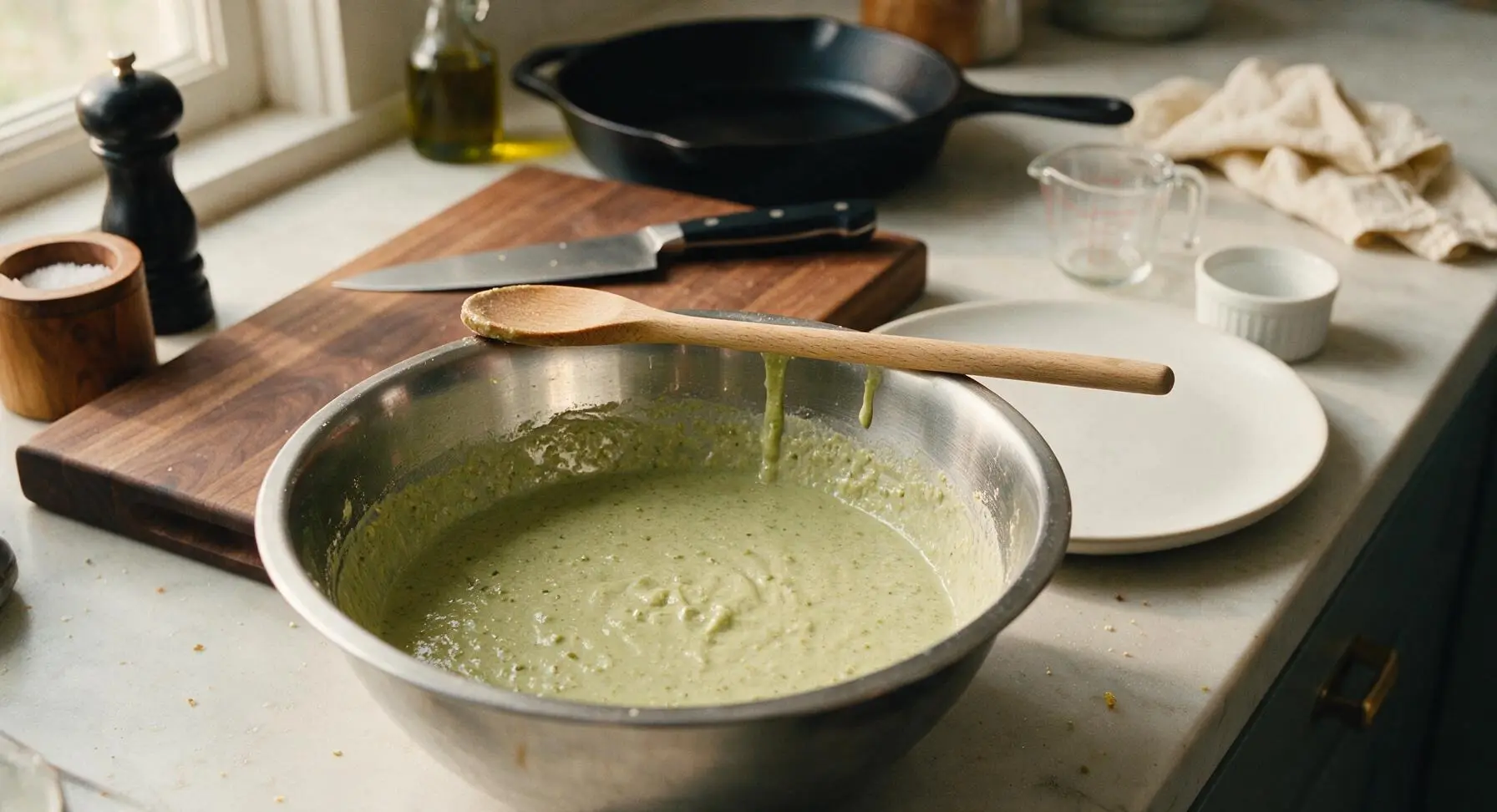
Fold in Mix-ins
Add 100g squeezed finely chopped kimchi, 50g squeezed blanched mung bean sprouts, 2 sliced stalks of green onion, 1 tsp gochugaru, and 2 tbsp all-purpose flour to the mung bean batter in the mixing bowl. Stir thoroughly with the silicone whisk until all ingredients are evenly distributed. Check consistency: the batter should be thick enough to fully coat the back of a spoon; add 1-2 tsp cold water if too thick, or 1 tsp extra flour if too runny to hold a coating.
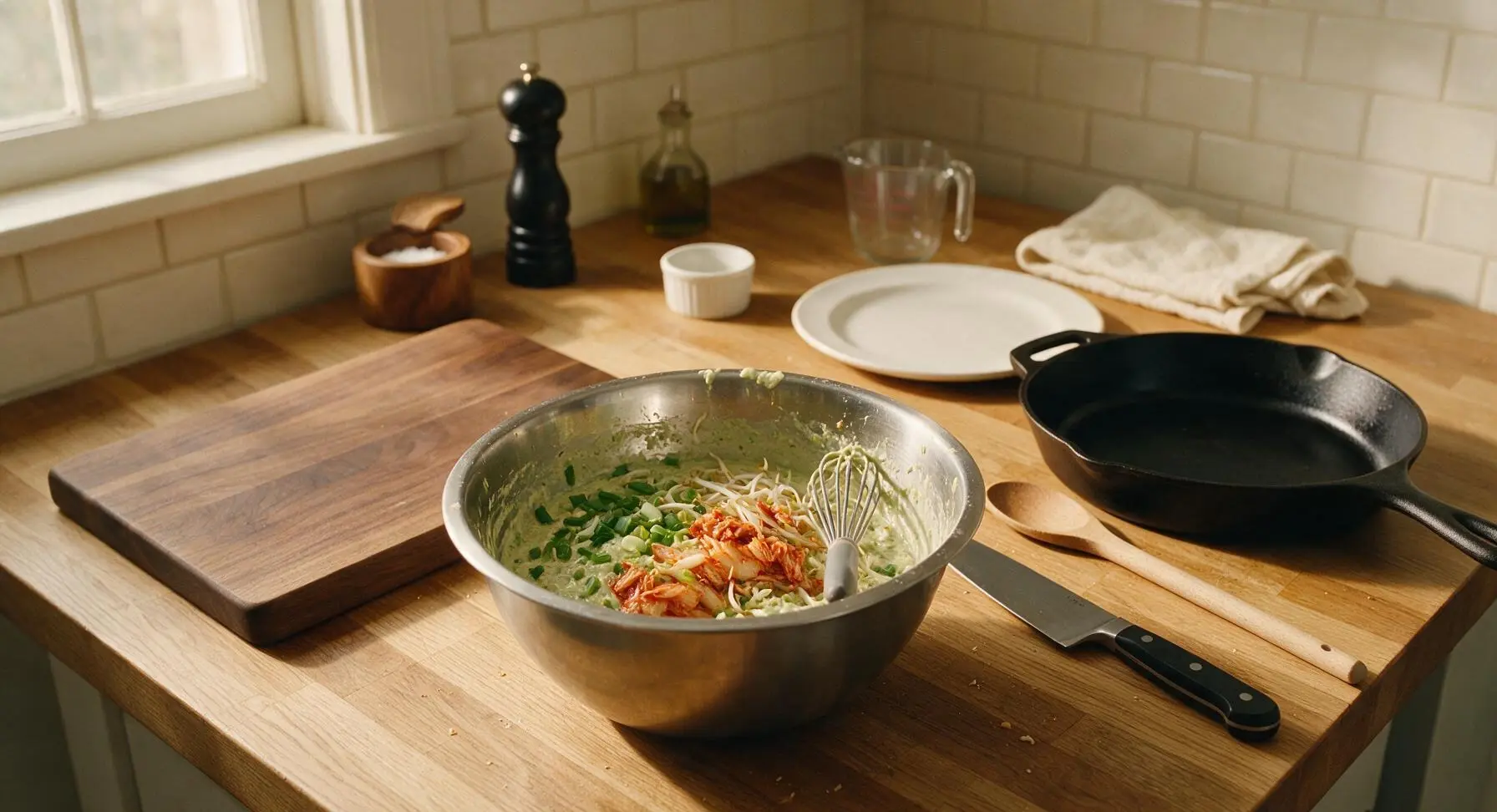
Coat Ribs Evenly
Add the cooled, patted-dry parboiled ribs to the batter bowl, toss gently with the silicone-tipped tongs until every rib is fully covered in a thick, even layer of mung bean batter, pressing vegetable mix-ins onto the rib surface to ensure they stick. Let coated ribs rest in the batter for 5 minutes at room temperature to allow the coating to adhere; no bare patches of rib meat should be visible before frying.
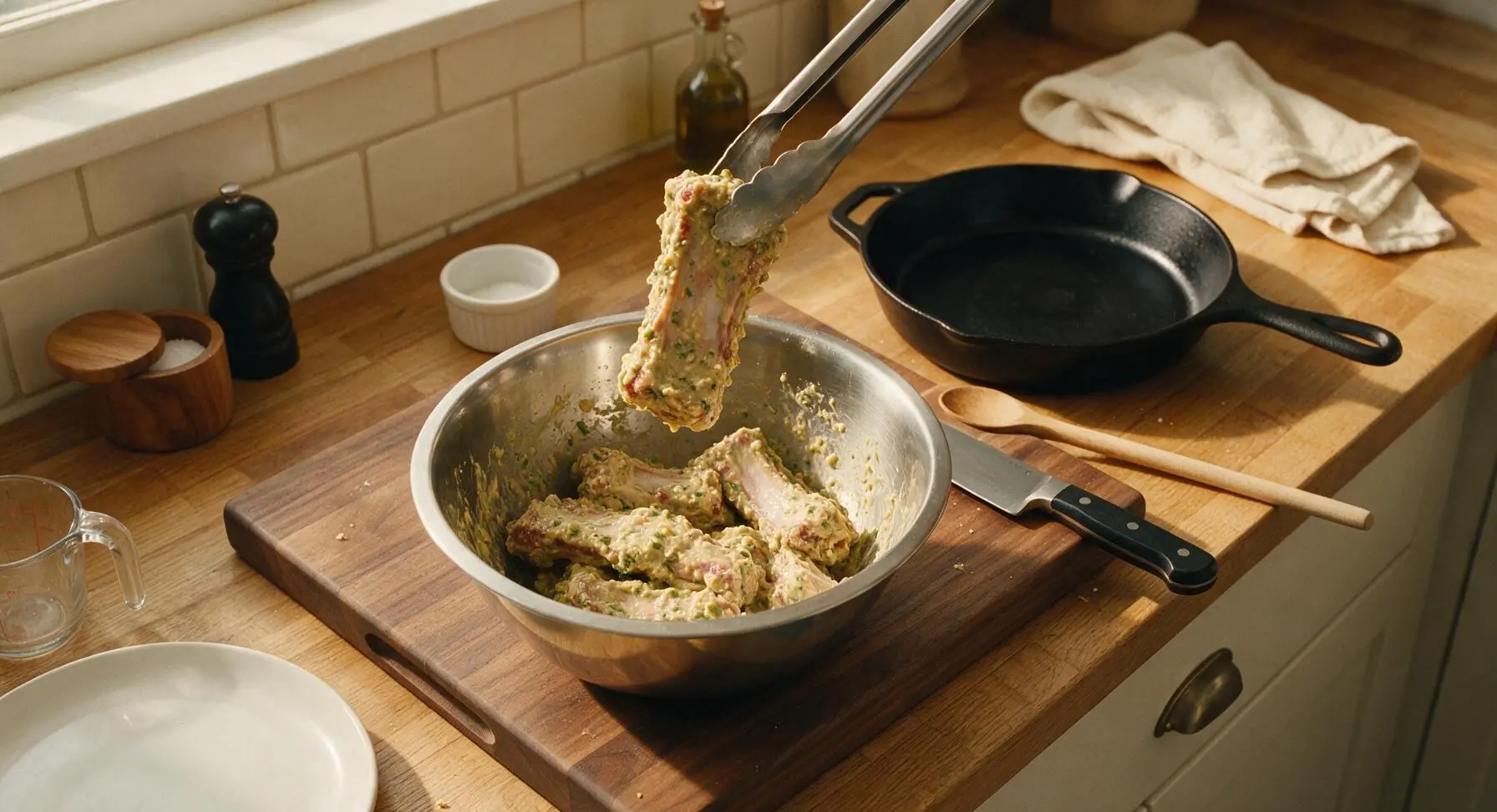
Pan-Fry Until Crispy
Heat 3 tbsp neutral frying oil in the 14-inch carbon steel frying pan over medium heat until the oil shimmers (test with a single drop of batter: it should sizzle immediately and rise to the surface within 2 seconds). Place batter-coated ribs in the pan in a single layer, leaving 2cm of space between each piece to avoid steaming—cook in 2 batches if needed to prevent overcrowding. Fry for 6-7 minutes per side, adjusting heat to medium-low if the crust darkens too quickly, until the mung bean coating is deep golden brown, crispy on all sides, and the internal rib temperature reaches 74C (165F).
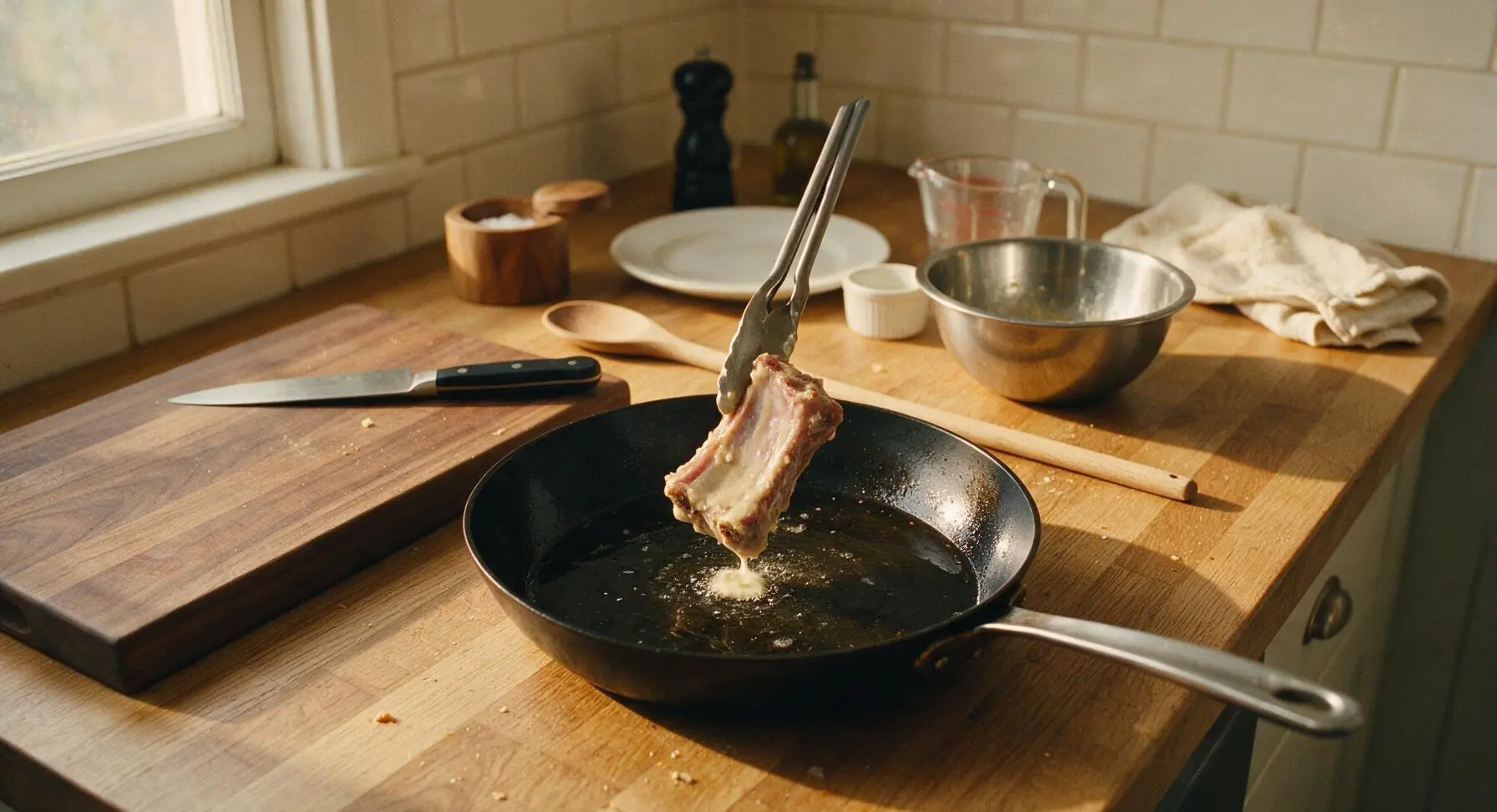
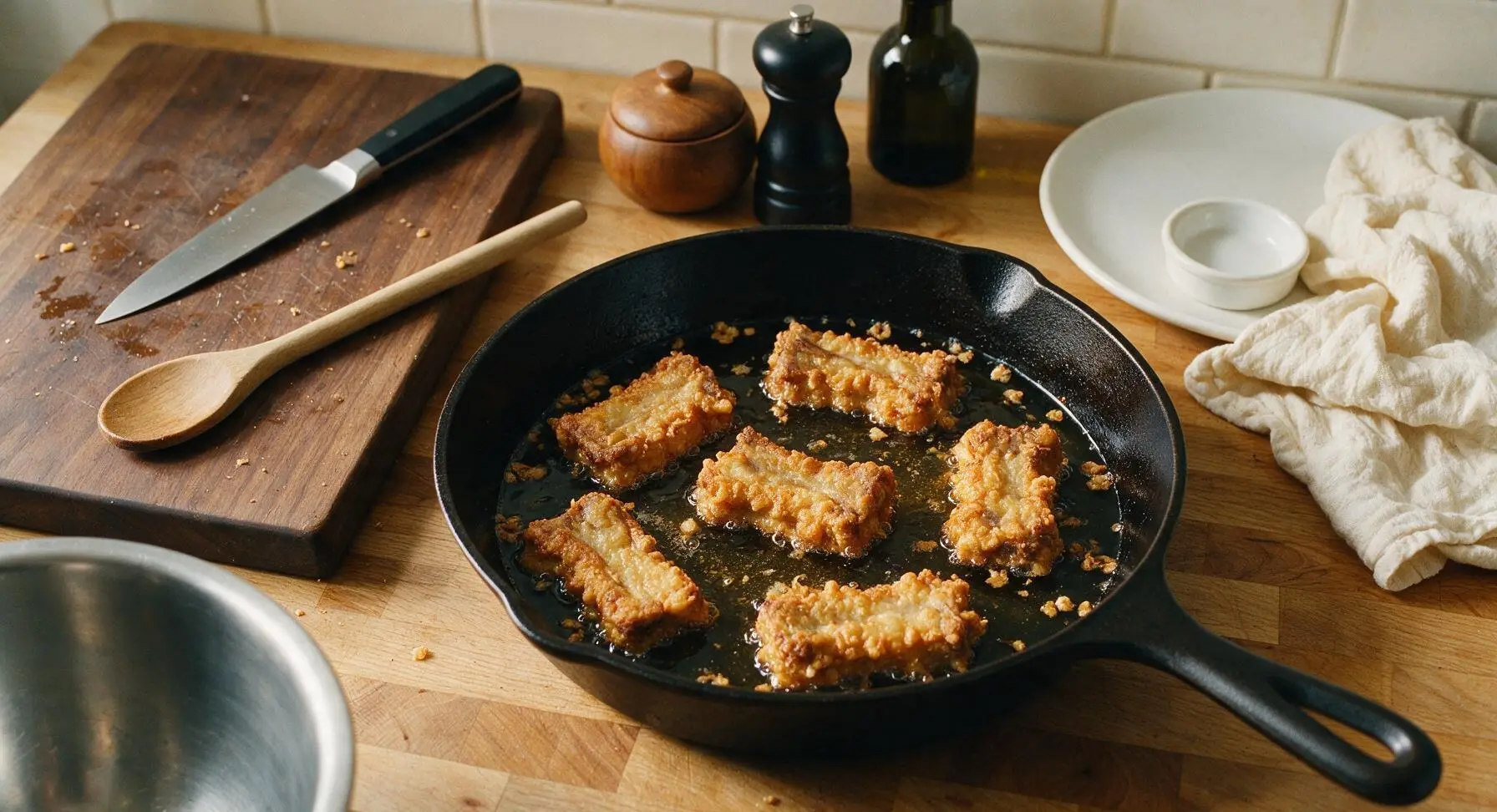
Drain Excess Oil
As each batch of ribs finishes frying, use the tongs to transfer them to the chrome wire cooling rack lined with a layer of white paper towel, set to the right of the frying pan. Let ribs rest for 2 minutes to allow excess oil to drip off and the crust to set fully; do not stack ribs while draining, as trapped steam will make the crispy crust turn soggy.
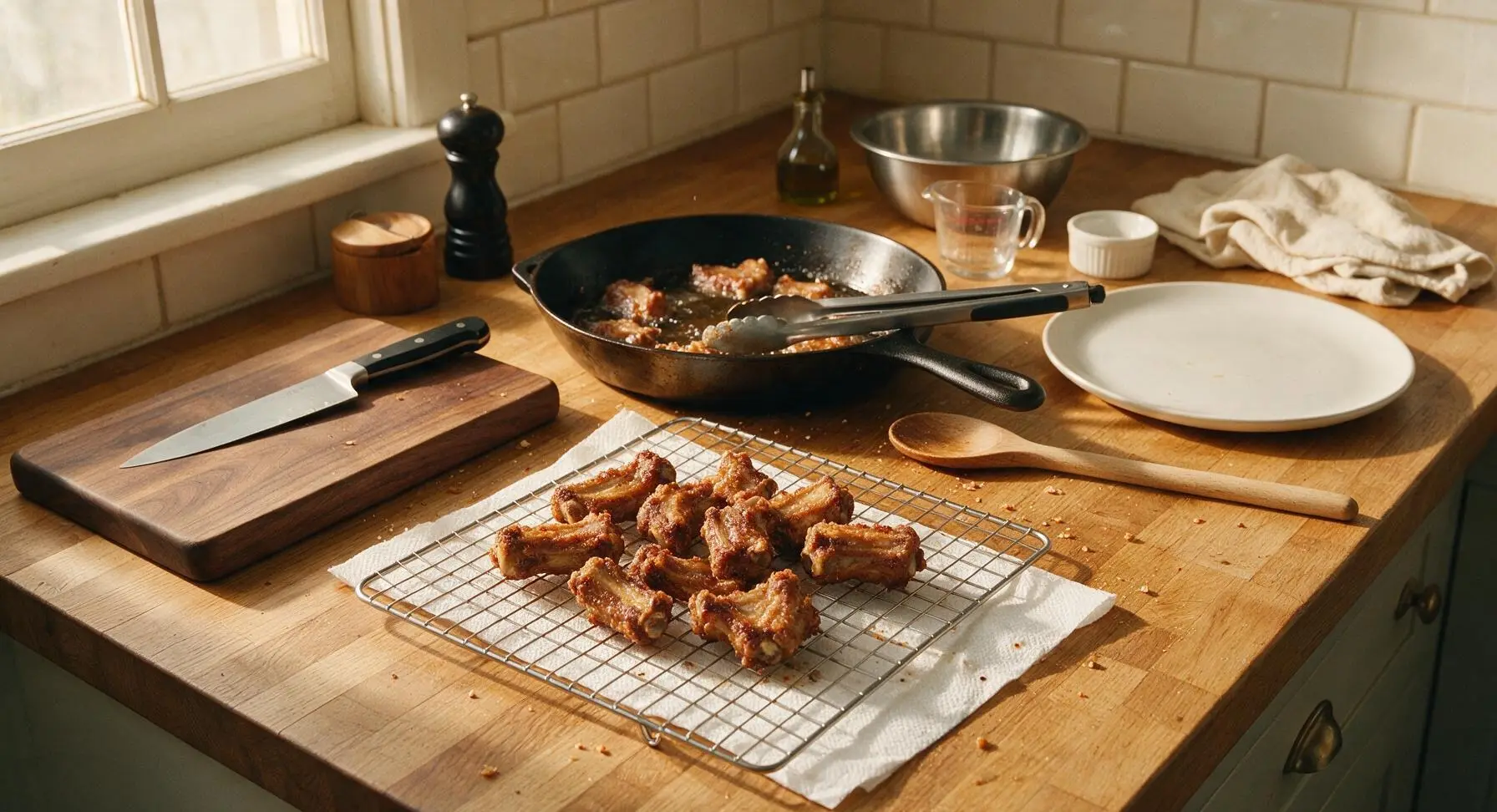
Mix Dipping Sauce
While the final batch of ribs drains, add 3 tbsp soy sauce, 1 tbsp rice vinegar, 1 tsp granulated sugar, 1 tsp toasted sesame seeds, 1/2 tsp gochugaru, and the remaining sliced stalk of green onion to a small bowl. Whisk with the silicone whisk for 30 seconds until the sugar is fully dissolved, then divide the sauce evenly between the four small matte white dipping bowls.
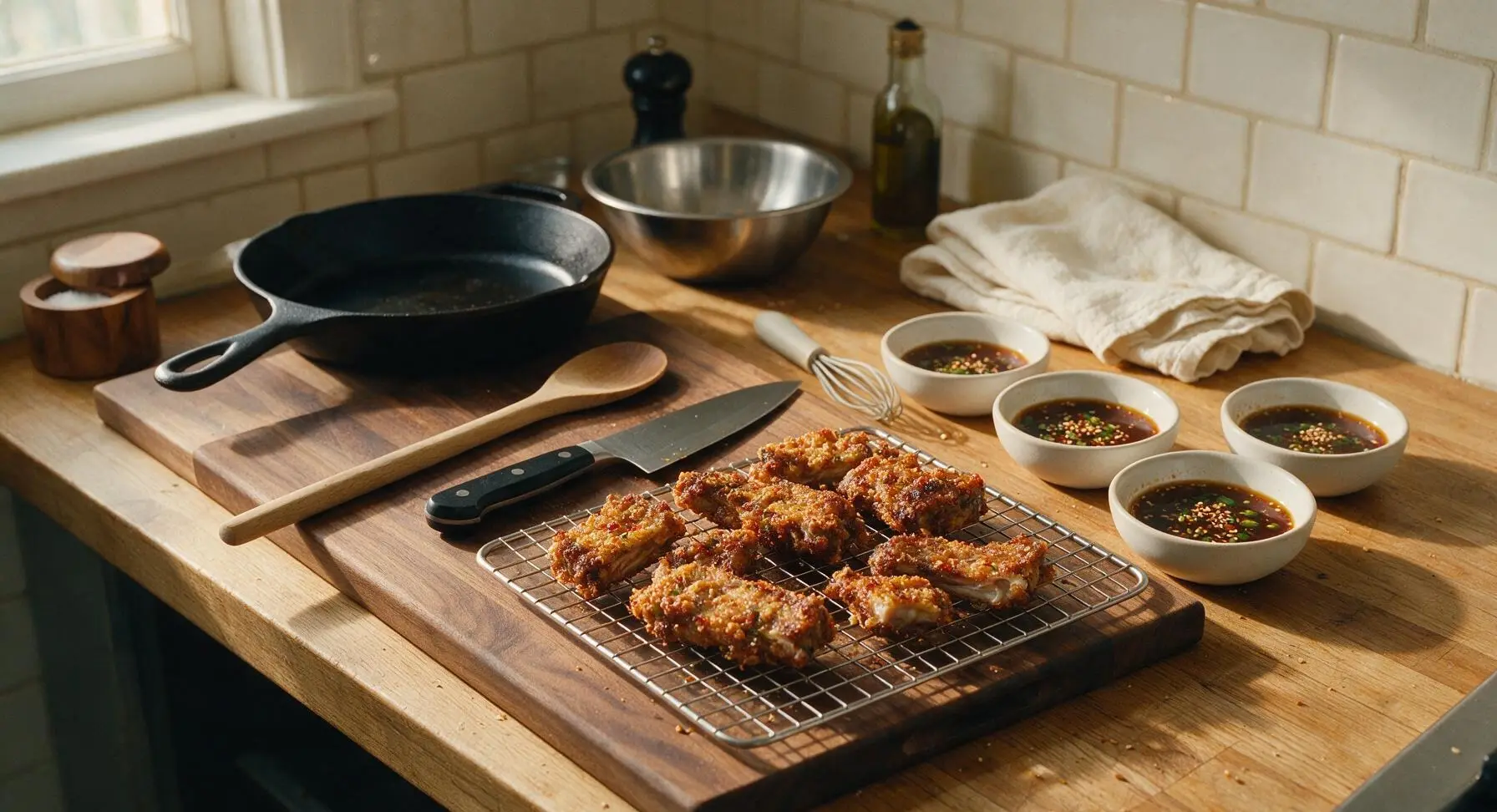
Plate and Serve
Pile the crispy drained ribs in a loose, tall stack on the large matte warm grey ceramic serving platter, sprinkle lightly with extra toasted sesame seeds and sliced green onion for garnish. Arrange the filled dipping bowls around the base of the platter, and serve immediately while the crust is hot and crackly.
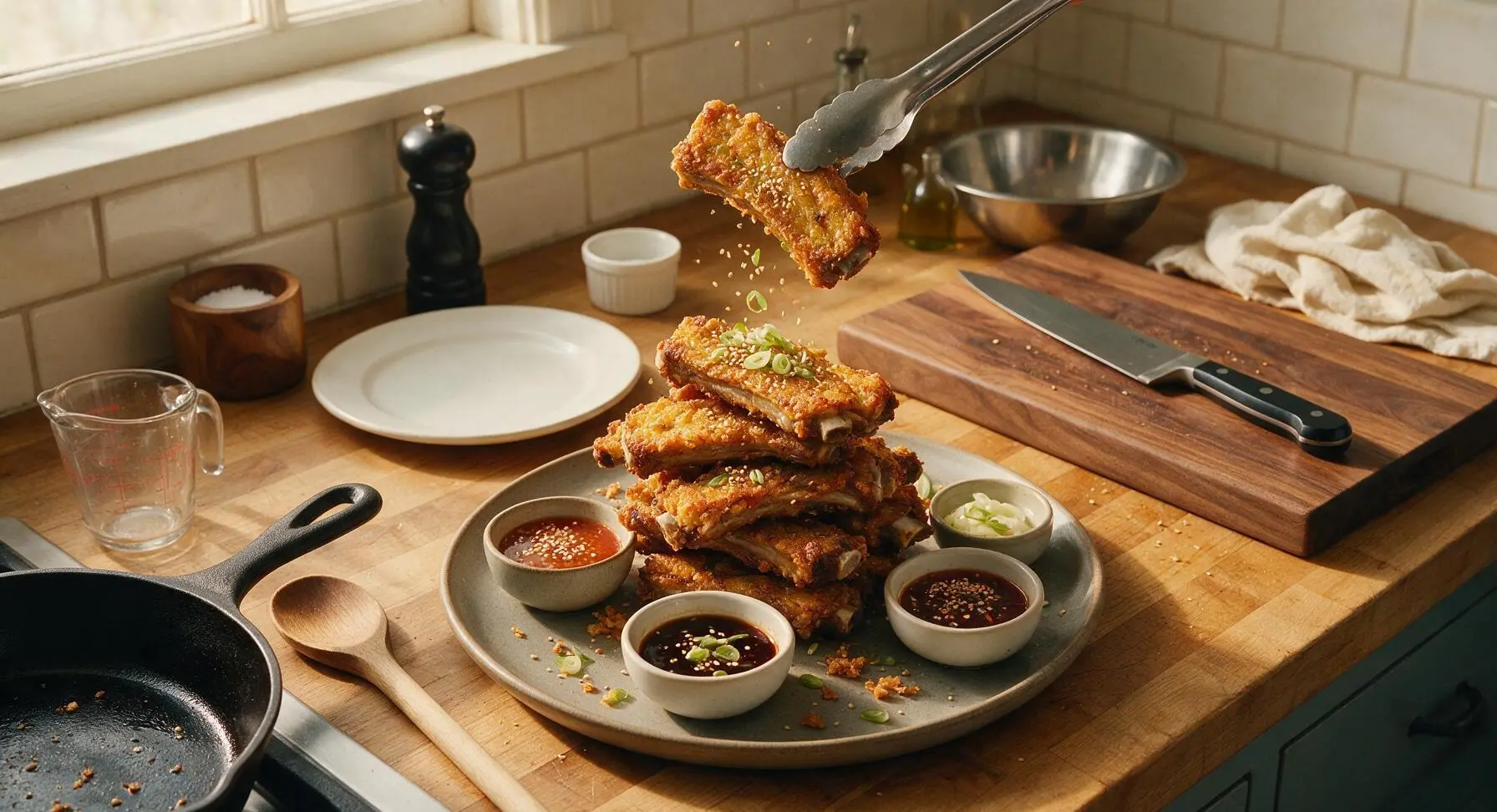
Tips
2.Don’t skip the parboil step for the ribs! Parboiling tenderizes the meat, renders out excess fat, and ensures ribs are fully cooked through by the time the mung bean crust is perfectly golden, so you won’t end up with burnt crust and undercooked ribs.
3.Resist the urge to move the ribs around the pan for the first 4 minutes of frying on each side. Letting the crust set undisturbed helps it stay attached to the rib and develop an even, crackly golden surface instead of sticking to the pan.
OMG these were SO good! I made these for our Sunday family dinner a couple days back and even my super picky 8-year-old asked for seconds. The crispy mung bean crust on the ribs is a total game changer — way more interesting than our usual dry rub ribs. I was worried the medium difficulty level would mean a bunch of fussy, complicated steps, but it came together in right around 45 minutes just like the recipe said! 10/10 will absolutely be making these for our next neighborhood potluck too.
Tried these for my weekly meal prep and they held up way better than I expected! I was scared the crispy coating would get soggy sitting in the fridge all week, but a quick reheat in the air fryer brought all that crunch right back. Only tweak I made: added a little extra gochugaru to the batter because I love extra heat, and it slapped. This is getting added to my regular dinner rotation for sure.
Okay full transparency, I’m a total newbie in the kitchen and I was so intimidated by the medium difficulty rating, but these turned out AMAZING on my first try! I did mess up and let the mung bean batter sit a little too long so it was thicker than it probably should have been, but it still stuck to the ribs perfectly and got so crispy in the pan. My roommate said these taste like something we’d order at that fancy Korean fusion spot downtown. I’m so proud of myself lol
Brought these to our office potluck yesterday and they were gone in 10 minutes FLAT. People were coming up to me asking for the recipe before I even set the platter down! I paired them with the quick pickled radish dip suggested in the recipe notes and that bright tang cut through the rich, crispy rib perfectly. Only thing I’ll do different next time is make a double batch — a single batch was definitely not enough for a crowd.
Made these for a post-hike cookout with friends over the weekend and they were such a hit! The crispy coating didn’t get greasy at all even when I cooked them on my outdoor cast iron skillet, which I was low-key worried about. I did sub a little rice flour into the bindaetteok batter because I ran out of mung bean mix mid-prep, and it still turned out great, but I can tell it’ll be even nuttier with the full mung bean amount next time. Super clear instructions, great recipe!