
Seolleongtang Ribs
intro
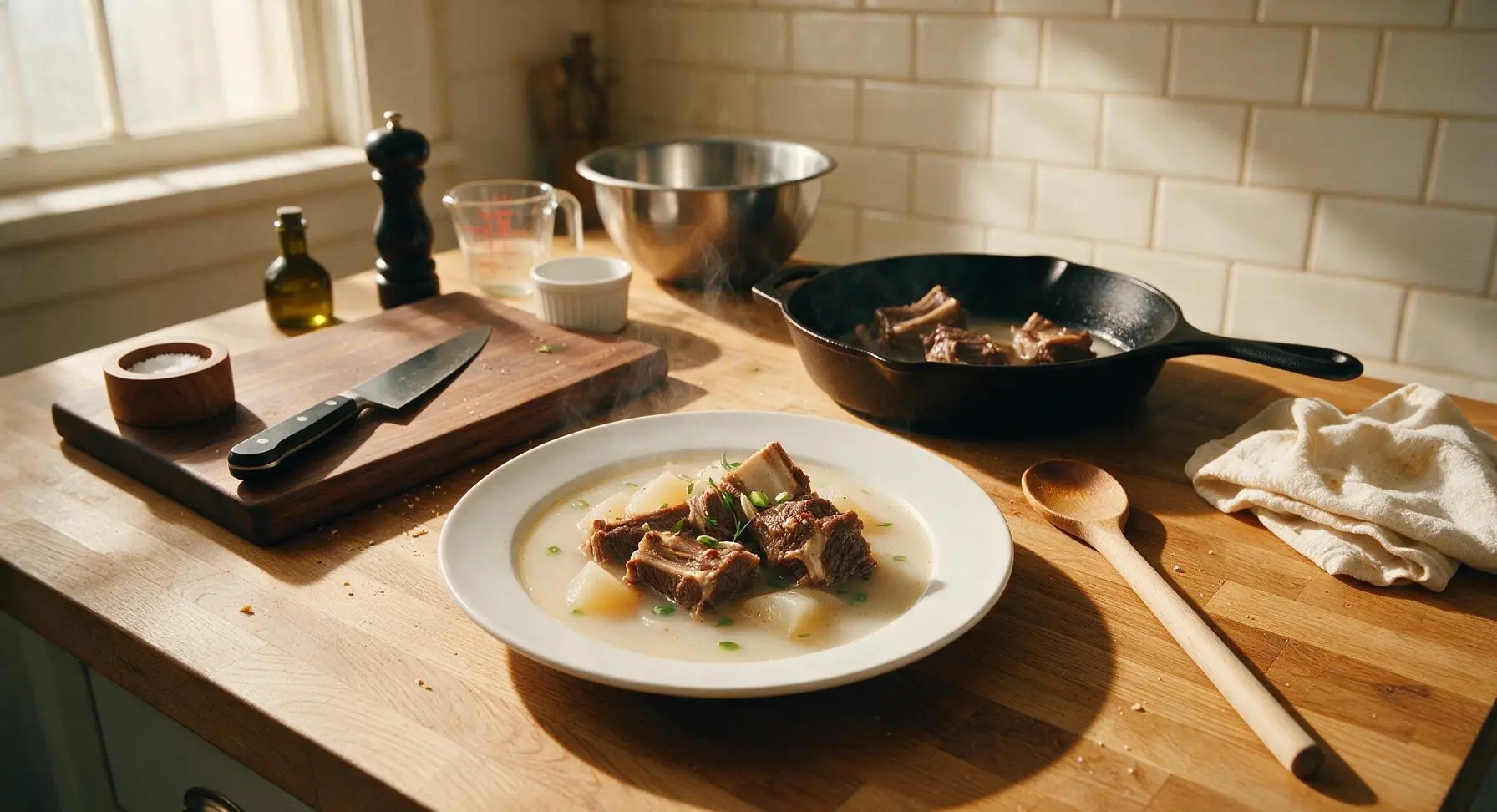
Silky, milky slow-simmered beef soup with tender fall-off-the-bone short ribs and sweet radish, a beloved Korean comfort dish perfect for cold winter days.
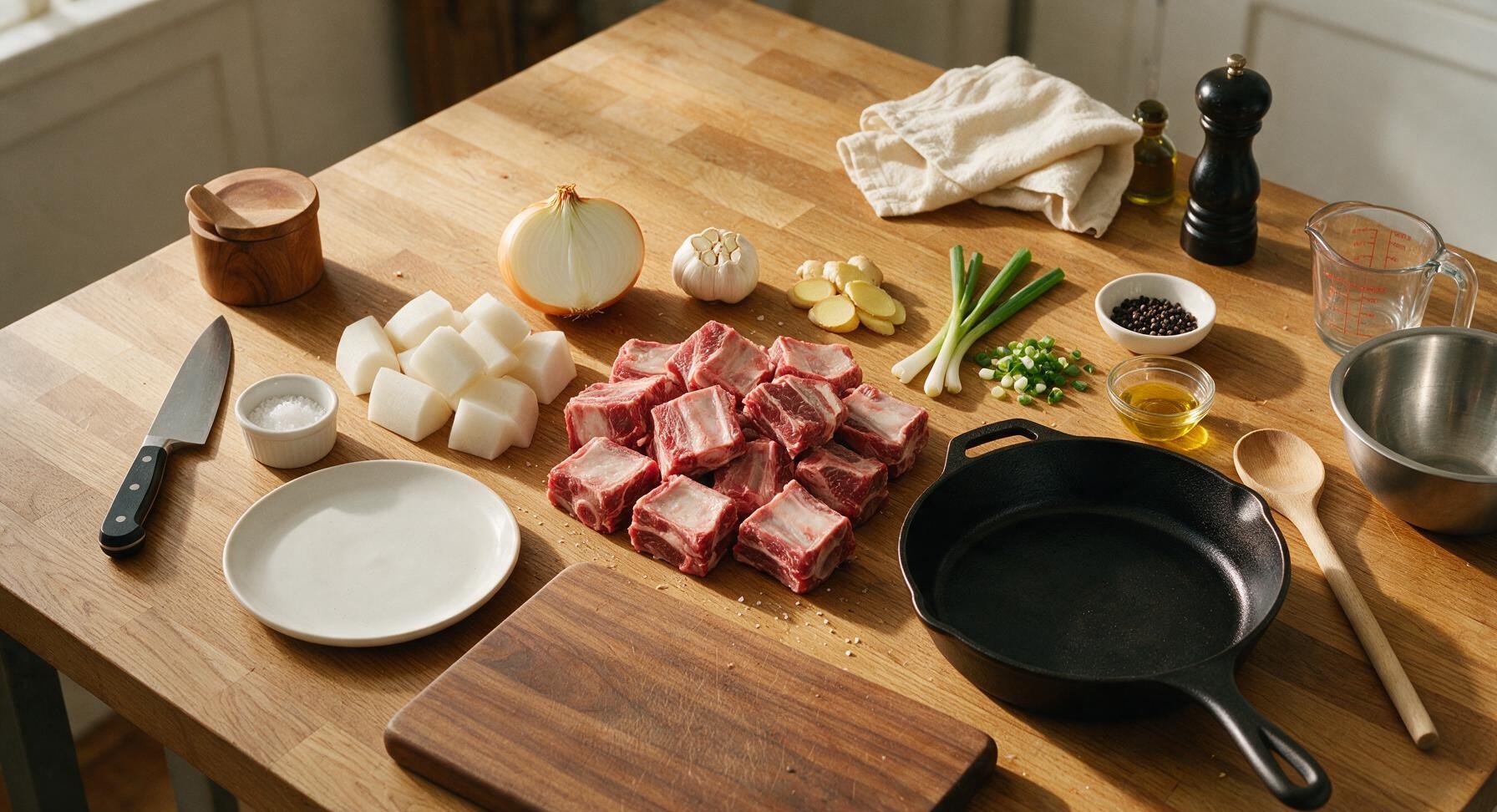
Ingredients
Steps
Prep and soak ribs
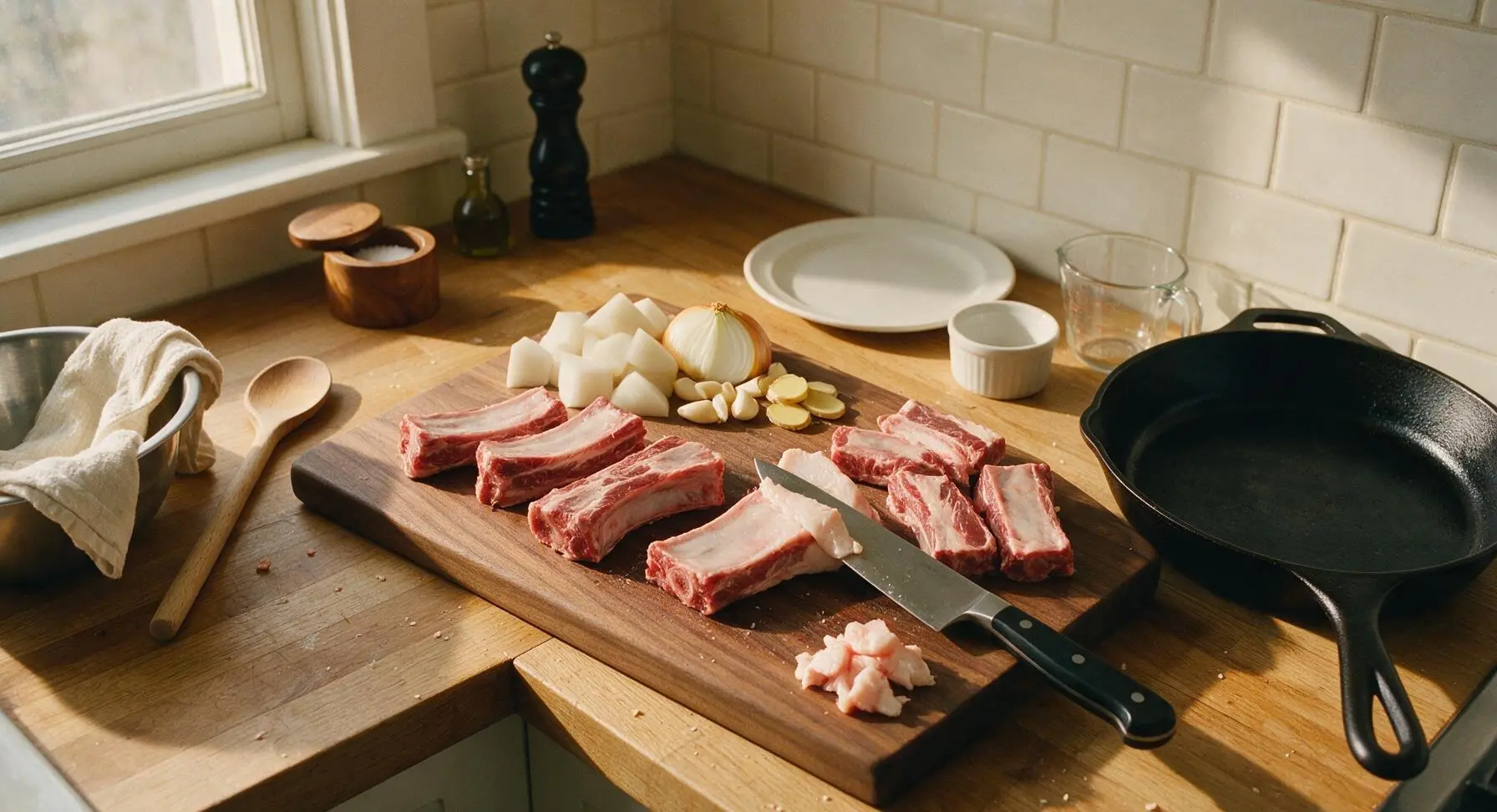
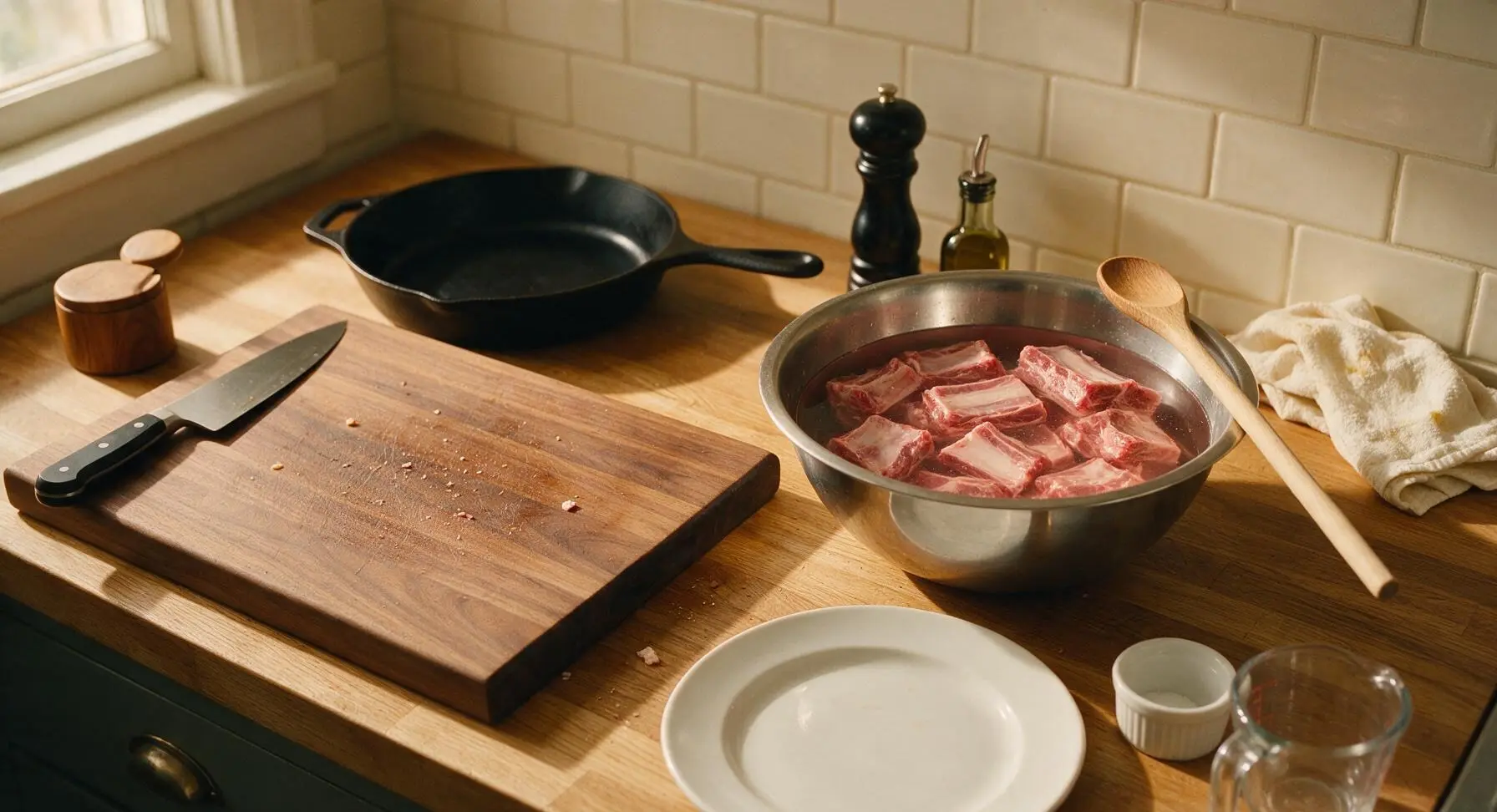
First, trim any excess thick hard fat from the short ribs using the chef’s knife on the oak cutting board, leaving a thin 3mm layer of fat for flavor. Place the trimmed ribs in the medium stainless steel mixing bowl, cover completely with cold tap water, and stir in 1 teaspoon coarse sea salt. Let soak for 1 hour at room temperature, draining and refilling with fresh cold water every 20 minutes, until the water remains completely clear with no pink blood leaching. Drain ribs fully once done; this step prevents cloudy, off-flavored broth. While ribs soak, peel and cut the Korean radish into 5cm chunks, halve the onion (leaving golden skin on for deep color), trim the top of the garlic head to expose cloves, and slice ginger into 1cm coins.
Blanch the short ribs
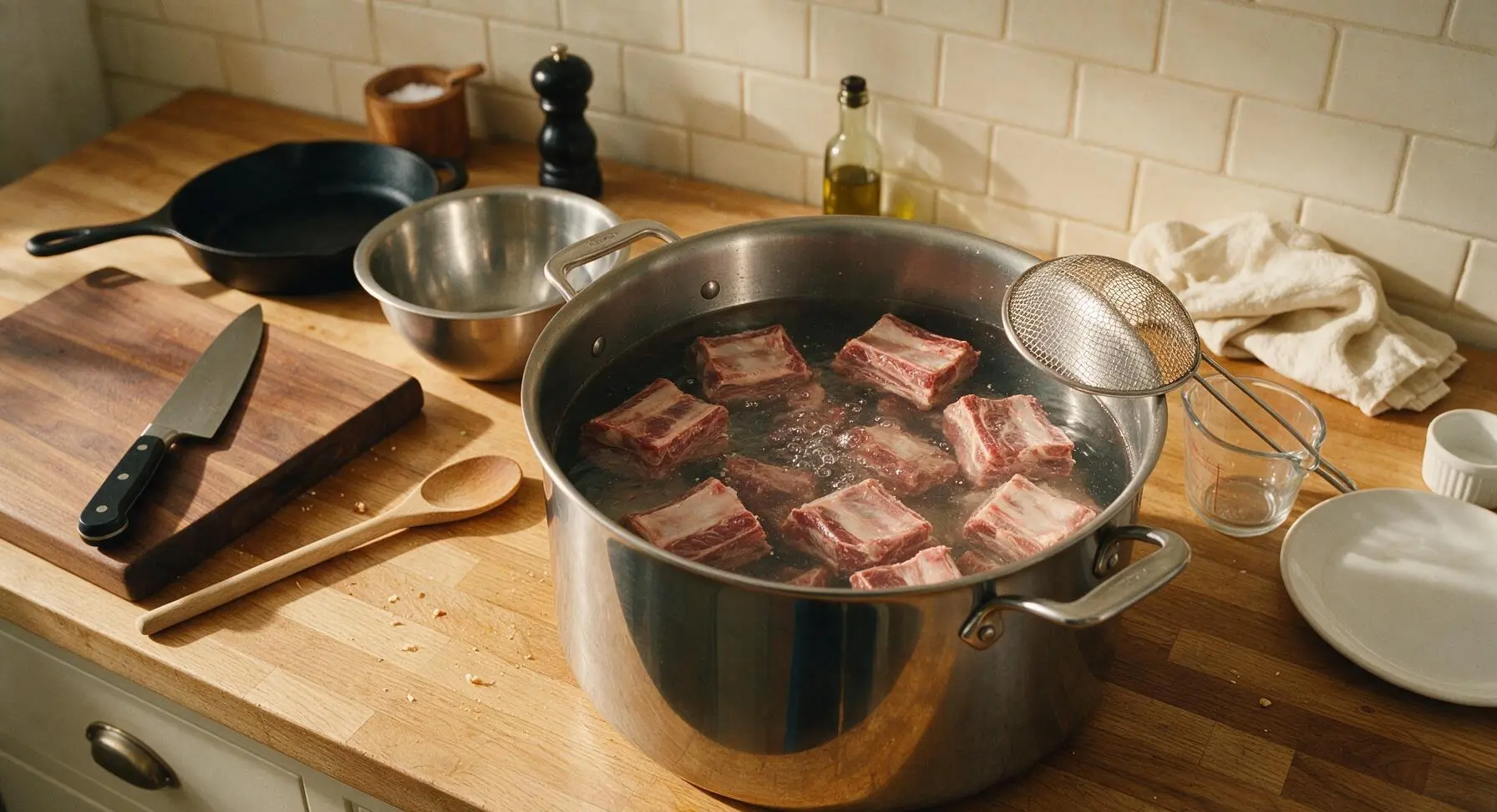
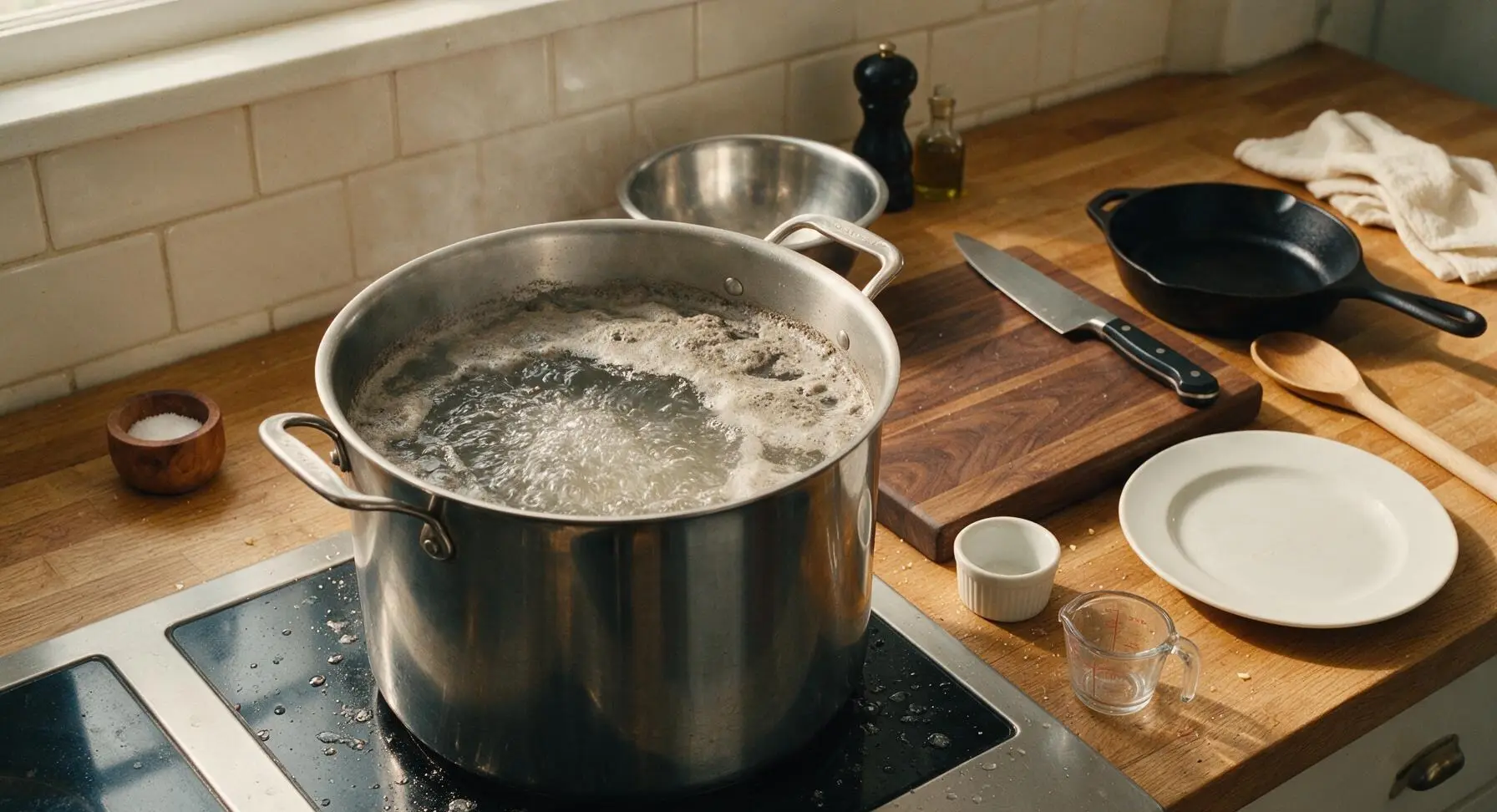
Transfer the drained soaked ribs to the 12-quart stainless steel stock pot, cover with 4 liters of cold water, and bring to a rolling boil over high heat. Once boiling, cook for exactly 10 minutes, until thick gray foam and scum rise steadily to the surface. Drain ribs completely, discarding all blanching water, and rinse each rib under cold running water to wash off any clinging scum. Wash the stock pot thoroughly with hot soapy water to remove all stuck-on residue before returning ribs to it; this ensures a clear, clean-tasting broth.
Slow-simmer the broth
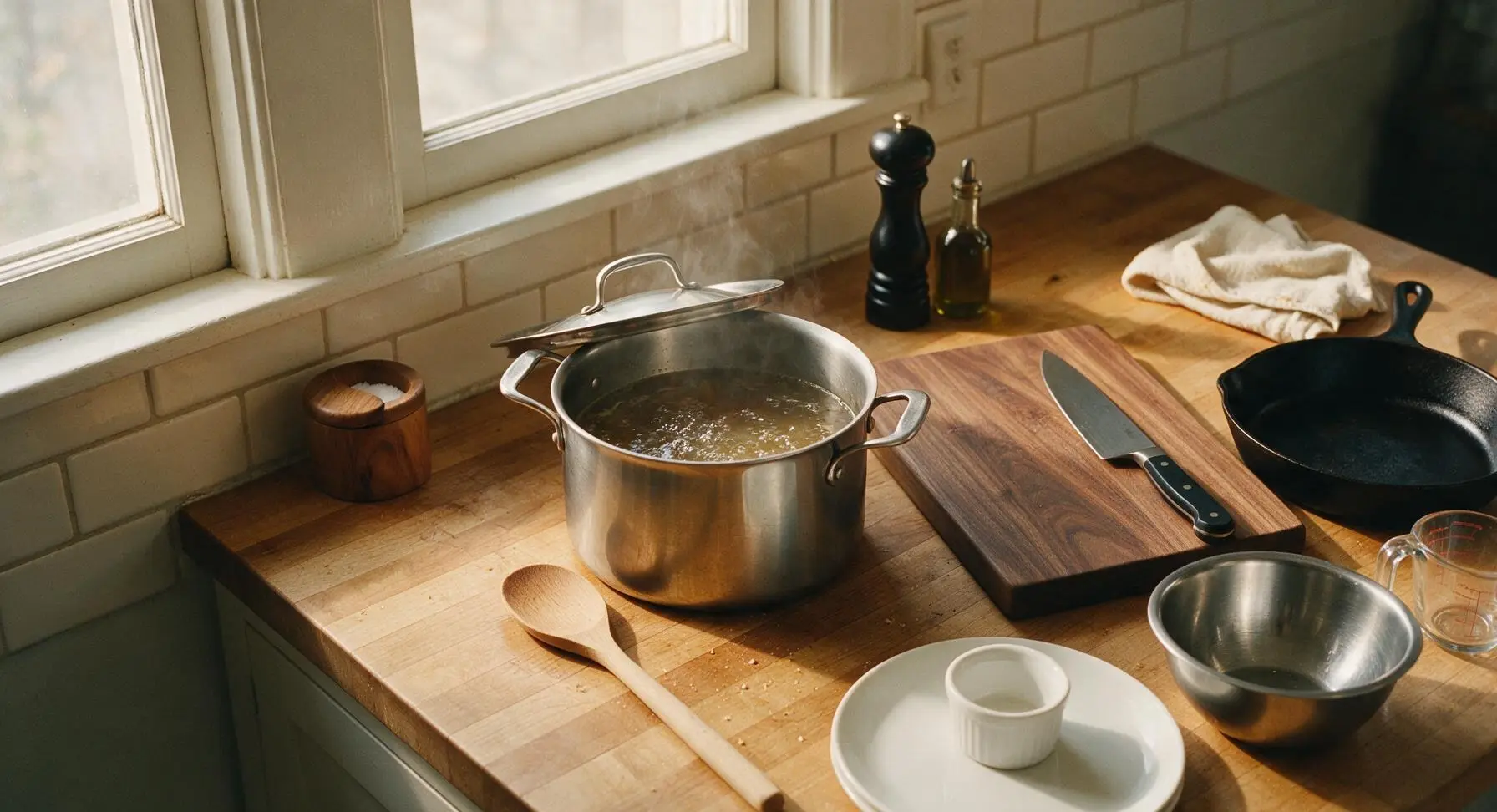
Return the rinsed blanched ribs to the clean stock pot, add 5 liters of fresh cold water, the halved skin-on onion, whole garlic head, sliced ginger, 2 whole scallions, and 1 teaspoon whole black peppercorns. Bring to a gentle rolling boil over medium-high heat, then immediately reduce heat to medium-low to maintain a soft, constant simmer (a hard, rolling boil will emulsify fat and make the broth greasy and cloudy). Partially cover the pot with the lid, leaving a 2cm gap for steam to escape, and simmer for 3 hours, topping up with ½ cup hot water every 45 minutes if the liquid level drops below the top of the ribs.
Add radish to simmer
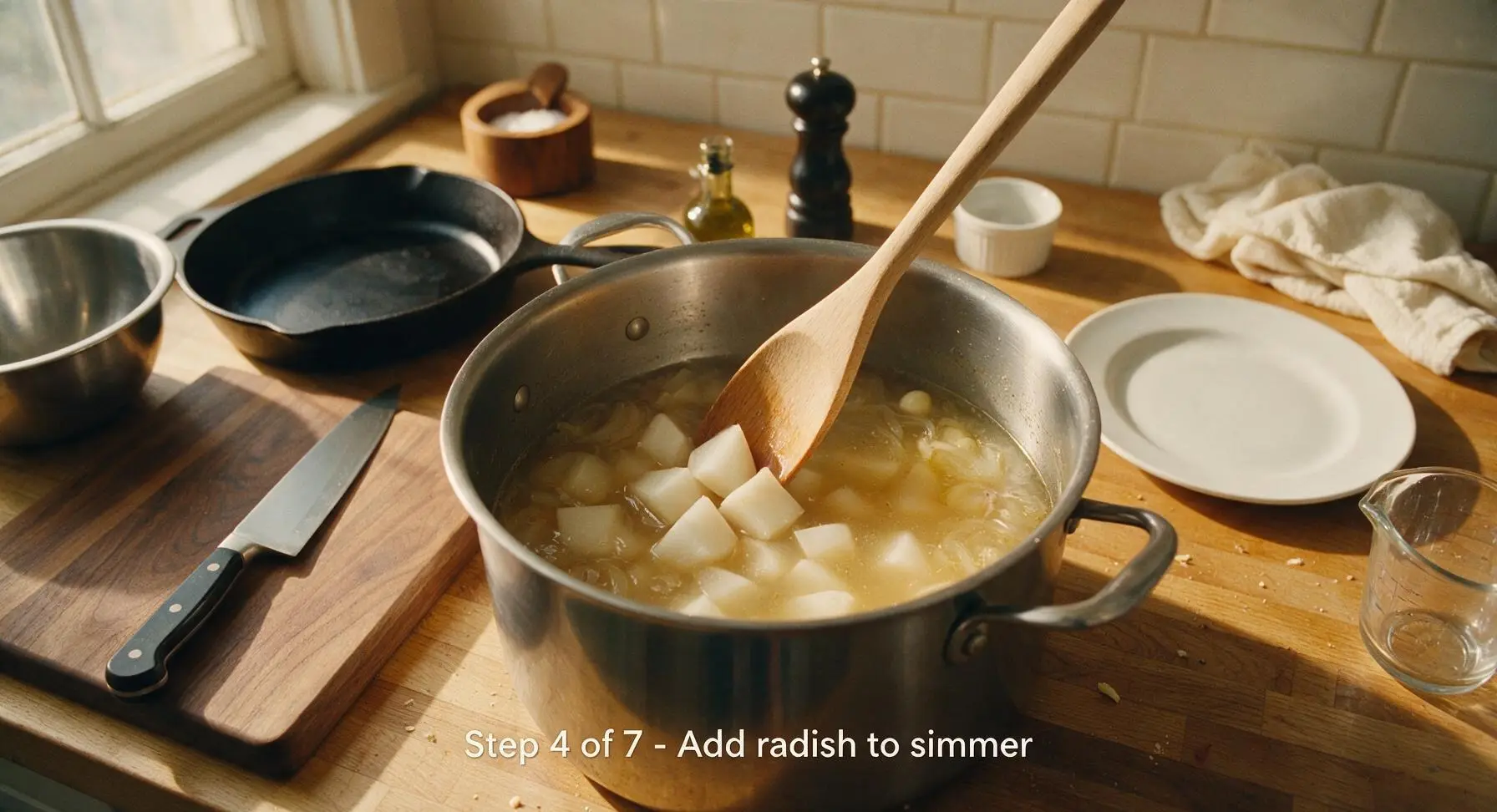
After 3 hours of simmering, add the peeled 5cm thick Korean radish chunks to the pot, stirring gently with the beech wood spoon to fully submerge them in the broth. Continue simmering, partially covered, for another 30 minutes, until the radish is easily pierced with a fork and the broth has turned a rich, opaque milky ivory color from dissolved bone collagen and marrow.
Strain and season broth
Turn off the heat. Use the fine-mesh skimmer ladle to lift out and discard the spent onion, garlic, ginger, and whole scallion stalks. Carefully lift the tender short ribs and radish chunks out of the broth, setting them temporarily on the clean oak cutting board. Pour the remaining broth through the 20cm fine-mesh conical strainer back into the cleaned stock pot to catch any small bone fragments, peppercorns, or sediment. Return ribs and radish to the strained broth, stir in 1 tablespoon of coarse sea salt, then taste and adjust salt as needed; the broth should be deeply savory, not overly salty.
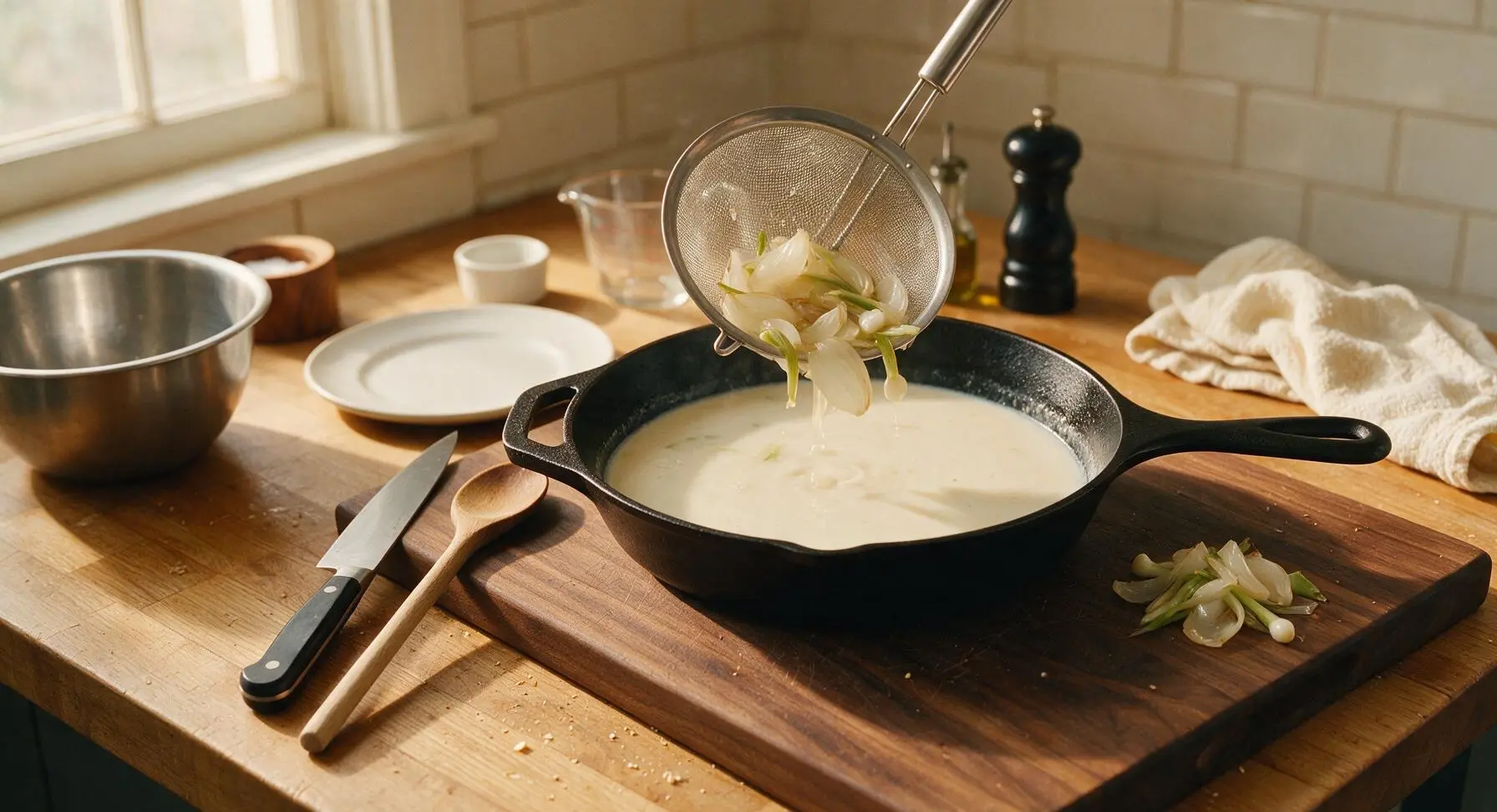
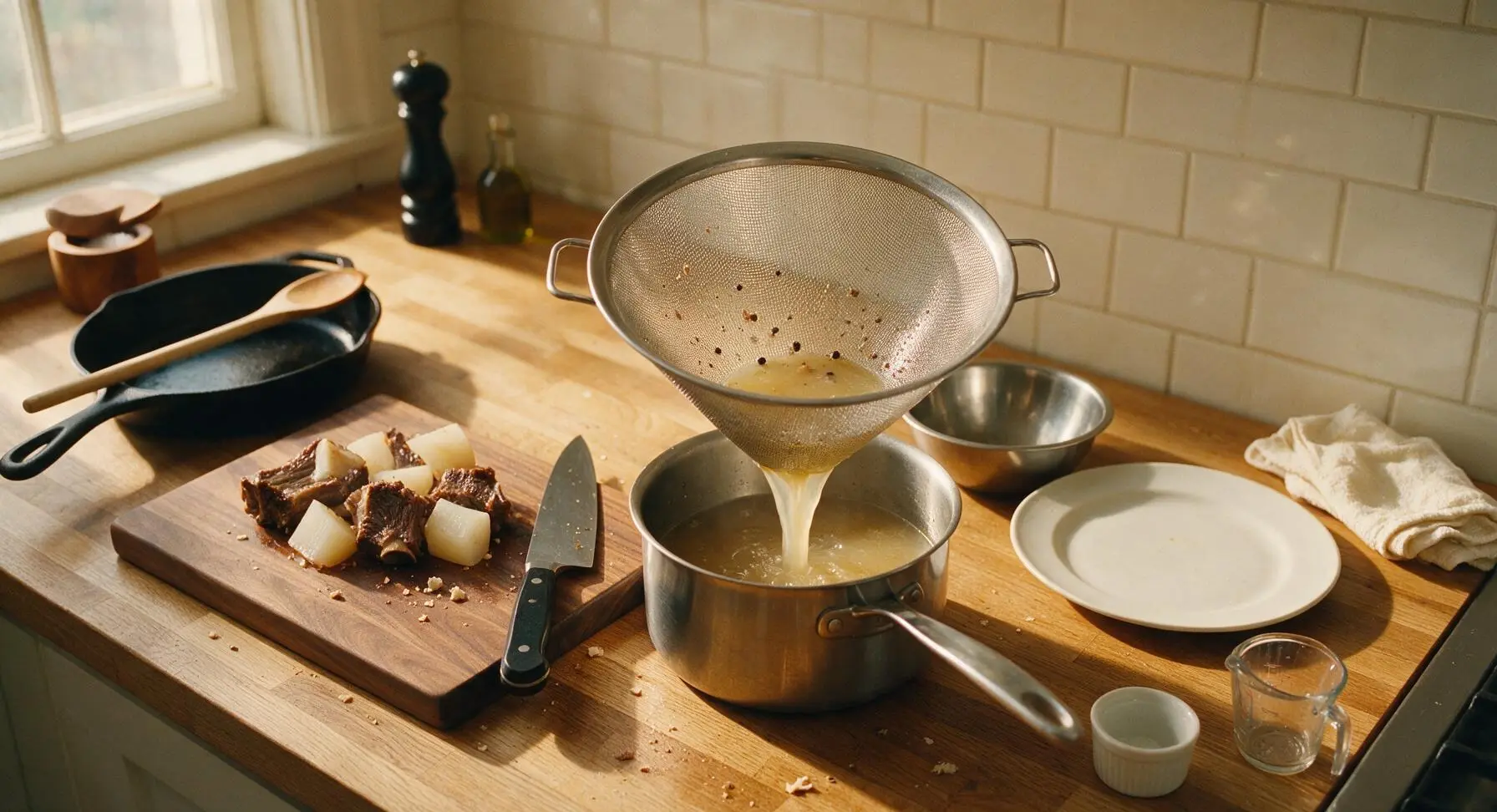
Prep serving garnishes
Let the seasoned broth rest for 5 minutes to allow any remaining fine sediment to settle to the bottom of the pot. While it rests, finely chop the reserved 2 scallion stalks on the oak cutting board using the chef’s knife. Portion the chopped scallions into one small cream ramekin, add extra coarse sea salt to a second ramekin, and set the toasted sesame oil within easy reach for diners to add to taste. Test rib tenderness: the meat should pull easily from the bone with light fork pressure, but not fall off completely.
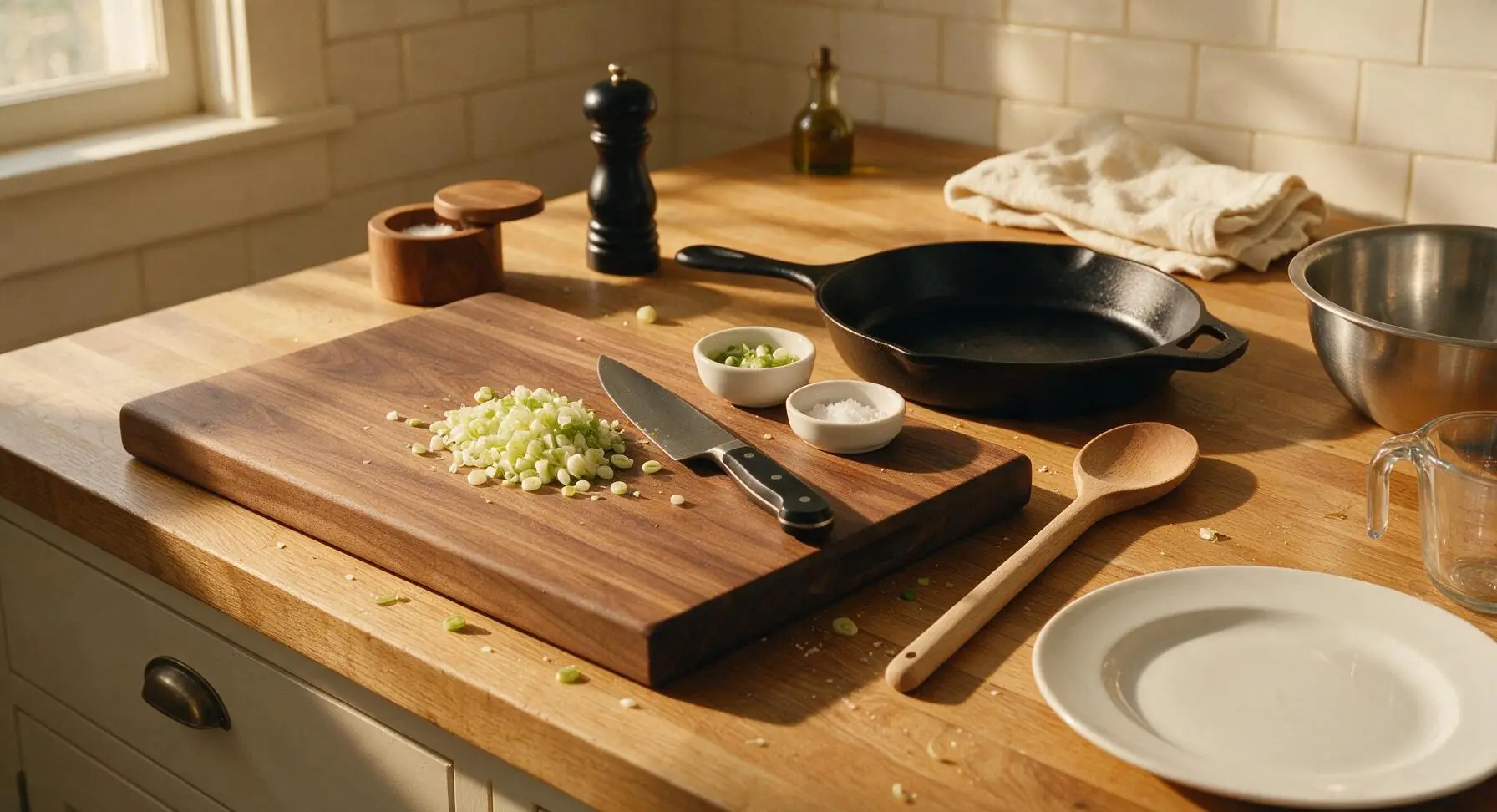
Ladle and serve hot
Ladle 2 to 3 tender short ribs, 2 to 3 radish chunks, and 2 cups of hot milky broth into each cream white ceramic deep soup bowl. Top each bowl with a generous pinch of chopped scallions, and serve immediately with extra salt, freshly ground black pepper, and toasted sesame oil on the side. Seolleongtang is traditionally paired with steamed white rice and cubed radish kimchi for a full, comforting meal.
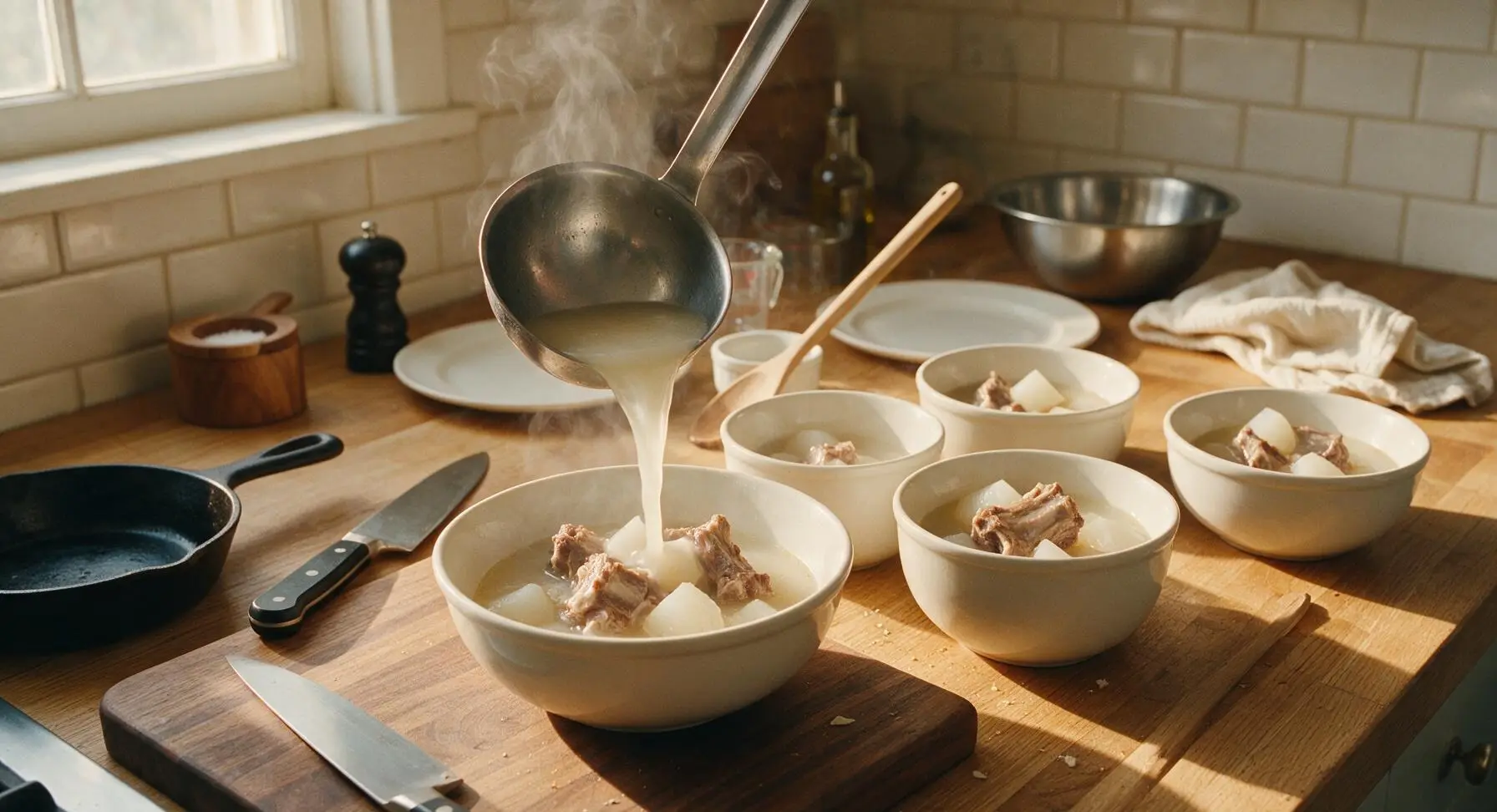
Tips
2.Do not skip the soaking and blanching steps: These passive steps draw out residual blood and surface impurities from the ribs that cause cloudy, bitter, metallic-tasting broth, even though they add a small amount of total time to the recipe.
3.Serve seasonings on the side for diners to customize: Seolleongtang has a delicate, deep beef flavor that is easy to over-salt when seasoning the whole pot, so offering extra salt, fresh scallions, black pepper, and sesame oil at the table lets everyone adjust their bowl to taste.
OMG these seolleongtang ribs were a total game changer for our Sunday family dinner! I was worried the 4 hour cook time would be too much, but I threw them on while we watched football and the whole house smelled incredible. My 7 and 9 year old, who turn their nose up at literally anything that isn’t chicken nuggets, went back for SECONDS. 10/10 will be making this all fall and winter.
Wait, I’ve only ever had seolleongtang as the milky soup at KBBQ spots, I had no idea you could make the ribs as a standalone dish like this! Cook time is 4 hours so I’m saving this for my next lazy Saturday when I don’t have plans. Quick question—can I use a regular stock pot instead of a pressure cooker for this? I don’t have any fancy equipment.
Made these for my partner’s birthday potluck with his work friends last weekend and everyone was begging for the recipe! I was a little intimidated because I’ve only made easy Korean dishes like tteokbokki before, and the medium difficulty rating made me nervous, but the steps were way more straightforward than I thought. The meat was so tender it slid right off the bone, and that deep, savory broth? *Chef’s kiss*
SO good. I made a big batch on Sunday for meal prep and ate this for lunch all week, it somehow got even more flavorful each day. I paired it with some white rice and kimchi on the side, and my coworkers kept stopping by my desk asking what smelled so good. Only note: I added a little extra garlic because I’m a garlic fiend, highly recommend.
Tried making this last night and the broth didn’t turn that creamy milky color like the photos show? Did I skip a step? I simmered it for the full 4 hours like the recipe said, but it was still pretty clear. Flavor was still great, but I missed that rich seolleongtang texture I get at my local K-town spot.
My grandson has been begging me to make Korean food ever since he came home from college, so I picked this recipe to try for our Sunday supper. Let me tell you, I’ve been cooking for 50 years and these ribs might be the best thing I’ve ever made! The meat just melts in your mouth, and we sopped up every last drop of the broth with crusty bread. Who knew 4 hours of slow simmering could make something so magical?
Game. Changer. I brought these ribs to our neighborhood block party last weekend and they were gone in 15 minutes. People were coming up to me for hours asking where I got the recipe, I felt like a celebrity! I will say, the 4 hour cook time is no joke, so block off your afternoon if you’re making these—totally worth every minute though.
As a broke college student with barely any cooking skills, I was shocked this turned out as good as it did! I split the cost of the ribs with my roommates, we let it simmer on our beat up old stove while we studied for midterms, and we ate like kings for two nights. Way better than the instant ramen we usually live on. 10/10, even beginner cooks can nail this if you’re patient enough for the long cook time.
Loved the base recipe! I added a big spoonful of gochugaru and some sliced jalapenos to my bowl to give it a little kick, and it was chef’s kiss. If you’re a spice wimp you can skip it, but for anyone who loves heat, that little addition takes this to the next level. Definitely a new cold weather staple in my house.
Made these for our post-hike dinner last weekend after a long 8 mile trek in the Rockies, and let me tell you, nothing hits better than a warm, savory bowl of these ribs and broth after being out in the cold. I prepped all the ingredients the night before so all I had to do when we got home was turn the stove on, full transparency though—I transferred everything to my pressure cooker when we got home and it cut the cook time in half, whoops. Still turned out perfect though!
My wife is Korean American and she’s been craving the seolleongtang her halmeoni used to make ever since we had our baby a few months ago. I’ve been nervous to try making it because I didn’t think I could live up to her grandma’s cooking, but I followed this recipe exactly and she teared up after the first bite. Said it tasted exactly like home. Can’t thank you enough for this recipe, it’s going to be a regular in our rotation for sure.
Okay, full transparency: I burned the first batch because I got sucked into a Netflix show and forgot to check the pot. But the second batch? *Chef’s kiss.* Even my roommate who hates all “fancy non-American food” (his words, not mine) had two servings. Moral of the story: set a timer so you don’t burn it, and it’s so good even the pickiest eaters will love it.
I’ve tried seolleongtang at every Korean restaurant within 30 minutes of my house and these ribs are better than 90% of them. The depth of flavor is insane, you can tell the long simmer time really builds that rich, umami taste. I paired it with some pickled radish and rice, just like they do at the restaurants, and it felt like I was eating out at my favorite spot for a fraction of the cost.
Wait, hold up—has anyone tried making this with beef back ribs instead of the short ribs the recipe calls for? My grocery store was out of short ribs when I went shopping today but they had a ton of back ribs on sale, and I don’t want to make a separate trip. Will it still turn out okay?
I know this is Korean food and all, but I tossed a little lime and chili powder on my ribs when they were done and it slapped. Don’t @ me. The rich, savory broth pairs so well with a little bright citrus kick, trust me on this. I’ll definitely be experimenting with different toppings next time I make a batch.
Finally made this last night after seeing all the rave reviews here and y’all were NOT lying. It’s so cozy and rich, perfect for the cold rainy weather we’ve been having here in Seattle. My only regret is not making a double batch because we ate almost the whole pot in one sitting. No leftovers for lunch today, which is a total bummer.