Korean Tteokguk (Rice Cake Soup)

title 1
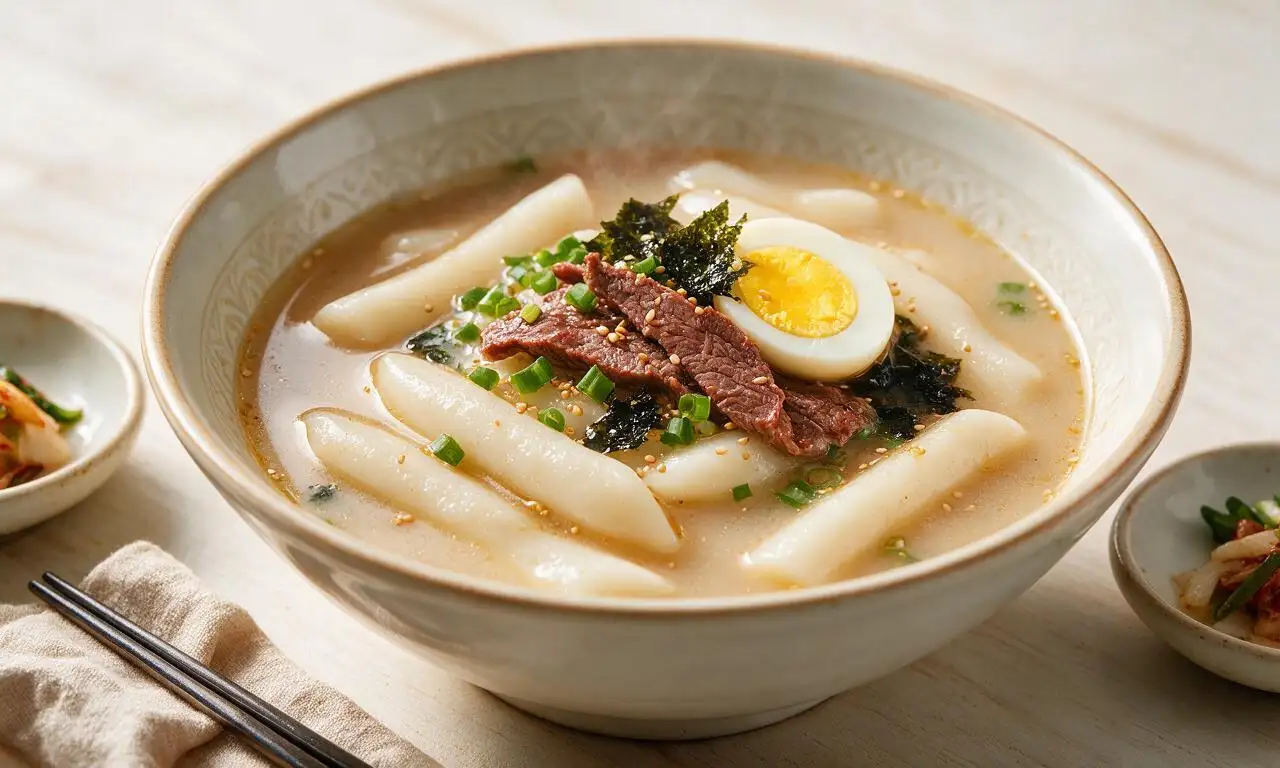
Korean Tteokguk (Rice Cake Soup)
⏱️ cook time 35 minutes
🍽️ servings 4
⚡ Difficulty easy

intro

Warm, chewy, and deeply savory, this traditional Korean rice cake soup is a beloved Lunar New Year staple served to bring good luck in the year ahead.

Ingredients

Sliced Korean rice cakes (garaetteok, fresh or thawed frozen) 500g (approx 4 cups sliced)
Beef brisket (trimmed, cut into 0.5cm thin bite-sized pieces) 200g
Low-sodium beef broth 1900ml (8 cups)
Large eggs (well beaten) 2 (approx 100g total)
Scallions 3 stalks (60g, 1 sliced thin for soup, 2 chopped for garnish)
Garlic (minced) 3 cloves (15g)
Roasted seasoned seaweed (gim, cut into thin strips) 5g (approx 1/2 cup packed)
Regular soy sauce 2 tablespoons (30ml)
Toasted sesame oil 1 teaspoon (5ml)
Ground black pepper 1/4 teaspoon (0.5g)
Fine sea salt 1 teaspoon (5g, adjust to taste)

Steps

1

Prep and soak rice cakes

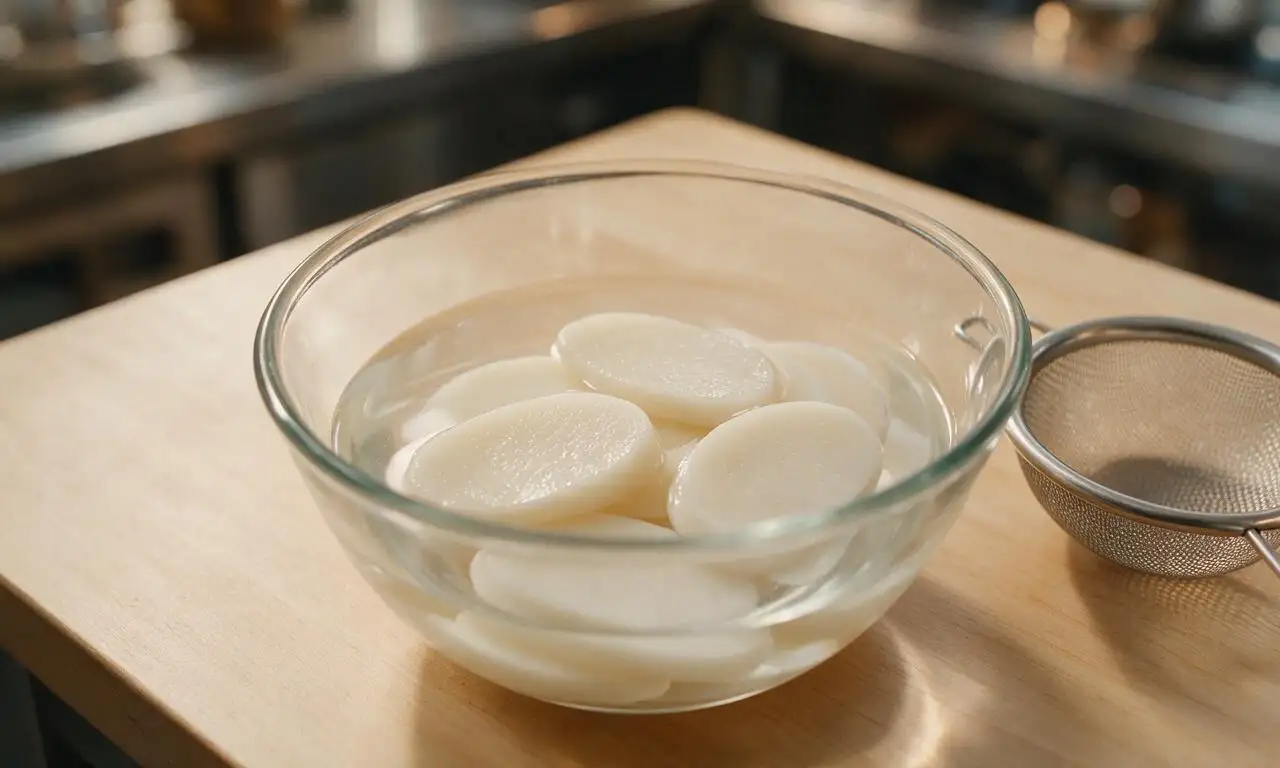
Separate any stuck-together sliced rice cakes, then place them in a large bowl of cold tap water to soak for 15 minutes (use this passive time to prep your remaining ingredients). Drain thoroughly in a colander right before adding to the soup to ensure chewy, non-clumpy results.
Step 1
step1:Prep and soak rice cakes
2

Sear beef and aromatics

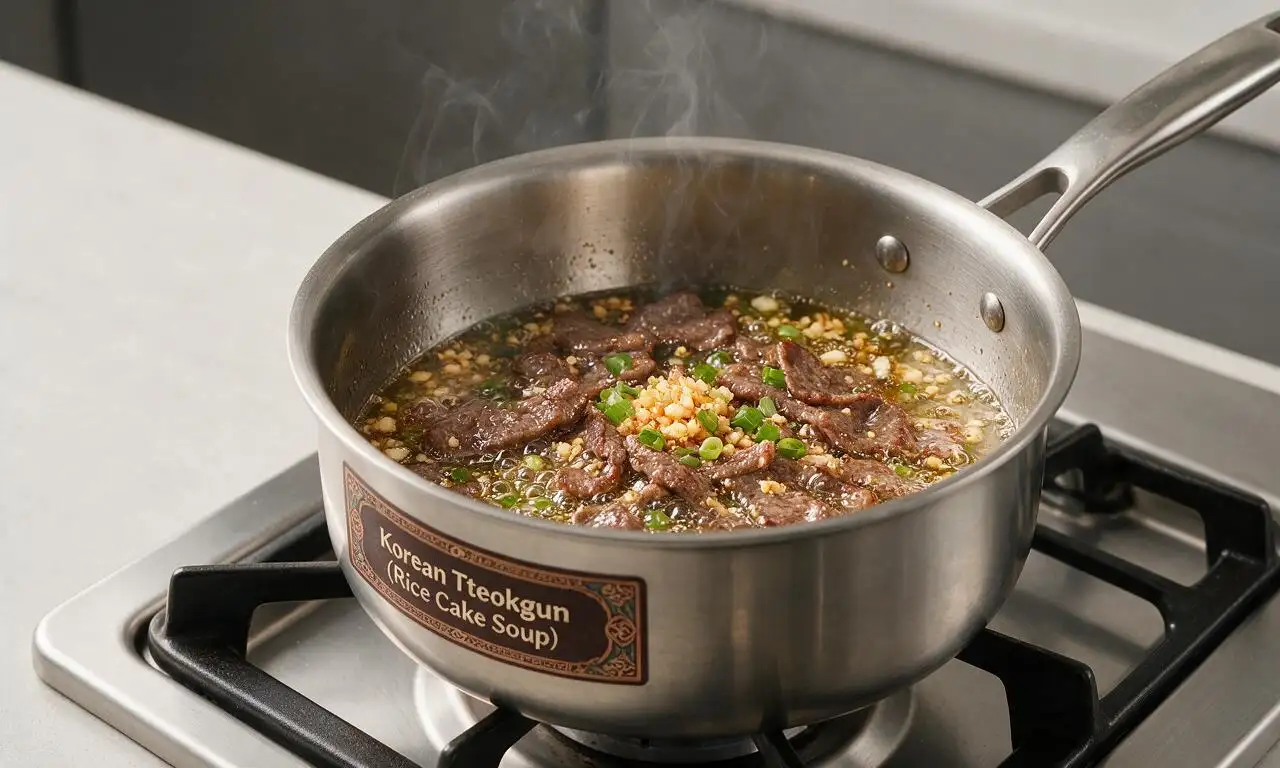
Place a 5-quart stock pot on the stovetop over medium-high heat. Add 1 teaspoon (5ml) of toasted sesame oil, then arrange the sliced beef brisket in a single layer. Sear for 2 minutes per side until edges are lightly browned, then add minced garlic and thinly sliced soup scallions, stirring constantly for 30 seconds until fragrant.
Step 2
step2:Sear beef and aromatics
3

Simmer the broth base

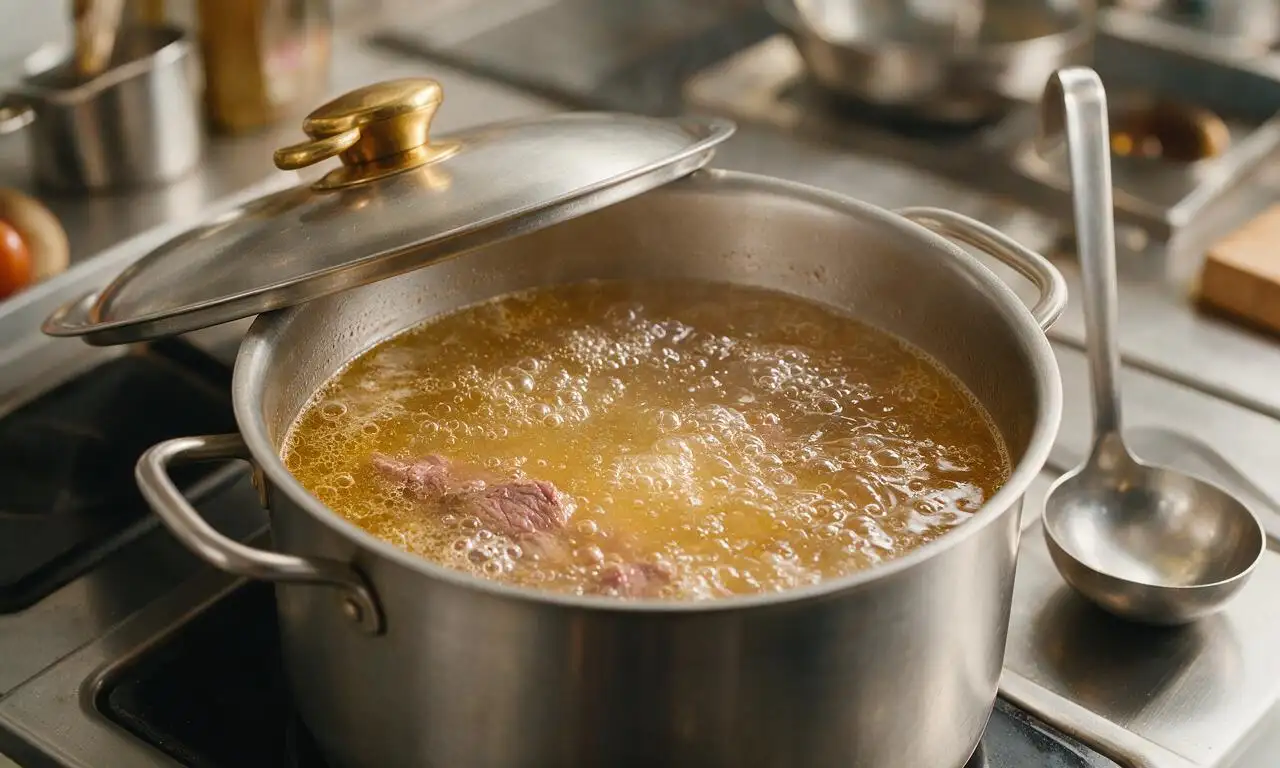
Pour 1900ml (8 cups) of low-sodium beef broth and 2 tablespoons (30ml) of soy sauce into the pot with the seared beef. Bring to a rolling boil over high heat, then reduce heat to medium-low to maintain a gentle, steady simmer. Cover the pot and cook for 10 minutes to let the beef flavor infuse into the broth.
Step 3
step3:Simmer the broth base
4

Cook rice cakes in broth

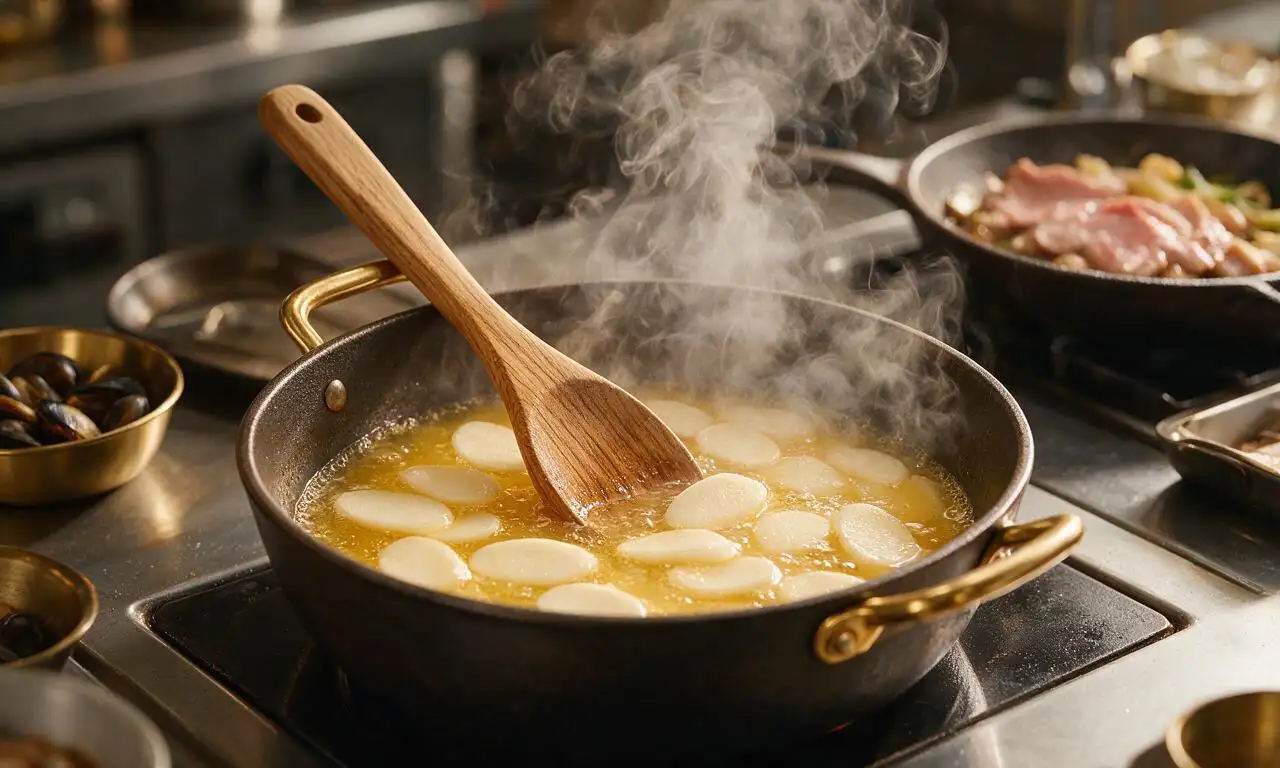
Add the fully drained, soaked rice cakes to the simmering broth. Turn heat up to medium to return the soup to a steady gentle boil, stirring frequently with a wooden spoon to prevent rice cakes from sticking to the pot bottom. Cook for 6-8 minutes, until rice cakes are tender, chewy, and float to the surface. Taste and adjust seasoning with up to 1 teaspoon (5g) of fine sea salt if needed.
Step 4
step4:Cook rice cakes in broth
5

Create soft egg ribbons

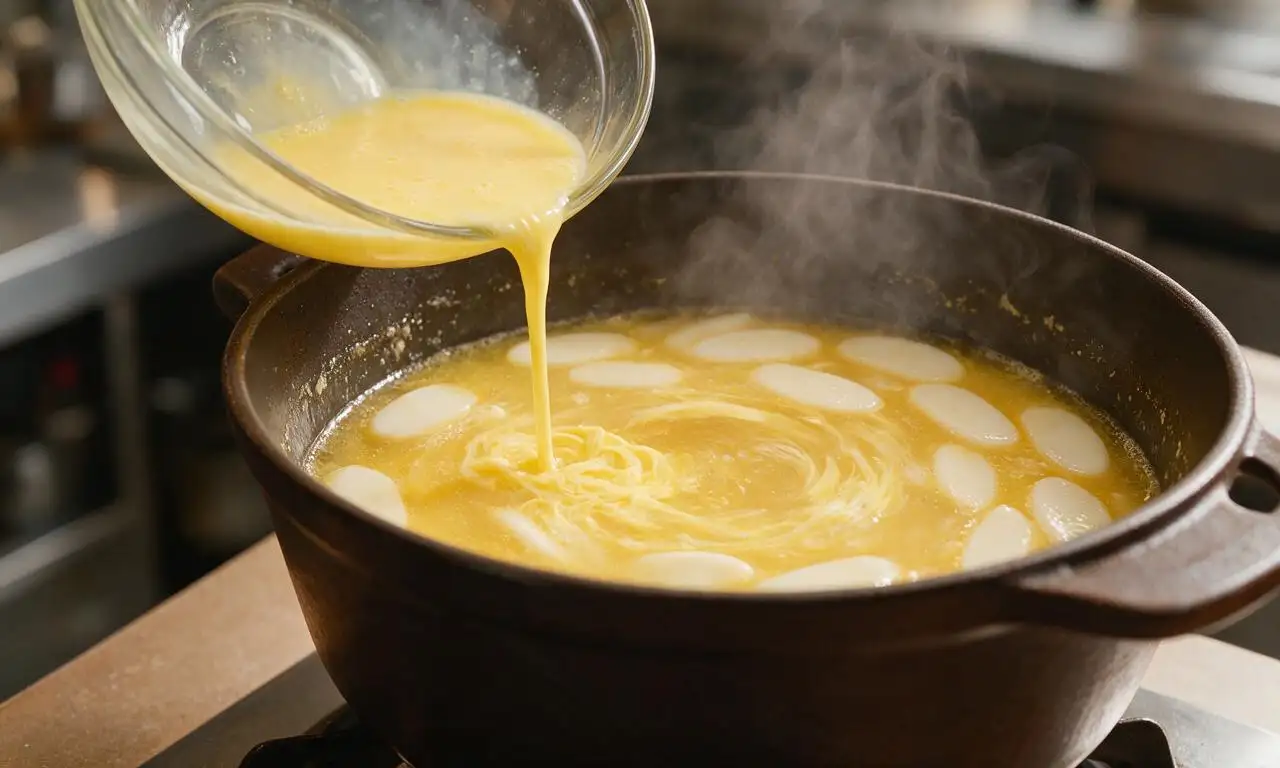
Stir the simmering soup in a slow, wide circular motion to create a gentle whirlpool. Slowly pour the well-beaten eggs in a thin, steady stream into the moving soup, then stop stirring. Let the eggs rest for 1 full minute to set into soft, delicate ribbons, then turn off the stovetop heat.
Step 5
step5:Create soft egg ribbons
6

Portion and garnish bowls

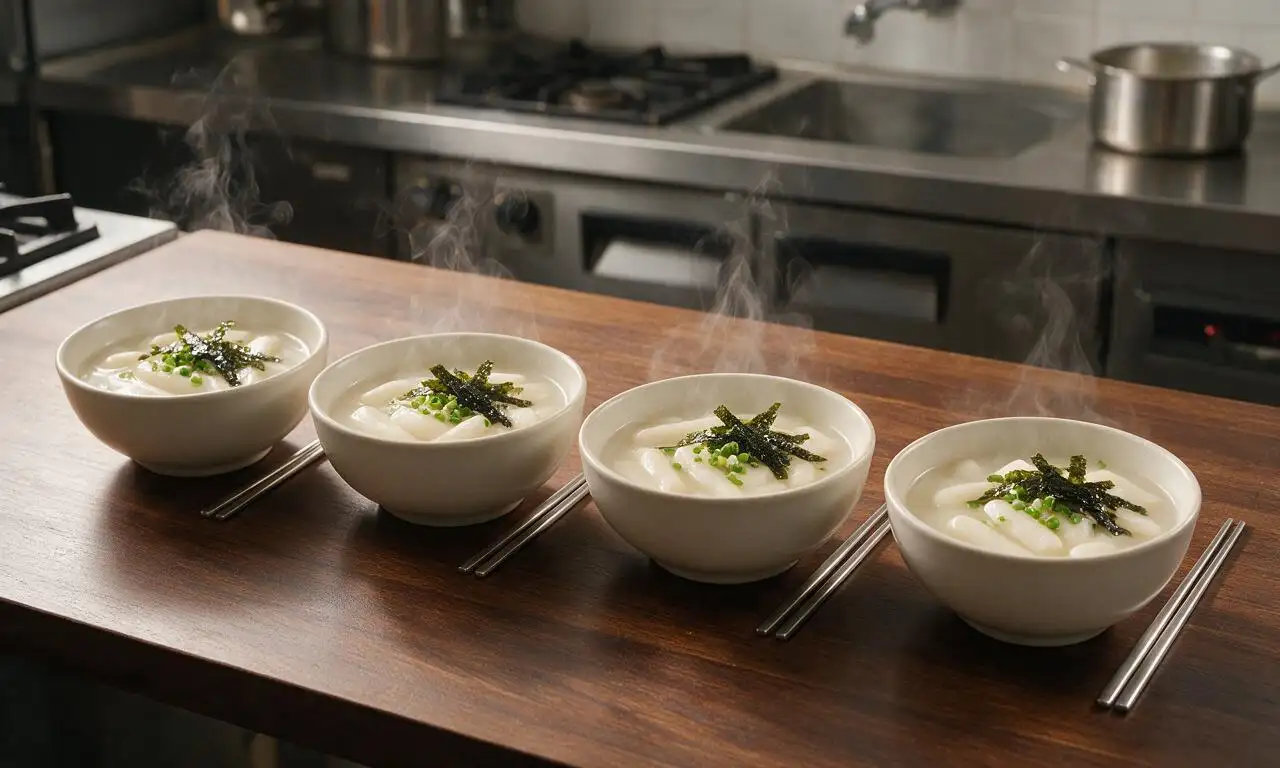
Ladle the hot soup evenly into 4 deep serving bowls. Top each bowl with equal amounts of chopped garnish scallions, thin strips of roasted seaweed, and a light pinch of ground black pepper. Serve immediately, as rice cakes will turn tough if left to cool for too long.
Step 6
step6:Portion and garnish bowls

Tips

1.If using frozen rice cakes, thaw them completely in the refrigerator for 4 hours before soaking; adding partially frozen rice cakes will lead to hard, uncooked centers even after boiling.
2.Avoid overcooking the rice cakes—they should be soft with a pleasant chewy bite, not mushy; residual heat in the soup will continue to soften them slightly after you turn off the stove.
3.For a vegetarian adaptation, swap the beef brisket and beef broth for 1900ml vegetable broth and 200g sliced shiitake mushrooms to replicate the deep umami flavor of the original recipe.
✨ You May Also Like

Soups & Stews
🍜 Japan

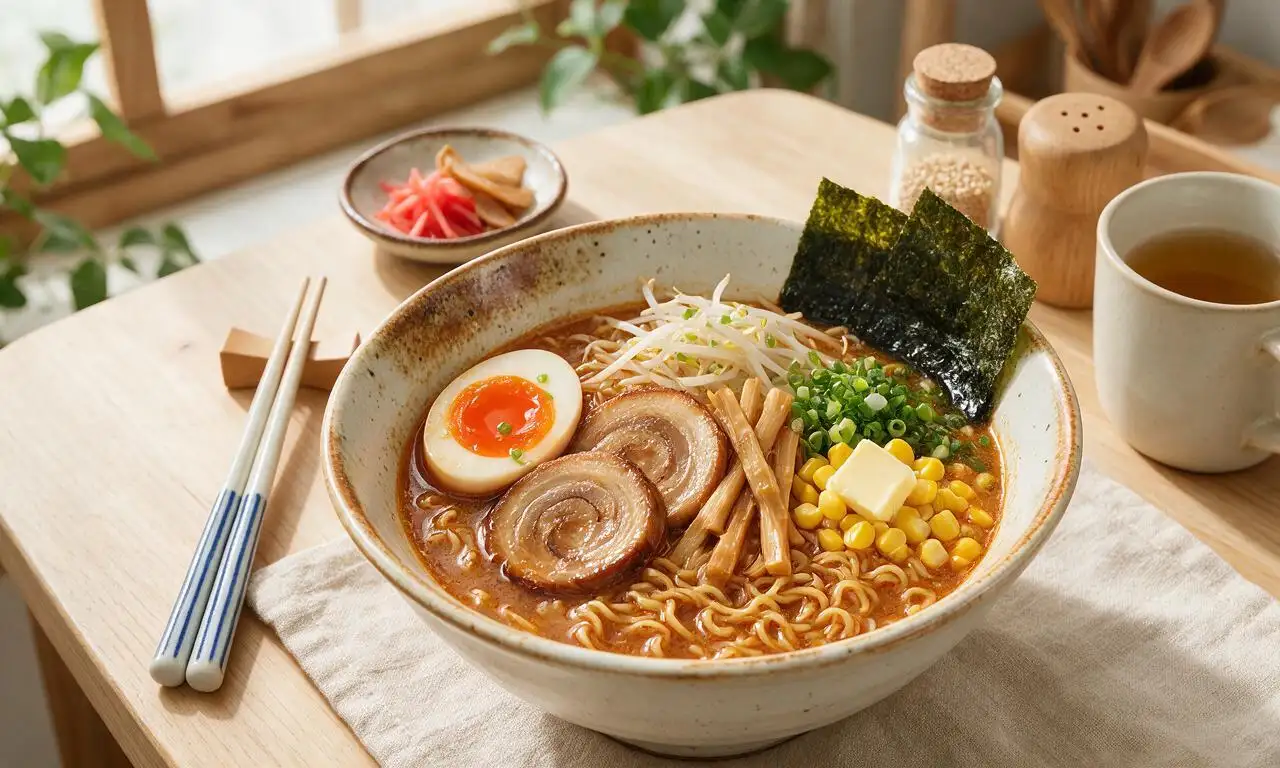
Rich, umami-dense Hokkaido-style miso ramen with chewy noodles, savory fermented broth, and classic toppings, a cozy, deeply satisfying warm meal.

⏱️ 45 minuteSoups & Stews ★ 4.5
Soups & Stews
🍜 United States

A hearty, peppery tripe and root vegetable stew with colonial Philadelphia roots, thick, warming, and packed with bold savory flavor for cold winter days.

⏱️ 2 hours 3Soups & Stews ★ 4.6
Soups & Stews
🍜 Mexico

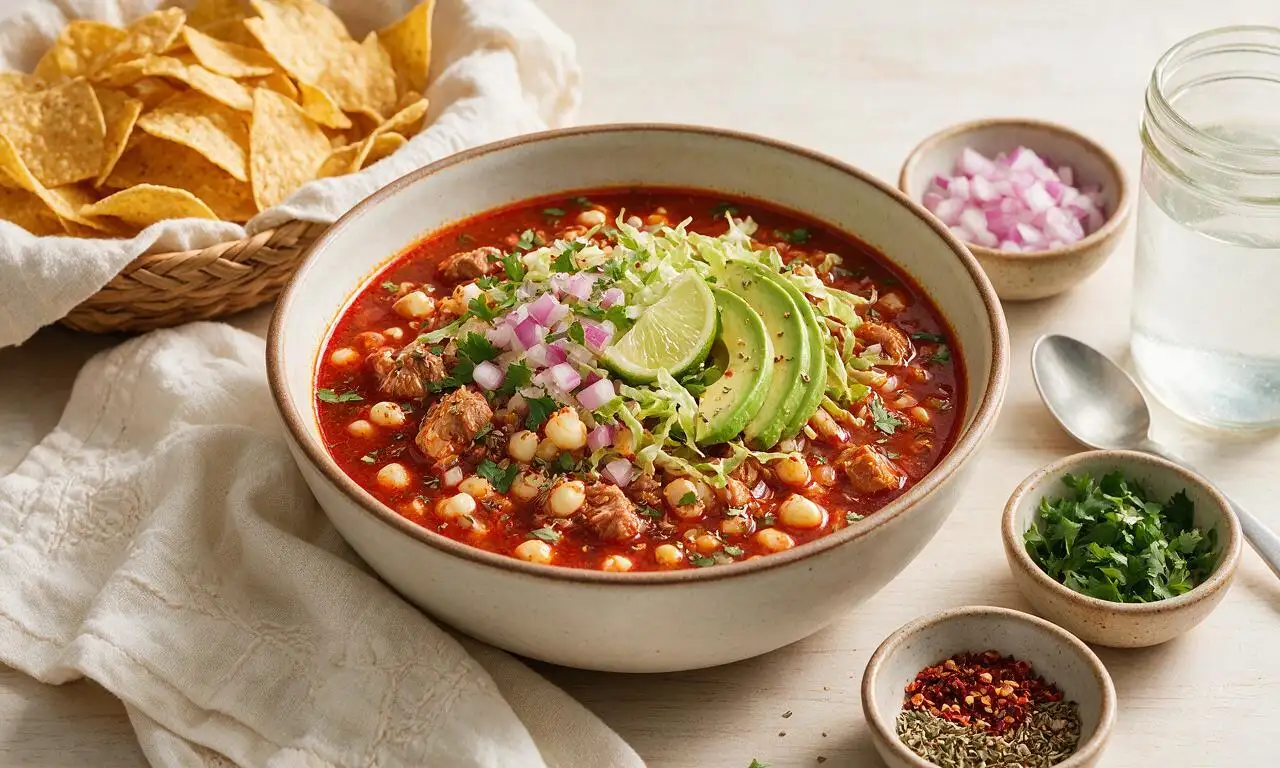
Hearty, warming red pork posole loaded with tender hominy, slow-simmered in a rich smoky chile broth, served with zesty fresh garnishes for a deeply comforting, satisfying meal.

⏱️ 2 hours 3Soups & Stews ★ 4.7
Soups & Stews
🍜 United States

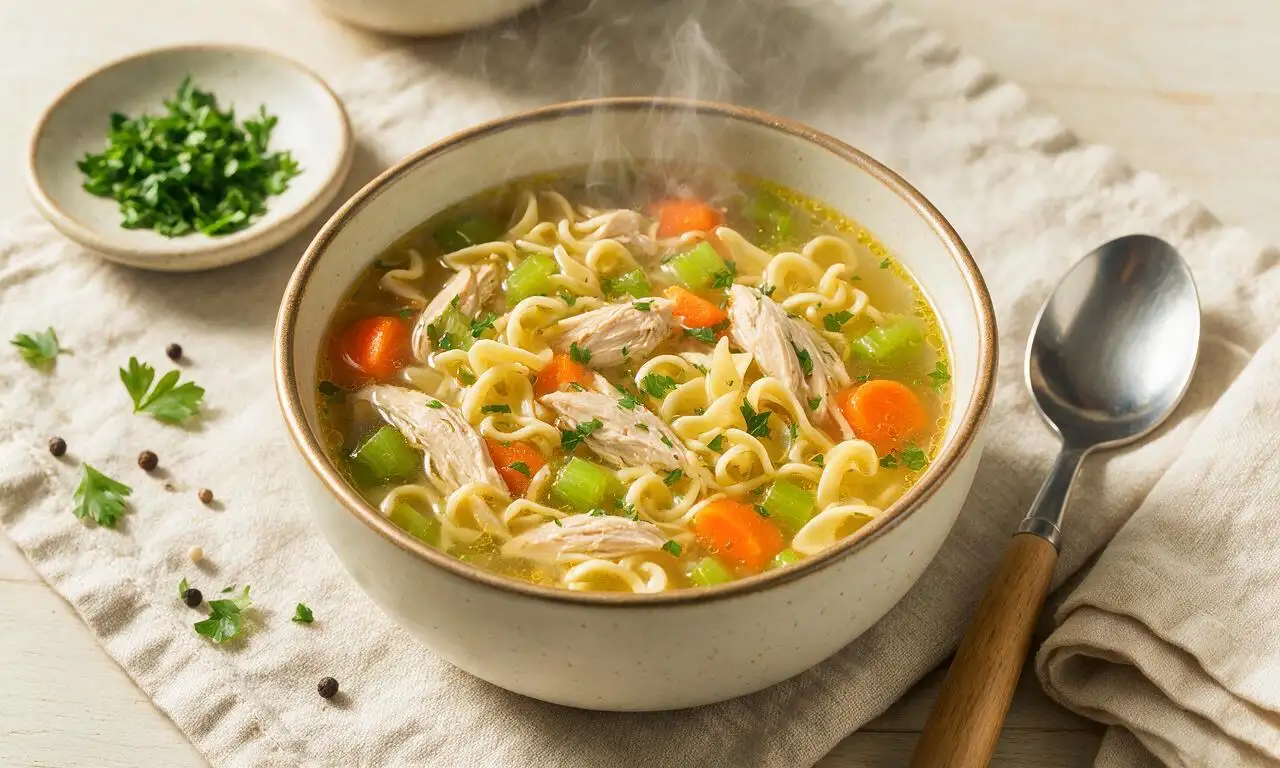
Warm, soothing classic chicken noodle soup loaded with tender chicken, soft egg noodles, and savory veggies, perfect for chasing chills and feeding the whole family.

⏱️ 40 minuteSoups & Stews ★ 4.9
Soups & Stews
🍜 France

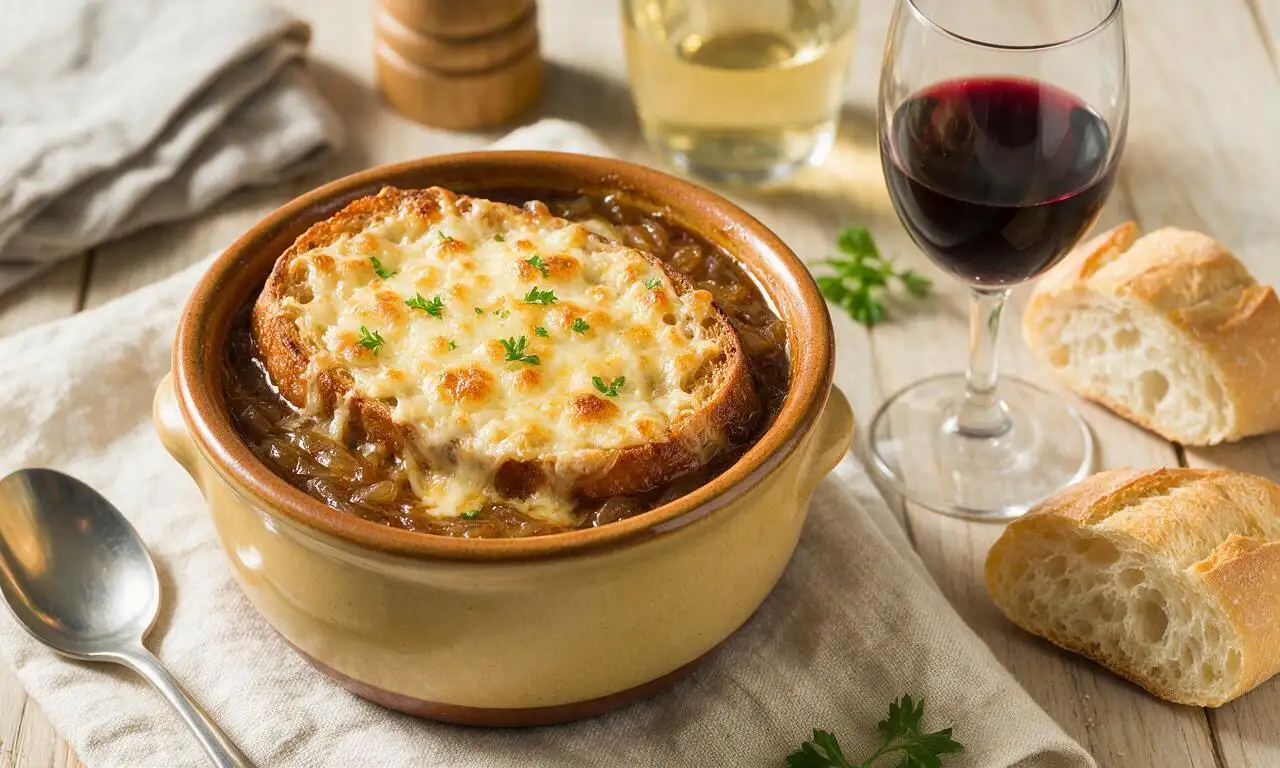
Deeply savory caramelized onion broth topped with crusty bread and bubbly melted Gruyère, a timeless French bistro comfort food ideal for cold days.

⏱️ 1 hour 25Soups & Stews ★ 4.8
Soups & Stews
🍜 United States

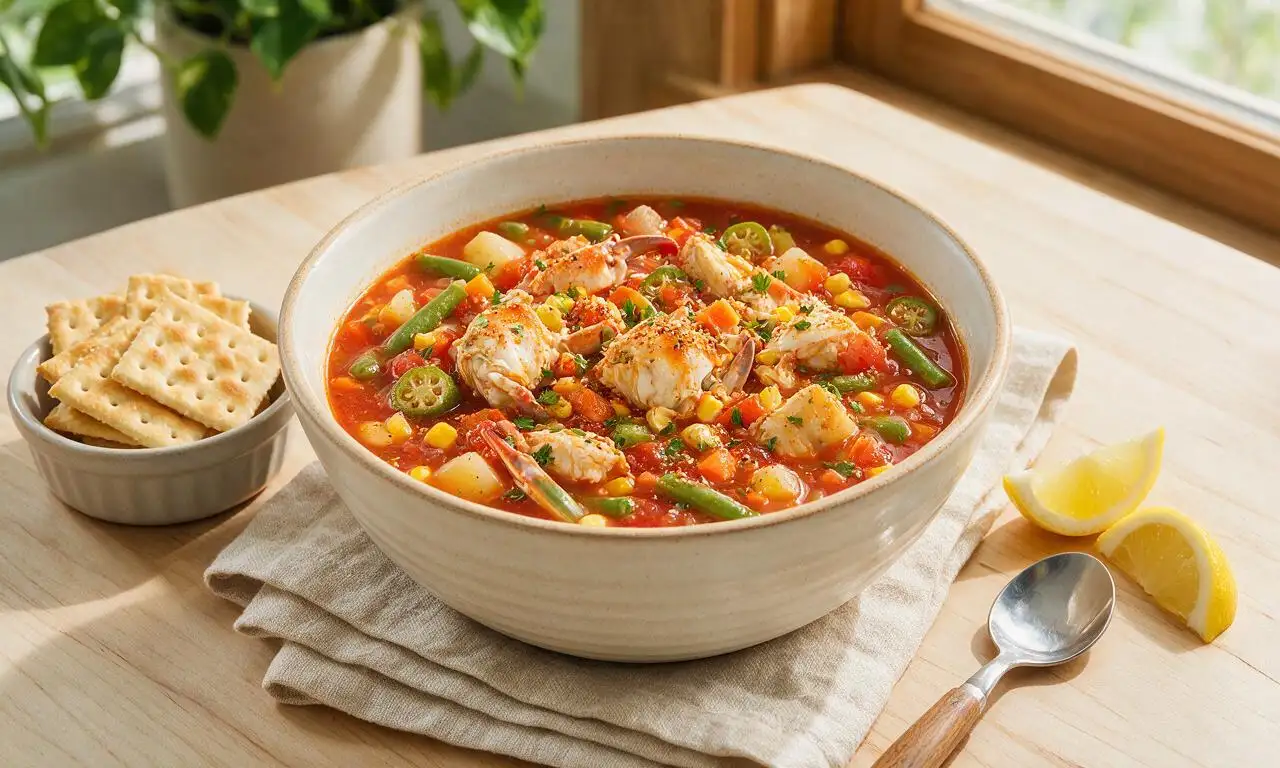
Hearty, briny Maryland crab soup loaded with sweet blue crab, tender summer vegetables, and zesty Old Bay, a beloved Chesapeake Bay coastal comfort staple.

⏱️ 55 minuteSoups & Stews ★ 4.9

Korean Tteokguk (Rice Cake Soup):Frequently Asked Questions

1.Can I use frozen sliced rice cakes instead of fresh for this tteokguk recipe? ▾
Absolutely! Thaw frozen garaetteok fully in cold water for 30 minutes first, then drain well before adding to the broth. Give fresh rice cakes a quick rinse to remove excess surface starch so your soup stays clear instead of cloudy, and you’ll get that perfect chewy, not mushy, signature bite every time.
2.How do I keep my rice cakes from turning mushy when cooking tteokguk? ▾
Great question! Don’t add rice cakes to the pot until your broth is at a full rolling boil, and cook them only for 3 to 4 minutes max—they’re done as soon as they float to the surface. Skip soaking fresh rice cakes, which breaks down their starchy structure too quickly and leads to soft, gluey texture.
3.What can I use as a substitute if I don’t have beef brisket for the recipe? ▾
You can swap trimmed brisket for thin-sliced boneless short rib or sirloin, cut to the same 0.5cm bite-sized thickness called for in the recipe. Trim off any tough silver skin first, and sear the beef quickly for 1 to 2 minutes before adding broth to lock in savoriness, so you don’t end up with bland, tough meat in your soup.
4.Why does my egg turn into clumpy chunks instead of silky ribbons in the soup? ▾
That’s an easy fix! First, make sure your broth is at a gentle, steady simmer—not a violent rolling boil—when you add the egg. Drizzle the well-beaten egg slowly in a thin stream over the soup surface, and don’t stir for 30 seconds after pouring to let it set into soft, delicate ribbons.
5.Is there a simple vegetarian swap for the beef components in this tteokguk? ▾
Definitely! Swap beef broth for low-sodium vegetable broth simmered for 10 minutes with a 2-inch piece of dried kelp and a handful of dried shiitake mushrooms for deep umami, then strain. Replace brisket with pan-seared extra-firm tofu cubes, pressed first to remove excess water so they hold their shape well.
6.How far in advance can I prep ingredients for tteokguk? ▾
You can prep nearly all components 1 day ahead: slice your beef, chop scallions, and beat your eggs, storing each in sealed containers in the fridge. Hold off on cooking the rice cakes until right before serving, though—cooked rice cakes turn hard and gluey when chilled, and won’t regain their ideal chewy texture when reheated.
7.Why does this recipe call for low-sodium beef broth instead of regular? ▾
Low-sodium broth lets you control the final salt level of your soup, since rice cakes add very little salt on their own, and seared beef contributes natural savoriness. Regular canned broth is often overly salty, which can overpower the mild, clean flavor of the rice cakes and delicate egg; add a pinch of salt only at the end if needed.
8.What simple, traditional toppings can I add to elevate this tteokguk? ▾
The base recipe is delicious on its own, but you can top finished bowls with thin strips of roasted gim (dried seaweed), a sprinkle of toasted sesame seeds, a tiny drizzle of toasted sesame oil, or a few pieces of diced pickled radish for bright crunch. Stick to light, savory toppings so you don’t cover up the soup’s warm, comforting core flavor.
9.Why do my rice cakes stick to the bottom of the pot while cooking? ▾
This almost always happens if you add rice cakes to broth that isn’t fully boiling, or if you don’t give the soup one gentle stir right after dropping them in. Once your broth is rolling, add the drained rice cakes, stir once gently to lift them off the pot bottom, then cook until they float to eliminate sticking issues.
10.Can I freeze leftover tteokguk to eat later? ▾
I don’t recommend freezing fully assembled soup, as the rice cakes will turn grainy, mushy, and unpleasantly tough when thawed and reheated. You can freeze the cooked beef and broth portion for up to 3 months, though—just thaw it in the fridge, bring to a boil, and add fresh rice cakes, egg, and scallions when you’re ready to serve.

Comments (5)

3 days ago

OMG this tteokguk is SO good! I made it for our neighborhood Lunar New Year potluck last weekend and everyone was begging for the recipe. I was worried the rice cakes would turn out mushy but following the 35 minute cook time exactly made them perfectly chewy. My picky 7 year old even asked for a second bowl! Total game changer for our weekly soup rotation.

2 days ago

Wait quick question — did you use the pre-sliced frozen rice cakes or the fresh ones from the Korean market? I’ve only ever made this with my halmeoni’s recipe and I’m nervous to mess up store-bought ingredients!

1 day ago

So glad your family and potluck crew loved it! Both frozen pre-sliced and fresh rice cakes work perfectly here — just make sure to soak frozen ones in cold water for 10 minutes before cooking to lock in that ideal chewy texture, no mushy mess promise!

1 week ago

Super easy recipe perfect for Sunday meal prep! I made a big batch last Sunday night and it held up great for work lunches all week. I tossed in a handful of frozen mandu because I can never get enough dumplings in my soup, and it slapped. 10/10, will be making this nonstop all winter long.

5 days ago

Love the mandu add-in, that’s such a classic, cozy twist! So happy this worked out for your weekly meal prep — quick pro tip: if you’re prepping more than 3 days in advance, store the rice cakes separate from the broth so they don’t get overly soft and mushy!

5 minutes ago

Just made this in my dorm kitchen with a cheap hot plate and it turned out fire. Didn’t even have to run to a fancy specialty store, grabbed all the ingredients at the HMart right by campus. 10/10 easy enough for a broke college student who’s sick of dining hall food.

2 hours ago

I was so excited to find this easy tteokguk recipe! Quick question though — are there any gluten-free swaps for the soup base? I have celiac and I’ve been craving this forever but most versions use regular soy sauce with wheat. Can’t wait to make it once I figure that out!

30 minutes ago

Great question! Simply swap the regular soy sauce for gluten-free tamari (it tastes almost identical!) and double check that your beef broth is labeled gluten-free, and this recipe is 100% celiac-friendly. Hope you love it when you make it!

yesterday

I’ve made tteokguk every New Year’s with my mom since I was little, but this year I couldn’t make it home for the holidays so I tried this recipe. It tasted exactly like how mom makes it! I added a little extra egg garnish and some crumbled toasted seaweed on top, just like she does. Made me feel way less homesick for sure.

2 hours ago

Aww this made my heart so happy! I’m also away from family this year and was debating if it was worth making tteokguk just for myself, this is your sign to go for it everyone!

5 minutes ago

This makes our whole team’s day! There’s nothing like a warm bowl of tteokguk to feel close to home, even when you can’t be with family. The extra seaweed and egg garnish sound perfect — that’s exactly how my own family makes it too!