butter poached shrimp

title 1
butter poached shrimp
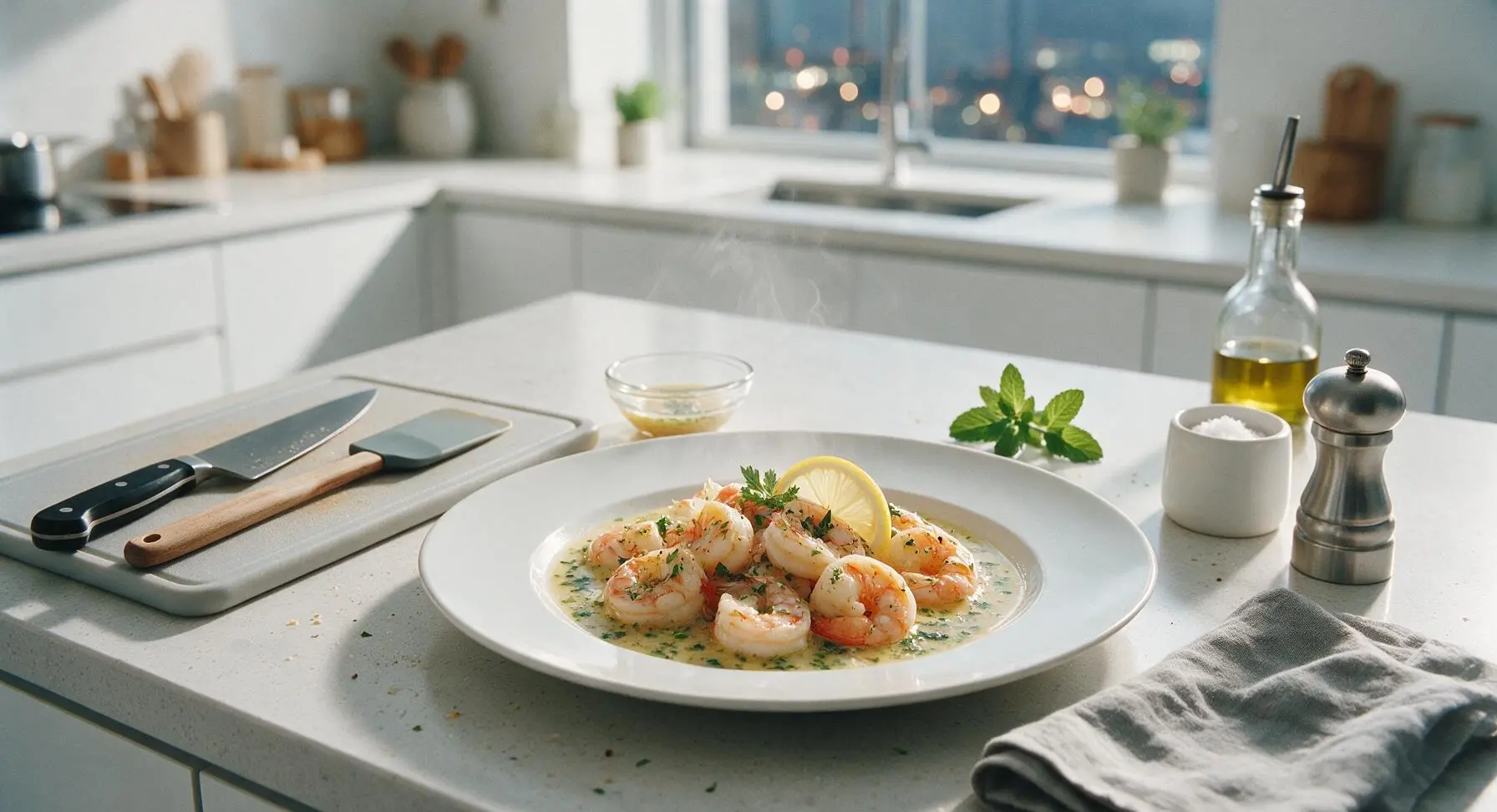
⏱️ cook time 12 minutes
🍽️ servings 4
⚡ Difficulty medium

intro

Silky, melt-in-your-mouth shrimp poached low and slow in herb-infused butter emulsion, with bright lemon and no rubbery texture—an elegant, restaurant-worthy dish perfect for special nights at home.

Ingredients
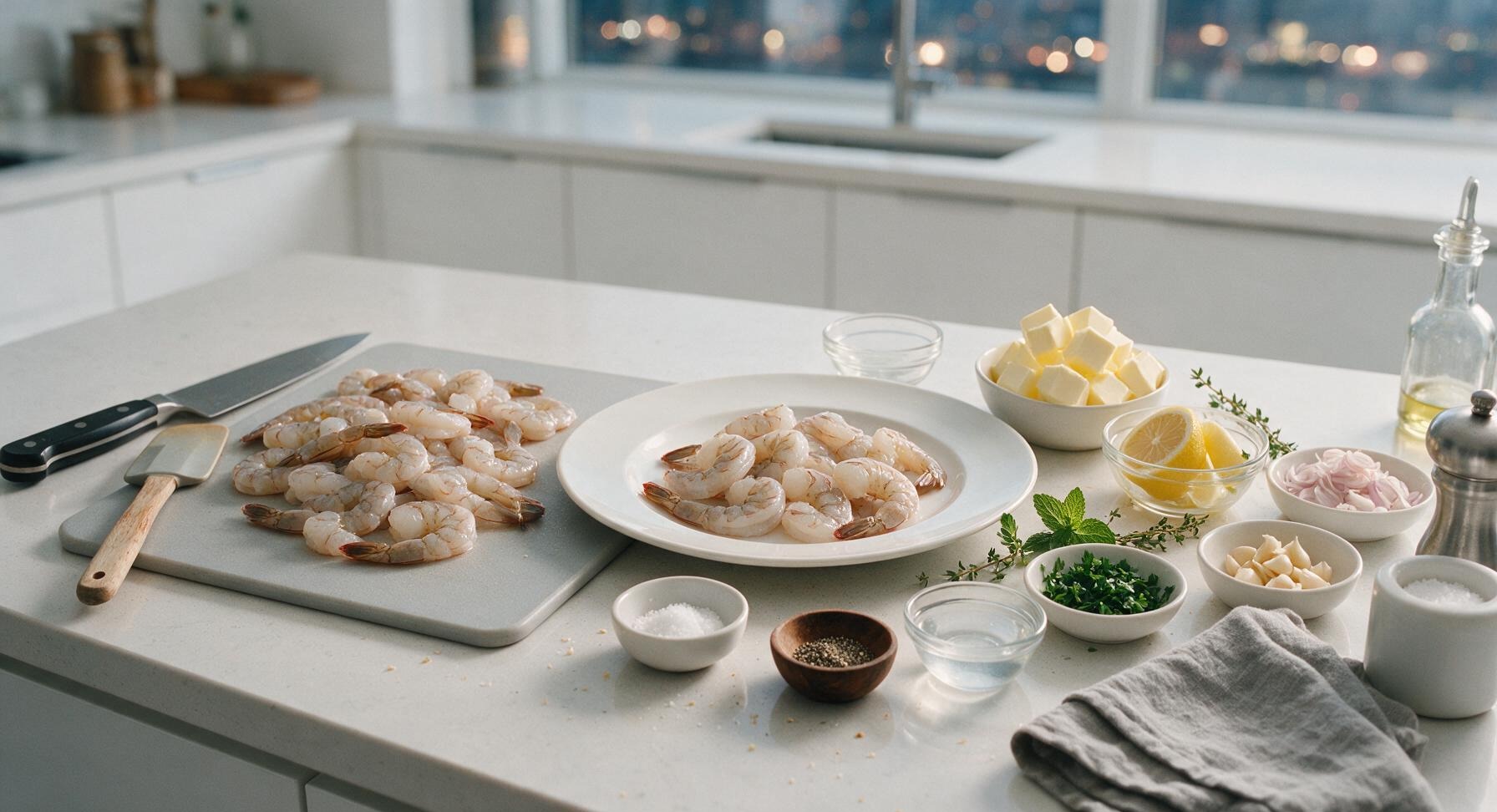
Extra-jumbo raw shrimp (16/20 count, peeled, deveined, tails intact) 680g (1.5 lbs)
Unsalted butter, cut into 2.5cm cold cubes 226g (2 sticks / 1 cup)
Small shallot, thinly sliced 1 (50g)
Garlic cloves, lightly crushed 3 (15g)
Fresh thyme sprigs 4 sprigs
Fresh flat-leaf parsley, finely chopped 2 tablespoons (8g)
Whole lemon (half juiced, half cut into wedges) 1 (120g)
Kosher salt 1 teaspoon
Freshly ground black pepper 1/2 teaspoon
Cold water 2 tablespoons

Steps

1

Prep and season shrimp

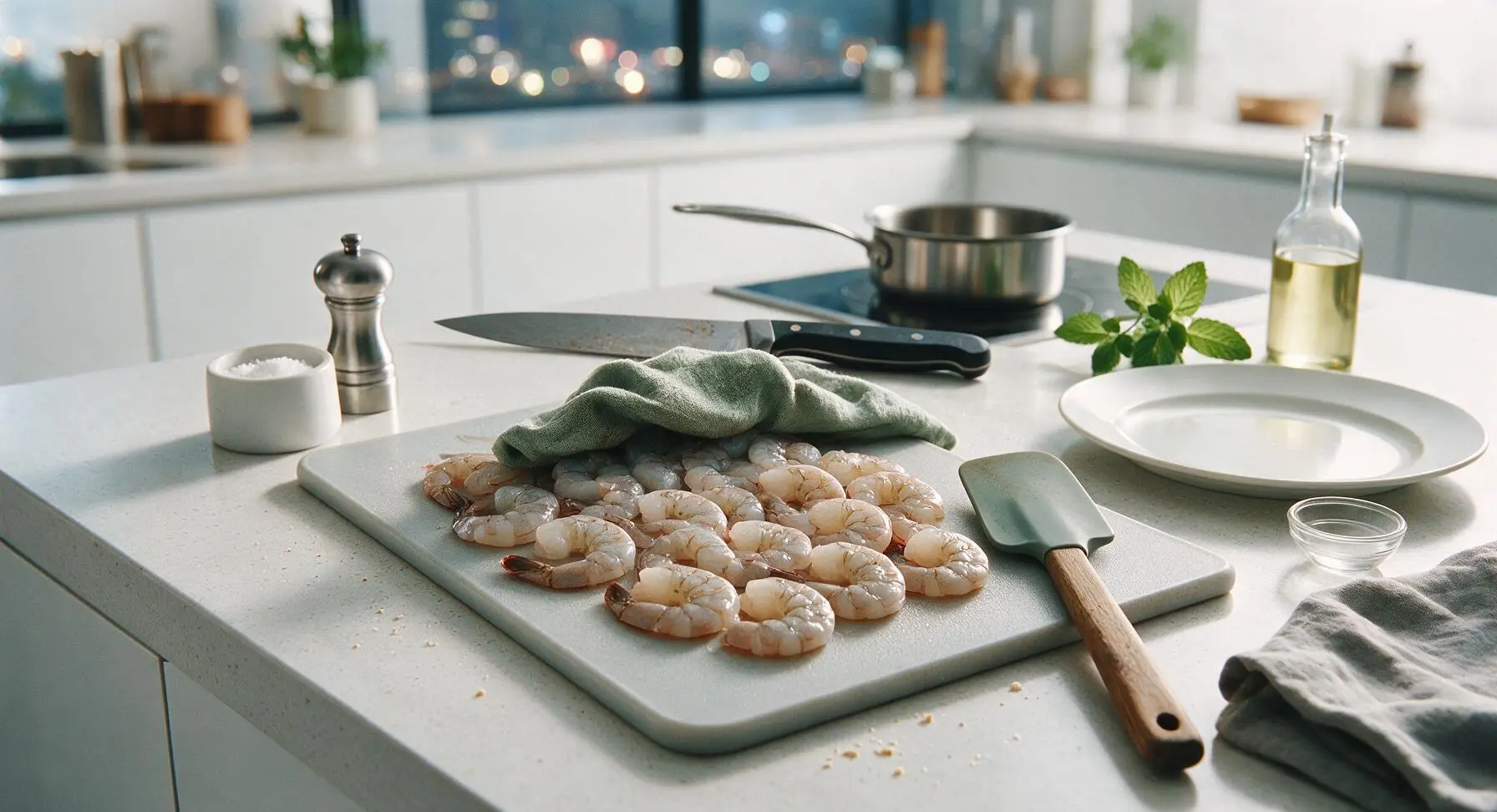
Place the peeled, deveined extra-jumbo shrimp on the center of the maple cutting board. Pat completely dry on all sides using a corner of the sage-green linen towel, then season evenly with 3/4 teaspoon kosher salt and 1/4 teaspoon freshly ground black pepper. Set aside to rest for 5 minutes at room temperature to let the seasoning adhere; shrimp should feel dry to the touch with no excess surface moisture.
Step 1
step1:Prep and season shrimp
2

Start poaching base

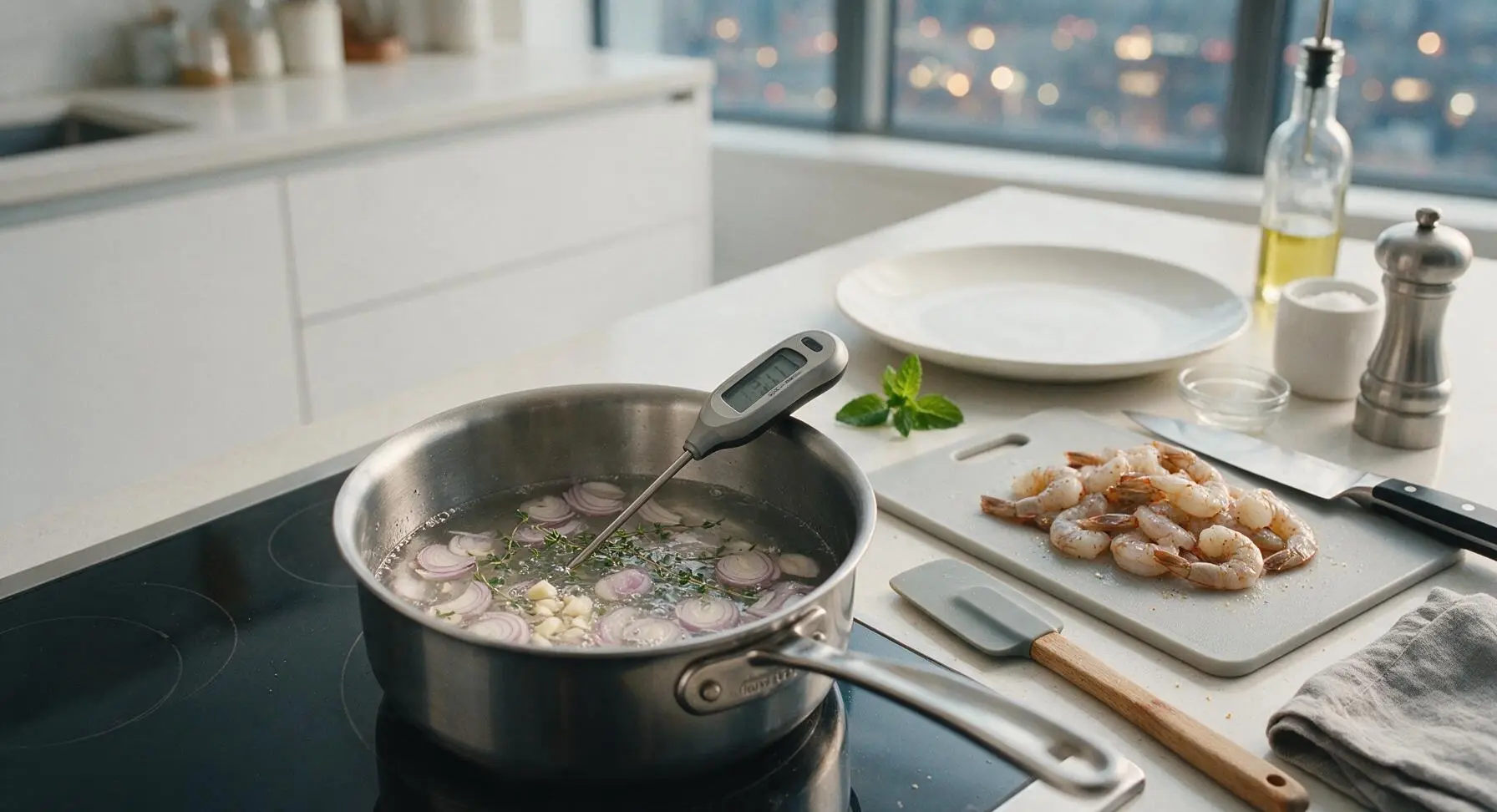
Move the 2.5-quart stainless steel saucepan from its stored position on the rear induction burner to the front burner. Add 2 tablespoons cold water, thinly sliced shallot, lightly crushed garlic, and fresh thyme sprigs to the pan. Heat over medium-low until the liquid reaches a gentle 82°C (180°F) simmer, with tiny bubbles rising slowly around the pan edges, about 2 minutes. Do not bring the liquid to a rolling boil.
Step 2
step2:Start poaching base
3

Emulsify cold butter

Reduce heat to low to maintain a constant 74–79°C (165–175°F) pan temperature. Whisk in cold butter cubes one at a time, using the pale gray silicone spatula to stir constantly, adding the next cube only after the previous one has fully melted and blended into the water base. The finished poaching liquid will be a smooth, opaque golden emulsion, thick enough to lightly coat the back of the spatula with no separated clear oil visible; this process takes about 4 minutes total.
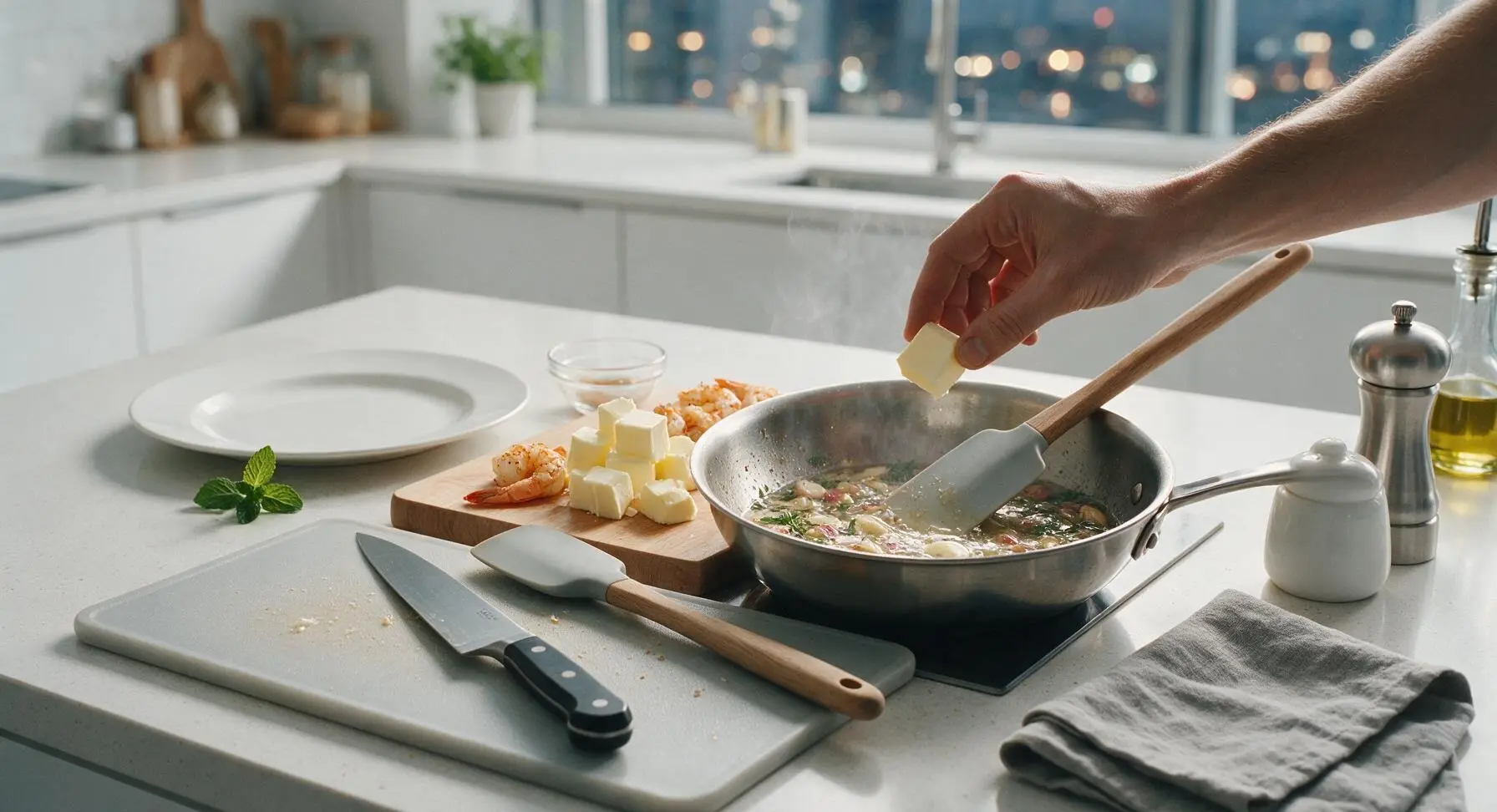
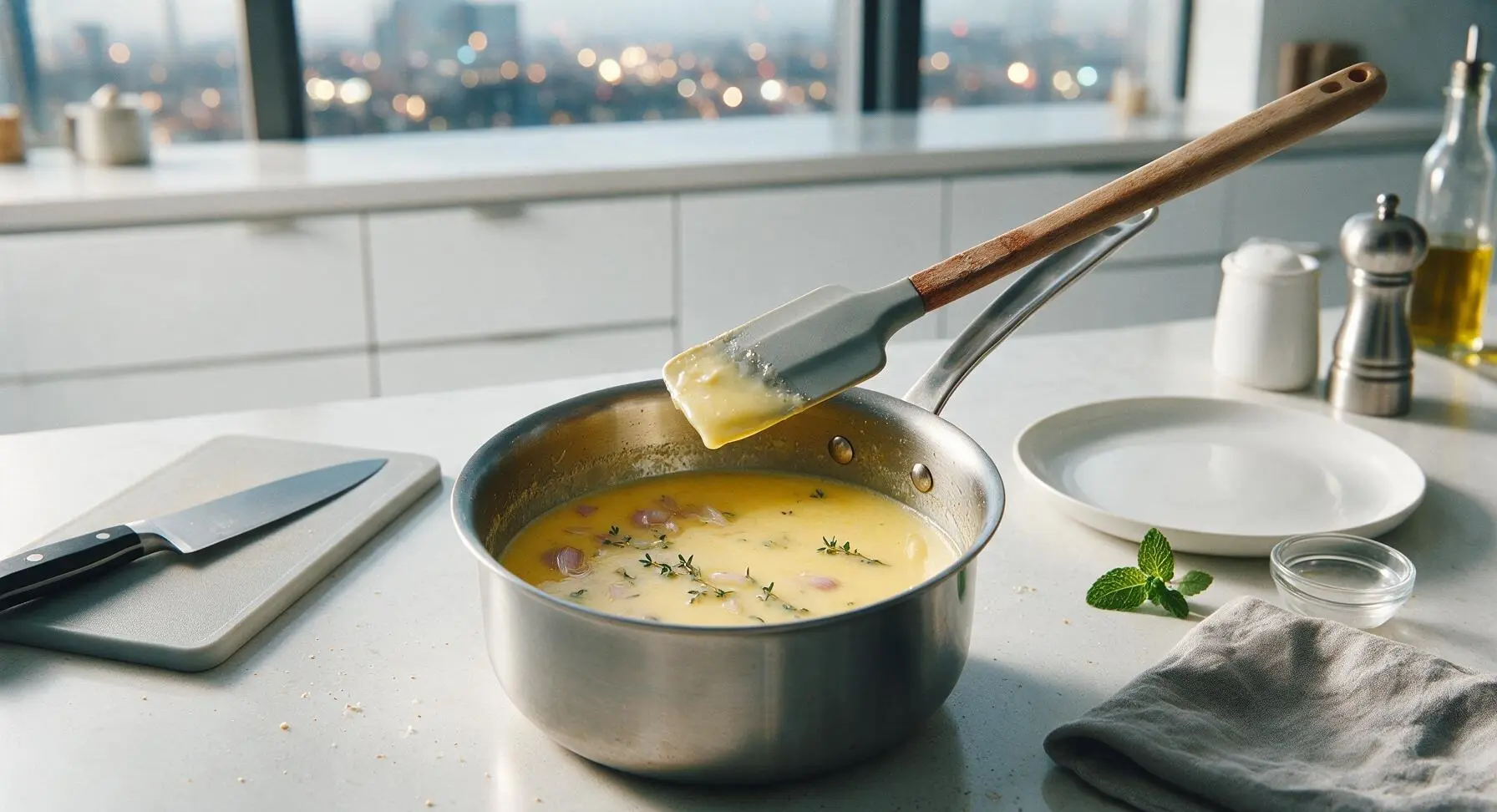
Step 3
step3:Emulsify cold butter
Step 3
step3:Emulsify cold butter
4

Poach shrimp gently

Carefully add all seasoned shrimp to the warm butter emulsion in a single layer, ensuring each shrimp is mostly submerged in the liquid. Maintain a strict poaching temperature of 74–79°C (165–175°F) — do not let the butter exceed 82°C (180°F), as high heat will break the emulsion and turn shrimp rubbery. Poach for 4–5 minutes total, flipping each shrimp once at the 2-minute mark with the stainless steel skimmer. Shrimp are done when they turn opaque pale pink, curl into a tight C-shape, and have firm but slightly yielding flesh with no remaining translucent gray patches.
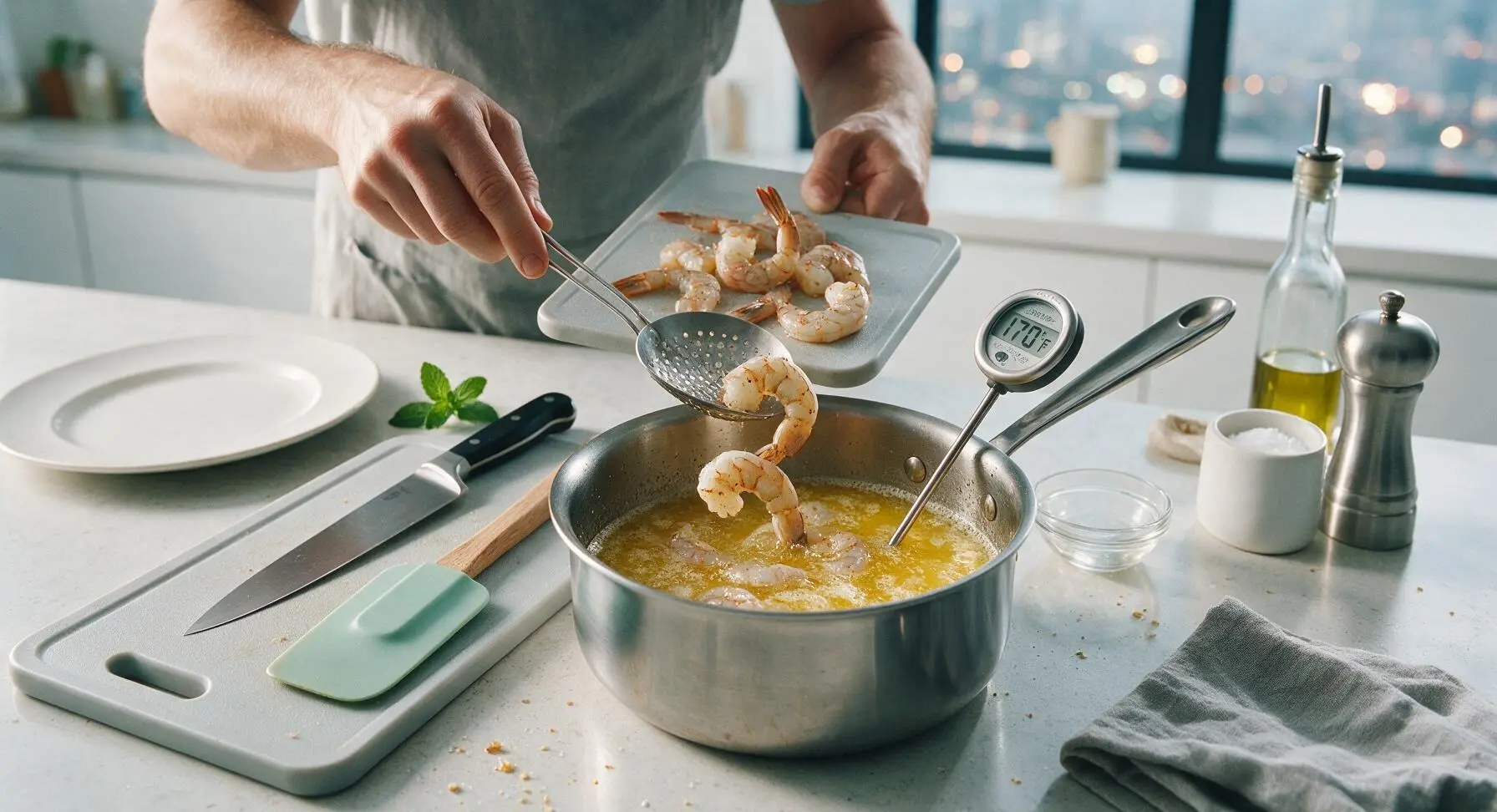
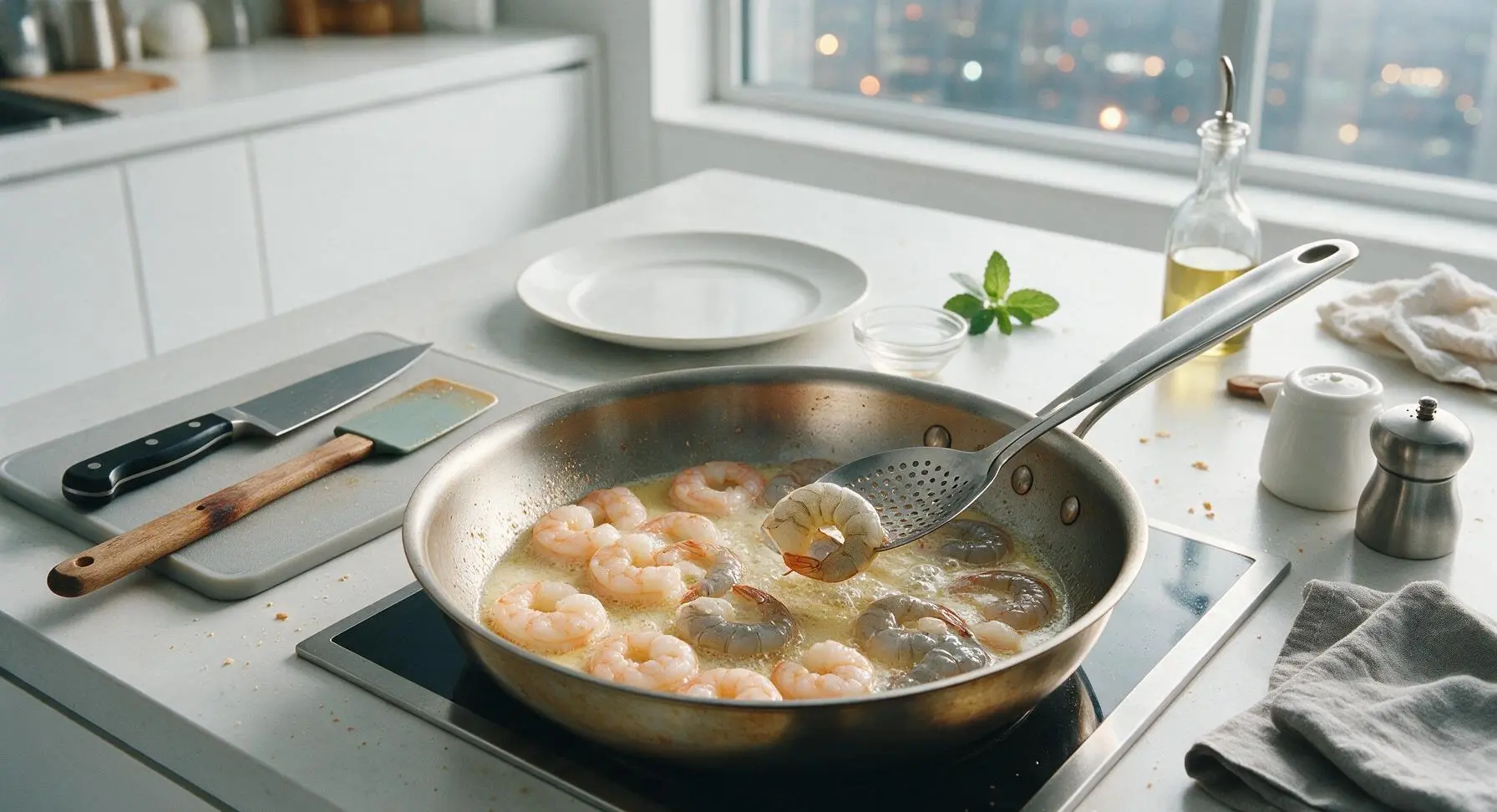
Step 4
step4:Poach shrimp gently
Step 4
step4:Poach shrimp gently
5

Rest shrimp in butter

Turn off the induction heat once shrimp reach the fully opaque pink stage. Stir 1 tablespoon fresh lemon juice, remaining 1/4 teaspoon kosher salt, and 1/4 teaspoon black pepper into the warm butter emulsion. Let shrimp rest in the seasoned butter off-heat for 1 full minute to lock in juiciness, then use the skimmer to lift shrimp from the butter, letting excess butter drain back into the pan, and transfer them to the matte cream stoneware serving plate. Leave the cooked shallot, garlic, and thyme sprigs behind in the saucepan.
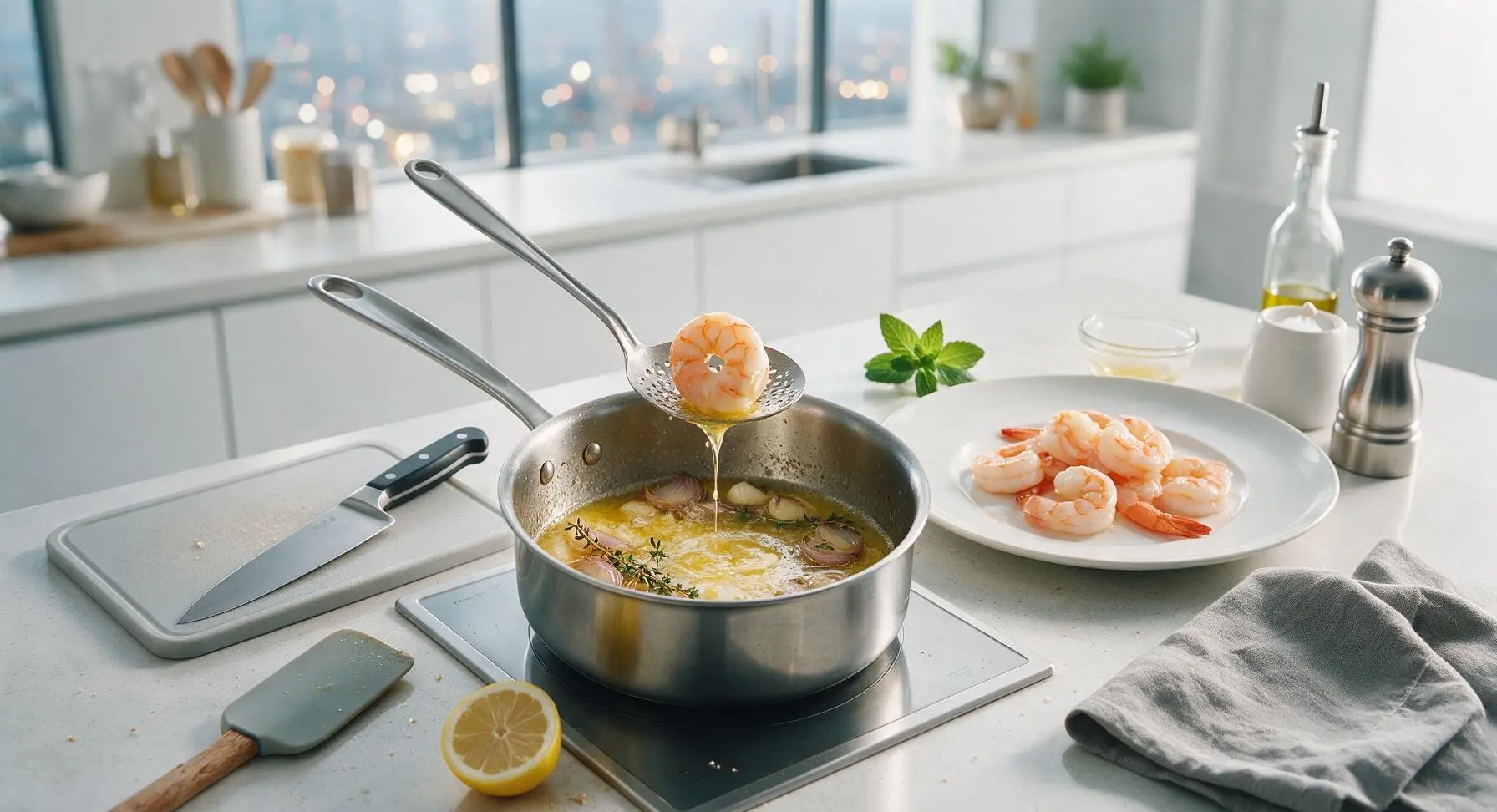
Step 5
step5:Rest shrimp in butter
6

Garnish and serve immediately

Drizzle 1 tablespoon of the warm lemon-butter poaching liquid over the plated shrimp. Sprinkle evenly with finely chopped fresh flat-leaf parsley. Arrange 2 lemon wedges cut from the remaining lemon half around the edge of the plate. Serve immediately while warm, paired with crusty bread or lightly dressed spring greens if desired.
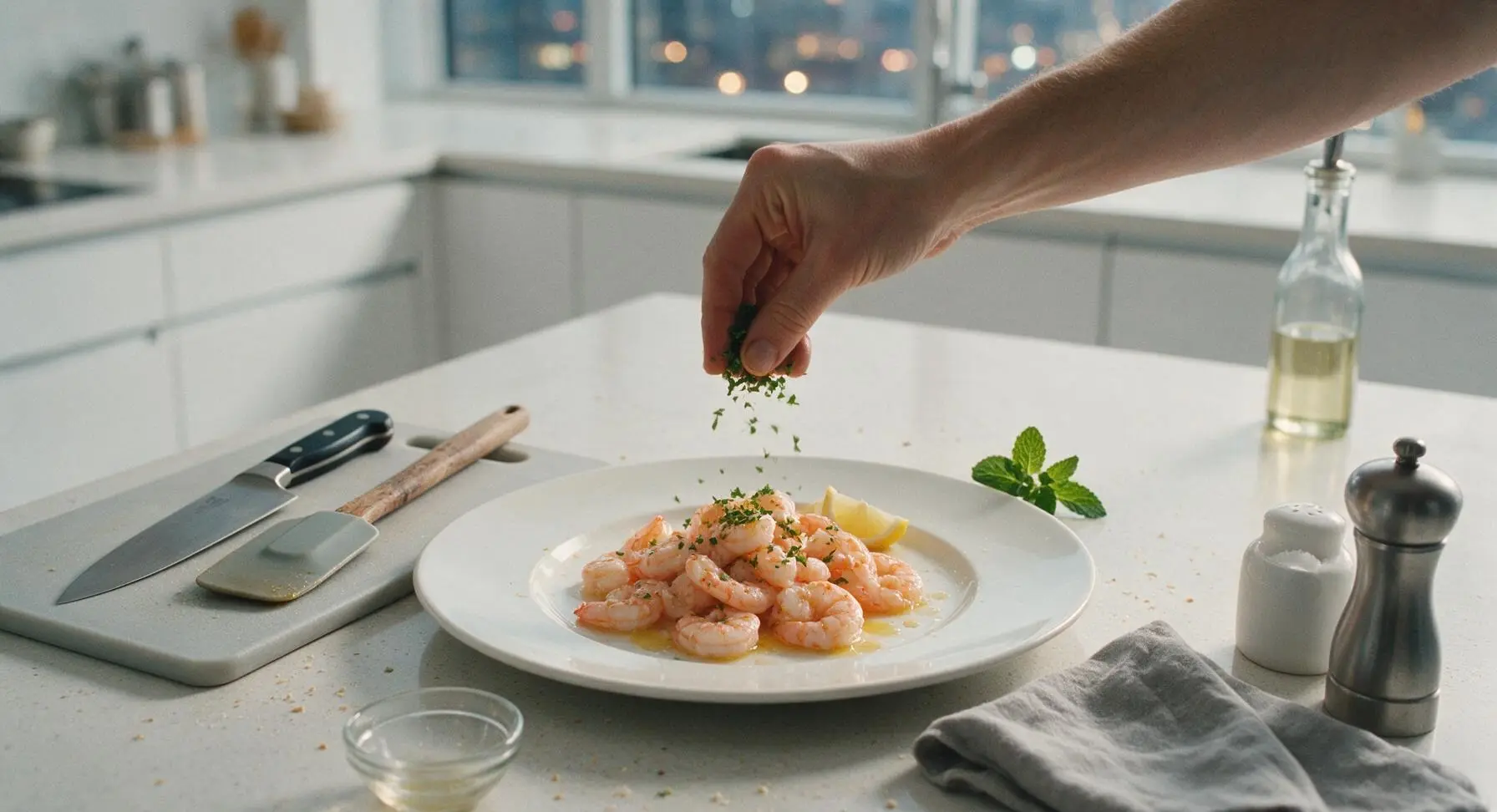
Step 6
step6:Garnish and serve immediately

Tips

1.Monitor poaching temperature closely with the instant-read thermometer: if butter climbs above 180°F (82°C), the emulsion will break into greasy separated oil, and high heat will turn shrimp tough instead of silky. If temperatures spike, lift the pan off heat for 30 seconds to cool before continuing.
2.Use only ice-cold butter cubes when building the poaching emulsion. Adding cold butter one piece at a time slowly melts milk fat into the water base to create a stable, creamy liquid, whereas room-temperature butter will cause the mixture to separate into greasy oil.
3.Pat shrimp completely dry before seasoning and poaching. Excess surface moisture on shrimp will dilute the butter emulsion and cause it to split, while dry shrimp absorb herb and butter flavor far more evenly for a richer, more consistent taste.
✨ You May Also Like

Seafood
🍜 United States

An iconic Door County, Wisconsin tradition of flaky boiled whitefish, tender potatoes, and sweet corn, cooked outdoors for casual, communal summer gatherings.

⏱️ 45 minuteSeafood ★ 4.7
Seafood
🍜 United States

Tender, briny soft-shell clams steamed in garlicky white wine broth, served with warm broth and melted butter for dipping—classic coastal comfort food.

⏱️ 30 minuteSeafood ★ 4.7
Seafood
🍜 United States

Iconic zesty, savory spice blend from Maryland’s Chesapeake Bay, perfect for seafood boils, grilled fare, fries, and corn, made fresh without preservatives.

⏱️ 10 minuteSeafood ★ 4.9
Seafood
🍜 China

Tender, crisp, sweet blanched geoduck topped with fragrant sizzled ginger and scallion, a luxurious Cantonese dish highlighting the clam’s natural briny, delicate flavor.

⏱️ 30 minuteSeafood ★ 4.7
Seafood
🍜 United States

Succulent sweet crab legs coated in rich garlic butter, steamed to tender perfection for a juicy, indulgent seafood feast that requires minimal prep and cook time.

⏱️ 25 minuteSeafood ★ 4.7
Seafood
🍜 United States

A nostalgic chilled jellied seafood staple of 1950s American potlucks, loaded with tender shrimp, lump crab, crisp veggies, and bright creamy tang.

⏱️ 4 hours 2Seafood ★ 4.6

butter poached shrimp:Frequently Asked Questions

1.Why do my butter poached shrimp end up rubbery instead of silky? ▾
That almost always happens from poaching at too high a temperature! Keep your butter emulsion between 160–170°F (no bubbling, ever) and cook shrimp just 3–4 minutes total, until they’re opaque with a slight pearlescent center. Overcooking even 30 seconds will turn them tough, so pull them as soon as they curl into a loose C shape.
2.What does 16/20 count shrimp mean, and can I use a smaller size? ▾
The count refers to how many shrimp make up 1 pound, so 16/20 means 16 to 20 extra-jumbo shrimp per pound. You can use smaller sizes like 21/25, but cut poaching time by 30–60 seconds, since smaller shrimp cook faster. Avoid tiny salad shrimp, though—they overcook instantly and won’t hold up to the rich butter poaching method.
3.Why do you use cold butter cubes for the emulsion instead of melted butter? ▾
Cold cubed butter is key to building a stable, silky emulsified poaching liquid (called beurre monté) instead of separated, greasy melted butter. Adding one cold cube at a time over low heat, whisking gently, lets the butter’s milk solids and water bind into a smooth, thick liquid that coats shrimp evenly without leaving an oily residue.
4.Do I really need to leave the tails on the shrimp? ▾
Leaving tails on is totally optional, but it serves two small perks: it adds a subtle, briny shellfish depth to the butter as it poaches, and it gives guests a built-in handle if you’re serving these as an appetizer. If you prefer fully peeled shrimp, toss shells in the butter for 2 minutes first then strain before adding shrimp.
5.What temperature should raw shrimp be when I add them to the butter? ▾
Let your peeled, deveined shrimp rest at room temperature for 15 minutes before poaching, so they cook evenly from edge to center. If you add ice-cold shrimp straight from the fridge, they’ll drop the temperature of your butter emulsion sharply, leading to uneven cooking where the outside overcooks before the center turns opaque.
6.Can I make this dish ahead of time for a dinner party? ▾
Butter poached shrimp is best served immediately after cooking, but you can prep all components ahead to cut down on night-of work. Slice shallots, crush garlic, portion cold butter cubes, and peel/devein shrimp up to 24 hours in advance, stored airtight in the fridge. Skip poaching ahead, as reheating will turn shrimp rubbery.
7.How do I keep the butter emulsion from breaking while I poach? ▾
Keep your stovetop on the absolute lowest setting once your emulsion is built—if you see bubbling, the heat is too high and the emulsion will split into greasy oil and milk solids. If it does start to separate, pull the pan off heat, add 1 teaspoon of ice cold water, and whisk vigorously until smooth before resuming cooking.
8.What should I serve with butter poached shrimp to make a full meal? ▾
These rich, silky shrimp pair beautifully with bright, starchy sides that soak up the leftover herb butter. Try serving them over creamy polenta, crusty sourdough for dipping, buttered orzo, or roasted asparagus. For a lighter option, toss them with arugula dressed in a squeeze of lemon and flaky salt to cut through the richness.
9.Can I use salted butter instead of unsalted for this recipe? ▾
You can use salted butter, but you’ll need to adjust your seasoning carefully to avoid over-salting the dish. Skip any added salt in the initial emulsion, taste the butter before adding shrimp, and remember that shrimp have natural briny sweetness that adds saltiness as they poach. Unsalted butter gives you full control over final salt levels.
10.How do I know when the shrimp are done poaching? ▾
Perfectly poached shrimp will curl into a loose, open C shape, turn opaque pale pink on the outside, and have a very faint pearlescent white center when you cut into the thickest part. If they curl into a tight O shape, they’re already overcooked and will be tough. Total cook time is usually 3 to 4 minutes for 16/20 count shrimp.
11.Can I add other herbs or aromatics to the poaching butter? ▾
Absolutely! The base thyme, shallot, and garlic is a classic, but you can swap in or add other soft, aromatic ingredients to match your taste. Try fresh tarragon, a slice of fresh ginger, a pinch of Old Bay, a strip of lemon zest (avoid bitter white pith), or a splash of dry white wine before emulsifying the butter for extra depth.
12.Is there a non-dairy substitute for butter that works for this poaching method? ▾
Traditional butter poaching relies on butter’s fat and water content to make a stable emulsion, but you can get a similar result using high-quality vegan butter cut into cold cubes, following the exact same emulsification method. Avoid liquid plant-based oils, as they won’t form the same creamy coating and will leave shrimp tasting greasy.
13.Can I use frozen shrimp for this recipe, or does it have to be fresh? ▾
Frozen extra-jumbo shrimp work perfectly for this recipe, as long as you thaw them properly first. Thaw shrimp overnight in the fridge, then pat them completely dry with paper towels before poaching—excess water from poorly thawed shrimp will thin your butter emulsion. Never thaw shrimp in hot water, as it makes the texture mushy.
14.What do I do with the leftover poaching butter after cooking? ▾
Don’t toss that flavorful, shrimp-infused herb butter! Let it cool slightly, strain out the shallot, garlic, and thyme sprigs, and store it in an airtight container in the fridge for up to 2 weeks. Use it to sauté vegetables, toss with pasta, spread on crusty bread, or poach scallops for a quick, flavorful weeknight meal.
15.Do I need to brine the shrimp before poaching them? ▾
You don’t need a long brine for this recipe, since the low-and-slow butter poaching keeps shrimp incredibly moist on its own. That said, a quick 15-minute soak in 1 tablespoon salt and 1 tablespoon sugar per 4 cups of cold water will plump shrimp for an even snappier, juicier texture—just pat them fully dry before adding to butter.
16.Why does my poaching butter taste bitter? ▾
Bitter butter almost always comes from two common mistakes: cooking garlic or shallots too long over high heat until they brown and burn, or leaving woody herb stems to steep too long in hot butter. Keep heat low when sweating aromatics—they should turn soft and translucent, not browned—and pull out thyme stems right after poaching.

Comments (12)

2 days ago

OMG this butter poached shrimp is a total game changer for our weekly family dinner! I was worried the medium difficulty would be too much for a weeknight, but 12 minutes cook time? Perfect. My kids devoured every single bite and asked for seconds before I even sat down. Served it over garlic rice and roasted broccoli, chef’s kiss. 10/10 will make again.

yesterday

Wait serving over garlic rice is such a good call! I’ve only done it with pasta so far, can’t wait to try that combo next week.

yesterday

So glad your family loved it! The garlic rice pairing sounds absolutely delicious, thanks for sharing that tip with other cooks here.

3 days ago

Made this for a potluck at my office a few days back and people were literally hovering over the platter asking for the recipe. The butter is so rich and flavorful, the shrimp came out perfectly tender no rubbery texture at all. Only note is I added a tiny squeeze of extra lemon at the end, brightened it right up.

2 days ago

Love that you brought this to a potluck! A squeeze of fresh lemon is such a great finishing touch, it cuts through the richness of the butter perfectly.

1 week ago

Super great for meal prep! I made a big batch on Sunday, portioned it out with quinoa and asparagus, and it held up perfectly all week for lunches. Didn’t get mushy or weird like some shrimp recipes do when you reheat them. SO good, will be in my regular rotation.

5 days ago

Taste was amazing but I struggled a little with getting the butter temperature right at first—almost burned the first batch of butter before I turned the heat down. Ended up tasting incredible anyway, just took me a couple extra minutes to get the hang of it.

3 days ago

Thanks for the honest feedback! A quick tip for next time: keep your heat on low once the butter starts melting, and you can add a tablespoon of water to the pan if it starts getting too hot to prevent burning. Glad it still turned out tasty for you!

yesterday

I usually only grill shrimp so I was skeptical about poaching them in butter, but wow. These were so juicy and buttery, way better than any grilled shrimp I’ve made lately. Made them for date night with my wife and she said it’s better than the shrimp we had at that fancy seafood spot downtown for our anniversary.

2 hours ago

Right?! I was also a diehard grilled shrimp person until I tried this recipe. The butter infuses so much flavor, I don’t know if I can go back!

30 minutes ago

Date night win! That means so much to hear, especially stacked up against a restaurant anniversary meal. So happy you two enjoyed it.

2 hours ago

Used frozen shrimp that I thawed first because that’s all I had in the freezer, and it still turned out amazing! Didn’t even notice a texture difference from fresh. Saved me a last minute grocery run, which is always a win in my book.

2 weeks ago

My 7 year old is super picky about seafood and he ate three whole servings of this. I had to hide the leftovers so I’d have some for my lunch tomorrow. The recipe was easy to follow even for someone like me who burns toast half the time, lmao. Only change was I added a little garlic powder to the butter because we love garlic in this house.

1 week ago

Fellow garlic powder adder here! I toss in a pinch of paprika too, gives it a little smoky kick that goes so well with the butter.

30 minutes ago

This was good, but I felt like it was missing a little something? I followed the recipe exactly, but the flavor was just a little plain for my taste. Maybe I needed more seasoning? Not bad, just not my favorite shrimp recipe I’ve tried.

5 minutes ago

Wait did you use salted or unsalted butter? I used unsalted the first time and it was bland, but when I added a pinch of sea salt and a dash of Old Bay it was perfect!

just now

Sorry it felt a little plain for you! As Kara mentioned, checking your butter salt level is key—we develop recipes using unsalted butter so folks can adjust salt to their taste, and a pinch of Old Bay or cayenne is a great add if you like a little more depth of flavor.

1 week ago

Made this for my weekend brunch spread alongside cheesy grits and mimosas, and every single guest asked for the recipe. The shrimp were so silky and buttery, they paired perfectly with the creamy grits. 10/10, will be a staple for all my brunch parties from now on.

5 days ago

Brunch with shrimp and grits sounds like a dream! So happy this was a hit with your guests, can’t think of a better way to serve it.

2 hours ago

Great high protein option for when I’m sick of chicken! I used light butter to cut a few calories and it still tasted so rich and indulgent, didn’t feel like diet food at all. Paired it with roasted zucchini and a side salad for a super balanced dinner.

just now

This was the first seafood dish I’ve ever made from scratch and I was so nervous I’d mess it up! The instructions were super clear, and the shrimp came out perfectly tender, not rubbery at all. My roommate thought I ordered takeout from a fancy restaurant, lmao. So proud of myself!

just now

Yay that’s such a win! I remember my first time making shrimp I overcooked them so bad they were like rubber erasers, you’re already killing it!

3 days ago

Added a dash of cajun seasoning and a splash of hot sauce to the butter while poaching, and it came out insane. Perfect amount of heat, not overpowering at all, just that little extra zing. Already got the ingredients out to make it again tonight.