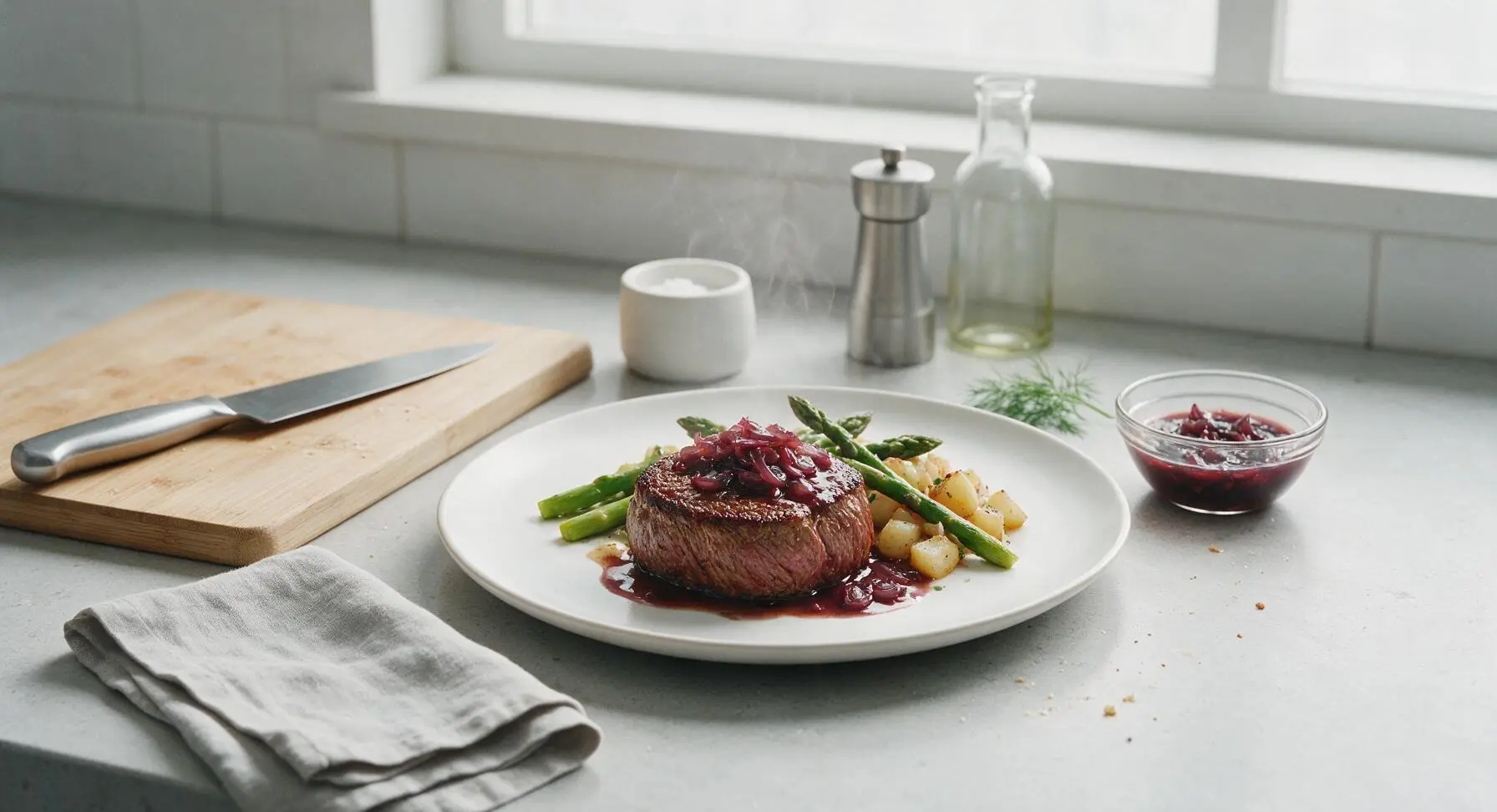
chateaubriand

title 1
chateaubriand
⏱️ cook time 35 minutes
🍽️ servings 2
⚡ Difficulty medium

intro

Buttery, tender center-cut beef tenderloin seared to a crisp golden crust, roasted to juicy medium-rare, and served with a silky red wine shallot reduction for a restaurant-worthy special meal.

Ingredients
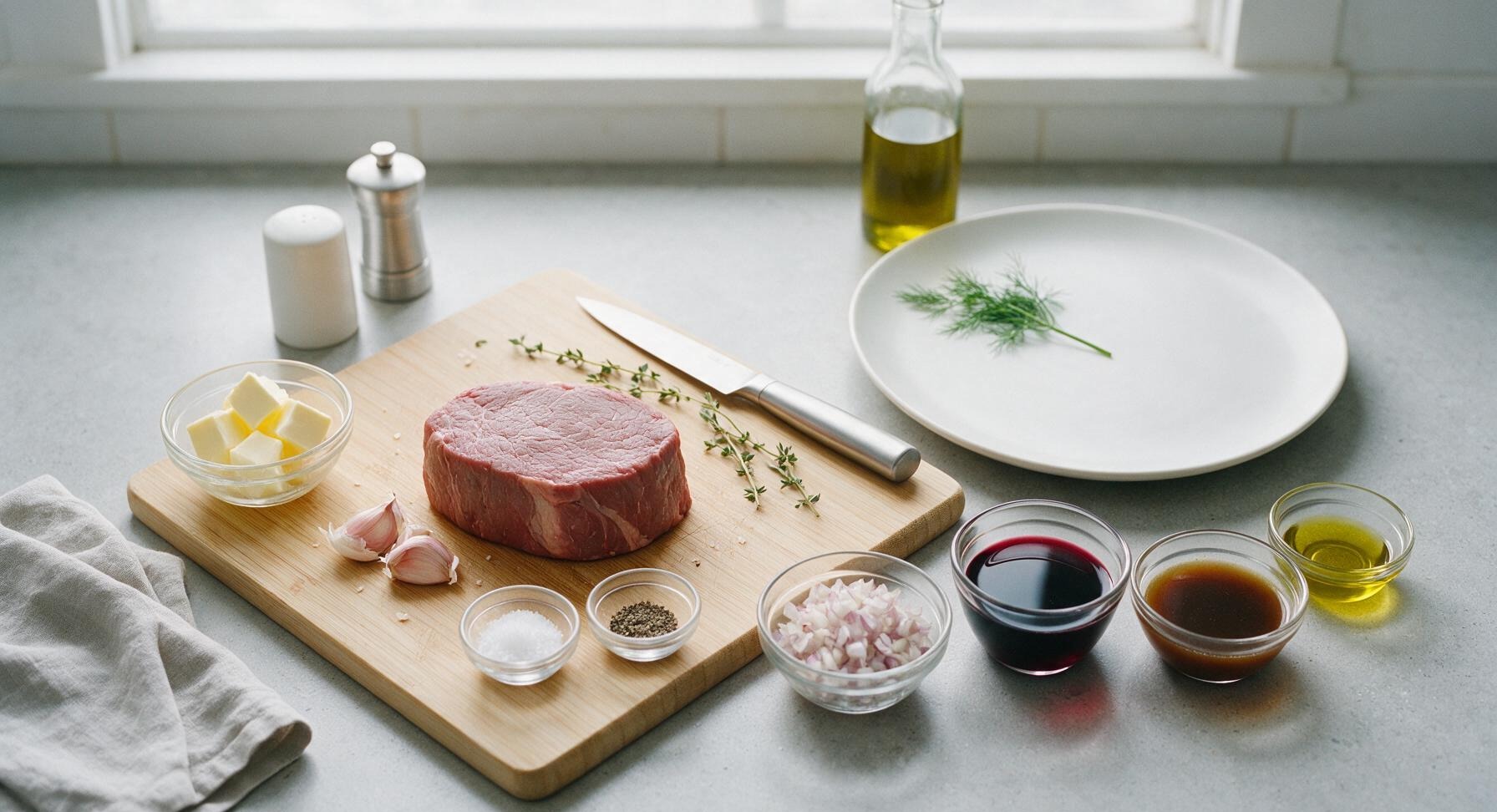
Center-cut beef tenderloin (chateaubriand cut, 5cm thick) 600g
Kosher salt 1.5 teaspoons
Freshly cracked black pepper 1 teaspoon
Unsalted butter 4 tablespoons (56g)
Garlic cloves (crushed, skin-on) 2
Fresh thyme sprigs 4
Medium shallots (finely diced) 2 (~1/2 cup)
Dry full-bodied red wine (Cabernet Sauvignon or Bordeaux) 1 cup (240ml)
Low-sodium beef broth 1/2 cup (120ml)
Extra-virgin olive oil 1 tablespoon

Steps

1

Temper the Beef

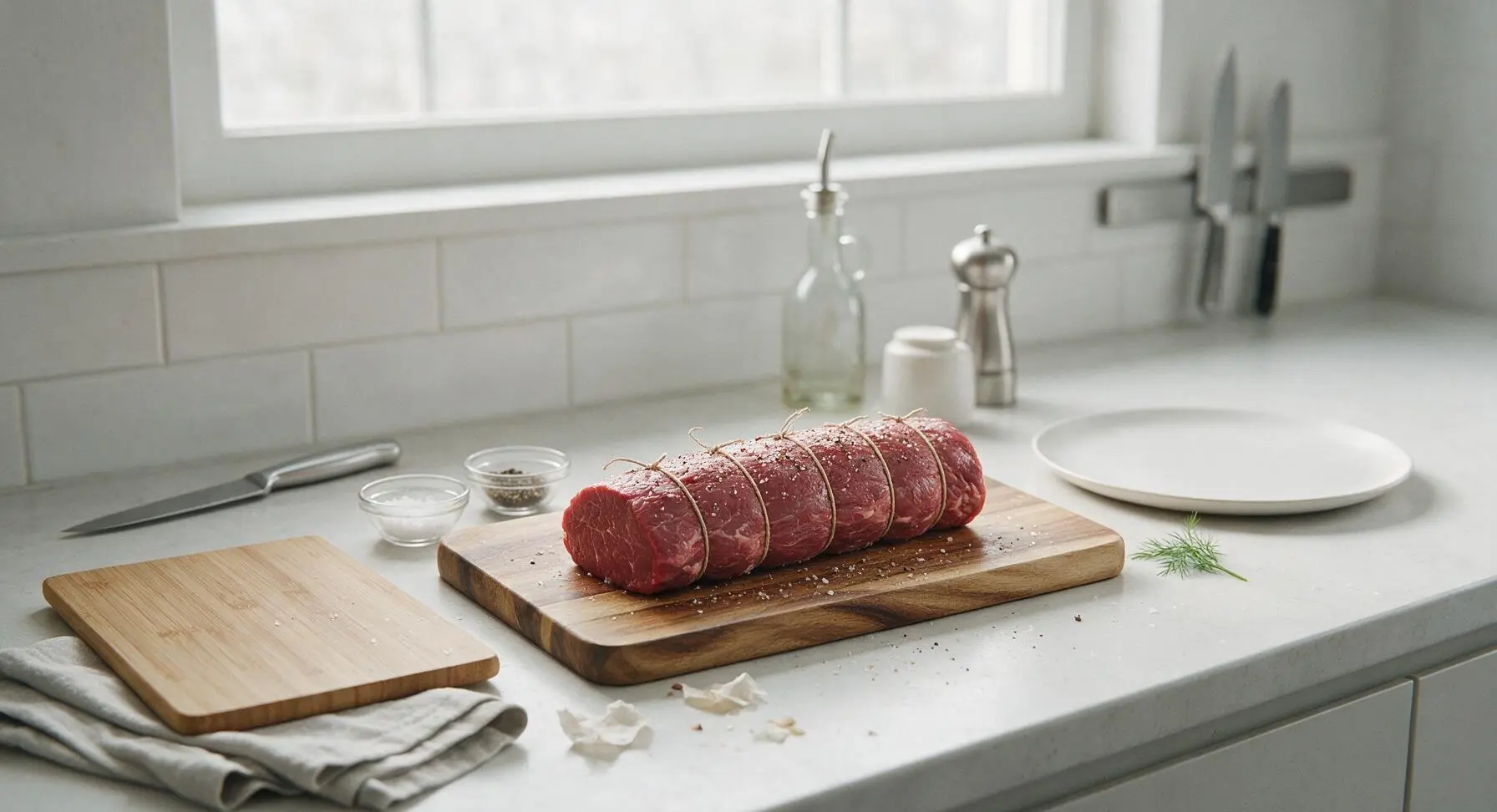
Pat the 600g center-cut beef tenderloin completely dry with paper towels, tie it at 3cm intervals with kitchen twine to hold its uniform round shape, then season generously all over with 1 teaspoon kosher salt and ½ teaspoon cracked black pepper. Let it rest uncovered on the acacia cutting board at room temperature for 45 minutes to ensure even cooking. Cold beef will cook unevenly, so this step is critical for a consistent medium-rare center.
Step 1
step1:Temper the Beef
2

Sear the Beef

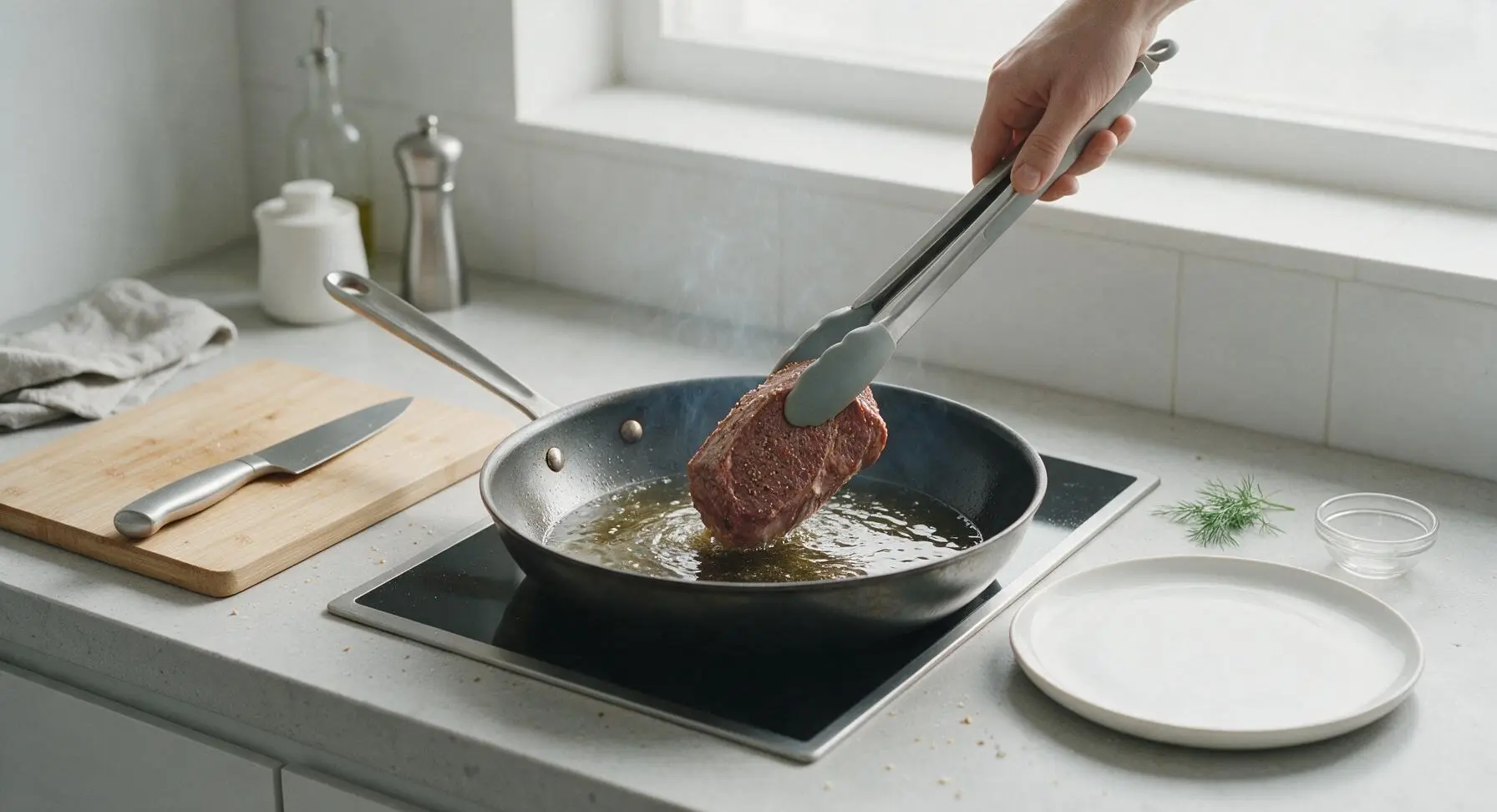
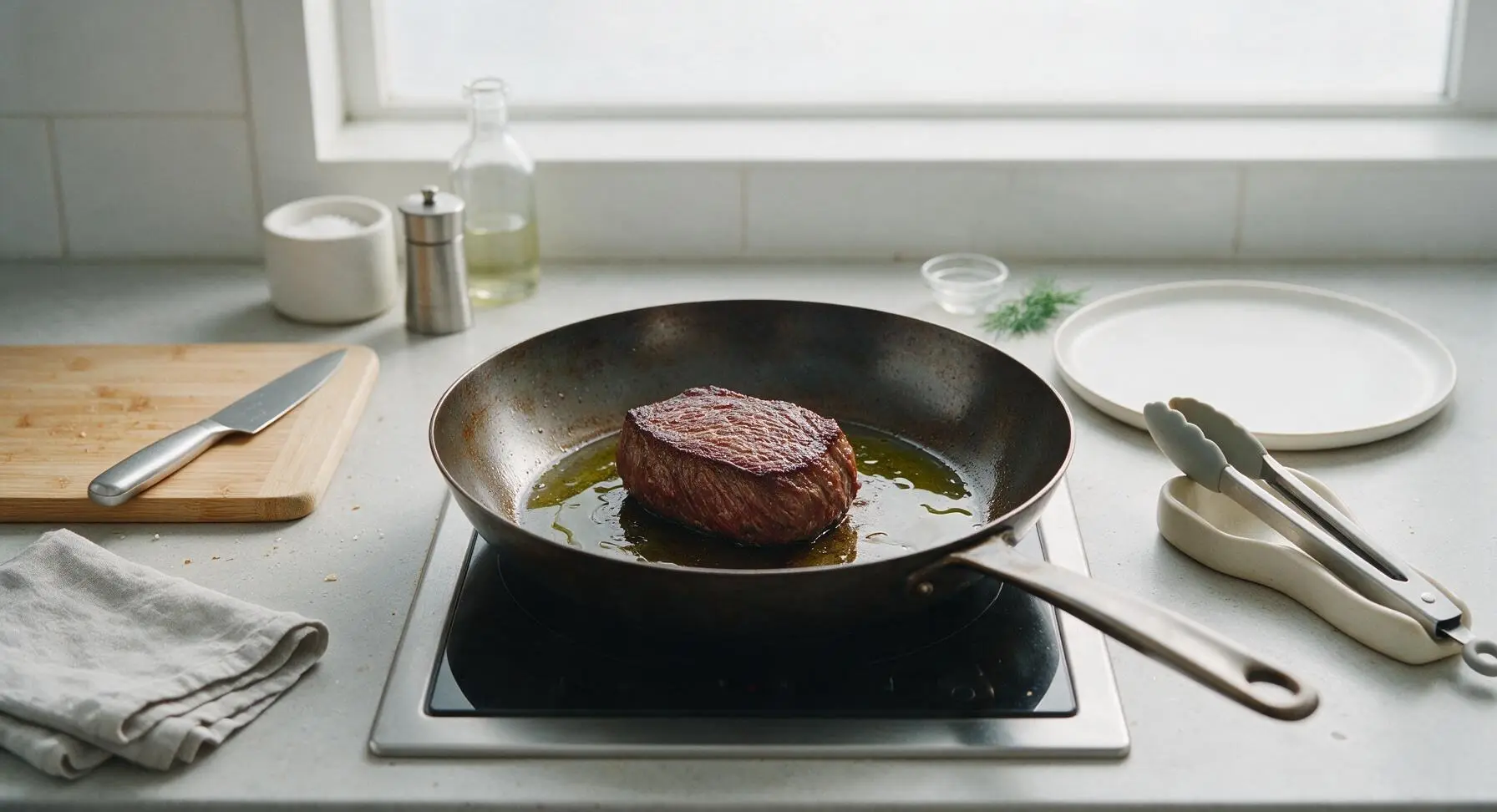
Heat 1 tablespoon olive oil in the 26cm carbon steel skillet over medium-high heat until the oil shimmers and just starts to smoke, about 3 minutes. Use the silicone-tipped tongs to place the beef in the skillet, searing each side for 2 minutes until a deep, golden-brown crust forms on all surfaces (top, bottom, and all rounded sides), about 8 minutes total. Do not move the beef while each side sears to build a thick, flavorful maillard crust.
Step 2
step2:Sear the Beef
Step 2
step2:Sear the Beef
3

Baste with Aromatics

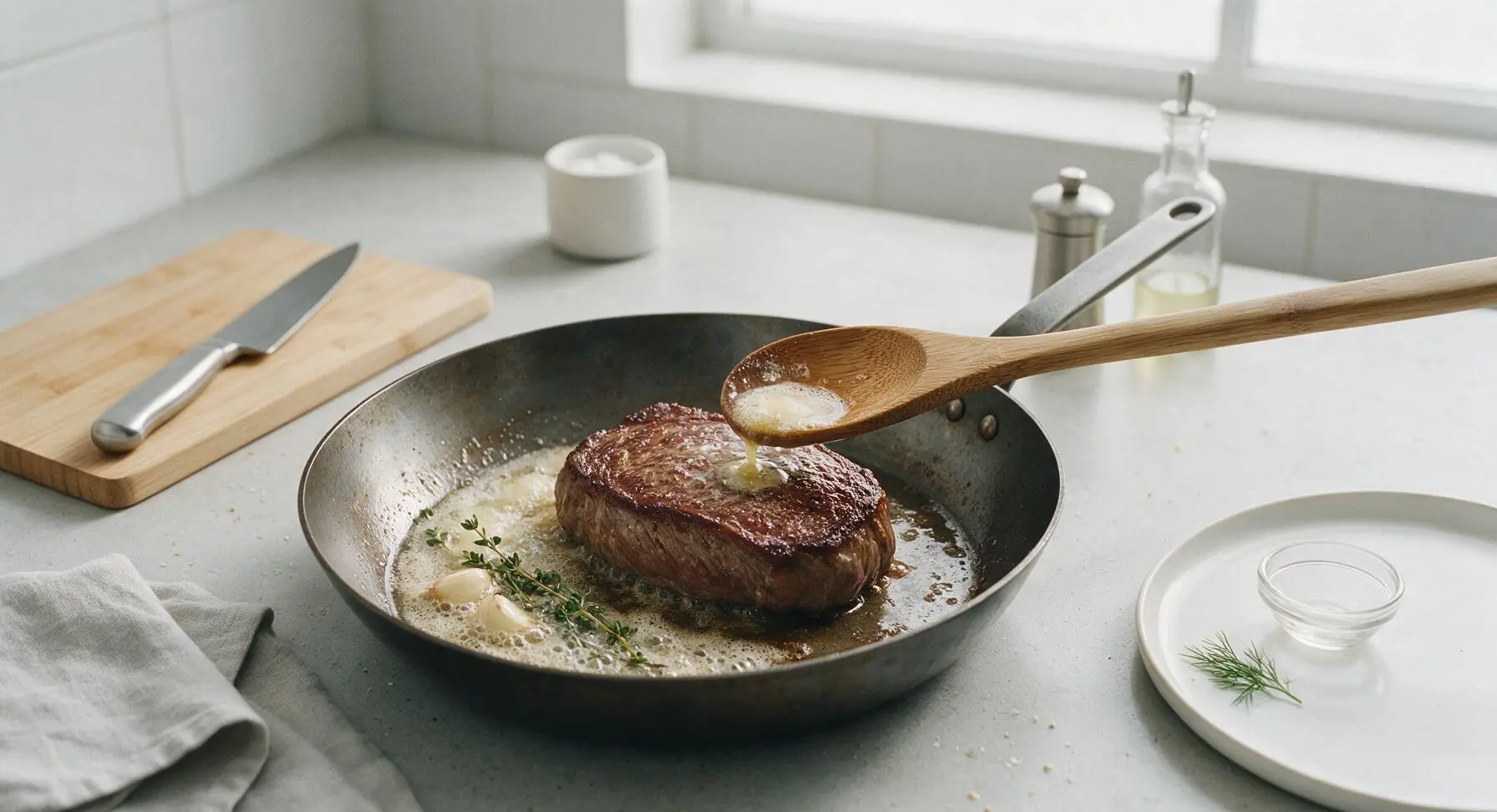
Reduce heat to medium, add 3 tablespoons of unsalted butter, the 2 crushed garlic cloves, and 3 sprigs of fresh thyme to the skillet. Once the butter is melted and foaming slightly, tilt the pan slightly and use the acacia wood cooking spoon to continuously spoon the hot, herb-infused butter over the top of the beef for 3 minutes. The butter will turn a light golden nutty brown, and the garlic will smell fragrant—do not let the butter burn or turn dark black.
Step 3
step3:Baste with Aromatics
4

Roast to Medium-Rare

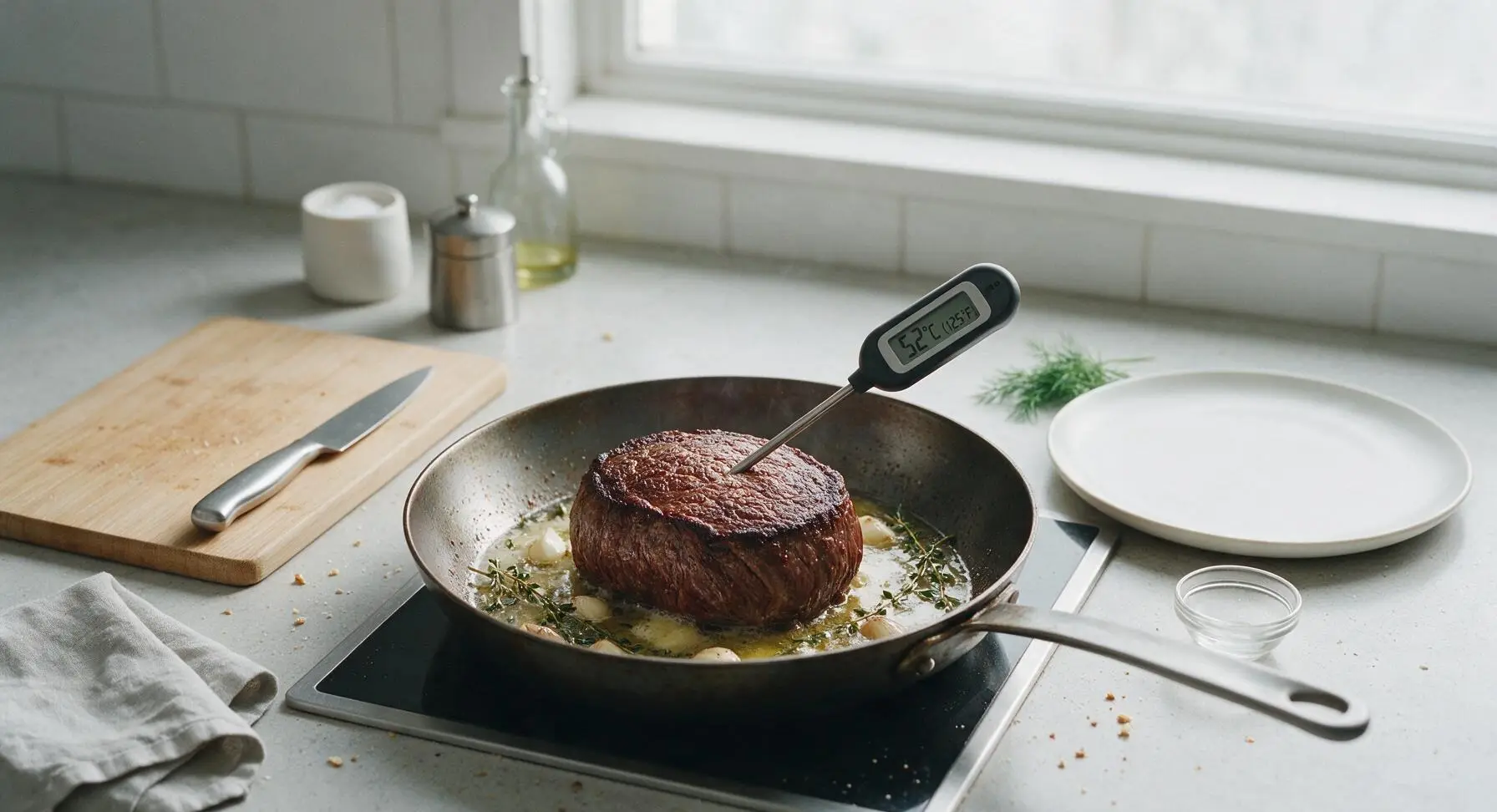
Transfer the entire skillet to a preheated 200C (400F) oven. Roast for 10-12 minutes, using the digital instant-read thermometer to check the internal temperature at the thickest part of the beef: remove the pan from the oven when the temperature reads 52C (125F) for perfect medium-rare. The temperature will rise 3-5C during resting to reach a final 55-57C (130-135F).
Step 4
step4:Roast to Medium-Rare
5

Rest the Cooked Beef

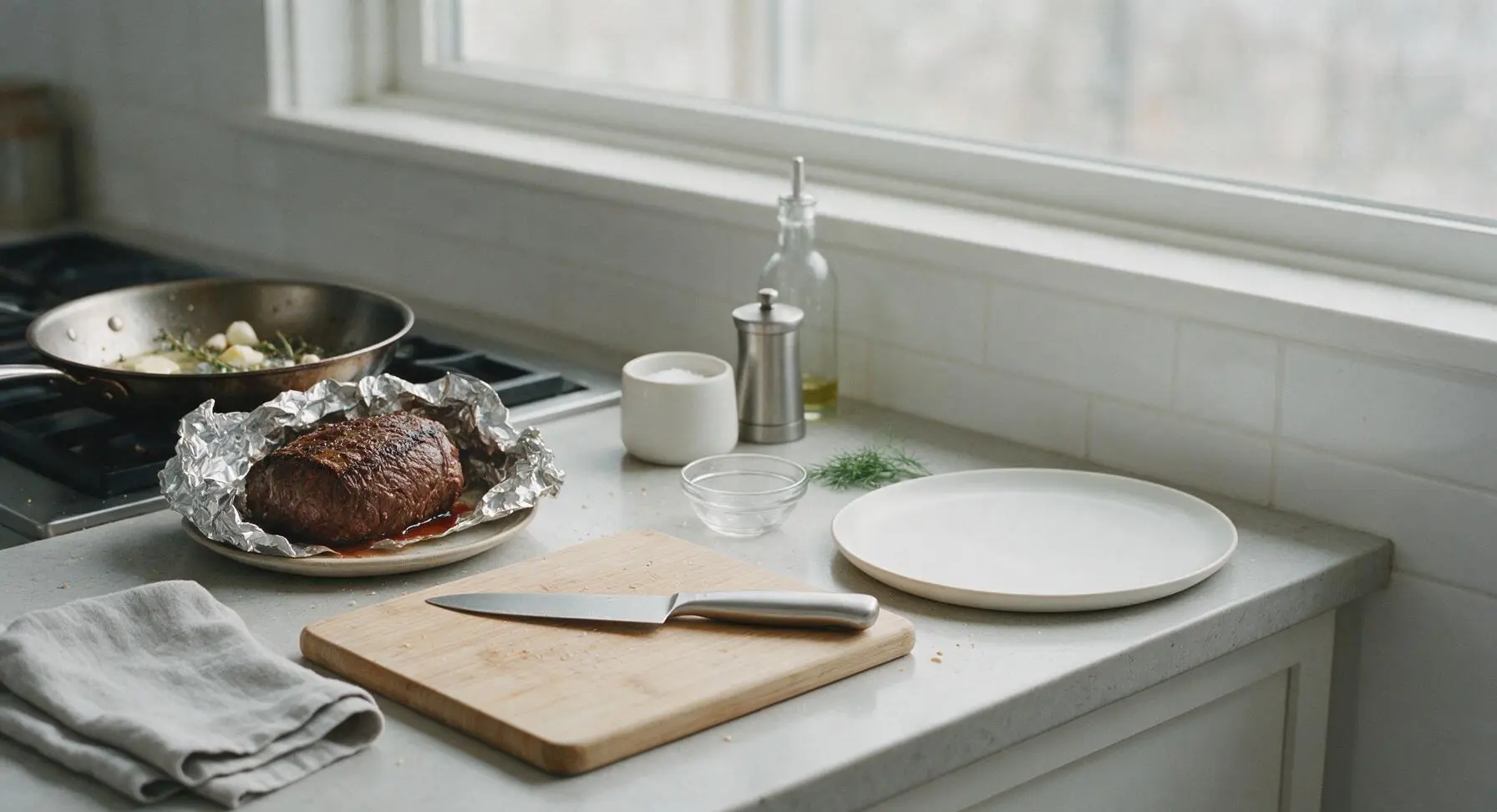
Use the tongs to transfer the seared, roasted beef from the skillet to a small clean plate, tent loosely with a small piece of aluminum foil, and let it rest for 10 full minutes. Do not cut into the beef early—resting allows the muscle fibers to relax and reabsorb juices, so every slice is juicy instead of having juice run all over the plate.
Step 5
step5:Rest the Cooked Beef
6

Make Red Wine Reduction

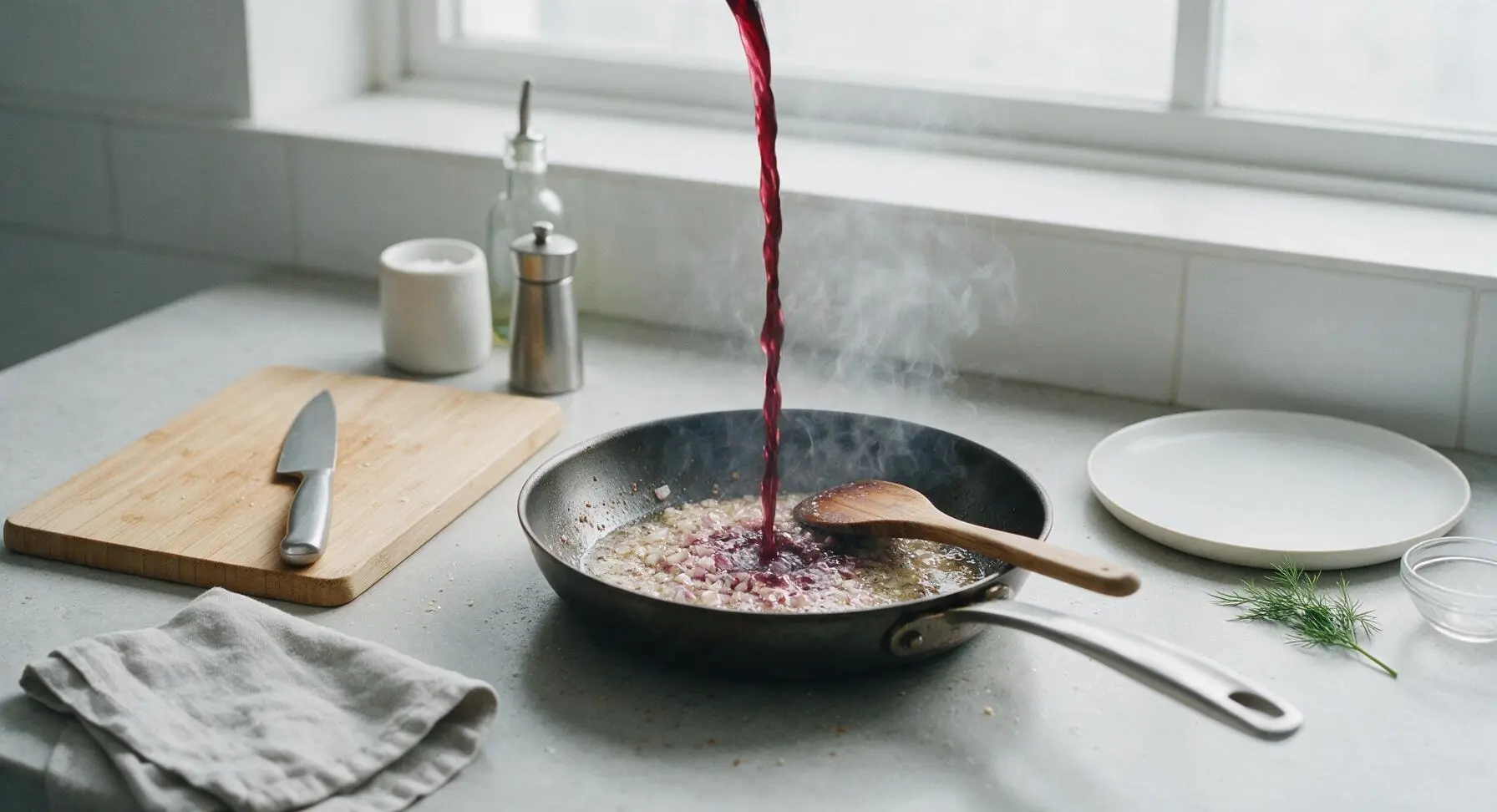
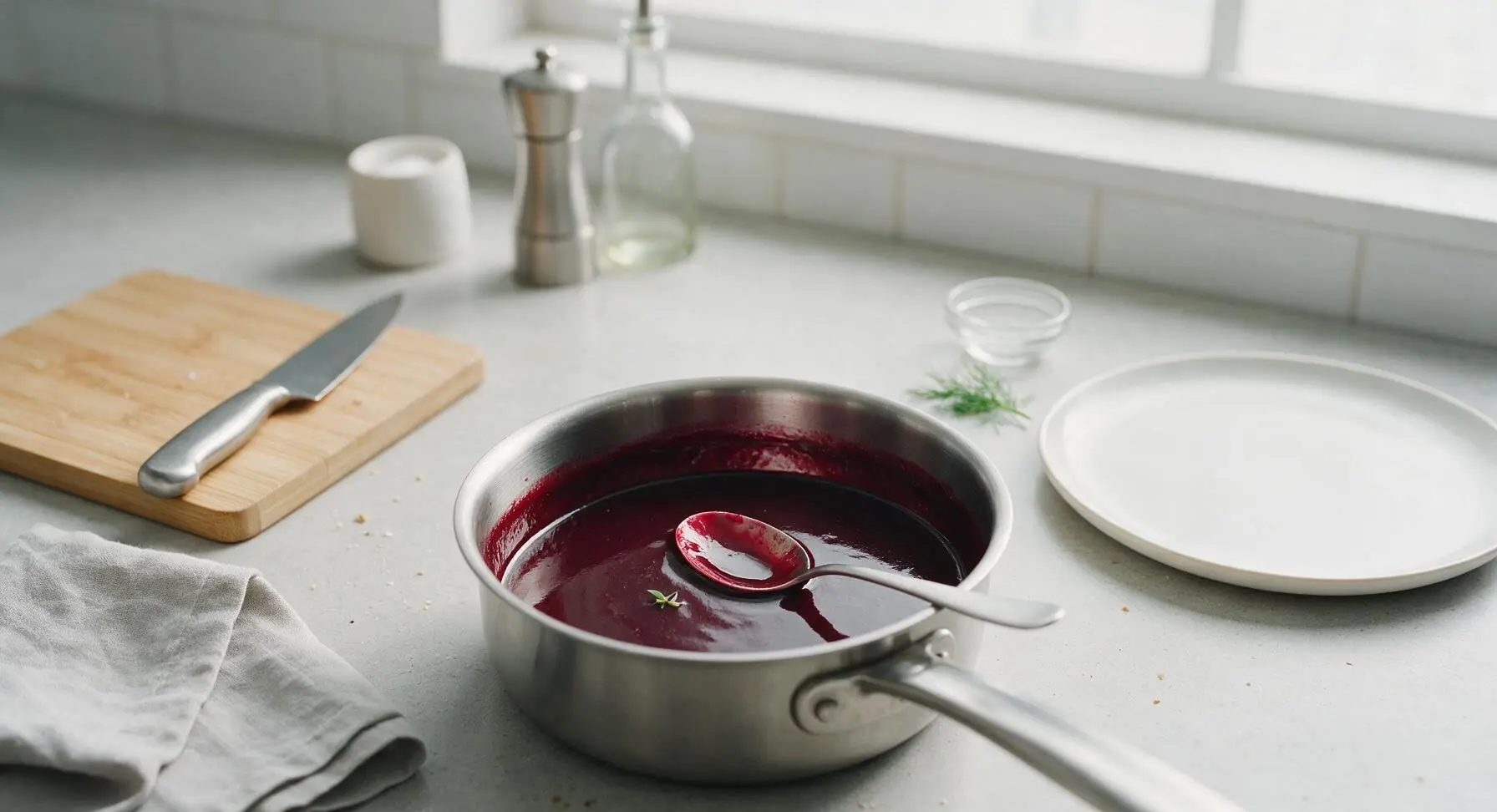
Place the same carbon steel skillet back over medium heat (do not wipe out the browned bits and leftover butter), add the finely diced shallots and sauté for 2 minutes until soft and translucent. Pour in 1 cup red wine, scraping the bottom of the pan with the acacia wood cooking spoon to lift all the browned fond bits. Simmer for 5 minutes until the wine is reduced by half, then add ½ cup beef broth and simmer for another 4 minutes until the sauce coats the back of the spoon. Stir in the remaining 1 tablespoon of cold butter until melted and smooth, then pour the sauce into the 16cm stainless steel saucepan to keep warm; strain through a fine sieve if desired for a silky texture, then season with remaining ½ teaspoon salt and ½ teaspoon pepper.
Step 6
step6:Make Red Wine Reduction
Step 6
step6:Make Red Wine Reduction
7

Slice and Plate Dish

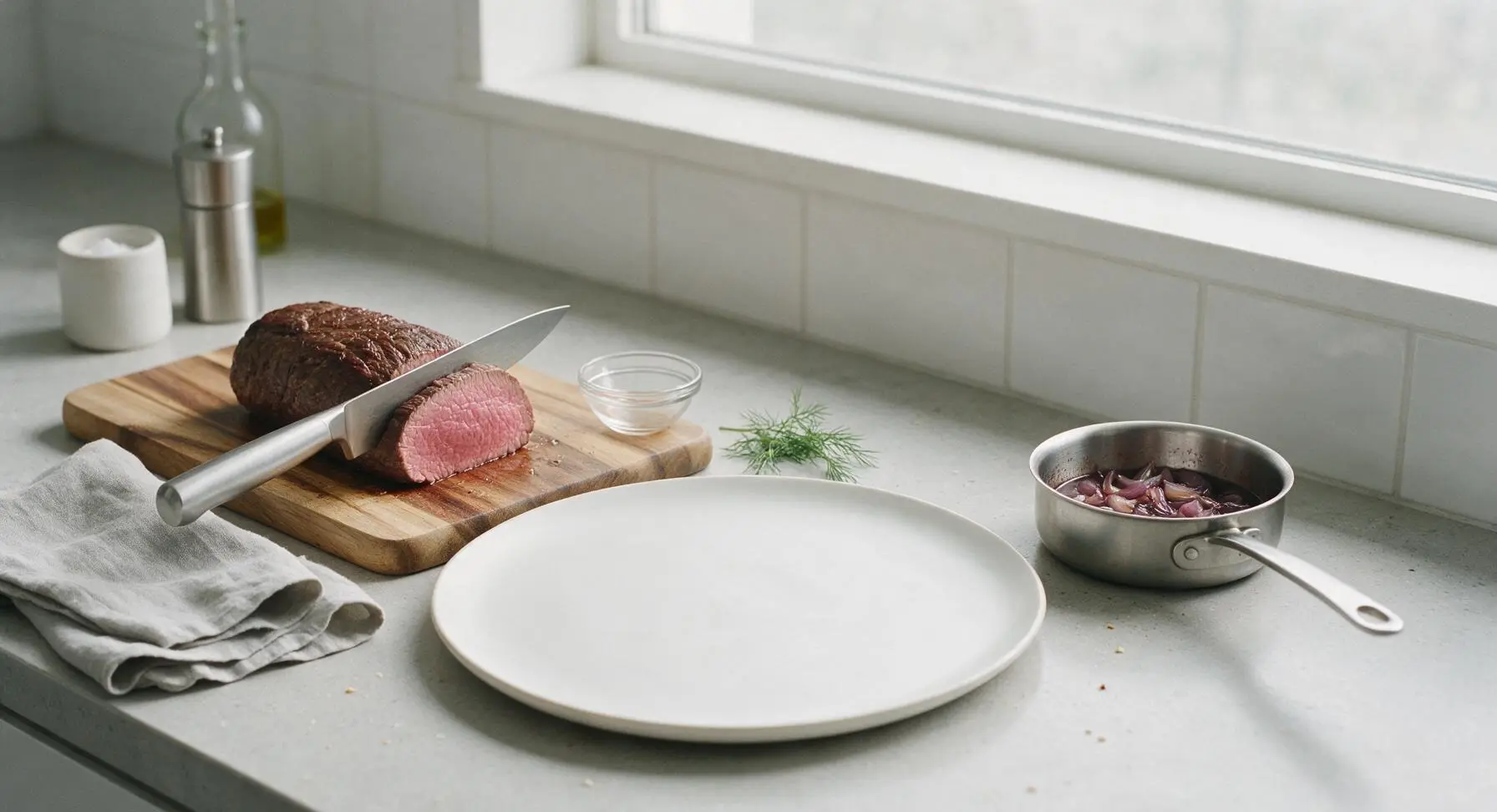
Remove the kitchen twine from the rested beef, set the acacia cutting board to the back left counter position, and slice the beef against the grain into 2cm thick slices. Arrange the slices slightly fanned on the 27cm matte off-white dinner plate, spoon 2-3 tablespoons of the red wine reduction alongside the beef, garnish with a fresh sprig of thyme. Serve immediately while warm.
Step 7
step7:Slice and Plate Dish

Tips

1.Never skip bringing the beef to room temperature before searing: cold beef will seize when exposed to high heat, creating a thick overcooked outer ring before the center reaches the correct temperature, leading to uneven, tough results.
2.Let the beef rest for a full 10 minutes tented loosely with foil before slicing: cutting into hot beef immediately causes all the reabsorbed muscle juices to flow out onto the plate, leaving you with dry meat even if you cooked it to the perfect internal temperature.
3.Use a dry, high-tannin red wine for the reduction (such as Cabernet Sauvignon or Bordeaux): sweet, light, or fruity wines will create a thin, cloying sauce that lacks the deep, rich flavor classic to chateaubriand.
✨ You May Also Like

Main Course
🍜 United Kingdom

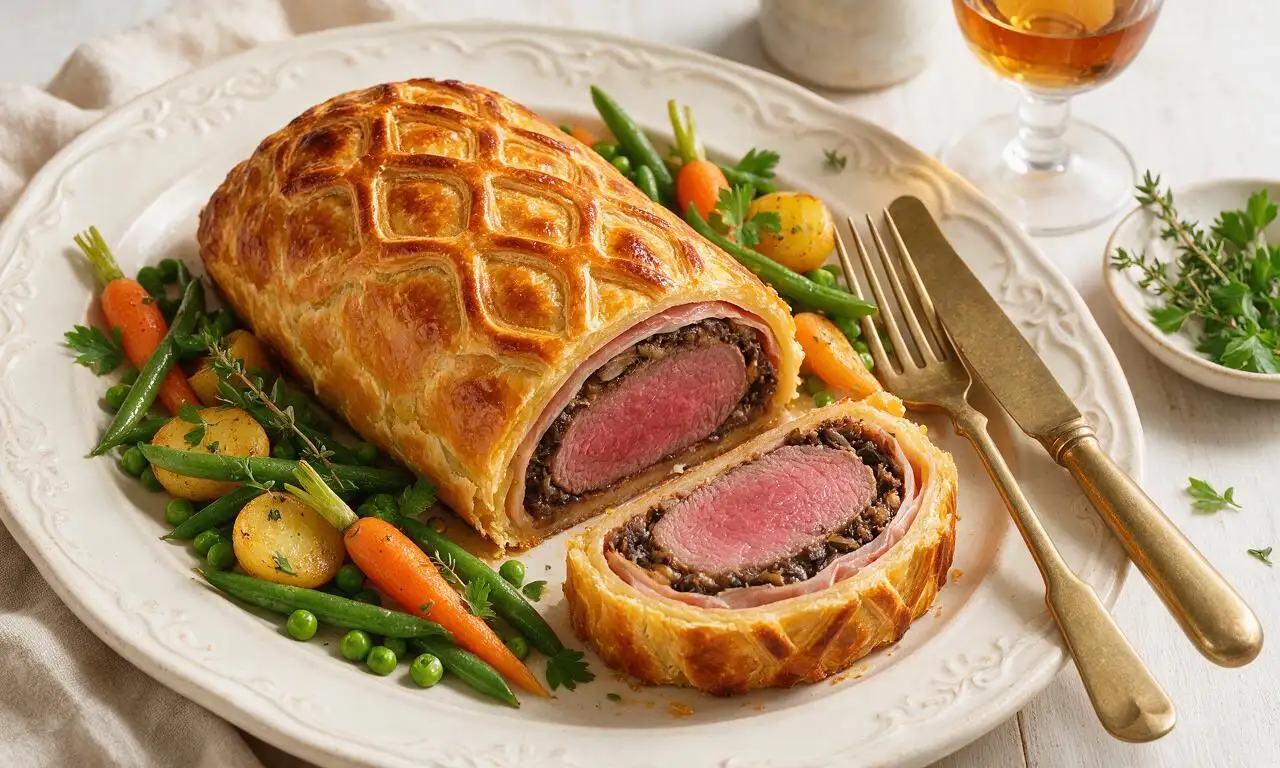
A showstopping classic of tender seared beef, savory mushroom duxelles, and crisp prosciutto wrapped in flaky golden puff pastry, baked to juicy perfection.

⏱️ 2 hours 1Main Course ★ 4.7
Main Course
🍜 India

Tender charred marinated chicken simmered in a rich, spiced creamy tomato sauce, this iconic Anglo-Indian curry pairs perfectly with basmati rice or warm naan.

⏱️ 50 minuteMain Course ★ 4.6
Main Course
🍜 Thailand

Classic tangy, sweet, and savory Thai stir-fried rice noodles with shrimp, tofu, and crunchy garnishes, balancing all five core Thai flavor profiles.

⏱️ 30 minuteMain Course ★ 4.5
Main Course
🍜 United Kingdom

Crispy golden beer-battered cod and fluffy double-fried chips, served with tangy tartar sauce and malt vinegar: the timeless, beloved British pub comfort classic.

⏱️ 45 minuteMain Course ★ 4.7
Main Course
🍜 Mexico

Smoky, chile-marinated pork tacos with caramelized pineapple, fresh cilantro, and lime: a beloved classic Mexican street food perfect for casual summer gatherings.

⏱️ 1 hour 45Main Course ★ 4.8
Main Course
🍜 United States

Crunchy Fritos corn chips layered with savory beef chili and melted cheddar, topped with cool, zesty fixings for a beloved, cozy Tex-Mex comfort food.

⏱️ 35 minuteMain Course ★ 4.8

chateaubriand:Frequently Asked Questions

1.What cut of beef is used for authentic chateaubriand, and can I substitute another tenderloin section? ▾
Authentic chateaubriand comes from the thick, uniform center portion of beef tenderloin, cut roughly 2 inches (5cm) thick to serve two people. You can use other tenderloin sections, but skip the thin, tapered ends—they cook unevenly, leading to overdone, dry edges long before the center hits your target doneness.
2.How far in advance should I salt the chateaubriand before cooking? ▾
For the juiciest, most deeply seasoned result, salt the beef 45 minutes to 24 hours before cooking, resting it uncovered on a wire rack in the fridge. Salting early draws out moisture that dissolves the salt, which then reabsorbs into the meat to season it all the way through, rather than just the surface.
3.What internal temperature should I aim for to get perfect medium-rare chateaubriand? ▾
Pull the chateaubriand from the oven when its thickest center hits 125°F for ideal medium-rare, then let it rest 10 minutes. The temperature will rise 3–5°F during resting (called carryover cooking) to land at a juicy, pink 130–135°F, with no tough, gray overcooked bands around the edges.
4.Do I need to tie the chateaubriand with twine before searing and roasting? ▾
Yes, tie the roast at 1-inch intervals with kitchen twine before cooking. This holds the thick, soft tenderloin in a tight, even cylindrical shape, so it sears and roasts uniformly on every side, rather than slumping and developing flat, overcooked spots or uneven doneness from edge to center.
5.What kind of red wine works best for the shallot reduction? ▾
Reach for a dry, medium-bodied red wine like Cabernet Sauvignon, Merlot, or Pinot Noir that you would actually enjoy drinking. Skip cheap, overly tannic or sweet cooking wines—they make the reduction taste flat, bitter, or cloying, and leftover wine pairs perfectly with the finished meal.
6.Why does my seared beef never get that deep, crisp golden crust the recipe describes? ▾
Make sure your beef is completely patted dry with paper towels before searing, and that your heavy skillet is ripping hot before adding the butter and beef. Wet meat will steam instead of sear, and a too-cool pan will make the beef stick and cook pale, rather than developing that rich, flavorful Maillard reaction crust.
7.How long do I need to let the chateaubriand rest after cooking, and is this step really necessary? ▾
Let the cooked chateaubriand rest loosely tented with foil for 10 full minutes before slicing. Resting gives the hot, tight muscle fibers time to relax and reabsorb all the juicy, flavorful meat juices, so they don’t all pour out onto your cutting board the second you slice in, leaving you with dry beef.
8.Can I make the red wine shallot reduction ahead of time for a dinner party? ▾
Absolutely! Make the reduction up to 3 days ahead, store it in an airtight container in the fridge, and gently reheat it in a small saucepan over low heat right before serving. Stir in a tiny pat of cold butter right before serving to bring back that silky, glossy restaurant-quality texture.
9.What’s the point of adding skin-on crushed garlic and butter to the pan while searing? ▾
Those ingredients are for basting! Once you have a good crust on all sides, tilt the pan and spoon the bubbling garlic-infused butter over the beef repeatedly for 1–2 minutes. This adds rich, nutty, aromatic flavor to the crust, and the skin keeps the garlic from burning and turning bitter in the hot pan.
10.How thick should I slice the finished chateaubriand to serve? ▾
Slice the rested chateaubriand against the grain into 1-inch thick slices for serving. Cutting against the grain shortens the long, chewy muscle fibers to keep every bite tender, and this thickness shows off the perfect pink, juicy center without letting slices get too thin and cool too fast.
11.I don’t have an oven-safe cast iron skillet—can I still make this recipe successfully? ▾
Absolutely! Use any heavy-bottomed, oven-safe skillet you have, like tri-ply stainless steel. The key requirements are that the pan holds heat evenly to build a good sear, and is safe to move from stovetop to oven without warping or melting handles. Skip thin, lightweight nonstick pans, as they can’t get hot enough for a proper crisp crust.

Comments (7)

2 days ago

OMG, made this for my 10th wedding anniversary dinner last night and my husband is STILL raving about it! The red wine shallot reduction is *chef’s kiss* — I used a cab sav we had left over from our first date and it made the whole thing feel so special. Was worried it’d be too fussy for a weeknight-adjacent meal but 35 minutes total? Total game changer. Will absolutely be making this for our next dinner party too.

yesterday

So happy to hear this made your anniversary dinner special, Megan! Using a meaningful leftover wine like that is such a lovely touch — it really makes the reduction feel personal. So glad the cook time worked out for you, can’t wait to hear how it goes over at your next dinner party!

3 days ago

Really solid recipe! The chateaubriand came out perfectly medium-rare like I wanted, but I messed up the reduction the first go-round — I let the shallots cook too long and they got a little burnt before I added the wine. Tasted great once I started over though! My teen son who hates all “fancy steak” even ate two servings, which is a miracle. Would make again, just gonna pay closer attention to the shallot step next time.

2 days ago

Oh I did the exact same thing my first try! I turned the heat down a touch when cooking the shallots after that and they get perfectly soft and caramelized with zero burn, total game changer.

yesterday

Thanks for the honest feedback, Jake! So glad your son enjoyed it even with the little hiccup. Lisa’s tip about lowering the heat for the shallots is spot on — medium-low is perfect for getting that sweet caramelization without burning, I’ll make a note to call that out more clearly in the recipe steps!

1 week ago

Made this for Sunday family dinner and everyone went back for seconds! I paired it with roasted garlic mashed potatoes and roasted asparagus and it felt like a restaurant quality meal right at home for a fraction of the price. The reduction is so rich and flavorful, I even saved a little extra to drizzle on my leftover steak salad for lunch today. SO good.

5 days ago

First time making chateaubriand ever and I was low-key stressed I’d ruin a super nice cut of beef, but this recipe was so straightforward! The timing guide for doneness was spot on — I pulled mine at 130°F internal and it was the perfect medium rare after resting. 10/10, will be my go-to special occasion steak recipe from now on.

3 days ago

Same! I was so nervous to mess up such an expensive cut for my partner’s birthday but the instructions were so clear, it came out perfect. We’re already planning to make it for Christmas dinner!

1 week ago

Taste was amazing, but I wish the recipe noted what kind of red wine works best! I used a really sweet merlot I had in the fridge and the reduction came out way sweeter than I expected, even after adding extra beef broth to balance it. Still edible, just not quite what I was hoping for.

5 days ago

Pro tip: always use a dry red you’d actually drink for reductions! Sweet wines make it taste like candy, I learned that the hard way too. I used a dry cab franc for mine and it was perfect.

3 days ago

Hi Maria, thanks so much for pointing that out! I recommend a dry, full-bodied red like cabernet sauvignon, dry merlot, or syrah for the reduction — I’ll update the recipe notes to call that out explicitly so no one else runs into the overly sweet issue! So glad you were able to make it work even with the sweet merlot.

yesterday

Meal prepped a version of this for my lunches this week! I cooked the chateaubriand to medium, sliced it thin, and portioned it out with roasted veggies and quinoa, then drizzled the reduction over top right before eating. Who says fancy steak can’t be meal prep?? My coworkers were so jealous when I pulled it out of the office fridge today lmao.

2 hours ago

This is such a genius meal prep idea, Lila! I love that you’re elevating your weekday lunches instead of settling for boring leftovers. Slicing it thin and saving the reduction to add last is the perfect move to keep it tasting fresh — I might have to steal this hack for my own work weeks!

2 weeks ago

Brought this to our neighborhood potluck last weekend and people were literally coming up to ask me for the recipe before they even finished their first bite. I was worried it’d be too fancy for a casual backyard get-together but nope, everyone went crazy for it. The shallot reduction is so flavorful you could put it on cardboard and it’d taste good tbh. 10/10, no notes.