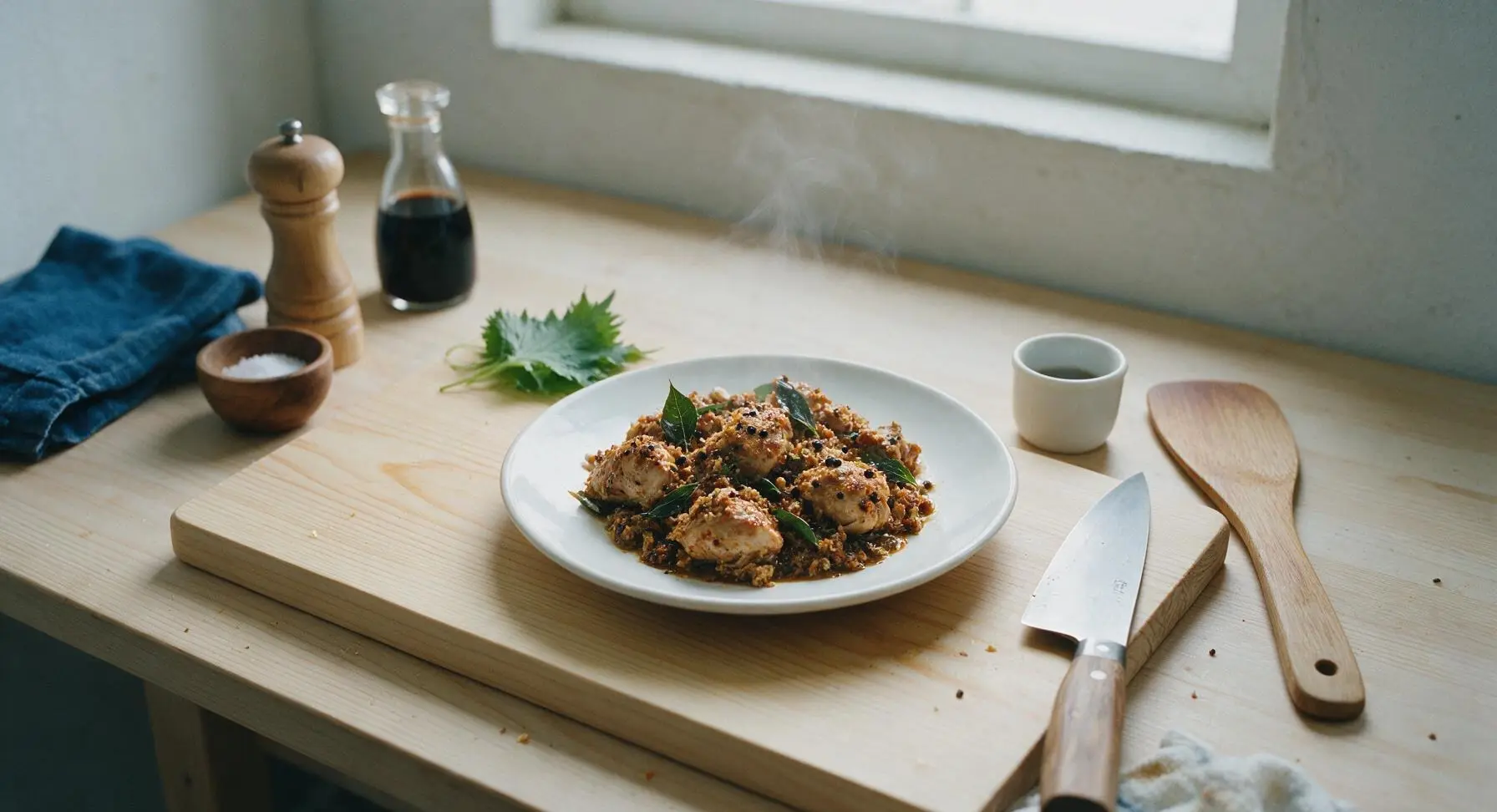
chicken chettinad

title 1
chicken chettinad
⏱️ cook time 35 minutes
🍽️ servings 4
⚡ Difficulty medium

intro

Fiery, aromatic South Indian curry from Tamil Nadu’s Chettinad region, with chicken coated in a roasted coconut-spice masala, bold black pepper, curry leaves, and bright tamarind tang.

Ingredients
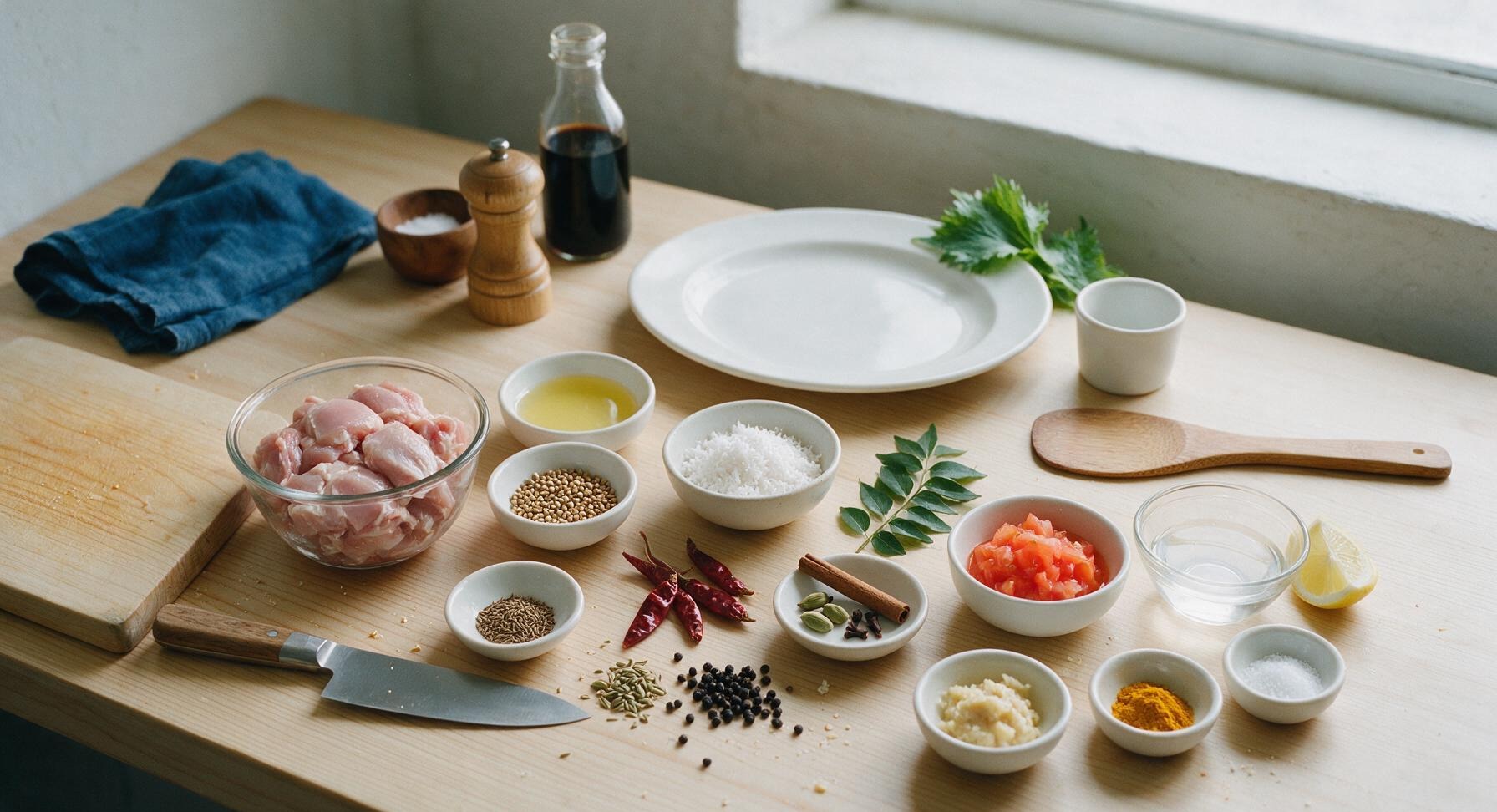
Bone-in skinless chicken thighs, cut into 5cm pieces 500g
Coriander seeds 2 tbsp
Cumin seeds 1 tsp
Fennel seeds 1 tsp
Whole black peppercorns 1 tbsp
Dried Kashmiri red chiles, stemmed 4
Green cardamom pods 3
Whole cloves 3
Cinnamon stick (2.5cm length) 1
Fresh unsweetened grated coconut ½ cup
Coconut oil 3 tbsp
Fresh curry leaves 2 sprigs (20 leaves)
Medium yellow onion, finely chopped 2
Ginger-garlic paste 2 tbsp
Medium ripe tomato, finely chopped 1
Strained tamarind pulp 2 tbsp
Turmeric powder ½ tsp
Table salt 1.5 tsp
Warm water 1 cup
Small lemon, cut into wedges for garnish 1

Steps

1

Marinate Chicken Pieces

Place the cut 500g chicken pieces in the stainless steel mixing bowl. Add ½ tsp turmeric powder and ½ tsp salt, toss to coat evenly. Set aside for 15 minutes at room temperature to allow the flavors to penetrate; the chicken will take on a pale yellow hue from the turmeric. Do not marinate longer than 20 minutes at room temperature to avoid food safety risks.
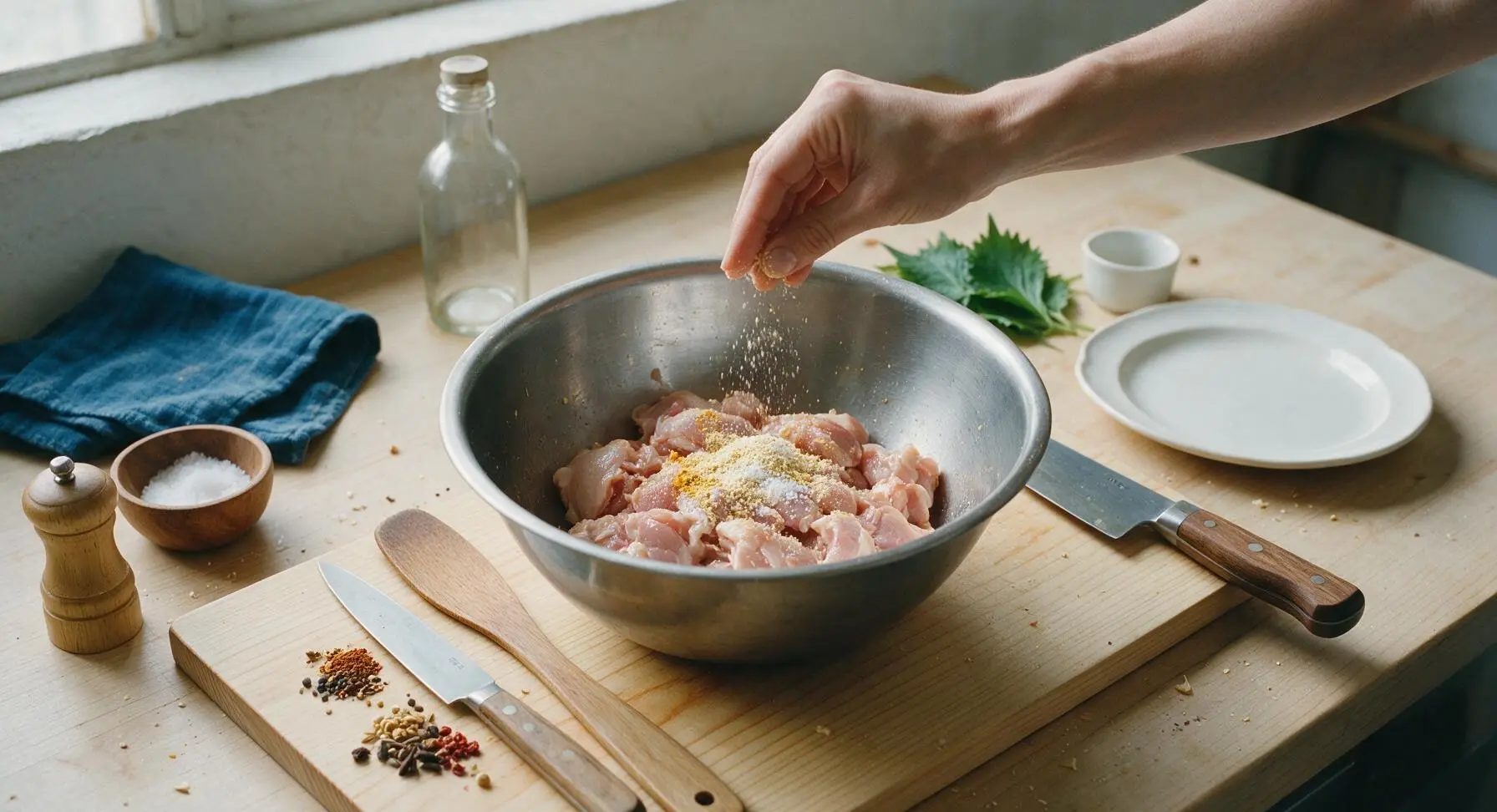
Step 1
step1:Marinate Chicken Pieces
2

Roast Whole Spices

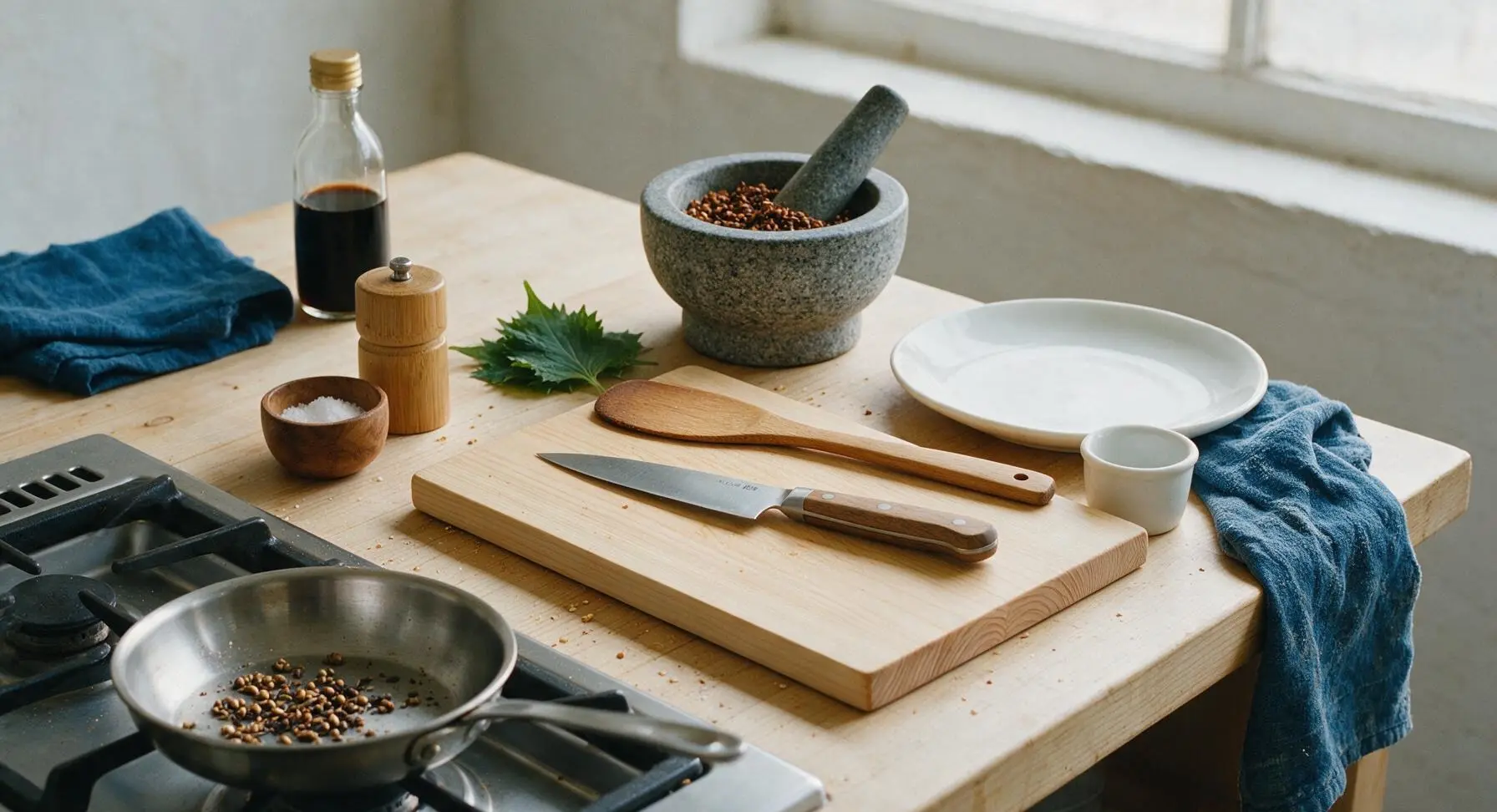
Heat the small stainless steel spice roasting pan over medium-low heat (150C/300F). Add coriander seeds, cumin seeds, fennel seeds, black peppercorns, dried red chiles, cardamom, cloves, and cinnamon stick. Dry roast for 2-3 minutes, stirring constantly with the spatula, until the spices release a rich, nutty aroma and turn slightly darker in color. Watch closely to avoid burning—burnt spices will make the curry bitter. Immediately transfer spices to the granite mortar and pestle to cool.
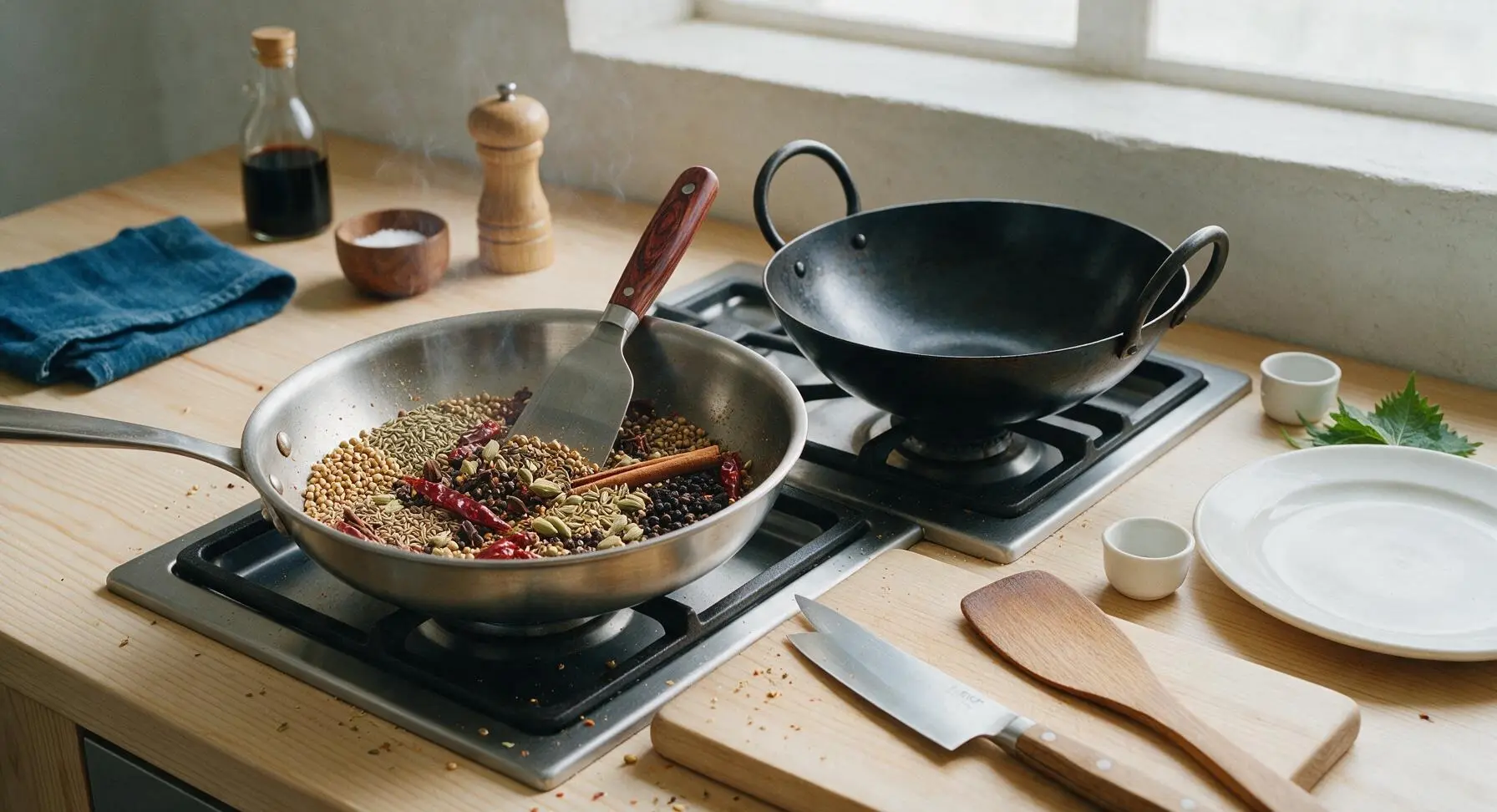
Step 2
step2:Roast Whole Spices
Step 2
step2:Roast Whole Spices
3

Roast Fresh Coconut

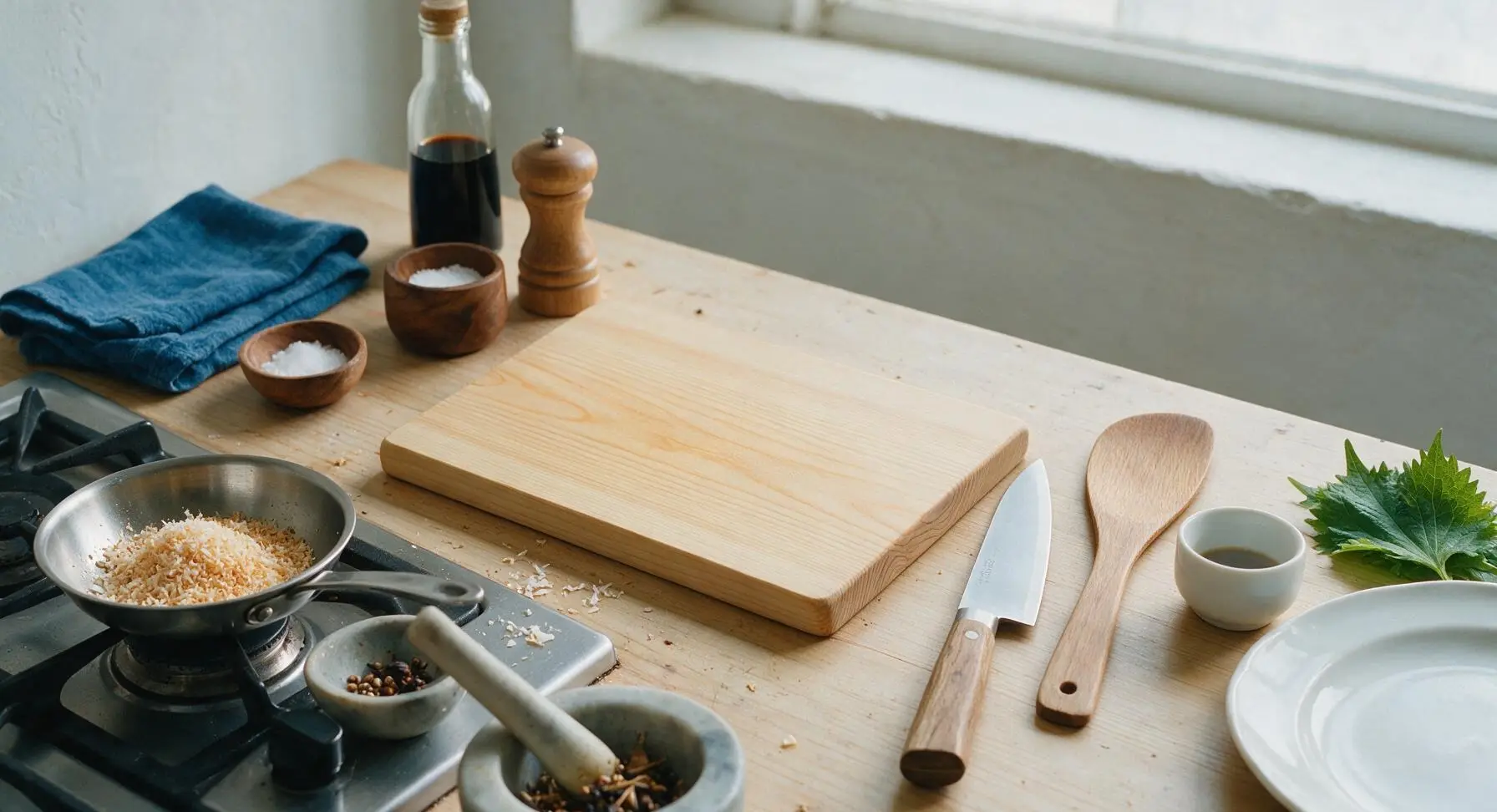
In the same small spice pan (no need to wipe clean), add ½ cup grated coconut over low heat (120C/250F). Roast for 3-4 minutes, stirring continuously, until the coconut turns a light golden brown and smells toasty. Immediately scrape the coconut into the mortar with the cooled spices to prevent it from burning from residual pan heat.
Step 3
step3:Roast Fresh Coconut
4

Grind Roasted Masala

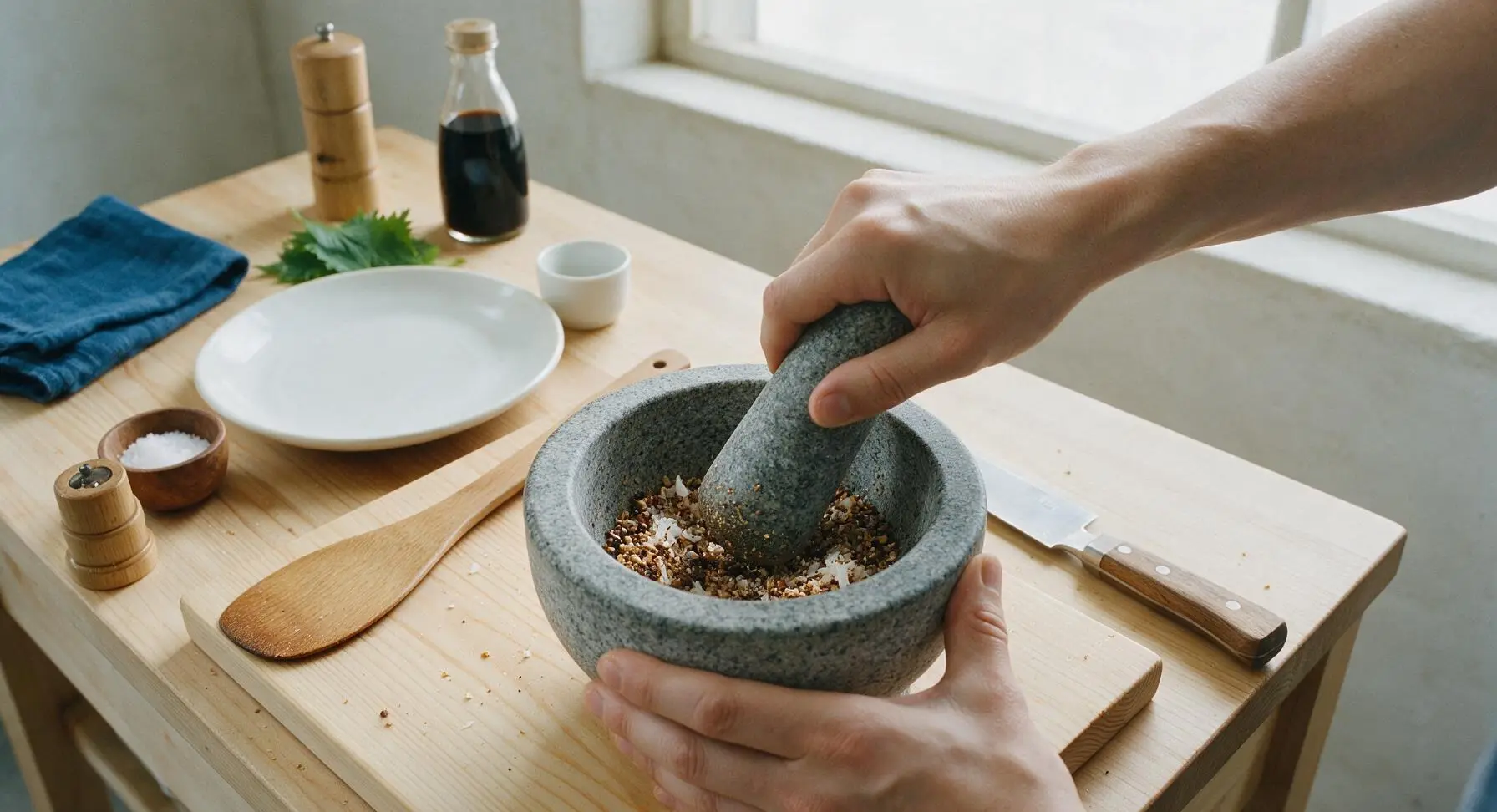
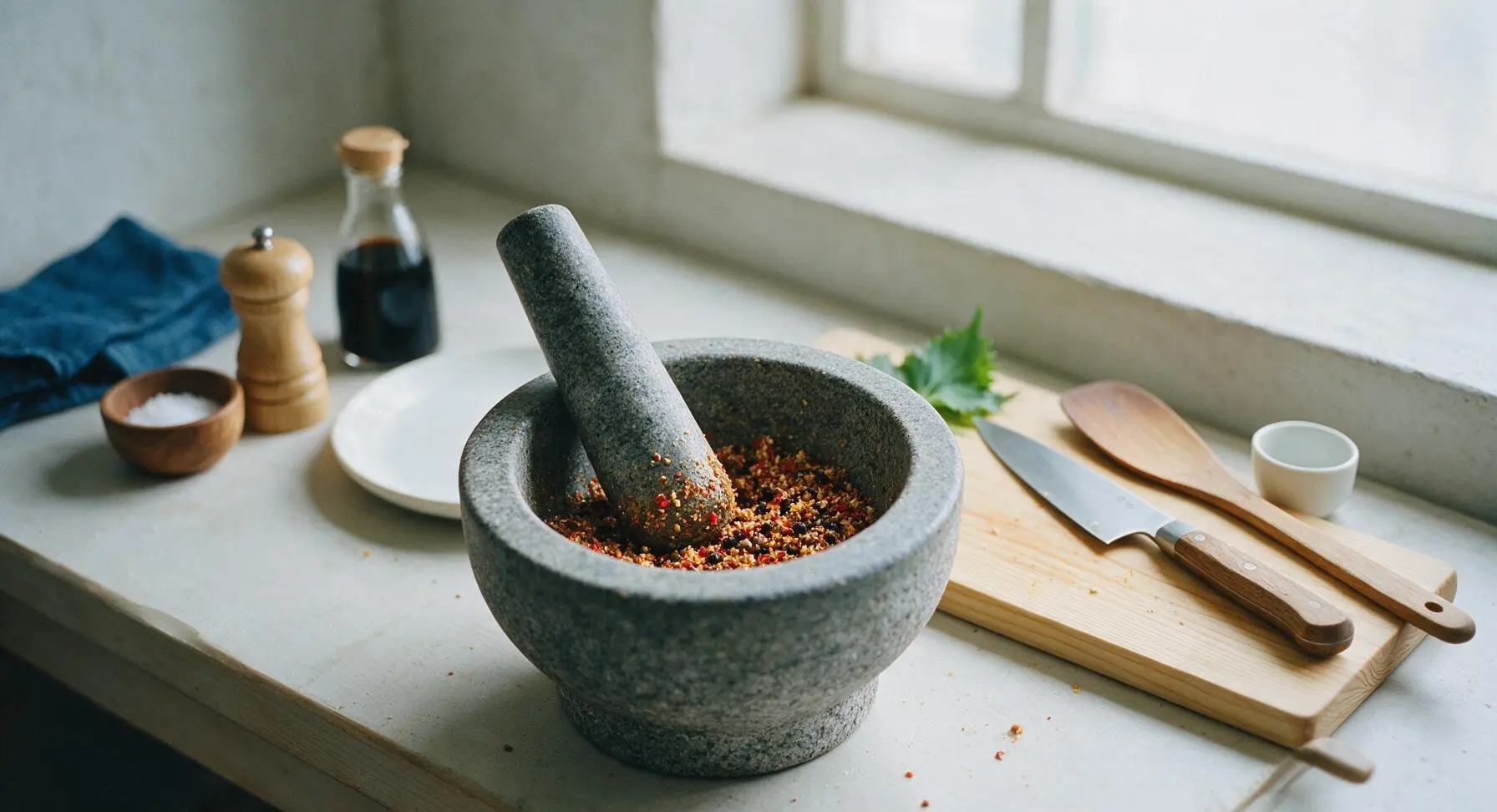
Once the roasted spices and coconut are fully cooled (about 5 minutes), use the granite mortar and pestle to grind them into a coarse, crumbly powder. Do not grind to a fine paste—textured, slightly gritty masala is the signature of Chettinad curry; you should still see small flecks of coconut and pepper in the mix.
Step 4
step4:Grind Roasted Masala
Step 4
step4:Grind Roasted Masala
5

Sauté Aromatic Base

Heat 3 tbsp coconut oil in the carbon steel kadai over medium heat (170C/340F). Once the oil is shimmering, add 1 sprig of curry leaves—they will splutter immediately, so stand back slightly. Add the finely chopped onions, sauté for 8-10 minutes, stirring occasionally with the spatula, until the onions turn a deep golden brown. Add 2 tbsp ginger-garlic paste, cook for 1 minute until the raw smell fades, then add the chopped tomato. Cook for 4-5 minutes until the tomato softens completely and breaks down into a thick pulp.
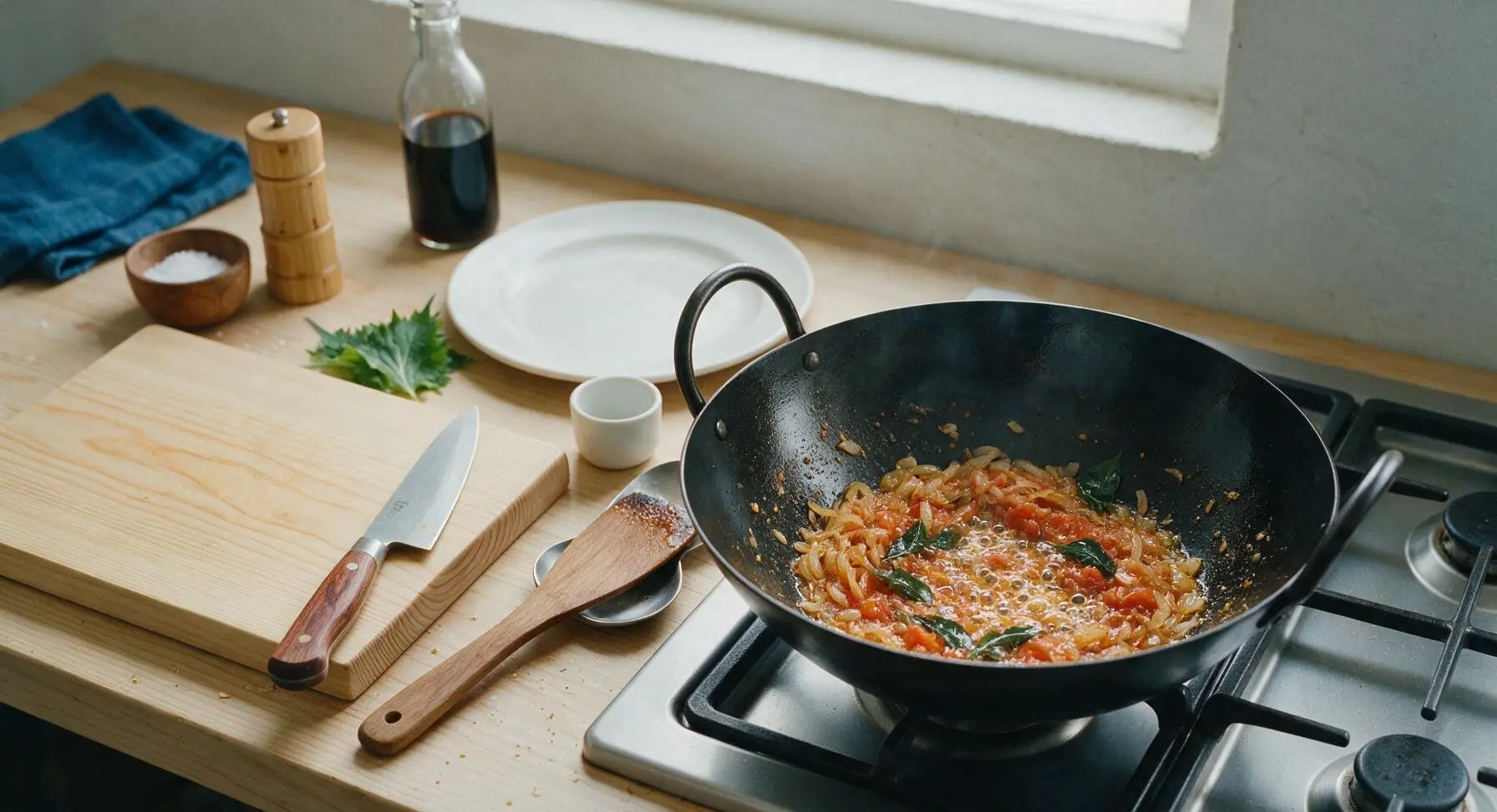
Step 5
step5:Sauté Aromatic Base
6

Sear Chicken in Masala

Add the marinated chicken pieces to the kadai, stir to coat completely in the onion-tomato masala. Cook for 5 minutes over medium-high heat, turning the chicken occasionally with the spatula, until the outside of the chicken is seared to a light golden brown on all sides. Add the ground coarse Chettinad masala and remaining 1 tsp salt, stir well to combine, so every piece of chicken is evenly dusted with the spice mix.
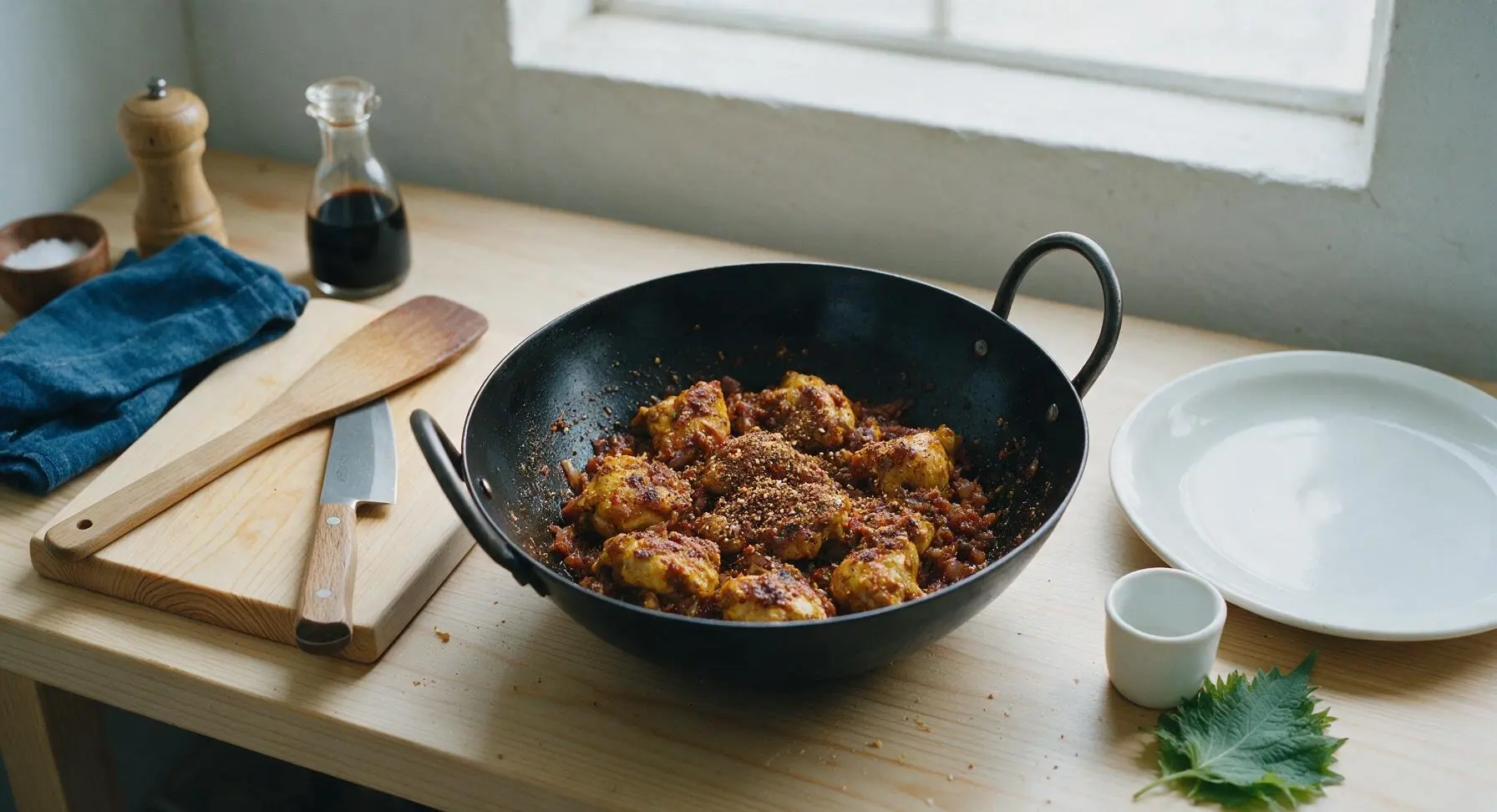
Step 6
step6:Sear Chicken in Masala
7

Simmer Curry Until Tender

Pour 1 cup of warm water into the kadai, stir to mix, bring to a gentle boil. Reduce heat to low (110C/230F), cover the kadai with its matching carbon steel lid, and simmer for 12-15 minutes, until the chicken is fully cooked (internal temperature 75C/165F) and tender. Stir in the strained tamarind pulp and remaining sprig of fresh curry leaves, simmer uncovered for 2 more minutes to allow the flavors to meld. The masala will be thick, coating the chicken pieces, not watery.
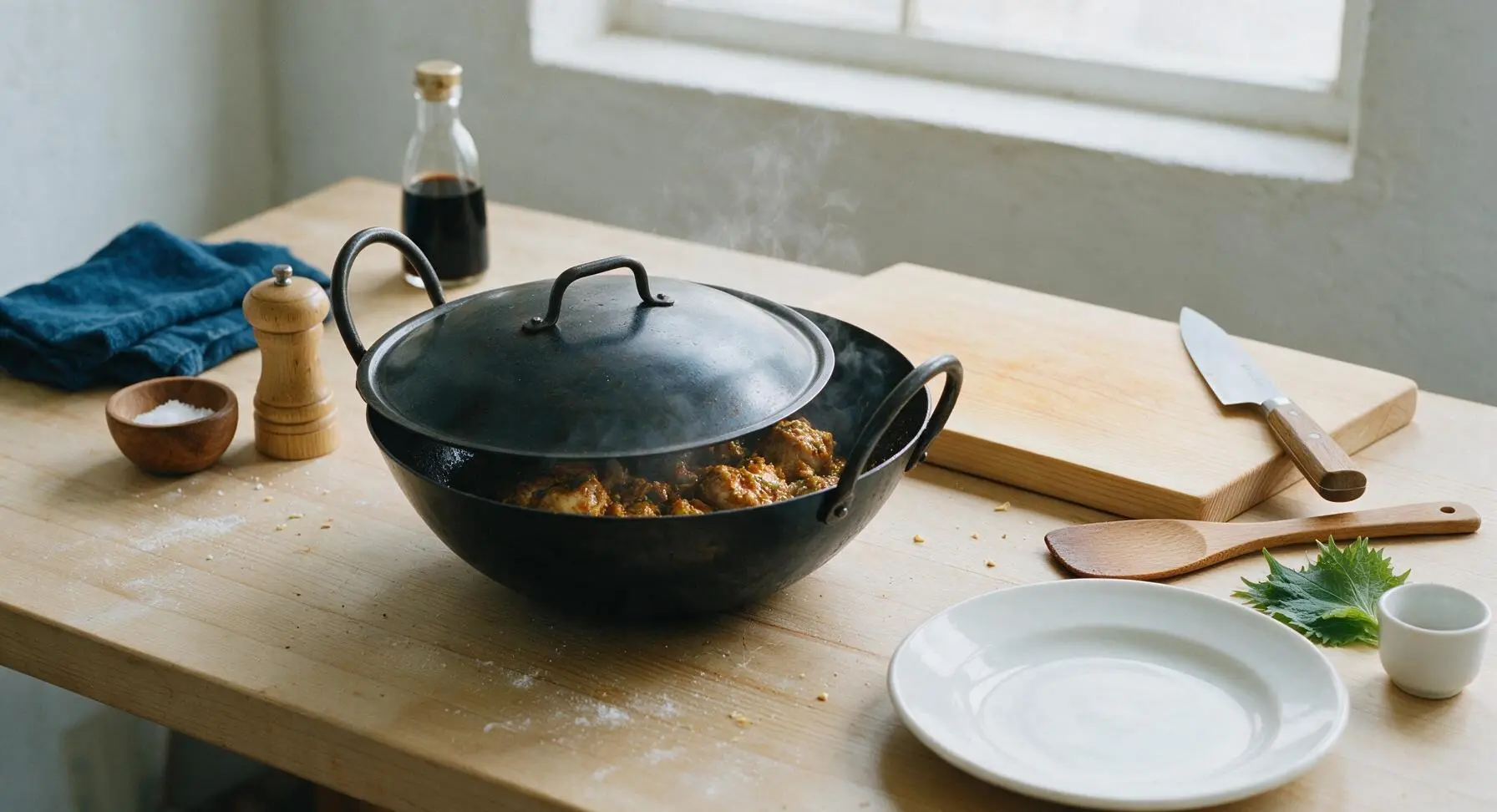
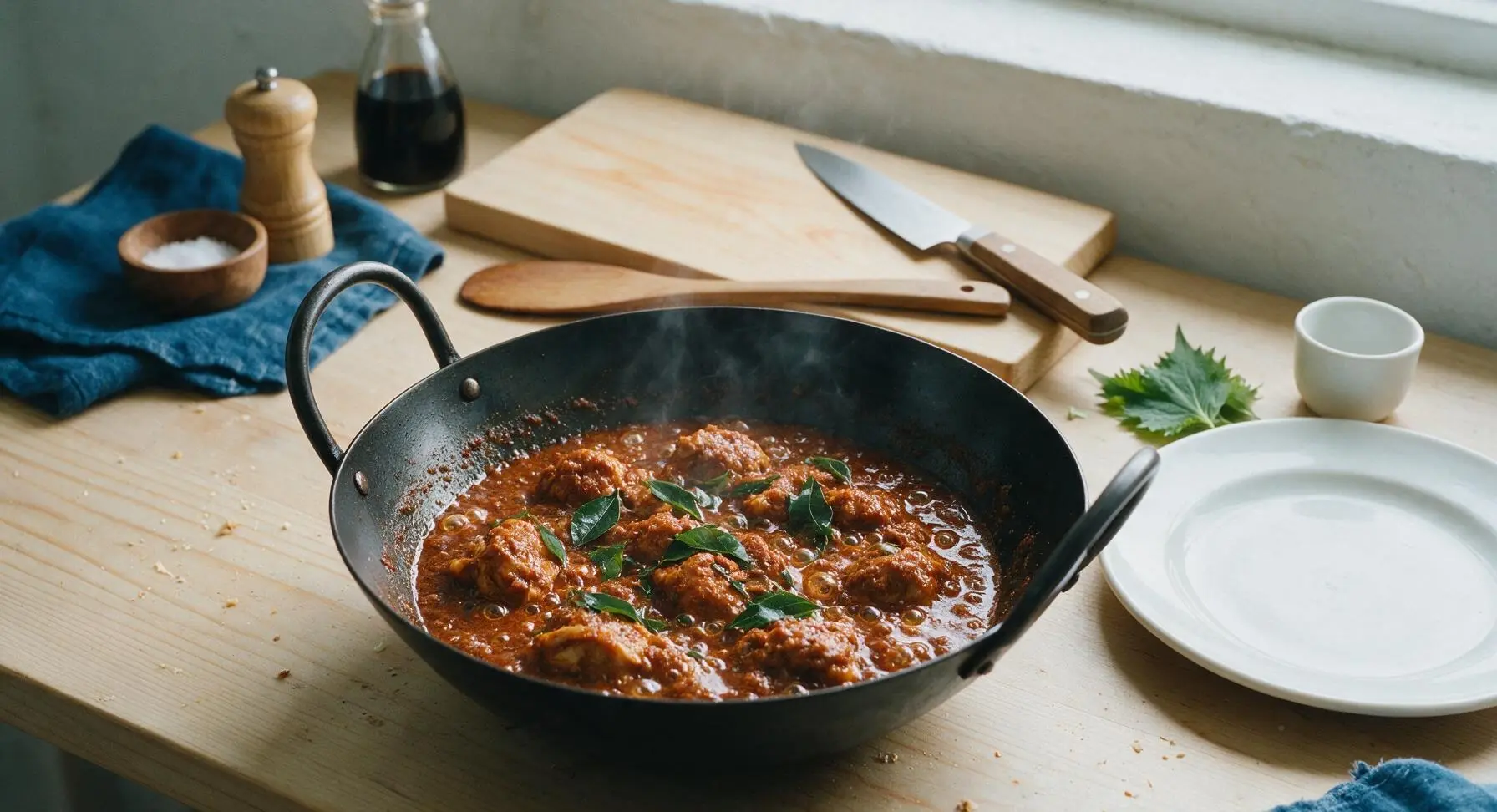
Step 7
step7:Simmer Curry Until Tender
Step 7
step7:Simmer Curry Until Tender

Tips

1.Use bone-in, skinless chicken thighs instead of breast meat for this recipe: dark meat stays juicy through the low simmer, and the bones add deep savoriness to the masala that lean breast meat cannot replicate, even with careful cooking.
2.Keep heat to medium-low when roasting whole spices and coconut, stirring constantly: spices can burn in as little as 30 seconds over high heat, which will leave a harsh, bitter taste in the finished curry that cannot be fixed.
3.Grind the roasted spice and coconut blend to a coarse, gritty texture rather than a fine smooth paste: this textured masala is the signature of Chettinad curry, delivering distinct layers of spice flavor in every bite instead of a muddled, uniform taste.
✨ You May Also Like

Main Course
🍜 United Kingdom

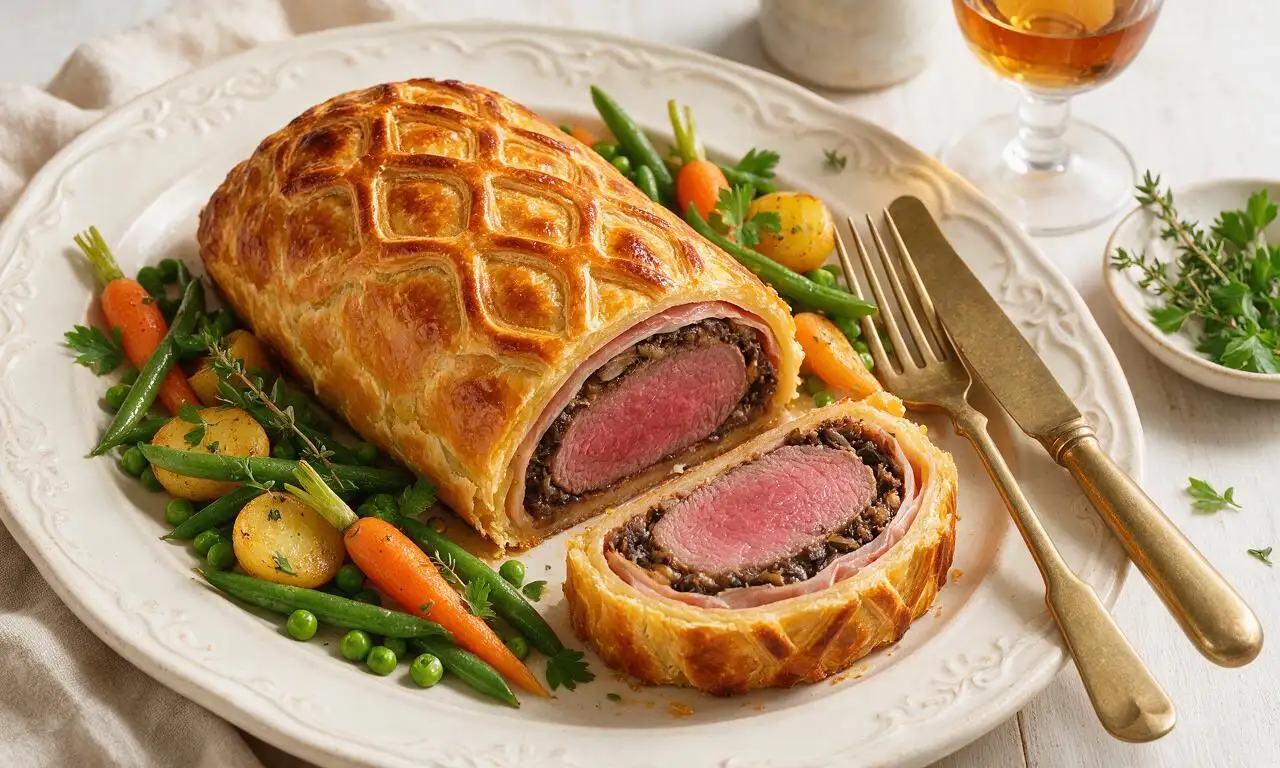
A showstopping classic of tender seared beef, savory mushroom duxelles, and crisp prosciutto wrapped in flaky golden puff pastry, baked to juicy perfection.

⏱️ 2 hours 1Main Course ★ 4.7
Main Course
🍜 India

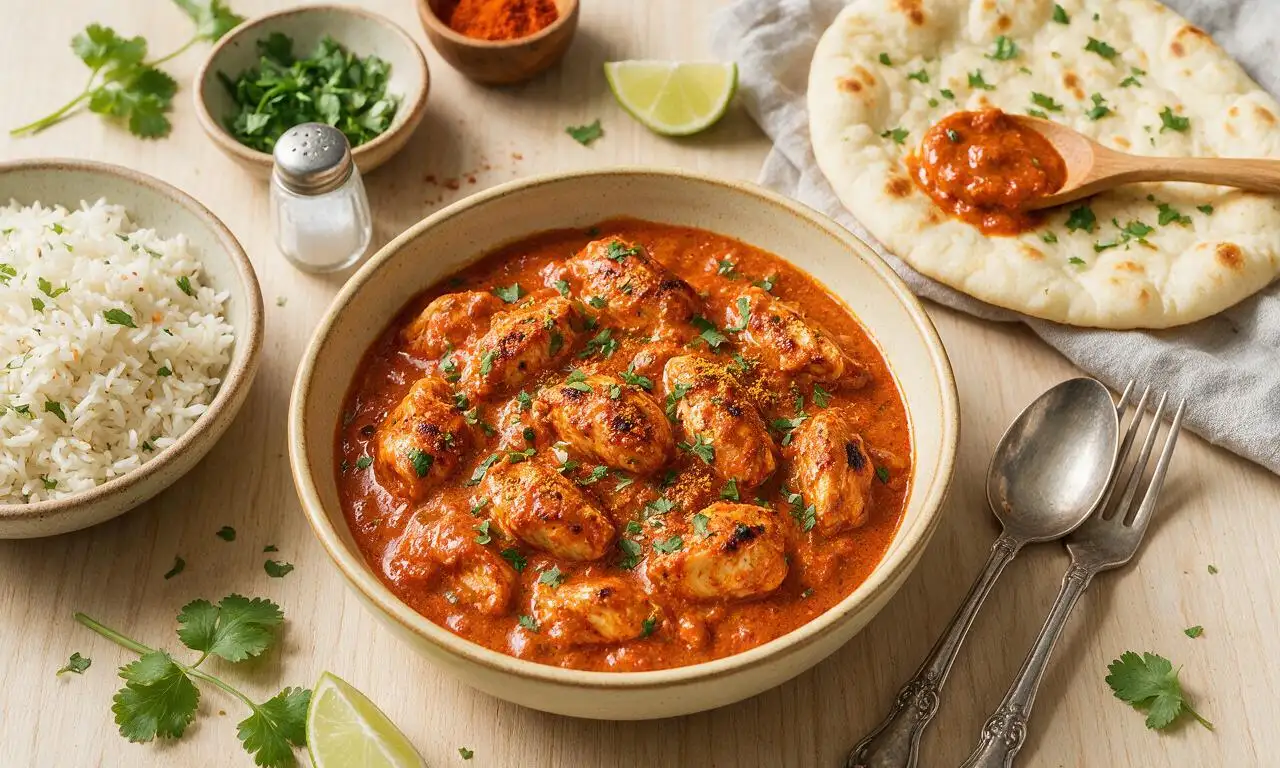
Tender charred marinated chicken simmered in a rich, spiced creamy tomato sauce, this iconic Anglo-Indian curry pairs perfectly with basmati rice or warm naan.

⏱️ 50 minuteMain Course ★ 4.6
Main Course
🍜 Thailand

Classic tangy, sweet, and savory Thai stir-fried rice noodles with shrimp, tofu, and crunchy garnishes, balancing all five core Thai flavor profiles.

⏱️ 30 minuteMain Course ★ 4.5
Main Course
🍜 United Kingdom

Crispy golden beer-battered cod and fluffy double-fried chips, served with tangy tartar sauce and malt vinegar: the timeless, beloved British pub comfort classic.

⏱️ 45 minuteMain Course ★ 4.7
Main Course
🍜 Mexico

Smoky, chile-marinated pork tacos with caramelized pineapple, fresh cilantro, and lime: a beloved classic Mexican street food perfect for casual summer gatherings.

⏱️ 1 hour 45Main Course ★ 4.8
Main Course
🍜 United States

Crunchy Fritos corn chips layered with savory beef chili and melted cheddar, topped with cool, zesty fixings for a beloved, cozy Tex-Mex comfort food.

⏱️ 35 minuteMain Course ★ 4.8

chicken chettinad:Frequently Asked Questions

1.Why does this recipe call for bone-in skinless chicken thighs instead of chicken breast? ▾
Bone-in skinless thighs are ideal here because they stay juicy and tender through high-heat spice roasting and slow simmering, unlike lean chicken breast which easily dries out. The bone adds subtle, savory depth to the curry base, while removing the skin prevents the masala from turning overly greasy, and the 5cm cut size ensures even cooking and great masala adhesion.
2.Is Chicken Chettinad always extremely spicy, or can I adjust the heat level to my taste? ▾
Traditional Chettinad is known for its bold, peppery fire from whole black peppercorns, but you can absolutely adjust heat to preference. Cut the whole peppercorn quantity by half for a milder version, or add a small dried red chili for extra depth if you love more heat. Don’t skip pepper entirely—it’s a core signature flavor, not just a heat source.
3.Why do I need to roast the spices and coconut for the masala instead of using them raw? ▾
Dry-roasting coriander, cumin, fennel, peppercorns, and coconut unlocks their fragrant essential oils, creating the deep, nutty, layered aroma that defines Chettinad masala. Raw spices taste flat and harsh by comparison. Roast over medium-low heat, stirring constantly, until you smell warm toastiness—take care not to burn them, as burnt spices make the whole curry bitter.
4.Can I use pre-ground spices instead of whole seeds for this recipe? ▾
You can use pre-ground spices in a pinch, but the flavor will be noticeably less vibrant than freshly ground roasted whole seeds. If you go this route, use spices that are less than 3 months old, and toast them lightly in a dry pan for 30 seconds to wake up their flavor. Skip pre-ground black pepper if possible, as it lacks fresh pepper’s bright, sharp heat.
5.What role does tamarind play in Chicken Chettinad, and what can I substitute if I don’t have any? ▾
Tamarind adds a bright, tangy, slightly fruity sour note that cuts through the rich, spicy coconut and spice masala, balancing all the bold flavors. If you don’t have tamarind paste, substitute 1.5 teaspoons of fresh lime juice mixed with a pinch of brown sugar, added right at the end of cooking. Avoid plain white vinegar, as it tastes too sharp and harsh.
6.How important are fresh curry leaves to this recipe, and can I use dried ones instead? ▾
Fresh curry leaves are a core South Indian aromatic, adding a unique, earthy, citrusy-herbal note you can’t replicate with other ingredients. If you can’t find fresh, dried curry leaves work as a last resort—use twice the called-for amount, and crumple them before adding to release flavor. Store leftover fresh curry leaves in the freezer for up to 6 months for future use.
7.How thick should the final Chettinad masala coating be on the chicken? ▾
Authentic Chicken Chettinad is not a thin, soupy curry—it has a thick, clingy masala that coats every piece of chicken, with just enough loose sauce to soak into rice or flatbread. If your masala is too thin after simmering, turn heat to medium and cook uncovered for 3-5 minutes to reduce, stirring often to prevent the coconut and spices from sticking.
8.Can I make this recipe with boneless chicken if I prefer no bones? ▾
You can use boneless skinless chicken thighs (cut to the same 5cm size) if you don’t want to deal with bones, but note the curry will have slightly less savory depth without the bones. Avoid boneless breast for this recipe, as it will turn dry and stringy during cooking. Reduce simmer time by 5 minutes if using boneless thighs to prevent overcooking.
9.How do I keep the coconut in the masala from burning while I roast it? ▾
Coconut shreds brown very quickly once they hit hot heat, so always roast them over medium-low heat, stirring constantly with a spatula, as soon as you add them to the pan with the whole spices. They are done the second they turn light golden brown and smell nutty—immediately transfer them to a plate to cool, so residual pan heat doesn’t burn them.
10.What are the best sides to serve with Chicken Chettinad? ▾
This bold, spicy curry pairs perfectly with plain steamed basmati rice, which soaks up the thick masala and balances the heat. It also works beautifully with soft dosas, flaky parottas, or warm naan to scoop up the chicken and sauce. Add a side of cool cucumber raita for anyone who prefers a milder bite to cut through the pepper heat.
11.Can I make the Chettinad masala spice blend ahead of time? ▾
Absolutely! Roast and grind the full spice and coconut masala blend, let it cool completely, then store it in an airtight glass jar in the refrigerator for up to 2 weeks, or in the freezer for up to 3 months. Pre-made masala cuts total cook time to under 30 minutes on weeknights, with flavor just as vibrant as fresh-made.
12.I don’t eat coconut—can I leave it out of the masala? ▾
Roasted coconut is a core ingredient that gives Chettinad masala its signature nutty depth and thick, clingy texture, so leaving it out will change the dish significantly. If you can’t have coconut, substitute an equal amount of roasted, ground cashews to add the same rich, nutty thickness, plus a pinch of extra fennel seed to mimic coconut’s subtle sweet note.
13.Why is my Chicken Chettinad bitter after cooking, and can I fix it? ▾
A bitter final flavor almost always comes from burning the whole spices or coconut during the roasting step—even a few burnt coriander seeds or over-browned coconut will make the whole masala taste harsh. To fix slightly bitter masala, stir in a tiny pinch of brown sugar and an extra squeeze of tamarind to balance the flavor, without making it taste sweet.
14.How long should I simmer the chicken to make sure it’s tender but not overcooked? ▾
After searing the chicken and coating it in the masala, simmer covered over low heat for 18-22 minutes for 5cm bone-in thigh pieces, stirring once halfway through. The chicken is done when it pulls easily from the bone and hits 165°F on an instant-read thermometer inserted into the thickest part, away from the bone. Avoid rapid boiling, which makes chicken tough.
15.Can I make Chicken Chettinad in an Instant Pot or pressure cooker to save time? ▾
Yes, this recipe adapts really well to pressure cooking. Sauté the spices, curry leaves, and chicken right in the Instant Pot, add the tamarind and a splash of water, then cook on high pressure for 6 minutes, followed by a quick pressure release. Simmer uncovered for 2-3 minutes after release to thicken the masala to the right clingy consistency.
16.Is this Chicken Chettinad recipe gluten-free? ▾
Traditional Chicken Chettinad is naturally gluten-free, as all core ingredients—chicken, whole spices, coconut, curry leaves, and tamarind—contain no gluten. Just double-check any store-bought tamarind paste or pre-ground spice blends you use to make sure they don’t have added wheat-based thickeners or anti-caking agents with hidden gluten, if cooking for someone with celiac disease.
17.How long do leftovers keep, and what’s the best way to reheat them? ▾
Store cooled leftover Chicken Chettinad in an airtight container in the refrigerator for up to 4 days, or in the freezer for up to 3 months. Reheat gently on the stovetop over low heat, adding a splash of water if the masala has thickened too much in the fridge, until the chicken is heated all the way through. Leftovers taste extra delicious as the spices meld overnight.
18.What makes Chicken Chettinad different from other South Indian chicken curries? ▾
What sets Chettinad apart from other South Indian curries is its heavy use of freshly roasted whole spices (especially black pepper, fennel, and coriander), roasted coconut in the masala, bright tamarind tang, and thick, clingy masala coating rather than a thin, coconut milk-based sauce. It’s bolder, more peppery, and more aromatic than many milder, soupier regional curries.

Comments (3)

2 days ago

OMG this Chicken Chettinad is a total game changer! I made it for our Sunday family dinner last night and even my super picky 7-year-old asked for seconds. I cut the cayenne by half to keep the spice mild for the kids, and the toasted coconut and warm spices add such a perfect creamy, deep flavor. 10/10 will be adding this to my regular meal prep rotation!

yesterday

Totally agree about dialing back the cayenne for groups! I made a big batch for our neighborhood potluck last weekend with that same adjustment and everyone was hounding me for the recipe. SO good, even people who swear they don’t like Indian food went back for seconds.

yesterday

So thrilled your whole family loved it, Mia! Adjusting spice levels to match what your crew likes is exactly what home cooking is all about — great call. So stoked this made it onto your meal prep roster!

yesterday

This was my first time making any South Indian chicken dish and I was pretty intimidated by the medium difficulty rating, but it came together in right around 35 minutes like the recipe said! The whole house smelled absolutely incredible while it was simmering, and my partner said it’s better than the Chicken Chettinad we get at our favorite local takeout spot. Quick note: I didn’t have fresh curry leaves so I used dried, and it still turned out delicious.

2 hours ago

That makes me so happy to hear, Liz! It makes my day when people nervous to try a new cuisine nail it on the first go. Dried curry leaves are a totally fine swap — just use about half the amount of fresh since their flavor is more concentrated. Can’t wait for you to try more of our South Indian recipes!

1 week ago

Made a big batch of this for my weekly meal prep and wow, it holds up perfectly in the fridge all week! I served it over basmati rice with a quick cucumber raita on the side, and it’s easily the best work lunch I’ve brought in months. Two of my coworkers stopped by my desk to ask for the recipe after smelling it heat up in the break room microwave. Next time I make it I’m tossing in some diced potatoes to bulk it up a little more.