
Custard Scrambled Eggs
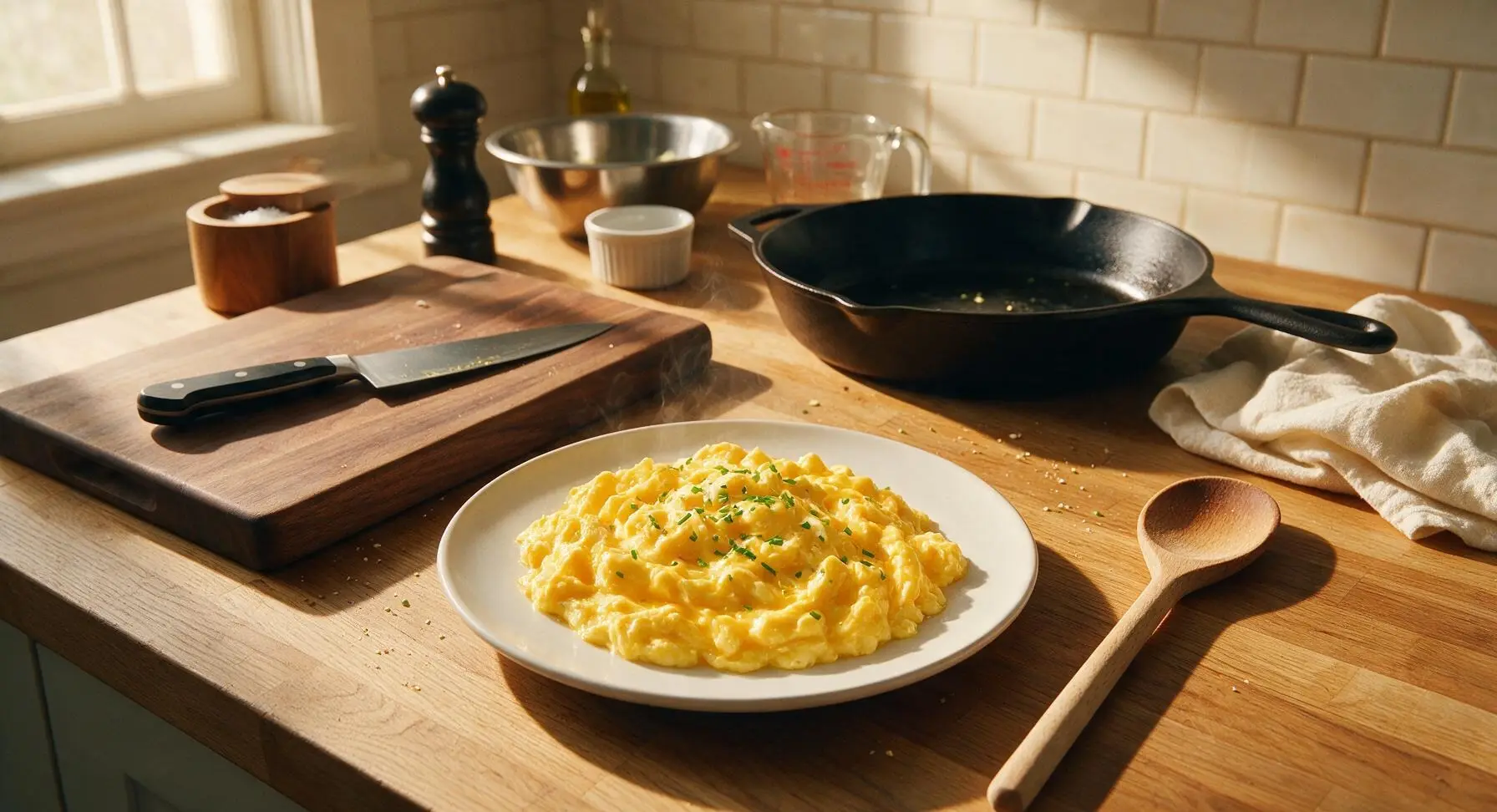
intro
Velvety, melt-in-your-mouth custard scrambled eggs, cooked low and slow for tender golden curds free of rubbery edges, finished with butter and bright fresh chives.
Ingredients
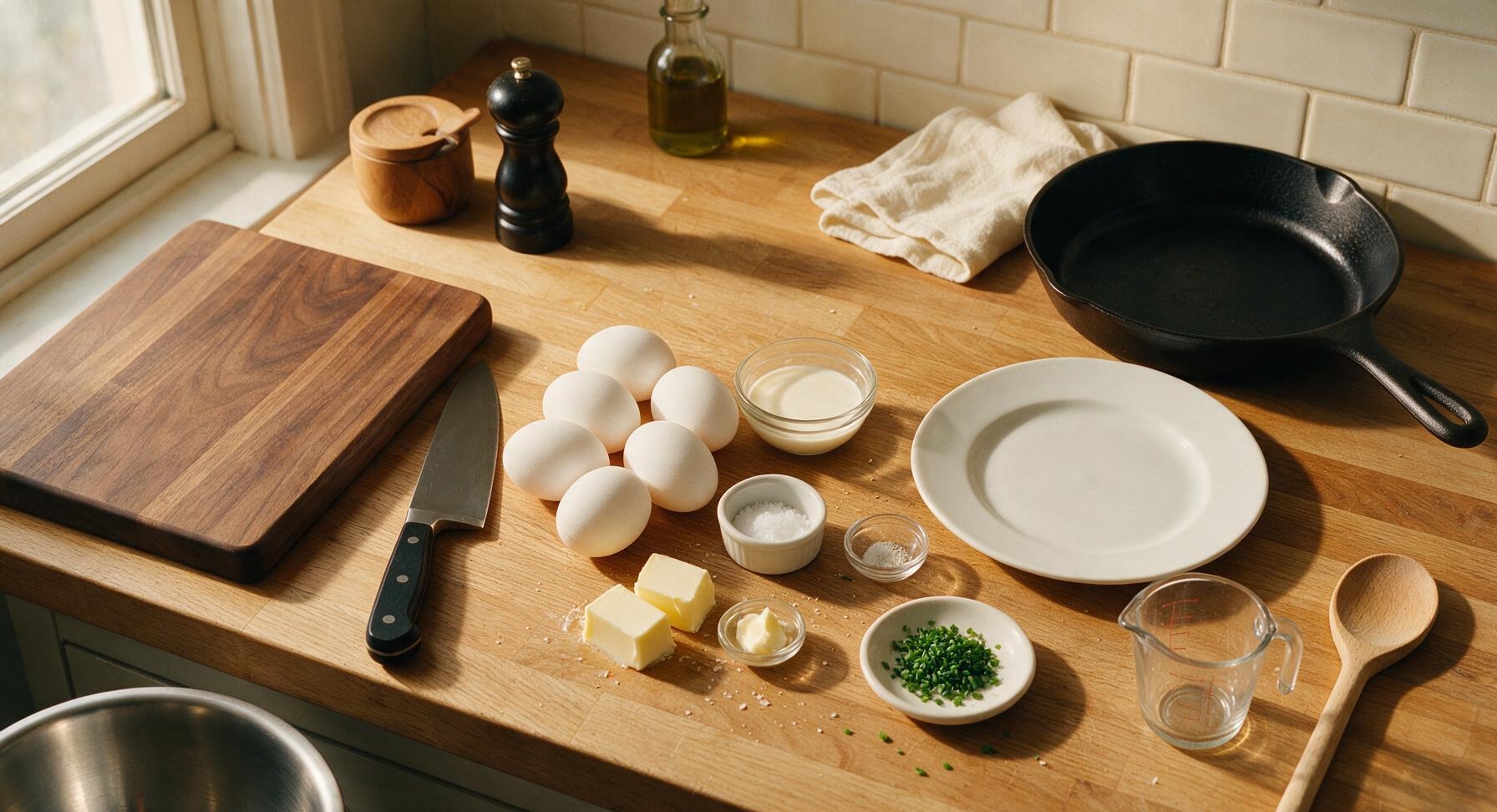
Steps
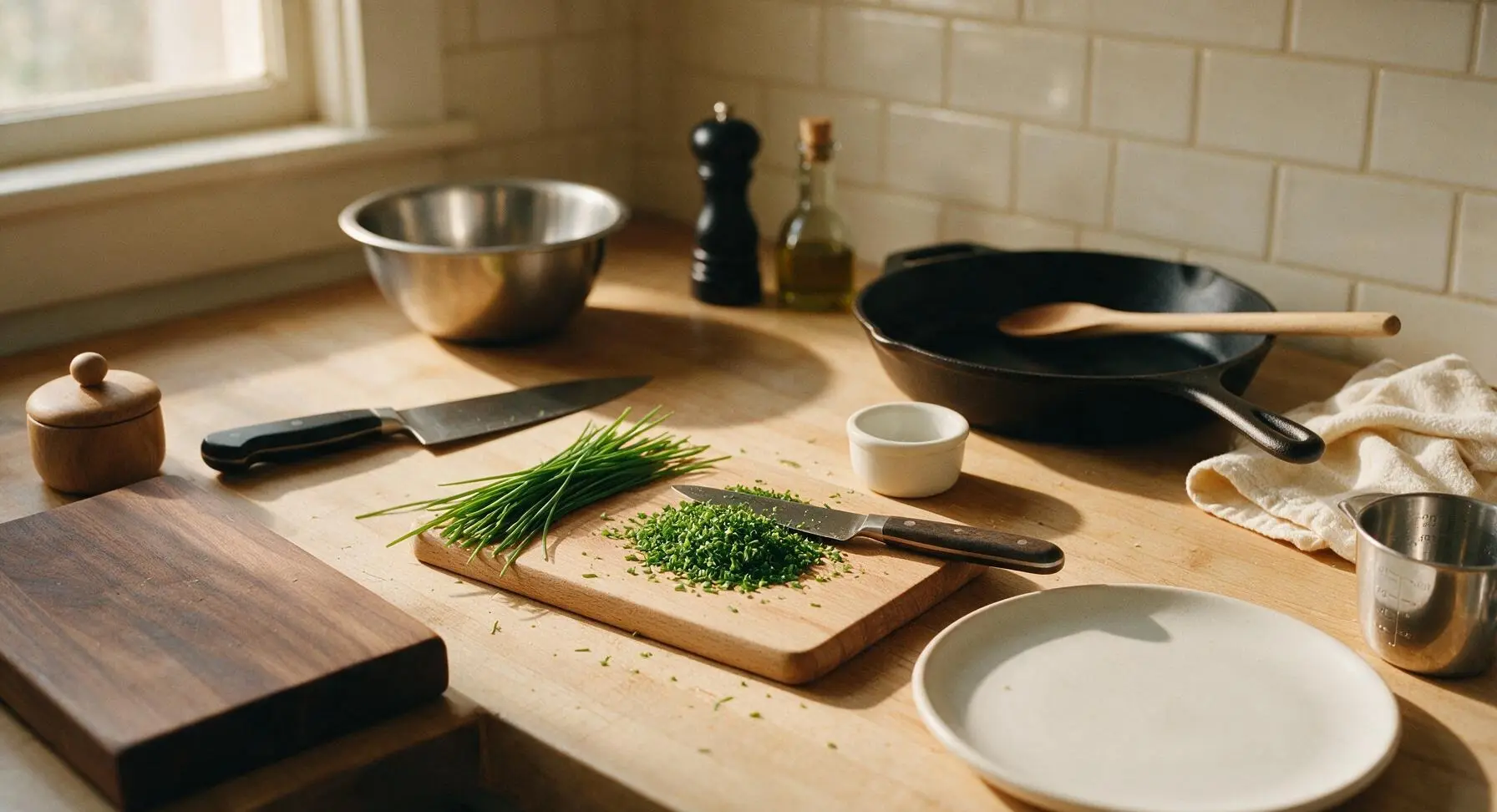
Prep fresh chives
Place the fresh chive bunch on the small beech wood cutting board. Use the 7cm paring knife to finely chop chives into 2mm pieces, transferring finished pieces to the small white ceramic ramekin. Discard any tough, woody stem ends. This step takes approximately 1 minute.
Whisk egg mixture
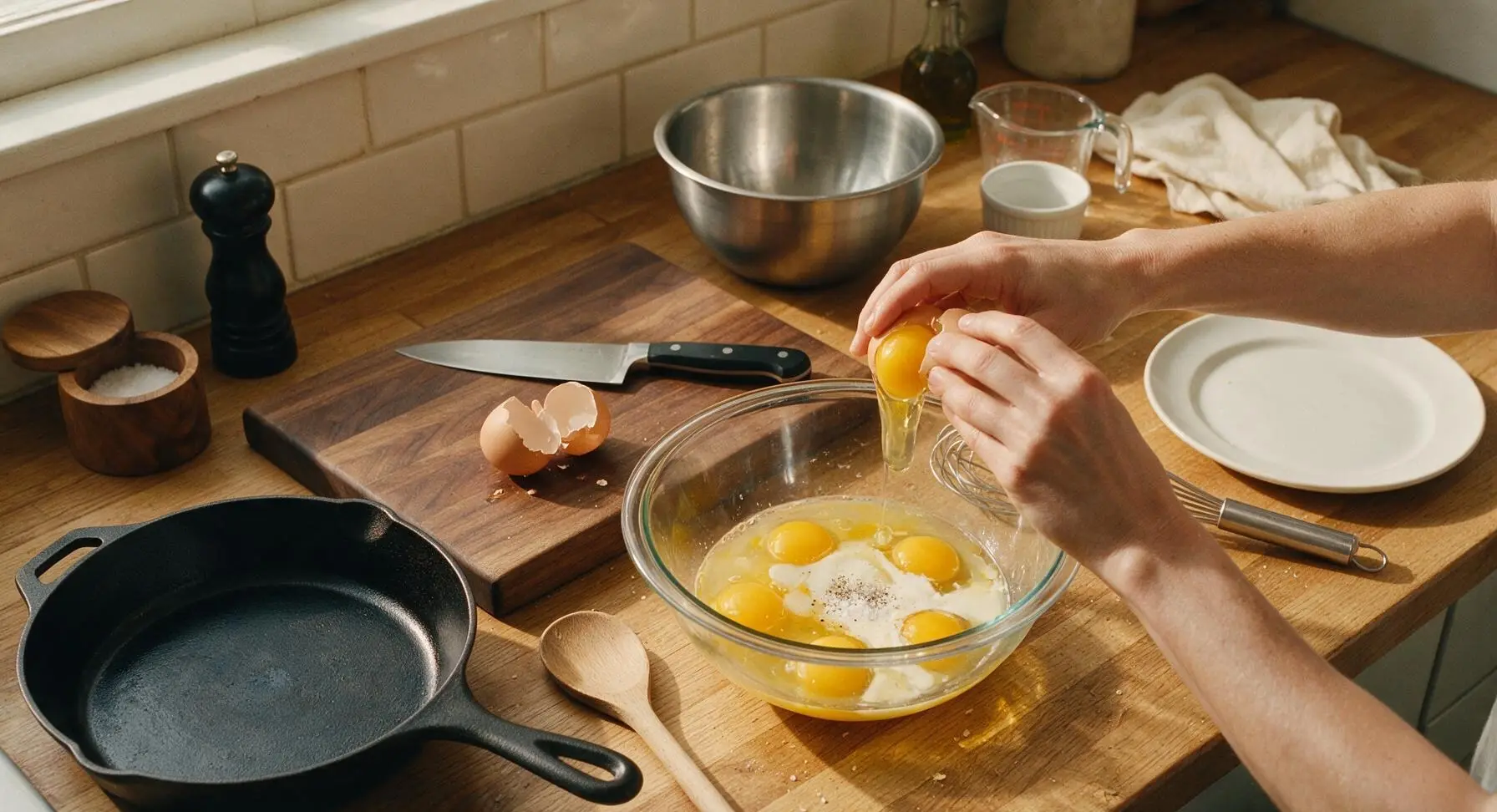
Crack all 6 large eggs into the medium clear glass mixing bowl. Add 2 tbsp heavy cream, 1/4 tsp fine sea salt, and 1/8 tsp ground white pepper. Use the stainless steel wire whisk to beat the mixture slowly for 45 seconds, until yolks and whites are fully combined with no streaks of clear white remaining. Avoid over-whisking to prevent excess air incorporation, which creates fluffy rather than dense, custardy curds.
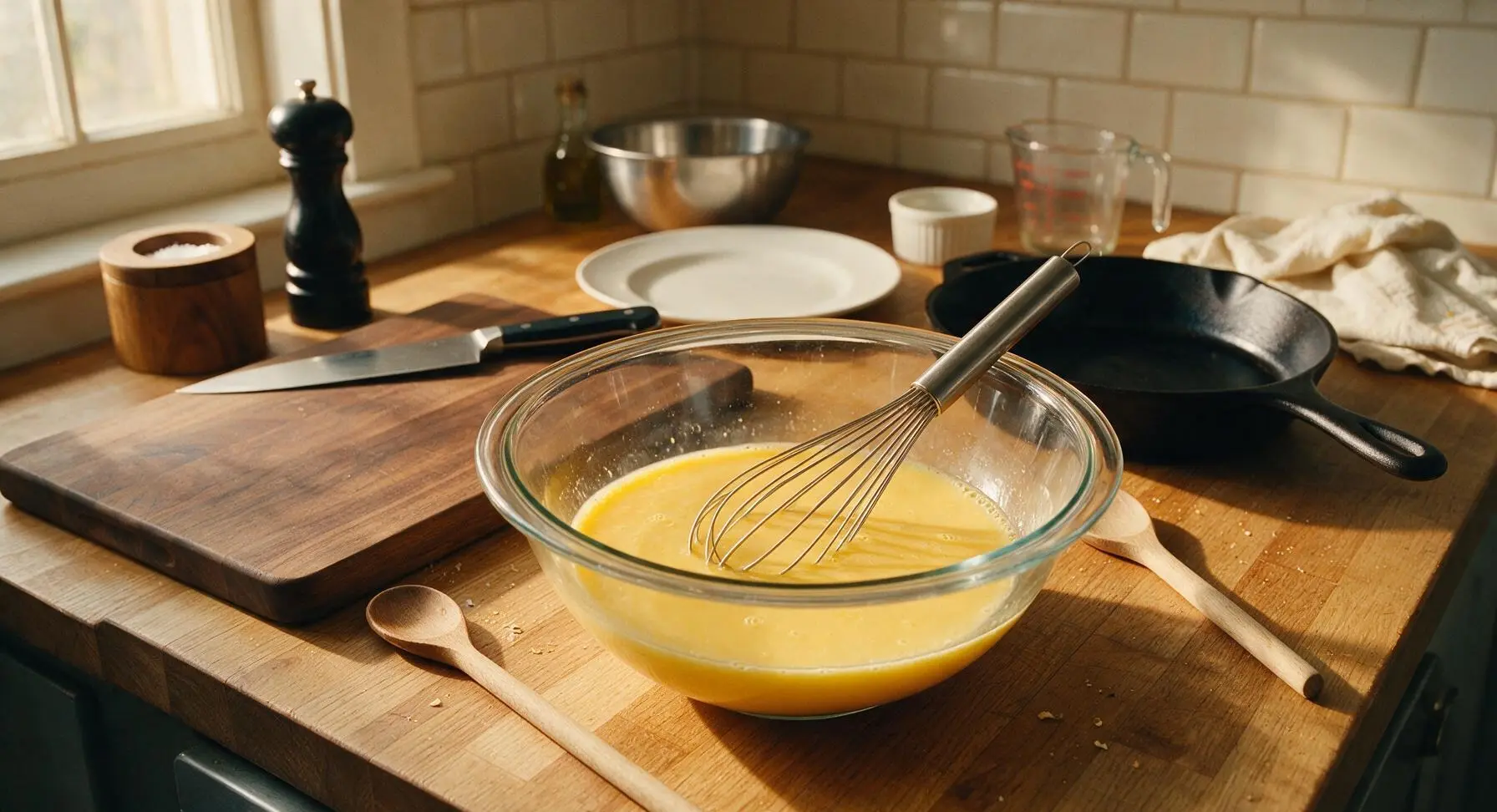
Warm skillet slowly
Place the 20cm nonstick skillet on the inset induction cooktop over the lowest possible heat setting (130°C / 265°F). Add 1.5 tbsp of the unsalted butter to the pan, allowing it to melt slowly over 2 minutes until it foams slightly but does not brown or turn golden. Swirl the melted butter to coat the entire pan bottom and 1cm up the pan sides.
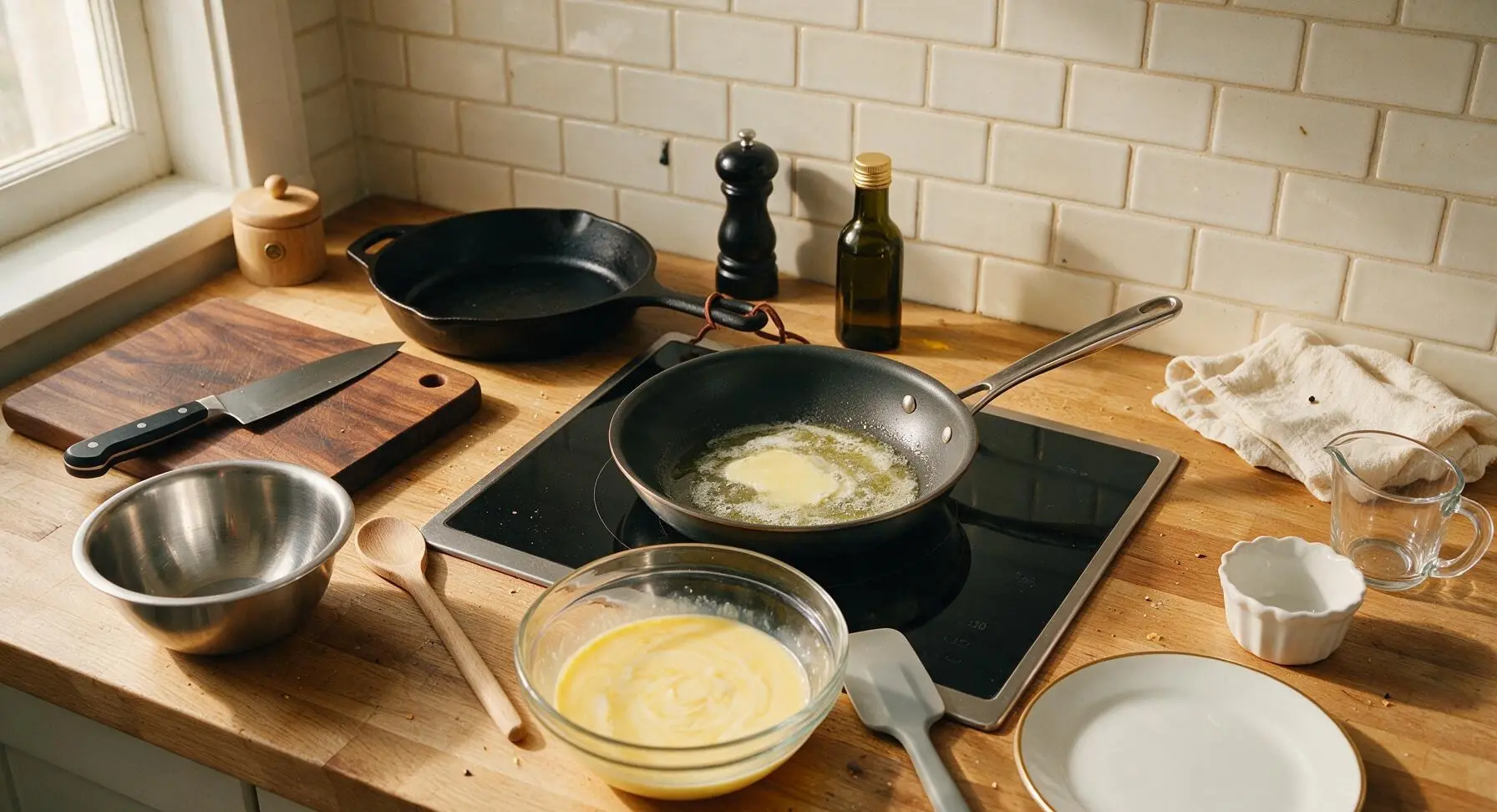
Pour eggs into pan
Once butter is fully melted and foaming subsides, pour the entire whisked egg mixture into the skillet in one slow, steady pour. Let eggs sit undisturbed over low heat for 15 seconds, until the very edge of the eggs just starts to set into a thin, opaque pale yellow layer.
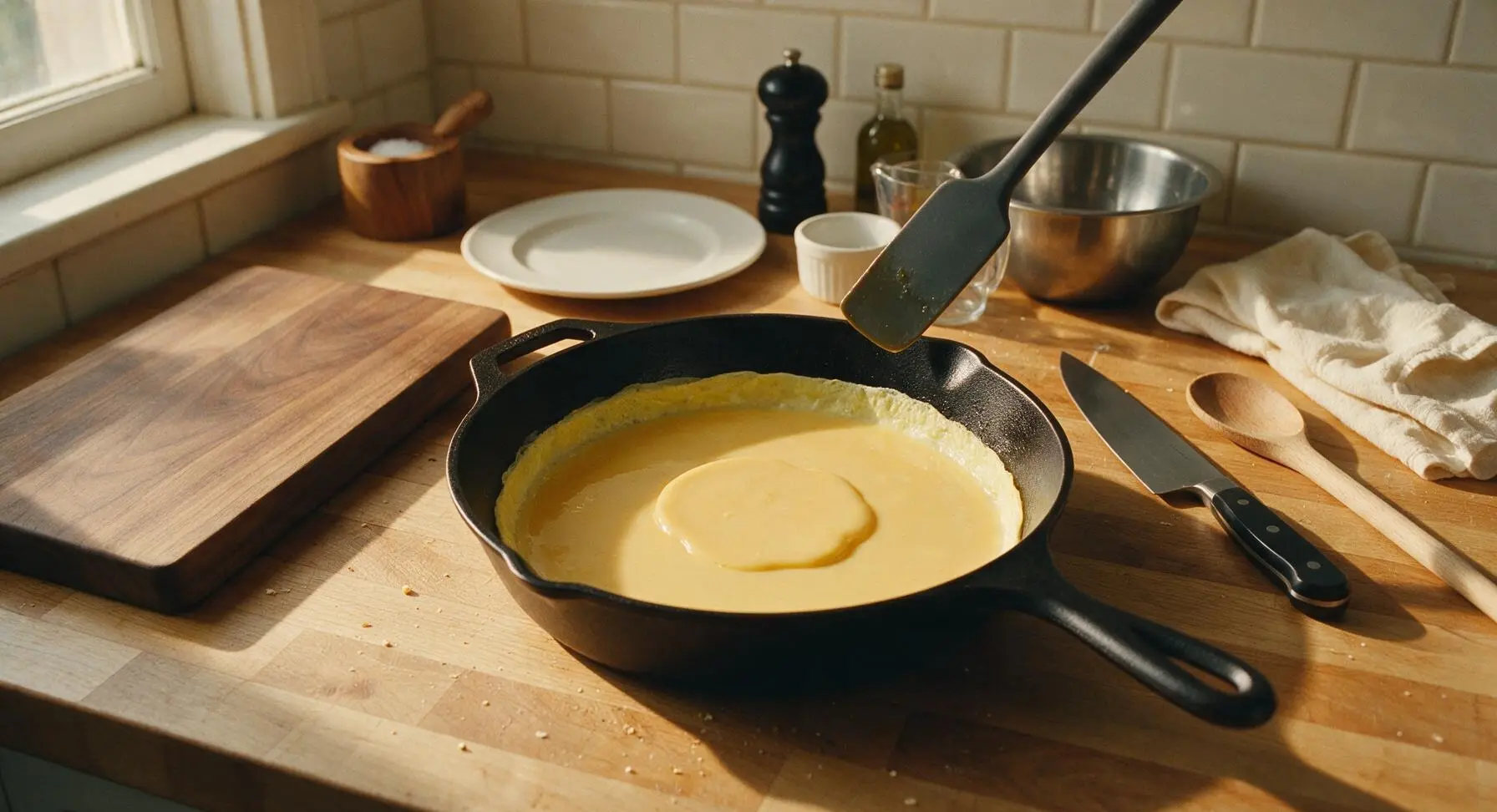
Stir curds gently
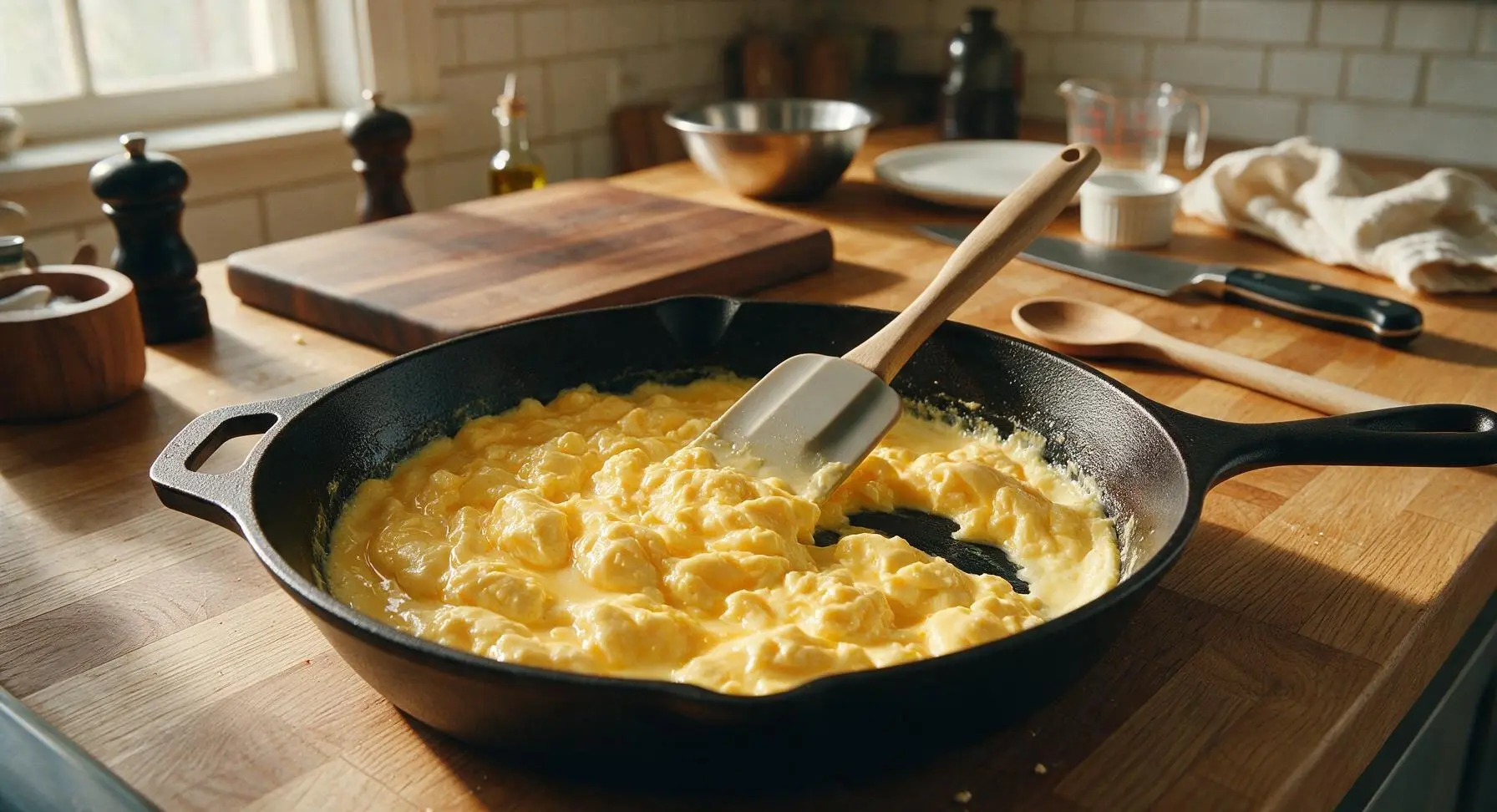
Use the silicone spatula to slowly scrape the pan bottom and sides in long, gentle strokes, pushing set curds from the edge toward the pan center. Continue stirring constantly at a slow pace, keeping heat on the lowest setting, for 3 full minutes. Pause for 10 seconds between every 3 strokes to allow new curds to form. The eggs will form soft, small, tender curds, and should never brown or stick to the pan.
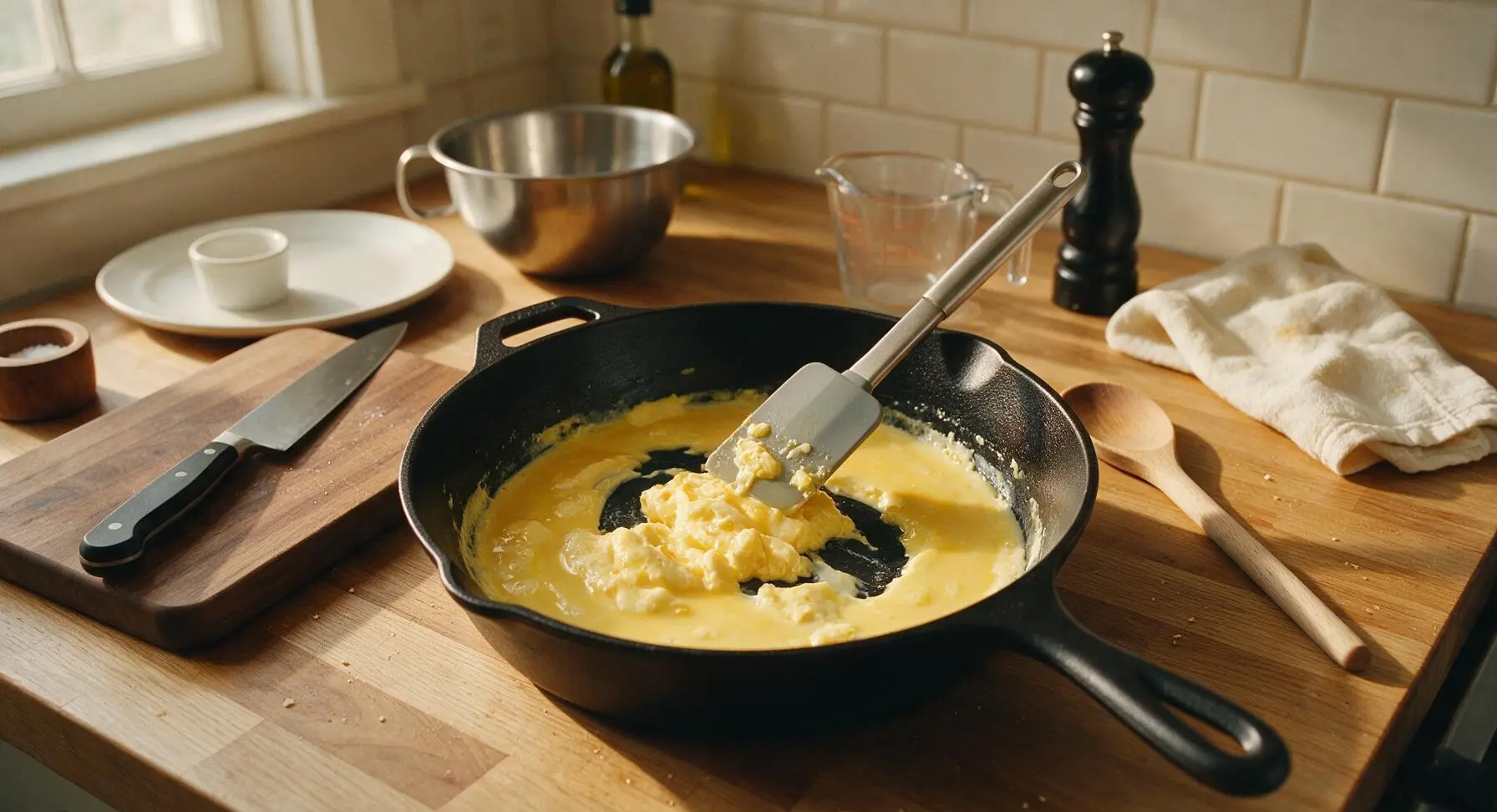
Enrich with cold butter
When eggs are 90% set, with only a small amount of loose, creamy egg liquid remaining between curds, turn off the heat entirely. Add the remaining 0.5 tbsp of cold unsalted butter to the pan, stirring gently with the spatula to melt the butter into the eggs, which will finish cooking from residual pan heat. This creates a rich, custardy gloss and prevents overcooking.
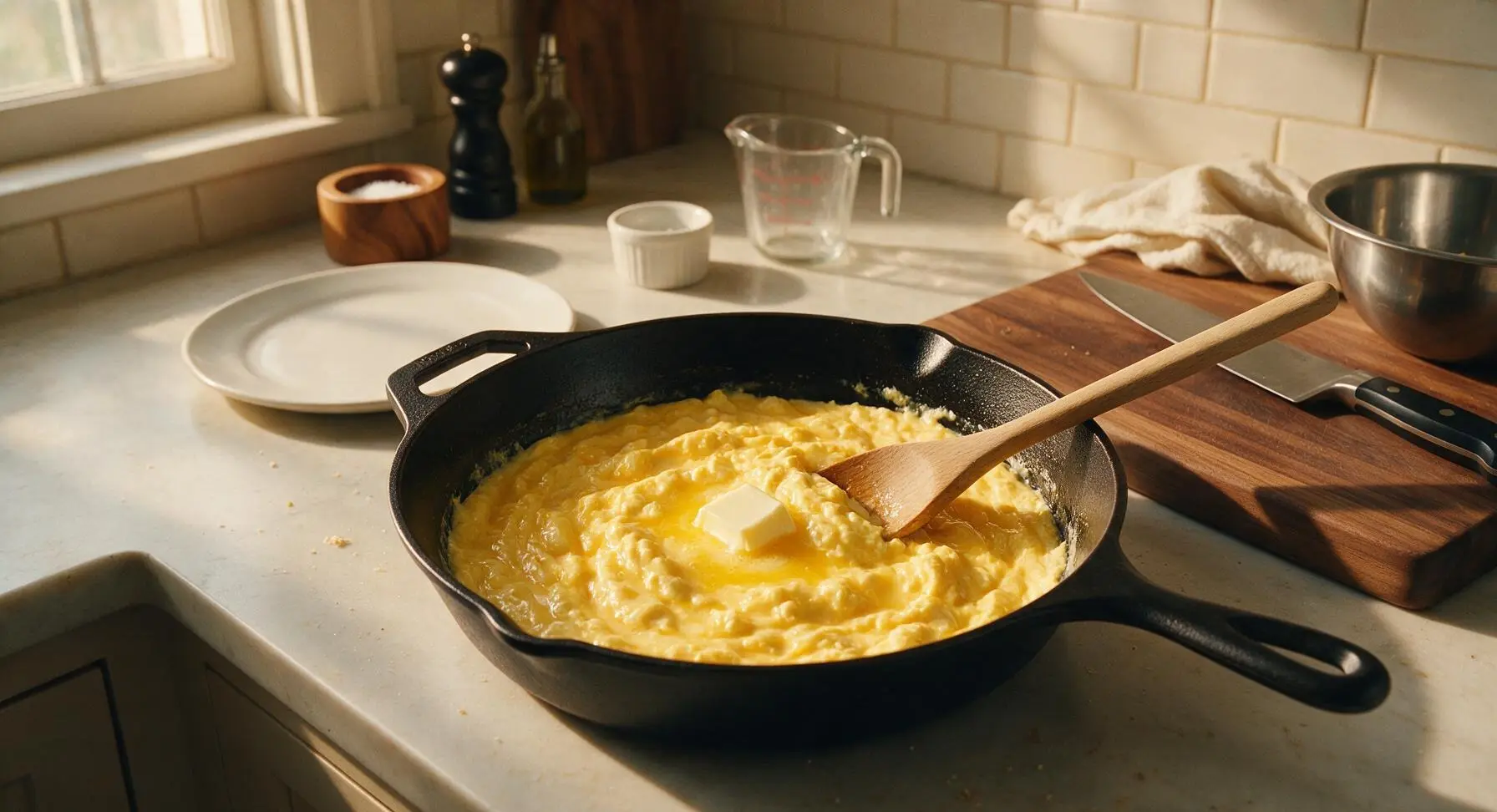
Plate and garnish
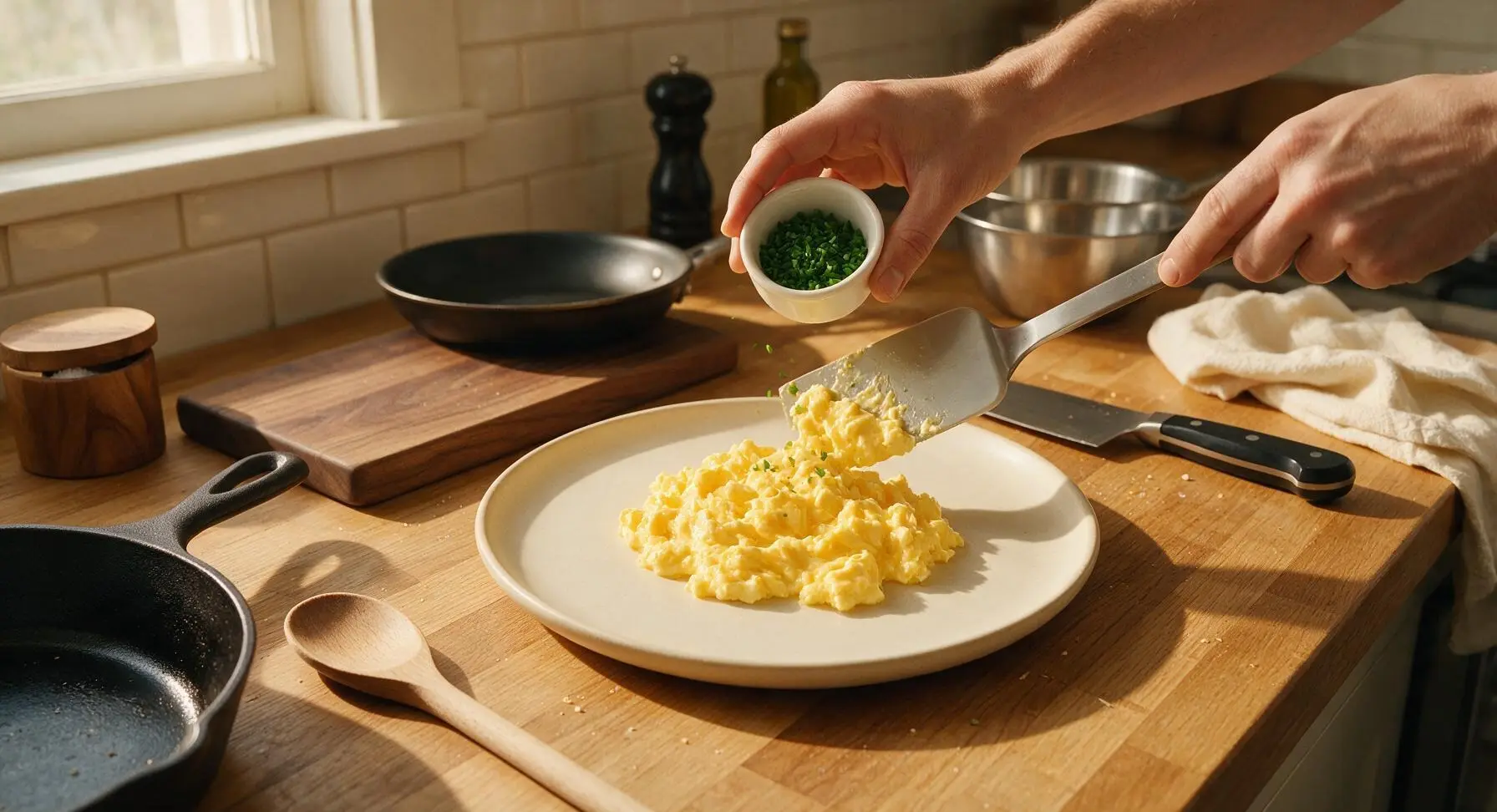
Immediately transfer the finished eggs to the center of the matte cream ceramic breakfast plate, piling curds gently in a loose, soft mound (do not press or pack eggs down, as this will squeeze out moisture and create a dense texture). Sprinkle the finely chopped chives evenly across the top of the eggs. Serve immediately, as eggs will continue to set if left in the hot pan.
Tips
2.Add the final butter pat cold after turning off the heat: cold butter melts slowly to form a glossy, rich emulsion with the eggs, rather than hitting a hot pan, melting instantly, and separating into oily pools on the egg surface.
3.Avoid over-whisking the egg mixture: whisking until the eggs are frothy incorporates excess air, which creates light, fluffy, dry curds instead of the dense, smooth, custard-like consistency we are aiming for. Stop whisking as soon as no streaks of separate egg white remain.
OMG these custard scrambled eggs are a total game changer! I've been making regular dry scrambled eggs for my kids for years and they always pick at them, but these? They asked for SECONDS this morning. Took literally 6 minutes just like the recipe says, so easy even on chaotic school mornings. 10/10 will be making these every week for meal prep!
Made these for my friend’s potluck brunch last weekend and everyone was asking for the recipe! They’re so rich and creamy, I can't believe how simple the ingredients are—just eggs, a little cream, butter, salt? Who knew it could taste this fancy. Only thing I did different was add a pinch of white pepper instead of black, paired amazing with crispy bacon.
These are SO good. I make a big batch every Sunday for weekday breakfasts, and they reheat way better than regular scrambled eggs—no weird rubbery texture at all if you zap them for 30 seconds in the microwave. Super easy, minimal cleanup, perfect for when I'm running out the door to the gym.
Okay, first time making eggs that didn't turn into a rubbery mess! I was a little worried I'd mess up the custard texture because I've never done the slow stir thing, but the steps were super straightforward. Took me 7 minutes instead of 6 because I was going slow, but totally worth it. Only 4 stars because I accidentally burned the butter a tiny bit my first go, oops.
I've been making eggs for 60 years and I thought I had it down, but these custard scrambled eggs? They're even better than the ones my mom used to make! So velvety, no weird add-ins needed. My granddaughter is visiting this week and she said they taste like 'egg cloud' which is the cutest compliment I've ever gotten.
Game changer for my high protein breakfast rotation! I usually eat plain boiled eggs because I hate dry scrambled eggs, but these are so creamy I don't even need to add cheese to make them taste good. Super quick to make before my early morning shift at the hospital, no fuss at all.
Wait, why did no one tell me scrambled eggs could taste like this??? I put a tiny dash of hot honey on top after reading someone else's tip in the comments and OH MY GOODNESS. Sweet, salty, creamy, perfect. 10/10, I'm never making regular scrambled eggs again.
Perfect recipe for my tiny studio kitchen! I only have one small nonstick pan and minimal counter space, so 6 minutes, one pan, zero fancy tools? Exactly what I need. These are so luxe I even served them to my date last night and they thought I was a fancy cook, little do they know how easy it was 😂