1.Can I substitute a different fat if I don’t have rendered duck fat?
▾
Rendered duck fat gives confit its signature rich, savory depth and silky texture, so it’s always my first pick. If you can’t source it, non-hydrogenated refined lard is the closest swap. Refined avocado oil works in a pinch, but it lacks that classic deep, gamey-sweet flavor—skip extra-virgin olive oil, as it turns bitter during long slow cooking.
2.How long should I cure the duck legs before slow cooking?
▾
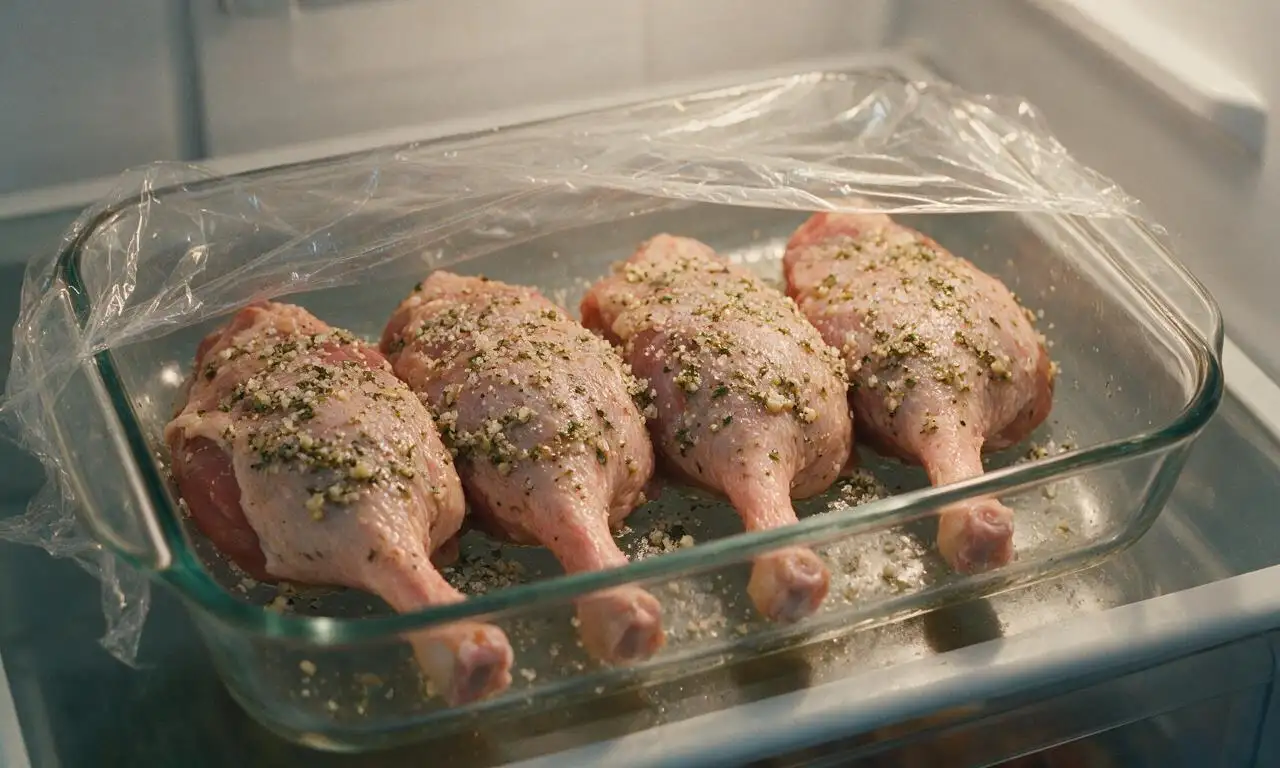
For balanced, classic flavor, cure the duck legs with salt, garlic, and thyme for 12 to 24 hours in the fridge, set uncovered on a wire rack over a baking sheet. A 12-hour cure gives mild, light seasoning, while 24 hours delivers the more pronounced, preserved savoriness of traditional bistro confit. Always pat legs fully dry before poaching for crisp skin later.
3.What slow cooker temperature is best for poaching duck confit?
▾
Use your slow cooker’s low setting, which should hold a steady 190 to 200°F for proper confit. You want the fat to just barely bubble, not boil rapidly—boiling will make duck meat tough and stringy instead of meltingly tender. If your slow cooker runs hot, prop the lid open a tiny crack with a wooden skewer to drop the temp to that ideal range.
4.How do I get that signature shatteringly crisp skin after poaching?
▾
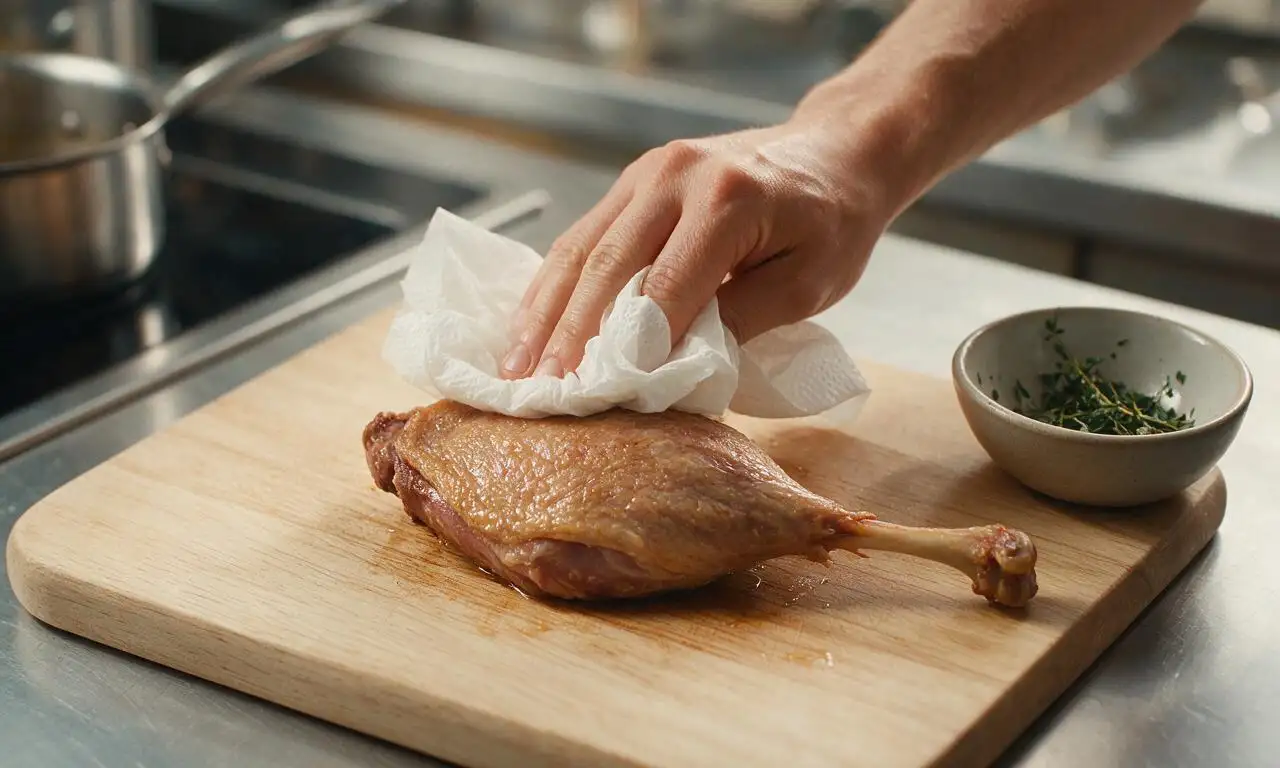
First, pull duck legs from the fat and let them come to room temperature, patting the skin completely dry with paper towels to remove every trace of excess fat. Sear them skin-side down in a dry cast iron skillet over medium-low heat for 6 to 8 minutes, pressing gently with a spatula for even contact, until skin is deep golden and crisp. Don’t flip early, or skin will stick and tear.
5.How long will finished duck confit last in the refrigerator?
▾
If you fully submerge cooled poached duck legs in strained, solidified duck fat in an airtight container, it will keep for up to 1 month in the coldest part of your fridge. That long shelf life is exactly why confit was developed as a preservation method in rural France! Once you pull legs from the fat to crisp, eat them within 3 days for best texture.
6.Can I freeze duck confit for longer-term storage?
▾
Absolutely. Submerge cooled poached legs in strained, solidified duck fat in a freezer-safe airtight container, leaving ½ inch of headspace for expansion, and it will keep for up to 6 months in the freezer. Thaw slowly in the fridge for 24 hours before searing to crisp the skin—skip room-temperature thawing, as it causes uneven texture and raises food safety risks.
7.Why is my duck skin rubbery instead of crisp after searing?
▾
Rubbery skin almost always traces back to excess moisture on the skin surface, or too high of a sear temperature. Make sure you pat skin bone-dry after pulling it from the fat, and let legs come to room temp first so you don’t shock the skin. Cook skin-side down over medium-low, not high, heat—high heat burns outer skin before underlying fat fully renders.
8.Do the duck legs need to be fully submerged in fat while cooking?
▾
You don’t need 100% full coverage for great results, but aim to submerge at least ¾ of each leg to ensure even, gentle cooking and prevent exposed meat from drying out. If you’re a little short on fat, flip legs halfway through poaching so the exposed side gets time submerged. You can top up with a small amount of lard if needed to hit that level.
9.Is it safe to reuse the duck fat after cooking confit?
▾
Definitely—strained duck fat is liquid gold for cooking. Let used fat cool slightly, then pour it through a fine-mesh sieve lined with cheesecloth to remove all bits of garlic, thyme, and duck residue. Store strained fat in an airtight container in the fridge for up to 3 months, and use it for roasting potatoes, searing steaks, sautéing veggies, or your next confit batch.
10.How do I tell when the slow-poached duck is fully done?
▾
Duck is done when you can slide a thin paring knife into the thickest part of the thigh with zero resistance, and meat pulls away easily from the bone slightly at the joint—this usually takes 4 to 6 hours on low in a slow cooker. Don’t cook it much past that point, or meat will get mushy instead of tender but structured enough to hold its shape for searing.
11.Why do recipes say to cure duck legs uncovered in the fridge?
▾
Leaving legs uncovered on a wire rack while curing is a small step that makes a huge difference for final skin crispness. Circulating cold fridge air dries out the skin surface, which helps it render and crisp far better during the final sear. If you need to cover to avoid cross-contamination, use loose cheesecloth instead of tight plastic wrap, which traps moisture.
12.What are the best sides to serve with classic duck confit?
▾
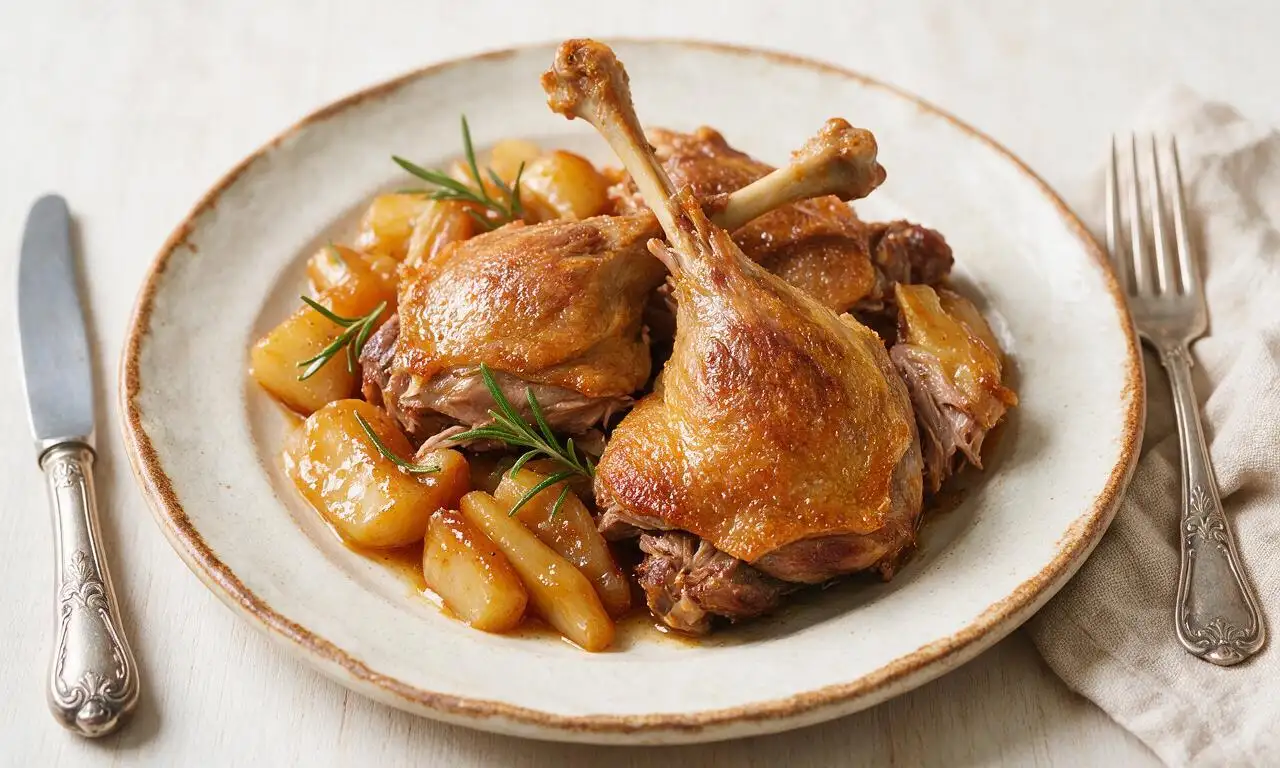
The rich, savory duck pairs perfectly with bright, starchy, or tart sides to cut through the fat. Classic bistro picks include crispy duck fat roasted potatoes, bitter green salads with sharp vinaigrette, braised lentils, sautéed haricots verts, or tangy cherry or fig compote. Hearty white bean cassoulet is a perfect cold-weather traditional match too.
13.Can I make duck confit in the oven if I don’t have a slow cooker?
▾
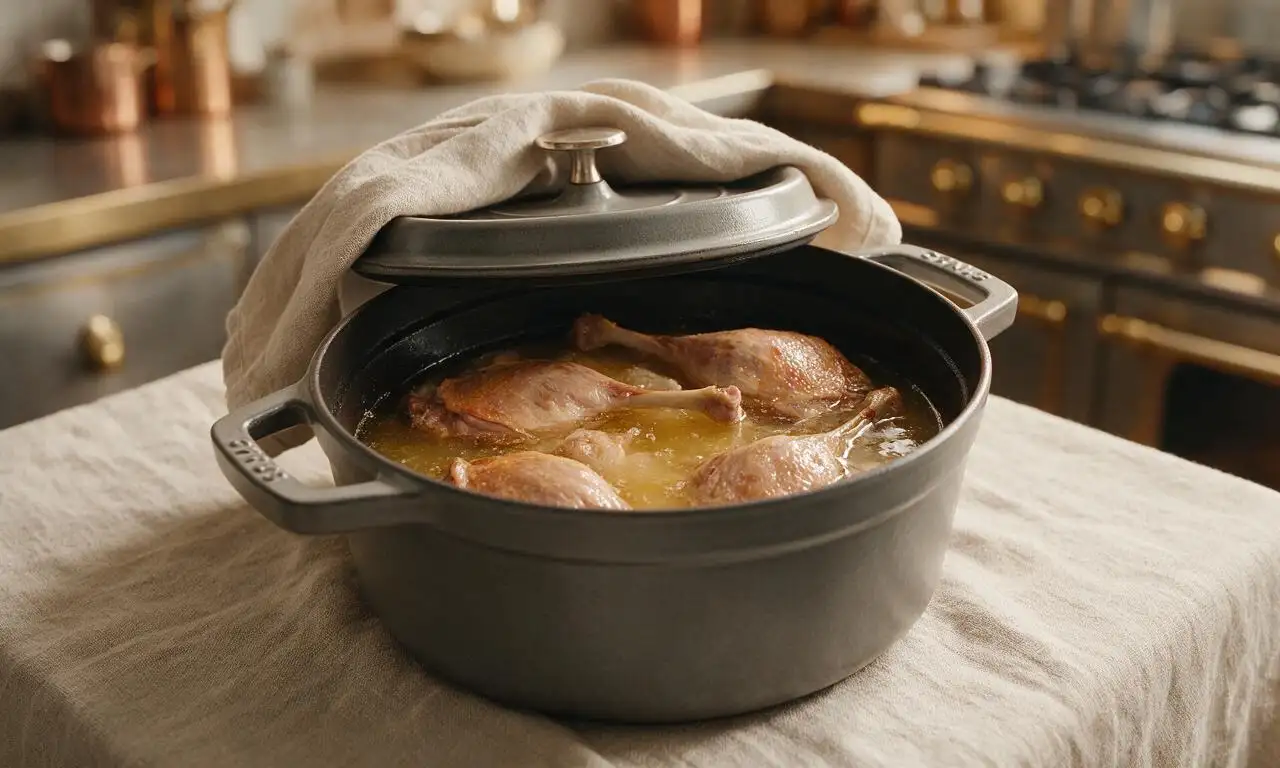
Absolutely. Place cured, dried duck legs in a heavy Dutch oven, cover with warm duck fat, and seal the lid tightly. Cook in a preheated 200°F oven for 3 to 4 hours, checking for doneness the same way you would in a slow cooker: a knife should slide easily into the thickest part of the thigh with no resistance. The low oven temp mimics slow cooker heat perfectly.
14.Should I trim the fat off duck legs before curing them?
▾
Don’t trim away all the skin and fat from legs before curing! Leave the thick, even layer of skin and attached fat intact—that’s what renders out during the final sear to create that shatteringly crisp crust. You can trim any loose, hanging bits of fat that would burn during searing, but keep the uniform fat cap over the thigh and drumstick fully intact.
15.Why did my finished confit turn out too salty?
▾
Overly salty confit usually comes from curing legs for too long, or using fine table salt that absorbs faster than the called-for kosher salt. Stick to the recipe’s measured kosher salt amount, and don’t cure for longer than 24 hours unless you prefer a very heavily preserved, salt-forward flavor. If it’s too salty, soak poached legs in cold fridge water for 30 minutes before searing to draw out excess salt.
16.Can I add extra aromatics to the poaching fat for more flavor?
▾
Of course! The classic garlic and thyme base is just a starting point. You can add a few crushed black peppercorns, a bay leaf, a strip of orange zest, a sprig of rosemary, or a couple of halved shallots to the fat as it poaches for extra depth. Just skip watery aromatics like fresh citrus juice or chopped raw veggies, as they make fat spoil faster and disrupt gentle cooking.
17.Do I need to bring duck legs to room temperature before poaching?
▾
It’s a good idea to let cured, patted-dry duck legs sit at room temperature for 30 minutes before adding them to warm fat. Dropping ice-cold legs into hot fat drops the cooking temperature dramatically, leading to uneven cooking, and can cause the fat to sputter dangerously. You don’t need them fully warm, just take the sharp chill off for the most consistent results.
18.Can I crisp the duck skin under the broiler instead of pan-searing?
▾
You can, but you have to watch it extremely closely to avoid burning. Place dried, room-temp duck legs skin-side up on a wire rack set over a baking sheet, and broil 6 inches from the heating element for 3 to 5 minutes, rotating the pan often, until skin is crisp and golden. Broilers heat very unevenly, so don’t walk away—skin can go from perfect to charred in 30 seconds.



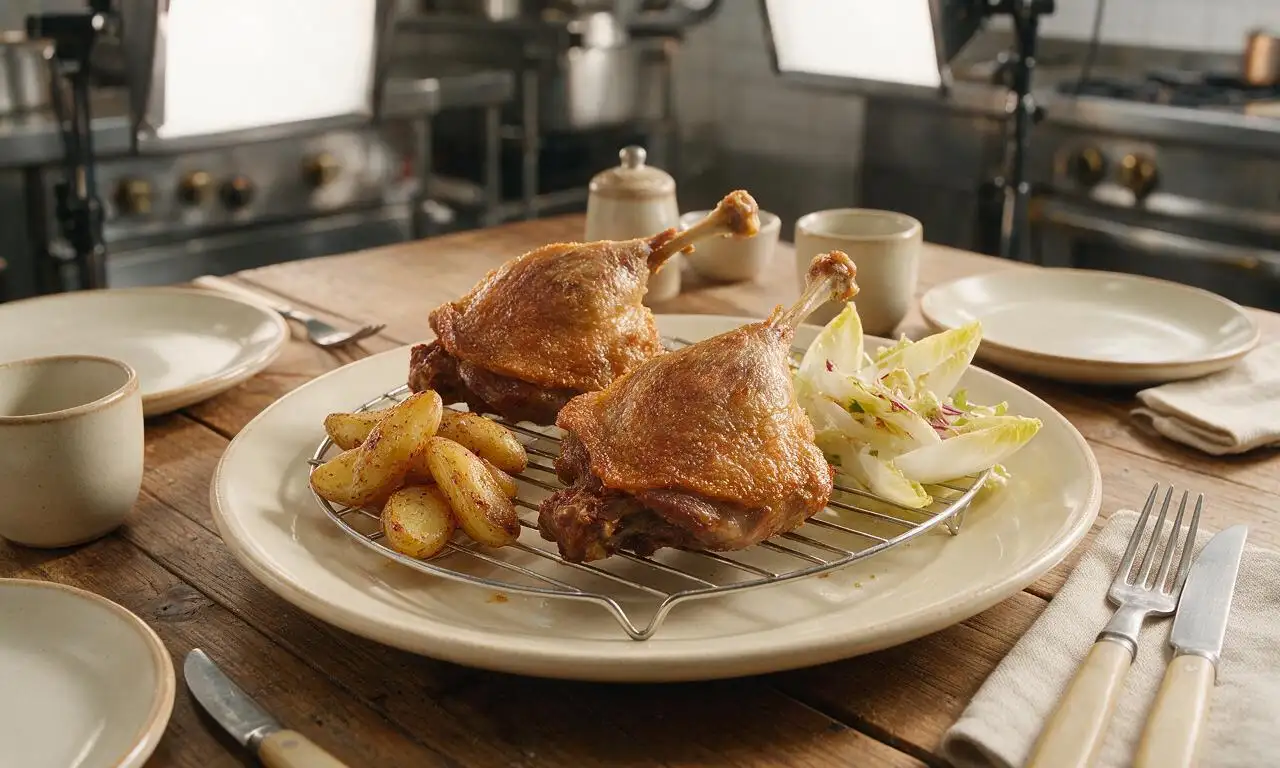






OMG, I made this for my husband's birthday dinner last weekend and it was a total showstopper! I was nervous about the long cure time but the inactive hours meant I could prep it the night before and just let the slow cooker do its thing while I got the house ready for guests. The skin got so crispy and the meat fell right off the bone. 10/10 will be making this for our Christmas potluck too!
Wait, hold up—15 hours total cook time? I almost skipped this thinking it was too much of a time sink, but 14.5 of that is totally hands off? Game changer. I tossed this in before bed Saturday night, let it cure and cook low and slow, and had perfect duck confit for Sunday family dinner. The only thing I messed up was not saving enough of the leftover duck fat for roasted veggies later, whoops.
My kids are usually super picky about any poultry that isn’t chicken nuggets, but they went back for SECONDS of this duck confit. I served it with a simple arugula salad and some crusty bread to soak up the extra fat, and even my 7 year old asked when we can have it again. SO good, way less fussy than I thought it would be for a "fancy" French dish.
Tried this last night and honestly? It was good, but my meat came out a little saltier than I expected. I followed the cure measurements exactly, did I do something wrong? I used kosher salt like the recipe said, maybe I let it cure too long? I left it for about 16 hours instead of the recommended 12 because I got held up at work.
Meal prep win! I made a double batch of this on Sunday, portioned it out with some roasted root veggies, and had fancy work lunches all week. My coworkers kept stopping by my desk asking what smelled so good in the break room when I heated it up. Way better than sad takeout salads, that’s for sure.
Made this for my book club potluck a couple weeks ago and everyone thought I ordered it from that fancy French bistro downtown. Little do they know I’ve never even attempted French cooking before! The step-by-step instructions were so easy to follow even for a medium-difficulty recipe, I didn’t feel lost at any point. Will absolutely be adding this to my regular dinner rotation.
Quick question—can I use duck legs that I already had frozen in my deep freeze for a couple months? I’ve been meaning to make confit forever and have a pack stashed, but I didn’t know if the freeze would mess with the texture after the long slow cook. Don’t want to waste good duck!
Whoa, I was today years old when I realized you don’t need a fancy French oven to make perfect duck confit? I did this in my basic 6-quart slow cooker that I got for $30 at a garage sale and it turned out exactly like the version I had at a restaurant in Paris last year. Game. Changer. I’m never paying $40 for an entree of this again.
I was a little intimidated by the medium difficulty rating at first, but honestly? The hardest part was waiting for it to be done! The steps are super straightforward, no fancy techniques required. I rubbed the duck with the thyme and garlic per the recipe, and the whole house smelled amazing for hours while it cooked. My roommate even came out of his room to ask what I was making because it smelled so good.
Tried this for a date night in with my partner and they said it’s the best thing I’ve ever cooked. We paired it with a pinot noir I picked up on a trip to Willamette Valley last year and it was the perfect match. Only note: make sure you have enough crusty bread to soak up all that delicious fat at the bottom of the slow cooker, don’t let that go to waste!
Wait, I have a quick question for anyone who’s made this—do I have to use duck fat for the cooking part, or can I substitute something else? Duck fat is a little pricey at my local grocery store and I’m trying to stick to a tight grocery budget this month. Would olive oil work, or will it change the flavor too much?
I’ve made duck confit a half dozen times using different recipes, and this one is hands down the best. The cure ratio is perfect, not too salty not too bland, and the slow cooker method keeps the meat so juicy without making it greasy. I seared the legs skin-side down in a cast iron for 2 minutes right before serving to get that extra crispy skin, 10/10 no notes.
Help! I started the cure last night and just realized I’m out of fresh thyme—all I have is dried thyme in the spice cabinet. How much should I use instead? I don’t have time to run to the store before I need to get this in the slow cooker for dinner tomorrow.
Brought this to my extended family’s Thanksgiving dinner this year instead of the usual turkey, and I swear half the family asked for the recipe before they even finished their first bite. I know it’s not a traditional Thanksgiving dish, but it’s going to be a new staple for our holidays from now on. The meat is so rich and flavorful, way better than dry turkey in my opinion.
I work at a small neighborhood cafe and tested this recipe out for our weekend special last week. We sold out in 45 minutes! Customers kept coming up to the counter to rave about how tender and flavorful it was. We’re adding it to the permanent brunch menu, served with a poached egg and hollandaise. Thank you for such a solid, reliable recipe!