filet mignon sauce

title 1
filet mignon sauce
⏱️ cook time 12 minutes
🍽️ servings 4
⚡ Difficulty medium

intro

Velvety, umami-rich red wine pan sauce for filet mignon, built from seared steak fond, aromatics, and cold butter for restaurant-worthy depth at home.

Ingredients
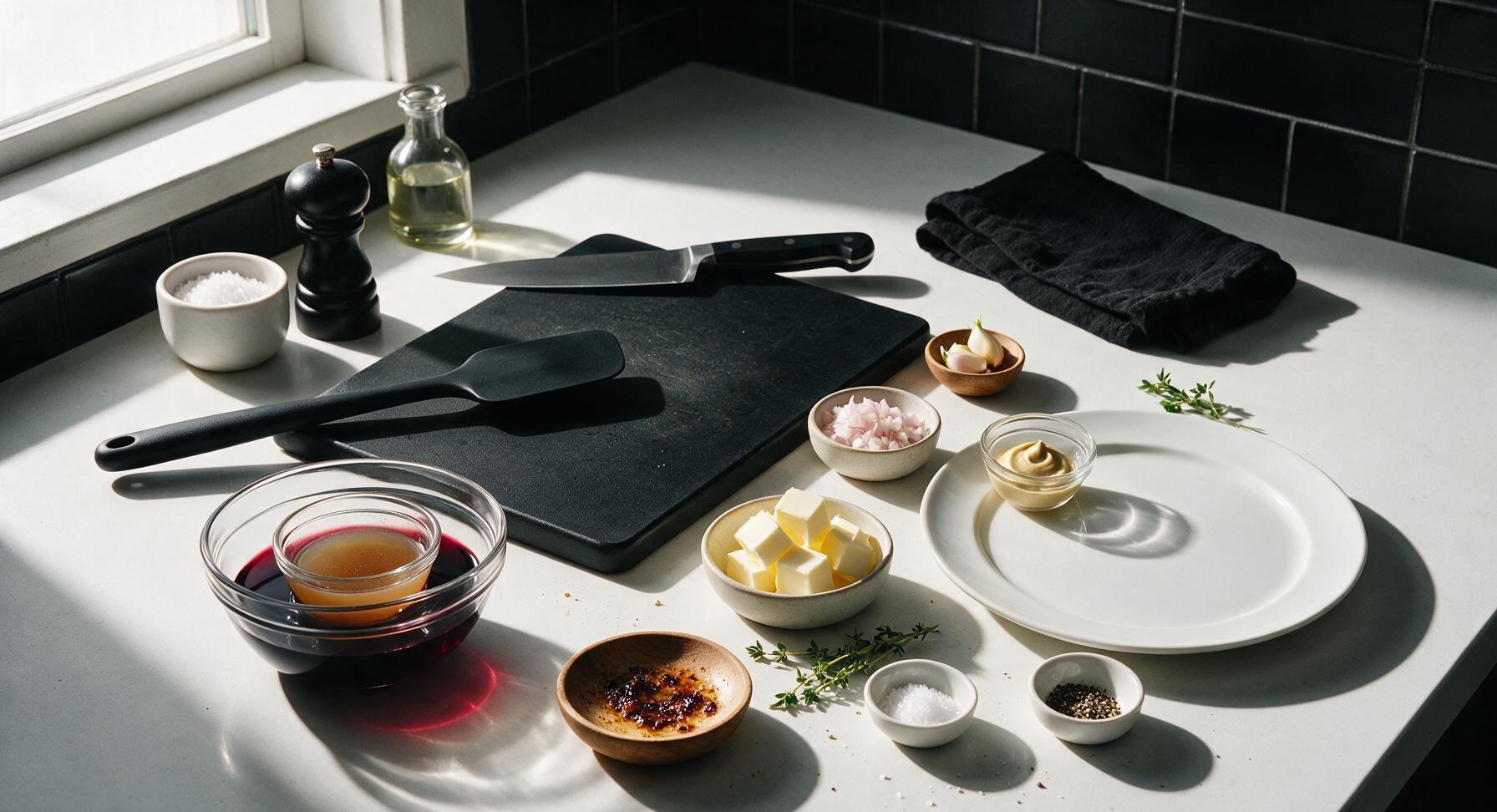
Pan drippings (browned fond + rendered beef fat) from seared filet mignon ~1 tbsp
Dry oaked red wine (Cabernet Sauvignon or Merlot) 1 cup (240ml)
Unsalted butter (very cold, cut into 1cm cubes) 4 tbsp (56g)
Low-sodium beef stock 1/2 cup (120ml)
Small shallots, finely diced 2 (≈60g)
Garlic cloves, lightly crushed 2
Fresh thyme sprigs 3
Dijon mustard 1 tsp
Freshly cracked black pepper 1/2 tsp
Kosher salt 1/4 tsp, adjust to taste

Steps

1

Sauté Shallot and Garlic

After searing 4 six-ounce filet mignons, transfer the steaks to the matte ivory plate to rest for 10 minutes, leaving all browned fond bits and 1 tablespoon of rendered beef fat in the stainless steel skillet over medium heat (350°F/175°C); drain any excess fat if more than 1 tablespoon remains. Add the finely diced shallots to the pan, sauté for 2 minutes until soft and translucent, then add the crushed garlic and cook for 30 seconds more until fragrant, taking extreme care not to burn the garlic (burnt garlic will make the sauce bitter). Stir constantly with the beech wood spatula.
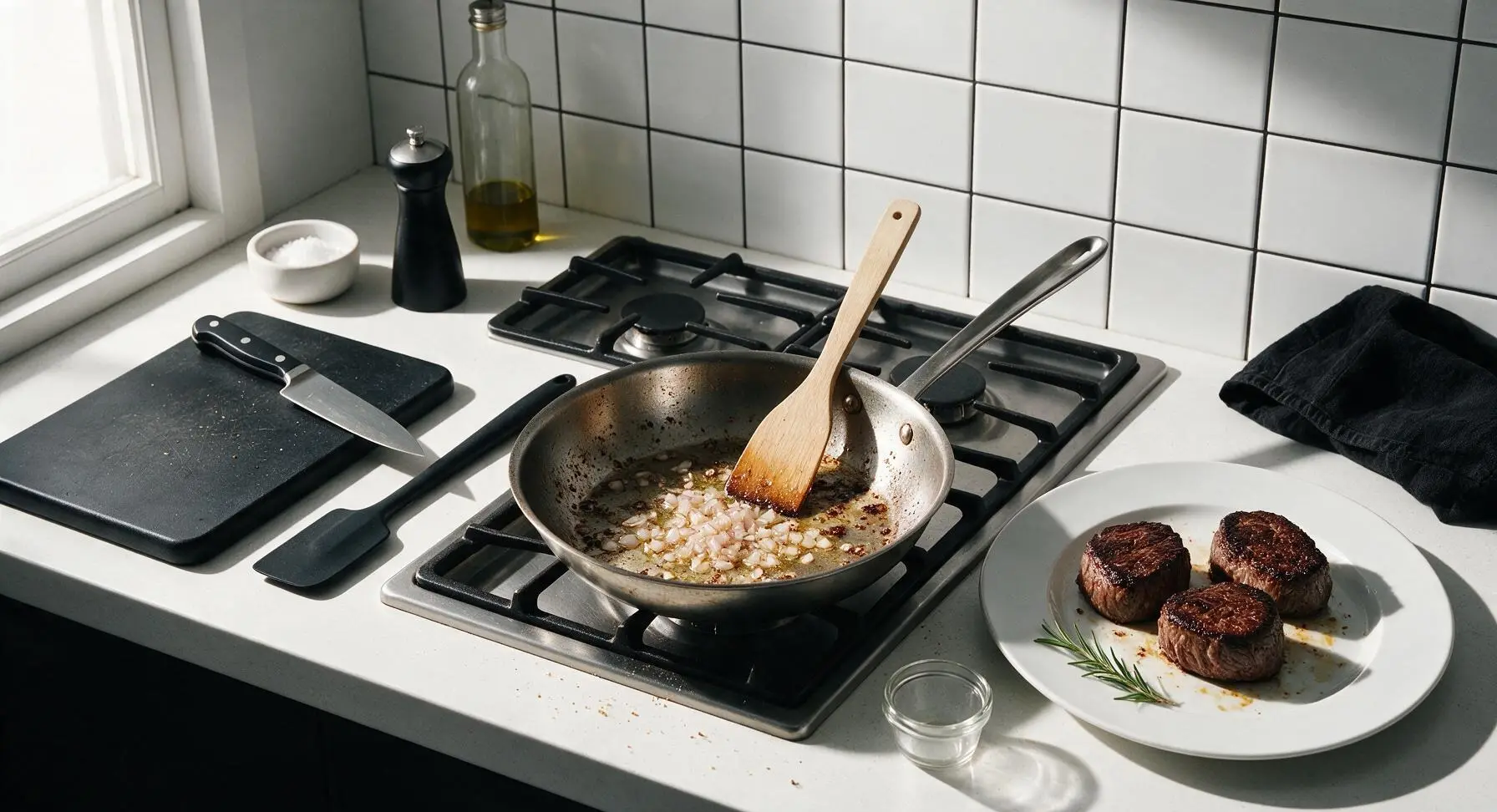
Step 1
step1:Sauté Shallot and Garlic
2

Deglaze Pan with Wine

Slowly pour 1 cup of dry red wine into the hot skillet, using the flat edge of the beech wood spatula to scrape every bit of browned fond from the pan bottom into the liquid as the wine bubbles. Bring the wine to a steady gentle simmer, and cook for 4-5 minutes until it is reduced by half, reaching a syrupy consistency that coats the back of the spatula when lifted.
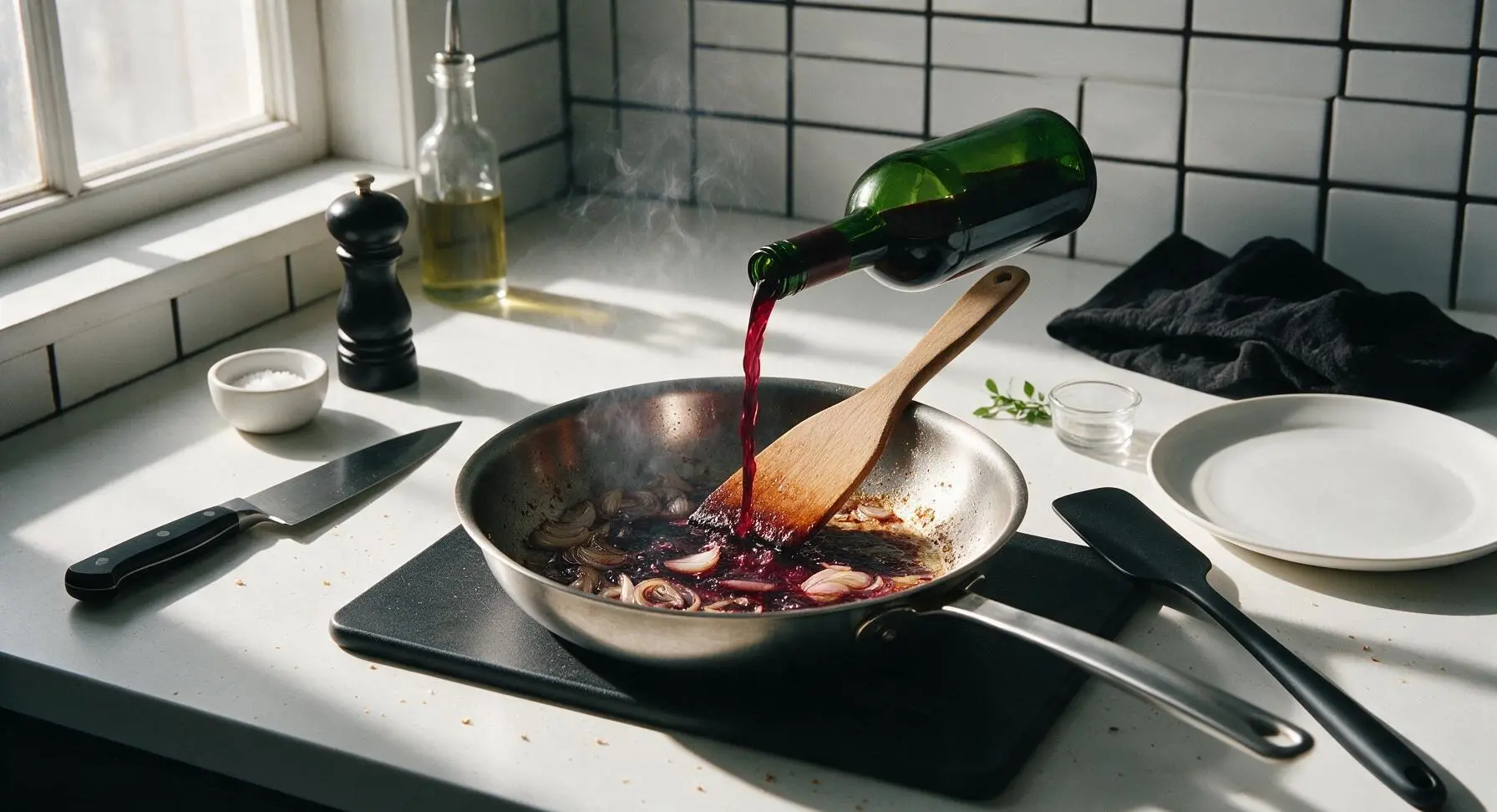
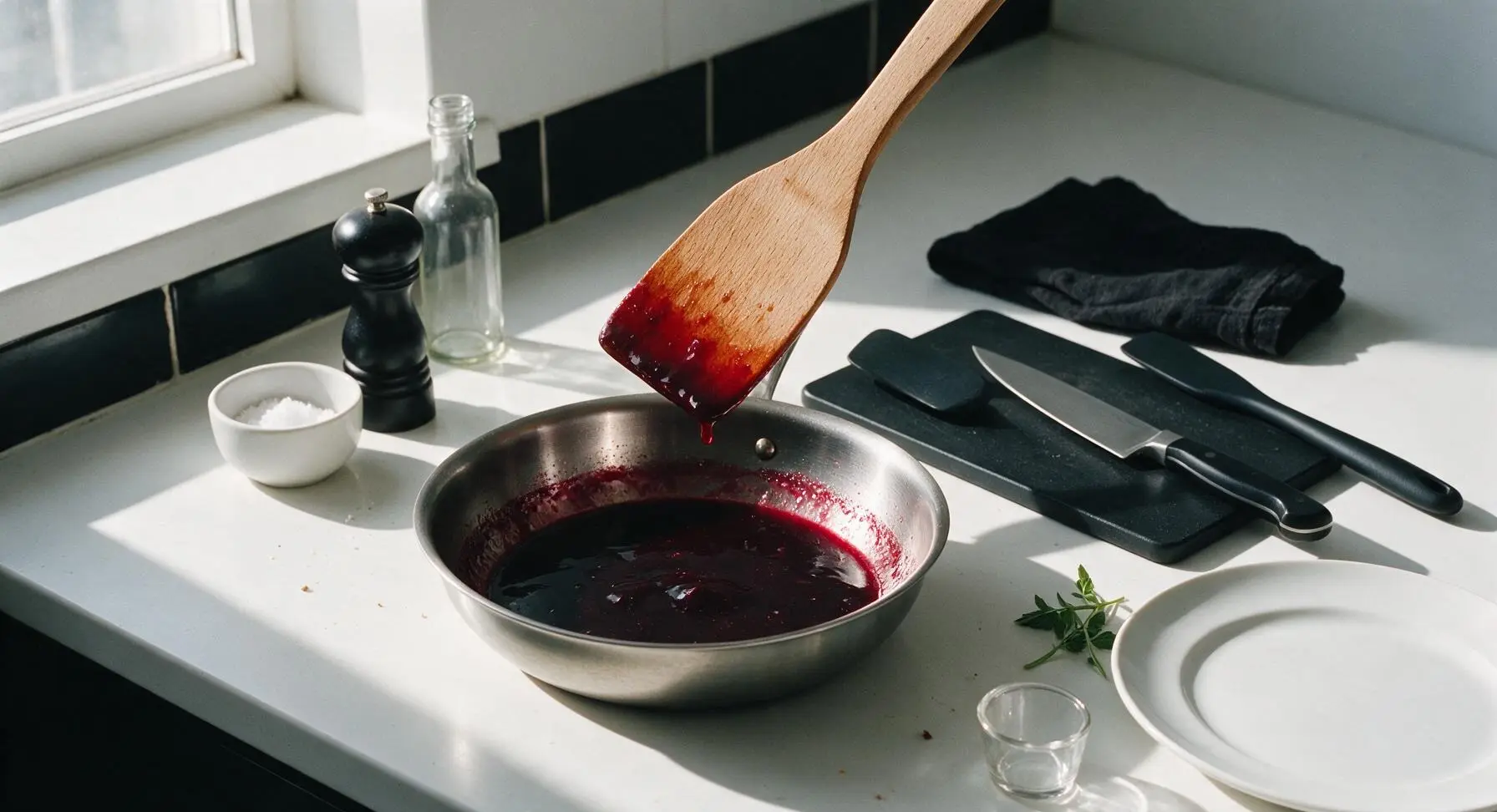
Step 2
step2:Deglaze Pan with Wine
Step 2
step2:Deglaze Pan with Wine
3

Add Stock and Herbs

Stir in 1/2 cup low-sodium beef stock, 3 fresh thyme sprigs, 1 teaspoon Dijon mustard, and 1/2 teaspoon cracked black pepper. Use the spatula to stir until fully combined with the reduced wine, then bring to a gentle simmer and cook for 3 minutes until the liquid is reduced by roughly one third, reaching a light, thin sauce consistency that leaves a clear trail when you run the spatula across the pan bottom.
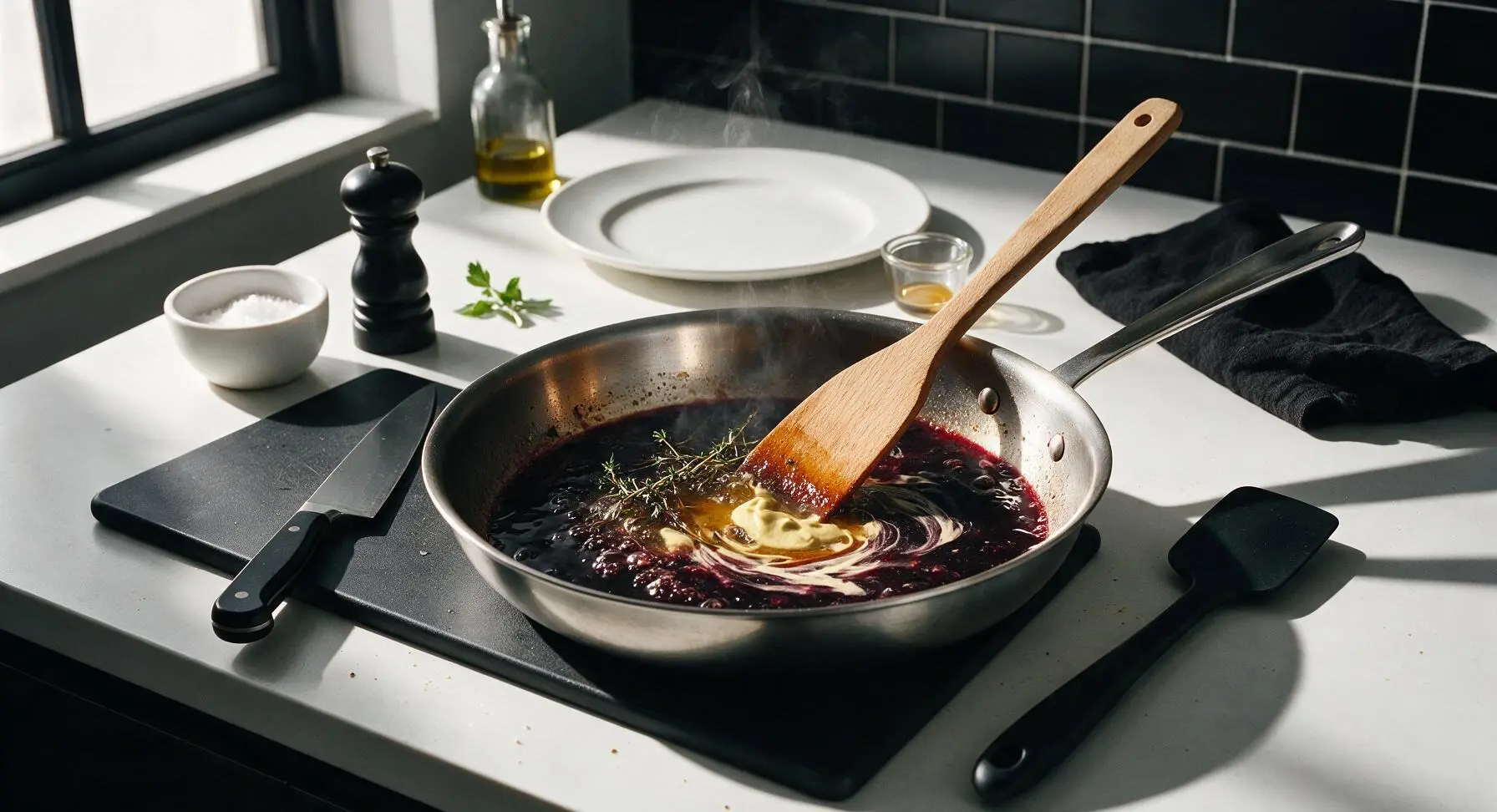
Step 3
step3:Add Stock and Herbs
4

Strain Sauce Base

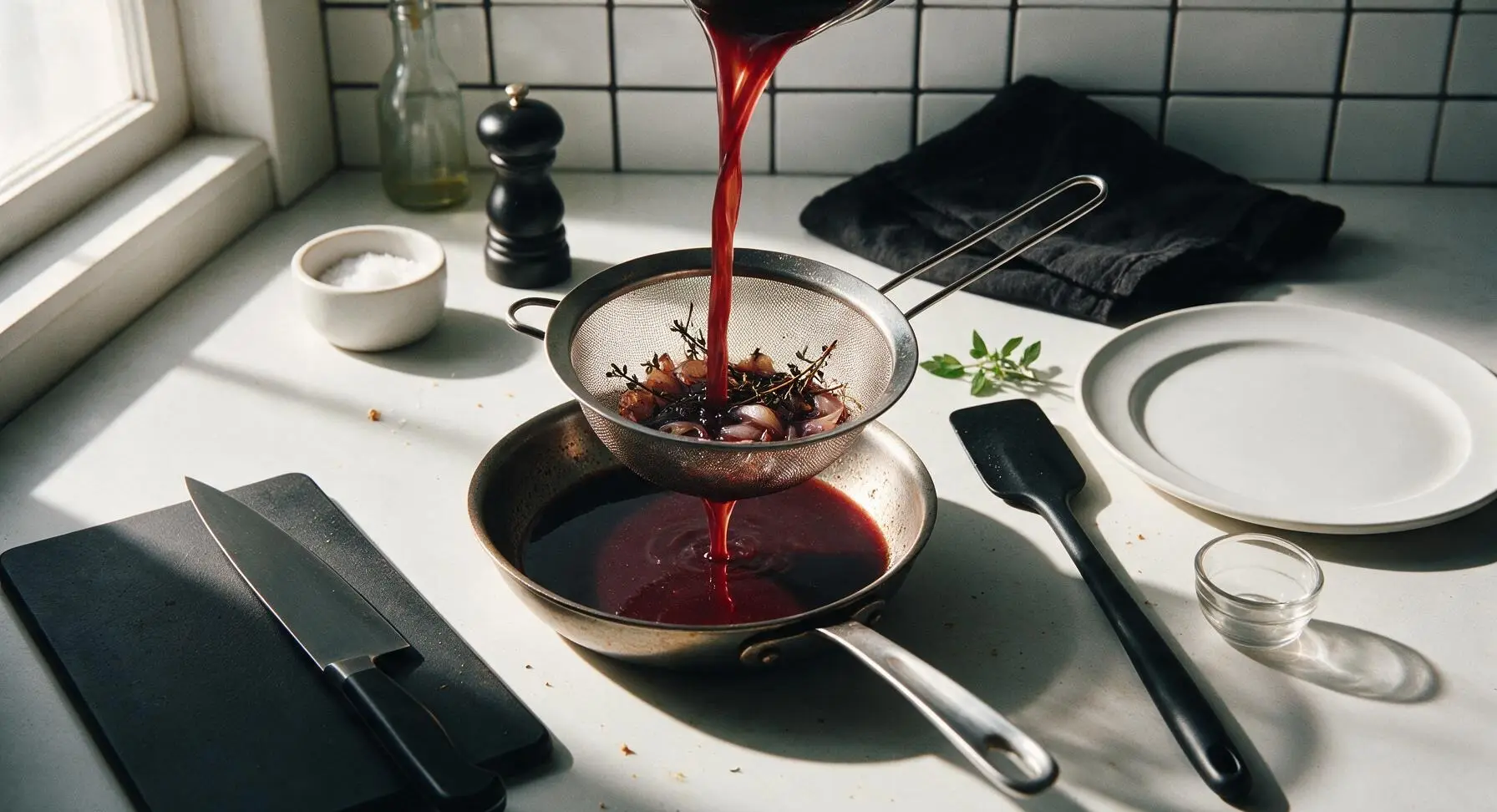
Remove the skillet from heat. Use the spatula to fish out the woody thyme sprigs and crushed garlic cloves, then pour the hot sauce base through the fine-mesh stainless steel strainer back into the skillet, pressing gently on the softened shallots with the spatula to extract all their flavor before discarding the collected solids. Return the skillet to the stovetop set to the lowest heat setting to keep the base warm while you prepare the butter emulsification.
Step 4
step4:Strain Sauce Base
5

Emulsify with Cold Butter

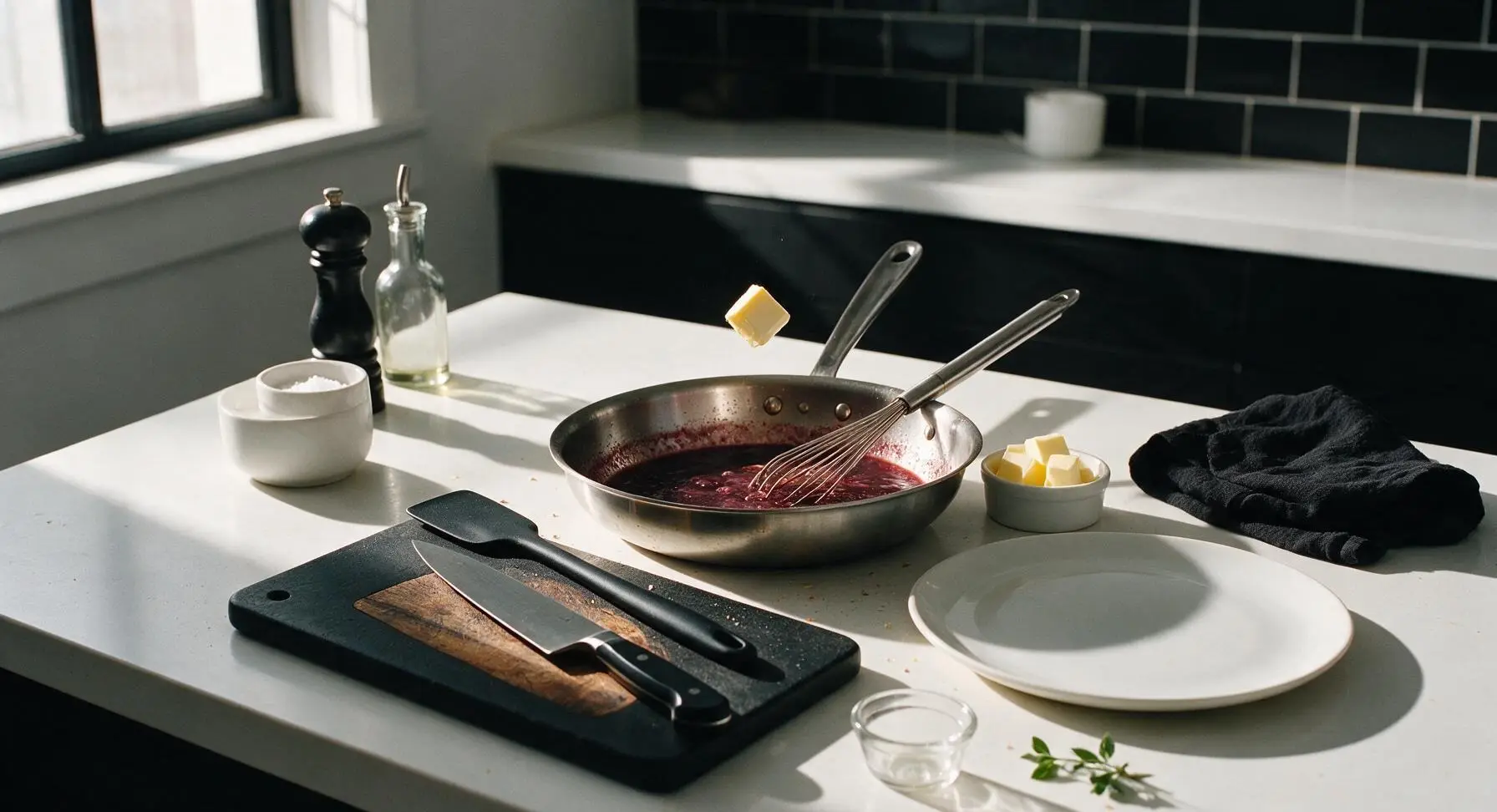
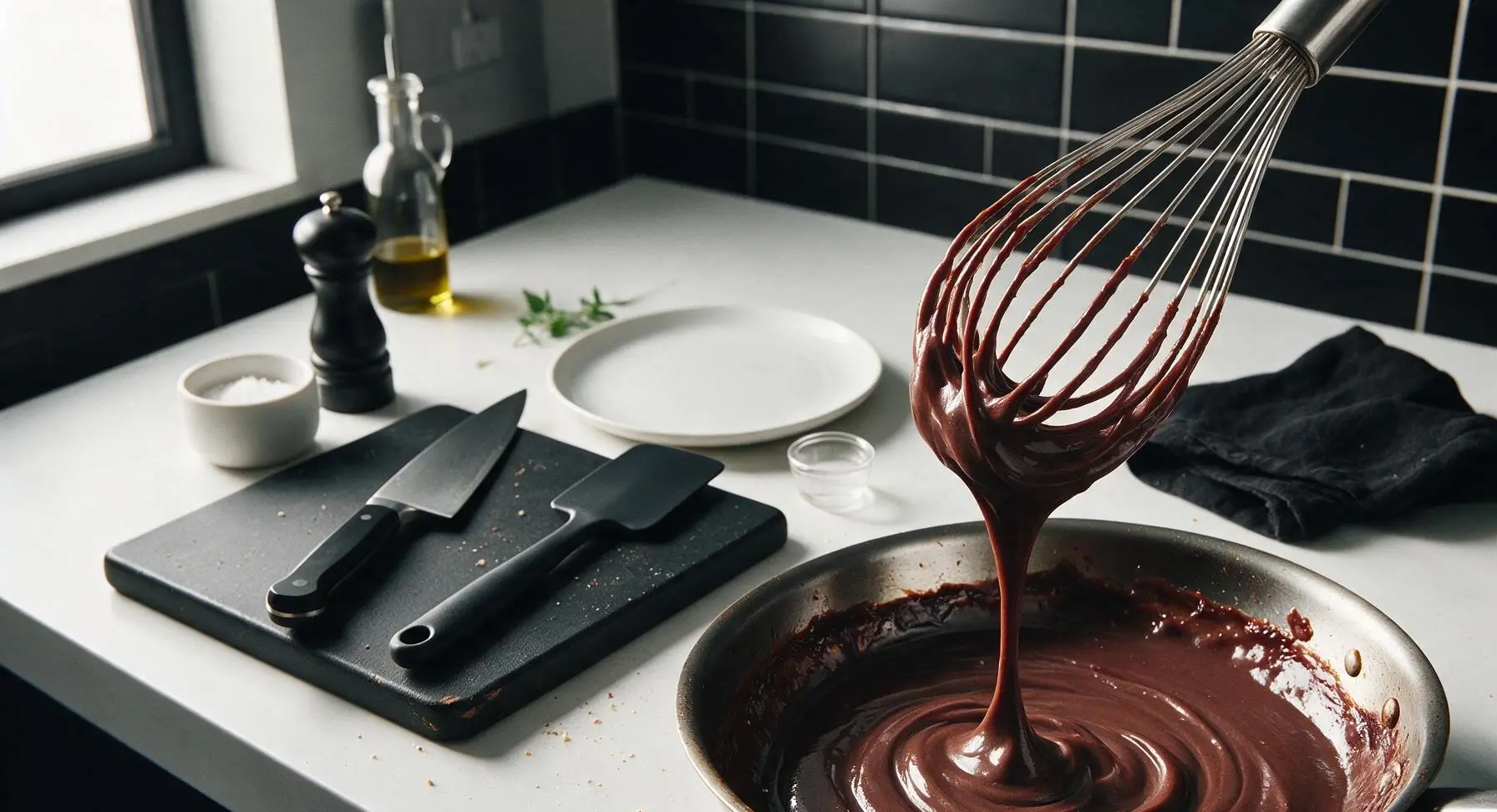
Turn off the heat under the skillet. Add 1 cube of very cold butter at a time, whisking constantly with the stainless steel whisk in slow circular motions, waiting until each cube is fully melted and incorporated into the sauce before adding the next. This classic French technique (monter au beurre) creates a velvety, glossy, thick sauce that coats the back of a spoon without running. Do not add all butter at once, and do not return the pan to high heat after adding butter, as this will break the emulsion and leave the sauce greasy and separated.
Step 5
step5:Emulsify with Cold Butter
Step 5
step5:Emulsify with Cold Butter
6

Season Sauce to Taste

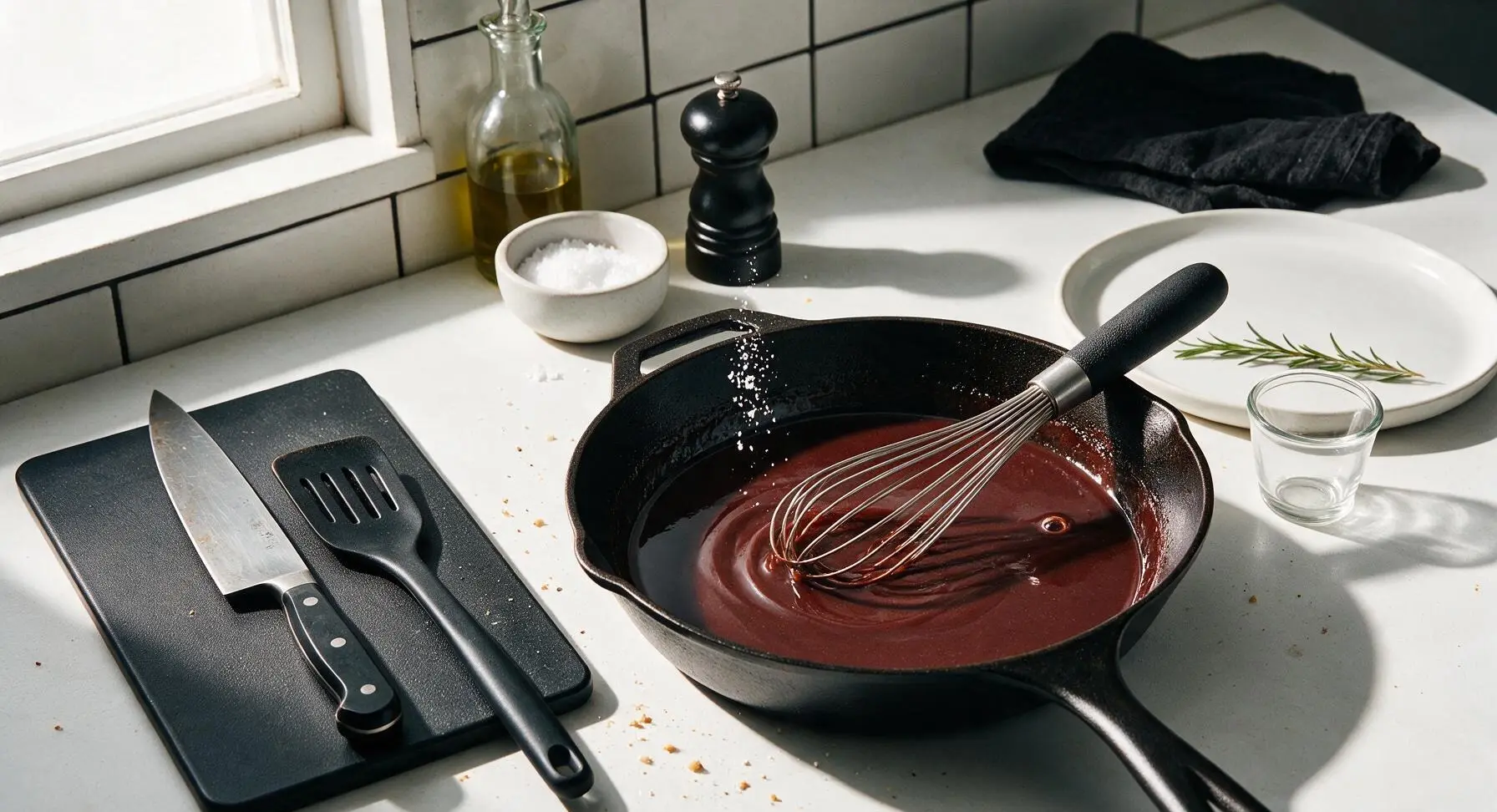
Taste the finished sauce, and add 1/4 teaspoon kosher salt, adjusting as needed based on the saltiness of your stock and pan drippings. Let the sauce rest for 1 minute off heat; it will thicken slightly as it cools, reaching the perfect nappé consistency to coat steak without running off.
Step 6
step6:Season Sauce to Taste
7

Spoon Sauce Over Filet

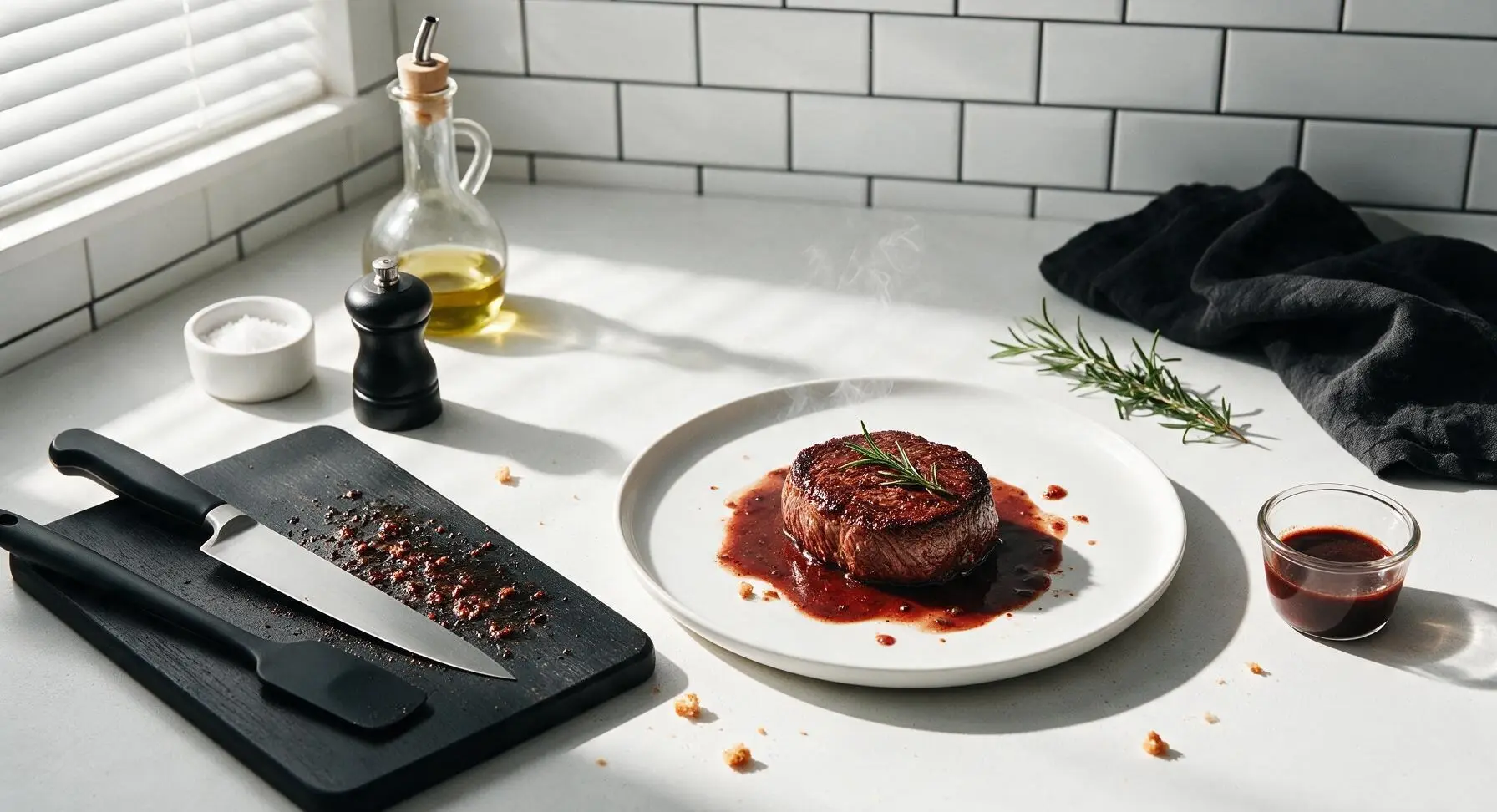
Once seasoned, spoon 2 tablespoons of the warm, glossy sauce over each rested, seared filet mignon on the matte ivory dinner plate, allowing the sauce to cascade gently down the seared steak sides and pool in a thin, even layer at the plate base. Garnish with a single fresh thyme sprig and a light pinch of flaky sea salt if desired, and serve immediately while the sauce is warm and glossy.
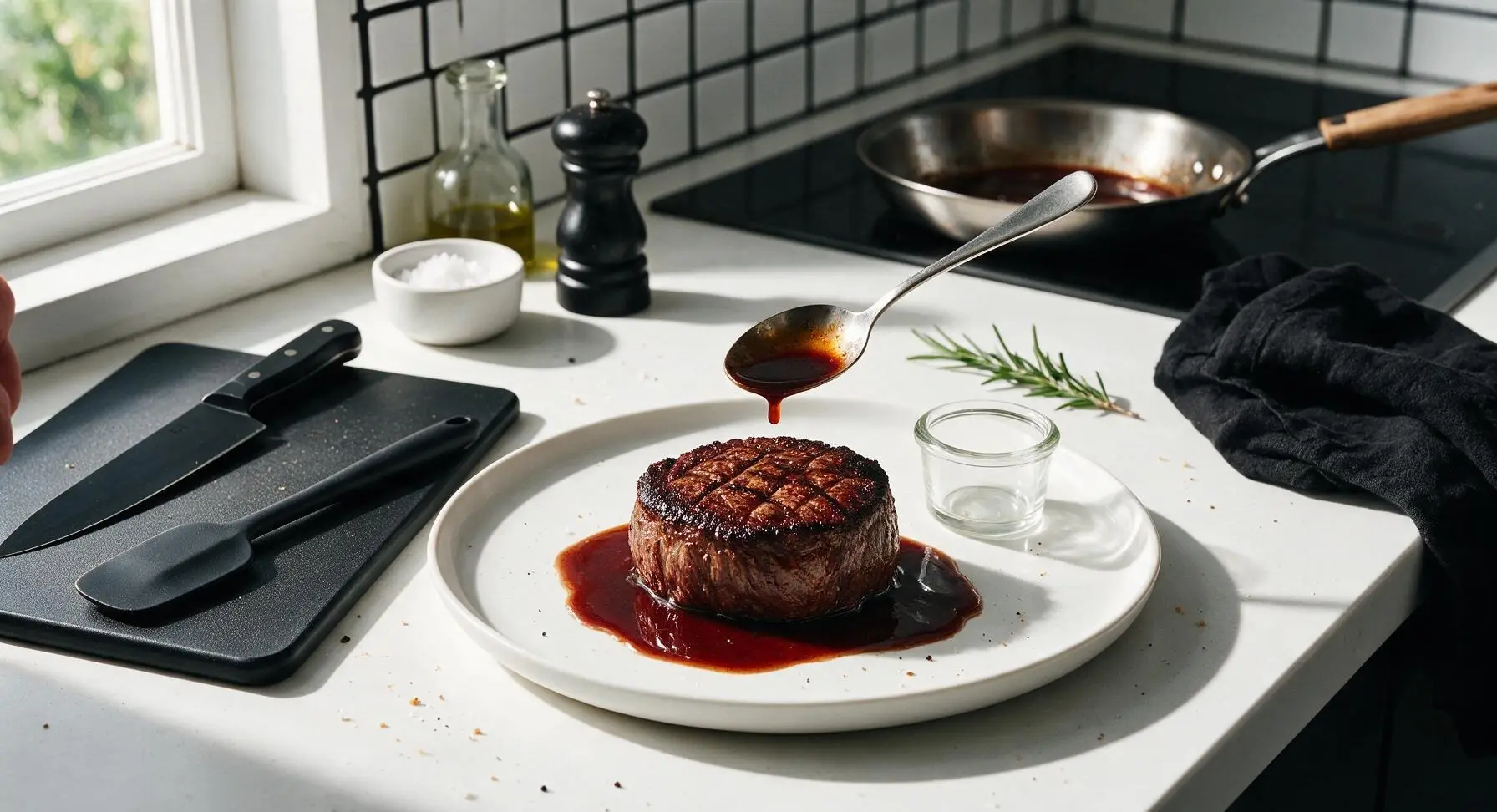
Step 7
step7:Spoon Sauce Over Filet

Tips

1.Always use ice-cold butter cut into small cubes for the final emulsification step. Warm or room-temperature butter melts too quickly, preventing a stable emulsion and leading to a greasy, separated sauce instead of the signature smooth, velvety texture.
2.Never wipe or wash the skillet after searing filet mignon before making the sauce. The dark, stuck-on browned bits (called fond) are concentrated, caramelized meat flavor that forms the rich, deep base of the sauce; deglazing with wine lifts every bit of this flavor without scrubbing.
3.Do not boil the sauce once you begin adding butter. High heat breaks down the milk fat in butter, causing the sauce to split and lose its glossy sheen; turn off the stovetop entirely before whisking in butter to keep the temperature low enough for a stable emulsion.
✨ You May Also Like

Main Course
🍜 United Kingdom

A showstopping classic of tender seared beef, savory mushroom duxelles, and crisp prosciutto wrapped in flaky golden puff pastry, baked to juicy perfection.

⏱️ 2 hours 1Main Course ★ 4.7
Main Course
🍜 India

Tender charred marinated chicken simmered in a rich, spiced creamy tomato sauce, this iconic Anglo-Indian curry pairs perfectly with basmati rice or warm naan.

⏱️ 50 minuteMain Course ★ 4.6
Main Course
🍜 Thailand

Classic tangy, sweet, and savory Thai stir-fried rice noodles with shrimp, tofu, and crunchy garnishes, balancing all five core Thai flavor profiles.

⏱️ 30 minuteMain Course ★ 4.5
Main Course
🍜 United Kingdom

Crispy golden beer-battered cod and fluffy double-fried chips, served with tangy tartar sauce and malt vinegar: the timeless, beloved British pub comfort classic.

⏱️ 45 minuteMain Course ★ 4.7
Main Course
🍜 Mexico

Smoky, chile-marinated pork tacos with caramelized pineapple, fresh cilantro, and lime: a beloved classic Mexican street food perfect for casual summer gatherings.

⏱️ 1 hour 45Main Course ★ 4.8
Main Course
🍜 United States

Crunchy Fritos corn chips layered with savory beef chili and melted cheddar, topped with cool, zesty fixings for a beloved, cozy Tex-Mex comfort food.

⏱️ 35 minuteMain Course ★ 4.8

filet mignon sauce:Frequently Asked Questions

1.What exactly is fond, and why is it critical for this pan sauce? ▾
Fond is the crispy, caramelized brown bits stuck to the bottom of your pan after searing filet mignon, formed by high-heat Maillard browning. It’s packed with deep, savory, beefy umami that forms the flavor backbone of the sauce—fail to scrape it up as you deglaze, and your sauce will taste flat and one-note.
2.Can I still make this sauce if I burned the fond while searing my filet? ▾
If the fond is jet black and smells acrid rather than nutty and beefy, scrape out and discard all burnt bits and excess fat, leaving only any light brown, toasty fond. If every bit is burnt, start with 1 tablespoon melted butter, sauté shallots until golden, and add a pinch of mushroom powder to mimic deep fond savoriness.
3.What red wine swaps work if I don’t have Cabernet Sauvignon or Merlot? ▾
Stick to dry, oaked, medium-to-full-bodied reds with low residual sugar—great swaps include Malbec, Syrah, or a dry Bordeaux blend. Skip sweet reds, overly light fruity wines, or grocery store cooking wine, which is loaded with added salt and preservatives that throw off the sauce’s balanced flavor.
4.Why does the butter need to be very cold and cut into 1cm cubes? ▾
Cold, uniformly cubed butter is the key to that velvety, emulsified restaurant-style texture. If you add warm or melted butter, it will separate and leave a greasy, oily film on top of your sauce instead of blending smoothly. Adding one small cube at a time off heat lets the butter emulsify slowly for a glossy, rich finish.
5.Can I use salted butter instead of unsalted for this recipe? ▾
You can, but you’ll need to adjust your seasoning very carefully at the end. Unsalted butter lets you control exact sodium levels, since pan drippings, beef stock, and reduced wine all have concentrated, variable salt content. If using salted butter, hold off on adding extra salt until you’ve finished the sauce and done a final taste test.
6.How finely do I need to dice the shallots for this sauce? ▾
Aim for a fine, uniform 1/8-inch dice, so shallots soften and melt into the sauce quickly without leaving large, crunchy chunks. If your dice is too big, shallots will take longer to cook, you risk burning them, and you’ll get harsh, sharp onion bites in your otherwise smooth, silky finished sauce.
7.Why is low-sodium beef stock recommended instead of regular? ▾
Reducing wine and stock concentrates every flavor in the pan, including salt. Regular beef stock can become overly salty once reduced by half, leaving you with a sauce that’s too briny to serve over mild, tender filet mignon. Low-sodium stock lets you build flavor gradually and adjust salt to taste right at the end.
8.How long should I reduce the red wine before adding beef stock? ▾
After sautéing shallots in the pan drippings, pour in the wine, scrape up all fond, then simmer over medium heat until it’s reduced by about two-thirds, roughly 3 to 4 minutes. It should be thick enough to lightly coat the back of a spoon, with no raw, sharp alcohol taste left before you add stock.
9.Do I have to strain the sauce before serving it over filet? ▾
Straining is optional, but it gives you that ultra-smooth, fine-dining texture by removing tiny shallot bits or leftover coarse fond particles. If you prefer a more rustic, textured sauce, you can skip straining entirely—just make sure you’ve scraped all fond fully off the pan so there are no hard, crunchy bits left.
10.Can I make this pan sauce ahead of time for a dinner party? ▾
You can make the reduced wine, shallot, and stock base up to 3 days ahead, stored in an airtight container in the fridge. Wait to whisk in the cold butter until right before serving, though—reheating fully emulsified butter sauce often causes it to break and separate, ruining that signature glossy, velvety texture.
11.How do I fix a broken sauce that looks greasy instead of smooth? ▾
If your sauce separates and has a visible oily film on top, fix it fast by taking the pan off heat, adding 1 teaspoon of ice-cold water, and whisking vigorously for 10 to 15 seconds. If that doesn’t bring it back together, drop in one extra cold butter cube and keep whisking until the emulsion resets into a glossy, smooth consistency.
12.Can I make this sauce in a non-stick pan? ▾
Non-stick pans don’t develop as much thick, rich fond as stainless steel or cast iron pans, since the slick coating prevents food bits from sticking and caramelizing. If you only have a non-stick pan, sear the filet over slightly higher heat to build as much fond as possible, and add a pinch of beef bouillon to boost savoriness if needed.
13.How much sauce does this recipe yield per filet serving? ▾
This recipe yields roughly 2 tablespoons of rich, concentrated sauce per 6- to 8-ounce filet mignon, which is the standard restaurant-style portion. Pan sauce is meant to complement the steak, not drown it, so a light drizzle over the top and tiny pool on the plate is all you need for big, balanced flavor.
14.Can I add extra aromatics like garlic or fresh herbs to the sauce? ▾
Absolutely! A single crushed garlic clove added when you sauté shallots, a sprig of fresh thyme or rosemary added while the wine reduces, or a teaspoon of cracked black peppercorns all work beautifully. Just fish out woody herb stems and garlic before whisking in butter, or strain the sauce for a perfectly smooth finish.
15.Is it okay to use leftover opened red wine for this recipe? ▾
Opened red wine works great as long as it’s less than a week old, hasn’t turned vinegary, and still tastes like drinkable wine. If the wine smells like vinegar or wet cardboard from oxidation, skip it—those sour, off flavors will concentrate as the wine reduces, making your sauce taste sharp and unpleasant.
16.What’s the best way to get the sauce to stick to my filet mignon? ▾
Let your seared filets rest for 5 to 7 minutes before serving, and don’t wipe all the surface moisture off the steak before plating. The thin layer of savory meat juices on the resting steak helps the glossy sauce adhere instead of sliding right off onto the plate. You can also spoon a tiny bit of sauce on the plate first before setting the filet down.
17.How thick should the finished sauce be before serving? ▾
The finished sauce should be thick enough to lightly coat the back of a spoon, running slowly in a thin, even stream when you lift the spoon out of the pan. If it’s too thin, simmer it for 30 to 60 seconds before adding butter; if it’s too thick, stir in a tiny splash of extra beef stock to thin it to the perfect consistency.

Comments (5)

2 days ago

OMG this pan sauce is a total game changer! I made this for my anniversary dinner with my husband the other night and he thought I ordered takeout from a fancy steakhouse. The red wine reduction was so rich and perfectly paired with our filets, I’ll never buy store-bought steak sauce ever again. Only thing I adjusted was adding a tiny extra pat of butter at the end because why not, right? SO good.

yesterday

Wait the extra butter trick is chef’s kiss! I did that too last week when I made this for my son’s birthday dinner, my kids loved it and kept asking for seconds. Total hit!

2 hours ago

So glad you loved it! That extra pat of butter (we call it “mounting” with butter in professional kitchens) is such a great pro move to add extra silkiness and richness to the sauce, perfect call on your part!

1 week ago

Tried this for our weekly Sunday family dinner and wow, even my picky 10 year old cleaned his plate! Cook time was exactly 12 minutes like the recipe said which was perfect because I was juggling roasted asparagus and mashed potatoes at the same time. My only note is that I used a cabernet I had open from the weekend and it worked beautifully, no need for a super pricey bottle in my opinion.

5 days ago

Great tip about using an open bottle of cabernet! You absolutely don’t need an expensive, fancy wine for pan sauce — you just want something you’d happily sip a glass of while you cook, and it’ll turn out fantastic. So happy the whole family, even your picky 10-year-old, cleaned their plates!

30 minutes ago

I was a little intimidated because I’d never made a pan sauce from scratch before (medium difficulty had me nervous!) but this was mostly straightforward. Made a double batch on Sunday to use with meal prep steak bowls all week, and it held up pretty well in the fridge. I noticed it got a tiny bit thick when I reheated it, but a splash of beef broth thinned it right out. Total win overall, will be making this on repeat for sure.

5 days ago

Brought filet mignon bites drizzled with this sauce to our neighborhood potluck last weekend and people were hounding me for the recipe all night! I was worried the sauce might be too heavy for small appetizer portions but it was perfectly balanced, not too tangy from the wine, just the right depth of flavor. 10/10 will be making this for every fancy gathering from now on.

3 days ago

I did the exact same filet bite appetizer for our Fourth of July cookout! People went back for thirds, no lie. Pro tip: add a little sprinkle of flaky sea salt on top right before serving, it takes the whole thing to the next level.

yesterday

Okay so I messed this up the first time I tried it a couple weeks back — I had the heat too high and the wine burned so the sauce got bitter, total user error! Tried again earlier this week keeping the heat on medium low like the recipe says and wow, night and day! It came out so smooth and flavorful, my roommate said it tasted like straight up steakhouse quality. Definitely don’t crank the heat like I did, y’all, patience pays off! 10/10.

30 minutes ago

Oh we’ve all been there with too-high heat burning a wine reduction! So proud of you for giving it a second go, that’s how you build real confidence in the kitchen. Keeping the heat on medium low is key so the wine simmers gently and reduces without scorching the bottom of the pan, great call sticking with it!

5 minutes ago

Same exact thing happened to me on my first try! I thought I ruined my whole date night dinner, but the second attempt was absolute chef’s kiss. Now I make this every time my parents come to visit from out of town, they’re totally obsessed.