
french bread for french toast
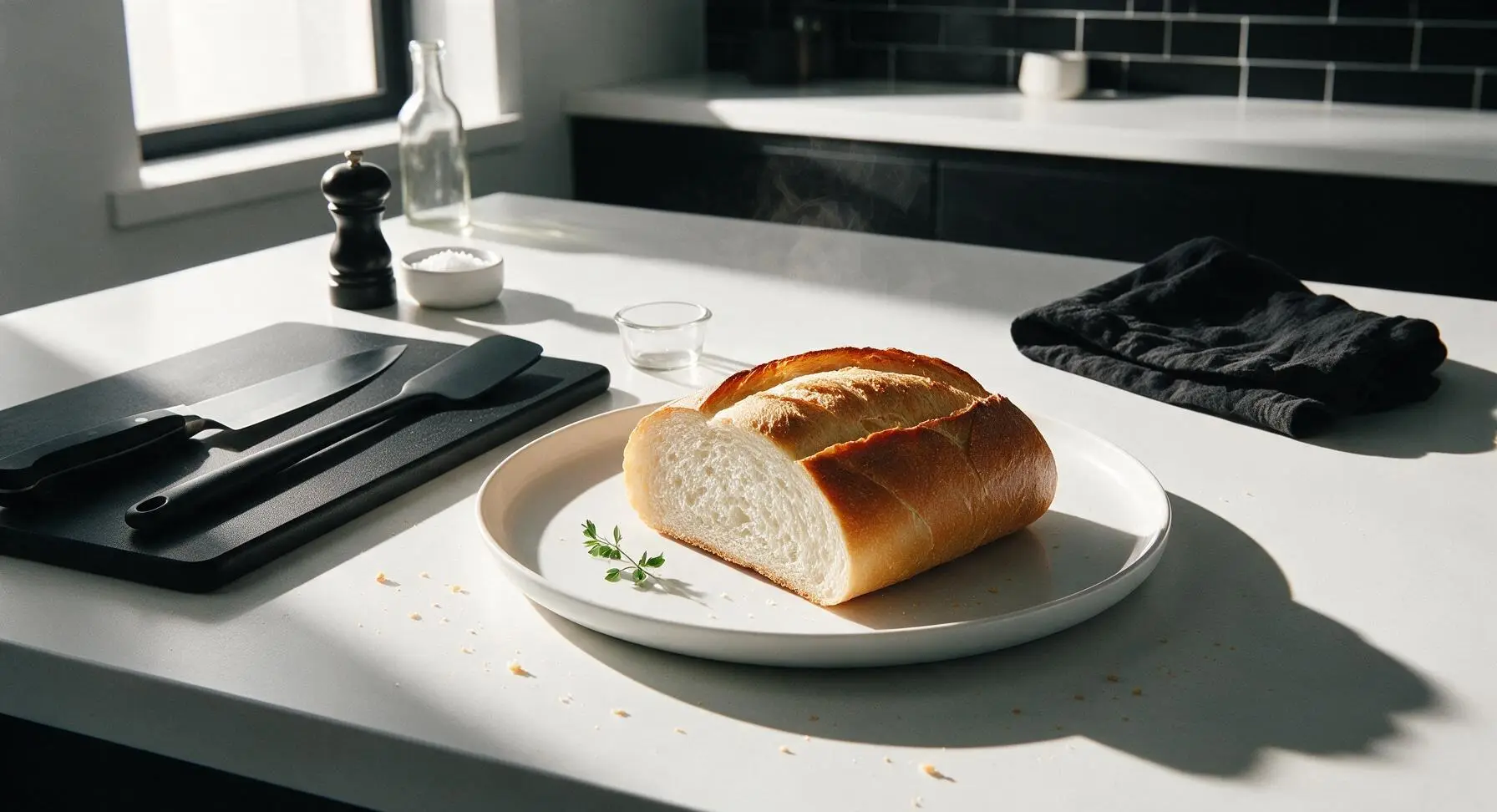
intro
Sturdy, crisp-crusted French bread with a soft, evenly porous crumb, custom-formulated to hold rich custard without sogginess for perfect golden French toast.
Ingredients

Steps
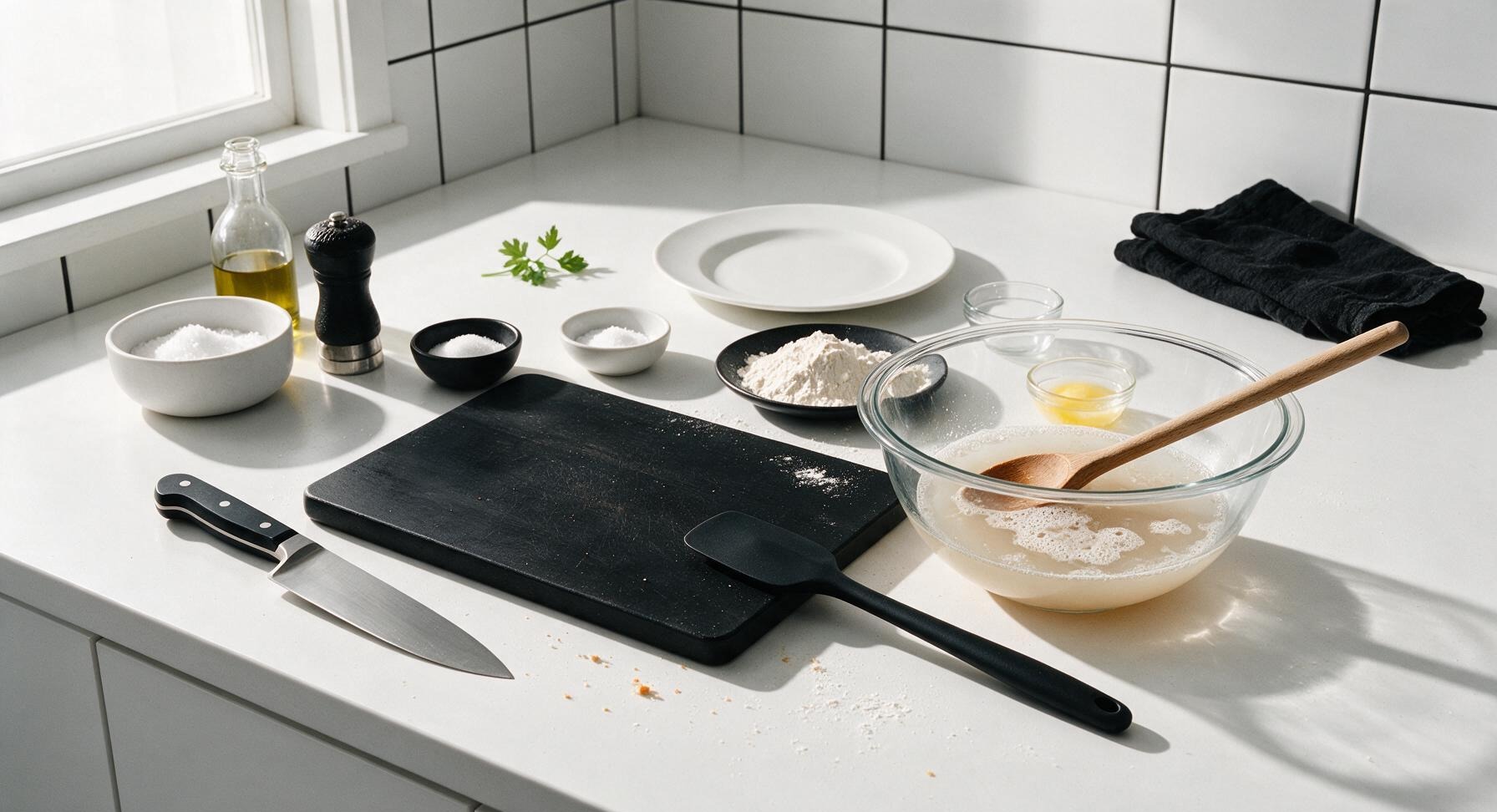
Mix Yeast and Base
In the clear glass mixing bowl, combine warm (105-110°F) water, granulated sugar, and instant yeast, stirring once gently with the long beech wood spoon. Let rest 5 minutes until the surface appears foamy, confirming the yeast is active. Add melted cooled butter and 300g of the bread flour, stirring until a thick, lumpy batter forms.
Knead to Smooth Dough
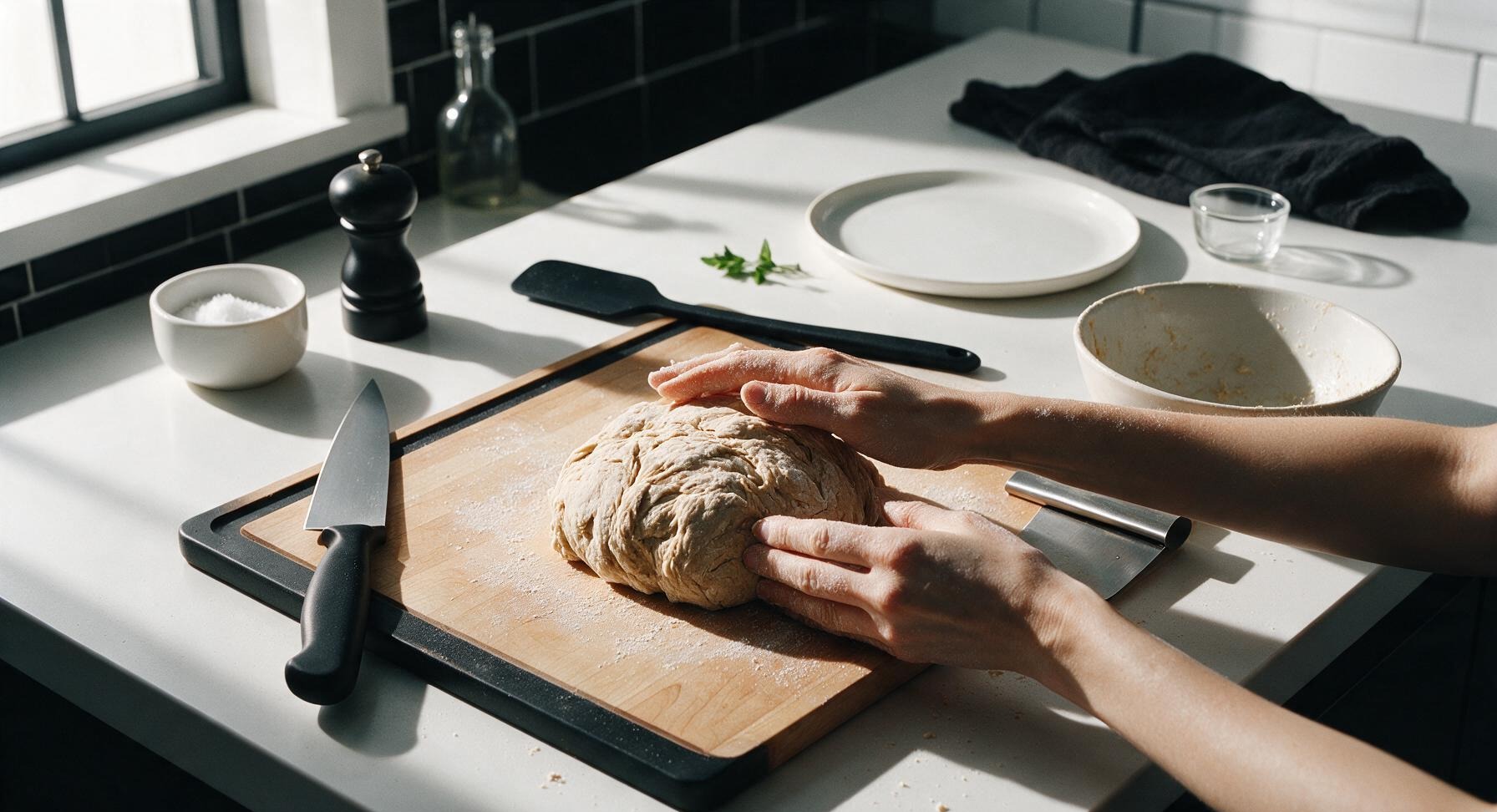
Add the remaining 200g bread flour and fine sea salt to the mixing bowl, stirring with the beech wood spoon until a shaggy, sticky mass forms. Turn the dough out onto the lightly floured maple cutting board. Knead for 8-10 minutes, using the dough scraper to lift sticky bits from the board as needed, until the dough is smooth, elastic, and springs back slowly when poked with a finger. The dough should not stick aggressively to your hands or the board when ready.
Complete First Rise
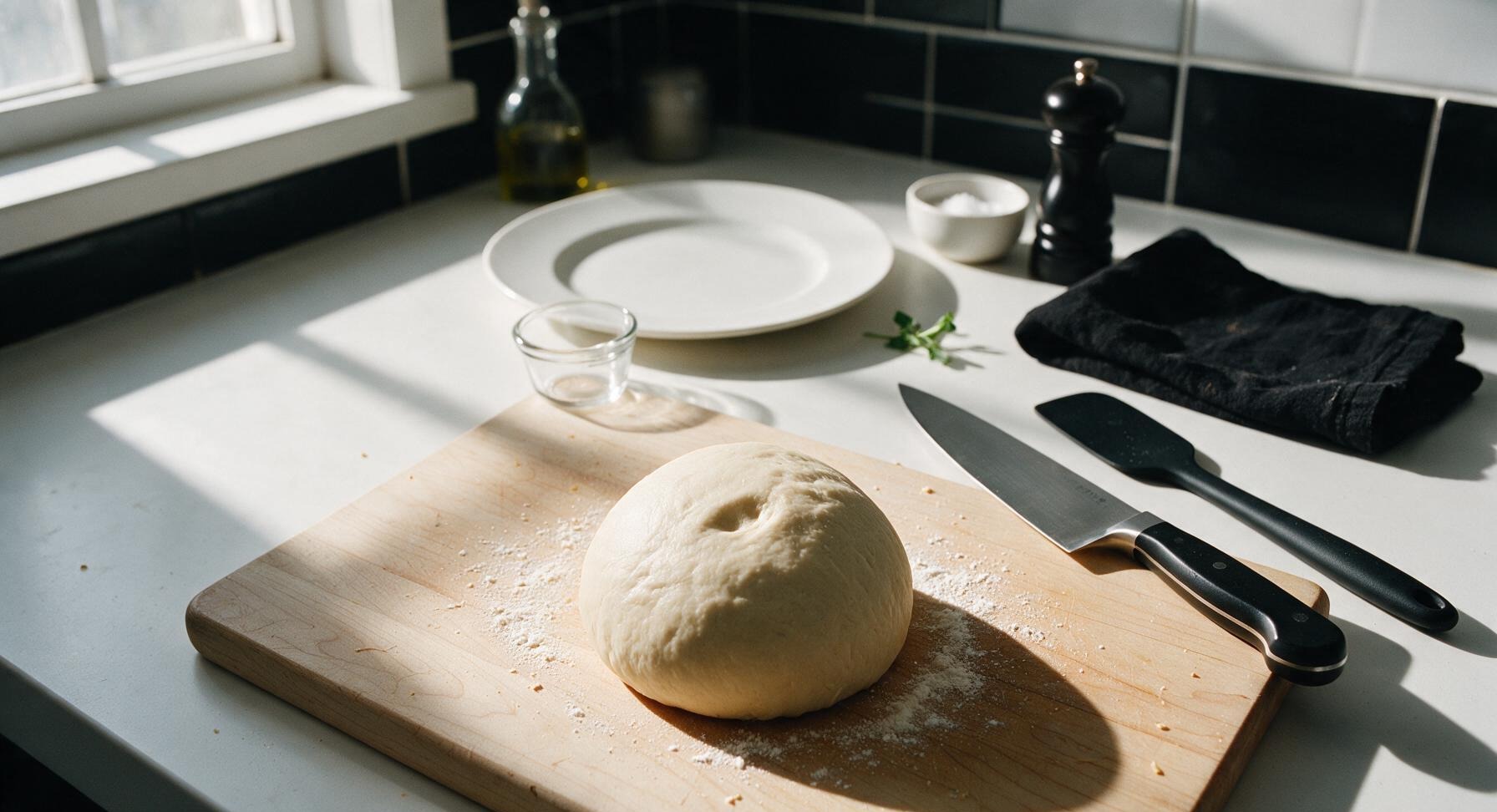
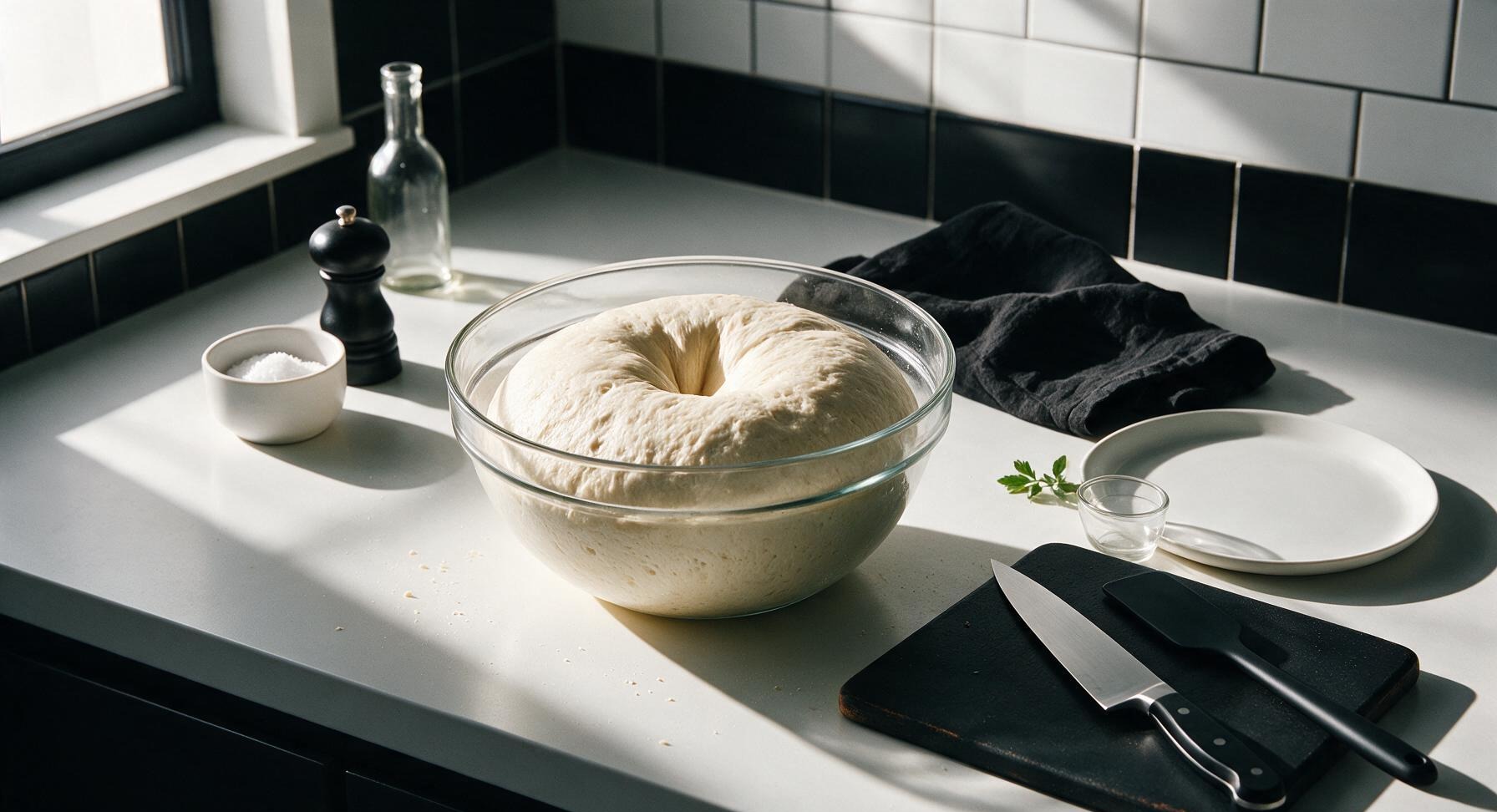
Wipe the clear glass mixing bowl lightly with a thin coat of olive oil from the cruet. Form the kneaded dough into a tight ball, place it seam-side down in the oiled bowl, and turn once to coat the surface lightly. Drape the linen towel loosely over the bowl and let rise in a warm, draft-free spot for 1 hour, or until the dough doubles in size and leaves a deep indentation when poked that does not spring back.

Shape the Loaf
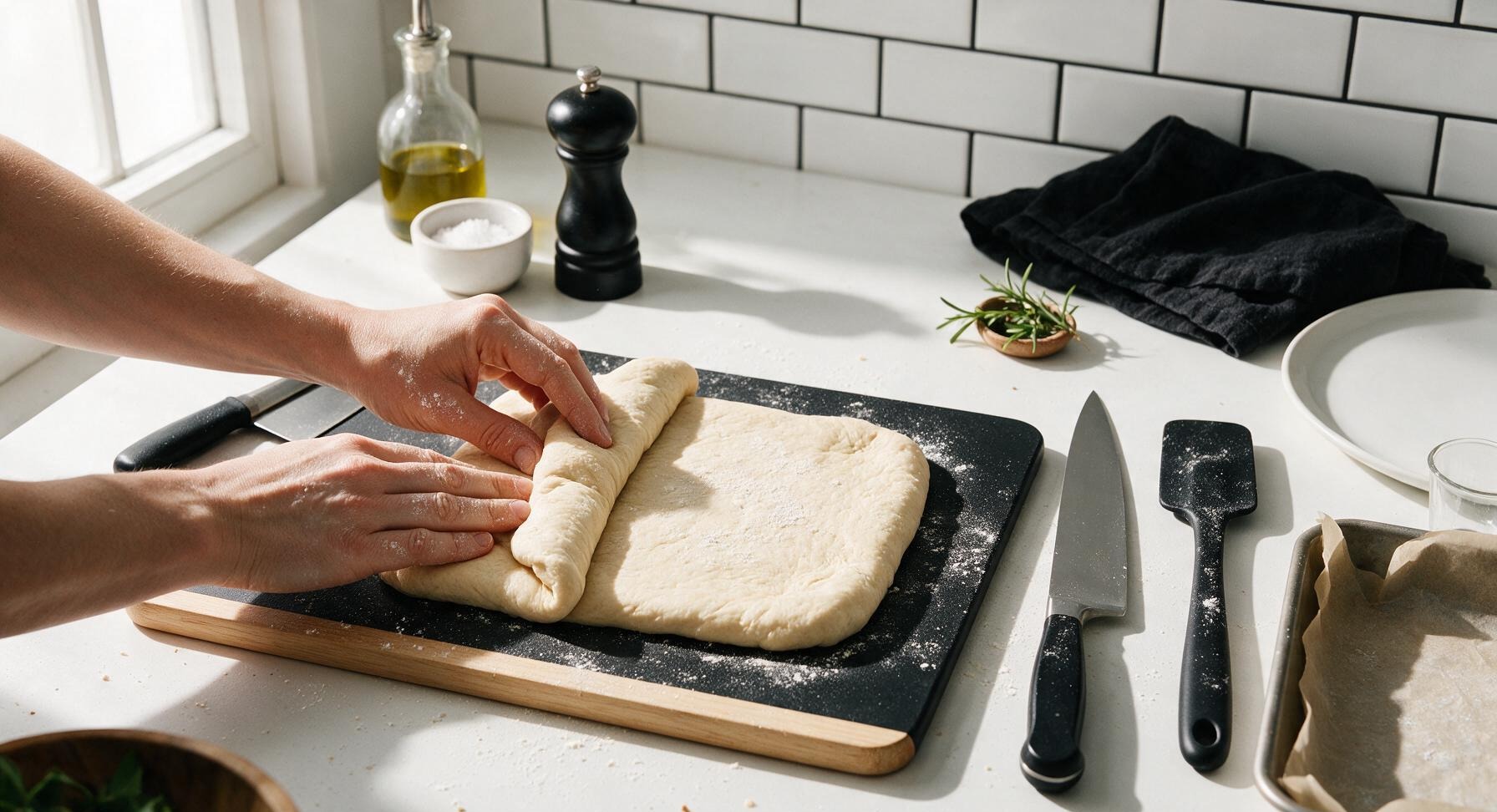
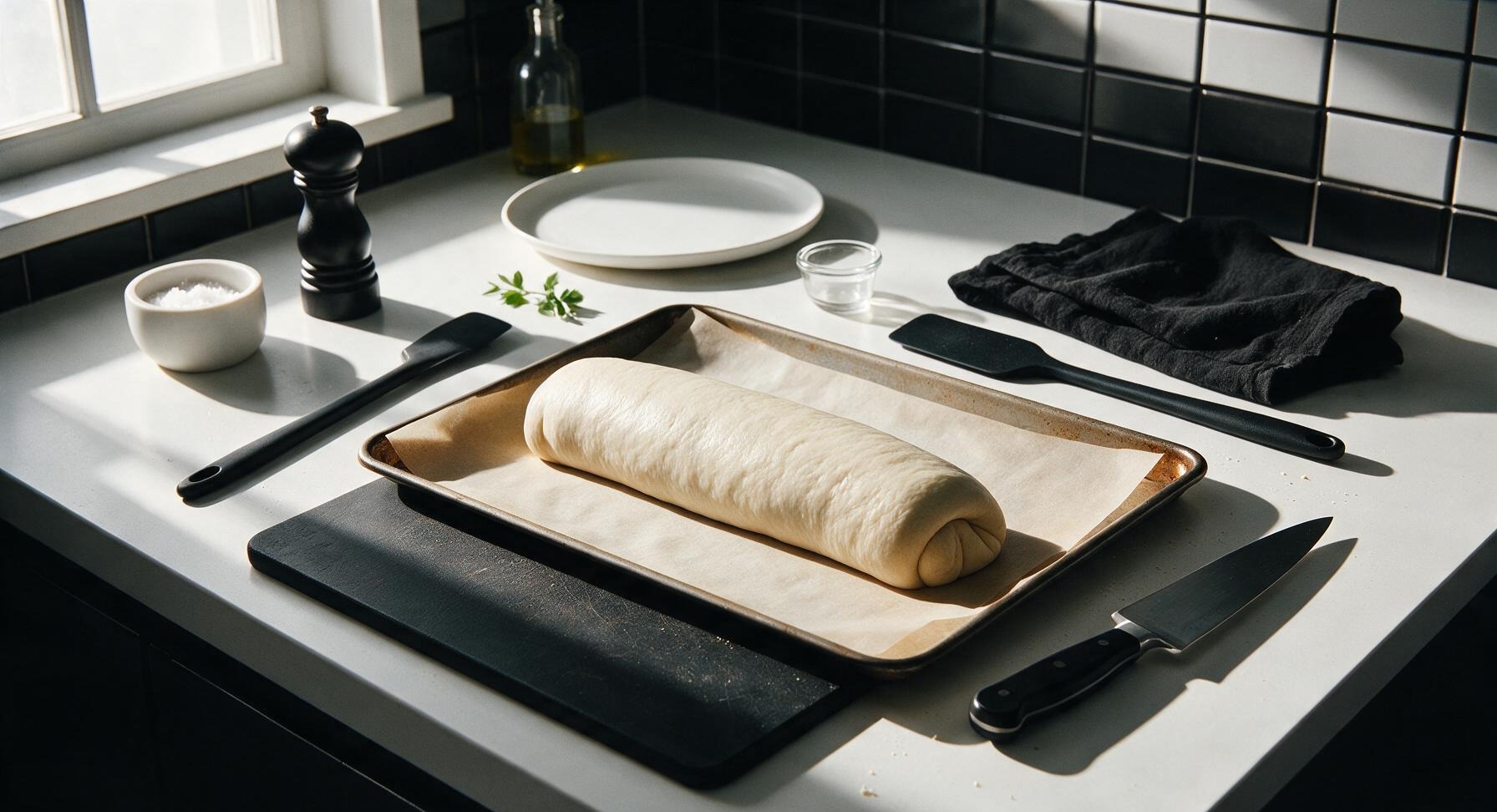
Once doubled, turn the risen dough out onto the lightly floured maple cutting board. Press gently with your fingertips to deflate all large air bubbles, patting into a 9x12 inch rectangle. Fold the long sides of the rectangle in toward the center, overlapping slightly like a letter, then roll tightly from the short end to form a 12-inch long log, pinching the seam and ends closed to seal. Tuck the ends under slightly to create a uniform, tight loaf shape, and place seam-side down on the parchment-lined baking sheet.
Second Rise and Score
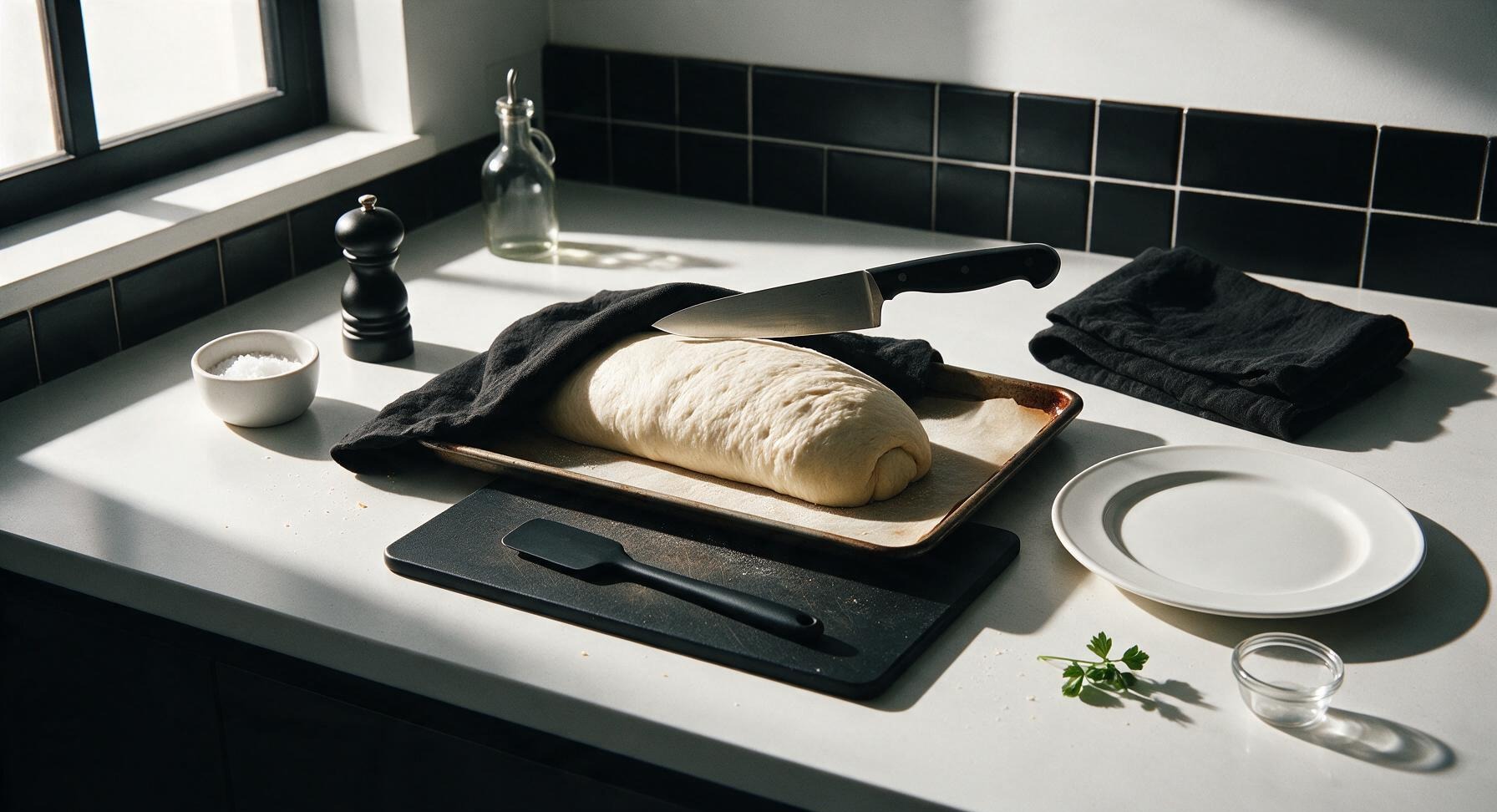
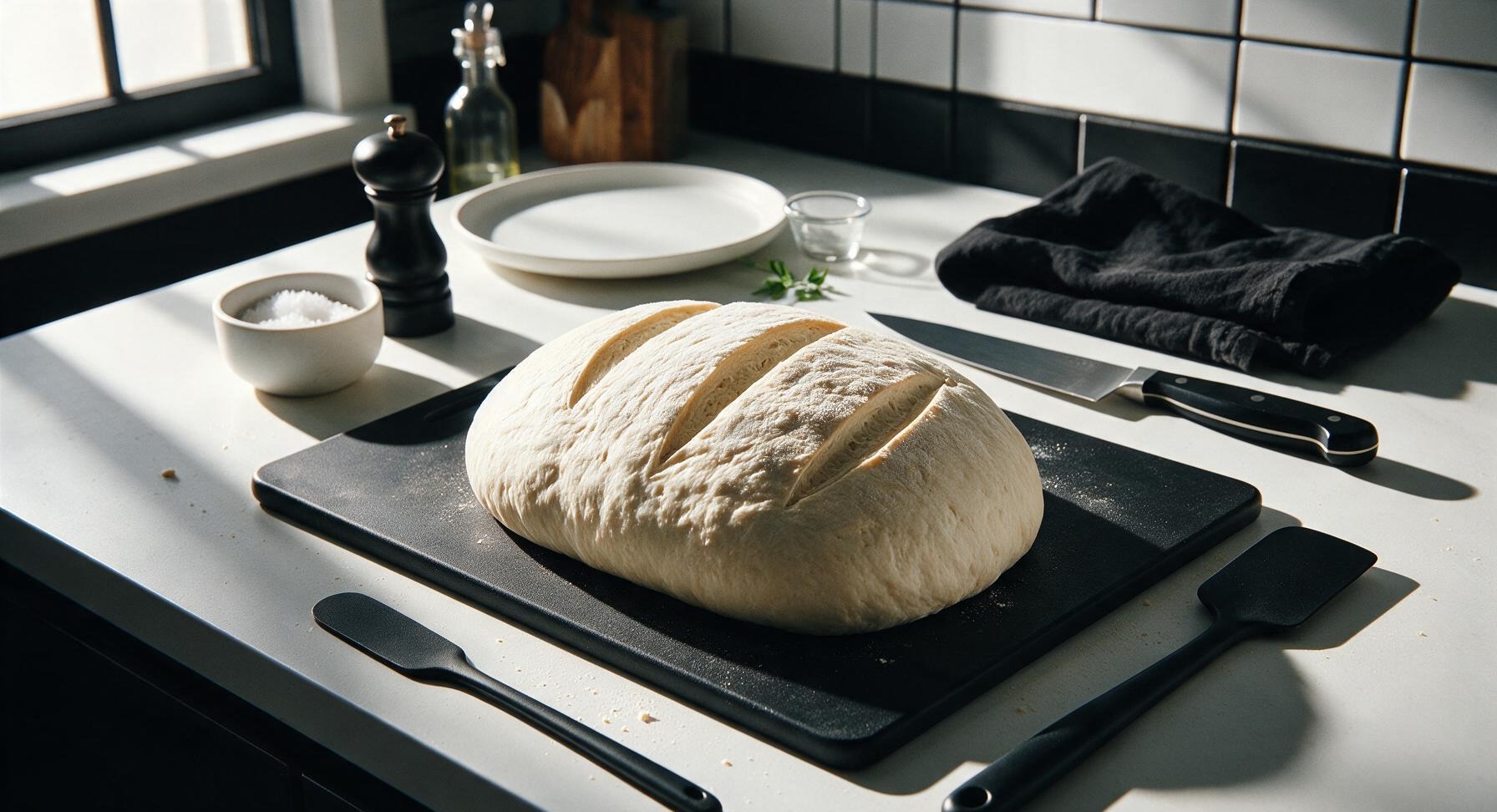
Drape the linen towel loosely over the shaped loaf on the baking sheet, and let rise a second time for 40 minutes, until puffy and increased by 50% in size. While the loaf rises, preheat the oven to 425°F (220°C). Once risen, use the sharp chef knife to make three shallow, diagonal 1/4-inch deep scores across the top of the loaf, angled at 45 degrees, to allow for even expansion during baking.
Bake to Golden Crust
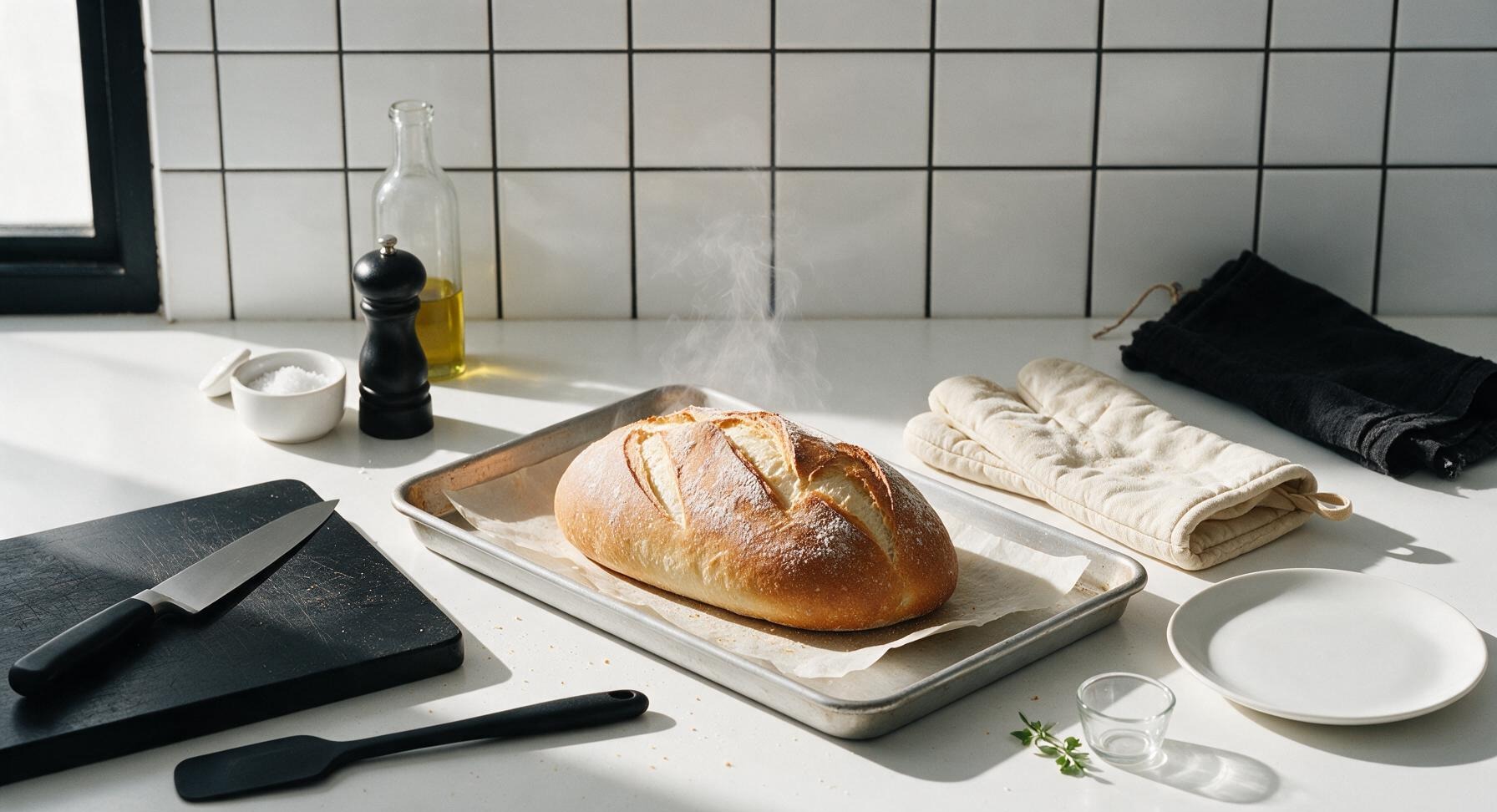
Place the baking sheet with the scored loaf into the preheated 425°F oven. Bake for 30-35 minutes, until the crust is a deep, even golden brown, and the bottom of the loaf sounds hollow when tapped (internal temperature should reach 200°F/93°C for doneness). Halfway through baking, rotate the baking sheet 180 degrees for even browning.
Cool Loaf Completely
Use the dough scraper to carefully lift the hot loaf from the baking sheet, transferring it to the matte chrome wire cooling rack positioned on the far right of the counter. Let cool completely for 1 full hour before slicing—this is critical to prevent the crumb from compressing, and ensures the bread will hold its structure when soaked in French toast custard.

Slice for French Toast
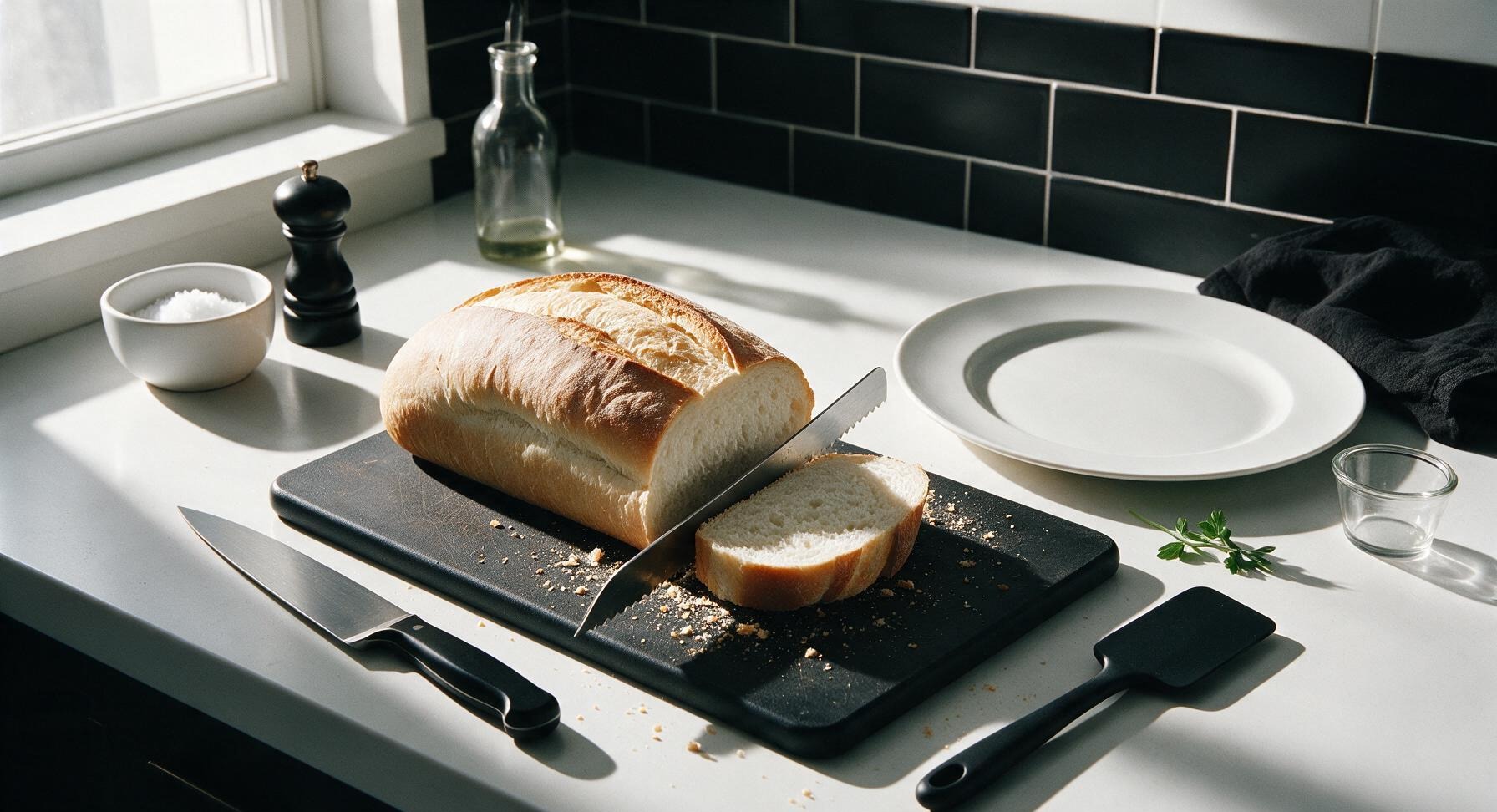
Once fully cooled, transfer the loaf to the maple cutting board. Use the serrated bread knife to cut 1.5-inch thick slices, cutting three-quarters of the way through the loaf for a pull-apart presentation, or slicing all the way through for individual French toast portions. The crumb should appear evenly porous, not gummy or dense, with no large open holes that would cause custard to leak through during French toast preparation. Transfer the sliced loaf to the cream stoneware platter for serving.
Tips
2.Do not slice the bread while it is still warm: cutting hot bread compresses the crumb structure, creating dense, uneven slices that absorb custard unevenly. For the best French toast texture, let the loaf sit loosely wrapped on the counter for 12 hours after cooling; the slightly stale, dry surface soaks up custard without turning soggy.
3.Avoid adding excess flour during kneading and shaping: too much extra flour creates a tight, dense crumb, while overworking the dough leads to large, irregular air holes that let custard drip through slices instead of absorbing evenly.

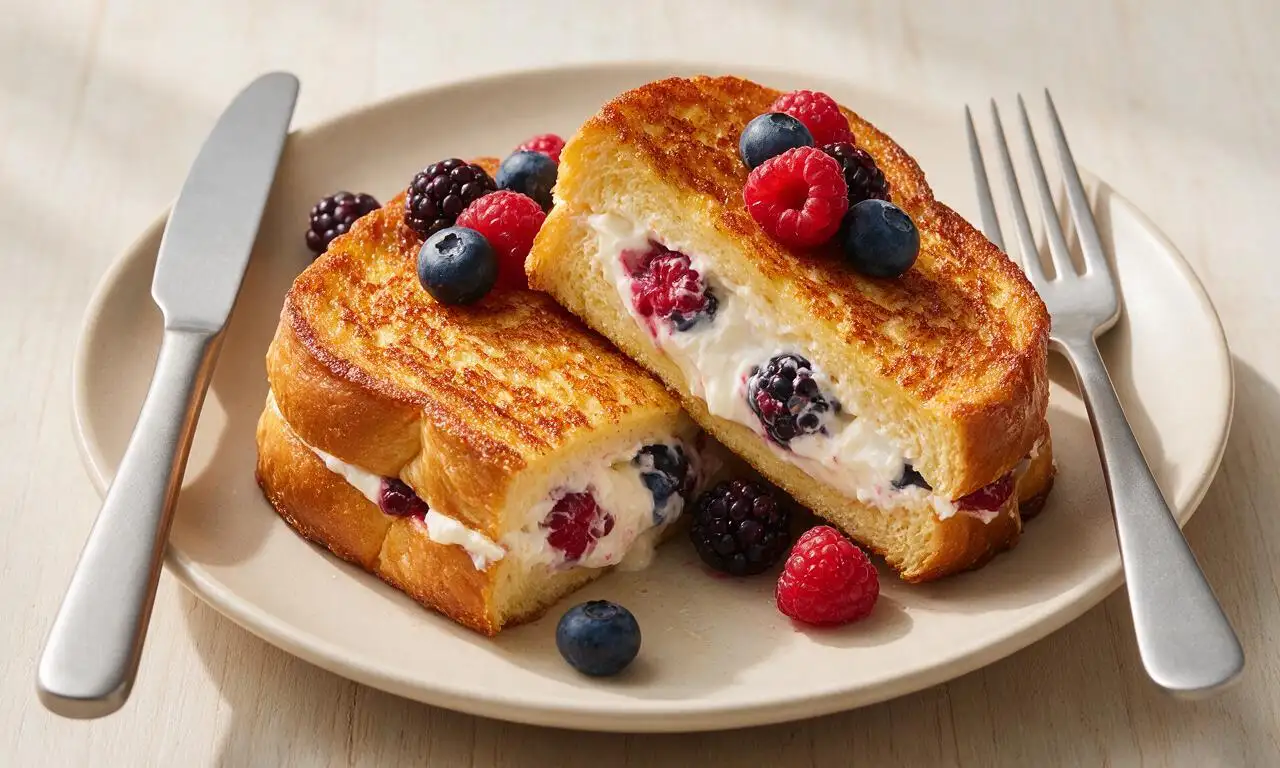



OMG this bread is a total game changer for weekend brunch! I’ve had so many regular loaves turn to total mush when I soak them for french toast, but this one held up perfectly even when I loaded it with extra vanilla custard. My kids devoured three slices each topped with maple syrup and fresh strawberries, zero sogginess at all. It’s a little more work than picking up a grocery store loaf, which makes sense for a medium difficulty recipe, but so worth the effort!
Made this for our neighborhood potluck last weekend and everyone was hounding me for the recipe! It’s sturdy enough that I could assemble a big batch of baked french toast the night before and it didn’t turn into a soggy mess sitting in the fridge overnight. Only tiny tweak I made was adding a little extra flaky salt to the dough because I’m obsessed with that salty-sweet combo with cinnamon and maple syrup, chef’s kiss.
Solid recipe, took me two tries to get the texture right since I’m pretty new to bread baking. First loaf was a little too dense because I over-kneaded it, but the second time I followed the rise times exactly and it came out perfect for french toast. Great for meal prep too, I sliced the whole loaf and froze half for quick breakfasts during the work week.
Wait has anyone tried making this with whole wheat flour? I’m trying to swap in a little more whole grain for my family and I don’t want to mess up that perfect sturdiness that makes this bread so ideal for french toast. The all-purpose flour version I made last month was SO good, just trying to tweak it a little for extra fiber!