gordon ramsay eggs on toast

title 1
gordon ramsay eggs on toast
⏱️ cook time 4 minutes
🍽️ servings 2
⚡ Difficulty easy

intro

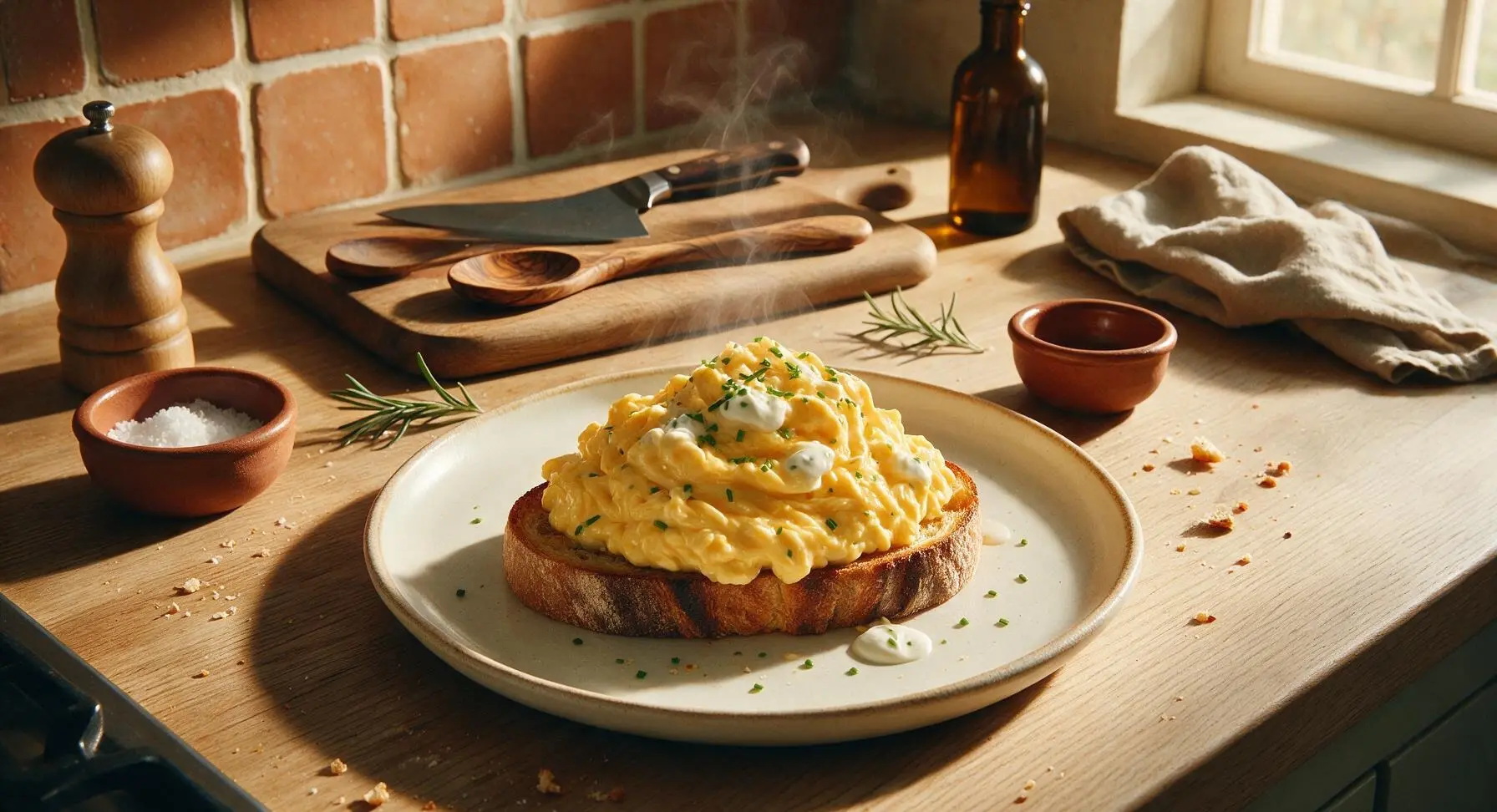
Silky, luxuriously soft scrambled eggs with tangy crème fraîche and fresh chives, piled high on buttery sourdough toast — Gordon Ramsay’s iconic 5-minute, no-fuss recipe.

Ingredients
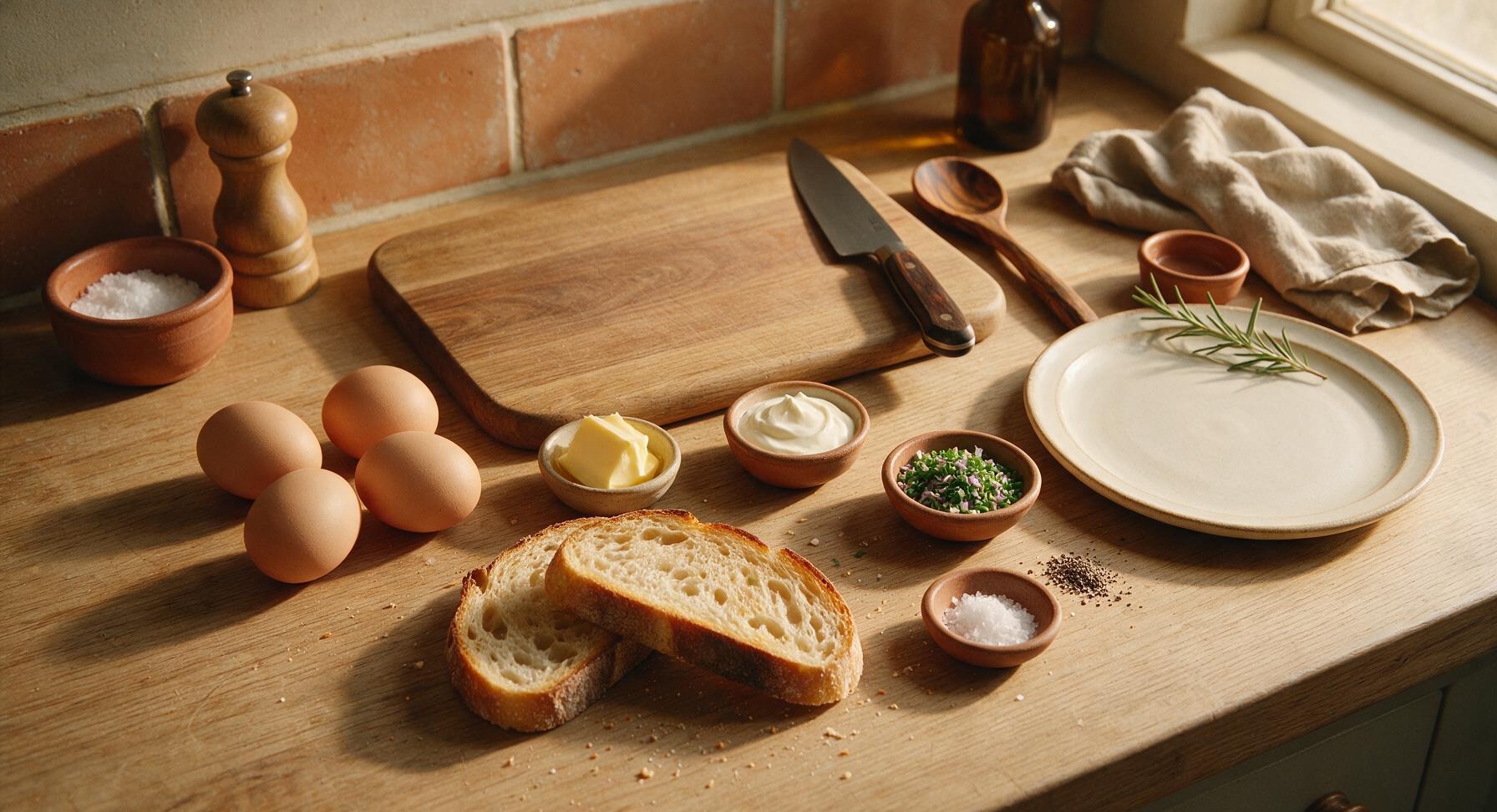
Large cold eggs 4 whole
Sourdough bread 2 thick slices (2cm, ~120g total)
Unsalted butter 2 tbsp (divided)
Full-fat crème fraîche 1 tbsp
Fresh chives 1 tbsp finely chopped
Flaky sea salt 1/2 tsp
Freshly ground black pepper 1/4 tsp

Steps

1

Add Eggs to Cold Pan

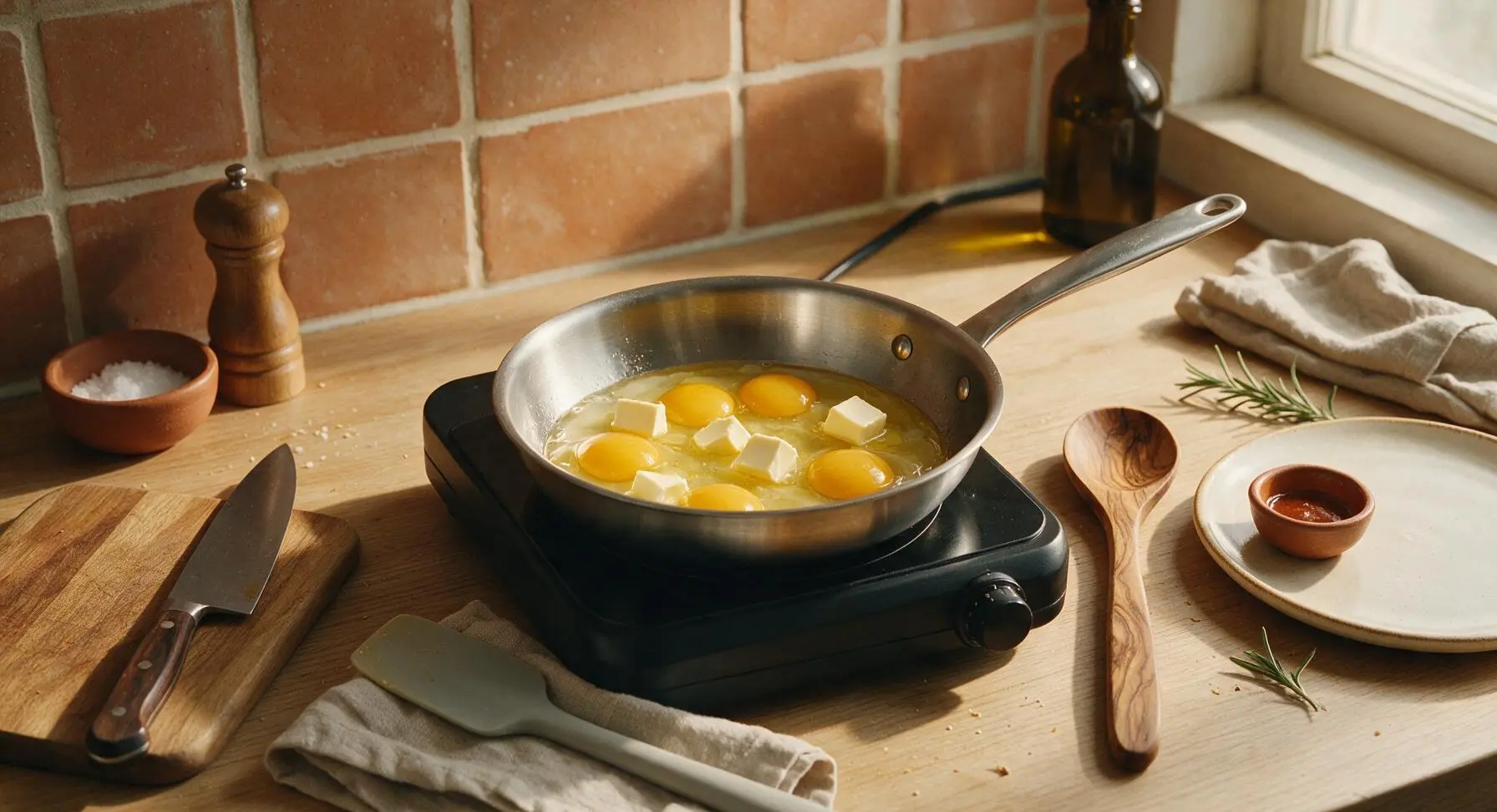
Place the 18cm non-stick stainless steel pan on the cold induction cooktop (burner turned off). Crack all 4 large cold eggs directly into the pan — do not whisk or season them at this stage. Add 1.5 tablespoons of cold unsalted butter, cut into 4 small equal cubes, scattered across the eggs. Starting with cold ingredients prevents rapid, uneven cooking that causes rubbery eggs.
Step 1
step1:Add Eggs to Cold Pan
2

Stir Over Low Heat

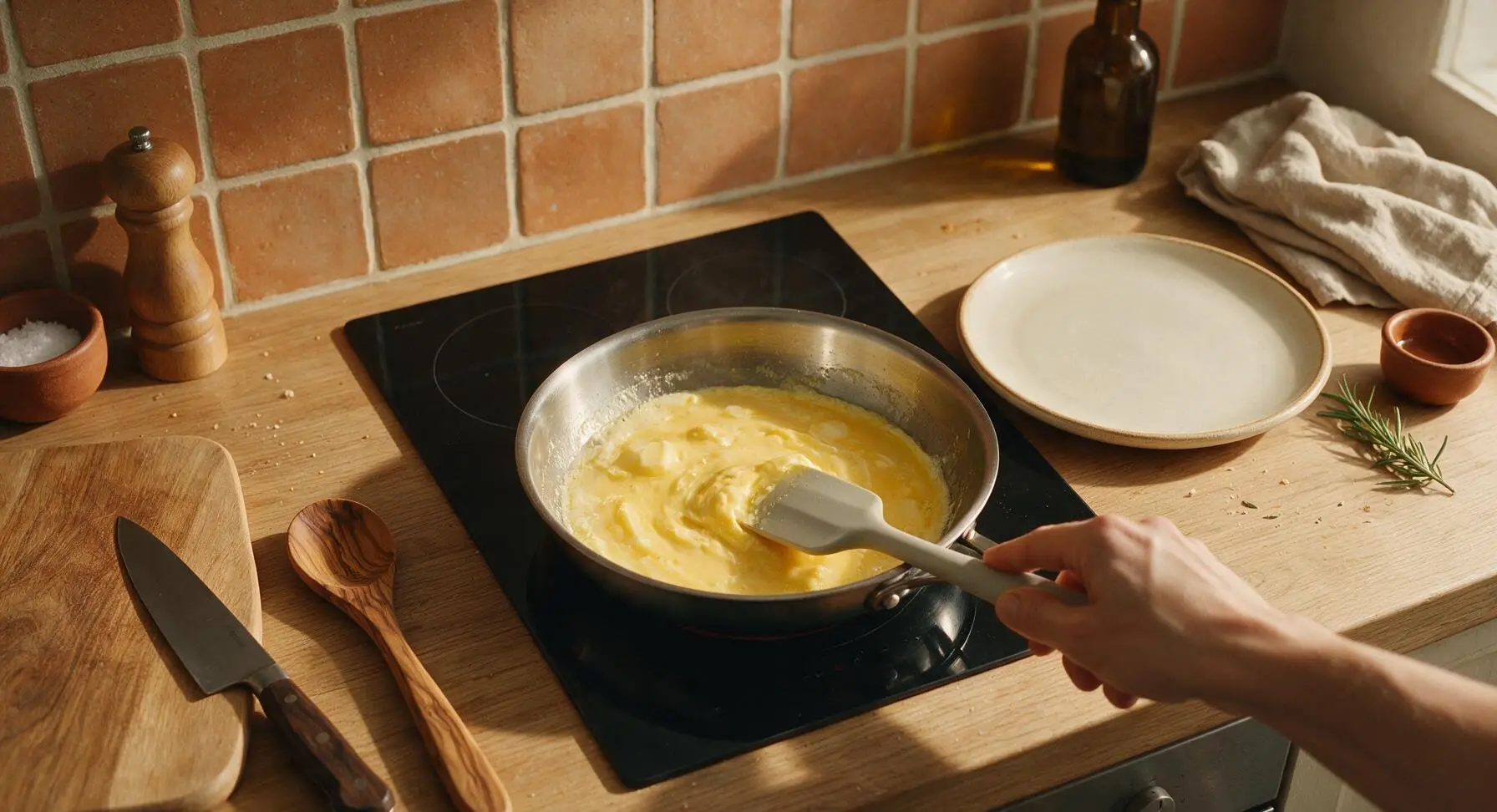
Turn the induction cooktop to medium-low (160°C / 325°F, gas mark 4). Use the pale grey silicone spatula to stir the eggs constantly, scraping every inch of the pan bottom and corners to prevent any browned, crispy bits from forming. Cook for 60 seconds, stirring nonstop, until the butter fully melts and the mixture just starts to form soft, loose, pale yellow curds.
Step 2
step2:Stir Over Low Heat
3

Cook Off Residual Heat

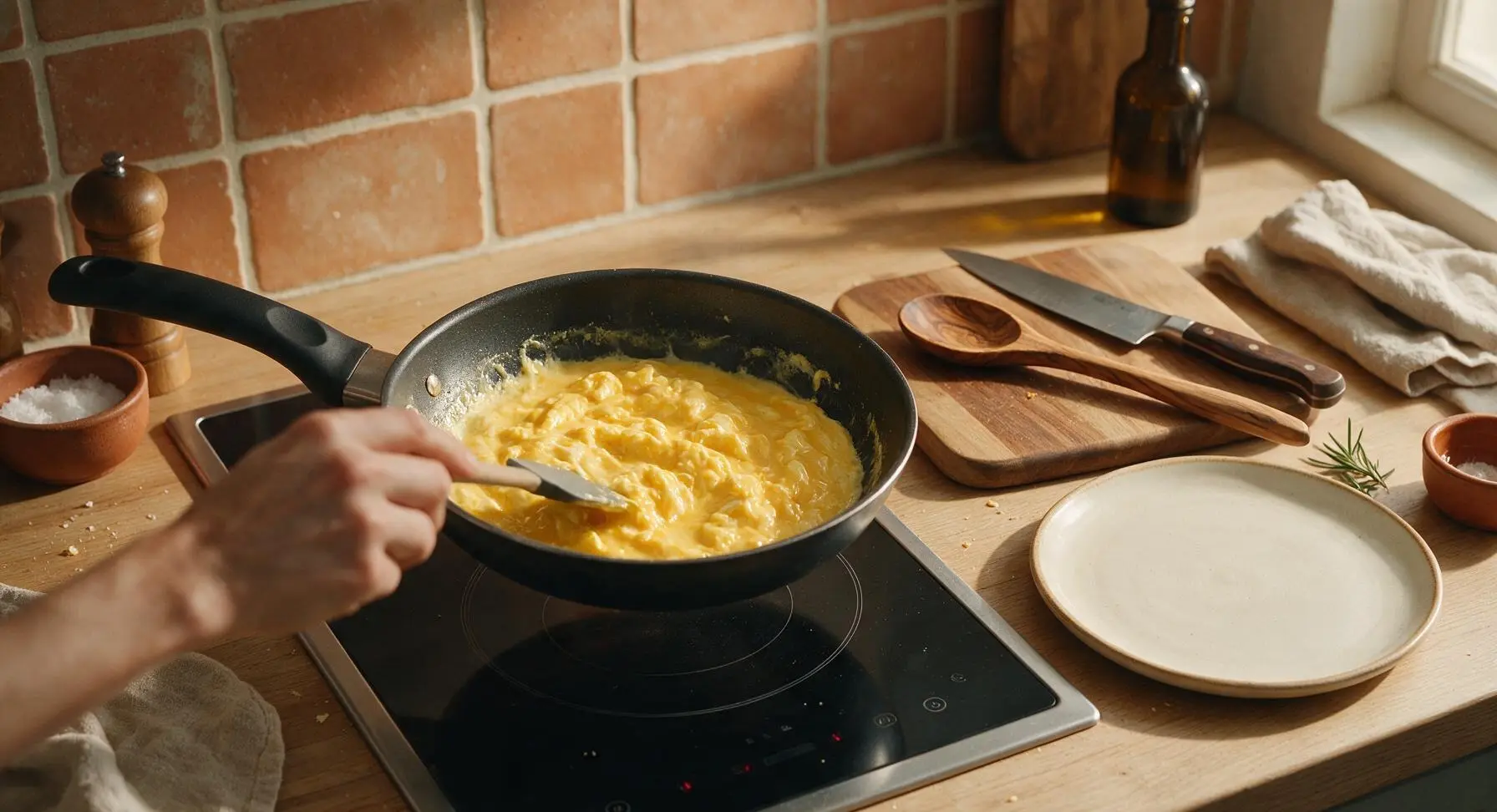
Lift the pan completely off the burner for 30 seconds, continuing to stir the eggs constantly without pause. The residual heat held in the pan will gently cook the eggs without exposing them to direct high heat, creating silkier curds. You will see the curds thicken slightly even with the pan off the heat.
Step 3
step3:Cook Off Residual Heat
4

Briefly Return to Heat

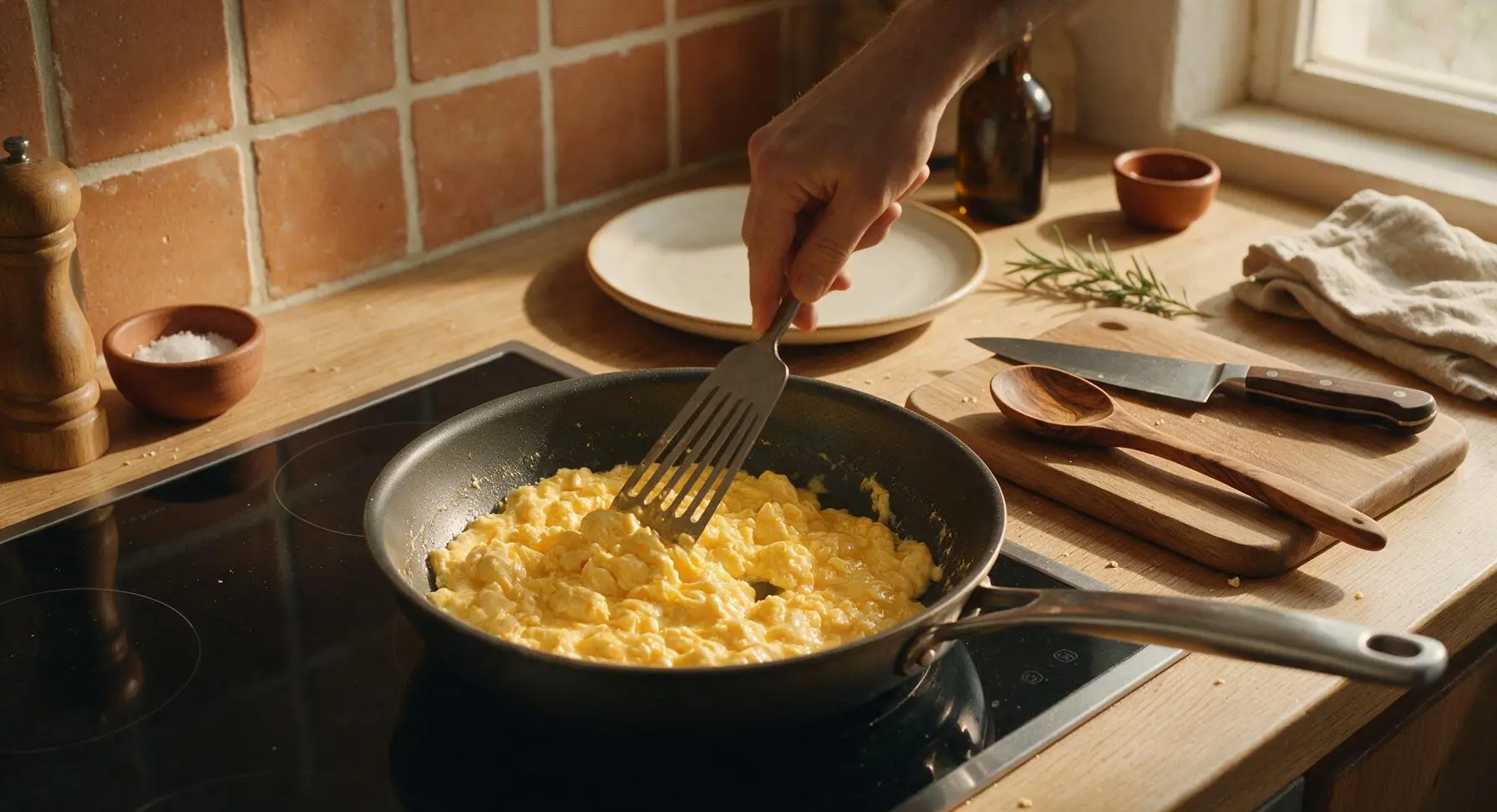
Set the pan back on the medium-low burner for another 30 seconds, stirring nonstop, until the eggs form soft, distinct curds that hold their shape slightly but remain very wet and loose. Total egg cooking time to this point is 2 minutes — the eggs will look slightly underdone, which is intentional to account for carryover cooking.
Step 4
step4:Briefly Return to Heat
5

Toast and Butter Sourdough

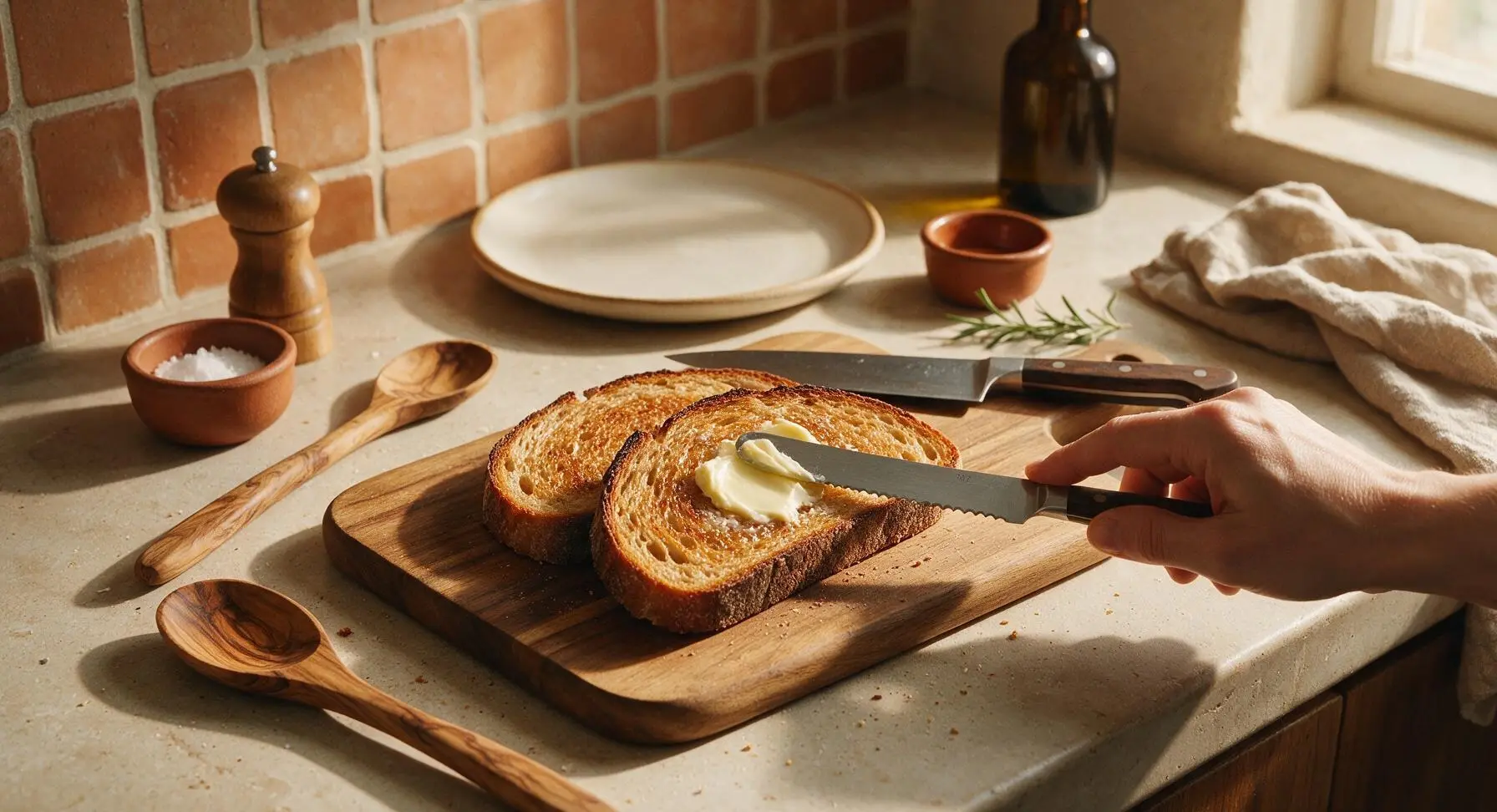
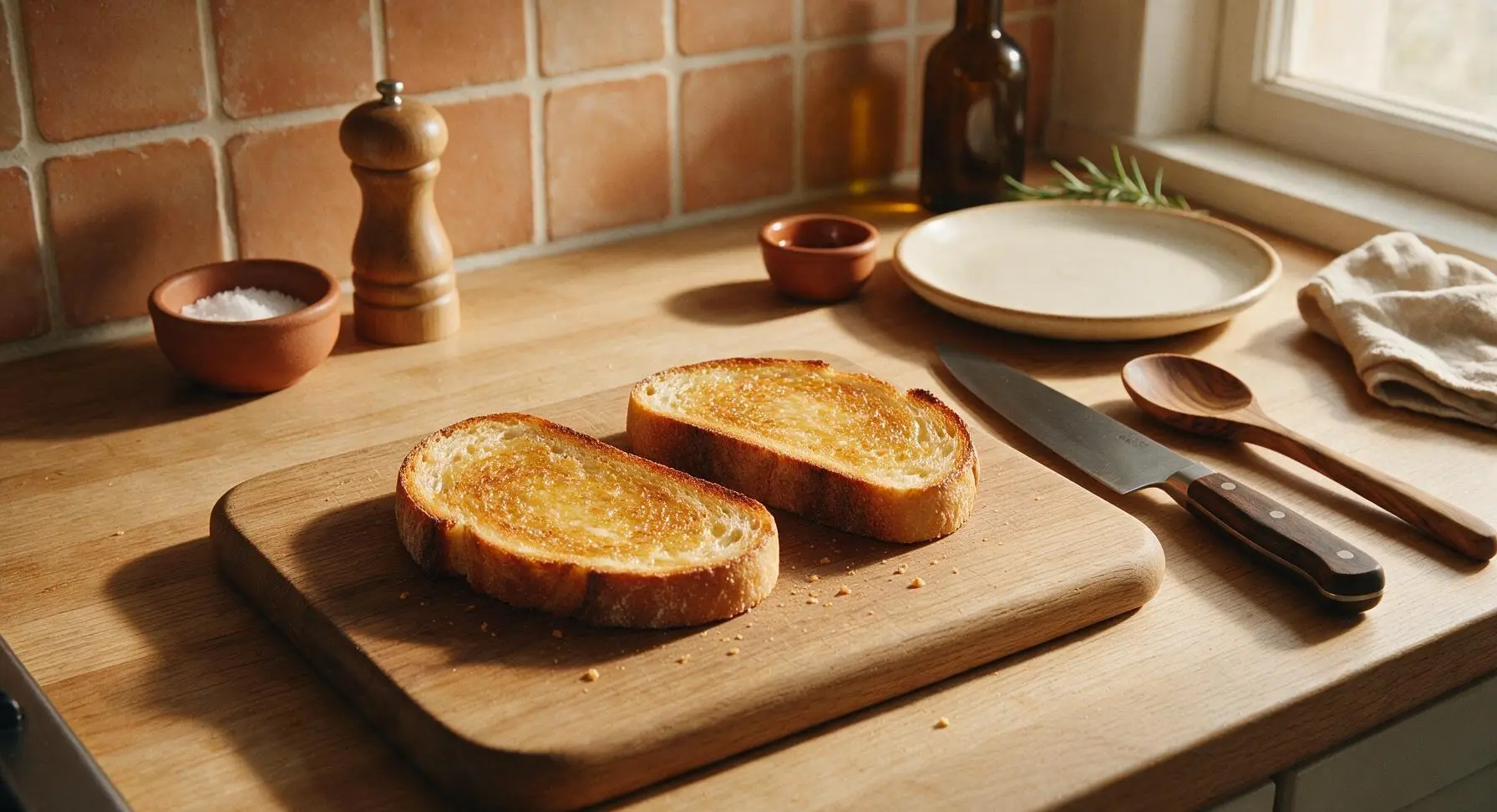
While the eggs rest for 10 seconds off heat, place the two 2cm-thick sourdough slices into a toaster for 60 seconds until golden brown and crisp on both sides. Transfer the hot toast to the acacia wood bread board, and spread the remaining 0.5 tablespoon of unsalted butter evenly across the surface of each slice, letting it melt fully into the warm bread crumb.
Step 5
step5:Toast and Butter Sourdough
Step 5
step5:Toast and Butter Sourdough
6

Finish Eggs with Crème Fraîche

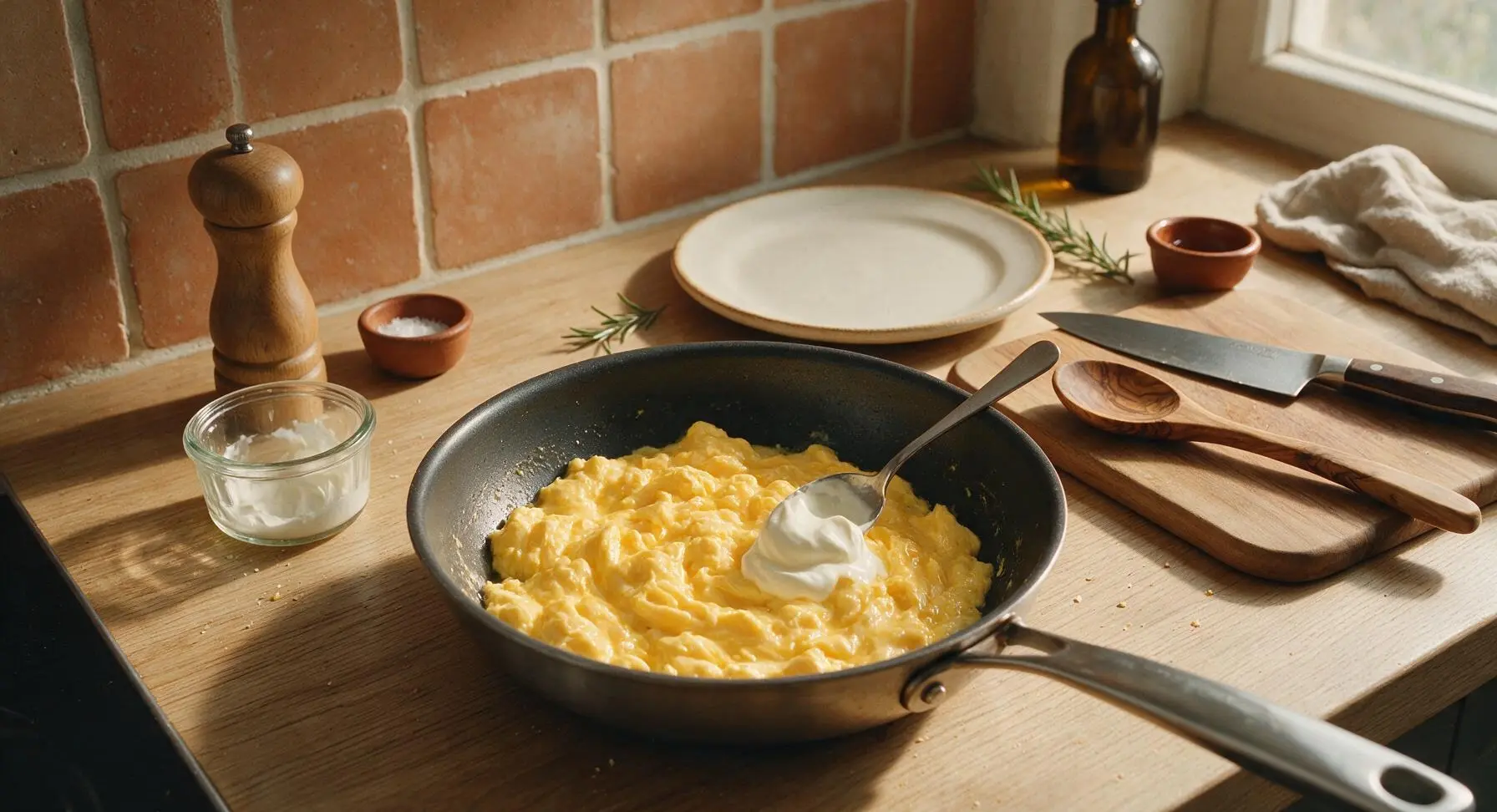
Take the pan off the heat for the final time. Stir in 1 tablespoon of full-fat crème fraîche to immediately halt the cooking process and add a subtle tangy richness. Season with ½ teaspoon flaky sea salt and ¼ teaspoon freshly ground black pepper, stirring gently to combine without breaking down the soft curds.
Step 6
step6:Finish Eggs with Crème Fraîche
7

Plate and Garnish

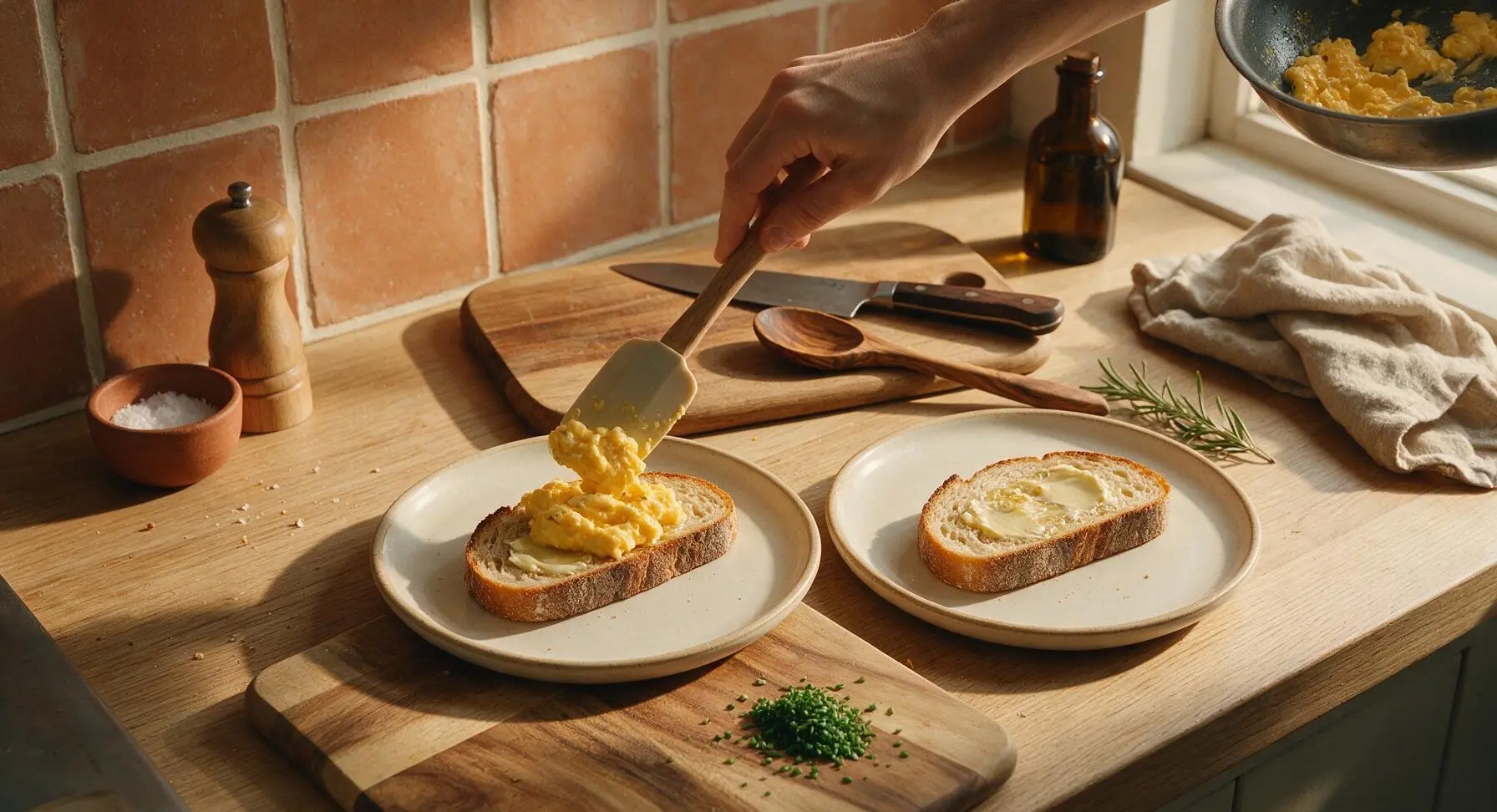
Set one buttered sourdough slice on each of the two matte cream speckled breakfast plates. Spoon half of the creamy scrambled eggs in a soft pile over each slice of toast. Sprinkle 1 tablespoon of finely chopped fresh chives evenly across the top of the eggs, adding one light extra twist of black pepper if desired.
Step 7
step7:Plate and Garnish

Tips

1.Never season eggs early: Adding salt before the eggs start to cook draws moisture out of the egg proteins, breaking down curd structure and resulting in watery, tough eggs instead of the signature silky texture. Wait until you add the crème fraîche off heat to add salt and pepper.
2.Skip pre-whisking: There is no need to beat eggs in a separate bowl before adding them to the pan. Constant stirring during the on-off heat cycle mixes the yolks and whites perfectly, creating more tender, uneven soft curds instead of the uniform, rubbery texture you get from pre-whisked eggs.
3.Resist overcooking: Eggs continue to cook for 45-60 seconds after being removed from direct heat (carryover cooking). If the eggs look fully set and firm in the pan, they will be dry and crumbly by the time they reach the table. The crème fraîche not only adds flavor but also cools the eggs slightly to stop overcooking instantly.
✨ You May Also Like

Breakfast
🍜 United States

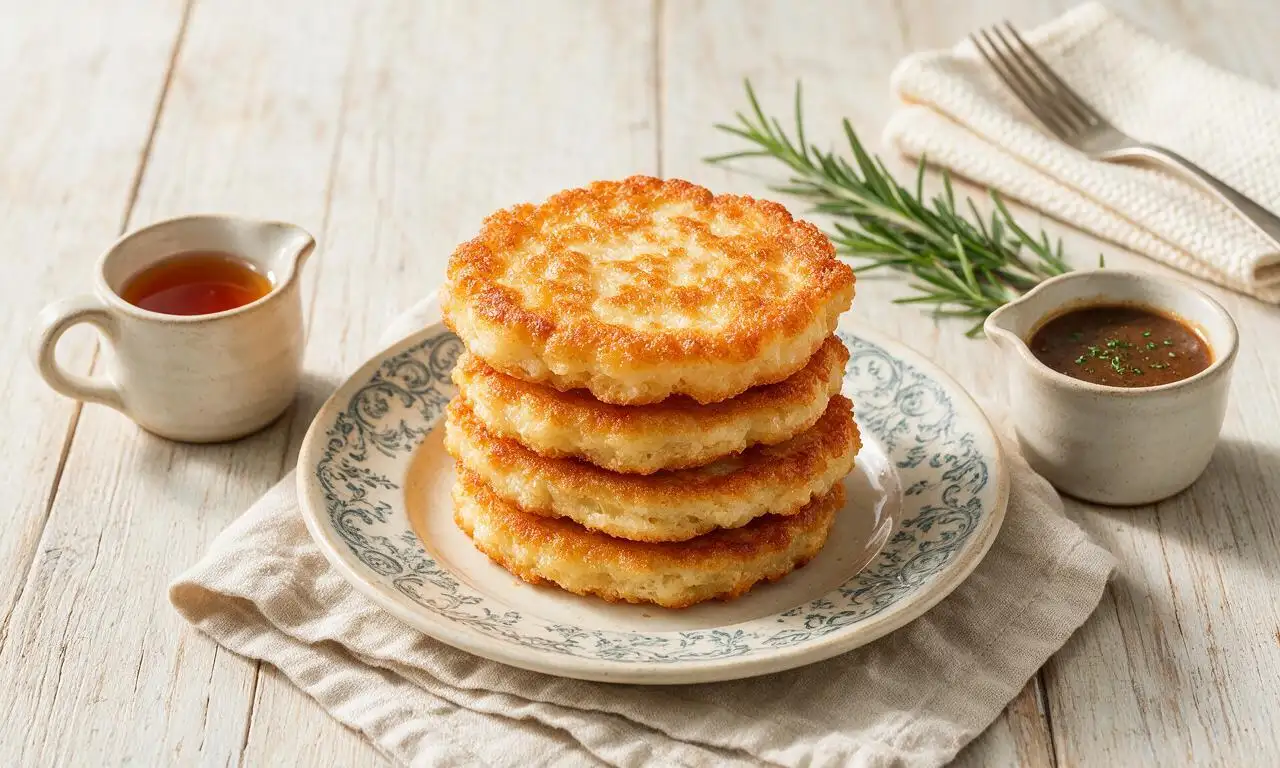
Crisp-edged, fluffy lard griddle cakes are a nostalgic homestyle staple, with rich savoriness from rendered lard, perfect topped with maple syrup or savory gravy.

⏱️ 25 minuteBreakfast ★ 4.8
Breakfast
🍜 United States

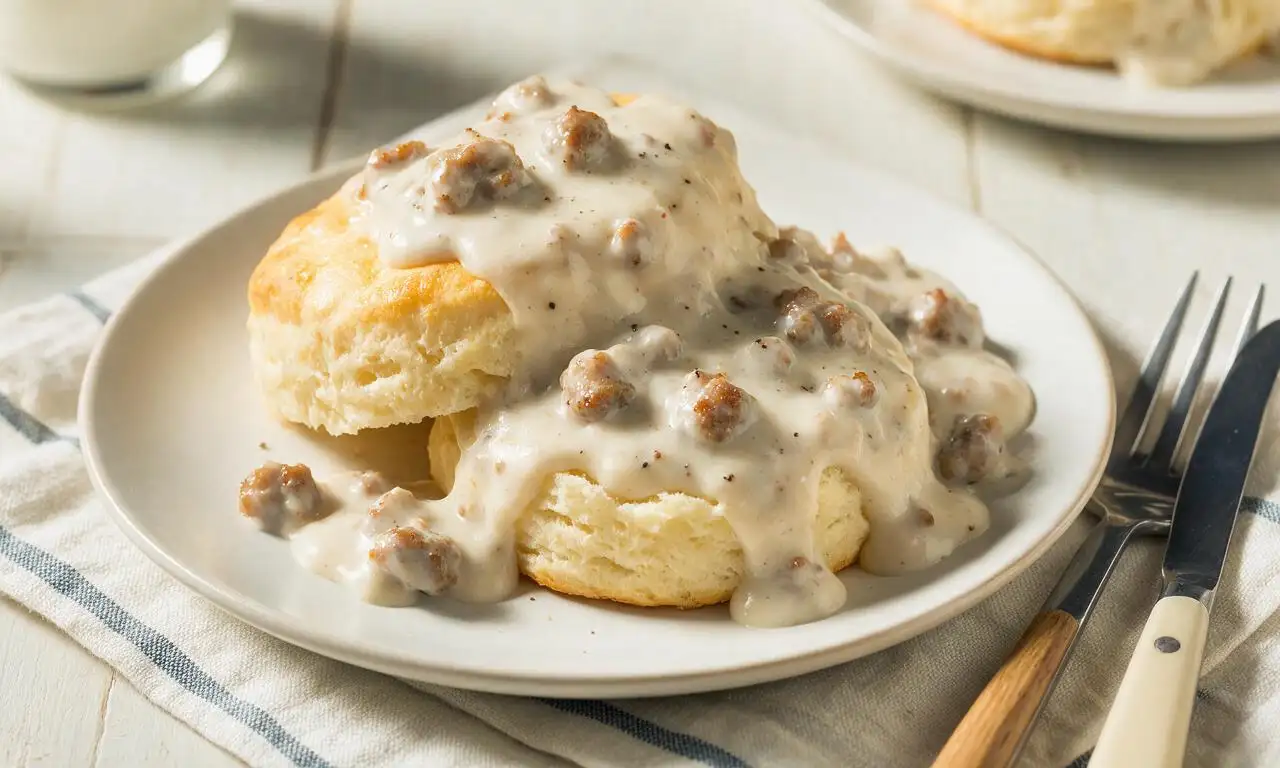
Flaky, buttery homemade buttermilk biscuits smothered in creamy, peppery pork sausage gravy: a beloved, hearty Southern American comfort food classic.

⏱️ 35 minuteBreakfast ★ 4.8
Breakfast
🍜 United States

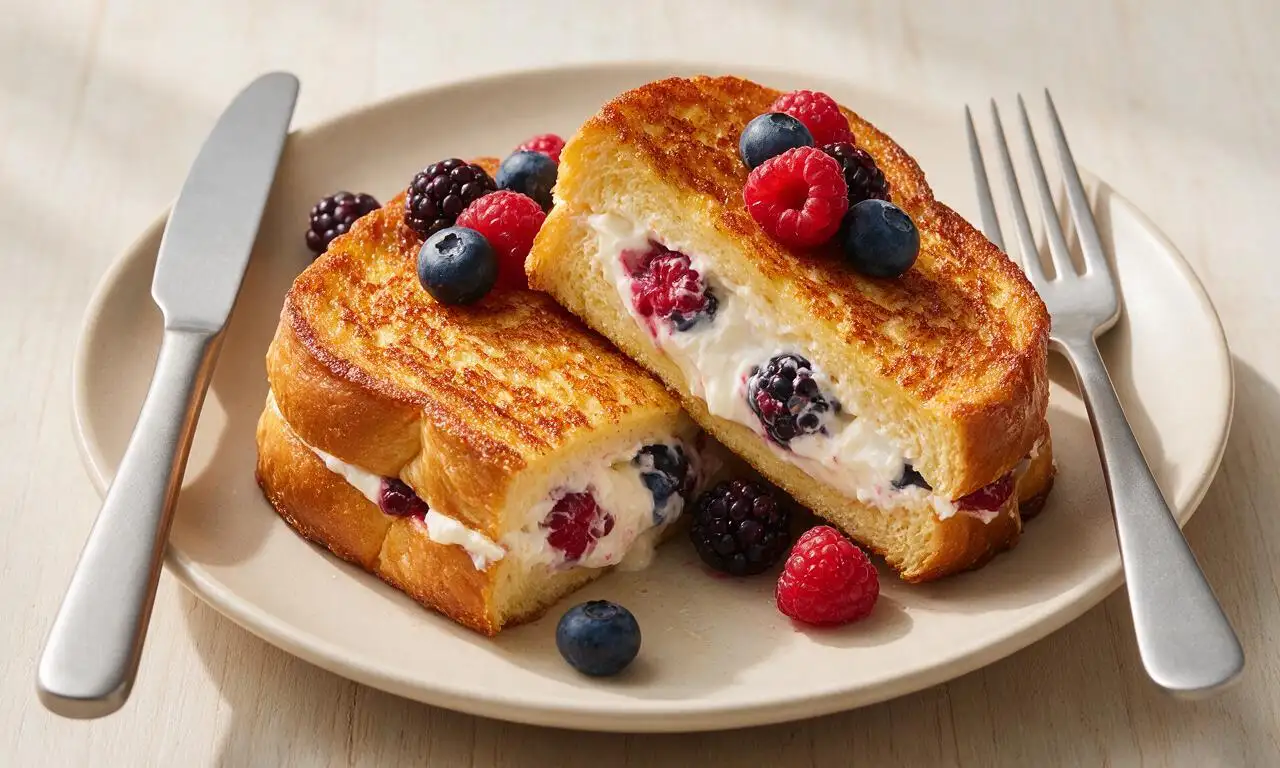
Golden, custardy brioche stuffed with sweet cream cheese and fresh berries, pan-fried to crisp perfection. An indulgent, cozy breakfast perfect for slow weekend mornings.

⏱️ 30 minuteBreakfast ★ 4.7
Breakfast
🍜 United States

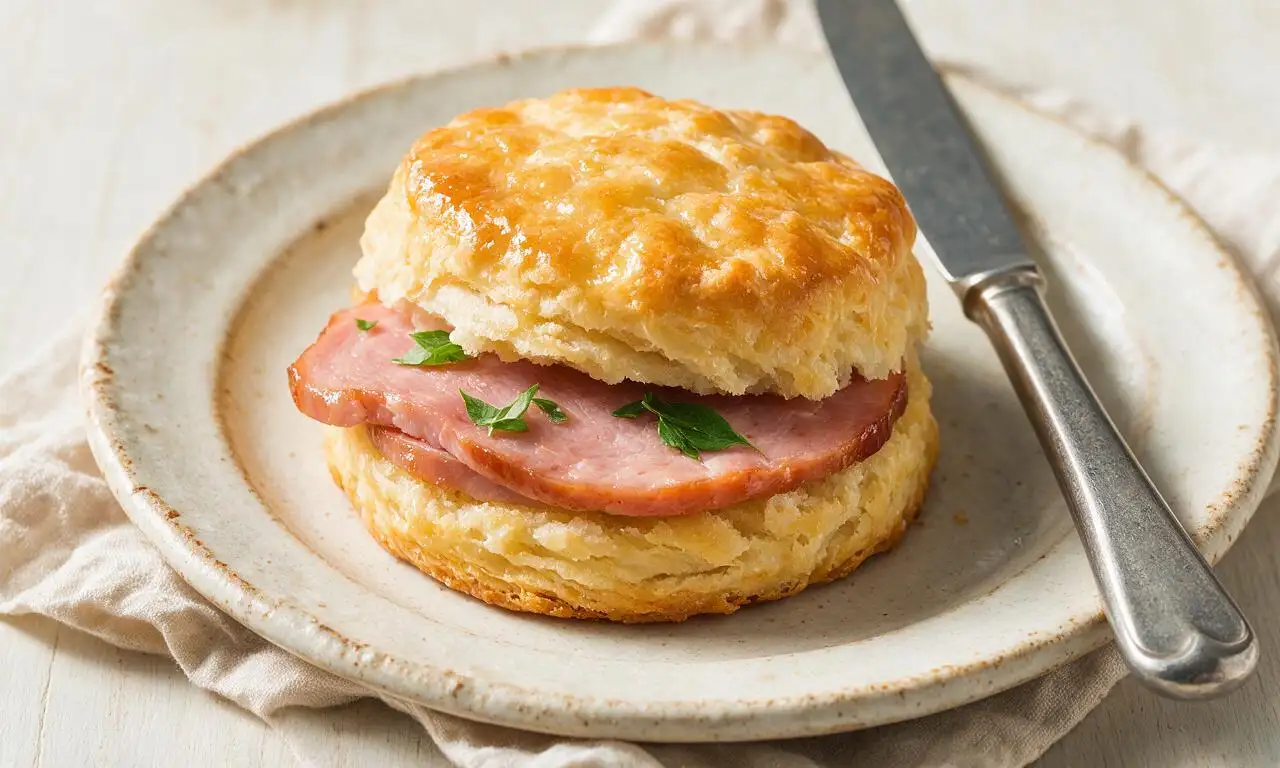
Flaky, buttery Southern-style biscuits stuffed with savory salty country ham, a portable, satisfying classic perfect for casual on-the-go meals.

⏱️ 25 minuteBreakfast ★ 4.8
Breakfast
🍜 United States

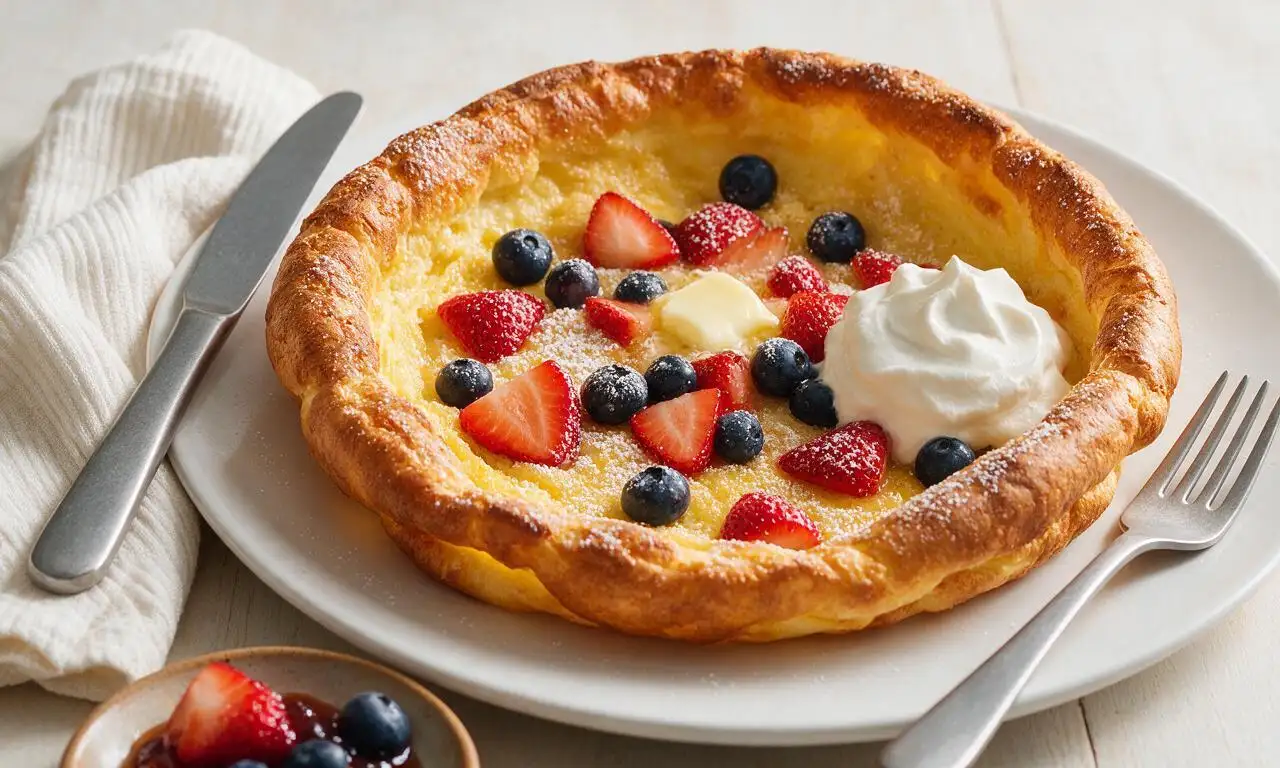
Iconic puffy baked pancake popularized in Seattle, with crisp golden edges and soft custardy center, served warm with classic sweet toppings.

⏱️ 35 minuteBreakfast ★ 4.6
Breakfast
🍜 United States

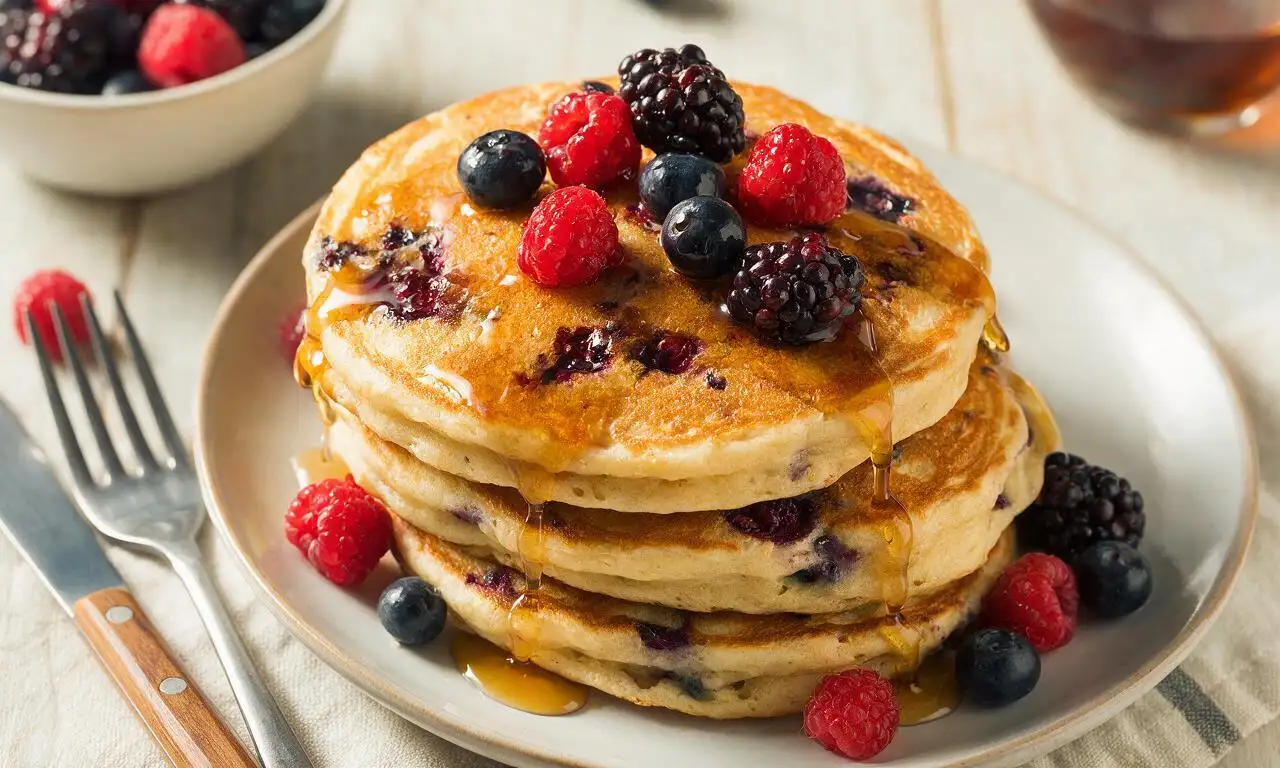
Fluffy, golden pancakes studded with juicy peak-summer mixed berries, drizzled with maple syrup for a bright, comforting, crowd-pleasing family breakfast.

⏱️ 25 minuteBreakfast ★ 4.7

gordon ramsay eggs on toast:Frequently Asked Questions

1.Why does this recipe call for cold eggs straight from the fridge instead of room-temperature eggs? ▾
Great question! Cold eggs cook much more slowly over low heat, which is the secret to those luxuriously soft, small curds without rubbery, overcooked patches. Room-temperature eggs set far too quickly when they hit the pan, making it almost impossible to nail that signature velvety texture even if you closely monitor the heat.
2.Can I skip the crème fraîche if I don’t have it on hand? ▾
You can, but you’ll lose that subtle tang and extra creamy mouthfeel that makes this dish feel special. If you’re in a pinch, swap in full-fat sour cream thinned with a tiny splash of heavy cream, but skip low-fat alternatives—they add a watery, off texture and won’t melt smoothly into the warm eggs.
3.How do I keep my scrambled eggs from turning watery or rubbery? ▾
The two biggest culprits are too-high heat and overcooking! Keep your burner on medium-low, pull the pan on and off the heat as you stir to control temperature, and stop cooking the second the eggs form soft, loose curds—they’ll keep cooking for a minute from residual heat even off the stove.
4.Do I really need to stir the eggs constantly while they cook? ▾
You don’t need to stir at a frantic, nonstop pace, but frequent, gentle stirring with a silicone spatula is key to breaking up curds as they form. This prevents any part of the egg from sitting too long on the hot pan surface, building those tiny, silky curds instead of large, tough, dry chunks.
5.What’s the best way to toast the sourdough for this recipe? ▾
For ideal texture, toast 1-inch thick sourdough slices in a dry cast iron skillet or toaster until edges are crisp and golden, but the center still has a slight soft chew. Spread a thin layer of unsalted butter on the warm toast right before adding eggs, so butter melts into the bread’s nooks and crannies.
6.Can I make these soft scrambled eggs ahead of time for meal prep? ▾
I don’t recommend it! Soft scrambled eggs lose their silky, creamy texture extremely quickly when held or reheated, turning rubbery and watery even if stored airtight in the fridge. The whole recipe comes together in 5 minutes flat, so it’s always worth making the eggs fresh right before you plan to eat.
7.How many eggs should I use per serving for this recipe? ▾
Plan for 2 to 3 large cold eggs per adult serving, depending on appetite. If you’re serving this as a light weekend breakfast, 2 eggs per person works perfectly, but if it’s the main dish for a filling brunch, bump it up to 3 eggs and add an extra sprinkle of chives on top.
8.Can I add mix-ins like cheese, bacon, or veggies to these scrambled eggs? ▾
You absolutely can, but add them strategically to keep the texture soft. Grated parmesan or crumbled crispy bacon can be folded in right as you take the eggs off heat, but sauté watery veggies like spinach or mushrooms fully first and drain them well—excess moisture will turn silky eggs runny.
9.Why doesn’t this recipe use milk or half-and-half like other scrambled egg recipes? ▾
Milk and half-and-half have high water content that can make eggs watery, curdle, or turn tough when cooked, and they dilute the rich, pure egg flavor. The small dollop of full-fat crème fraîche added at the end adds richness and tang without extra water that ruins that velvety texture.
10.What kind of pan works best for making these soft scrambled eggs? ▾
A heavy-bottomed nonstick skillet is your best bet here—it distributes heat evenly to prevent hot spots that burn eggs, and the nonstick surface lets you scrape every bit of soft curd out without sticking. If you don’t have nonstick, a well-seasoned cast iron skillet works, just add a tiny extra pat of butter.
11.When is the right time to add crème fraîche to the eggs for the best texture? ▾
Add the crème fraîche right at the very end of cooking, the second you pull the pan off the heat, right before you pile the eggs on toast. Adding it too early can cause it to break down and separate from heat, leading to a greasy, uneven texture instead of that perfect, evenly creamy tang.
12.Can I use dried chives instead of fresh chives for this recipe? ▾
Dried chives work in a total pinch, but they have a much milder, slightly muted flavor compared to bright, fresh chives, so use half the amount and add them a little earlier while the eggs cook to let their flavor bloom. For the best, brightest finish, though, fresh chives chopped right before use are worth it.
13.How do I know when the eggs are done cooking so I don’t overcook them? ▾
Pull the eggs off the heat the second they form soft, moist, slightly loose curds that hold their shape but still look creamy, not dry or firm. Remember residual heat will keep cooking the eggs for 30 to 60 seconds off the pan—if they look perfectly done on heat, they’ll be overcooked by the time they hit your toast.

Comments (5)

2 hours ago

OMG these scrambled eggs are a GAME CHANGER. I’ve been making dry, rubbery eggs my whole adult life and 4 minutes total? Are you kidding? Served them on sourdough with a little sprinkle of chives this morning and my kids begged for seconds. Even my picky 7 year old who only eats plain cereal for breakfast cleaned his plate! SO good, will be making these every weekend from now on.

1 hour ago

Right?! I used to overcook mine forever too, the trick of pulling them on and off the heat is chef’s kiss. I add a tiny pinch of parmesan at the end sometimes, *chef’s kiss*

45 minutes ago

So happy the whole family loved them! That little parmesan add-in sounds delicious—great call for extra umami. So glad you’re ditching the rubbery eggs for good!

yesterday

Wait, hold on—do you really not add milk? I’ve always whisked a splash of whole milk into my eggs before scrambling, I was nervous to skip it but these came out so creamy I couldn’t believe it. Only note: I burned my first batch a little because I had the heat up too high, turned it down to medium-low the second try and it was perfect. Served with avocado slices on top for a little extra fat, 10/10.

yesterday

Great question! The cream actually comes from the slow, low cooking rather than added milk—milk can make eggs watery if you’re not careful. So glad you nailed it on the second try, that avocado topper sounds like the perfect addition!

3 days ago

Perfect quick weekday breakfast! I meal prepped the sourdough loaves on Sunday so all I have to do is toast a slice and whip these eggs up before my commute. Takes less time than waiting in line at the coffee shop by my office and tastes 100x better. Already added this to my regular rotation, no notes.

1 week ago

Tried these for my girlfriend’s birthday brunch last weekend along with some bacon and roasted potatoes, and she said they were better than the fancy brunch spot we went to for our anniversary. Win for me! I did add a dash of hot sauce on top because I put that on everything, no regrets.

5 days ago

Hot sauce on scrambled eggs is non-negotiable in my house too! Tapatio all the way. I’ll have to make these for my partner next weekend, he’s been complaining I make the same boring eggs every Sunday.

5 minutes ago

So excited to try this! Quick question—can I use a dairy-free butter substitute instead of regular butter? I’m lactose intolerant so I can’t do regular dairy, but I’ve been craving creamy scrambled eggs forever and this recipe looks perfect.

2 minutes ago

I used vegan butter last week when I made these and they turned out perfectly! Just make sure it’s a solid stick butter not the spreadable kind in the tub, that has too much water in it.

just now

Great question! You absolutely can use dairy-free butter, just stick to a high-quality, low-moisture option as mentioned above. You can also swap in a splash of oat milk creamer if you want extra richness without dairy!