Greek Scrambled Eggs

title 1
Greek Scrambled Eggs
⏱️ cook time 5 minutes
🍽️ servings 2
⚡ Difficulty easy

intro

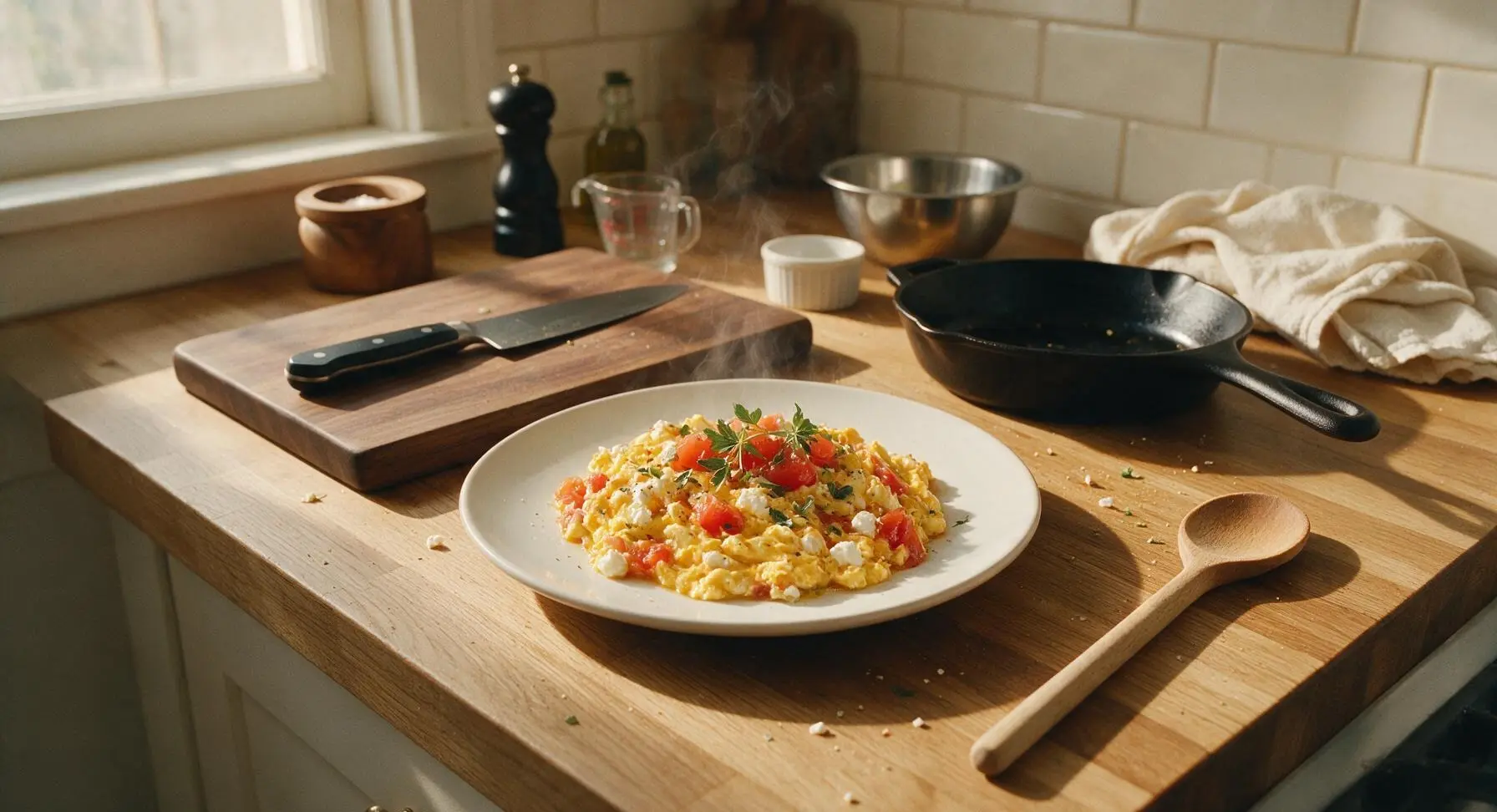
Velvety soft scrambled eggs studded with briny feta, sweet ripe tomato, and earthy oregano: a 10-minute Greek classic that is bright, satisfying, and endlessly comforting.

Ingredients
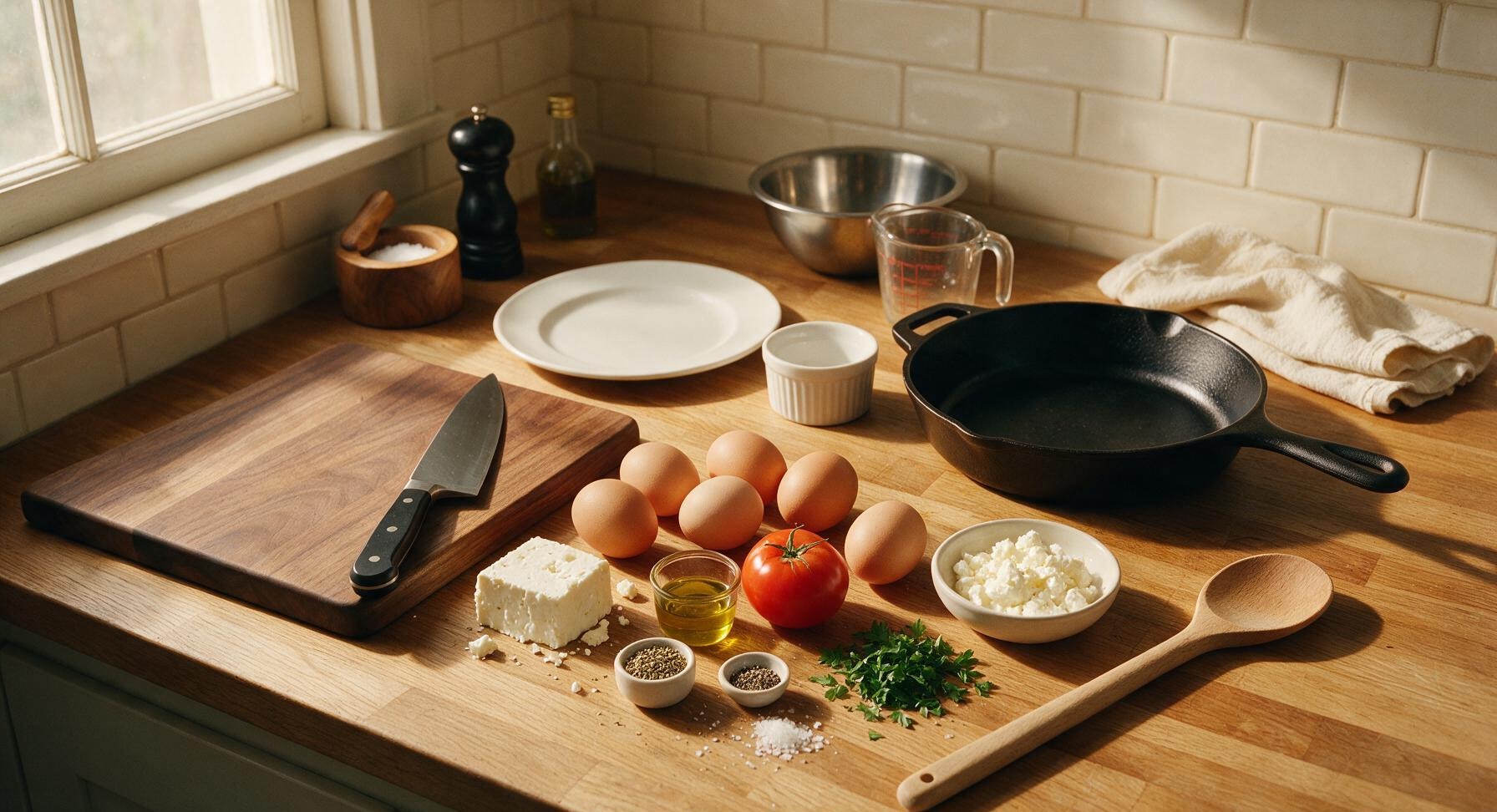
Large eggs 6 (about 300g)
Greek feta cheese 90g (3.2 oz)
Ripe medium tomato 1 (150g / 5.3 oz)
Extra virgin olive oil 1.5 tbsp (22ml)
Dried Greek oregano 1 tsp
Fresh flat-leaf parsley 1 tbsp (chopped, for garnish)
Flaky sea salt 1/8 tsp (small pinch)
Freshly ground black pepper 1/4 tsp

Steps

1

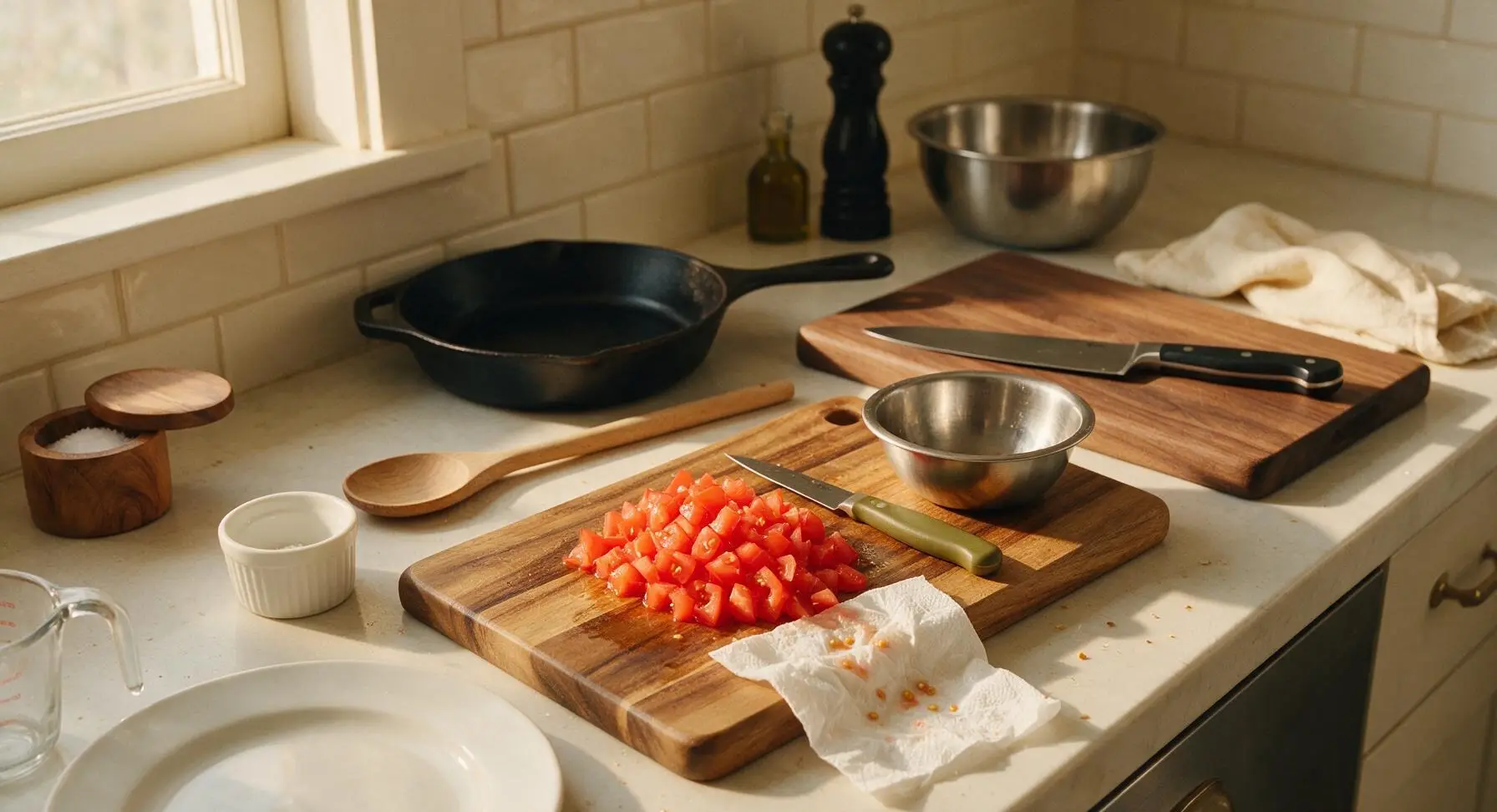
Prep and seed tomato

Place the whole ripe tomato on the acacia wood cutting board. Use the 3.5-inch paring knife to core the tomato, cut it into 1cm (1/2 inch) dice, and gently squeeze out excess seeds and watery pulp over the sink (excess moisture will turn scrambled eggs soggy). Transfer diced tomato to the small stainless steel prep bowl, and pat lightly with a white paper towel to remove remaining surface moisture. Visual cue: Diced tomato pieces are firm, with no loose dripping juice when you lift the bowl.
Step 1
step1:Prep and seed tomato
2

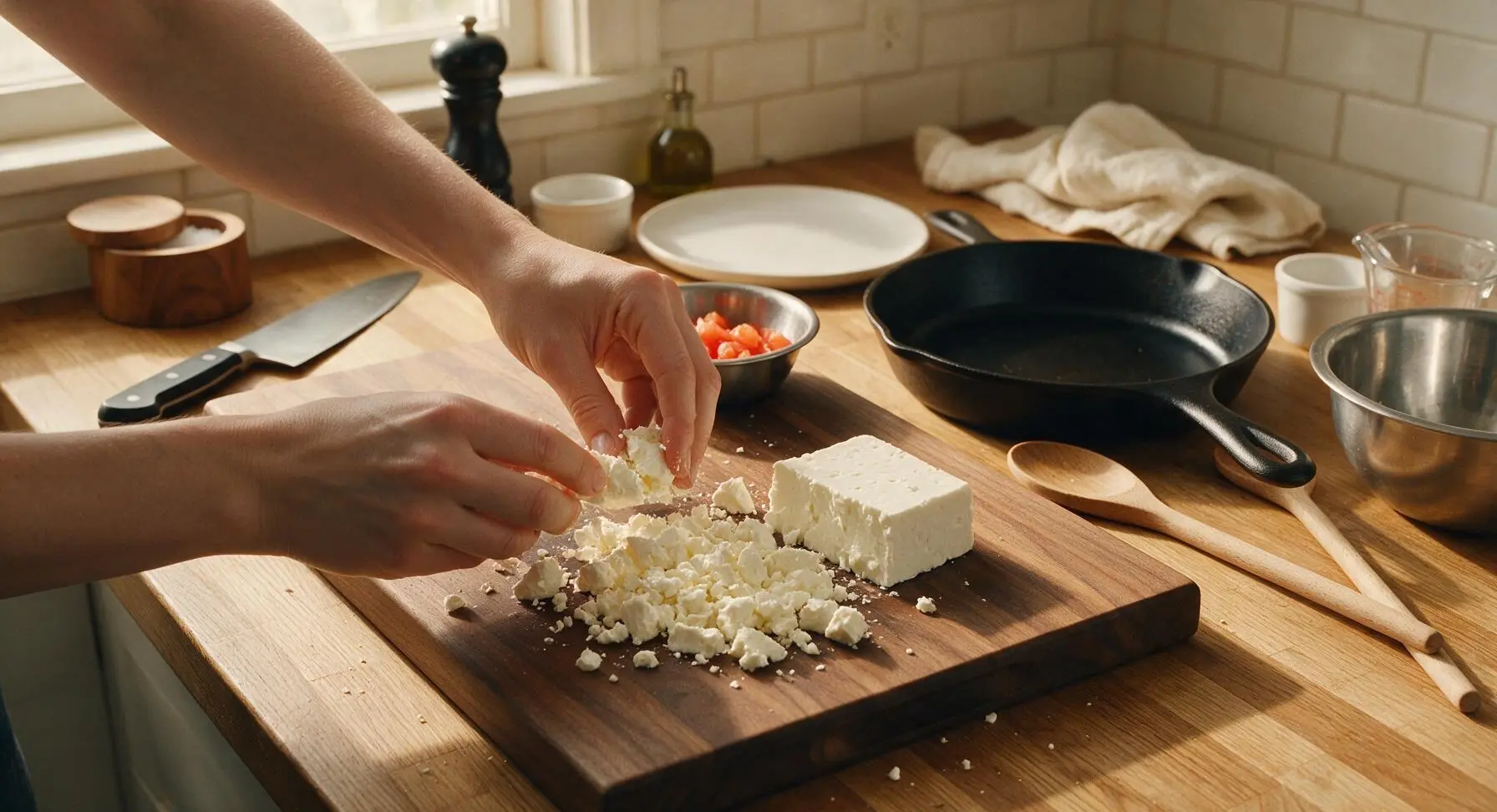
Crumble feta cheese

Unwrap the block of feta and place it on a clean section of the acacia wood cutting board. Use clean fingers to break the feta into rough, uneven 0.5-1cm (1/4-1/2 inch) crumbles; avoid over-crumbling into a fine powder, as varied crumble sizes create better texture in the finished dish. Set crumbled feta aside in one of the small terracotta pinch bowls to add late in cooking. Visual cue: Feta crumbles range from pea-sized to thumbnail-sized, with a small amount of finer crumbly bits mixed in.
Step 2
step2:Crumble feta cheese
3

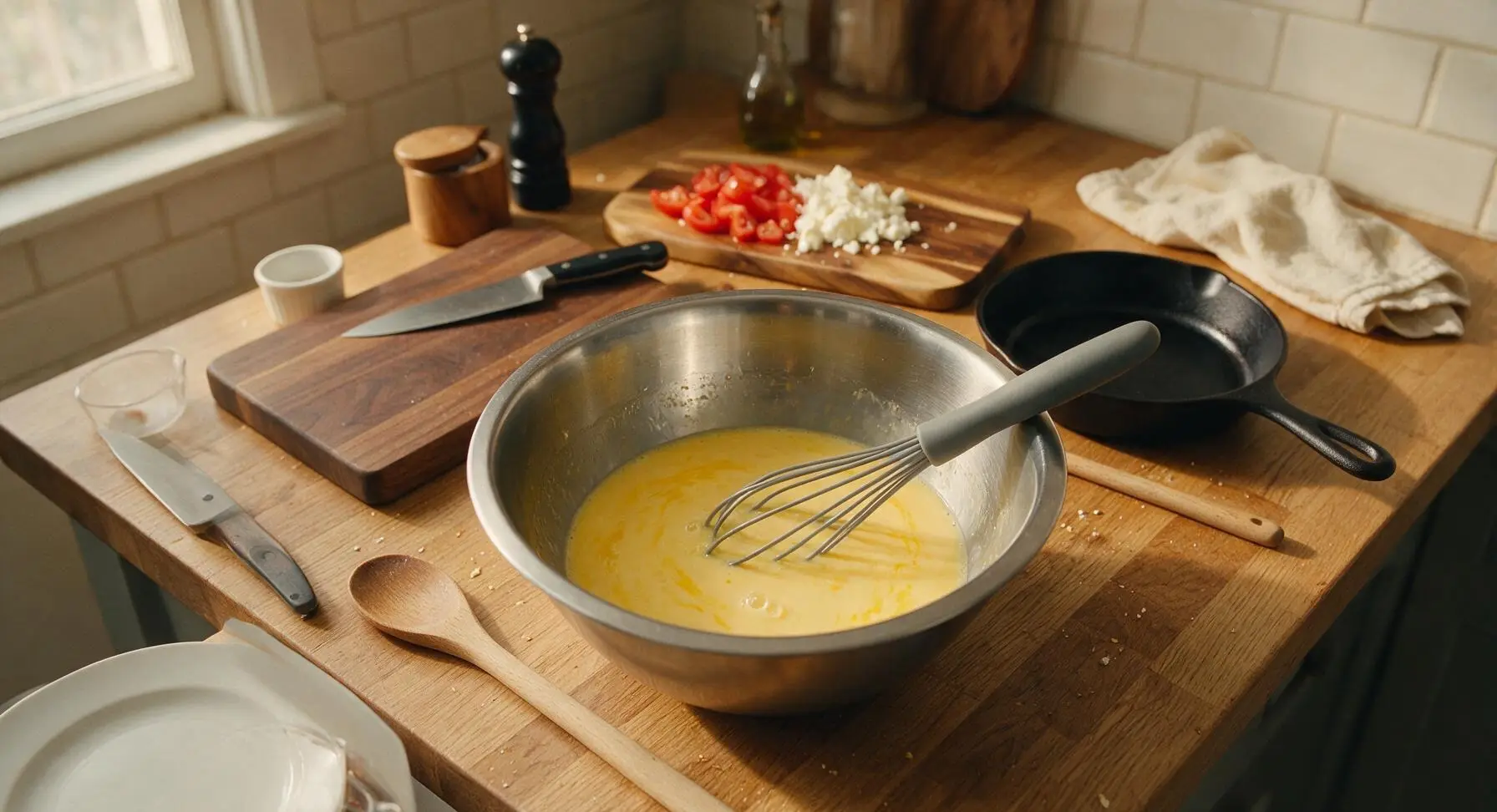
Whisk eggs gently

Crack all 6 large eggs into the clear glass measuring cup, then pour into the medium stainless steel mixing bowl. Add the 1/8 tsp flaky sea salt and 1/4 tsp freshly ground black pepper. Use the matte grey silicone whisk to beat the eggs just until yolks and whites are fully combined; do not over-whisk to a frothy consistency, as this creates dry, airy eggs instead of creamy, dense curds. Visual cue: The egg mixture is a uniform pale yellow, with no visible streaks of separate white or yolk, and only 2-3 small bubbles on the surface.
Step 3
step3:Whisk eggs gently
4

Sauté diced tomato

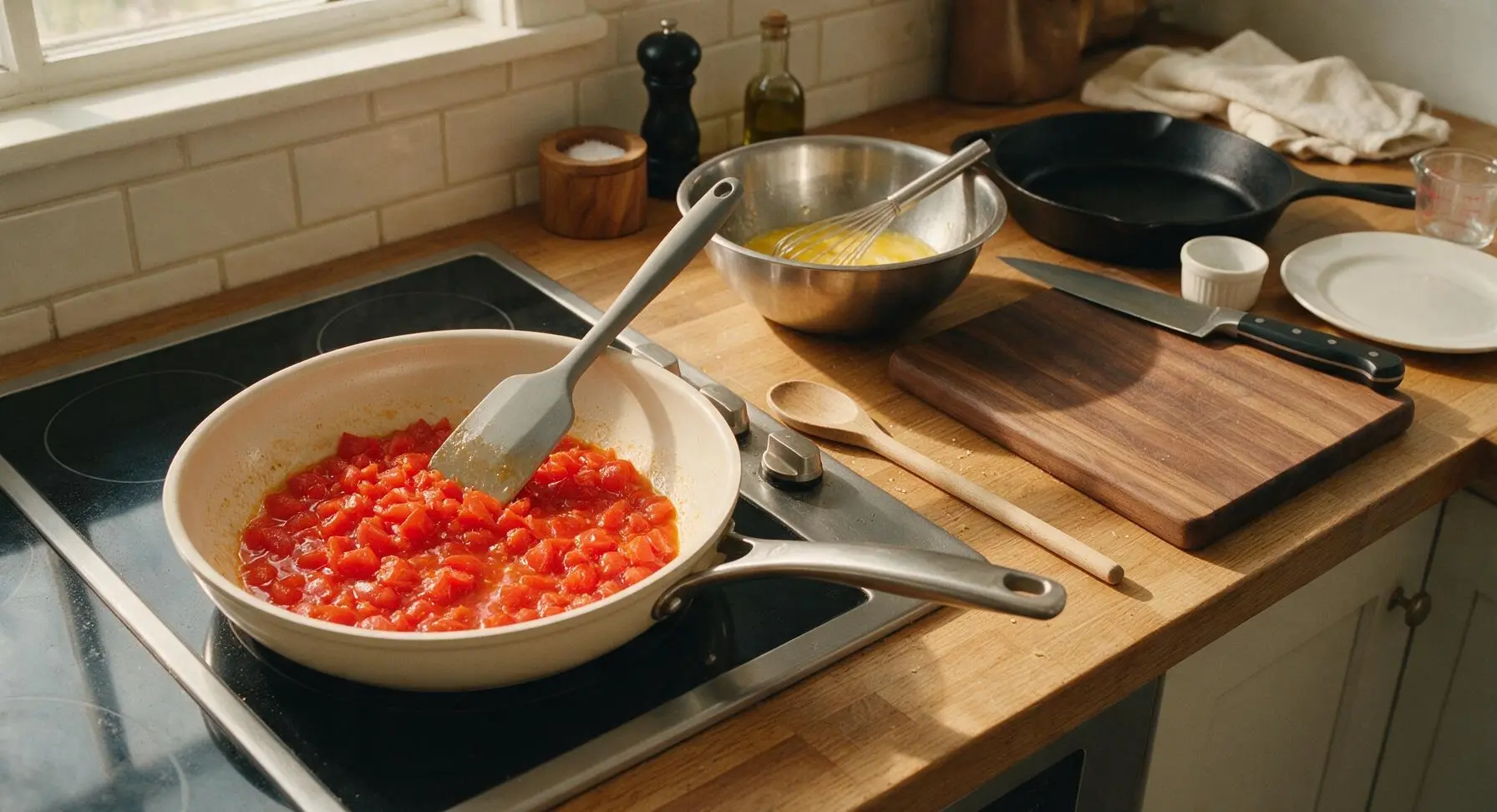
Place the 10-inch cream ceramic non-stick skillet on the left induction cooktop zone, and heat over medium-low heat (130C / 265F). Add 1 tablespoon of the extra virgin olive oil, then add the patted-dry diced tomato. Sprinkle with 1/2 tsp of the dried Greek oregano. Sauté for 2 minutes, stirring occasionally with the matte grey silicone spatula, until tomato softens slightly and releases a small amount of thick, concentrated juice (no watery liquid should pool in the pan). Visual cue: Tomato pieces are slightly collapsed, deep bright red, with a light glossy sheen from olive oil.
Step 4
step4:Sauté diced tomato
5

Cook eggs low and slow

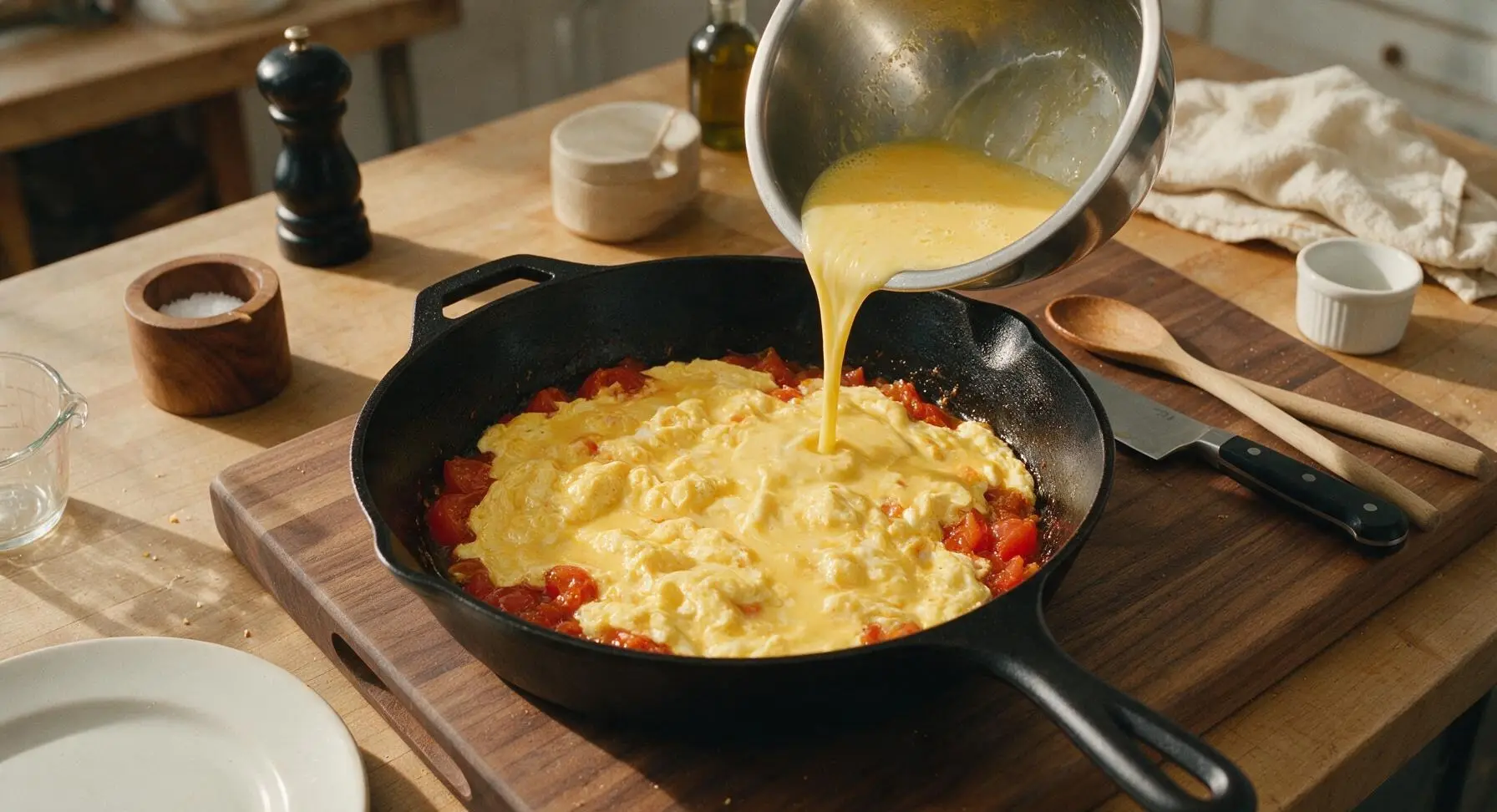
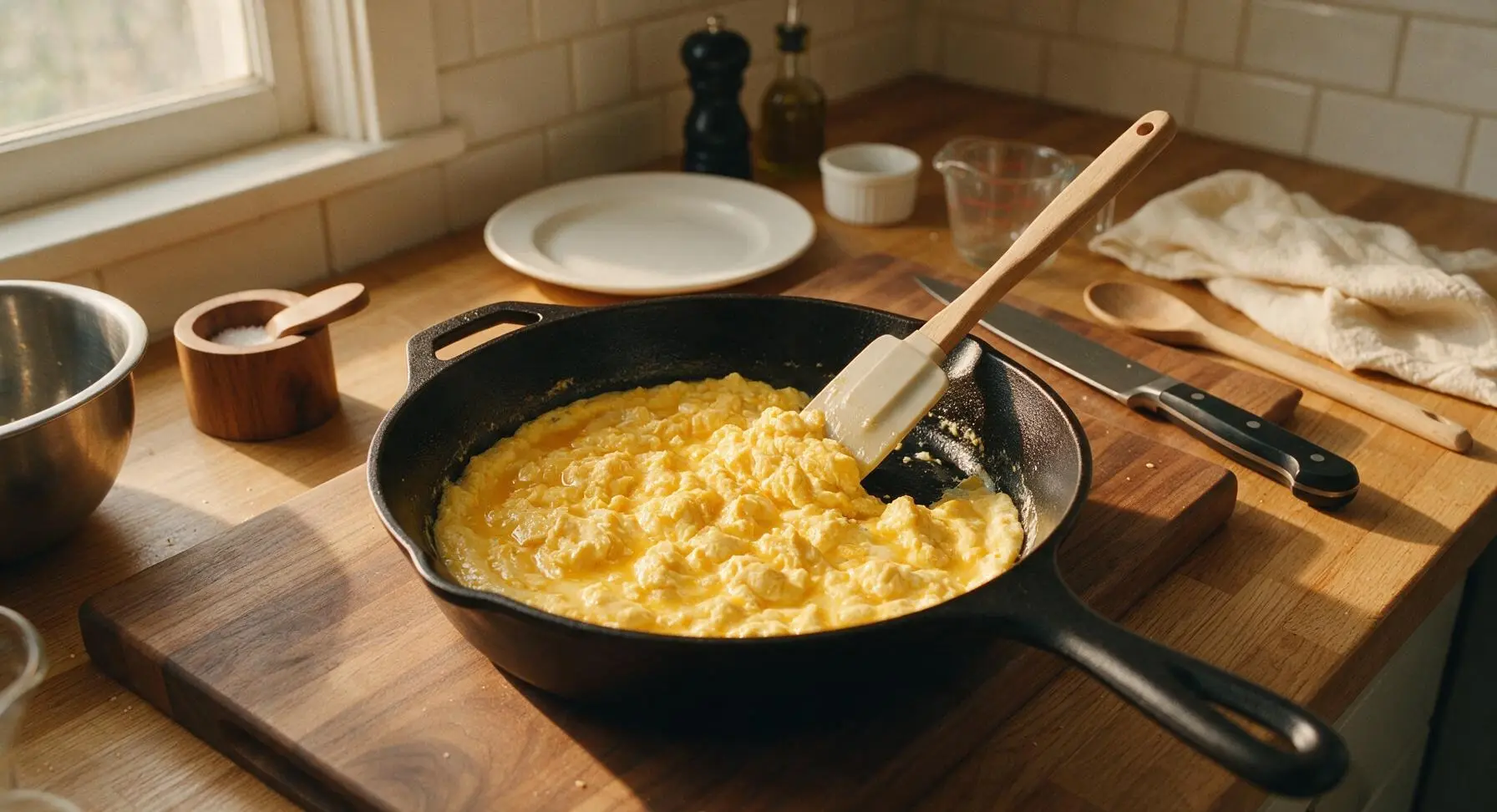
Turn heat down to low (110C / 230F). Pour the whisked egg mixture into the skillet with the sautéed tomato. Let eggs sit undisturbed for 20 seconds, then use the silicone spatula to gently push set curds from the pan edge toward the center, tilting the pan to let uncooked egg flow into the empty spaces. Repeat this gentle pushing motion every 15 seconds for 2 minutes total, until eggs form soft, large, wet curds that are 70% set (still slightly runny in spots). Do not stir constantly or scrape the pan hard, as this breaks curds into tiny, dry pieces. Visual cue: Curds are pale golden yellow, large and soft, with no browned edges anywhere on the pan.
Step 5
step5:Cook eggs low and slow
Step 5
step5:Cook eggs low and slow
6

Fold in feta cheese

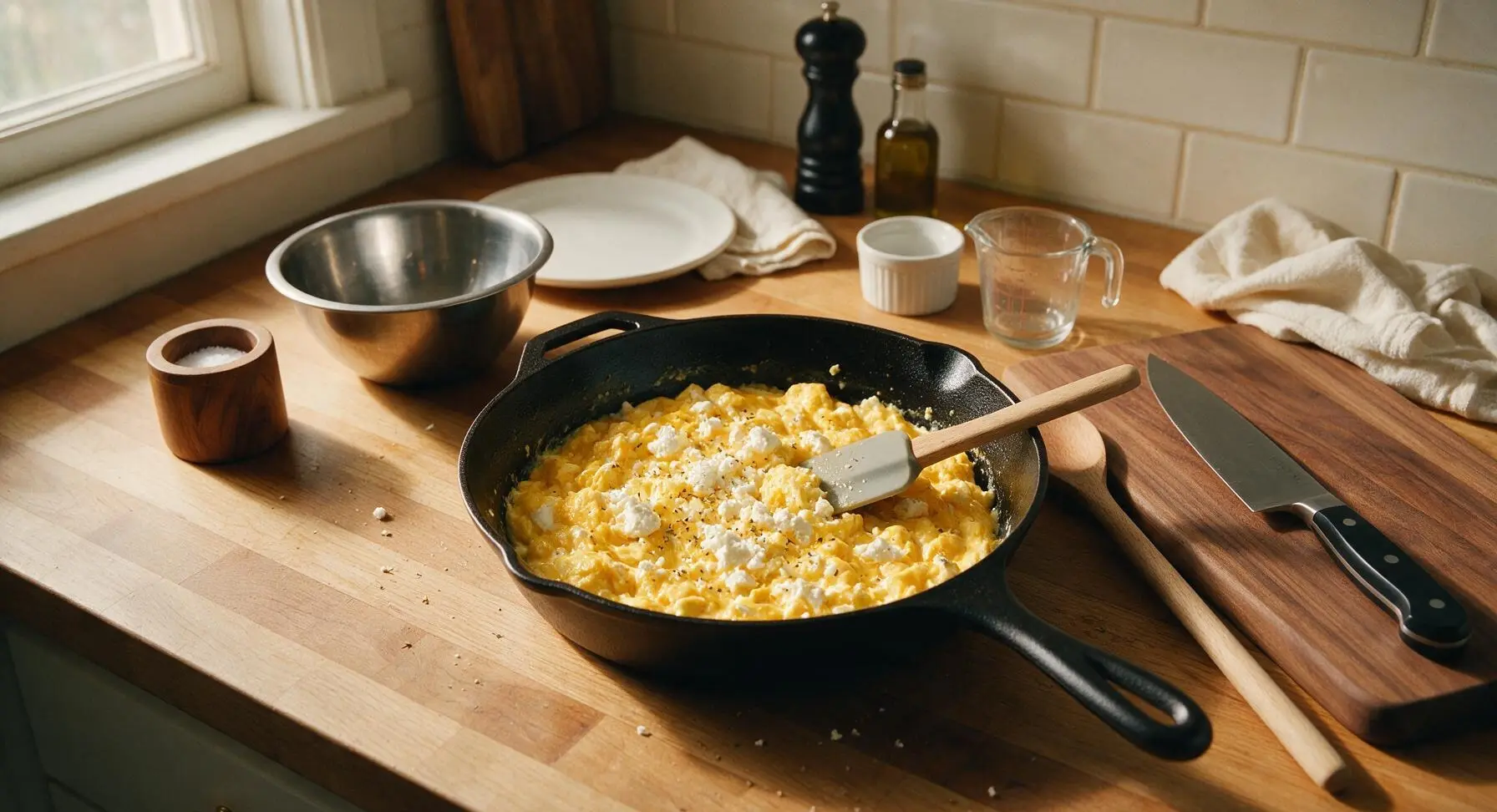
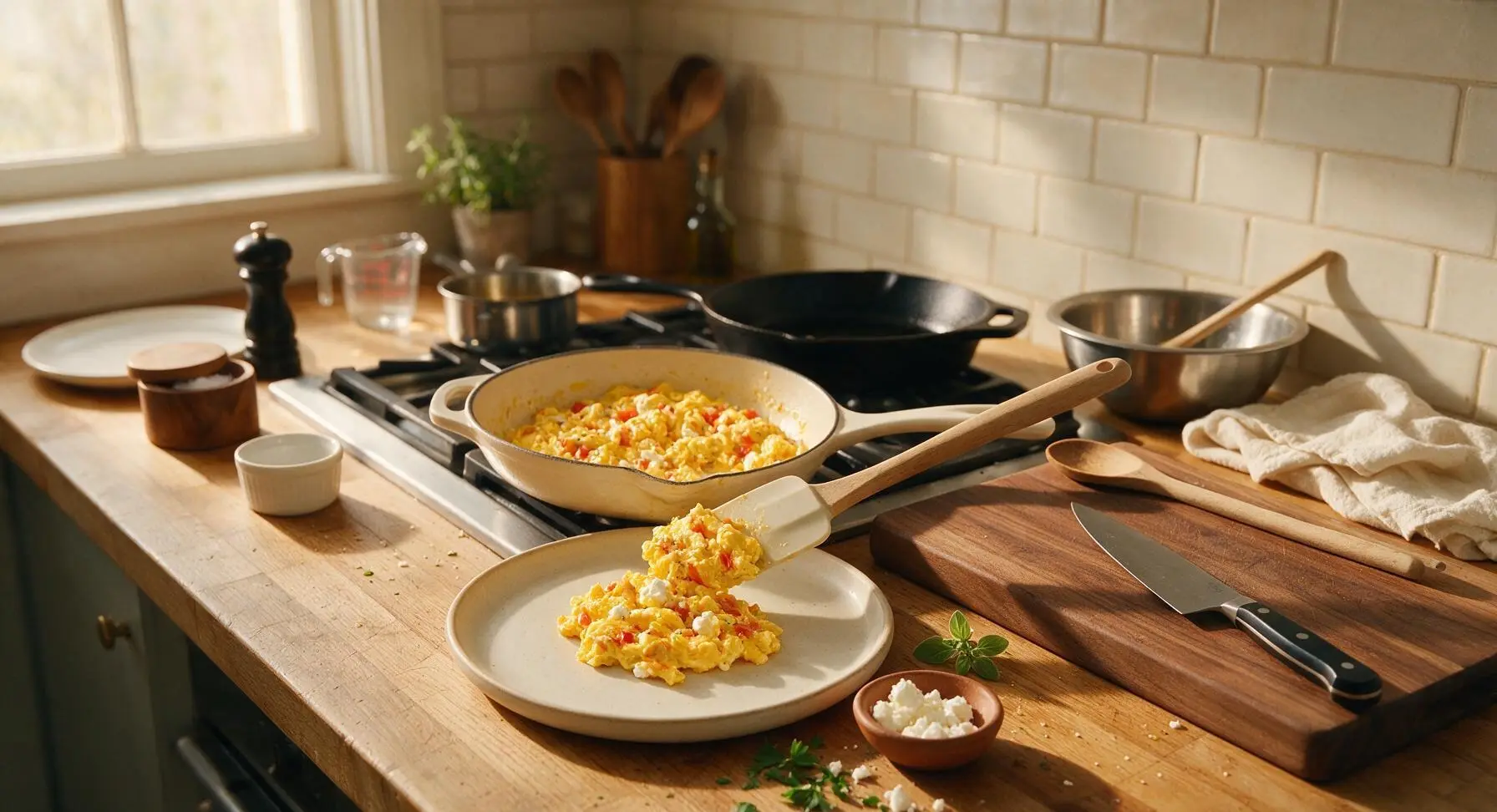
When eggs reach 70% set, add 3/4 of the crumbled feta to the skillet, along with the remaining 1/2 tsp dried Greek oregano. Use the silicone spatula to gently fold the feta into the eggs only 2-3 times, distributing it evenly without breaking up the soft curds. Cook for 30 more seconds, until eggs are 90% set (they will continue to cook from residual pan heat after the stove is turned off). Drizzle with the remaining 0.5 tablespoon of extra virgin olive oil. Visual cue: Feta crumbles are partially melted into the crevices between curds, with some distinct white chunks still visible for texture.
Step 6
step6:Fold in feta cheese
7

Plate and garnish eggs

Turn off the heat. Immediately slide the scrambled eggs onto the waiting matte cream ceramic breakfast plate, mounding them gently in the center. Sprinkle the remaining 1/4 of crumbled feta over the top of the eggs, scatter with chopped fresh parsley, and tuck one small fresh oregano sprig from the countertop potted plant as garnish. Do not press the eggs down or spread them flat; keep curds light and fluffy. Serve immediately while hot. Visual cue: Eggs look soft and moist, with no dry or browned areas, and visible flecks of red tomato and white feta across the golden curds.
Step 7
step7:Plate and garnish eggs

Tips

1.Always seed and pat diced tomatoes dry before cooking: Excess tomato water will leach into egg curds as they cook, creating watery, soggy scrambled eggs instead of the creamy, distinct curds that define this dish.
2.Reserve 1/4 of the feta to sprinkle on top after plating: Feta added during cooking partially melts into the eggs, while the reserved crumbles stay firm and briny, adding a textural contrast that makes each bite more interesting.
3.Pull the eggs off the heat when they are 90% set: Residual heat from the pan and plate will continue to cook the eggs for 1-2 minutes after serving; waiting for eggs to look fully done in the pan will result in dry, overcooked curds by the time you take the first bite.
✨ You May Also Like

Breakfast
🍜 United States

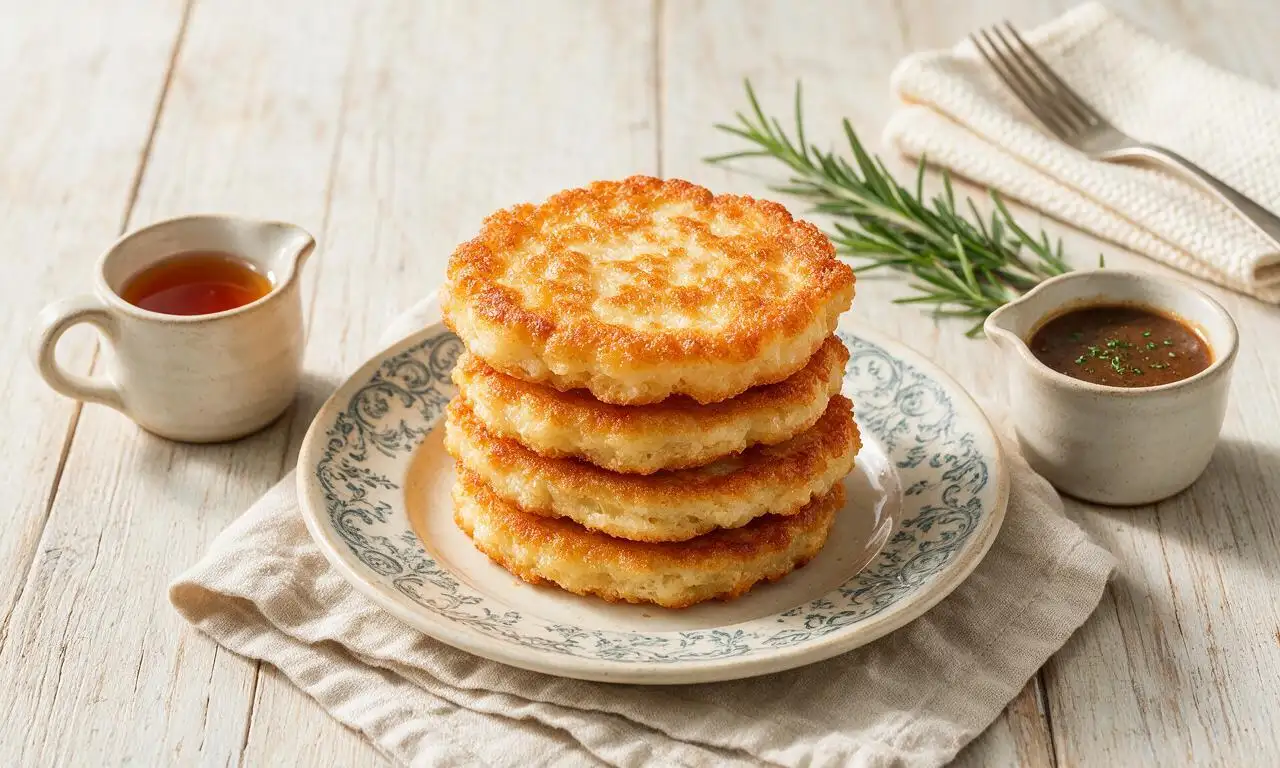
Crisp-edged, fluffy lard griddle cakes are a nostalgic homestyle staple, with rich savoriness from rendered lard, perfect topped with maple syrup or savory gravy.

⏱️ 25 minuteBreakfast ★ 4.8
Breakfast
🍜 United States

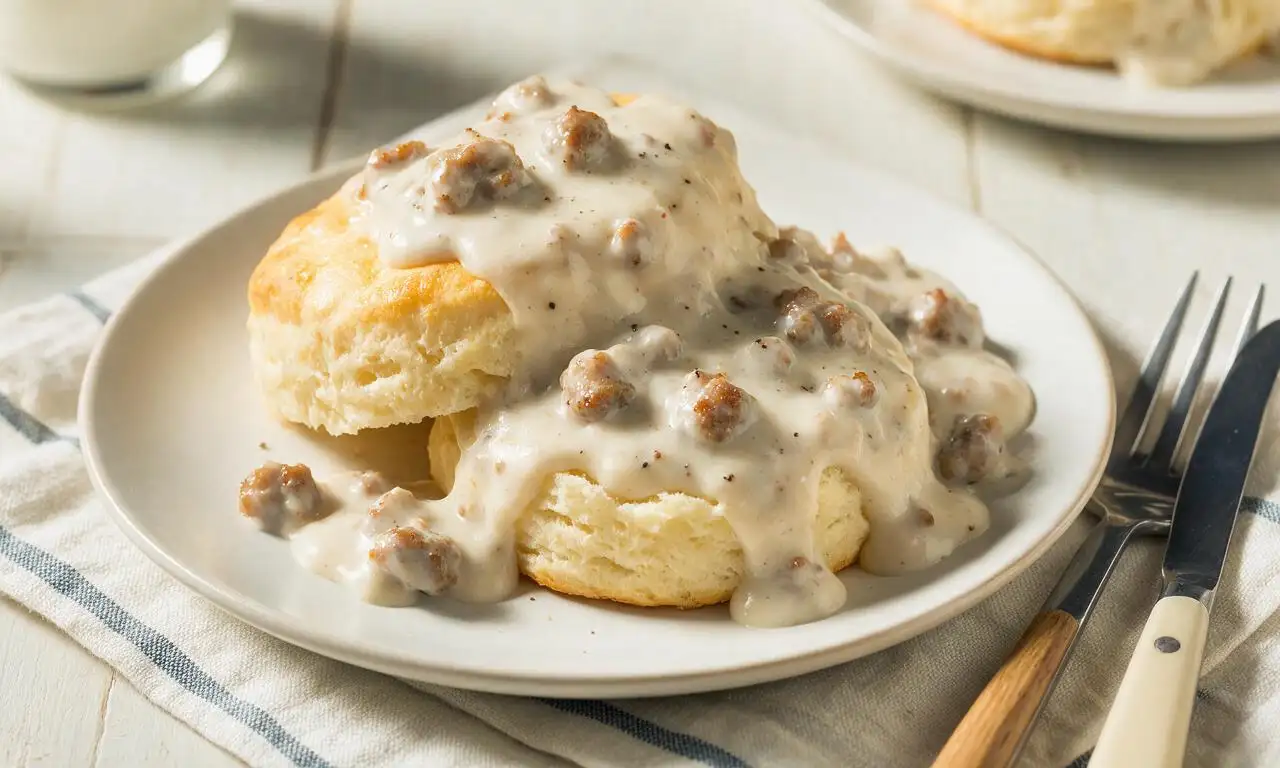
Flaky, buttery homemade buttermilk biscuits smothered in creamy, peppery pork sausage gravy: a beloved, hearty Southern American comfort food classic.

⏱️ 35 minuteBreakfast ★ 4.8
Breakfast
🍜 United States

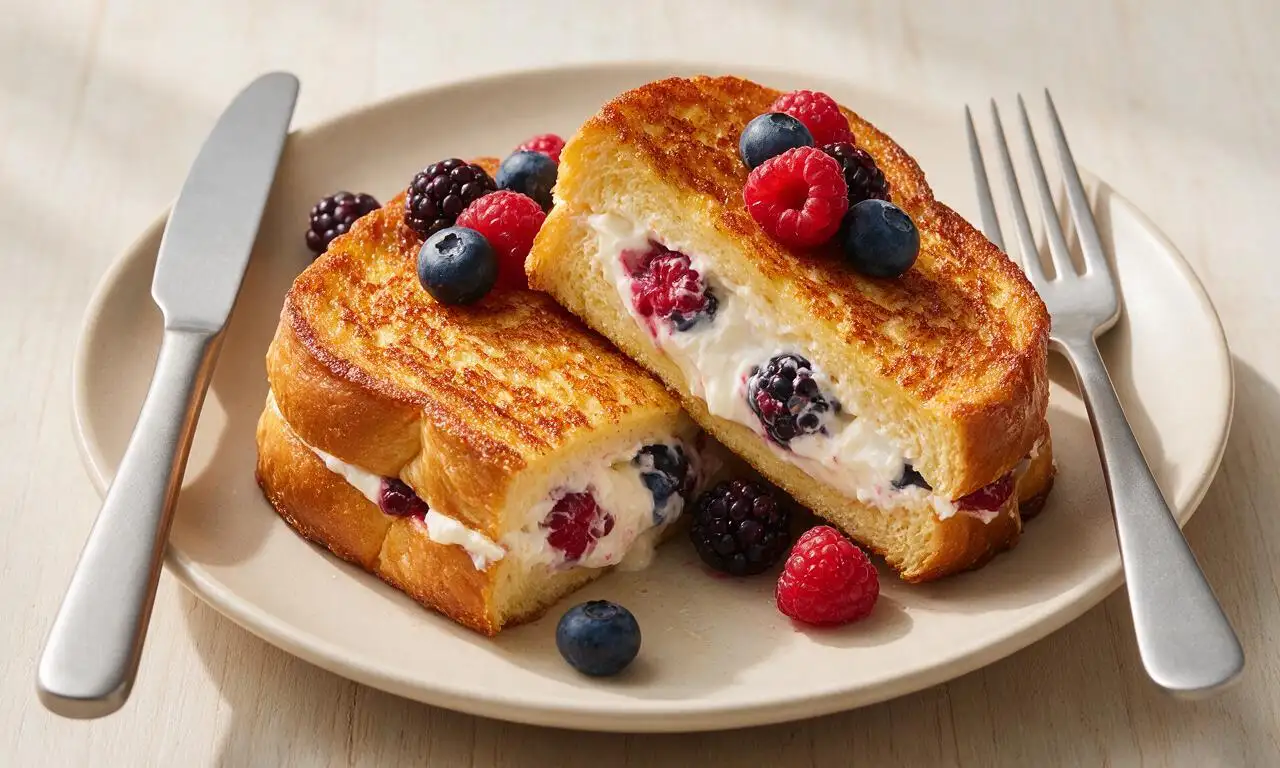
Golden, custardy brioche stuffed with sweet cream cheese and fresh berries, pan-fried to crisp perfection. An indulgent, cozy breakfast perfect for slow weekend mornings.

⏱️ 30 minuteBreakfast ★ 4.7
Breakfast
🍜 United States

Flaky, buttery Southern-style biscuits stuffed with savory salty country ham, a portable, satisfying classic perfect for casual on-the-go meals.

⏱️ 25 minuteBreakfast ★ 4.8
Breakfast
🍜 United States

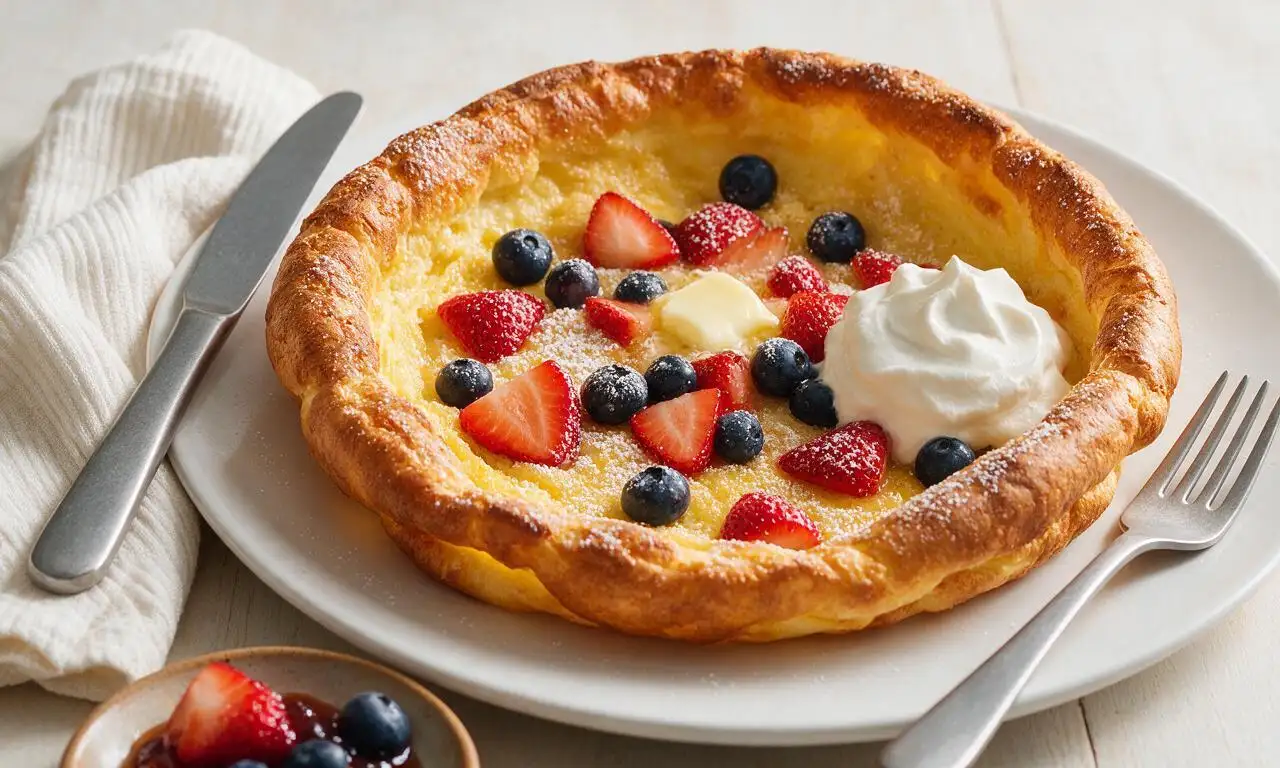
Iconic puffy baked pancake popularized in Seattle, with crisp golden edges and soft custardy center, served warm with classic sweet toppings.

⏱️ 35 minuteBreakfast ★ 4.6
Breakfast
🍜 United States

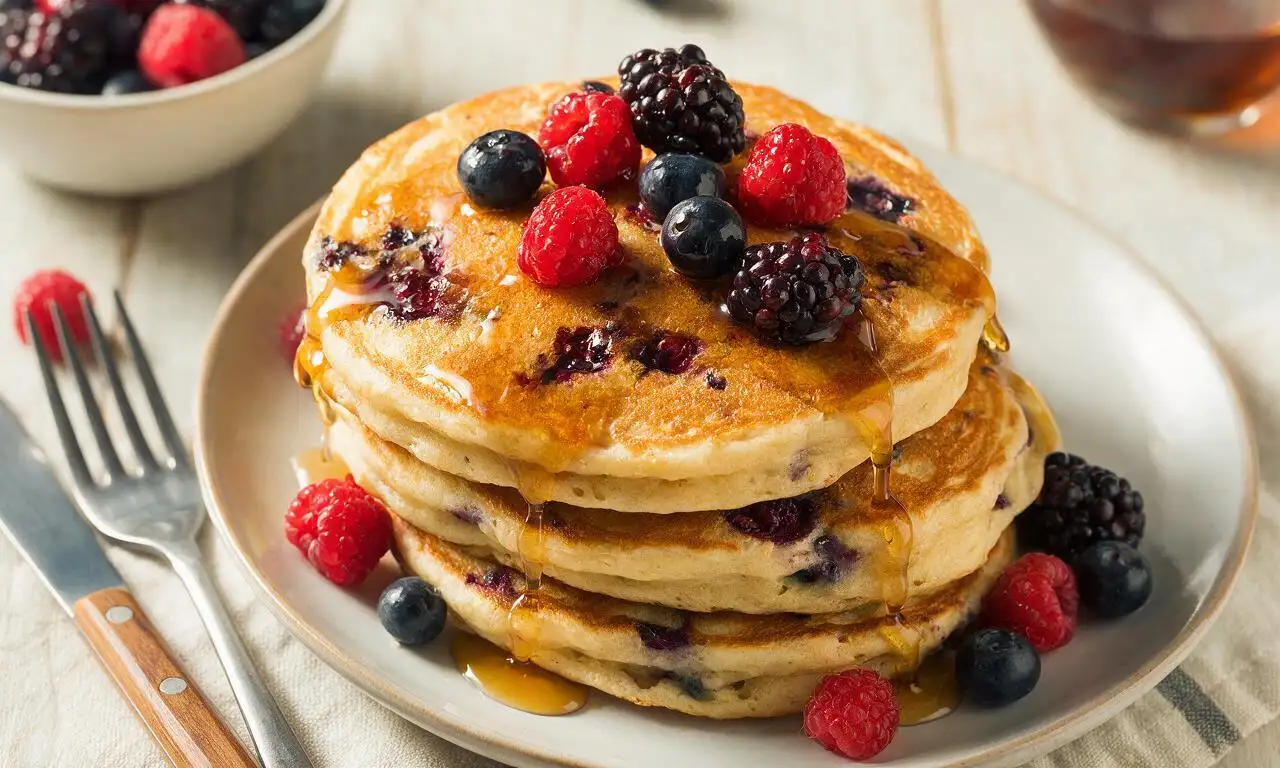
Fluffy, golden pancakes studded with juicy peak-summer mixed berries, drizzled with maple syrup for a bright, comforting, crowd-pleasing family breakfast.

⏱️ 25 minuteBreakfast ★ 4.7

Greek Scrambled Eggs:Frequently Asked Questions

1.What makes Greek scrambled eggs different from classic American scrambled eggs? ▾
The biggest differences are core flavor pairings and cooking fat: we use grassy extra-virgin olive oil instead of butter, fold in briny crumbled Greek feta, juicy ripe tomato, and earthy dried Greek oregano for a bright, savory, slightly tangy profile, rather than the mild, creamy, butter-forward taste of standard American scrambled eggs. They’re also cooked slightly softer to let feta melt gently.
2.Can I use pre-crumbled feta from the grocery store for this recipe? ▾
You can, but for the best texture and flavor, I recommend buying block Greek feta packed in brine and crumbling it yourself. Pre-crumbled feta is usually coated in anti-caking agents that keep it from melting smoothly into eggs, and it often has a blander, saltier taste than fresh-crumbled brined feta. If pre-crumbled is all you have, give it a quick rinse first to cut excess salt.
3.Do I need to seed the tomato before adding it to the eggs? ▾
Yes, I strongly recommend seeding your tomato before adding it to avoid watery, runny scrambled eggs. Scoop out the seedy, juicy pulp with a spoon before dicing the firm tomato flesh into ¼-inch pieces. If you skip this step, excess tomato liquid will leach into the eggs as they cook, leaving you with a soggy, loose final dish instead of velvety, set curds.
4.What heat level should I use to cook these eggs so they stay soft? ▾
Stick to medium-low heat the entire time for perfectly velvety curds. High heat will cook eggs too fast, leading to tough, rubbery curds and burnt edges on the feta and tomato. Stir slowly and constantly with a silicone spatula, pulling set curds from the pan edge to the center, until eggs are just set with a soft, slightly runny finish.
5.Can I use fresh oregano instead of dried Greek oregano for this recipe? ▾
You can, but you’ll need to adjust the quantity to match flavor intensity. Dried Greek oregano is more concentrated and earthy than fresh, so use 1 tablespoon of chopped fresh oregano in place of the 1 teaspoon of dried called for. Add fresh oregano right at the end of cooking to preserve its bright, aromatic flavor, rather than adding it early like dried oregano.
6.Is it okay to add milk or cream to these scrambled eggs like I do for regular eggs? ▾
I recommend skipping milk or cream for authentic Greek scrambled eggs. Dairy dilutes the bright, briny flavor of feta and can make curds watery if you add too much. The small amount of moisture from diced tomato and creamy, melted feta creates more than enough richness without extra milk, leading to cleaner, more balanced flavor.
7.How do I keep the feta from getting rubbery when it cooks? ▾
Add your crumbled feta during the last 30 to 45 seconds of cooking, right as the eggs are almost fully set. Residual heat from the pan and eggs will melt feta into soft, creamy pockets without overcooking it. If you add feta too early, it will seize up, turn rubbery, and release excess brine that can make your eggs watery.
8.What can I serve with Greek scrambled eggs for a full breakfast? ▾
These eggs pair beautifully with warm, crusty sourdough or pita bread to sop up leftover olive oil and soft egg curds, plus a side of briny Kalamata olives, thinly sliced cucumber, and a sprinkle of fresh parsley. For a heartier meal, serve them alongside crispy roasted potatoes or a small side of tzatziki for extra cool, creamy tang.
9.Can I make these eggs ahead of time for meal prep? ▾
Scrambled eggs are best eaten fresh right after cooking, but you can store leftovers in an airtight container in the fridge for up to 2 days. Reheat them gently in a nonstick pan over low heat with a tiny splash of olive oil, stirring often, to avoid rubbery eggs. I don’t recommend freezing these, as feta and tomato will turn mushy and watery when thawed.
10.What if I can’t find authentic Greek feta for this recipe? ▾
If Greek feta is unavailable, look for a sheep’s milk feta (or sheep and goat milk blend) packed in brine as the closest substitute. Avoid cow’s milk feta, which is much milder, crumblier, and less creamy than traditional Greek feta. For a similar briny, tangy kick, you can also use crumbled Bulgarian feta in a pinch, though it has a slightly saltier profile.
11.My eggs turned out watery last time I made this—what did I do wrong? ▾
Watery eggs almost always come down to two common mistakes: not seeding your tomato before adding it, or cooking eggs on too high heat too quickly. Unseeded tomatoes release lots of excess juice as they cook, and high heat can make both eggs and feta release moisture as they seize up. Stick to seeded, diced tomato, medium-low heat, and add feta at the end for perfect results.
12.Can I add extra vegetables to these scrambled eggs? ▾
Absolutely! Traditional versions stick to tomato and oregano, but you can add finely diced spinach (squeezed completely dry to avoid sogginess), sautéed diced red onion, or chopped roasted red pepper for extra flavor and texture. Just make sure any added veggies are cooked first and drained of excess moisture so they don’t make your eggs runny.
13.Do I need a special pan to make velvety scrambled eggs? ▾
A heavy-bottomed nonstick skillet is the best choice for this recipe, as it prevents eggs from sticking and distributes heat evenly to avoid hot spots that burn curds. If you don’t have a nonstick pan, a well-seasoned carbon steel or cast iron skillet works too—just add an extra teaspoon of olive oil to make sure eggs don’t stick as you stir.
14.Is this recipe suitable for people following a gluten-free diet? ▾
Yes! As written, Greek scrambled eggs are 100% gluten-free, since none of the core ingredients (eggs, feta, tomato, olive oil, oregano) contain gluten. Just double-check that your dried oregano hasn’t been cross-contaminated with gluten-containing additives if you have severe celiac disease, and serve with certified gluten-free bread or pita on the side.
15.How many eggs per person should I use for a serving? ▾
Plan for 2 large eggs per person for a light breakfast, or 3 large eggs per person for a heartier, more filling meal. The base recipe as written with 6 eggs, 1/2 cup crumbled feta, and 1 medium diced tomato will serve 2 to 3 people, depending on what sides you serve alongside it. You can easily scale the recipe up or down to match your group size.
16.Can I use cherry tomatoes instead of a medium ripe tomato? ▾
Yes, cherry tomatoes work great as a substitute! Use about 1 cup of halved cherry tomatoes, and make sure to scoop out the seedy pulp from each half before dicing them into small pieces, just like you would a larger tomato. Cherry tomatoes are often extra sweet and ripe, so they’ll add a bright, concentrated tomato flavor that pairs beautifully with briny feta.
17.Should I season these eggs with extra salt? ▾
Go easy on added salt at first, because authentic Greek feta is quite briny and salty on its own. I recommend waiting until the very end of cooking, after you’ve folded in the feta, to taste and add a tiny pinch of salt only if needed. A quick crack of fresh black pepper right before serving is always a nice touch, though, to complement the oregano and tomato.
18.Why do you use extra virgin olive oil instead of butter for this recipe? ▾
Extra virgin olive oil is the traditional cooking fat for Greek egg dishes, and it adds a bright, grassy, peppery base note that butter can’t match. It also pairs perfectly with feta and tomato to create that signature Mediterranean flavor profile. If you prefer the taste of butter, you can use half olive oil and half melted butter, but I don’t recommend skipping olive oil entirely.
19.Can I make this recipe dairy-free? ▾
You can make a dairy-free version, but you’ll need to swap the feta for a dairy-free brined feta-style cheese made from coconut or cashew milk, since feta is a core flavor component. Look for a dairy-free feta that crumbles well and has a tangy, briny taste to mimic the real thing. Skip any dairy-free feta with an overpowering sweet, nutty flavor, as it will throw off the balance.
20.How long does this recipe actually take to make from start to finish? ▾
This recipe comes together in right around 10 minutes total, as advertised. It takes about 3 minutes to prep your ingredients: dice and seed the tomato, crumble the feta, and crack your eggs. Actual cooking time only takes 6 to 7 minutes over medium-low heat, so it’s perfect for quick weekday breakfasts or lazy weekend brunches when you don’t want to spend hours in the kitchen.

Comments (15)

2 days ago

OMG this is my new go-to weekday breakfast! 5 minutes flat, zero fuss, and the feta gets all melty and perfect? Game changer. My 7 year old asked for seconds before he even finished his first plate, which never happens. I tossed in a handful of baby spinach I had wilting in the fridge and it worked so well.

yesterday

Wait the spinach add is genius! I did that too last weekend when I made these for a girls brunch, everyone was raving. No sad dry scrambled eggs here, that’s for sure.

yesterday

Love that spinach hack! So glad the recipe was a hit with your kiddo—this is one of our favorite quick meals for busy school mornings too, it never disappoints.

3 days ago

Made this for my meal prep this week, doubled the batch and kept it in the fridge for quick breakfasts before work. Way better than the sad plain scrambled eggs I usually make. The only thing I did different was add a pinch of red pepper flakes for a little kick, chef’s kiss.

2 days ago

Great call on the red pepper flakes! We love adding that too for a little heat, it pairs so nicely with the salty feta. So stoked this made your meal prep rotation easier!

1 week ago

SO good. Made these before my son’s early soccer practice Saturday, threw them in a whole wheat tortilla for a quick breakfast wrap and even my super picky husband ate two. Will be making these every game day from now on.

5 days ago

Wait why have I been making boring scrambled eggs my whole life? This took literally 5 minutes like the recipe says, used stuff I already had in the pantry/fridge. I didn’t have fresh oregano so I used dried, still came out amazing. 10/10 for broke college students like me.

3 days ago

Same here! Used dried oregano too, worked like a charm. I crumbled in some extra feta because, duh, feta makes everything better. Great cheap meal.

3 days ago

Dried oregano works perfectly here, no need to run to the store for fresh for this recipe! So glad it worked out for your budget—quick, cheap, tasty meals are what we’re all about.

1 week ago

Made these for our neighborhood potluck brunch last weekend, put them in a big serving dish with some toasted pita on the side and they were gone in 10 minutes. Multiple people asked me for the recipe! I did add a little diced kalamata olives per my grandma’s old Greek egg recipe, such a nice briny kick.

5 days ago

Kalamata olives are such a fantastic addition—briny, salty, perfect with the creamy eggs and feta. Love that these were a hit at your potluck, that makes us so happy!

2 weeks ago

Great high protein breakfast option that doesn’t taste like diet food. I used egg whites for half the eggs to cut a little fat, and it still was super creamy thanks to the feta. Will be adding this to my regular rotation for post-gym meals.

yesterday

Okay full transparency, I’m terrible at cooking eggs. I always either overcook them until they’re rubbery or undercook them and they’re runny. This recipe was foolproof! The low heat tip? Total game changer. My eggs were perfectly fluffy, no rubbery texture at all.

2 hours ago

Same! I used to burn scrambled eggs every single time, that low heat trick works for every egg recipe now, not just this one. So glad I’m not the only one who struggled with eggs!

30 minutes ago

We’re so glad the low heat tip worked for you! Low and slow is the secret to fluffy, non-rubbery scrambled eggs every single time, no fancy skills required.

5 minutes ago

Tried this this morning for breakfast, really good! The only thing I will say is I wish I’d crumbled the feta smaller, I had a couple big chunks that were a little overpowering for me. Next time I’ll mix it in a little earlier too so it melts more evenly.

just now

Great feedback! Crumbling feta into smaller pieces and stirring it in 30 seconds before the eggs finish cooking does help it melt more evenly for that perfect creamy texture. Hope your next batch turns out even better!

2 weeks ago

Made these over the camp stove on our family camping trip last weekend! So easy, only needed a few ingredients, no fancy equipment required. The kids gobbled them up after a morning of hiking, even with pine needles accidentally falling in the pan (oops). Will be a camping staple from now on.

3 days ago

I hosted a Greek-themed brunch last Sunday and served these alongside some tzatziki, toasted sourdough, and cucumber salad. It was the star of the spread! I was worried 5 minutes wouldn’t be enough time when I was cooking for 8 people but it came together so fast, no stress at all.

2 days ago

Wait serving with tzatziki is such a good call! I never would have thought of that, I bet the cool creamy tzatziki pairs so perfectly with the warm salty eggs. Stealing that idea for my next brunch!

yesterday

A Greek-themed brunch sounds absolutely dreamy! Tzatziki on the side is such a perfect pairing, we’re definitely stealing that idea for our next weekend brunch too. So happy it was the star of your spread!

30 minutes ago

I made this with vegan feta since I’m dairy free, and it was still SO good! I was worried the vegan feta wouldn’t melt right but it got all creamy, and the oregano and tomato gave it so much flavor I didn’t even miss the regular feta. Such a versatile recipe.

5 minutes ago

Love that you made it work with vegan feta! It’s such a flexible base recipe, so swapping in ingredients that fit your dietary needs is always encouraged. So glad it turned out tasty for you!

2 days ago

Made these for dinner last night when I didn’t feel like cooking a whole big meal—breakfast for dinner is always a win in my house! Served with some roasted potatoes on the side and all three of my kids cleaned their plates, zero complaints. Even the teenager who turns her nose up at everything said it was good. Win!

2 hours ago

Wait the little bit of tomato in these? I never would have thought to add fresh tomato to scrambled eggs but it adds such a nice bright, juicy pop. I was skeptical at first but wow, it works so well with the feta and oregano. I’ll never make plain eggs again.

30 minutes ago

Funny you say that! I hate raw tomatoes with a passion so I diced mine really small and cooked them for a minute before adding the eggs, and even I loved it. The tomato gets all soft and sweet, no weird raw texture. 10/10.

5 minutes ago

We’re so glad you gave the tomato a shot! Cooking it slightly before adding eggs (like Tim mentioned) is a great hack for folks who don’t love raw tomato texture, it softens right up and adds that perfect bright flavor. Thanks for the great tip Tim!

1 week ago

This is the easiest recipe I’ve made all month. I work 12 hour shifts and the last thing I want to do when I get home is cook a complicated meal, but this takes 5 minutes, uses minimal dishes, and tastes way better than takeout. I added a little diced onion I had leftover and it was chef’s kiss.

5 days ago

We love a minimal-dish, quick meal for busy days! Diced onion is a fantastic add, it adds such a nice savory depth. So glad this fits into your busy schedule!

5 days ago

Made these for my boyfriend’s birthday breakfast in bed, paired with some crispy bacon and fresh fruit. He said they were the best scrambled eggs he’s ever had, and he’s a total egg snob! The recipe is so straightforward I didn’t even mess it up while I was half asleep drinking my first cup of coffee.

3 days ago

Birthday breakfast in bed sounds like the perfect way to celebrate! We’re so impressed you pulled this off half-asleep—easy recipes are made for those slow, cozy weekend mornings. Tell your boyfriend we said happy belated birthday!