italian roast beef

title 1
italian roast beef
⏱️ cook time 1 hour 15 minutes
🍽️ servings 6
⚡ Difficulty medium

intro

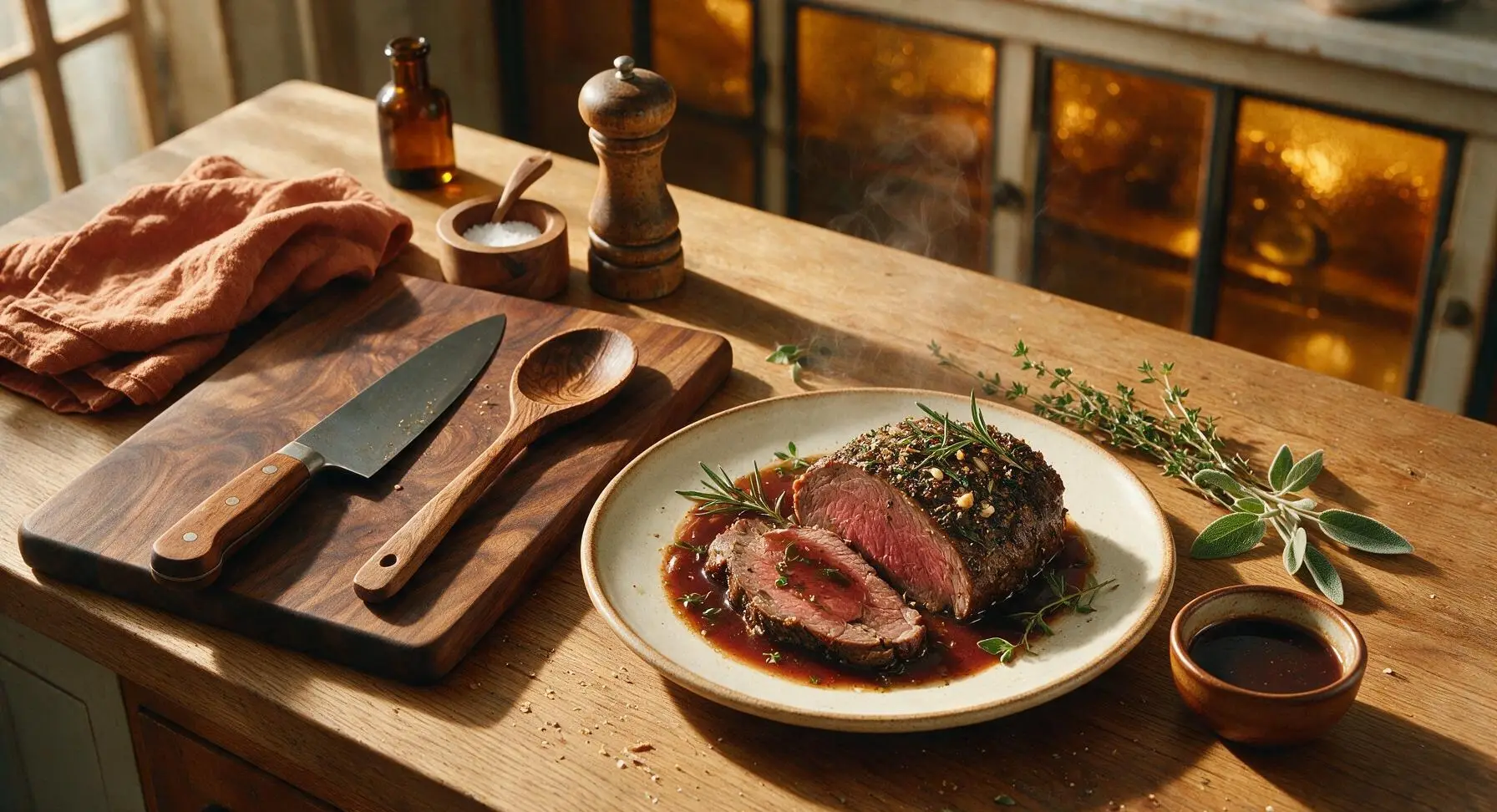
Juicy, herb-kissed Northern Italian roast beef, crusted with rosemary and garlic, served with rich red wine au jus—perfect for cozy winter family gatherings.

Ingredients
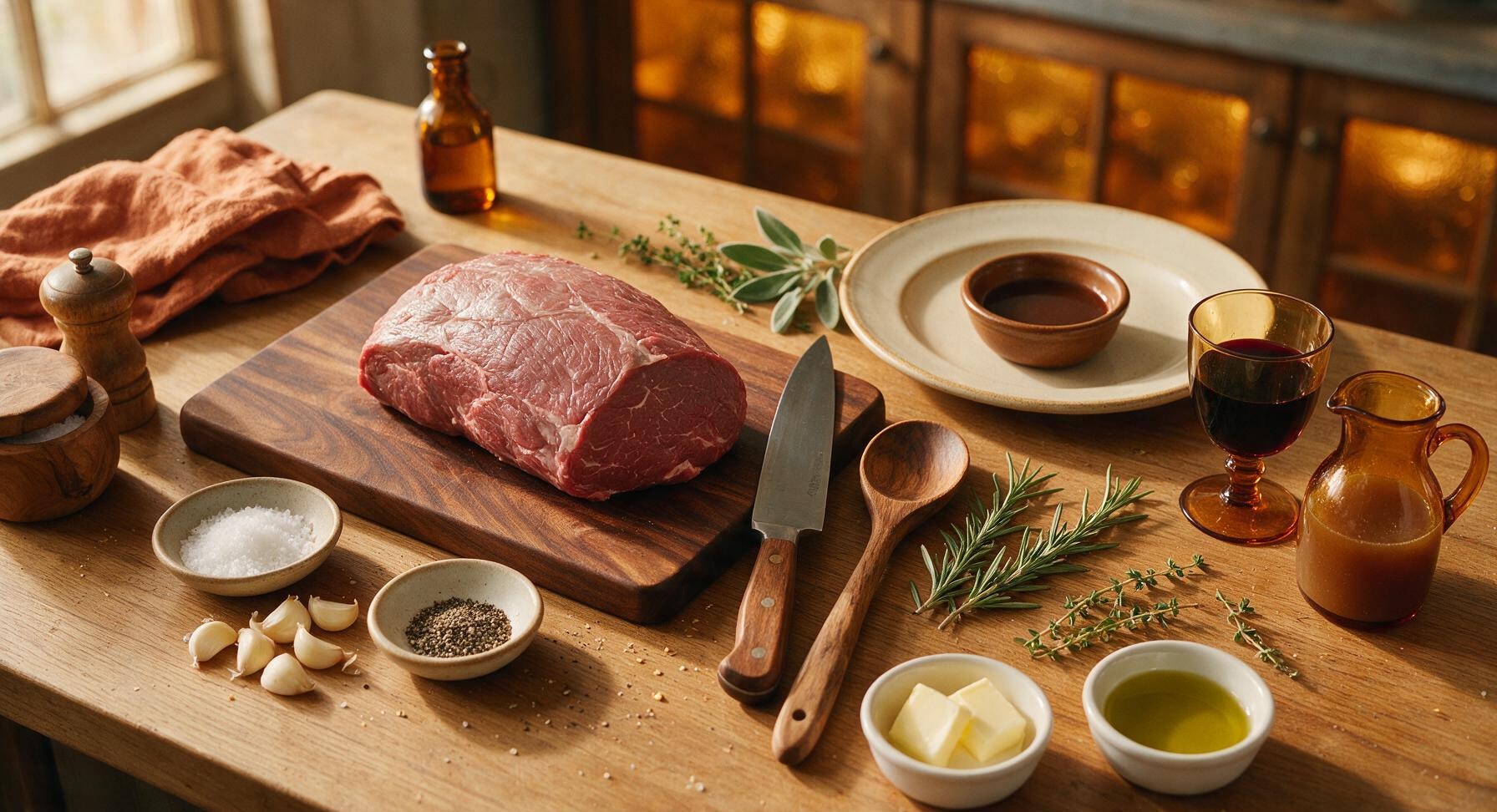
Beef top round roast 1.5kg (3.3lb, trimmed of excess silver skin)
Extra virgin olive oil 3 tablespoons
Kosher salt 1.5 tablespoons
Freshly ground black pepper 1 tablespoon
Garlic cloves 6, peeled and lightly crushed
Fresh rosemary sprigs 3 (plus extra for garnish)
Fresh thyme sprigs 2
Dry Chianti red wine 120ml (1/2 cup)
Low-sodium beef broth 120ml (1/2 cup)
Unsalted butter 2 tablespoons, cut into 2 pieces

Steps

1

Prep and Tie Roast

Place the trimmed beef top round roast on the acacia wood cutting board. Pat all surfaces completely dry with paper towels, setting crumpled used towels to the left edge of the board. Cut 3 lengths of natural cotton kitchen twine, and tie them snugly around the roast at 5cm intervals to form an even cylindrical shape, which guarantees uniform cooking. The twine should hold the roast firmly without cutting deep into the meat surface.
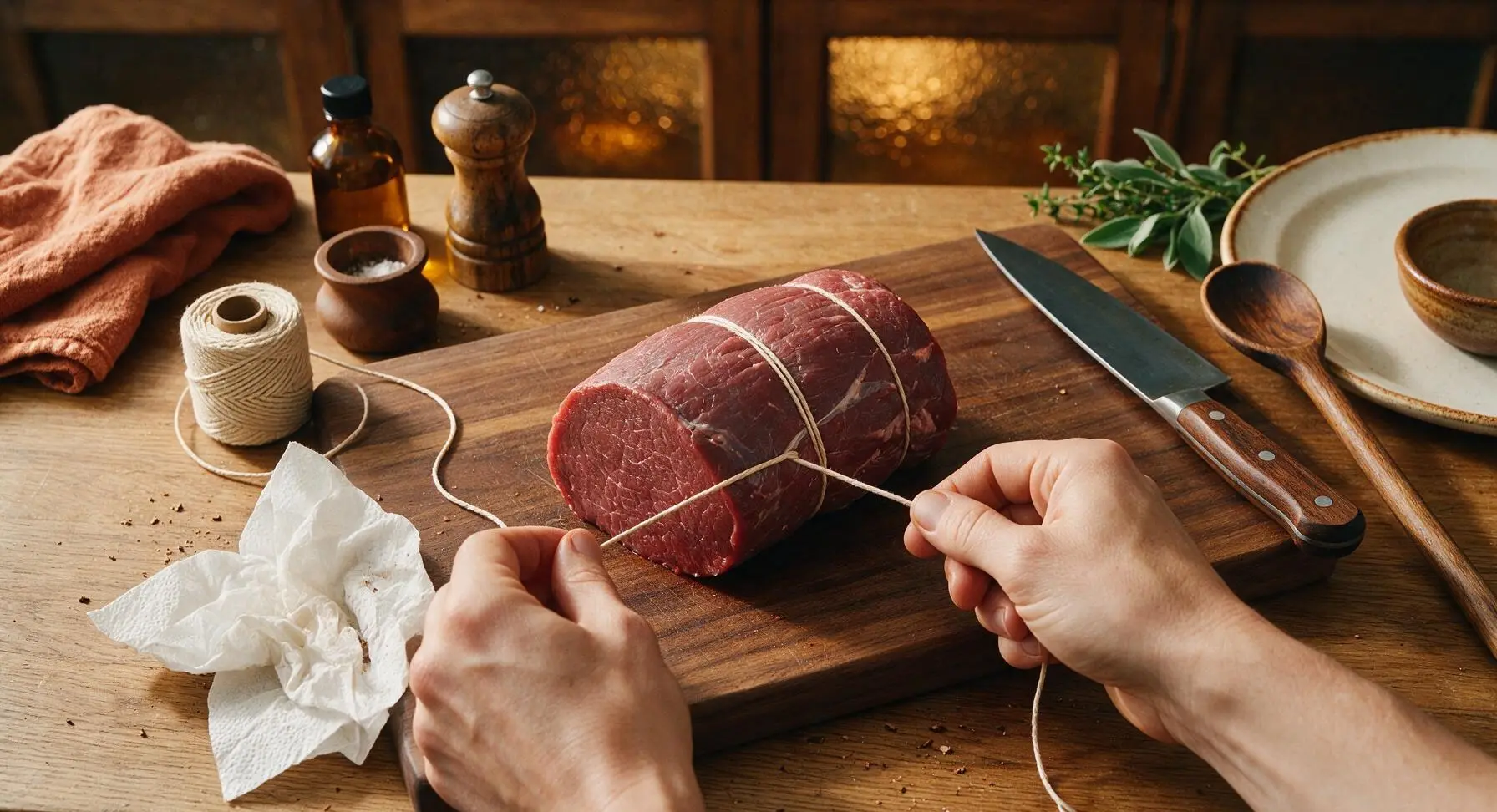
Step 1
step1:Prep and Tie Roast
2

Season Roast Generously

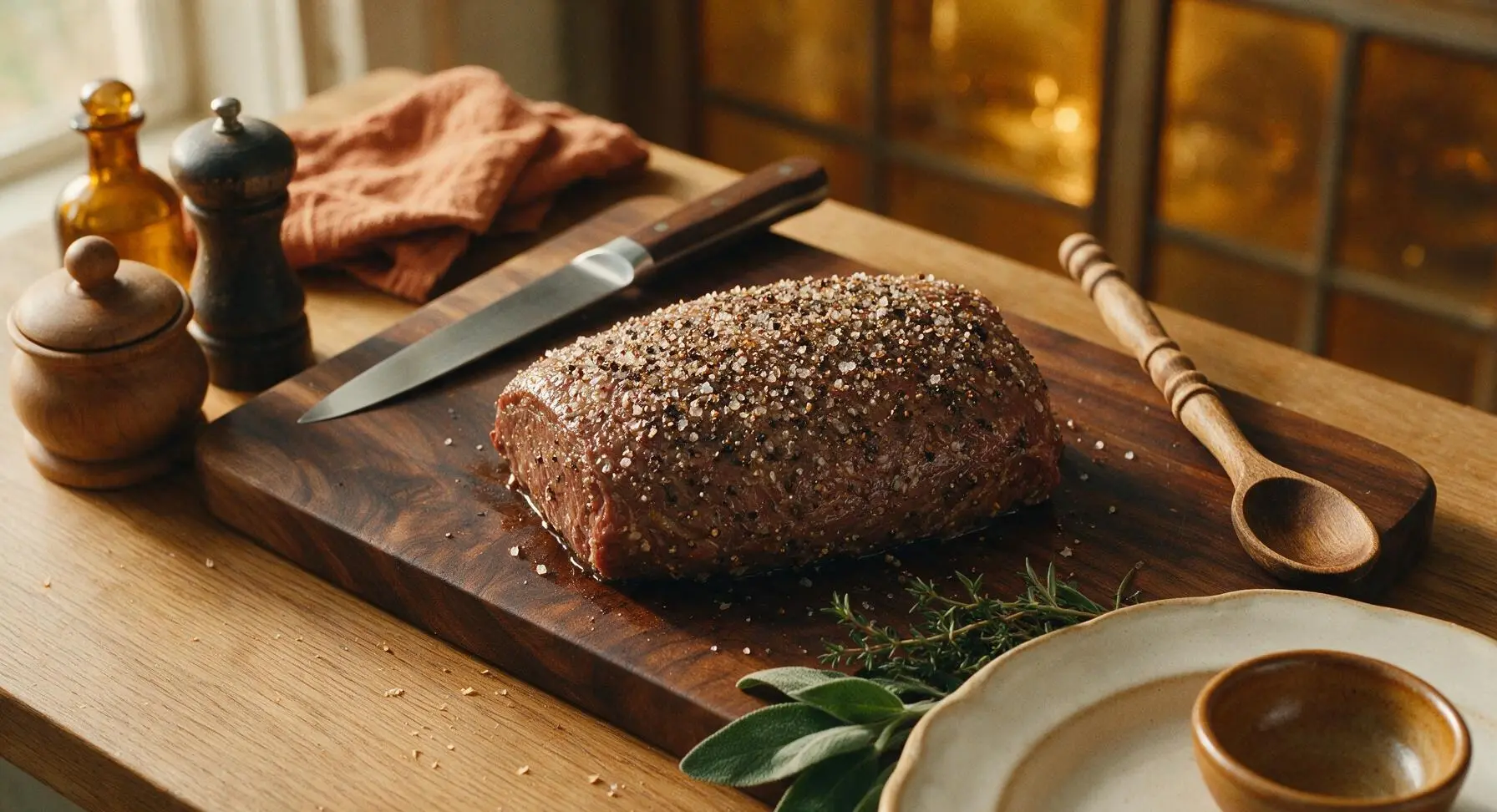
Drizzle 1 tablespoon of extra virgin olive oil over the entire roast, rubbing it into all surfaces with clean hands. Combine the kosher salt and freshly ground black pepper in the small stainless steel mixing bowl, then sprinkle the seasoning evenly over every side of the roast, pressing gently to help the rub adhere. The entire meat surface should be evenly coated, with no bare unseasoned patches.
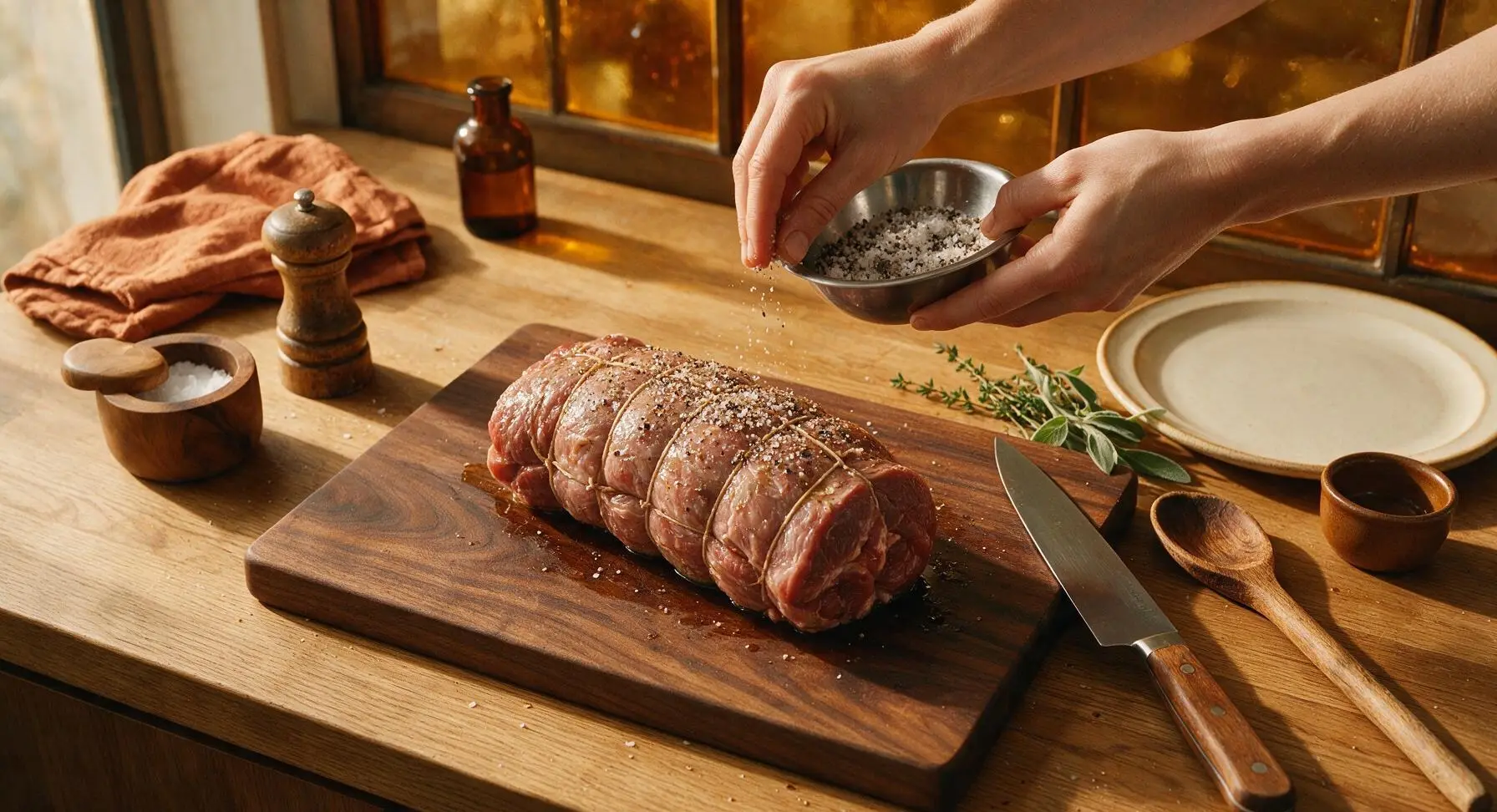
Step 2
step2:Season Roast Generously
Step 2
step2:Season Roast Generously
3

Sear All Roast Sides

Heat the remaining 2 tablespoons of olive oil in the pre-seasoned cast iron skillet over medium-high heat until the oil shimmers, approximately 3 minutes. Use the silicone-tipped stainless steel tongs to carefully lower the seasoned roast into the skillet, searing each side for 2-3 minutes until a deep golden-brown crust forms on every surface, including the cut ends. Total searing time is 10-12 minutes. Avoid moving the roast while searing each side to build a thick, flavorful crust.
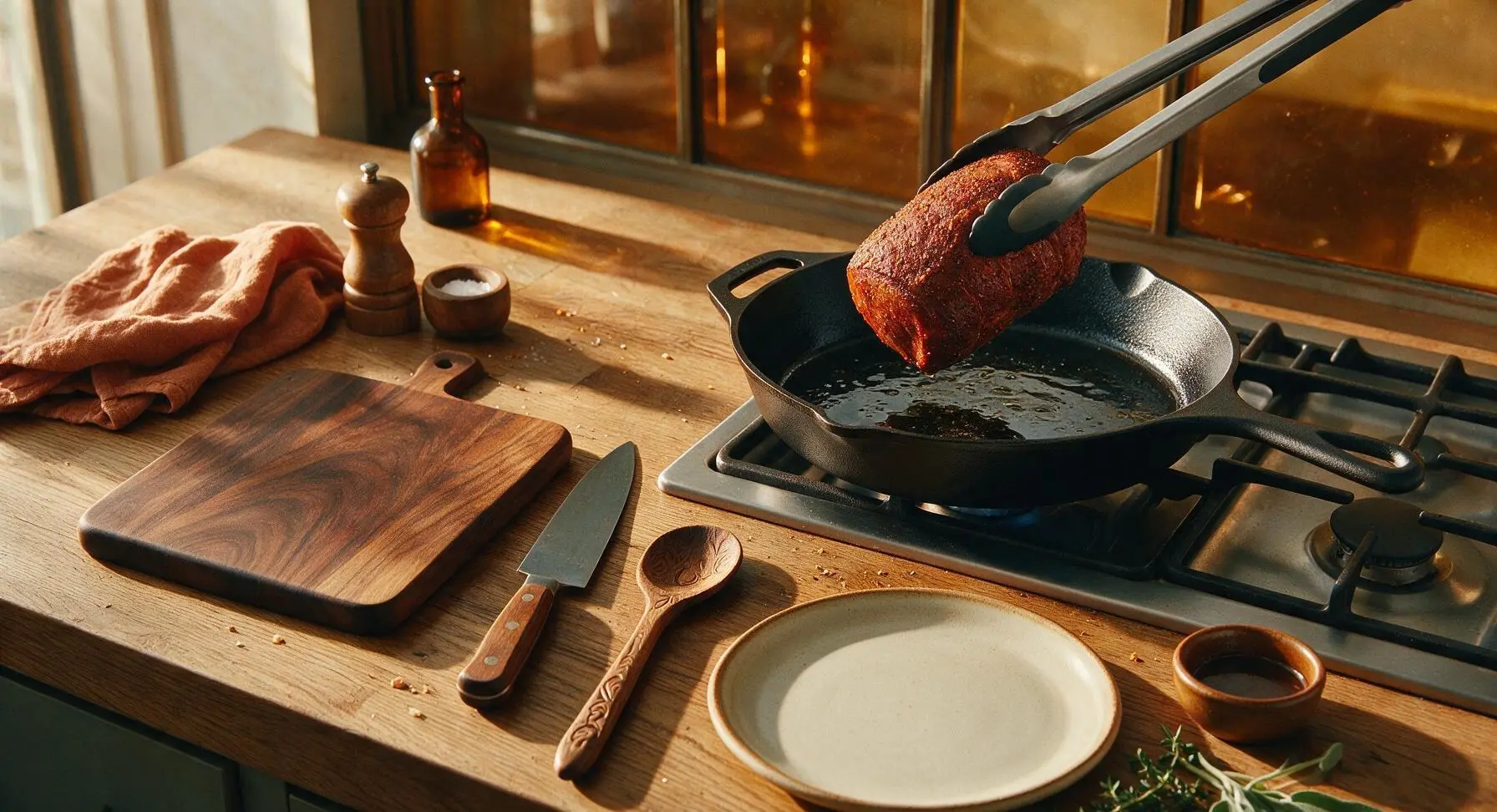
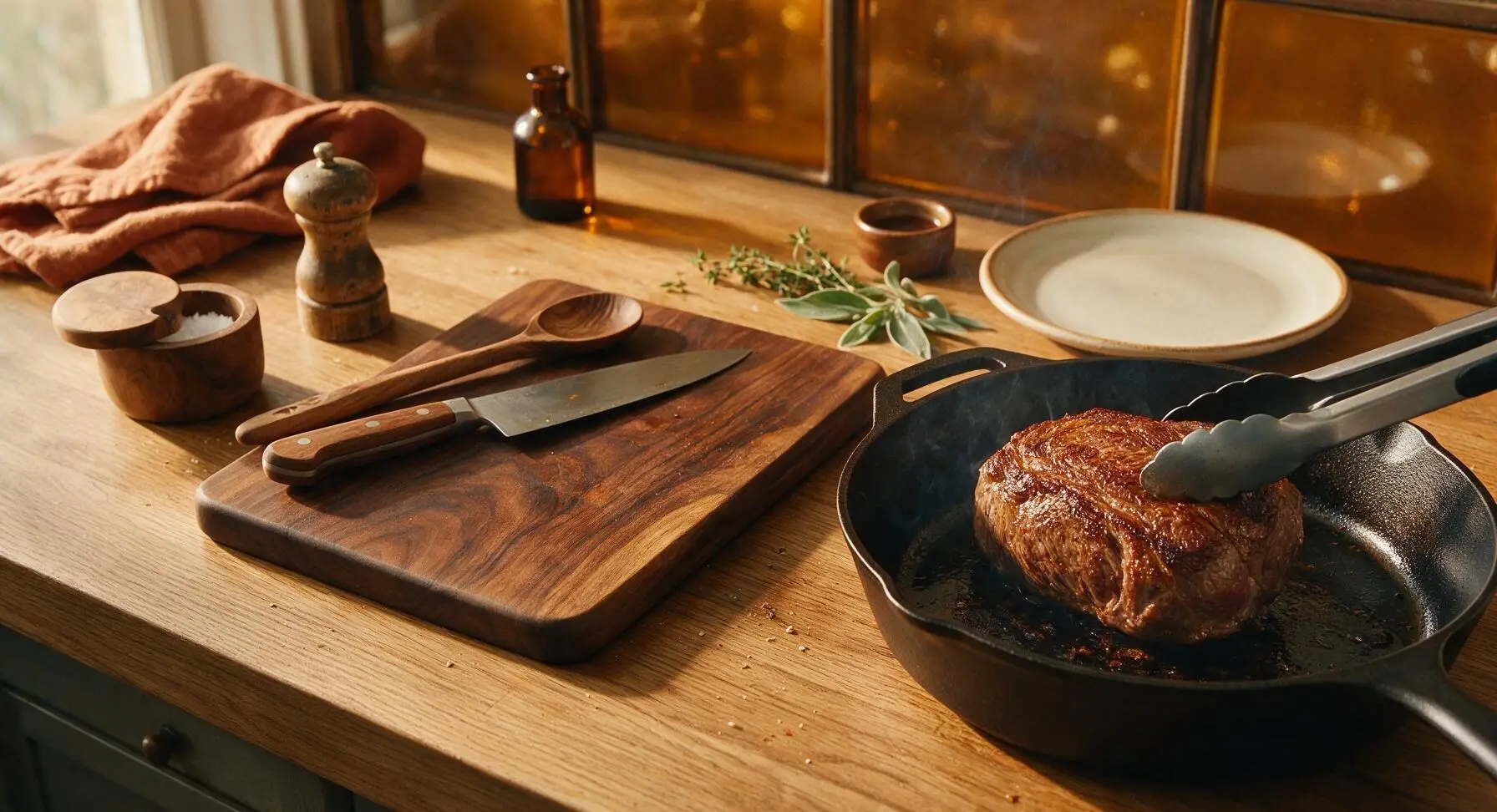
Step 3
step3:Sear All Roast Sides
Step 3
step3:Sear All Roast Sides
4

Add Aromatics and Roast

Preheat oven to 175C (350F). Transfer the seared roast to the wire rack set inside the stainless steel roasting pan. Tuck the crushed garlic cloves, rosemary sprigs, and thyme sprigs into the pan around the base of the roast. Pour the Chianti and beef broth into the bottom of the pan, taking care not to pour liquid directly over the seasoned roast surface (which would wash off the crust). Insert the dial meat thermometer into the thickest center portion of the roast, ensuring the probe does not rest against fat or the metal rack.
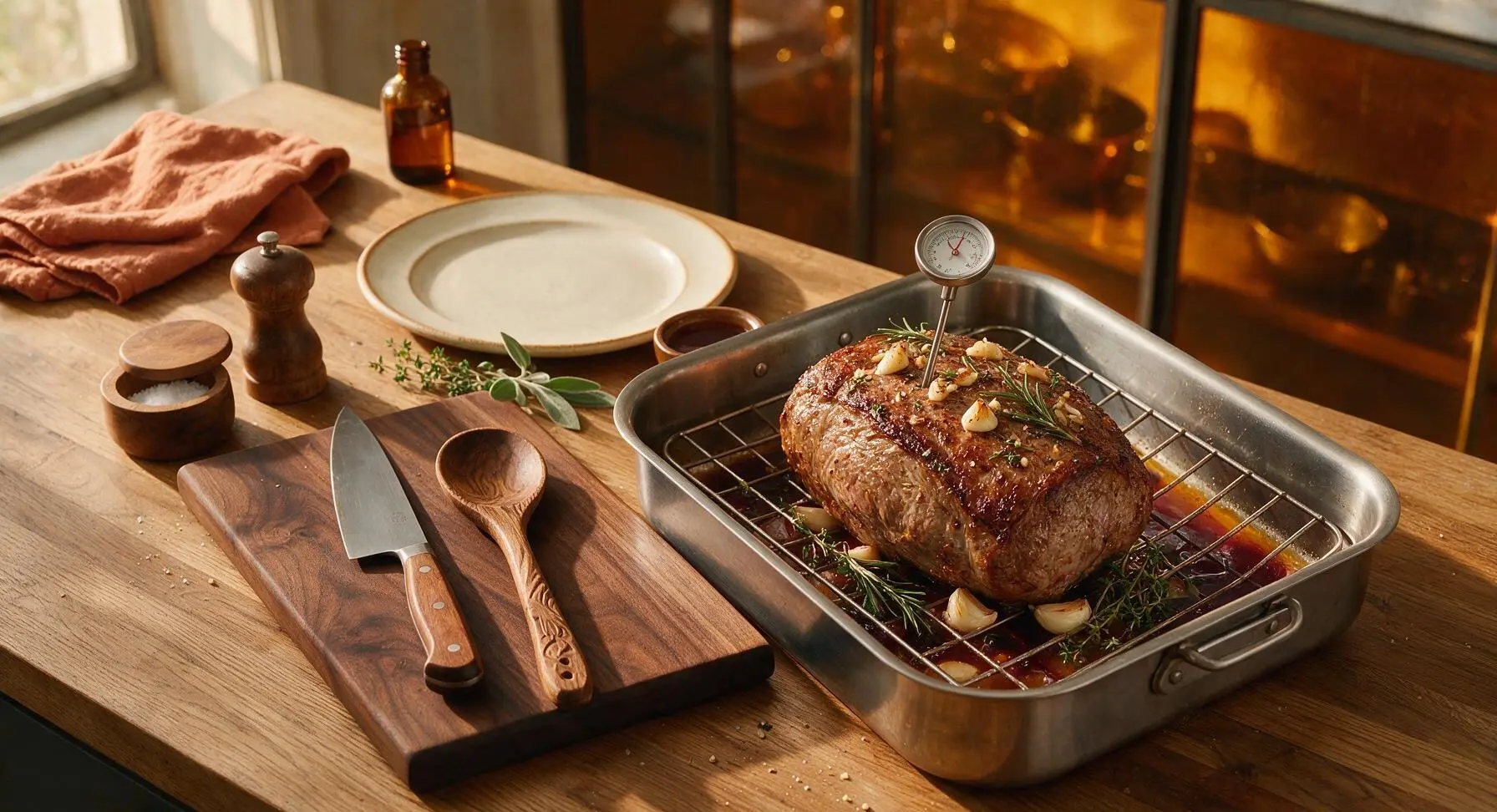
Step 4
step4:Add Aromatics and Roast
5

Roast to Target Temperature

Place the roasting pan in the preheated oven and cook for 55-65 minutes, until the meat thermometer reads 54C (130F) for medium-rare. The internal temperature will rise 5-7C (10-12F) during resting for a final 60C (140F) perfect medium-rare doneness. Do not open the oven door for the first 40 minutes of cooking to maintain consistent oven temperature. Avoid overcooking, as lean top round becomes tough if cooked past medium doneness.
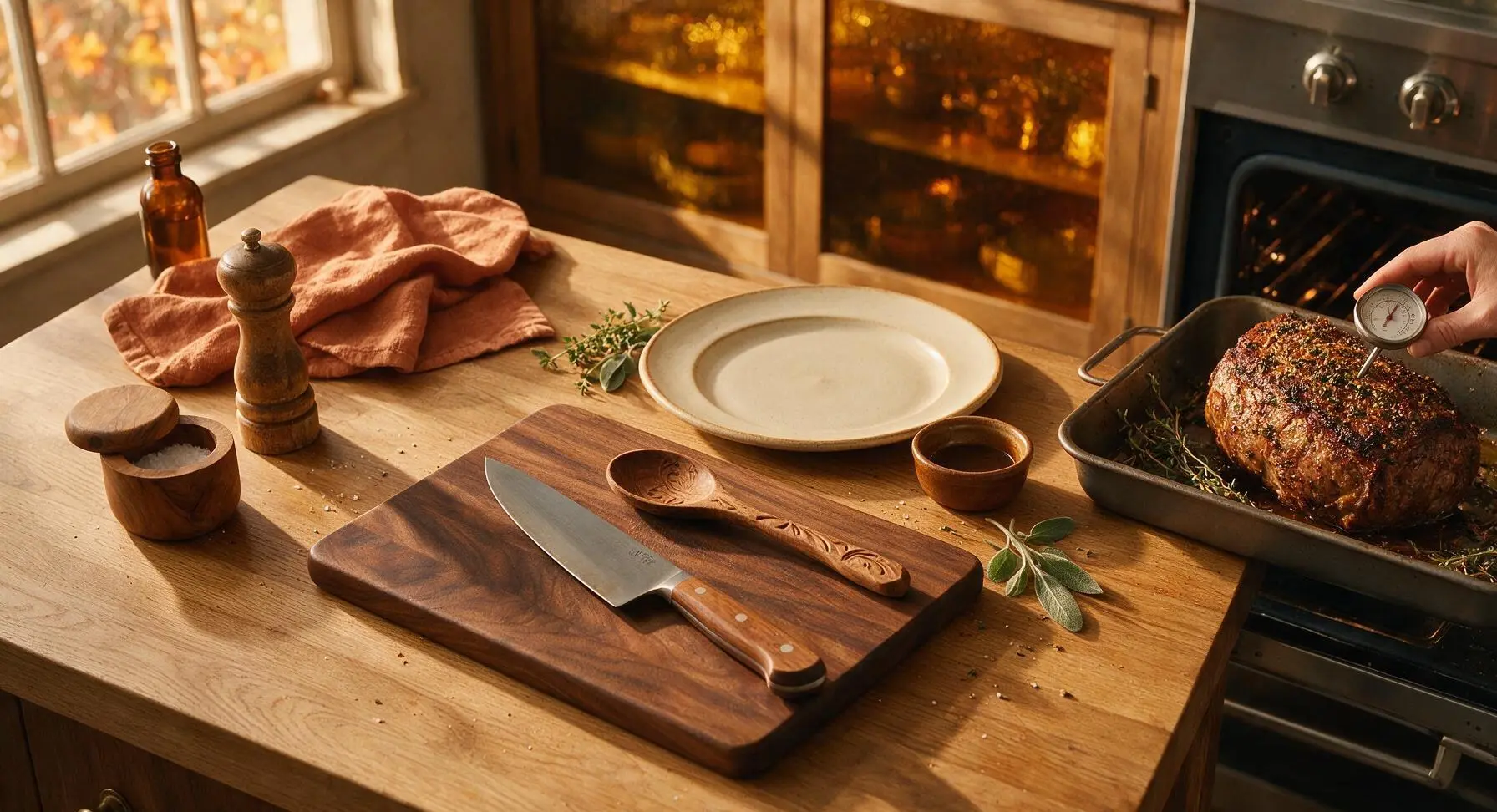
Step 5
step5:Roast to Target Temperature
6

Rest the Roast

Carefully transfer the cooked roast from the wire rack back to the acacia wood cutting board. Top the warm roast with the 2 tablespoons of unsalted butter, letting it melt and run down the sides. Loosely tent the roast with a sheet of aluminum foil, and let it rest for 25-30 minutes. Resting allows meat fibers to reabsorb juices, ensuring every slice is juicy instead of leaking liquid onto the plate when cut.
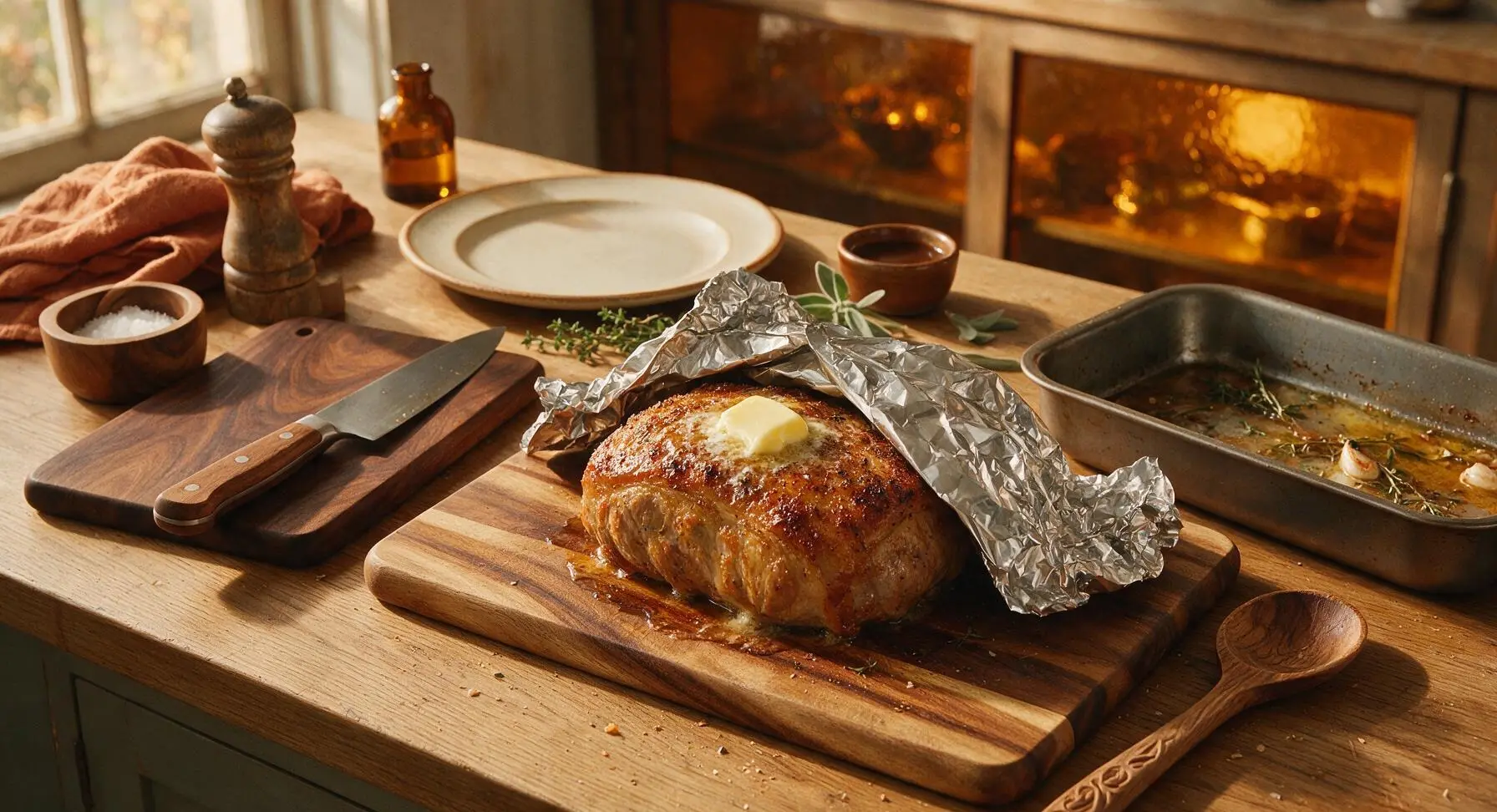
Step 6
step6:Rest the Roast
7

Make Red Wine Au Jus

While the roast rests, place the roasting pan across two stovetop burners over medium heat. Bring the pan drippings, wine, and broth to a gentle simmer, scraping up all browned fond bits from the pan bottom with the beech wood cooking spoon. Simmer for 5 minutes until the liquid is reduced by roughly one third, then strain through a fine sieve into the small matte off-white ceramic ramekin for serving. Discard the wilted herbs and spent garlic cloves.
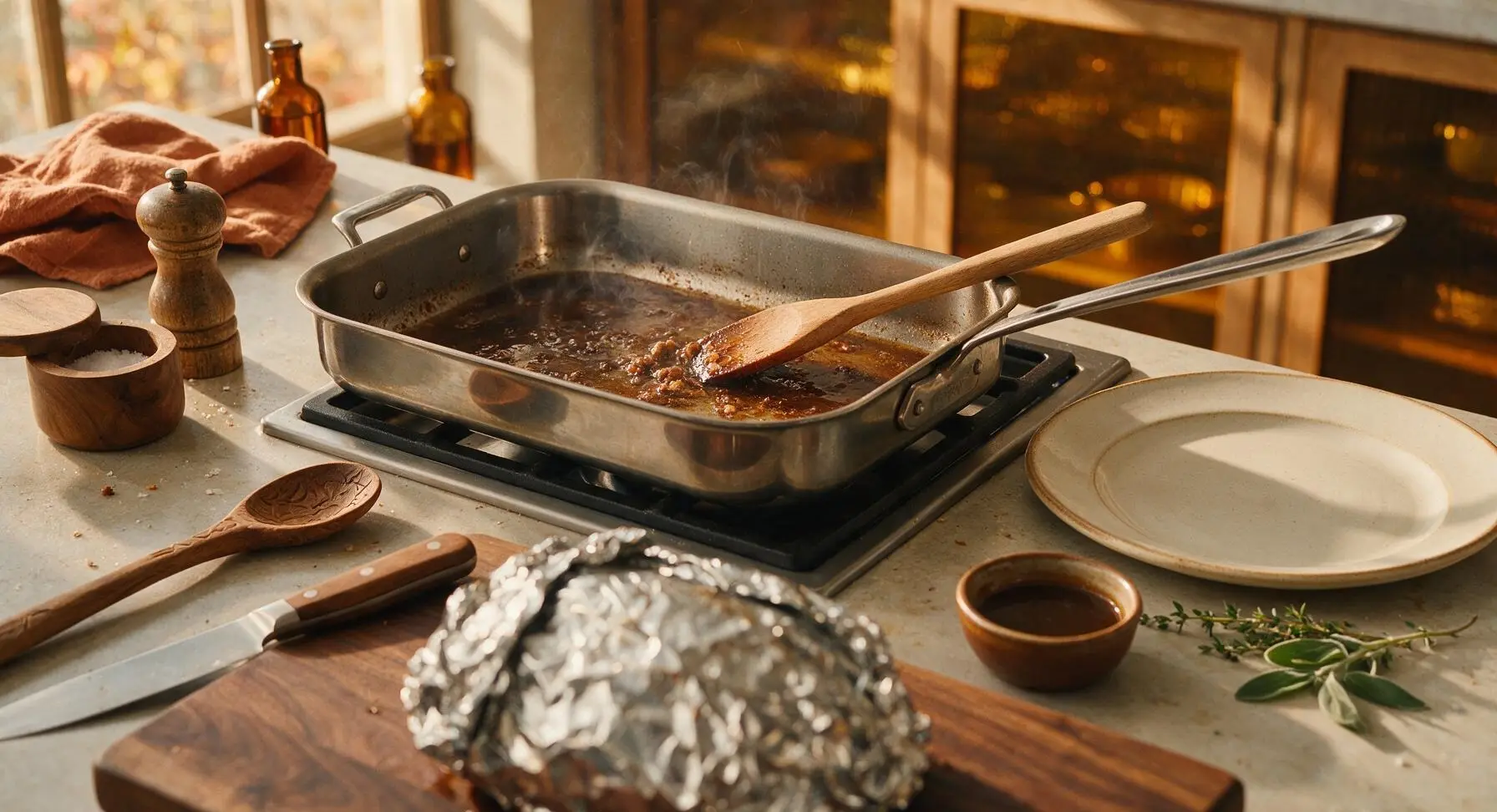
Step 7
step7:Make Red Wine Au Jus
8

Slice and Plate Roast

Remove and discard the kitchen twine from the rested roast. Use the carbon steel chef’s knife to slice the roast against the grain into 5mm (1/4 inch) thick, even slices. Fan the slices neatly on the large matte off-white ceramic serving platter, spoon a thin layer of au jus over the top, tuck a few caramelized garlic cloves and fresh rosemary sprigs for garnish, and serve with the remaining au jus on the side.
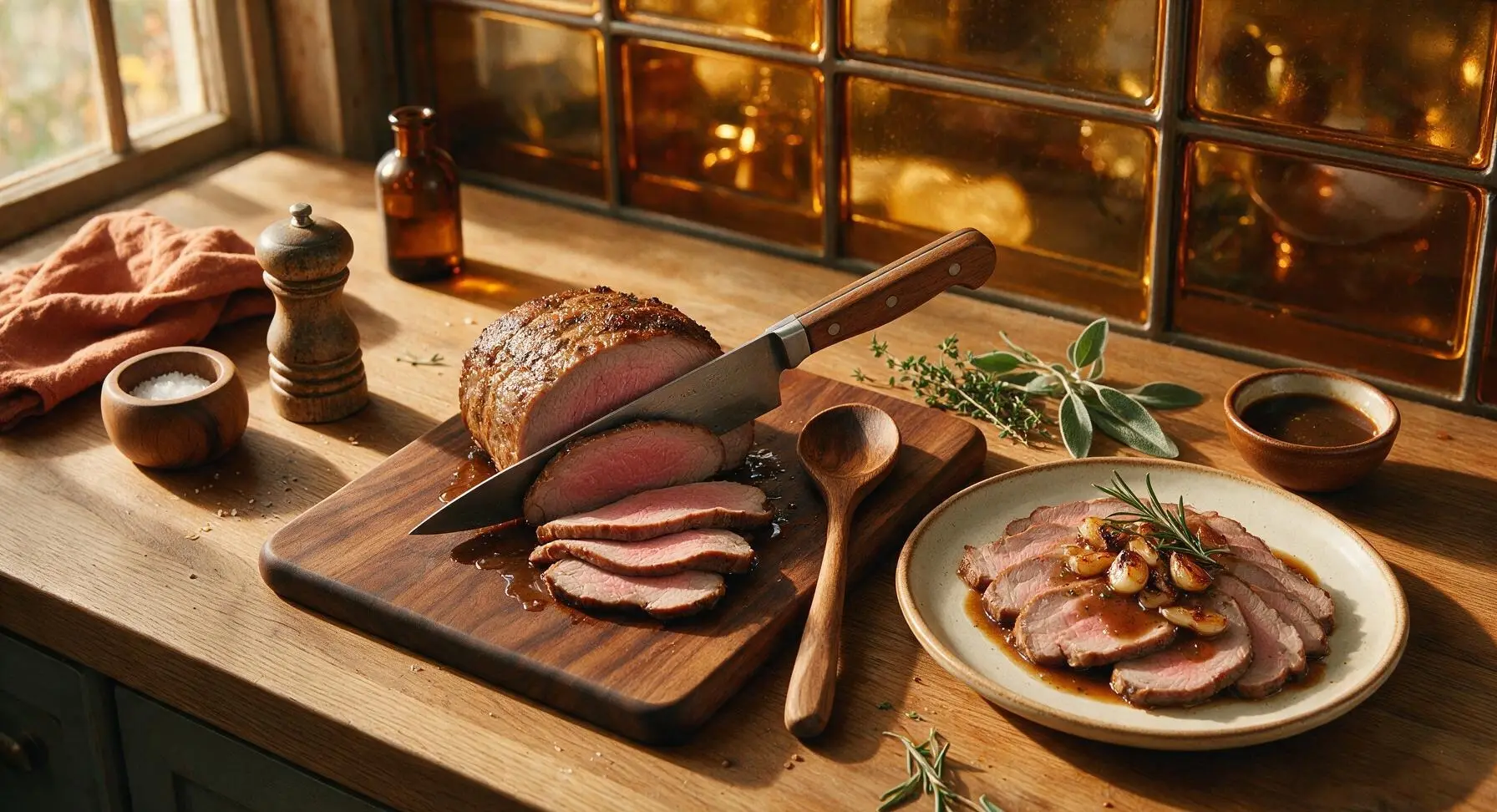
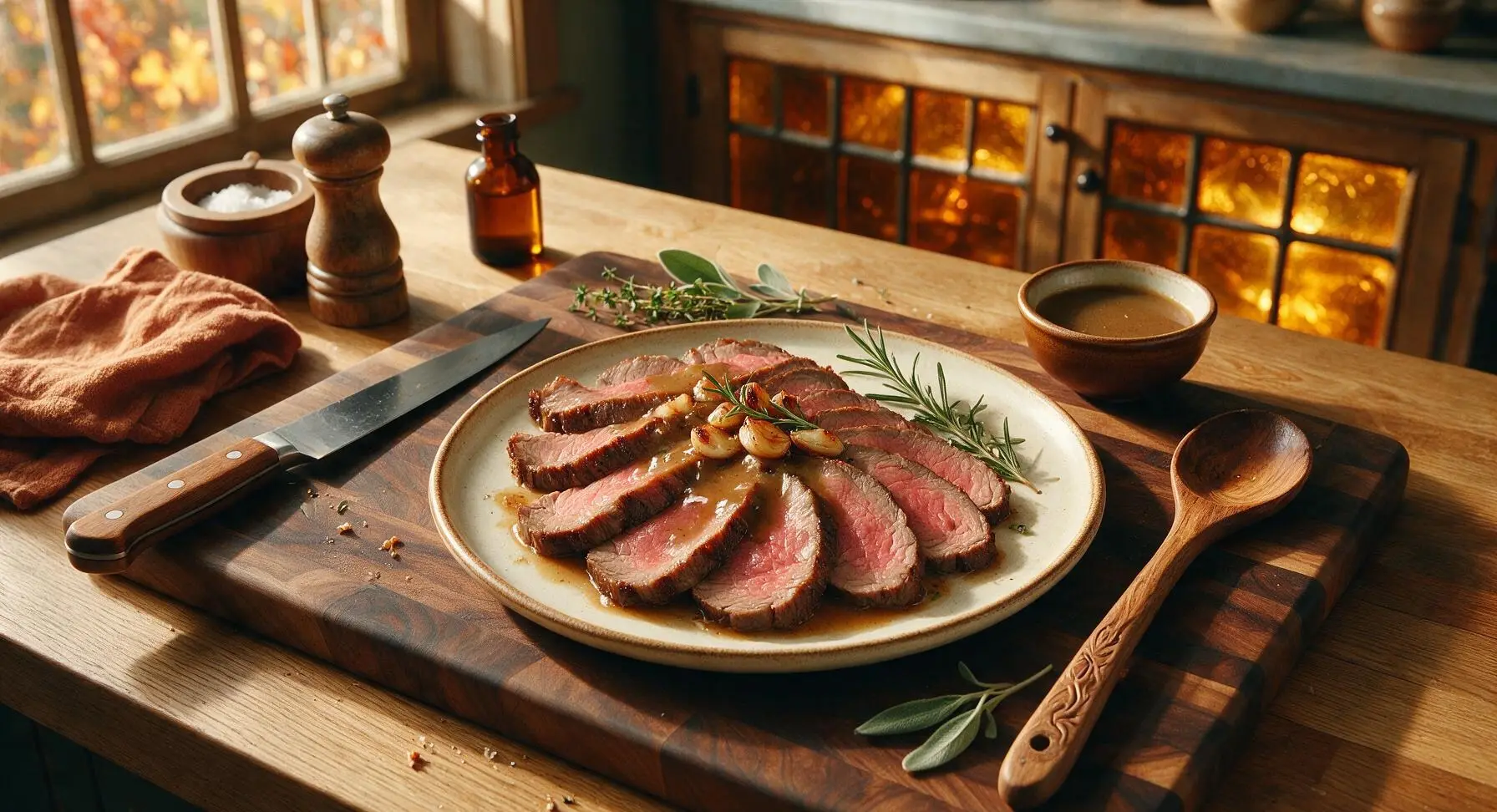
Step 8
step8:Slice and Plate Roast
Step 8
step8:Slice and Plate Roast

Tips

1.Pat the roast completely dry before searing: surface moisture creates steam that prevents the Maillard reaction, which is needed to form a deep, savory, golden crust on the meat.
2.Never cut roast immediately after cooking: the 25-30 minute rest period lets muscle fibers reabsorb juices, so slices stay juicy instead of leaking all their liquid onto the cutting board.
3.Slice against the grain into thin 5mm slices: top round is a lean, fibrous cut, so thin cuts across the muscle fibers will feel noticeably more tender than thick slices cut parallel to the grain.
✨ You May Also Like

Main Course
🍜 United Kingdom

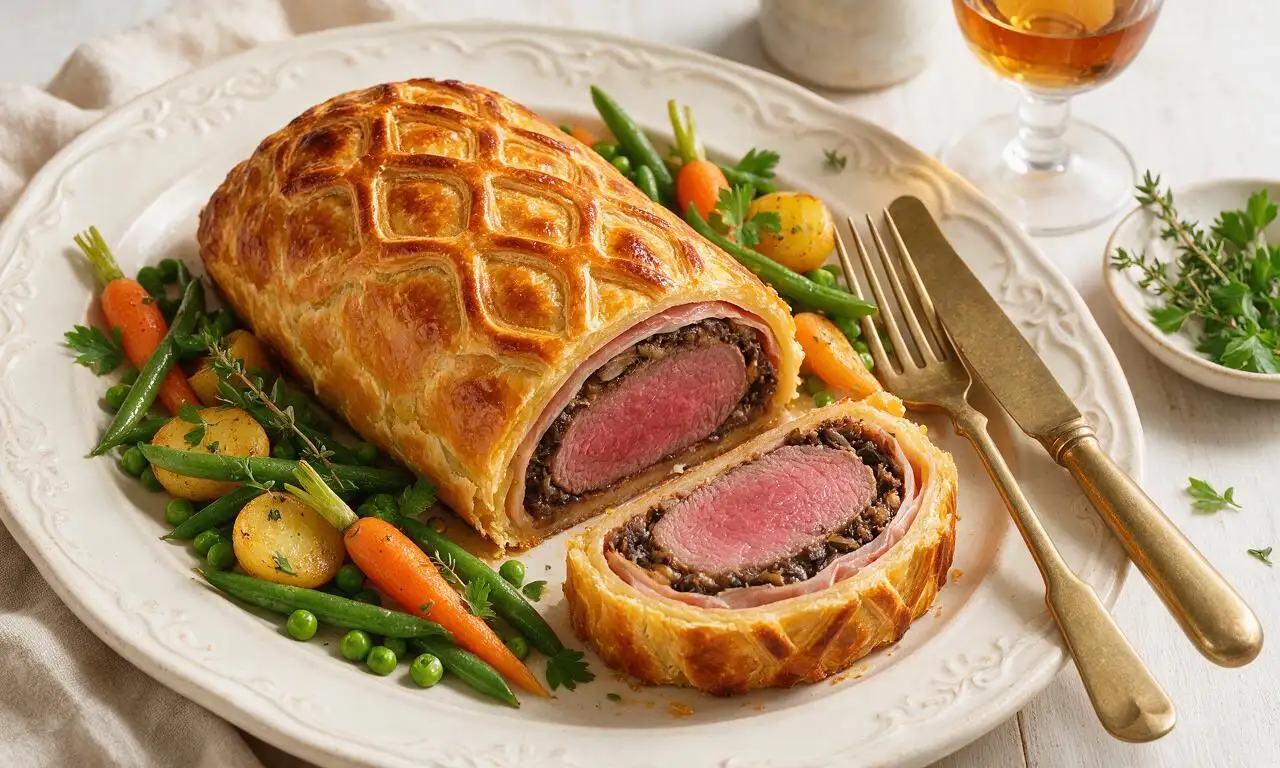
A showstopping classic of tender seared beef, savory mushroom duxelles, and crisp prosciutto wrapped in flaky golden puff pastry, baked to juicy perfection.

⏱️ 2 hours 1Main Course ★ 4.7
Main Course
🍜 India

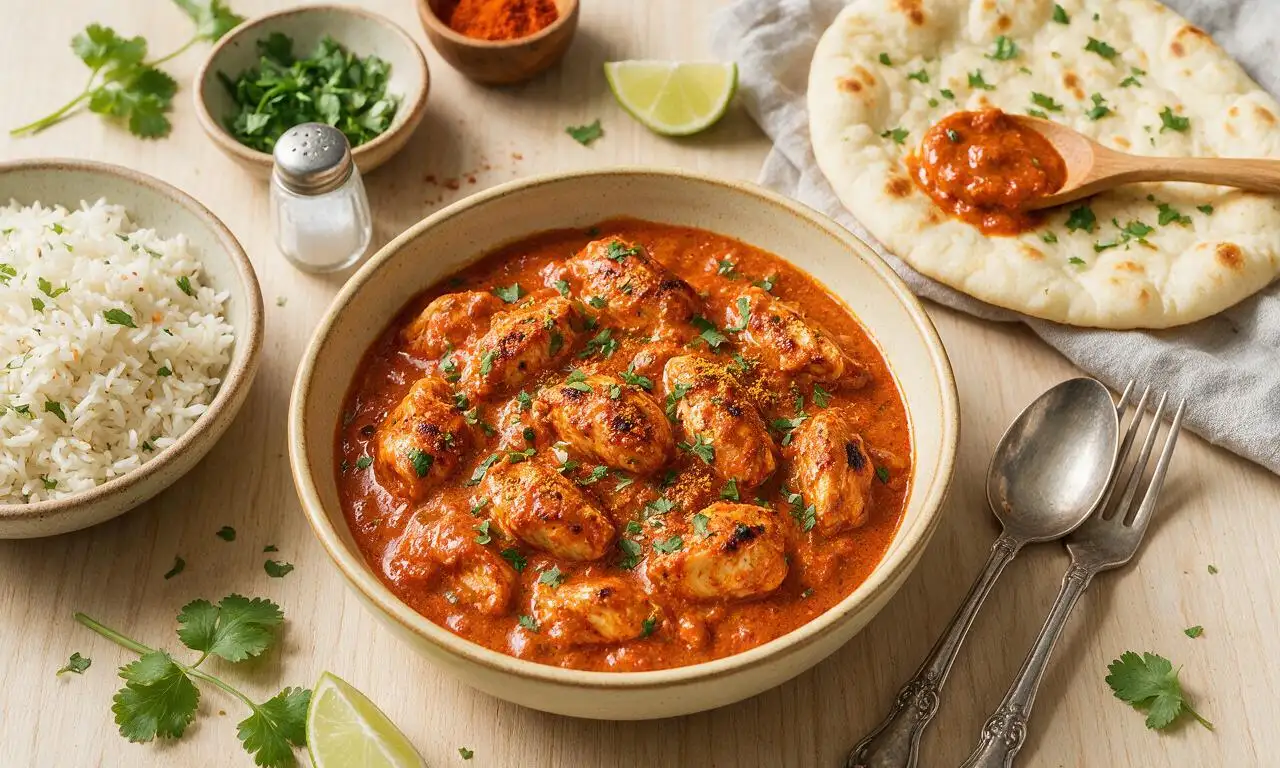
Tender charred marinated chicken simmered in a rich, spiced creamy tomato sauce, this iconic Anglo-Indian curry pairs perfectly with basmati rice or warm naan.

⏱️ 50 minuteMain Course ★ 4.6
Main Course
🍜 Thailand

Classic tangy, sweet, and savory Thai stir-fried rice noodles with shrimp, tofu, and crunchy garnishes, balancing all five core Thai flavor profiles.

⏱️ 30 minuteMain Course ★ 4.5
Main Course
🍜 United Kingdom

Crispy golden beer-battered cod and fluffy double-fried chips, served with tangy tartar sauce and malt vinegar: the timeless, beloved British pub comfort classic.

⏱️ 45 minuteMain Course ★ 4.7
Main Course
🍜 Mexico

Smoky, chile-marinated pork tacos with caramelized pineapple, fresh cilantro, and lime: a beloved classic Mexican street food perfect for casual summer gatherings.

⏱️ 1 hour 45Main Course ★ 4.8
Main Course
🍜 United States

Crunchy Fritos corn chips layered with savory beef chili and melted cheddar, topped with cool, zesty fixings for a beloved, cozy Tex-Mex comfort food.

⏱️ 35 minuteMain Course ★ 4.8

italian roast beef:Frequently Asked Questions

1.What cut of beef works best for this Italian roast beef recipe? ▾
Top round roast is the perfect pick for this recipe—it’s lean, affordable, and absorbs garlic and rosemary flavors beautifully without excess fat making the au jus greasy. If top round is unavailable, trimmed eye of round or bottom round are great, close-textured swaps that hold up well to slow roasting.
2.Can I use dried rosemary instead of fresh for the herb crust? ▾
You can use dried rosemary in a pinch, but use 1/3 the amount you would of fresh, since dried herbs are far more concentrated. Crush the dried rosemary between your fingers before mixing it with garlic and oil to release its aromatic oils, so it doesn’t leave tough, woody bits on the roast’s crisp crust.
3.How do I get a crispy, flavorful crust on my roast without overcooking the inside? ▾
Pat the roast completely dry with paper towels first, then rub it generously with oil, salt, pepper, and crushed garlic before searing it on all sides in a hot, heavy skillet for 2-3 minutes per side. That quick high-heat sear builds a deep, savory crust before you move the roast to lower heat to cook evenly through the center.
4.What kind of red wine should I use for the au jus? ▾
Stick to dry, medium-bodied Northern Italian reds like Chianti, Barbera, or Valpolicella for the most authentic, balanced flavor. Skip overly sweet cooking wines or super tannic, expensive collector bottles—you want a wine you’d happily drink a glass of, since its flavor will concentrate as the au jus simmers.
5.Do I really need to let the roast rest after cooking, and how long? ▾
Absolutely—resting is non-negotiable for juicy roast beef. Transfer the cooked roast to a cutting board, tent it loosely with foil, and let it rest for 15 to 20 minutes before slicing. This lets the muscle fibers relax and reabsorb flavorful juices, so they don’t run all over your cutting board when you cut into the roast.
6.What internal temperature should I cook the roast to for perfect medium-rare doneness? ▾
Aim to pull the roast out of the oven when its internal temperature hits 135°F at the thickest point (measured with an instant-read thermometer, avoiding any fat pockets) for perfect medium-rare. Remember, the temperature will rise 5 to 10°F as it rests, landing you at a juicy 140 to 145°F final temp.
7.Can I make this roast ahead of time for a winter family gathering? ▾
You can prep the herb crust and rub it on the roast up to 24 hours ahead, keeping it covered in the fridge to let garlic and herb flavors sink in. For best results, cook the roast the day you plan to serve it—reheated roast tends to dry out easily, though you can make the au jus 2 days ahead and reheat it gently.
8.How thin should I slice the finished roast beef for serving? ▾
Slice the rested roast as thinly as you can, against the grain, ideally 1/8 to 1/4 inch thick. Slicing against the grain shortens the long muscle fibers, making even lean top round feel tender instead of chewy. A sharp slicing knife or electric knife makes this job far easier, especially for larger roasts.
9.My au jus tastes too bitter—what went wrong, and how can I fix it? ▾
Bitter au jus usually comes from burning the garlic or pan drippings when searing the roast, or using an overly tannic, young wine. Fix it by stirring in a tiny pinch of sugar or a splash of low-sodium beef broth, tasting as you go, to balance bitterness without making the jus sweet. Strain out any burnt bits before serving.
10.Can I make this recipe without wine for a non-alcoholic version? ▾
Absolutely. Swap the red wine for an equal amount of low-sodium beef broth mixed with 1 tablespoon of balsamic vinegar and 1 teaspoon of unsweetened red grape juice to mimic the wine’s depth and bright acidity. Simmer it the same way, scraping up all browned pan bits to build that rich, savory flavor.
11.Should I cook the roast on a rack, or directly in the roasting pan? ▾
Cooking the roast on a wire rack set inside your roasting pan is ideal, because it lets hot air circulate evenly around every side for consistent cooking, and keeps the bottom of the roast from getting soggy sitting in drippings. If you don’t have a rack, prop the roast up on thick-cut carrot and celery sticks instead.
12.How much roast should I plan per person for a gathering? ▾
Plan for 1/2 pound of raw top round roast per person, which works out to roughly 6 to 8 ounces of cooked, sliced beef per guest. If you want leftovers for sandwiches the next day (which I highly recommend), bump that up to 3/4 pound per person to account for cooking shrinkage and hearty winter appetites.
13.Can I add other herbs to the crust besides rosemary and garlic? ▾
Of course! Fresh thyme, oregano, or a tiny bit of chopped sage all pair beautifully with the Northern Italian flavor profile. Just keep the total amount of fresh herbs to around 2 tablespoons for a 3 to 4 pound roast, so you don’t overpower the bright, earthy rosemary and garlic that defines this dish.
14.Why did my roast beef turn out tough and chewy? ▾
Tough roast beef almost always comes from one of three missteps: cooking it at too high a heat, slicing it with the grain instead of against it, or skipping the post-cook resting step. For tender results, roast low and slow at 325°F, slice paper-thin against the grain, and always give it that full 15-20 minute rest before serving.
15.What sides pair best with this Italian roast beef and red wine au jus? ▾
Creamy polenta, roasted rosemary potatoes, garlicky sautéed broccoli rabe, or crusty Italian bread to soak up extra au jus are all classic Northern Italian pairings. For a cozy winter spread, add a bright arugula salad with lemon vinaigrette to cut through the richness of the beef and savory jus.
16.Can I use leftover au jus for other meals? ▾
Definitely! Leftover au jus is amazing for dipping roast beef sandwiches, stirring into soups or stews for extra depth, or drizzling over roasted veggies. Store it in an airtight container in the fridge for up to 4 days, or freeze it for up to 3 months—just skim off any solidified fat from the top before reheating.
17.Do I need to truss the roast before cooking? ▾
If your top round roast is an uneven, lopsided shape, trussing it with kitchen twine at 2-inch intervals will help it cook evenly, so the thinner ends don’t overcook before the thick center reaches temperature. If your roast is already a uniform, even shape, you can skip trussing entirely and it will turn out just fine.
18.How do I keep garlic from burning on the roast crust? ▾
Crush the garlic into a coarse paste instead of slicing it thin, and mix it with the olive oil, salt, pepper, and rosemary before rubbing it on the roast, so it adheres evenly instead of falling off into the hot pan. Keep your initial sear heat to medium-high instead of blazing hot, so the garlic toasts golden instead of turning black and bitter.

Comments (10)

2 days ago

OMG made this for our Sunday family dinner last night and everyone went back for seconds! The red wine au jus is SO good, I dipped every bite of my roast in it. Even my super picky 10 year old said it’s better than the roast we get at our local Italian spot. Total game changer for our weekly meal rotation!

1 day ago

Wait did you use a chuck roast or top round for this? I’m grabbing groceries after work and want to make sure I pick the right cut!

18 hours ago

Great question! We recommend a top round roast for this recipe—it holds up beautifully to the slow roast and stays tender when sliced thin for dipping, though a well-marbled chuck works too if you prefer a shreddable, fall-apart texture!

3 days ago

Made this for a neighborhood potluck over the weekend and got so many recipe requests! My only note is that I had to cook mine about 15 minutes longer than the recipe said to hit the right medium rare temp, probably because my oven runs a little cool. The au jus was chef’s kiss though, will definitely make again.

2 days ago

So glad it was a hit at the potluck! Oven temps can vary so much between models, so using a meat thermometer to check for 135°F internal temp for medium rare is always the best bet—great call adjusting the cook time to match your oven!

1 week ago

Added this to my weekly meal prep rotation! I sliced the roast thin on Sunday, portioned it out with roasted veggies and mashed potatoes, and drizzled a little extra au jus over each container. It reheated perfectly all week, no tough or dry bits at all. 10/10 would recommend for anyone who hates boring weekday lunches!

5 days ago

Flavor was great, but I struggled a little with the au jus—mine turned out a bit thinner than I expected even after letting it simmer, and it had a really strong wine taste that overpowered the beef a little for my taste. Did I do something wrong?

4 days ago

I had that issue the first time I made it too! I let it simmer an extra 8 minutes and stirred in a tiny cornstarch slurry (like 1 tsp cornstarch mixed with cold water) and it thickened right up, and the extra cook time mellowed out the wine taste so much!

3 days ago

Great tip from HomeCookHero! If you prefer a thicker au jus, that quick cornstarch slurry works perfectly, and simmering a few extra minutes helps cook off the sharp raw wine flavor to leave that deep, fruity red wine note. Next time you can also try using a drier, less tannic red like a Chianti for a smoother, less overpowering flavor!

yesterday

My kids loved it! I was worried the red wine flavor would be too grown up for them, but once it cooked down it was just rich and savory, no weird bitter taste. Served it with crusty garlic bread to soak up all the extra au jus and there were zero leftovers. Will 100% be making this for our Christmas dinner this year!

12 hours ago

That makes us so happy to hear! Crusty garlic bread on the side is such a perfect call—nothing beats sopping up that extra au jus. We hope it’s a total hit at your Christmas dinner too!

2 weeks ago

Solid recipe! Made this after a long day hike last weekend, it was the perfect hearty post-adventure meal. I skipped the fresh rosemary because I forgot to pick it up at the store and used dried instead, and it still turned out great. Next time I’ll remember the fresh herbs for that extra pop of flavor though.

5 days ago

Dried rosemary is such a good backup! I’ve done that too when my grocery run was rushed, no one at my table could tell the difference. I bet this would be amazing for a post-ski meal too, saving this for our winter cabin trip!

2 hours ago

SO good! I’ve tried a handful of Italian roast beef recipes over the years and this one is hands down the best. The rub for the beef has the perfect amount of garlic and oregano, it doesn’t overpower the meat at all. My husband already asked me to make it again for his birthday next month.

30 minutes ago

I’m still pretty new to cooking roasts and I messed this up pretty bad 😅 My roast came out really tough, and I burned the bits at the bottom of the pan so my au jus tasted bitter. I want to try again but I’m nervous I’ll mess it up a second time!

20 minutes ago

Don’t give up! I did the exact same thing my first time making roast beef! Make sure your oven temp isn’t cranked too high, and don’t scrape the really dark burnt bits when you’re making the au jus—only the golden brown fond at the bottom of the pan, that’s where all the good, non-bitter flavor is!

10 minutes ago

We’re sorry your first go-round didn’t turn out as planned! The key to tender roast is cooking it low and slow, and making sure you don’t take the pan drippings too far when you’re building the au jus—if the bits look black and smell acrid or burnt, leave them behind. We recommend searing the roast on medium heat before roasting to get that nice golden fond without burning it, and checking the internal temp regularly so it doesn’t overcook. You’ve got this next time!

5 minutes ago

Made this with a grass fed beef roast I got from our local farm stand and it was incredible! The au jus was so rich and flavorful, I didn’t even need to add any extra salt or seasoning at the table. Served it with roasted broccoli and parmesan polenta, it felt like a fancy restaurant meal at half the cost.

just now

Love that you used local grass fed beef for this! That deep, beefy flavor from local pasture-raised meat pairs so perfectly with the red wine au jus, and parmesan polenta on the side sounds absolutely divine—we might have to steal that serving suggestion for a future post!

just now

Brought this to my office potluck today and people were literally lining up to get a serving! I made little slider buns with thin slices of the roast, a side cup of au jus for dipping, and a sprinkle of spicy giardiniera for a little kick, and they were gone in 10 minutes flat. Already sent the recipe link to half my coworkers who were begging for it!