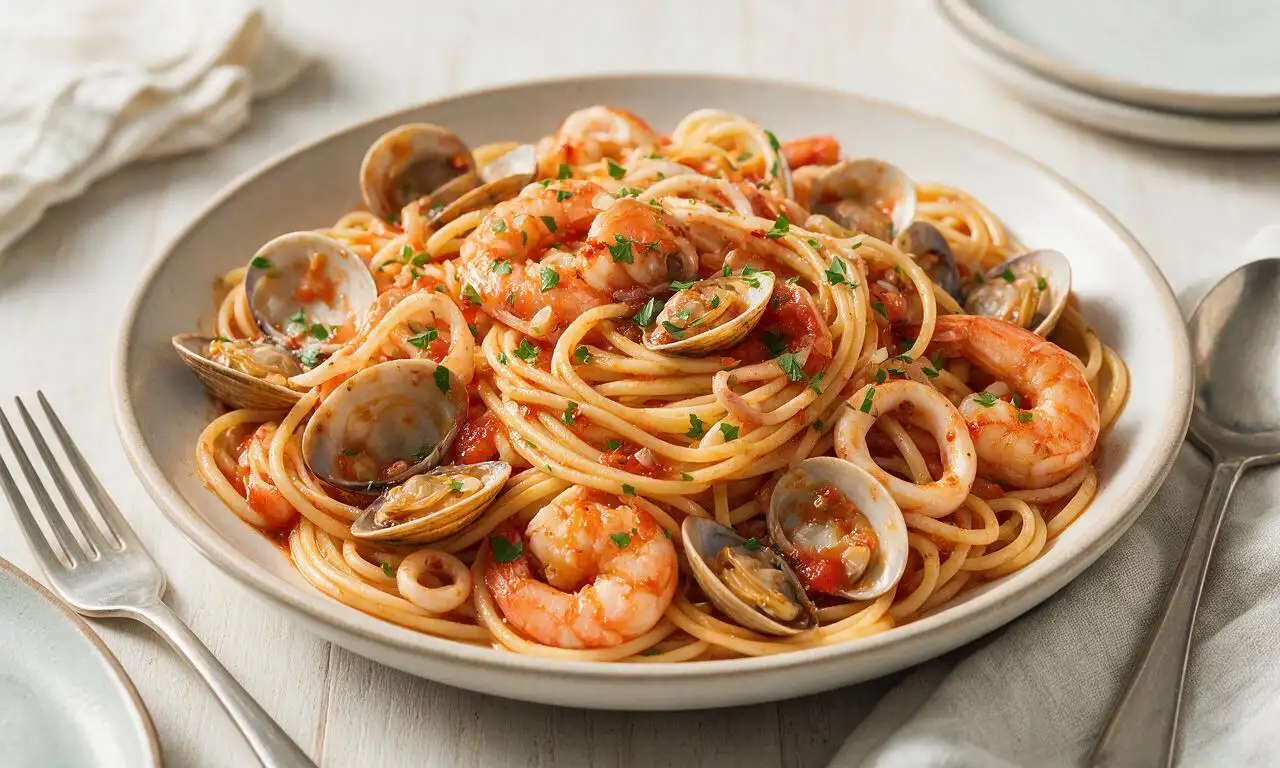
Pasta Frutti di Mare

title 1
Pasta Frutti di Mare
⏱️ cook time 35 minutes
🍽️ servings 4
⚡ Difficulty medium

intro

Bright, briny coastal pasta tossed with tender mixed seafood, garlicky white wine-tomato sauce, and al dente spaghetti, finished with fresh parsley and a hint of chili.

Ingredients

Dried spaghetti 400g
Large raw shrimp (peeled, deveined, tails optional) 200g
Cleaned calamari (sliced into 1cm rings, tentacles reserved) 150g
Littleneck clams (scrubbed, debearded) 200g
Blue mussels (scrubbed, debearded) 200g
Extra-virgin olive oil 60ml (1/4 cup)
Garlic (thinly sliced) 30g (about 8 cloves)
Crushed red pepper flakes 1 teaspoon
Dry white wine (Pinot Grigio or Sauvignon Blanc) 180ml (3/4 cup)
Canned crushed San Marzano tomatoes 200g (3/4 cup)
Unsalted butter 28g (2 tablespoons)
Fresh flat-leaf parsley (chopped, plus extra for garnish) 15g (1/4 cup packed)
Kosher salt 2 tablespoons + 1 teaspoon
Freshly ground black pepper 1/2 teaspoon
Fresh lemon (cut into wedges for serving) 1 whole (about 100g)

Steps

1

Boil Pasta in Salted Water

Bring 4 liters (1 gallon) of heavily salted water (mixed with 2 tablespoons kosher salt, to taste like seawater) to a rolling boil over high heat. Once boiling, add 400g dried spaghetti, stir immediately to prevent sticking, and cook for 2 minutes less than the package’s listed al dente time (approximately 8 minutes for standard dried spaghetti), as the pasta will finish cooking in the sauce. Reserve 120ml (1/2 cup) of starchy pasta water before draining; do not rinse the drained pasta.
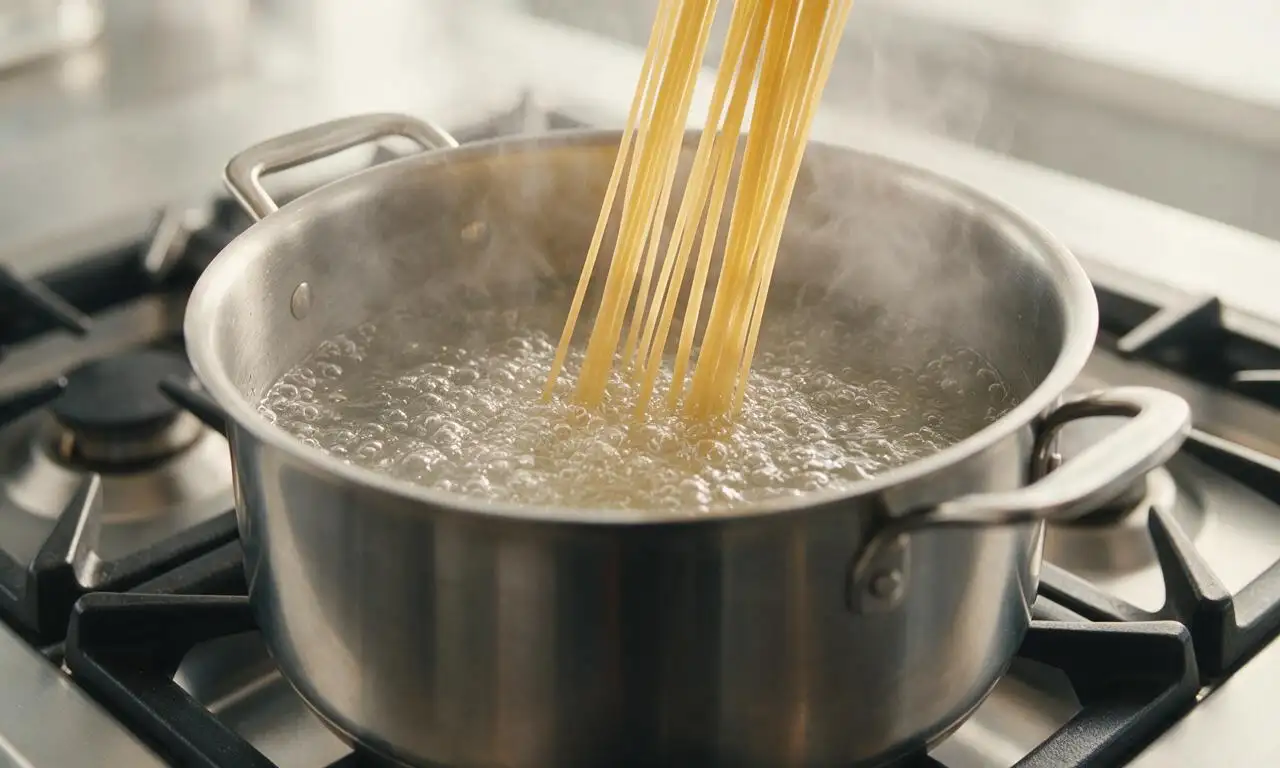
Step 1
step1:Boil Pasta in Salted Water
2

Sauté Garlic and Pepper Flakes

While pasta cooks, heat 60ml (1/4 cup) extra-virgin olive oil in a large, deep 12-inch skillet over medium-low heat. Add 30g thinly sliced garlic and 1 teaspoon crushed red pepper flakes, sautéing for 1 minute until garlic is fragrant and pale golden, watching closely to avoid burning (burnt garlic creates a bitter sauce).
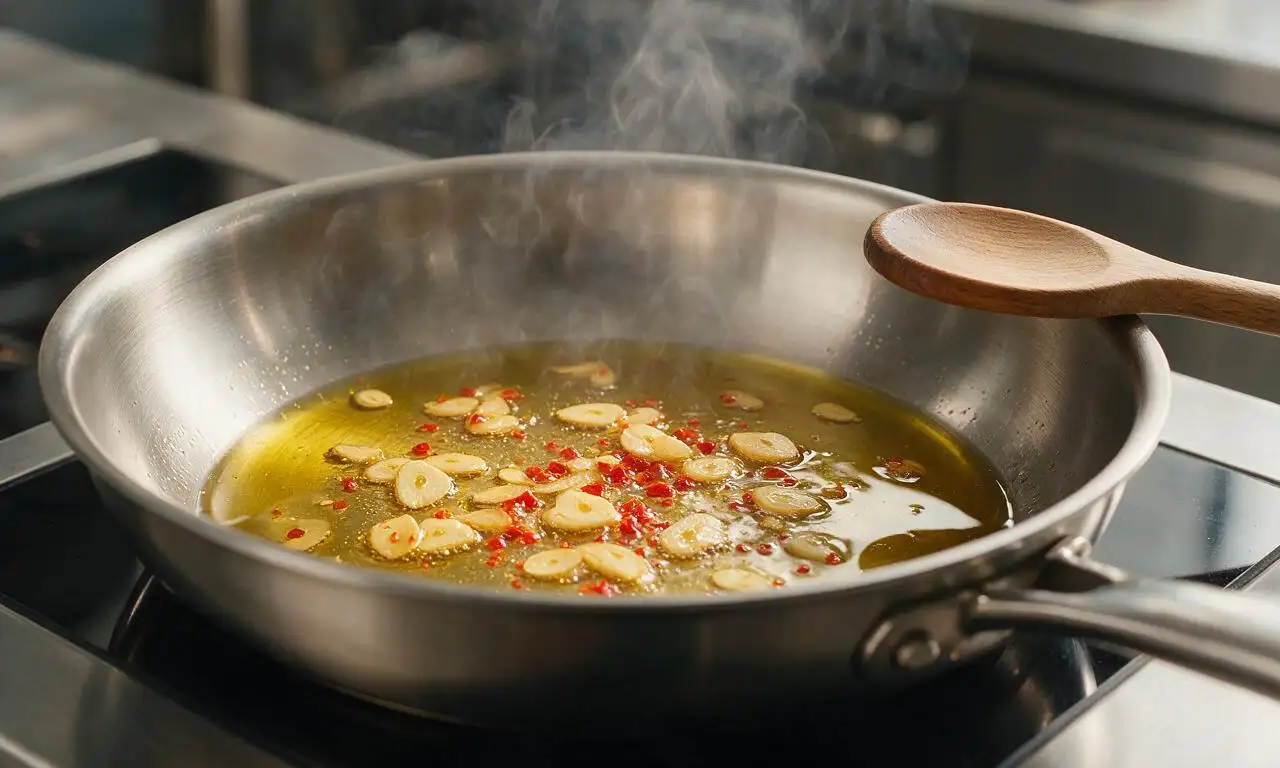
Step 2
step2:Sauté Garlic and Pepper Flakes
3

Reduce Wine and Add Tomatoes

Increase heat to medium, pour in 180ml (3/4 cup) dry white wine, bring to a gentle simmer, and cook for 3 minutes to reduce the wine by half and cook off raw alcohol flavor. Stir in 200g crushed San Marzano tomatoes, 1 teaspoon kosher salt, and 1/2 teaspoon freshly ground black pepper, mixing to combine, and return to a low simmer.
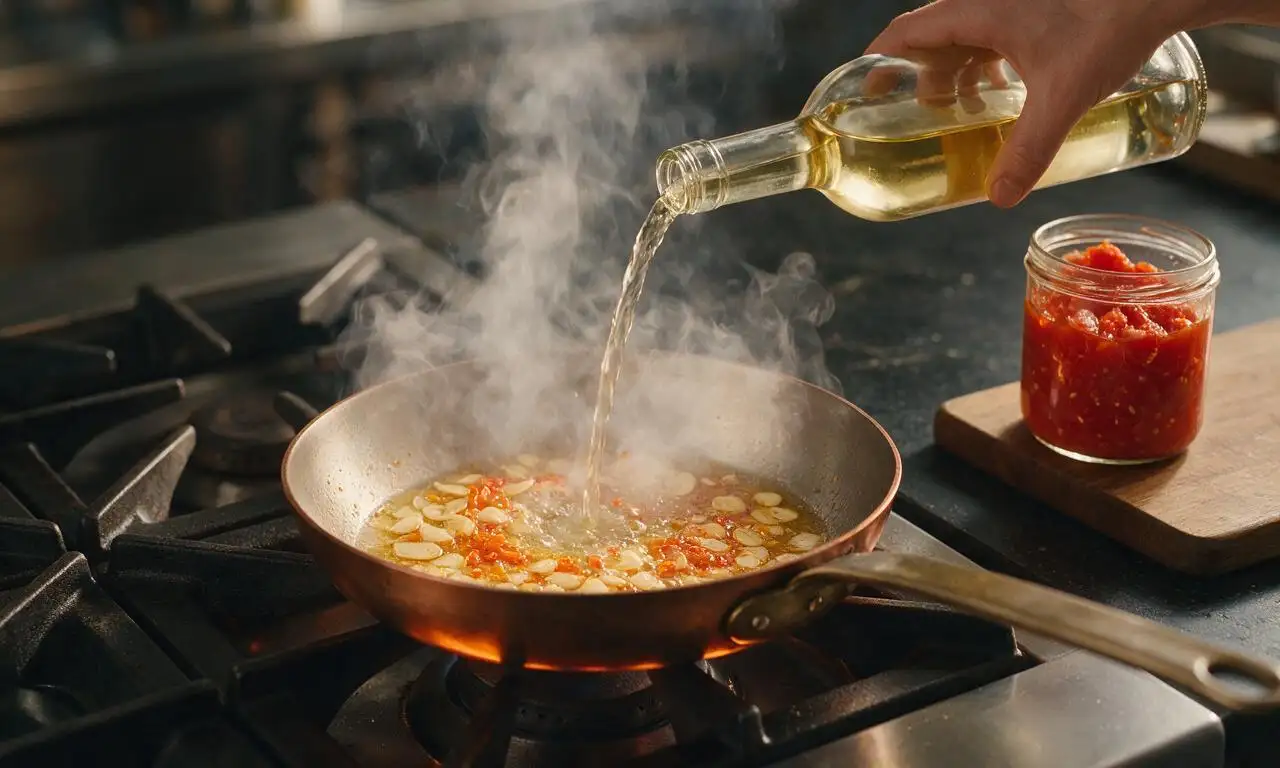
Step 3
step3:Reduce Wine and Add Tomatoes
4

Steam Clams and Mussels

Add 200g scrubbed littleneck clams and 200g scrubbed debearded mussels to the simmering sauce, cover with a tight-fitting lid, and cook for 3 minutes over medium heat until shells just begin to open. Discard any shellfish that remain fully closed after this cooking time.
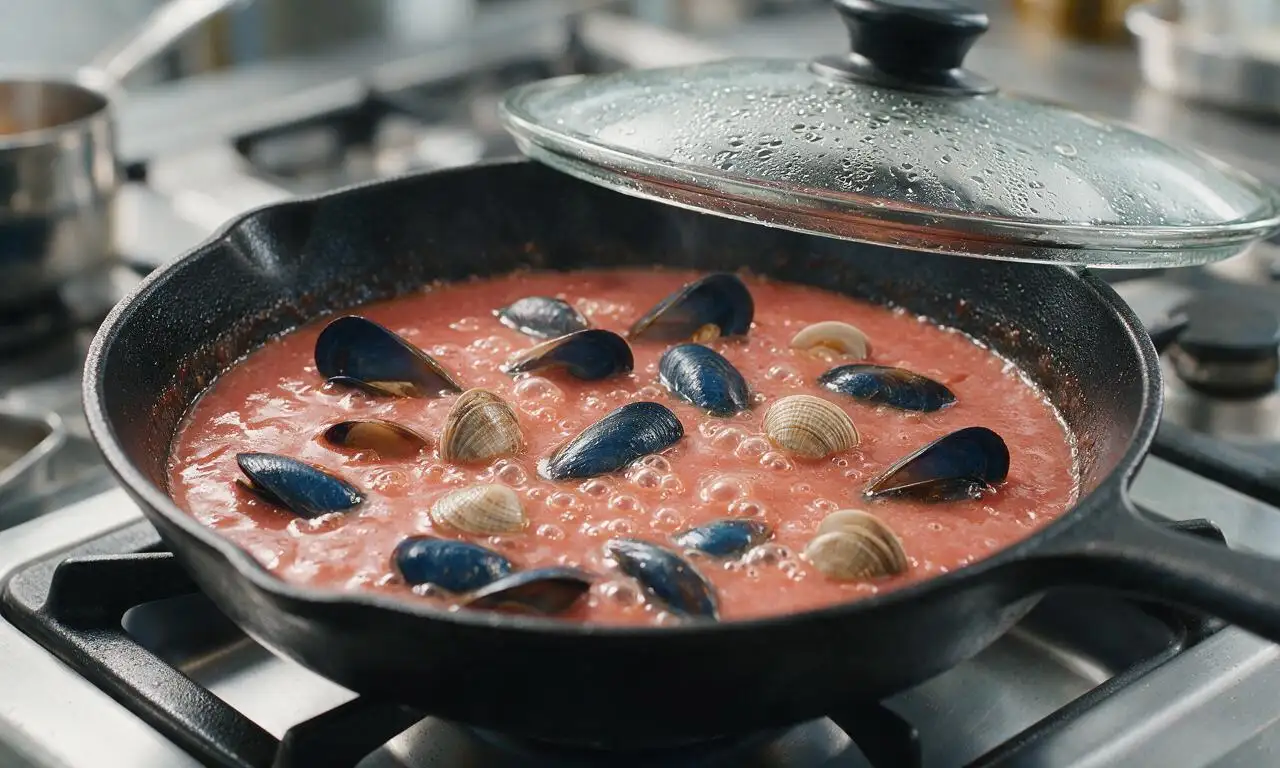
Step 4
step4:Steam Clams and Mussels
5

Add Shrimp, Calamari, and Pasta

Uncover the skillet, add 200g raw peeled deveined shrimp and 150g prepared sliced calamari (rings and tentacles), stir gently to coat in sauce, then add the partially cooked drained spaghetti to the pan. Toss continuously with tongs over medium heat for 2 minutes, adding splashes of reserved starchy pasta water as needed to create a light, silky sauce that coats every pasta strand, until shrimp are pink and curled, calamari is opaque, shellfish are fully opened, and pasta is perfectly al dente.
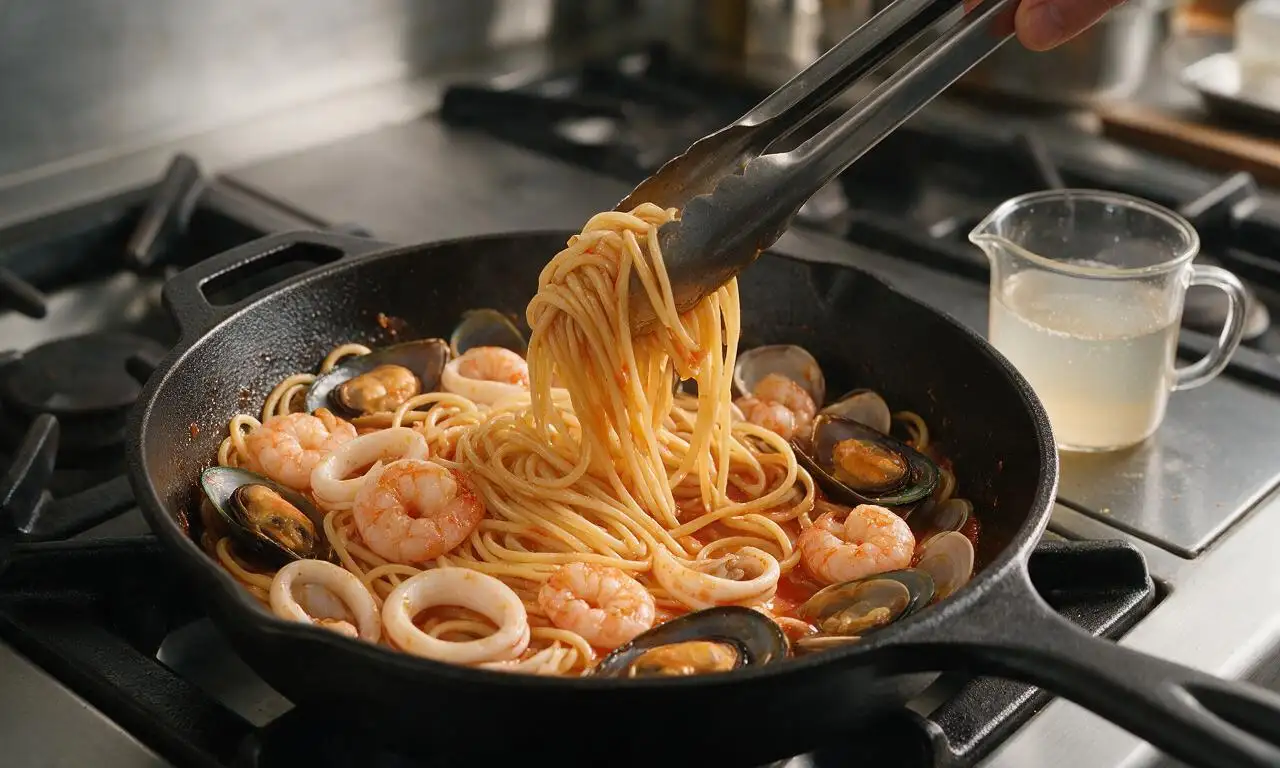
Step 5
step5:Add Shrimp, Calamari, and Pasta
6

Toss with Butter and Parsley

Turn off the heat, add 28g (2 tablespoons) cold unsalted butter and 15g chopped fresh flat-leaf parsley, toss vigorously for 30 seconds until the butter fully melts and emulsifies into the sauce. Divide pasta evenly between 4 warm shallow bowls, garnish with extra chopped parsley, and serve immediately with lemon wedges on the side.
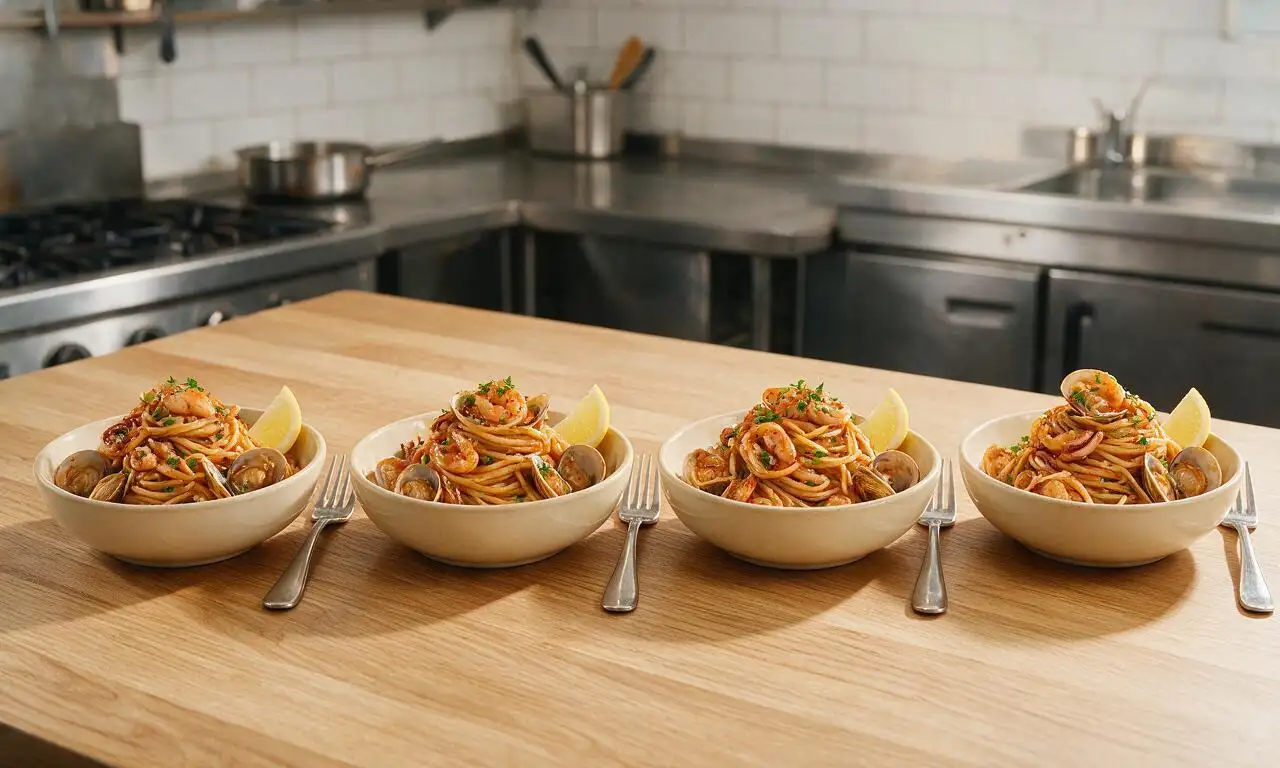
Step 6
step6:Toss with Butter and Parsley

Tips

1.Avoid overcooking seafood: thin calamari rings turn rubbery with more than 2 minutes of high-heat cooking, shrimp become tough after 3 minutes of total cook time, and shellfish turn chewy if left on heat after their shells fully open.
2.Never rinse drained pasta: the starchy film on cooked pasta strands helps the sauce cling evenly, creating a cohesive, silky texture instead of a watery, separated dish.
3.For a non-alcoholic version, replace the dry white wine with 150ml low-sodium seafood broth mixed with 30ml fresh lemon juice to match the wine’s bright, acidic balance.
✨ You May Also Like

Main Course
🍜 United Kingdom

A showstopping classic of tender seared beef, savory mushroom duxelles, and crisp prosciutto wrapped in flaky golden puff pastry, baked to juicy perfection.

⏱️ 2 hours 1Main Course ★ 4.7
Main Course
🍜 India

Tender charred marinated chicken simmered in a rich, spiced creamy tomato sauce, this iconic Anglo-Indian curry pairs perfectly with basmati rice or warm naan.

⏱️ 50 minuteMain Course ★ 4.6
Main Course
🍜 Thailand

Classic tangy, sweet, and savory Thai stir-fried rice noodles with shrimp, tofu, and crunchy garnishes, balancing all five core Thai flavor profiles.

⏱️ 30 minuteMain Course ★ 4.5
Main Course
🍜 United Kingdom

Crispy golden beer-battered cod and fluffy double-fried chips, served with tangy tartar sauce and malt vinegar: the timeless, beloved British pub comfort classic.

⏱️ 45 minuteMain Course ★ 4.7
Main Course
🍜 Mexico

Smoky, chile-marinated pork tacos with caramelized pineapple, fresh cilantro, and lime: a beloved classic Mexican street food perfect for casual summer gatherings.

⏱️ 1 hour 45Main Course ★ 4.8
Main Course
🍜 United States

Crunchy Fritos corn chips layered with savory beef chili and melted cheddar, topped with cool, zesty fixings for a beloved, cozy Tex-Mex comfort food.

⏱️ 35 minuteMain Course ★ 4.8

Pasta Frutti di Mare:Frequently Asked Questions

1.Can I use frozen mixed seafood instead of fresh for this recipe? ▾
Absolutely, as long as you pick high-quality, raw frozen seafood (skip pre-cooked blends, which turn rubbery fast). Thaw it completely in the fridge overnight, then pat every piece extremely dry with paper towels before cooking to avoid watering down the bright, briny white wine-tomato sauce.
2.Why won’t some of my clams or mussels open when cooked, and are they safe to eat? ▾
Toss any clams or mussels that stay fully closed after 5 minutes of covered cooking—they were likely dead before preparation and can carry harmful bacteria. To avoid this, confirm all shellfish are tightly closed (or close when tapped) before cooking, and discard any with cracked shells upfront.
3.What pasta shape works best if I don’t have dried spaghetti on hand? ▾
Long, sturdy pasta shapes work best to catch the light, garlicky sauce and small bits of seafood. Great swaps include linguine, fettuccine, or bucatini; skip tiny, short shapes like ditalini or elbow macaroni, which won’t hold the sauce and seafood pieces well at all.
4.How do I keep calamari from turning tough and rubbery in this dish? ▾
Calamari only needs 1 to 2 minutes of high-heat cooking to turn tender—any longer and it gets chewy and unpleasantly rubbery. Cook the rings and tentacles just until they turn opaque and firm up slightly, then set them aside temporarily if you need extra time to steam the clams and mussels.
5.Is it okay to leave the tails on the shrimp for this pasta? ▾
Definitely! Leaving shrimp tails on adds extra rich, briny seafood flavor to the sauce as it simmers, and it gives the dish a rustic, restaurant-style look. Just make sure you’ve fully peeled and deveined the rest of each shrimp so guests don’t have to pick through stray shell pieces while eating.
6.What type of white wine is best for the frutti di mare sauce? ▾
Reach for a crisp, dry, unoaked white wine like Pinot Grigio, Sauvignon Blanc, or dry Vermentino—these bright, acidic wines cut through rich seafood and complement the briny, garlicky flavors. Skip oaky Chardonnay or sweet dessert wines, which will make the sauce taste heavy or cloyingly sweet.
7.Do I really need to salt my pasta water heavily for this recipe? ▾
Yes, absolutely—salty pasta water (it should taste as salty as seawater) seasons the spaghetti from the inside out, and you’ll reserve a starchy cup of that water to thin and emulsify the sauce later. Since seafood is naturally briny, taste the sauce at the end before adding extra salt to avoid over-seasoning.
8.What’s the proper way to scrub and debeard clams and mussels before cooking? ▾
First, soak clams and mussels in cold, salted water for 20 minutes so they spit out trapped sand. Scrub each shell under cold running water with a stiff brush to remove grit, then tug the fuzzy, stringy “beard” sticking out of mussel shells firmly toward the shell hinge to remove it.
9.Can I make this recipe without wine for a non-alcoholic version? ▾
Of course! Swap the white wine for an equal amount of low-sodium seafood broth mixed with 1 tablespoon of fresh lemon juice and a pinch of lemon zest to mimic the wine’s bright, acidic tang. Let the mixture simmer for 2 minutes before adding shellfish to let the flavors meld properly.
10.How spicy is the hint of chili in the classic version, and can I adjust the heat? ▾
The traditional recipe has just a subtle, warm background heat that never overpowers the delicate seafood flavor. You can amp up heat by adding extra red pepper flakes, sliced fresh Fresno chili, or a drizzle of chili oil, or leave chili out entirely for zero heat for sensitive eaters.
11.Why is my sauce watery instead of clinging nicely to the pasta? ▾
Watery sauce usually comes from poorly dried seafood, under-simmered wine, or skipping the starchy pasta water step. Pat seafood dry, let wine reduce by half before adding shellfish, and toss pasta in the sauce with ¼ to ½ cup of reserved starchy pasta water to create a glossy, clinging emulsion.
12.How do I cook spaghetti to the perfect al dente texture for this dish? ▾
Check the package cook time for your dried spaghetti, and pull it out of boiling water 2 full minutes before the listed al dente time. You’ll finish cooking it directly in the seafood sauce, where it will absorb flavor and cook to the perfect tender-but-firm bite without turning mushy.
13.Can I add other types of seafood to this classic recipe? ▾
Absolutely! Frutti di mare is flexible, so you can add bay scallops, chunks of firm white fish like halibut, or even cooked lobster meat for a more luxurious version. Adjust cook times so delicate seafood doesn’t overcook, and skip oily fish like salmon, which clashes with the bright, light sauce.
14.Should I top this pasta with grated Parmesan cheese like I do with other pasta dishes? ▾
Traditional Italian coastal recipes skip Parmesan on seafood pasta, as the nutty, salty cheese can overpower the delicate briny flavor of the shellfish. If you love cheese, use a very light sprinkle of Pecorino Romano, but try it first with just parsley and lemon to get the classic experience.
15.How should I store leftovers, and how long will they stay good? ▾
Store cooled leftover pasta in an airtight container in the fridge for up to 2 days. Reheat gently in a skillet over low heat with a splash of seafood broth or water to loosen the sauce, and avoid long microwave stints, which turn seafood rubbery and pasta mushy. Do not freeze this dish, as shellfish texture breaks down when thawed.
16.What order should I cook the seafood in to avoid overcooking any pieces? ▾
Start by searing shrimp for 1 minute per side first, then add calamari for 30 seconds, then pour in wine and add clams and mussels to steam covered. This staggered cook time ensures faster-cooking, delicate items like calamari don’t turn rubbery while waiting for slower-steaming clams and mussels to open.
17.Do I need to remove all the clam and mussel shells before serving? ▾
That’s totally up to your preference! For a casual, rustic restaurant-style presentation, leave most shells on (they look beautiful and add extra briny flavor) and discard loose empty shells after steaming. If serving guests who prefer easier eating, shuck half the shellfish ahead of tossing with pasta to cut down on messy table work.

Comments (7)

2 days ago

OMG this frutti di mare is SO good! I made it for our weekly Sunday family dinner and even my super picky 8 year old who swears he hates seafood asked for a second helping. I used fresh clams and shrimp from the local fish market by my house and the flavor was unreal, exactly like the stuff we got on our Amalfi coast trip a couple years ago. Only note: I added a tiny extra pinch of red pepper flakes for a little kick, chef’s kiss!

yesterday

So glad your family loved it, Mia! Adding a pinch of red pepper flakes is such a great call, that bright heat pairs perfectly with the briny seafood. Thanks for the tip for other readers!

2 hours ago

Wait I did the extra red pepper flakes too! Total game changer, I was worried it would be too spicy for my partner but he thought it was perfect.

3 days ago

Tried this for a potluck at work a couple days back and people were hounding me for the recipe all afternoon! Cook time was spot on 35 minutes, no muss no fuss even with prepping all the seafood. I was worried medium difficulty would be too much for my weeknight cooking skill level but it was totally manageable. 10/10 will be making this again for our next date night in.

30 minutes ago

Okay quick question—can I make this with frozen seafood mix if I can’t get fresh? My grocery store was totally out of fresh mussels and clams this week and I really don’t want to drive 40 minutes to the fish market. Also, do I need to thaw it first or can I toss it in frozen?

5 minutes ago

Great question! Frozen seafood works perfectly here, just make sure to thaw it completely first and pat it really dry with paper towels so you don’t end up with watery sauce. You might want to add a minute or two of cook time to make sure everything is heated through, but the flavor will be just as delicious!

1 week ago

Meal prepped this last Sunday for the week and it held up so much better than I thought it would! I kept the pasta and sauce separate just in case, but even when I tossed it together for lunches through the week it tasted fresh, no weird mushy seafood or soggy noodles. My teenagers all fought over the last leftover portion towards the end of the week, guess I need to make a double batch next time.

2 weeks ago

Took me a second to get the hang of cleaning the mussels properly but wow this was worth the extra effort. I paired it with a crisp pinot grigio and some garlic bread and it felt like a fancy restaurant meal at half the price. Only bummer was I overcooked the squid a little so it was chewy, next time I’ll toss it in at the very last minute like the recipe says.

1 week ago

So glad you enjoyed it despite the slightly chewy squid! You’re totally right, squid cooks in literally 60 seconds so tossing it in at the end is the trick to keeping it tender. Next batch will be perfect!

5 days ago

Oh I did the exact same thing with the squid my first time making this! Second time around I set a timer for 1 minute after adding it and it was perfectly tender, no rubbery texture at all. You’ve got this next time!

yesterday

Wait has anyone tried making this with whole wheat pasta? I’m trying to cut back on refined carbs but I don’t want to ruin the texture of the dish. Would love to hear if anyone tested that swap!

2 hours ago

I made it with whole wheat spaghetti last week! Just cook it a minute less than the package says so it’s extra al dente, it holds up to the seafood sauce so well. My husband didn’t even notice it wasn’t regular pasta, total win.

5 minutes ago

Made this for my boyfriend’s birthday dinner and he said it’s better than the pasta frutti di mare we had at that fancy Italian spot downtown for our anniversary! I splurged on a little saffron to add to the sauce like I saw in a TikTok and it added such a nice depth, 100% recommend even if it’s a little pricy. Will absolutely be adding this to our regular dinner rotation.

just now

Happy birthday to your boyfriend! Adding saffron is such a luxurious, delicious upgrade — that’s such a smart touch. So happy you two loved the recipe enough to make it a regular!