
Oyster Paneer Paratha
intro
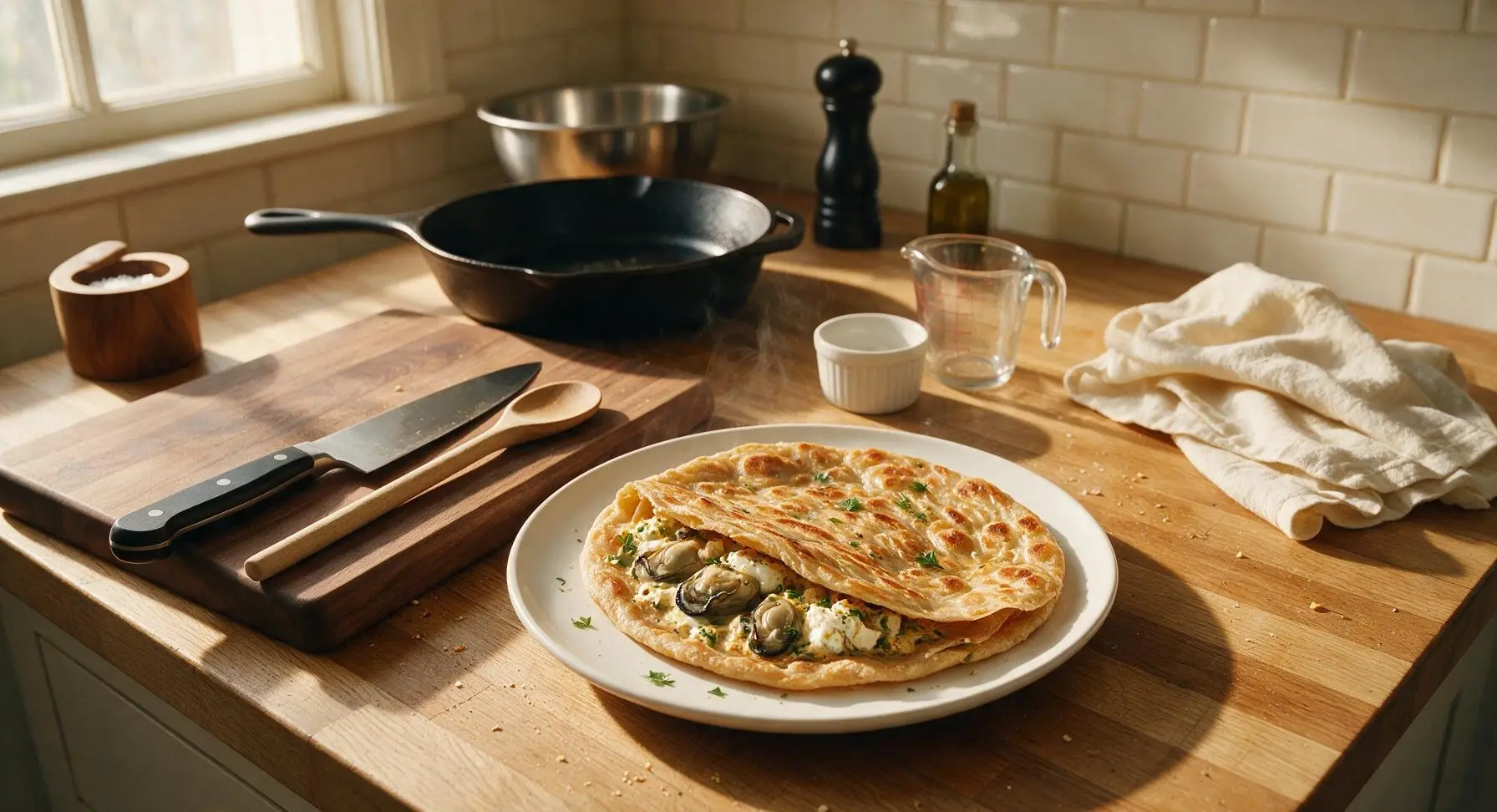
Crispy, flaky whole wheat parathas stuffed with briny fresh oysters, spiced creamy paneer, and aromatic herbs—golden, satisfying, and packed with warm, umami comfort.
Ingredients
Steps
Mix and Knead Dough
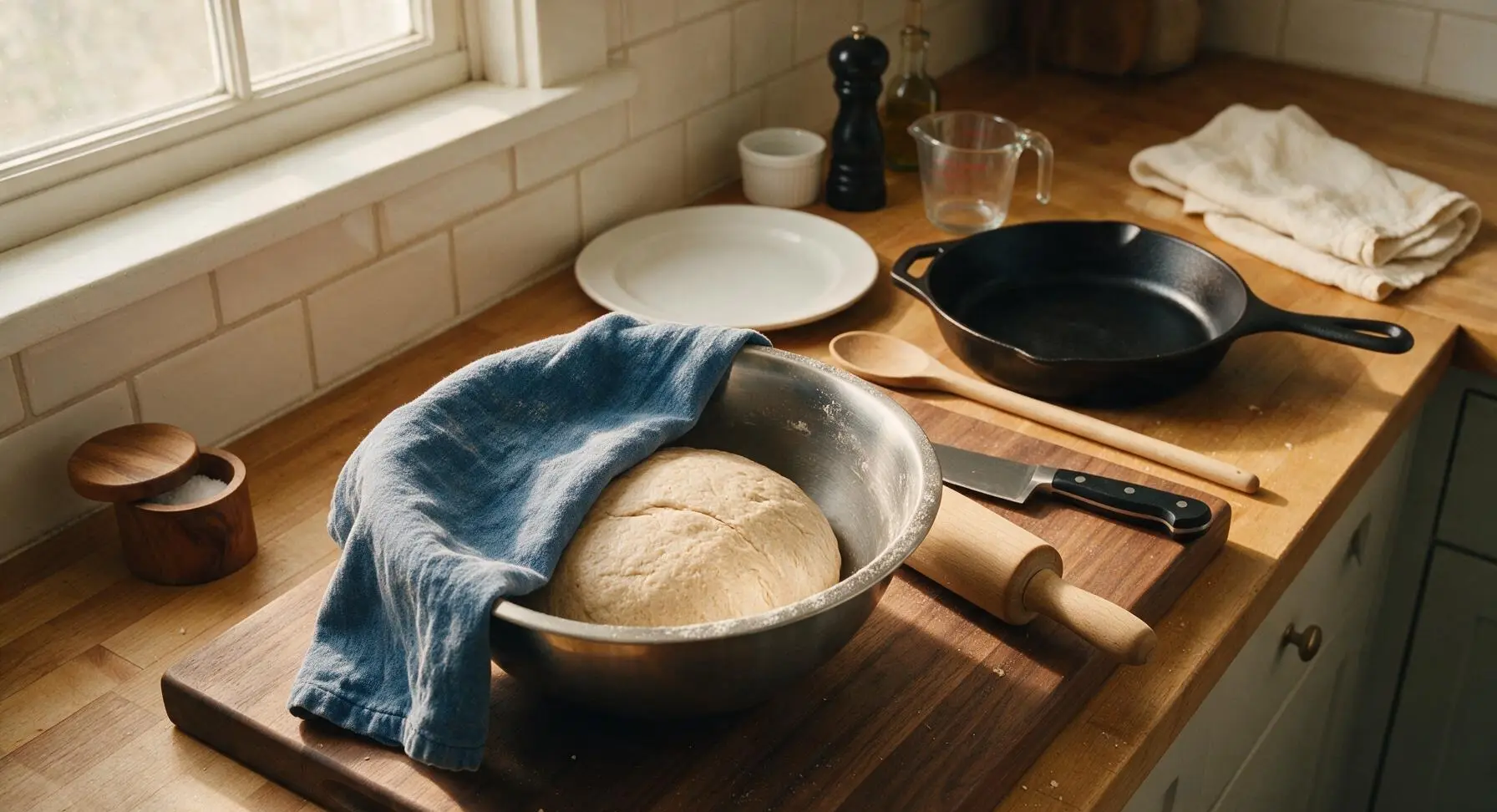
Place 2 cups whole wheat flour and 1/2 teaspoon salt in the cream white small ceramic mixing bowl. Gradually add 1/2 cup lukewarm water, mixing with your fingertips until a shaggy dough forms. Knead for 5 minutes directly in the bowl until the dough is smooth, soft, and slightly elastic, not sticky to the touch. Cover with a clean corner of the indigo kitchen towel and let rest for 10 minutes at room temperature.
Mix Spiced Stuffing
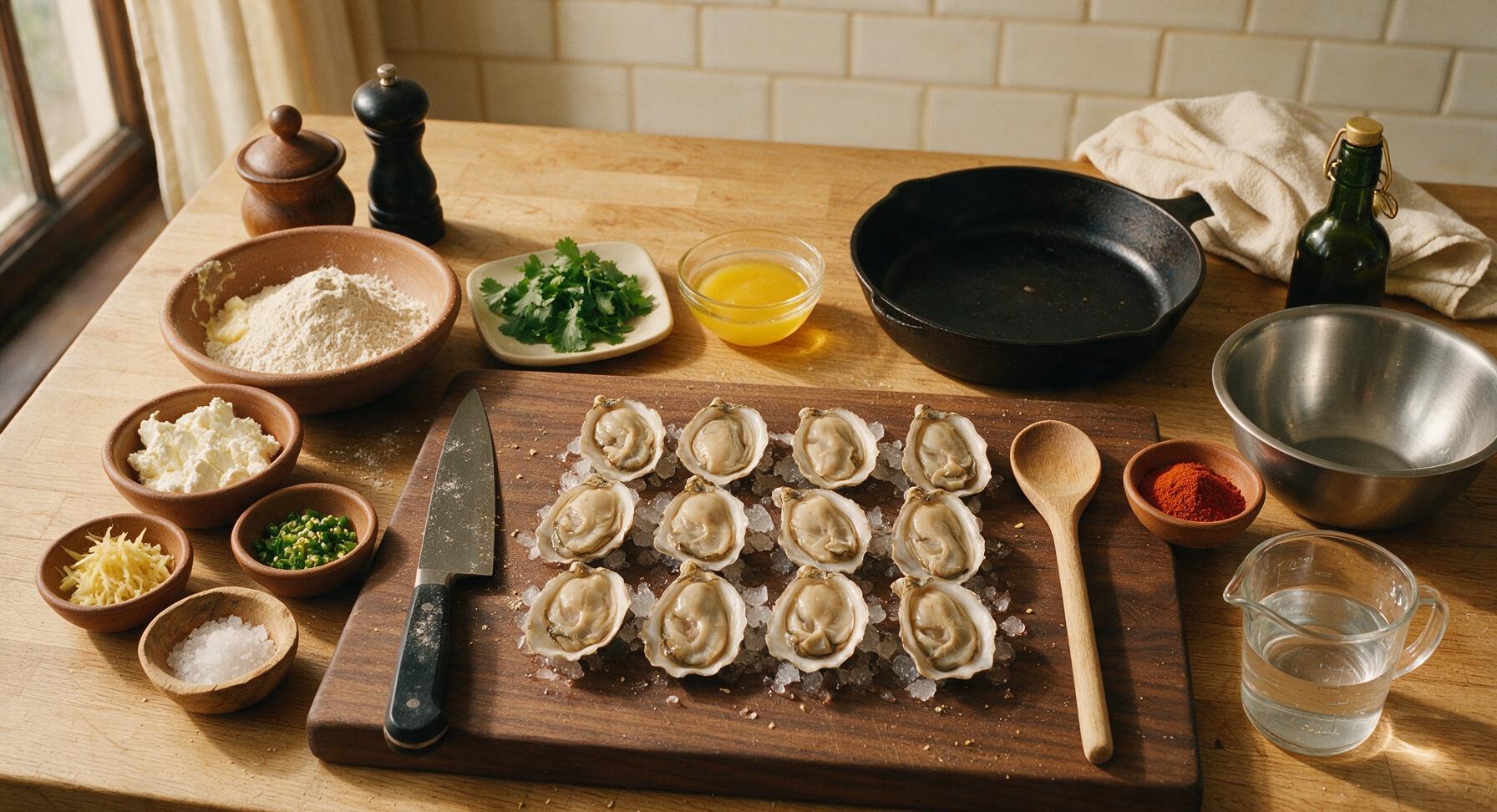
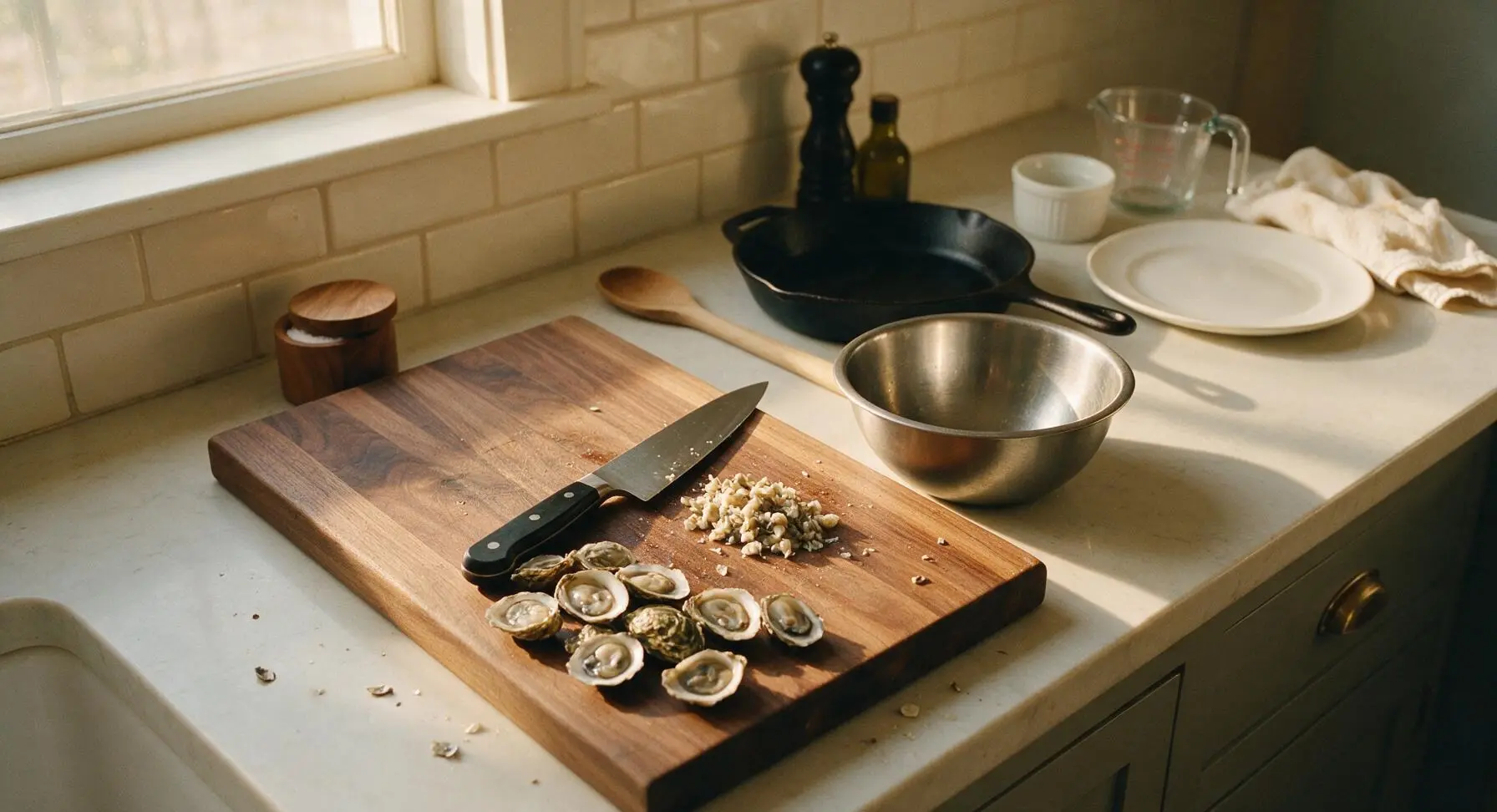
Pat the shucked oysters completely dry with the indigo kitchen towel, then finely chop them into 5mm pieces using the chef knife on the mango wood cutting board. Add chopped oysters, crumbled paneer, remaining 1/2 teaspoon salt, garam masala, red chilli powder, grated ginger, finely chopped green chilli, and chopped coriander to the medium stainless steel mixing bowl. Gently fold until evenly combined, taking care not to mash the paneer completely; the stuffing should hold together when squeezed lightly, with distinct small chunks of oyster and paneer visible.
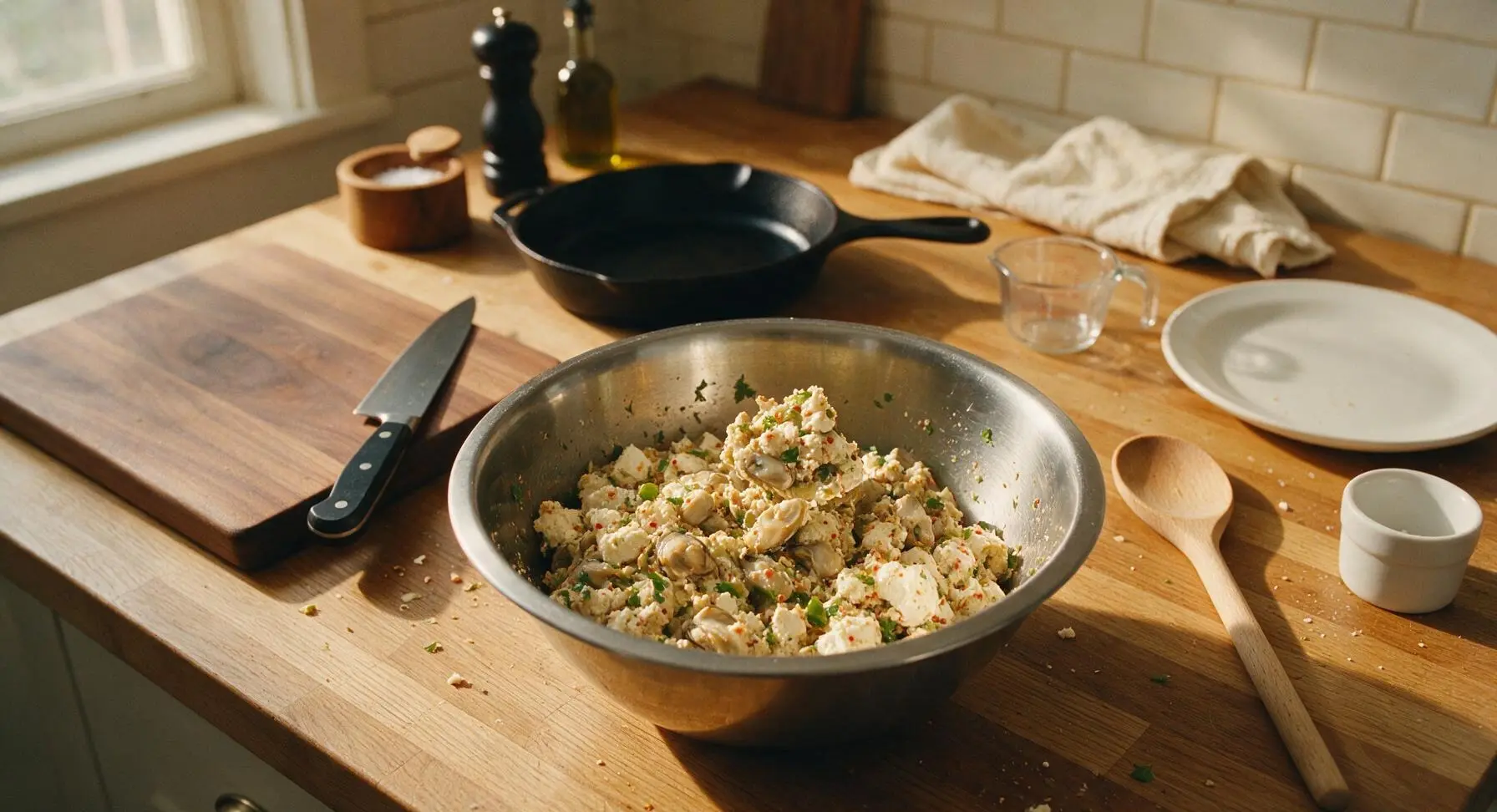
Portion Dough Balls
Uncover the rested dough, divide it into 8 equal-sized portions (approx 40g each), rolling each between your palms to form smooth, tight balls. Divide the oyster-paneer stuffing into 8 equal portions (approx 40g each), rolling each into a tight ball as well. Arrange all dough and stuffing balls on the mango wood cutting board, lightly dusted with flour to prevent sticking.
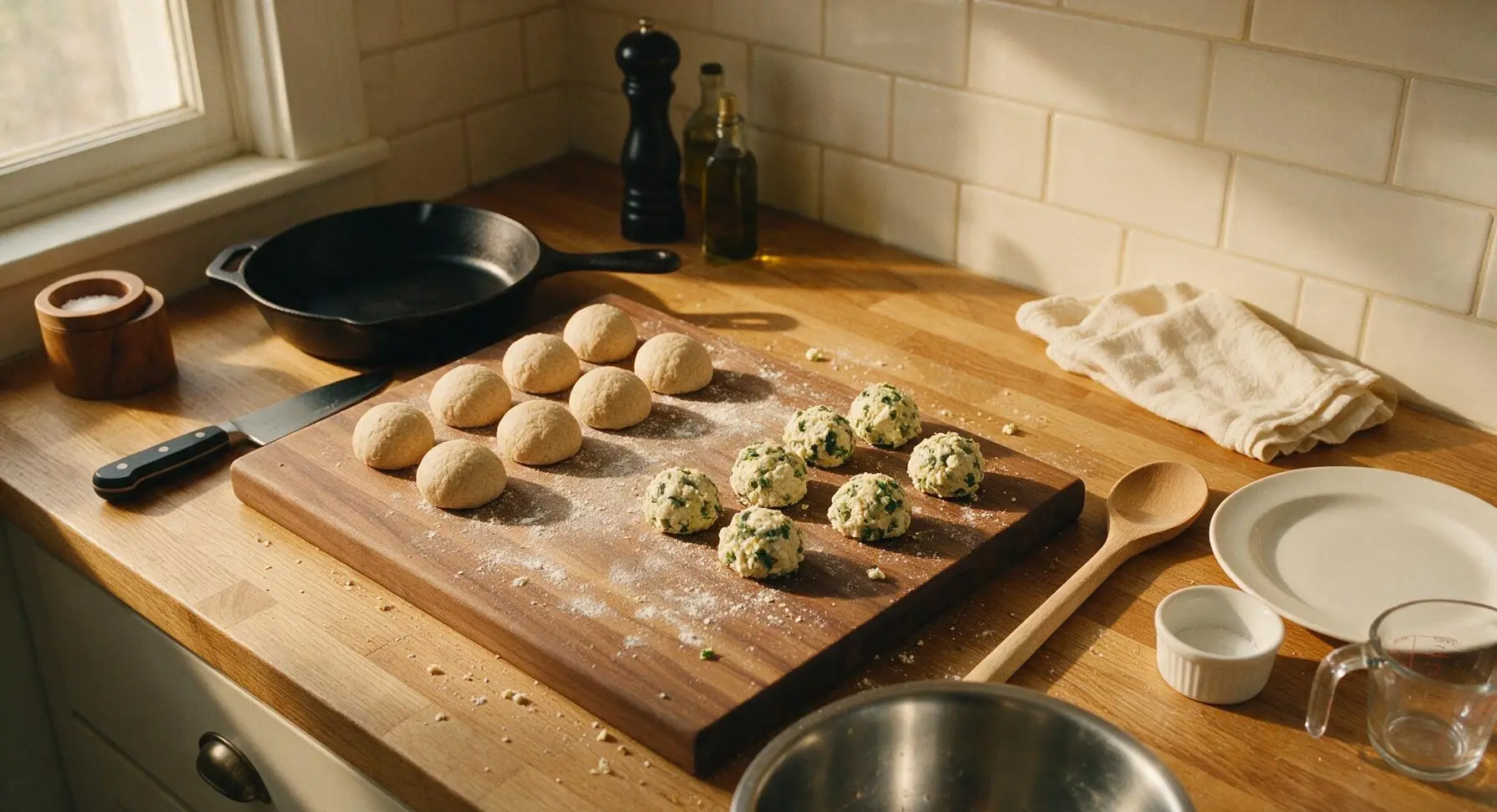
Stuff Dough Parcels
Take one dough ball, flatten it into a 7cm wide disc with your fingertips, place one stuffing ball in the center of the disc. Pull the edges of the dough up and over the stuffing, pinching firmly at the top to seal completely, making sure no gaps remain for stuffing to leak out during rolling. Repeat with all remaining dough and stuffing balls, setting sealed parcels back on the floured cutting board, seam-side down.
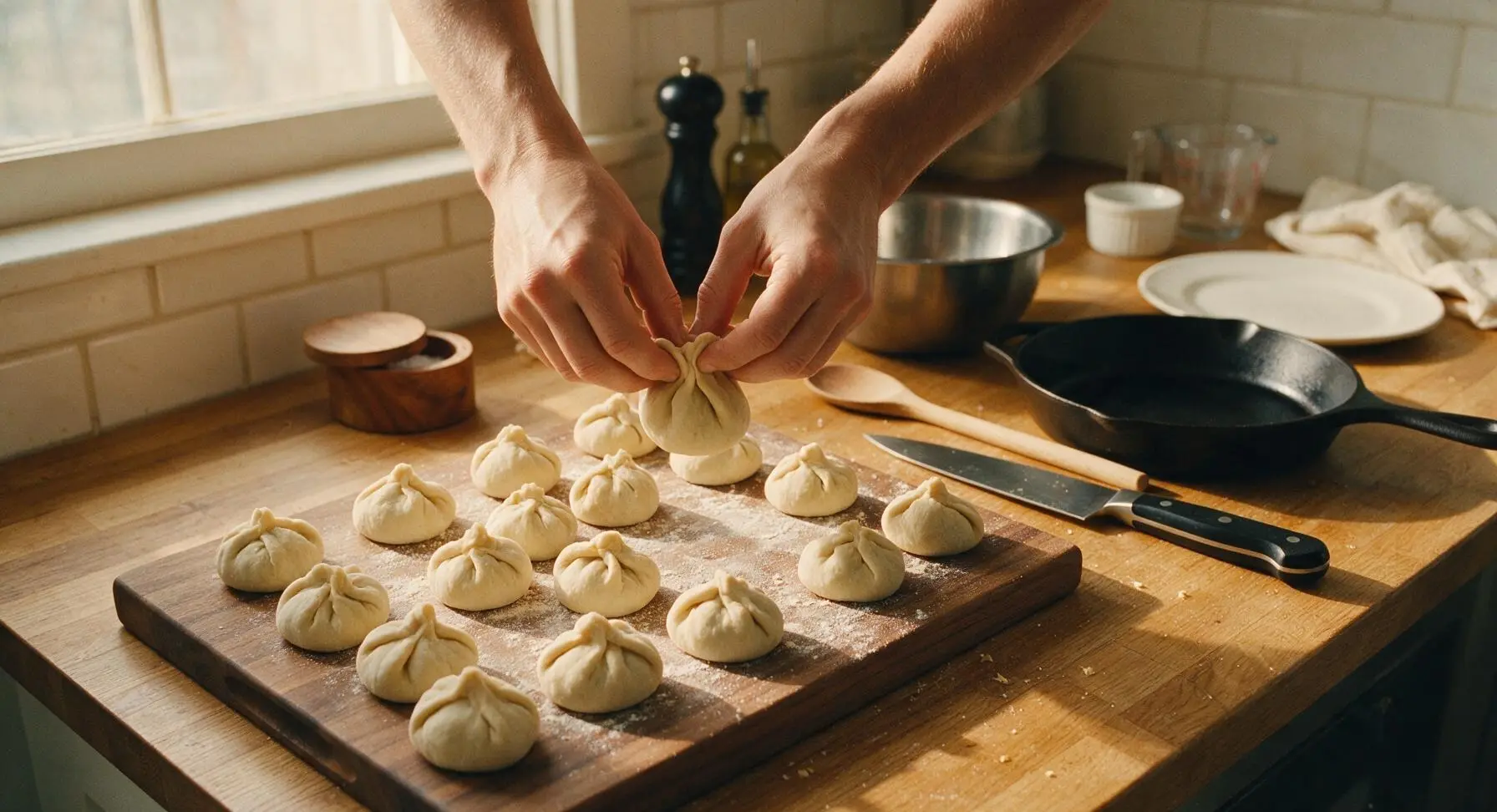
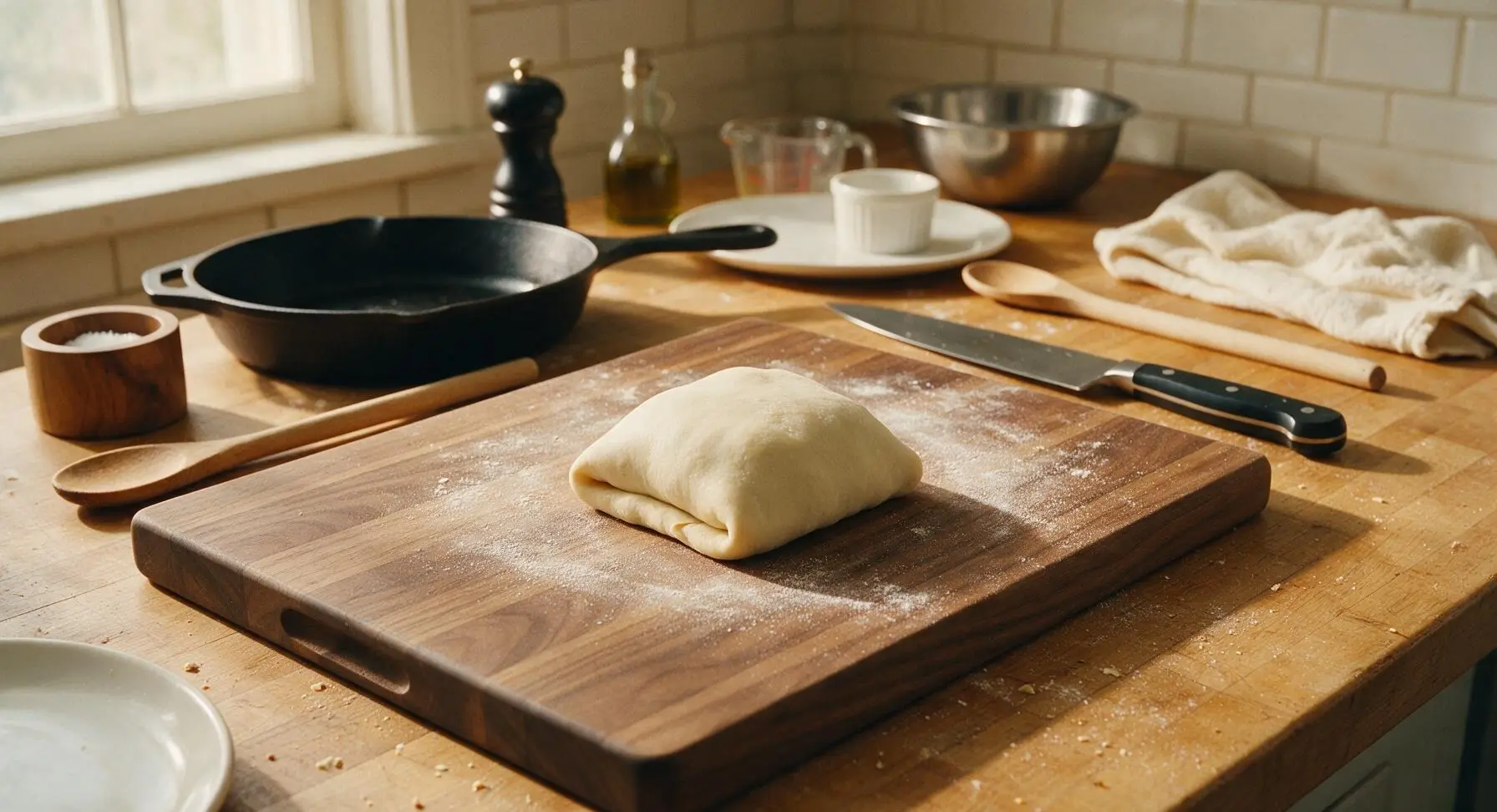
Roll Stuffed Parathas
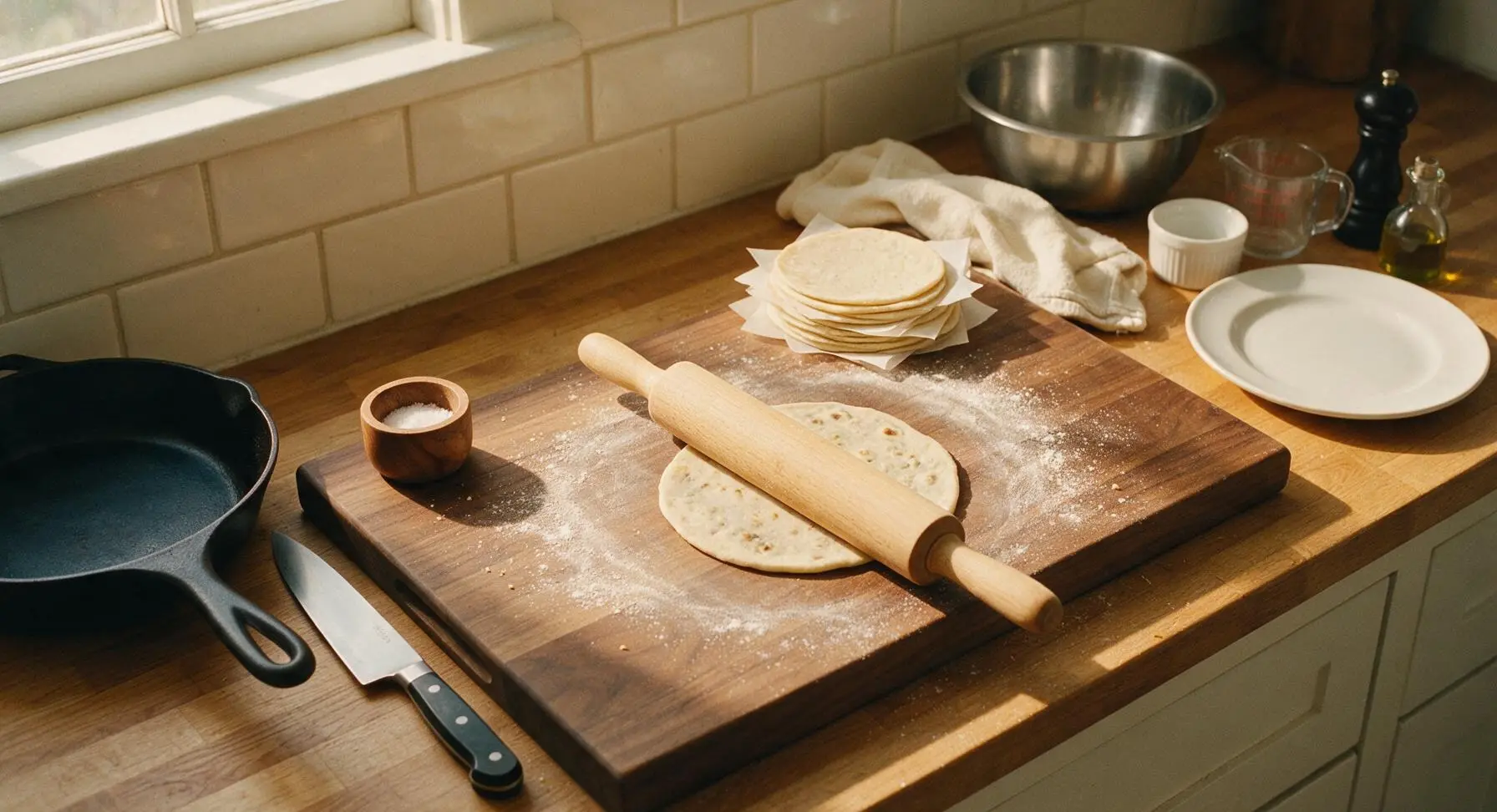
Lightly dust one sealed dough parcel with flour, place it seam-side down on the cutting board. Using the beech wood rolling pin, roll gently and evenly into an 18cm wide, 3mm thick round, applying even pressure to avoid tearing the dough or squeezing stuffing out. If a small amount of stuffing peeks through, patch it with a pinch of dry flour and continue rolling. Stack rolled parathas on a corner of the board, separated by small squares of parchment to prevent sticking.
Preheat Flat Griddle
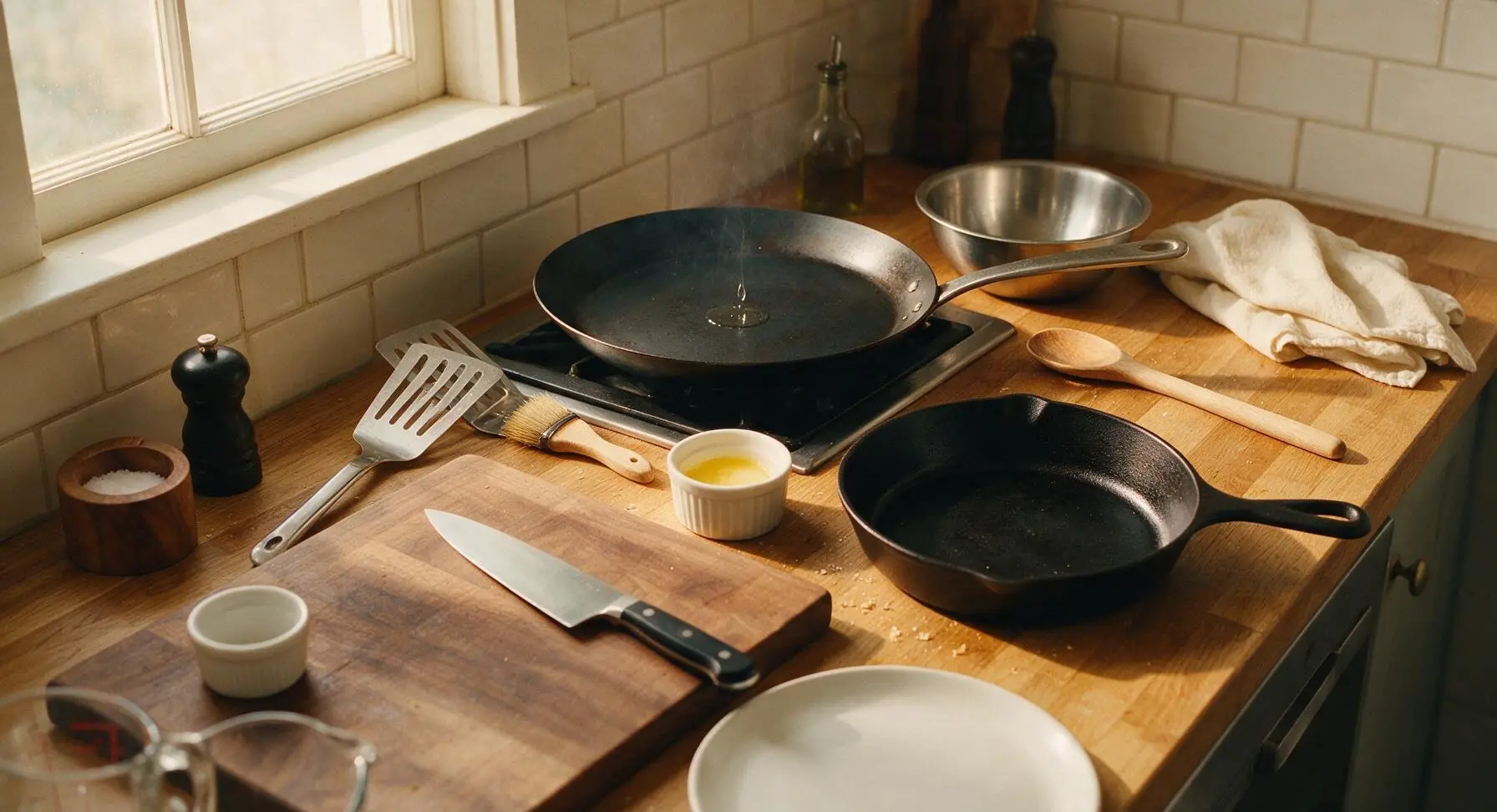
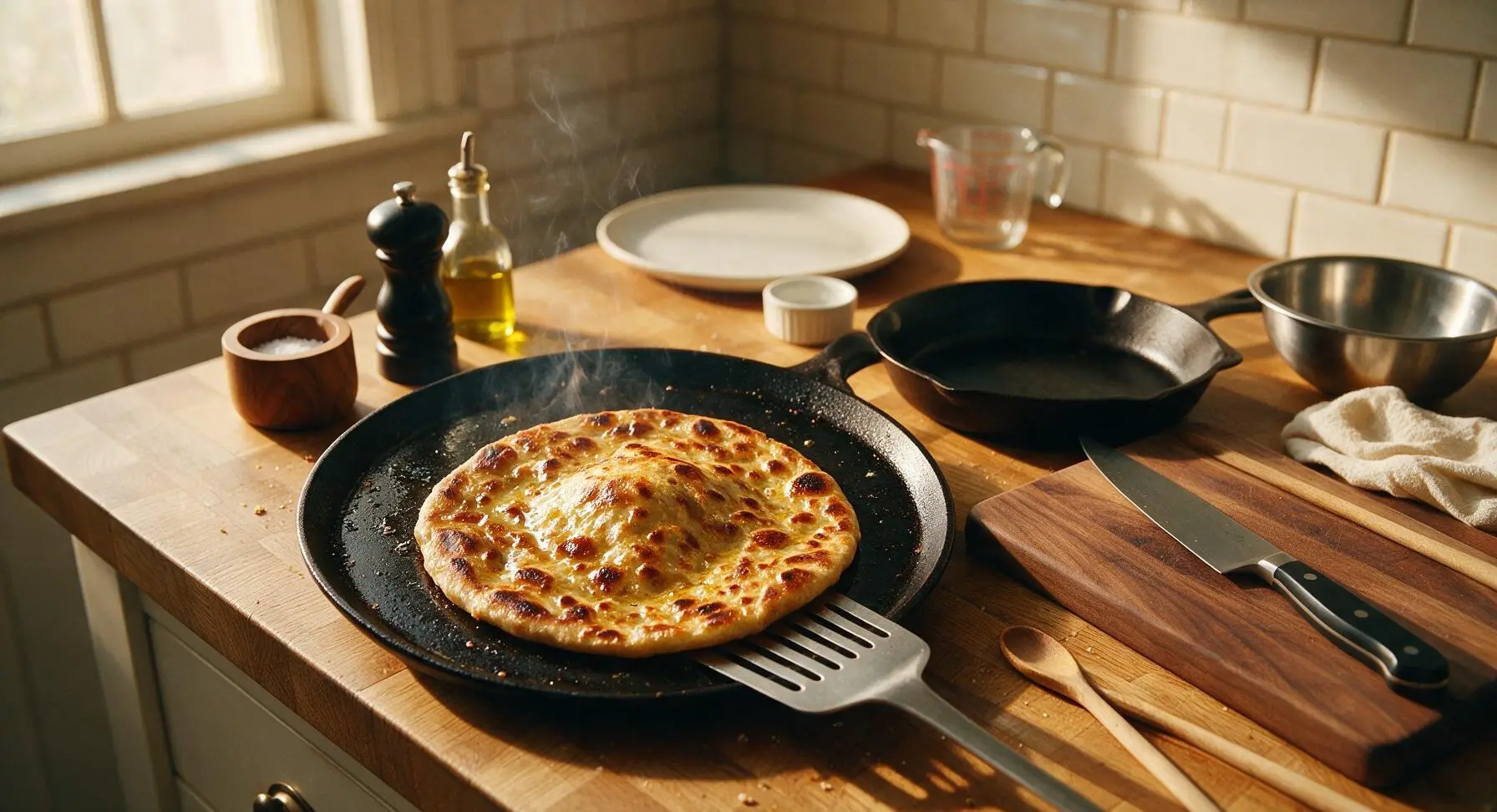
Place the 10-inch matte black carbon steel tava on the stovetop over medium heat, preheating for 3 minutes until a drop of water flicked onto the surface sizzles and evaporates within 2 seconds. Have the slotted stainless steel spatula, basting brush, and ghee-filled ramekin arranged beside the tava for easy access during cooking.
Cook First Paratha Side
Carefully place one rolled paratha onto the preheated tava. Cook for 1 minute, until small bubbles start to form on the top surface and light golden brown spots appear on the bottom. Do not move the paratha during this first minute to allow the surface to set properly.
Flip and Cook Through
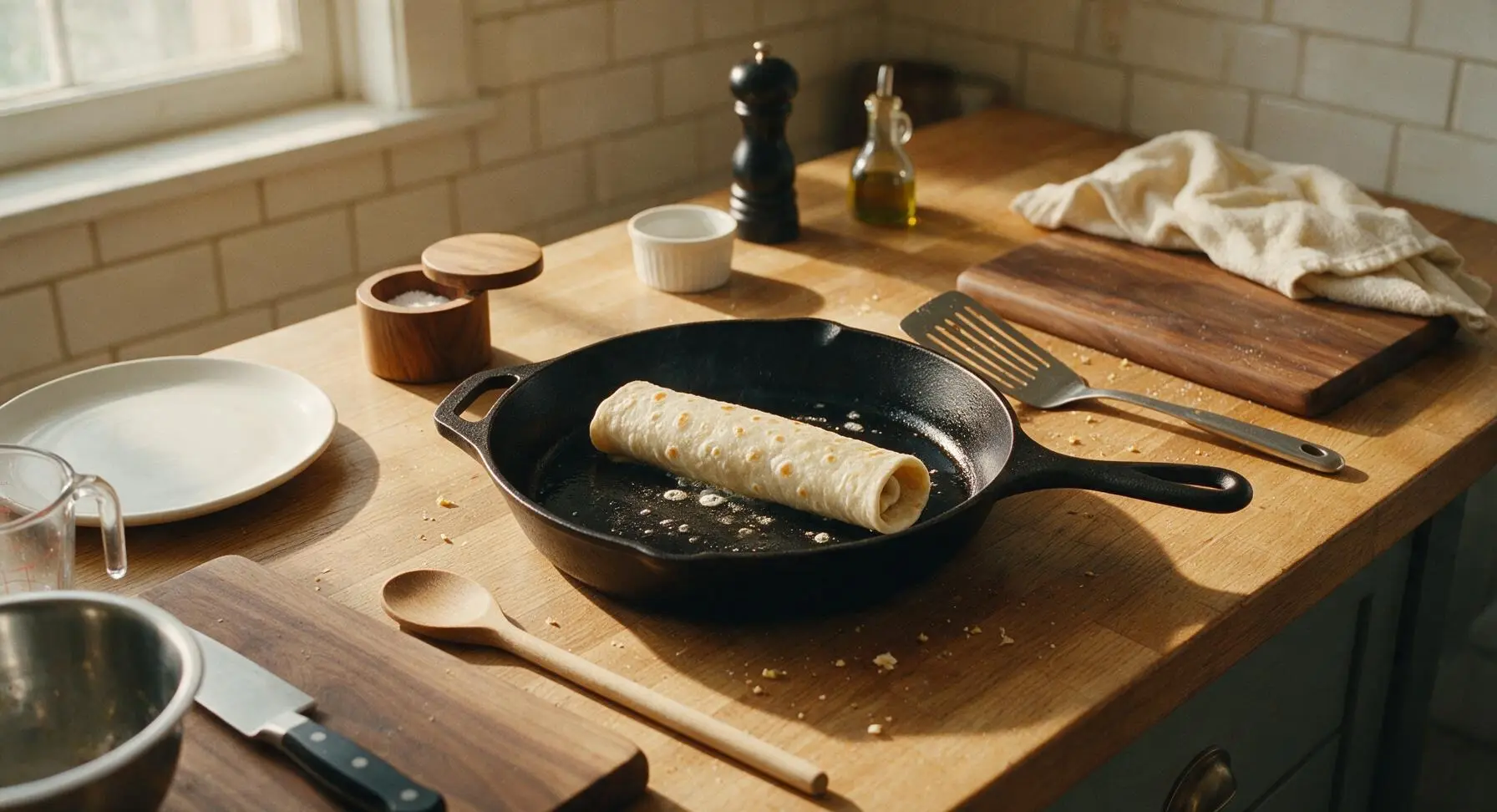
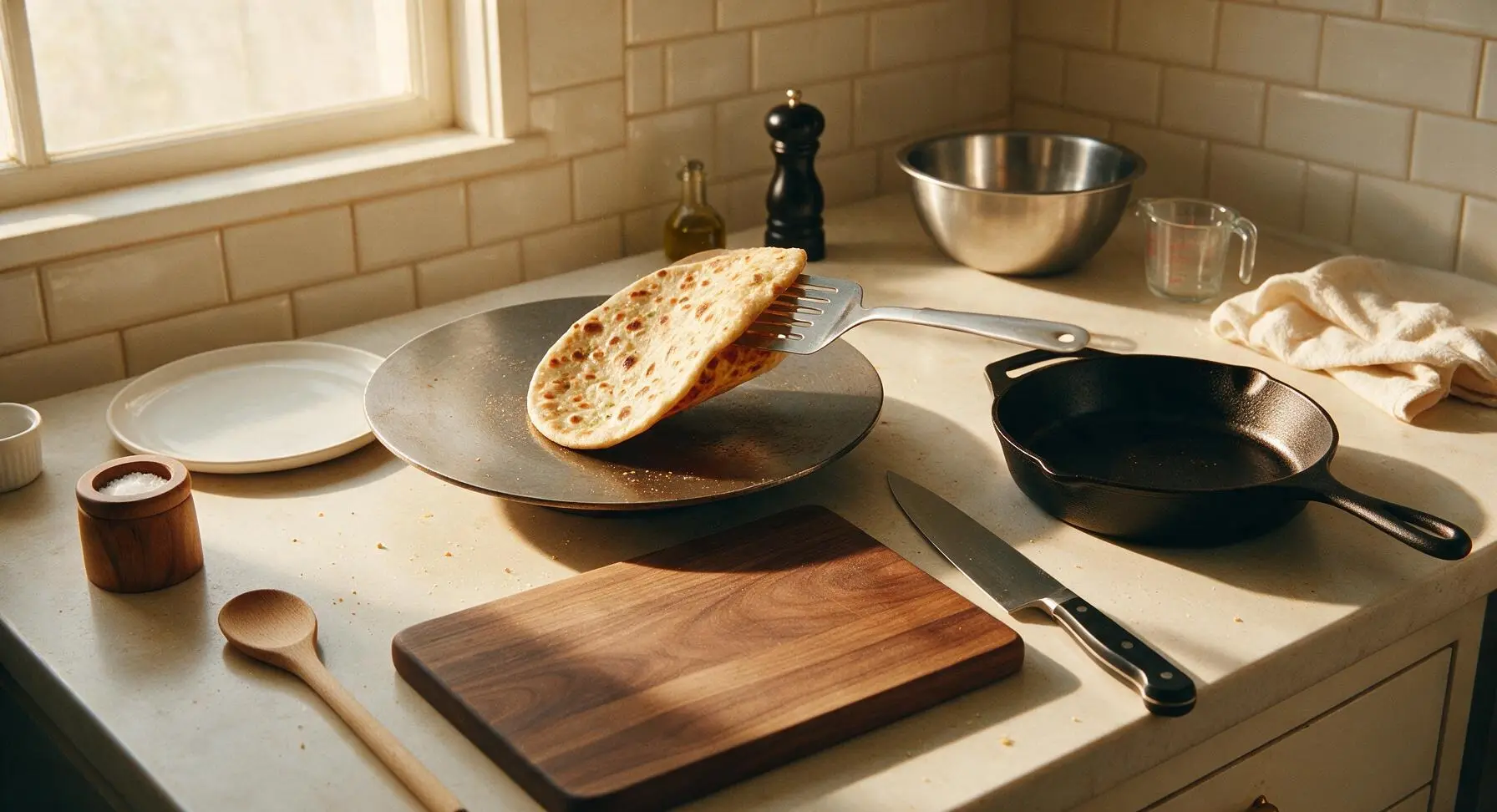
Use the slotted stainless steel spatula to flip the paratha. Cook the second side for 45 seconds, then brush the top surface with 1/2 teaspoon melted ghee using the basting brush. Flip again, brush the other side with ghee, and cook for 30 seconds more, pressing gently with the spatula to encourage even browning, until both sides are crispy, deep golden brown with darker charred spots, and the paratha puffs up slightly indicating the stuffing is heated through. Transfer cooked paratha to the terracotta plate, and repeat with all remaining rolled parathas, stacking them as you go.
Tips
2.Roll stuffed parathas with gentle, even pressure, starting from the center and working outward: pressing too hard will cause thin spots in the dough where stuffing can burst through, leading to uneven cooking.
3.Keep the tava at consistent medium heat throughout cooking: heat that is too high will burn the outer dough before the oyster and paneer stuffing is warmed through, while heat that is too low will result in tough, dry parathas instead of crispy, flaky ones.
OMG this oyster paneer paratha is such a game changer! I made it for my family dinner last night and even my super picky 7 year old asked for seconds. The oyster adds such a nice briny kick that cuts through the rich paneer perfectly. SO good, will be adding this to my weekly meal prep rotation for sure!
Really solid recipe! Cook time was pretty spot on for me, though I added a little extra chaat masala to the filling because I love that tangy kick. Brought these to a weekend potluck and they were gone in 10 minutes flat. Only note is that the difficulty feels a little closer to easy-medium if you’ve made paratha before, but total beginner folks might need a practice round or two.
I was so skeptical about combining oysters and paneer but holy cow this works! I swapped the regular whole wheat flour for a mix of whole wheat and a little besan for extra nuttiness, and it slapped. My partner said it’s restaurant quality, no cap.
Taste was great but I had a really hard time getting the oyster pieces to stay in the filling when I was rolling the paratha out, half of them oozed out onto the tawa! Did I chop the oysters too big? Ended up with a bit of a mess but the parts that stayed in were delicious.
Made these for my Sunday brunch crew last weekend and everyone was begging for the recipe! The texture contrast between the crispy paratha crust, creamy paneer, and chewy oyster bits is unreal. I served it with mint chutney and a side of pickled onions, chef’s kiss.