1.What cut of pork is best for red pork posole, and can I use a leaner option?
▾
Boneless pork shoulder is the traditional, ideal pick—its generous marbling melts during slow simmering to keep meat ultra-tender and add rich, savory depth to the broth. Lean cuts like pork loin will turn dry and stringy with long cooking; if you use it, add large chunks only in the last 45 minutes of simmering to avoid toughness.
2.Do I have to use dried guajillo and ancho chiles, or can I use pre-made red chile sauce?
▾
Dried, toasted guajillo and ancho chiles give the broth that signature smoky, deep, fruity heat that defines authentic pozole rojo. Low-sodium pre-made red chile sauce works in a pinch, but skip versions with added vinegar or tomato, as those will throw off the broth’s traditional earthy, well-balanced flavor.
3.What is hominy, and can I substitute it if I can’t find canned white hominy?
▾
Hominy is dried corn treated with lime (a process called nixtamalization) to remove its tough hull, giving it a chewy, tender, slightly sweet texture that is core to pozole. If you can’t find canned white hominy, use drained canned yellow hominy, or pre-cooked rehydrated dried hominy for the closest texture match.
4.Why is my posole broth bitter, and how do I fix that?
▾
Bitter broth almost always comes from over-toasting dried chiles or leaving too many bitter chile seeds and membranes in when blending. To fix it, stir in a tiny amount of granulated sugar, a splash of apple cider vinegar, or a pinch of honey a little at a time, tasting as you go, to balance bitterness without making the broth sweet.
5.How long do I need to simmer the pork for it to be perfectly tender?
▾
For 2-inch (5cm) pork shoulder chunks, plan for 1.5 to 2 hours of gentle, low simmer (not a violent rolling boil) to get that perfect fall-apart tender texture. If using a pressure cooker, that cook time drops to 25 minutes on high with a 10-minute natural release before you add hominy.
6.Do I need to toast the dried chiles before making the red sauce base?
▾
Toasting dried chiles for 10 to 15 seconds per side in a dry, hot skillet deepens their smoky, fruity flavor dramatically, so it’s absolutely worth the extra step. Just don’t toast them too long—if they turn black and charred, they’ll make the whole broth bitter, so pull them as soon as you smell their warm, earthy aroma.
7.Why do I need to drain and rinse canned hominy before adding it to the pot?
▾
Canned hominy is packed in a starchy, slightly briny canning liquid that has a flat, metallic, overly salty taste that will make your broth murky and off-flavored if added straight. Rinsing it under cool running water for 30 seconds washes away excess starch and brine, so hominy absorbs the rich chile broth flavor instead.
8.What are the traditional garnishes for red pork posole?
▾
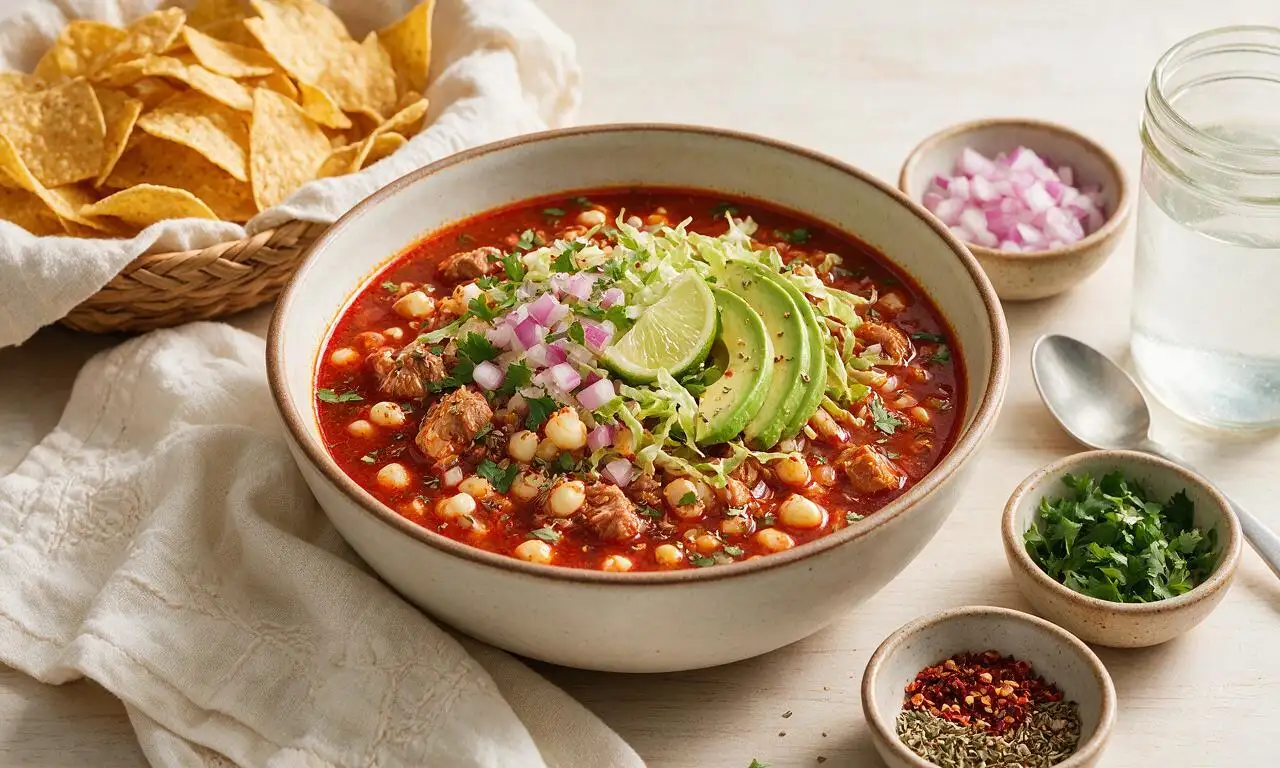
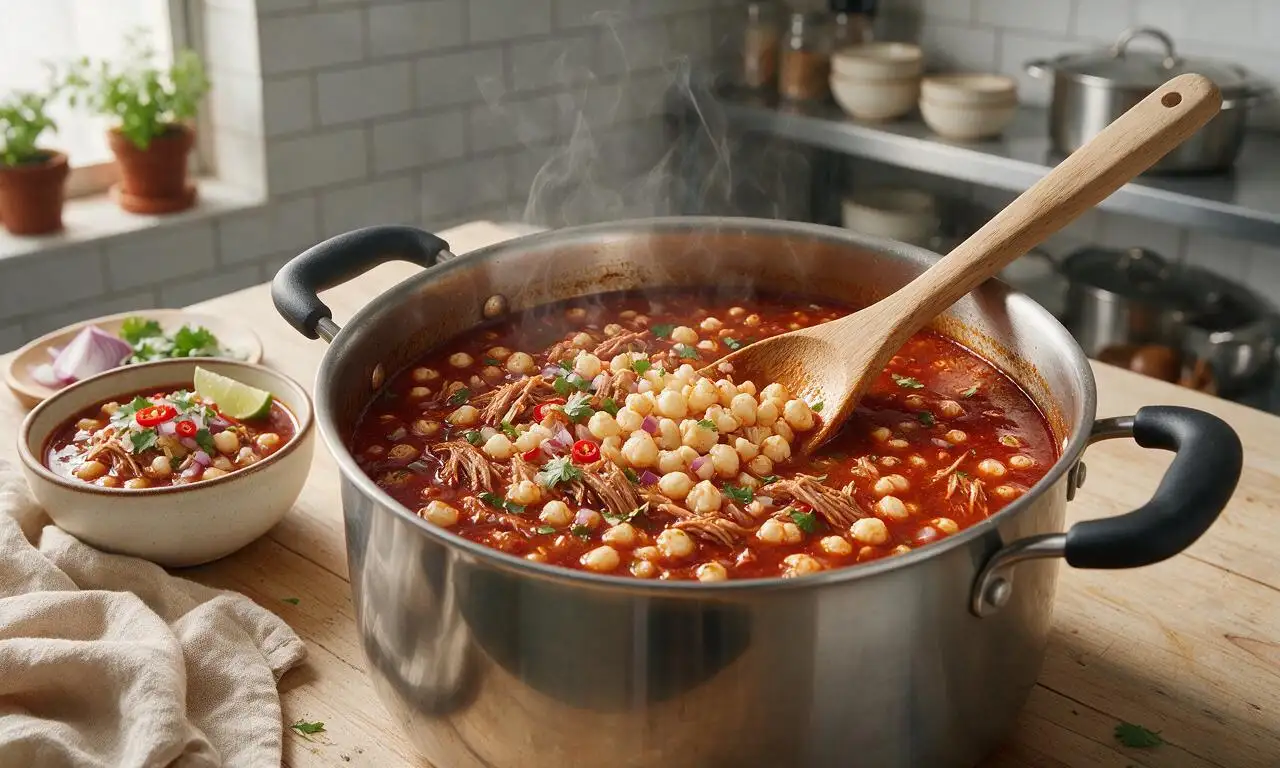
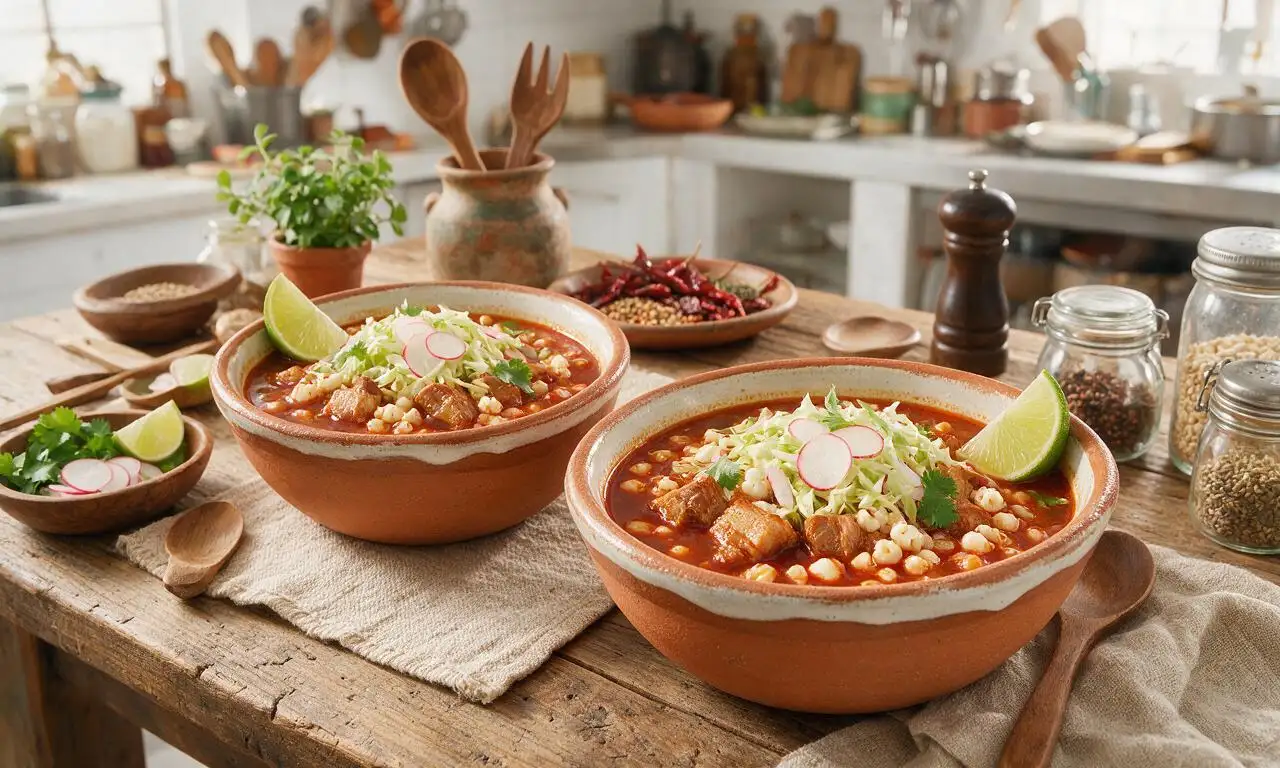
Bright, crisp garnishes cut through the rich, smoky broth perfectly: thinly sliced radishes, shredded crisp green cabbage, chopped fresh cilantro, diced white onion, lime wedges for squeezing, crumbled dried Mexican oregano, and optional sliced jalapeños or hot sauce for extra heat. Let guests build their own bowls for the best experience.
9.Can I make this posole in a slow cooker instead of on the stovetop?
▾
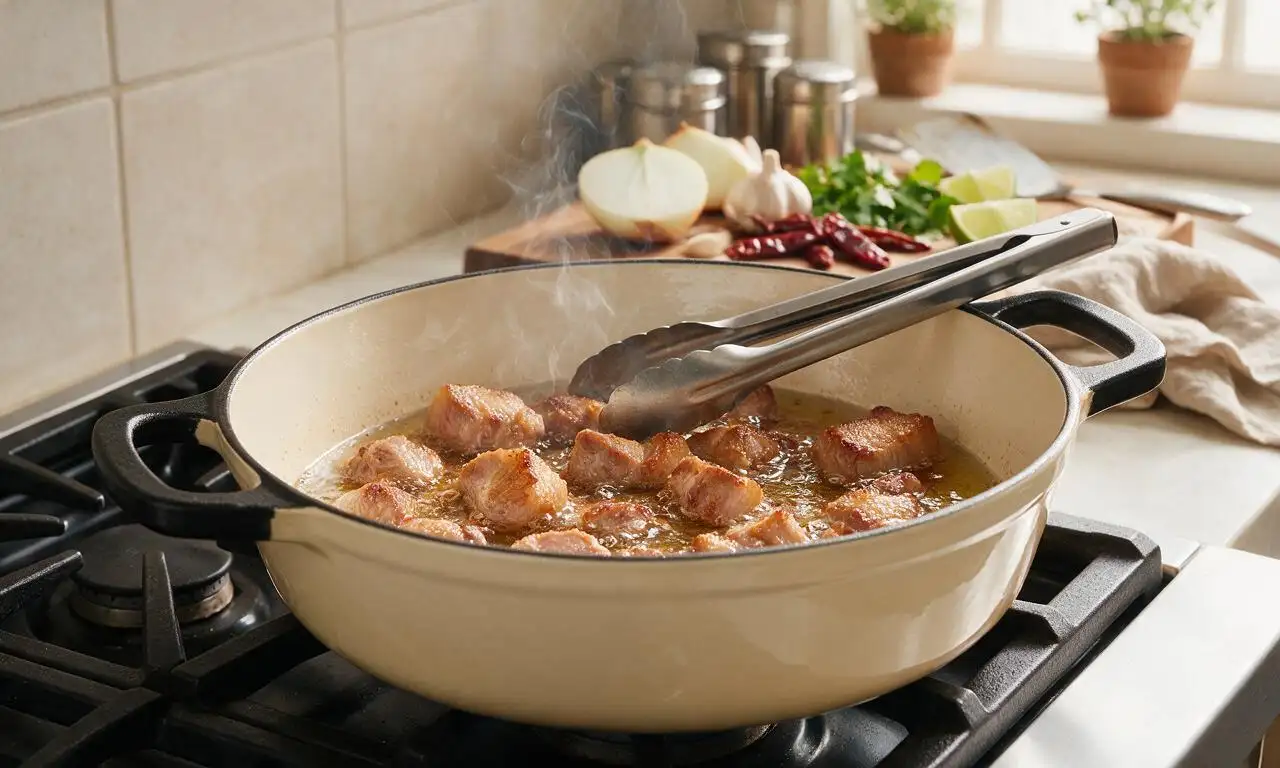
Absolutely! Sear the pork chunks first in a hot skillet to build extra deep, savory flavor, then add the blended chile base, onion, and pork to your slow cooker. Cook on LOW for 6 to 7 hours until the pork is tender, and stir in the rinsed hominy during the last 30 minutes to keep it from getting mushy.
10.Should I trim all the fat off the pork shoulder before cooking?
▾
You only need to trim away large, thick, hard pieces of excess fat from the pork shoulder—leave the thin, streaky marbled fat intact, because it melts as the posole simmers to keep pork moist and add rich, savory depth to the broth. You can always skim any excess floating fat off the top before serving if you prefer a lighter broth.
11.How spicy is traditional red pork posole?
▾
Authentic pozole rojo made with just guajillo and ancho chiles is very mild, with a warm, smoky, fruity chile flavor and barely noticeable heat—usually 1,000 to 2,000 Scoville Heat Units, milder than a standard jalapeño. If you want more heat, add 1 to 2 dried arbol chiles to your sauce base, or offer hot sauce on the side for guests.
12.Can I make this posole ahead of time, and does it reheat well?
▾
Posole actually tastes better the next day, as the chile flavors meld and deepen while it rests chilled. Store fully cooled posole in an airtight container in the fridge for up to 4 days, and reheat gently on the stovetop over low, adding a splash of broth or water if it thickens too much as it sits.
13.Do I need to blend and strain the chile base for the broth?
▾
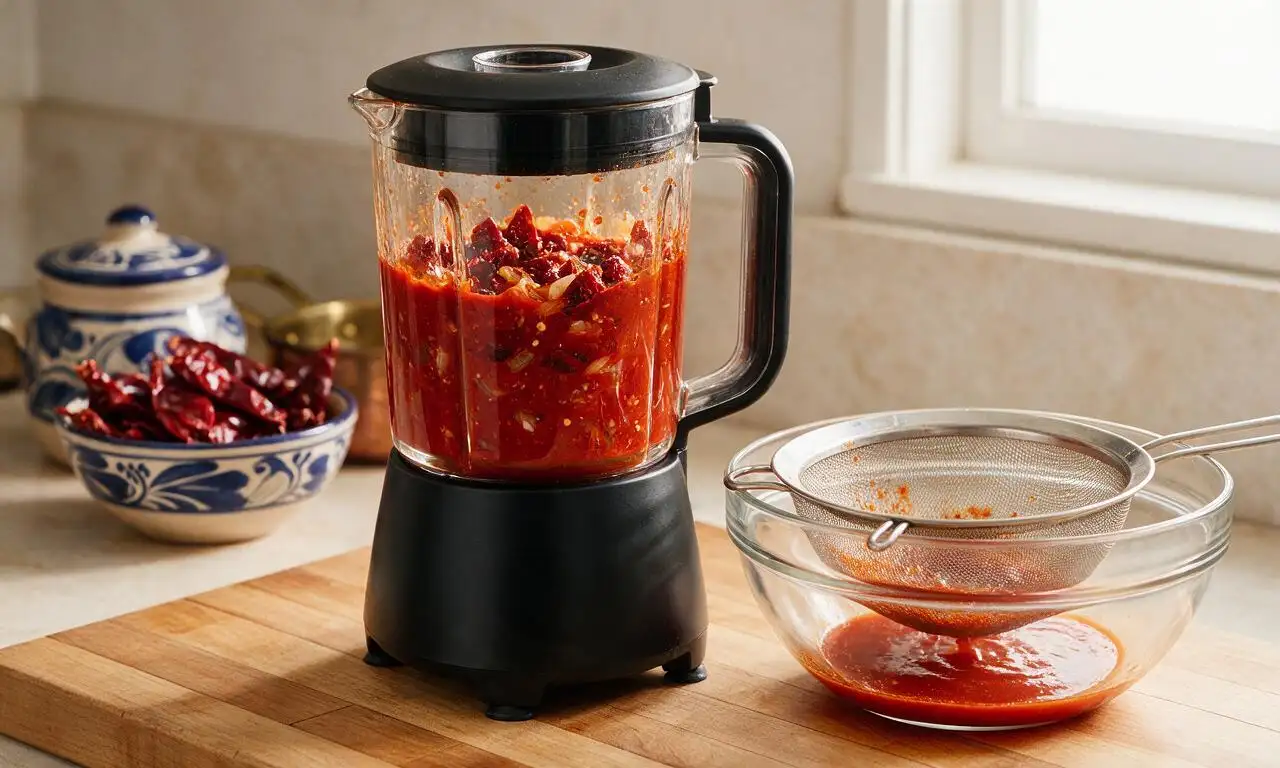
Blending rehydrated chiles and onion until completely smooth creates that signature rich, velvety broth texture, and straining it through a fine-mesh sieve removes any tiny, tough bits of chile skin that would make the broth gritty. It only takes a couple extra minutes, and it makes a huge difference in the final luxurious texture.
14.Can I use bone-in pork instead of boneless for this recipe?
▾
Bone-in pork shoulder works wonderfully, and actually adds extra savoriness to the broth as the bone simmers and releases collagen. Just add about 30 minutes of extra simmer time to make sure the meat pulls easily away from the bone, and fish out any small bone fragments before stirring in the hominy and serving.
15.My hominy is too tough even after simmering—what went wrong?
▾
Tough hominy usually means you used old, expired canned hominy that won’t soften properly, or you didn’t let it simmer long enough in the broth. Canned hominy is fully pre-cooked, so it only needs 20 to 30 minutes of simmering to absorb flavor and turn tender; if it’s still firm, give it 10 extra minutes on low.
16.Is there a way to make this recipe vegetarian?
▾
You can absolutely make a delicious meat-free version! Swap the pork for 2 cups of cubed roasted butternut squash or pulled jackfruit, use low-sodium vegetable broth instead of pork broth, and keep the same chile base and hominy. Simmer for 30 minutes total so the veggies absorb chile flavor, and serve with the same fresh garnishes.
17.How do I properly rehydrate dried chiles for the red broth?
▾
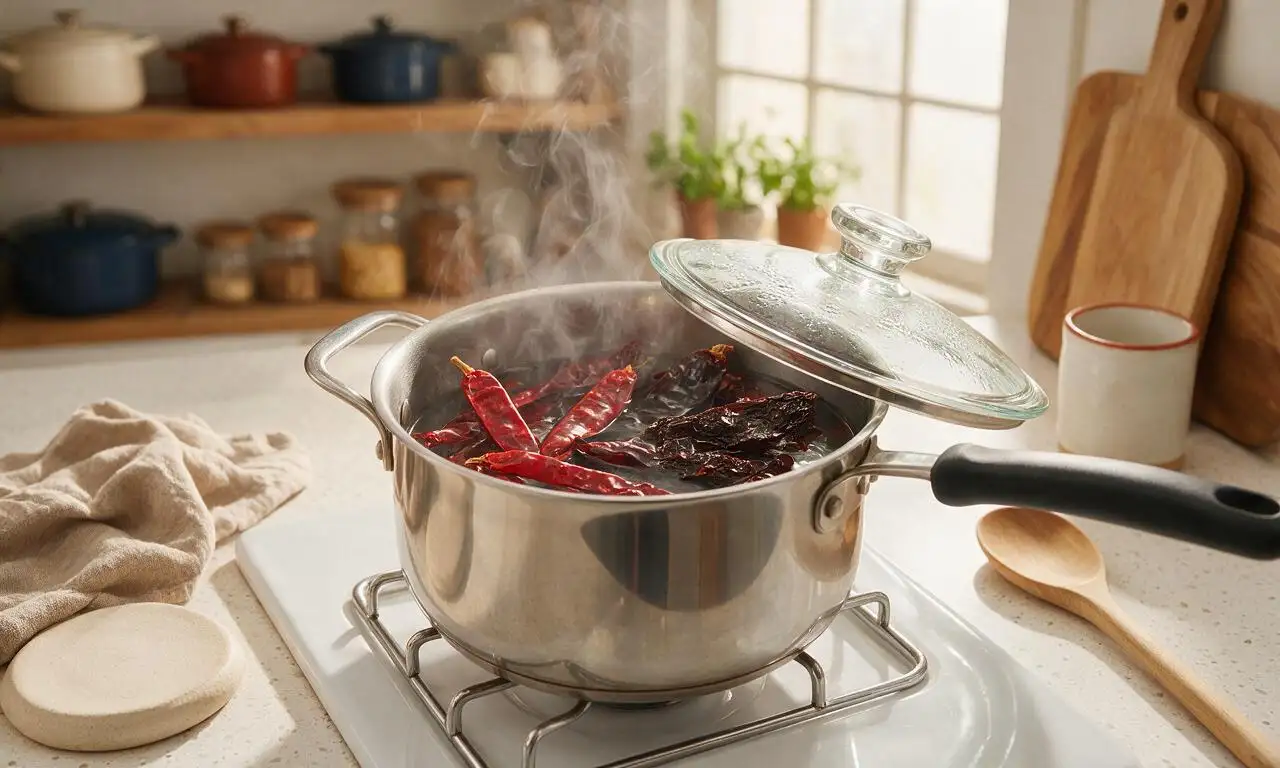
After toasting your seeded, stemmed chiles, place them in a heatproof bowl and pour boiling hot water over them to fully submerge. Weight them down with a small plate so they stay under water, and let them soak for 15 to 20 minutes until they’re completely soft and pliable before blending them into your sauce base.
18.Why is my pork tough even after simmering for 2 hours?
▾
Tough pork after two hours of cooking usually means you had the heat too high, which makes meat proteins seize up and turn chewy, or you cut the chunks too small and dried them out. Turn the heat down to the lowest setting to keep a gentle bubble, and let it cook another 20 to 30 minutes until connective tissue breaks down.
19.Can I freeze leftover red pork posole for later?
▾
Yes, posole freezes really well for up to 3 months. Let it cool completely, then portion it into freezer-safe airtight bags or containers, leaving a half-inch of headspace for expansion as it freezes. Thaw it in the fridge overnight, reheat gently on the stovetop, and add fresh garnishes right before serving for the best flavor.




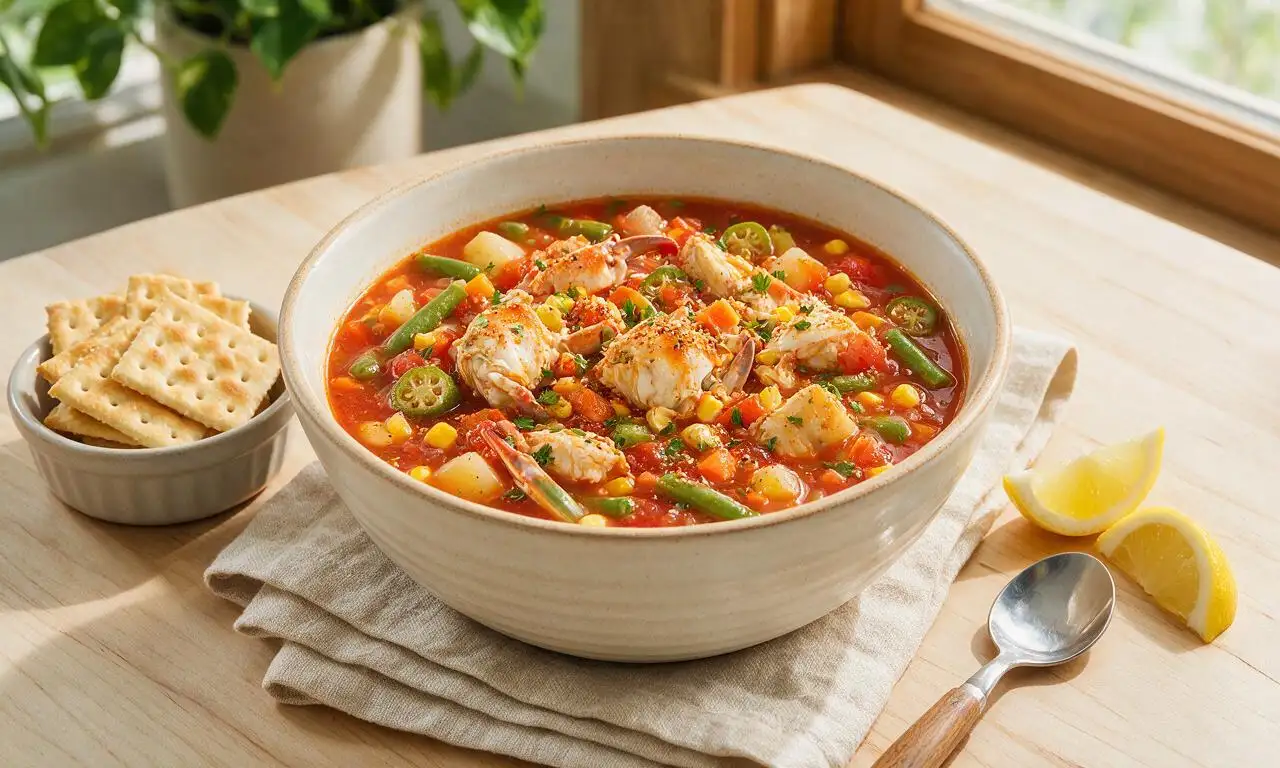

OMG this pozole rojo is a total game changer! Made it for our Sunday family dinner last night and even my super picky 7 year old asked for seconds. The red chile base has so much depth without being too spicy, which was perfect for the whole crew. 10/10 will be making this for our next neighborhood potluck too!
Was worried this would be too hard since it’s marked medium difficulty, but the steps were super straightforward! Cook time was right on the money at 2.5 hours, most of that is just simmering so you don’t have to stand over the stove the whole time. The hominy gets so tender and the pork falls apart perfectly. SO good.
Made a big batch of this for meal prep this week and it’s holding up so good in the fridge! Only question — can I freeze the leftover portions? I’ve got about 3 servings left I don’t want to go to waste.
Took this up to our cabin trip last weekend and served it with all the toppings — shredded cabbage, radishes, lime, cotija, a little cilantro. Everyone was raving so much people were asking for the recipe before we even finished eating. Worth every minute of cook time!
As someone who grew up eating my abuela’s pozole in southern California, I was skeptical a recipe online would measure up. This one is legit! I added a couple extra chiles de arbol to the base to kick the heat up a little, but the flavor profile is exactly the traditional taste I was craving. Will be making this again and again.
Help! I tried making this last night and my pork came out really tough, did I do something wrong? I followed the cook time but it was chewy instead of fall-apart tender. :(
Brought this to my office potluck yesterday and it was the first dish gone! People were hovering over the crockpot going back for thirds. I prepped all the toppings in little containers so people could customize their bowls, which worked out perfectly. So glad I found this recipe!
Wait, 2.5 hours cook time? I split the prep over two days — made the red chile base and browned the pork the night before, then threw everything in the pot after work the next day and let it simmer while I helped the kids with homework. Game changer for weeknights! Tasted like I spent all day cooking. My kids loved it, even asked if we can have it for their birthday dinner.
So happy this recipe is naturally gluten free! I’ve been looking for a traditional pozole recipe that doesn’t sneak in any weird thickeners or additives, and this fits the bill. The flavor is so rich and hearty, I didn’t even miss the tortilla chips I usually serve with soup (okay, I had a few, but that’s on me).
I’ve been trying to recreate the pozole my dad used to make for holidays when I was a kid, and this is the closest I’ve ever gotten! The only swap I made was using bone-in pork shoulder instead of boneless for extra flavor, and it turned out incredible. My dad even tried a bowl and said it tasted just like his mom’s recipe. 🥹