beef caldo

title 1
beef caldo
⏱️ cook time 1 hour 50 minutes
🍽️ servings 4
⚡ Difficulty easy

intro

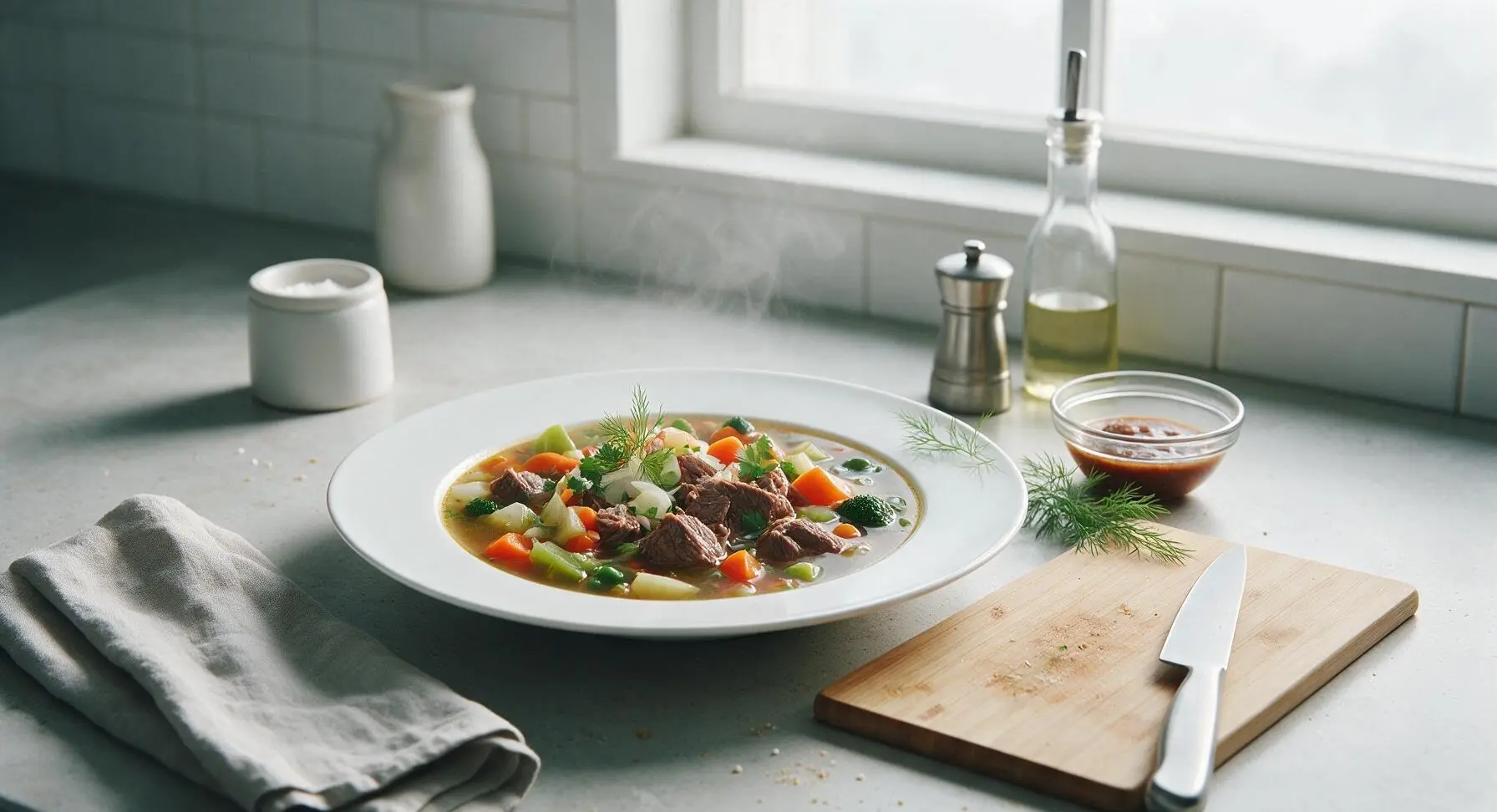
Warm, comforting Mexican beef caldo (caldo de res) with tender fall-apart beef, bright fresh vegetables, and clear, deeply savory broth, perfect for cozy cold-weather family meals.

Ingredients
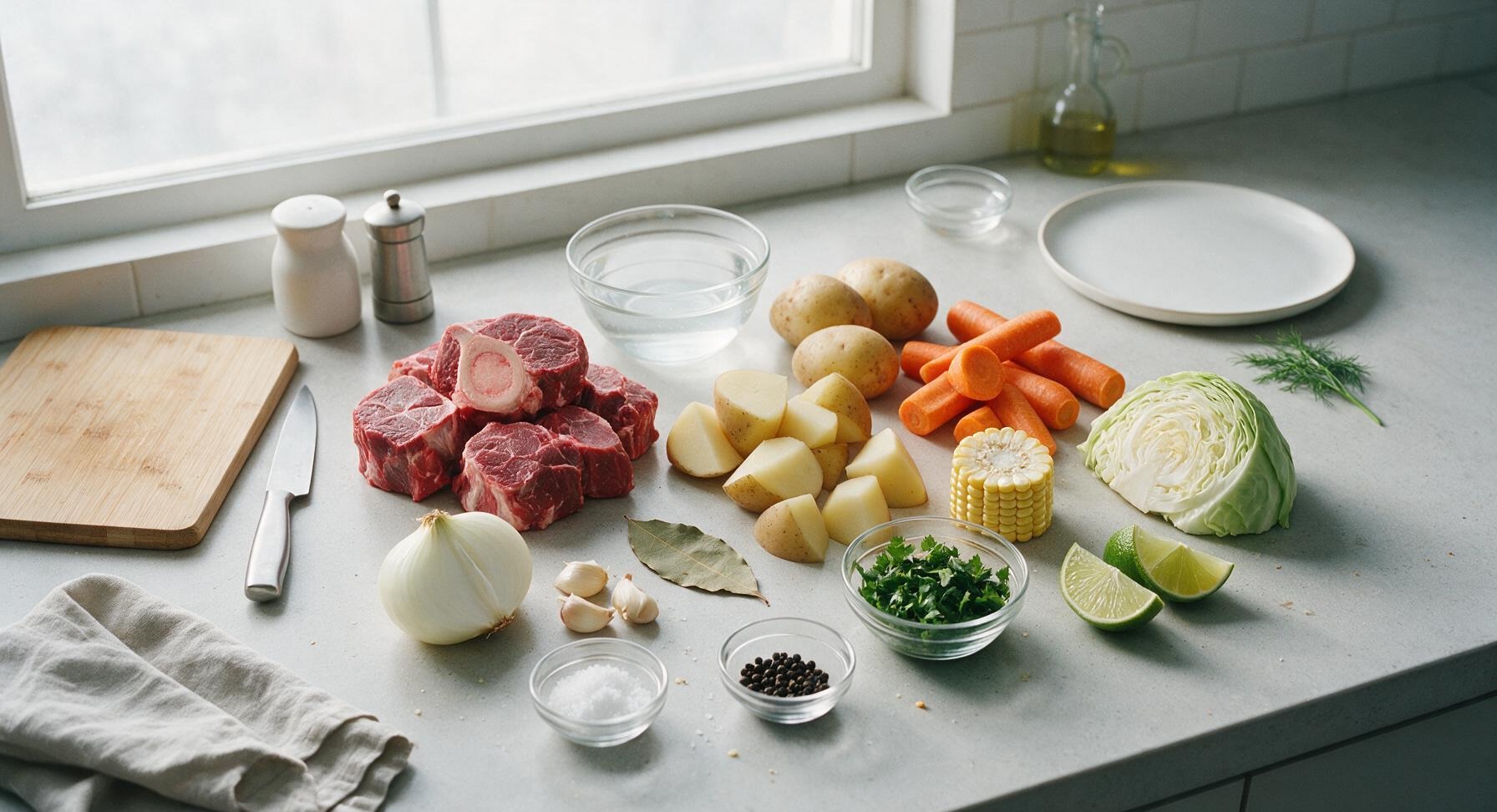
Bone-in beef shank, cut into 5cm chunks 1kg (2.2 lbs)
Cold water 2.5 liters (10 cups)
White onion, quartered 1 large (250g)
Garlic cloves, crushed 4 whole
Dried bay leaves 2
Kosher salt 1.5 tablespoons
Whole black peppercorns 1 teaspoon
Russet potatoes, peeled and cut into 5cm chunks 2 medium (350g)
Carrots, peeled and cut into 4cm chunks 2 large (200g)
Sweet corn, husked and cut into 4cm rounds 1 ear
Green cabbage, cored and cut into 5cm wedges 1/2 small head (300g)
Fresh cilantro, chopped 1/4 cup
Fresh limes, cut into wedges 2 whole

Steps

1

Sear Beef Chunks

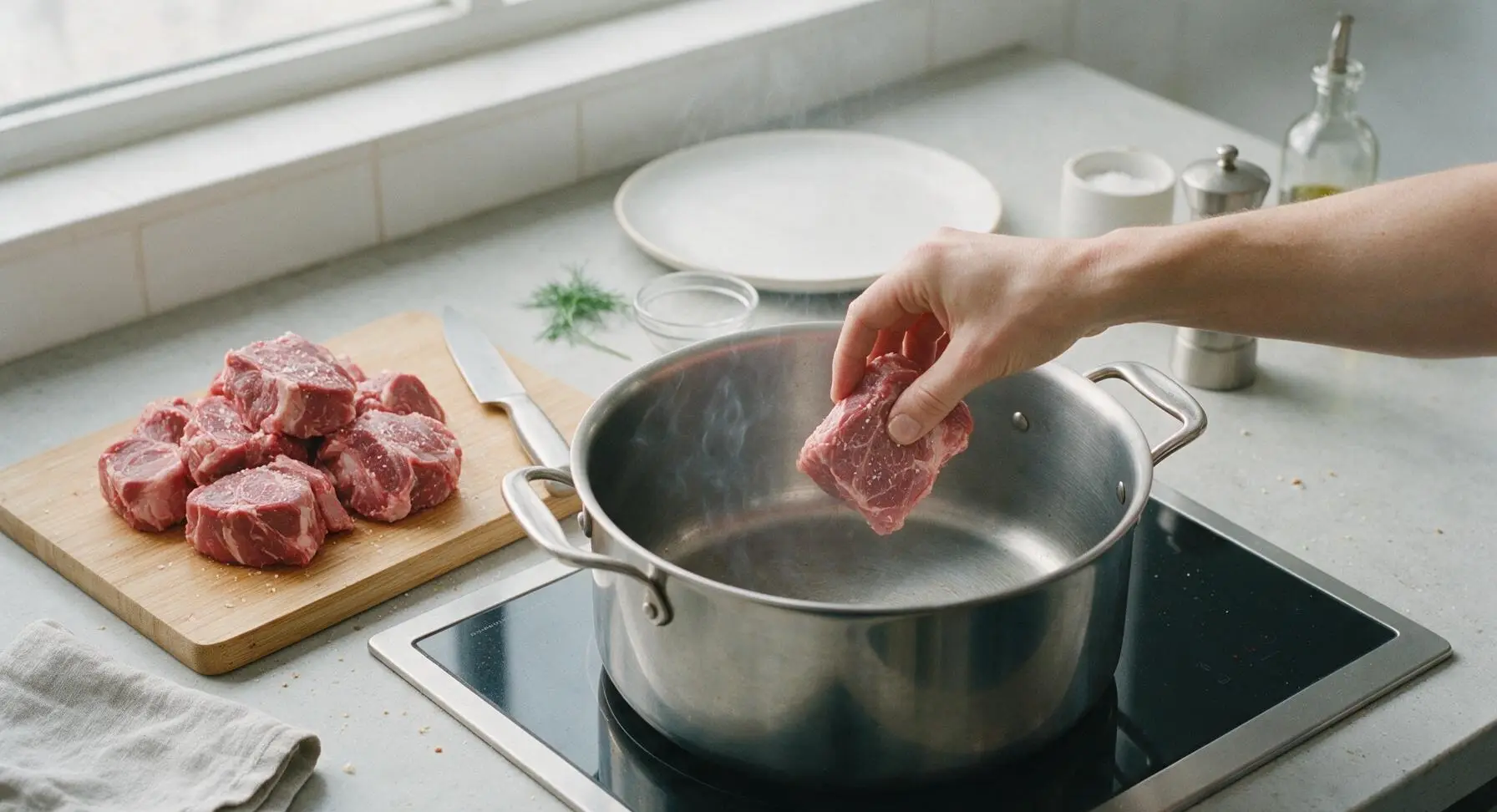
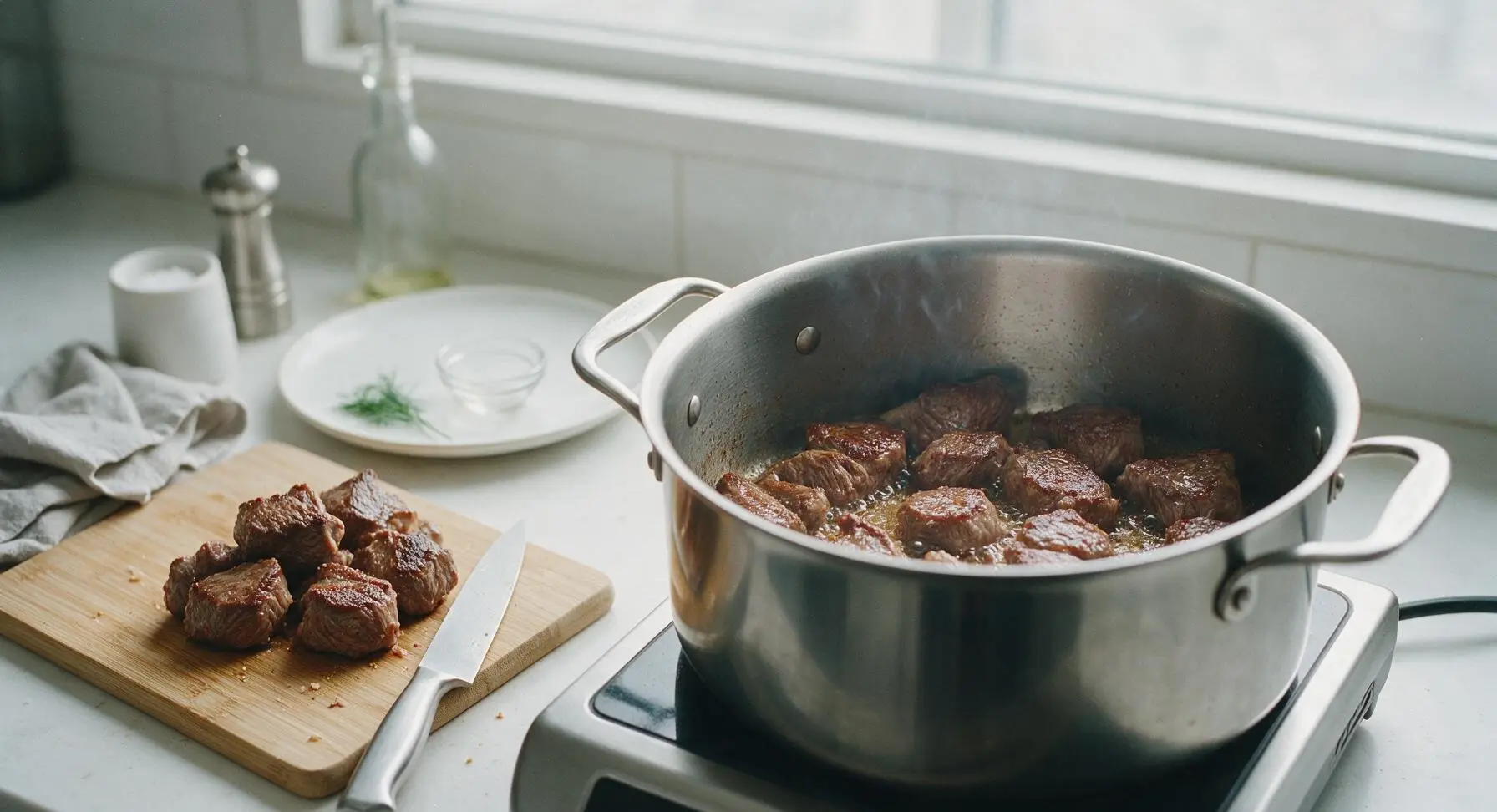
Pat the beef shank chunks completely dry with the cream kitchen towel, then season all sides with 1 teaspoon of the kosher salt. Place the 8-quart stainless steel stock pot on the induction burner set to medium-high (190°C/375°F). Once the pot is hot (faint heat haze rises when you hold your hand 2cm above the surface), arrange beef in a single layer, searing in 2 batches to avoid crowding the pot. Sear 3-4 minutes per side until a deep, even golden brown crust forms on all surfaces. Transfer seared beef temporarily to the acacia cutting board once done.
Step 1
step1:Sear Beef Chunks
Step 1
step1:Sear Beef Chunks
2

Simmer Broth Base

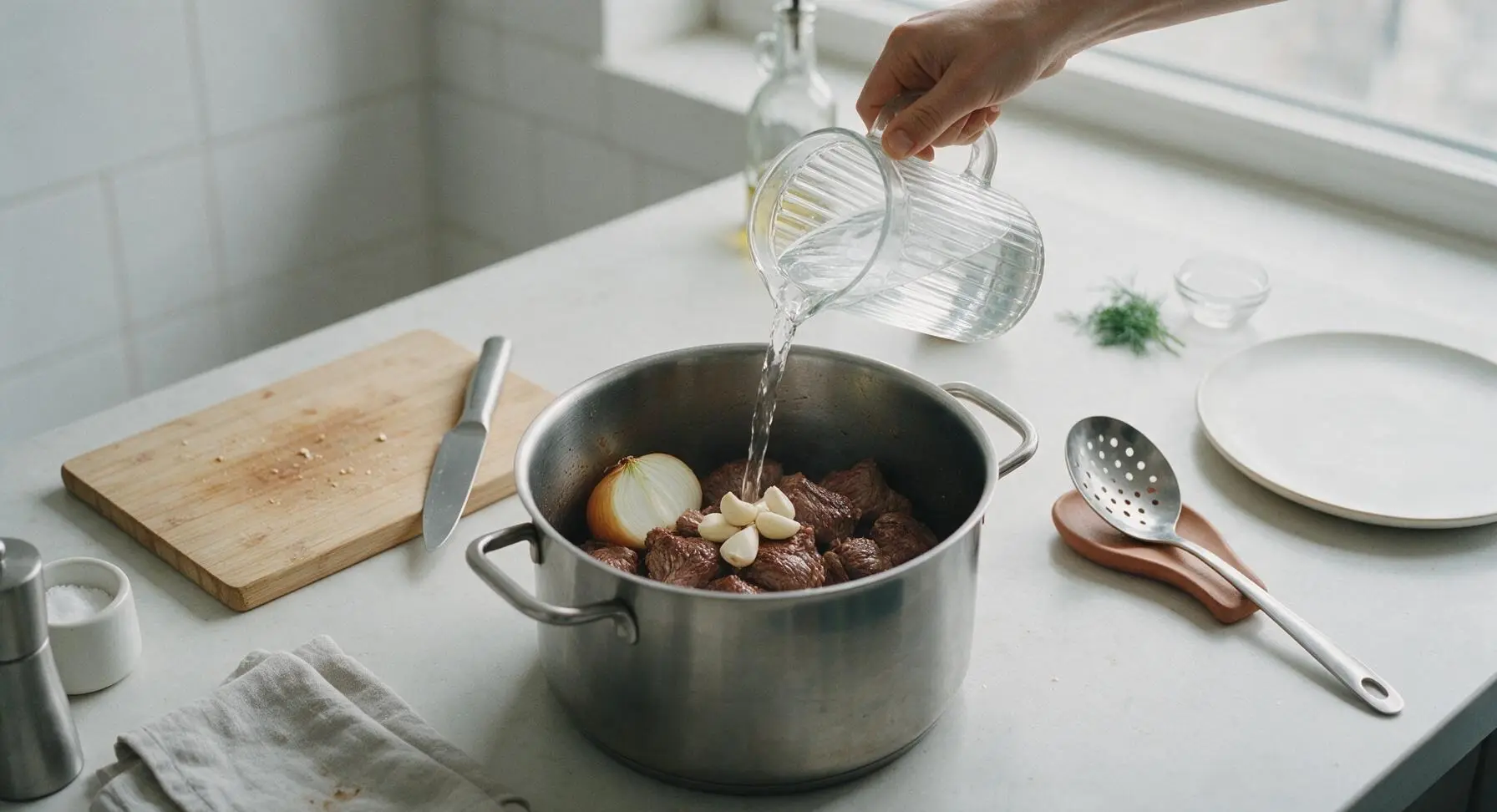
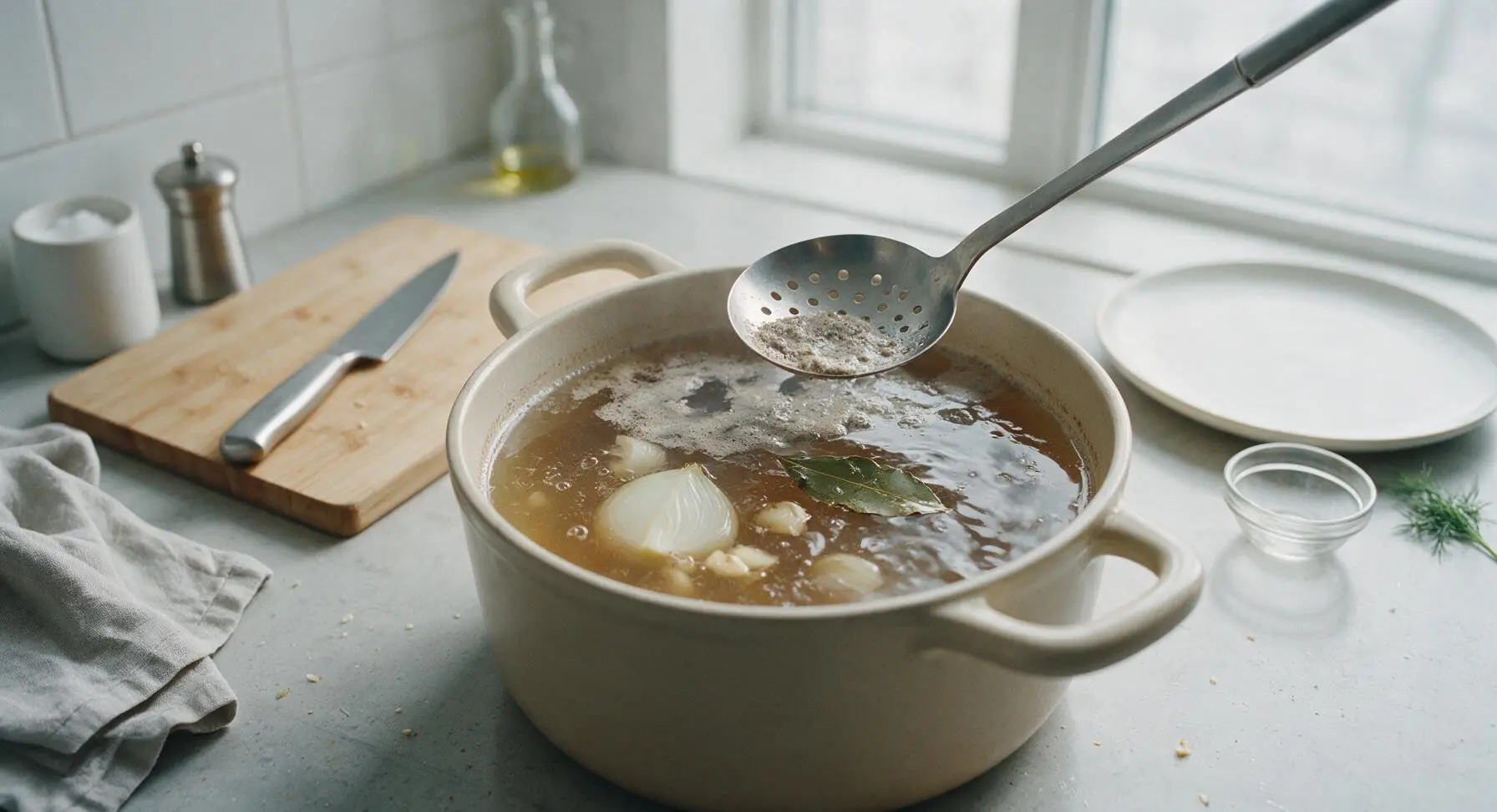
Return all seared beef chunks to the stock pot. Add the quartered white onion, crushed garlic cloves, 2 dried bay leaves, 1 teaspoon whole black peppercorns, and remaining 1.25 tablespoons kosher salt. Pour in 2.5 liters of cold water from the glass pitcher, ensuring the beef is fully submerged. Bring the liquid to a rolling boil, then immediately reduce heat to low (90°C/195°F) to maintain a gentle, steady simmer. Skim any gray foam that rises to the surface with the slotted ladle for the first 10 minutes of simmering. Cover the pot partially with a lid, and let simmer for 1 hour 15 minutes until the beef is almost fork-tender.
Step 2
step2:Simmer Broth Base
Step 2
step2:Simmer Broth Base
3

Add Root Vegetables

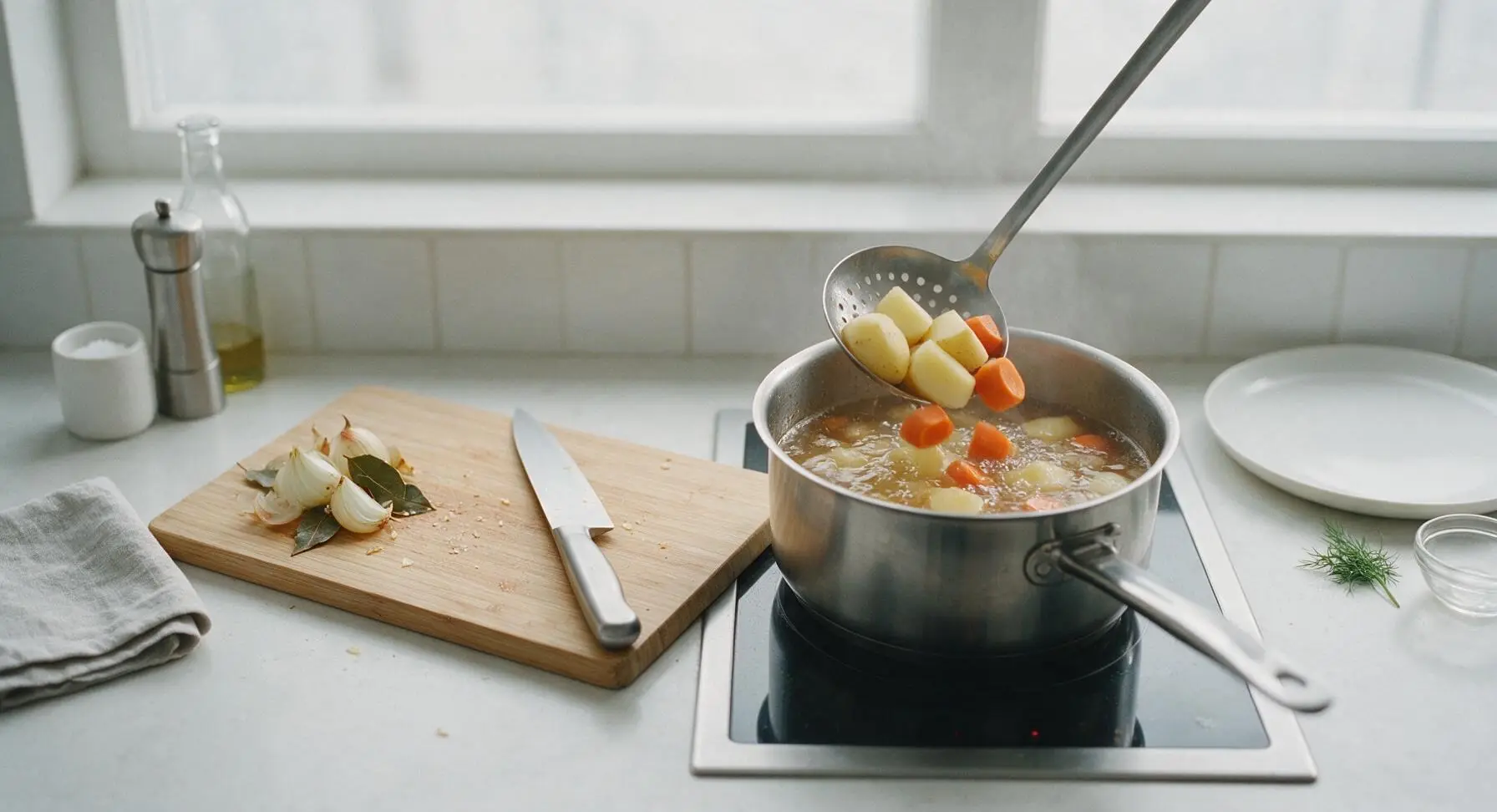
After 1 hour 15 minutes of simmering, remove the softened onion quarters and bay leaves from the broth with the slotted ladle and discard. Add the peeled, chunked russet potatoes and peeled, chunked carrots to the pot. Stir gently with the ladle to submerge the vegetables fully. Return to a gentle simmer, cover partially, and cook for 15 minutes until the potatoes are just tender when pierced with the tip of the chef’s knife, but not falling apart.
Step 3
step3:Add Root Vegetables
4

Add Corn and Cabbage

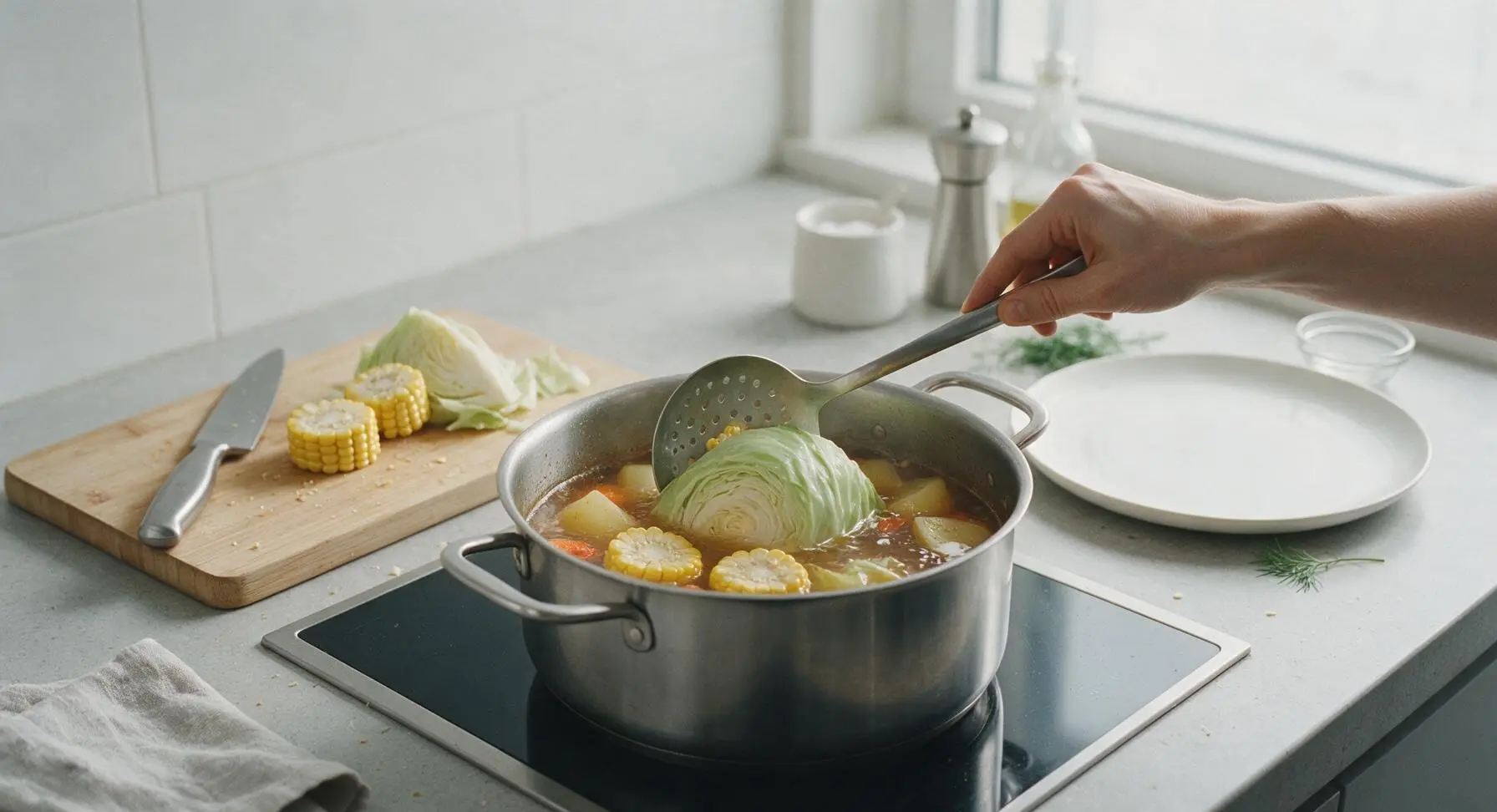
Once the potatoes and carrots have cooked for 15 minutes, add the corn rounds and cabbage wedges to the pot. Press the vegetables down gently with the ladle to submerge them in the broth. Simmer uncovered for an additional 10 minutes, until the cabbage is bright green and tender-crisp, and the corn is plump and cooked through. Taste the broth and adjust salt if needed, adding 1/4 teaspoon at a time to avoid over-salting.
Step 4
step4:Add Corn and Cabbage
5

Prep Fresh Garnishes

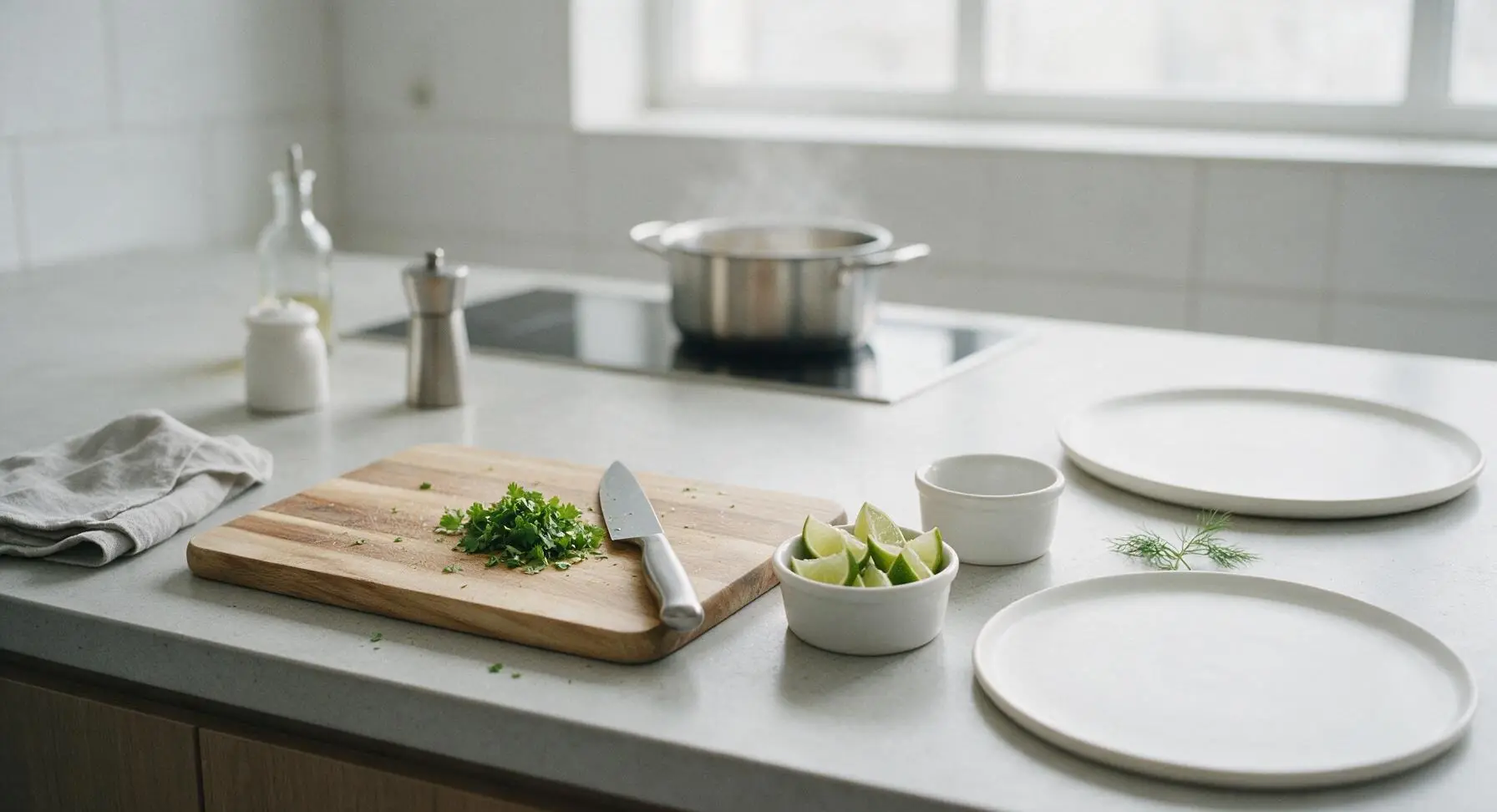
While the final vegetables simmer, chop 1/4 cup fresh cilantro on the acacia cutting board with the chef’s knife, and cut the 2 limes into 8 total wedges. Place the chopped cilantro and lime wedges into two of the small white ceramic ramekins for serving, so diners can add them to taste.
Step 5
step5:Prep Fresh Garnishes
6

Ladle and Serve

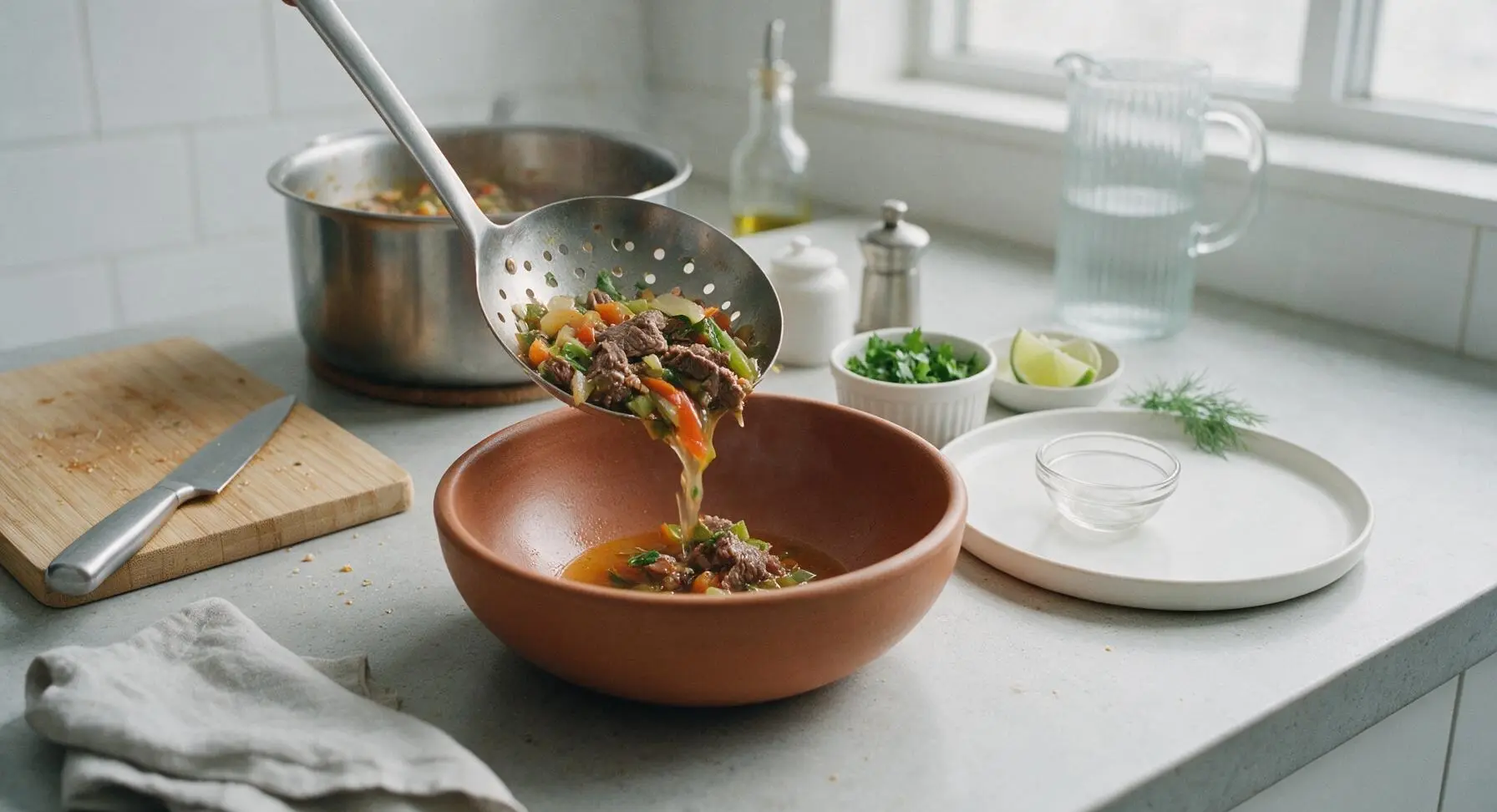
Turn off the heat under the stock pot. Place the matte terracotta soup bowl in the center of the counter. Use the slotted ladle to scoop a balanced mix of beef, potato, carrot, corn, and cabbage into the bowl, then ladle enough amber broth over the solids to come 3/4 of the way up the bowl sides. Top with a light sprinkle of chopped cilantro, and rest one lime wedge on the bowl rim for squeezing.
Step 6
step6:Ladle and Serve

Tips

1.Use bone-in beef shank rather than lean stew meat: the marrow and connective tissue in the shank melt during simmering to create a rich, silky broth and ultra-tender beef, while lean stew meat will turn dry and produce a thin, flat-tasting broth.
2.Keep the broth at a gentle simmer, not a rolling boil: a hard, bubbling boil will agitate fat and protein particles into the broth, making it cloudy and giving the beef a tough, stringy texture, while low, steady simmering yields a clear, clean broth and juicy meat.
3.Add vegetables in stages by cook time: dense root vegetables (potatoes, carrots) need longer to soften, while delicate corn and cabbage only need 10 minutes to cook, preventing mushy, overcooked vegetables that fall apart in the broth.
✨ You May Also Like

Soups & Stews
🍜 Japan

Rich, umami-dense Hokkaido-style miso ramen with chewy noodles, savory fermented broth, and classic toppings, a cozy, deeply satisfying warm meal.

⏱️ 45 minuteSoups & Stews ★ 4.5
Soups & Stews
🍜 United States

A hearty, peppery tripe and root vegetable stew with colonial Philadelphia roots, thick, warming, and packed with bold savory flavor for cold winter days.

⏱️ 2 hours 3Soups & Stews ★ 4.6
Soups & Stews
🍜 Mexico

Hearty, warming red pork posole loaded with tender hominy, slow-simmered in a rich smoky chile broth, served with zesty fresh garnishes for a deeply comforting, satisfying meal.

⏱️ 2 hours 3Soups & Stews ★ 4.7
Soups & Stews
🍜 United States

Warm, soothing classic chicken noodle soup loaded with tender chicken, soft egg noodles, and savory veggies, perfect for chasing chills and feeding the whole family.

⏱️ 40 minuteSoups & Stews ★ 4.9
Soups & Stews
🍜 France

Deeply savory caramelized onion broth topped with crusty bread and bubbly melted Gruyère, a timeless French bistro comfort food ideal for cold days.

⏱️ 1 hour 25Soups & Stews ★ 4.8
Soups & Stews
🍜 United States

Hearty, briny Maryland crab soup loaded with sweet blue crab, tender summer vegetables, and zesty Old Bay, a beloved Chesapeake Bay coastal comfort staple.

⏱️ 55 minuteSoups & Stews ★ 4.9

beef caldo:Frequently Asked Questions

1.What cut of beef is best for authentic caldo de res, and why? ▾
Bone-in beef shank cut into 5cm chunks is ideal for this recipe. The marrow from the center of the bones builds that rich, deep savory broth, and the collagen-rich connective tissue breaks down during slow simmering into that signature fall-apart tender texture. Skip lean boneless cuts—they’ll turn tough and dry, and won’t give you that classic hearty broth depth.
2.Why do recipes for caldo de res recommend starting with cold water instead of hot? ▾
Starting with cold water is critical for a clear, clean-tasting broth. As the water slowly heats, it draws out blood, impurities, and subtle flavor compounds from the beef and bones evenly. Dropping beef into hot water sears the outside immediately, trapping impurities inside and leading to cloudy, flat-tasting caldo that lacks depth.
3.How long do I need to simmer the beef to get that fall-apart tender texture? ▾
Plan for a low, gentle simmer of 2 to 2.5 hours for 5cm bone-in shank chunks. Never boil it rapidly—that will make the beef seize up and turn tough, and will make your broth murky. You’ll know it’s ready when you can pierce a chunk with a fork with almost no resistance, and meat pulls easily away from the bone.
4.Do I really need to skim the broth while it simmers? ▾
Absolutely. As the broth first comes to a low simmer, you’ll see foamy, grayish scum rise to the surface—this is coagulated protein and impurities that would make your broth cloudy and slightly bitter if left in. Use a fine mesh skimmer or shallow spoon to scoop that off every 10 minutes for the first 30 minutes for the clearest, cleanest broth.
5.Can I make this caldo in a slow cooker instead of on the stovetop? ▾
You absolutely can, and it’s a fantastic hands-off option. Brown the beef chunks first if you want extra depth, then add your base aromatics (onion, garlic, bay leaves) and cold water, and cook on LOW for 6 to 7 hours until the beef is fall-apart tender. Add softer vegetables during the last 45 minutes so they don’t turn mushy.
6.What vegetables are traditional to add to caldo de res? ▾
Traditional caldo de res uses sturdy, bright veggies that hold up to gentle simmering: corn on the cob chunks, potato wedges, carrot slices, chayote, zucchini, and green cabbage are all classic. Add sturdier veggies like carrots and potatoes 30 minutes before the beef is done, and softer ones like zucchini and cabbage in the last 15 minutes to keep their bright texture.
7.Why is my caldo broth cloudy instead of clear? ▾
Cloudy broth almost always comes from one of three missteps: boiling the caldo too rapidly instead of keeping it at a low, gentle simmer, skipping skimming the initial foam and impurities off the top in the first 30 minutes, or starting with hot instead of cold water. You can fix it by straining finished broth through a cheesecloth-lined sieve for a perfectly clear result.
8.Can I use store-bought beef broth instead of water for extra flavor? ▾
I don’t recommend it, actually. Most store-bought beef broth is overly salty and has a flat, processed flavor that will overpower the delicate, fresh savoriness you get from slow-simmering bone-in shank and simple aromatics. Starting with cold water lets the natural flavor of the beef, onion, garlic, and bay leaves shine for a more authentic, balanced caldo.
9.How do I use the marrow from the beef shank bones in the caldo? ▾
Once the beef is done simmering, scoop the soft, creamy marrow out of the center of the shank bones with a small spoon. You can stir it directly into the broth to add extra richness, or spread it on warm corn tortillas to serve alongside the caldo. It’s one of the best, most underrated parts of this dish—don’t let it go to waste!
10.What’s the best way to serve caldo de res? ▾
Serve it piping hot in wide, deep bowls, with lime wedges for squeezing, chopped fresh cilantro, diced white onion, and warm corn tortillas on the side. Many people also set out small dishes of spicy red salsa or pickled jalapeños for anyone who wants to add a bright, zesty kick to their bowl. It’s perfect for family-style, serve-yourself meals.
11.Can I make this caldo ahead of time, and how well does it store? ▾
This caldo actually tastes even better the next day, as the flavors meld together as it chills. Store it in sealed airtight containers in the fridge for up to 4 days, or freeze it for up to 3 months. When you reheat, bring it slowly to a low simmer; any solidified fat on top can be skimmed off easily if you prefer a lighter broth.
12.Do I need to brown the beef before simmering it for caldo? ▾
Traditional caldo de res doesn’t call for searing or browning the beef first, which is what keeps the broth light and clear instead of dark and heavy like a beef stew. If you prefer a deeper, slightly nuttier beef flavor, you can quickly sear shank chunks over high heat before adding cold water, though this will make your broth slightly darker.
13.What can I substitute for beef shank if I can’t find it at my grocery store? ▾
If bone-in beef shank is hard to track down, use bone-in beef chuck roast cut into 5cm chunks, plus 1 to 2 split beef marrow bones to add that rich broth depth. Avoid very lean cuts like eye of round or sirloin, as they won’t break down into that tender, fall-apart texture and will leave your broth lacking that signature savoriness.
14.When should I add salt to the caldo, and how much should I use? ▾
Wait to add salt until the very end of cooking, after the beef is fully tender and you’ve added all your vegetables. Salting too early can draw moisture out of the beef as it simmers, leading to tougher meat, and the broth concentrates as it simmers, making it easy to over-season. Start with 1 teaspoon of kosher salt, taste, and adjust until the broth tastes bright and savory.
15.Why do you use white onion, garlic, and bay leaves as the base aromatics? ▾
Those three simple aromatics are the classic flavor base for caldo de res because they add warm, subtle savoriness without overpowering the beef and fresh vegetable flavors. Quartered white onion adds mild, sweet depth, crushed garlic adds gentle warmth, and dried bay leaves add a subtle earthy note that ties all the other flavors together without standing out on its own.
16.My beef came out tough instead of tender—what did I do wrong? ▾
Tough beef in caldo almost always comes from either cooking it too fast at a rolling boil, which makes the muscle fibers seize up, or not simmering it long enough for the tough collagen in the shank to break down into silky, tender gelatin. If your beef is tough, just keep it at a low, gentle simmer for another 30 to 45 minutes, and it will soften right up.

Comments (5)

1 week ago

I’ve never made caldo de res before and was so intimidated, but this recipe was truly easy to follow just like the difficulty label says! I messed up and cut the carrots a little too big, but they still cooked all the way through in the listed time. Served it with warm corn tortillas, and my roommate said it’s better than the caldo we get at our favorite local taqueria. I’m so proud of how it turned out!

5 days ago

Right?! I was also super nervous to make caldo for the first time, but this recipe is so forgiving even if you mess up veggie sizes. Warm corn tortillas on the side are non-negotiable for me too—best way to soak up every last drop of that delicious broth!

3 days ago

Total game changer for my weekday meal prep! I was worried the 1 hour 50 minute cook time would be too long to pull off on a Sunday, but it’s actually super easy and mostly hands off. I portioned it out for 5 days of lunches, and my coworkers kept stopping by my desk asking what smelled so amazing. The only small tweak I made was tossing in a handful of chopped cilantro right before serving. 10/10 will be on my regular rotation all season.

2 days ago

Love that this works so well for your meal prep routine! This caldo holds up beautifully in the fridge because the flavors keep melding as it sits, so it actually tastes better a day or two after cooking. Cilantro is such a perfect fresh add, great call!

2 days ago

OMG this caldo is SO good! I made it last night for our weekly family dinner after my oldest’s soccer game, and even my super picky 7 year old asked for seconds. I squeezed a little extra lime on top like my abuela used to do, and it was perfect. Exactly the cozy meal we needed for that random cold snap that hit Texas this week!

yesterday

The extra lime is such a chef’s touch! I made this last week and forgot to pick up limes on my grocery run, it was still great but I bet that brightens up the rich broth so much. Gonna add that to my batch I’m making for our neighborhood potluck this weekend!

yesterday

So glad your whole family loved it! A squeeze of fresh lime is definitely the classic finishing touch that makes all the savory beef and veggie flavors pop. Hope your potluck batch is a total hit!

2 hours ago

My kids loved it! I made this on a rainy Saturday after we spent the morning at the pumpkin patch, and everyone cleaned their bowls. I added a couple of extra potatoes because my family is obsessed with potatoes, and it worked perfectly. Knocked off one star because I wish the recipe noted how much salt to add to taste— I undersalted my first batch, but once I adjusted it was perfect. Next time I make it I’ll add a jalapeño for a little kick, since we love spicy food in our house.

30 minutes ago

Ugh I did the same thing with the salt! I added a little too much at first and had to dilute it with extra broth, but it still turned out amazing. The jalapeño add is such a good call, I did that last batch and it was chef’s kiss.

just now

So glad your family loved the recipe! Great note about the salt— I’ll add a tip to the recipe card reminding folks to season to taste as they go, since salt levels can vary a lot based on the beef broth you use. Hope the jalapeño adds the perfect kick for your next batch!

5 minutes ago

Made this for my girlfriend’s birthday dinner since she’s been craving caldo for weeks, and she said it tasted exactly like her grandma’s. The beef came out so tender, and the broth had such deep flavor even though it only cooks for just under 2 hours. I was worried I’d have to simmer it all day to get that richness, but nope, this recipe nails it. Served it with lime wedges, diced white onion, and hot sauce on the side, just like she likes it.