beef panang curry

title 1
beef panang curry
⏱️ cook time 25 minutes
🍽️ servings 4
⚡ Difficulty medium

intro

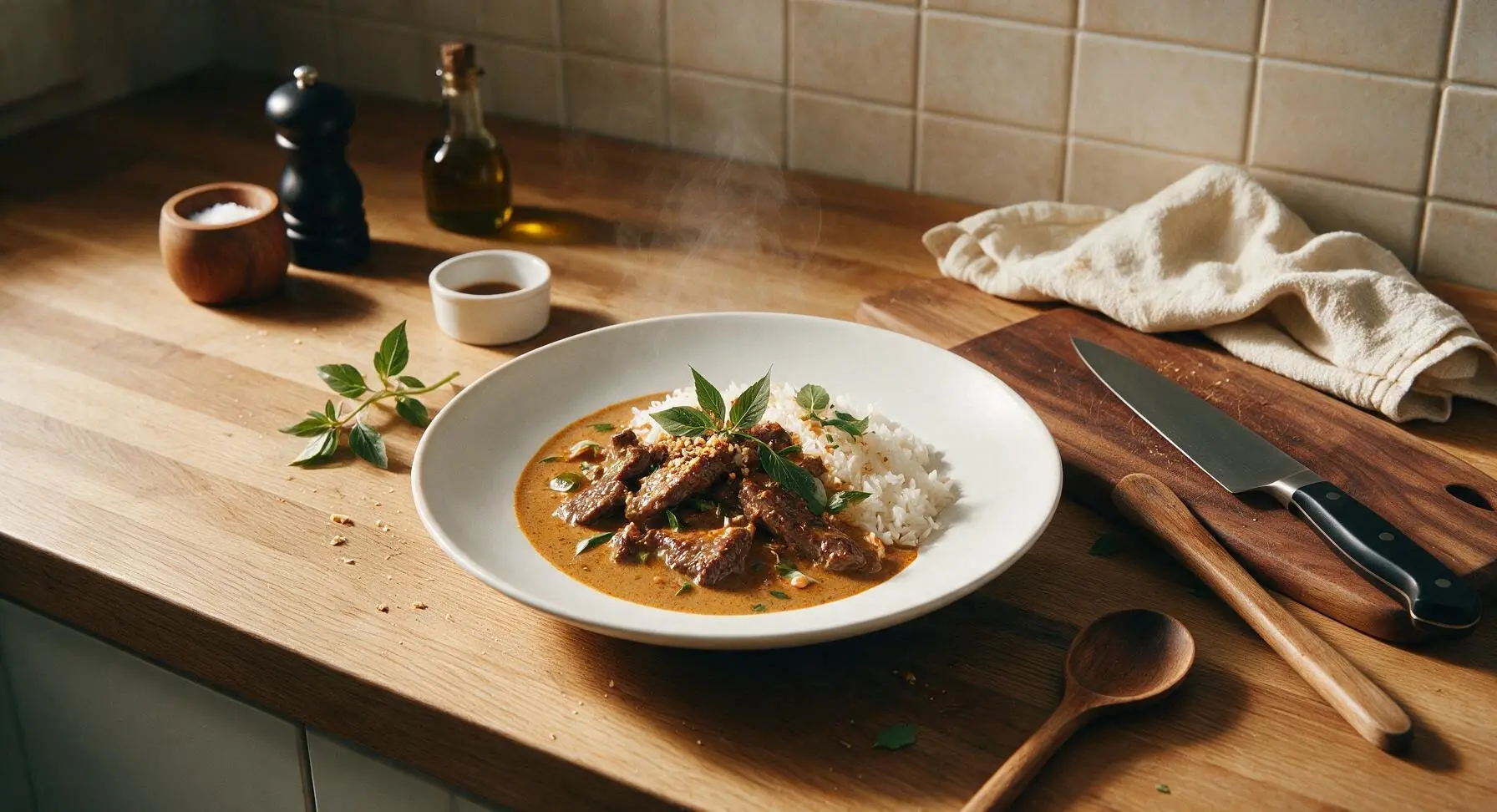
Rich, creamy, nutty Central Thai beef panang curry with tender seared beef, warm spice notes, and a glossy coconut sauce, served with jasmine rice for a satisfying, restaurant-quality meal.

Ingredients
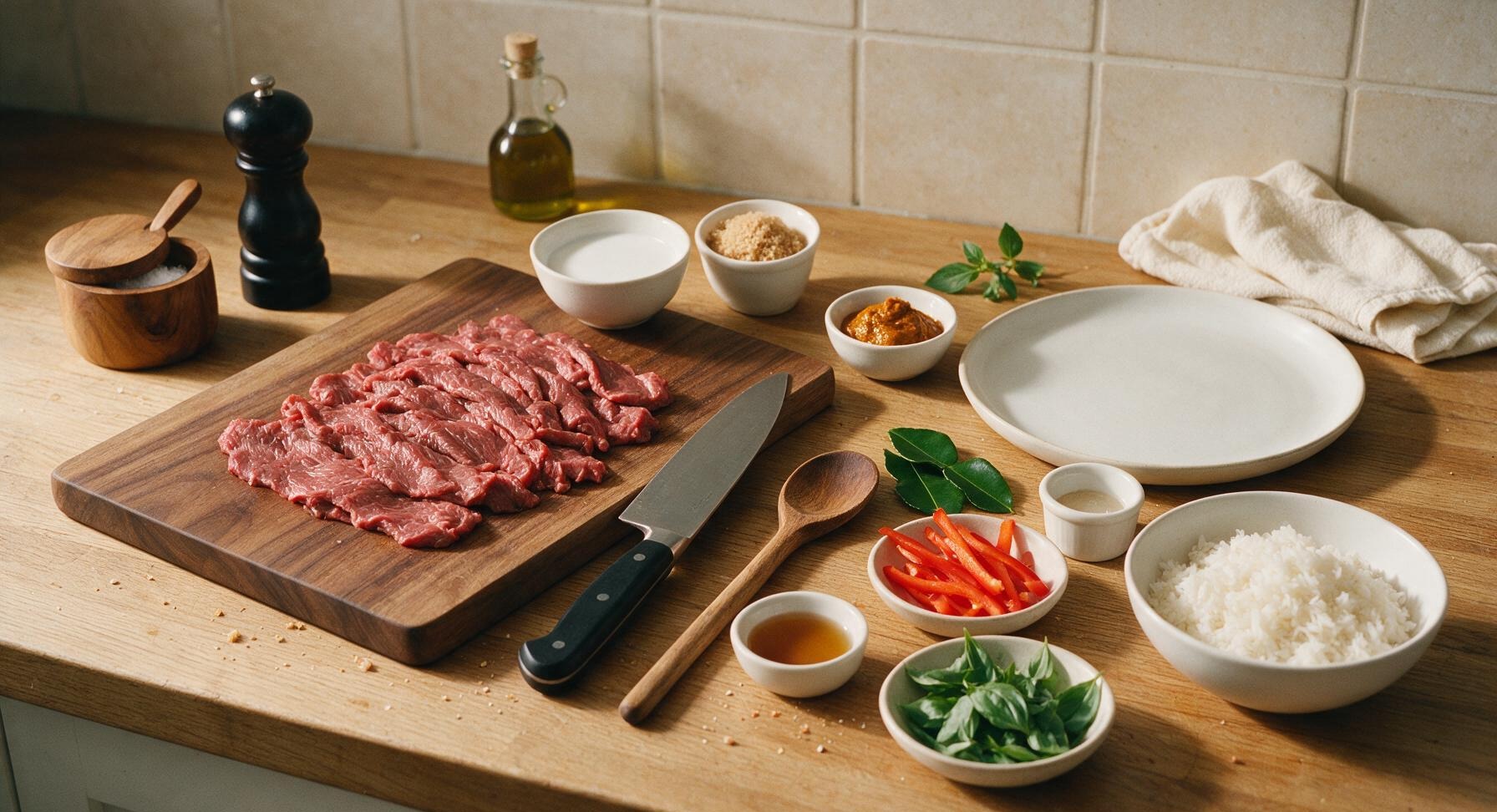
Beef flank steak, thinly sliced against the grain 500g
Full-fat coconut milk, shaken well 400ml (1 can)
Premium panang curry paste 3 tbsp
Grated palm sugar (light brown sugar as substitute) 2 tbsp
Fish sauce 2 tbsp
Kaffir lime leaves, central vein removed 4 leaves
Red bell pepper, sliced into thin strips 1 small (120g)
Fresh Thai basil leaves, packed 1/2 cup
Cooked jasmine rice, for serving 2 cups

Steps

1

Prep All Ingredients

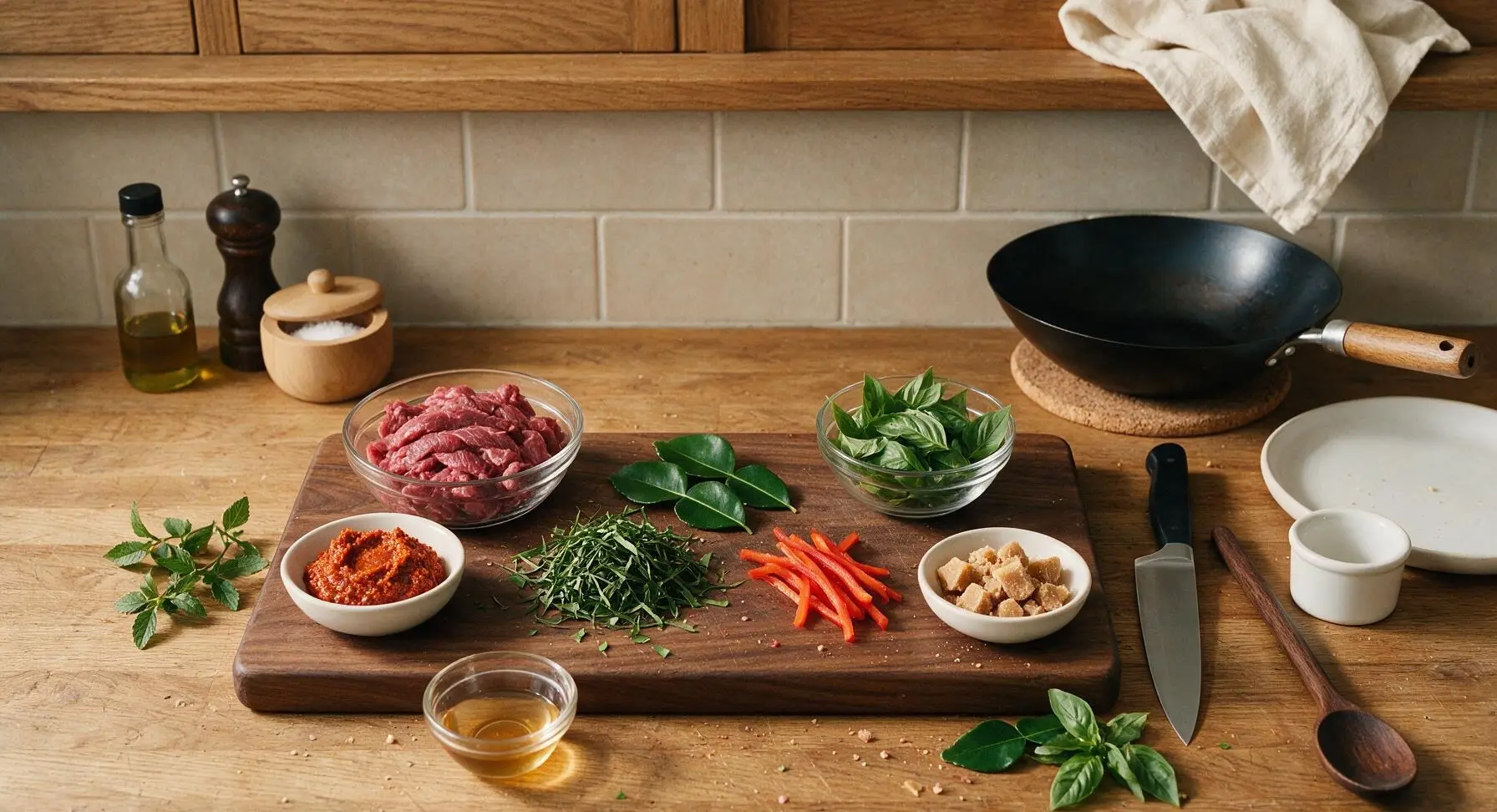
Set the teak cutting board in its fixed front-center position. For easiest slicing, place the flank steak in the freezer for 20 minutes first to firm it (inactive time), then slice against the grain into uniform 3mm thin slices, and set aside in a small glass bowl. Tear kaffir lime leaves to remove their thick, fibrous central veins, finely shred half and leave the other half whole. Slice the red bell pepper into 5mm thin strips, and pluck Thai basil leaves from their woody stems. Measure out curry paste, palm sugar, and fish sauce into small prep containers to have all components ready before heating the wok, to avoid burning ingredients mid-cook.
Step 1
step1:Prep All Ingredients
2

Simmer Coconut Cream

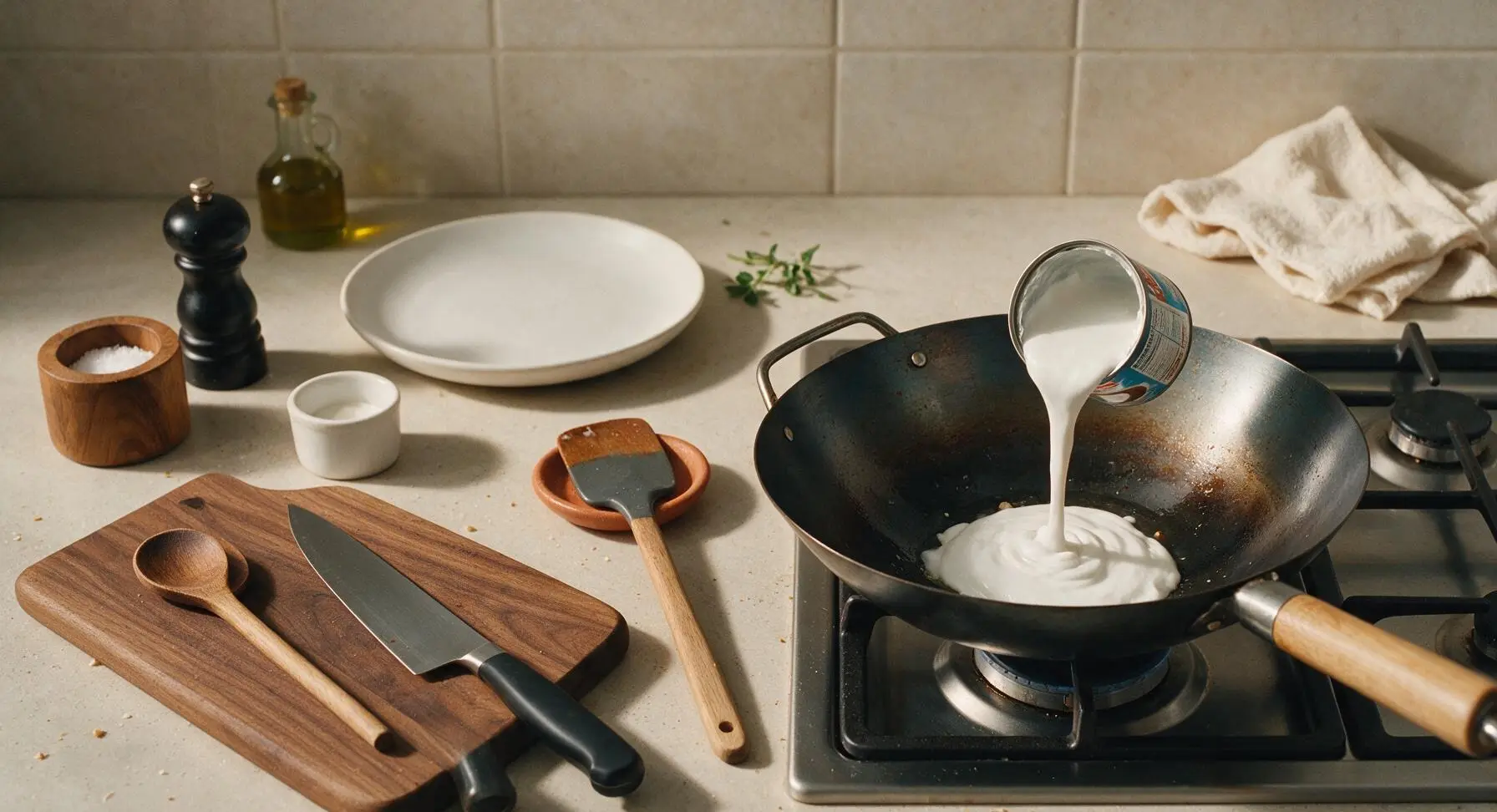
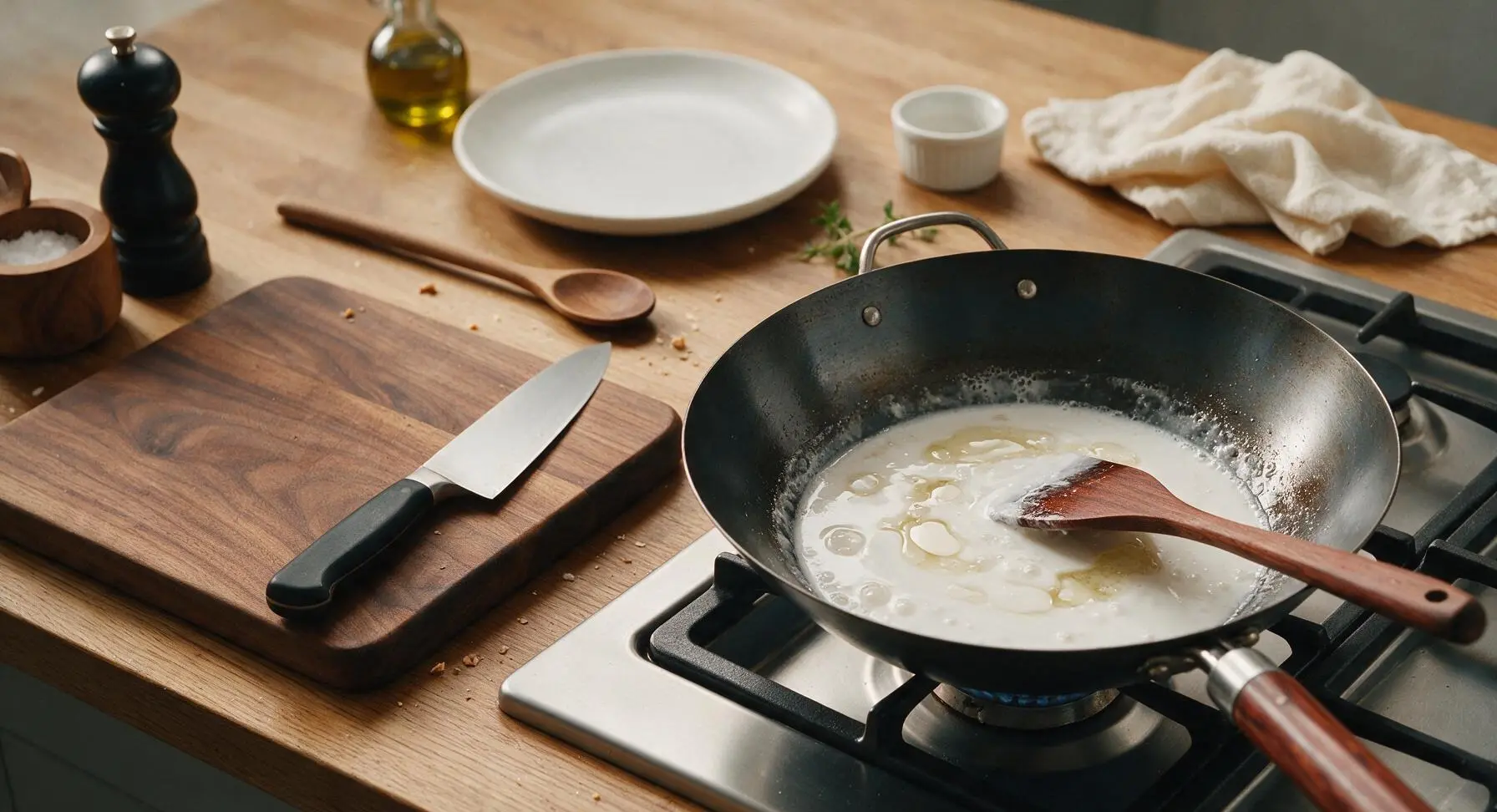
Move the carbon steel wok from its cork mat to the right burner of the gas cooktop, and heat over medium heat (160C/325F). Open the can of shaken coconut milk, and scoop the thick, dense top layer of coconut cream (approximately 1/2 cup) into the hot wok. Simmer for 3-4 minutes, stirring gently with the rosewood-handled wok spatula, until the coconut cream breaks and small, glistening pools of clear coconut oil rise to the surface. This separation step is critical to creating a rich, glossy curry base rather than a watery, diluted sauce.
Step 2
step2:Simmer Coconut Cream
Step 2
step2:Simmer Coconut Cream
3

Fry Curry Paste

Add the 3 tablespoons of panang curry paste to the separated coconut cream and oil in the wok. Stir continuously with the wok spatula over medium heat for 2 full minutes, mashing the paste against the side of the wok to fully incorporate it into the oil, until the mixture deepens to a glossy rust-red color and a strong, nutty, spicy aroma rises from the pan. Keep heat at medium to avoid burning the paste, which will create a harsh, bitter flavor in the finished curry.
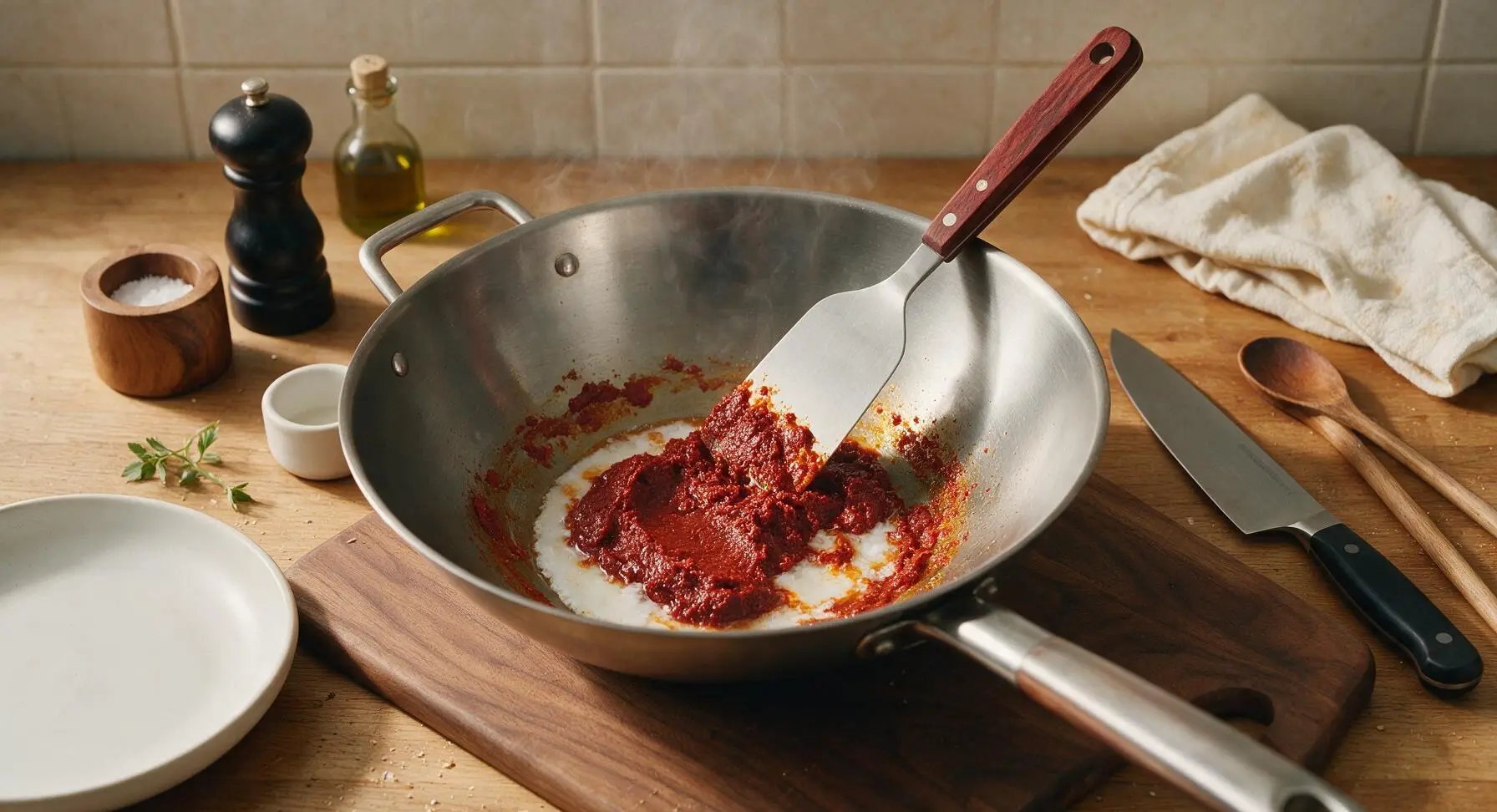
Step 3
step3:Fry Curry Paste
4

Sear Beef Slices

Add all the thinly sliced flank steak to the wok, tossing continuously with the spatula to coat every slice evenly in the curry paste oil mixture. Sear for 3-4 minutes over medium-high heat, until the beef is lightly browned at the edges and no longer pink on the surface. If your wok is smaller than 28cm, cook the beef in two separate batches to avoid overcrowding, which will cause the meat to steam instead of sear and turn chewy.
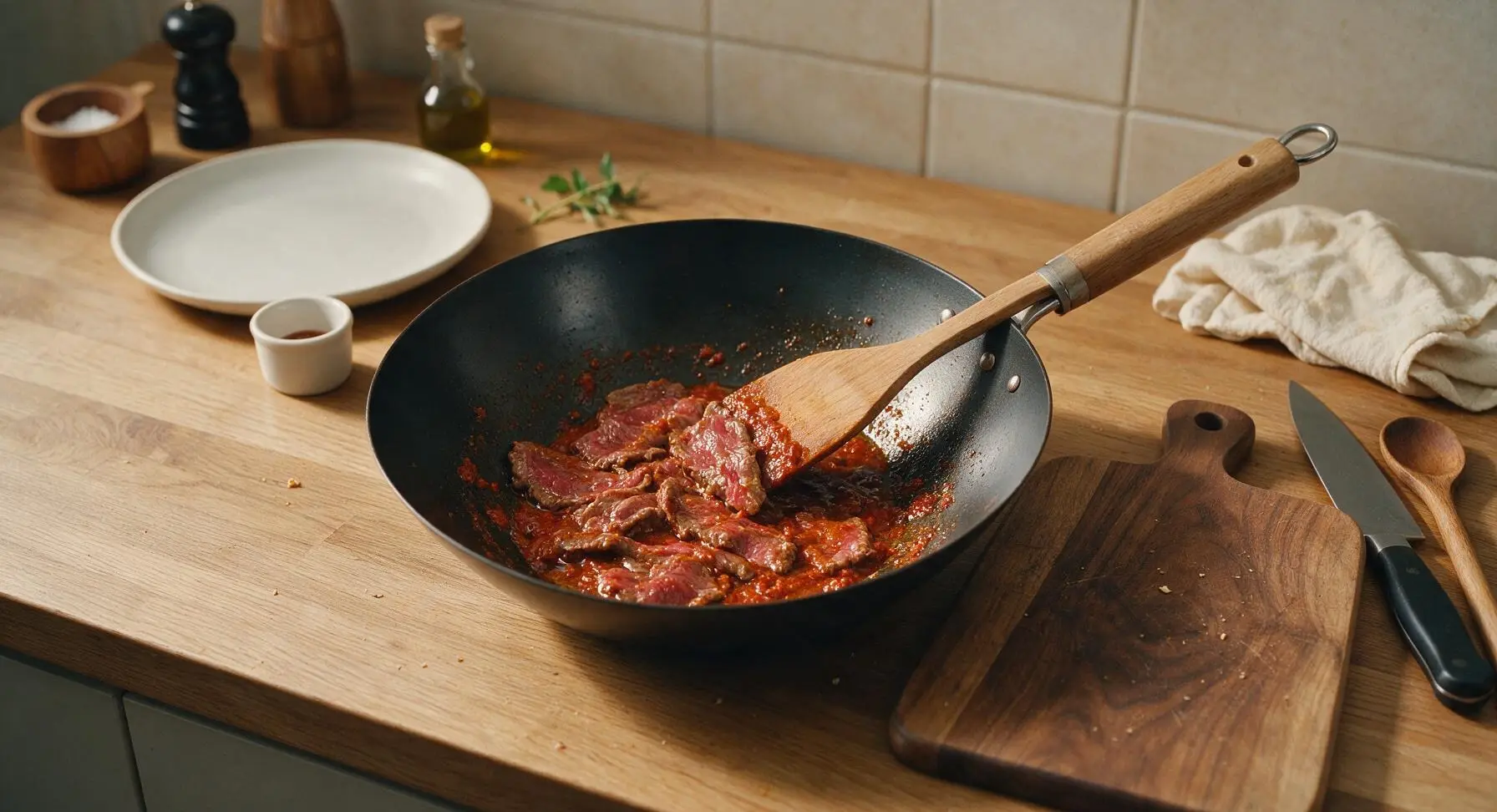
Step 4
step4:Sear Beef Slices
5

Simmer Curry Base

Pour the remaining thinner coconut milk from the can into the wok, stirring to combine with the seared beef and paste. Add the reserved whole kaffir lime leaves and sliced red bell pepper, stir once to distribute, then bring the liquid to a gentle simmer (small bubbles breaking every 2 seconds, not a violent rolling boil). Reduce heat to medium-low (130C/265F) and simmer for 8 minutes, stirring occasionally, until the beef is tender and the sauce thickens enough to lightly coat the back of a spoon.
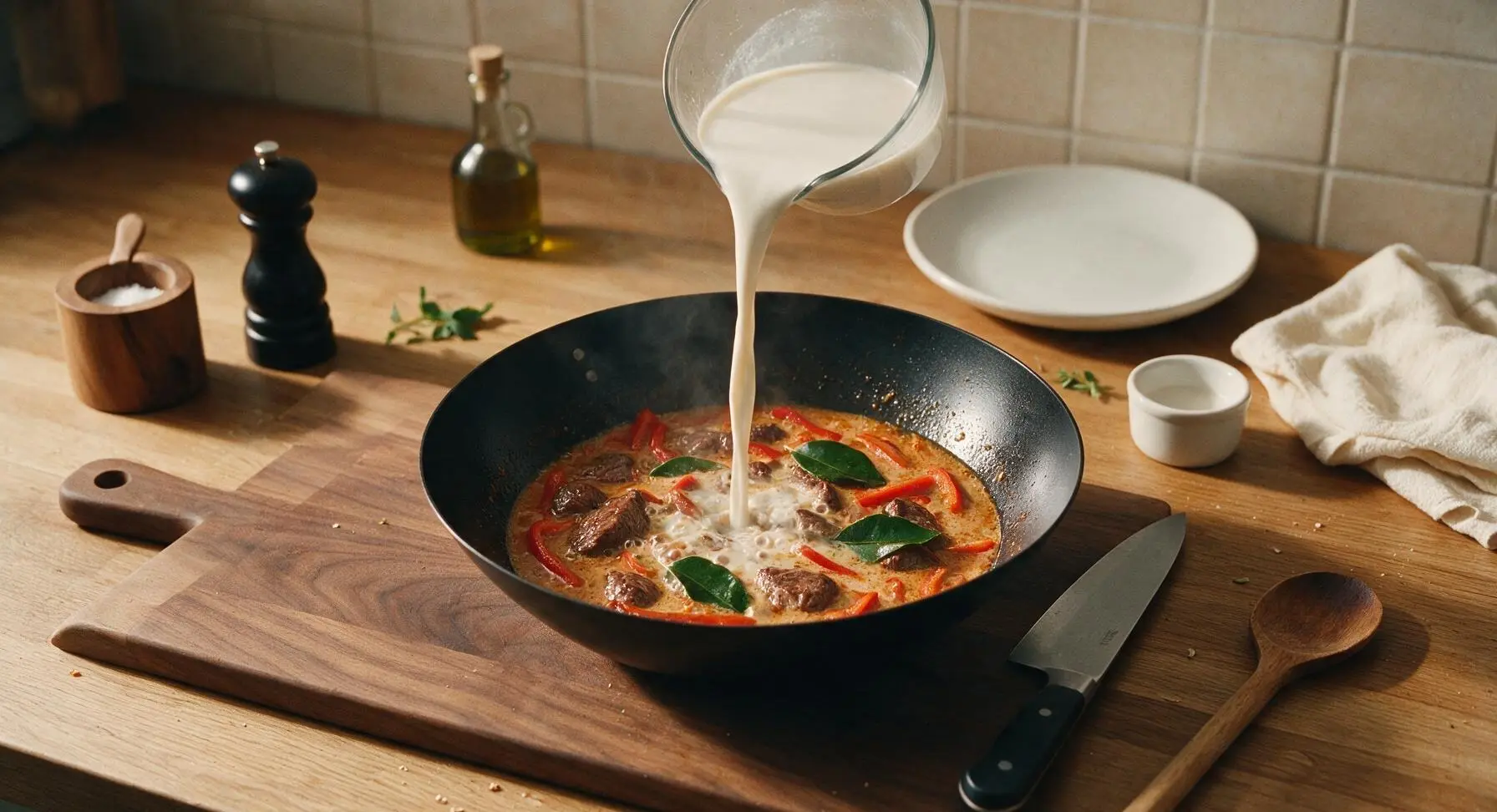
Step 5
step5:Simmer Curry Base
6

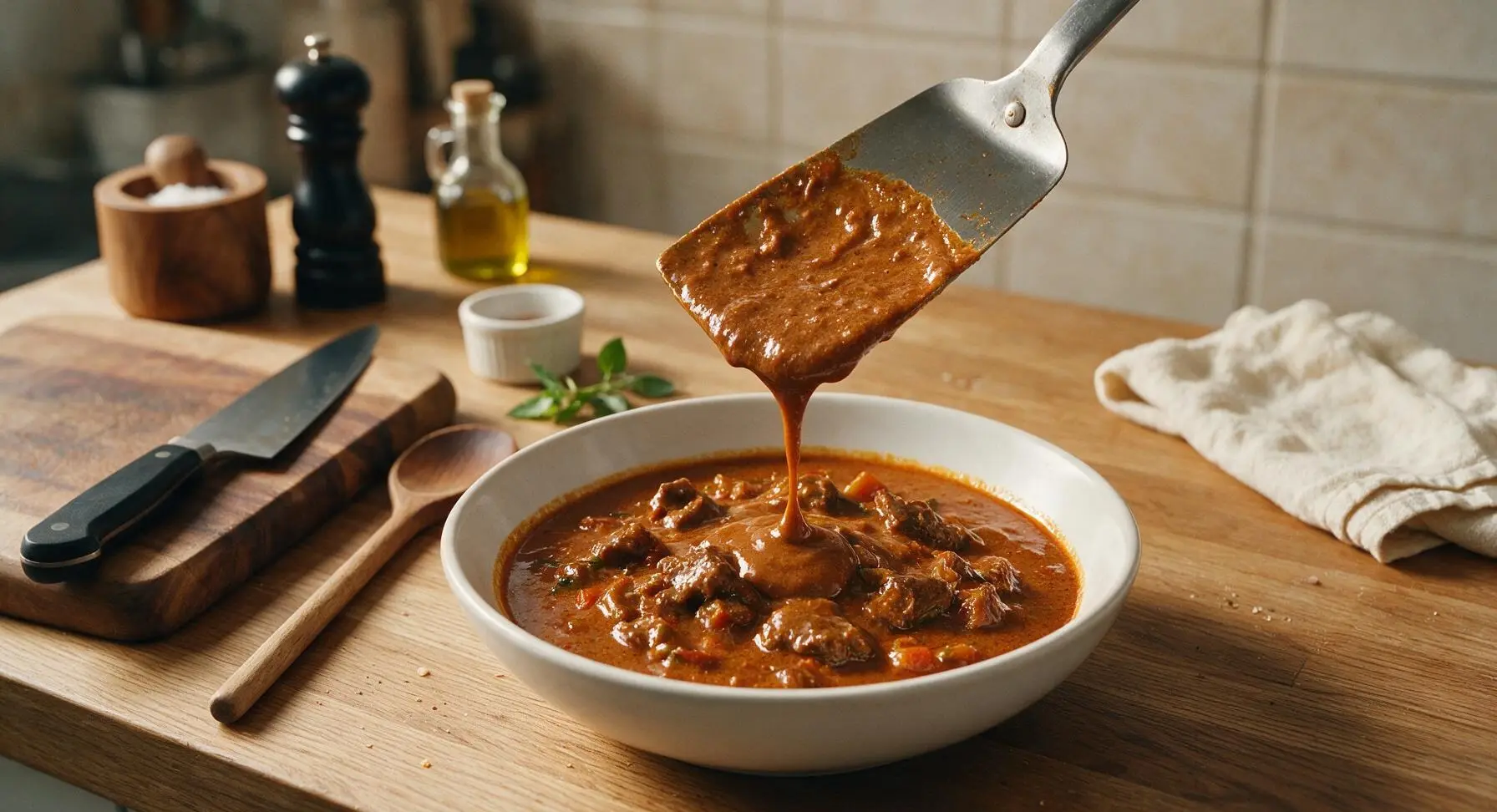
Balance Curry Seasoning

Stir in the 2 tablespoons of grated palm sugar and 2 tablespoons of fish sauce, mixing until the sugar fully dissolves into the sauce. Taste the curry carefully: it should have a balanced profile of salty, sweet, nutty, and mild heat. Adjust as needed—add extra fish sauce for more salt, more palm sugar for sweetness, or a tiny pinch of salt if the flavor tastes flat. Simmer for 2 additional minutes to let the seasonings meld into the sauce.
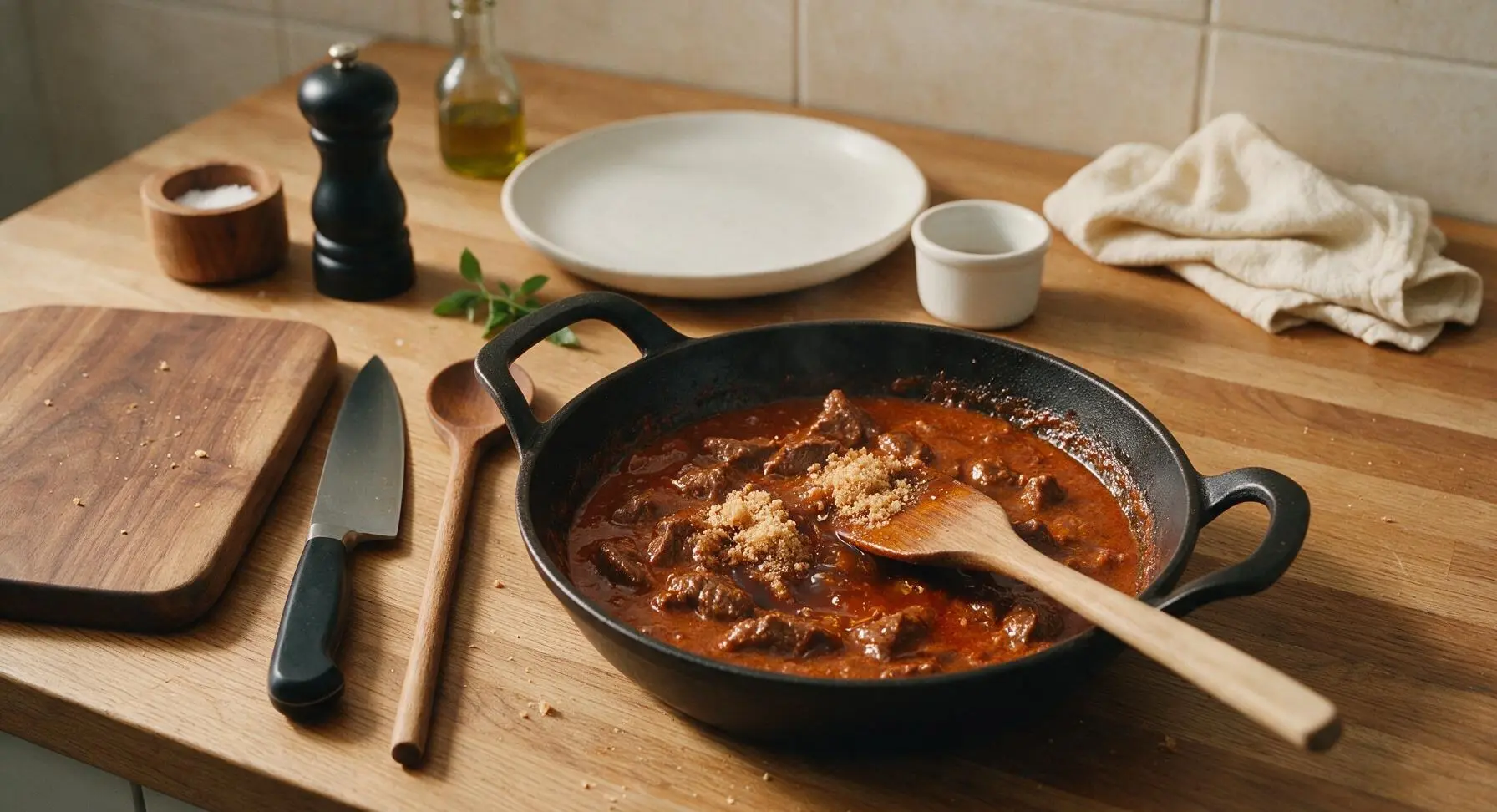
Step 6
step6:Balance Curry Seasoning
Step 6
step6:Balance Curry Seasoning
7

Add Fresh Thai Basil

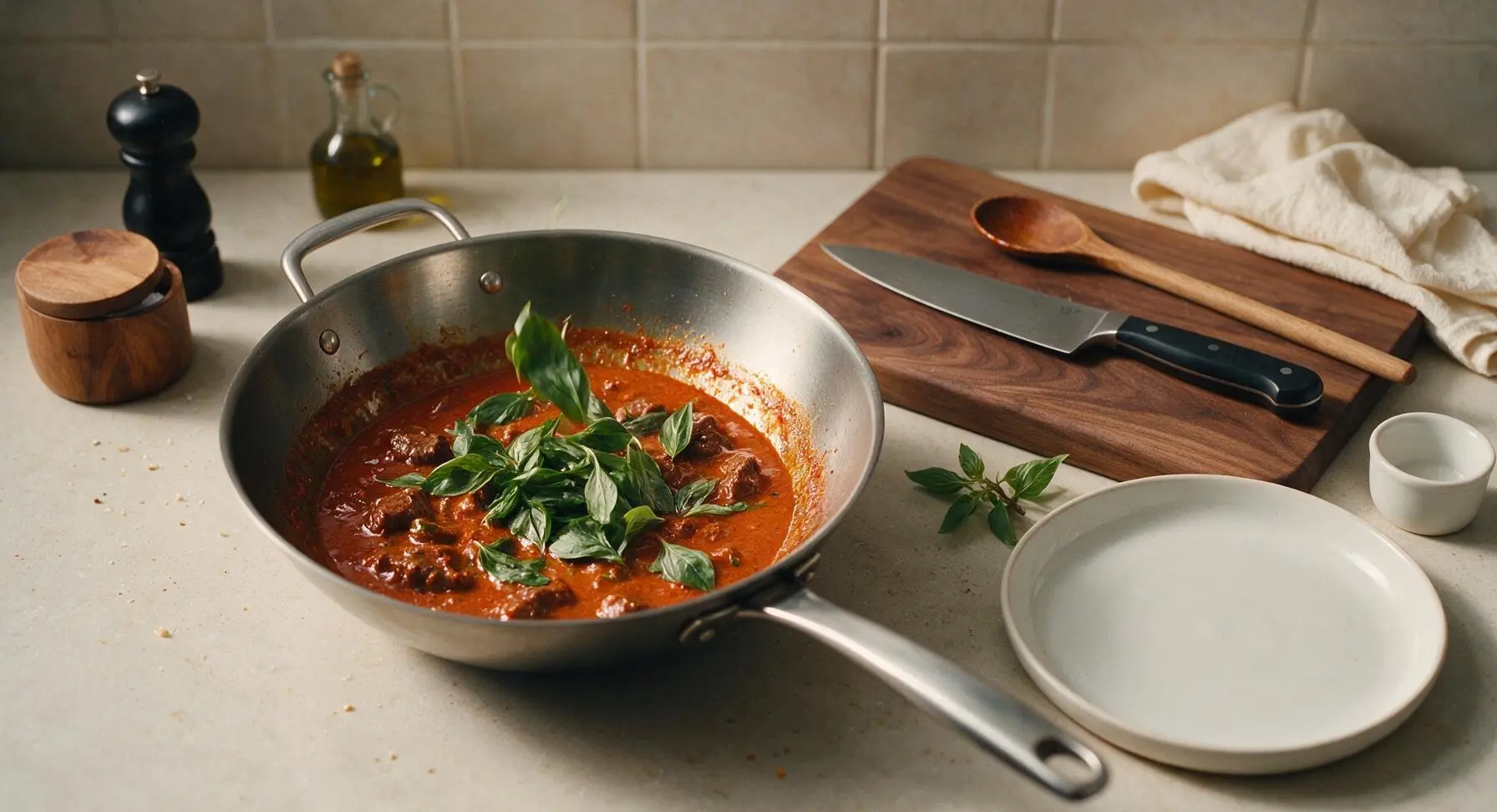
Turn off the heat under the wok completely. Add 3/4 of the packed Thai basil leaves and half the reserved shredded kaffir lime leaves, stirring gently for 30 seconds until the basil just wilts from the residual heat of the curry. Do not boil the basil, as high heat will turn the leaves black and impart a bitter, grassy off-taste to the curry.
Step 7
step7:Add Fresh Thai Basil
8

Plate and Garnish

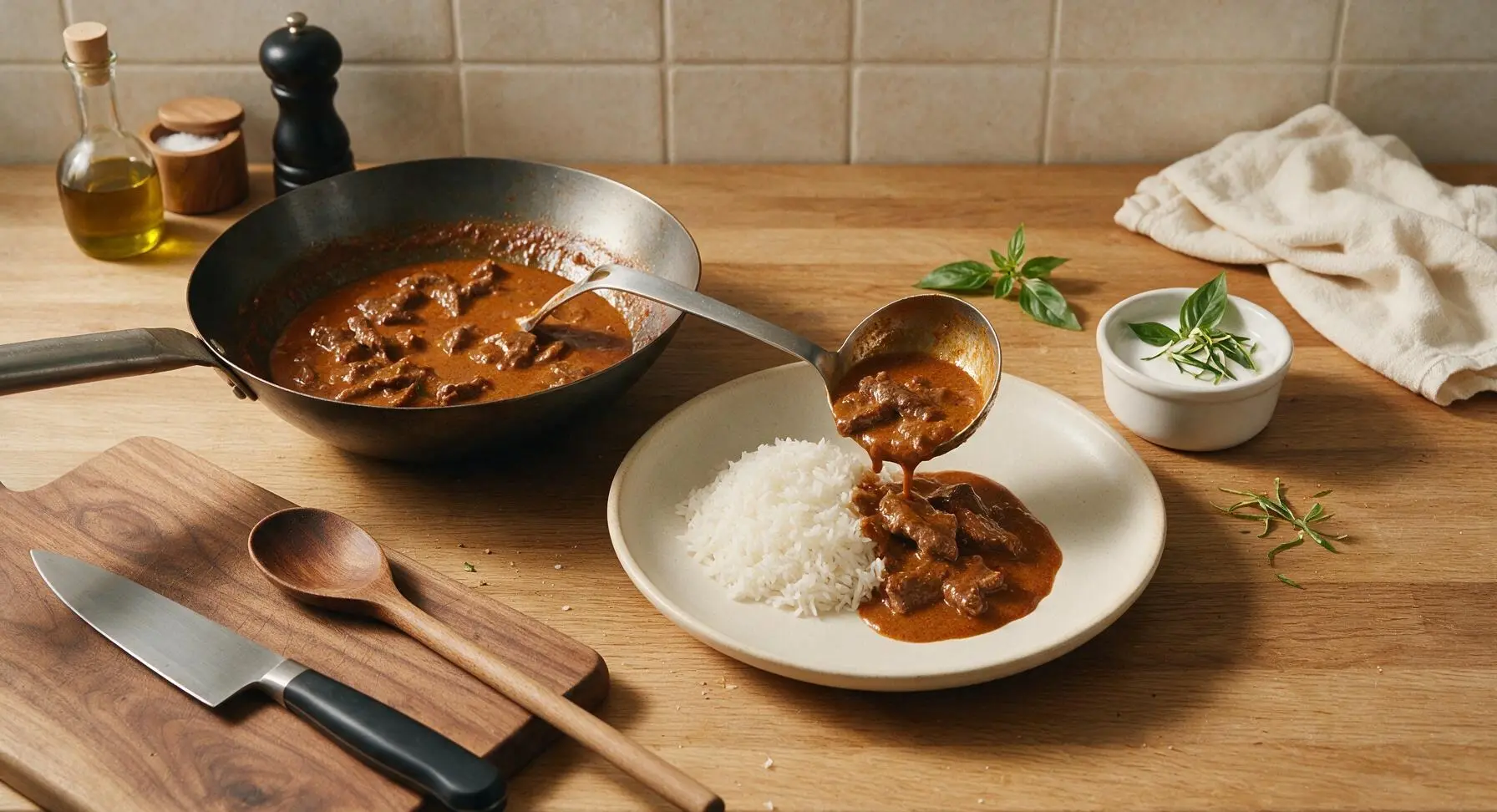
Scoop 1/2 cup of cooked jasmine rice onto the top matte cream ceramic dinner plate from the stack, mounding it slightly to the left side of the plate. Ladle the curry and beef slices next to the rice, spooning extra thick sauce over the top of the beef. Drizzle a teaspoon of reserved thick coconut cream over the curry for a decorative swirl, then garnish with the remaining shredded kaffir lime leaves and a few fresh whole Thai basil leaves. Serve immediately while hot.
Step 8
step8:Plate and Garnish

Tips

1.Use only full-fat coconut milk: Light or low-fat coconut milk contains added water and stabilizers that prevent the coconut cream from separating when simmered, leading to a thin, watery curry with a grainy texture instead of the rich, glossy sauce that defines authentic panang curry.
2.Partially freeze flank steak for 20 minutes before slicing: This firms the meat just enough to let you cut uniform paper-thin slices against the grain, which ensures the beef cooks quickly and stays tender, rather than turning chewy during the short simmer time.
3.Do not rush frying the curry paste: Toasting the paste in hot separated coconut oil for 2 minutes releases the aromatic oils from the dried galangal, lemongrass, and roasted peanuts in the paste, mellowing harsh raw notes and creating the deep, nutty flavor found in restaurant-quality panang curry. Burning the paste over too-high heat will result in a bitter, unpleasant aftertaste.

✨ You May Also Like

Main Course
🍜 United Kingdom

A showstopping classic of tender seared beef, savory mushroom duxelles, and crisp prosciutto wrapped in flaky golden puff pastry, baked to juicy perfection.

⏱️ 2 hours 1Main Course ★ 4.7
Main Course
🍜 India

Tender charred marinated chicken simmered in a rich, spiced creamy tomato sauce, this iconic Anglo-Indian curry pairs perfectly with basmati rice or warm naan.

⏱️ 50 minuteMain Course ★ 4.6
Main Course
🍜 Thailand

Classic tangy, sweet, and savory Thai stir-fried rice noodles with shrimp, tofu, and crunchy garnishes, balancing all five core Thai flavor profiles.

⏱️ 30 minuteMain Course ★ 4.5
Main Course
🍜 United Kingdom

Crispy golden beer-battered cod and fluffy double-fried chips, served with tangy tartar sauce and malt vinegar: the timeless, beloved British pub comfort classic.

⏱️ 45 minuteMain Course ★ 4.7
Main Course
🍜 Mexico

Smoky, chile-marinated pork tacos with caramelized pineapple, fresh cilantro, and lime: a beloved classic Mexican street food perfect for casual summer gatherings.

⏱️ 1 hour 45Main Course ★ 4.8
Main Course
🍜 United States

Crunchy Fritos corn chips layered with savory beef chili and melted cheddar, topped with cool, zesty fixings for a beloved, cozy Tex-Mex comfort food.

⏱️ 35 minuteMain Course ★ 4.8

beef panang curry:Frequently Asked Questions

1.What’s the best substitute for flank steak in this beef panang curry? ▾
Top sirloin, tri-tip, or flat iron steak work perfectly as substitutes—just be sure to slice them 1/8-inch thick against the grain to keep bites tender. If you use chuck, add 5 extra minutes of gentle simmer time in the coconut sauce to break down connective tissue, and skip extra-lean cuts that turn dry and tough when seared.
2.Can I use light coconut milk instead of full-fat for this recipe? ▾
I don’t recommend it—full-fat coconut milk creates that signature rich, glossy, velvety sauce panang curry is known for. Light coconut milk is cut with water and stabilizers that make the sauce thin, watery, and prone to separating, and it won’t carry the warm, nutty spice notes of the curry paste nearly as well. If you only have light, simmer it 3-4 minutes longer to reduce.
3.How do I keep my sliced beef from getting tough in the curry? ▾
Two easy tricks guarantee tender beef every time. First, slice your steak 1/8-inch thick strictly against the grain to shorten tough muscle fibers so they don’t seize up when cooked. Second, sear the beef quickly over high heat in batches so you don’t crowd the pan—overcrowding steams beef instead of searing it, leading to chewy, bland bites.
4.Is there a good substitute for palm sugar if I can’t find it? ▾
Light brown sugar is the most accessible swap, as its subtle molasses notes closely match the caramel-like, mild sweetness of grated palm sugar. For the closest flavor match, use 1 tablespoon less light brown sugar per 2 tablespoons of palm sugar called for, since brown sugar is slightly sweeter. Avoid white granulated sugar here—it will taste flat and one-note.
5.How spicy is traditional beef panang curry, and can I adjust the heat? ▾
Traditional panang curry is milder than many other Thai curries, with warm, nutty spice rather than searing heat, usually clocking in at 2-3 out of 10 on the heat scale. You can turn the heat up by stirring in extra chopped fresh Thai bird’s chilies or a pinch of cayenne, or dial it back by using 1-2 tablespoons less curry paste and scraping seeds out of added chilies.
6.Why does my curry sauce look grainy or separated? ▾
Grainy or separated sauce almost always comes from simmering coconut milk too hard, or not shaking the can well before using. Start by frying your curry paste in the thick, creamy top layer of the well-shaken coconut milk first to bloom the spices, then keep the heat at a gentle simmer, not a rolling boil, to keep the emulsion smooth and glossy.
7.Do I need to make my own panang curry paste, or is store-bought okay? ▾
High-quality store-bought premium panang curry paste works beautifully for this recipe and will give you restaurant-worthy results without the extra work of grinding spices from scratch. Look for brands that list lemongrass, galangal, kaffir lime peel, and peanuts high on the ingredient list, and skip cheap pastes loaded with fillers.
8.How do I get that deep, nutty flavor that restaurant panang curry has? ▾
That signature nutty depth comes from two quick pro steps. First, bloom your curry paste in 2-3 tablespoons of the thick coconut cream scooped from the top of the can for 2-3 minutes over medium heat until fragrant, to toast the spices and ground peanuts in the paste. Second, don’t skip the palm sugar, which balances salty fish sauce and amplifies warm, toasty notes.
9.Can I make this beef panang curry ahead of time for meal prep? ▾
Absolutely! This curry actually tastes even better the next day, as the spices meld into the coconut sauce while it rests. Let the cooked curry cool completely, then store it in an airtight container in the fridge for up to 4 days. Reheat gently over low heat on the stovetop, stirring occasionally, and add a splash of coconut milk if the sauce thickens too much.
10.What’s the best way to serve beef panang curry? ▾
Fluffy, freshly steamed jasmine rice is the classic pairing—its soft, subtly sweet texture soaks up the glossy coconut sauce perfectly. For an extra restaurant-style touch, top the curry with a sprinkle of thinly sliced kaffir lime leaves, a handful of crushed roasted peanuts, and a few thin strips of fresh red bell pepper for color and crunch.
11.How much fish sauce should I add, and can I substitute it if I don’t eat fish? ▾
Start with 2 tablespoons of fish sauce, then taste the sauce and adjust to hit that perfect salty, umami balance before adding the seared beef. If you avoid fish, use low-sodium soy sauce or tamari mixed with 1/4 teaspoon of rice vinegar to mimic fish sauce’s briny edge, plus a pinch of mushroom powder for extra umami depth.
12.My beef cooks too fast and gets overdone—what am I doing wrong? ▾
This almost always happens when you slice the beef too thick, or leave it simmering in the sauce for too long. Remember to slice beef 1/8-inch thick against the grain, sear it for just 30-45 seconds per side over high heat to get a light golden crust, then let it finish in the off-heat sauce for 1-2 minutes so it stays tender, not gray and tough.
13.Can I add vegetables to this panang curry, and which ones work best? ▾
Absolutely! The best veggies for panang curry hold their shape and don’t release too much water that thins the sauce. Try adding thinly sliced red bell pepper, crisp green beans, or cubed Thai eggplant, sautéing them for 2-3 minutes right after you bloom the curry paste. Skip watery veggies like zucchini that will make the sauce runny and dilute flavor.

Comments (3)

2 days ago

OMG this Beef Panang Curry is SO good, total game changer! I was intimidated by the medium difficulty rating but it came together in exactly 25 minutes like the recipe said, perfect for a chaotic weeknight. My husband and two kids went back for seconds, even my 6 year old who claims she hates all food that isn't chicken nuggets. Served it over jasmine rice with a quick cucumber salad, and I'm already prepping a double batch this weekend to freeze for busy work nights. 10/10, will be in our regular dinner rotation forever!

30 minutes ago

Really solid Panang curry, flavor was spot on and reminded me of my go-to Thai takeout spot back home. Only hiccup when I made it yesterday was the sauce turned out a little runnier than I expected, even though I used full-fat coconut milk just like the instructions said. Still tasted amazing, so 5 stars, but would love any tips to get that thick, restaurant-style consistency next time I make it!

5 minutes ago

Hi Jake! So stoked the flavor hit the spot for you! For a thicker sauce, try simmering uncovered for 3-4 extra minutes to cook off a bit of excess coconut milk liquid, or stir in 1 tsp of unsweetened creamy peanut butter right at the end — it boosts that classic nutty Panang note and thickens the sauce perfectly without throwing off the flavor balance. Let us know how it turns out next time!

1 week ago

Made this for our annual block party potluck last weekend and it was the first dish gone! I did a half batch with beef as written and a half batch with extra firm tofu for our vegan and vegetarian neighbors, and everyone was raving. I cannot believe how fast it came together — I was worried a curry would take all afternoon to cook, but 25 minutes? Total lifesaver when you're prepping 3 different dishes for a crowd. Already got three text requests for the recipe this week!

3 days ago

So glad the tofu swap worked! I've been wanting to make this for my vegan sister but was worried tofu would get mushy in the sauce. Did you press the tofu first before cooking it?

2 days ago

We love hearing this, Peggy! Adapting recipes for friends and neighbors is what cooking is all about. Quick tip for anyone making the tofu version: press extra firm tofu for 30 minutes before cubing and searing it lightly, and it'll hold its texture perfectly in the curry sauce. Thanks for sharing your potluck win with us!