Beef Pozole

title 1
Beef Pozole
⏱️ cook time 2 hours
🍽️ servings 6
⚡ Difficulty medium

intro

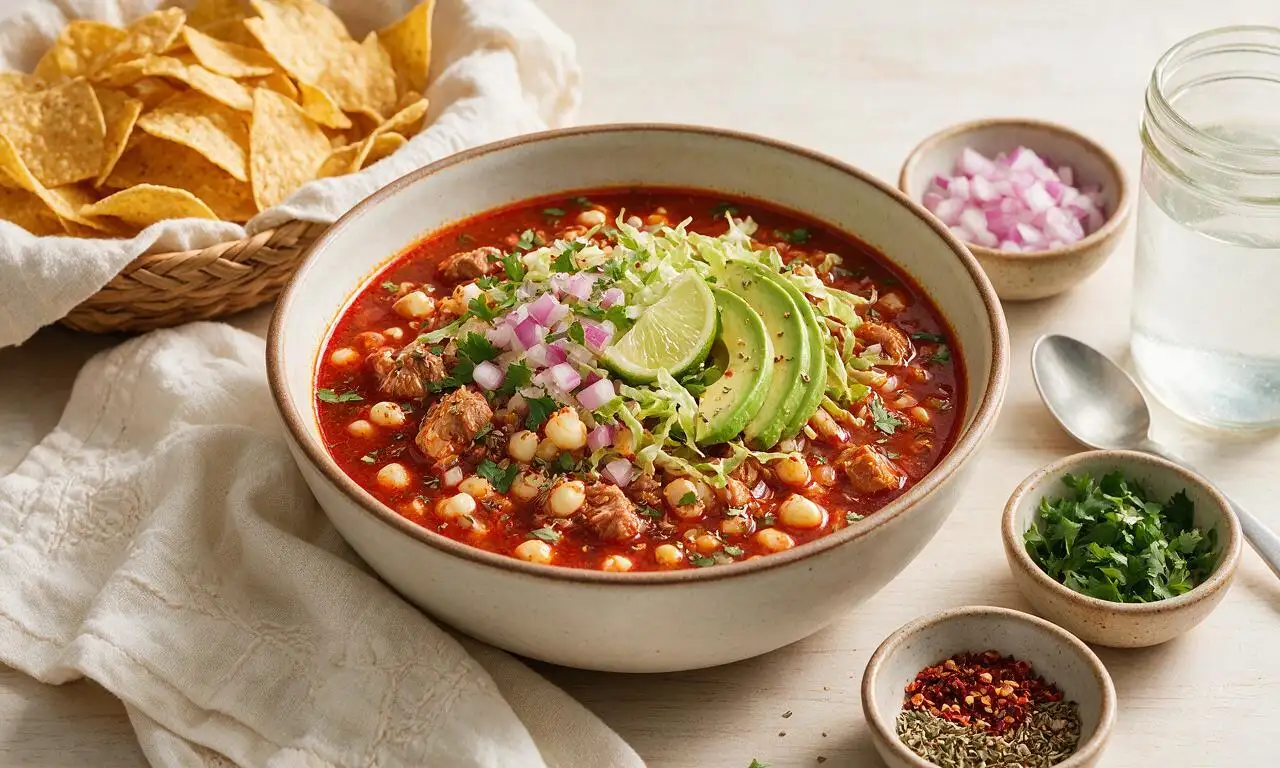
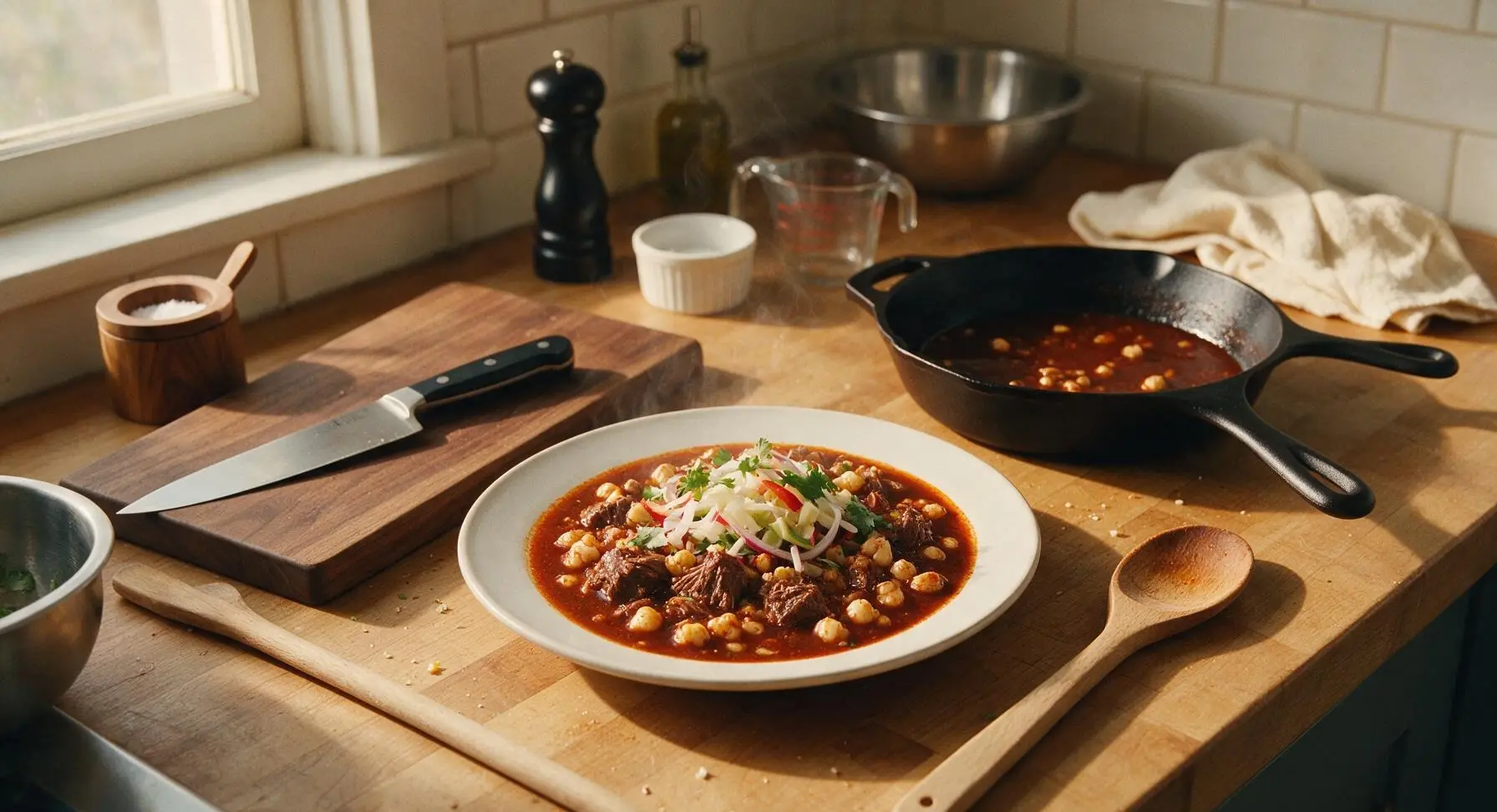
Soul-warming traditional Mexican stew brimming with fall-apart tender beef, chewy hominy, and rich red chile broth, served with bright, customizable fresh garnishes.

Ingredients
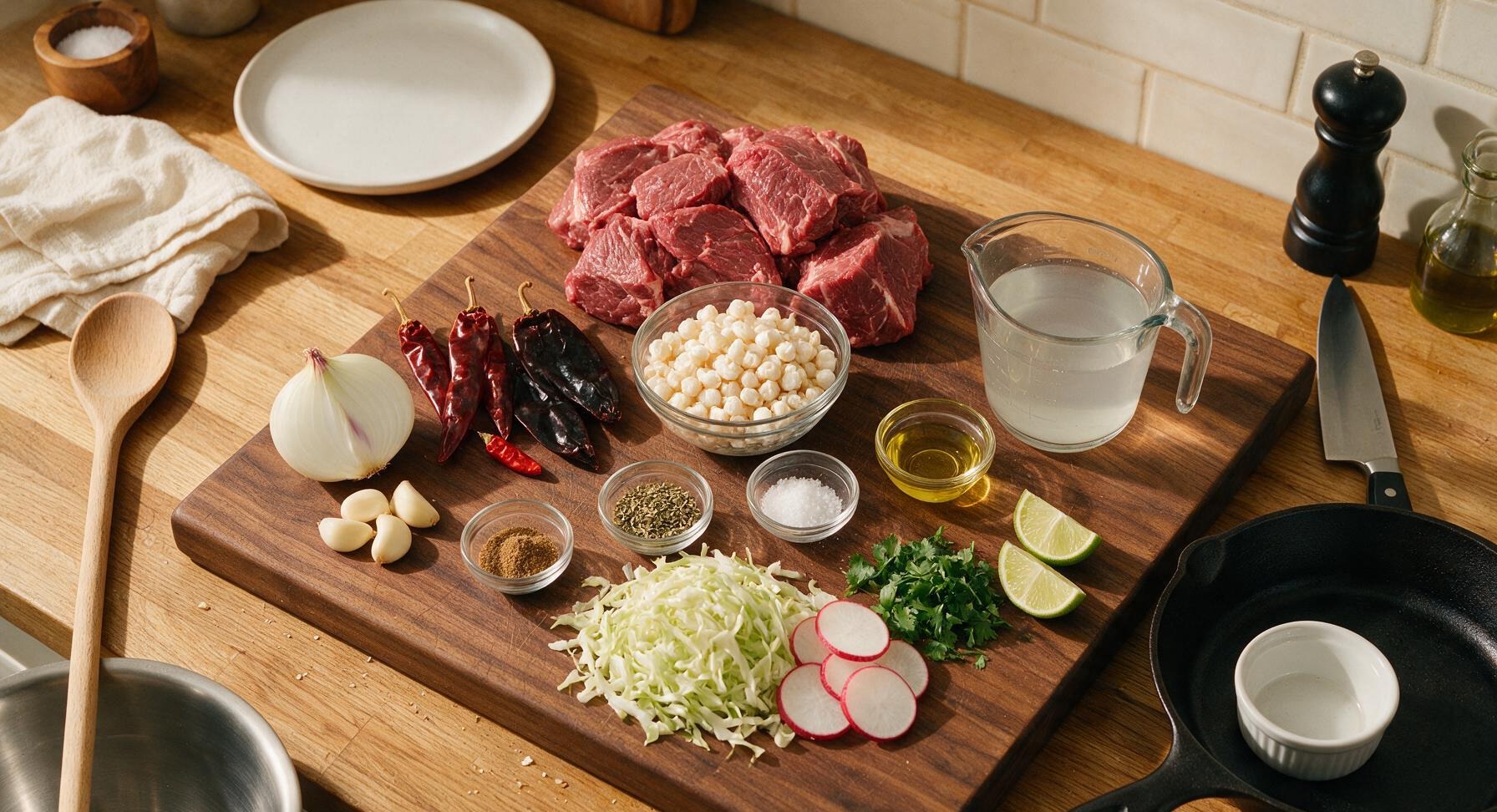
Boneless beef chuck roast 1kg (2.2 lbs)
Dried white hominy (soaked overnight 8-12 hours, drained) 2 cups
Dried guajillo chiles 4 each
Dried ancho chiles 2 each
Dried arbol chile 1 each
White onion 1 medium (150g, halved)
Garlic cloves 4 each (peeled)
Ground cumin 1 tsp
Dried Mexican oregano 1 tbsp
Kosher salt 2 tsp (adjustable)
Canola oil 1 tbsp
Water (or low-sodium beef broth) 8 cups
Green cabbage (shredded, for garnish) 2 cups
Radishes (thinly sliced, for garnish) 4 each
Fresh cilantro (chopped, for garnish) 1/2 cup
Limes (cut into wedges, for garnish) 2 each

Steps

1

Toast Dried Chiles

First, stem and seed all dried guajillo, ancho, and arbol chiles, discarding tough stems and loose seeds. Heat the 1.5-quart stainless steel saucepan over medium heat, then toast chiles in the dry pan for 30–45 seconds per side until they release a warm, fruity aroma and develop slight light brown blisters. Take care not to burn the chiles, as burnt chiles create unpleasantly bitter broth. Pour 2 cups of hot water over the toasted chiles, cover the pan, and set aside to rehydrate for 15 minutes until fully soft and pliable.
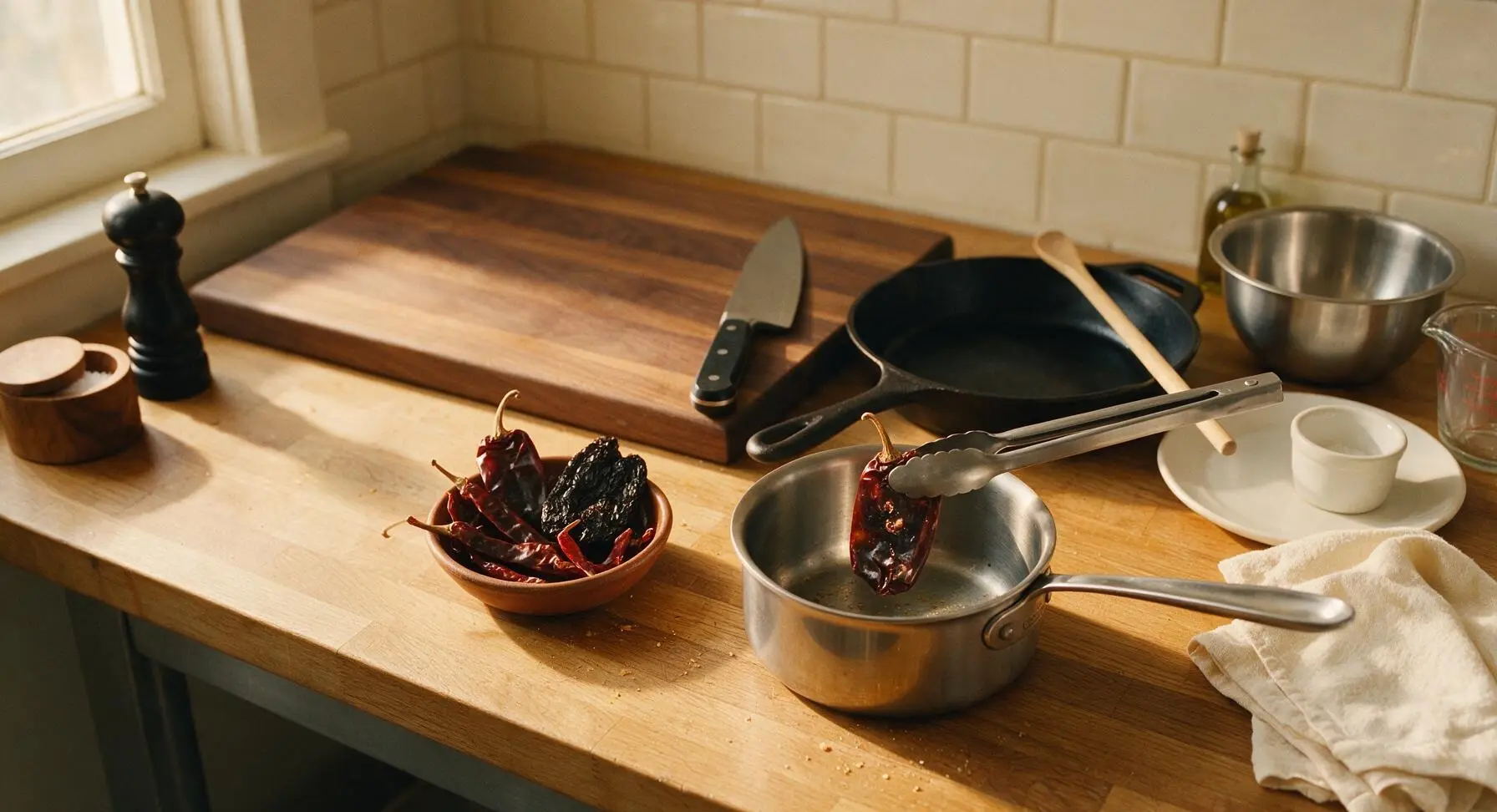
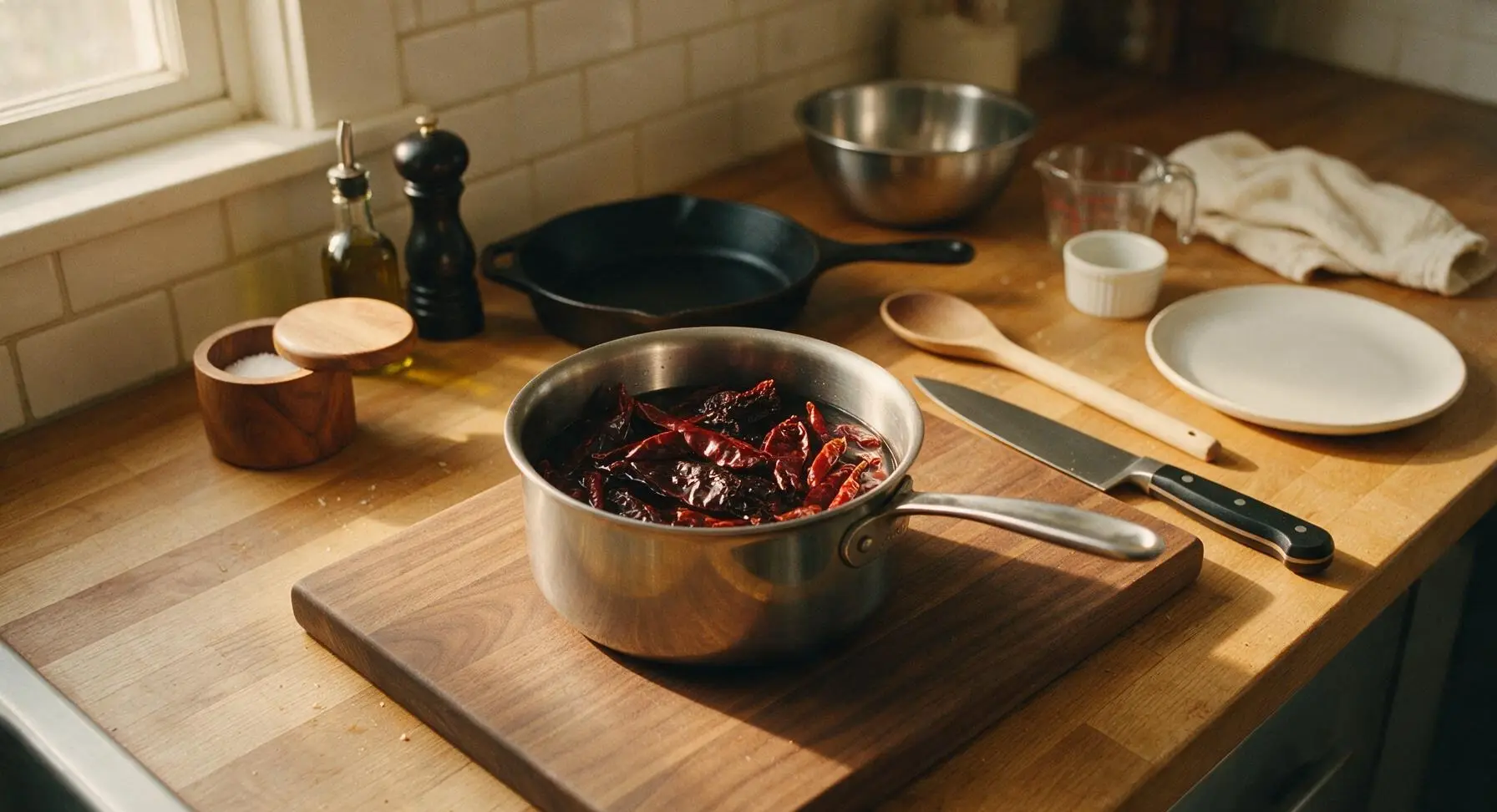
Step 1
step1:Toast Dried Chiles
Step 1
step1:Toast Dried Chiles
2

Sear Beef Cubes

While chiles rehydrate, place the boneless beef chuck on the acacia wood cutting board. Use the 8-inch chef knife to cut the beef into uniform 5cm (2-inch) cubes, trimming away any thick, hard pieces of external fat. Pat beef cubes completely dry with a corner of the burnt orange cotton towel, then season with 1 teaspoon of kosher salt. Heat the 4-quart stainless steel stock pot over medium-high heat, add 1 tablespoon canola oil, and sear beef in two separate batches to avoid crowding. Cook 3 minutes per side until a deep golden-brown crust forms on all surfaces, then transfer seared beef to a clean plate and set aside.
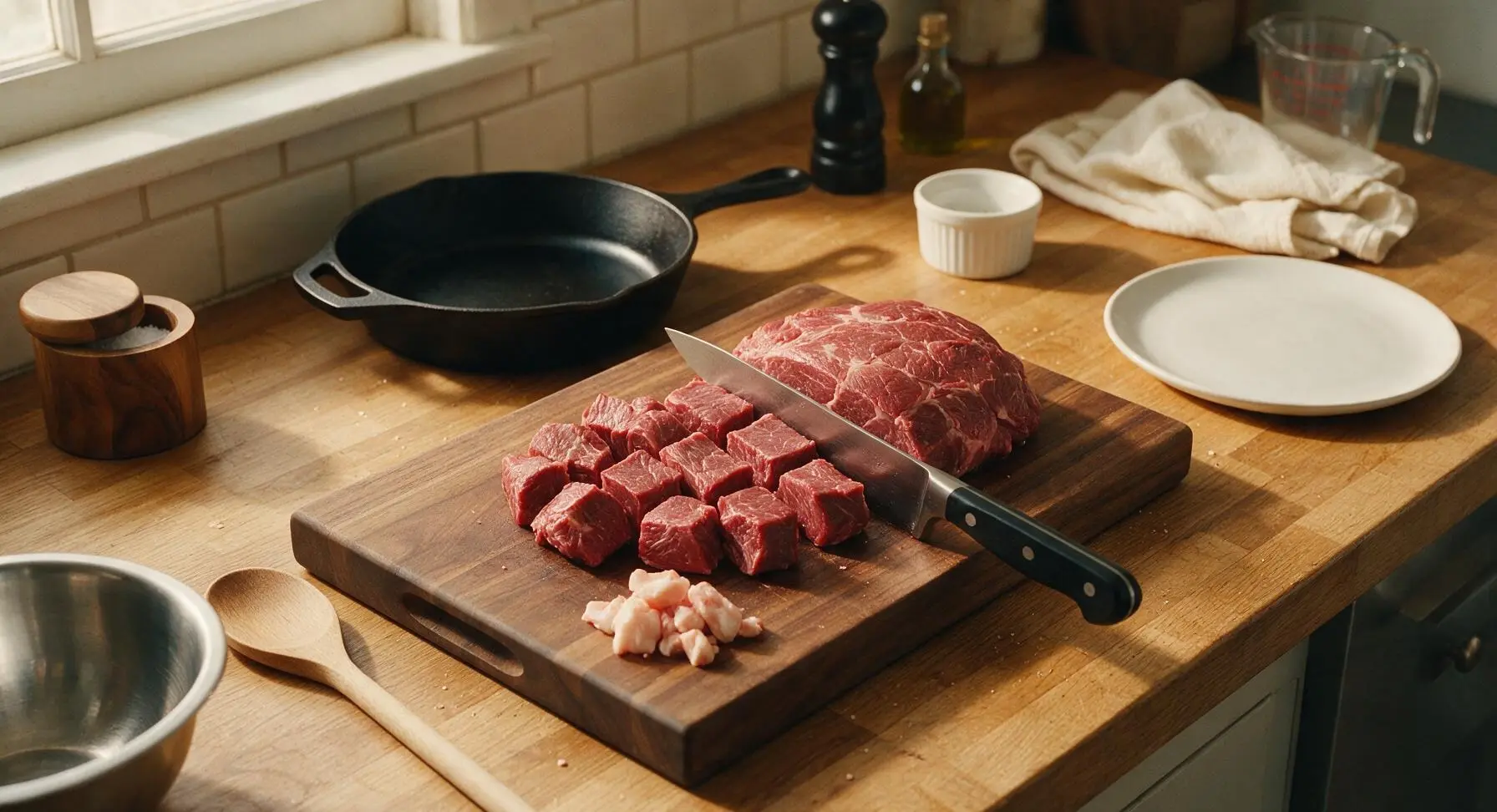
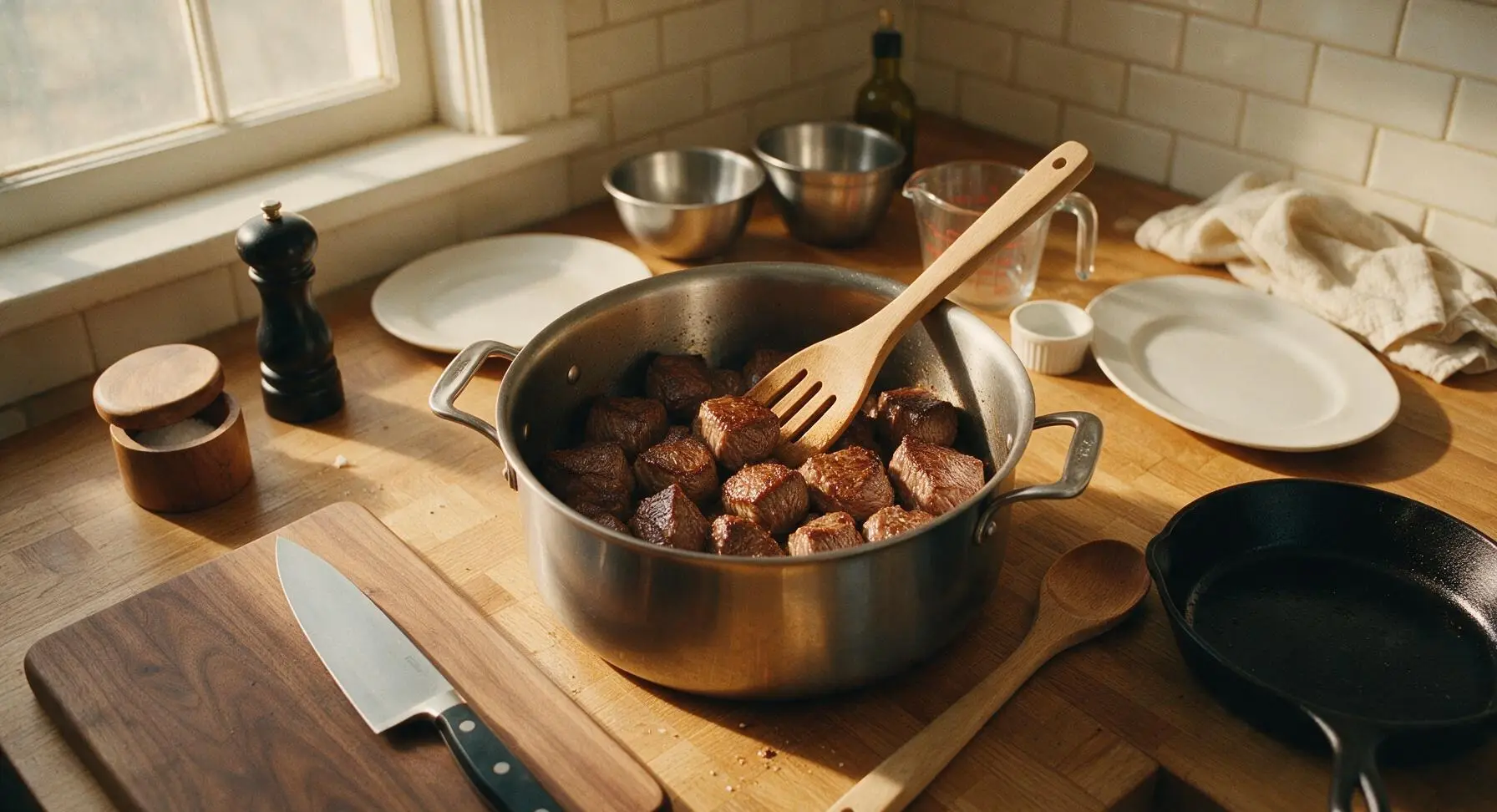
Step 2
step2:Sear Beef Cubes
Step 2
step2:Sear Beef Cubes
3

Simmer Beef and Hominy

In the same stock pot used for searing, add the halved white onion and whole peeled garlic cloves, sautéing for 2 minutes until slightly softened and fragrant. Return all seared beef cubes to the pot, pour in 8 cups of cold water (or low-sodium beef broth for extra richness), and bring to a rolling boil. Reduce heat to low to maintain a gentle, steady simmer, cover the pot with its lid, and cook for 1 hour until beef is nearly fork-tender. Add the drained, pre-soaked hominy to the pot, stir to combine, and continue simmering uncovered for an additional 30 minutes.
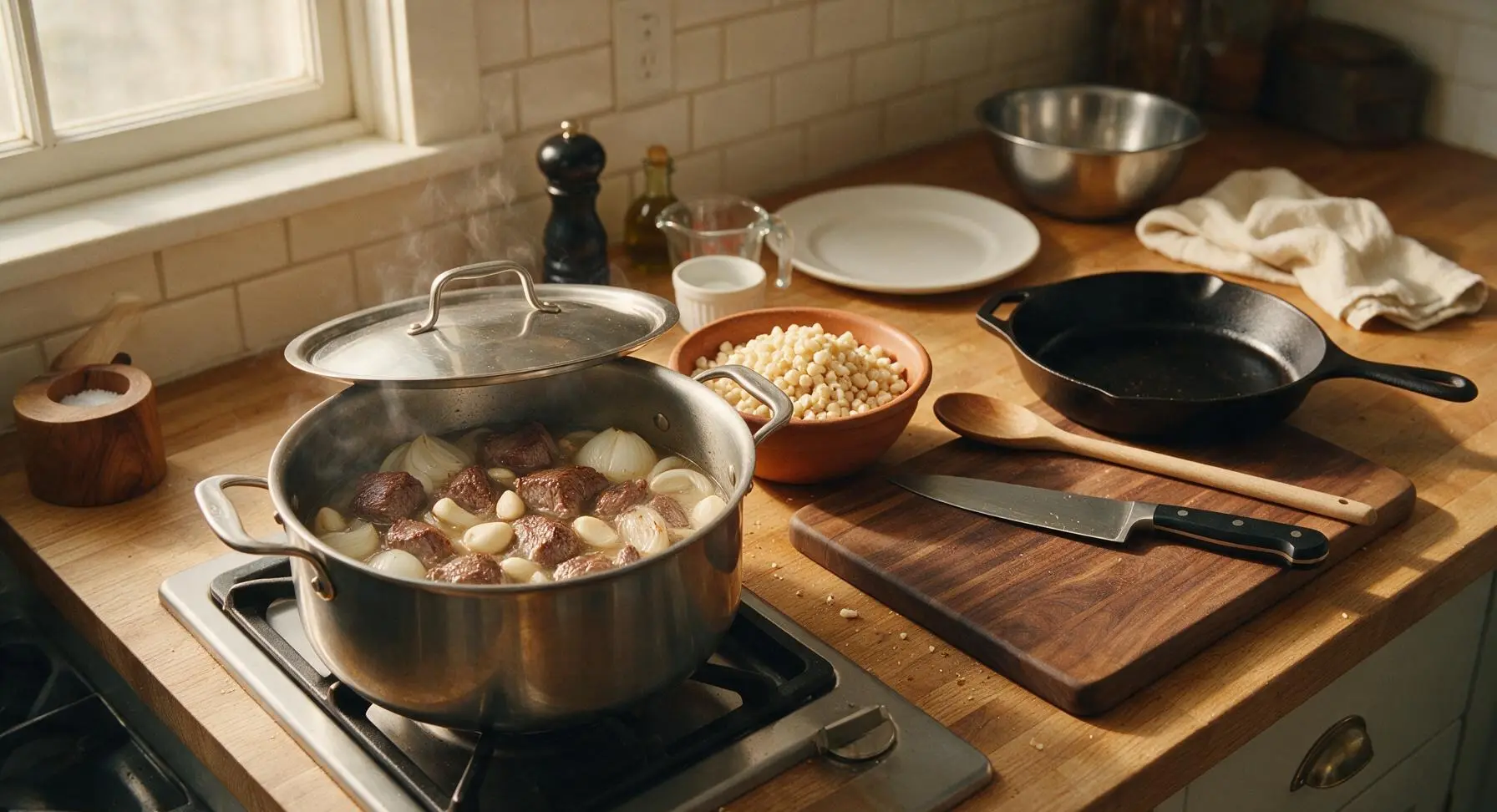
Step 3
step3:Simmer Beef and Hominy
4

Blend Chile Sauce

Once chiles are fully rehydrated, transfer them and 1 cup of their reserved soaking liquid to the glass jar of the countertop blender. Use tongs to pull one softened garlic clove from the simmering stock pot and add it to the blender, along with 1 teaspoon ground cumin, 1 tablespoon dried Mexican oregano, and ½ teaspoon kosher salt. Secure the blender lid and blend on high for 1 full minute until the mixture is completely smooth, with no visible flecks of chile skin remaining.
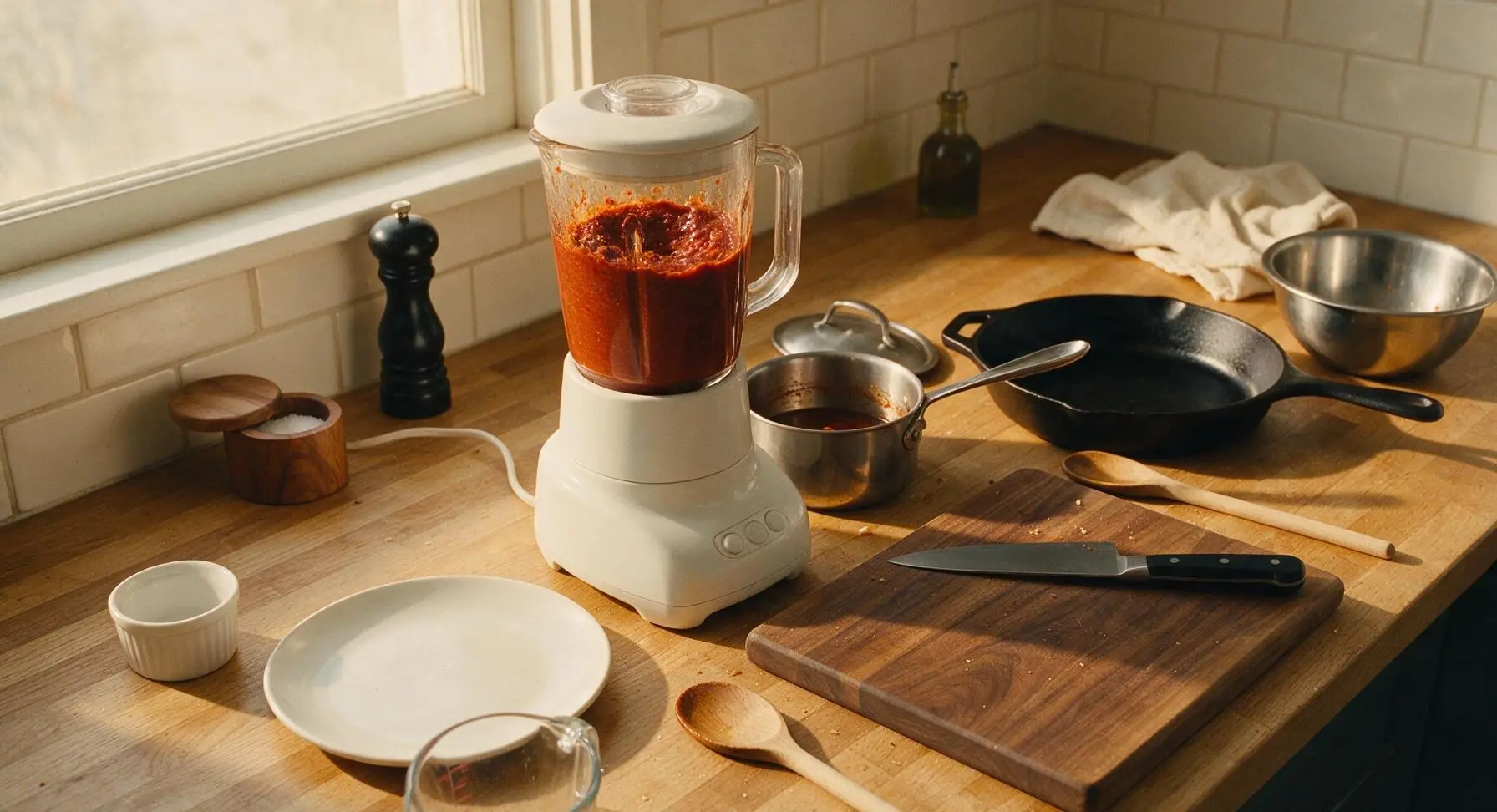
Step 4
step4:Blend Chile Sauce
5

Strain Chile Into Stew

Set the fine-mesh stainless steel strainer directly over the open stock pot of simmering beef and hominy. Pour the blended chile puree through the strainer, using the back of the slotted spoon to press all smooth, flavorful liquid through into the stew. Discard the small amount of tough chile skin and seed pulp left in the strainer. Stir the chile base fully into the broth to create a uniform deep red color, then continue simmering uncovered for 15 minutes to let the flavors meld. Taste and adjust salt as needed before serving.
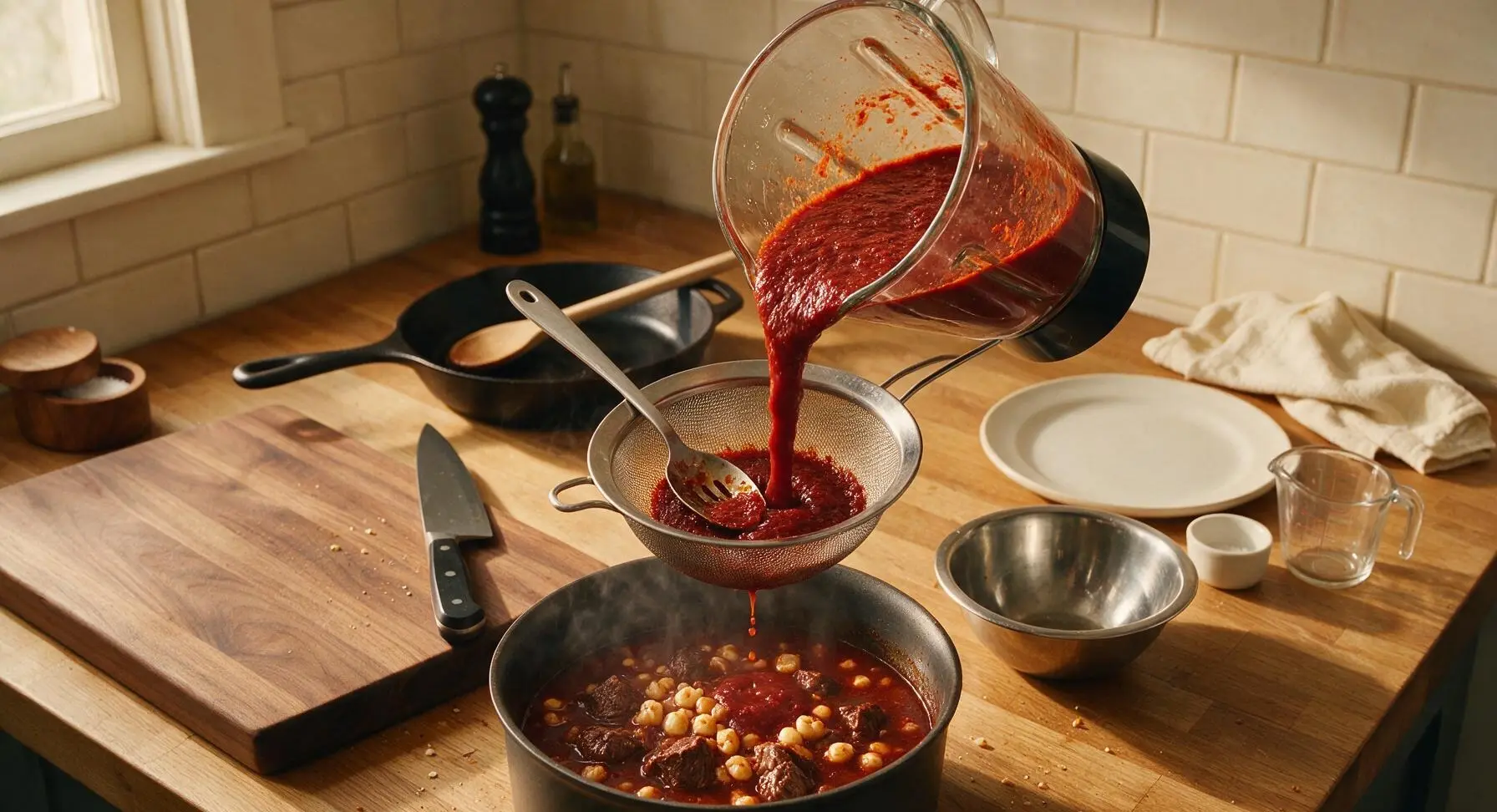
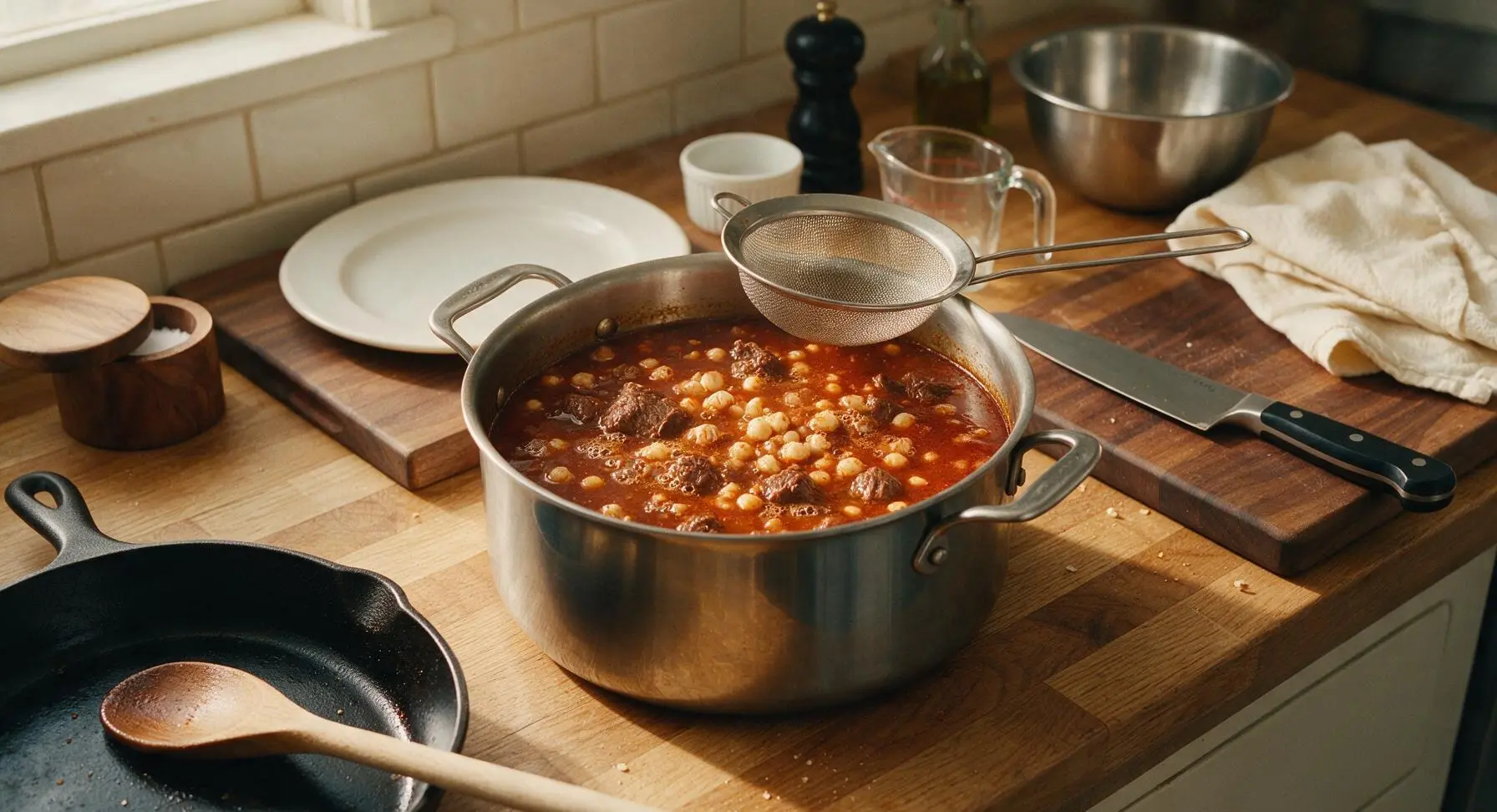
Step 5
step5:Strain Chile Into Stew
Step 5
step5:Strain Chile Into Stew
6

Prep Fresh Garnishes

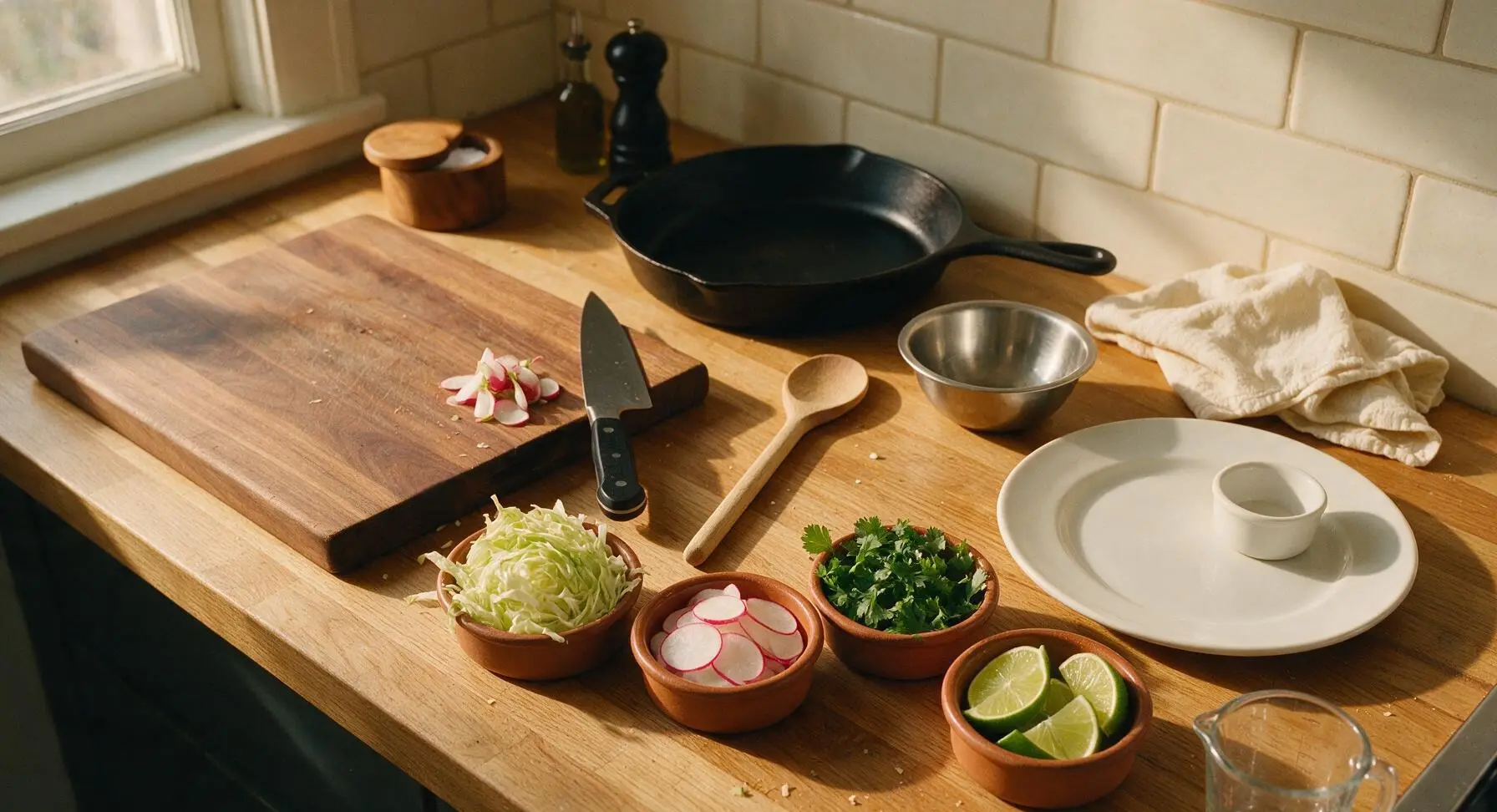
While the stew finishes its final simmer, prepare fresh garnishes for serving: thinly slice radishes into crisp rounds, finely shred green cabbage, chop fresh cilantro, and cut limes into 6 equal wedges. Place each garnish in a separate small terracotta ramekin for easy passing at the table.
Step 6
step6:Prep Fresh Garnishes

Tips

1.Prep dried hominy ahead by soaking it in cold water for 8–12 hours (or overnight) before cooking. For a time-saving shortcut, use 3 cups of rinsed canned hominy added during the final 15 minutes of cooking, but note that dried hominy has a firmer, chewier texture and nuttier, more authentic flavor. Always rinse canned hominy well to remove starchy, salty brine that can make broth cloudy.
2.Never skip straining the blended chile sauce, even if you own a high-powered blender. Tiny, tough bits of chile skin will remain in even the smoothest puree, creating a gritty, unpleasant texture in the finished broth. Pressing the puree through a fine-mesh strainer ensures a silky, smooth broth that evenly coats the beef and hominy.
3.Let the finished pozole rest for 10 minutes off the heat before serving, to allow flavors to meld and excess fat to rise gently to the surface. Leftovers will keep for up to 4 days in the refrigerator, and the flavor improves dramatically after 24 hours as the chile, beef, and hominy notes deepen and integrate.
✨ You May Also Like

Soups & Stews
🍜 Japan

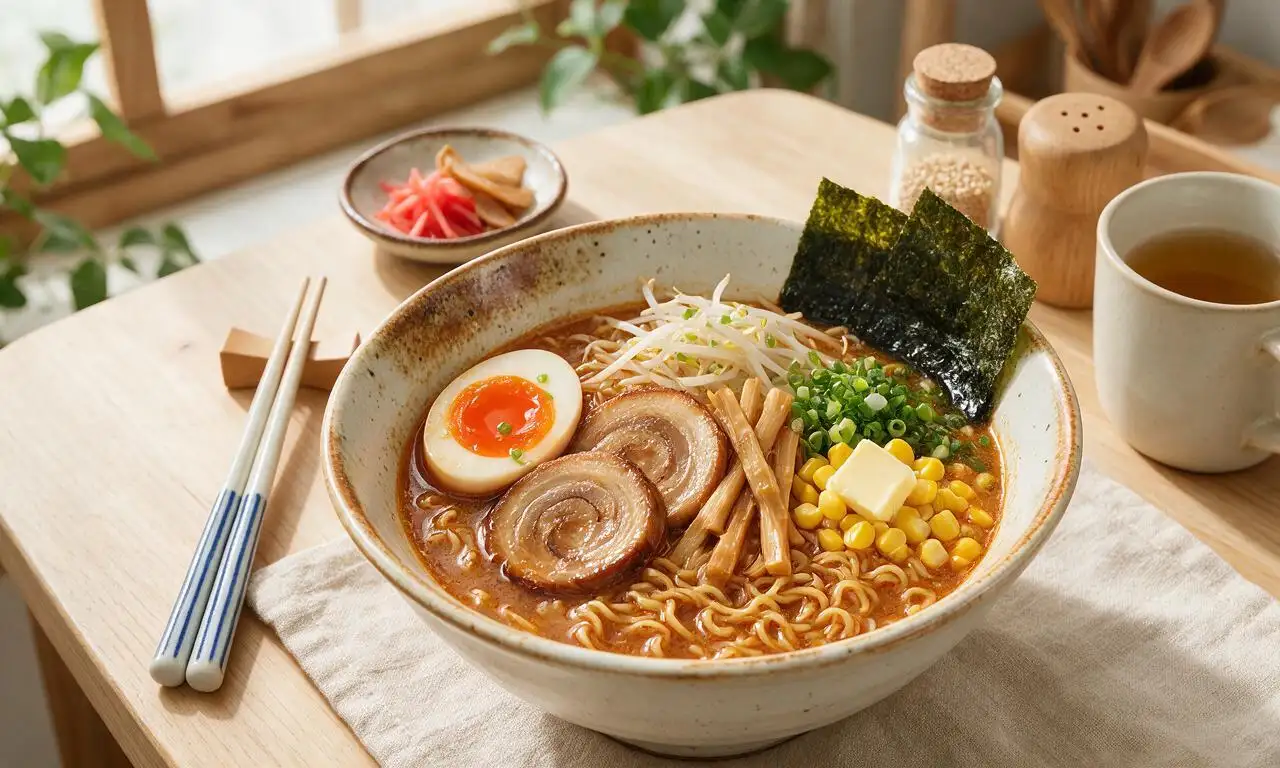
Rich, umami-dense Hokkaido-style miso ramen with chewy noodles, savory fermented broth, and classic toppings, a cozy, deeply satisfying warm meal.

⏱️ 45 minuteSoups & Stews ★ 4.5
Soups & Stews
🍜 United States

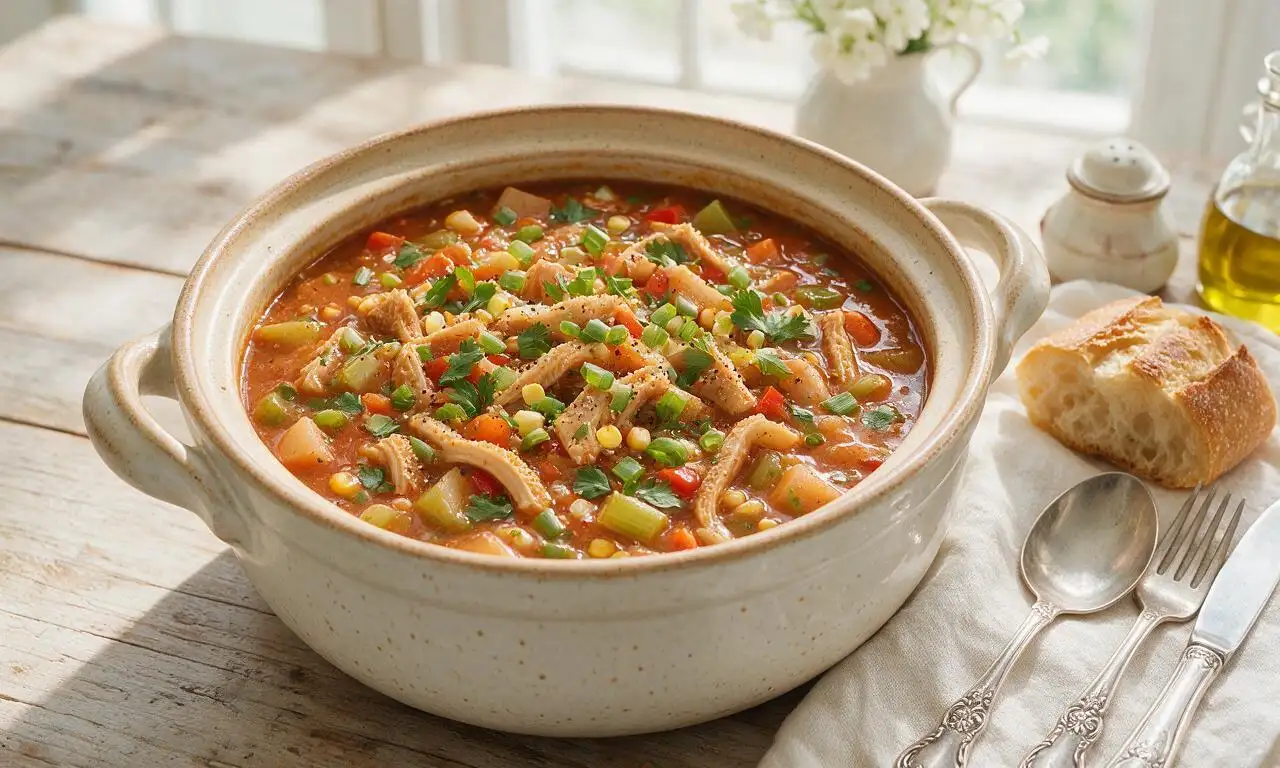
A hearty, peppery tripe and root vegetable stew with colonial Philadelphia roots, thick, warming, and packed with bold savory flavor for cold winter days.

⏱️ 2 hours 3Soups & Stews ★ 4.6
Soups & Stews
🍜 Mexico

Hearty, warming red pork posole loaded with tender hominy, slow-simmered in a rich smoky chile broth, served with zesty fresh garnishes for a deeply comforting, satisfying meal.

⏱️ 2 hours 3Soups & Stews ★ 4.7
Soups & Stews
🍜 United States

Warm, soothing classic chicken noodle soup loaded with tender chicken, soft egg noodles, and savory veggies, perfect for chasing chills and feeding the whole family.

⏱️ 40 minuteSoups & Stews ★ 4.9
Soups & Stews
🍜 France

Deeply savory caramelized onion broth topped with crusty bread and bubbly melted Gruyère, a timeless French bistro comfort food ideal for cold days.

⏱️ 1 hour 25Soups & Stews ★ 4.8
Soups & Stews
🍜 United States

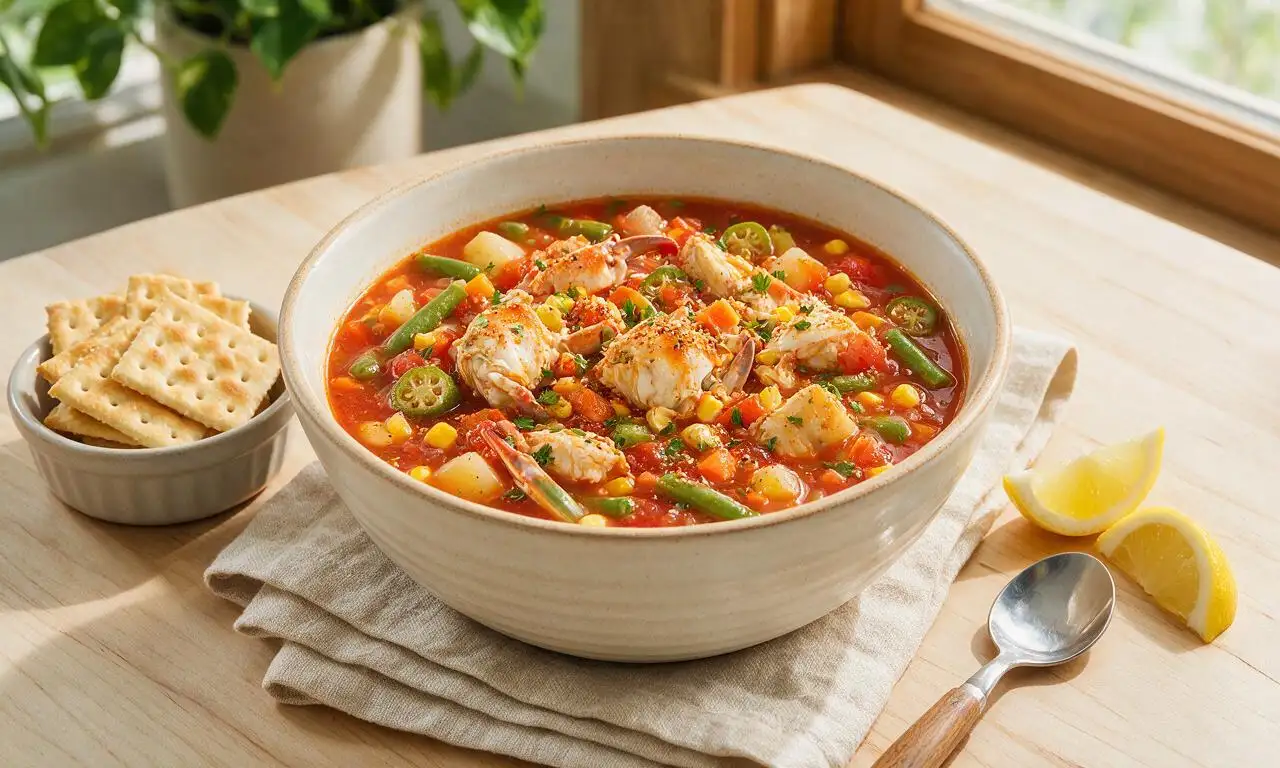
Hearty, briny Maryland crab soup loaded with sweet blue crab, tender summer vegetables, and zesty Old Bay, a beloved Chesapeake Bay coastal comfort staple.

⏱️ 55 minuteSoups & Stews ★ 4.9

Beef Pozole:Frequently Asked Questions

1.Why is boneless beef chuck roast recommended for this recipe instead of a leaner beef cut? ▾
Chuck roast has generous marbling and tough connective tissue that breaks down slowly during simmering, creating that signature fall-apart tender texture and adding deep, savory richness to the broth. Lean cuts like sirloin or round will dry out and turn stringy with long cooking. Just trim off any thick, hard fat chunks before searing to keep the broth from feeling overly greasy.
2.I forgot to soak my dried hominy for 8-12 hours overnight—what’s the best quick fix? ▾
You can use a quick-soak method with great results! Cover the dried hominy with 2 inches of heavily salted water in a stock pot, bring it to a rolling boil, then turn off the heat, cover, and let it rest for 1 full hour before draining. It will be slightly less evenly chewy than overnight-soaked hominy, so add 15-20 minutes to your total simmer time to make sure it cooks through.
3.Can I use canned hominy instead of dried to cut down on prep time? ▾
Absolutely! Canned hominy is fully pre-cooked, so just rinse it really well under cold running water first to wash off the starchy, slightly briny canning liquid that would make your broth taste off. Add it to the pot during the last 20 minutes of simmering so it heats through and absorbs broth flavor without turning mushy; you’ll need about three 15-oz cans to match the dried hominy yield.
4.What role do each of the dried chiles play, and can I leave any out if I can’t find them? ▾
Guajillo chiles bring bright, fruity, mild red chile flavor, ancho chiles add deep, earthy, slightly raisiny sweetness, and the single arbol chile adds a subtle, sharp heat kick without overpowering the broth. You can skip the arbol if you want zero extra spice, but don’t skip guajillos or anchos—they are the core of that classic, rich rojo broth profile.
5.Do I need to seed and devein the dried chiles before blending them into the broth? ▾
Seeding and deveining cuts down on harsh, bitter notes from the white inner pith, which is where most of the bitter compounds (and a lot of concentrated heat) live. If you love extra-spicy pozole, you can leave the seeds and veins from the arbol chile in, but I still recommend removing them from guajillos and anchos to keep the broth smooth, balanced, and not harshly bitter.
6.Is it necessary to strain the blended chile puree before adding it to the stew? ▾
I highly recommend it! Straining through a fine-mesh sieve removes any tiny, tough bits of chile skin or leftover seeds that didn’t break down during blending, giving you that silky, smooth restaurant-quality broth texture. Use a rubber spatula to press all the flavorful puree through the sieve, and discard the dry, fibrous leftover bits to avoid a gritty final stew.
7.How long should I simmer the beef to get that perfect fall-apart tenderness? ▾
After searing the beef and combining it with the chile broth, keep the heat at a gentle, low simmer (not a rolling boil, which will jostle the beef too much and make it tough) and cook, covered, for 2 to 2.5 hours. You’ll know it’s done when you can easily pierce a chunk with a fork and pull soft shreds off with zero resistance.
8.My pozole broth came out thin and watery—what’s the easiest way to thicken it? ▾
First, try simmering it uncovered for 10 to 15 minutes to let excess water evaporate and concentrate the flavors. If it’s still too thin, mix 1 tablespoon of corn masa harina with 2 tablespoons of cold water to make a smooth slurry, stir it into the simmering broth, and cook for 5 more minutes until it reaches a light, rich consistency that coats the back of a spoon.
9.Can I make this recipe in a slow cooker or Instant Pot instead of on the stovetop? ▾
Definitely! For a slow cooker, sear the beef and prep the chile puree first, then add all ingredients except hominy and cook on LOW for 6 to 7 hours, stirring in hominy for the last 30 minutes. For the Instant Pot, cook the beef and chile base on high pressure for 35 minutes, do a 15-minute natural pressure release, then stir in rinsed canned hominy to heat through.
10.What are the must-have garnishes to serve with Beef Pozole Rojo? ▾
Bright, fresh garnishes are key to cutting through the rich, savory broth! Set out a spread of finely shredded white cabbage, diced white onion, chopped fresh cilantro, lime wedges, thinly sliced radishes, crumbled dried Mexican oregano, and warm corn tostadas on the side so every guest can customize their bowl to their exact taste preferences.
11.How should I store leftover pozole, and how long will it stay good? ▾
Let the pozole cool to room temperature within 2 hours of cooking (don’t leave it out longer for food safety), then transfer it to sealed airtight containers. It will keep in the fridge for up to 4 days, and freezes well for up to 3 months. The flavors actually deepen and improve after a day in the fridge! Reheat gently on the stovetop, adding a splash of broth if it thickens too much.
12.My finished chile broth tastes bitter—what caused that, and can I fix it? ▾
Bitter broth almost always comes from toasting dried chiles too long (they burn in seconds over high heat!) or leaving too much bitter white pith in the puree. To fix it, stir in a tiny pinch of brown sugar, a squeeze of fresh lime, and small pinches of salt to taste, until bitter notes mellow and the bright, fruity chile flavor shines through.

Comments (11)

yesterday

OMG this beef pozole rojo is SO good! I made it for our Sunday family dinner last night and even my super picky 7 year old asked for seconds. The red chile base has the perfect amount of heat, not too overpowering at all. Total game changer for our weekly rotation!

2 hours ago

Wait did you use bone-in chuck like the recipe says? I’m wondering if a different cut would work, I only have brisket in the freezer right now.

30 minutes ago

Great question! Brisket works beautifully here, just make sure to add 15-20 minutes of extra simmer time so it gets nice and tender. So glad your family loved it, Sarah!

2 days ago

Really solid pozole recipe! Cook time was exactly 2 hours like it said, which was nice for meal prep this week. I only knocked off a star because I added a little too much oregano by accident, oops. Next time I’ll measure more carefully, definitely making this again for my work potluck next month.

yesterday

So glad you enjoyed it! The oregano can be easy to overpour, I recommend crushing dried Mexican oregano between your fingers as you add it to mellow the flavor a bit. Hope it’s a hit at the potluck!

3 days ago

My kids went crazy for this! I served it with all the toppings – lime wedges, shredded cabbage, radish slices, crumbled cotija, and a little dollop of sour cream for the boys who hate spice. It felt like we were eating at our favorite local Mexican restaurant without the $80 bill. 10/10

2 days ago

How much sour cream did you add for the non-spicy version? My daughter can’t handle any heat at all, so I’m always looking for ways to tone down spicy dishes for her.

yesterday

Great question! A heaping tablespoon of full-fat sour cream per bowl, plus a squeeze of extra lime, will cut the heat perfectly for kids who don’t like spice. You can also reserve a few ladles of broth before adding the chile puree if you want a totally mild batch for them!

5 days ago

Taste was great but I struggled a little with the dried chile step – I forgot to take the seeds out first so my pozole came out way spicier than I expected. My roommate loved it though, he’s a total heat freak. Might try again when I’m not rushing after work.

3 days ago

Pro tip: wipe the chiles with a damp paper towel before rehydrating too, it gets rid of any dusty residue that makes the broth bitter! I learned that the hard way last year.

2 days ago

Oh no, sorry the heat level caught you off guard! If it’s too spicy next time, stir in a half cup of low-sodium chicken broth or a small splash of heavy cream to mellow it out without diluting the flavor too much.

1 week ago

First time ever making pozole and I was so nervous because the difficulty said medium, but this recipe was so easy to follow! Every step was explained super clearly, and I didn’t mess up a single thing. My roommates thought I ordered takeout lmao. Can’t wait to try more of your recipes!

5 days ago

That makes us so happy to hear! Don’t let the ‘medium’ difficulty tag scare you – most of the cook time is just hands-off simmering, which makes it perfect for new cooks. Can’t wait to see what you make next!

2 weeks ago

Made this for my abuela’s birthday dinner and she said it tasted just like her mom used to make!!! I almost cried, y’all. I used hominy straight from the Mexican grocery store down the street instead of canned and it was chef’s kiss. Will be making this for every family holiday from now on.

2 hours ago

Really great flavor, but I wish the recipe specified whether to use white or yellow hominy? I used yellow because that’s what the store had and it worked fine, but just curious if there’s a traditional preference. Also, I added a can of pinto beans at the end for extra fiber and it slapped.

30 minutes ago

Great question! Traditional pozole rojo usually uses white hominy, but yellow works perfectly well if that’s what you have access to – love the pinto bean addition, that sounds delicious!

3 days ago

I tried to make a vegetarian pozole a few months ago and it was so bland, but the beef chuck in this adds so much depth of flavor I can’t even stand it. Made a huge pot on Sunday and ate it for lunch every day this week, it even tasted better on day 3 when all the flavors melded together. Meal prep win!

2 days ago

Wait how did you store it? I’m making a big batch for my grandkids this weekend and want to make sure it keeps well!

yesterday

Pozole is always better the next day, right? For storage, just keep it in an airtight container in the fridge for up to 5 days, or freeze for up to 3 months. The toppings are best added fresh when you reheat it!

1 week ago

Brought this to our neighborhood block party last weekend and people were lining up for seconds! I prepped all the toppings in little bowls so people could customize their own, which made it super easy to serve. The only thing I did different was add a little extra garlic because I’m a garlic fiend. Absolute crowd pleaser.

30 minutes ago

I followed the recipe exactly but my meat came out really tough? I simmered it for the full 2 hours on medium low like it said, not sure what went wrong. Bummed because the broth tasted amazing.

5 minutes ago

I’m so sorry the meat turned out tough! That usually happens if the simmer is too high (even medium low can run hot on some stovetops) – the liquid should be just barely bubbling. Next time, cut the chuck into slightly larger chunks and check the tenderness at the 1 hour 45 minute mark to avoid overcooking. Hope you give it another try!

just now

Who knew homemade pozole was this doable? I’ve only ever had it from restaurants or food trucks before, and this recipe blows most of those out of the water. The beef gets so melt-in-your-mouth tender after simmering in that chile broth, I was scraping the bottom of the pot by the end of the night. SO good.