British Fruit Cake

title 1
British Fruit Cake
⏱️ cook time 2 hours 15 minutes
🍽️ servings 12
⚡ Difficulty medium

intro

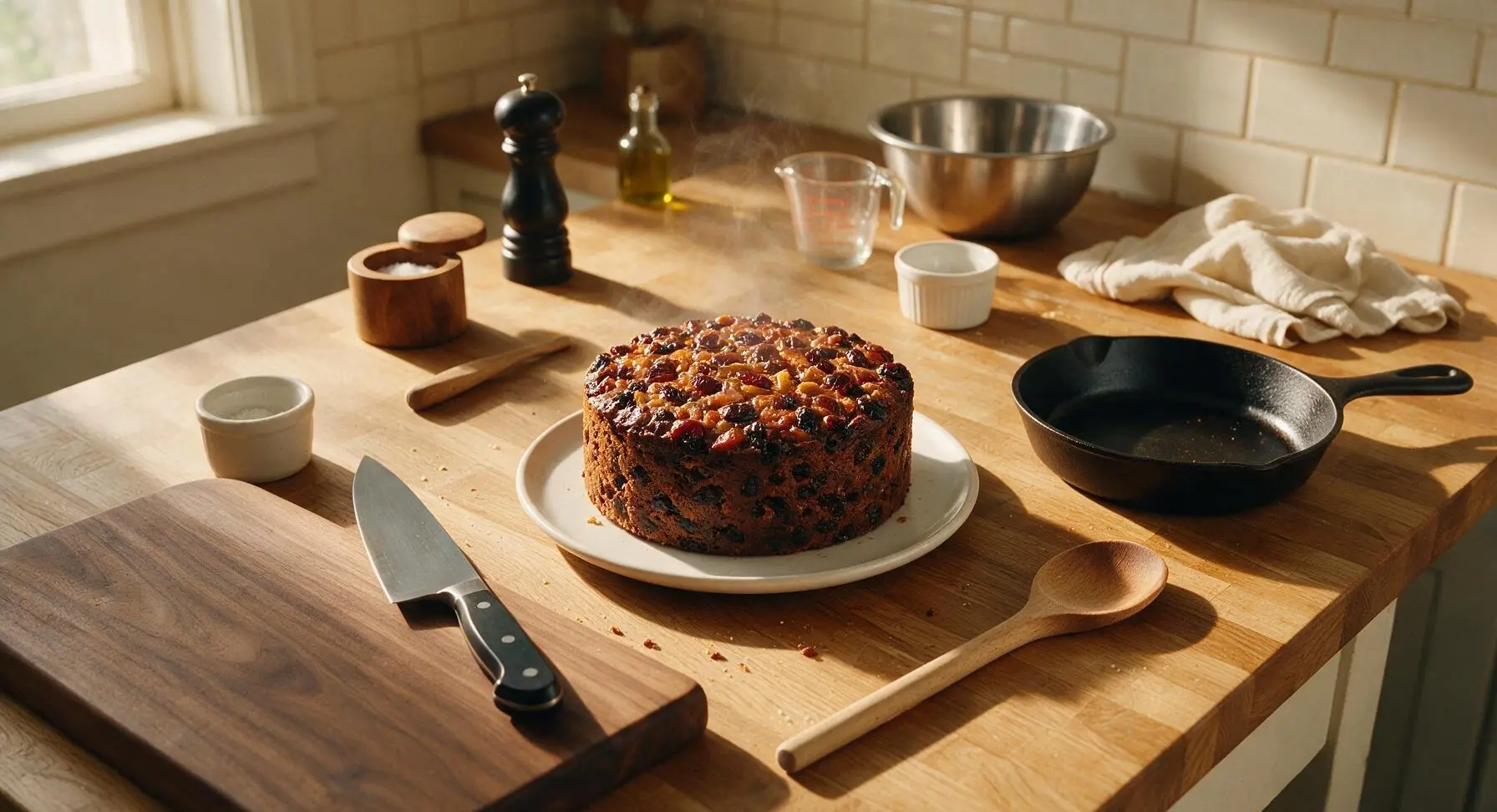
Dense, moist, and packed with rum-soaked spiced dried fruit, this classic British fruit cake is a beloved timeless Christmas treat that deepens in flavor as it ages.

Ingredients
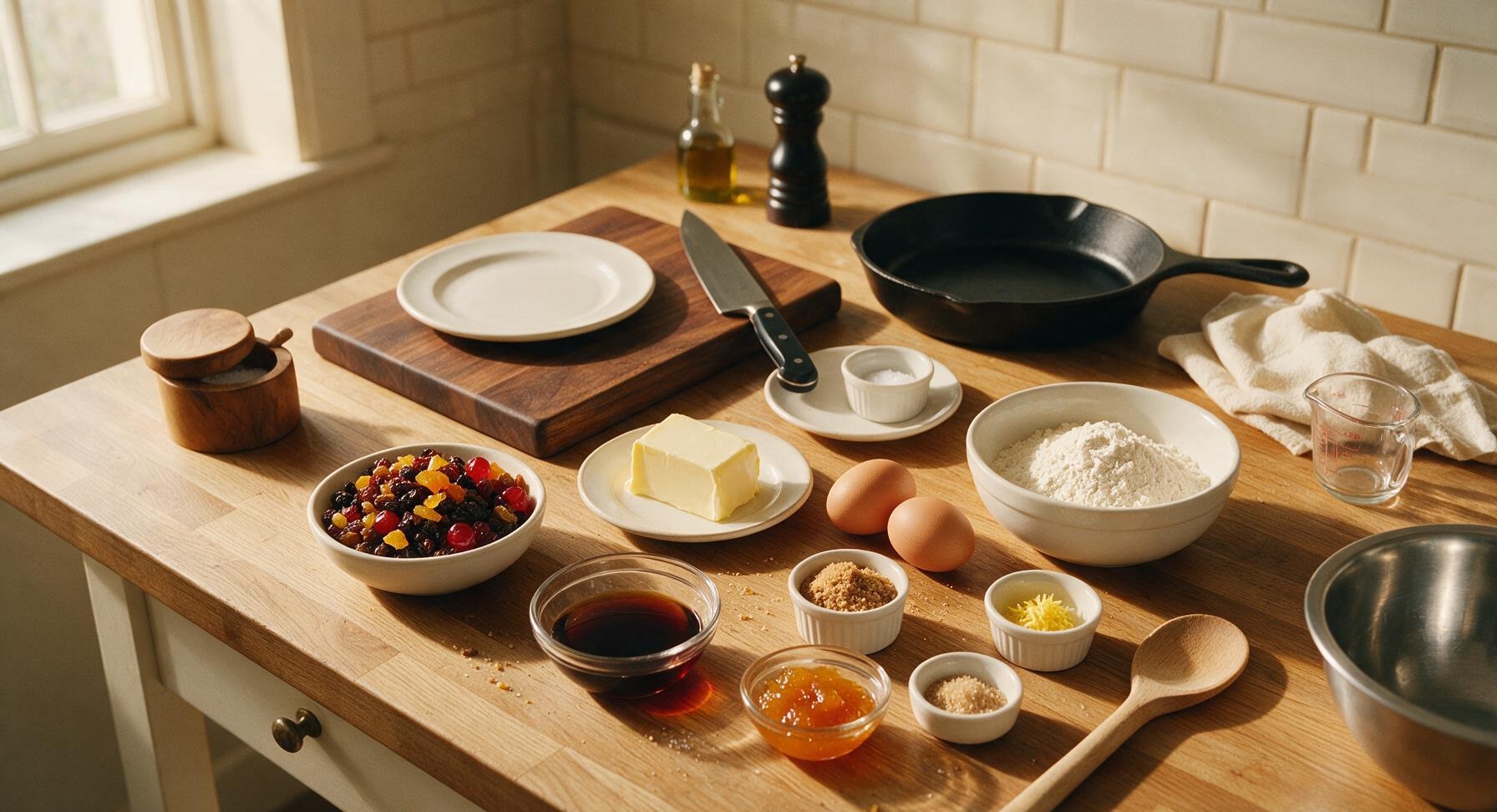
Mixed dried fruit (sultanas, raisins, currants, chopped glacé cherries, candied citrus peel) 700g
Dark rum (or cold strong black tea for non-alcoholic version) 100ml
Unsalted butter, softened to room temperature 175g
Light muscovado sugar 175g
Large free-range eggs, room temperature 3 (150g total)
Plain (all-purpose) flour 225g
Ground mixed spice (cinnamon, nutmeg, allspice, clove blend) 2 tsp
Fine sea salt 1/4 tsp
Fresh lemon zest 1 tsp (from 1 medium lemon)
Thick-cut orange marmalade 2 tbsp
Demerara sugar, for topping 1 tbsp

Steps

1

Soak Dried Fruit

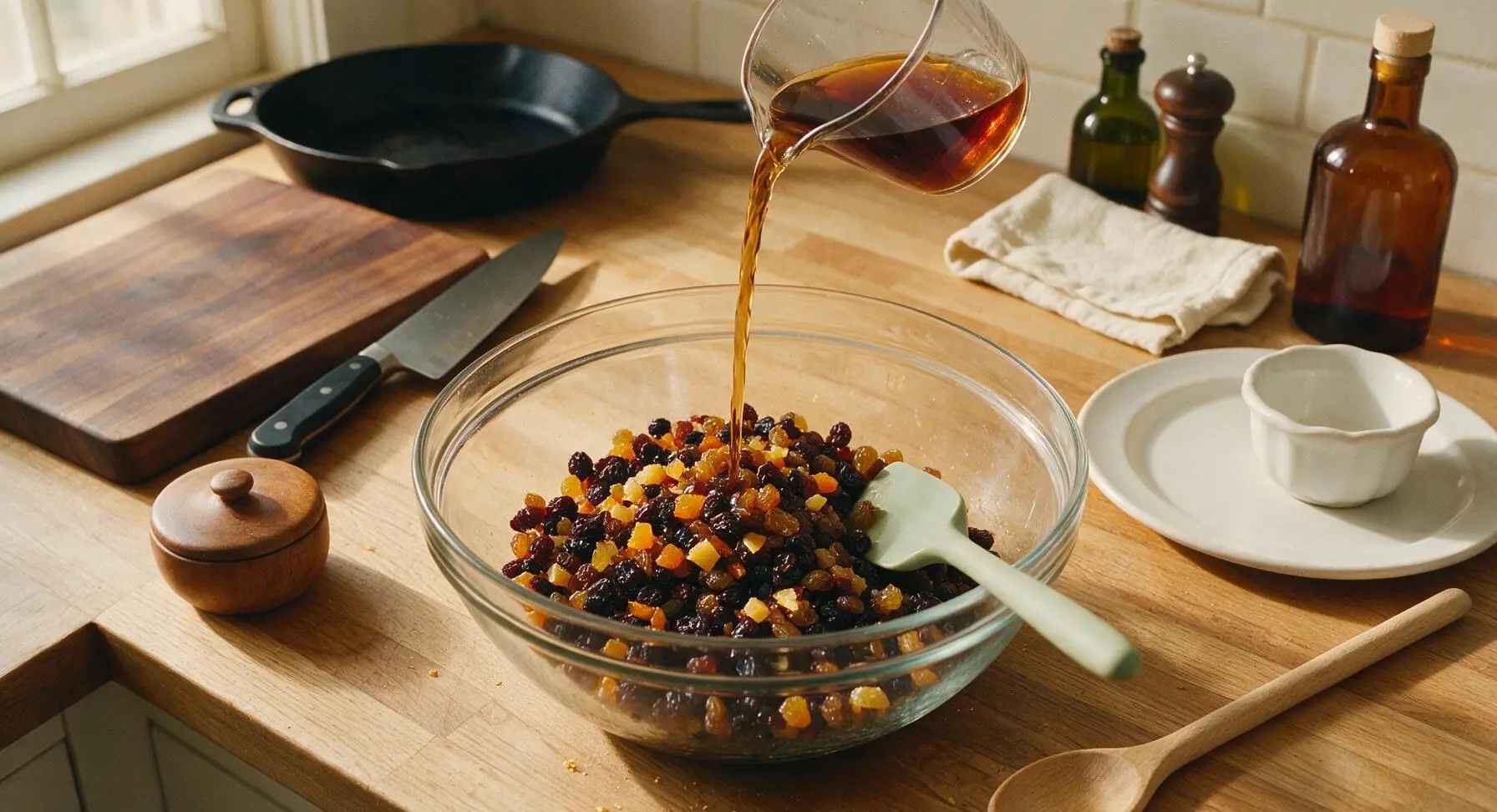
Place 700g mixed dried fruit into the large clear glass mixing bowl. Pour 100ml dark rum (or cold strong black tea for a non-alcoholic version) over the fruit, stirring well with the pale sage silicone spatula to coat every piece. Cover the bowl and leave to soak at room temperature for a minimum of 8 hours (or overnight), until the fruit is plump and has absorbed nearly all the liquid; do not drain any remaining liquid.
Step 1
step1:Soak Dried Fruit
2

Prep Tin and Oven

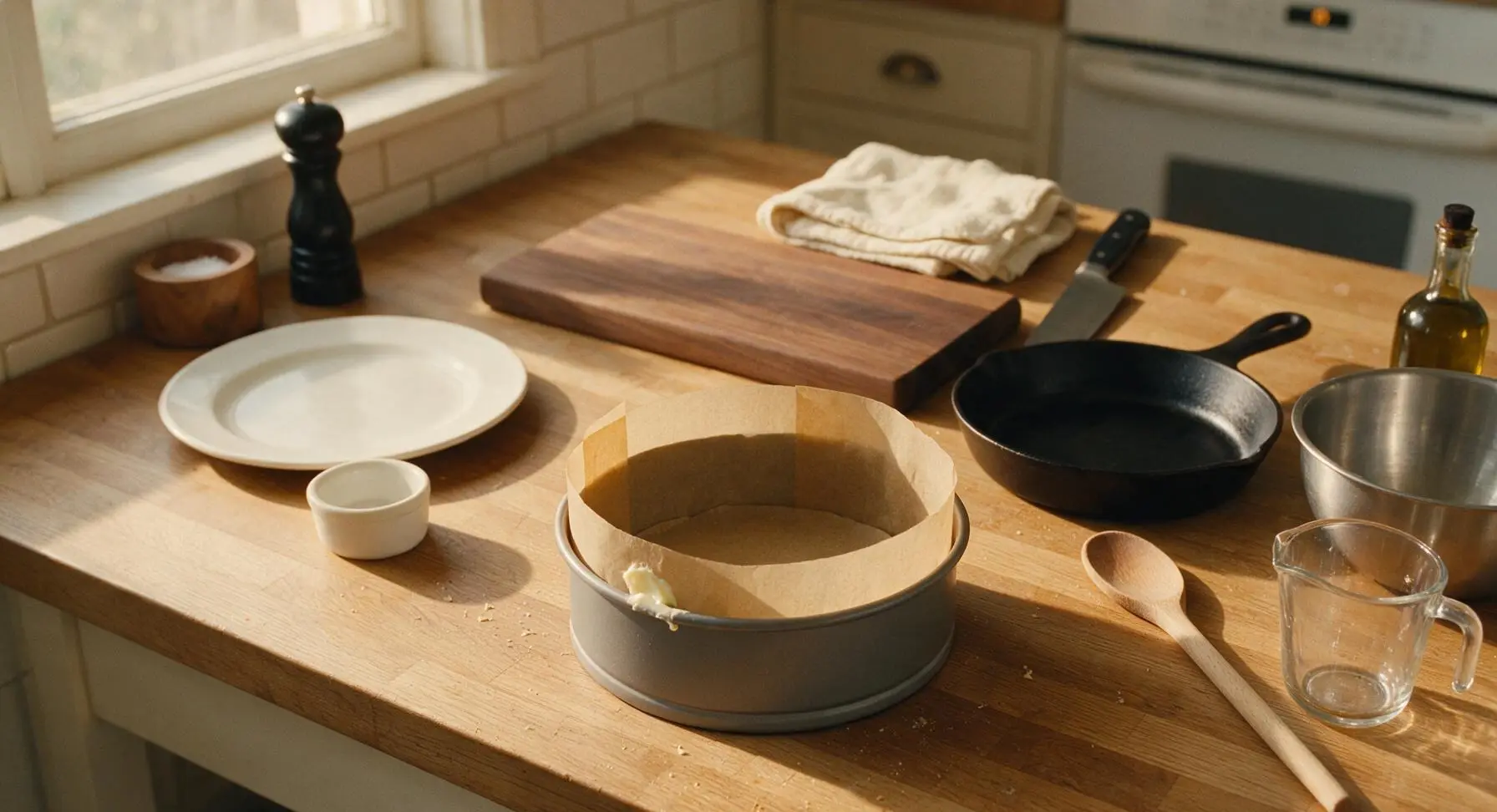
Preheat oven to 150°C (300°F, gas mark 2) with the rack positioned in the exact center. Line the 20cm matte grey loose-bottomed cake tin with a double layer of unbleached parchment paper, cutting the paper to extend 5cm above the tin rim to form a protective collar that prevents the cake edges from burning. Lightly butter the parchment surface to prevent sticking.
Step 2
step2:Prep Tin and Oven
3

Cream Butter and Sugar

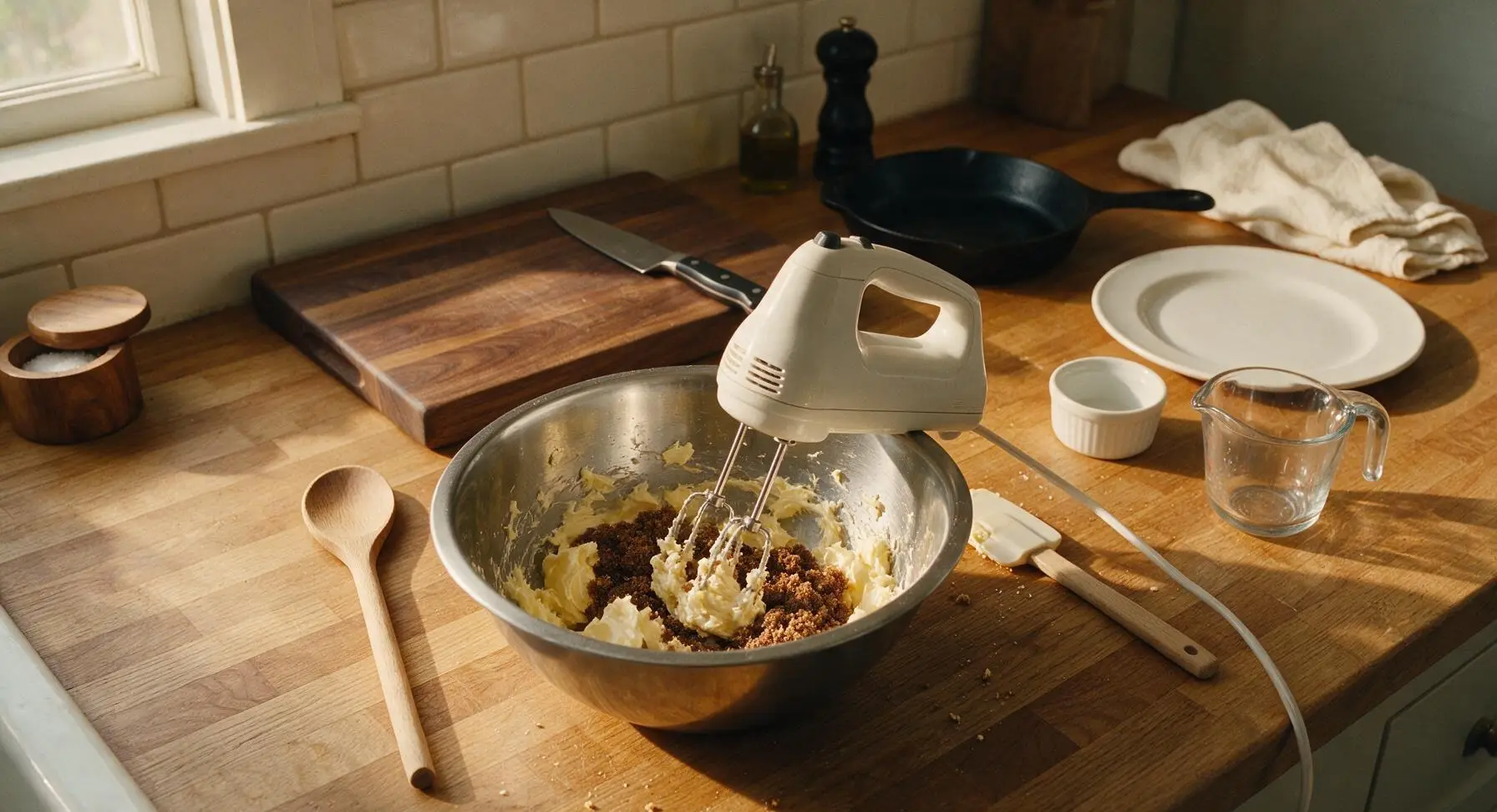
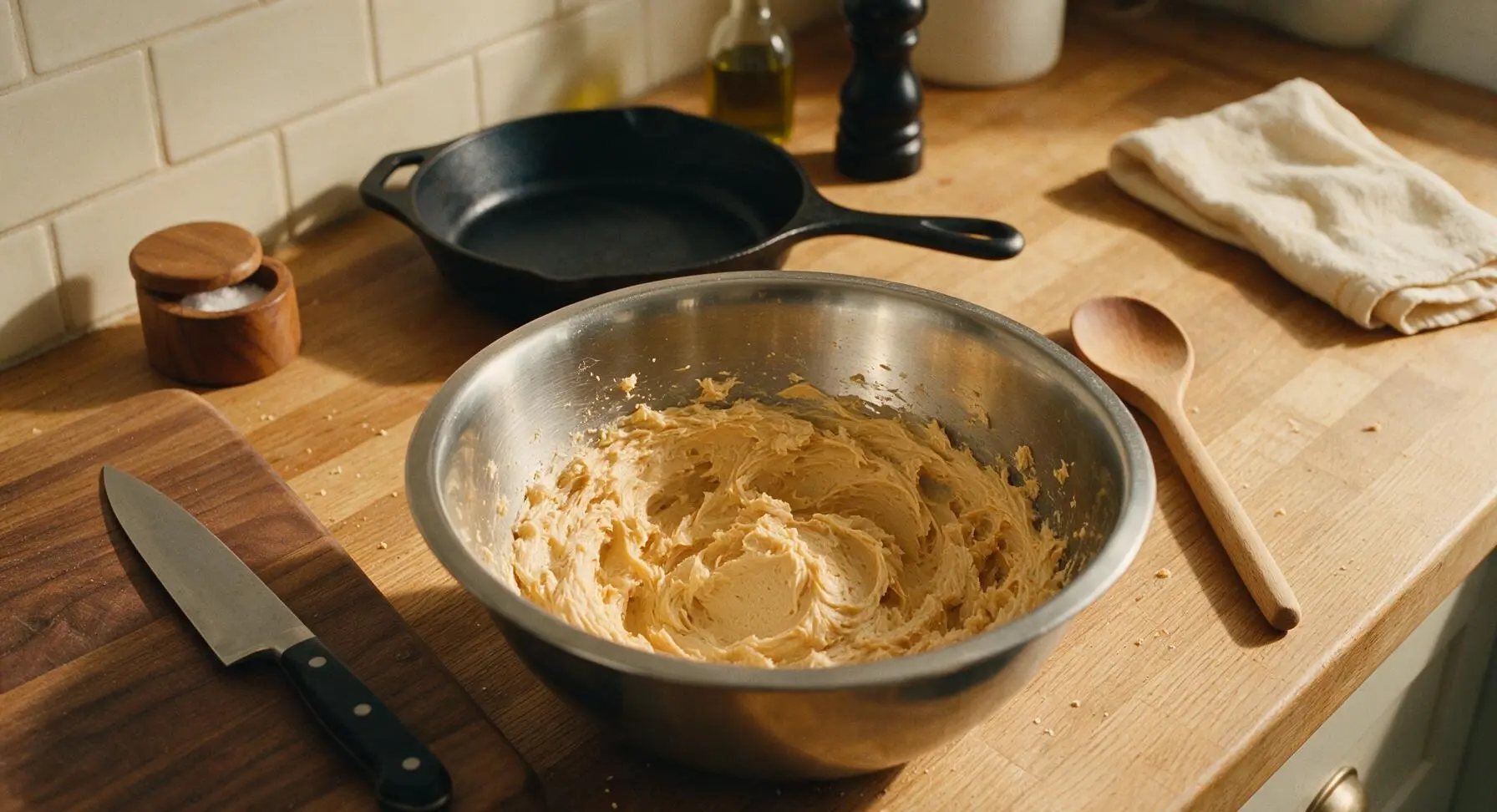
Place 175g softened room-temperature unsalted butter and 175g light muscovado sugar into the large stainless steel mixing bowl. Using the matte white electric hand mixer on medium speed, beat the mixture for 3-4 minutes, stopping once to scrape down the bowl sides with the silicone spatula, until the mixture is pale caramel in color, light, fluffy, and leaves soft peaks when the beaters are lifted.
Step 3
step3:Cream Butter and Sugar
Step 3
step3:Cream Butter and Sugar
4

Add Eggs Gradually

Add the room-temperature eggs one at a time to the creamed butter mixture, beating for 30 seconds on medium speed after each addition. If the mixture shows signs of curdling (separating into grainy clumps), add 1 tablespoon of the measured plain flour to stabilize it before adding the next egg. Once all eggs are fully incorporated, stir in 2 tablespoons thick-cut orange marmalade and 1 teaspoon fresh lemon zest with the silicone spatula until evenly mixed.
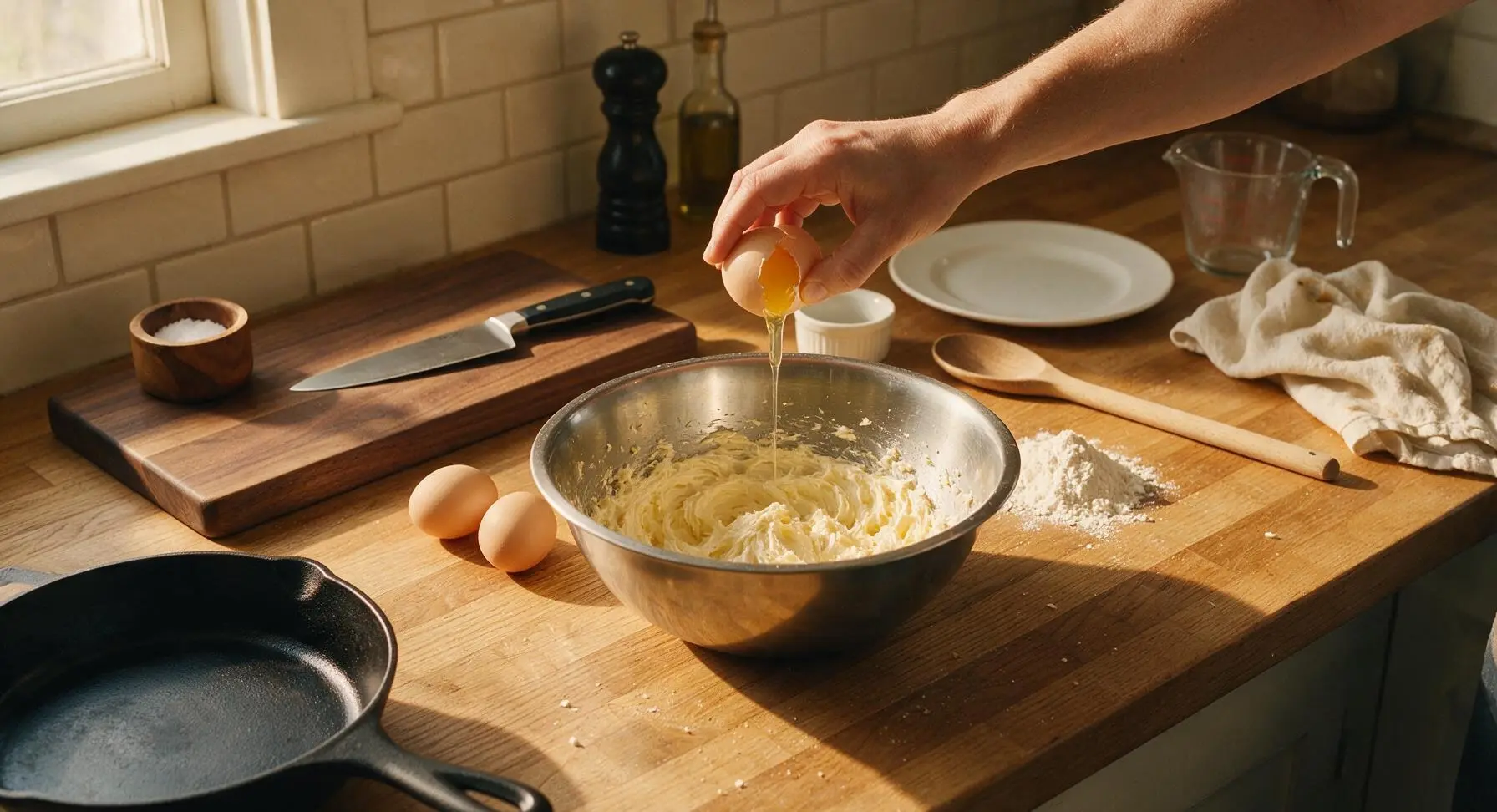
Step 4
step4:Add Eggs Gradually
5

Fold in Dry Ingredients

Set the fine mesh stainless steel sieve over the medium stainless steel mixing bowl, then add 225g plain flour, 2 teaspoons ground mixed spice, and 1/4 teaspoon fine sea salt to the sieve. Tap the sieve gently to sift all dry ingredients into the bowl, stirring lightly to evenly distribute the spice. Gradually add the dry mixture to the wet batter, folding gently with the silicone spatula using a slow cutting and turning motion until no streaks of flour remain. Do not overmix, as this will develop gluten and make the cake tough.
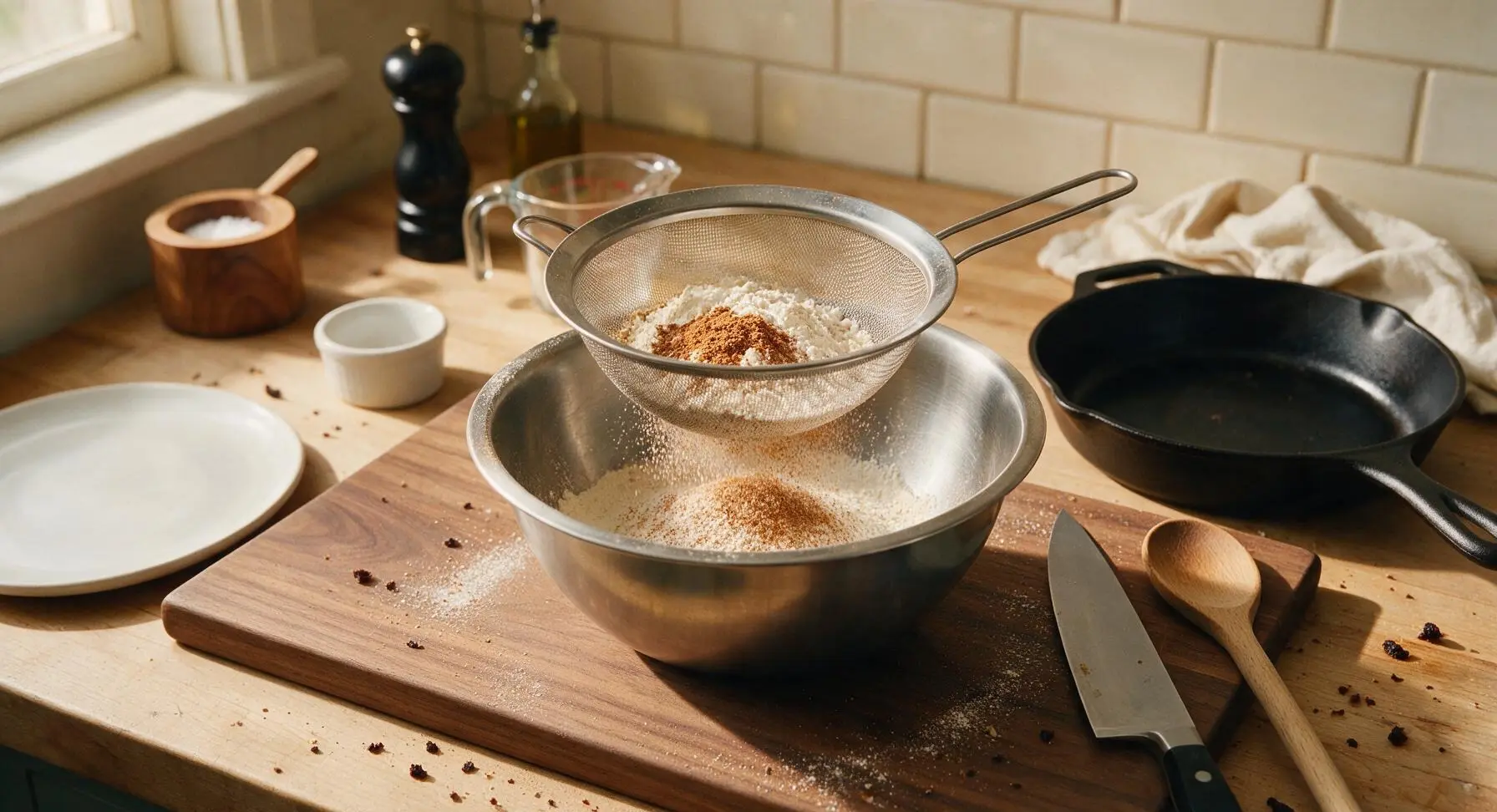
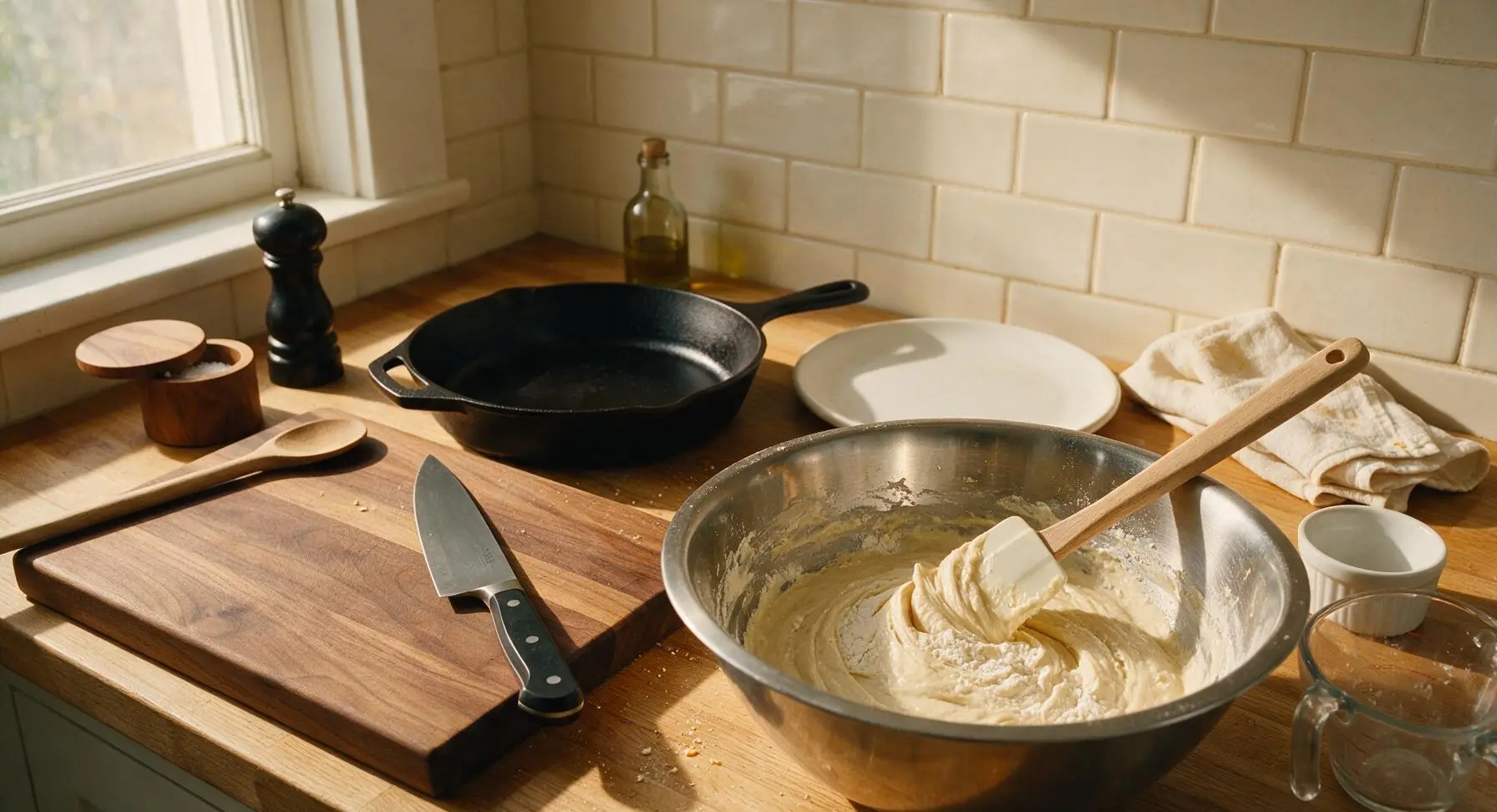
Step 5
step5:Fold in Dry Ingredients
Step 5
step5:Fold in Dry Ingredients
6

Fold in Soaked Fruit

Tip all the plumped rum-soaked dried fruit, along with any remaining absorbed liquid in the glass bowl, into the cake batter. Fold gently with the silicone spatula until the fruit is evenly distributed throughout the thick, dense batter, taking care not to overwork the mixture.
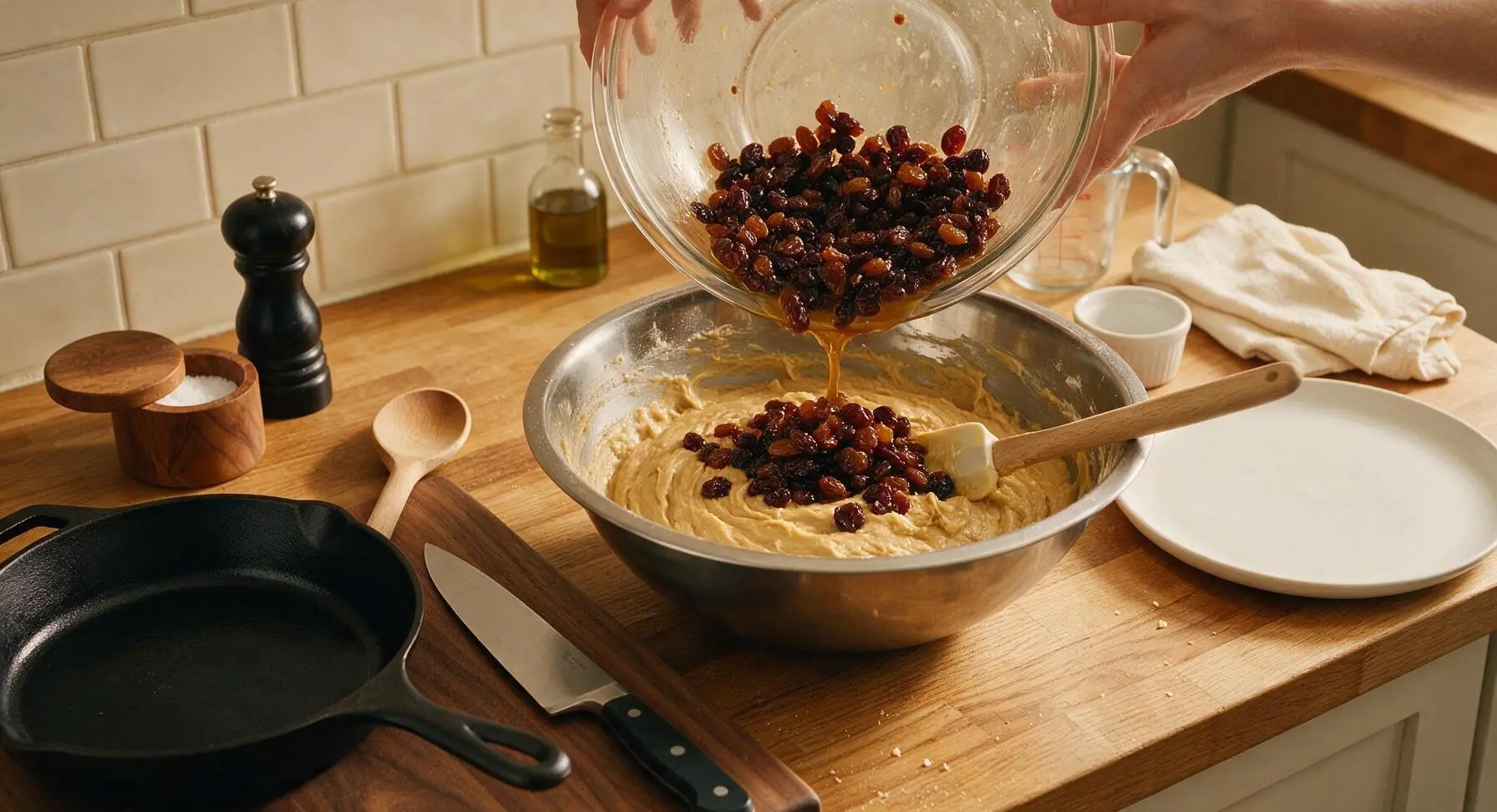
Step 6
step6:Fold in Soaked Fruit
7

Fill and Top Cake Tin

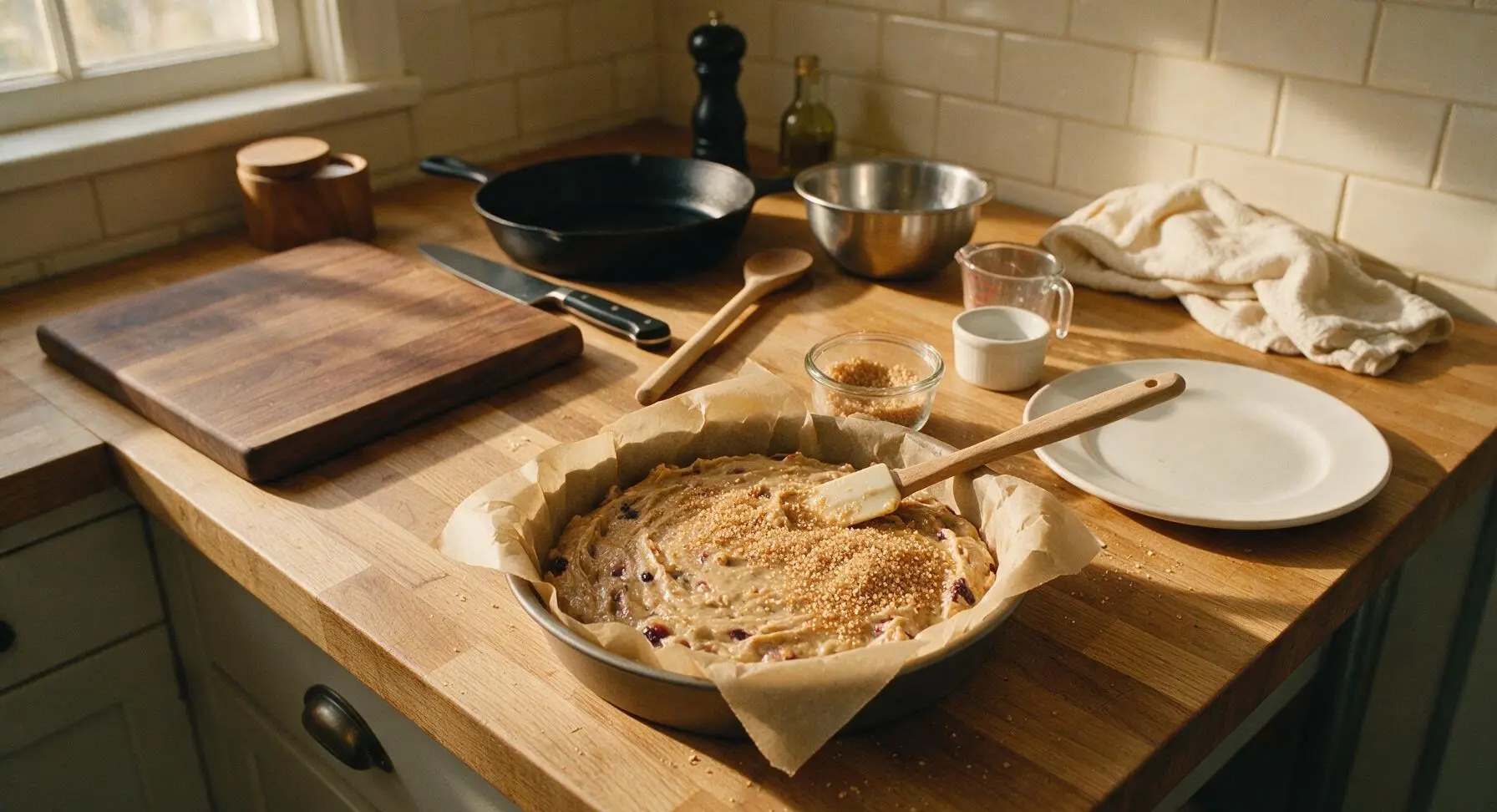
Scoop all the thick, fruit-studded batter into the parchment-lined cake tin, spreading it evenly with the silicone spatula and smoothing the top gently. Sprinkle 1 tablespoon demerara sugar from the small glass ramekin evenly across the batter surface to create a crisp, sweet golden top crust during baking.
Step 7
step7:Fill and Top Cake Tin
8

Bake Low and Slow

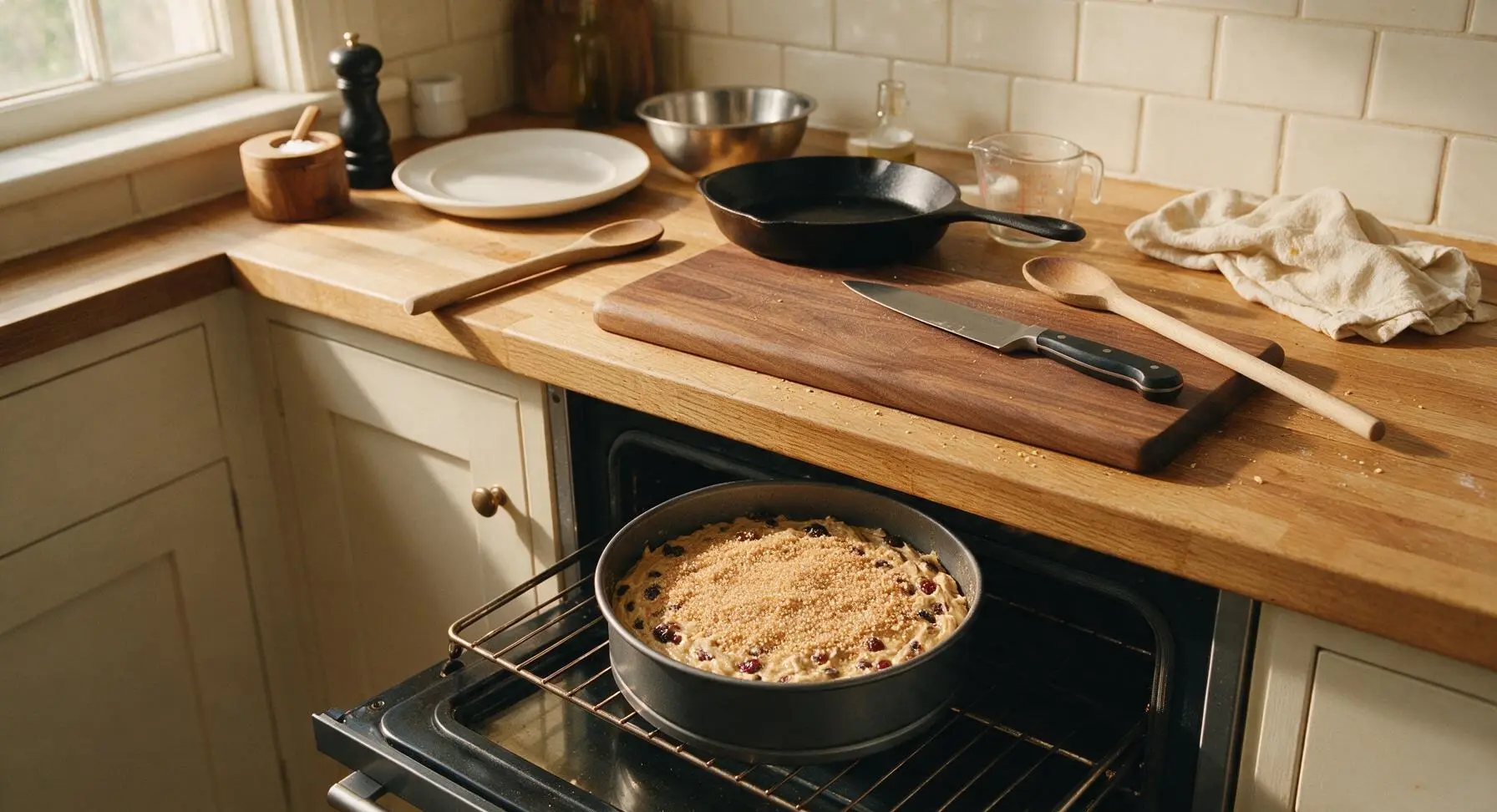
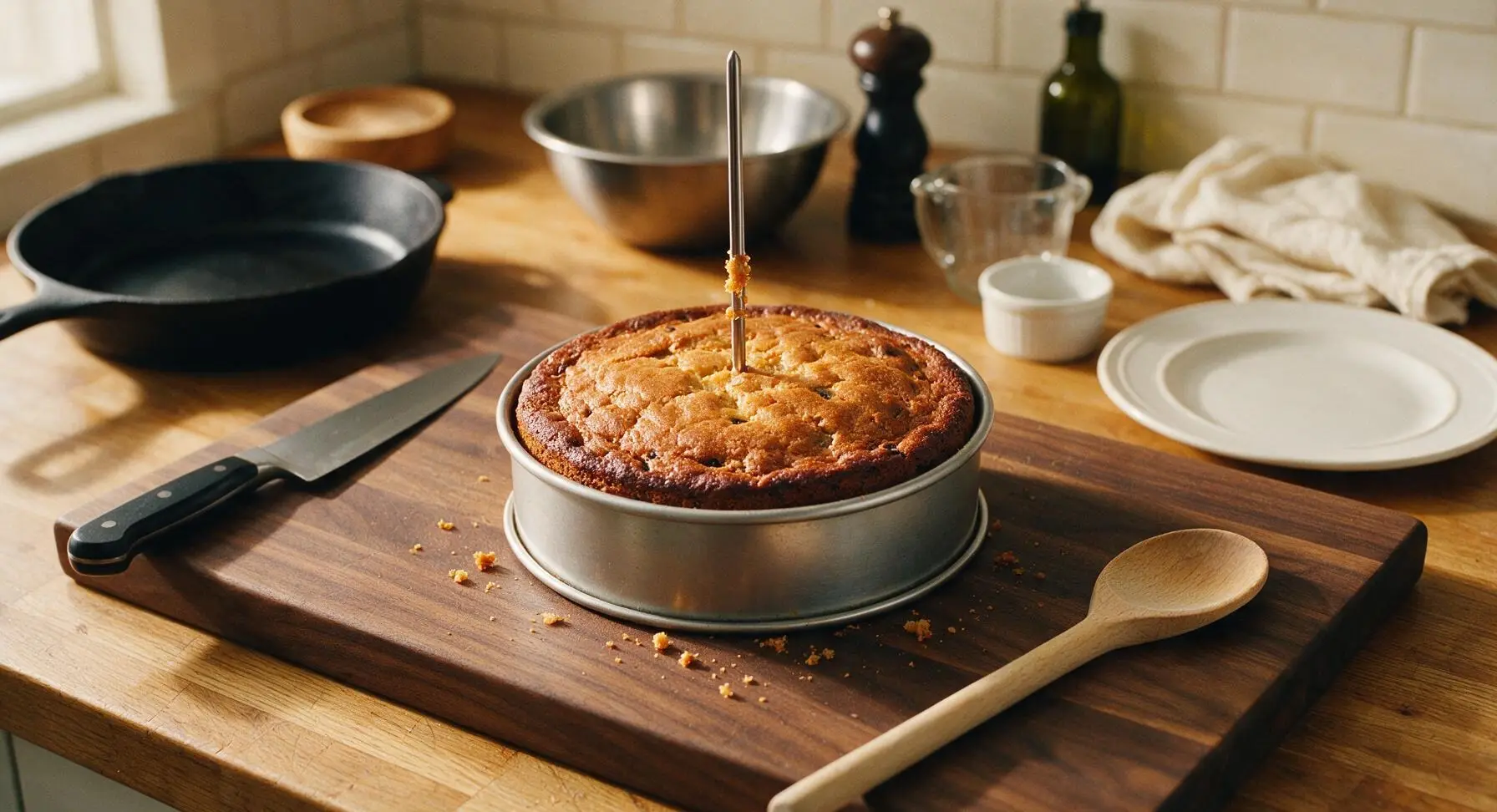
Place the filled tin on the center oven rack and bake for 2 hours to 2 hours 15 minutes at 150°C (300°F). After 1 hour 45 minutes, test for doneness by inserting the long stainless steel skewer into the exact center of the cake: the cake is done when the skewer comes out clean, with no wet batter clinging to it (a few moist crumbs are normal and expected). If the top is browning too quickly, cover it loosely with a sheet of foil for the final 30 minutes of baking to prevent burning.
Step 8
step8:Bake Low and Slow
Step 8
step8:Bake Low and Slow
9

Cool Cake Completely

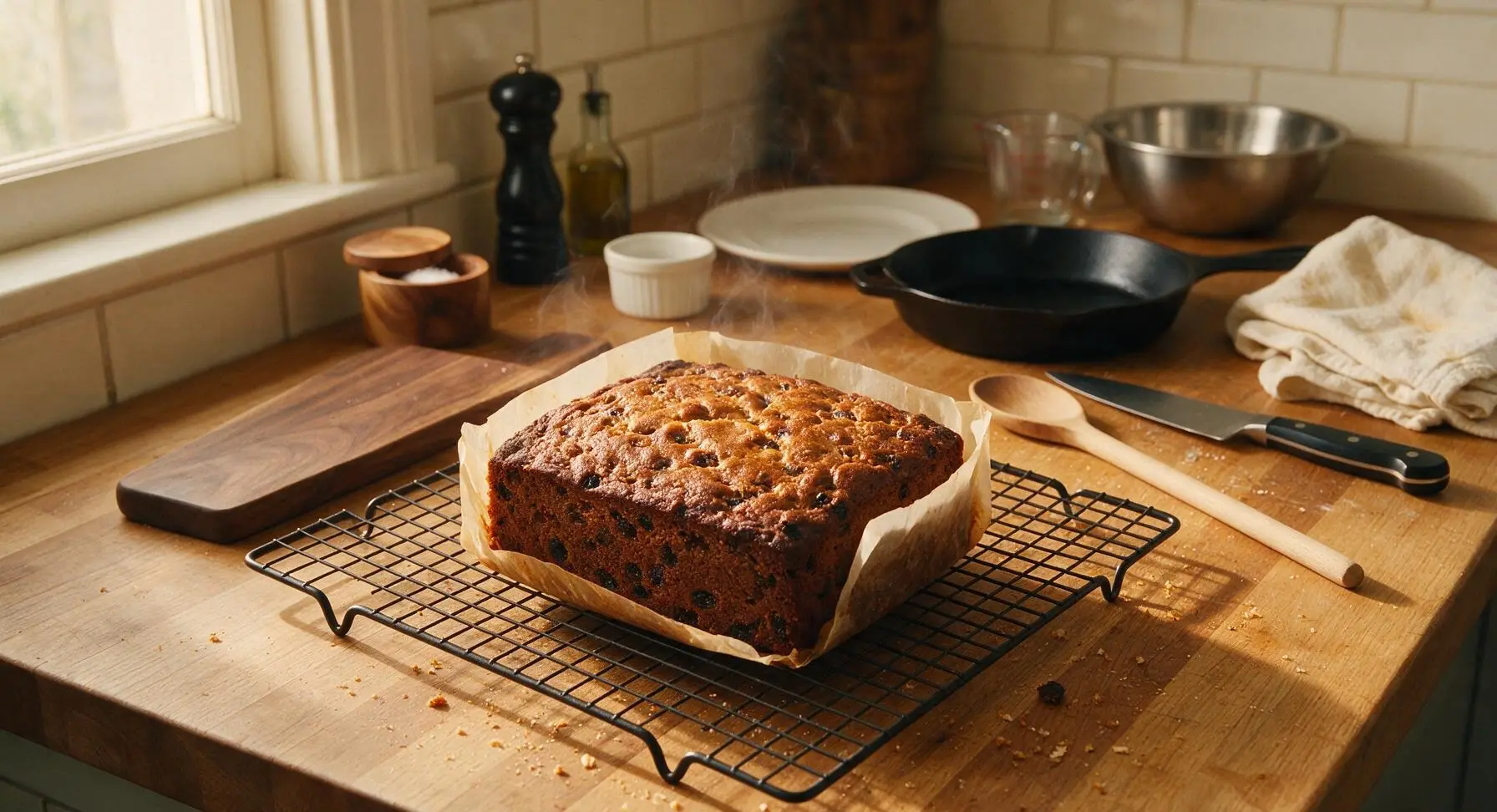
Once baked, remove the tin from the oven and set it on the matte black wire cooling rack. Leave the cake to cool fully in the tin for 2 hours, then turn it out onto the rack (still in its parchment lining) to cool completely to room temperature before slicing or storing. For best flavor, wrap the cooled cake tightly in fresh parchment paper and foil and store in an airtight tin for 2-3 days before serving.
Step 9
step9:Cool Cake Completely

Tips

1.Always use room-temperature butter and eggs for the batter: cold ingredients fail to emulsify smoothly, leading to a curdled mixture, dense crumb, and uneven rise during baking.
2.Avoid opening the oven door for the first 1 hour 30 minutes of baking: sudden drops in oven temperature can cause the heavy fruit-studded batter to sink in the center, resulting in a dense, misshapen cake.
3.For deeper, more complex flavor, ‘feed’ the fully cooled cake weekly by poking small holes across the top with the metal skewer and drizzling 1 tablespoon of dark rum over the surface before re-wrapping tightly. A properly fed fruit cake will keep for up to 3 months in a cool, dark place.

✨ You May Also Like

Desserts & Baking
🍜 Italy

Creamy, coffee-kissed classic Northern Italian no-bake dessert, with layers of rum-spiked mascarpone cream, soft ladyfingers, and a rich cocoa dusting.

⏱️ 4 hours 3Desserts & Baking ★ 4.7
Desserts & Baking
🍜 France

Flaky, shatteringly crisp, buttery French croissants with golden exteriors and soft, airy layered interiors, perfect for pairing with coffee for a special morning treat.

⏱️ 12 hours Desserts & Baking ★ 4.5
Desserts & Baking
🍜 United States

Warm, spiced baked apples topped with a fluffy golden biscuit crust, this cozy dessert pairs perfectly with vanilla ice cream for cool-weather comfort.

⏱️ 55 minuteDesserts & Baking ★ 4.6
Desserts & Baking
🍜 United States

A star-spangled classic American blueberry pie with buttery flaky crust and bright sweet-tart filling, perfect for summer patriotic gatherings.

⏱️ 1 hour 25Desserts & Baking ★ 4.7
Desserts & Baking
🍜 United States

A beloved no-bake regional Maine candy with a chewy coconut-potato center coated in rich dark chocolate, a New England holiday staple since the 1870s.

⏱️ 2 hours 3Desserts & Baking ★ 4.8
Desserts & Baking
🍜 France

Luxuriously creamy, floral frozen custard made with aromatic Tahitian vanilla beans, boasting a smooth, rich texture that melts slowly on the tongue.

⏱️ 3 hours 3Desserts & Baking ★ 4.5

British Fruit Cake:Frequently Asked Questions

1.How long should I soak the dried fruit in rum before baking for the best flavor? ▾
For the deepest, most balanced flavor, soak your mixed dried fruit in dark rum for a minimum of 12 hours, and ideally 2–3 days, stored in a sealed container in the fridge. If you’re short on time, a 2-hour warm soak (heat rum gently, pour over fruit, cover) works, but longer soak time eliminates tough, dry fruit bits and lets the rum infuse evenly.
2.Can I make this fruit cake without alcohol for kids or non-drinking guests? ▾
Absolutely! Swap the dark rum for an equal amount of cold, strongly brewed black tea for a rich, non-alcoholic version that still adds deep, warm depth to the dried fruit. You can also use unsweetened apple cider for a sweeter, fruitier profile, and follow the exact same soaking process you would use for the rum soak for consistent results.
3.Why do the butter and eggs need to be at room temperature for this recipe? ▾
Room temperature butter and eggs emulsify far more smoothly than cold ingredients, creating a uniform, tender crumb instead of a curdled, lumpy batter that leads to dense, uneven baking. Cold butter won’t cream properly with light muscovado sugar to trap the small air pockets that give the cake just enough lift, so pull these ingredients out 1–2 hours before mixing.
4.I’ve heard fruit cake gets better with age—how long does this version stay fresh? ▾
When stored properly—wrapped tightly in parchment paper and then foil, kept in a cool, dark spot away from direct heat—this cake will stay moist and flavorful for up to 3 months. Many bakers “feed” it a teaspoon of extra rum every week during storage to amp up moisture and flavor, just be sure to re-wrap it tightly after each feeding.
5.My glacé cherries always sink to the bottom of fruit cake—how do I prevent that? ▾
To stop glacé cherries and larger pieces of candied citrus peel from sinking, toss them in a light dusting of all-purpose flour before folding them into the batter. This gives the thick batter something to grip onto as it bakes, so fruit stays evenly distributed from top to bottom instead of settling in a clump at the pan base.
6.What can I use as a substitute if I don’t have light muscovado sugar? ▾
If you don’t have light muscovado sugar, swap it for an equal measure of firmly packed light brown sugar for a very similar moist texture and mild molasses flavor. Avoid using granulated white sugar as a direct swap—it won’t add the same deep, caramelized note or moisture content that makes this cake dense and rich rather than dry and crumbly.
7.How do I keep the cake edges from burning before the center is fully baked? ▾
Bake this dense cake low and slow at 325°F (160°C) for 1.5 to 2 hours, and wrap the outside of your cake pan with a double layer of brown paper or baking strips to insulate the edges. Test for doneness by inserting a skewer into the center—it should come out with just a couple moist, sticky crumbs attached, not wet batter.
8.Do I need to use extra parchment paper to line my pan for this fruit cake? ▾
Yes, always line your cake pan with a double layer of parchment paper, leaving a 2-inch collar of parchment sticking up above the pan rim, for this recipe. The long, slow bake time puts the cake at higher risk of sticking or burning around the edges, and the extra parchment acts as a protective barrier to make removal easy and prevent over-browned sides.
9.Can I add nuts to this classic recipe without ruining its traditional texture? ▾
You absolutely can mix in up to 1 cup of chopped, toasted walnuts or blanched almonds if you enjoy a nutty crunch, without throwing off the classic profile. Just toast the nuts first for 8–10 minutes at 350°F to deepen their flavor, toss them in a light dusting of all-purpose flour just like the glacé cherries, and fold them in with soaked fruit right before baking.
10.Why did my fruit cake turn out dry instead of moist and dense? ▾
Dry fruit cake usually comes from one of three missteps: you didn’t soak the dried fruit long enough, you over-baked the cake, or you stored it unwrapped in the fridge where it dried out. To fix an already dry cake, poke small holes across the top with a skewer, brush with 2–3 tablespoons of extra rum or strong tea, wrap tightly, and rest 2 days before serving.
11.Is this recipe sturdy enough to use as a decorated Christmas or wedding cake base? ▾
This dense, rum-soaked recipe works beautifully as a base for a decorated Christmas or wedding cake, as its firm, moist crumb holds up perfectly under layers of marzipan and royal icing. Just let it age for at least 2 weeks after baking, feeding it weekly with rum, before adding any icing layers to let flavors fully meld.
12.Can I freeze this fruit cake to prep it months ahead of the holidays? ▾
Yes, this fruit cake freezes exceptionally well for up to 1 year. Let it cool completely after baking, wrap it tightly in two layers of plastic wrap and then a layer of heavy-duty aluminum foil, label it with the date, and place it in the freezer. Thaw it in the fridge for 24 hours before serving, no extra feeding needed right after thawing.
13.Do I have to use the exact mix of sultanas, raisins, and currants listed in the recipe? ▾
You can adjust the dried fruit blend to match your taste, as long as you keep the total volume of dried fruit the same to maintain the cake’s signature dense texture. For example, you can swap currants for extra chopped dried apricots or cranberries if you prefer, just avoid wet fresh fruit which will make the cake soggy as it bakes.
14.Do I have to wait for the cake to age, or can I eat it right after baking? ▾
You can absolutely slice and eat the cake the day after baking if you don’t want to wait for it to age—it will still be moist, spiced, and full of fruit flavor right away. That said, flavors will mellow and deepen significantly over the first 2–4 weeks of storage, so making it a few weeks early gives you the most classic, well-rounded taste.

Comments (3)

2 days ago

OMG, I was so nervous to make fruit cake because every store-bought one I’ve had is dry and weirdly overloaded with bitter candied peel, but this recipe is a total game changer. I brought it to our neighborhood potluck last weekend and people were leaning over the table to grab a slice before I even set the plate down! My super picky 8-year-old even asked for a second piece with his after-school snack, which never happens with baked goods that aren’t chocolate chip cookies. I swapped the mixed candied peel for extra dried cranberries because my family hates that bitter peel texture, and it turned out SO good. Will absolutely be making this for our Christmas dinner spread this year!

yesterday

Swapping candied peel for extra cranberries is such a genius call! I can’t stand that weird bitter candied peel stuff either, I’m definitely stealing that hack when I bake this next week for my grandma’s 80th birthday. Quick question — did you soak the fruit in black tea first like the recipe recommends, or did you skip that step?

2 hours ago

We’re so thrilled you loved the recipe, Molly! The cranberry swap sounds absolutely delicious — we’re all for adjusting the mix-ins to match what your family enjoys. To answer Jake’s question too: soaking the dried fruit in strong black tea for a few hours (or even overnight!) adds such a lovely depth of flavor and helps keep the cake extra moist, so we highly recommend not skipping that step if you have the time.

5 days ago

This cake turned out really tasty overall, but I ran into a little hiccup with the cook time! My oven runs notoriously hot, so I checked it at the 1 hour 45 minute mark and the edges were already getting a little too dark while the center was still jiggly. I tented the top with aluminum foil for the remaining bake time and it ended up setting perfectly, and the warm spiced flavor was totally spot on. It was the perfect treat to serve at my afternoon book club meetup, paired with mugs of earl grey latte.

3 days ago

Thanks so much for sharing your experience, Liz! Oven temperatures can vary wildly between models, so tenting with foil when the edges reach your preferred darkness is exactly the right move to prevent burning. We’re so glad it still turned out great for your book club — that sounds like such a cozy, perfect afternoon!

1 week ago

Tried this for my weekly meal prep to have as a quick sweet snack during busy work days, and it’s held up perfectly all week stored in an airtight container on my counter! I was worried the medium difficulty rating meant it would be too fussy for my very basic baking skills, but the step-by-step instructions were super straightforward and easy to follow. The only tweak I’ll make next time is adding a little extra brandy to the fruit soak because I love that deep, rich, boozy fruit cake flavor. 10/10, way better than the dry, crumbly fruit cake my aunt brings to Thanksgiving every single year.