British Scones

title 1
British Scones
⏱️ cook time 12 minutes
🍽️ servings 8
⚡ Difficulty easy

intro

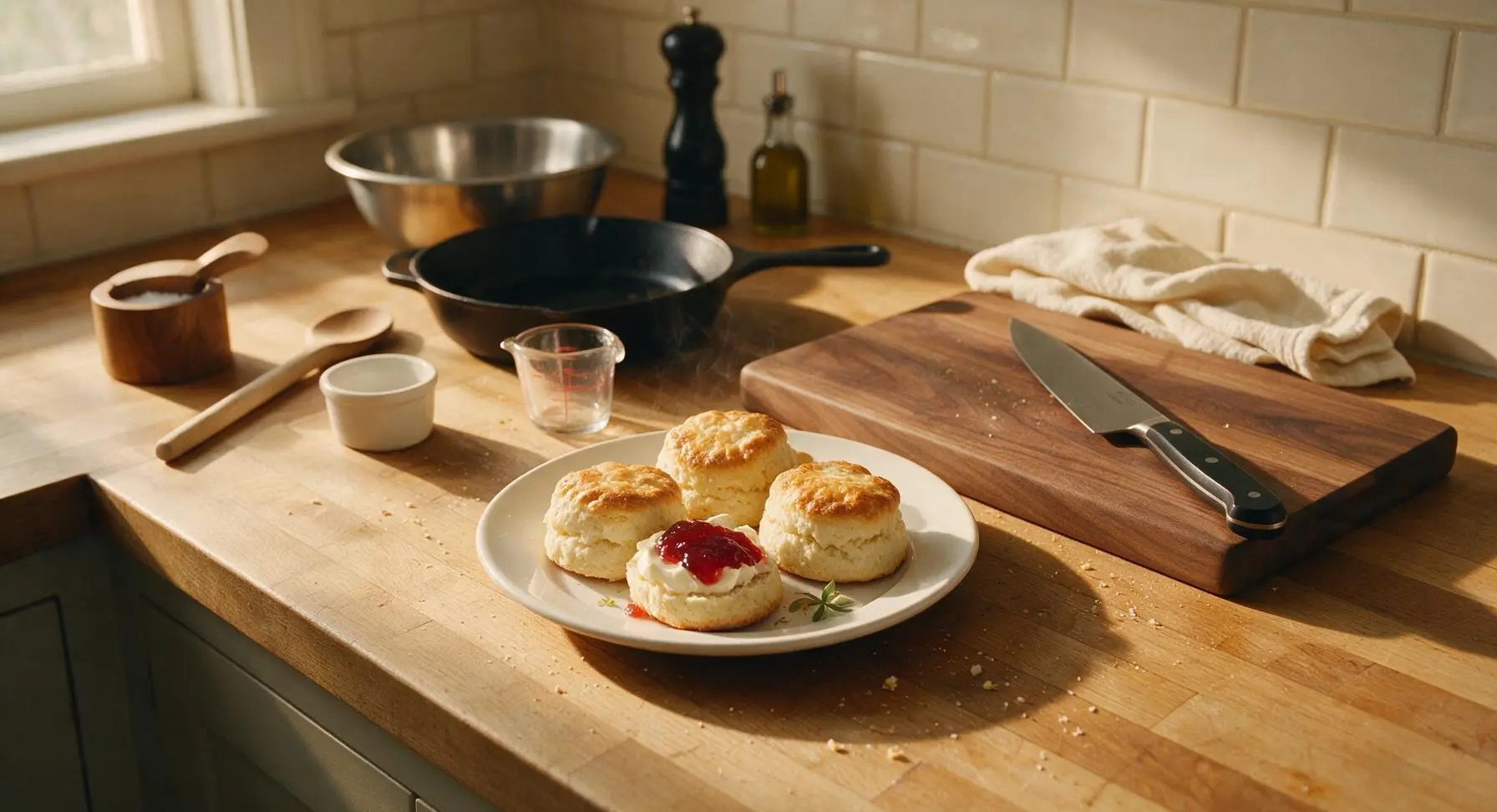
Light, buttery, flaky British scones with crisp golden edges and soft pillowy centers, served warm with clotted cream and strawberry jam for a timeless afternoon tea treat.

Ingredients
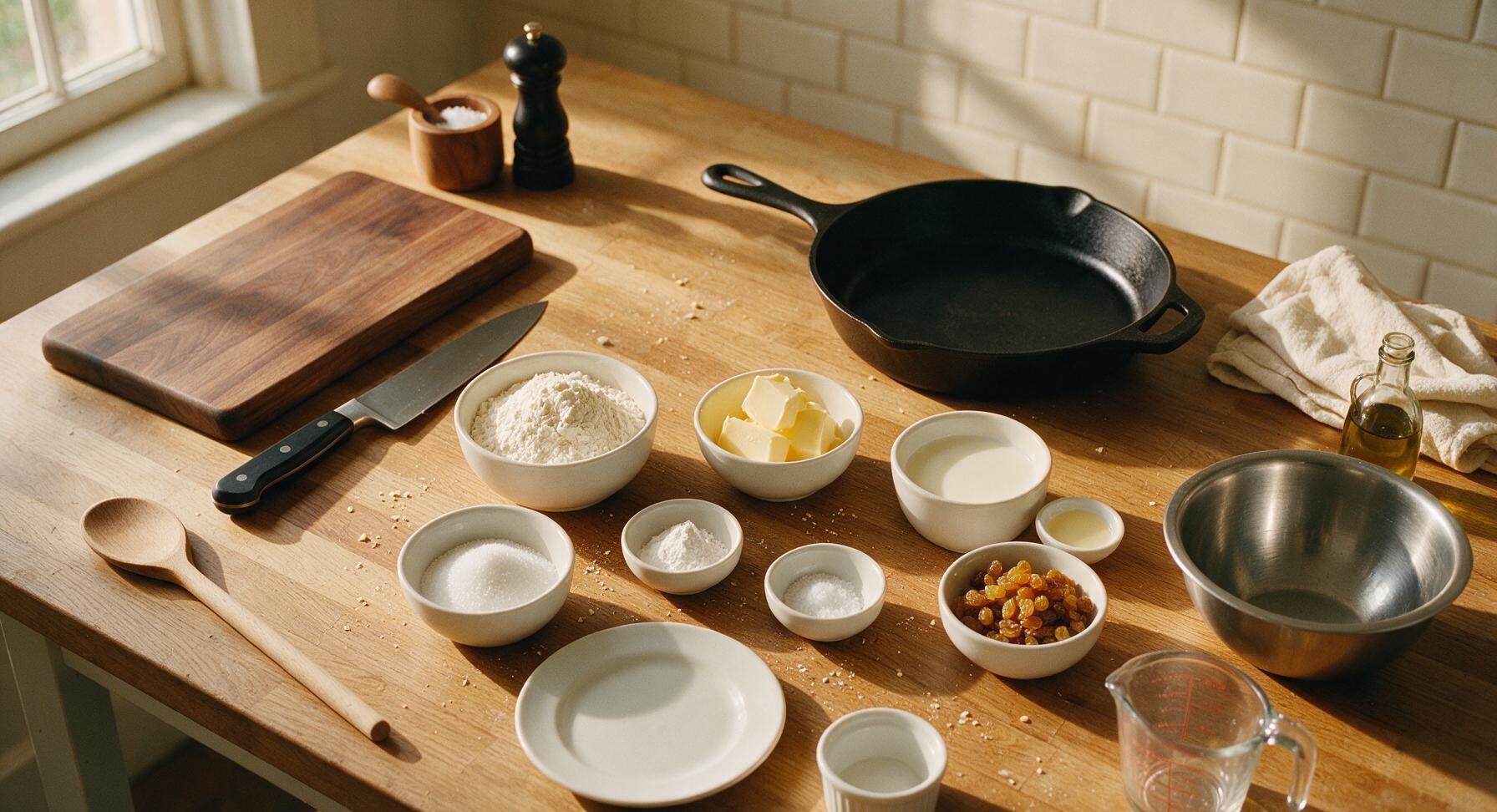
Plain (all-purpose) flour 350g
Cold unsalted butter 75g
Whole milk 175ml, plus 1 tbsp for glazing
Caster sugar 3 tbsp
Baking powder 3 tsp
Fine sea salt 1/4 tsp
Golden sultanas 50g (optional)

Steps

1

Mix Dry Ingredients

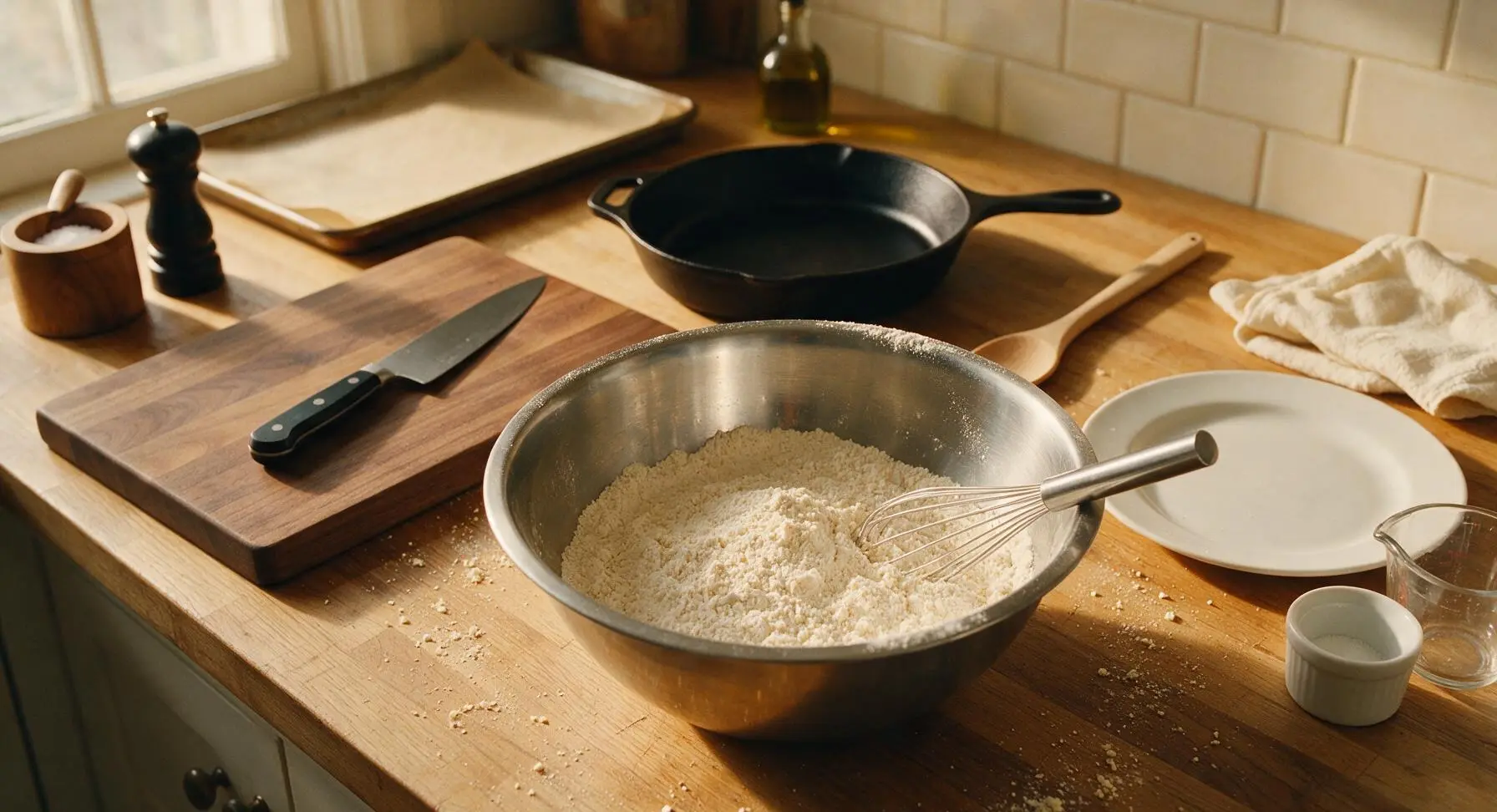
Preheat oven to 220°C (425°F) and line the rimmed baking sheet with unbleached parchment paper. Add 350g plain flour, 3 tsp baking powder, 1/4 tsp fine sea salt, and 3 tbsp caster sugar to the large stainless steel mixing bowl. Whisk thoroughly for 30 seconds until all dry ingredients are evenly combined, with no clumps of baking powder visible.
Step 1
step1:Mix Dry Ingredients
2

Grate Cold Butter

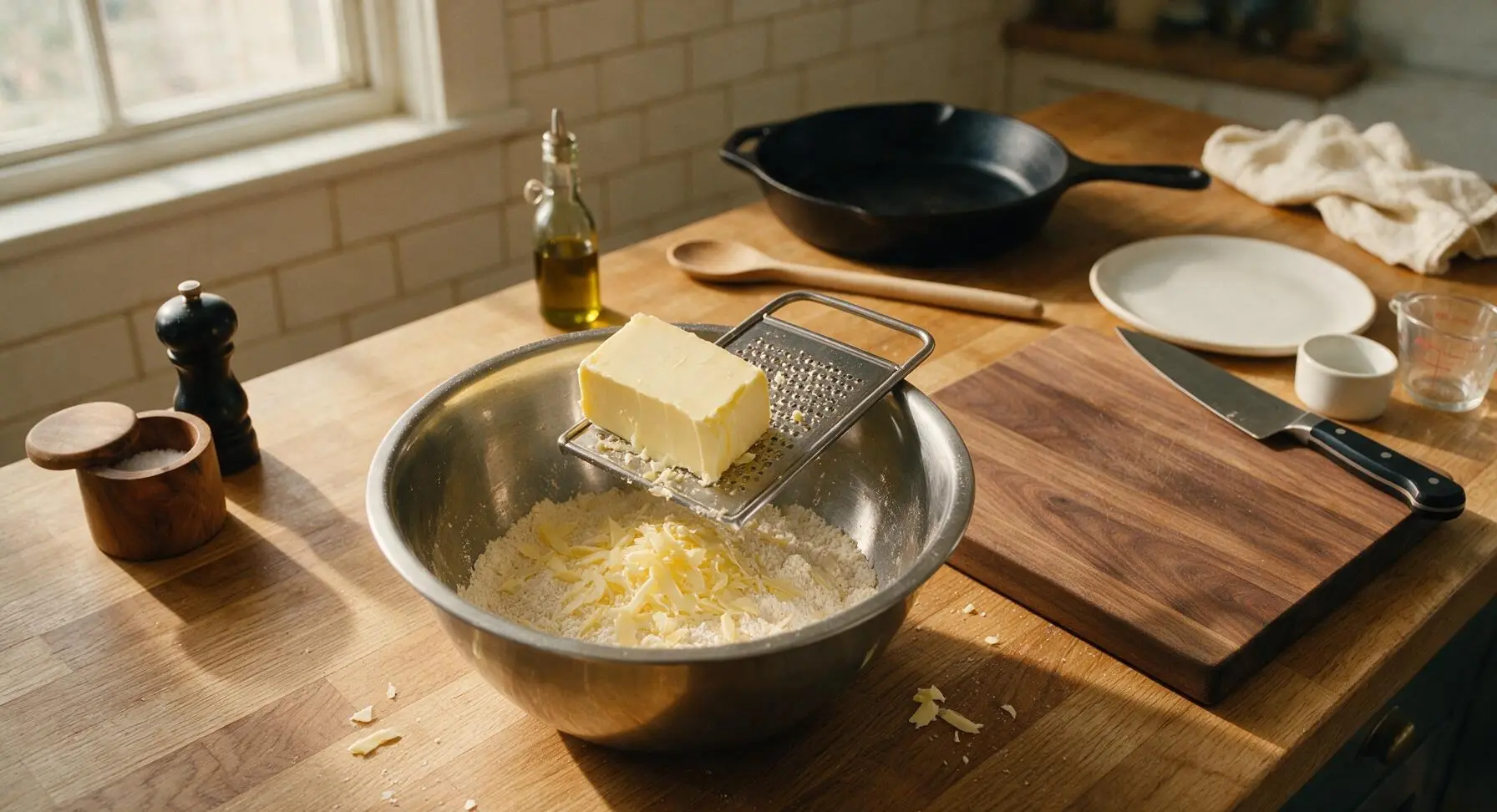
Take 75g of very cold, firm unsalted butter straight from the fridge. Hold the butter against the coarse side of the stainless steel box grater, and grate all of the butter directly into the mixing bowl with the dry ingredients. Work quickly to prevent the butter from softening from the heat of your hands.
Step 2
step2:Grate Cold Butter
3

Rub Butter Into Flour

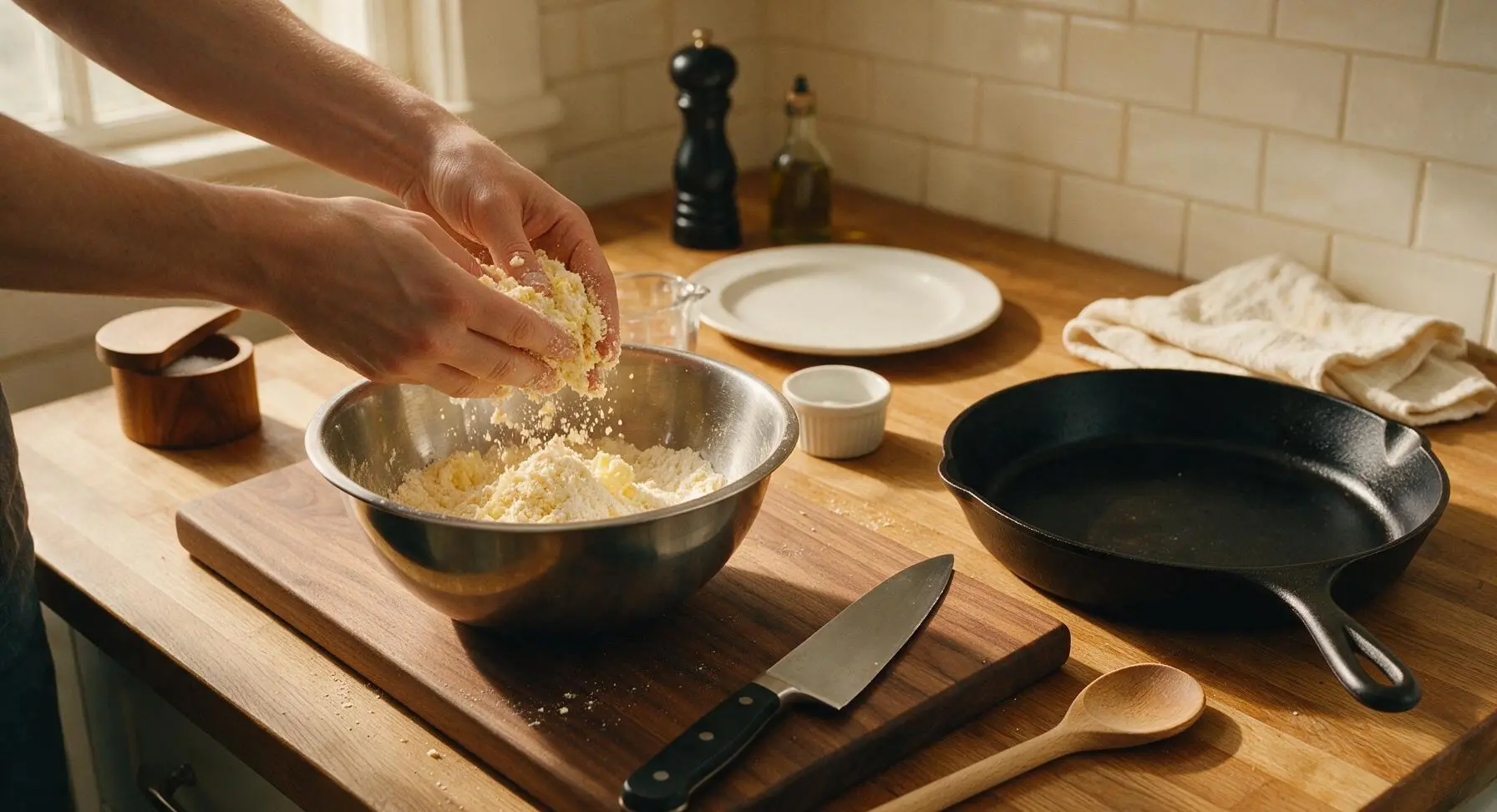
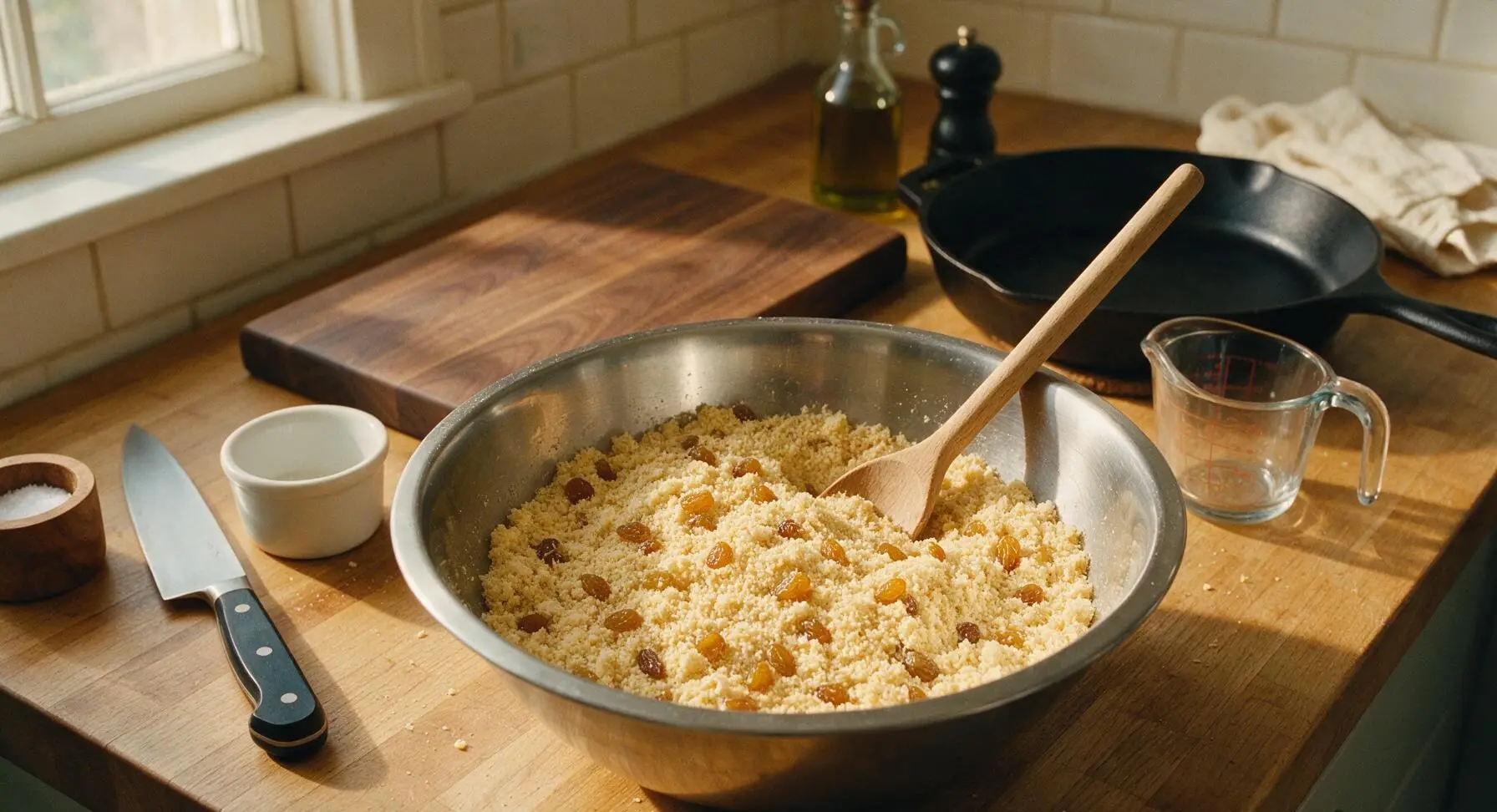
Remove the grater from the bowl. Use your fingertips to gently rub the grated butter into the flour mixture, lifting the mixture up as you rub to incorporate air, until the entire mixture resembles fine, pale golden breadcrumbs with no large lumps of butter remaining. Do not overwork the mixture at this stage, as this will make tough scones. If using sultanas, stir in 50g of golden sultanas now until evenly distributed.
Step 3
step3:Rub Butter Into Flour
Step 3
step3:Rub Butter Into Flour
4

Form Soft Dough

Make a well in the center of the crumb mixture. Pour 175ml of cold whole milk into the well, reserving 1 tbsp of milk for the glaze later. Use the stainless steel round-bladed table knife to stir the milk into the flour mixture in gentle, circular motions, until a soft, slightly sticky, shaggy dough forms. Do not overmix — stop as soon as no dry flour remains at the bottom of the bowl, as overkneading will produce dense scones.
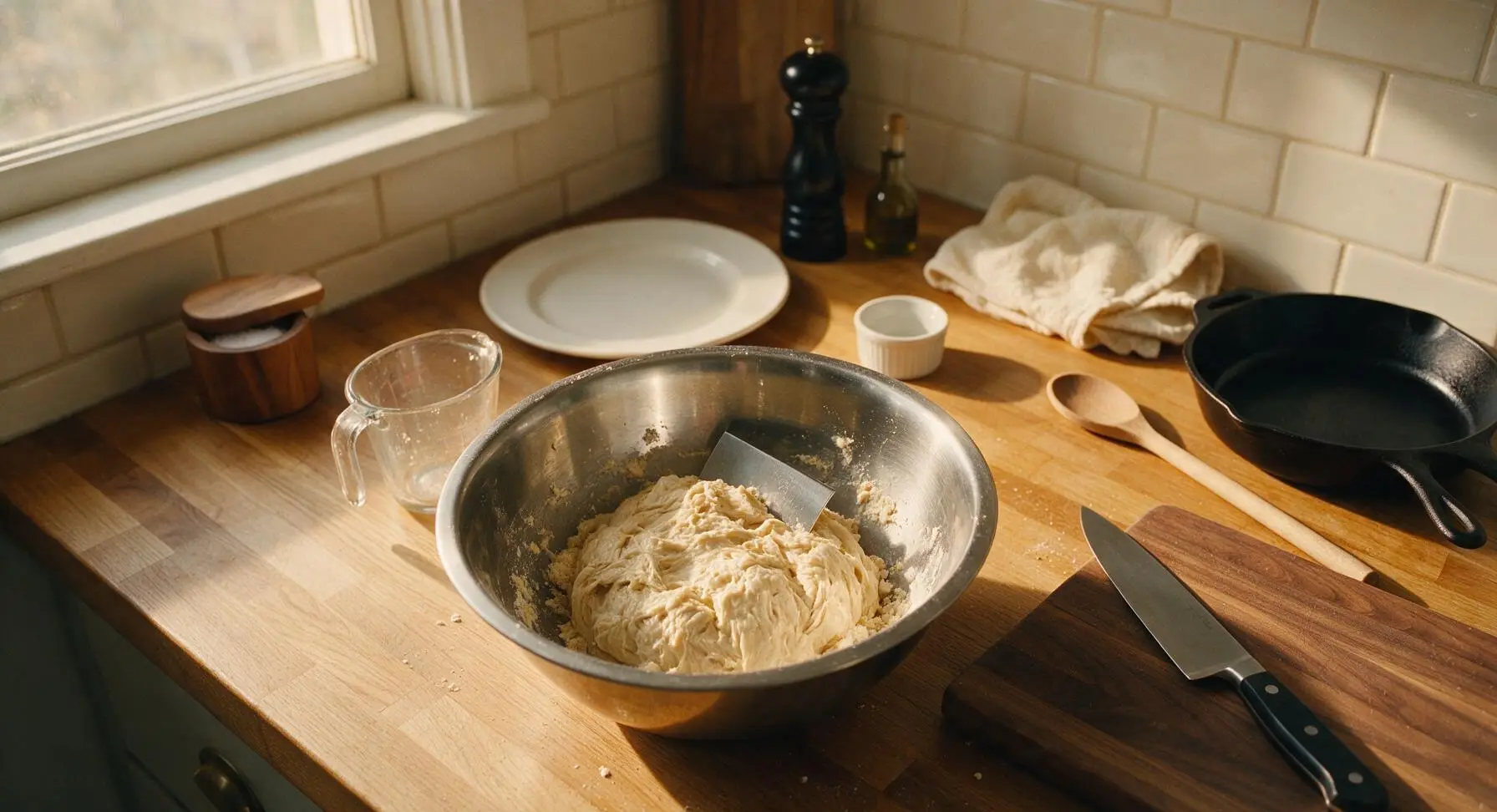
Step 4
step4:Form Soft Dough
5

Pat and Cut Scones

Lightly dust a small section of the counter next to the mixing bowl with a pinch of plain flour. Tip the shaggy dough out onto the floured surface, and gently pat it (do not roll hard with a rolling pin) to a uniform 2.5cm (1 inch) thickness. Dip the sharp edge of the 6cm fluted stainless steel biscuit cutter into a little flour to prevent sticking, then press straight down through the dough to cut out scones — do not twist the cutter, as this will prevent the scones from rising evenly. Gather leftover dough scraps, pat gently again, and cut more scones until you have 8 total rounds.
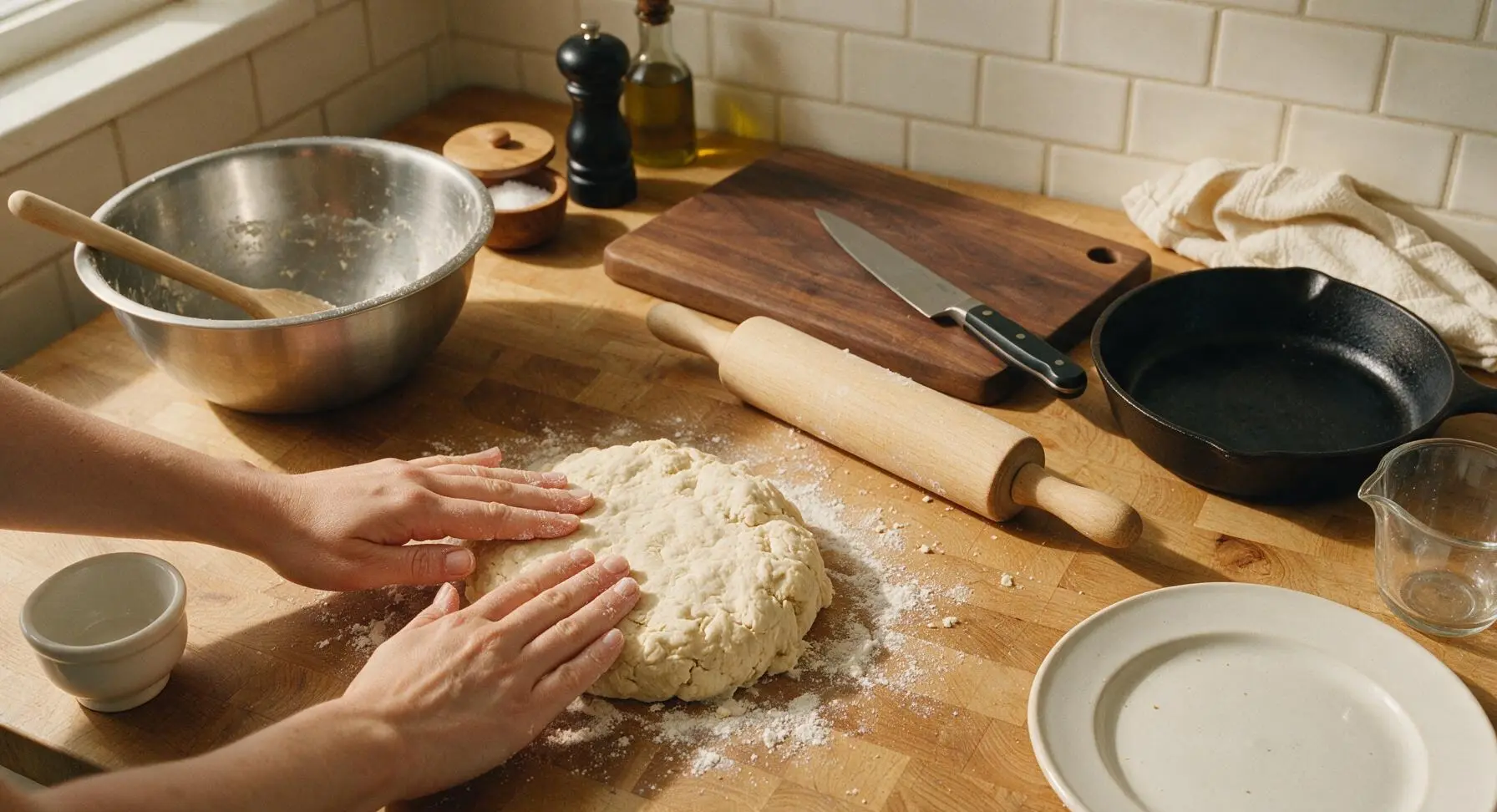
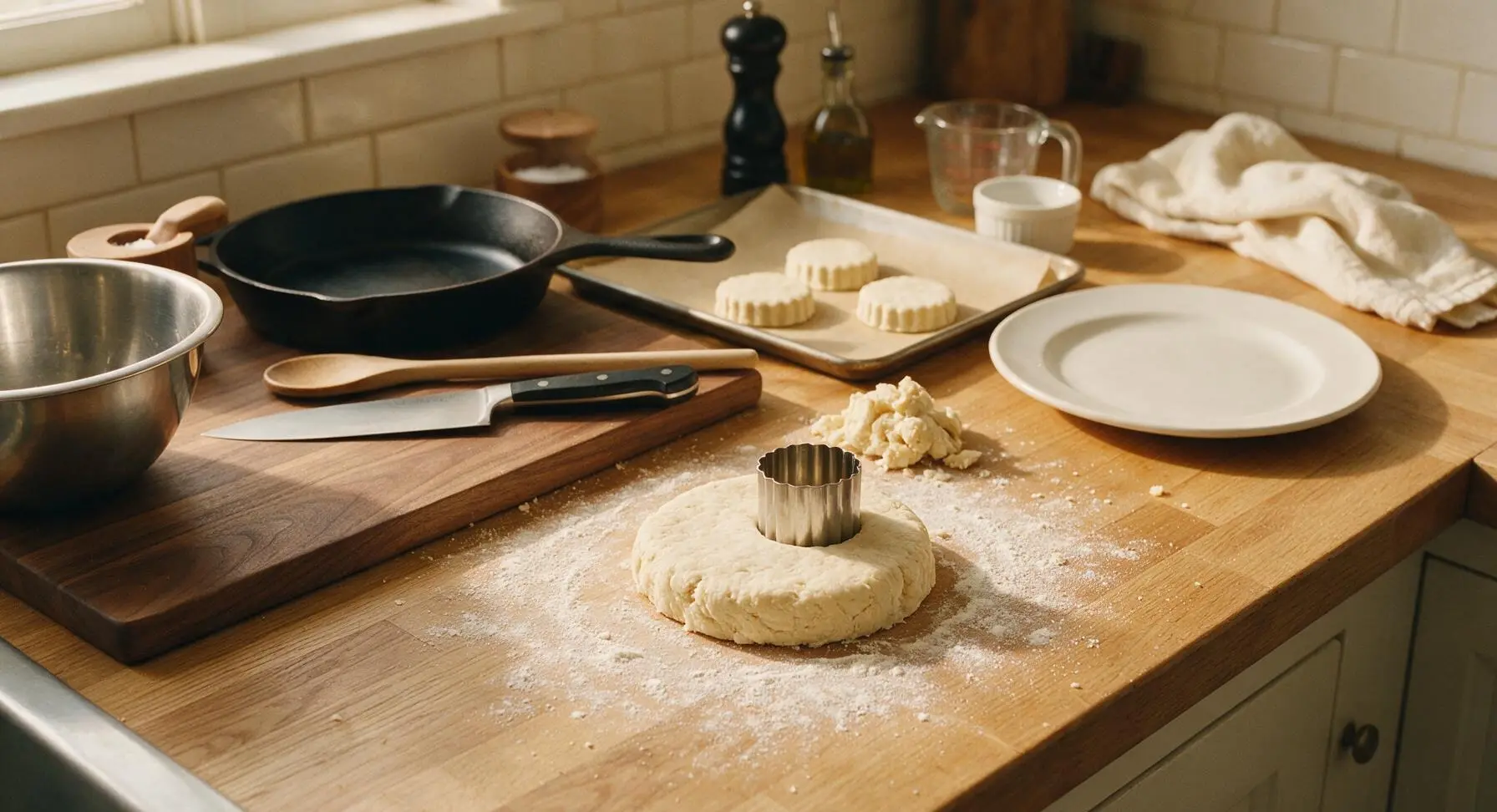
Step 5
step5:Pat and Cut Scones
Step 5
step5:Pat and Cut Scones
6

Glaze and Bake Scones

Arrange all cut scone rounds on the parchment-lined baking sheet, leaving 2cm of space between each to allow for rising. Use the pastry brush to brush the top of each scone lightly with the reserved 1 tbsp of whole milk, taking care not to let milk drip down the sides (this can stick the edges and prevent even rising). Place the baking sheet on the middle shelf of the preheated 220°C (425°F) oven, and bake for 10-12 minutes until the scones are deep golden brown on top, and have doubled in height.
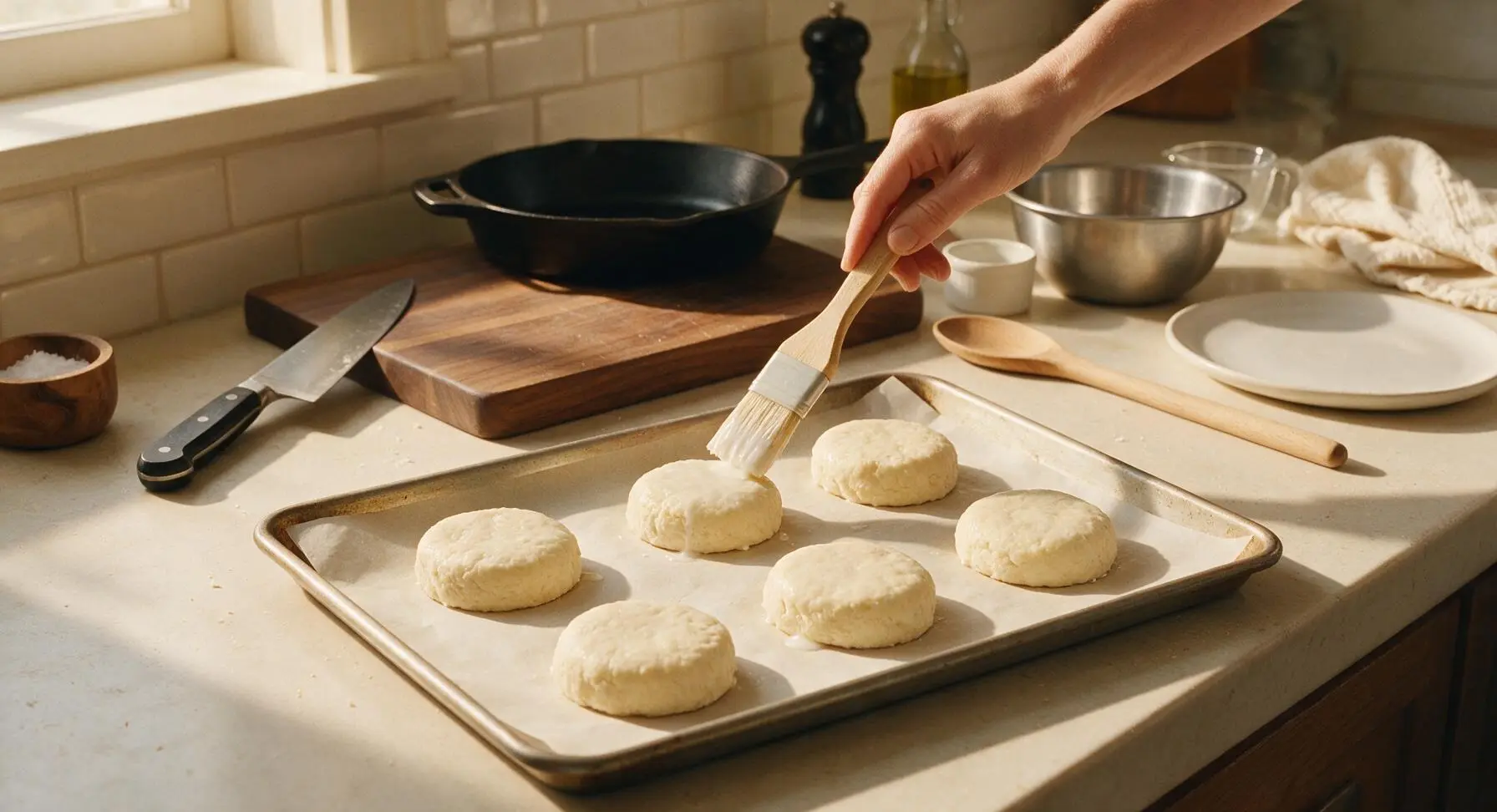
Step 6
step6:Glaze and Bake Scones
7

Cool Scones Briefly

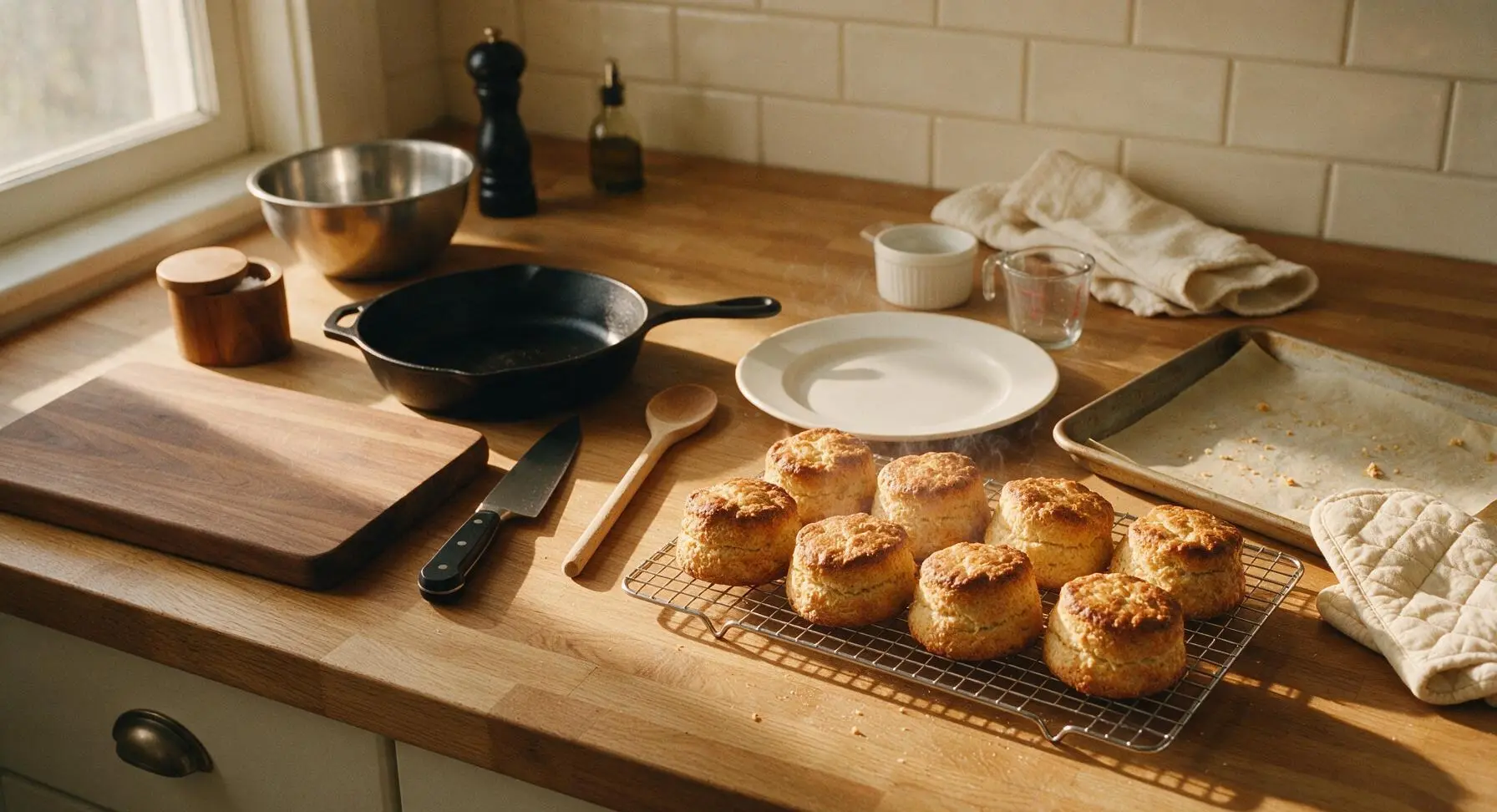
Once baked, remove the baking sheet from the oven using the quilted cream oven mitts. Transfer the golden scones to the chrome wire cooling rack, and let them cool for 3-5 minutes. Scones are best served warm, not piping hot, so the clotted cream does not melt completely when added.
Step 7
step7:Cool Scones Briefly
8

Plate and Serve

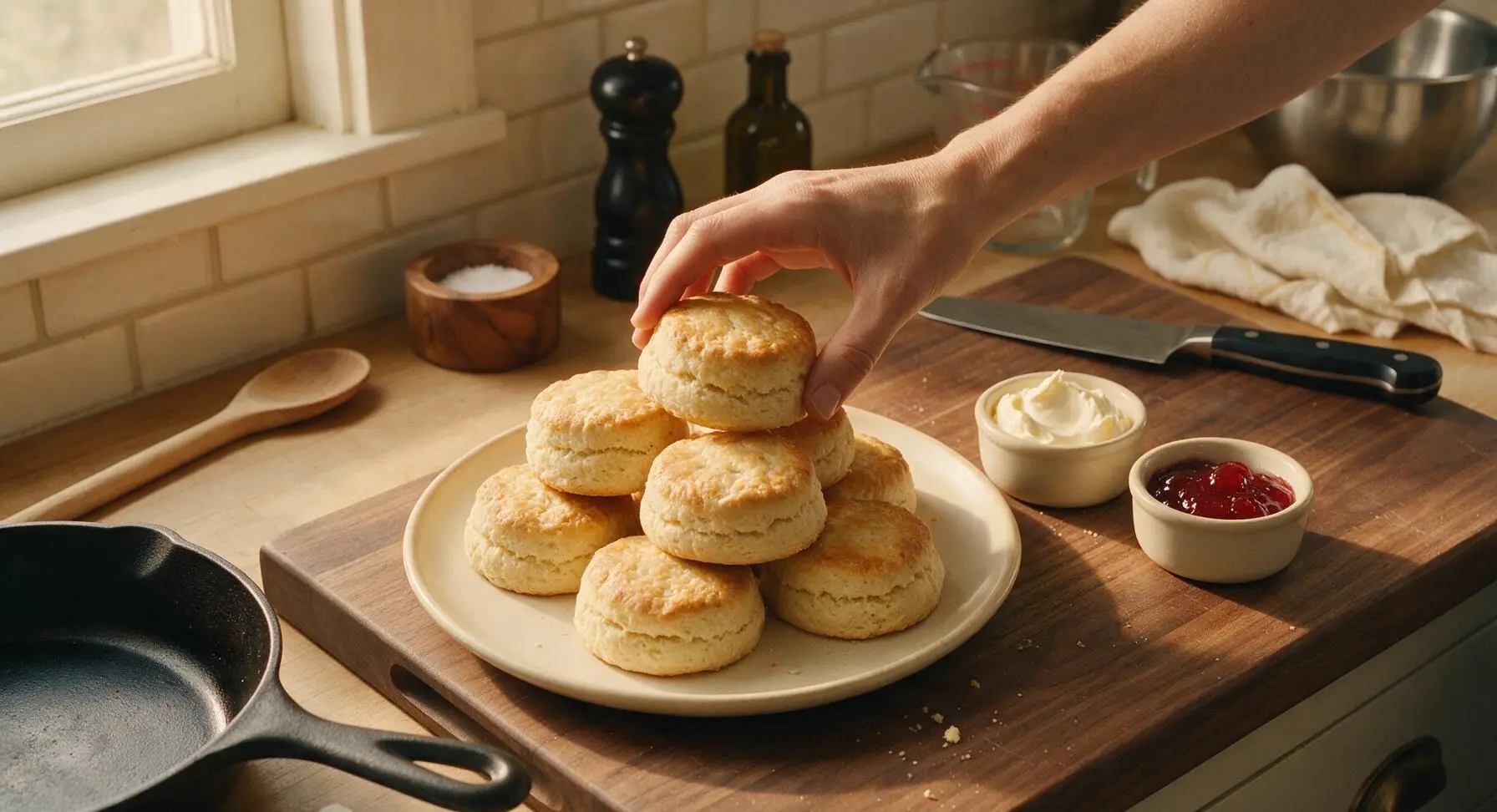
Arrange the warm scones on the cream ceramic serving plate. Serve alongside the two small cream ramekins filled with thick clotted cream and strawberry jam, for guests to split their scones and add toppings as preferred. Both Devonshire (cream first) and Cornish (jam first) serving styles are equally delicious.
Step 8
step8:Plate and Serve

Tips

1.Keep all ingredients (butter, milk) ice cold when making scones: cold butter melts in the oven to create flaky layers, while warm butter will absorb into the flour and produce dense, tough scones.
2.Never twist the biscuit cutter when pressing out scone shapes: twisting seals the edges of the dough, which prevents the scones from rising straight up to their full tall, light height in the oven.
3.Do not overwork or over-knead the dough: overmixing develops gluten in the flour, which will result in hard, bread-like scones instead of the soft, crumbly, light texture classic to British scones. Stop mixing as soon as no dry flour remains.

✨ You May Also Like

Desserts & Baking
🍜 Italy

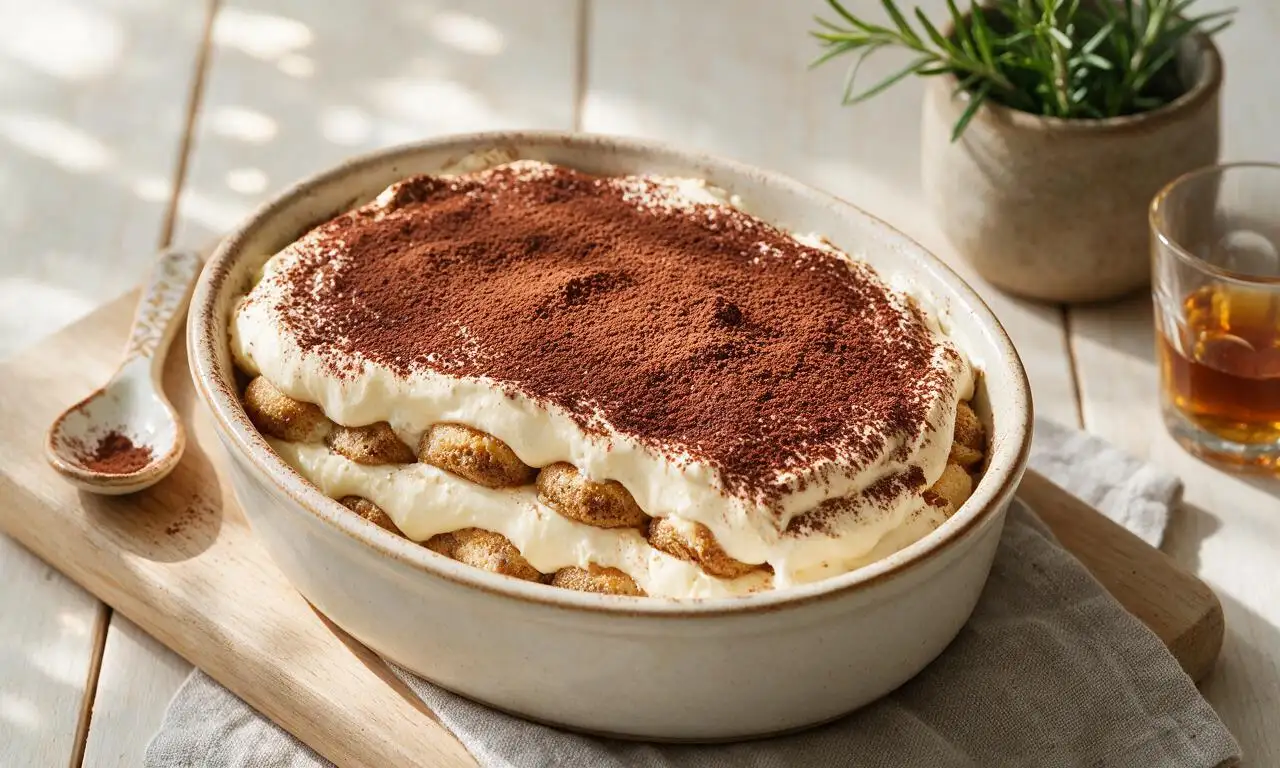
Creamy, coffee-kissed classic Northern Italian no-bake dessert, with layers of rum-spiked mascarpone cream, soft ladyfingers, and a rich cocoa dusting.

⏱️ 4 hours 3Desserts & Baking ★ 4.7
Desserts & Baking
🍜 France

Flaky, shatteringly crisp, buttery French croissants with golden exteriors and soft, airy layered interiors, perfect for pairing with coffee for a special morning treat.

⏱️ 12 hours Desserts & Baking ★ 4.5
Desserts & Baking
🍜 United States

Warm, spiced baked apples topped with a fluffy golden biscuit crust, this cozy dessert pairs perfectly with vanilla ice cream for cool-weather comfort.

⏱️ 55 minuteDesserts & Baking ★ 4.6
Desserts & Baking
🍜 United States

A star-spangled classic American blueberry pie with buttery flaky crust and bright sweet-tart filling, perfect for summer patriotic gatherings.

⏱️ 1 hour 25Desserts & Baking ★ 4.7
Desserts & Baking
🍜 United States

A beloved no-bake regional Maine candy with a chewy coconut-potato center coated in rich dark chocolate, a New England holiday staple since the 1870s.

⏱️ 2 hours 3Desserts & Baking ★ 4.8
Desserts & Baking
🍜 France

Luxuriously creamy, floral frozen custard made with aromatic Tahitian vanilla beans, boasting a smooth, rich texture that melts slowly on the tongue.

⏱️ 3 hours 3Desserts & Baking ★ 4.5

British Scones:Frequently Asked Questions

1.Why do my homemade scones often turn out dense instead of light and flaky? ▾
Dense scones almost always trace back to four common missteps: using room-temperature butter instead of ice-cold, overmixing dough which develops tough gluten, using expired baking powder, or using warm, low-fat milk instead of cold whole milk. Keep butter and milk chilled, mix just until the dough comes together, and check your baking powder’s expiration date for pillowy, soft results every time.
2.Do I really need to use cold butter, or can I use softened butter for easier mixing? ▾
Skip softened butter entirely for classic scones—cold butter is non-negotiable for that signature flaky texture. As cold butter melts in the hot oven, it releases steam that creates tiny, light air pockets in the scone crumb. Softened butter blends too evenly into flour, leading to flat, dense, cookie-like results instead of the tall, layered crumb you want. For extra insurance, pop cut butter in the freezer 10 minutes before use.
3.The recipe calls for caster sugar—can I use regular granulated sugar as a substitute? ▾
You can absolutely substitute regular granulated sugar if you don’t have caster (superfine) sugar on hand, with one small tweak. For every ¼ cup of caster sugar the recipe calls for, measure out the same amount of granulated sugar, then blitz it in a food processor for 10 to 15 seconds to break the grains down slightly. This keeps the scone crumb tender without any gritty sugar texture.
4.Can I substitute self-rising flour for the all-purpose flour and baking powder in this recipe? ▾
Absolutely, that swap works perfectly if you don’t have all-purpose flour and baking powder on hand. For every 2 cups of all-purpose flour the recipe calls for, use 2 cups of self-rising flour, and omit the added baking powder entirely. Just make sure your self-rising flour is fresh—old leavening in pre-mixed flour will lead to flat, low-rise scones without crisp golden edges.
5.Why do my scones spread and lose their tall, neat shape while baking? ▾
Scones that spread instead of rising straight up usually come down to two fixable issues: your dough was too warm when it went in the oven, or you twisted your round cutter when punching out shapes. After cutting scones, chill them on the baking sheet for 15 minutes before baking, and press your cutter straight down without twisting to seal edges cleanly for an even, tall rise.
6.Can I prep this scone dough ahead of time to bake fresh for morning or afternoon tea guests? ▾
Absolutely, this dough holds up beautifully for advance prep. Cut your scones into individual rounds, arrange them on a parchment-lined baking sheet, cover tightly with plastic wrap, and refrigerate for up to 24 hours before baking. Bake them straight from the fridge—no need to bring to room temp—just add 2 to 3 minutes to the total bake time for perfectly risen, warm scones right when guests arrive.
7.What’s the classic way to serve these scones for an authentic afternoon tea experience? ▾
For the most traditional experience, serve scones warm, within 10 minutes of coming out of the oven if possible. Split them open horizontally with your fingers instead of cutting with a knife for a softer, crumbly edge, and top each half with thick clotted cream and good-quality strawberry jam. Skip regular table butter—clotted cream has the rich, velvety texture that pairs perfectly with the light, tender crumb.

Comments (6)

3 days ago

OMG these were SO good! I made them for my kid’s weekend soccer team potluck and every single scone was gone in 10 minutes flat. I added a handful of raisins like my grandma used to, and they came out perfectly fluffy even though I’m usually terrible at baking bread-adjacent stuff. 12 minute cook time is no joke, I almost burned the first batch because I got distracted packing juice boxes lmao. Will absolutely make again for next month’s book club brunch!

2 days ago

Wait did you serve them with clotted cream and jam? I’m making these for my own book club next week and have no clue what the classic pairing is!

yesterday

So glad these were a hit at the potluck! For classic British service, we recommend topping split warm scones with a dollop of clotted cream and strawberry jam first—you can also offer lemon curd as a fun alternative for folks who like a tarter kick. Just make sure to set a timer next time to avoid those burnt edges! 😊

1 week ago

Total game changer for Sunday brunch! I’ve tried like 4 other scone recipes that always came out dense like hockey pucks, but these were light, buttery, and had that perfect crumbly edge. My husband thought I picked them up from the fancy bakery downtown lmao. Only note: I wish the recipe noted how thick to roll the dough out? I guessed about an inch and it worked, but would love a heads up for next time.

5 days ago

So happy to hear these beat your past scone fails! For perfect rise every time, we recommend rolling the dough out to a 3/4 to 1 inch thickness—any thinner and you’ll get flat, less fluffy scones, any thicker and the middles might not cook all the way through in that 12 minute bake time. Great question!

2 days ago

Made these for meal prep this week to grab on my way to 8am lectures and they’re chef’s kiss. I split them and spread a little peanut butter on them for extra protein, and they hold up so well in an airtight container for 4 days. Super easy too, I didn’t even need a fancy pastry cutter—just used two forks to cut the butter in like the tips said. 10/10, no notes.

5 days ago

Has anyone tried making these with a 1:1 gluten free flour blend? I have a family member with celiac coming to our Easter dinner and I want to make something they can enjoy too, but I’m nervous about swapping flours and ruining the texture. These look so good I really don’t want to mess them up!

3 days ago

I did this last week! Used Bob’s Red Mill 1:1 GF flour and added an extra tablespoon of butter, they came out almost identical to the regular version. My roommate who eats gluten didn’t even notice the difference!

2 days ago

Great question! We’ve tested this recipe with most major 1:1 gluten free all purpose flour blends and it works beautifully, just like GFbaker99 said. You may want to add 1 extra tablespoon of cold butter to keep the crumb tender, and avoid overworking the dough to prevent a gritty texture. Hope your Easter guest loves them!

yesterday

Tried these for the first time today with my 7 year old daughter, we had a blast making them! We cut them into little heart shapes instead of circles and added a sprinkle of sugar on top before baking. They were so buttery and delicious, we ate half the batch warm with honey before they even cooled all the way. Only mishap: I forgot to set the oven timer and the bottoms were a tiny bit crisp, but honestly that just added extra crunch lmao.

2 hours ago

The heart shape idea is so cute! I do that for my granddaughter’s tea parties and the kids go absolutely crazy for them. Pro tip: line your baking sheet with parchment paper next time and those bottoms won’t get too crispy even if you leave them in a minute too long!

30 minutes ago

Brought these to my office potluck earlier this week and people were begging for the recipe before I even left the break room! I served them with little individual cups of jam and clotted cream on the side so people could top their own, and it was the easiest spread I’ve ever put together for a work event. 12 minute cook time meant I could bake them the morning of without waking up at 5am, which is a total win in my book. Already got asked to bring them to the next team happy hour next month!