butter chicken sauce

title 1
butter chicken sauce
⏱️ cook time 30 minutes
🍽️ servings 4
⚡ Difficulty medium

intro

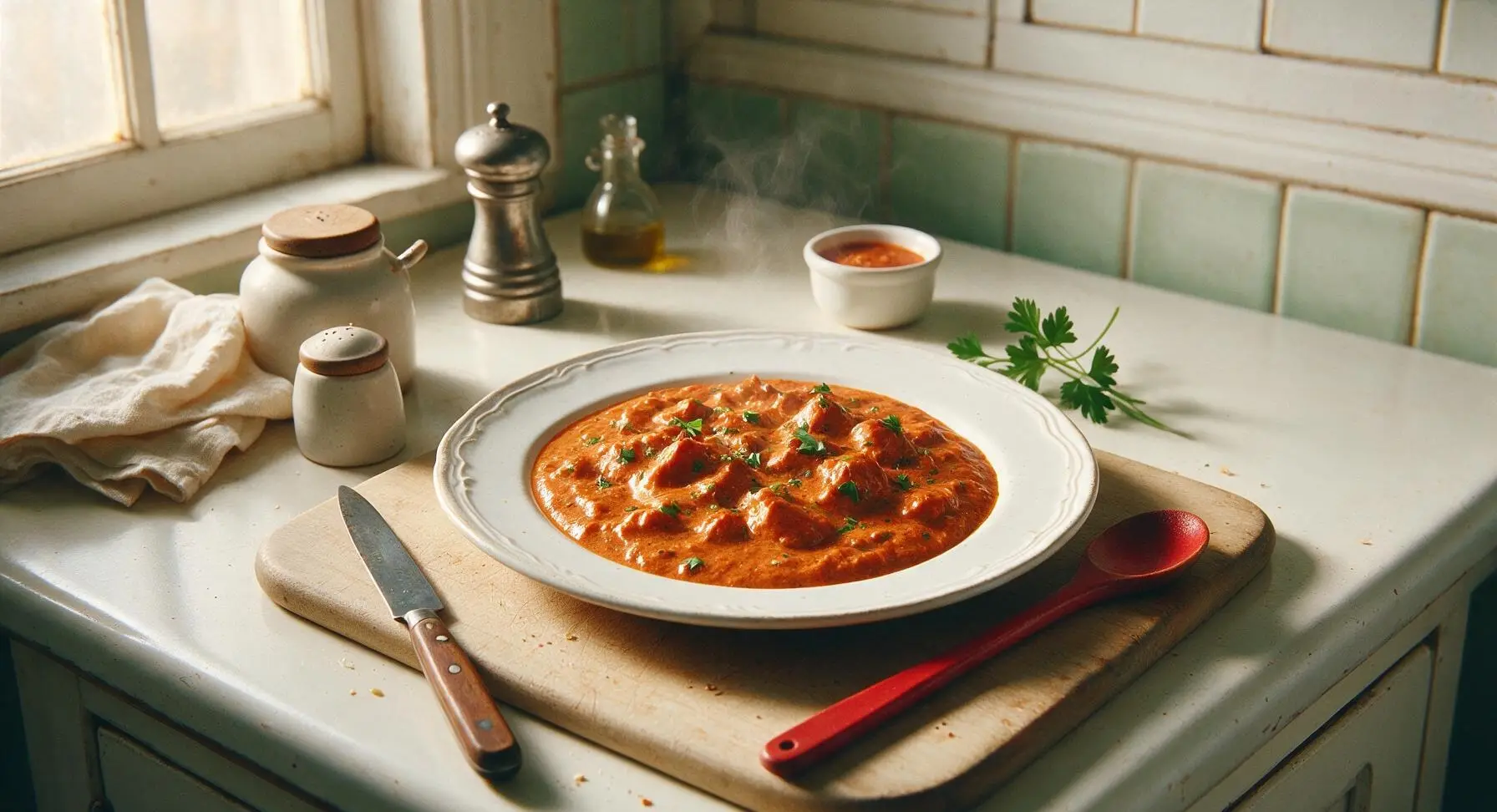
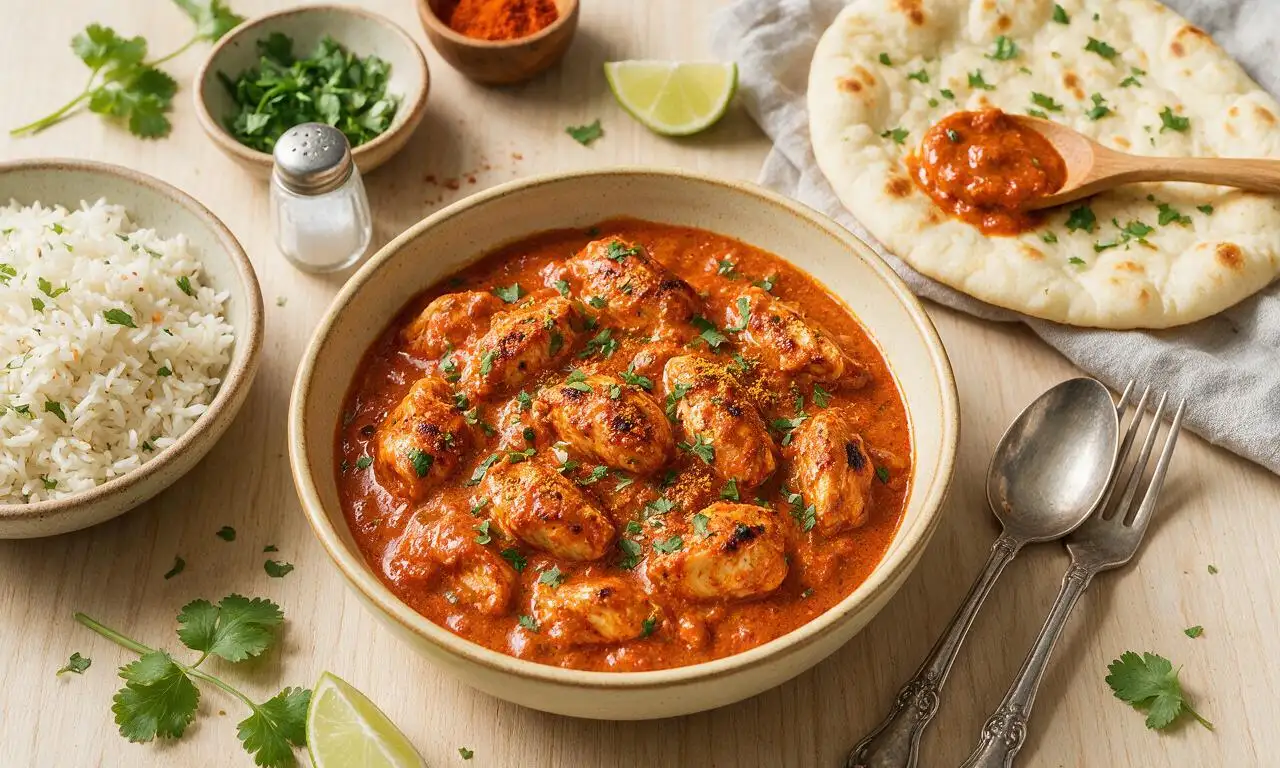
Velvety, aromatic butter chicken sauce—rich with slow-simmered tomato, warm spices, butter, and cream, the iconic North Indian base for the world’s favorite curry.

Ingredients

Roma tomatoes 6 medium (about 700g, chopped)
Yellow onion 1 medium (150g, finely diced)
Garlic cloves 4 (12g, minced)
Fresh ginger 2-inch knob (20g, grated)
Tomato paste 2 tbsp (30g)
Garam masala 1.5 tsp
Ground cumin 1 tsp
Ground coriander 1 tsp
Kashmiri red chili powder 1/2 tsp (adjust for heat)
Unsalted butter 4 tbsp (56g, divided)
Heavy cream 1/2 cup (120ml)
Plain full-fat Greek yogurt 1/4 cup (60g)
Dried fenugreek leaves (kasuri methi) 1 tbsp, crushed
Kosher salt 1 tsp, plus more to taste
Water 1/2 cup (120ml)

Steps

1

Prep Aromatic Base

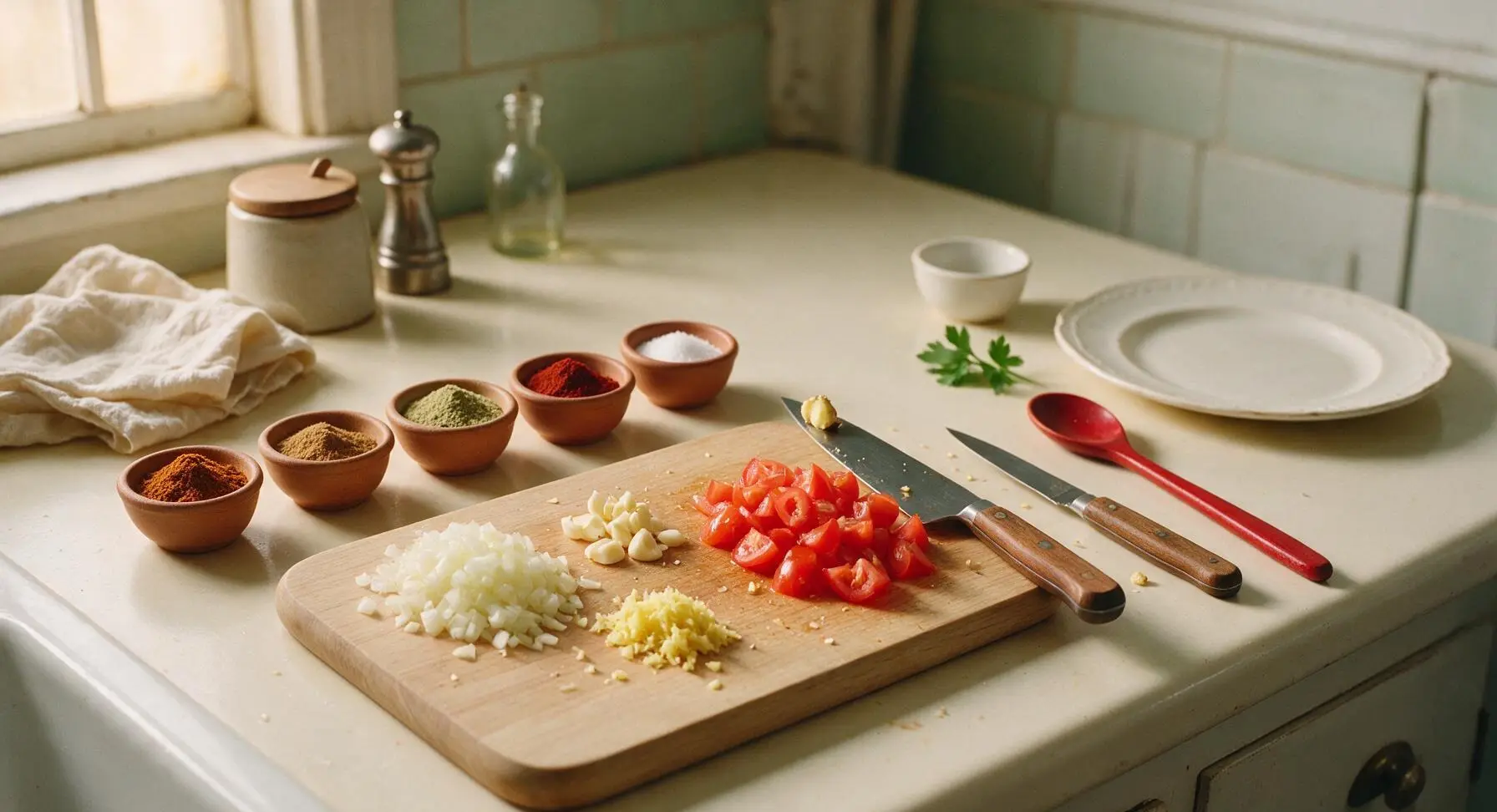
Place the acacia wood cutting board in its fixed left-of-center position. Using the chef’s knife, finely dice the yellow onion, mince the garlic cloves, grate the fresh ginger, and chop the Roma tomatoes into 2cm rough chunks. Measure all spices (garam masala, cumin, coriander, Kashmiri chili, salt) into the individual terracotta pinch bowls for easy access during cooking. Chop ingredients to uniform size to ensure even cooking.
Step 1
step1:Prep Aromatic Base
2

Sauté Aromatics & Spices

Move the stainless steel saucepan from its prep position next to the blender to the center-right cooking position over medium heat (350°F/175°C). Add 2 tablespoons of the unsalted butter, and once melted and foaming subsides (about 1 minute), add the diced onion. Sauté for 5 minutes until soft and translucent, then add the minced garlic and grated ginger, cooking for 30 seconds until fragrant. Stir in the tomato paste and all measured dry spices, toasting for 20 seconds until the spices release a warm, nutty aroma—do not burn, as this will create a bitter, off-flavor in the finished sauce.
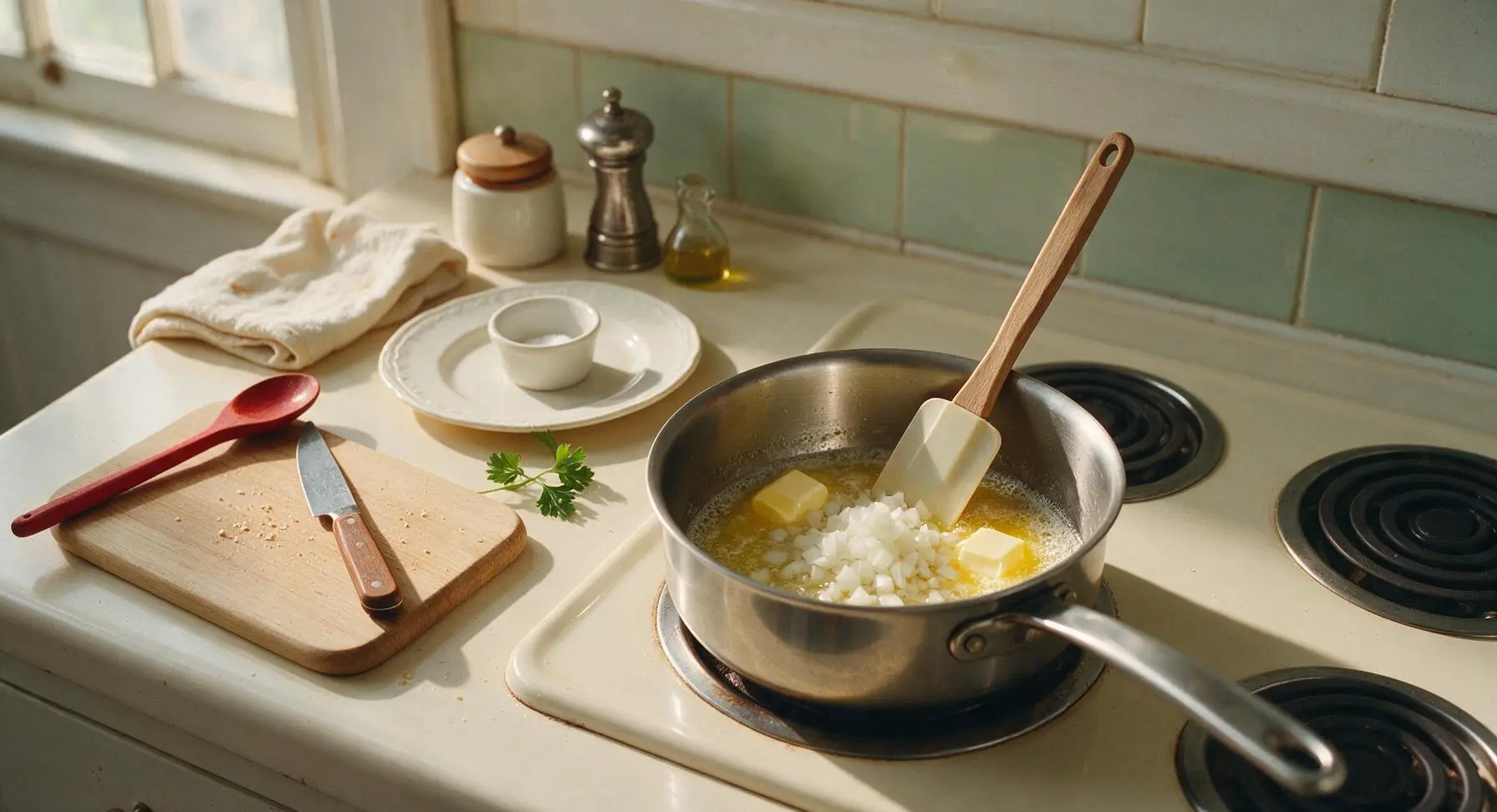
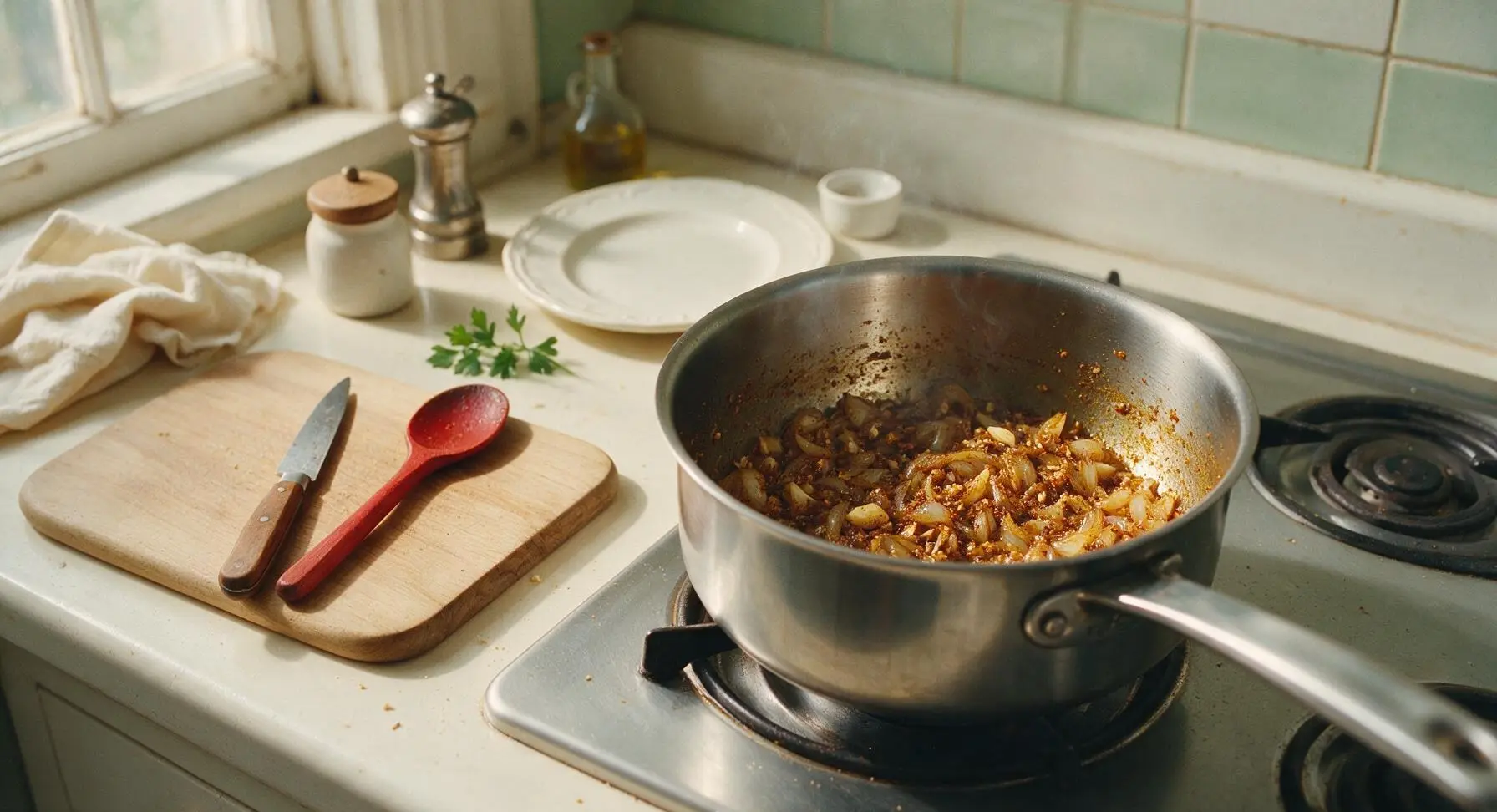
Step 2
step2:Sauté Aromatics & Spices
Step 2
step2:Sauté Aromatics & Spices
3

Simmer Tomato Mixture

Add the chopped Roma tomatoes, 1/2 cup water, and 1 teaspoon kosher salt to the saucepan with the spiced onion mixture. Stir to combine with the silicone spatula, then bring to a gentle simmer. Reduce heat to medium-low (300°F/150°C), prop the pan lid slightly ajar to let steam escape, and cook for 15 minutes, stirring occasionally, until the tomatoes break down completely into a thick, pulpy mixture that pulls away slightly from the sides of the pan.
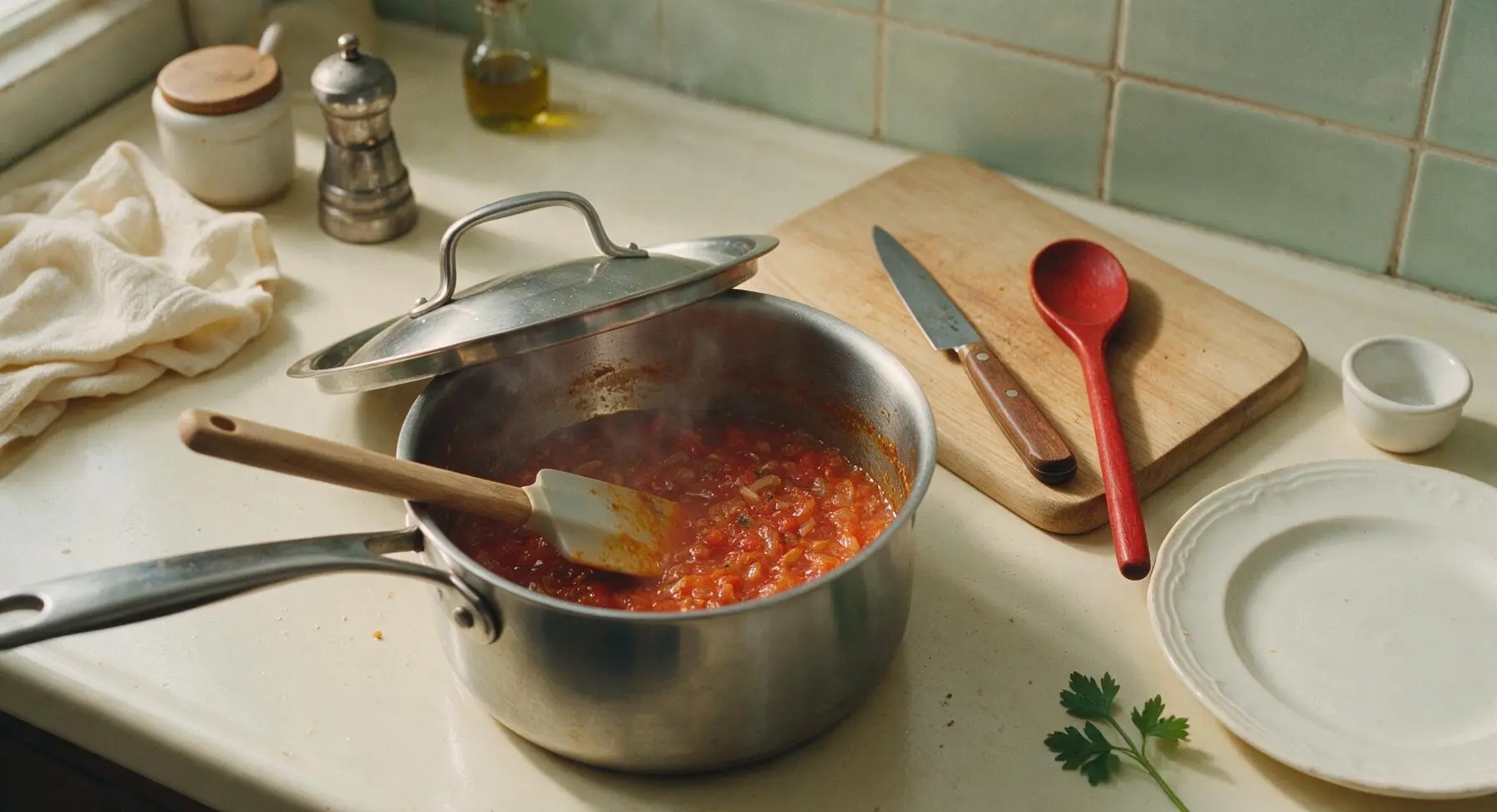
Step 3
step3:Simmer Tomato Mixture
4

Blend Sauce Until Smooth

Carefully transfer the hot cooked tomato mixture to the jar of the matte white countertop blender. Secure the lid tightly, removing the center plastic cap to let steam escape, and cover the lid with the corner of the linen kitchen towel to prevent hot splatters. Blend on high speed for 1 minute until the mixture is completely smooth, with no visible lumps or tomato skin remaining.
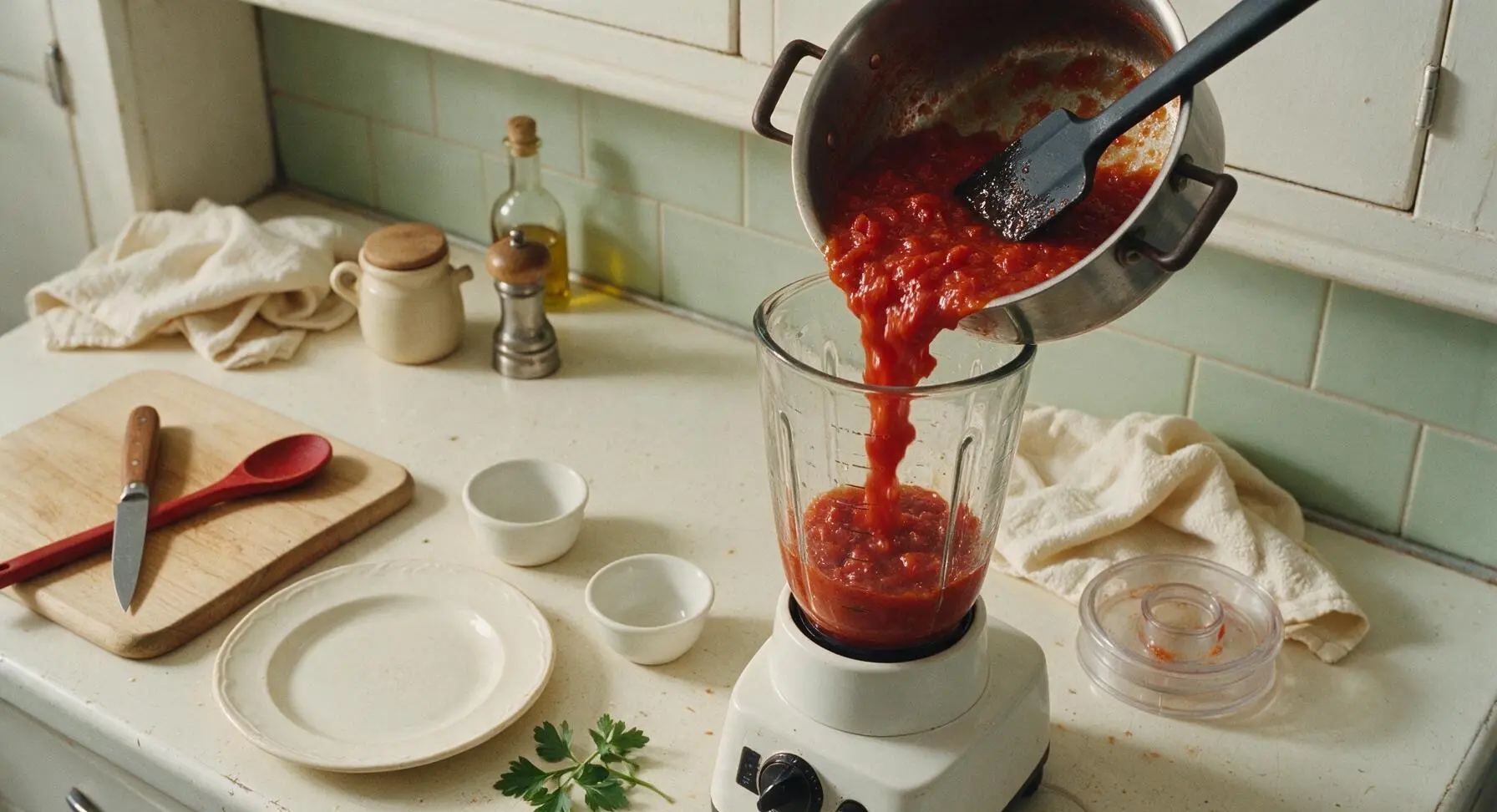
Step 4
step4:Blend Sauce Until Smooth
5

Strain For Silky Texture

Move the fine-mesh stainless steel conical strainer from its resting spot against the blender to rest over the clean saucepan, set back on the counter over low heat. Pour the blended tomato puree through the strainer, using the silicone spatula to press the mixture through, leaving only tough tomato skins and coarse spice sediment behind in the strainer. Discard the leftover solids. This quick step creates the signature silky, lump-free texture of restaurant-style butter chicken sauce.
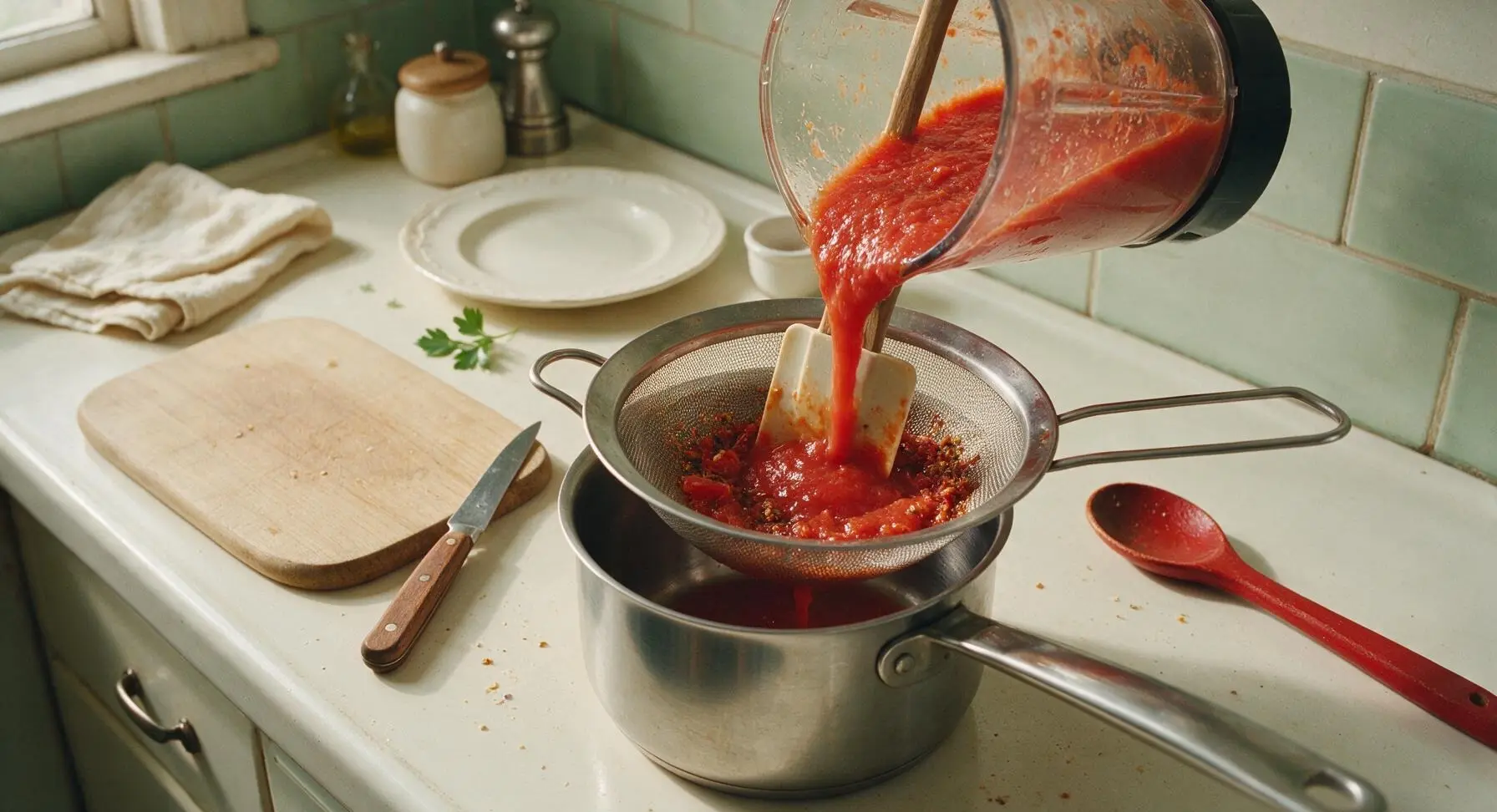
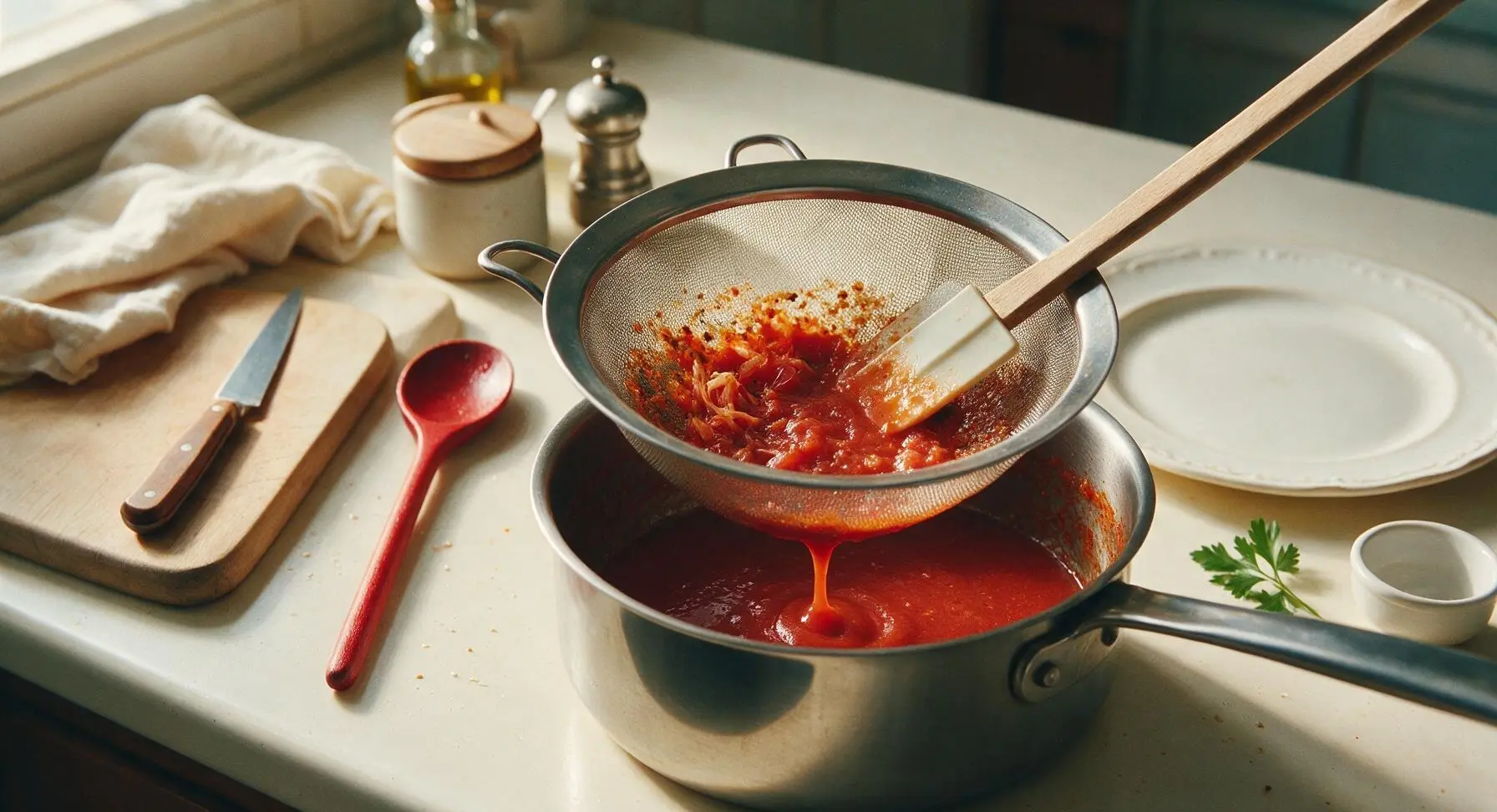
Step 5
step5:Strain For Silky Texture
Step 5
step5:Strain For Silky Texture
6

Enrich With Butter & Cream

Once all strained sauce is back in the saucepan over low heat (275°F/135°C), stir in the remaining 2 tablespoons of unsalted butter until fully melted and incorporated. Add the heavy cream and full-fat Greek yogurt, whisking continuously with the stainless steel whisk to combine, until the sauce turns a rich, warm golden-orange color. Simmer gently for 3 minutes; do not let the sauce boil, as this can cause the dairy to split.
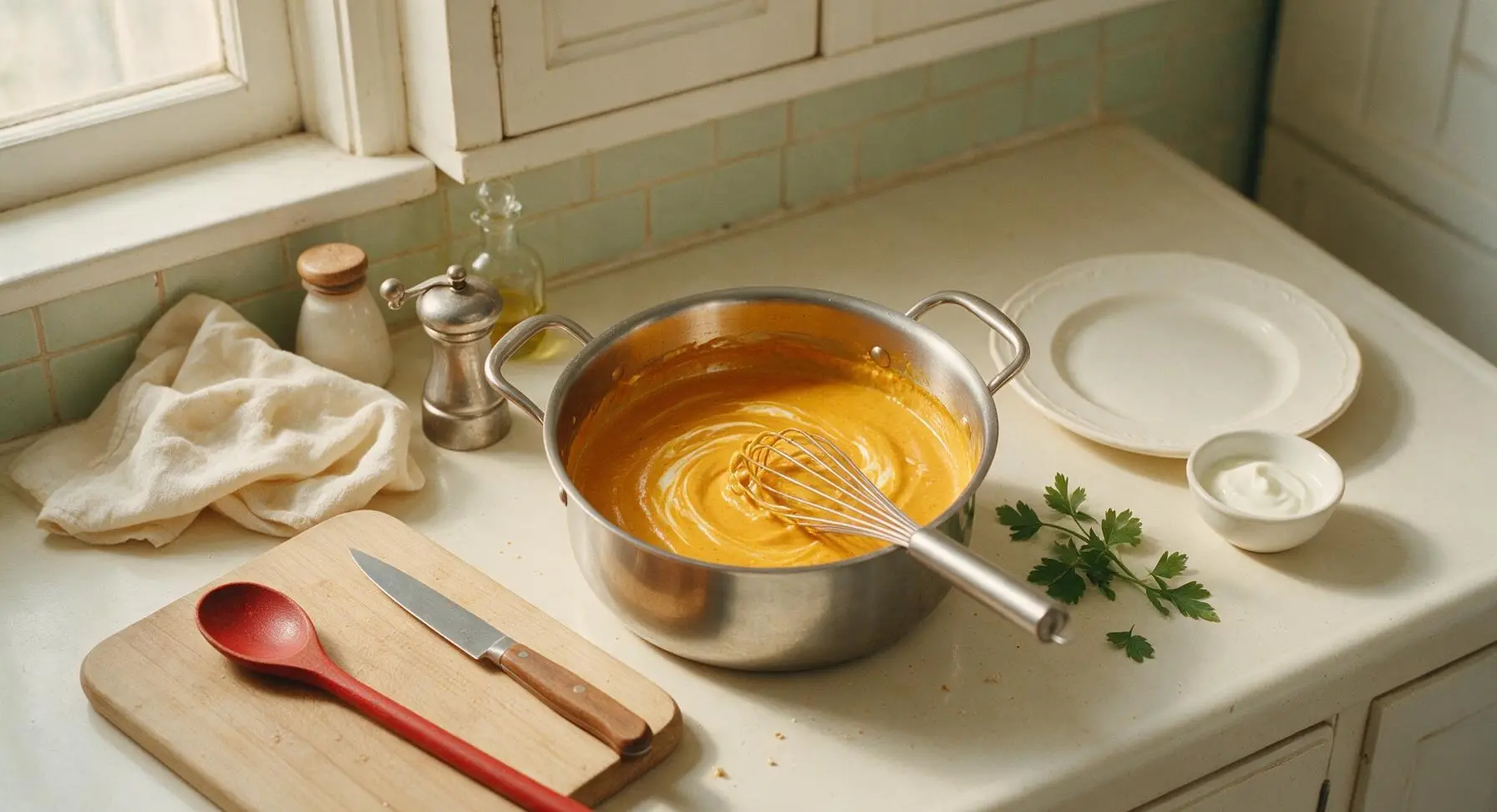
Step 6
step6:Enrich With Butter & Cream
7

Season & Finish Sauce

Crush the dried fenugreek leaves between your palms to release their aromatic oils, then stir them into the sauce. Taste and adjust salt as needed, adding a pinch more garam masala if you prefer a warmer spice profile. The finished sauce should coat the back of a spoon thickly, leaving a clear line when you run your finger through it. Pour into the matte cream stoneware serving bowl to serve.
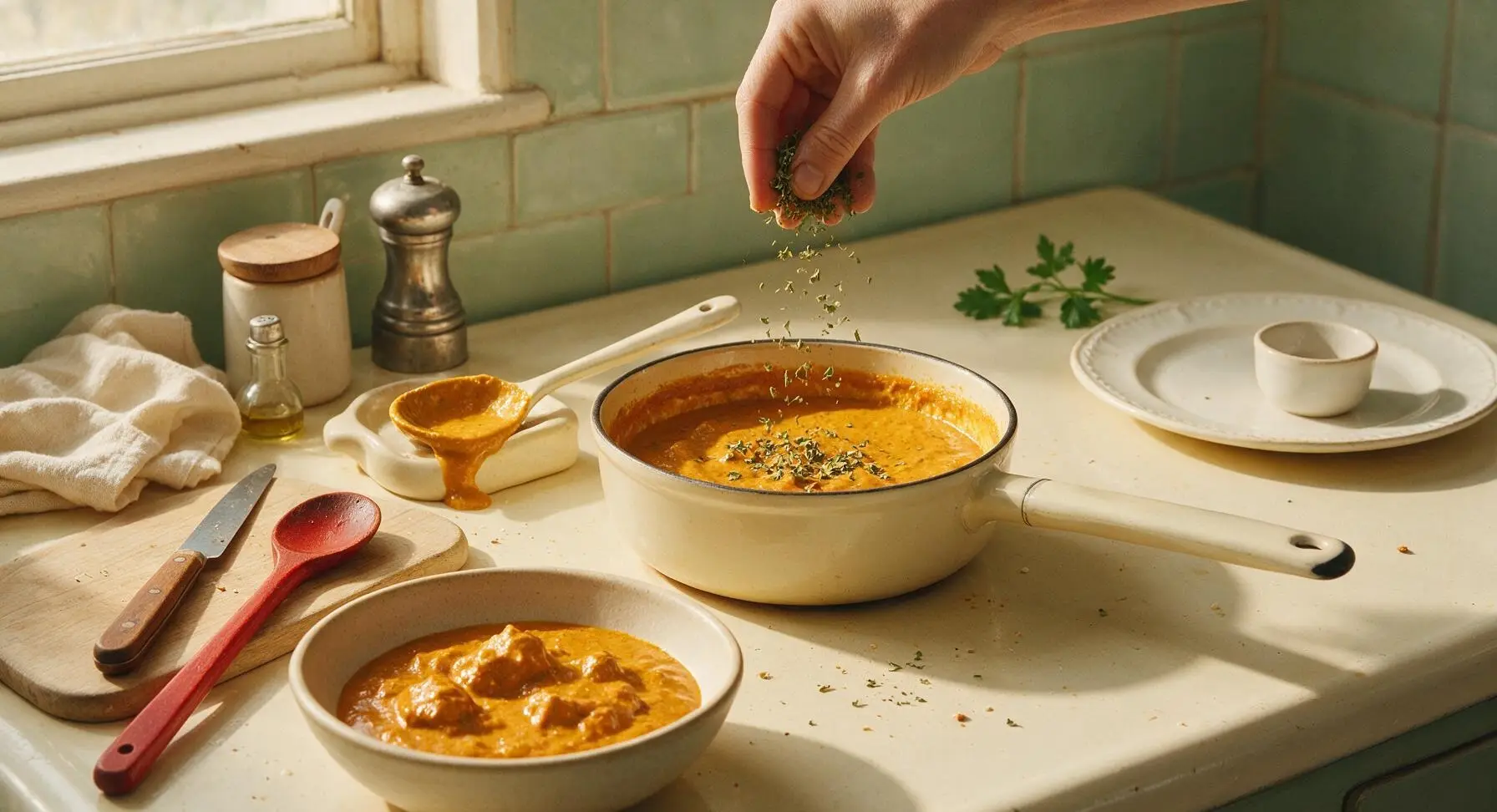
Step 7
step7:Season & Finish Sauce

Tips

1.Do not skip straining the sauce: Even a high-powered blender will leave tiny tomato skin bits and coarse spice particles that create a grainy texture; straining ensures the silky, restaurant-smooth finish that defines classic butter chicken sauce, and takes less than 3 minutes.
2.Crush dried fenugreek leaves (kasuri methi) between your palms before adding: The friction releases the leaves’ signature sweet, slightly bitter, nutty aroma that is the secret flavor note of authentic butter chicken; adding them whole results in muted, uneven flavor distribution.
3.Keep heat on low once you add dairy: Boiling the sauce after adding cream and yogurt will cause the dairy proteins to curdle and split, ruining the velvety smooth texture; a gentle, bubble-free low simmer is all that is needed to meld the flavors together.

✨ You May Also Like

Main Course
🍜 United Kingdom

A showstopping classic of tender seared beef, savory mushroom duxelles, and crisp prosciutto wrapped in flaky golden puff pastry, baked to juicy perfection.

⏱️ 2 hours 1Main Course ★ 4.7
Main Course
🍜 India

Tender charred marinated chicken simmered in a rich, spiced creamy tomato sauce, this iconic Anglo-Indian curry pairs perfectly with basmati rice or warm naan.

⏱️ 50 minuteMain Course ★ 4.6
Main Course
🍜 Thailand

Classic tangy, sweet, and savory Thai stir-fried rice noodles with shrimp, tofu, and crunchy garnishes, balancing all five core Thai flavor profiles.

⏱️ 30 minuteMain Course ★ 4.5
Main Course
🍜 United Kingdom

Crispy golden beer-battered cod and fluffy double-fried chips, served with tangy tartar sauce and malt vinegar: the timeless, beloved British pub comfort classic.

⏱️ 45 minuteMain Course ★ 4.7
Main Course
🍜 Mexico

Smoky, chile-marinated pork tacos with caramelized pineapple, fresh cilantro, and lime: a beloved classic Mexican street food perfect for casual summer gatherings.

⏱️ 1 hour 45Main Course ★ 4.8
Main Course
🍜 United States

Crunchy Fritos corn chips layered with savory beef chili and melted cheddar, topped with cool, zesty fixings for a beloved, cozy Tex-Mex comfort food.

⏱️ 35 minuteMain Course ★ 4.8

butter chicken sauce:Frequently Asked Questions

1.Why does this recipe call for Roma tomatoes instead of other common tomato varieties? ▾
Roma tomatoes have far lower water content and fewer seeds than juicier beefsteak or heirloom varieties, so they simmer down into a thick, luxe base without making the sauce watery or grainy. Their balanced sweet-tart profile cuts through rich butter and cream perfectly, so you won’t need extra sugar to offset sharp acidity the way you might with other tomato types.
2.Can I make this butter chicken sauce ahead of time, and what’s the best way to store it? ▾
Absolutely! Let the finished sauce cool completely, then transfer it to a sealed airtight container. It will keep well in the refrigerator for 3–4 days, or freeze for up to 3 months. Thaw frozen sauce overnight in the fridge, then reheat gently over low heat, stirring in a tiny splash of cream if it thickens too much as it sits.
3.Do I have to blend the sauce to get that classic restaurant-style texture? ▾
For that iconic silky, smooth butter chicken you get at restaurants, blending is non-negotiable. Use an immersion blender right in the pot for easy cleanup, or carefully transfer small batches to a countertop blender, venting the lid to avoid hot steam splatters. If you prefer a rustic, home-style take, you can skip blending, just dice your onion extra finely for even bites.
4.Why is tomato paste included when the recipe already uses fresh Roma tomatoes? ▾
Tomato paste adds deep, concentrated, caramelized tomato umami that fresh tomatoes alone can’t deliver, even after long simmering. Cook it for 1–2 minutes with your ginger, garlic, and spices right after sautéing the onion to mellow its raw, metallic edge—this small step makes the whole sauce taste richer, deeper, and far more rounded.
5.My sauce turned out too tangy from the tomatoes—how do I fix that without ruining the flavor? ▾
If your sauce tastes overly tart, resist the urge to dump in a pile of sugar right away. First, stir in an extra tablespoon of soft unsalted butter and a small splash of heavy cream to mellow the acidity, then taste. If it still needs balance, add a tiny pinch (1/8 teaspoon at a time) of granulated sugar, stirring well between additions so you don’t make the sauce cloyingly sweet.
6.How finely do I need to chop the onion, garlic, and ginger since the sauce gets blended anyway? ▾
You don’t need to do a precision fine mince, but don’t leave huge, thick chunks either. Roughly chopping your yellow onion into ½-inch pieces and slicing garlic and ginger into thin slices works perfectly, since everything will simmer until totally soft before blending. Evenly sized cuts just ensure all the aromatics cook at the same rate, so no bits burn or stay undercooked.
7.Can I make a dairy-free version of this sauce without losing that signature velvety richness? ▾
You can absolutely swap dairy for plant-based alternatives without ditching that classic lush texture. Use vegan butter in place of regular butter, and swap heavy cream for full-fat canned coconut cream (shaken well first) for a rich, creamy finish. Note that coconut adds a subtle tropical note, so cut it with a splash of vegetable broth if you want a flavor closer to the original.

Comments (0)