
Coconut Porter
intro
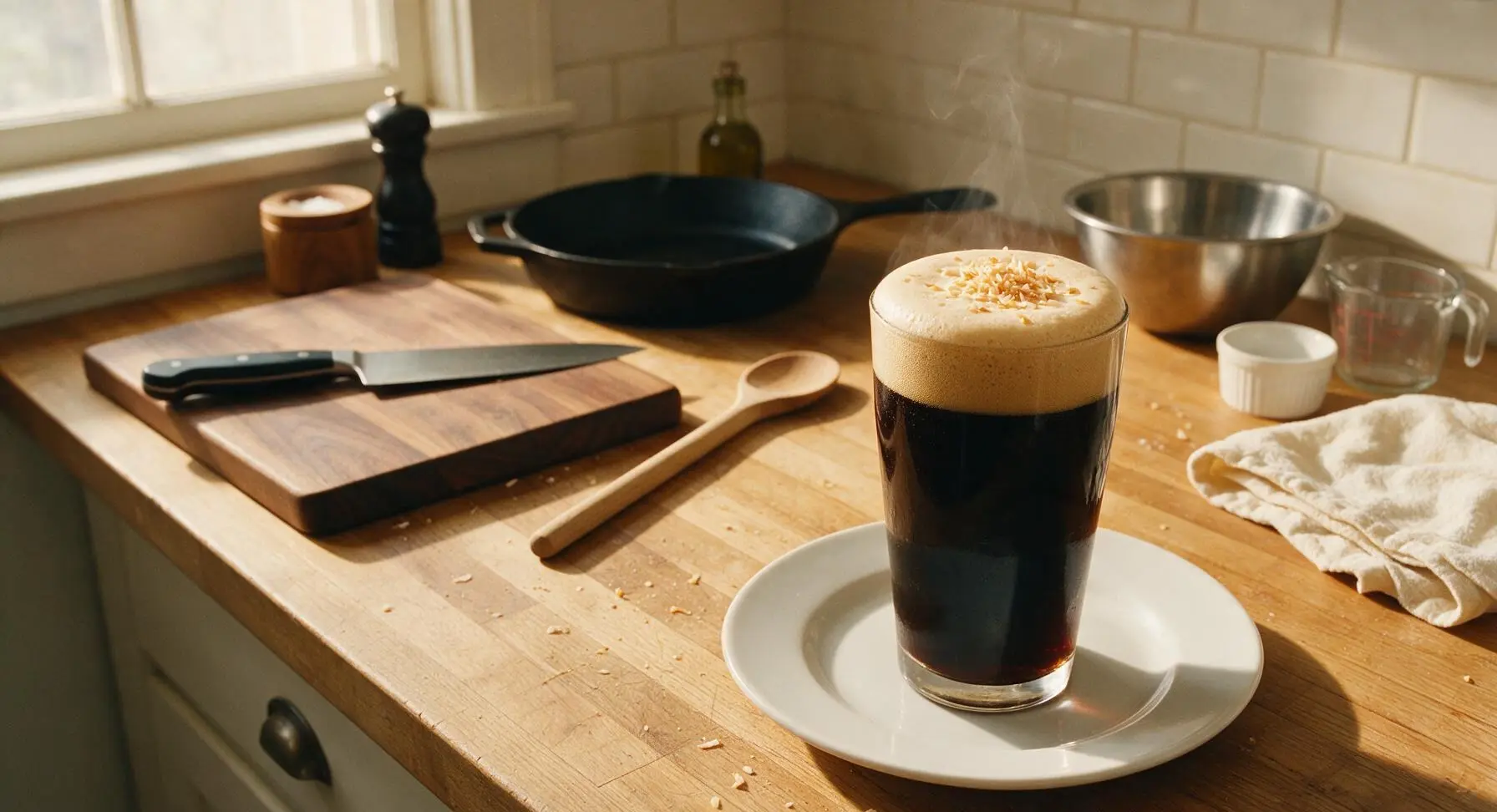
Rich, roasty American-style porter infused with toasty coconut, balancing deep chocolate malt notes with sweet nutty warmth for a smooth, sippable craft brew perfect for cool evenings.
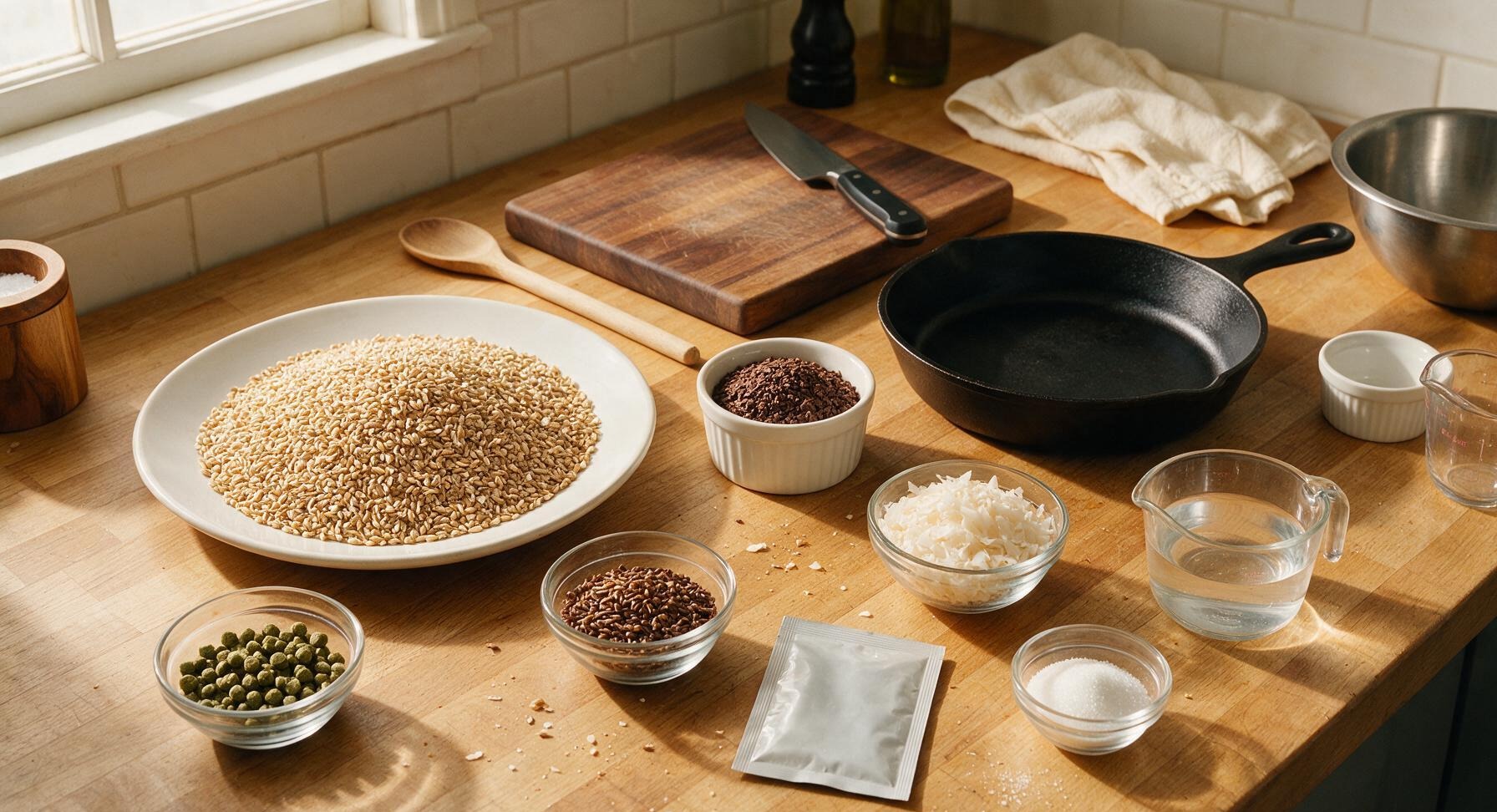
Ingredients
Steps
Sanitize Brewing Equipment
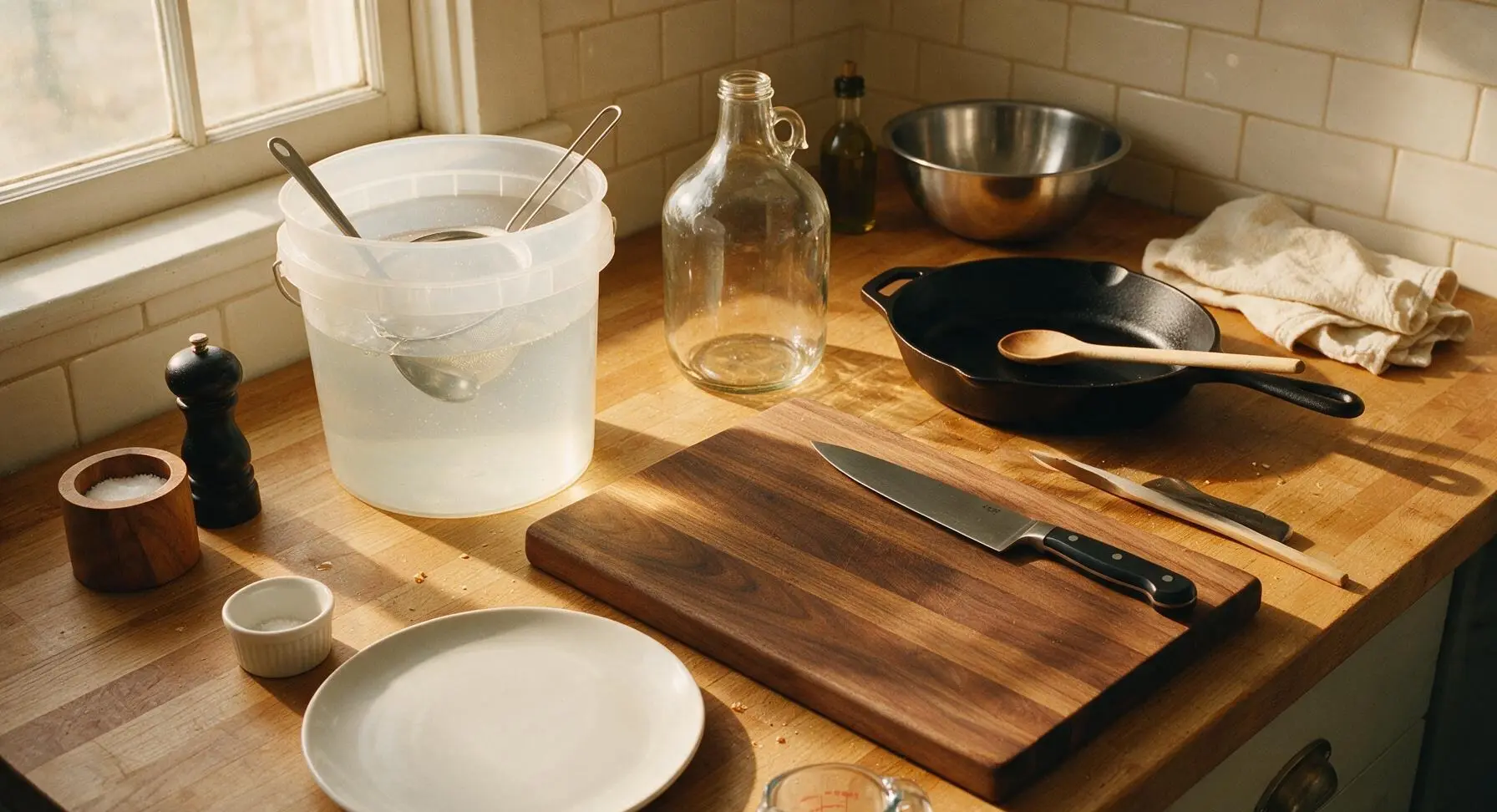
Mix 1 tablespoon no-rinse brewing sanitizer with 4 liters of cool water in the 5-gallon translucent white sanitizer bucket. Submerge the stainless steel stirring spoon, fine-mesh strainer, glass carboy, rubber stopper, airlock, and thermometer for 60 seconds, then lift items out to air dry on the clean counter. Ensure no suds remain on equipment, as residual sanitizer can kill yeast and ruin fermentation.
Toast Flaked Coconut
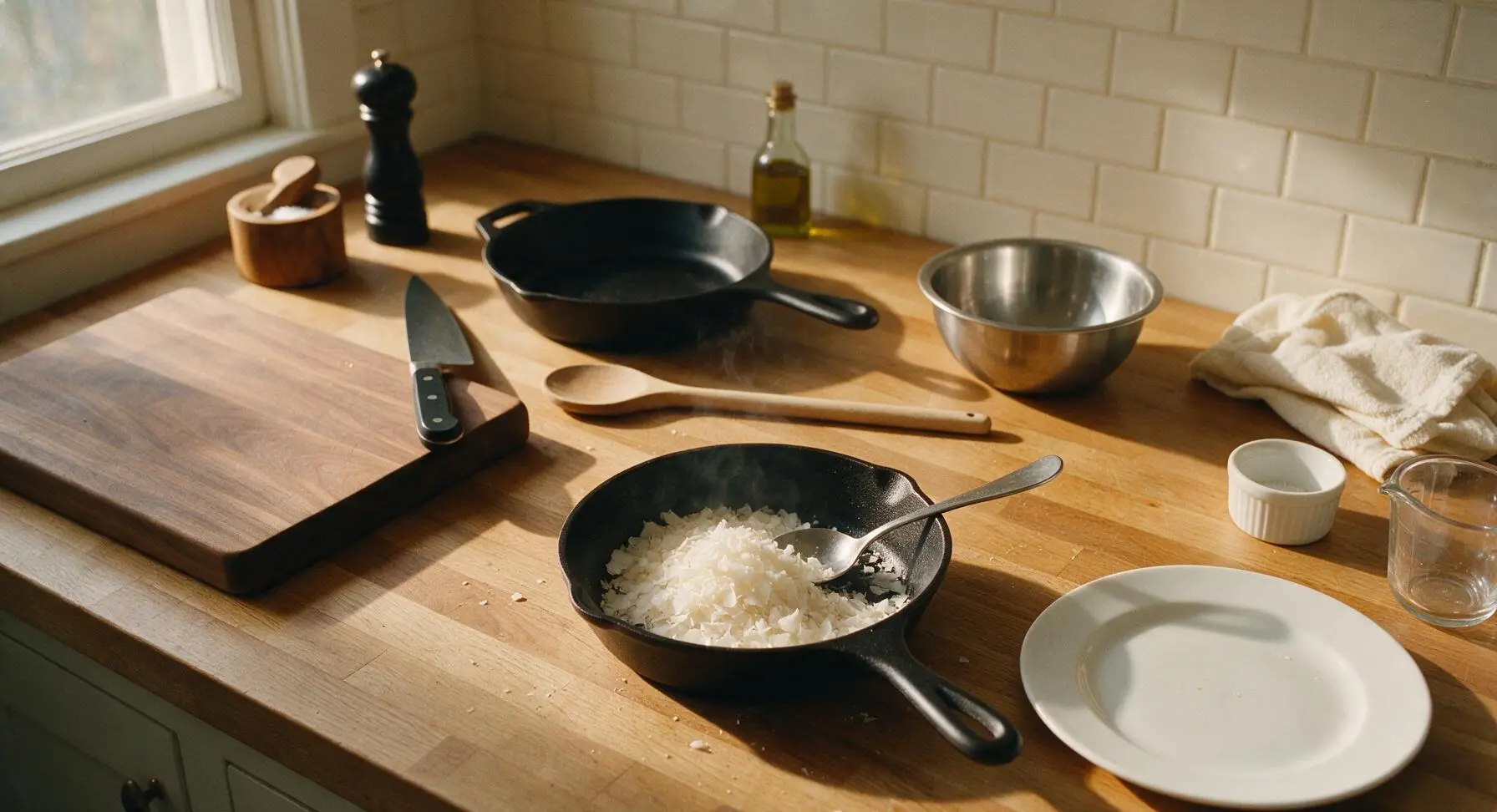
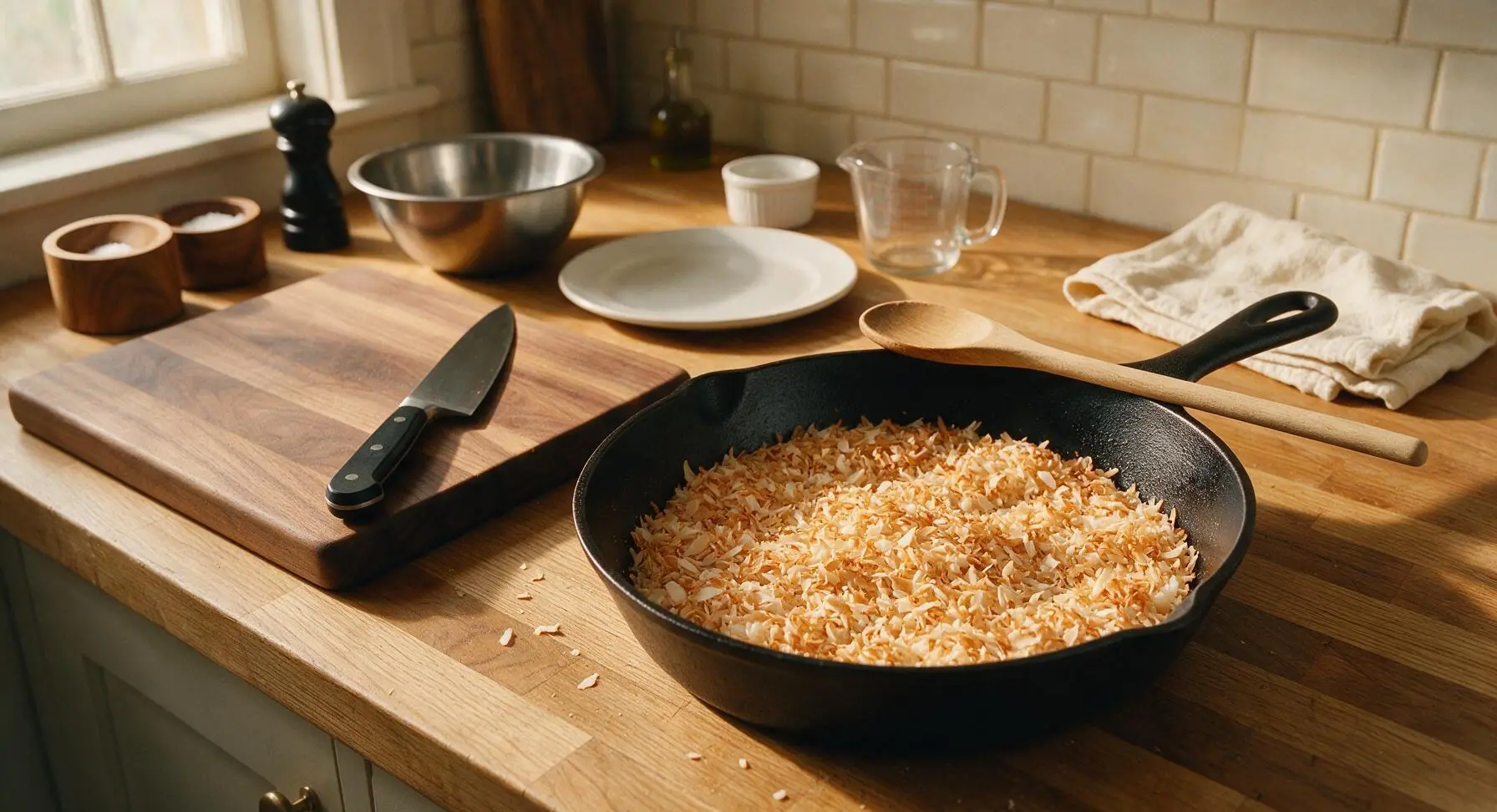
Place the 6-inch matte black cast iron skillet on medium-low heat, add all 85g of unsweetened flaked coconut, and stir constantly with the slotted stainless steel spoon for 3-4 minutes. Cook until coconut turns an even light golden tan with a rich nutty aroma, watching closely to avoid burning—burnt coconut adds bitter, ashy notes that overpower malt flavor. Remove the skillet from heat immediately and set aside to cool completely.
Steep Crushed Grains
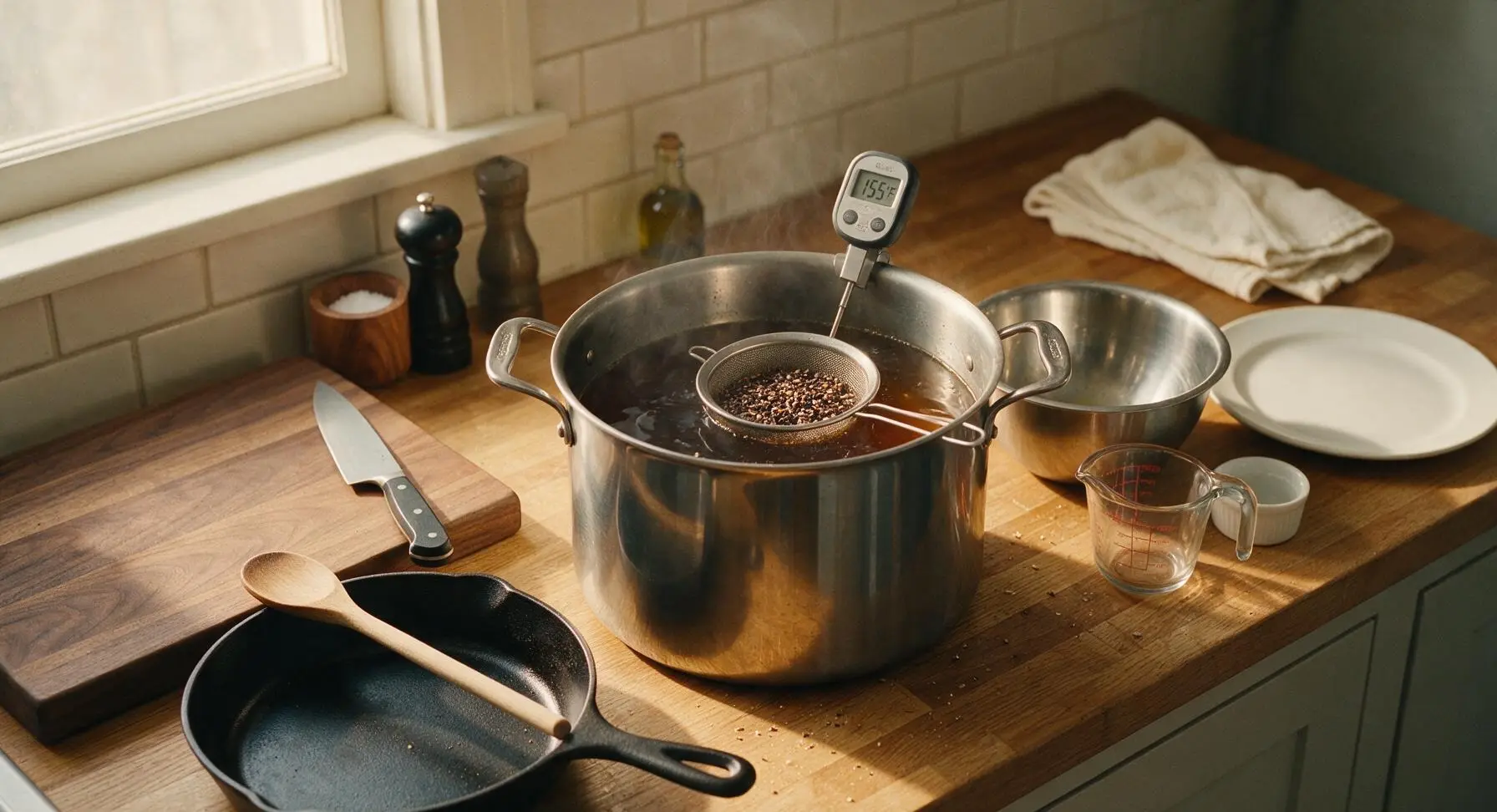
Fill the 8-quart stainless steel stock pot with 3.8 liters (1 gallon) of filtered water, and heat to 68°C (155°F), checking temperature with the digital thermometer clipped to the pot rim. Place all crushed pale malt, chocolate malt, and roasted barley in the fine-mesh strainer, lower the strainer into the warm water, and steep for 60 minutes, holding temperature steady between 65-70°C (149-158°F). The water will darken to a deep amber-brown as malt sugars and roasty flavors extract.
Boil Wort with Hops
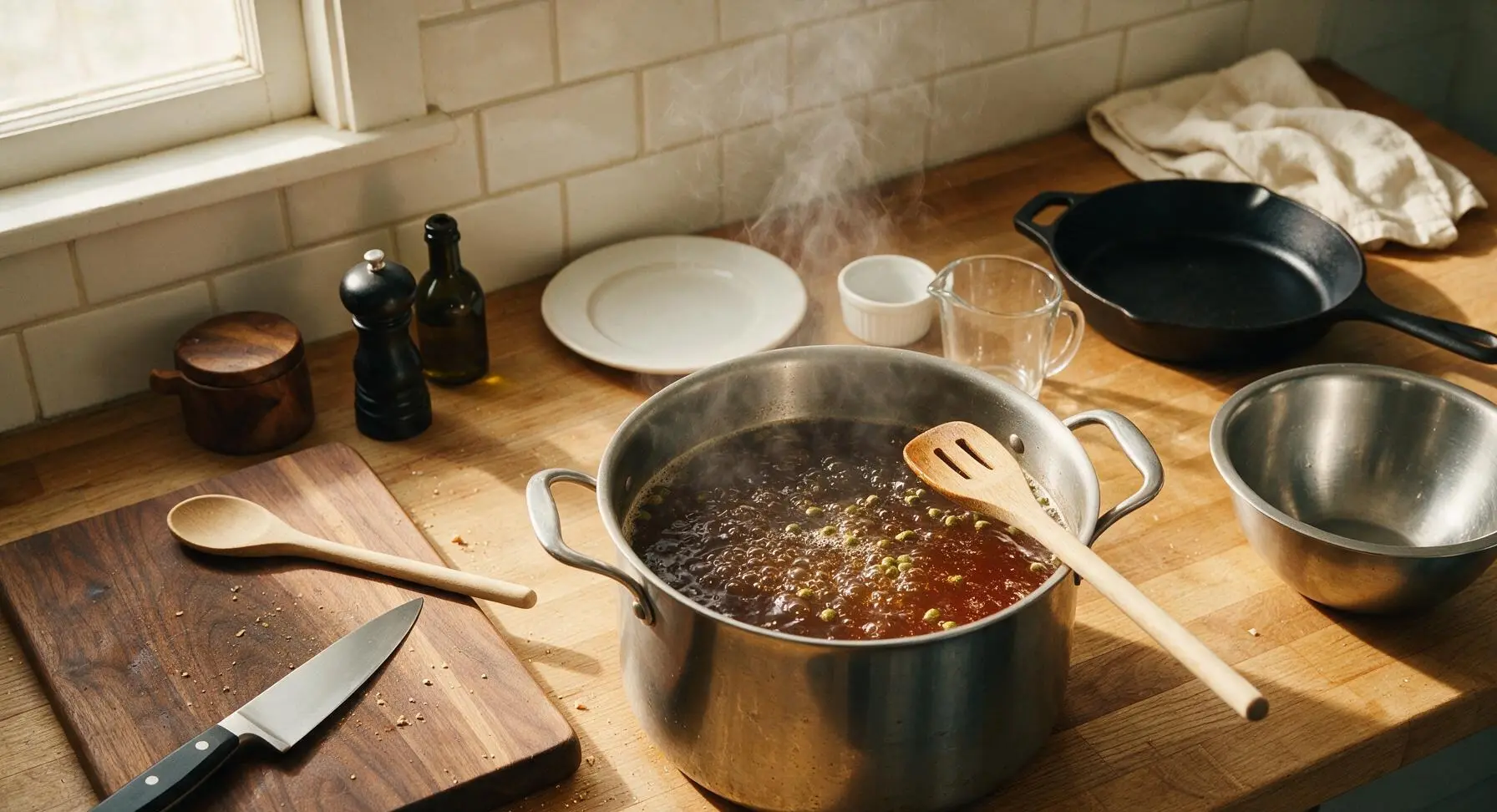
Lift the grain strainer out of the pot, let drain fully, and discard spent grains. Bring the extracted malt liquid (now called wort) to a gentle rolling boil (100°C/212°F). Once boiling, add all 7g of Magnum hop pellets, set a timer for 60 minutes, and maintain a steady gentle boil, stirring occasionally to prevent boilovers. Leave the pot uncovered to allow volatile sulfur compounds to escape, which prevents off-flavors in the finished beer.
Add Toasted Coconut
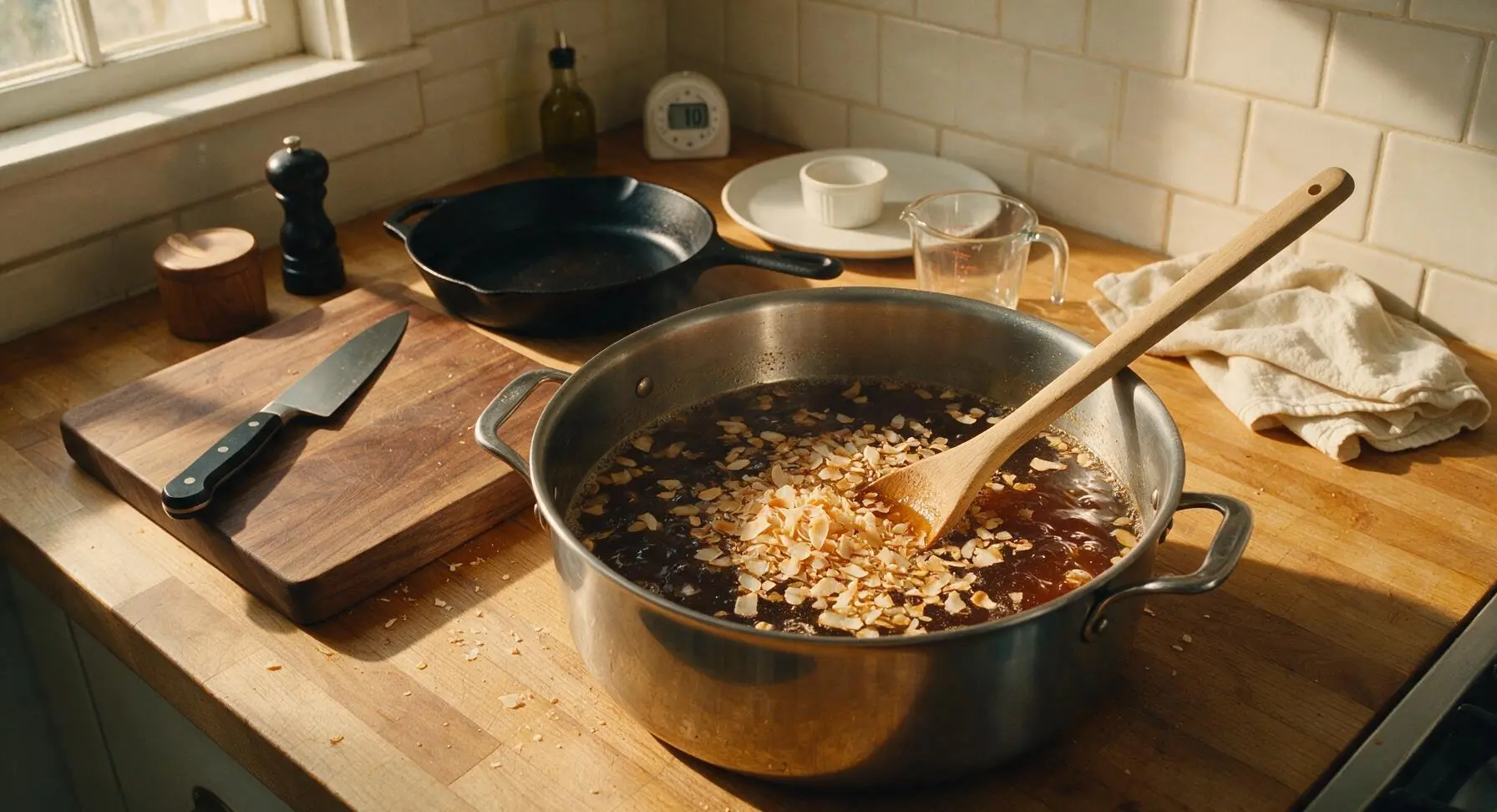
When 10 minutes remain on the 60-minute boil timer, add all fully cooled toasted coconut to the boiling wort, stirring gently to incorporate the flakes. Continue boiling for the final 10 minutes to infuse coconut flavor and sanitize the coconut, then turn off the heat. The wort will take on a warm, nutty tropical aroma as coconut oils and flavors meld with the malt.
Cool and Transfer Wort
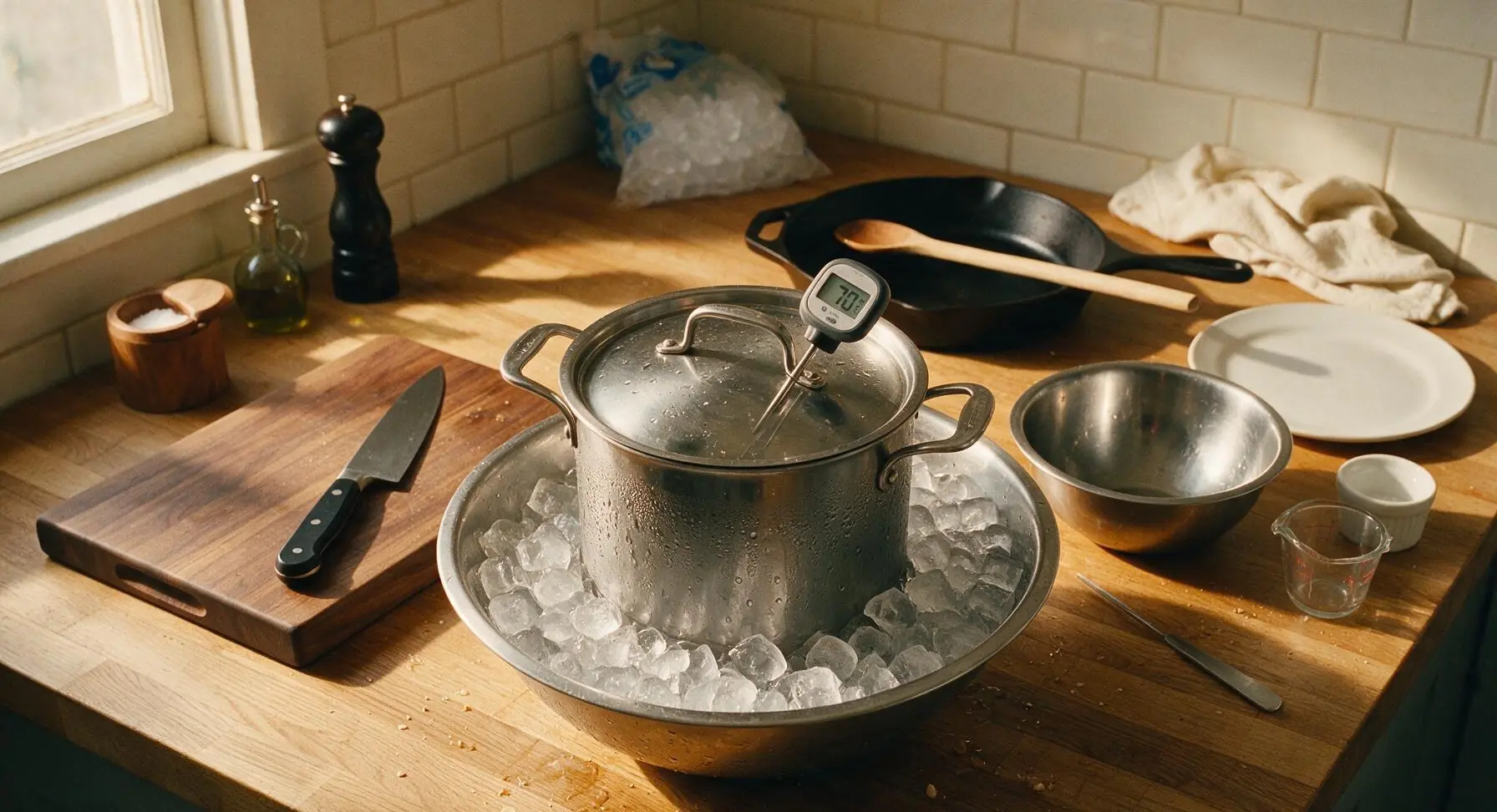
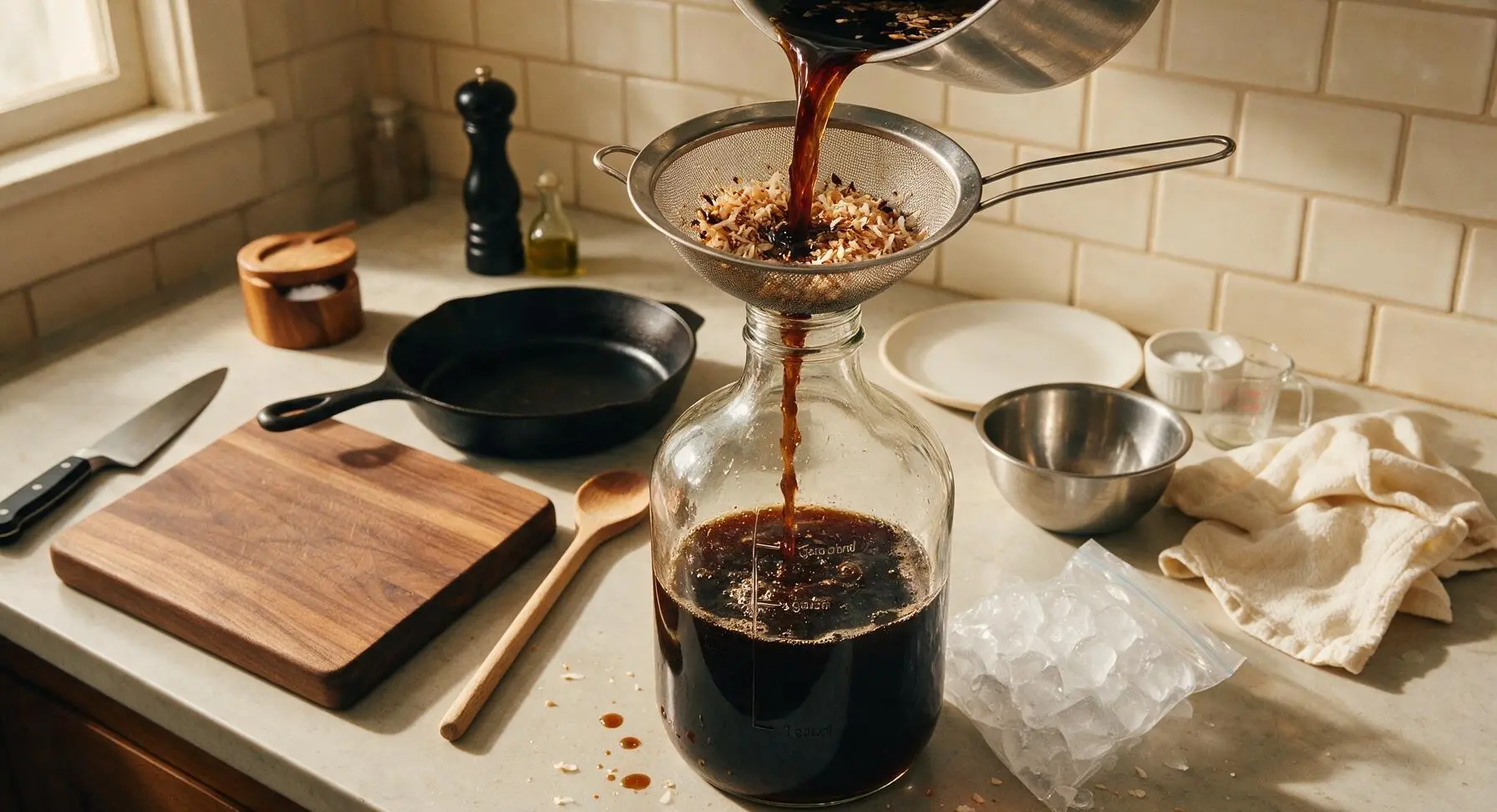
Cover the stock pot with its lid, and nestle the pot into an ice bath made with the pre-positioned bag of ice to cool the wort quickly to 21°C (70°F), which takes approximately 20 minutes. Once cooled, pour the wort through the fine-mesh strainer into the sanitized glass carboy, straining out coconut solids and hop debris. Top up with cool filtered water if needed to reach the etched 1-gallon volume mark on the carboy.
Pitch Yeast and Seal
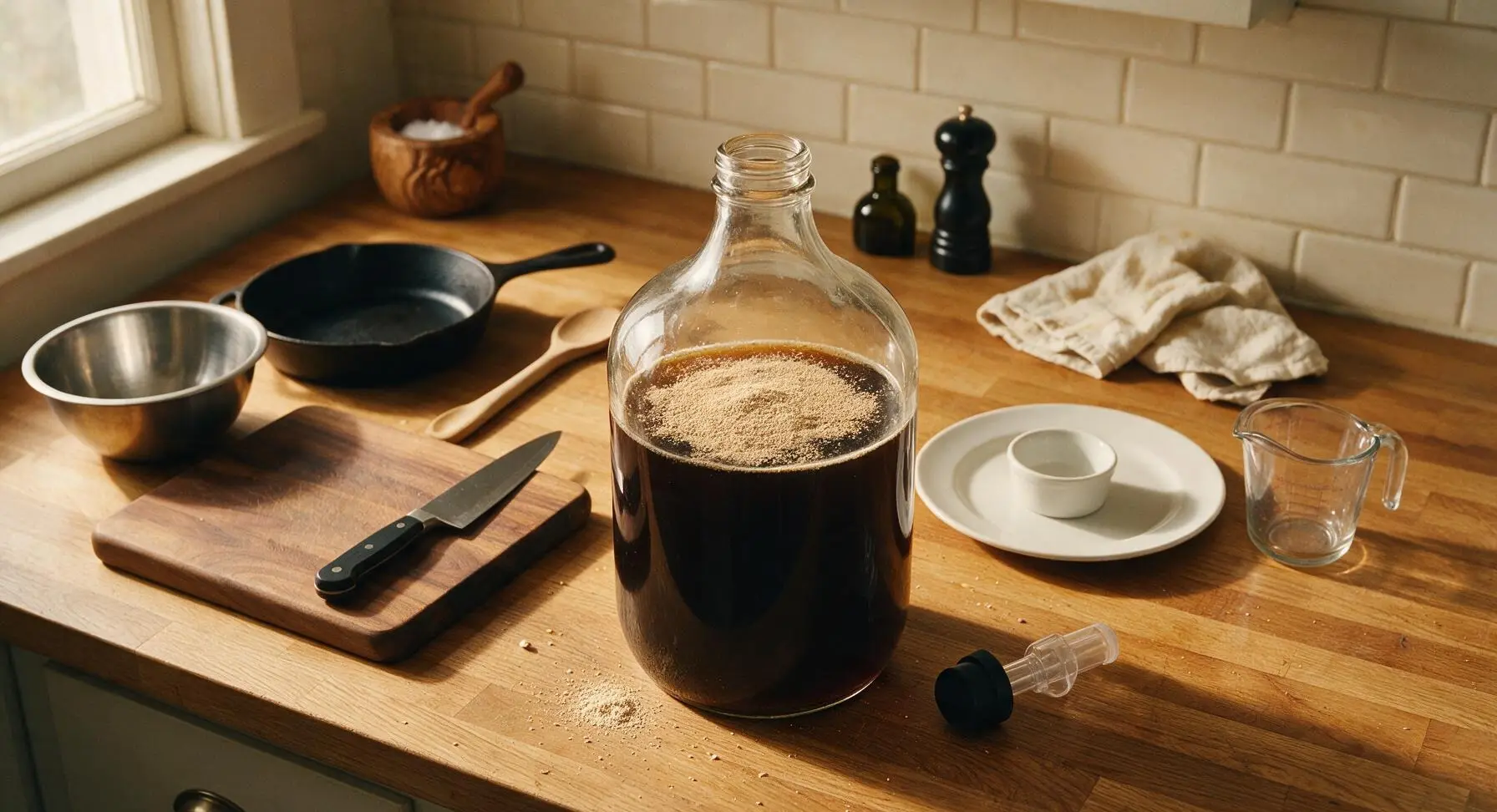
Sprinkle the entire 11.5g packet of US-05 American ale yeast evenly over the surface of the cooled wort in the carboy. Firmly press the sanitized black rubber stopper into the carboy neck, fill the 3-piece airlock halfway with sanitizer solution, and press the airlock into the hole in the stopper. Give the carboy a gentle, slow swirl to distribute yeast evenly through the wort, taking care not to splash or introduce oxygen.
Ferment and Carbonate
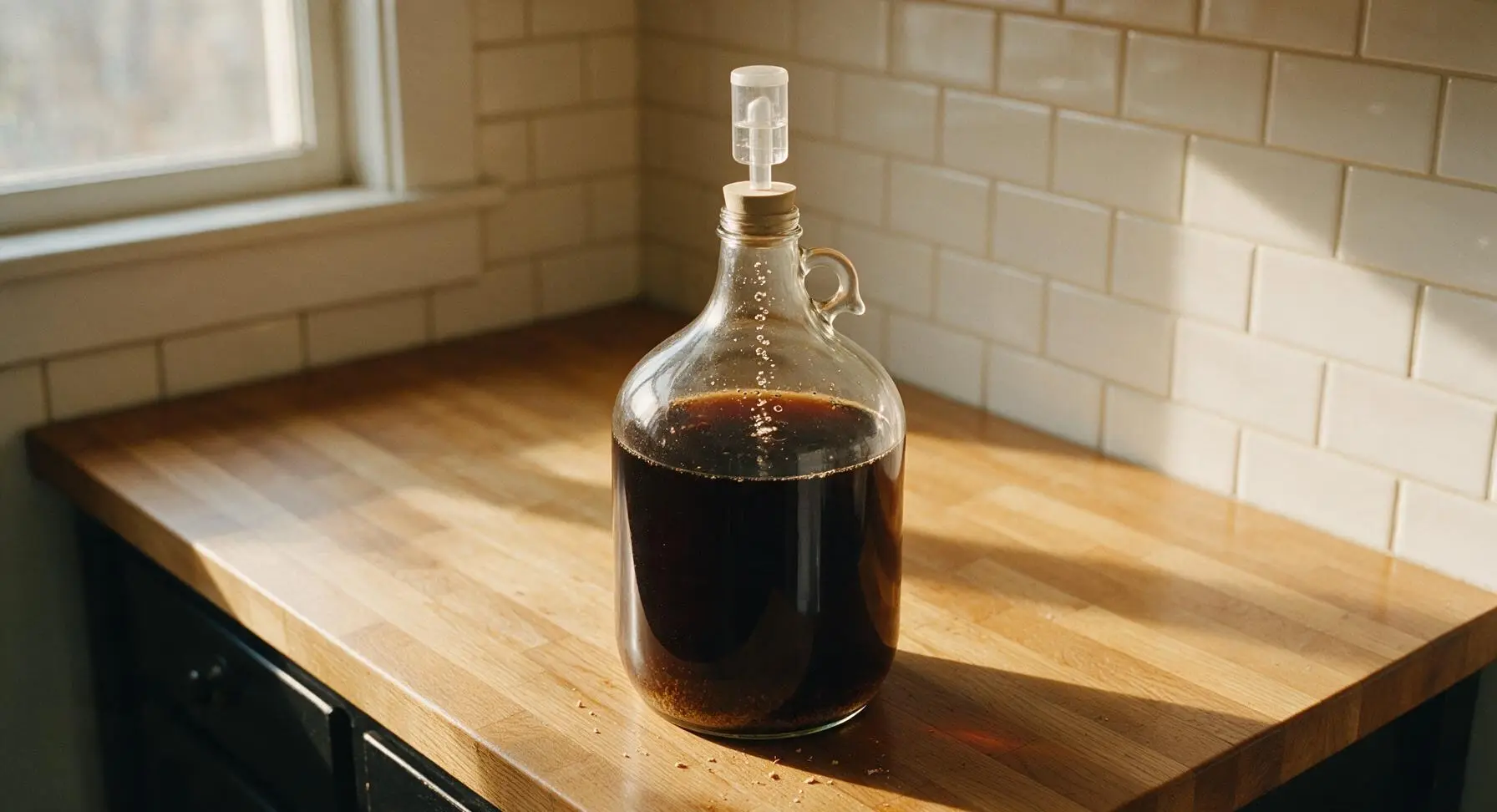
Move the sealed carboy to a dark, temperature-stable space held at 18-21°C (65-70°F) for 2 weeks, until bubbling in the airlock stops completely, signaling the end of primary fermentation. Boil 28g of dextrose with 120ml (1/2 cup) water, cool, and add to a sanitized bottling bucket, then siphon the fermented porter on top, avoiding the thick yeast sediment at the bottom of the carboy. Bottle, cap, and let bottles condition at room temperature for 2 additional weeks to build natural carbonation before chilling to 7°C (45°F) to serve.
Tips
2.Cool boiled wort to 70°F as quickly as possible with an ice bath: rapid cooling reduces risk of bacterial contamination, cuts down on harsh astringent flavors extracted from hops and grain, and creates a protein precipitate (cold break) that makes your final porter crystal clear and smooth.
3.Resist the urge to open your carboy during primary fermentation: exposing young beer to oxygen before fermentation finishes can cause stale, cardboard-like off-flavors, so track progress by watching airlock bubbling instead of peeking inside.






OMG this toasted coconut porter was an absolute game changer for our summer backyard potluck! I was nervous about the medium difficulty since I’ve only done basic extract brews before, but the instructions were super clear. The coconut toasting step made the whole house smell incredible, and after the full 4 week ferment and condition it had that perfect rich, roasty, nutty flavor without being cloyingly sweet. All my beer nerd friends were begging for the recipe before the night was over! Already planning my next batch this weekend.
Really solid recipe overall! I made this for my husband’s birthday cookout and he loved how smooth it was, especially since he’s obsessed with all things coconut. My kids kept sneaking bites of the toasted coconut while I was brewing, it smelled that good! My only note is that I accidentally over-toasted my first batch of coconut and it added a weird burnt aftertaste, so definitely keep a close eye on it while it’s in the oven! Other than that misstep on my end, it came out great, and we’ve already gone through half the case.
Wait, quick question for anyone who’s made this! I’m about 2 weeks into fermentation right now, and I’m worried I added too much coconut when I racked it to secondary. How much coconut flavor is too much? I don’t want it to taste like a tropical candy instead of a porter. Fingers crossed it turns out, the wort tasted amazing when I took my gravity reading!
SO good. I brought a growler of this to my family dinner last Sunday and even my cousin who swears he hates dark beer loved it. The coconut adds such a nice warm, toasty note that pairs perfectly with the roasted malt, it’s perfect for fall evenings around the fire pit. Can’t recommend this enough if you’re on the fence about trying a medium-difficulty homebrew!
This was my first time trying any brew recipe that required extra add-ins beyond basic malt and hops, and I was so proud of how it turned out! The total active time was way less intimidating than I thought it would be, even with the toasting step. I split my batch and added a little vanilla bean to half for a coconut vanilla porter variation that’s chef’s kiss. Already got my neighbor asking to borrow my brew kettle to make his own batch after he tried a bottle.
Okay, I need to vent a little. I followed the recipe exactly, waited the full 4 weeks, cracked open my first bottle last night and it was totally flat. Did I mess up the priming sugar step? I’m so bummed, I was really looking forward to this after all that wait time.