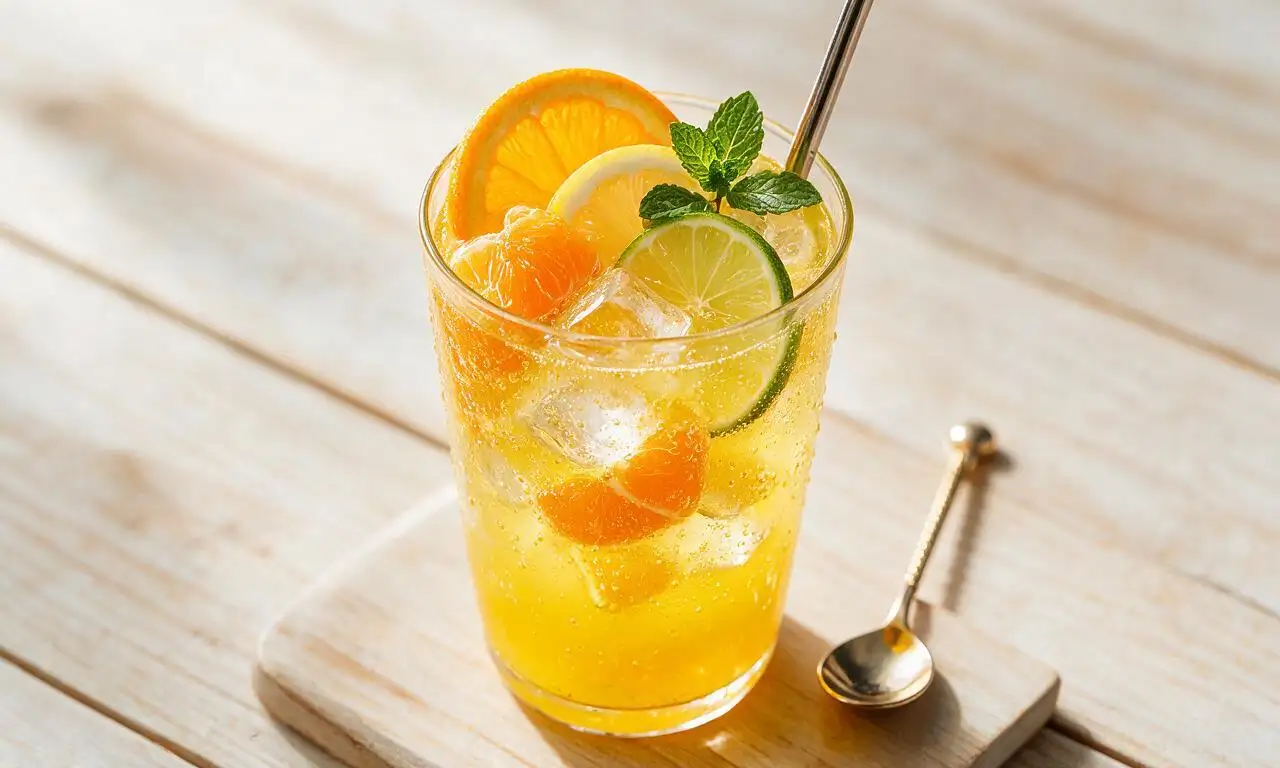
Belgian Tripel

title 1
Belgian Tripel
⏱️ cook time 2 hours active brew time, 4 weeks total to serve
🍽️ servings 8
⚡ Difficulty medium

intro

A bright, golden strong ale with fruity banana-clove notes, subtle hop spice, and soft carbonation, brewed in classic Trappist Tripel tradition.

Ingredients

Crushed Pilsner 2-row malt 907 grams (2 lbs)
Clear Belgian candi sugar 227 grams (1 cup)
Hallertau noble hop pellets 14 grams (2 tablespoons)
Saaz noble hop pellets 7 grams (1 tablespoon)
Belgian Tripel ale yeast 11 grams (1 standard packet)
Filtered brewing water 4.5 liters (19 cups)
Corn sugar (for carbonation) 28 grams (2 tablespoons)

Steps

1

Heat Water and Mash Malt

Heat 3.8 liters (16 cups) of filtered water in a 6-liter stainless steel brew pot over medium heat until it reaches a steady 71°C (160°F). Stir in all crushed Pilsner malt, breaking up any dry clumps, then cover the pot and maintain a temperature of 67–69°C (153–156°F) for 60 minutes to convert grain starches into fermentable sugars.
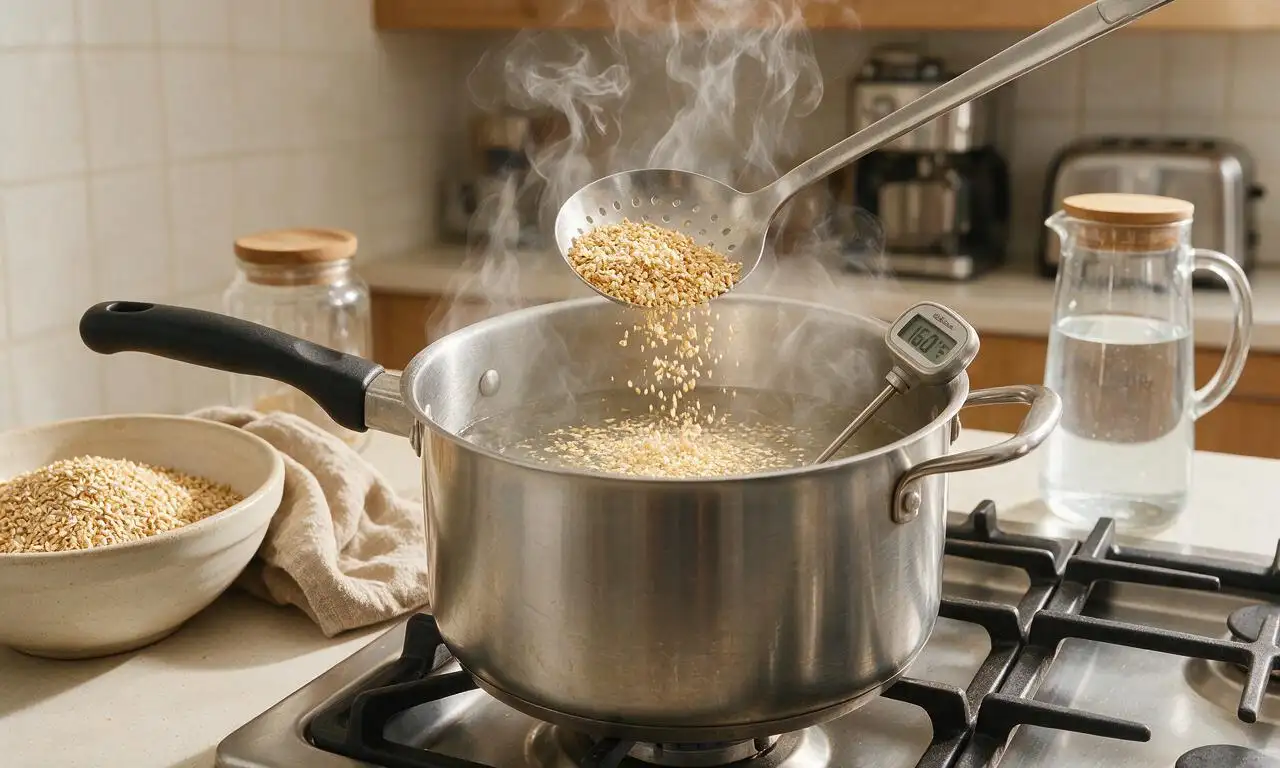
Step 1
step1:Heat Water and Mash Malt
2

Drain and Collect Wort

After the 60-minute mash is complete, slowly drain the sweet, amber wort from the grain through a fine-mesh sanitized strainer into a second pot. Gently pour the remaining 700ml (3 cups) of 77°C (170°F) filtered water over the spent grain bed to rinse trapped residual sugars, collecting all runoff until you have 3.8 liters (1 gallon) of clear, golden wort.
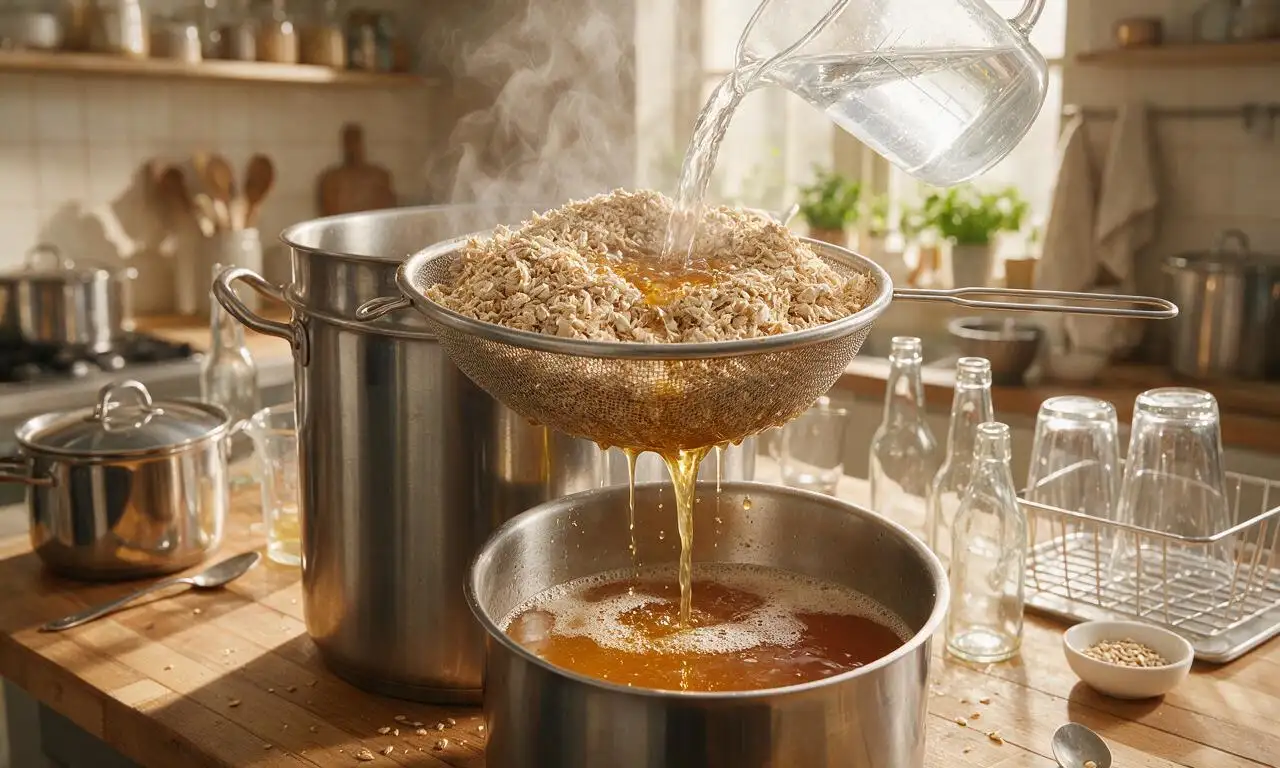
Step 2
step2:Drain and Collect Wort
3

Boil Wort and Add Hops

Transfer the collected wort back to the brew pot and bring it to a gentle rolling boil over medium-high heat, then set a timer for 60 minutes. Add all Hallertau hops immediately at the start of the boil. With 10 minutes remaining on the timer, stir in the clear Belgian candi sugar until fully dissolved. Add all Saaz hops when 5 minutes remain on the timer to add delicate, floral aroma.
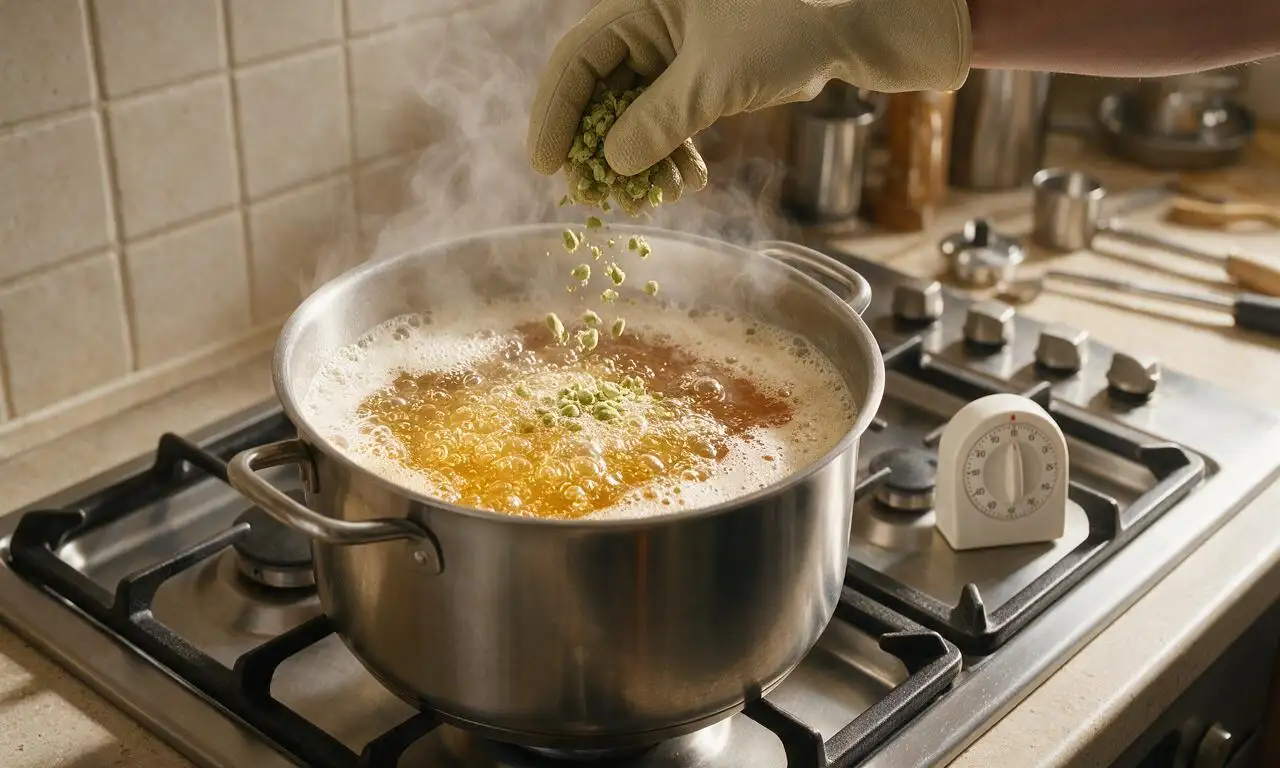
Step 3
step3:Boil Wort and Add Hops
4

Cool Wort in Ice Bath

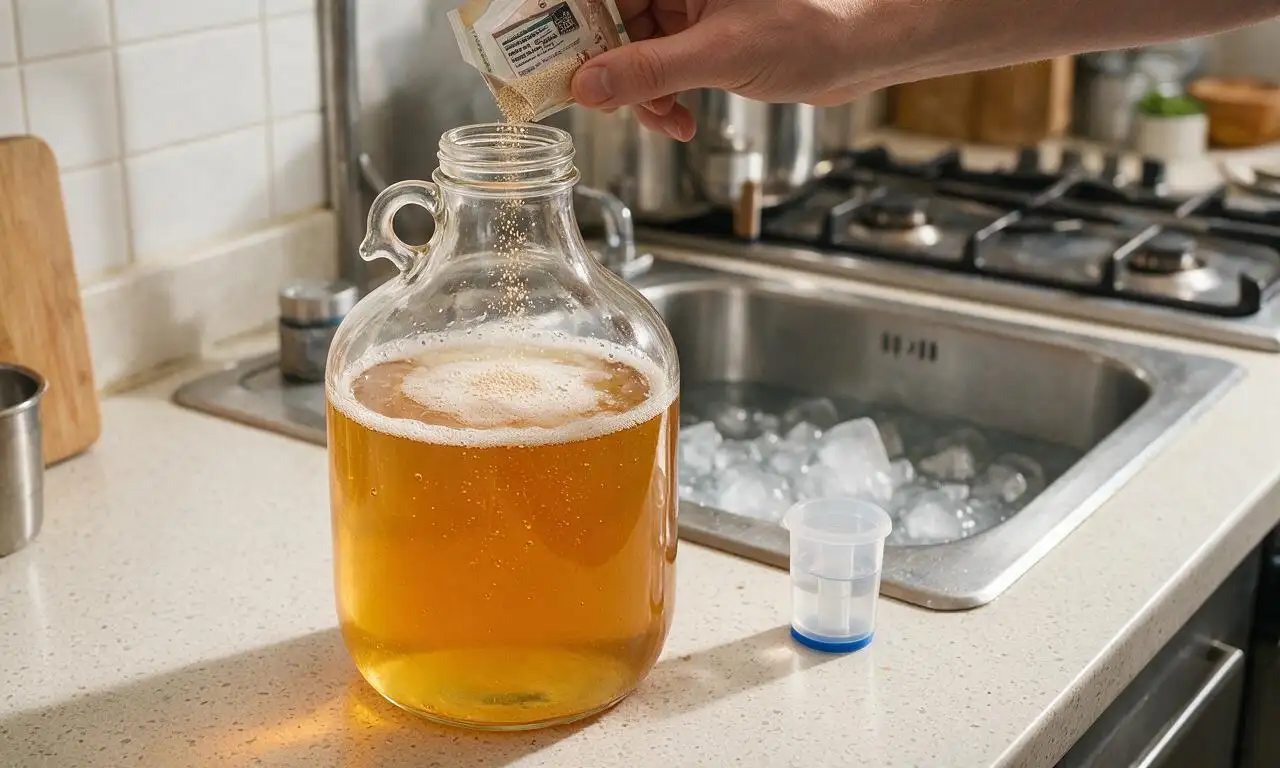
When the 60-minute boil finishes, remove the pot from heat immediately and set it in an ice water bath in a clean kitchen sink, stirring occasionally to cool the wort to 21°C (70°F) within 20 minutes. Pour the cooled wort into a sanitized 4-liter (1-gallon) glass fermenter, seal the lid, and shake vigorously for 30 seconds to aerate the liquid. Sprinkle the Belgian Tripel yeast over the wort surface, then fit the lid with a sanitized airlock half-filled with water.
Step 4
step4:Cool Wort in Ice Bath
5

Ferment Wort for 14 Days

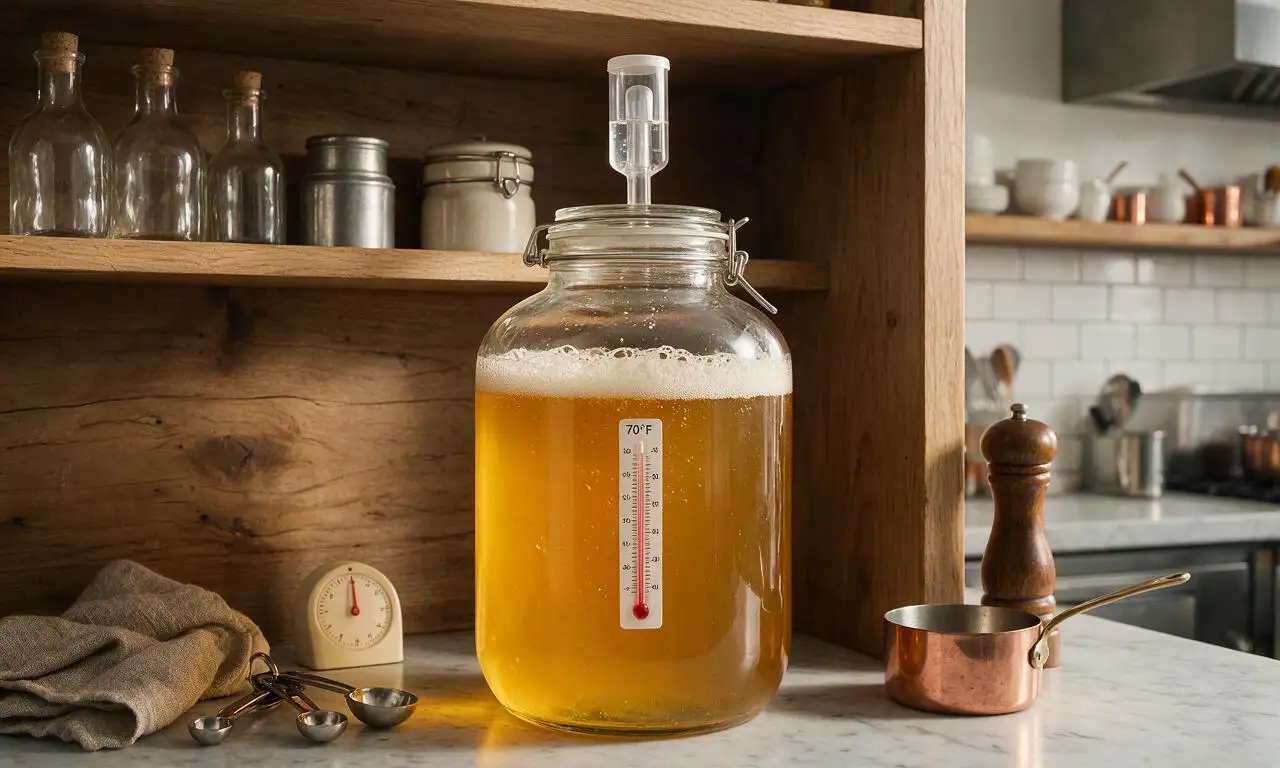
Move the sealed fermenter to a dark, temperature-stable closet or cabinet kept at a consistent 20–22°C (68–72°F), and leave it undisturbed for 14 days to complete primary fermentation. Active bubbling in the airlock will be visible for the first 5–7 days as yeast produces alcohol and carbon dioxide, and a thin layer of foamy krausen will form on the beer surface.
Step 5
step5:Ferment Wort for 14 Days
6

Prepare Bottling Equipment and Sugar

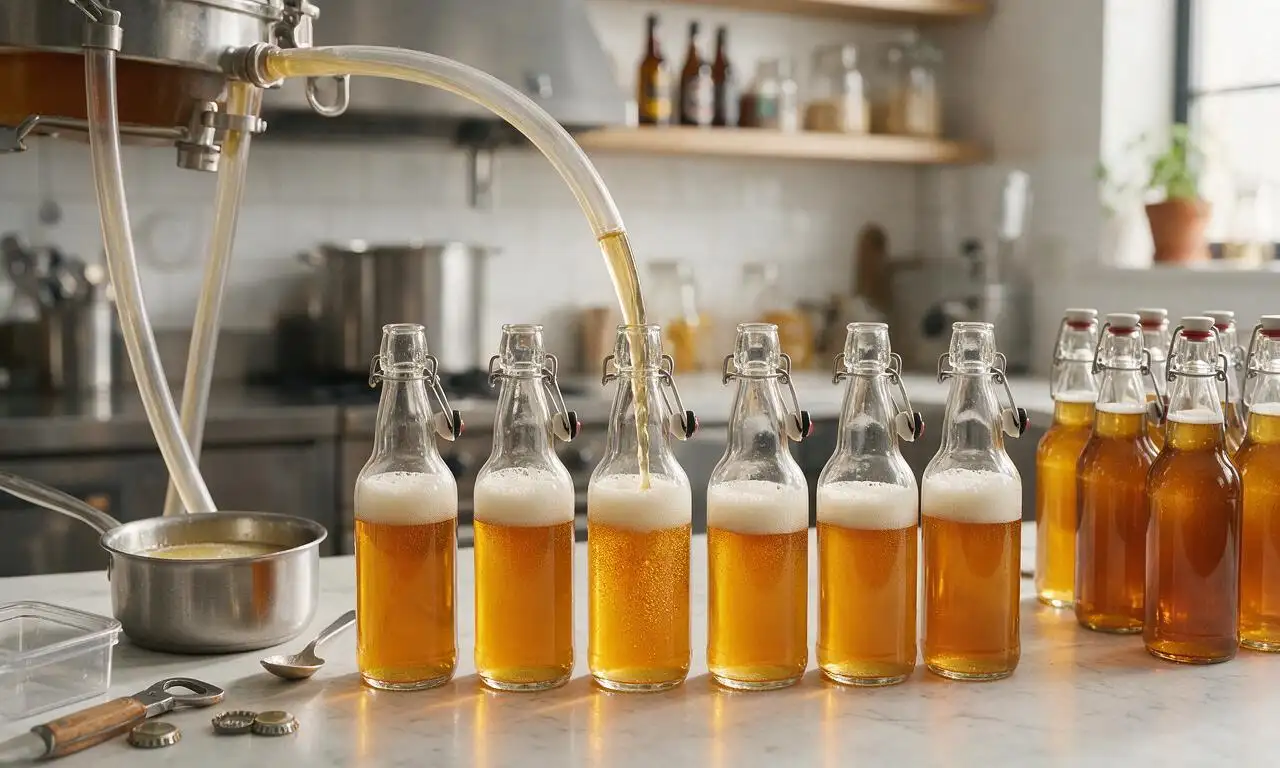
After 14 days of primary fermentation, sanitize all bottling tools, swing-top glass bottles, and siphon tubing. Boil the 28 grams (2 tablespoons) of corn sugar in 60ml (1/4 cup) of water for 5 minutes, then stir this priming solution into the flat beer to trigger natural carbonation. Siphon the beer into sanitized bottles, seal caps tightly, and store bottles at 21°C (70°F) for an additional 14 days to carbonate and mellow before chilling to 4°C (40°F) to serve.
Step 6
step6:Prepare Bottling Equipment and Sugar

Tips

1.Sanitize every piece of equipment that touches wort after the boil (fermenter, airlock, siphon, bottles) with a no-rinse brewing sanitizer—contamination from wild bacteria or yeast is the leading cause of sour, off-flavored homebrew.
2.Avoid letting fermentation temperatures rise above 24°C (75°F); too much heat will create harsh, solvent-like alcohol notes instead of the bright banana and clove fruity esters that define a great Tripel.
3.Resist the urge to open bottles early; the full 14 days of bottle conditioning allows carbonation to fully develop and softens sharp alcohol heat, resulting in a smooth, well-balanced final beer.


✨ You May Also Like

Drinks & Beverages
🍜 Mexico

A bright, balanced tequila-based cocktail with zesty fresh lime, smooth orange liqueur, and a signature salt rim, perfect for warm summer sipping.

⏱️ 5 minutesDrinks & Beverages ★ 4.9
Drinks & Beverages
🍜 United States

Thick, creamy, nostalgic classic vanilla milkshake with a rich, smooth texture, topped with whipped cream and a cherry for cool, sweet refreshment.

⏱️ 5 minutesDrinks & Beverages ★ 4.7
Drinks & Beverages
🍜 United States

A frothy, nostalgic American soda fountain treat pairing bubbly cold root beer with creamy vanilla ice cream, perfect for cooling down at warm weather gatherings.

⏱️ 20 minuteDrinks & Beverages ★ 4.8
Drinks & Beverages
🍜 United States

Tart, funky, effervescent American Wild Ale is a complex fruity craft beer brewed with wild yeast, delivering bright, zesty notes perfect for warm-weather sipping.

⏱️ 2 hours aDrinks & Beverages ★ 4.4
Drinks & Beverages
🍜 United States

Bright, bubbly copycat of the iconic American caramel cola, balanced with citrus and warm spice, perfect for sipping ice-cold on hot days.

⏱️ 15 minuteDrinks & Beverages ★ 4.8
Drinks & Beverages
🍜 United States

Bright, bubbly homemade Sun Drop is a zesty Southern-style citrus soda with balanced sweet-tart flavor, best served ice-cold on sweltering days.

⏱️ 15 minuteDrinks & Beverages ★ 4.9

Belgian Tripel:Frequently Asked Questions

1.What ABV should I expect from a properly brewed batch of this Belgian Tripel? ▾
When brewed to classic Trappist standards, this recipe lands between 8.5–9.5% ABV. The combination of crushed Pilsner 2-row malt and clear Belgian candi sugar ferments fully to a dry, crisp finish without cloying residual sweetness, balanced by soft bitterness from the noble hop additions.
2.Can I swap regular table sugar for the clear Belgian candi sugar in the recipe? ▾
I don’t recommend that swap for an authentic result. Clear Belgian candi sugar is refined to ferment completely without the harsh, cidery off-flavors table sugar can produce at high volumes. It also creates that signature bright golden hue and light, smooth body that defines a traditional Tripel.
3.Why does the recipe use both Hallertau and Saaz noble hop pellets? ▾
These two low-alpha noble hops deliver the soft, spicy, floral backbone traditional to Tripels, without the aggressive citrus or pine notes from bold New World hop varieties. Hallertau adds gentle earthy spice, while Saaz contributes a subtle bright zing that balances fruity yeast character without overpowering it.
4.How do I get those classic banana and clove notes from the Belgian Tripel yeast? ▾
Those signature flavors come down to careful fermentation temperature control! Pitch your rehydrated Tripel yeast at 64°F, then let the temperature slowly rise to 72°F over the first 3 days of active fermentation. Avoid temps above 76°F, which create harsh, solvent-like off-flavors instead of soft fruit and spice.
5.Do I need all-grain brewing equipment to make this recipe, or can I use malt extract? ▾
You can easily adapt this to an extract setup if you don’t have all-grain gear! Swap the crushed Pilsner 2-row malt for 6 lbs of light Pilsner liquid malt extract, keep the candi sugar, hops, and yeast measurements identical, and follow the same boil and fermentation timeline for very close, delicious results.
6.How long should I let this Tripel condition before it’s ready to drink? ▾
Tripels benefit from longer conditioning than lighter everyday beer styles! After primary fermentation finishes, let it carbonate in bottles or a keg for 2 weeks at room temperature, then age it for an additional 4–6 weeks in a cool, dark spot around 55°F to smooth out rough alcohol edges.
7.Why is my finished Tripel darker than the bright pale gold I expected? ▾
The most common culprits are overheated mash temperatures, a too-violent boil that causes excess wort caramelization, or using the wrong candi sugar. Stick to a 150°F mash temp, keep your boil at a gentle rolling level, and use clear (not amber or dark) Belgian candi sugar to lock in that classic golden hue.
8.What carbonation level is considered classic for a Belgian Tripel? ▾
Aim for 3.2–3.8 volumes of CO2, which is slightly fizzier than the average American ale but not as bubbly as sparkling wine. That soft, lively carbonation lifts the fruity yeast notes and hop spice on your palate, and creates that signature thick, fluffy white head that lingers in the glass.
9.Is it okay to add fruit or extra spices to this Tripel base recipe? ▾
You absolutely can, but keep additions very subtle so you don’t cover up the classic Trappist profile! Small amounts of fresh orange peel, a tiny pinch of coriander, or a handful of fresh apricot added during secondary fermentation complement the existing banana-clove notes without turning the beer into a novelty fruit brew.
10.How do I avoid harsh, boozy alcohol notes in my finished Tripel? ▾
The key is slow, steady fermentation and sufficient aging! Don’t pitch your yeast too warm, and avoid adding all your candi sugar at the very start of the boil—save 1/3 to add during the last 10 minutes of the boil to reduce yeast stress, which causes those unpleasant solvent-like off-flavors.
11.Do I need to make a yeast starter for the Belgian Tripel ale yeast? ▾
For a standard 5-gallon batch of this high-gravity beer, yes, I recommend a 1-liter yeast starter made 24 hours before pitching. Tripel yeast works hard to ferment all the sugar from malt and candi sugar, and a healthy, active starter ensures fast, consistent fermentation and reduces risk of stuck batches or off-flavors.
12.What glassware works best for serving this homemade Tripel? ▾
Reach for a classic tulip-shaped beer glass for the best experience! The curved rim traps the delicate banana, clove, and noble hop aromas so you get the full aromatic profile with every sip, while the wide bowl supports that thick, fluffy head and leaves room for soft carbonation to lift as you pour.
13.What should I do if my fermentation stalls before reaching the expected final gravity? ▾
Stalled fermentation is almost always caused by under-pitched yeast, inconsistent temperatures, or insufficient wort nutrients. If activity stops before day 5, gently rouse settled yeast by swirling the fermenter, hold a steady 70°F temp, and add a small dose of yeast nutrient to restart activity for that dry, crisp Tripel finish.

Comments (4)

5 days ago

Tried this recipe last month and let me tell you, it was a hit at our family dinner! My husband is a total tripel snob and he said it tasted straight from a Belgian brewery. Only thing I messed up the first time was my fermentation temp, it got a little too warm and got a weird fruity off note. Anyone else run into that?

3 days ago

I had the exact same issue my first batch! I ended up grabbing a cheap fermentation temperature controller off Amazon and kept it steady at 68°F for the second round, turned out perfectly smooth with none of that weird overly fruity junk. Worth the $30 investment for sure, I use it for all my brews now!

2 days ago

Great question, and great tip from BrewDude99! Temperature control is key for Belgian tripels — keeping fermentation between 66-70°F for the first week prevents those overly estery, solvent-like off-flavors that can pop up if it gets too warm. If your space runs warm and you don’t want to drop cash on a controller, a simple swamp cooler (wrapping the fermenter in a wet t-shirt with a small fan blowing on it) works as a super effective budget fix too!

2 days ago

Wait, is the difficulty really medium? I’m pretty new to homebrewing, I’ve only done a couple basic extract batches before, never tried a tripel. Nervous I’ll blow 4 weeks of wait time on something that doesn’t turn out lol

yesterday

Great question! If you’ve successfully done a couple extract batches already, you’ve got the core skills to nail this. The main extra steps here are the simple sugar addition (which is traditional for tripels) and paying close attention to fermentation temp, which we walk through step by step in the instructions. The 2 hour active brew time is pretty similar to other ale recipes you’ve probably tried, it just needs that longer conditioning time to develop the smooth flavor. Lots of first-time tripel makers have had great success with this recipe — you’ve got this!

1 week ago

Just bottled my first batch of this yesterday! It smells incredible already, that light banana and clove note is exactly what I love about tripels. Did anyone add any extra orange peel or coriander? I was tempted but stuck to the recipe this first go-round for my buddy’s upcoming housewarming party.

3 days ago

I added a tiny bit of bitter orange peel (like 0.5 oz) at 15 minutes left in the boil on my second batch, it was chef’s kiss! Didn’t overpower the classic tripel banana/clove flavor at all, just added a nice bright little citrus kick that went over super well at our last neighborhood potluck. Highly recommend trying it on your next round!

yesterday

OMG, SO good, total game changer recipe! I was dropping $12 a 4-pack on imported tripel for years and can’t believe how much better this homemade version tastes. The carbonation came out perfectly crisp after 2 weeks of bottle conditioning, I brought a few bottles to my fantasy football draft last weekend and all the guys thought I bought it at a fancy craft brewery. 10/10, will be making this every other month for sure.