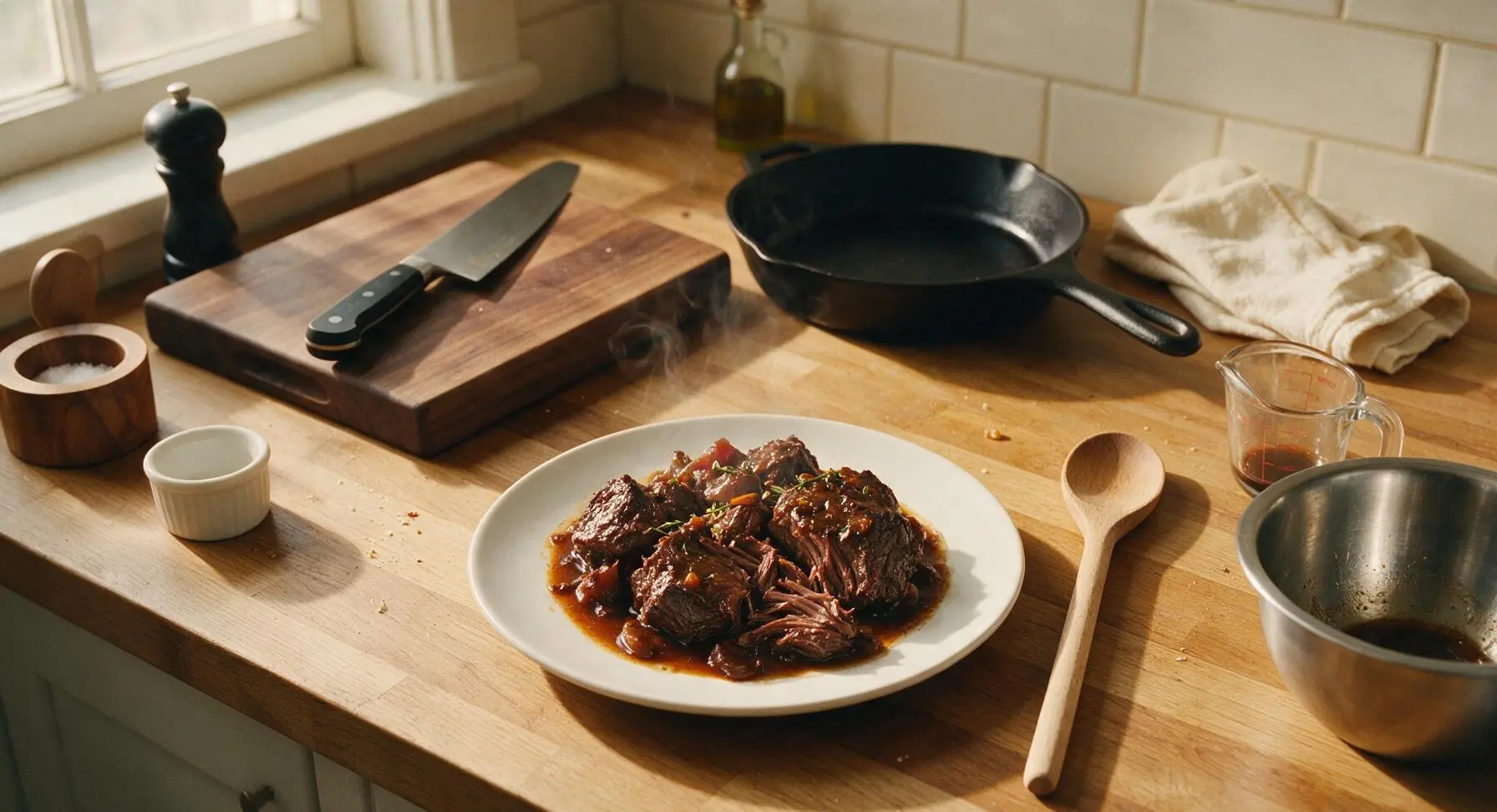
Coffee-Braised Beef

title 1
Coffee-Braised Beef
⏱️ cook time 2 hours 30 minutes
🍽️ servings 4
⚡ Difficulty medium

intro

Fall-apart tender beef chuck slow-braised in bold cold brew coffee, red wine, and aromatics, with a rich glossy sauce perfect for cozy autumn meals.

Ingredients
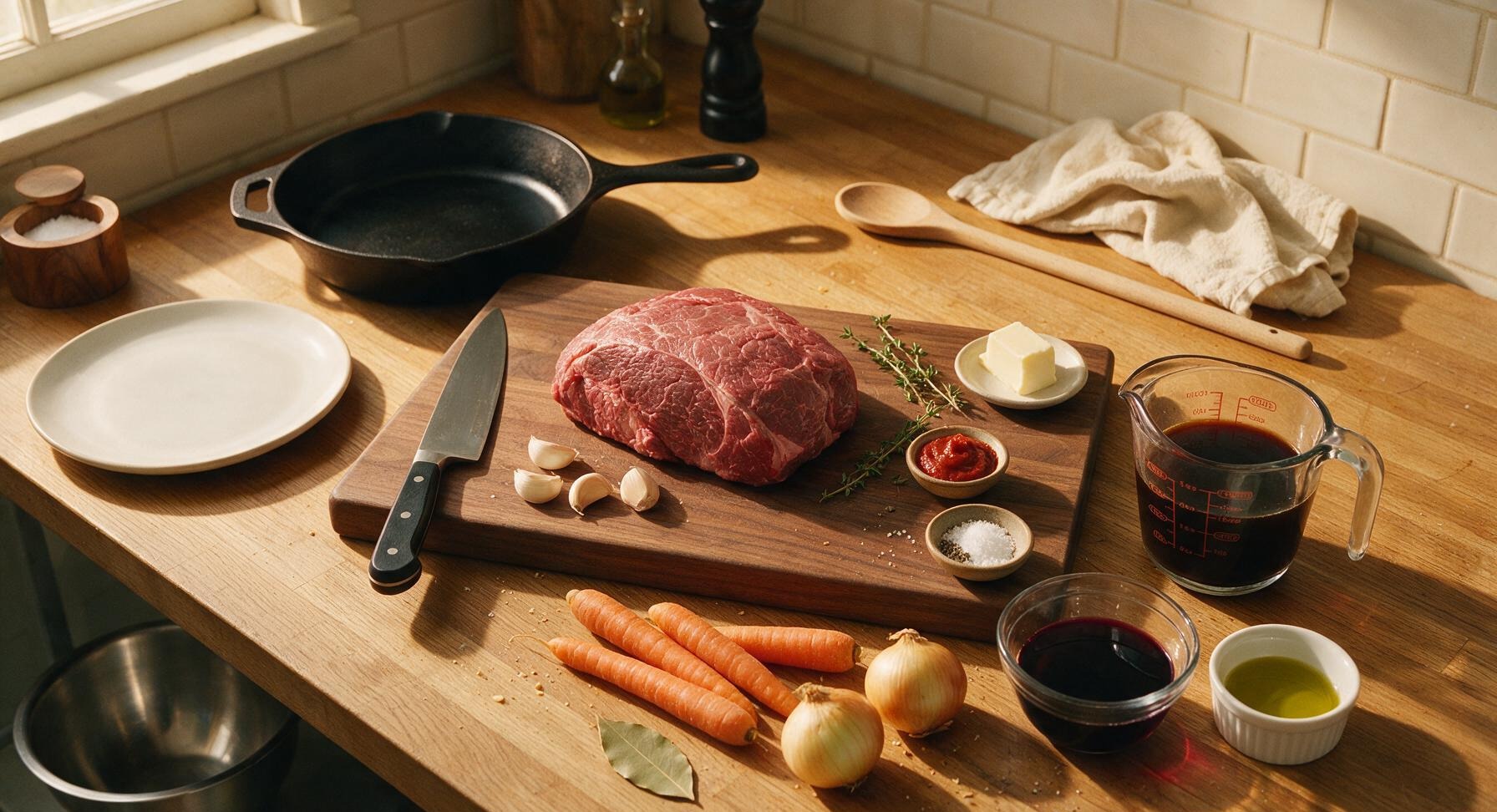
Boneless beef chuck roast 1kg (2.2 lbs)
Unsweetened cold brew coffee 480ml (2 cups)
Dry red wine (Cabernet Sauvignon) 240ml (1 cup)
Yellow onions 2 medium (300g total)
Carrots 3 medium (200g total)
Garlic cloves 4 (12g total)
Tomato paste 2 tablespoons (30g)
Extra virgin olive oil 2 tablespoons (30ml)
Fresh thyme sprigs 3
Bay leaf 1
Kosher salt 1.5 teaspoons
Cracked black pepper 1 teaspoon
Unsalted butter 1 tablespoon (14g)

Steps

1

Prep Meat and Vegetables

Place the beef chuck roast on the walnut cutting board. Pat it completely dry with a corner of the linen towel, then season all sides evenly with 1 teaspoon kosher salt and ½ teaspoon cracked black pepper. Use the chef knife to cut onions into 5cm wedges, carrots into 5cm chunks, and crush garlic cloves lightly with the flat of the knife (skins removed), transferring cut vegetables to the stainless steel mixing bowl as you work. Do not cut the beef into smaller pieces; keep it as one whole roast for even braising.
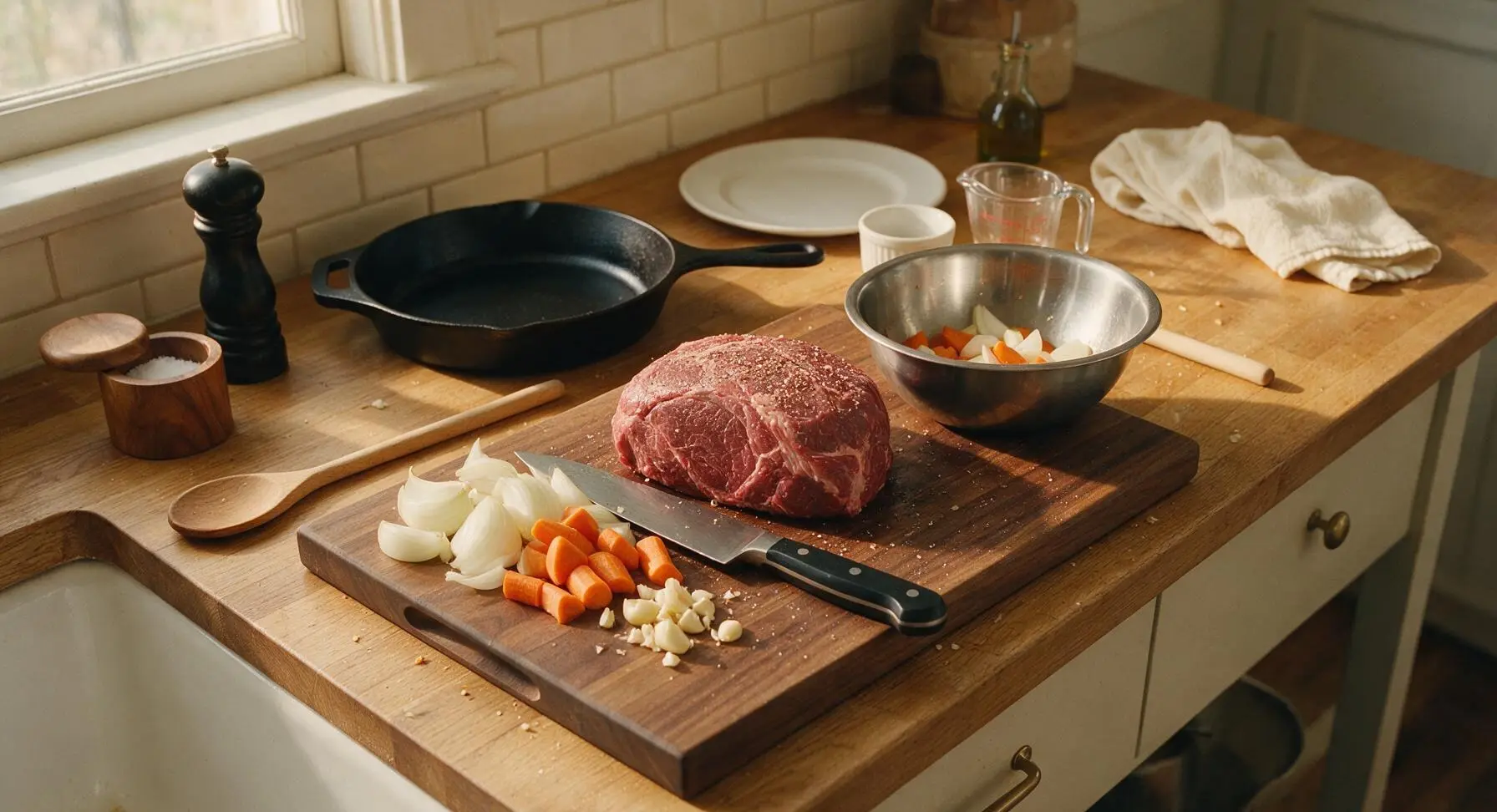
Step 1
step1:Prep Meat and Vegetables
2

Sear Beef to Deep Brown

Place the enameled cast iron Dutch oven on the centered induction cooktop over medium-high heat, add 2 tablespoons olive oil. Once oil shimmers (about 2 minutes), use the silicone-tipped tongs to lower the seasoned beef roast into the pot. Sear for 4-5 minutes per side, until every surface develops a deep, rich mahogany brown crust, including the edges. Do not move the beef early; let the crust form fully before flipping to avoid sticking. Internal temperature of the beef will be around 50C/120F after searing.
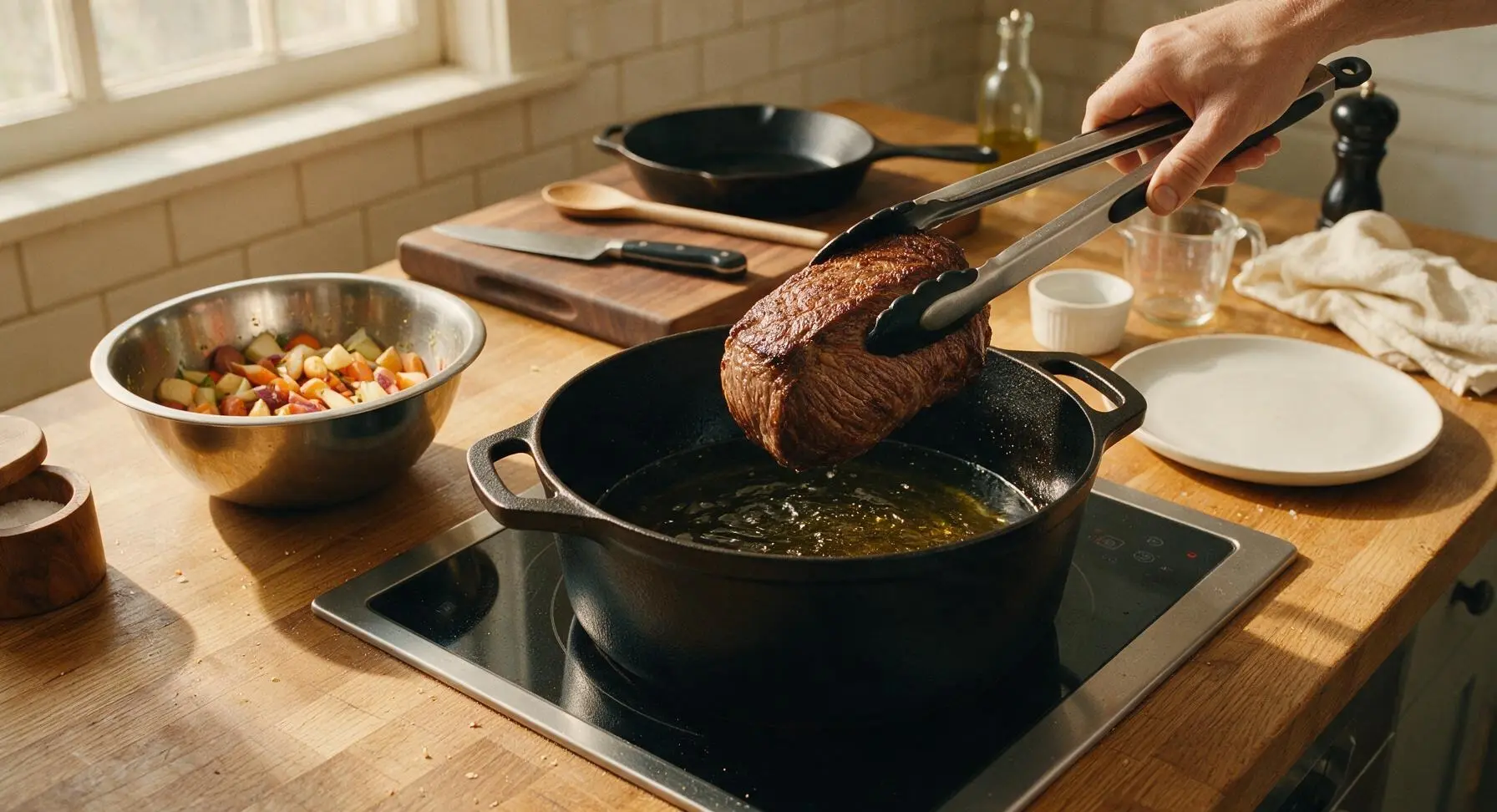
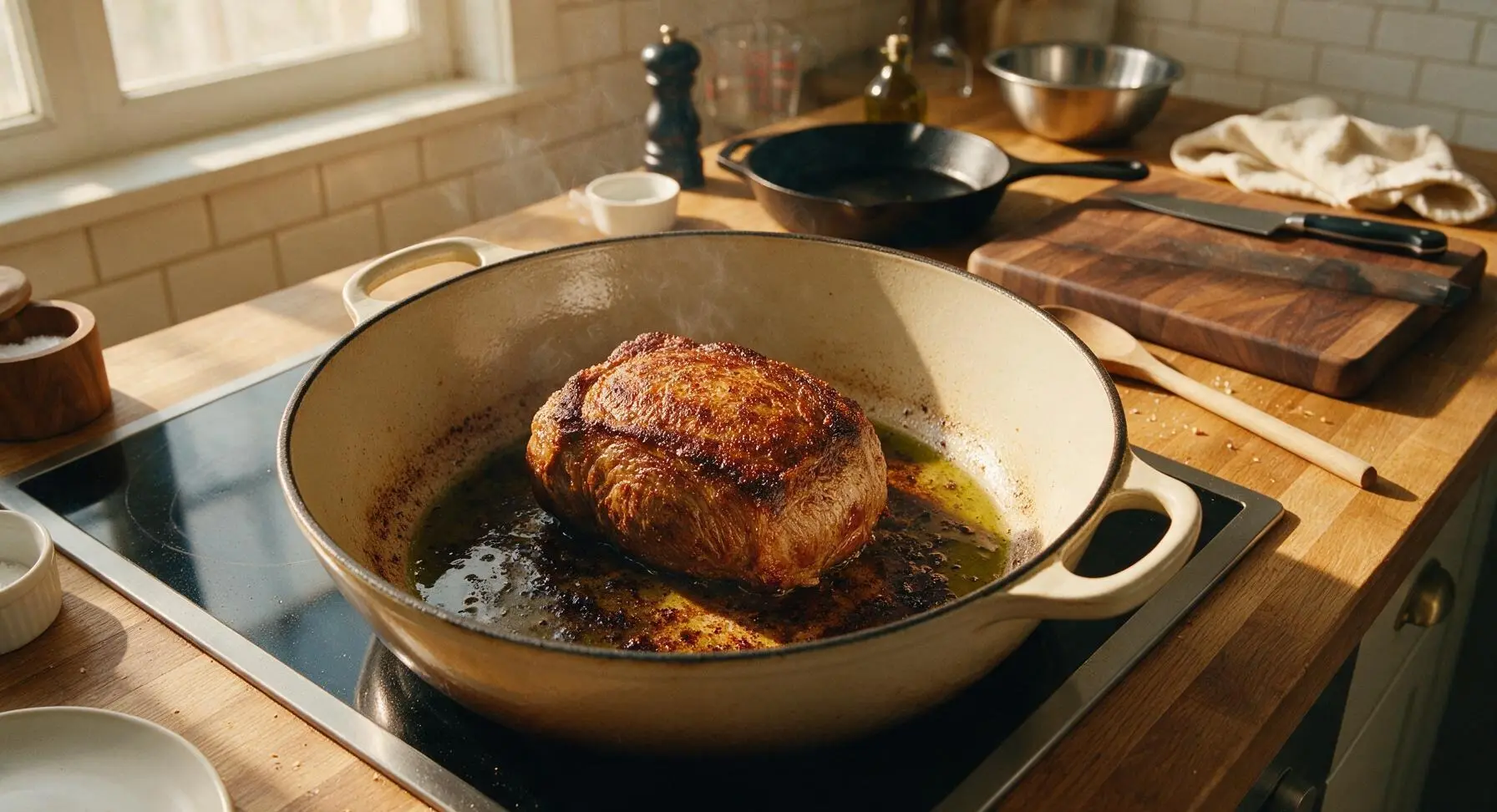
Step 2
step2:Sear Beef to Deep Brown
Step 2
step2:Sear Beef to Deep Brown
3

Sauté Aromatic Vegetables

Use the tongs to transfer the seared beef to a clean temporary plate. Lower heat to medium, add the cut onions, carrots, and garlic from the mixing bowl to the remaining fat in the Dutch oven. Sauté for 6-7 minutes, stirring occasionally with the beech wood spoon, until vegetables are lightly browned at the edges and onions turn translucent. Stir in 2 tablespoons tomato paste, and cook for 1 more minute until the paste darkens slightly and smells sweet and fragrant.
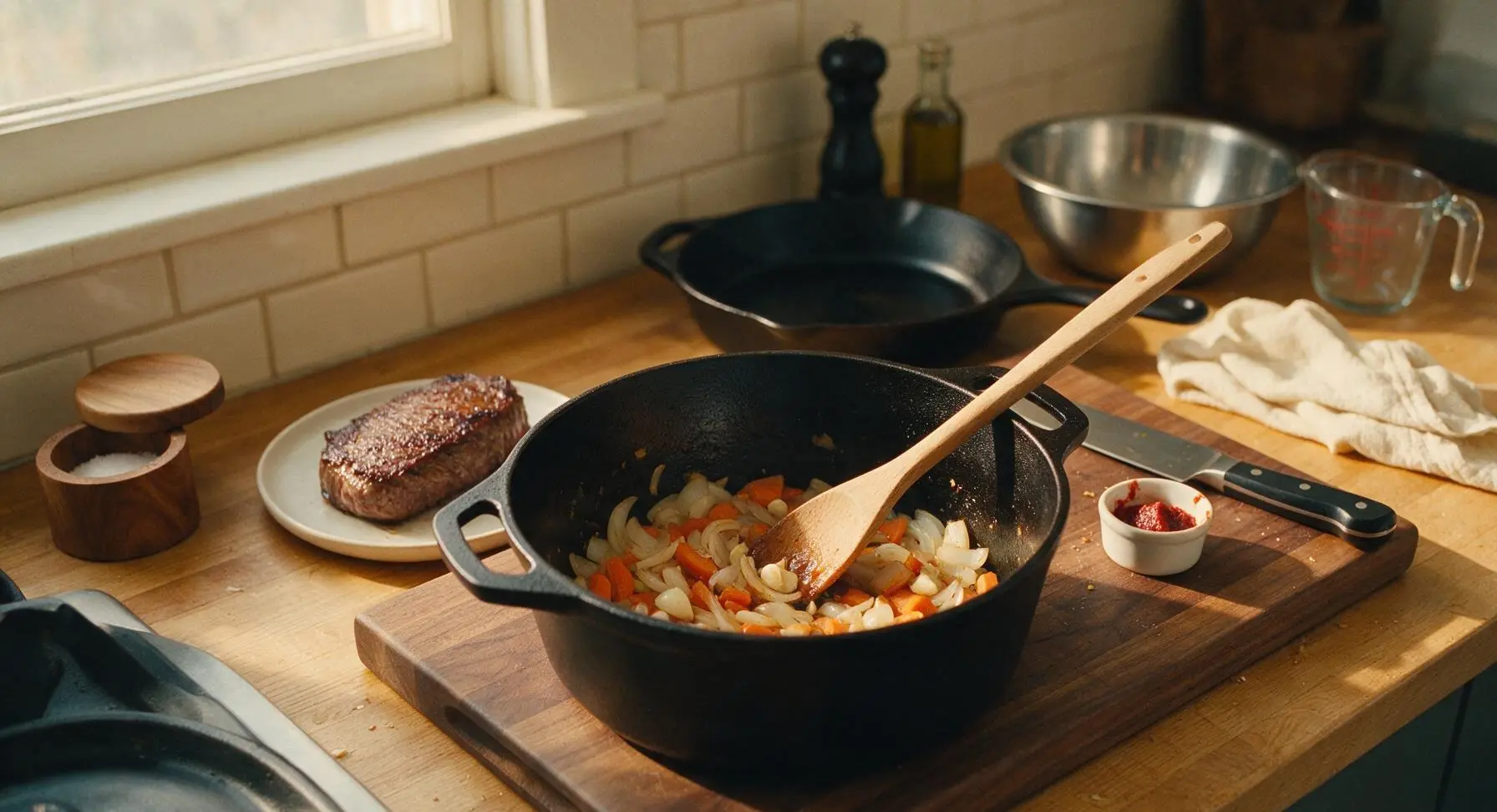
Step 3
step3:Sauté Aromatic Vegetables
4

Deglaze with Coffee and Wine

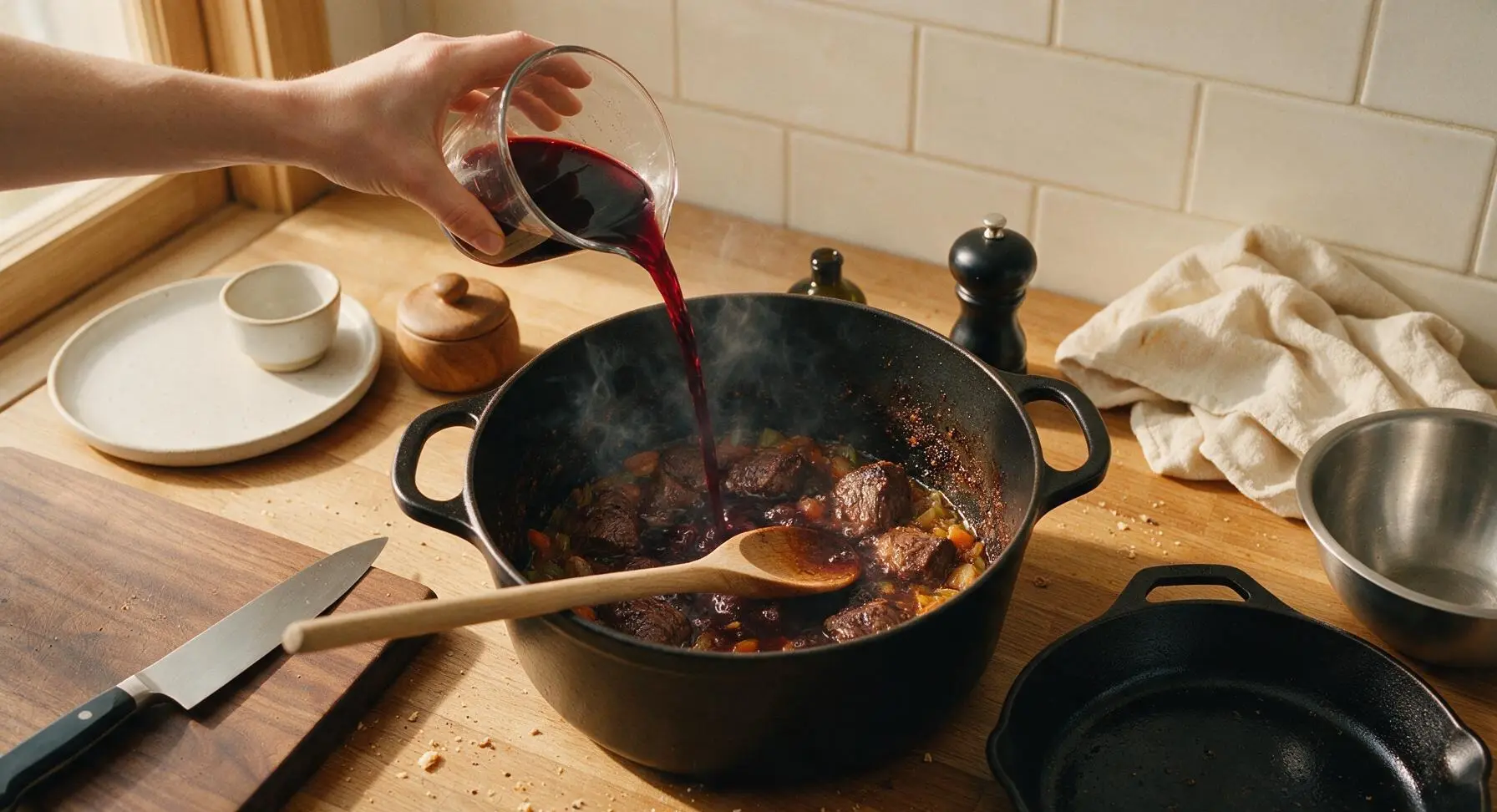
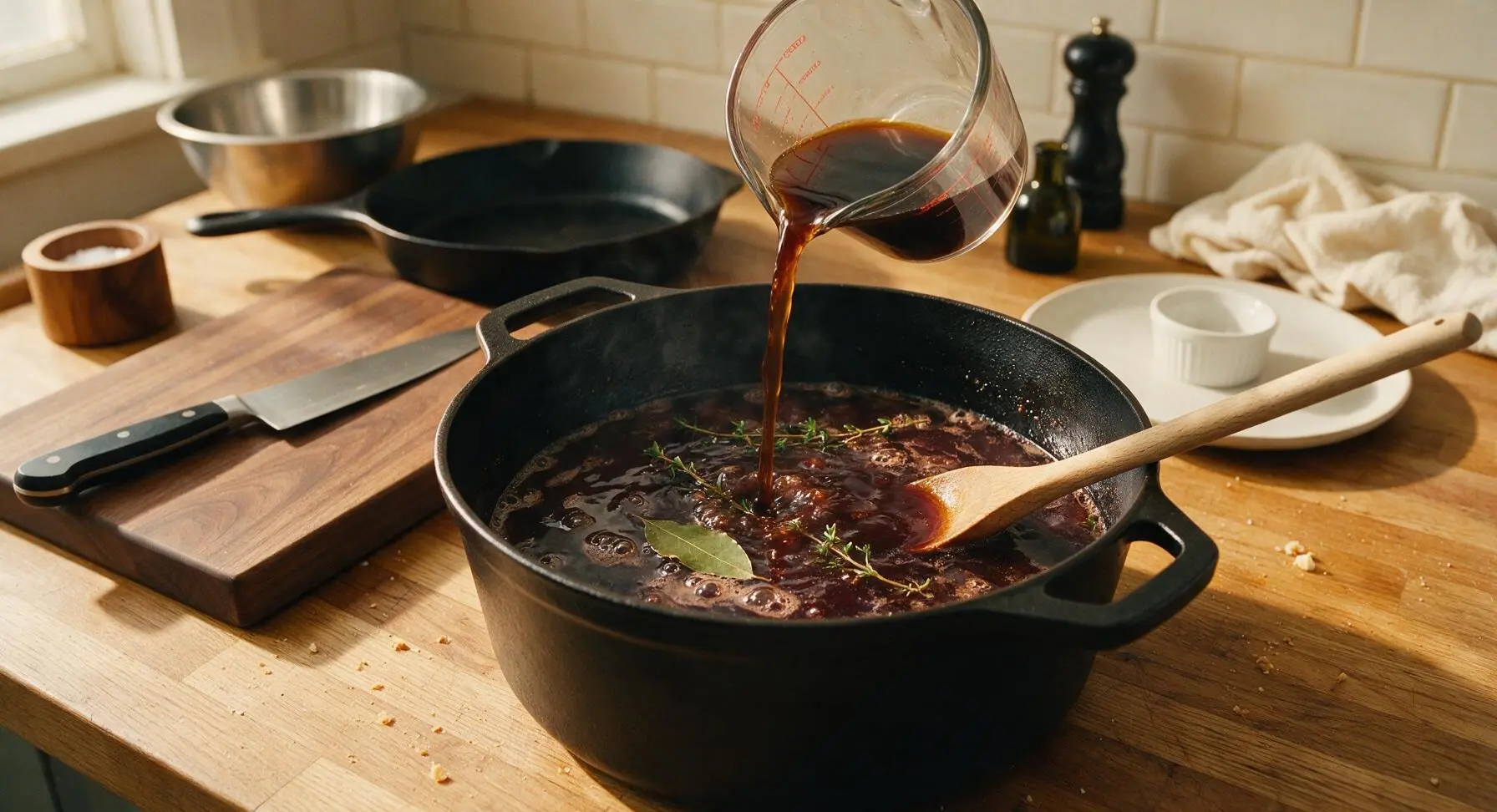
Pour the red wine into the Dutch oven, scraping the bottom of the pot firmly with the wooden spoon to lift all the browned fond bits. Bring to a gentle simmer, and cook for 3 minutes to reduce the wine by half. Pour in the cold brew coffee from the glass measuring cup, add the thyme sprigs and bay leaf, and stir to combine. Bring the liquid to a low simmer (small bubbles breaking slowly at the surface, not a rolling boil).
Step 4
step4:Deglaze with Coffee and Wine
Step 4
step4:Deglaze with Coffee and Wine
5

Braise Beef Low and Slow

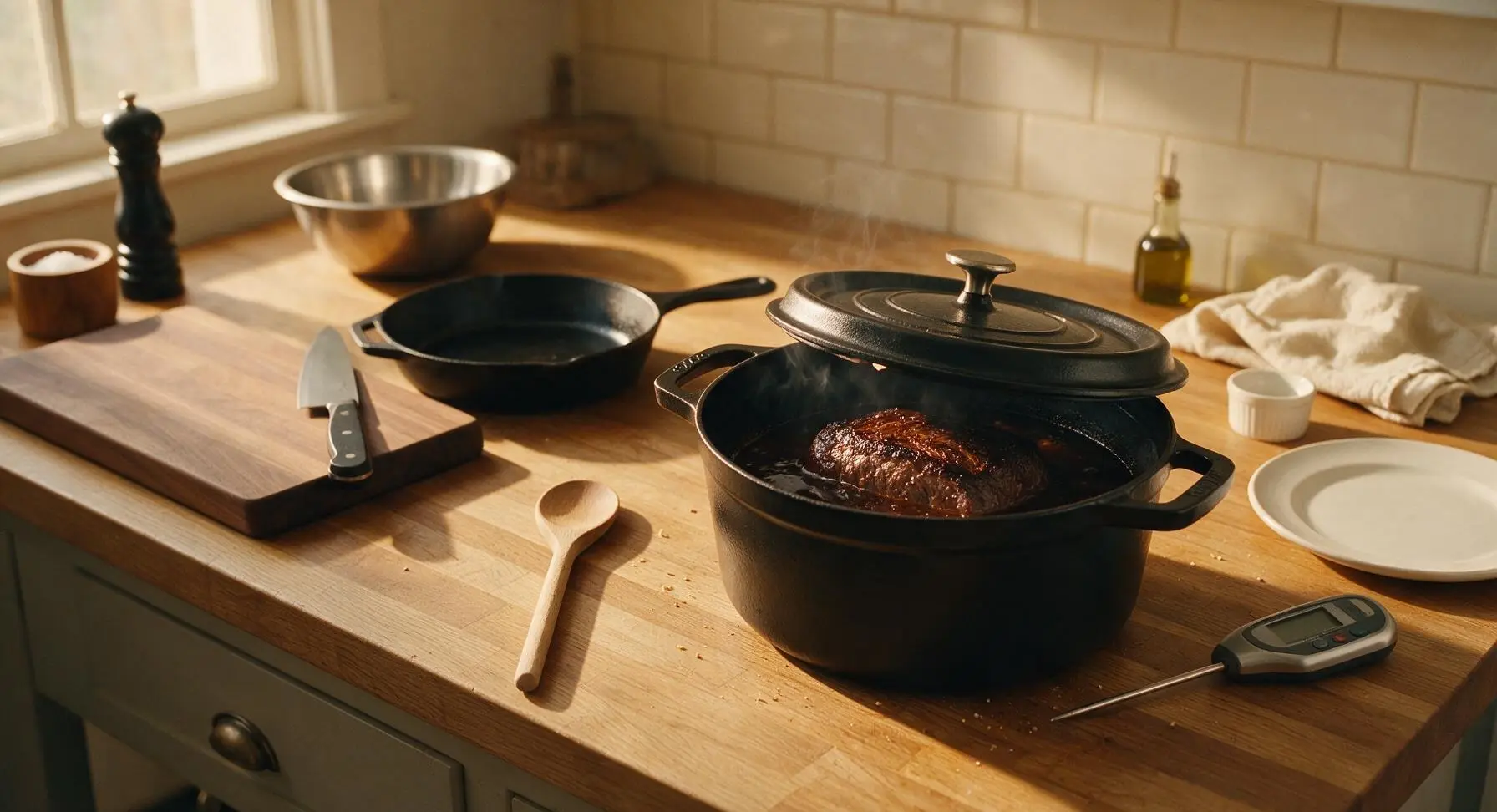
Return the seared beef roast to the Dutch oven, nestling it into the liquid so it is ⅔ submerged (do not fully cover the beef). Place the matching Dutch oven lid on top, leaving a 1cm gap to allow small amounts of steam to escape. Reduce heat to low, maintain a gentle simmer, and cook for 2 hours, turning the beef once halfway through cooking. The beef is done when a fork inserted into the thickest part twists easily with no resistance, and the digital instant-read thermometer reads 93C/200F when inserted into the center.
Step 5
step5:Braise Beef Low and Slow
6

Rest Beef, Strain Sauce

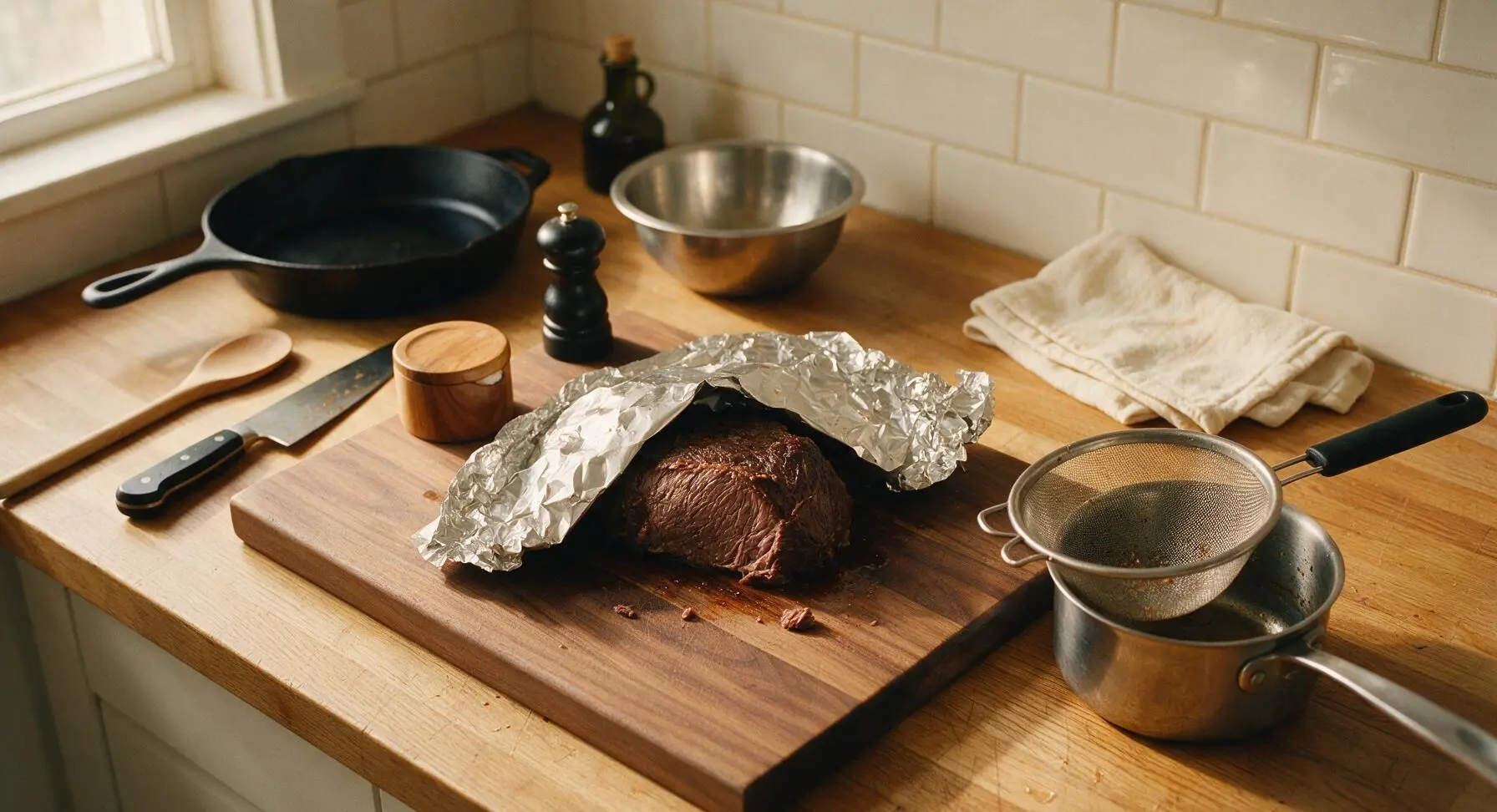
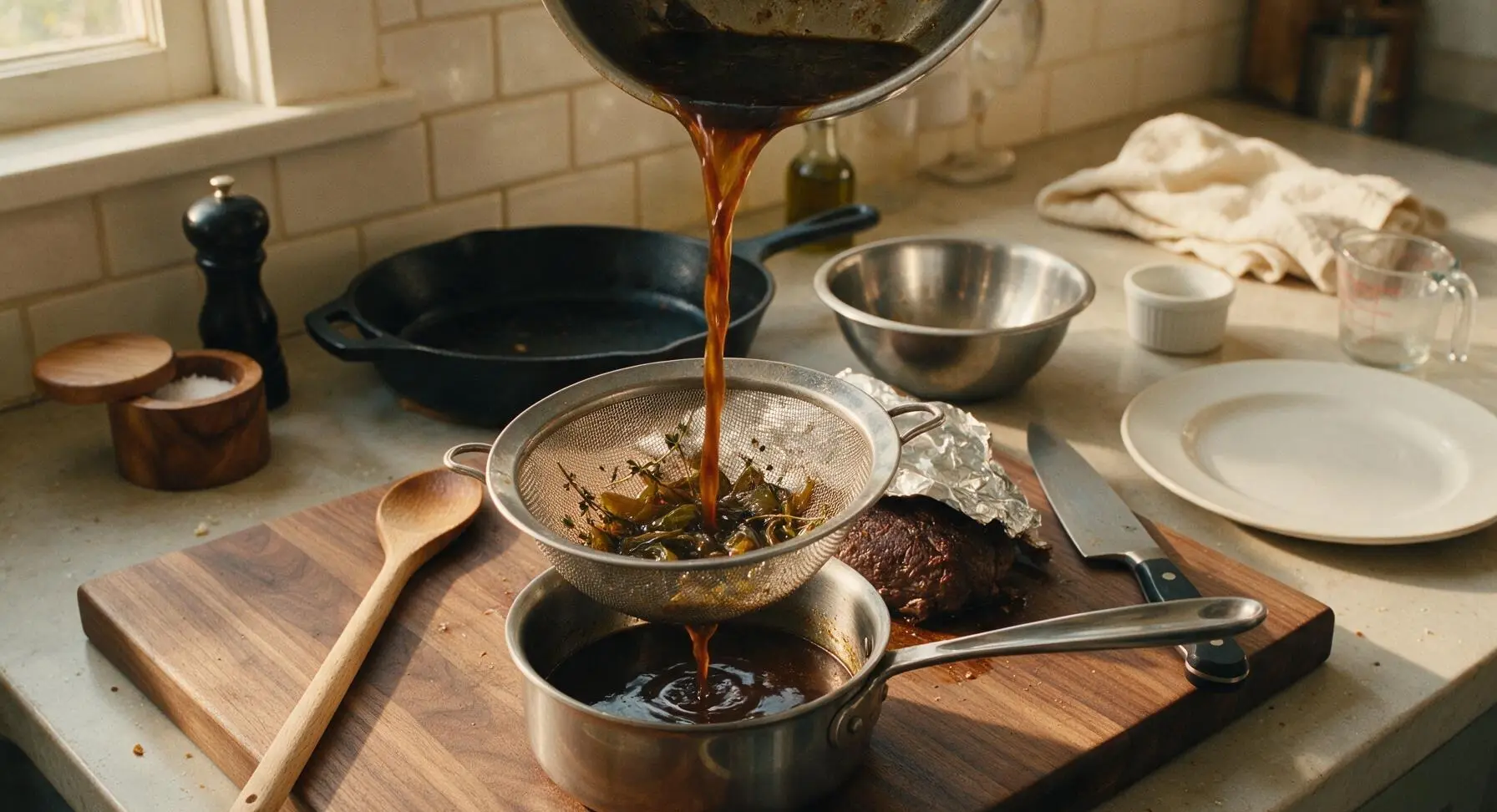
Use tongs to carefully transfer the cooked beef to the walnut cutting board, tent it loosely with a small piece of aluminum foil, and let it rest for 15 minutes to allow juices to redistribute. While the beef rests, pour the braising liquid and vegetables through the fine-mesh stainless steel strainer into the small stainless steel saucepan, pressing gently on the vegetables with the wooden spoon to extract all flavorful liquid; discard the cooked vegetables and herbs. Skim any excess fat from the surface of the strained sauce with a spoon.
Step 6
step6:Rest Beef, Strain Sauce
Step 6
step6:Rest Beef, Strain Sauce
7

Finish Sauce, Slice Beef

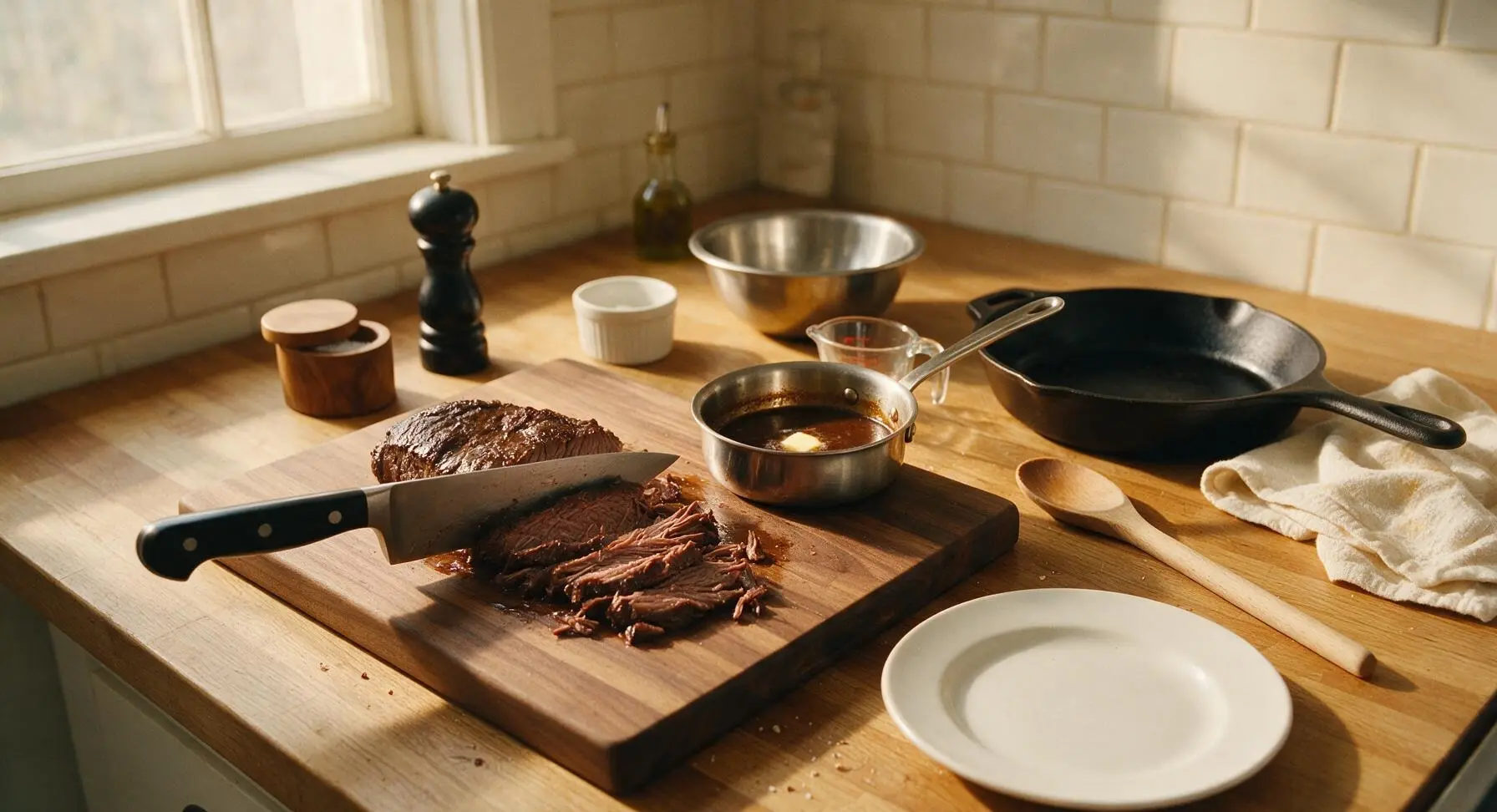
Bring the strained sauce in the small saucepan to a gentle simmer over medium heat, stir in 1 tablespoon unsalted butter until fully melted and the sauce is glossy and thick enough to coat the back of a spoon (about 3-4 minutes). Season the sauce with remaining ½ teaspoon salt and ½ teaspoon black pepper to taste. Remove the foil from the rested beef, use the chef knife to slice it against the grain into 1.5cm thick slices; the meat should pull apart easily at the edges with no resistance.
Step 7
step7:Finish Sauce, Slice Beef

Tips

1.Use unsweetened cold brew coffee instead of hot brewed drip coffee: cold brew has lower acidity and a smoother, rounder roasted flavor that won’t make the braising sauce taste bitter, unlike over-extracted hot drip coffee.
2.Keep the beef ⅔ submerged (not fully covered) in braising liquid: the exposed portion of the roast will caramelize slightly as it cooks, rather than boiling, creating a deeper, more complex flavor and better meat texture.
3.Let the beef rest for 15 minutes before slicing against the grain: resting allows muscle fibers to reabsorb juices so they don’t run out onto the plate, and slicing across shortened fibers prevents chewy, stringy bites.
✨ You May Also Like

Main Course
🍜 United Kingdom

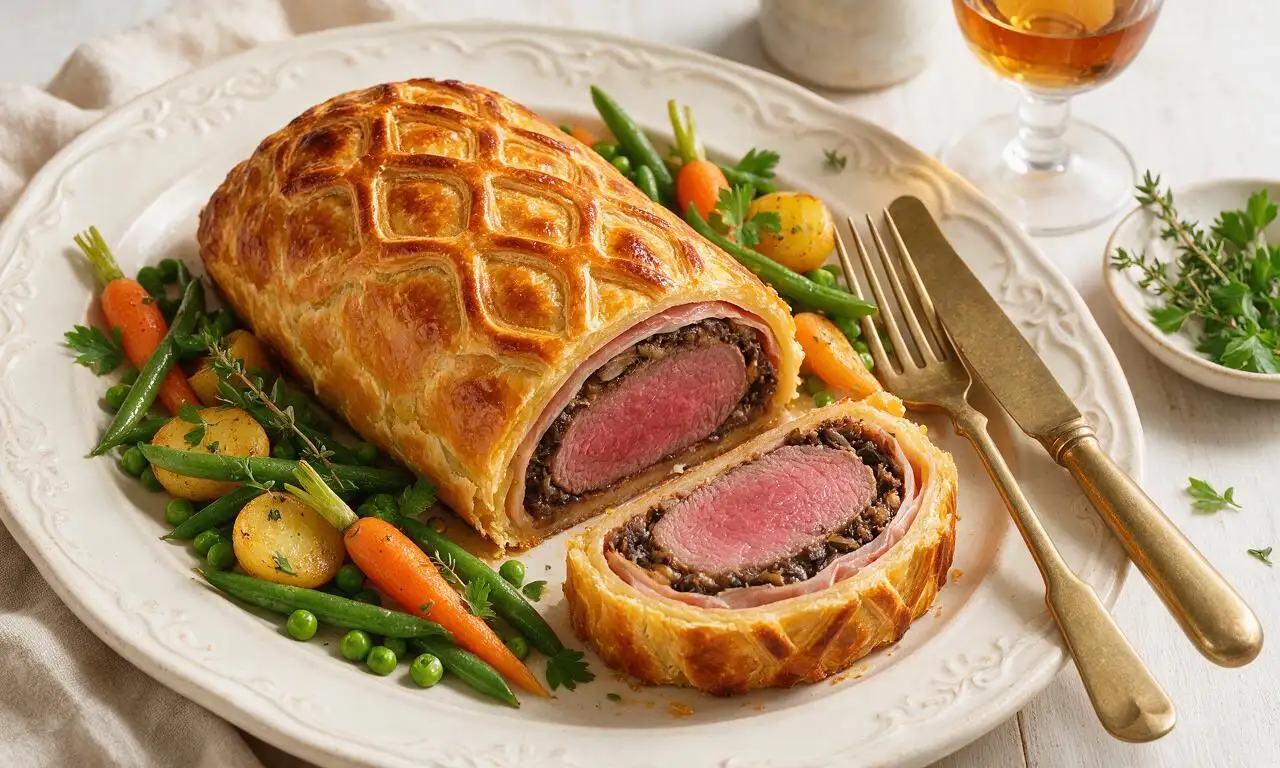
A showstopping classic of tender seared beef, savory mushroom duxelles, and crisp prosciutto wrapped in flaky golden puff pastry, baked to juicy perfection.

⏱️ 2 hours 1Main Course ★ 4.7
Main Course
🍜 India

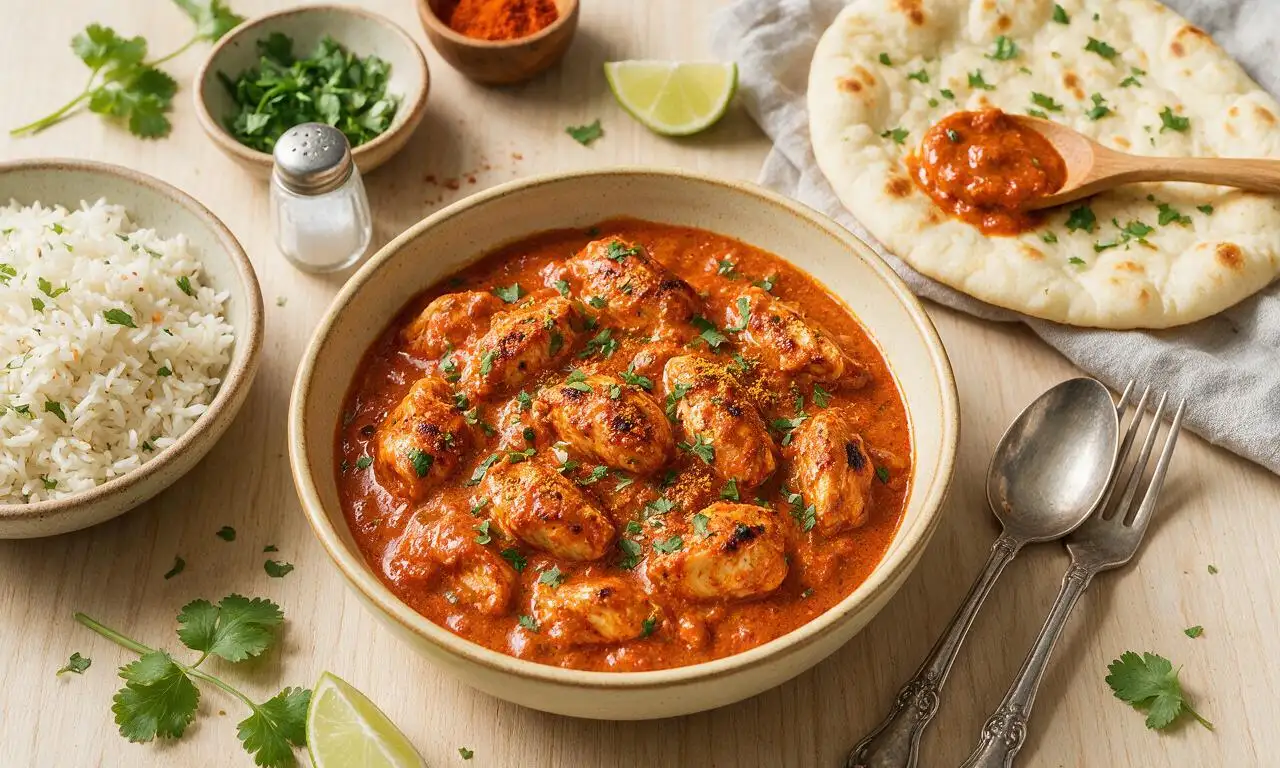
Tender charred marinated chicken simmered in a rich, spiced creamy tomato sauce, this iconic Anglo-Indian curry pairs perfectly with basmati rice or warm naan.

⏱️ 50 minuteMain Course ★ 4.6
Main Course
🍜 Thailand

Classic tangy, sweet, and savory Thai stir-fried rice noodles with shrimp, tofu, and crunchy garnishes, balancing all five core Thai flavor profiles.

⏱️ 30 minuteMain Course ★ 4.5
Main Course
🍜 United Kingdom

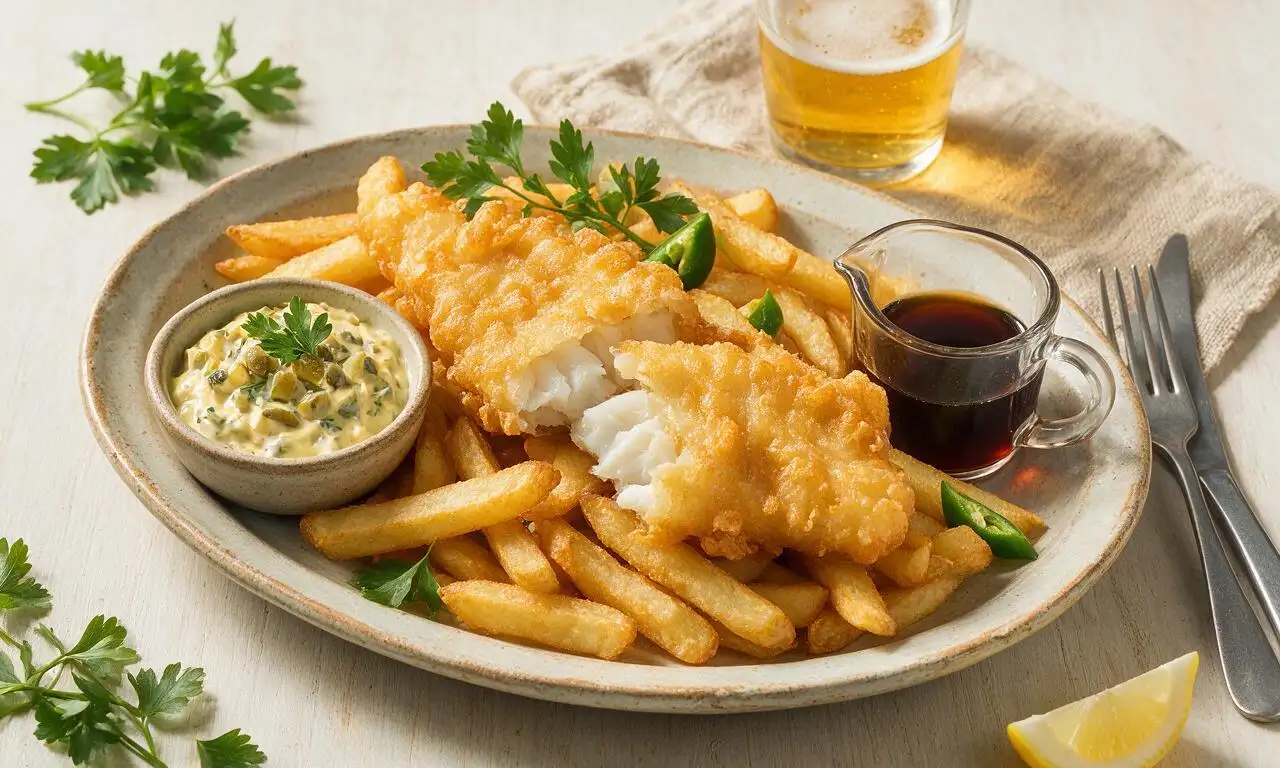
Crispy golden beer-battered cod and fluffy double-fried chips, served with tangy tartar sauce and malt vinegar: the timeless, beloved British pub comfort classic.

⏱️ 45 minuteMain Course ★ 4.7
Main Course
🍜 Mexico

Smoky, chile-marinated pork tacos with caramelized pineapple, fresh cilantro, and lime: a beloved classic Mexican street food perfect for casual summer gatherings.

⏱️ 1 hour 45Main Course ★ 4.8
Main Course
🍜 United States

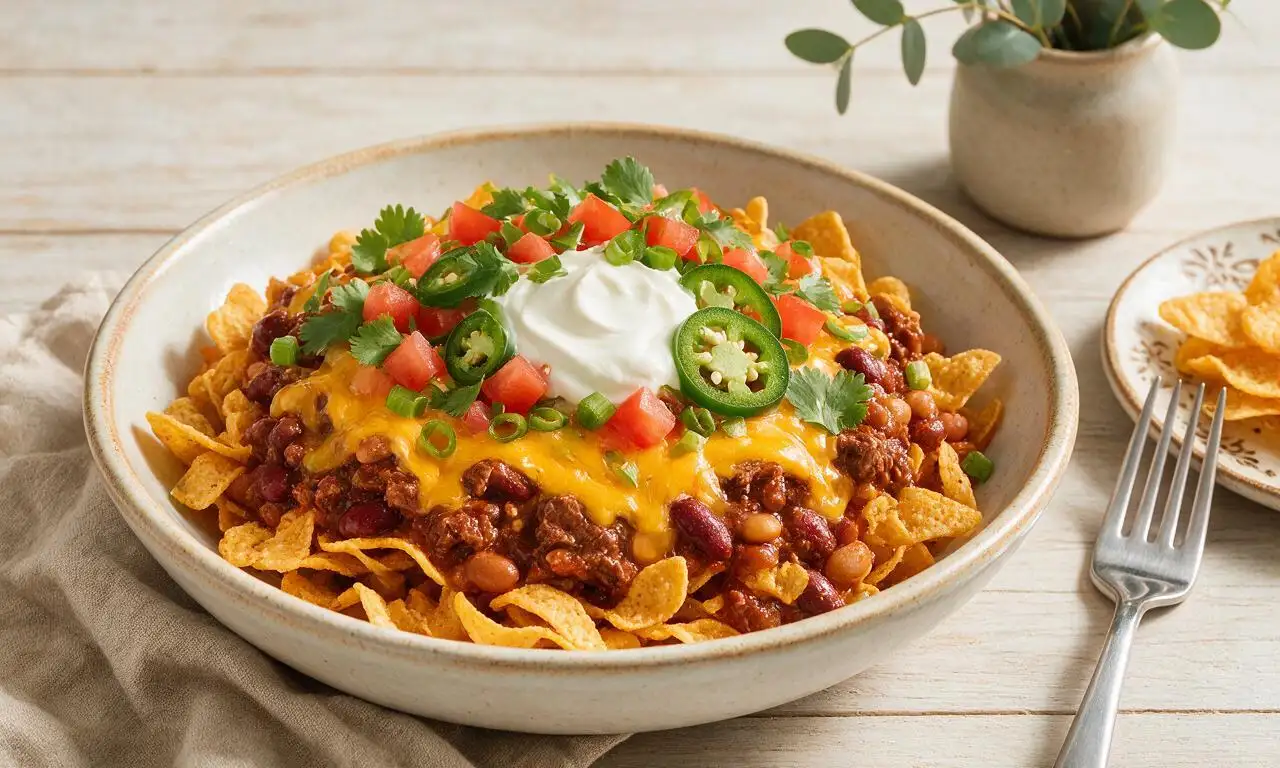
Crunchy Fritos corn chips layered with savory beef chili and melted cheddar, topped with cool, zesty fixings for a beloved, cozy Tex-Mex comfort food.

⏱️ 35 minuteMain Course ★ 4.8

Coffee-Braised Beef:Frequently Asked Questions

1.Why do you use cold brew coffee instead of regular hot brewed coffee for this recipe? ▾
Great question! Cold brew is less acidic and has a smoother, deeper, less bitter roast profile than hot brewed coffee, so it won’t make the braising sauce taste sharp or astringent after hours of slow cooking. If you only have hot brew, use a medium-roast batch made 20% weaker than usual to cut bitter notes, and let it cool fully before adding to the pot.
2.Can I use a different cut of beef if I don’t have boneless chuck roast? ▾
You absolutely can, but stick to well-marbled, tough cuts that benefit from low-and-slow cooking. Boneless short ribs, brisket flat, or bottom round roast all work well. Skip lean cuts like sirloin or filet—they’ll turn dry and tough instead of fall-apart tender, since they lack the connective tissue that melts into that rich, silky braising texture.
3.Do I really need to sear the beef before braising it? ▾
I highly recommend it, even if it feels like an extra step. Searing over medium-high heat creates a deep, caramelized crust on the beef via the Maillard reaction, adding layers of nutty, savory depth you can’t get from braising alone. It also leaves browned fond on the pot bottom that dissolves into the sauce for far richer flavor.
4.What can I use instead of dry red wine if I don’t drink alcohol? ▾
For a non-alcoholic swap that matches the wine’s depth and tartness, mix 1 cup low-sodium beef broth with 1 tablespoon balsamic vinegar and 1 teaspoon red currant jelly (or grape jelly in a pinch). Skip plain grape juice on its own—it’s too sweet and will make the sauce taste cloying without the wine’s balancing acidic bite.
5.Will the finished beef taste strongly of coffee? ▾
Not at all! The coffee acts as a deep, earthy flavor booster similar to how cocoa works in chili—it amplifies the savoriness of the beef and richness of the sauce without leaving a distinct “coffee shop” flavor. You’ll pick up a subtle warm roast note in the background, not a strong, bitter coffee taste.
6.Can I make this recipe in a slow cooker instead of a Dutch oven? ▾
Absolutely! After searing the beef and sautéing the aromatics as directed, transfer everything to your slow cooker, pour in the coffee and wine, and cook on LOW for 7 to 8 hours, or HIGH for 3.5 to 4 hours, until the beef shreds easily. For a glossy sauce, simmer the strained cooking liquid on the stovetop 10 minutes to thicken at the end.
7.Why is my braised beef coming out tough instead of fall-apart tender? ▾
Tough braised beef almost always stems from two issues: too high a cooking temperature, or insufficient cook time. If your liquid is boiling rapidly instead of holding a gentle, barely-there simmer, muscle fibers will seize up and turn chewy. If it’s still firm, re-cover and cook 30 to 45 more minutes to let connective tissue melt into silky gelatin.
8.Do I have to peel the carrots and onions before adding them to the braise? ▾
Peeling is totally optional, but I recommend it for the smoothest, cleanest-tasting sauce. If you skip peeling, scrub carrot skins thoroughly to remove trapped dirt, and peel off the outer papery layer of the onions. Note that unpeeled veggies will leave tiny skin flecks in the sauce, which is harmless if you prefer a more rustic texture.
9.How should I thicken the braising sauce if it turns out too thin? ▾
First, strain out the beef and veggies, then pour the cooking liquid into a small saucepan and bring it to a gentle simmer over medium heat. Let it reduce for 8 to 12 minutes, until it coats the back of a spoon. If you’re short on time, stir in a slurry of 1 tablespoon cornstarch mixed with 2 tablespoons cold water, and cook 2 minutes until glossy.
10.What are the best side dishes to serve with coffee-braised beef? ▾
This rich, cozy autumn beef pairs perfectly with starchy sides that soak up that glossy sauce. My go-tos are creamy mashed potatoes, buttered egg noodles, crusty sourdough bread, or roasted garlic polenta. For a bright contrast, serve it with steamed green beans, roasted Brussels sprouts, or a simple lemon-dressed arugula salad.
11.Can I prep this recipe a day ahead of serving? ▾
Not only can you, I think it tastes even better made a day ahead! Let the braised beef cool fully in its cooking liquid, then store it covered in the fridge for up to 3 days. The fat will solidify on top for easy skimming, and flavors will meld and deepen as it chills. Gently reheat on the stovetop over low heat before serving.
12.What kind of red wine works best if I don’t have Cabernet Sauvignon? ▾
Stick to other dry, full-bodied red wines with moderate tannins for the best results. Malbec, Merlot, Syrah, or Zinfandel all work beautifully here. Skip sweet reds like port or sweet Lambrusco, and avoid grocery store “cooking wine”—it’s loaded with salt and preservatives that will make your sauce taste flat and off.
13.Can I use sweetened or flavored cold brew for this recipe? ▾
I strongly recommend sticking to unsweetened, unflavored cold brew. Sweetened cold brew adds unwanted sugar that makes the sauce cloyingly sweet, and flavored cold brews (vanilla, hazelnut, caramel) leave odd, artificial notes that clash with the savoriness of the beef and red wine. Plain black cold brew is always your best bet.
14.How long should I let the beef rest after braising before serving? ▾
Let the beef rest for 15 to 20 minutes in the warm braising liquid after you take it off the heat, just like you would with a grilled steak. This gives muscle fibers time to reabsorb all that juicy, flavorful liquid, so the beef stays moist instead of leaking juices onto the plate when you shred or slice it. Tent loosely with foil to keep it warm.
15.Can I freeze leftover coffee-braised beef? ▾
Absolutely—this dish freezes beautifully for up to 3 months. Let the beef and sauce cool fully, then portion it into airtight, freezer-safe containers, leaving a half-inch of headspace for expansion. Thaw in the fridge overnight, then reheat gently on the stovetop over low heat, stirring occasionally, until warmed all the way through for quick, cozy meals.
16.Should I cut the beef into chunks before braising, or cook the whole roast? ▾
Either method works, but I prefer cutting the chuck roast into 3- to 4-inch large chunks before searing and braising. This creates more surface area for that caramelized seared crust, and cuts total braising time by about 20 minutes. If you want a presentation-friendly whole roast to slice tableside, cook it intact and add 30 minutes of cook time.
17.My finished sauce tastes bitter—what went wrong, and can I fix it? ▾
Bitter sauce usually comes from burnt fond on the pot bottom from over-searing, overly dark/roasty coffee, or wine with very harsh tannins. Fix it easily by stirring in a tiny pinch of brown sugar, a teaspoon of butter, or a squeeze of fresh lemon juice, adding a little at a time and tasting as you go, until bitter notes mellow and flavors balance.
18.Can I add other vegetables to the braise besides onions and carrots? ▾
Of course! This recipe is super flexible for add-ins. Toss in chunks of celery, whole garlic cloves, parsnips, turnips, or cremini mushrooms during the last 45 minutes of cooking so they get tender without turning mushy. Avoid soft veggies like zucchini or bell peppers, which break down completely and make the sauce watery during the long braise.
19.How do I know when the beef is done braising and ready to serve? ▾
Don’t rely on a meat thermometer for braised beef—you’re looking for texture, not a specific internal temp. The beef is done when you can pierce it easily with a fork or paring knife with almost no resistance, and the meat pulls apart into tender shreds when you twist the fork. If you meet firm resistance, keep cooking low and slow.

Comments (5)

2 days ago

OMG this coffee-braised beef is a total game changer! I made it for my husband's birthday dinner last night and he went back for thirds. The deep coffee flavor doesn't overpower the beef at all, it just adds this rich, earthy depth I never get from regular pot roast. Served it over buttery mashed potatoes and my picky 7 year old cleaned her plate too — my kids loved it so much they asked for it again next weekend! Only note: I used a dark roast I had left over from my morning brew instead of buying something special, worked perfectly.

yesterday

Wait did you use leftover brewed coffee or coffee grounds? I almost messed that up last time I tried a coffee braise!

yesterday

Great question! This recipe calls for strongly brewed coffee, not grounds — using leftover morning dark roast like Jessie did works perfectly, just make sure it's not flavored with any syrups or sweeteners!

3 days ago

Tried this for meal prep this week and wow, it's even better reheated the next day! Cook time felt a little long on a weeknight so I did the initial sear in my Dutch oven then popped everything in the slow cooker on low for 6 hours instead of the stovetop braise. Turned out fall-apart tender, zero complaints. 10/10 will be adding this to my regular rotation.

2 days ago

Love that slow cooker hack! That's such a smart swap for busy weeknights — so glad it turned out great for you.

yesterday

I was so excited to try this but I messed up the first step by burning the onions when I seared the beef, so the whole braise had a slightly bitter aftertaste. Definitely going to give it another go though because the flavor combo sounds incredible — I'll just turn the heat down a little next time! The medium difficulty rating is no joke, don't rush the sear like I did.

2 hours ago

Oh no, sorry to hear the first batch was bitter! Pro tip: take your time searing over medium heat instead of high, and pull the beef out to rest before sautéing the onions in the same pot so they don't catch on the hot pan. I bet your next batch turns out perfect!

1 week ago

Brought this to our neighborhood potluck last weekend and people were begging me for the recipe before they even finished their first bite! The gravy is insane, I mopped up every last bit with crusty sourdough. My only tiny note is it took me about 20 minutes longer than the stated 2.5 hours because my chuck roast was a little thicker than the recipe called for, but that's on me for not checking the weight before I started cooking. SO good.

2 weeks ago

Made this for a casual family dinner when my parents were in town visiting, and even my dad who hates "fancy food" went back for seconds. I used a medium roast because that's all I had in the pantry, and it still came out rich and flavorful. Don't sleep on serving this with roasted carrots and parmesan polenta, it's the perfect combo.

1 week ago

Oh the parmesan polenta pairing sounds chef's kiss! I was gonna serve this over egg noodles but now I'm definitely making polenta instead.

1 week ago

That polenta pairing is such a great call! The creamy, cheesy polenta soaks up that coffee gravy so well — I might have to add that as a serving suggestion in the recipe notes!