1.Can I substitute regular brewed coffee for the instant espresso powder in this recipe?
▾
I don’t recommend it, because brewed coffee adds too much extra liquid that thins the custard and throws off the delicate egg-to-cream ratio, leading to a watery, unset texture. If you only have strongly brewed, cooled espresso, reduce the heavy cream by 2 tablespoons to account for the added liquid to keep the base balanced.
2.Why did my crème brûlée come out with a lumpy, curdled texture?
▾
That almost always happens from overheating the custard base, either when tempering the eggs or baking it too hot. Eggs curdle around 185°F, so keep stovetop heat low when warming the cream, and never let the custard boil. If you catch small lumps early, strain the base through a fine-mesh sieve before pouring into ramekins for a silky result.
3.Do I have to use a kitchen torch to make the caramel top, or can I use my broiler?
▾
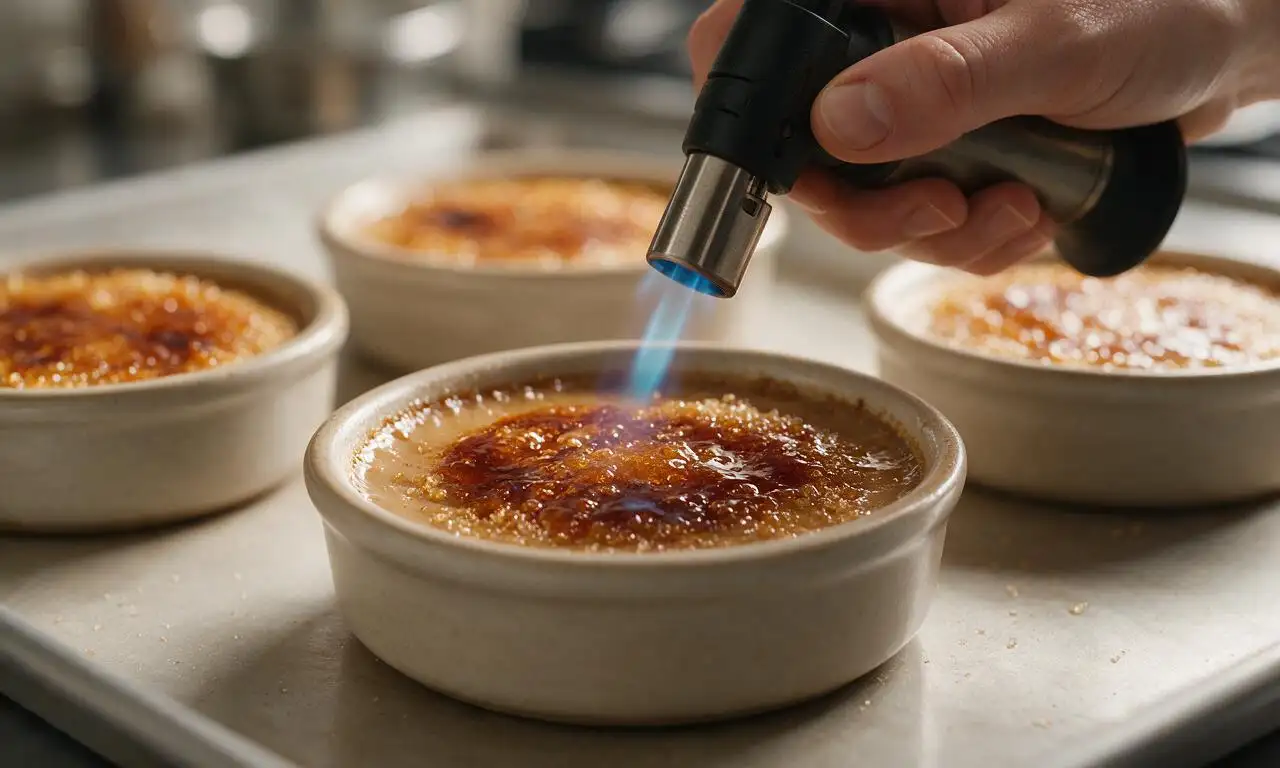
A kitchen torch gives the most even, crackly crust without warming the cold custard underneath, but a broiler works in a pinch. First, chill set custards for at least 4 hours, sprinkle an even thin layer of sugar across the top, and place them 2-3 inches under a preheated high broiler for 30-60 seconds, watching closely to avoid burning.
4.How far in advance can I make coffee crème brûlée before serving?
▾
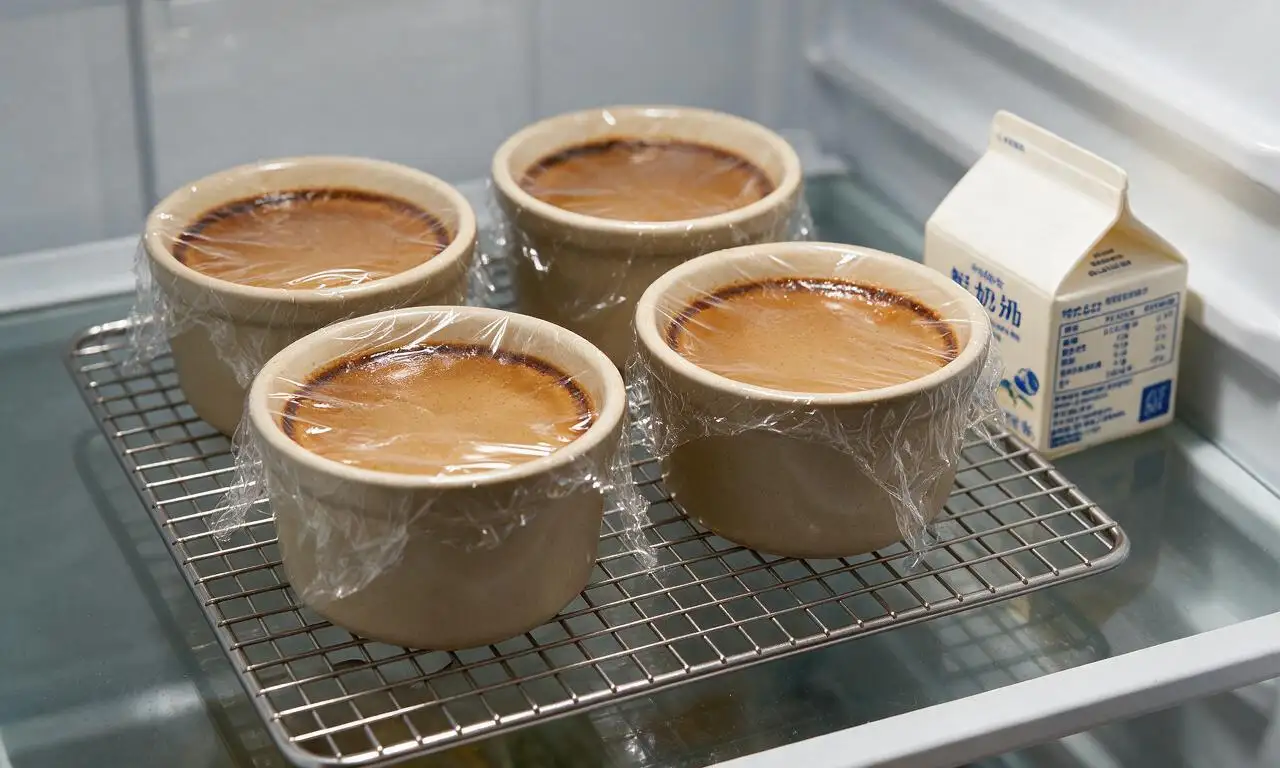
Baked, un-brûléed custards hold beautifully in the fridge for up to 3 days, covered tightly with plastic wrap pressed directly to the surface to prevent a thick skin from forming. Wait to add the sugar and torch the top until 5-10 minutes before serving, as the caramel crust will soften and turn sticky if left on the custard for over an hour.
5.Can I use half-and-half instead of heavy whipping cream for a lighter version?
▾
You can, but know the texture won’t be as luxuriously silky and rich as the classic version. Heavy cream’s 36%+ fat content creates that melt-in-your-mouth custard that doesn’t turn watery as it chills. If you swap, use 1 ¾ cups half-and-half mixed with ¼ cup melted unsalted butter to bump up fat content enough for a smooth, not rubbery, set.
6.Why is there a weird spongy, bubbly layer on top of my baked custards?
▾
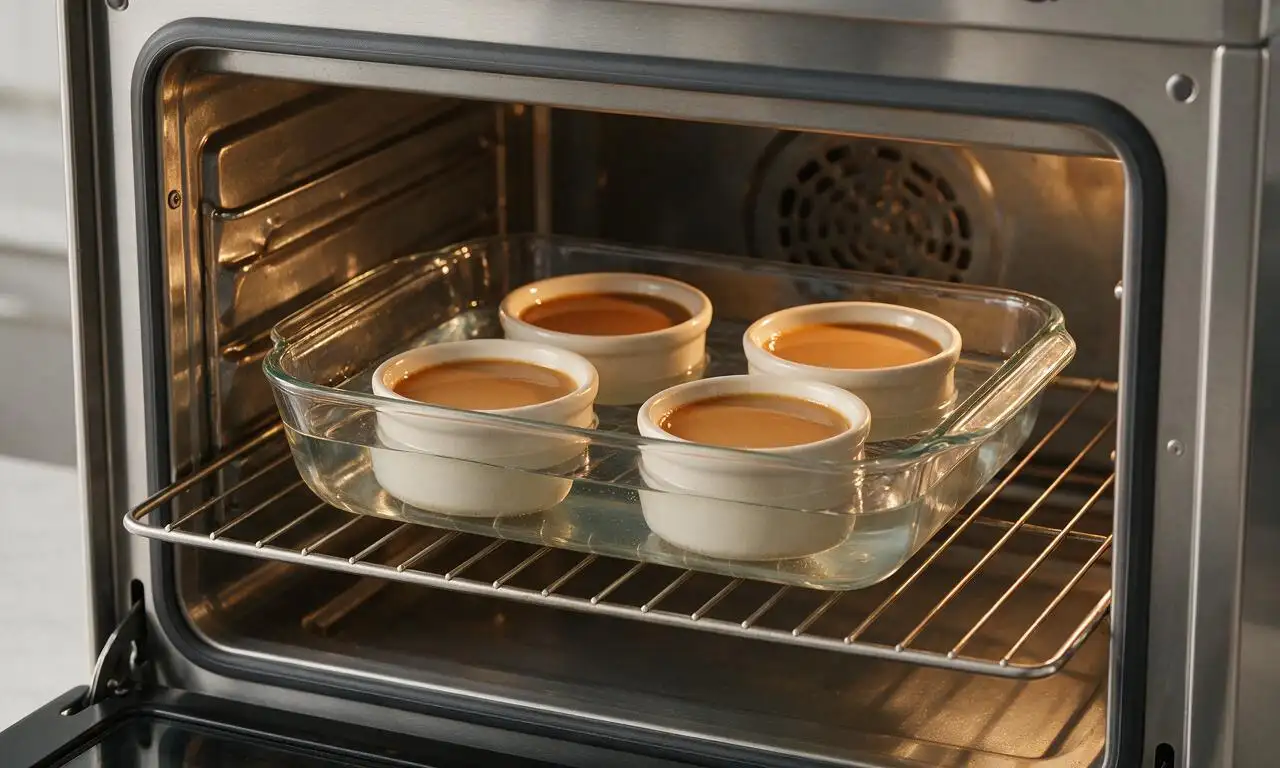
That happens when you bake custards too quickly at high heat, or skip the water bath. High heat causes surface eggs to overcook and set fast, trapping air bubbles that create that spongy texture. Bake low and slow at 325°F, set ramekins in a pan of hot water halfway up their sides, and cover loosely with foil for the first 20 minutes to prevent this.
7.How much instant espresso powder should I use for strong coffee flavor without it turning bitter?
▾
For this recipe, 2 teaspoons of good-quality instant espresso powder gives a balanced, rich coffee note that pairs beautifully with vanilla without tasting bitter. If you love extra-bold coffee flavor, bump that up to 1 tablespoon, but avoid adding more—excess espresso powder leaves a harsh, ashy aftertaste that overwhelms the delicate creamy custard.
8.Can I make this recipe without eggs for a vegan version?
▾
This classic custard relies on egg yolks for its signature silky set and rich mouthfeel, so a straight egg swap won’t give identical results, but you can adapt it. Swap heavy cream for full-fat canned coconut cream, use ¼ cup cornstarch to thicken the base instead of yolks, add a pinch of black salt for depth, and keep espresso and vanilla measurements the same.
9.What size ramekins work best for this coffee crème brûlée?
▾
Standard 4-ounce (½ cup) shallow ceramic ramekins are ideal, because they let the custard cook evenly and give the perfect ratio of caramel crust to creamy custard in every bite. If you use deeper 6-ounce ramekins, add 10-15 minutes of extra baking time, and test doneness by jiggling—edges should be set, with a slight center wobble.
10.Why does my caramel crust keep turning soft instead of staying crisp and crackly?
▾
Soft crust happens for two common reasons: you didn’t fully melt the sugar when torching, leaving undissolved granules that draw moisture out of the custard, or you torched tops too far in advance. Melt every sugar granule into a smooth amber layer, torch right before serving, and use only 1 teaspoon of sugar per ramekin to avoid a chewy, thick crust.
11.Do I really need to temper the egg yolks when making the custard base?
▾
Yes, tempering is non-negotiable to avoid scrambling eggs when you add them to warm cream. To do it simply, slowly pour ¼ cup of the warm, espresso-infused cream into whisked egg yolks while whisking constantly, then pour that warmed yolk mixture back into the pot with the rest of the cream. This gradually raises egg temperature for a smooth, lump-free base.
12.Can I add mix-ins like chocolate or liqueur to this coffee crème brûlée?
▾
Absolutely—this base is super versatile for custom flavors. Stir 2 ounces of finely chopped dark chocolate into warm cream until melted for a mocha twist, or add 1 tablespoon of Kahlúa, Bailey’s, or amaretto to the cooled custard base right before pouring into ramekins. Just avoid adding more than 2 tablespoons of liquid mix-ins total, so you don’t ruin the custard set.
13.How do I know when the crème brûlée is done baking so I don’t overcook it?
▾
Skip the toothpick test—crème brûlée is done when the outer 1 inch of custard is fully set, but the very center ½ inch jiggles slightly like Jell-O when you nudge the ramekin. Residual heat from the water bath will finish setting the center as it cools, so baking until the center is completely firm will leave you with rubbery, overcooked custard after chilling.
14.Can I use light brown sugar instead of granulated sugar for the caramel top?
▾
I don’t recommend it for the classic crisp crust, because brown sugar has added molasses and moisture that makes caramel chewy instead of snappy, and it burns much faster than granulated sugar. Stick to plain white granulated sugar for the top for that shatteringly crisp, amber crust. You can use a small amount of brown sugar in the custard base for deeper flavor, though.
15.Why is there water in my ramekins after I take them out of the water bath?
▾
That’s usually either from splashing when you pour hot water into the baking pan, or condensation dripping off the foil cover if you used one. It won’t ruin your custard—just carefully pour excess water off the top of each ramekin as soon as you pull them from the oven, pat edges dry with a paper towel, then chill as directed.
16.Is it normal for the custard to have tiny coffee flecks from the instant espresso?
▾
That’s totally normal, and actually a sign you used enough espresso for great flavor! If you want a perfectly smooth, fleck-free custard, pour the warm cream and egg base through a fine-mesh sieve lined with cheesecloth right before pouring into ramekins to strain out undissolved espresso granules or tiny egg lumps for a restaurant-worthy texture.
17.Can I freeze coffee crème brûlée to make it last longer?
▾
I don’t recommend freezing it, because the high dairy content will separate as it thaws, leaving a grainy, watery texture that won’t return to that signature silky smoothness, even if you rewhisk it. Custards keep perfectly for 3 days in the fridge, so it’s much better to make them a couple days ahead of your event rather than freezing them.
18.What’s the best way to get a really clean, sharp crack when I break into the crème brûlée crust?
▾
First, make sure your custards are ice cold straight from the fridge when you torch the top—warm custard will melt caramel from underneath and make it soft. Use an even, thin layer of sugar, torch it until deep amber (not pale gold) and fully melted, then let it rest 30 seconds to set before tapping lightly with a spoon for that satisfying crack.
19.Can I use whole eggs instead of just egg yolks for the custard?
▾
You can, but the texture will be firmer and less luxuriously rich than the classic version. Egg whites add structure but lack the fat and emulsifiers that make yolk-only custards feel melt-in-your-mouth silky. If you use whole eggs, swap 3 large whole eggs for the 6 yolks in the standard recipe, and strain the base extra well to remove any stringy bits for smooth results.
20.My instant espresso powder clumped up when I added it to the warm cream—how do I fix that?
▾
That happens if your espresso powder is old, or if you add it to cream that’s not quite warm enough to dissolve it fully. First, warm cream until it’s just steaming (not boiling) before adding powder, and whisk vigorously for 30 seconds to break up clumps. If clumps remain, let the cream sit 2 minutes, whisk again, or strain through a fine sieve before mixing with yolks.

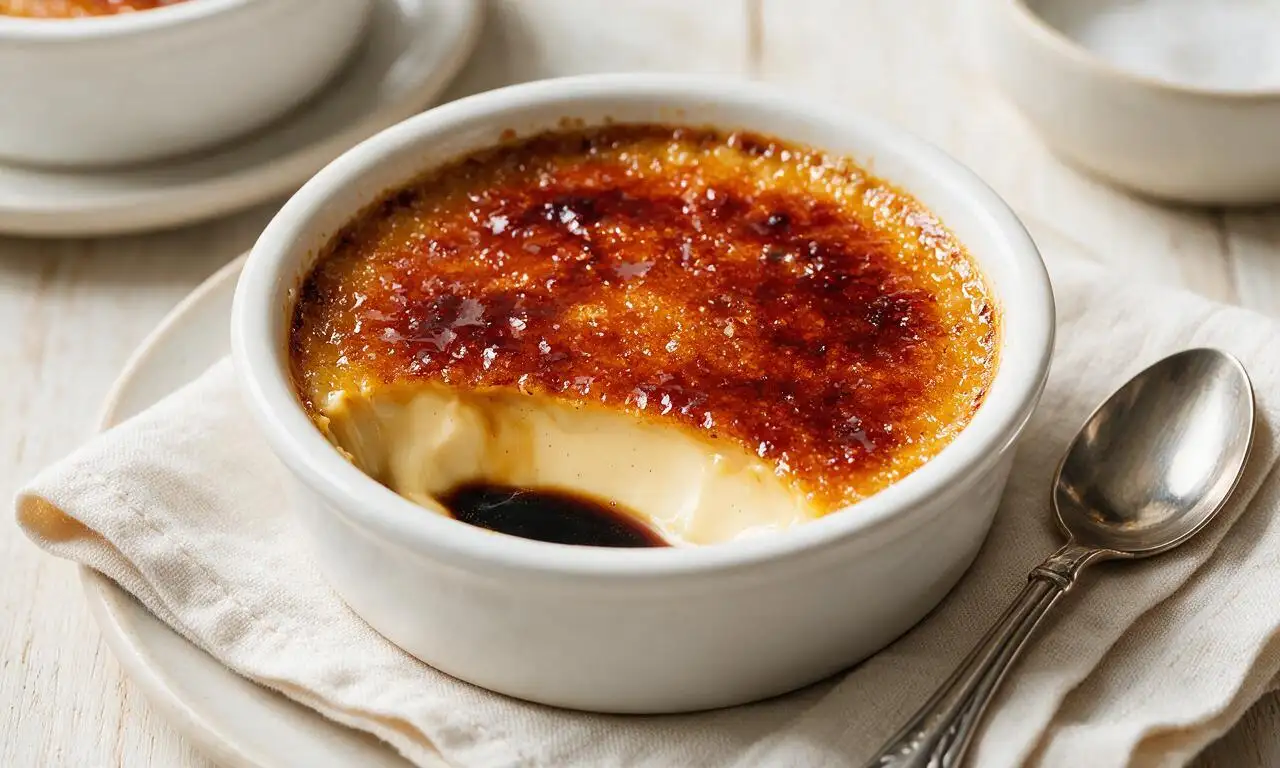
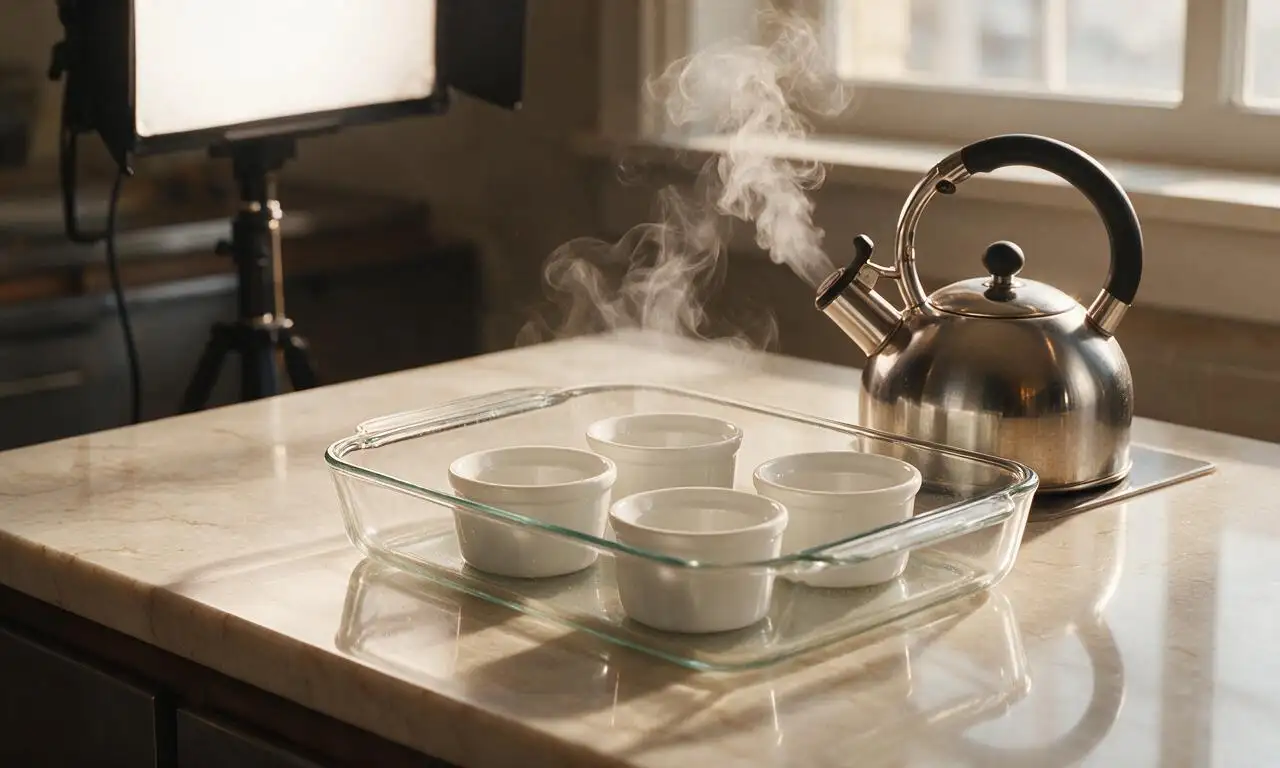
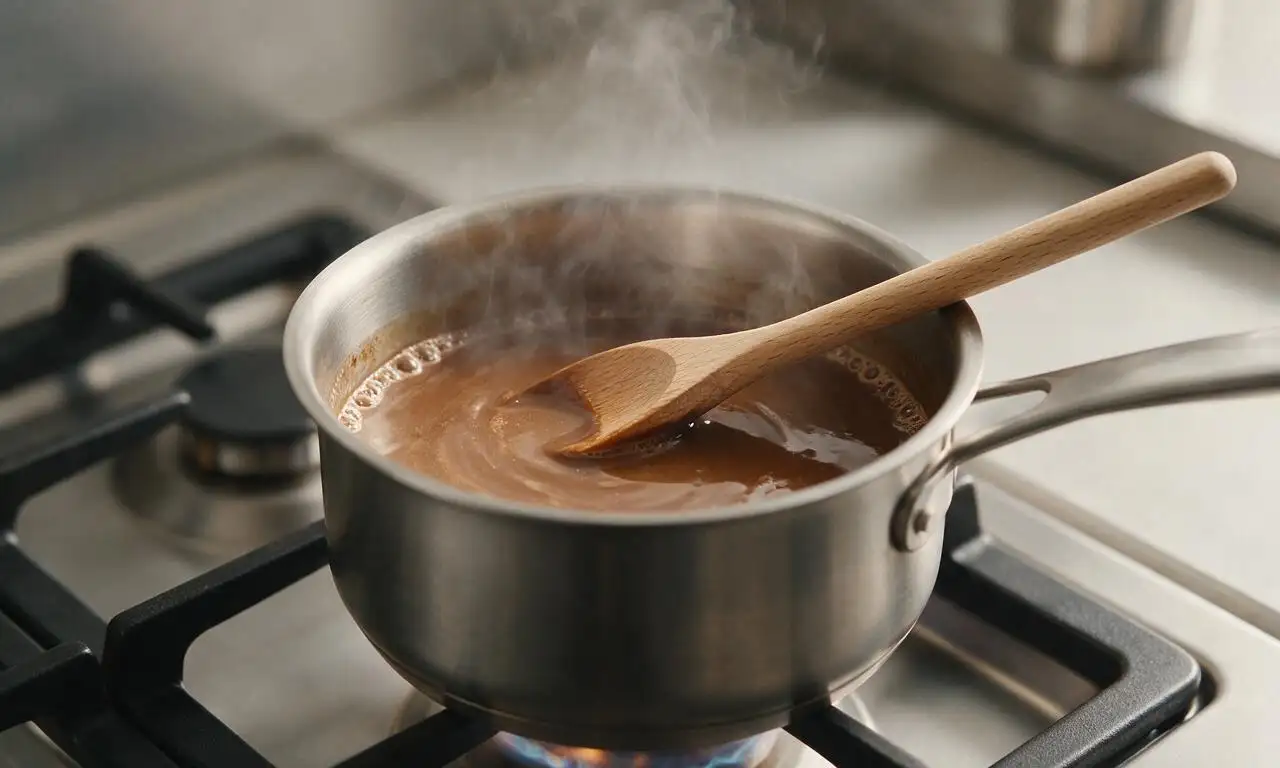
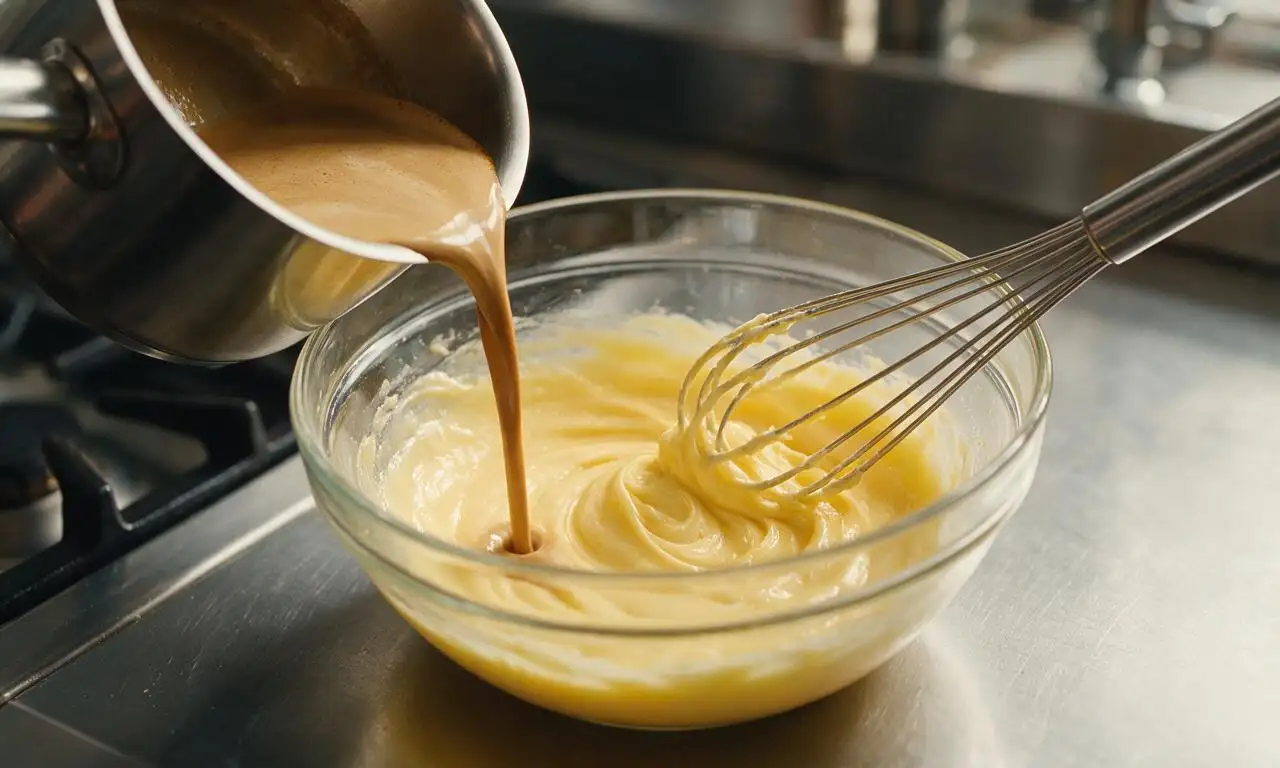

OMG this coffee crème brûlée was a total game changer for my dinner party last weekend! I used cold brew instead of regular brewed coffee for extra depth and everyone was begging for the recipe. The crack of that caramel top? *Chef's kiss* Only thing I messed up was my water bath leaking a tiny bit, but it still turned out SO good. My husband even asked if we can make this for our anniversary next month!
Tried this for my first ever crème brûlée attempt and it was way easier than I thought it would be for a medium difficulty recipe! I don't have a kitchen torch so I used the broiler to caramelize the sugar, just kept a super close eye on it so it didn't burn. Took it to my friend's game night and everyone thought I bought it from a fancy bakery. 10/10 will make again.
This is so good but I will say the chill time is NO joke! I only chilled mine for 3 hours because I was crunched for time before my family dinner and the custard was a little softer than I wanted. The flavor was still chef's kiss though, that rich coffee flavor is not too overpowering at all. My kids even loved it, and they usually turn up their noses at fancy desserts!
Added this to my weekly meal prep rotation for at-home date nights! I make a batch on Sunday, let them chill for the full 4 hours plus a little extra, and then just brûlée the top right before we eat after putting the kids to bed. The coffee flavor is the perfect pick-me-up after a long work day, not too sweet, just perfectly balanced. Skip the overpriced restaurant date, make this instead — trust me.