cow tongue

title 1
cow tongue
⏱️ cook time 3 hours
🍽️ servings 4
⚡ Difficulty medium

intro

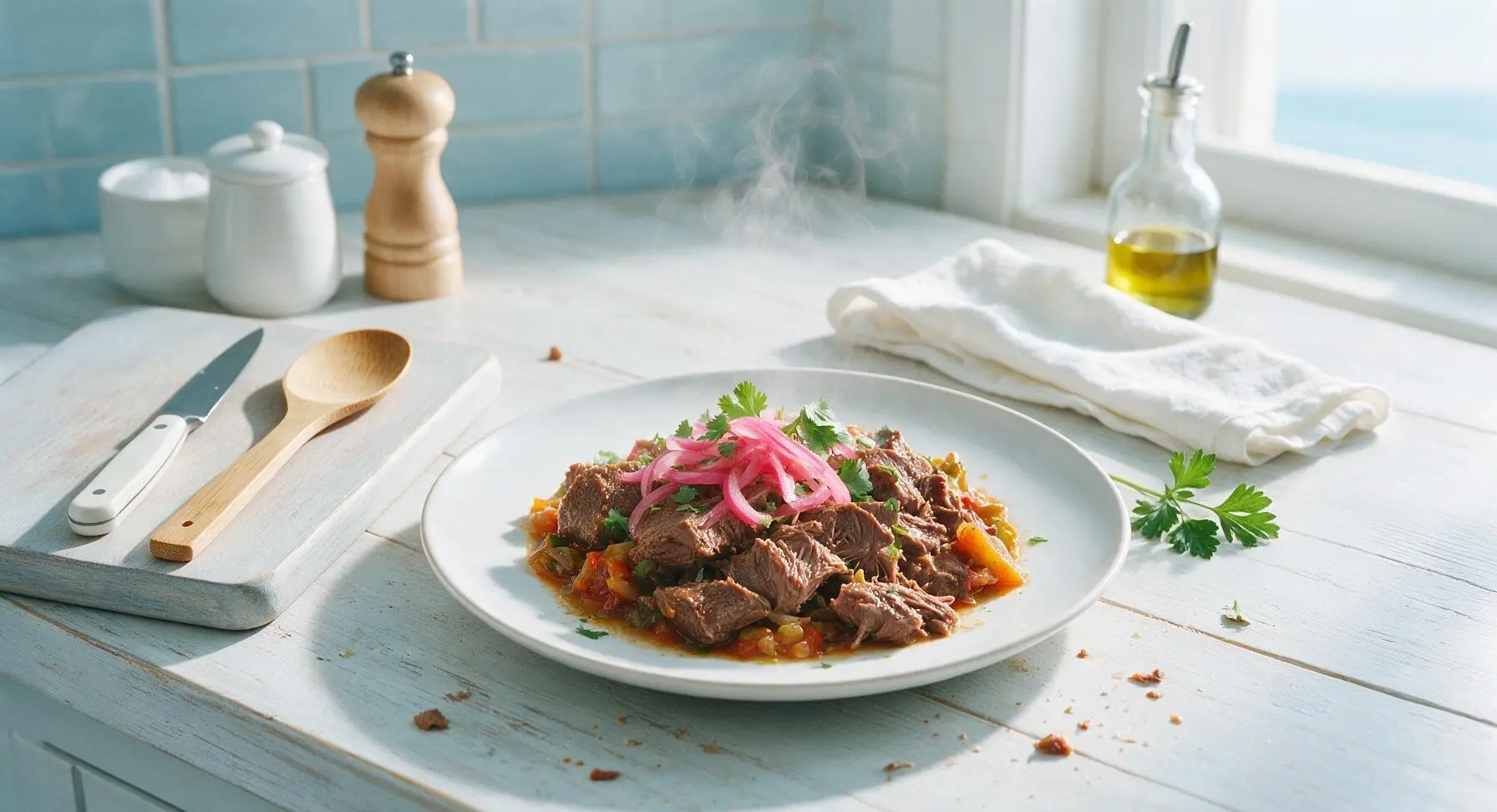
Melt-in-your-mouth slow-braised cow tongue, cooked with aromatic vegetables until fall-apart tender, served with bright pickled red onion and cilantro for a rich, comforting family meal.

Ingredients
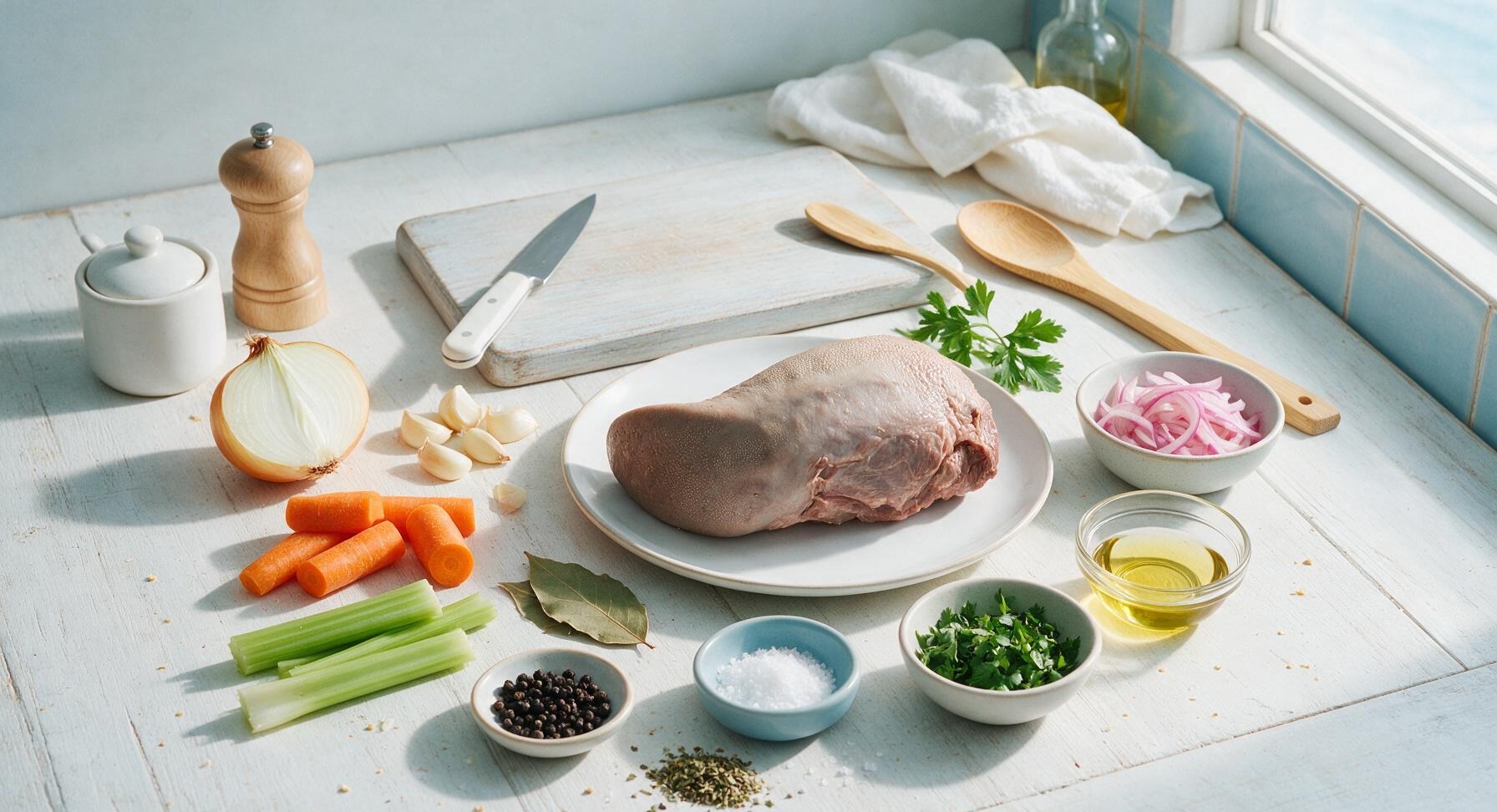
Whole cow tongue 1.2kg (approx 2.6lb)
Yellow onion 1 large, quartered
Garlic cloves 6, crushed
Carrots 2 medium, cut into 5cm chunks
Celery stalks 2, cut into 5cm chunks
Dried bay leaves 2
Whole black peppercorns 1 tbsp
Dried Mexican oregano 1 tsp
Coarse kosher salt 2 tsp
Neutral canola oil 1 tbsp
Pickled red onion 1 cup, for serving
Fresh cilantro 1/4 cup, chopped, for serving

Steps

1

Rinse and Prep Tongue

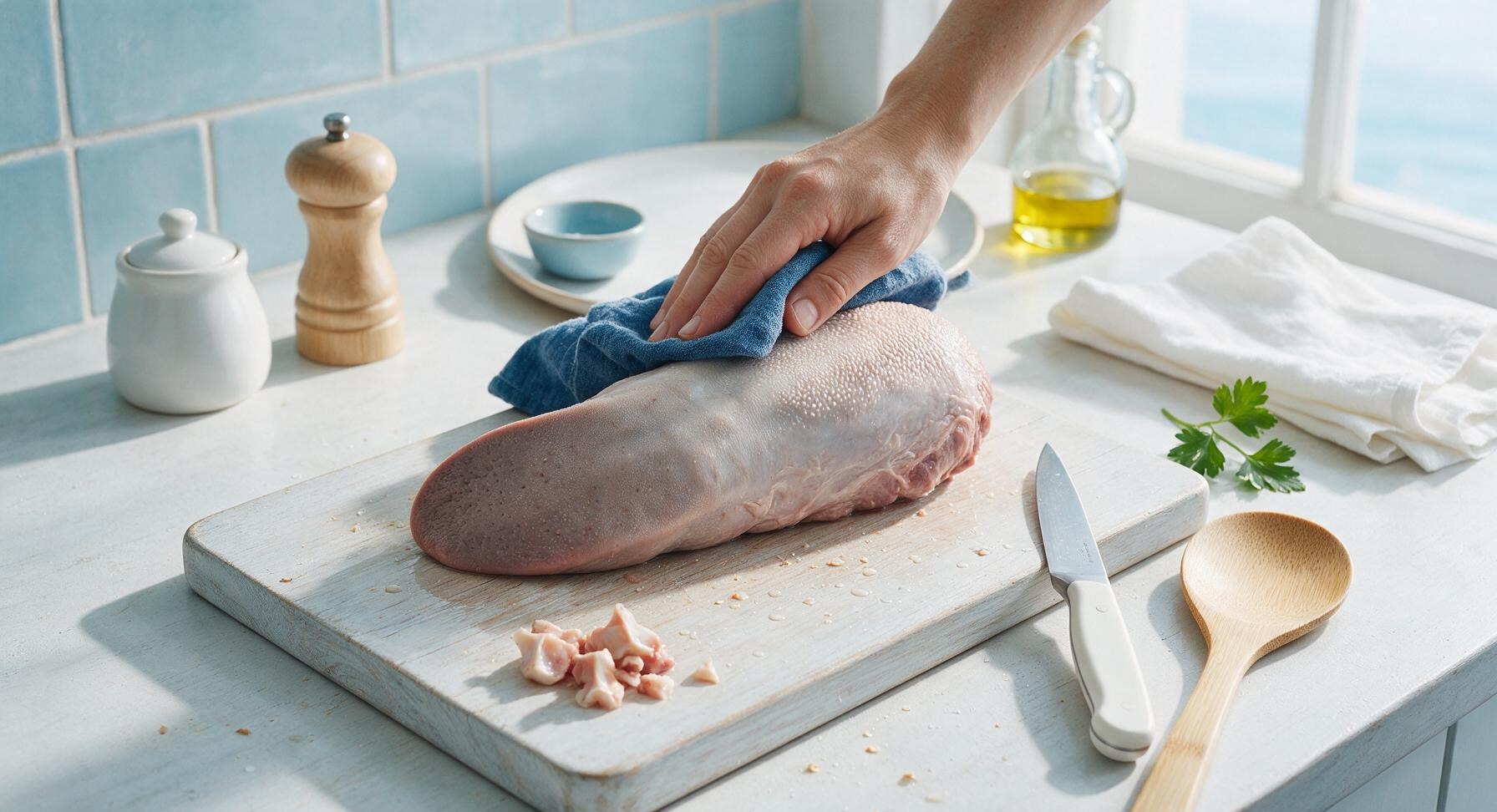
Place the whole raw cow tongue on the acacia wood cutting board. Rinse it thoroughly under cold running water, pat dry with a corner of the indigo kitchen towel, and inspect for any residual hard cartilage or bone fragments at the thick base, trimming away any rough bits with the boning knife. The surface should feel smooth and free of debris after trimming.
Step 1
step1:Rinse and Prep Tongue
2

Sauté Aromatic Base

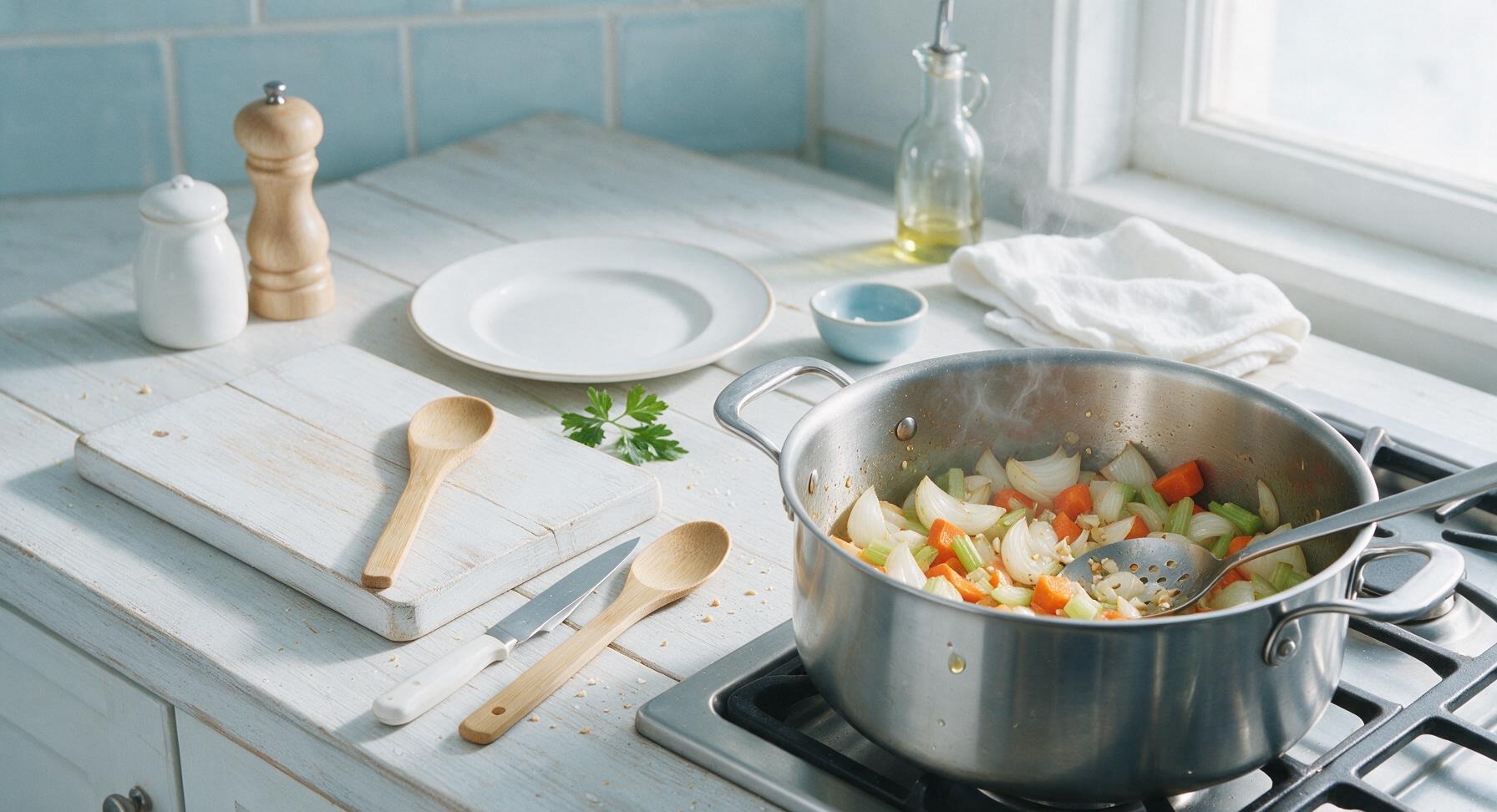
Place the 8-quart stainless steel stock pot on the back right stovetop burner, heat 1 tablespoon canola oil over medium heat. Add the quartered onion, carrot chunks, celery chunks, and crushed garlic, sautéing for 5 minutes until the edges of the vegetables turn light golden and release a sweet, savory aroma. Stir occasionally with the slotted stainless steel spoon.
Step 2
step2:Sauté Aromatic Base
3

Add Tongue and Seasonings

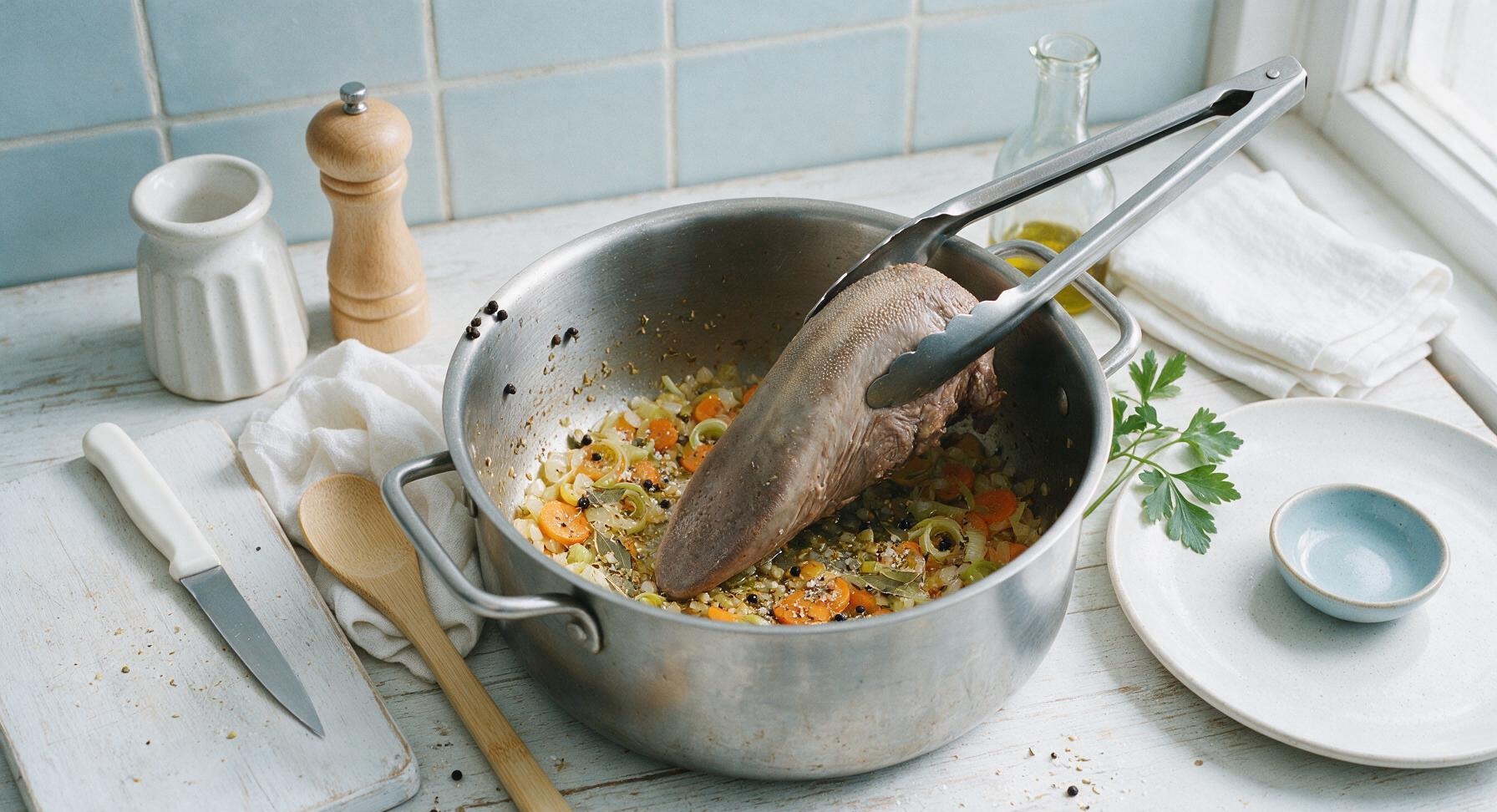
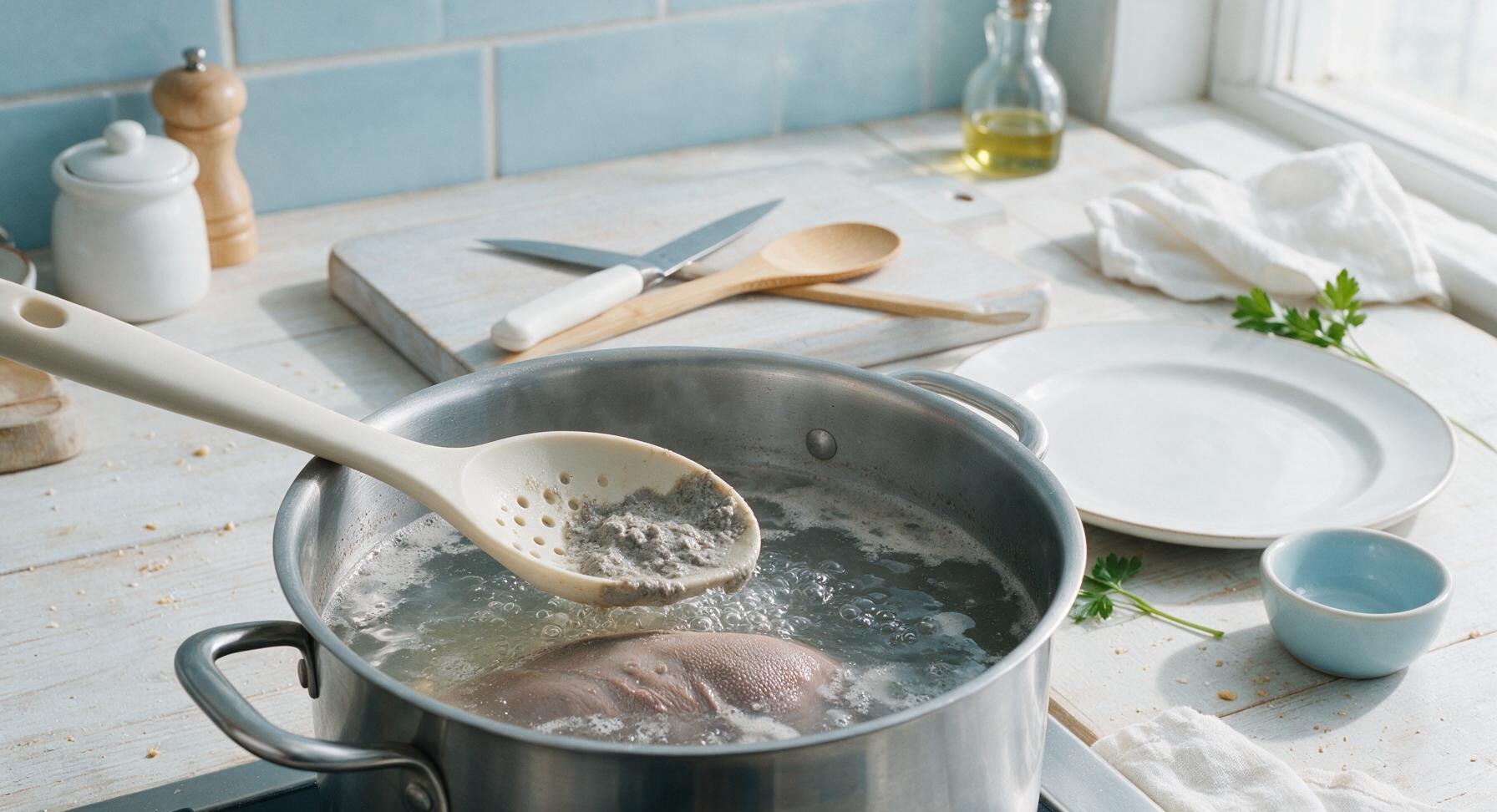
Nestle the rinsed, trimmed cow tongue on top of the sautéed aromatic vegetables in the stock pot. Add bay leaves, whole black peppercorns, dried oregano, and kosher salt, then pour cold filtered water over top until the tongue is submerged by 2cm. Bring the liquid to a gentle rolling boil over medium-high heat, skimming any grey foam that rises to the surface with the silicone skimmer spoon.
Step 3
step3:Add Tongue and Seasonings
Step 3
step3:Add Tongue and Seasonings
4

Simmer Until Tender

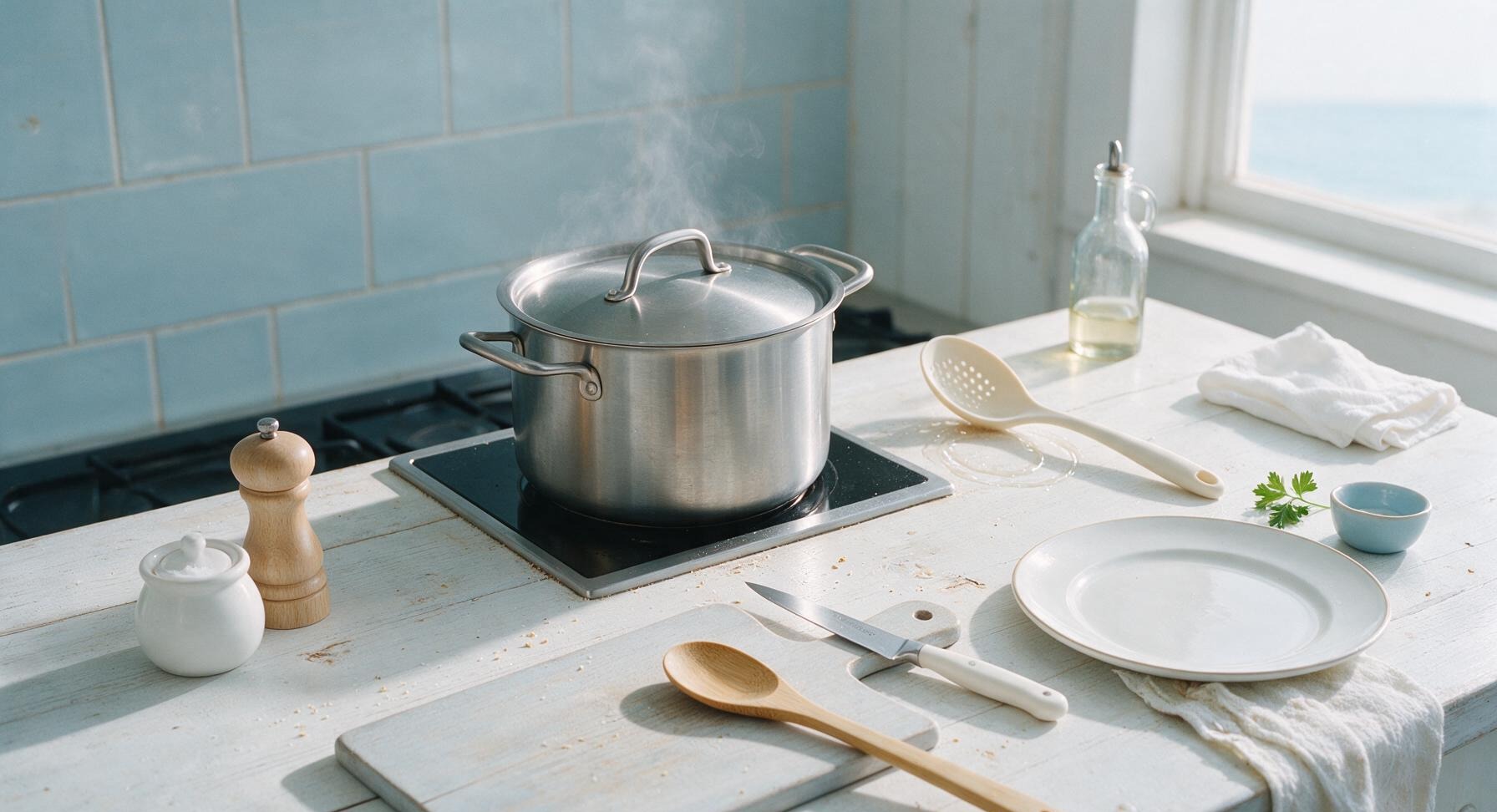
Once the liquid comes to a boil, reduce heat to the lowest setting, cover the pot with the fitted stainless steel lid, and let the tongue simmer at a gentle bubble for 2 hours and 30 minutes. Avoid lifting the lid unnecessarily to keep heat consistent. Test for doneness by inserting a fork into the thickest part of the tongue; it should slide in with no resistance, and the outer skin will look slightly loose.
Step 4
step4:Simmer Until Tender
5

Peel Outer Skin Layer

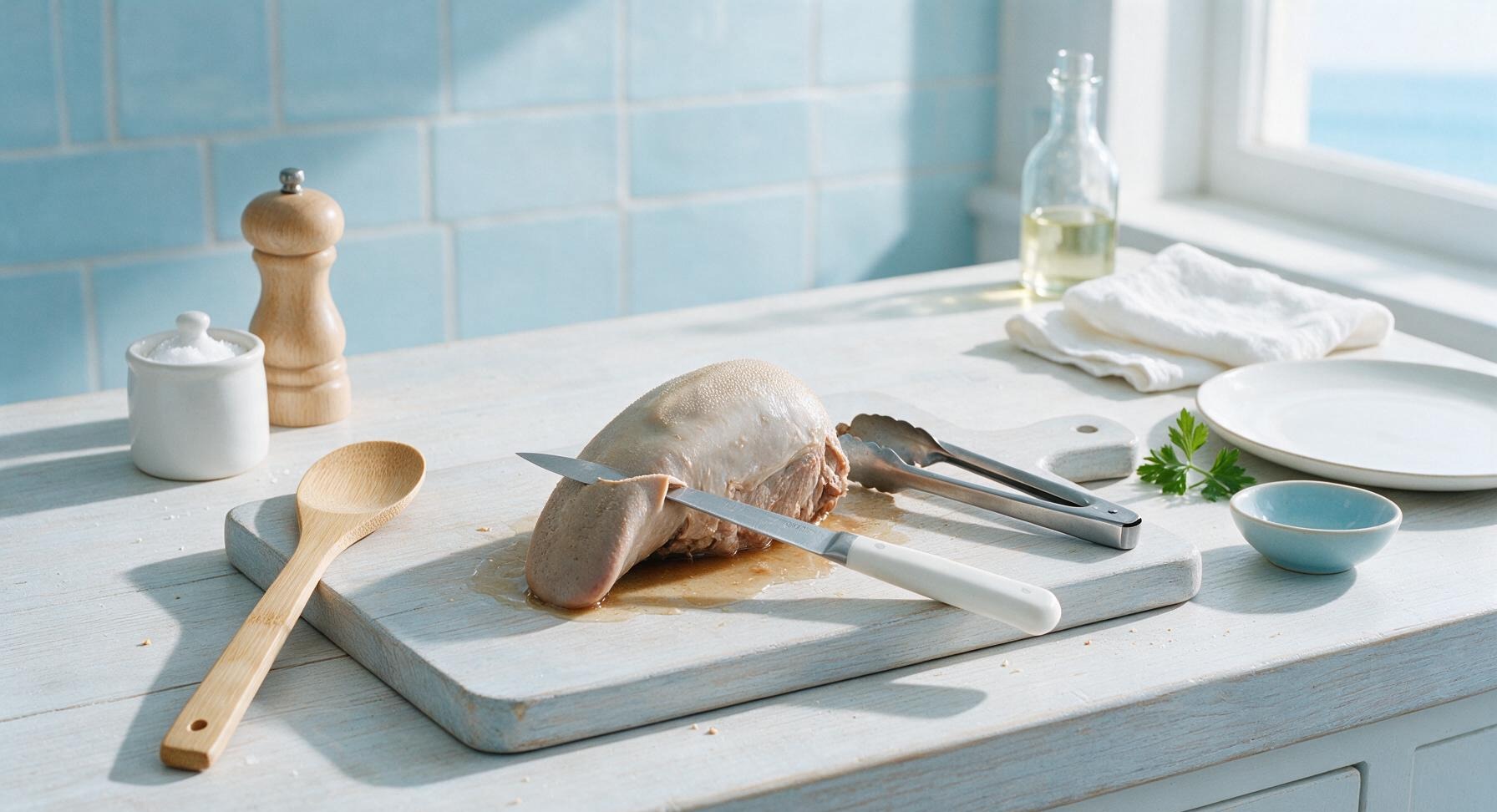
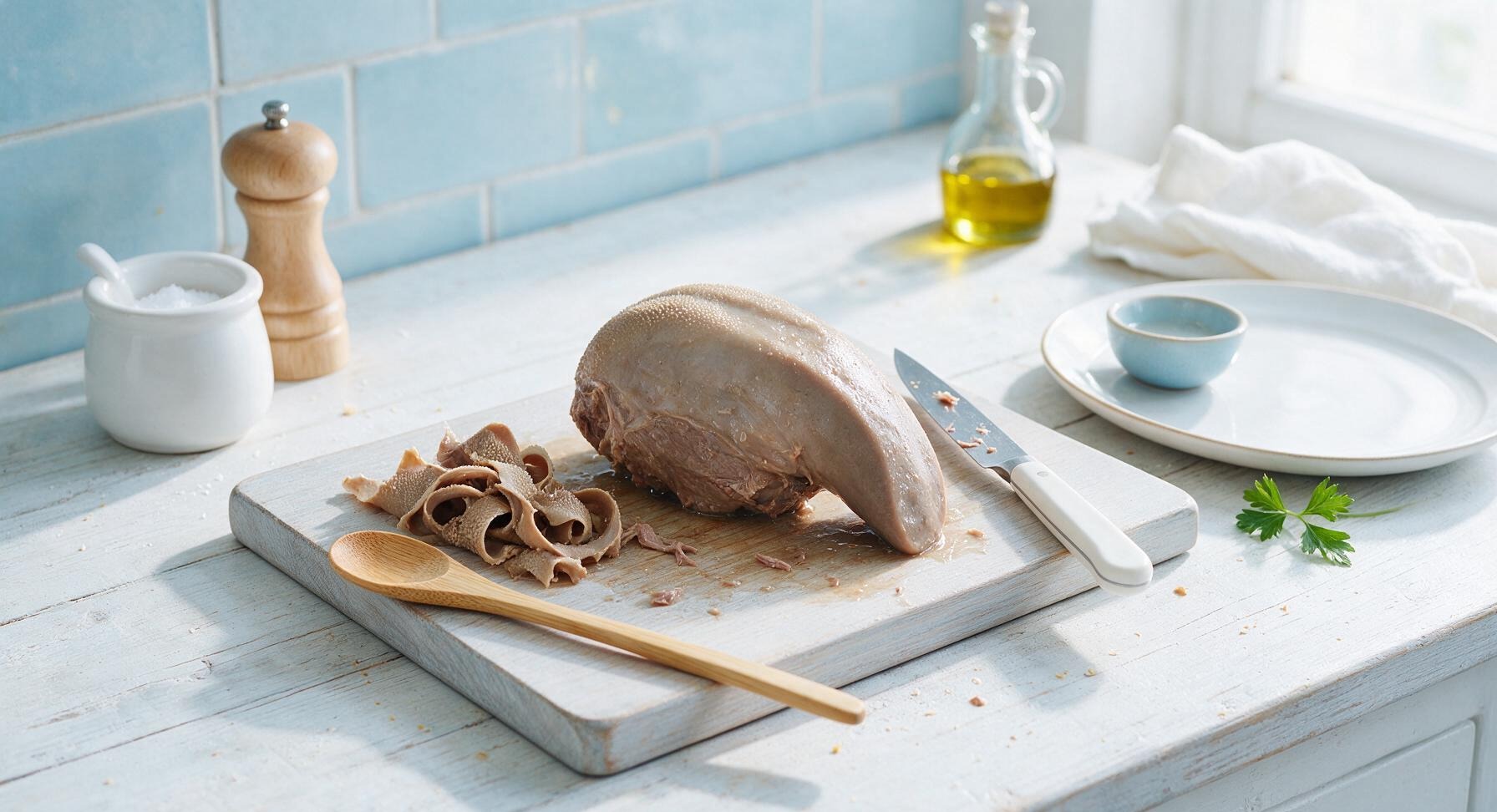
Once tender, use the stainless steel tongs to lift the tongue from the braising liquid and transfer it back to the acacia wood cutting board. Let it cool for 10 minutes until it is comfortable to handle, then use the tip of the boning knife to lift the thick, rough pale outer skin from the surface, peeling it away in large strips to reveal the smooth, tender pale taupe meat underneath. Discard the peeled skin.
Step 5
step5:Peel Outer Skin Layer
Step 5
step5:Peel Outer Skin Layer
6

Strain and Reduce Broth

Set the fine mesh stainless steel sieve over the small stainless steel saucepan, pour 1 cup of the braising liquid from the stock pot through the sieve to remove vegetables and spices, then simmer over medium heat for 5 minutes until the liquid is reduced by half to a light, glossy sauce. Discard the used cooked vegetables and remaining broth, or save for other soup uses.
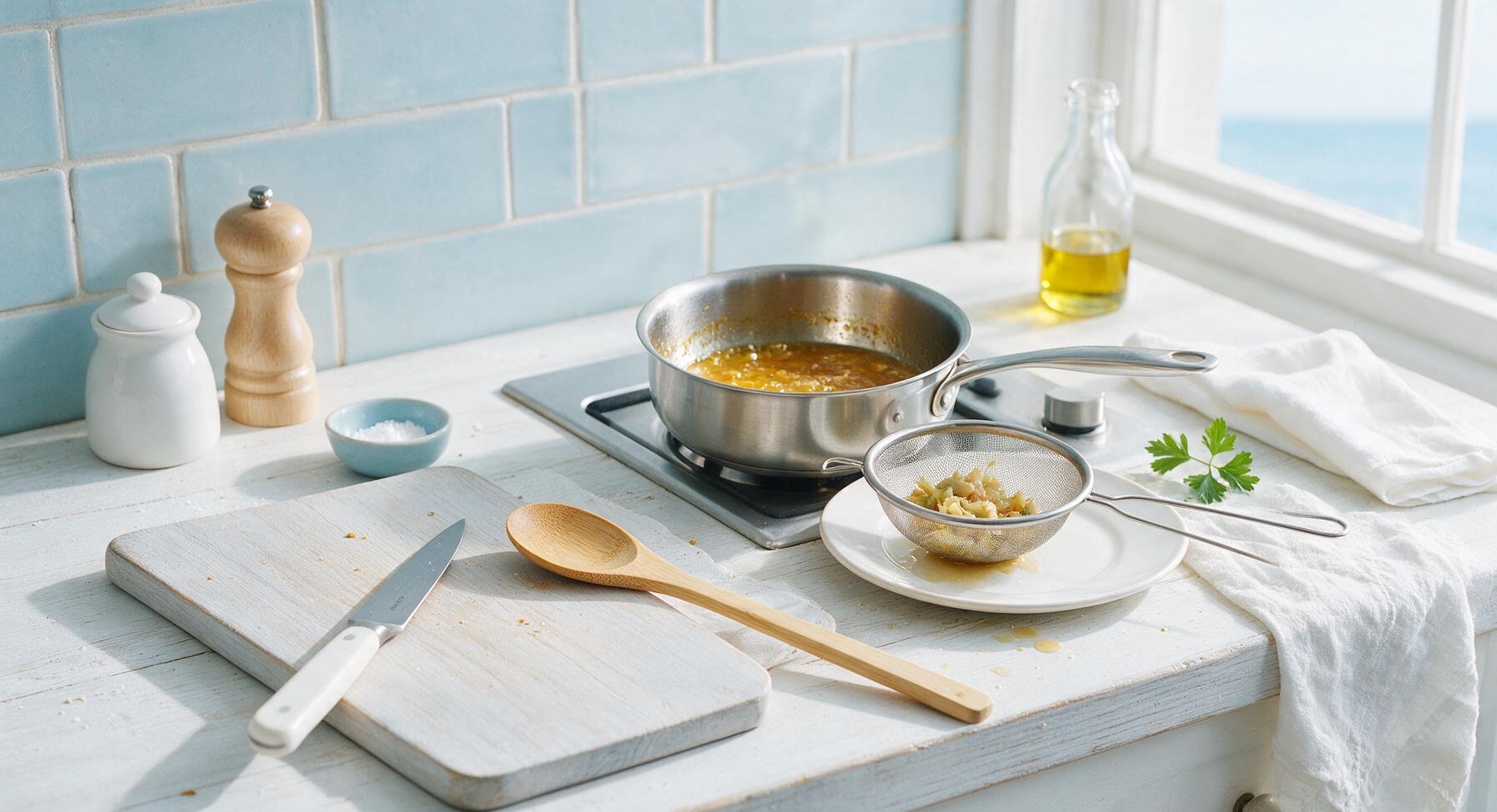
Step 6
step6:Strain and Reduce Broth
7

Slice Tongue Thinly

Place the fully peeled, cooled cow tongue back on the acacia wood cutting board. Using the boning knife, slice the tongue against the grain into 5mm thick even slices, applying gentle pressure to avoid tearing the tender meat. The slices should hold their shape but give easily when pressed with a finger.
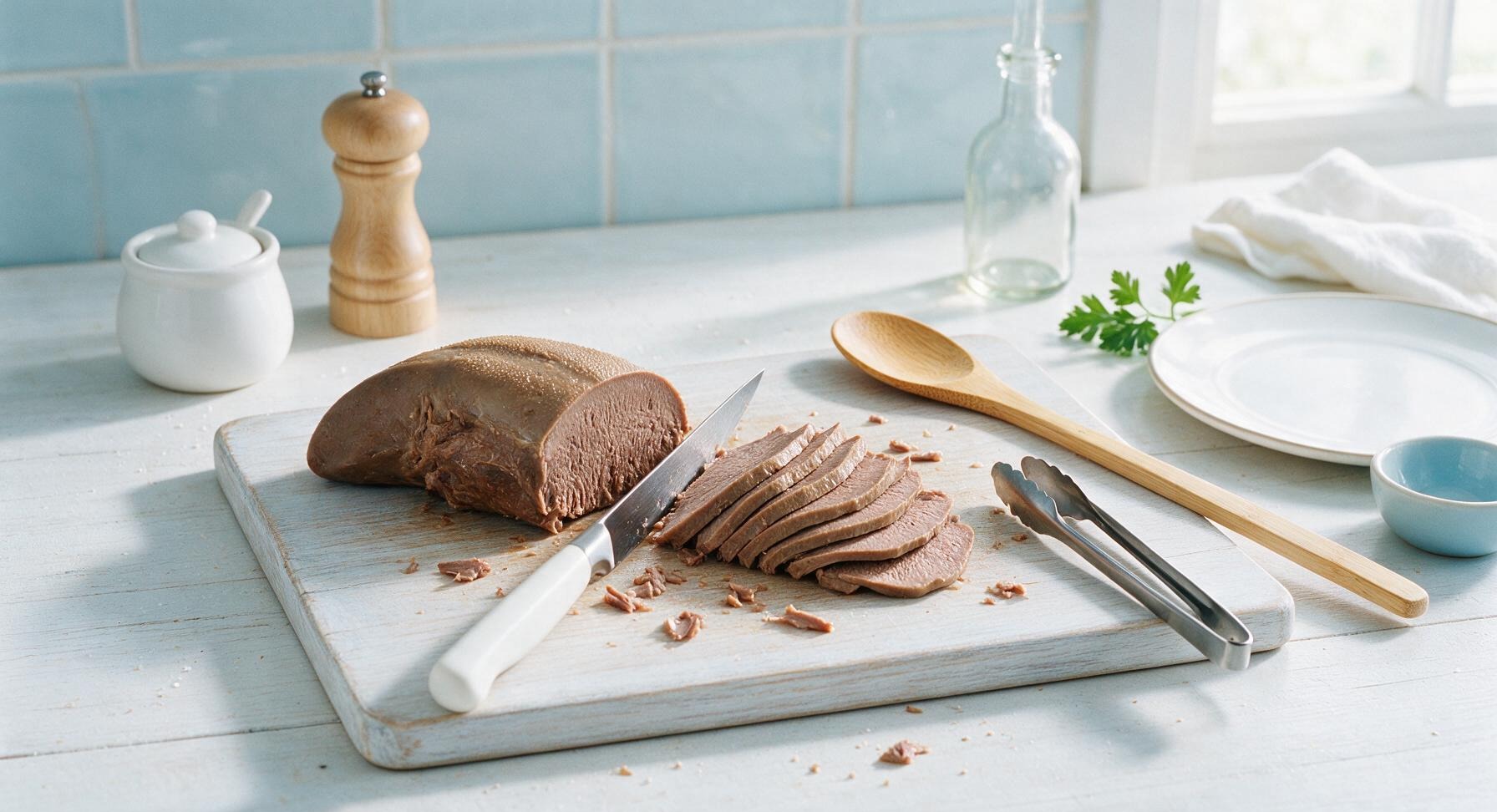
Step 7
step7:Slice Tongue Thinly
8

Plate and Serve Warm

Arrange the sliced tongue in an overlapping fan across the matte terracotta dinner plate. Drizzle 2 tablespoons of the reduced braising sauce over the slices, top with a small mound of pickled red onion and a sprinkle of chopped fresh cilantro. Serve warm, with extra pickled onion in the small terracotta ramekin on the side.
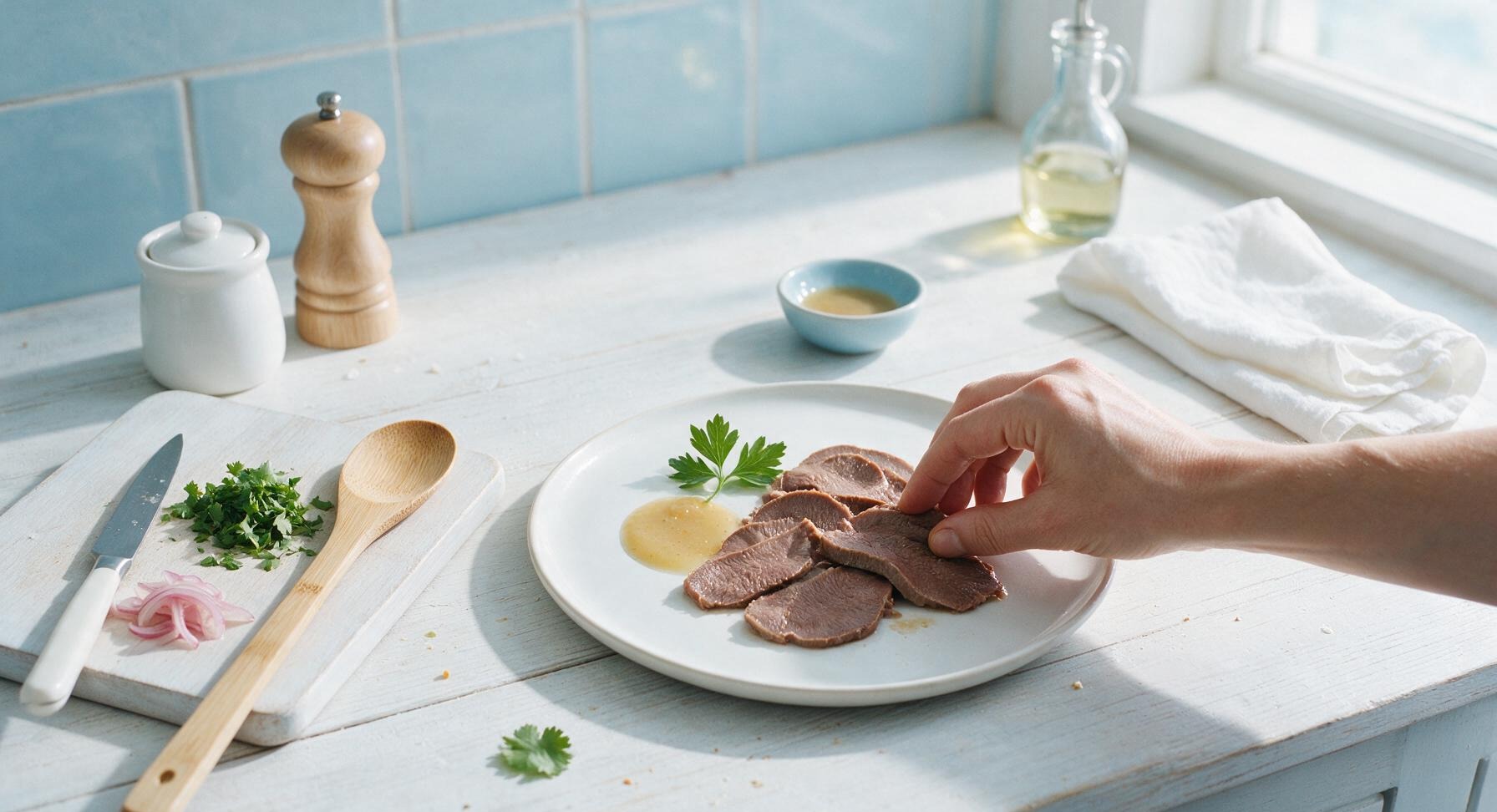
Step 8
step8:Plate and Serve Warm

Tips

1.Do not attempt to peel the tongue while it is boiling hot—letting it rest for 10 minutes after removing from the broth allows the outer skin to separate cleanly from the meat, so it slips off in large strips without burning your fingers or tearing the tender flesh.
2.Maintain a gentle, low simmer rather than a rolling boil for the full cooking time—rapid boiling will cause the outer layer of meat to become tough and stringy before the thick center of the tongue reaches the perfect melt-in-your-mouth tenderness.
3.Reserve any leftover strained braising broth to use as a base for soups, bean dishes, or rice cooking liquid—it is deeply savory and packed with beef and vegetable flavor, making it far too valuable to pour down the drain.

✨ You May Also Like

Main Course
🍜 United Kingdom

A showstopping classic of tender seared beef, savory mushroom duxelles, and crisp prosciutto wrapped in flaky golden puff pastry, baked to juicy perfection.

⏱️ 2 hours 1Main Course ★ 4.7
Main Course
🍜 India

Tender charred marinated chicken simmered in a rich, spiced creamy tomato sauce, this iconic Anglo-Indian curry pairs perfectly with basmati rice or warm naan.

⏱️ 50 minuteMain Course ★ 4.6
Main Course
🍜 Thailand

Classic tangy, sweet, and savory Thai stir-fried rice noodles with shrimp, tofu, and crunchy garnishes, balancing all five core Thai flavor profiles.

⏱️ 30 minuteMain Course ★ 4.5
Main Course
🍜 United Kingdom

Crispy golden beer-battered cod and fluffy double-fried chips, served with tangy tartar sauce and malt vinegar: the timeless, beloved British pub comfort classic.

⏱️ 45 minuteMain Course ★ 4.7
Main Course
🍜 Mexico

Smoky, chile-marinated pork tacos with caramelized pineapple, fresh cilantro, and lime: a beloved classic Mexican street food perfect for casual summer gatherings.

⏱️ 1 hour 45Main Course ★ 4.8
Main Course
🍜 United States

Crunchy Fritos corn chips layered with savory beef chili and melted cheddar, topped with cool, zesty fixings for a beloved, cozy Tex-Mex comfort food.

⏱️ 35 minuteMain Course ★ 4.8

cow tongue:Frequently Asked Questions

1.Do I need to peel the cow tongue before I start braising it? ▾
No, never waste time peeling raw cow tongue! The thick, tough outer skin slips off easily in large strips once the tongue is fully cooked and cool enough to handle, usually after 3 to 4 hours of slow simmering. Peeling it raw is messy, tears away tender edible meat, and takes far more effort than waiting until it’s done cooking.
2.How do I tell when the braised tongue is perfectly tender and ready? ▾
You’ll know it’s done when a sharp paring knife or meat fork slides into the thickest part of the tongue with zero resistance, like sticking a knife into soft room-temperature butter. This takes 3.5 to 4 hours on a low stovetop simmer, or 6 to 7 hours on low in a slow cooker. If you hit tough resistance, give it another 30 minutes of cook time.
3.Can I make this lengua in a slow cooker instead of braising on the stovetop? ▾
Absolutely! For extra depth, you can sear the tongue first in a hot pan, then add it to the slow cooker with your quartered yellow onion, smashed garlic, chopped carrots, celery, and enough water or broth to cover it ¾ of the way. Cook on low for 6 to 7 hours until fall-apart tender, then peel, slice, and serve for a totally hands-off meal.
4.What’s the easiest way to remove the tough outer skin after cooking? ▾
Let the cooked tongue rest for 10 to 15 minutes until it’s cool enough to handle, then grip the edge of the thick, pale outer skin at the thicker base of the tongue and pull upward in steady strips. It will peel away cleanly in large pieces; use a small paring knife to trim any stubborn leftover spots, then discard the skin.
5.Do I need to brine the cow tongue before braising it? ▾
You don’t have to, but a quick 4 to 6 hour brine in salted water with a splash of white vinegar and a bay leaf will cut through subtle gamey or metallic notes and season the meat all the way through. If you’re short on time, just season the braising liquid generously with kosher salt instead for great, well-seasoned results.
6.How long will leftover braised lengua stay fresh in the fridge? ▾
Stored in an airtight container with a splash of strained braising liquid to keep it moist, leftover lengua will stay fresh for 3 to 4 days in the refrigerator. You can also freeze it tightly wrapped for up to 3 months for quick weeknight tacos, burritos, or breakfast hash down the line.
7.Can I use beef broth instead of water for the braising liquid? ▾
Definitely! Low-sodium beef broth adds an extra layer of rich, savory depth to the meat and resulting braising liquid, which you can strain and reduce to make a simple, flavorful sauce to drizzle over sliced tongue. If you use regular salted broth, hold off on extra salt until you taste the liquid to avoid over-seasoning.
8.Why did my cooked tongue come out tough and chewy instead of tender? ▾
Tough, chewy lengua almost always means it didn’t cook long enough at a low enough temperature. Tongue is a hard-working, heavily used muscle, so it needs long, slow, gentle heat to break down all its tough connective tissue. Boiling it on high heat will make the meat seize up and stay chewy, no matter how long you cook it.
9.What sides pair best with this slow-braised Mexican lengua? ▾
The rich, mild, melt-in-your-mouth meat pairs perfectly with bright, zingy sides to cut through richness: quick pickled red onions, chopped fresh cilantro, lime wedges, warm corn tortillas for tacos, creamy refried beans, cilantro-lime rice, or a crisp green salad with lime vinaigrette. A bottle of your favorite hot sauce on the side never hurts, either.
10.Do I need to trim excess fat off the tongue before cooking? ▾
You don’t need to trim much before cooking, since most excess fat will render out into the braising liquid during the long slow cook. Once you peel the cooked tongue, you can trim any large, rubbery fat chunks from the base of the tongue if you prefer, but a little soft rendered fat adds wonderful richness and flavor to the meat.
11.Can I add extra spices to the braising liquid for more flavor? ▾
Of course! Classic Mexican add-ins include a couple dried bay leaves, a teaspoon of whole black peppercorns, a halved jalapeño for mild heat, a pinch of ground cumin, or a few sprigs of dried Mexican oregano. Just go light on strong spices so they don’t overpower the mild, rich, beefy flavor of the tongue, which is the star.
12.How thick should I slice the tongue once it’s cooked and peeled? ▾
For serving as a plated main dish, slice the peeled tongue against the grain into ½-inch thick slices, so every bite is extra tender. If you’re using it for tacos or burritos, you can shred it or chop it into smaller bite-sized pieces, and toss it with a little reduced braising liquid to keep it from drying out.
13.Is it normal for the tongue to release foamy scum while it simmers? ▾
That’s totally normal! As with any slow-simmered cut of beef, the tongue will release grayish foamy scum to the surface of the braising liquid in the first 30 minutes of cooking. Just skim that off with a slotted spoon as it rises to keep the braising liquid clean and prevent it from giving the meat a bitter, off flavor.
14.Can I make this recipe in an Instant Pot or pressure cooker to save time? ▾
Yes, pressure cooking cuts cook time down dramatically! Cook the whole tongue with your quartered yellow onion, smashed garlic, chopped carrots, celery, and a pinch of salt on high pressure for 45 minutes, then do a 15-minute natural pressure release before checking for tenderness. If it’s not soft enough, cook for another 5 to 10 minutes before peeling.
15.Where can I buy good quality cow tongue for this recipe? ▾
You can find whole cow tongue at most well-stocked Latin American grocery stores, local independent butcher shops, and many large mainstream grocery stores in the beef section, often sold frozen if it’s not available fresh. Look for a tongue that’s pale pink, firm, and has no sour, off odors when unwrapped for the best results.
16.Do I have to sear the tongue before braising it? ▾
Searing isn’t strictly required, but taking 5 to 7 minutes to brown the whole tongue on all sides in a hot pan with a little oil before adding your onion, garlic, carrots, celery, and braising liquid adds deep, caramelized, beefy depth. If you’re short on time, you can skip it and still get tender, tasty lengua.
17.Why do you recommend serving this with pickled red onion? ▾
The bright, tangy, sharp flavor of quick pickled red onion cuts perfectly through the rich, fatty, mild beefy flavor of slow-braised tongue, balancing every bite so it doesn’t feel heavy. A squeeze of fresh lime and sprinkle of cilantro adds that same bright, fresh contrast that makes this classic Mexican preparation feel vibrant, not overly rich.
18.Can I repurpose the leftover braising liquid, or should I throw it out? ▾
Absolutely save it! Strain out the spent onion, carrot, celery, and garlic, skim excess fat off the top, and you’ve got a rich, deeply flavorful beef stock you can use to make soup, cook rice, simmer beans, or reduce down to a glossy savory gravy for your sliced tongue. It freezes well for up to 6 months, so never pour it down the drain.
19.My finished tongue had a subtle metallic taste—what went wrong? ▾
That faint metallic note usually happens if you skipped skimming the foamy scum from the braising liquid early on, or if you used an older tongue that wasn’t perfectly fresh. Next time, add a tablespoon of white vinegar or a halved lemon to the braising liquid, skim all foam as it rises, and use fresh, high-quality tongue for the mildest, cleanest flavor.

Comments (8)

2 days ago

OMG y’all, I was so nervous to make lengua for the first time for our Sunday family dinner but this recipe was a GAME CHANGER. The 3 hour braise made it so tender it literally fell apart, no chewy bits at all! My 10 and 12 year old gobbled up two tacos each before I even finished setting out the cilantro and lime. 10/10 will be making this for our next taco night potluck too!

yesterday

Wait did you trim the outer skin off before or after braising? I messed that up the last time I tried making lengua and it was such a pain 😅

yesterday

Great question! We recommend trimming the tough outer skin after braising — it slides right off super easily when the meat is fully tender, no frustration required!

3 days ago

Perfect meal prep recipe! I made a big batch on Sunday, shredded it up, and portioned it out for tacos, burrito bowls, and even breakfast hash all week. It holds up so well in the fridge and reheats without getting tough at all. Only note is I added a little extra chipotle in adobo to the braising liquid because I love that smoky kick, SO good.

2 days ago

Love that chipotle addition! So glad this worked out for your weekly meal prep — the shredded meat freezes really well too if you ever want to stash extra for busy weeks!

5 days ago

I was really hesitant about trying cow tongue, full transparency, but my partner begged me to make this for their birthday. The braising seasonings are so warm and flavorful, no weird gamey taste at all if you follow the prep steps. I’m a total convert now, who knew offal could taste this good? Only reason I’m not giving 5 stars is I wish the recipe noted how big of a Dutch oven you need, mine was a little too small and I had to swap pots halfway through.

1 week ago

This recipe tastes just like the lengua my mom used to make when I was growing up in East LA! I’ve been trying to nail my braise for years and always ended up with a few tough chewy spots, but the low and slow 3 hour temp here is exactly right. I served it with homemade corn tortillas and pickled red onions, just like she did. Brought tears to my eyes, honestly.

5 days ago

The pickled red onions sound amazing! Did you make those with lime juice or apple cider vinegar? I’ve been trying to find a good quick pickled onion recipe to go with this!

3 days ago

We’re so honored this recipe brought back such special family memories! Quick pickled onions with lime juice and a pinch of Mexican oregano pair perfectly with this rich lengua if you give them a try.

2 weeks ago

Brought this to my neighborhood block party potluck last weekend and people were hovering over the crockpot the whole time! So many people asked for the recipe I lost count. I did end up letting it braise an extra 45 minutes because I got caught up chatting with neighbors and it was even more tender, honestly. Zero leftovers, that’s how you know it’s a hit.

1 week ago

Wait did you make this in a crockpot instead of the Dutch oven? I don’t have a big Dutch oven and was wondering if a slow cooker would work instead!

2 hours ago

First time ever cooking any kind of offal and I was panicking the whole time it would turn out rubbery or gamey, but this recipe was so approachable! The step-by-step instructions for prepping the tongue were super clear, even for a total newbie like me. Mine came out perfectly tender after the full 3 hour braise, I made quesabirria tacos with it and dipped them in consommé and wow. Already texted the recipe link to my whole friend group, will absolutely be making this again.

30 minutes ago

Wait, I thought medium difficulty was overstated at first, but honestly? The only tricky part was remembering to pick up all the braising ingredients from the Mexican grocery store on my way home from work. The actual cook time is mostly hands off, so I was able to help my kid with homework while it simmered. Served it with rice and beans and the whole family was full and happy. Will be going into our regular weeknight rotation!

5 minutes ago

So glad this fit into your busy weeknight routine! We note it as medium difficulty just because of the tongue prep step for folks who’ve never worked with it before, but we agree — most of the cook time is totally hands off while it braises!

yesterday

Made this for Taco Tuesday last night and my roommate said it’s the best thing I’ve ever cooked, hands down. I did make a little salsa verde to drizzle on top and it cut through the richness perfectly. Only heads up for other new cooks: don’t skip the searing step at the start! I almost skipped it to save time and I’m so glad I didn’t, it adds so much deep flavor to the braising liquid.

2 hours ago

How bad would it be if I skipped searing? I’m so lazy after work I usually skip that step for slow braised recipes 😂

30 minutes ago

Searing builds so much of that deep, savory flavor, but if you’re really crunched for time you can skip it — just add a dash of soy sauce or Worcestershire to the braising liquid to amp up that umami kick to make up for it!