
Croissants

intro
Flaky, golden, buttery layered croissants with crisp exteriors and soft, airy interiors, an iconic French bakery treat for special slow mornings.
Ingredients
Steps
Make the base dough
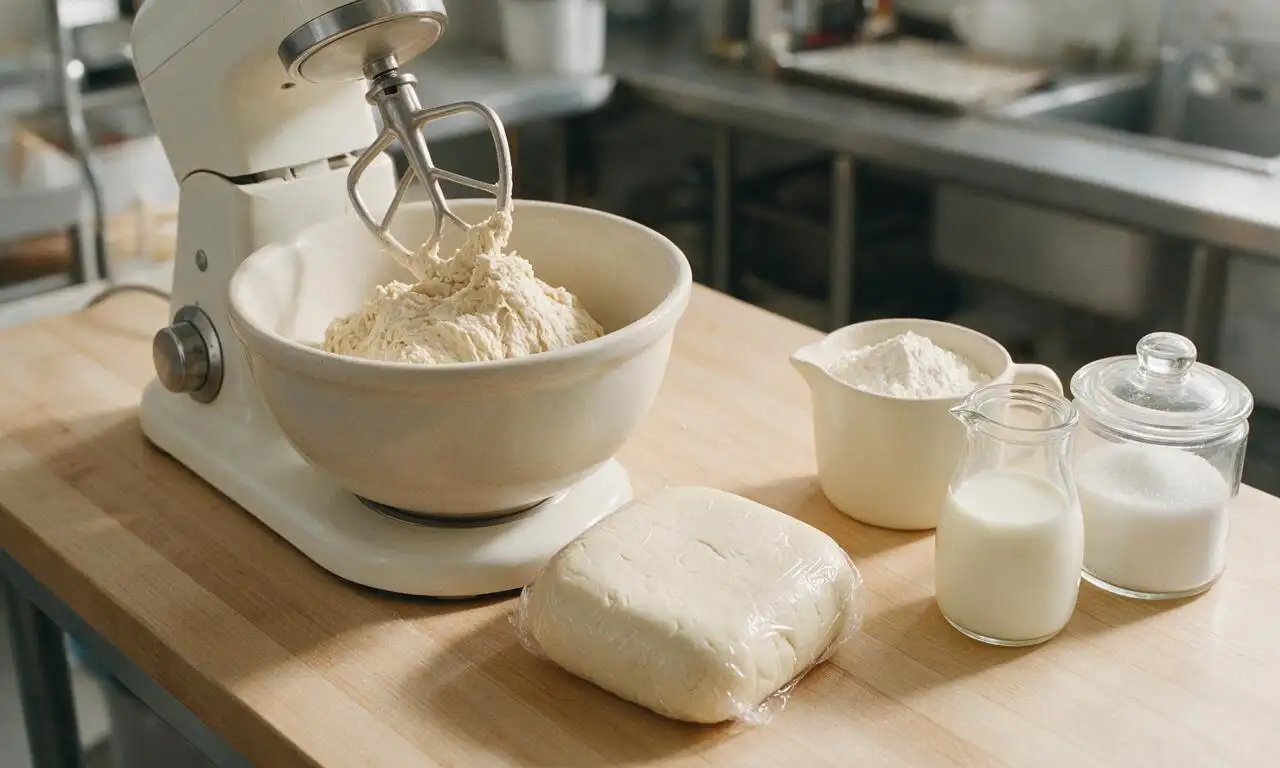
In a stand mixer fitted with a dough hook, combine 500g spooned-and-leveled all-purpose flour, 50g granulated sugar, 10g fine sea salt, and 7g active dry yeast. Add 280ml warm (37°C/98°F) whole milk and 60g softened unsalted butter, mix on low speed for 3 minutes until a shaggy, smooth dough forms. Knead on medium-low speed for 4 additional minutes, then shape the dough into a 20cm square, wrap tightly in plastic wrap, and chill in the refrigerator for 1 hour.
Prepare the butter block
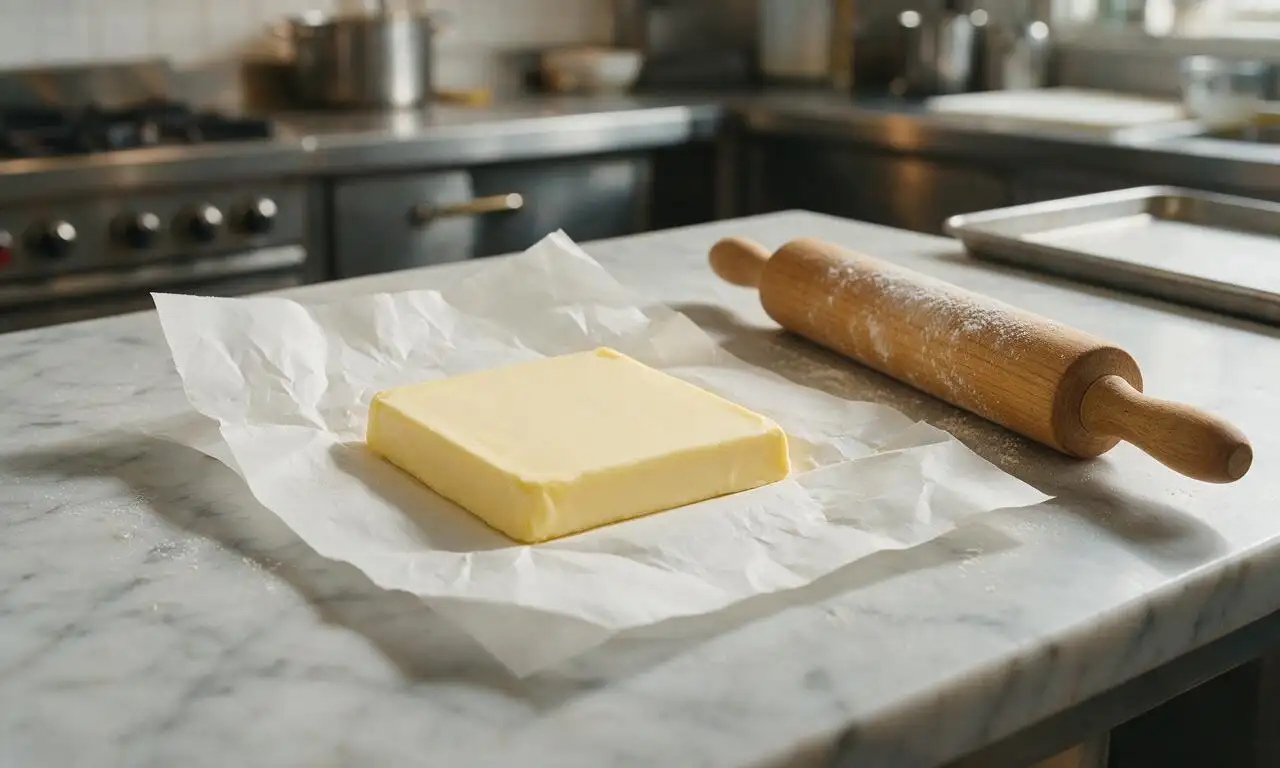
Slice 280g cold unsalted butter into 1cm thick slices, arrange the slices in a tight 19cm square between two sheets of parchment paper. Use a wooden rolling pin to pound and roll the butter into a solid, even 19cm square block with straight edges. Chill the butter block in the refrigerator for 30 minutes, until it is firm but pliable, matching the consistency of the chilled dough.
Laminate the dough
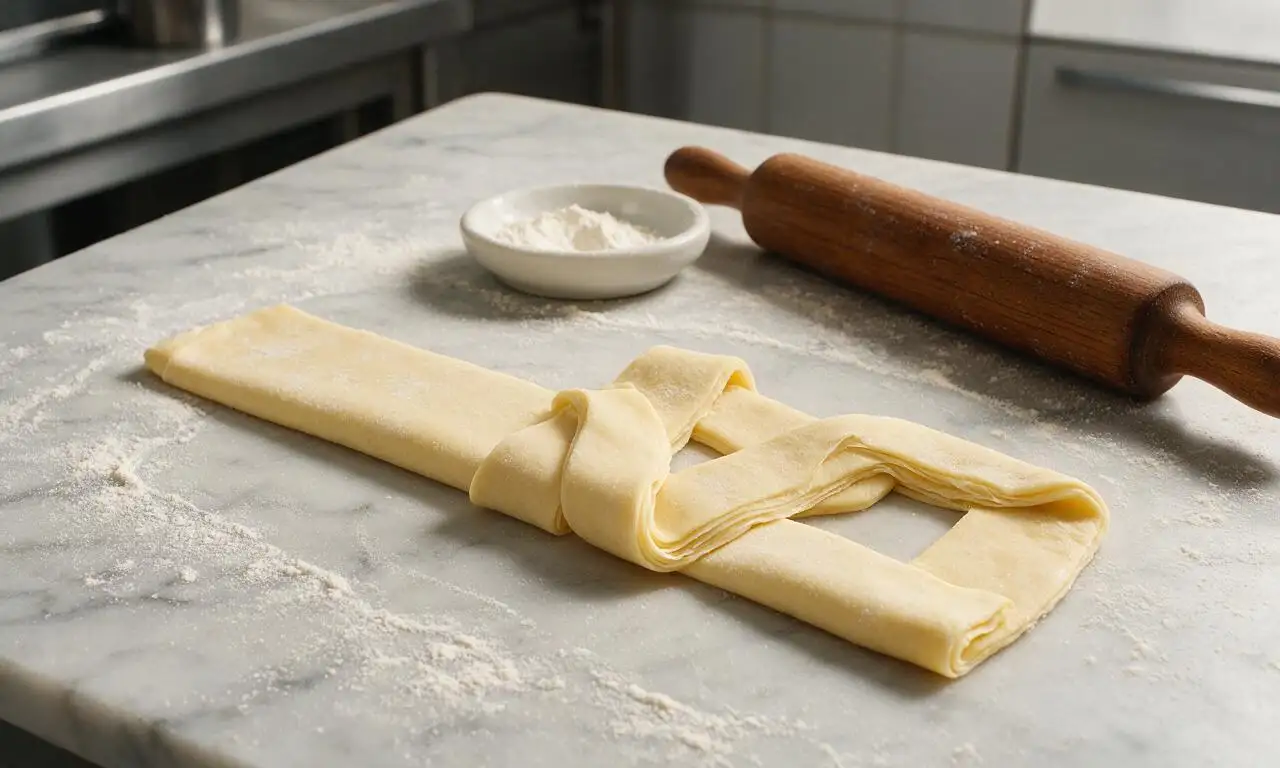
Roll the chilled dough out on a lightly floured surface to a 40cm square. Place the cold butter block diagonally in the center of the dough, then fold the dough corners over the butter to seal completely with no gaps for butter to escape. Roll the sealed dough into a 60cm x 20cm even rectangle, then fold the top third down to the middle, and the bottom third up over it like a business letter to complete the first single fold. Wrap tightly, chill for 30 minutes, then repeat the roll-and-fold process a second time, chill another 30 minutes, then complete the third and final fold. After the last fold, wrap the dough tightly and chill for 8 hours (or overnight) to rest fully.
Shape the croissants
Roll the rested laminated dough out to a 4mm thick, 35cm x 50cm even rectangle. Use a sharp chef’s knife to trim the ragged pressed edges off the dough to expose clean, distinct layers, then cut the dough into 8 equal isosceles triangles with a 10cm wide base and 15cm tall point. Gently stretch each triangle slightly to lengthen, then roll tightly from the wide base up to the pointed tip, tuck the tip under the croissant, and curve the two ends inward to form the classic crescent shape. Arrange shaped croissants 5cm apart on parchment paper-lined baking sheets.

Proof and egg wash
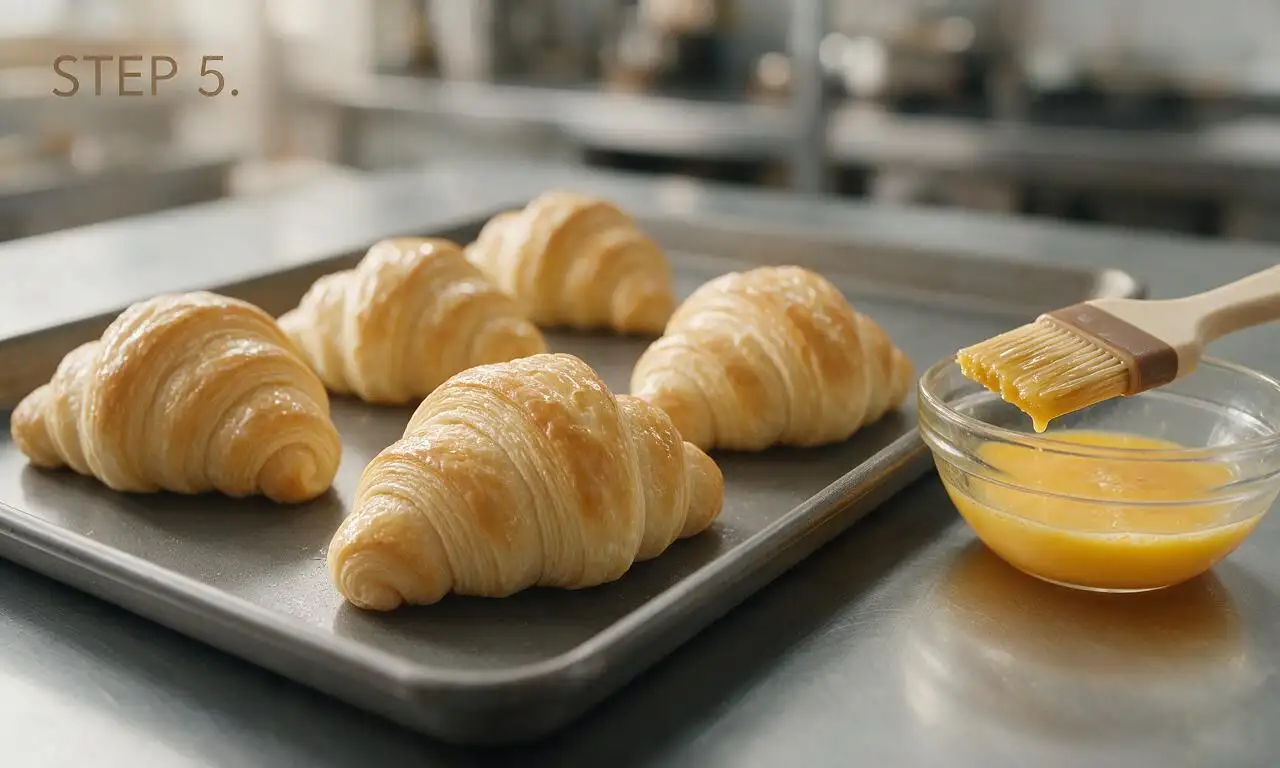
Let the shaped croissants proof in a warm, draft-free spot (24°C/75°F) for 2 to 2.5 hours, until they double in size, jiggle slightly when the baking tray is gently tapped, and distinct layers are visible along the cut sides. Once fully proofed, mix 1 beaten large egg with 15ml (1 tbsp) cold water to make egg wash, then gently brush the entire top surface of each croissant, taking care not to drip egg wash onto the cut layered edges (this will seal layers and prevent rising).
Bake the croissants
Preheat oven to 200°C/400°F (180°C/350°F for convection ovens). Place the baking sheets in the preheated oven and bake for 10 minutes, then reduce the oven temperature to 180°C/350°F (160°C/320°F for convection) and bake for an additional 10 to 12 minutes, until croissants are deep, even golden brown all over with no pale raw dough visible in the layered crevices. Let croissants cool on the baking sheets for 5 minutes, then transfer to a wire rack to cool for 10 more minutes before serving.

Tips
2.Always trim the pressed, ragged edges of the dough before cutting triangles: uncut, sealed edges prevent layers from separating and rising fully in the oven, leading to dense croissants.
3.Avoid opening the oven door for the first 10 minutes of baking: sudden temperature drops can cause the delicate, risen layers to collapse before they set.





OMG I was so intimidated to try croissants from scratch because everyone says they’re such a hard, fussy bake, but this recipe was a total game changer! Blocked off a Saturday to work around the long chill and proof windows and it was SO worth it. The layers were perfectly flaky, that rich buttery smell filled the whole house, my kids devoured 3 each straight out of the oven, and I brought the rest to our block potluck and had 5 neighbors beg for the link. Quick question though—my first batch had a little butter leak out during the final bake, any idea what I might have messed up there?
Let me be real, I saw the 12 hour total time and almost clicked away—who plans that far ahead for breakfast? But my partner has been begging for homemade croissants for our anniversary brunch so I gave it a shot. The active time really was only around 90 minutes like the recipe said, most of it is just waiting around while the dough chills! They came out so buttery and flaky, better than the ones we get at the fancy French bakery downtown. 10/10, worth every minute of waiting.
Made a double batch of these for weekly meal prep last week and they held up way better than I expected! I par-baked half of them, froze them, and pop one in the oven for 10 minutes on busy work mornings for a quick fancy breakfast. The only note I have is make sure you give yourself PLENTY of time for that 10.5 hours of chill and proof time—tried to rush the proof step on my first test batch and they came out dense instead of light and airy. Don’t be like me, follow the rest times!
Full transparency: I burned my first attempt at these because I got distracted watching football while they were in the oven, and STILL my roommate ate half the slightly charred batch because they tasted that good. I was super nervous since croissants are marked as hard difficulty, but the step-by-step lamination instructions are so easy to follow even for a dummy like me who usually only bakes boxed brownies. Nailed the second batch for my office potluck yesterday and people were acting like I was a trained pastry chef. SO good.