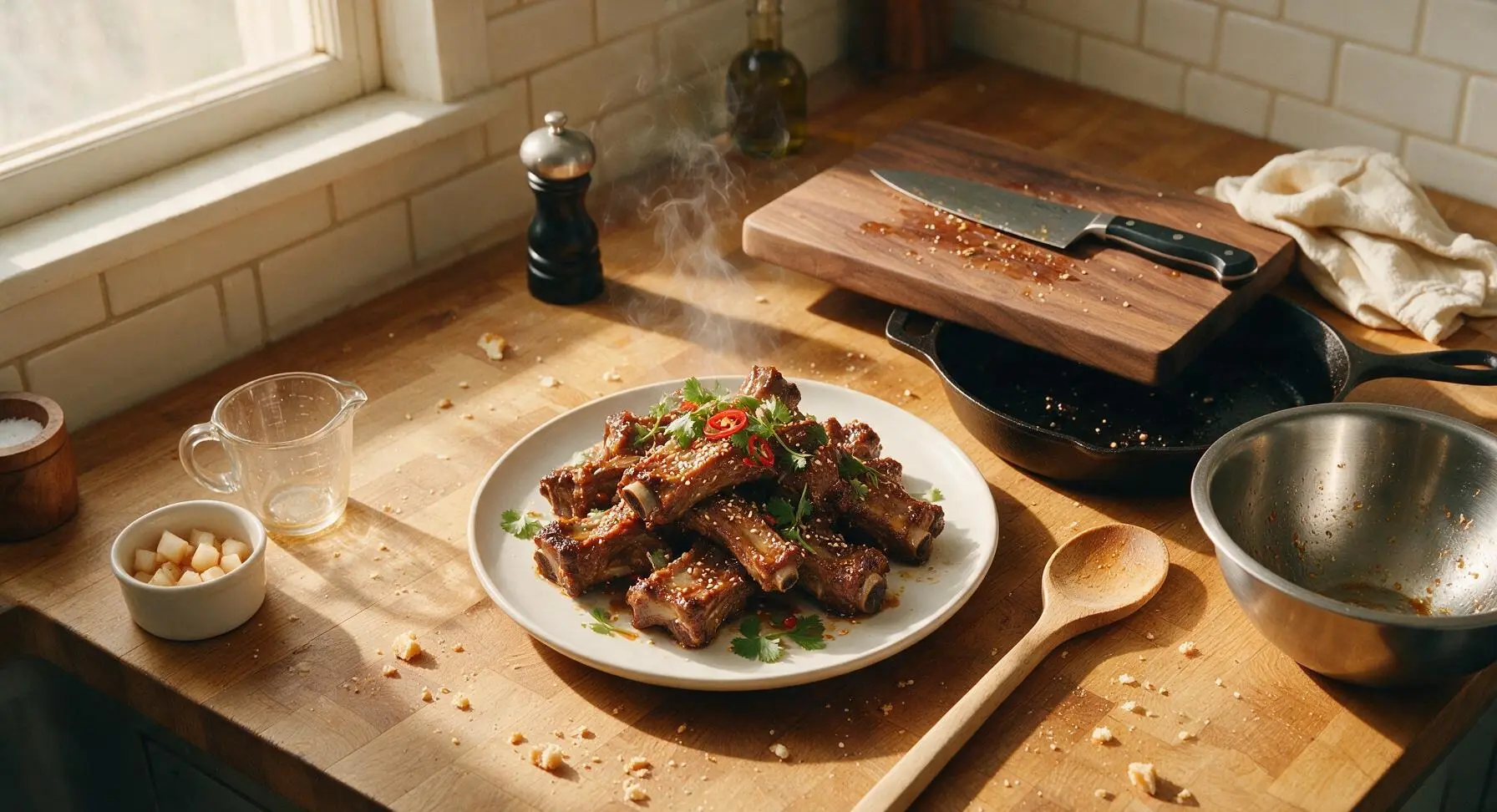
Doenjang Ribs

title 1
Doenjang Ribs
⏱️ cook time 1 hour 20 minutes
🍽️ servings 4
⚡ Difficulty medium

intro

Tender, fall-off-the-bone pork ribs coated in savory, umami-rich doenjang glaze, slow-braised to sticky perfection. A cozy, flavorful Korean home-style classic made for sharing.

Ingredients
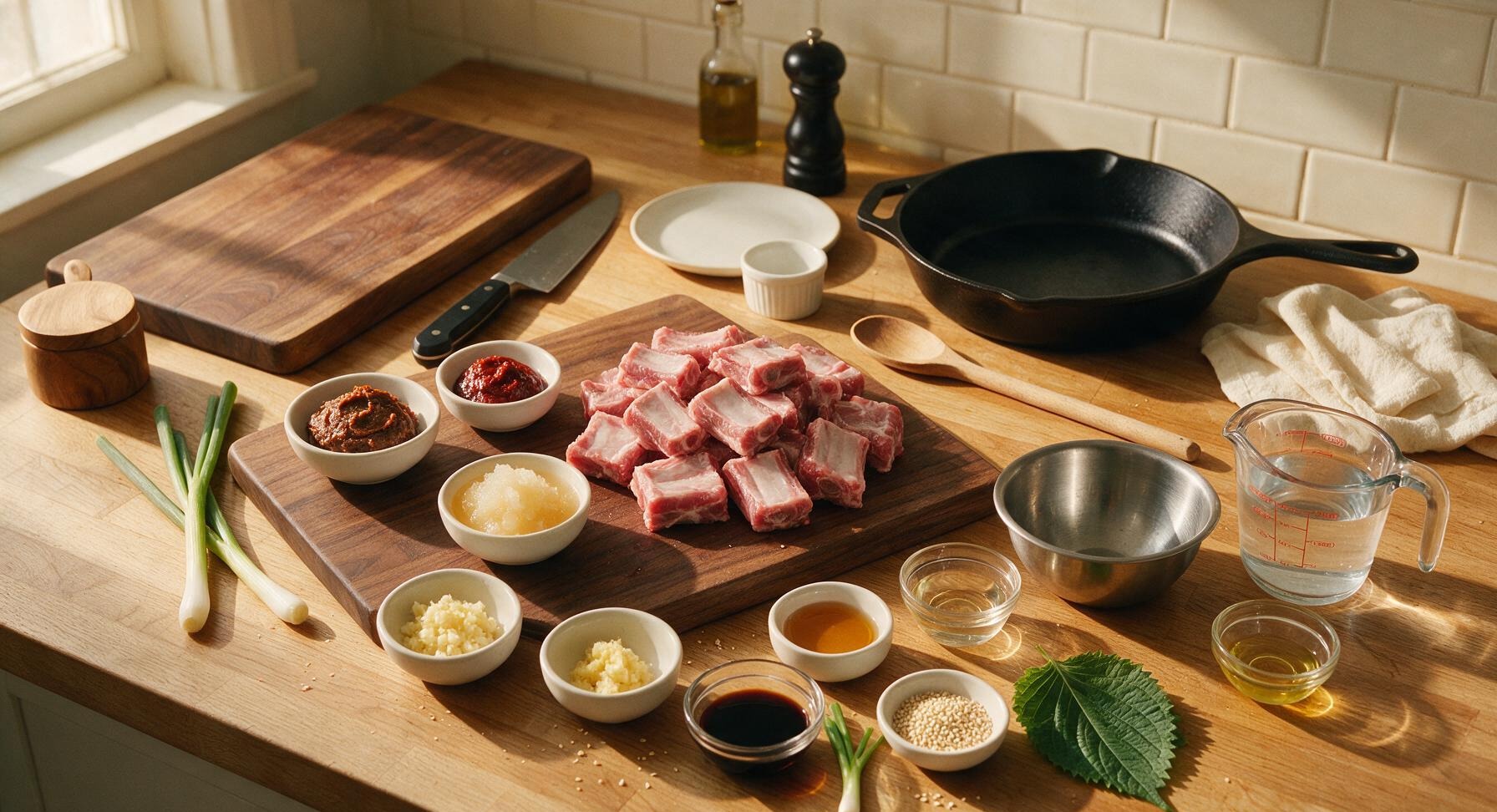
Pork spare ribs (cut into 5cm individual pieces) 1kg
Doenjang (Korean fermented soybean paste) 3 tbsp
Gochujang (Korean fermented chili paste) 1 tbsp
Grated Korean pear (pulp and juice reserved) 1/2 cup (100g)
Minced garlic 1 tbsp (3 cloves)
Grated fresh ginger 1 tsp
Low-sodium soy sauce 2 tbsp
Honey 1 tbsp
Korean rice wine (cheongju) 1 tbsp
Toasted white sesame seeds 1 tsp
Scallions (2 for braising, 1 for garnish) 3 stalks
Fresh perilla leaf (optional garnish) 1 leaf
Water 2 cups
Toasted sesame oil 1 tsp

Steps

1

Rinse and Trim Ribs

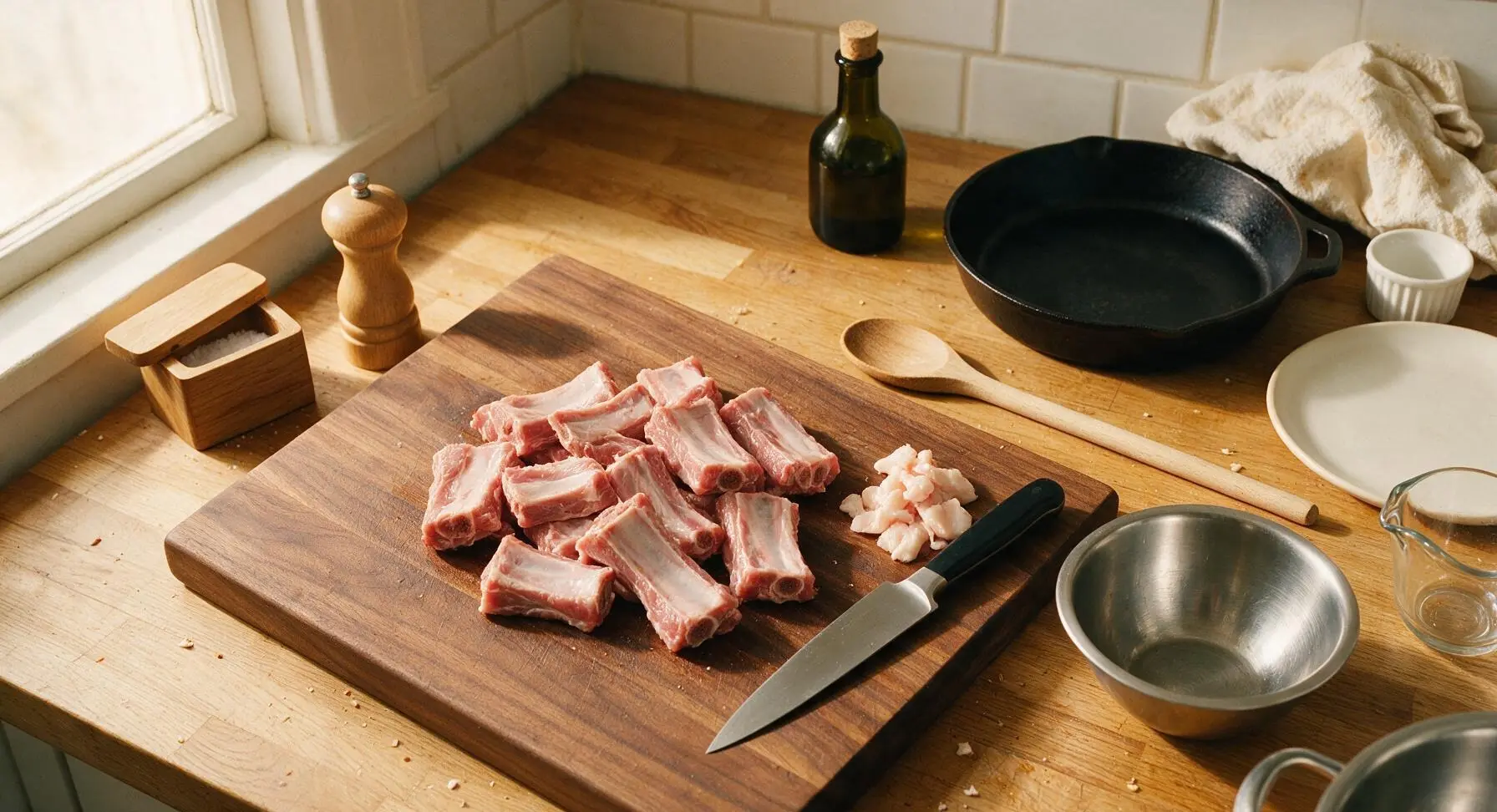
Place the individual 5cm rib pieces on the acacia wood cutting board. Rinse under cool running water, then pat completely dry with paper towels. Use the chef knife to trim any excess thick hard fat from the ribs, leaving a thin 3mm layer of fat for flavor. Discard trimmed fat pieces. The rib surfaces should be dry to the touch to help the marinade adhere.
Step 1
step1:Rinse and Trim Ribs
2

Whisk Marinade Smooth

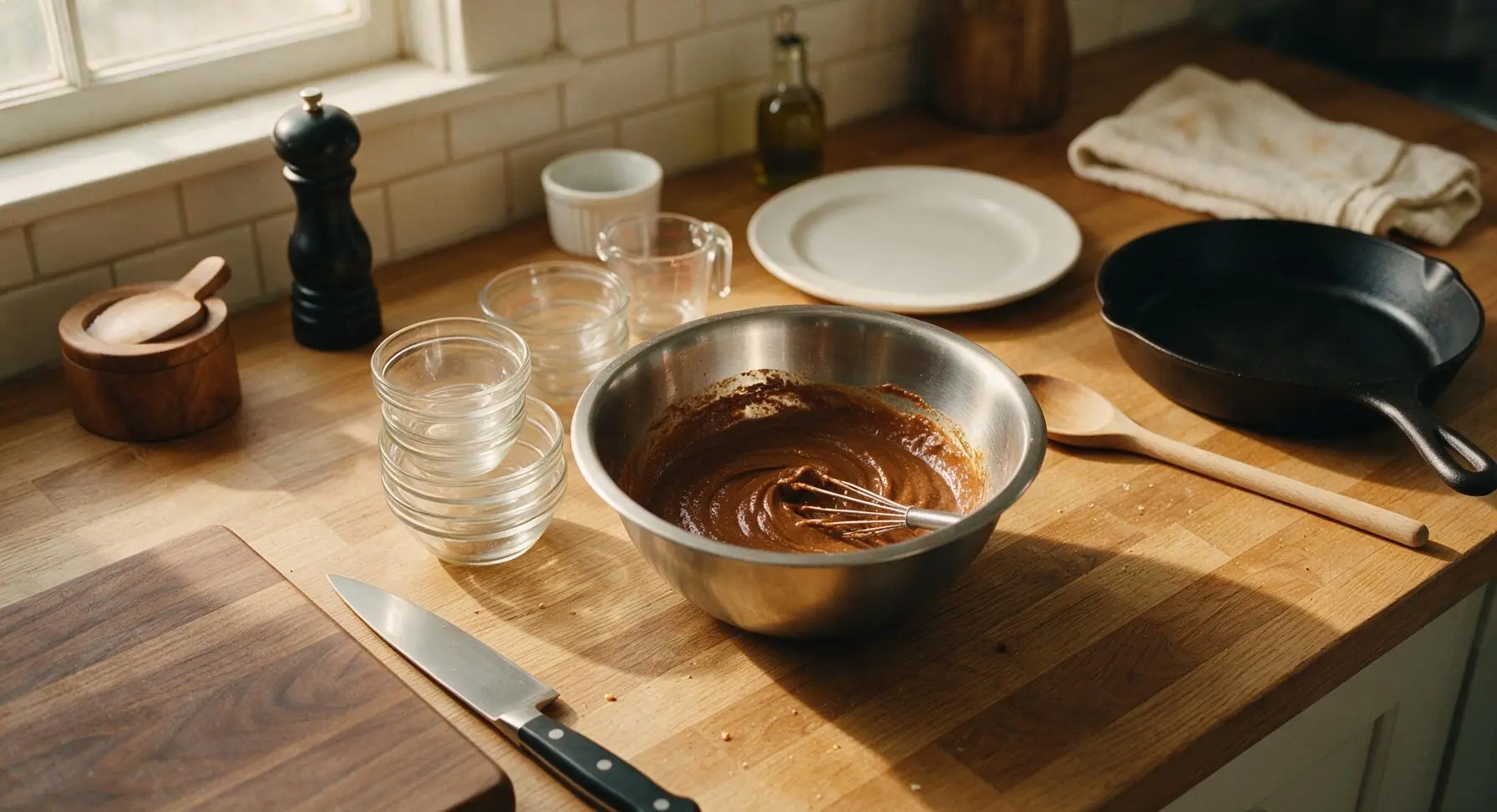
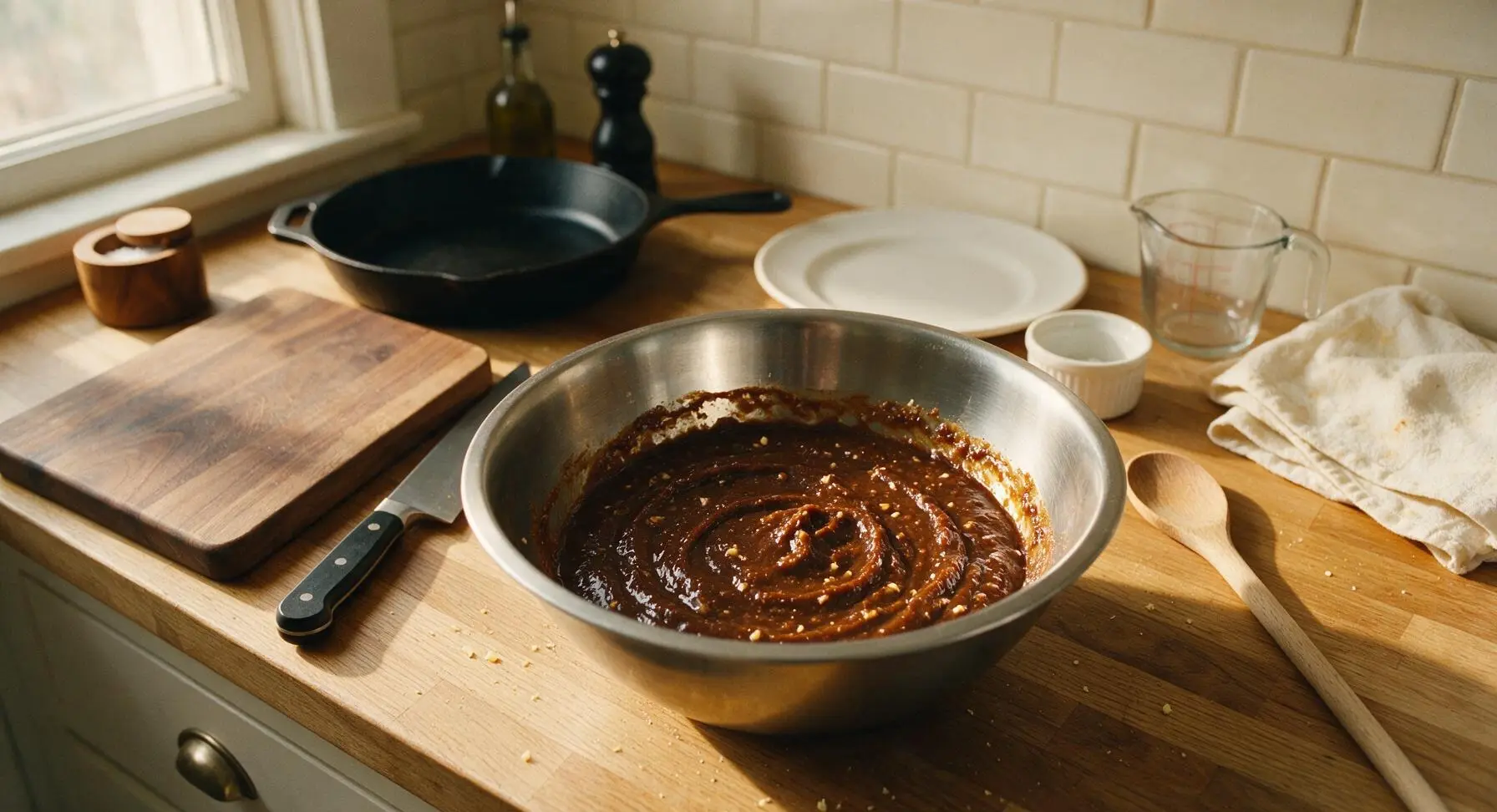
In the medium stainless steel mixing bowl, combine 3 tbsp doenjang, 1 tbsp gochujang, 1/2 cup grated Korean pear (with juice), 1 tbsp minced garlic, 1 tsp grated ginger, 2 tbsp soy sauce, 1 tbsp honey, 1 tbsp rice wine, and 1 tsp toasted sesame oil. Whisk with a fork until completely smooth, with no lumps of doenjang remaining. The marinade should be a thick, spreadable deep brown consistency.
Step 2
step2:Whisk Marinade Smooth
Step 2
step2:Whisk Marinade Smooth
3

Toss Ribs to Coat

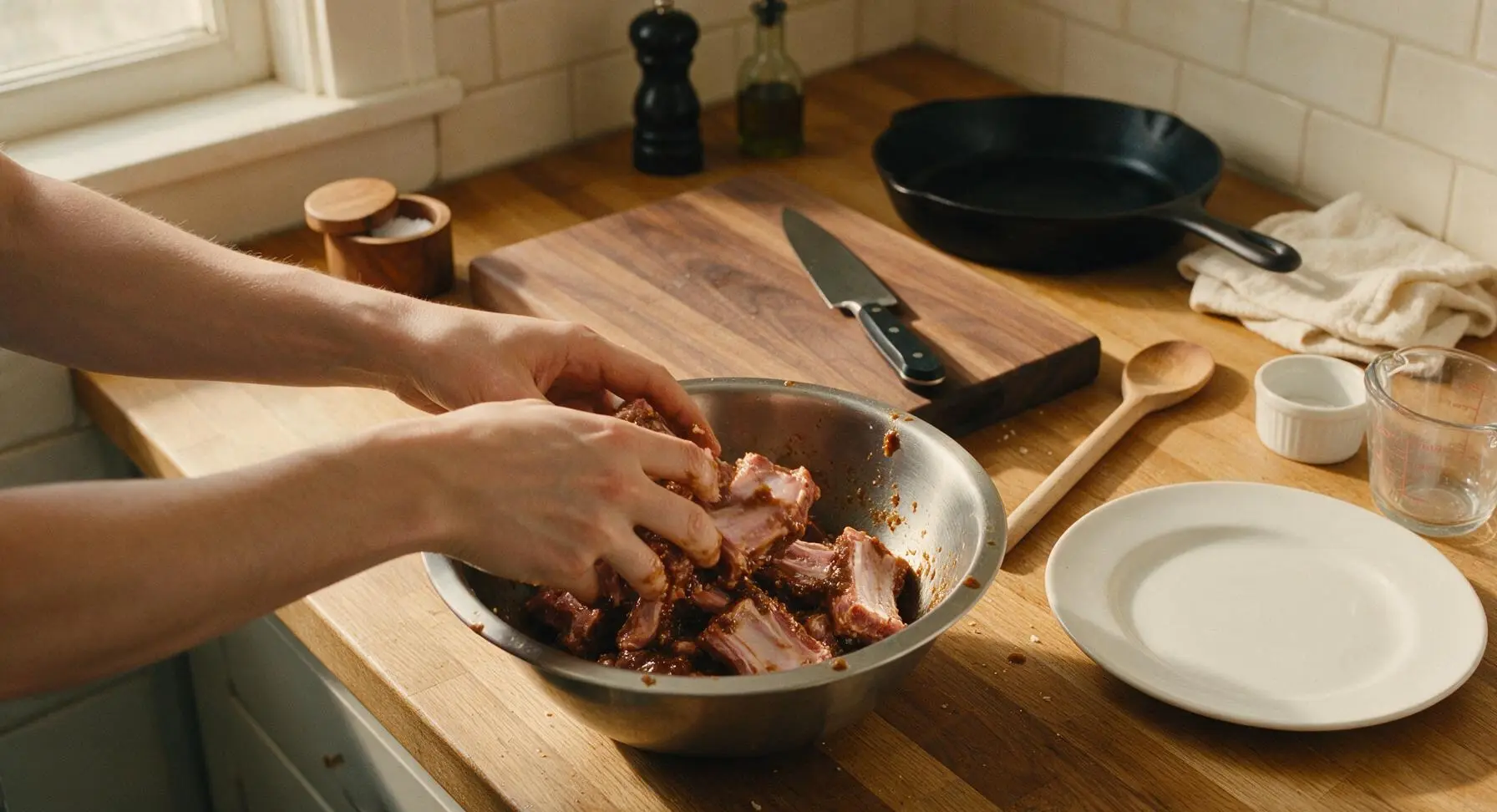
Add the trimmed, dried rib pieces to the bowl with the doenjang marinade. Use clean hands to toss the ribs thoroughly, ensuring every piece is completely coated in a thin, even layer of marinade. Cover the bowl, and let rest at room temperature for 15 minutes to allow flavors to penetrate (or refrigerate for up to 2 hours for deeper flavor).
Step 3
step3:Toss Ribs to Coat
4

Sear Ribs Evenly

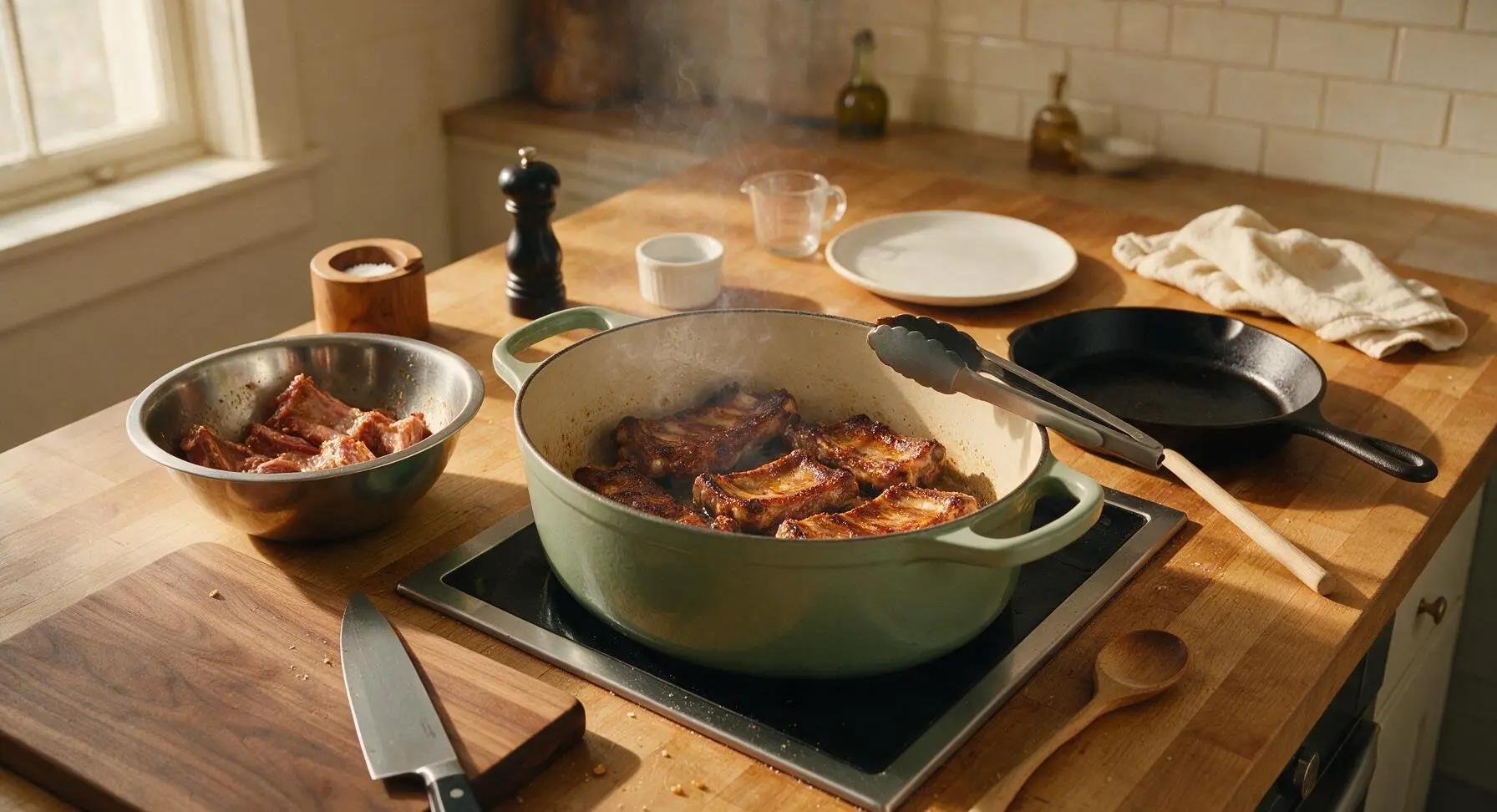
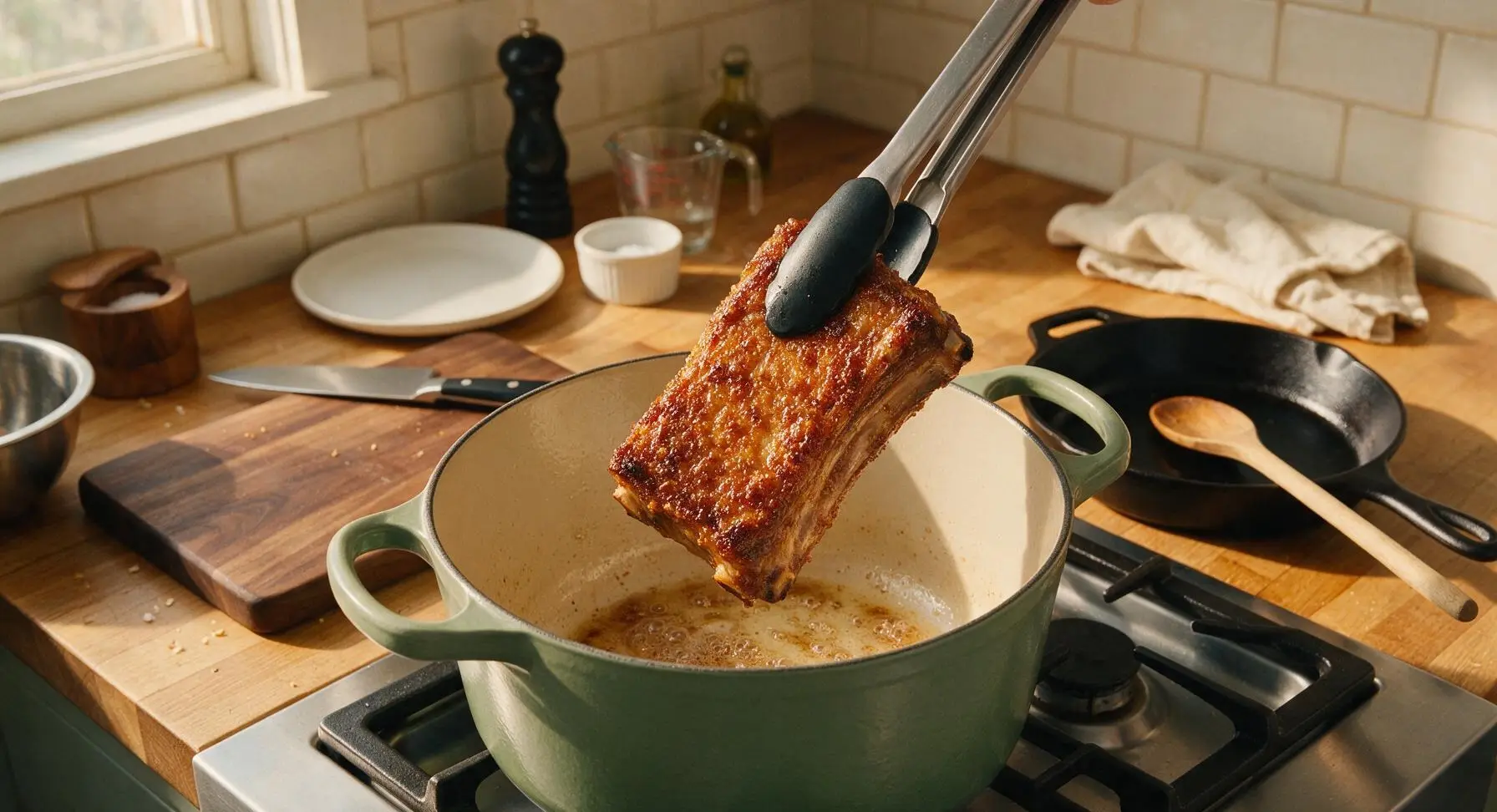
Place the matte sage green enameled Dutch oven on the stovetop over medium heat (175C/350F). Once hot, add the marinated ribs in a single layer, working in 2 batches to avoid crowding the pan. Sear for 2 minutes per side, until the marinade caramelizes to a deep golden-brown crust on each rib surface. Use the silicone-tipped tongs to flip the ribs. Take care not to burn the doenjang, as it will turn bitter.
Step 4
step4:Sear Ribs Evenly
Step 4
step4:Sear Ribs Evenly
5

Braise Until Tender

Once all ribs are seared, return every piece to the Dutch oven. Add 2 cups of water and 2 whole scallions tied in a loose knot to the pot, bringing the liquid to a gentle simmer. Reduce heat to low (95C/200F), cover with the matching sage green lid, and braise for 1 hour, stirring every 20 minutes with the beech wood spoon. The ribs are done when a fork pierces the meat easily with no resistance, and the meat pulls away slightly from the bone.
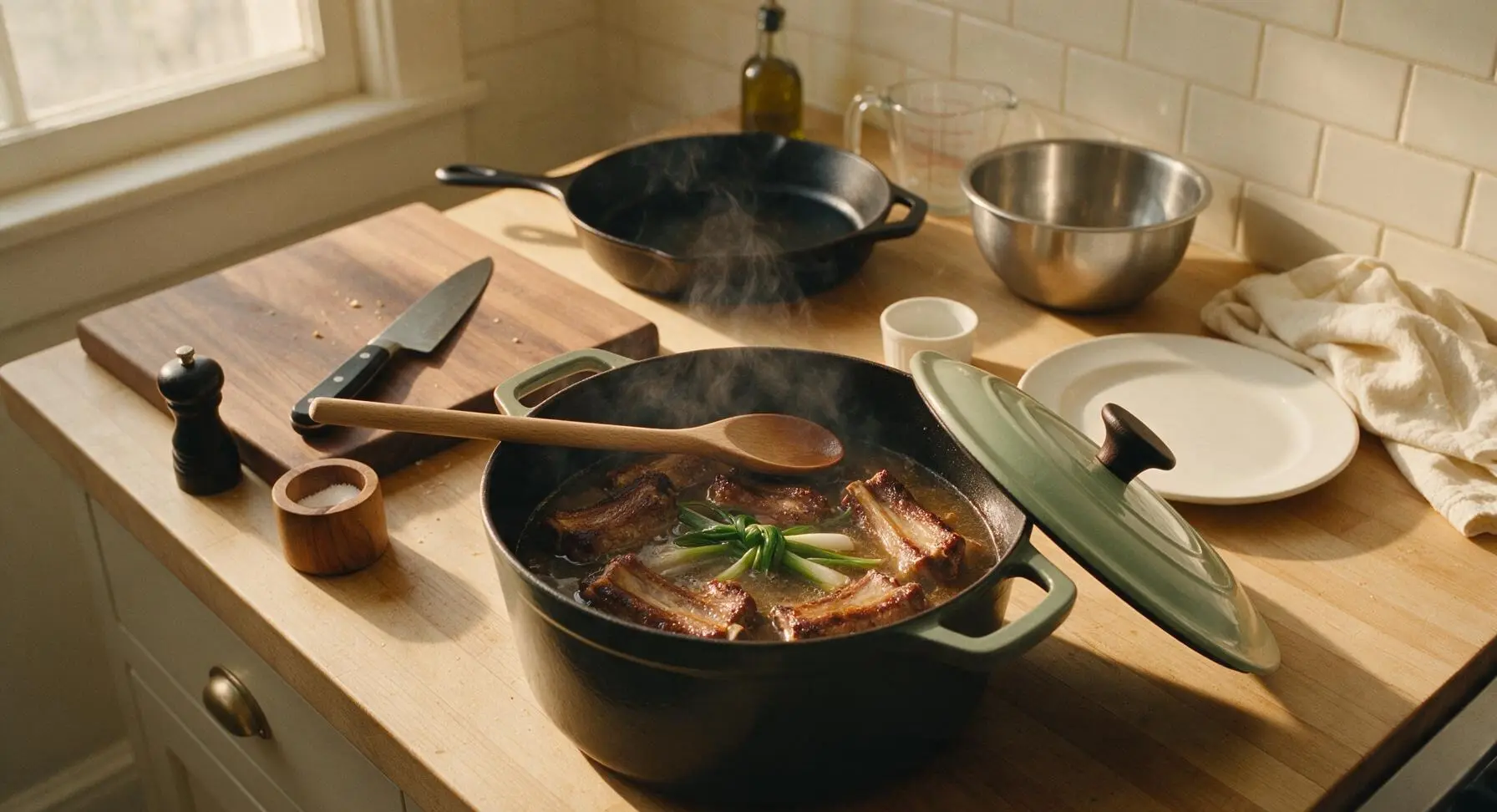
Step 5
step5:Braise Until Tender
6

Reduce Sauce to Glossy

Remove the lid from the Dutch oven, turn heat up to medium, and fish out the knotted cooked scallions with the tongs, discarding them. Simmer the ribs uncovered for 8-10 minutes, stirring occasionally, until the braising liquid reduces by half and coats the ribs in a thick, glossy, sticky sauce. The sauce should cling to the ribs when lifted with tongs, not run off in thin drips.
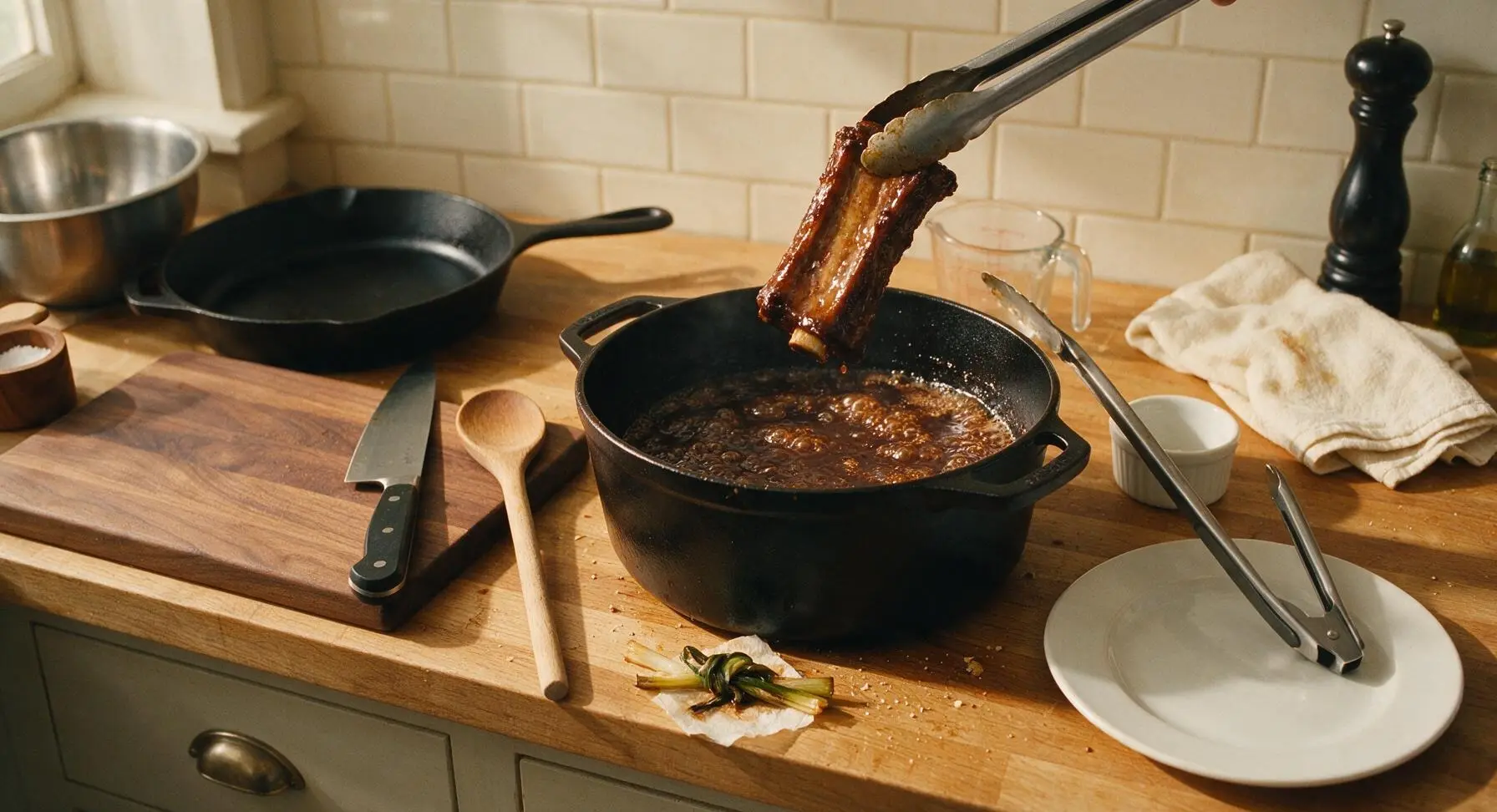
Step 6
step6:Reduce Sauce to Glossy
7

Plate and Garnish Ribs

Use the tongs to transfer the finished glossy ribs to the matte cream ceramic serving platter, piling them loosely in the center. Drizzle any remaining thick sauce from the pot over the top of the ribs. Garnish with thinly sliced fresh scallion greens, a light sprinkle of toasted white sesame seeds, and a single fresh perilla leaf tucked at the platter edge. Serve immediately while hot.
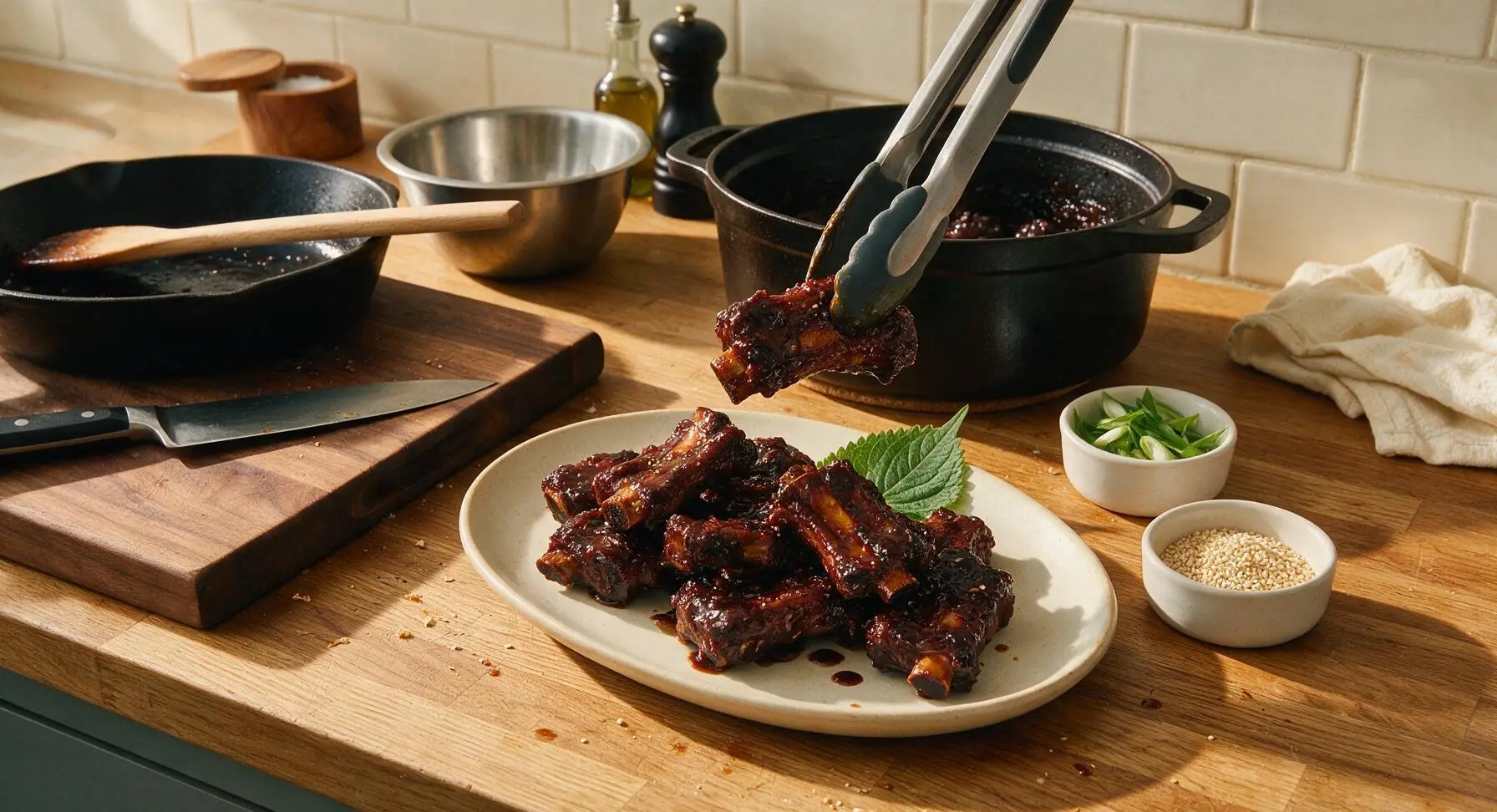
Step 7
step7:Plate and Garnish Ribs

Tips

1.Grate Korean pear immediately before mixing into the marinade: Raw pear contains natural enzymes that tenderize tough rib meat as it rests, but pre-grated pear oxidizes quickly and loses these tenderizing properties, leading to chewier ribs.
2.Keep braising heat at a low, gentle simmer: High heat will cause the fermented doenjang to burn and turn bitter at the bottom of the pot, and will make the rib meat tough and stringy instead of fall-off-the-bone tender.
3.Pat ribs completely dry before tossing in marinade: Excess surface water will dilute the rich doenjang flavor and prevent the marinade from forming a caramelized, flavorful crust during searing, resulting in pale, bland ribs.
✨ You May Also Like

Main Course
🍜 United Kingdom

A showstopping classic of tender seared beef, savory mushroom duxelles, and crisp prosciutto wrapped in flaky golden puff pastry, baked to juicy perfection.

⏱️ 2 hours 1Main Course ★ 4.7
Main Course
🍜 India

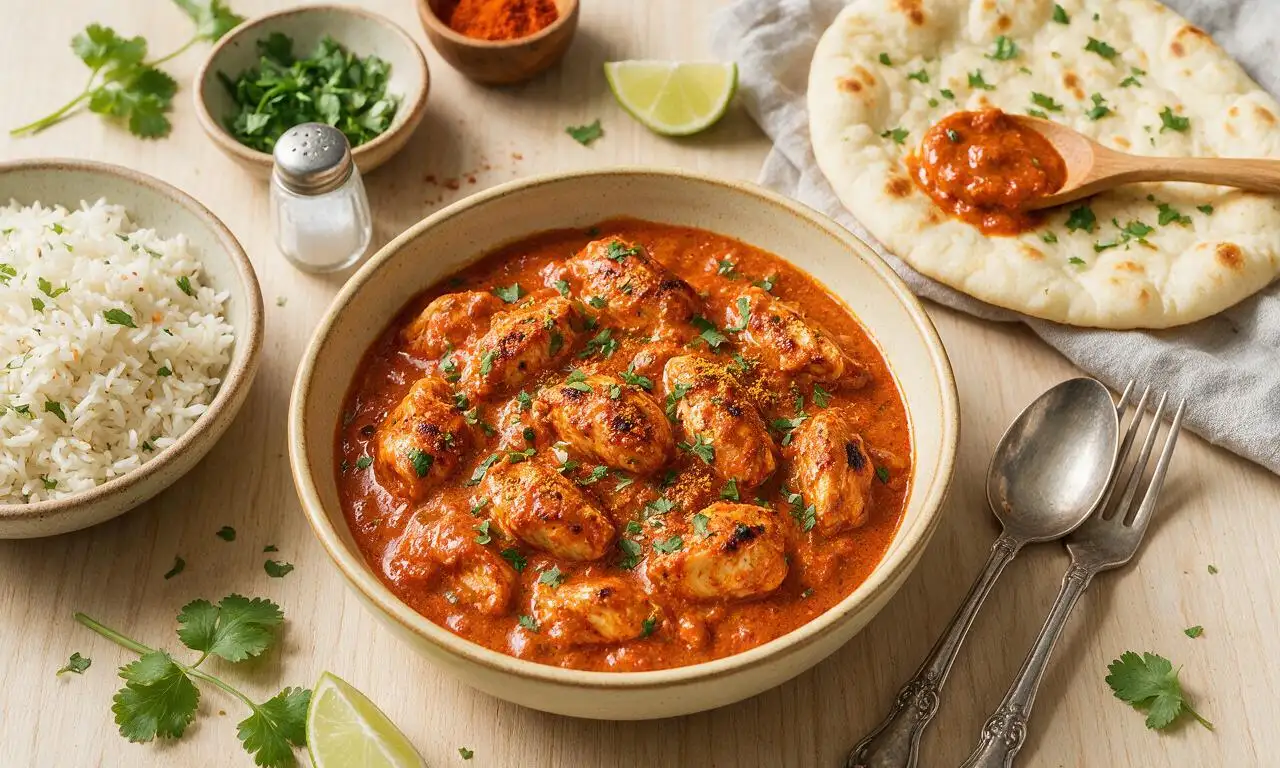
Tender charred marinated chicken simmered in a rich, spiced creamy tomato sauce, this iconic Anglo-Indian curry pairs perfectly with basmati rice or warm naan.

⏱️ 50 minuteMain Course ★ 4.6
Main Course
🍜 Thailand

Classic tangy, sweet, and savory Thai stir-fried rice noodles with shrimp, tofu, and crunchy garnishes, balancing all five core Thai flavor profiles.

⏱️ 30 minuteMain Course ★ 4.5
Main Course
🍜 United Kingdom

Crispy golden beer-battered cod and fluffy double-fried chips, served with tangy tartar sauce and malt vinegar: the timeless, beloved British pub comfort classic.

⏱️ 45 minuteMain Course ★ 4.7
Main Course
🍜 Mexico

Smoky, chile-marinated pork tacos with caramelized pineapple, fresh cilantro, and lime: a beloved classic Mexican street food perfect for casual summer gatherings.

⏱️ 1 hour 45Main Course ★ 4.8
Main Course
🍜 United States

Crunchy Fritos corn chips layered with savory beef chili and melted cheddar, topped with cool, zesty fixings for a beloved, cozy Tex-Mex comfort food.

⏱️ 35 minuteMain Course ★ 4.8

Doenjang Ribs:Frequently Asked Questions

1.What cut of pork is ideal for doenjang ribs, and can I use a different rib cut? ▾
Pork spare ribs are the classic pick for their ideal fat-to-meat ratio that turns fall-off-the-bone tender when slow-braised. You can substitute baby back ribs if needed, but reduce braising time by 15 to 20 minutes since they are leaner and cook faster. Skip tough country-style ribs, as they won’t develop that signature sticky, tender texture.
2.Do I have to cut spare ribs into 5cm individual pieces, or can I cook them in full racks? ▾
Cutting ribs into 5cm individual pieces helps the doenjang glaze penetrate every bite, creates more caramelized sticky surface area, and makes serving easy for family-style meals. If you prefer full racks, you can use them—just double marination time by 2 hours, and add 10 minutes to braising time to ensure even cooking through the thicker cut.
3.What is doenjang, and can I substitute Japanese miso if I don’t have it? ▾
Doenjang is a deeply umami, slightly pungent Korean fermented soybean paste with a coarser texture than milder, sweeter Japanese miso. If you don’t have doenjang, use a 3:1 mix of light red miso and a tiny splash of low-sodium soy sauce to mimic its savoriness, though the flavor won’t be an exact match for the classic Korean profile.
4.Why is grated Korean pear included in the recipe, and can I skip it? ▾
Grated Korean pear acts as a natural meat tenderizer thanks to its proteolytic enzymes, while adding subtle fruity sweetness that balances the salty, fermented notes of the glazes. If you don’t have Korean pear, substitute an equal amount of grated Bosc pear or 2 tablespoons unsweetened applesauce plus 1/4 teaspoon grated ginger for similar results.
5.How spicy are these doenjang ribs, and can I adjust the heat level? ▾
The small amount of gochujang in the glaze adds gentle, warm depth rather than searing heat, so the ribs are approachable for most heat preferences. To make them milder, cut the gochujang in half and replace it with extra doenjang. For extra heat, add 1 teaspoon of gochugaru (Korean chili flakes) or a dash of chili oil to the glaze.
6.How long should I marinate the ribs for the best flavor and texture? ▾
For the most flavorful, tender results, marinate ribs in the doenjang, pear, garlic, and gochujang mix for a minimum of 2 hours in the fridge. If you have time, marinating 8 to 12 hours (overnight) lets fermented flavors sink deeper, and pear enzymes make ribs extra melt-in-your-mouth. Don’t marinate longer than 24 hours, as the meat can turn mushy.
7.Can I make these ribs in a slow cooker instead of braising on the stovetop or oven? ▾
Absolutely! After marinating, sear the ribs on all sides in a hot pan first to build deep, caramelized flavor, then transfer them to your slow cooker with remaining marinade and 1/4 cup water. Cook on low for 6 hours, then finish under the broiler for 3 to 5 minutes to get that signature sticky, caramelized outer glaze.
8.Why didn’t my ribs turn fall-off-the-bone tender, and what went wrong? ▾
Tough ribs usually come from too-short cooking time, overly high heat that makes meat seize up, or skipping the tenderizing Korean pear. Make sure you braise on low, gentle heat (no rolling boils!) and give ribs enough time—usually 1.5 to 2 hours in a 325°F (160°C) oven for individual 5cm spare rib pieces.
9.How do I keep the doenjang glaze from burning while the ribs cook? ▾
The natural sugars from the pear and fermented pastes burn quickly over high heat, so keep your braising temperature low, and reserve 1/3 of the glaze to brush on during the last 10 minutes of cooking instead of adding it all at the start. If finishing under the broiler, watch closely, as glaze can go from sticky to charred in under a minute.
10.What side dishes pair best with doenjang ribs for a full Korean meal? ▾
These rich, umami ribs pair perfectly with light, fresh sides to cut through their savoriness. Classic picks include steamed short-grain white rice, quick pickled radish, cucumber kimchi, lightly seasoned spinach namul, and a crisp perilla or romaine leaf salad with a simple rice vinegar dressing to balance the sticky, rich meat.
11.Can I make these ribs ahead of time for a party, and how should I reheat them? ▾
Doenjang ribs actually taste better made a day ahead, as the flavors meld and deepen as they chill in the fridge. Store them in an airtight container for up to 3 days, then reheat covered in a 300°F (150°C) oven for 15 to 20 minutes, brushing with a little extra glaze before serving to refresh the sticky coating.
12.Do I need to parboil the ribs before marinating and braising them? ▾
You don’t have to parboil, but a quick 5-minute boil in water with a slice of ginger and splash of rice wine helps remove excess blood and subtle gamey notes from the ribs for a cleaner, brighter final flavor. If you skip parboiling, just skim any foam that rises to the top of the braising liquid in the first 20 minutes of cooking.
13.How can I adjust this recipe to make it gluten-free? ▾
Most commercial doenjang and gochujang contain small amounts of wheat, so to make the recipe gluten-free, seek out certified gluten-free versions of both fermented pastes (many brands now offer wheat-free options made with only soy, rice, and salt). The remaining core ingredients—ribs, Korean pear, and garlic—are naturally gluten-free.
14.How do I get that glossy, sticky glaze instead of a watery sauce on the finished ribs? ▾
After the ribs are fully tender, remove them from the braising pot temporarily, then simmer the remaining cooking liquid over medium heat for 5 to 7 minutes until it reduces to a thick, syrupy consistency. Toss the ribs back in the reduced sauce to coat every piece evenly, and you’ll get that perfect, shiny glaze that clings instead of running off.

Comments (3)

3 days ago

OMG these doenjang ribs were an absolute game changer for our Sunday family dinner! I was a little nervous working with doenjang for the first time since I usually just toss it into jjigae, but the depth of savory, umami flavor was unreal. My kids went back for seconds, even my super picky 7 year old who turns his nose up at anything that isn’t chicken nuggets! The 1 hour 20 minute cook time was totally manageable for a weekend meal, will absolutely be making these for our next neighborhood potluck too. SO good.

2 days ago

Wait same! I’d only ever used doenjang for soup too, never thought to slather it on ribs! Did you add any extra gochugaru for heat or stick straight to the recipe?

yesterday

So glad your family loved these, Mia! A little extra gochugaru for heat or a drizzle of honey for extra sweetness works great if you want to tweak the base recipe to match your crew’s taste — don’t be afraid to play around with it!

2 days ago

Really solid recipe! Cooked these up for my weekly meal prep and they held up so well even after reheating a couple days later — the flavor actually got better as it sat, which was a nice surprise. My only note is I wish the recipe specified what cut of ribs works best upfront. I used spare ribs and they turned out great, but I stood in the grocery store for 10 minutes debating between those and baby back. Flavor was chef’s kiss though, zero complaints there.

30 minutes ago

Great question! Both spare ribs and baby back ribs work beautifully for this recipe. Spare ribs have a little more fat and connective tissue for extra rich, fall-off-the-bone texture, while baby back are a bit leaner and cook about 10 minutes faster. So glad this worked out for your meal prep!

1 week ago

Took these to a buddy’s backyard cookout last weekend and everyone was hounding me for the recipe before we even finished eating. I usually stick to classic tomato-based BBQ ribs on my smoker, but the umami kick from the doenjang had everyone going back for thirds. The cook time was spot on — ribs were fall-off-the-bone tender without being mushy, which is always a win. 10/10, will be adding this to my regular summer grill rotation.