French Crème Caramel

title 1
French Crème Caramel
⏱️ cook time 45 minutes
🍽️ servings 6
⚡ Difficulty medium

intro

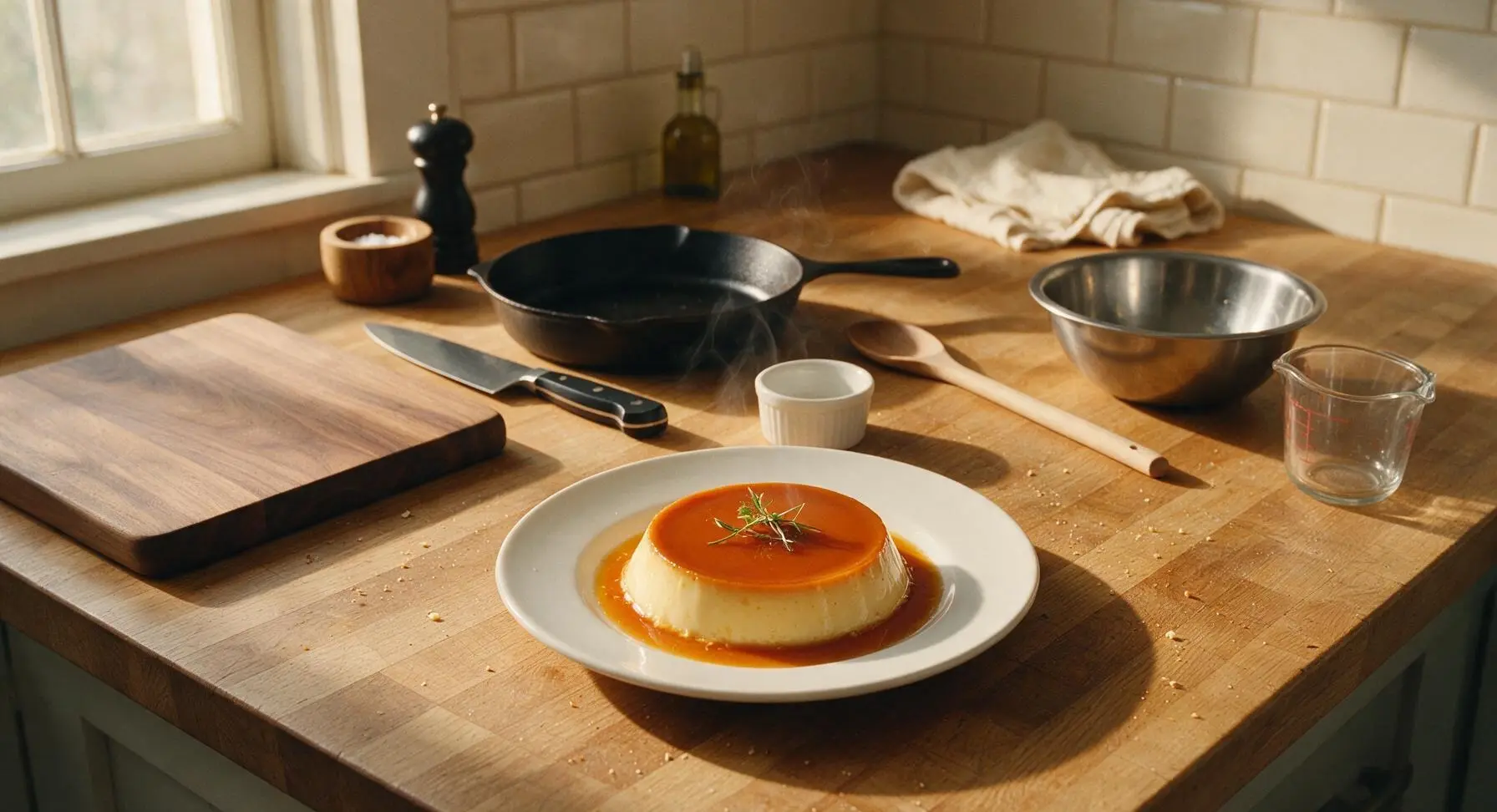
Silky vanilla-kissed baked custard crowned with glossy amber caramel, this classic French dessert is luxuriously smooth, make-ahead friendly, and effortlessly elegant for special meals.

Ingredients
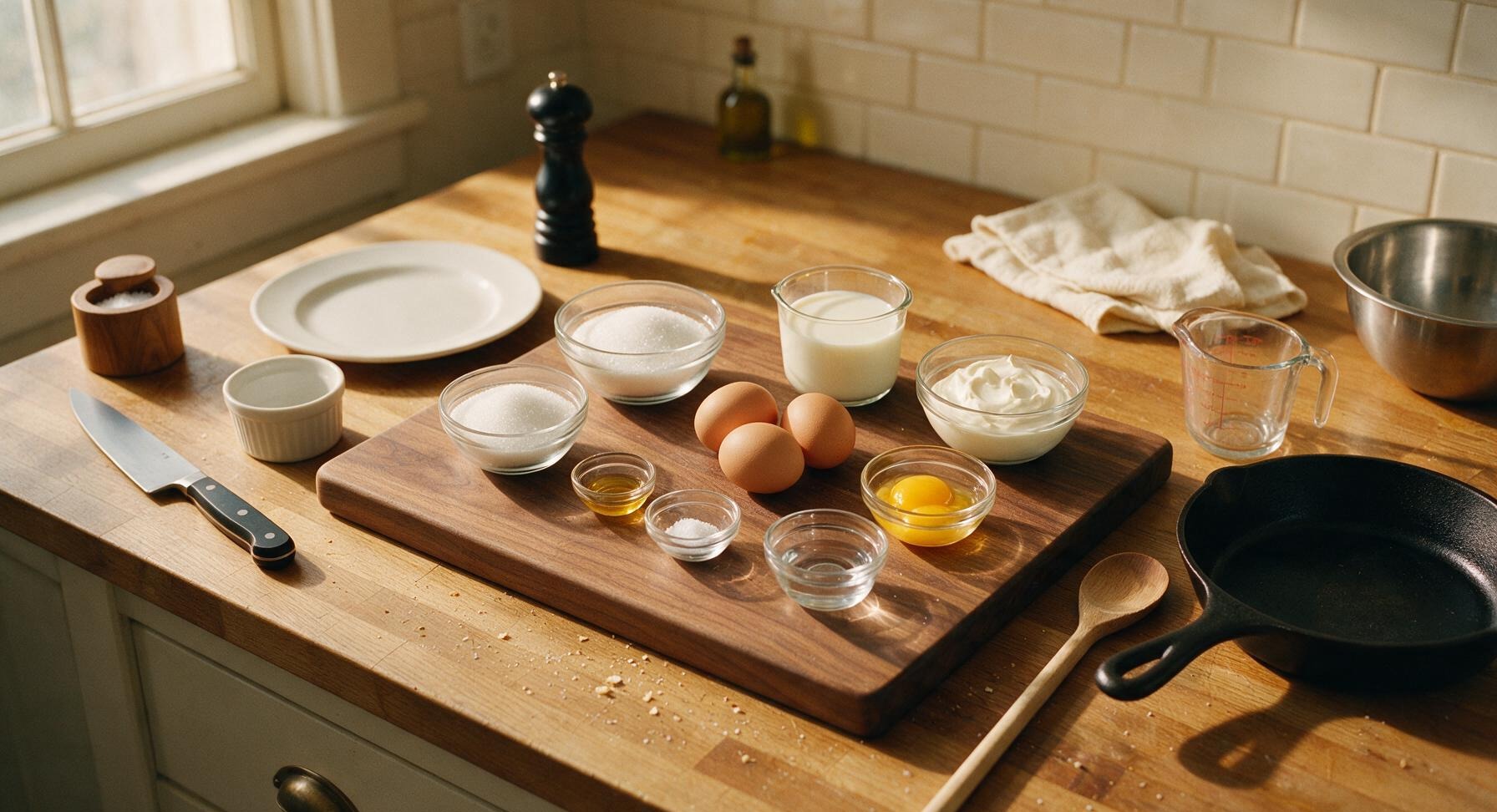
Granulated white sugar 225g (150g for caramel, 75g for custard)
Whole milk 250ml
Heavy whipping cream 250ml
Large eggs 3 whole
Large egg yolks 2
Pure vanilla extract 1 tsp
Fine sea salt 1 pinch
Filtered water 3 tbsp

Steps

1

Prep Oven and Ramekins

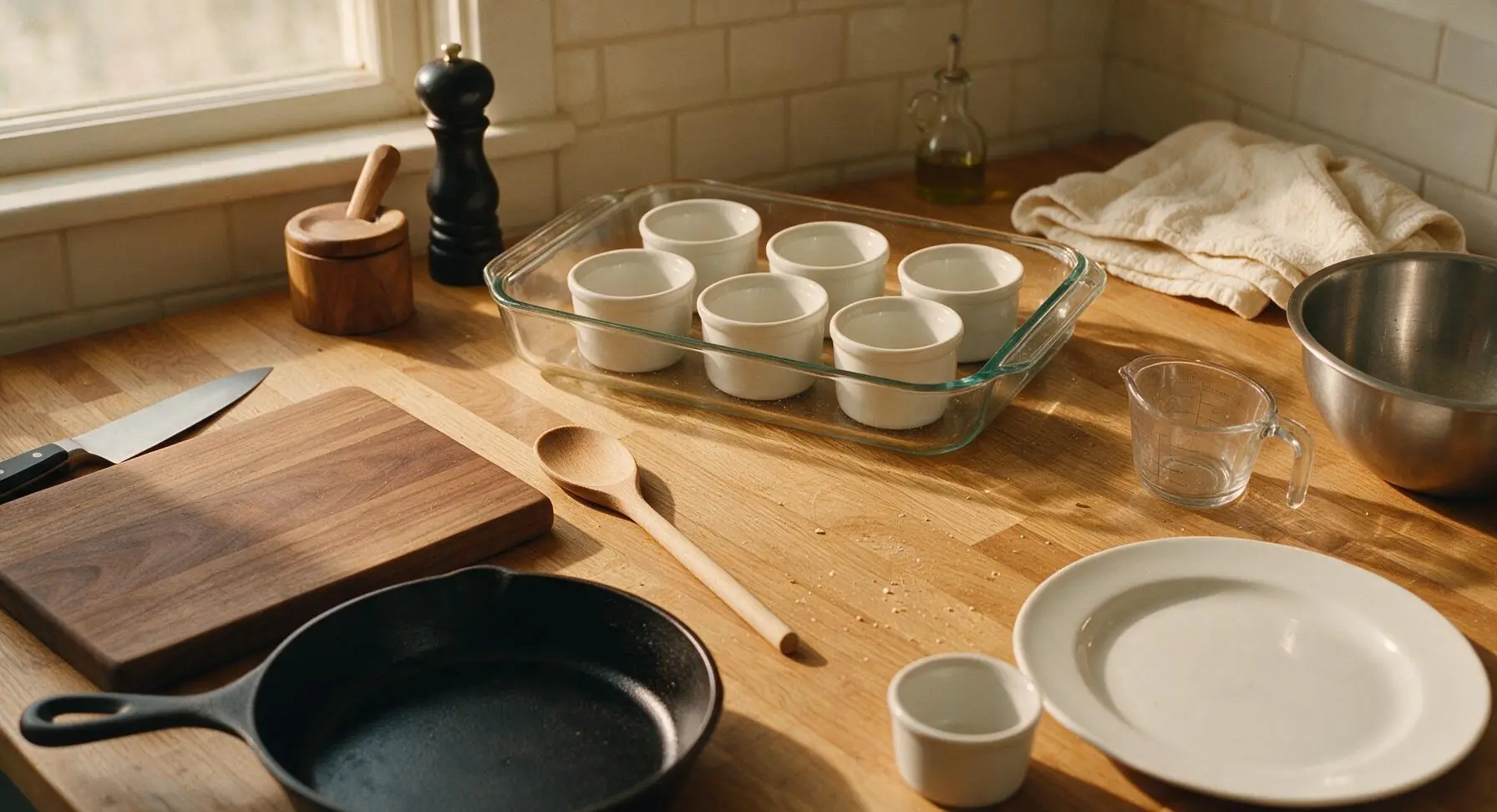
Preheat your oven to 160°C (325°F). Arrange the six 120ml matte white porcelain ramekins in a single, evenly spaced layer inside the deep rectangular borosilicate glass baking dish, setting the dish temporarily on the back section of the counter. Check that each ramekin sits flat with no wobble to ensure even cooking.
Step 1
step1:Prep Oven and Ramekins
2

Cook Amber Caramel

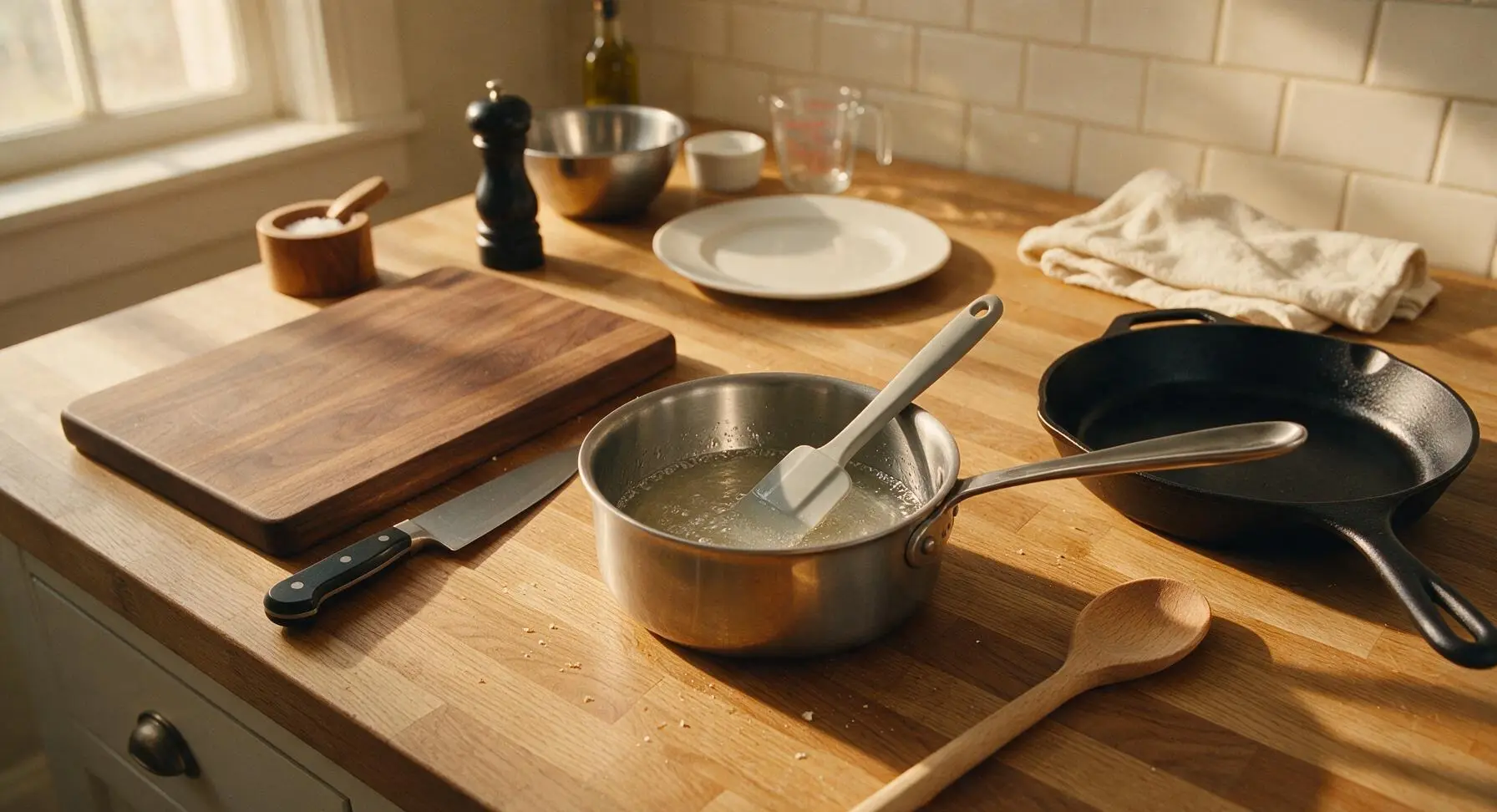
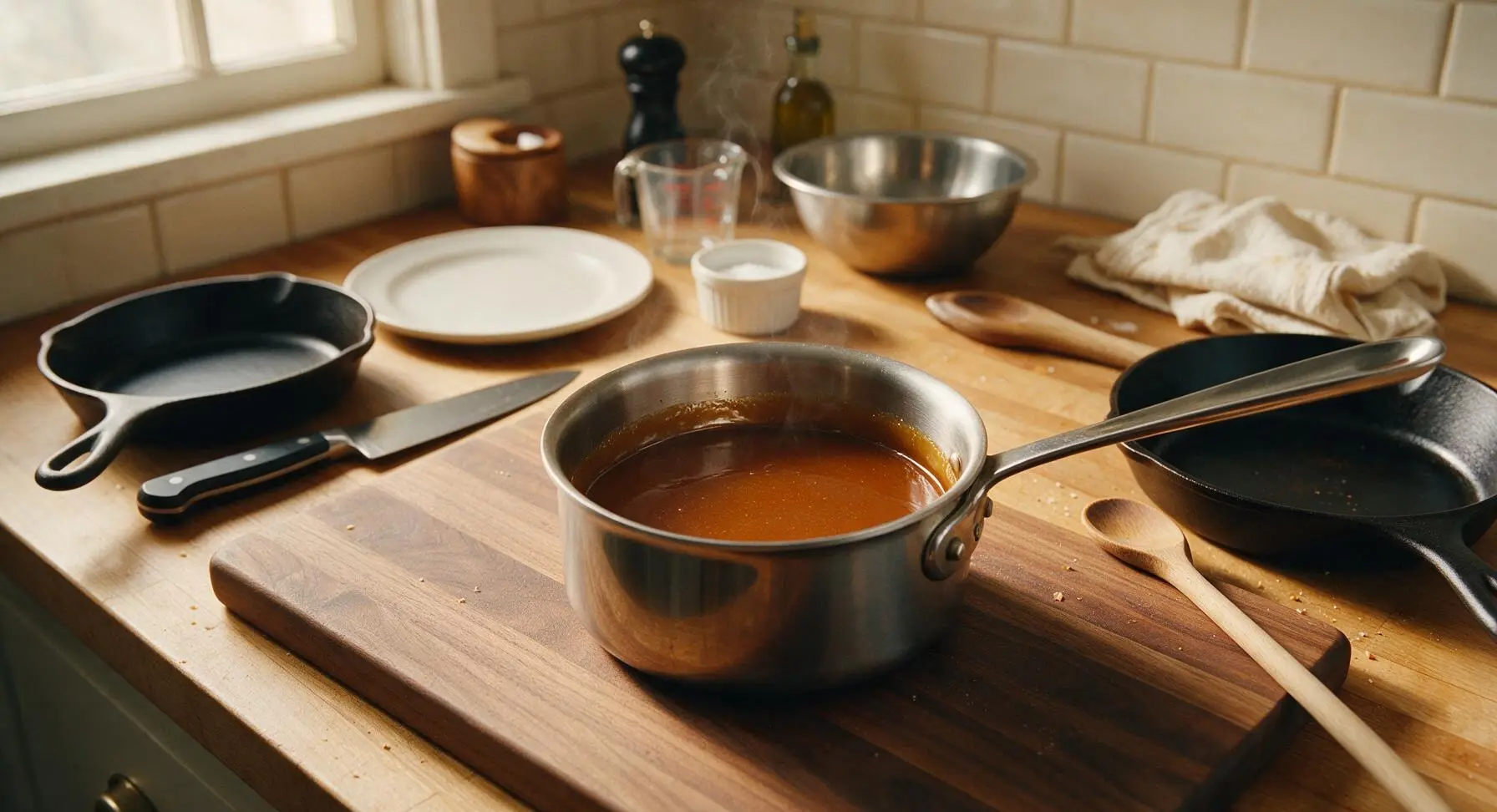
Place the small heavy-bottomed stainless steel saucepan over medium-low heat. Add 150g granulated sugar and 3 tablespoons filtered water, stirring gently with the light grey silicone spatula until sugar fully dissolves into a clear, colorless syrup. Stop stirring once the syrup reaches a gentle simmer, and cook for 6-8 minutes, swirling the pan occasionally by the handle, until the syrup deepens to a warm, clear amber color (matching the hue of aged wildflower honey, 170°C/340°F on a candy thermometer). Immediately remove the pan from heat to stop cooking (caramel will burn in seconds past this point) and stir in the tiny pinch of fine sea salt.
Step 2
step2:Cook Amber Caramel
Step 2
step2:Cook Amber Caramel
3

Coat Ramekin Bases

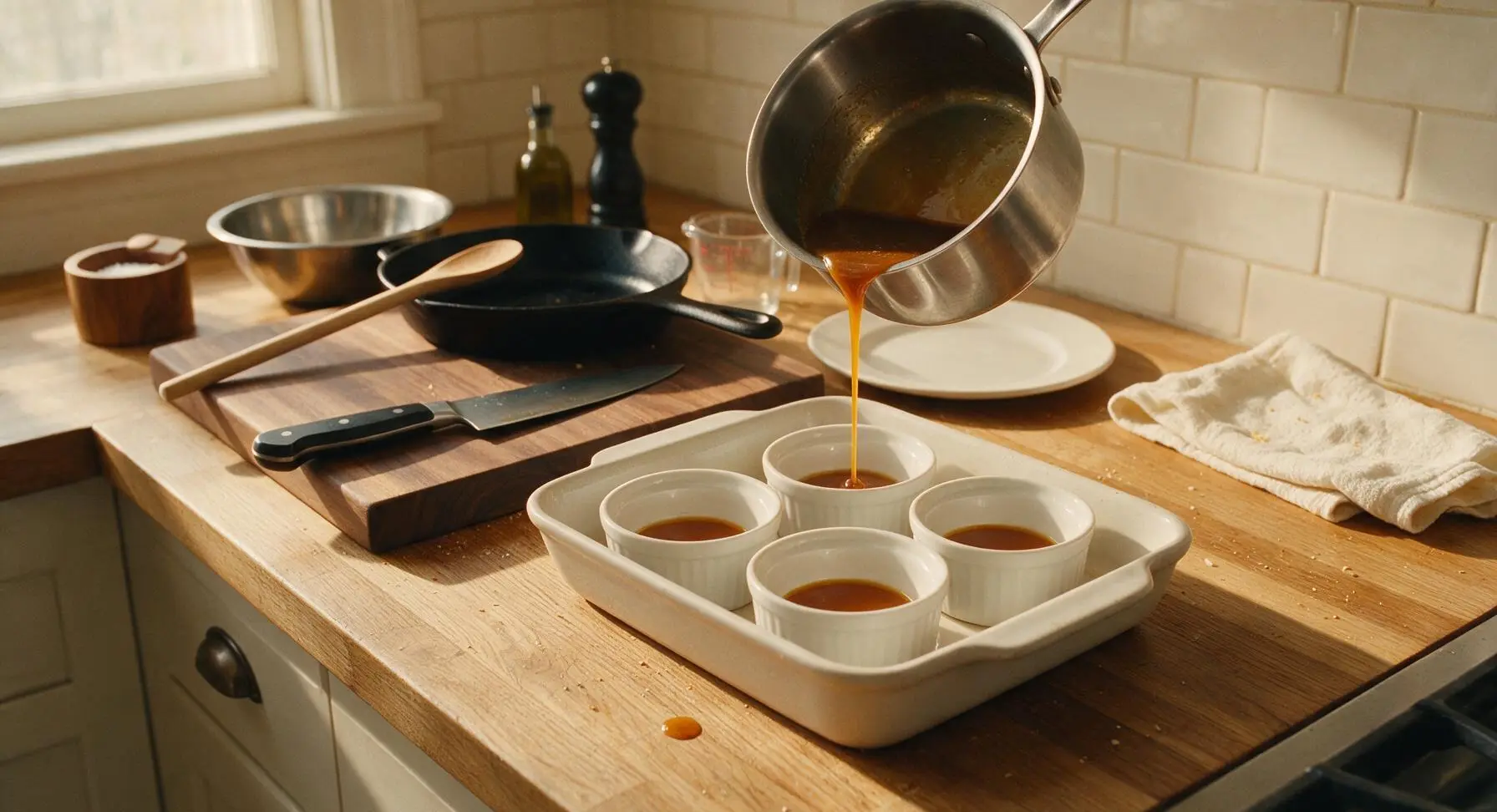
Working quickly (caramel sets firm within 2-3 minutes as it cools), carefully pour 1.5-2 tablespoons of hot amber caramel into the bottom of each ramekin in the baking dish. Tilt each ramekin slightly to spread the caramel into an even thin layer across the base; do not attempt to coat the ramekin sides. Set the dish aside for 10 minutes to allow the caramel to harden into a glossy, solid layer at the bottom of each ramekin.
Step 3
step3:Coat Ramekin Bases
4

Mix Vanilla Custard Base

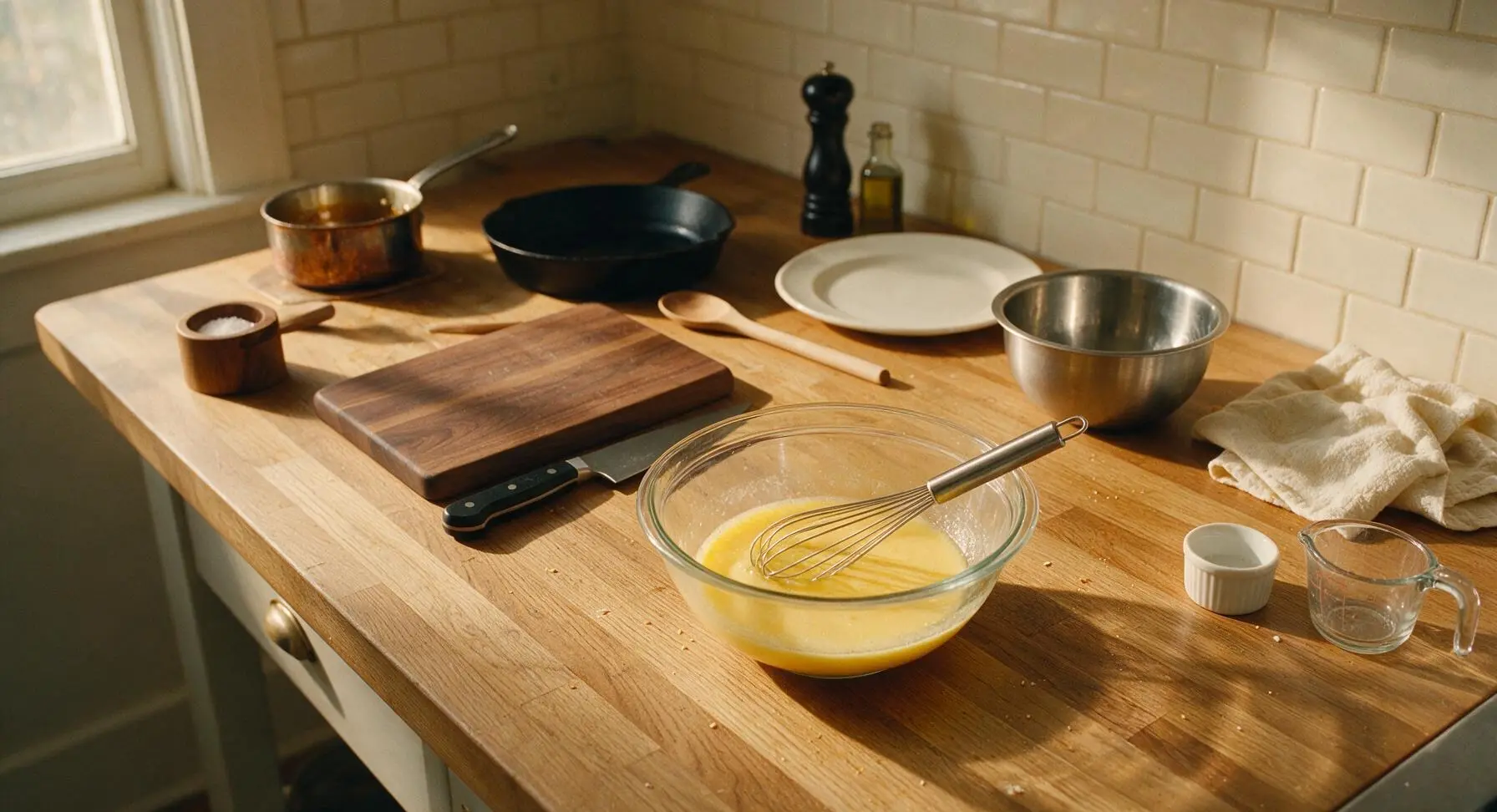
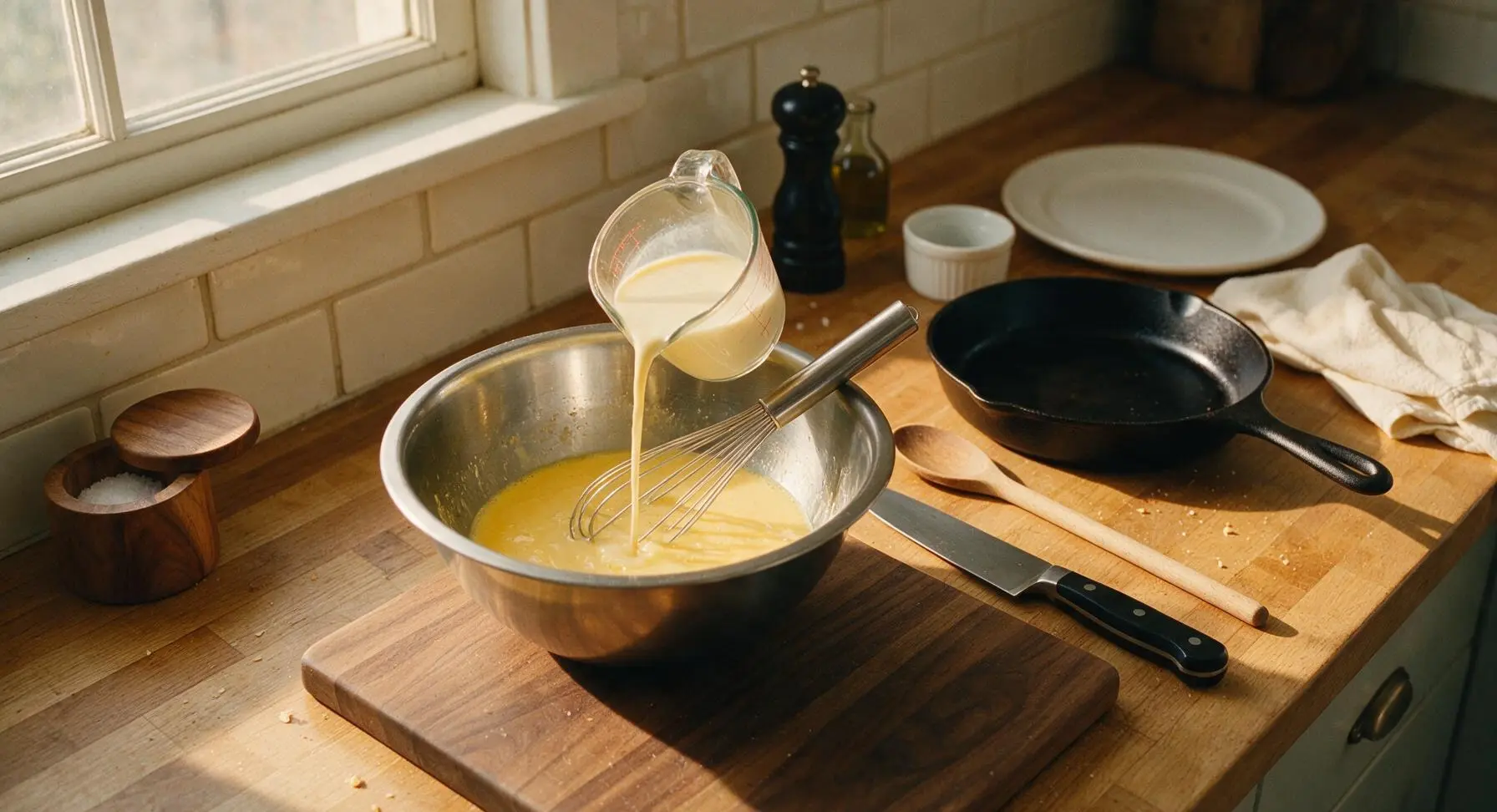
In the medium clear glass mixing bowl, combine 3 whole large eggs, 2 large egg yolks, and the remaining 75g granulated sugar. Whisk gently with the stainless steel balloon whisk just until fully combined – do not whisk vigorously enough to create froth or bubbles, as these will cause holes in the baked custard. Warm 250ml whole milk and 250ml heavy whipping cream in the small saucepan over low heat until just steaming (do not boil, approximately 70°C/160°F), then pour the warm dairy mixture slowly into the egg mixture while whisking constantly at a slow speed to prevent curdling. Stir in 1 teaspoon pure vanilla extract until fully incorporated.
Step 4
step4:Mix Vanilla Custard Base
Step 4
step4:Mix Vanilla Custard Base
5

Strain Custard into Ramekins

Place the fine-mesh stainless steel sieve over the top of the first caramel-lined ramekin. Slowly pour the custard through the sieve to fill each ramekin to 5mm below the rim, dividing the custard evenly between all six ramekins. Straining catches any small lumps of accidentally cooked egg for a perfectly smooth final texture; use the tip of the paring knife to pop or skim any tiny bubbles from the custard surface if visible.
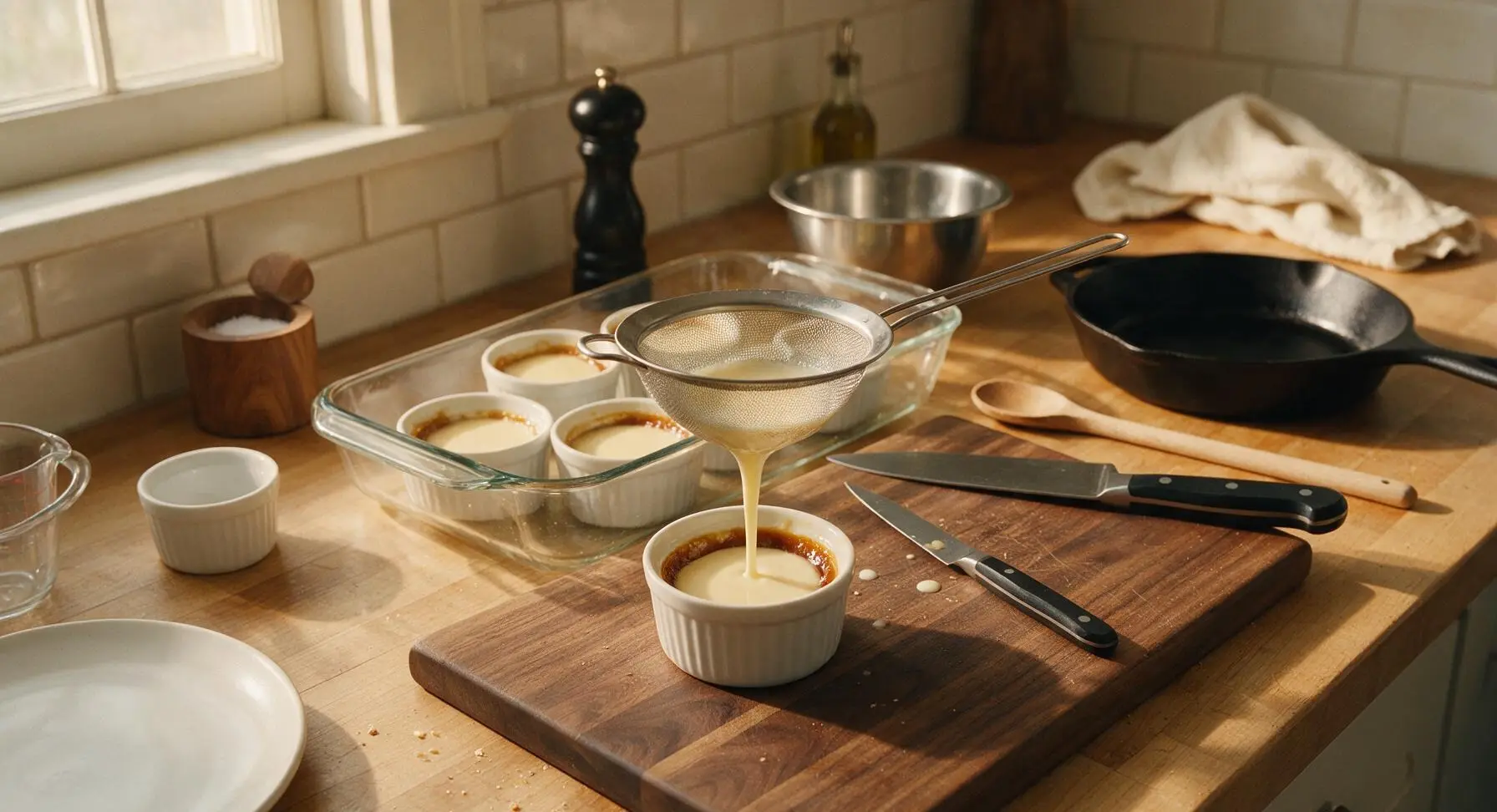
Step 5
step5:Strain Custard into Ramekins
6

Bake in Water Bath

Bring a full kettle of water to a boil using the stainless steel electric kettle. Carefully pull the middle oven rack out halfway, set the baking dish with filled ramekins on the rack, then pour boiling water into the baking dish until the water level comes halfway up the sides of the ramekins (take care not to splash water into the custard, as this will cause soggy spots). Gently push the rack back into the oven, and bake for 40-45 minutes at 160°C (325°F). The custard is done when the outer edges are fully set, but the very 1cm center jiggles softly like firm Jell-O when the dish is gently tapped.
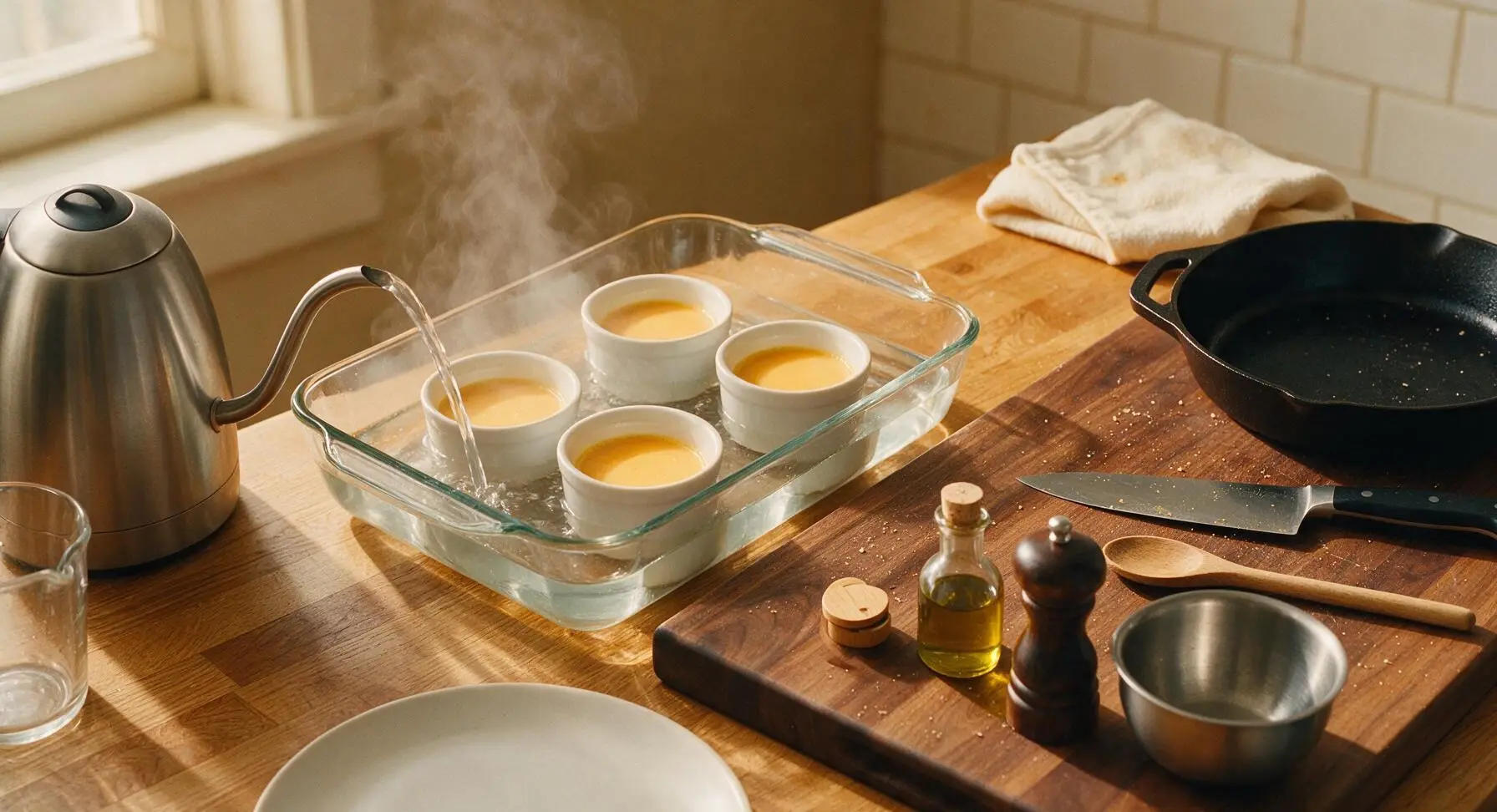
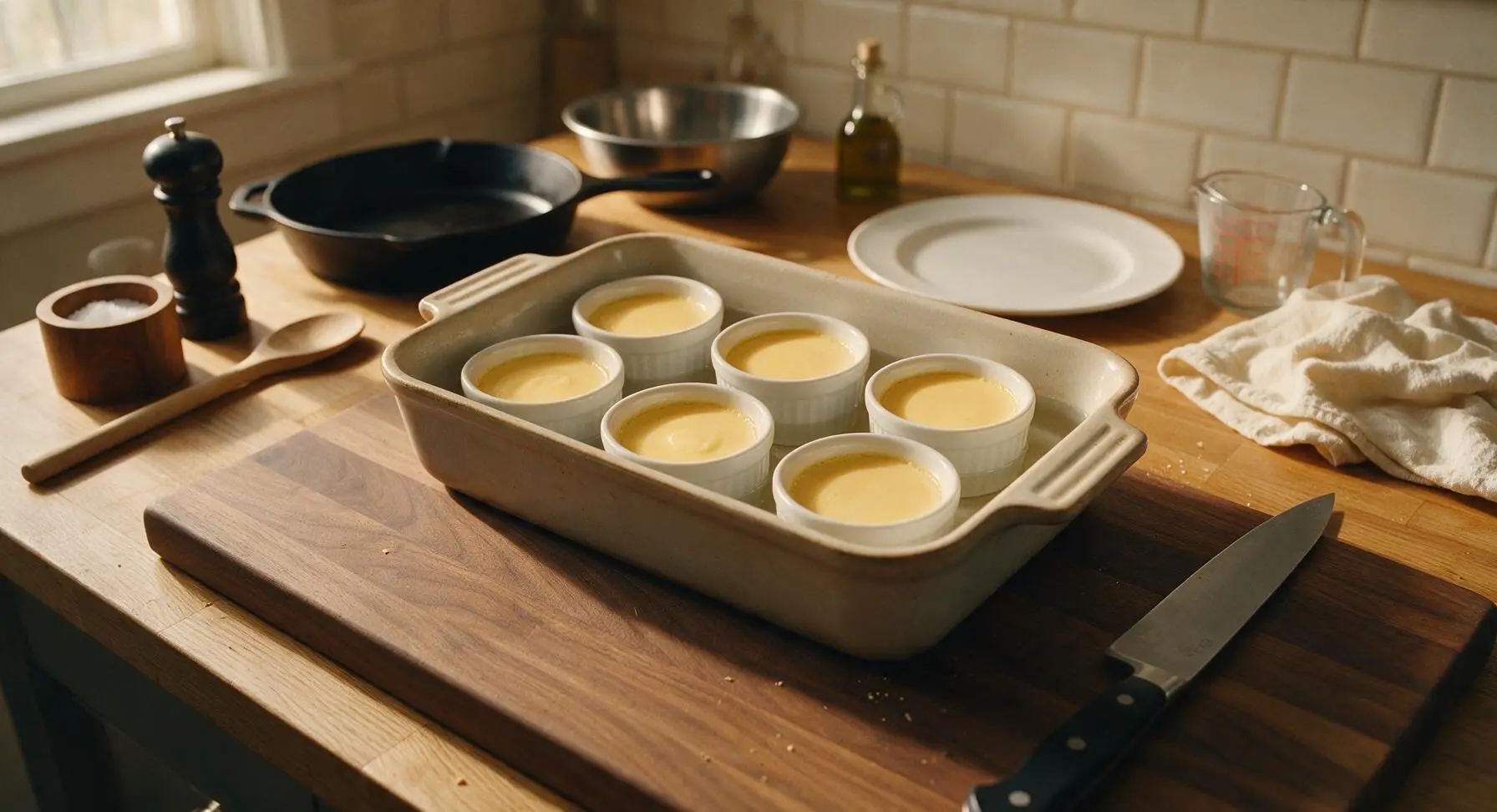
Step 6
step6:Bake in Water Bath
Step 6
step6:Bake in Water Bath
7

Cool and Chill Thoroughly

Carefully remove the baking dish from the oven, lift each ramekin out of the hot water bath using a dry oven mitt, and set them on the matte chrome wire cooling rack to come to room temperature for 1 full hour. Once cool, cover each ramekin tightly with plastic wrap and refrigerate for a minimum of 4 hours (preferably 12 hours/overnight) to fully set the custard and allow the hard caramel layer to melt into a flowing sauce.
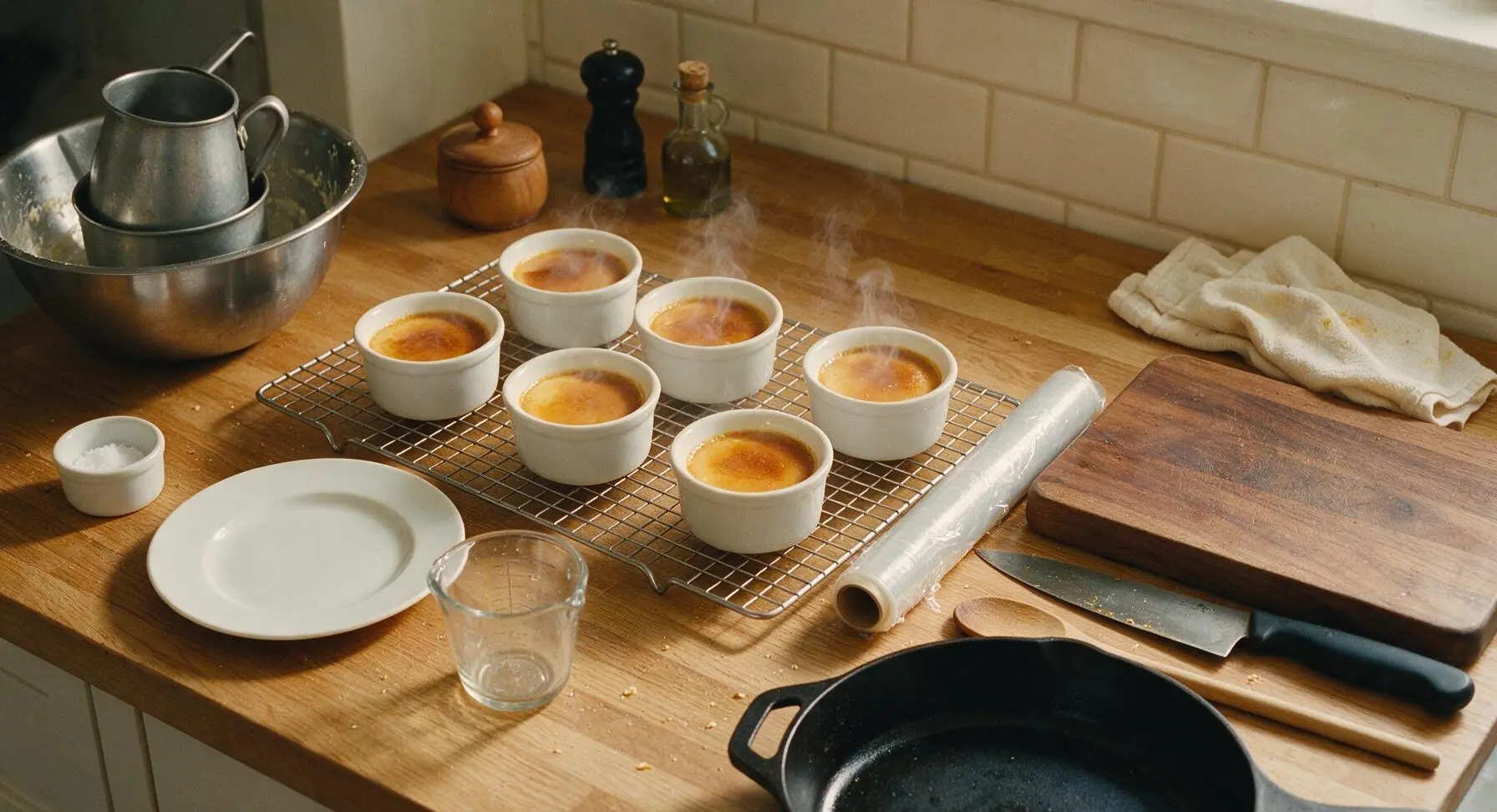
Step 7
step7:Cool and Chill Thoroughly
8

Unmold and Serve

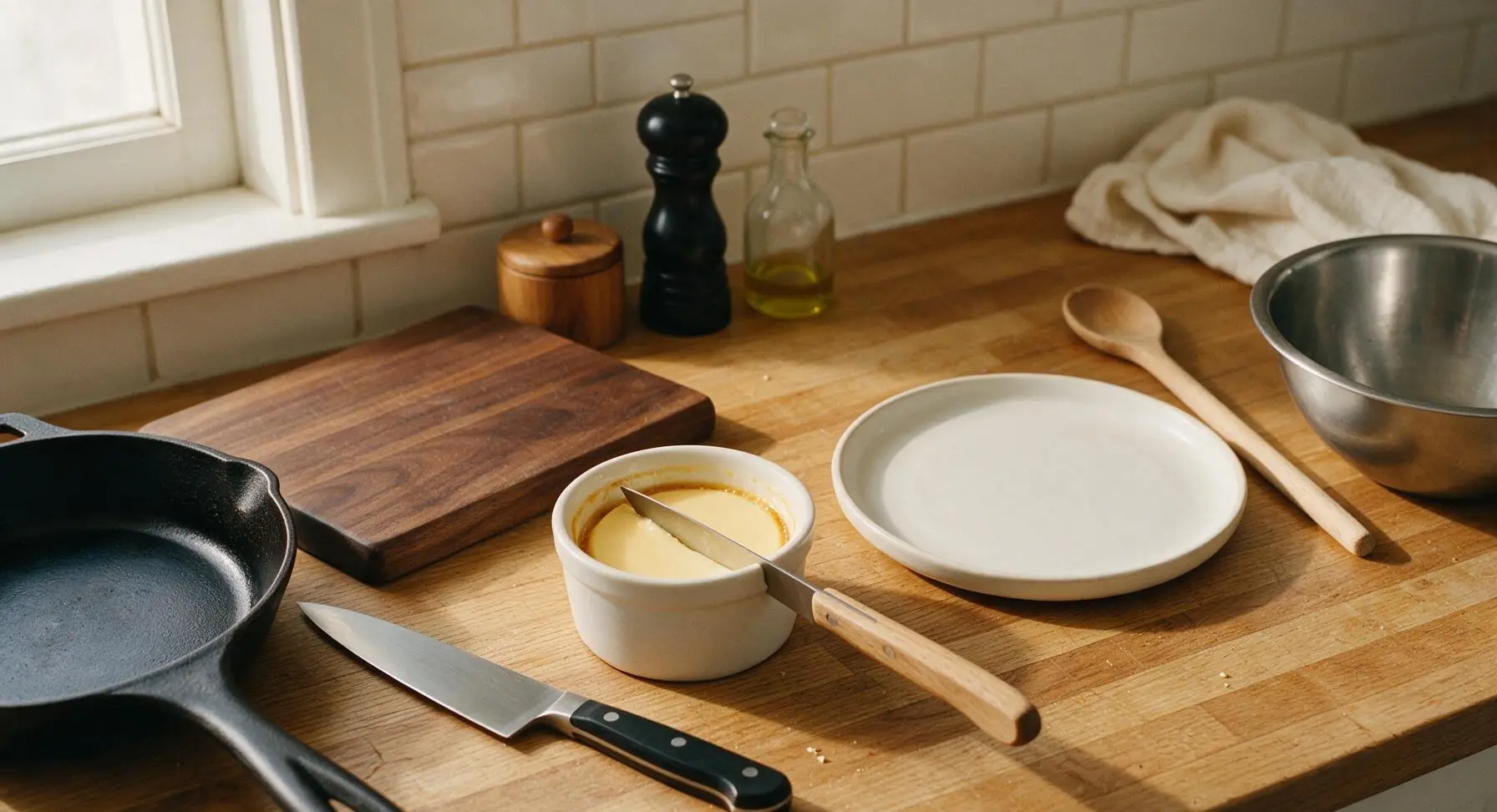
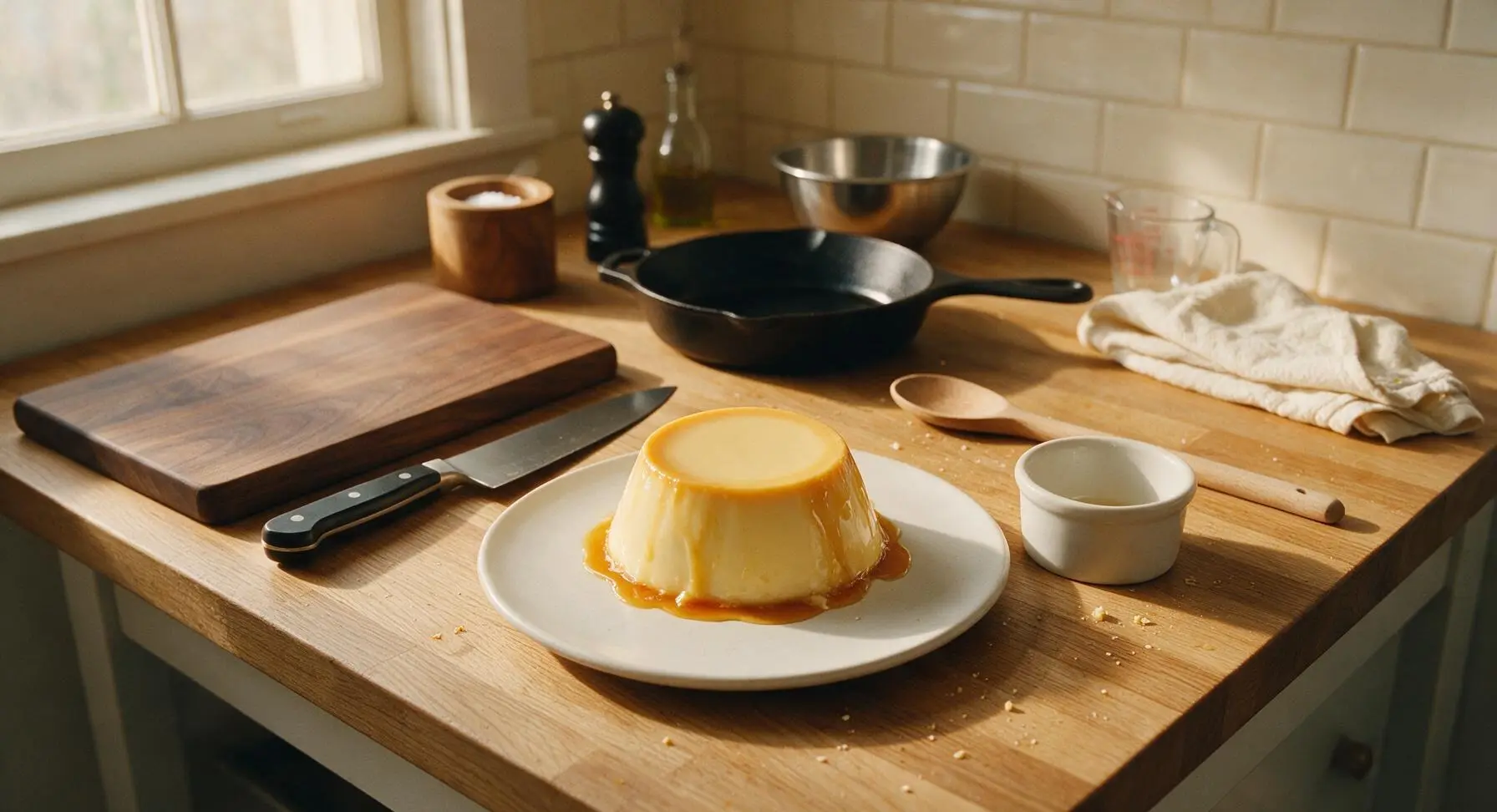
When ready to serve, remove one ramekin from the refrigerator. Run the small paring knife around the very inner edge of the custard, pressing the blade gently against the ramekin wall to avoid cutting or nicking the smooth custard surface. Place a shallow matte white ceramic dessert plate upside down over the top of the ramekin, hold the plate and ramekin tightly together with both hands, and flip both over in one quick, smooth motion. Let sit for 10 seconds to allow the caramel to flow down over the custard, then gently lift the ramekin straight up to reveal the perfectly smooth crème caramel.
Step 8
step8:Unmold and Serve
Step 8
step8:Unmold and Serve

Tips

1.Never stir caramel once it reaches a simmer: stirring can trigger sugar crystallization, resulting in a grainy, lumpy caramel instead of the smooth, glossy amber sauce. Swirl the pan gently by the handle to distribute heat evenly instead.
2.Whisk custard gently, not vigorously: over-whisking creates excess air bubbles that bake into tiny holes in the custard, ruining its signature silky, dense texture. Pour warm cream slowly into eggs while stirring gently to prevent curdling as well.
3.Do not rush the chill time: chilling for a minimum of 4 hours (ideally overnight) allows the hard caramel layer to fully melt into a flowing sauce, and gives the custard time to set firmly enough to unmold cleanly without breaking.

✨ You May Also Like

Desserts & Baking
🍜 Italy

Creamy, coffee-kissed classic Northern Italian no-bake dessert, with layers of rum-spiked mascarpone cream, soft ladyfingers, and a rich cocoa dusting.

⏱️ 4 hours 3Desserts & Baking ★ 4.7
Desserts & Baking
🍜 France

Flaky, shatteringly crisp, buttery French croissants with golden exteriors and soft, airy layered interiors, perfect for pairing with coffee for a special morning treat.

⏱️ 12 hours Desserts & Baking ★ 4.5
Desserts & Baking
🍜 United States

Warm, spiced baked apples topped with a fluffy golden biscuit crust, this cozy dessert pairs perfectly with vanilla ice cream for cool-weather comfort.

⏱️ 55 minuteDesserts & Baking ★ 4.6
Desserts & Baking
🍜 United States

A star-spangled classic American blueberry pie with buttery flaky crust and bright sweet-tart filling, perfect for summer patriotic gatherings.

⏱️ 1 hour 25Desserts & Baking ★ 4.7
Desserts & Baking
🍜 United States

A beloved no-bake regional Maine candy with a chewy coconut-potato center coated in rich dark chocolate, a New England holiday staple since the 1870s.

⏱️ 2 hours 3Desserts & Baking ★ 4.8
Desserts & Baking
🍜 France

Luxuriously creamy, floral frozen custard made with aromatic Tahitian vanilla beans, boasting a smooth, rich texture that melts slowly on the tongue.

⏱️ 3 hours 3Desserts & Baking ★ 4.5

French Crème Caramel:Frequently Asked Questions

1.What’s the difference between crème caramel and flan? ▾
While the terms are sometimes used interchangeably, classic French crème caramel uses a balanced mix of whole milk and heavy cream for a lighter, silkier texture than many dense Latin-style flans that rely on sweetened condensed milk. It also features a thin, bright amber caramel layer rather than a thicker, deeply cooked caramel.
2.Why does my caramel turn grainy when I cook it? ▾
Grainy caramel happens when stray sugar crystals form on pan sides and fall back into the melted sugar. Prevent this by brushing down pan sides with a wet pastry brush as the sugar melts, and avoid stirring once the sugar boils—just swirl the pan gently to distribute heat evenly for a smooth, glossy result.
3.Can I make crème caramel ahead of time? ▾
Absolutely—this is one of the best make-ahead fancy desserts! Once fully baked and cooled to room temperature, cover each ramekin tightly with plastic wrap and store in the fridge for up to 3 days. The texture and flavor actually improve after an overnight chill, as the caramel melts into that signature glossy sauce.
4.Why is my custard rubbery with tiny holes all over? ▾
That rubbery, hole-filled texture comes from overbaking or using too high an oven temperature, which causes the egg proteins to curdle. Always bake crème caramel in a hot water bath at a steady 325°F, and pull it when edges are set but the center has a soft Jell-O-like jiggle—it finishes setting as it cools.
5.Do I have to use a water bath when baking crème caramel? ▾
Yes, a hot water bath is non-negotiable for that signature silky, even crème caramel texture. The humid, consistent low heat from the steam cooks the custard gently, preventing curdling, cracked tops, and uneven doneness. Wrap ramekin exteriors in foil if they aren’t fully waterproof to keep sloshing bath water from seeping in.
6.Can I use low-fat milk instead of whole milk to cut calories? ▾
I don’t recommend it for the classic luxe texture. Lower-fat milks lack enough fat to create that rich, smooth mouthfeel, leading to a watery, slightly rubbery custard that won’t hold its shape well when unmolded. For a lighter take, swap ¼ of the heavy cream for extra whole milk instead of using skim or 2% milk.
7.How do I know when my caramel is done cooking? ▾
Cook your granulated sugar over medium heat, swirling the pan occasionally, until it melts into a deep warm amber that smells like toasted sugar, right around 350°F. Pull it off heat immediately at that stage, because it burns extremely quickly and turns bitter if left on the stove even 30 seconds too long.
8.Why won’t my crème caramel come out of the ramekin cleanly? ▾
First, confirm you’ve chilled it for at least 4 hours—warm custard sticks and falls apart easily when unmolded. To release cleanly, run a thin paring knife around the very edge of the custard, set a serving plate upside down over the ramekin, then flip both in one quick, smooth motion and give a gentle 2-second shake.
9.Can I add extra flavorings like chocolate or coffee to the custard? ▾
Definitely! This classic custard base is extremely versatile. Stir a scraped vanilla bean or 1 teaspoon vanilla extract into the warm milk and cream for traditional depth, add 1 tablespoon instant espresso for a coffee twist, or mix in 2 ounces of cooled melted dark chocolate for a rich chocolate variation.
10.Why does my caramel taste bitter? ▾
Bitter caramel means you cooked the sugar a touch too long, past the perfect amber stage to the point where the sugar begins to burn. It’s an easy misstep because sugar temperature spikes so fast at the end of cooking. Next time, pull the pan as soon as you see that deep golden amber, before it turns dark brown or smells acrid.
11.Do I need to temper the eggs when mixing the custard? ▾
Yes, tempering is key to avoiding tiny scrambled egg bits in your smooth custard. Slowly pour about ½ cup of the hot (not boiling!) milk and cream mixture into your whisked large eggs and yolks while whisking nonstop, to gently raise egg temperature before stirring the egg mix back into the rest of the warm dairy.
12.Can I make this in one large dish instead of individual ramekins? ▾
Absolutely! Pour the caramel into a 1.5-quart ceramic baking dish, top with the custard, and bake in the water bath for 50 to 60 minutes, until edges are set and the center has a soft jiggle. Plan for an extra 2 hours of chill time before unmolding onto a large platter to serve a crowd easily.
13.What causes a soggy, watery layer on top of my finished custard? ▾
That watery layer, called syneresis, happens when custard is either overbaked or stored in the fridge for longer than 3 days. It’s totally harmless, but not ideal for that perfect silky texture. Stick to the recommended bake time, pull it when the center is jiggly, and enjoy it within 3 days of baking for best results.
14.Can I use light brown sugar instead of white granulated sugar for the caramel? ▾
I don’t recommend it for classic crème caramel. Brown sugar contains molasses, which gives the caramel a heavy, toffee-like flavor and creates a thicker, chewier caramel layer instead of the thin, glossy sauce the dessert is known for. Stick to plain white granulated sugar for that clean, bright caramel that pairs perfectly with vanilla custard.
15.How long do I need to let the crème caramel chill before serving? ▾
Let it cool completely to room temperature (about 1 hour on the counter) after baking, then chill it in the fridge for a minimum of 4 hours, though overnight is even better. That chill time lets the custard fully set and lets the hard caramel layer melt into that runny, golden sauce that pours over the top when unmolded.
16.Why is there a skin on top of my baked custard? ▾
A thin skin forms when the top of the custard is exposed to dry oven air during baking. Prevent this by covering the top of each ramekin with a small square of aluminum foil before placing them in the water bath; the foil traps moisture and stops the surface from drying out into that tough, chewy layer.
17.Can I freeze crème caramel for longer storage? ▾
I don’t recommend freezing it. The high dairy and egg content means the custard will separate and turn grainy when thawed, and the caramel sauce will become watery instead of glossy. It stores perfectly in the fridge for up to 3 days, which is ideal for prepping ahead for dinner parties or special holiday meals.
18.Can I use all heavy cream instead of a mix of milk and cream? ▾
You can, but it will make the custard extremely rich, dense, and almost butter-like, rather than the light, silky, melt-in-your-mouth texture that defines classic crème caramel. The traditional mix of roughly 2 parts whole milk to 1 part heavy cream strikes the perfect balance of luxe richness and delicate, smooth mouthfeel.
19.What’s the best way to serve crème caramel? ▾
Serve it cold, straight from the fridge, immediately after unmolding so the glossy caramel runs freely down the custard sides. It needs no extra garnish to feel elegant, but you can add a single fresh raspberry, tiny mint sprig, or light pinch of flaky sea salt for a subtle pop of contrast to the sweet, vanilla-kissed flavor.

Comments (7)

yesterday

OMG I made this for my Sunday family dinner last night and everyone went back for seconds! I was nervous it’d be too fussy since I’m usually a boxed mix baker, but the 45 minute cook time was totally doable. The caramel came out perfectly silky, no weird grainy bits at all. My kids loved it so much they asked me to make it for their school potluck next week! Game changer of a dessert, fr.

2 hours ago

Wait did you double the recipe for the potluck? I’m making this for my book club and worried a single batch won’t be enough!

30 minutes ago

So glad your family enjoyed it! If you’re making it for a potluck, a 1.5x batch works great in a 9x13 pan — just add 7-8 minutes to the bake time and make sure the caramel doesn’t darken too fast. You’ve got this!

2 days ago

Tasted fantastic but I ran into a little trouble with the caramel stage — I let it cook a little too long and it got bitter on the first try. Second attempt turned out SO good though, totally worth the extra effort. Definitely a medium difficulty, don’t try to rush the caramel like I did!

yesterday

So sorry the first caramel batch gave you trouble! A good trick is to pull it off the heat right when it turns a light amber color — it’ll keep cooking for a minute off the burner from residual heat. Happy the second batch worked out!

3 days ago

Who says fancy French desserts can’t be meal prep? I made 6 individual ramekins of this on Sunday and they lasted all week in the fridge for my post-dinner sweet treat. Way cheaper than buying crème caramel from the fancy bakery near campus, and honestly tastes better. 10/10 will be making on repeat.

5 days ago

Hmm, I followed the directions exactly but my custard had little tiny bubbles all through it and the texture was a little rubbery? Did I overbake it? I pulled it out right at 45 minutes too, so I’m confused. Flavor was great though, just texture off.

3 days ago

That happens if your water bath is too hot! I always put a layer of paper towels under the ramekins in the baking dish and make sure the water is gently simmering, not boiling, when I pour it in. Fixed that rubbery texture issue for me years ago!

1 week ago

Made this for my anniversary date night in with my partner and they literally thought I ordered it from our favorite French bistro downtown! The wobbly custard and that perfect caramel drip when you flip it out? *Chef’s kiss* Not gonna lie I was stressed about flipping it, but running a knife around the edge first worked like a charm.

5 days ago

Wait what did you serve it with? I’m making this for my partner’s birthday next week and was thinking fresh raspberries on the side?

3 days ago

Love that it made your anniversary special! Fresh raspberries or a tiny dollop of freshly whipped cream are the perfect pairings — they cut through the richness of the caramel and custard so nicely.

2 weeks ago

Brought this to my neighborhood block party last weekend and people were begging for the recipe before I even left! I was worried it’d be too delicate to transport, but I kept the ramekins in a cooler and flipped them right before serving, zero issues. So much more impressive than the usual cookies and brownies everyone brings.

1 week ago

That’s such a smart transport tip! Keeping them chilled until you’re ready to flip is the key to no messy caramel spills when you’re serving away from home. So glad it was a block party hit!

5 minutes ago

So happy this is naturally gluten free! I’ve been looking for a fancy dessert I can serve at my next dinner party that won’t require weird flour substitutes, and this fits the bill perfectly. Only knock is I wish the recipe noted how long it needs to chill in the fridge before serving — I almost didn’t leave enough time! Flavor was incredible though, super rich and creamy.