korean food

title 1
korean food
⏱️ cook time 15 minutes
🍽️ servings 4
⚡ Difficulty easy

intro

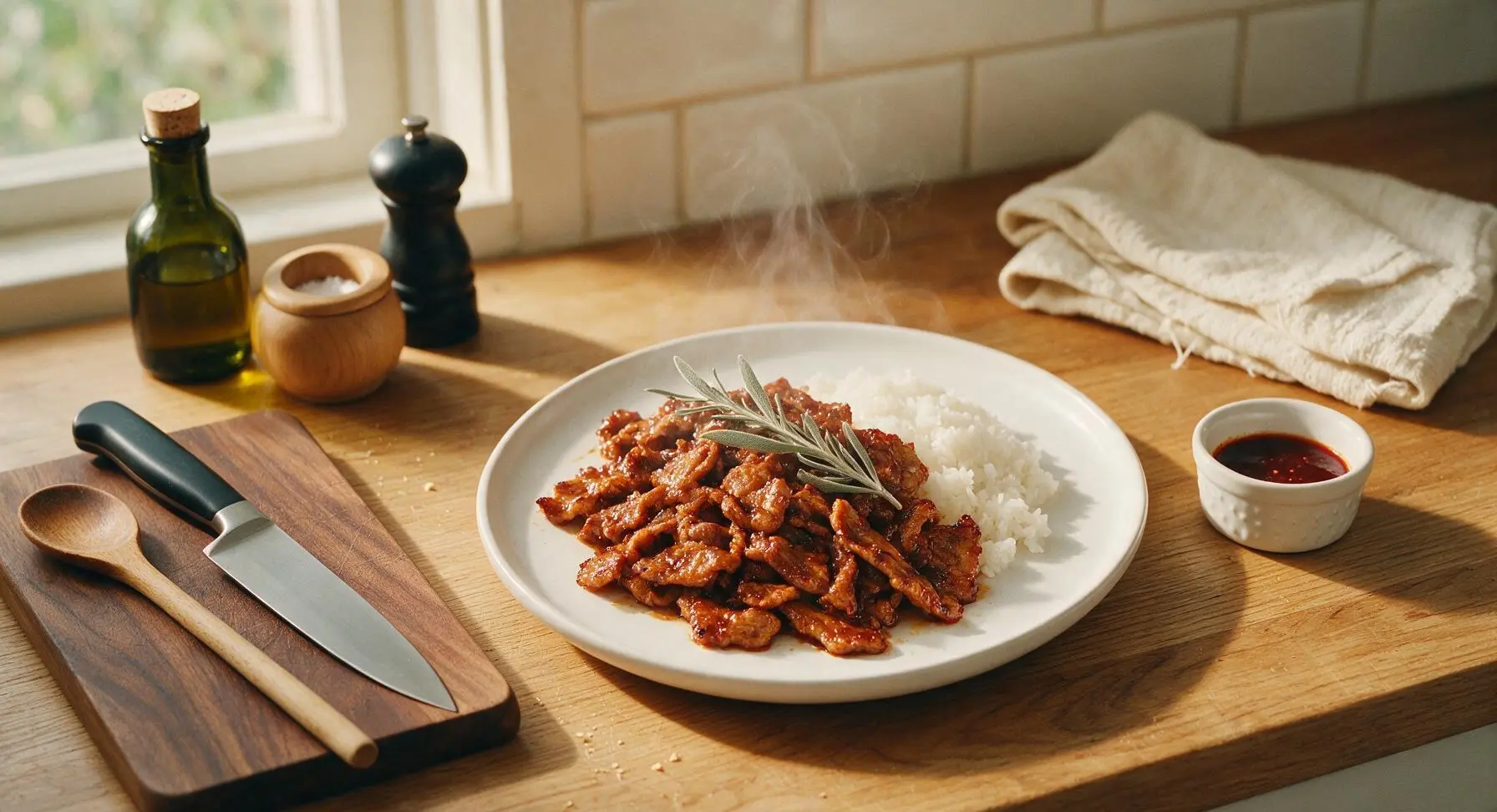
Tender, caramelized spicy pork bulgogi is a beloved Korean home staple, packed with sweet, savory, umami heat, perfect for fast weeknight dinners with steamed rice.

Ingredients
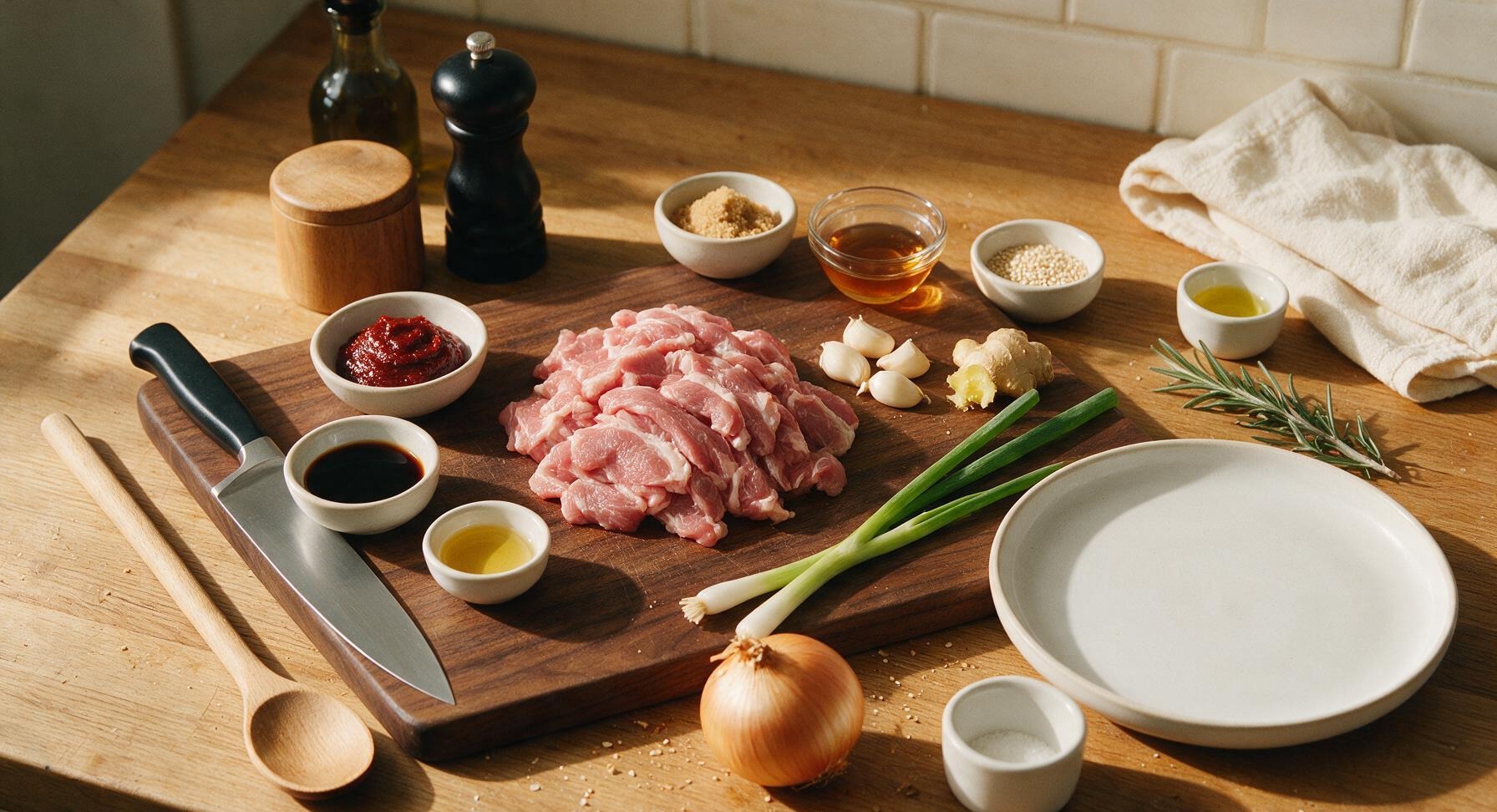
Boneless pork shoulder 500g
Gochujang (Korean red chili paste) 3 tbsp
Low-sodium soy sauce 2 tbsp
Toasted sesame oil 1 tbsp
Garlic cloves 4 (12g)
Fresh ginger 5g (1 tsp grated)
Yellow onion 1 small (150g)
Scallions 2 (30g)
Light brown sugar 1 tbsp
Korean rice wine (mirin) 1 tbsp
Toasted white sesame seeds 1 tsp
Neutral canola oil 1 tsp

Steps

1

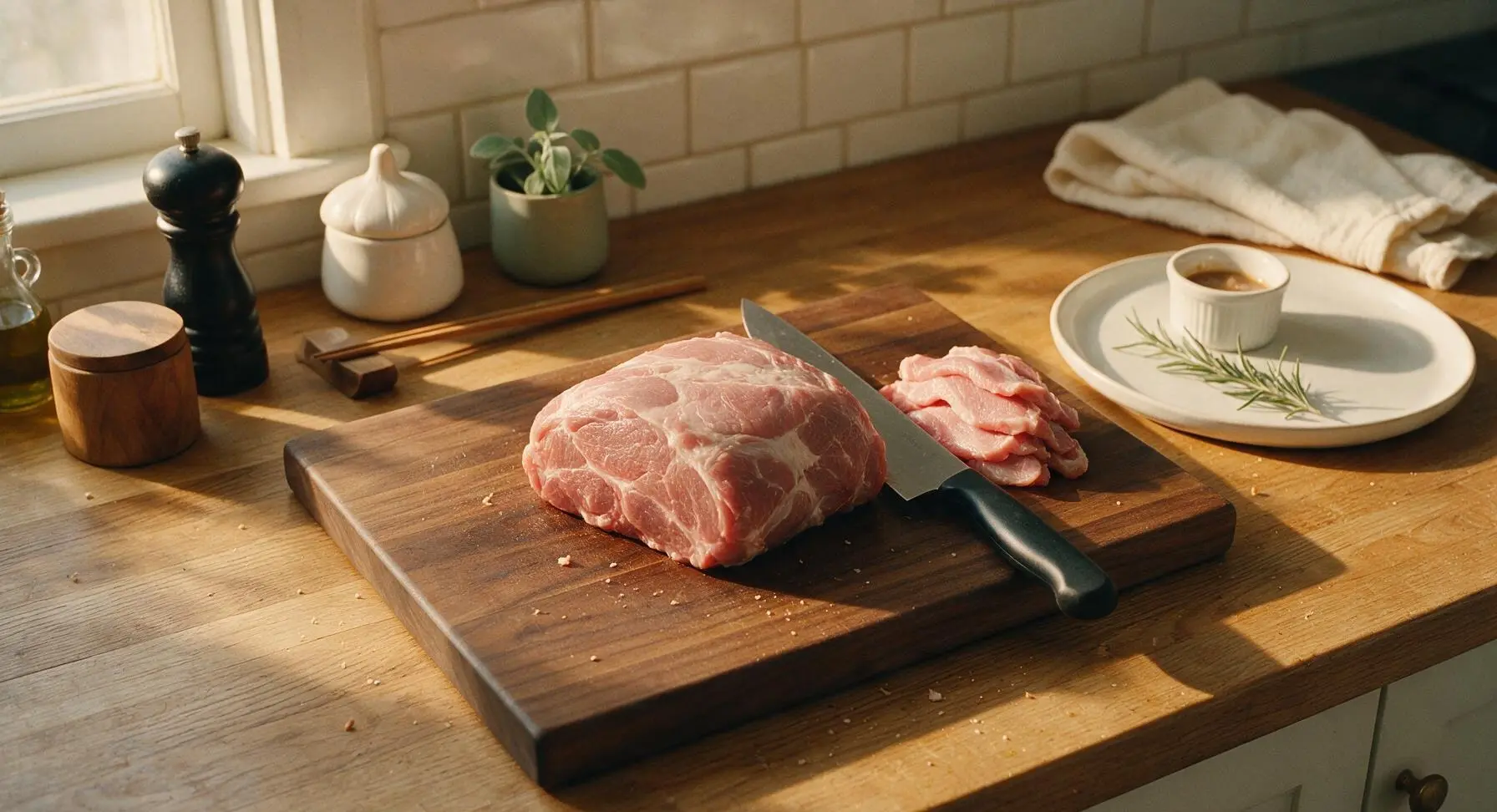
Slice pork thinly

Place the 500g boneless pork shoulder on the maple cutting board. Using the walnut-handled chef’s knife, slice against the grain into 3mm-thick, 5cm-long pieces. Freeze the pork for 20 minutes first to firm it up for easier thin slicing, a trick for beginners. Pat sliced pieces lightly with the corner of the burnt orange linen towel to remove excess surface moisture for better searing.
Step 1
step1:Slice pork thinly
2

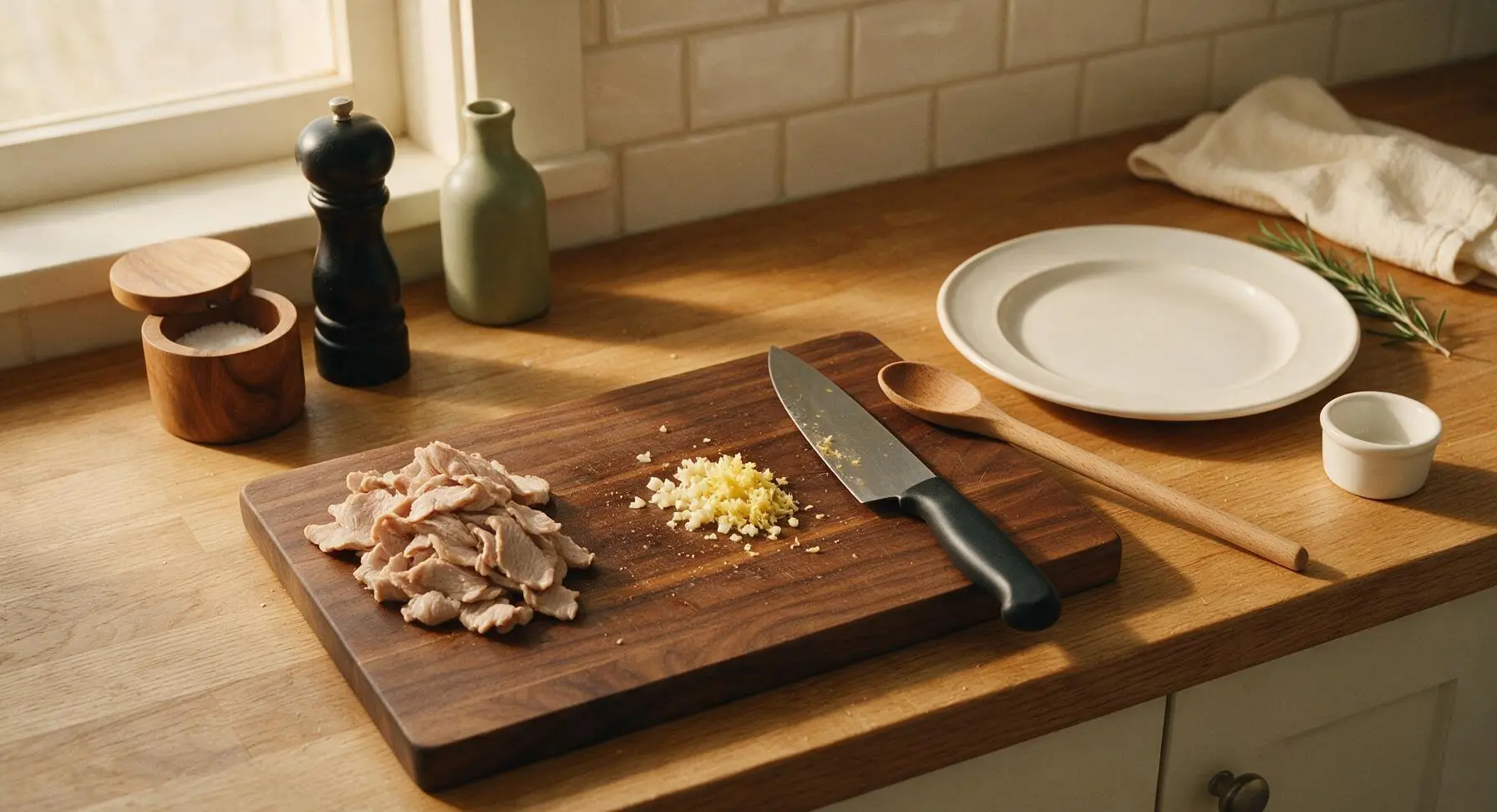
Mince garlic and ginger

Move the sliced pork to the left edge of the cutting board to clear workspace. Place 4 peeled garlic cloves and the 5g ginger knob in the center of the board. Use the chef’s knife to mince garlic finely, and grate ginger against the knife’s flat edge to yield 1 teaspoon grated ginger. Squeeze out and discard excess ginger juice to prevent bitter flavor in the final dish.
Step 2
step2:Mince garlic and ginger
3

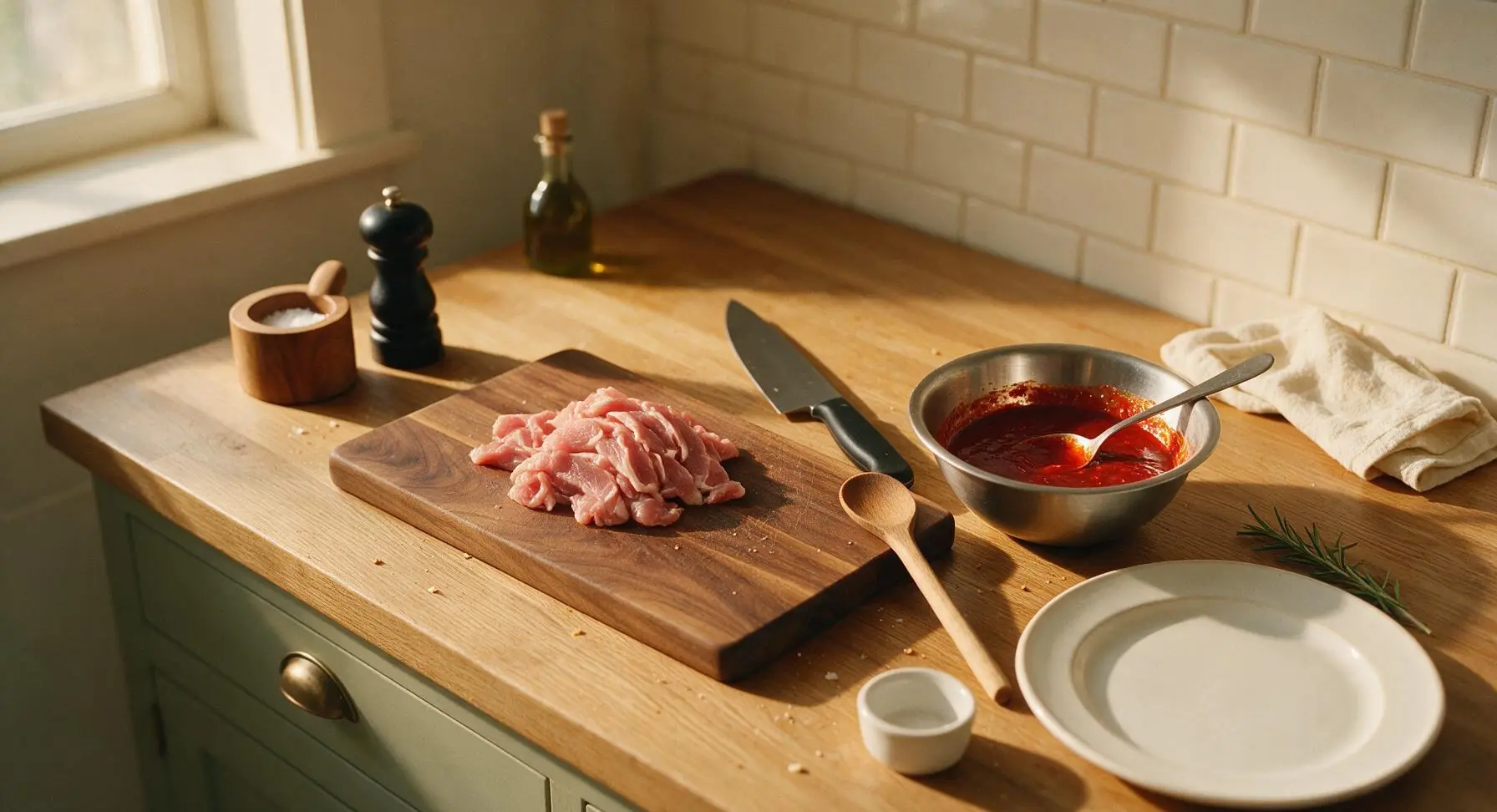
Mix spicy marinade

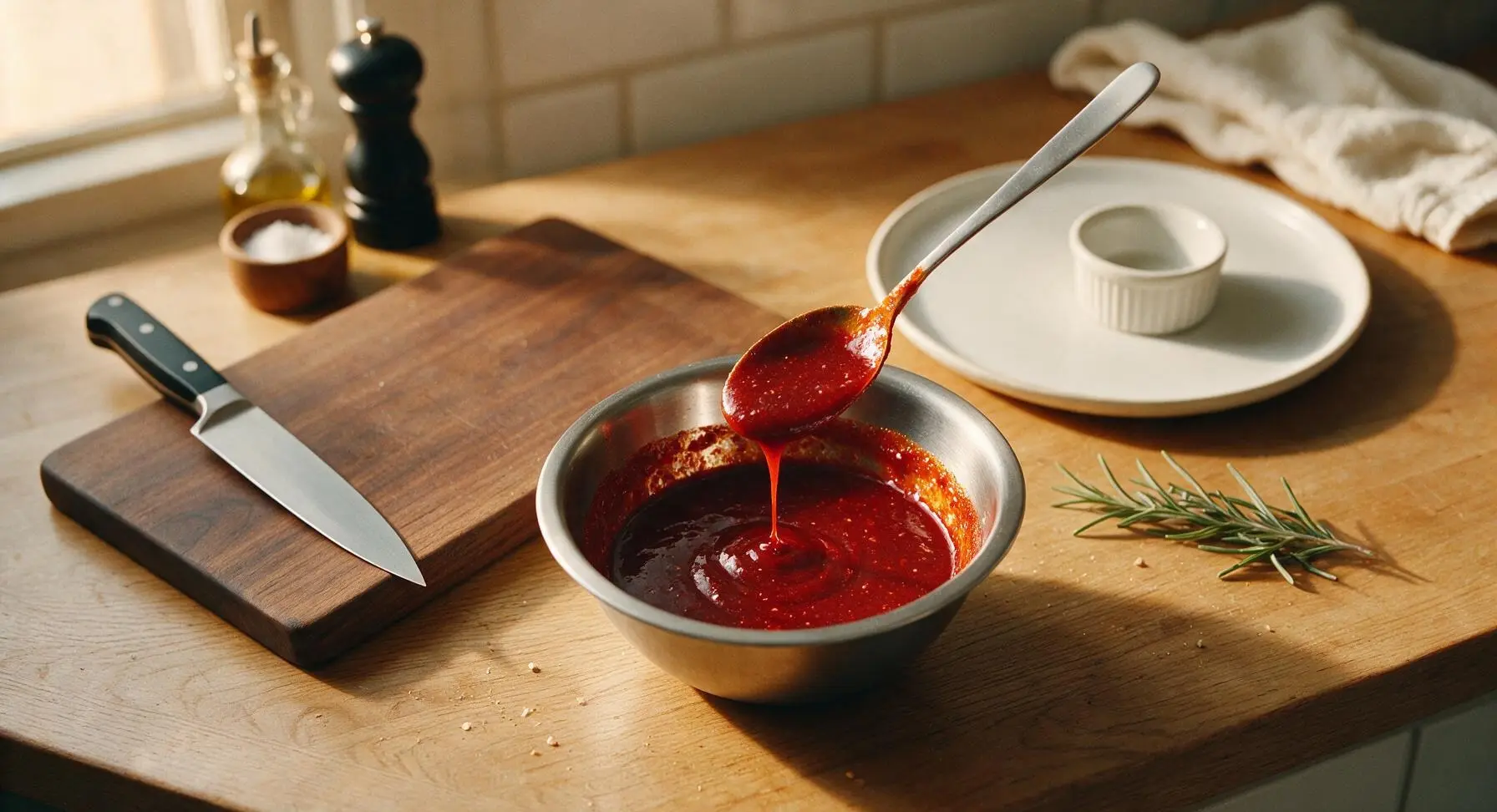
Place the 12cm matte stainless steel mixing bowl to the right of the cutting board. Add gochujang, soy sauce, toasted sesame oil, light brown sugar, rice wine, minced garlic, and squeezed grated ginger to the bowl. Stir with the stainless steel mixing spoon until completely smooth, with no remaining gochujang lumps and sugar fully dissolved into the glossy red mixture.
Step 3
step3:Mix spicy marinade
Step 3
step3:Mix spicy marinade
4

Toss to marinate

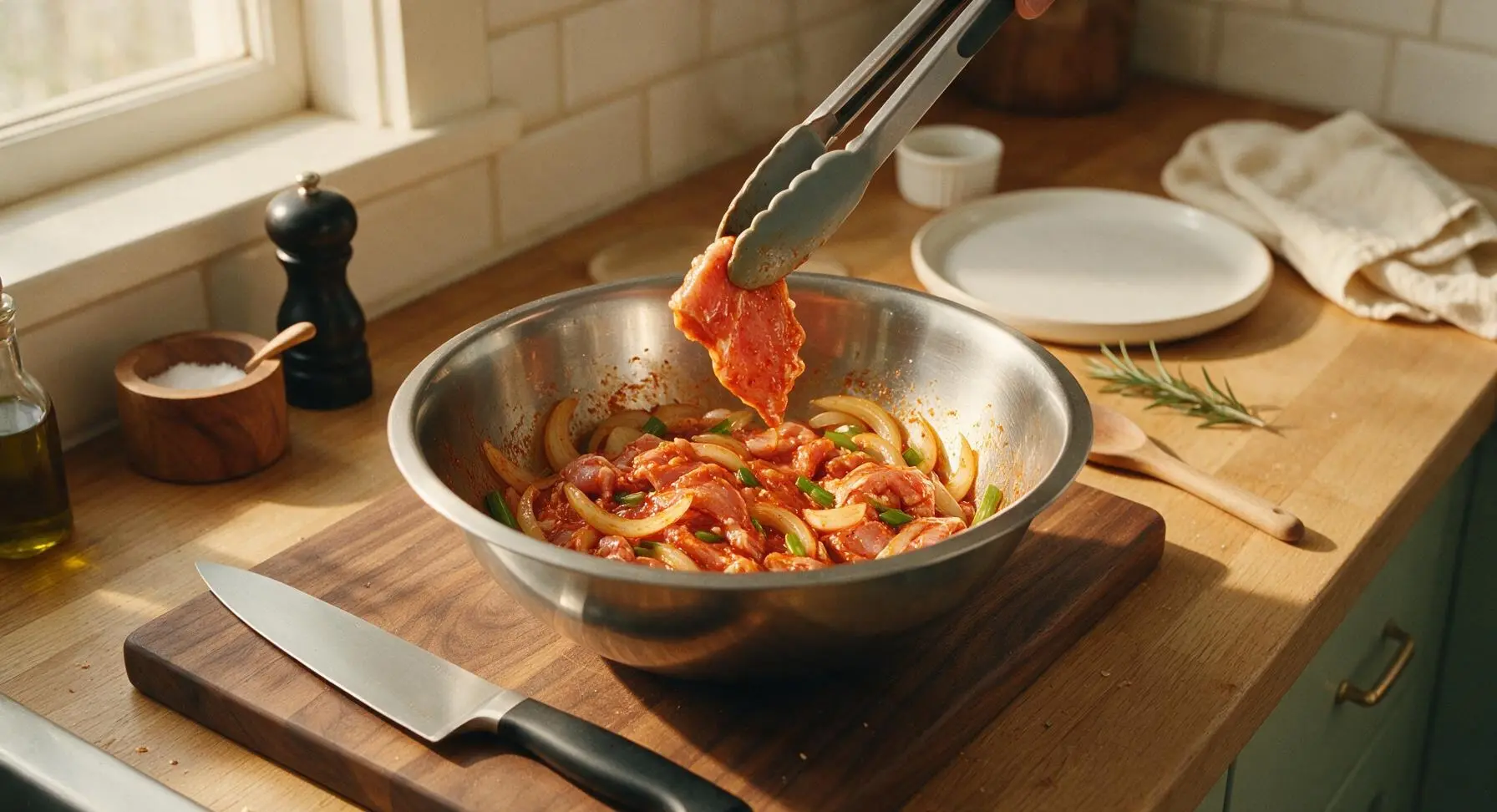
Add the sliced pork, thinly sliced yellow onion half-moons, and half of the cut scallion pieces to the mixing bowl with the smooth marinade. Use the silicone-tipped stainless steel tongs to toss thoroughly, ensuring every piece of pork and onion is evenly coated in red sauce. Let rest at room temperature for 15 minutes, or cover and refrigerate for up to 2 hours for deeper flavor.
Step 4
step4:Toss to marinate
5

Pan-fry the bulgogi

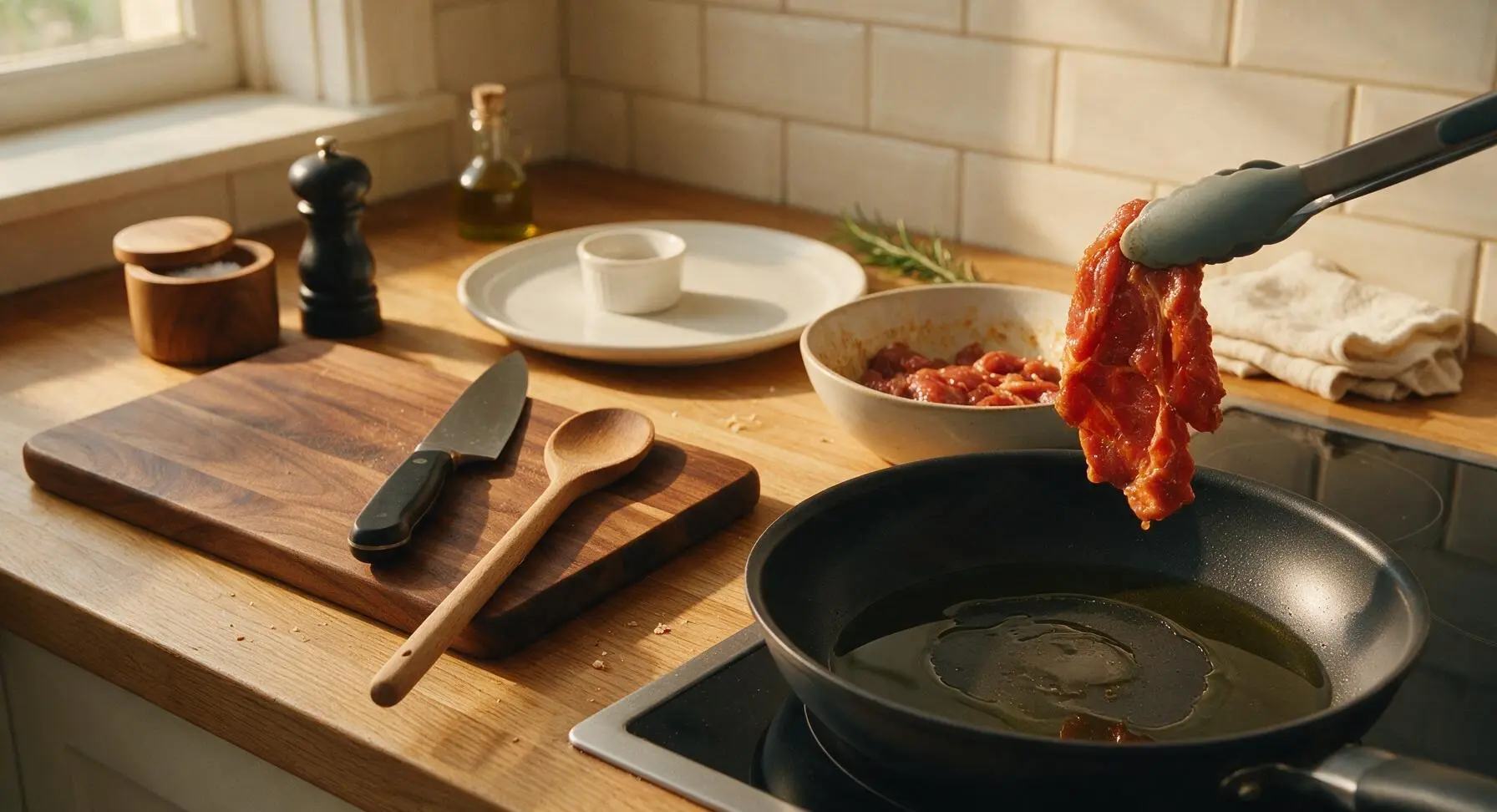
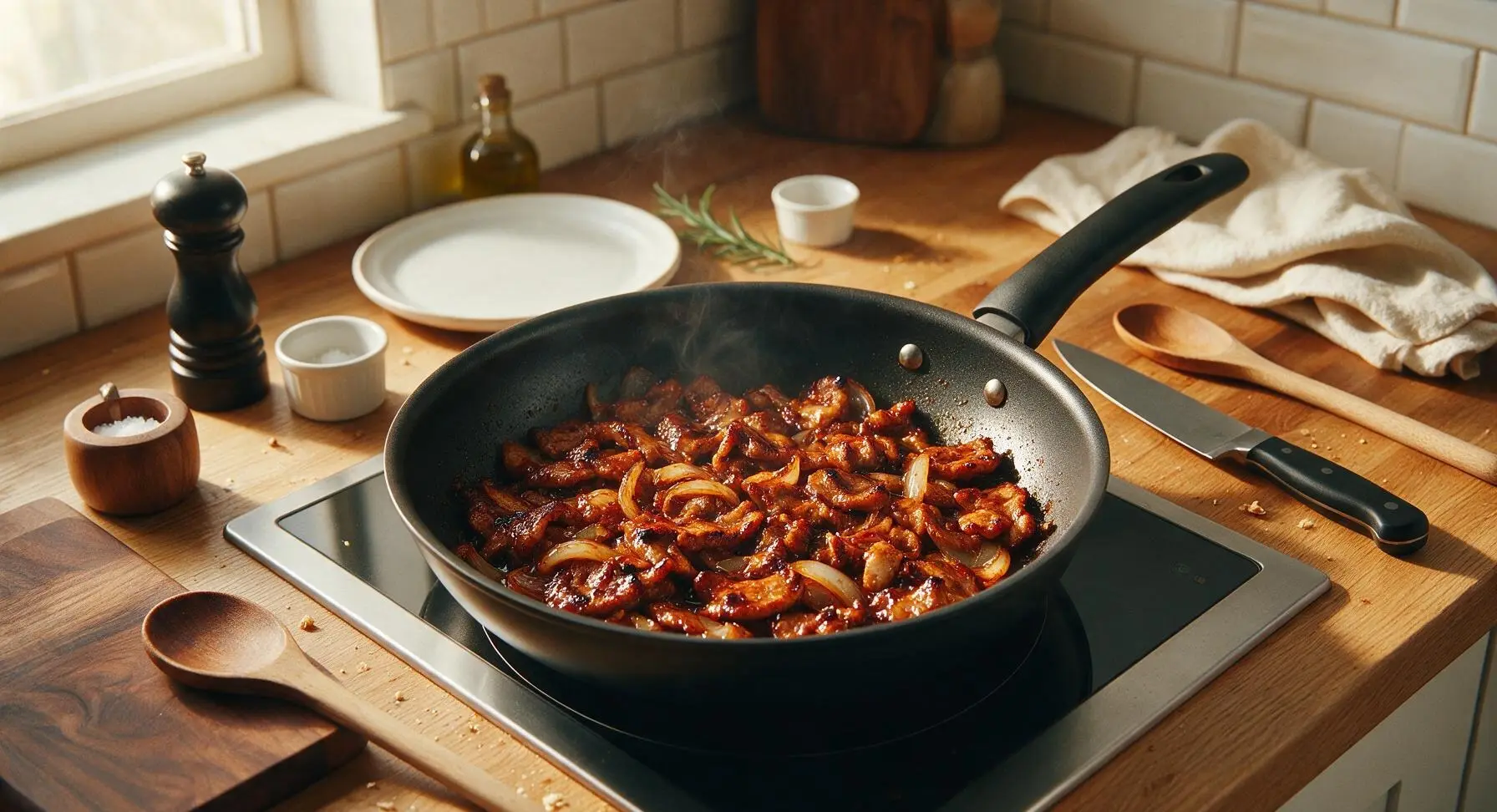
Move the 28cm matte black non-stick frying pan to the center of the induction cooktop over medium-high heat, add 1 teaspoon neutral canola oil. Once oil shimmers (about 1 minute of preheating), add the marinated pork and vegetable mixture in a single even layer, cooking in two batches if needed to avoid overcrowding. Cook for 6-7 minutes total, stirring occasionally with tongs, until pork is cooked through, edges are slightly caramelized and crispy, and sauce has thickened to cling to each piece.
Step 5
step5:Pan-fry the bulgogi
Step 5
step5:Pan-fry the bulgogi
6

Taste and adjust seasoning

Use the tongs to lift a small piece of cooked pork to taste. Add an extra pinch of brown sugar if the flavor is too spicy, a tiny splash of soy sauce if too bland, or a teaspoon of water to thin the sauce if it has reduced too much. Stir to combine any adjustments, and cook for 1 final minute to meld flavors.
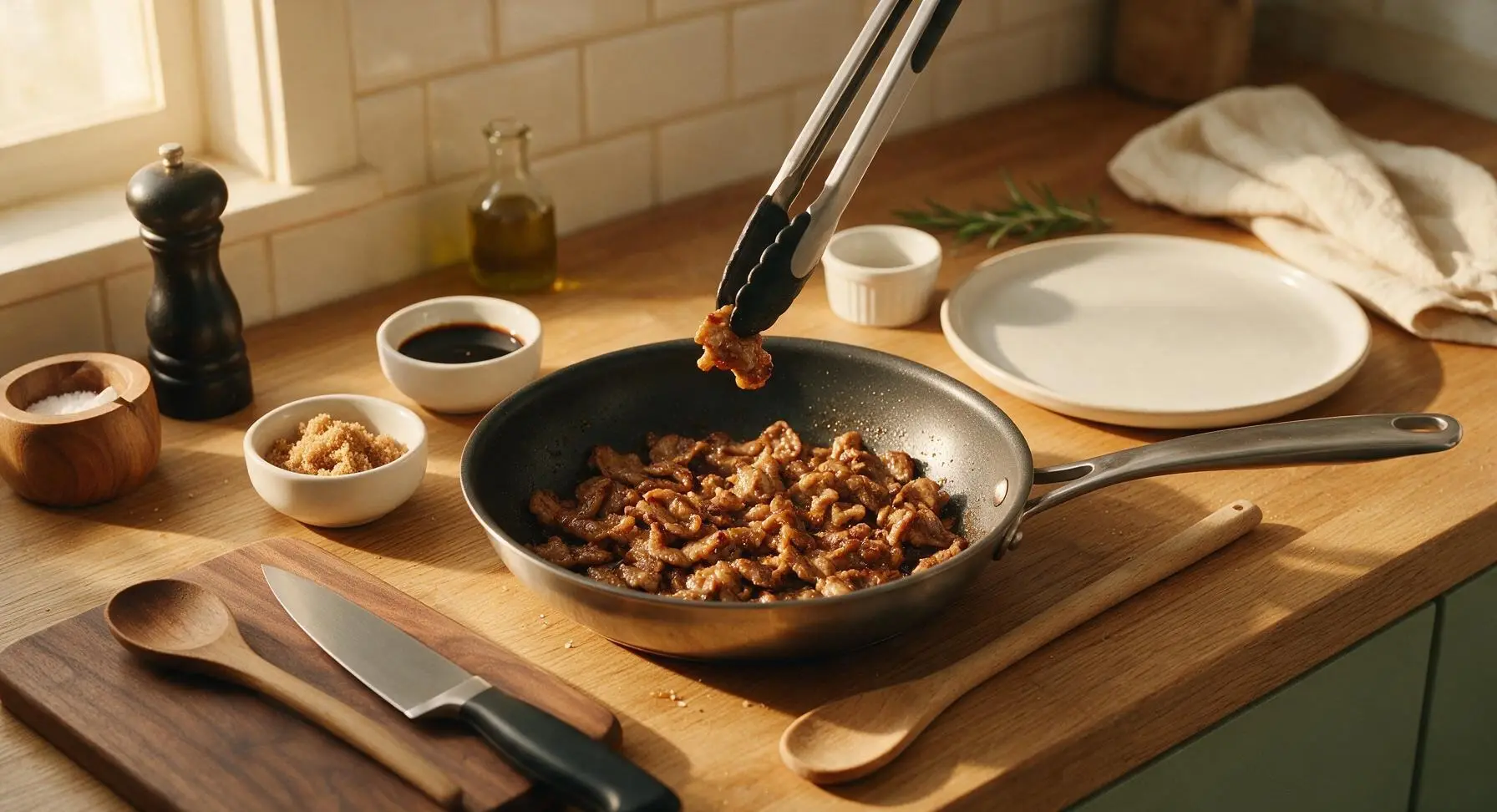
Step 6
step6:Taste and adjust seasoning
7

Plate and garnish

Use the tongs to transfer all cooked bulgogi to the center of the matte cream white ceramic dinner plate. Top with the remaining fresh scallion pieces, 1 teaspoon toasted white sesame seeds, and one small fresh perilla leaf picked from the countertop terracotta pot as garnish. Serve immediately while hot, paired with steamed white rice if desired.
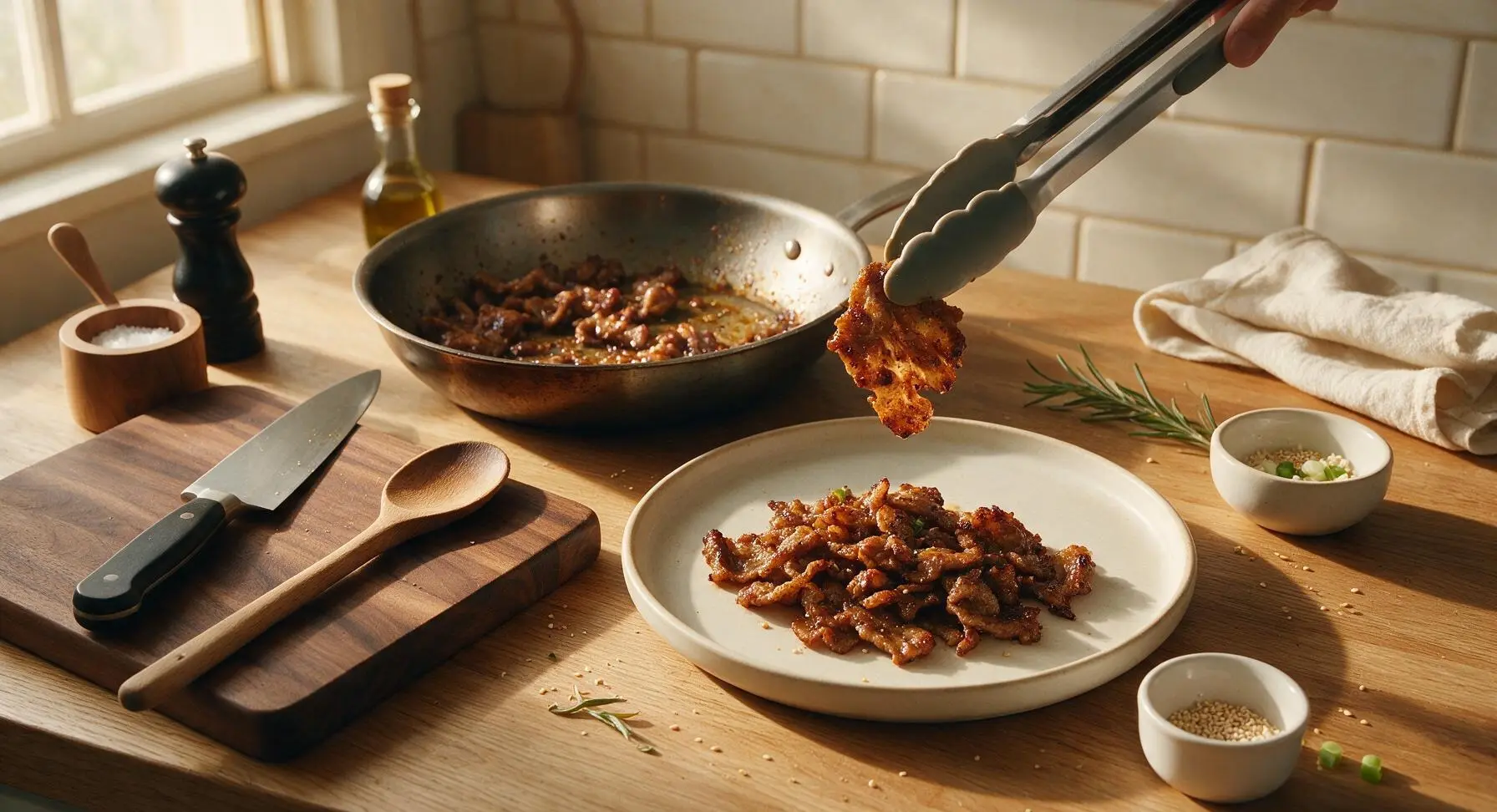
Step 7
step7:Plate and garnish

Tips

1.Freeze pork shoulder for 20 minutes before slicing: this firms the meat enough to cut uniform 3mm thin slices easily, which cook faster, absorb marinade evenly, and deliver the classic tender bulgogi texture instead of tough, chewy thick chunks.
2.Avoid overcrowding the frying pan: piling too much pork in at once traps steam and prevents searing, so you won’t get the signature slightly crispy, caramelized edges that define great bulgogi. Cook in two separate batches if your pan is smaller than 28cm.
3.Squeeze excess juice from grated ginger before adding it to marinade: raw ginger juice has a harsh, bitter bite that can throw off the sweet-savory-spicy balance of the dish, while the squeezed grated ginger adds warm, aromatic depth without the unpleasant sharpness.

✨ You May Also Like

Main Course
🍜 United Kingdom

A showstopping classic of tender seared beef, savory mushroom duxelles, and crisp prosciutto wrapped in flaky golden puff pastry, baked to juicy perfection.

⏱️ 2 hours 1Main Course ★ 4.7
Main Course
🍜 India

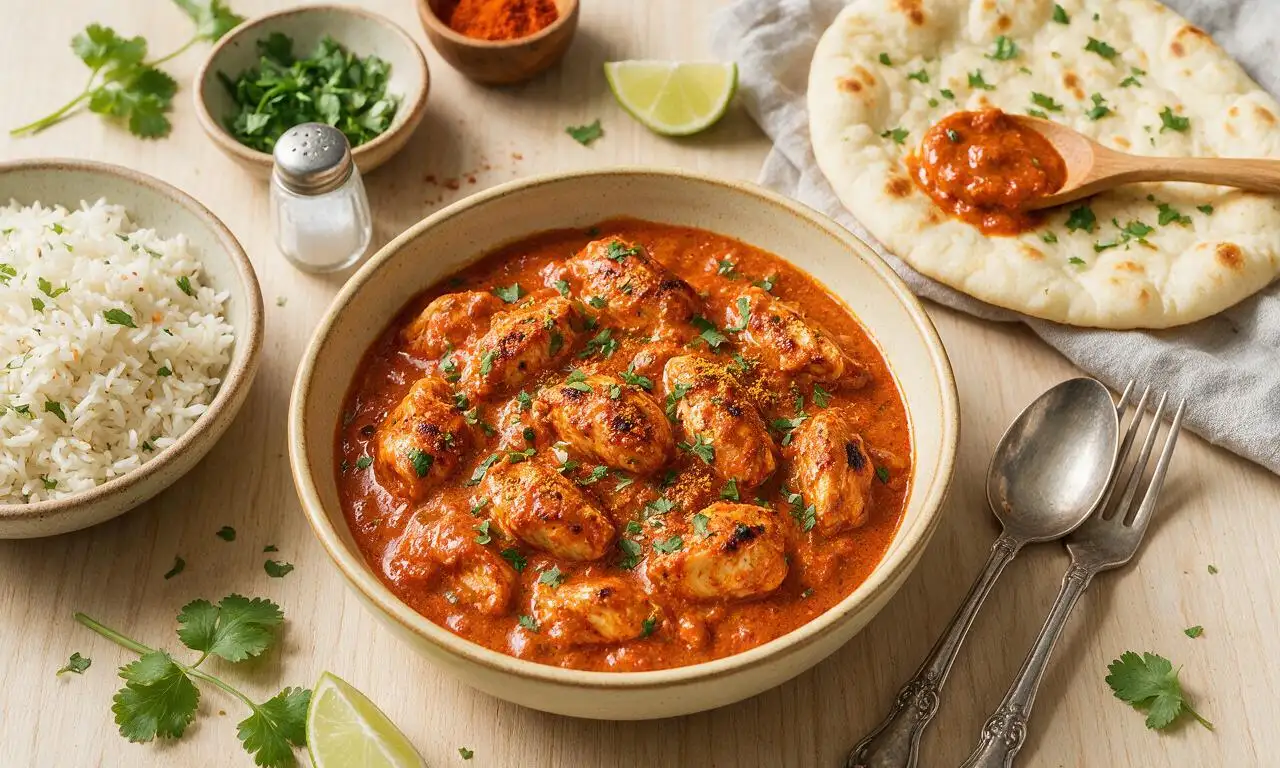
Tender charred marinated chicken simmered in a rich, spiced creamy tomato sauce, this iconic Anglo-Indian curry pairs perfectly with basmati rice or warm naan.

⏱️ 50 minuteMain Course ★ 4.6
Main Course
🍜 Thailand

Classic tangy, sweet, and savory Thai stir-fried rice noodles with shrimp, tofu, and crunchy garnishes, balancing all five core Thai flavor profiles.

⏱️ 30 minuteMain Course ★ 4.5
Main Course
🍜 United Kingdom

Crispy golden beer-battered cod and fluffy double-fried chips, served with tangy tartar sauce and malt vinegar: the timeless, beloved British pub comfort classic.

⏱️ 45 minuteMain Course ★ 4.7
Main Course
🍜 Mexico

Smoky, chile-marinated pork tacos with caramelized pineapple, fresh cilantro, and lime: a beloved classic Mexican street food perfect for casual summer gatherings.

⏱️ 1 hour 45Main Course ★ 4.8
Main Course
🍜 United States

Crunchy Fritos corn chips layered with savory beef chili and melted cheddar, topped with cool, zesty fixings for a beloved, cozy Tex-Mex comfort food.

⏱️ 35 minuteMain Course ★ 4.8

korean food:Frequently Asked Questions

1.What cut of pork is best for spicy pork bulgogi, and can I use a leaner cut? ▾
Boneless pork shoulder is my top pick because its fine, even marbling stays juicy through high-heat cooking and develops that perfect caramelized crust without drying out. If you need a leaner swap, use thin-sliced pork loin, but cut cooking time by 1-2 minutes to avoid tough, chewy results. Skip ultra-lean pork tenderloin here—it will turn dry very quickly.
2.How thin should I slice the pork for this recipe? ▾
Aim for 1/8 to 1/4-inch thick slices, cut against the grain for the most tender bite. Partially freezing the pork for 30 to 45 minutes before slicing makes it much easier to get clean, even thin cuts without the meat shifting under your knife—no fancy deli slicer required for great, restaurant-worthy results.
3.I don’t have gochujang—what’s a good substitute for that signature spicy flavor? ▾
There’s no perfect 1:1 swap, but you can mix 2 tablespoons of white miso paste, 1 tablespoon of chili garlic sauce, 1 teaspoon of sugar, and a pinch of smoked paprika to get close to gochujang’s umami, sweet, spicy profile. This swap will be slightly less fermented than authentic gochujang, but it works great in a pinch.
4.How long do I need to marinate the pork for the best flavor? ▾
For busy weeknights, 30 minutes at room temperature will give you great, well-seasoned results. If you can prep ahead, marinate the pork for up to 24 hours in the fridge to let the gochujang, soy, garlic, and sesame oil penetrate deeper. Don’t marinate longer than 24 hours, as the soy can break down the pork and make it mushy.
5.Can I make this marinade less spicy for kids or people who don’t tolerate heat well? ▾
Absolutely! Cut the gochujang amount in half, and replace the missing volume with a tablespoon of mild Korean soybean paste (doenjang) or even a spoonful of apricot jam to keep the sweet-umami balance without the burn. Serve extra gochujang on the side for people who want to crank up the heat at the table.
6.Why does the recipe call for low-sodium soy sauce instead of regular? ▾
Gochujang already has a decent amount of added salt, so using low-sodium soy sauce keeps the final dish from being overly salty, even if you marinate it for a full 24 hours. If you only have regular soy sauce on hand, cut the amount by 25% and add a splash of rice vinegar to balance the salt level so it doesn’t overpower other flavors.
7.Do I need a special Korean BBQ grill pan to cook this bulgogi? ▾
Not at all! A large cast iron skillet, regular non-stick frying pan, or even an outdoor grill set to medium-high heat works perfectly. The key is to get your pan hot before adding the pork, and cook it in small batches so it sears and caramelizes instead of steaming in its own juices and turning soggy.
8.My pork always comes out soggy instead of caramelized—what am I doing wrong? ▾
Soggy bulgogi almost always comes from overcrowding the pan, which drops the pan temperature too fast and makes the pork steam instead of sear. Cook in 2 to 3 small batches, leaving space between each slice, and pat marinated pork lightly with a paper towel before cooking to cut down on excess marinade moisture.
9.Can I add vegetables to this bulgogi to make it a one-pan meal? ▾
Definitely! Thinly sliced onions, julienned carrots, sliced shiitake mushrooms, or chopped napa cabbage all work beautifully. Sear the vegetables first for 2 to 3 minutes until they start to soften, then set them aside while you cook the pork, and toss everything back together at the end so veggies don’t get mushy.
10.Is toasted sesame oil really different from regular sesame oil for this recipe? ▾
It makes a huge flavor difference! Toasted sesame oil has a rich, nutty, deep aroma that’s core to the classic bulgogi flavor profile, while raw (untoasted) sesame oil is mild and almost neutral. If you don’t have toasted sesame oil, swap in a small amount of roasted peanut oil, though it won’t have that exact authentic nutty note.
11.How should I store leftover cooked bulgogi, and how long will it keep? ▾
Store cooled leftover pork in an airtight container in the fridge for up to 4 days, or freeze it for up to 3 months. Reheat it in a hot skillet with a tiny splash of water to loosen the sauce, rather than microwaving it, which can make the pork tough and the marinade turn rubbery around the edges.
12.What are the best sides to serve with this spicy pork bulgogi? ▾
Steamed short-grain white rice is non-negotiable for soaking up that sweet-spicy sauce, in my book. Add quick pickled cucumbers, kimchi, steamed spinach, or a simple green salad with a sesame vinaigrette to cut through the pork’s richness and balance the heat for a well-rounded, classic Korean meal.
13.Can I make this recipe in an air fryer for easier cleanup? ▾
Yes! Preheat your air fryer to 400°F, arrange the marinated pork slices in a single layer (work in batches if needed), and cook for 6 to 8 minutes, flipping halfway through, until edges are crispy and the pork is cooked through. Toss with a pinch of toasted sesame seeds and sliced green onion before serving for extra texture.
14.How much garlic should I use, and can I substitute pre-minced garlic from a jar? ▾
The recipe uses 5 to 6 finely minced fresh garlic cloves for that bright, sharp garlicky kick that balances the sweet and spicy flavors. Pre-minced jarred garlic works in a pinch, but it has a milder, slightly preserved flavor, so add an extra half teaspoon to compensate—skip garlic powder, as it makes the marinade grainy.
15.Can I use this same marinade for other proteins, like chicken or beef? ▾
Absolutely! This sweet-spicy-umami marinade works beautifully for thin-sliced chicken thigh (skip chicken breast, it dries out too fast) or thin-sliced beef sirloin for classic beef bulgogi. Adjust cooking time as needed: chicken takes 3 to 4 minutes per side, while thin beef only needs 1 to 2 minutes per side to stay tender.
16.I don’t eat pork—can I make a plant-based version of this bulgogi? ▾
Yes! Swap the pork shoulder for thinly sliced king oyster mushrooms, pressed extra-firm tofu cut into 1/4-inch slabs, or store-bought plant-based pork strips. Press excess moisture out of tofu or mushrooms before marinating for 30 minutes, then pan-fry until crispy on the edges for a satisfying vegetarian take on the dish.

Comments (3)

2 days ago

OMG this spicy pork bulgogi is such a game changer for weeknight dinners! I only had 20 minutes total to get dinner on the table after my youngest’s soccer practice last night, so I tossed the pork in the marinade that morning while I was making my coffee, seared it up in 12 minutes flat, and my two super picky kids devoured it. Even my husband who swears he doesn’t like spicy food went back for seconds without even complaining! Served it with steamed white rice and quick pickled cucumbers I threw together while the pork cooked, 10/10 will be adding this to our regular meal prep rotation for sure.

yesterday

Wait that’s such a good call marinating it in the morning! I always forget to prep ahead and end up rushing around right before dinner, I’m definitely stealing that hack for next week when I make this for our neighborhood block party potluck.

yesterday

So happy your whole family loved it! Marinating ahead is such a smart time-saver — if you want even deeper, richer flavor you can let it sit in the fridge for up to 24 hours, no extra work required. Hope it’s a total hit at the potluck!

3 days ago

Super easy recipe, turned out SO good but I did dial back the gochujang by about half because my stomach can’t handle super hot food these days. Still had that perfect umami kick with a nice gentle warmth, paired great with some garlic stir fried bok choy and sticky rice. Quick pro tip for anyone making this: make sure your pan is nice and screaming hot before you toss the pork in so you get those little caramelized crispy edges, total chef’s kiss.

2 days ago

Great tip about getting the pan hot for those crispy caramelized edges — that’s one of our favorite parts of this dish! Adjusting the gochujang level is exactly what we recommend for folks who prefer less heat; you can even swap a portion of it for a little sweet paprika if you want to keep that signature deep red color without extra spice.

1 week ago

Made a double batch of this on Sunday for my weekly meal prep and it held up perfectly all week for work lunches! I added a handful of sliced yellow onions and bell peppers to the pan while cooking the pork, tossed in a tiny extra drizzle of soy sauce and toasted sesame oil at the end, and it tasted just like the bulgogi I get from my favorite local Korean takeout spot. That 15 minute cook time is no joke, I was shocked how fast this came together even with chopping the extra veggies. Will be making this again for sure!