
lamb stock
intro
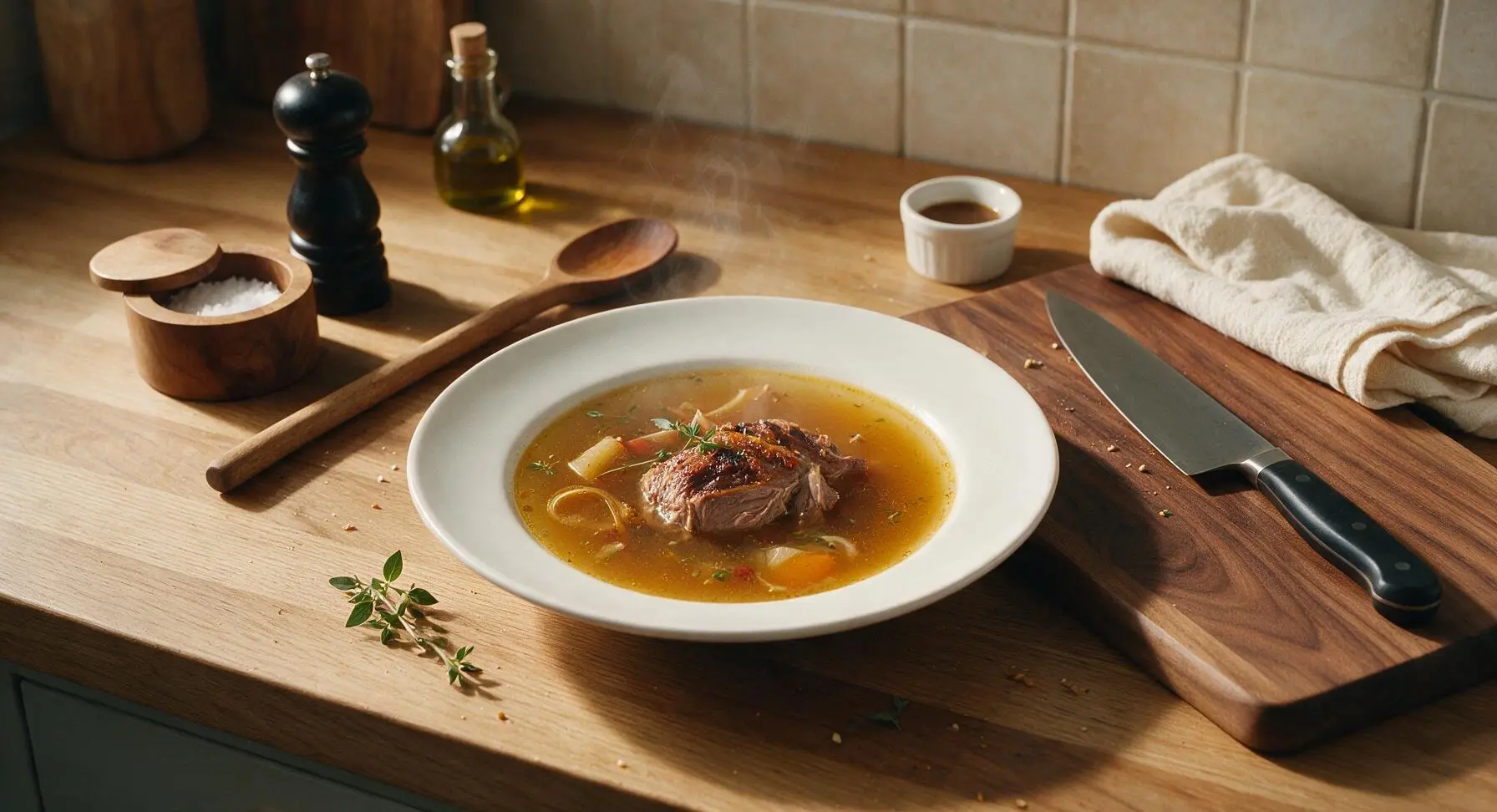
Rich, deeply savory homemade lamb stock: the golden, umami-packed base for hearty winter stews, gravies, and soups, slow-simmered with roasted bones and aromatics.
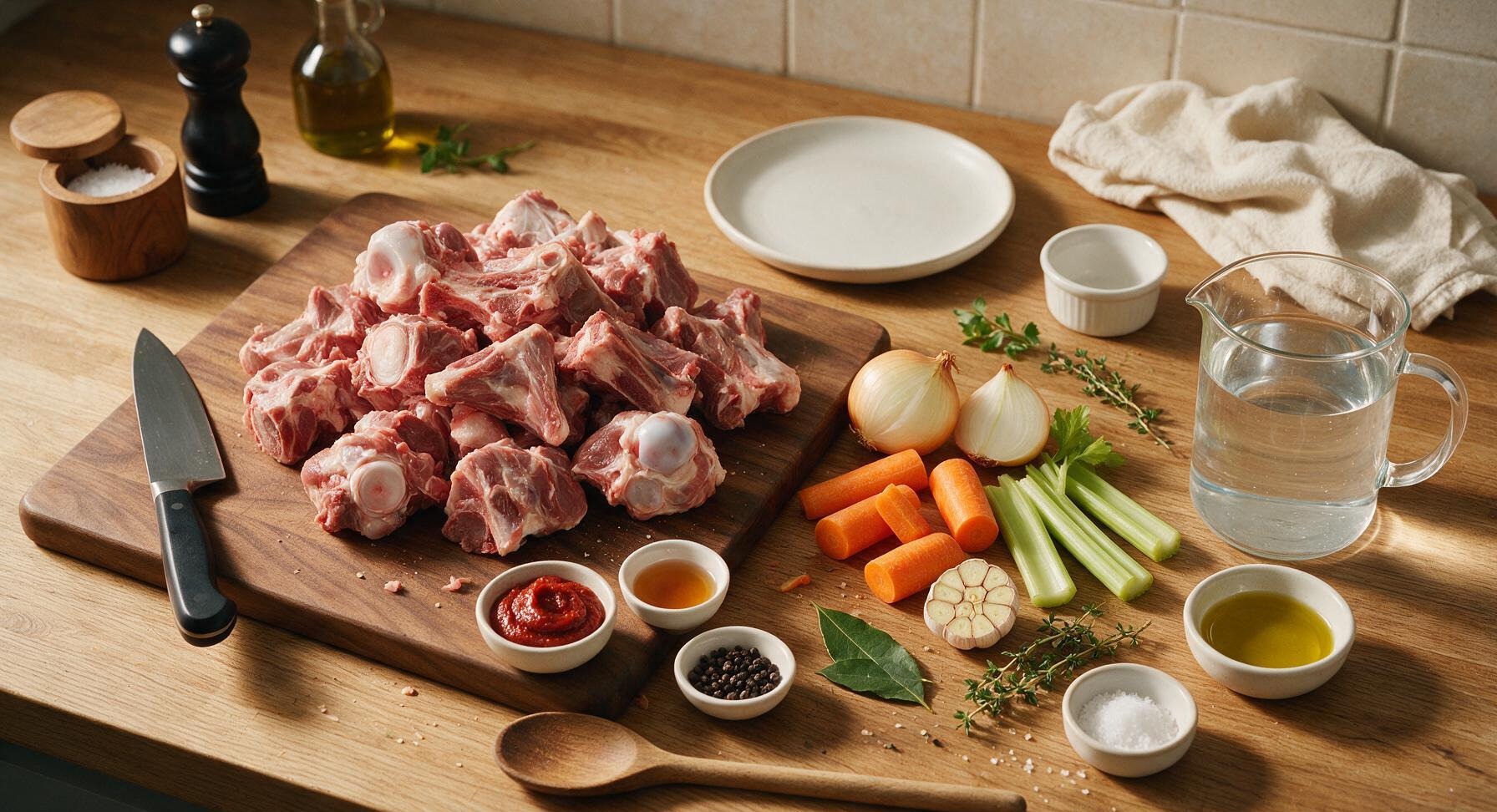
Ingredients
Steps
Roast the Lamb Bones
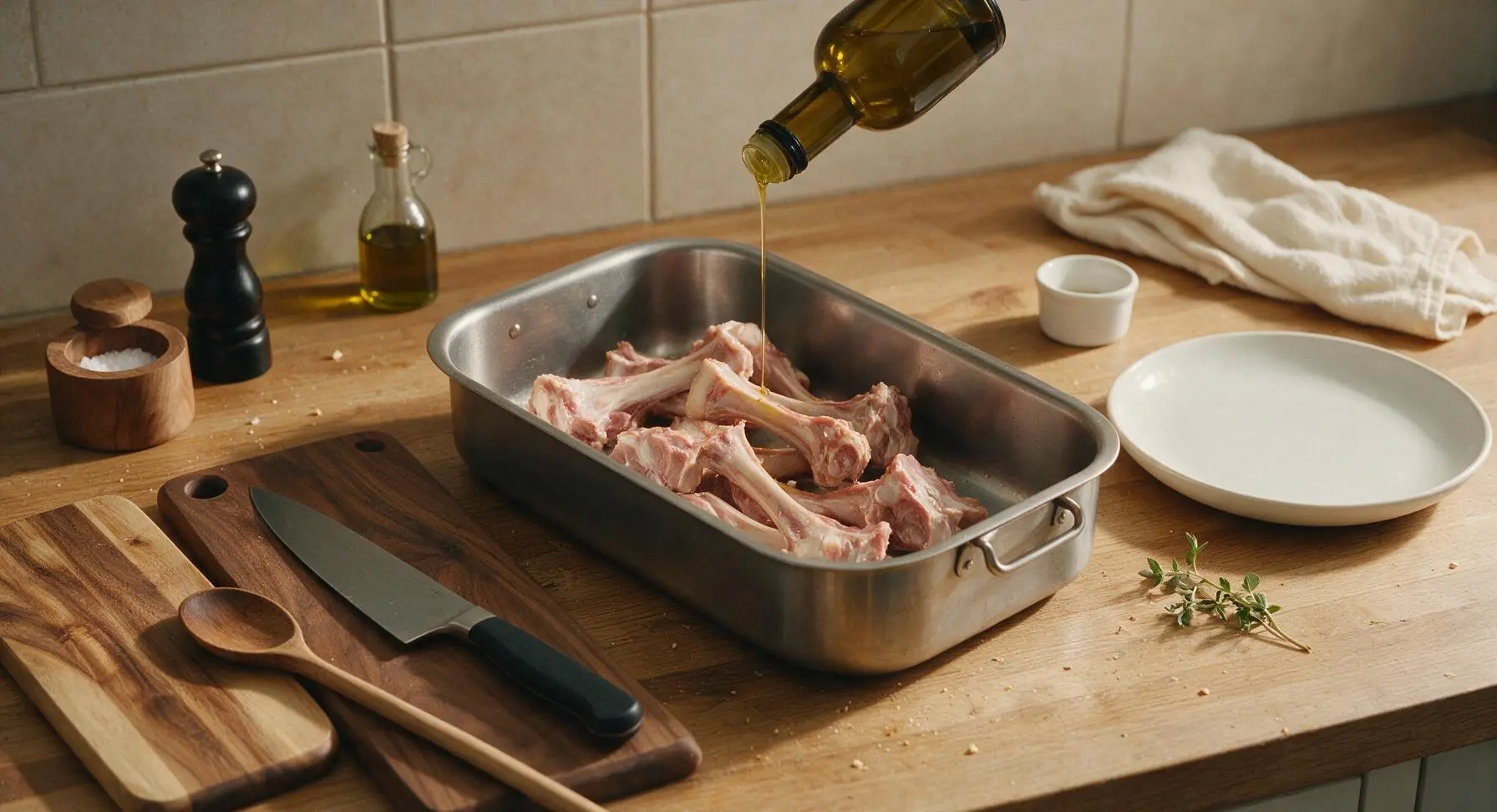
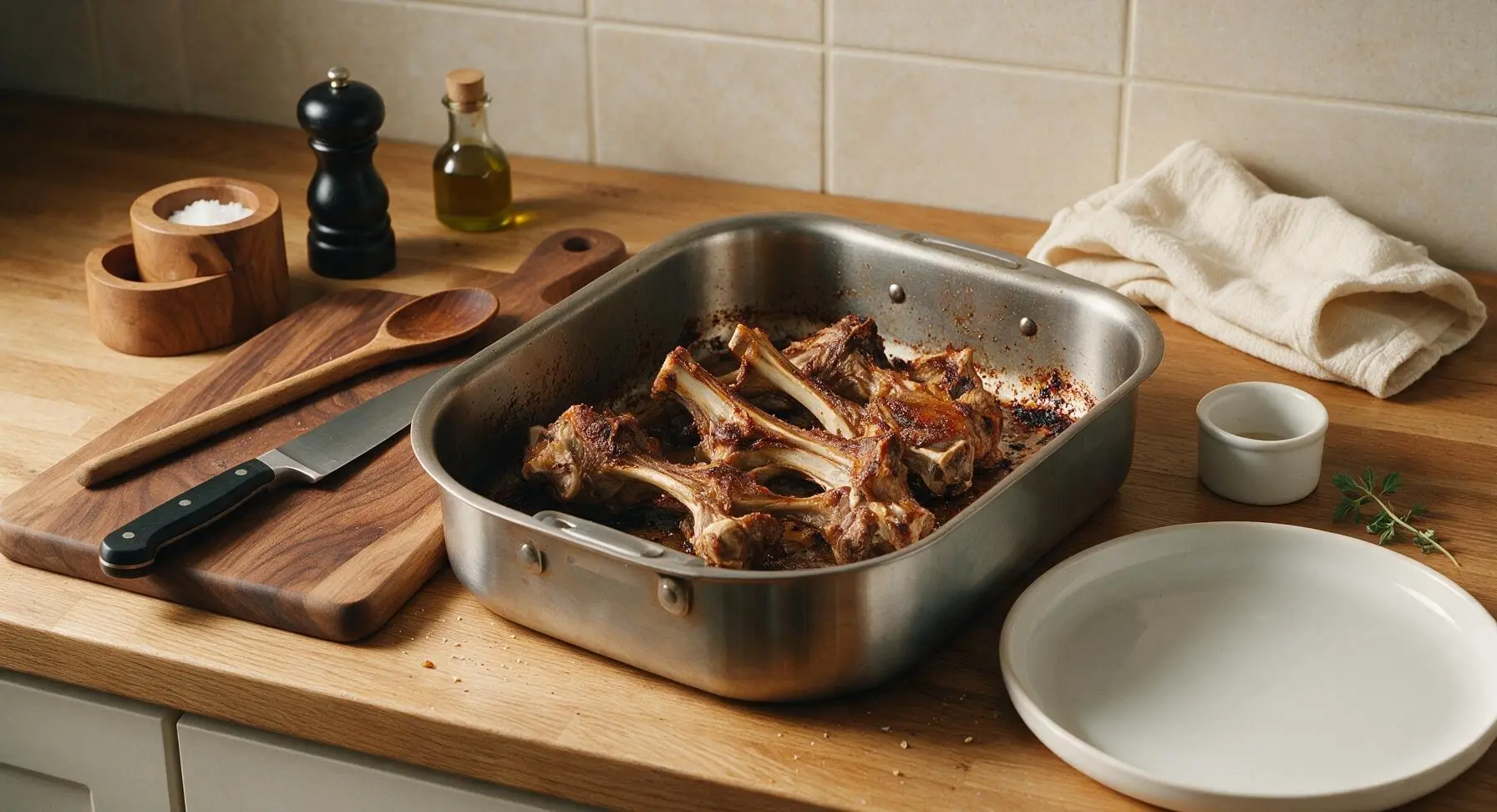
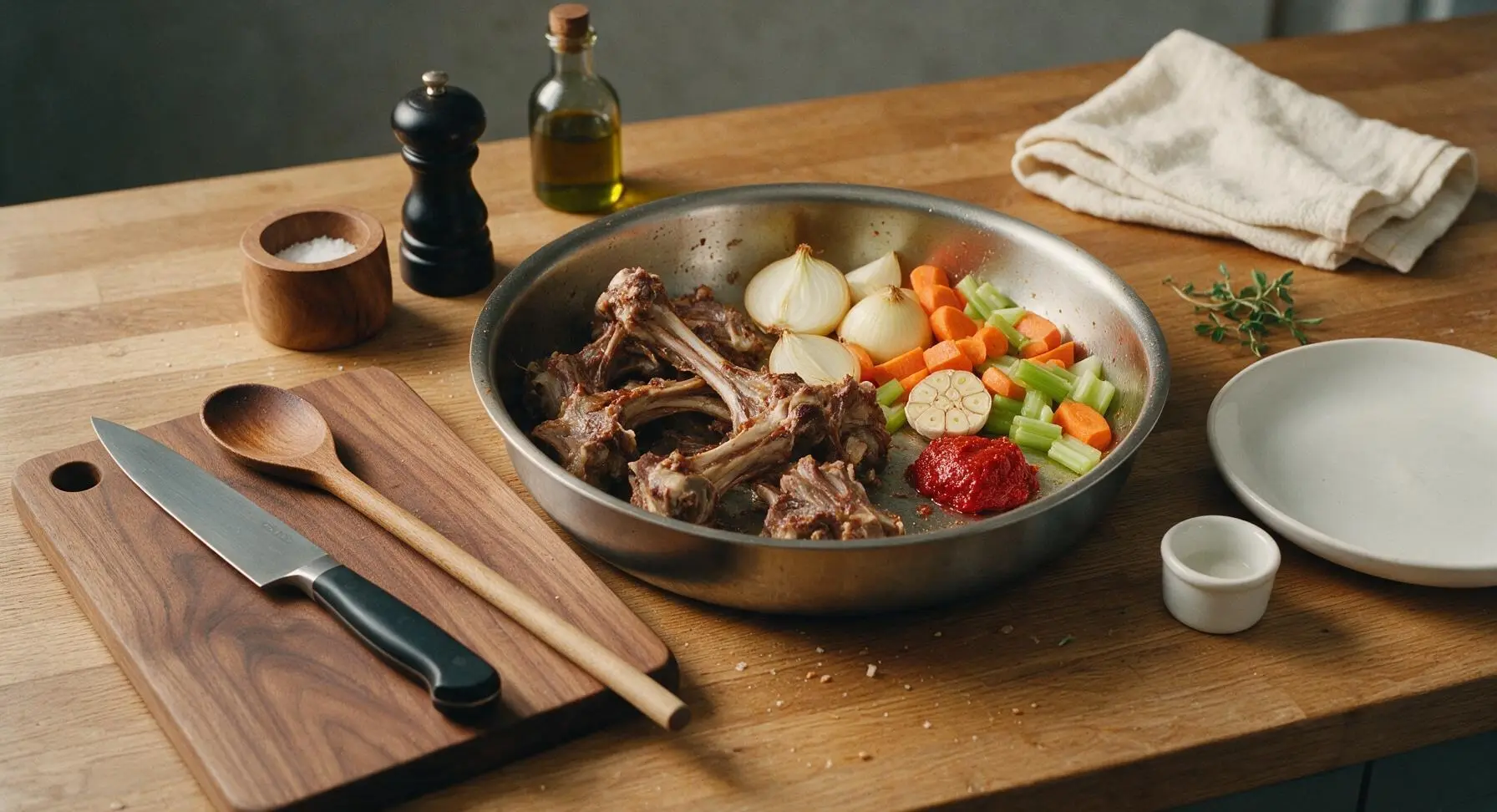
Preheat oven to 200°C (400°F). Place 1.5kg mixed lamb bones into the heavy-gauge stainless steel roasting pan, drizzle with 2 tablespoons olive oil, and toss to coat evenly. Spread bones in a single layer with 1cm gaps between pieces to allow even browning. Roast for 30 minutes, flipping bones once at the 15-minute mark, until deep golden brown with caramelized edges and no raw pink patches remaining. Watch closely during the final 5 minutes of roasting to avoid burning, as charred bones will create bitter, unpleasant stock.
Roast Aromatic Vegetables
Push the roasted bones to one side of the roasting pan. Add quartered yellow onion, carrot chunks, celery chunks, and halved garlic head to the empty side of the pan, tossing gently to coat in rendered lamb fat. Dollop 2 tablespoons tomato paste over the vegetables, then return the pan to the oven for 10 minutes, until vegetable edges are lightly charred and tomato paste turns a deep rust red and smells fragrant and sweet.
Deglaze and Transfer
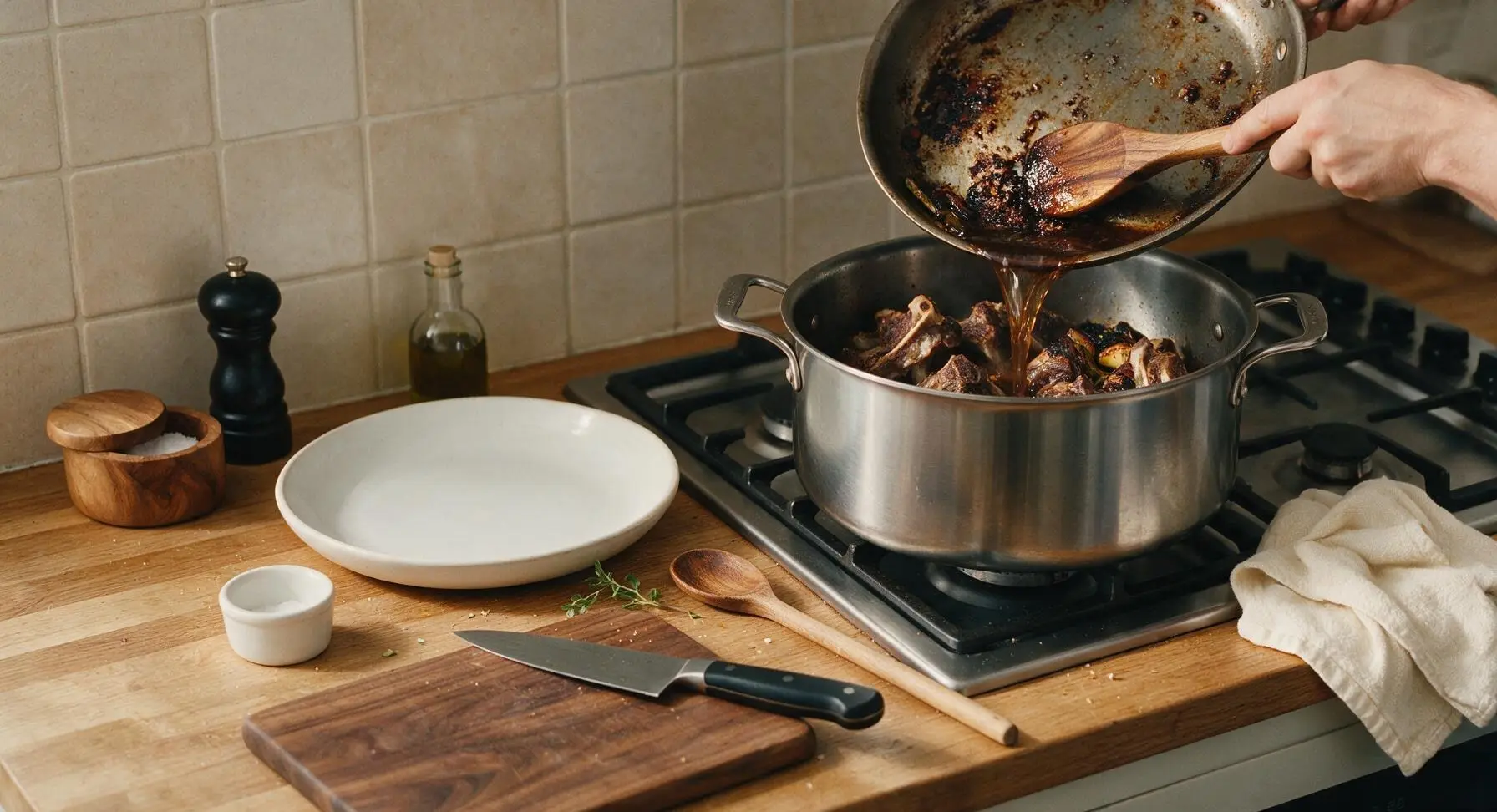
Carefully transfer all roasted bones and vegetables from the roasting pan into the 8-liter stainless steel stock pot. Set the empty roasting pan on a stovetop burner over medium heat, pour in 120ml (1/2 cup) cold water, and use the acacia wood spoon to scrape all browned fond bits from the pan bottom until the liquid is dark and flavorful. Pour this deglazed liquid into the stock pot with the bones and vegetables to capture every bit of roasted flavor.
Add Cold Water
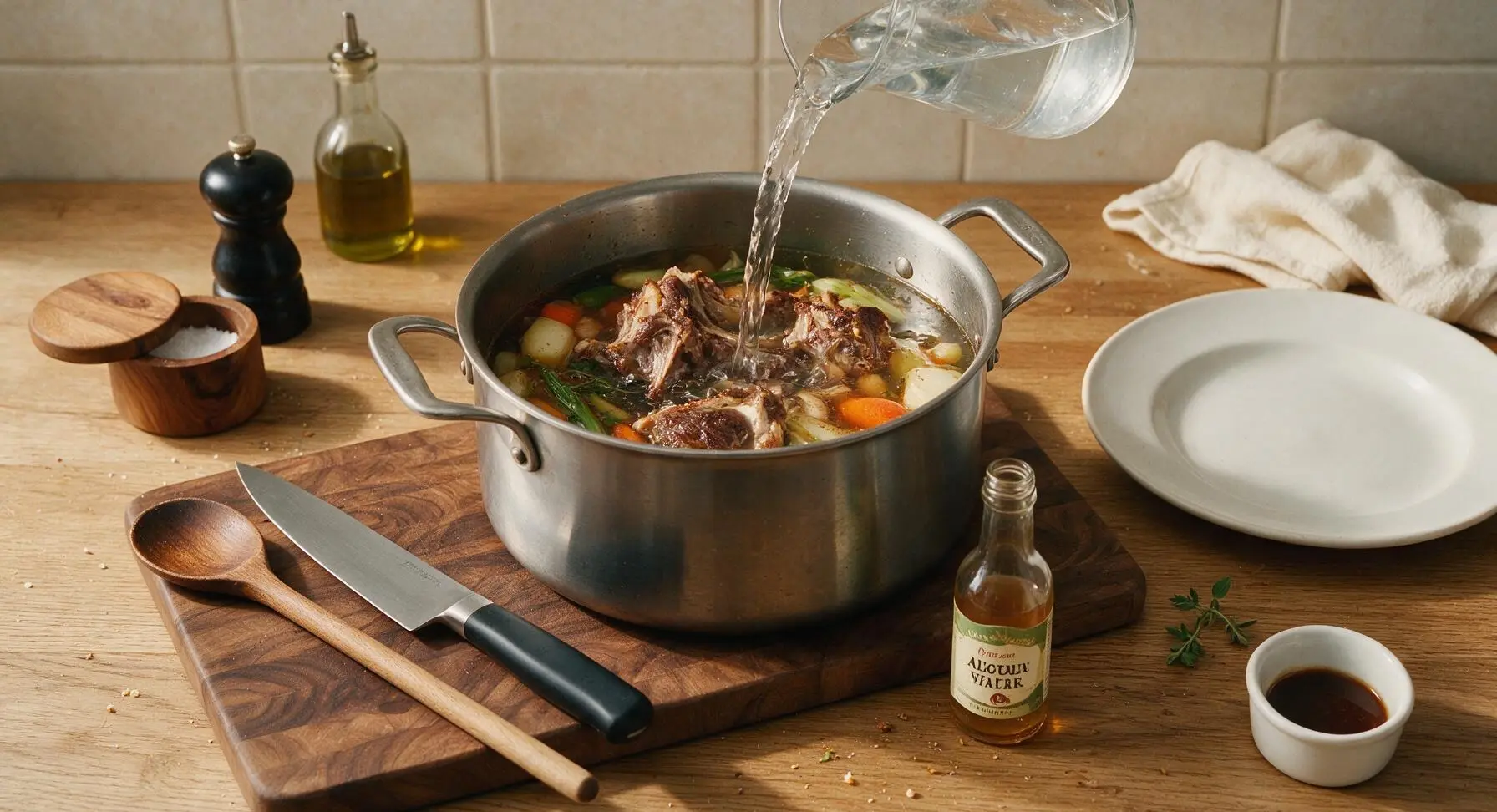
Pour 3.5L cold filtered water into the stock pot, ensuring all bones and vegetables are fully submerged by at least 2cm of water. Stir in 1 tablespoon apple cider vinegar, which gently draws collagen and minerals from the bones to create a richer, more nutrient-dense stock. Let the mixture rest for 10 minutes at room temperature to allow the vinegar to begin breaking down bone tissue before heating.
Simmer and Skim Impurities
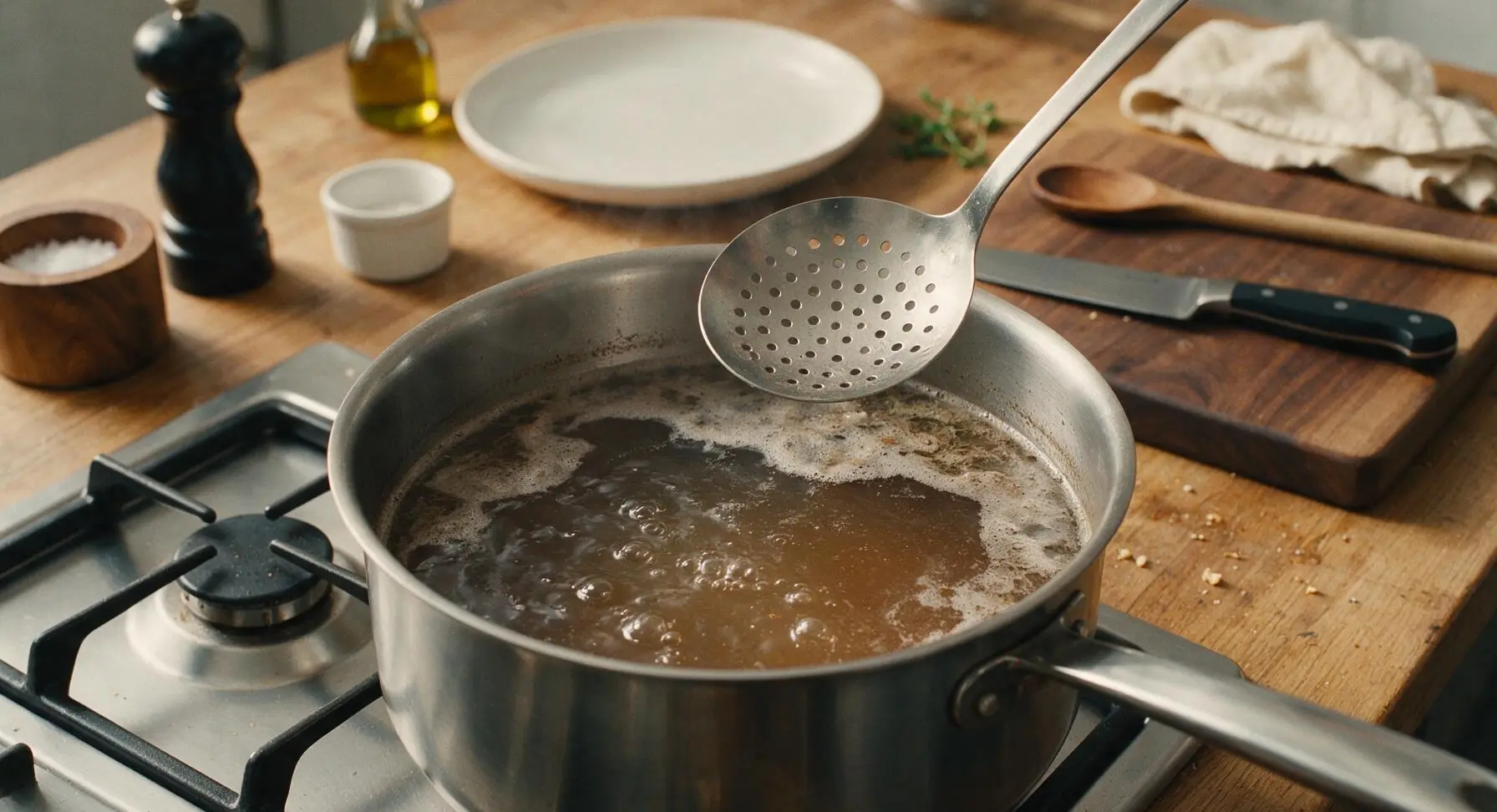
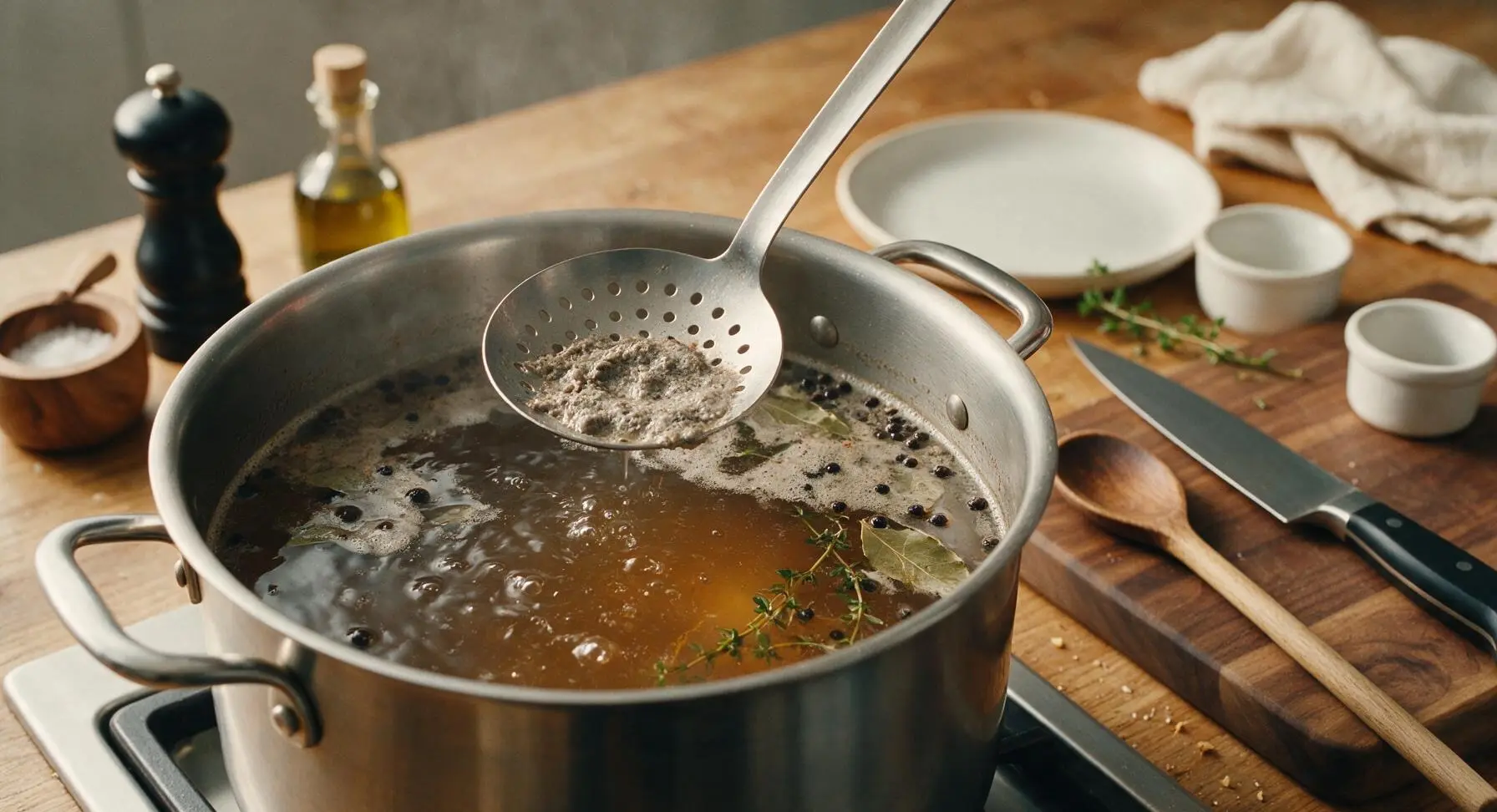
Place the stock pot over medium-high heat and bring to a gentle, steady simmer (do NOT bring to a rapid rolling boil, as this agitates impurities and creates cloudy, murky stock). Once small bubbles break steadily at the surface, reduce heat to low to maintain a very gentle simmer (small bubbles rising every 1-2 seconds, no violent bubbling). Use the stainless steel slotted skimmer to remove gray, foamy impurities that rise to the surface every 10 minutes for the first 30 minutes of cooking. After the first round of skimming, add whole black peppercorns, bay leaves, fresh thyme sprigs, and 1 tablespoon kosher salt to the pot.
Slow Simmer Stock
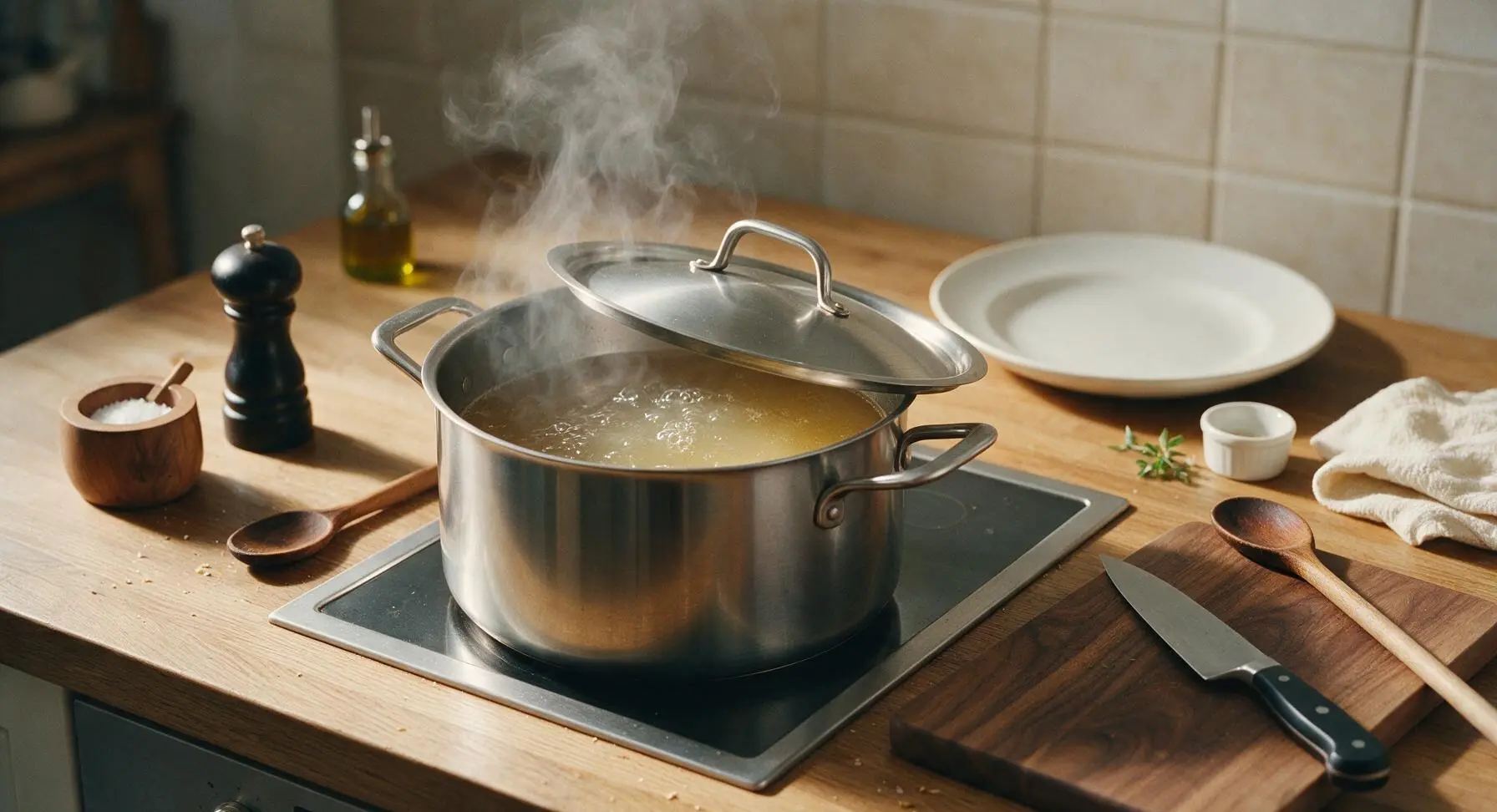
Partially cover the stock pot with its stainless steel lid, leaving a 2cm gap to allow steam to escape and prevent boil-overs. Let the stock simmer gently for 3.5 hours, checking every 30 minutes to adjust heat as needed to maintain the slow, steady bubble, and skimming any additional fat or foam that rises to the surface. Do not stir the stock during this time, as stirring will agitate sediment and make the final stock cloudy. When finished, the stock will be a pale golden color with a deep, savory, meaty aroma.
Strain Out Solids
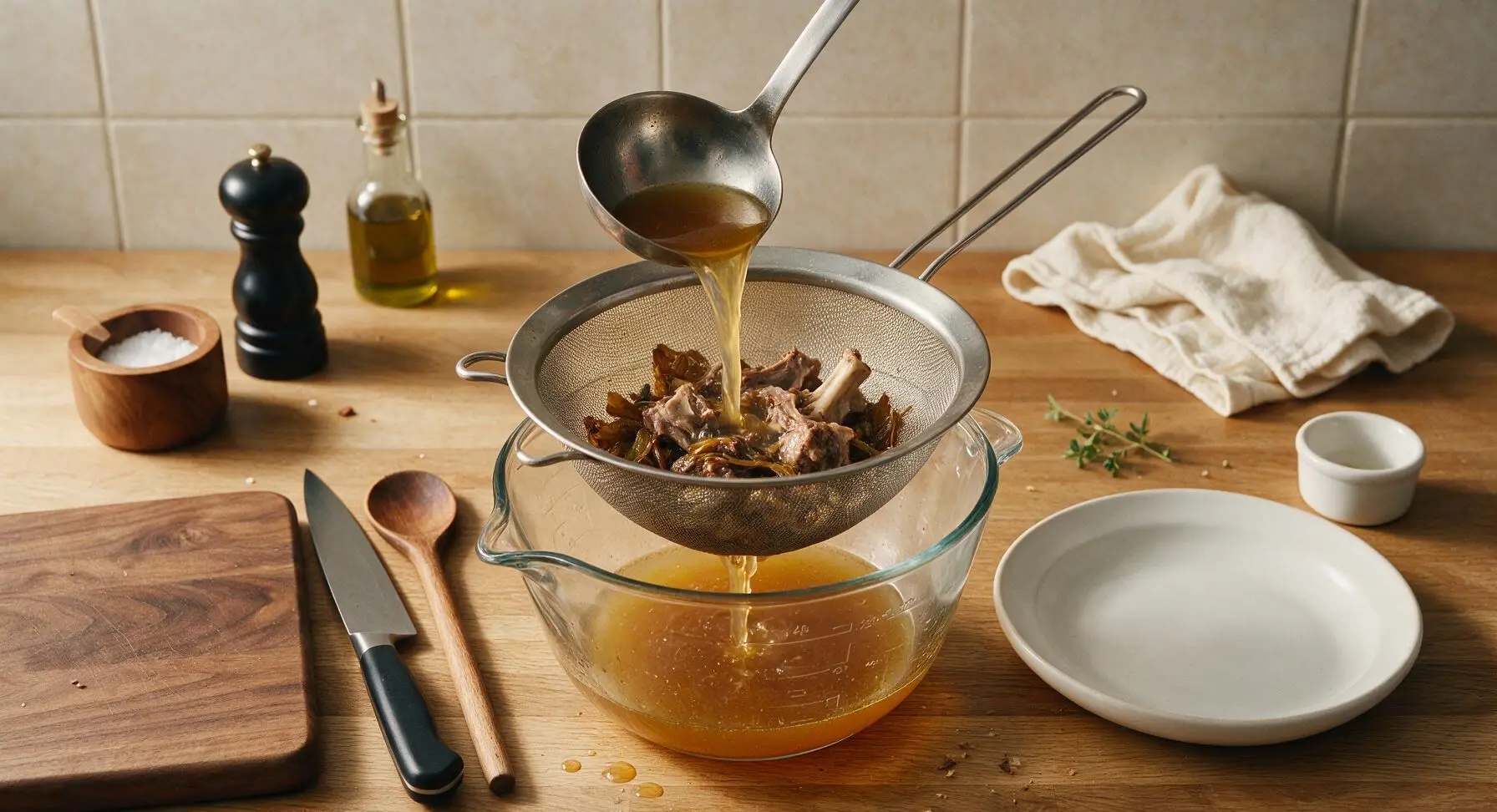
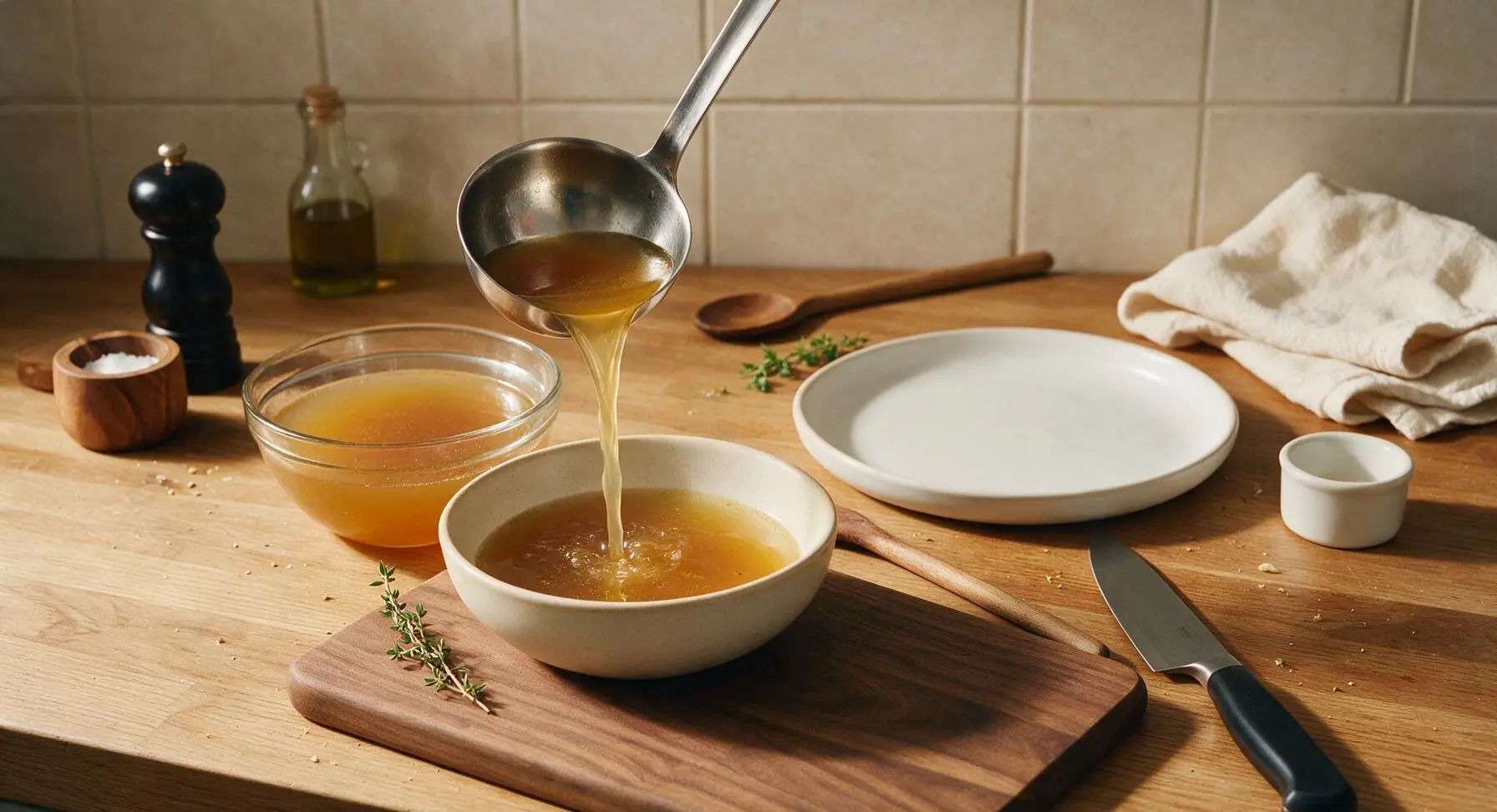
Turn off the heat. Place the fine-mesh stainless steel conical strainer over the 4L clear heat-resistant glass measuring bowl. Use the stainless steel ladle to carefully pour stock through the strainer to catch all bones, spent vegetables, and herbs. For extra-clear, restaurant-quality stock, line the strainer with a double layer of cheesecloth before straining (this step is optional for home use). Discard the cooked solids, as they have released all their flavor into the stock.
Serve or Store Stock
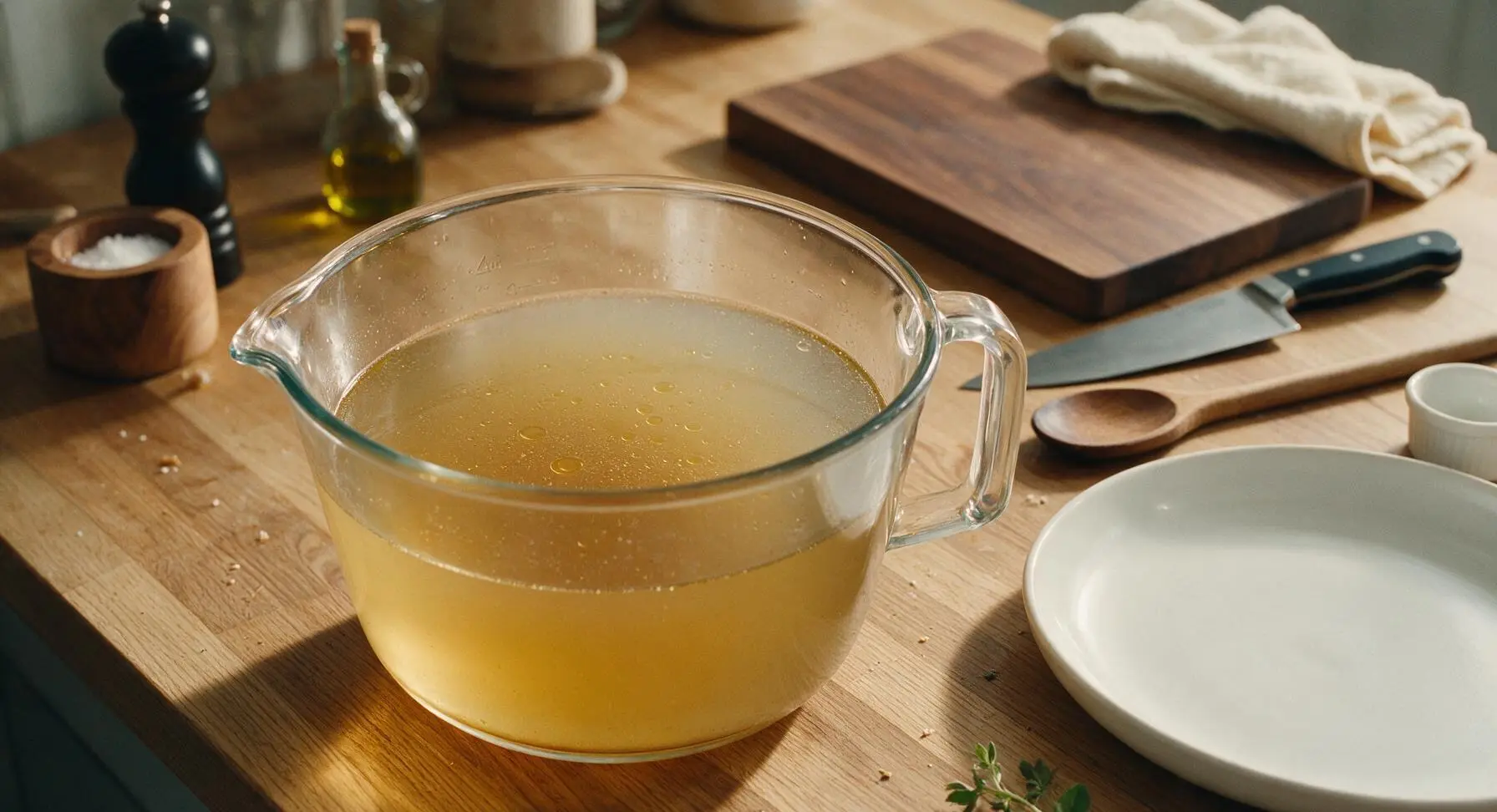
Let the strained stock cool to room temperature for 1 hour, then transfer to sealed glass containers for storage. Refrigerate for up to 5 days, or freeze for up to 6 months. Before using, lift off the solidified layer of pale white fat from the top if a lighter stock is desired, or leave it in for extra richness. To serve, heat stock gently, adjust salt to taste, and garnish with a fresh thyme sprig.
Tips
2.Avoid rapid boiling at all costs: violent boiling emulsifies fat and fine sediment into the liquid, creating a cloudy, greasy-tasting stock instead of the bright, clear golden broth produced by a slow, gentle simmer.
3.Do not skip roasting bones and tomato paste: the Maillard browning from high-heat roasting creates deep, nutty, savory notes that raw bones cannot produce, and caramelized tomato paste balances lamb’s subtle gamey flavor with mild sweetness.


OMG this stock is a total game changer! I made a big batch last Sunday for meal prep, used it for lamb stew earlier this week and my whole family went back for seconds. I was always intimidated to make homemade stock because I thought it’d be too fussy, but the roasting step makes SUCH a difference in depth of flavor. 10/10 will be making this every time I pick up a lamb shoulder from the butcher!
SO good! I made this to use as the base for my Easter leftover shepherd’s pie and even my pickiest kid asked for extra helpings. I will say I didn’t have any parsnips on hand so I tossed in an extra carrot and a couple celery stalks, worked like a charm. How long does this keep in the fridge, y’all?
First time ever making stock from scratch! This turned out way better than the store bought cartons I usually grab, though I think I over-salted mine a tiny bit when I was seasoning at the end. Next time I’ll add salt little by little like the recipe says, oops. Still made an incredible base for my lamb and barley soup though!
I brought a batch of this to our neighborhood potluck last weekend to use for the hot pot station and everyone was asking where I got the recipe! The rich, deep lamb flavor is way better than any beef stock I’ve used for hot pot before. Who else has used this for ramen? I’m thinking of making a miso lamb ramen with my next batch!
Worth every minute of the 4 hour cook time, trust me. I was worried the medium difficulty meant I’d mess something up, but the steps are super straightforward even if you’re not a pro. The only heads up I’d give is to make sure your roasting pan is big enough – I had to split my bones between two pans because my smallest pan was too cramped and they didn’t brown as evenly.
Just pulled my second batch of this off the stove! I love that I can save up lamb bones from other recipes in the freezer until I have enough to make a whole pot, no waste at all. Quick question – I added a handful of mushroom scraps this time around, would that mess with the flavor too much for future recipes?
This stock made my lamb gravy for Sunday dinner taste restaurant level good. My husband kept asking what I did different, I just told him it’s all about roasting the bones first like the recipe says. No more store bought stock for this household!
Y’all, I cannot sing this recipe’s praises enough. I’ve been making homemade chicken stock for years but never tried lamb stock until now, and it’s going to be a staple in my kitchen all fall and winter. I used some last night to make a lamb and white bean soup that was so cozy I had two bowls for dinner. Any tips for skimming the fat easier? I felt like I was chasing little fat globules forever at the end.
Made this for a Greek-style lamb orzo soup I brought to my extended family dinner last weekend, and even my yiayia asked for the recipe! That’s the highest possible compliment if you know, she’s been making lamb stock for 60+ years. I added a couple extra bay leaves and a sprig of fresh rosemary from my garden, and it smelled so good my neighbor texted to ask what I was cooking.