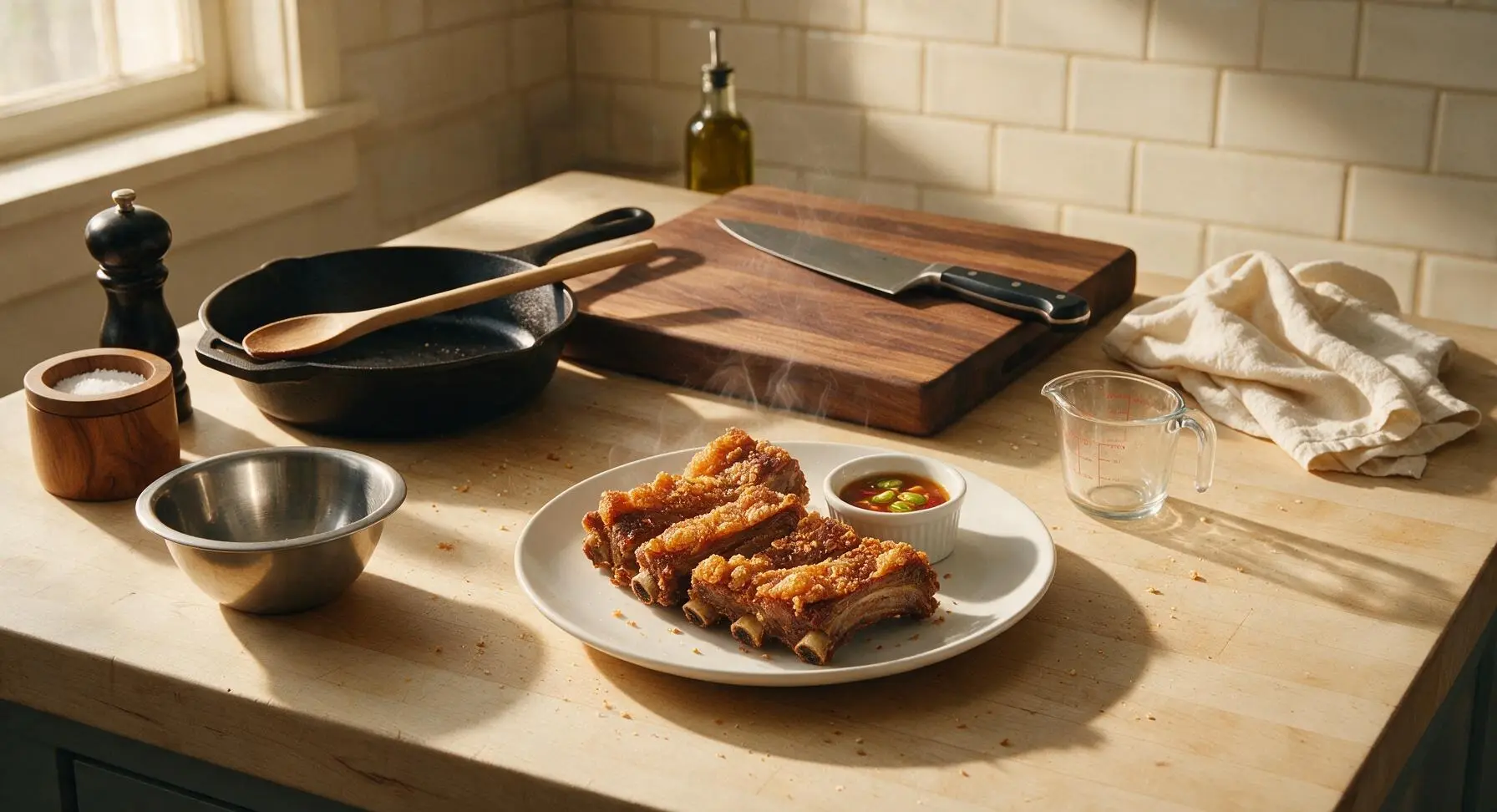
Lechon Kawali Ribs

title 1
Lechon Kawali Ribs
⏱️ cook time 1 hour 15 minutes
🍽️ servings 4
⚡ Difficulty medium

intro

Shatteringly crisp, golden-fried pork ribs slow-simmered in aromatic Filipino spices, served with bright tangy toyomansi dipping sauce for the ultimate savory crunch.

Ingredients
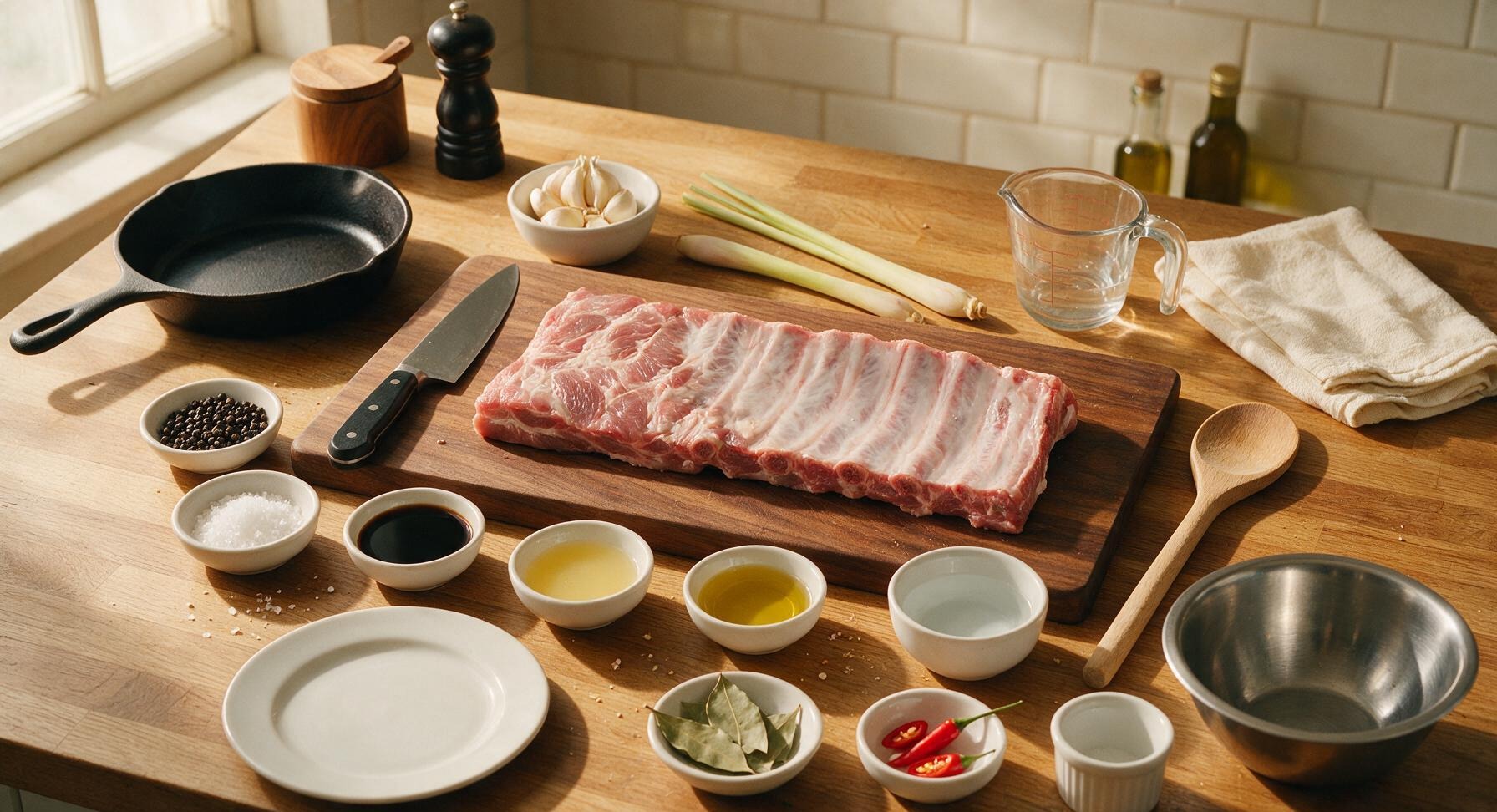
Skin-on pork spare ribs 1kg (2.2 lbs)
Garlic (whole head, crushed) 1 head
Lemongrass stalks (bruised) 2 stalks
Dried bay leaves 4 pieces
Whole black peppercorns 1 tbsp
Coarse sea salt 2 tbsp, divided
Light soy sauce 1/2 cup, divided
Calamansi juice 1/4 cup
Canola oil 4 cups (for frying)
Red bird's eye chili (sliced) 2 pieces
Water 8 cups (for simmering)

Steps

1

Prep the Pork Ribs

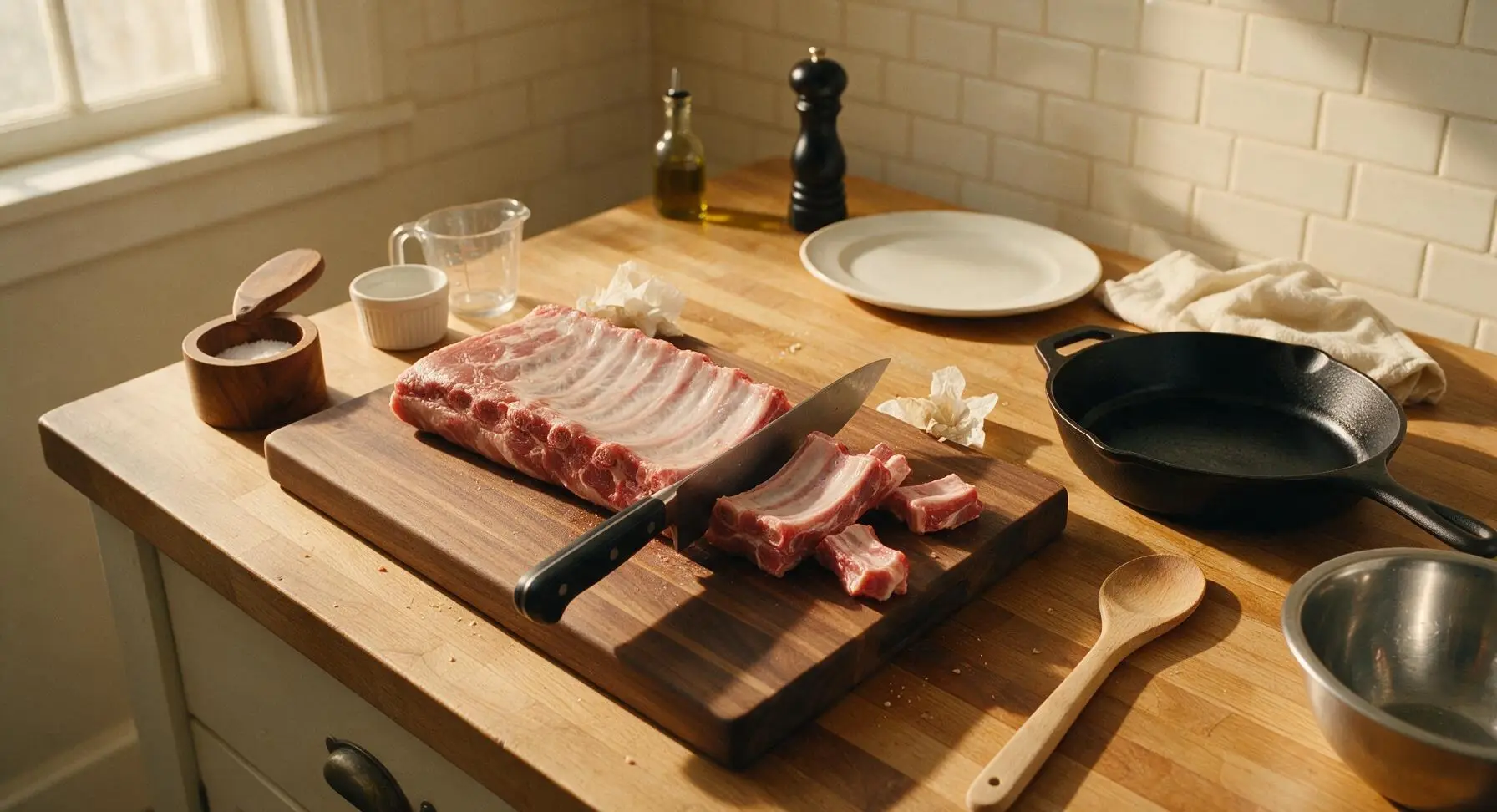
Place the 1kg skin-on pork spare ribs on the acacia wood cutting board. Use the 8-inch chef knife to cut the rack into individual 2-rib portions, trimming any loose hanging fat but leaving the skin fully intact on each piece. Pat all surfaces of the ribs completely dry with paper towels, paying extra attention to the skin side. The skin should feel matte and dry to the touch, not damp or slimy.
Step 1
step1:Prep the Pork Ribs
2

Build Simmering Aromatics

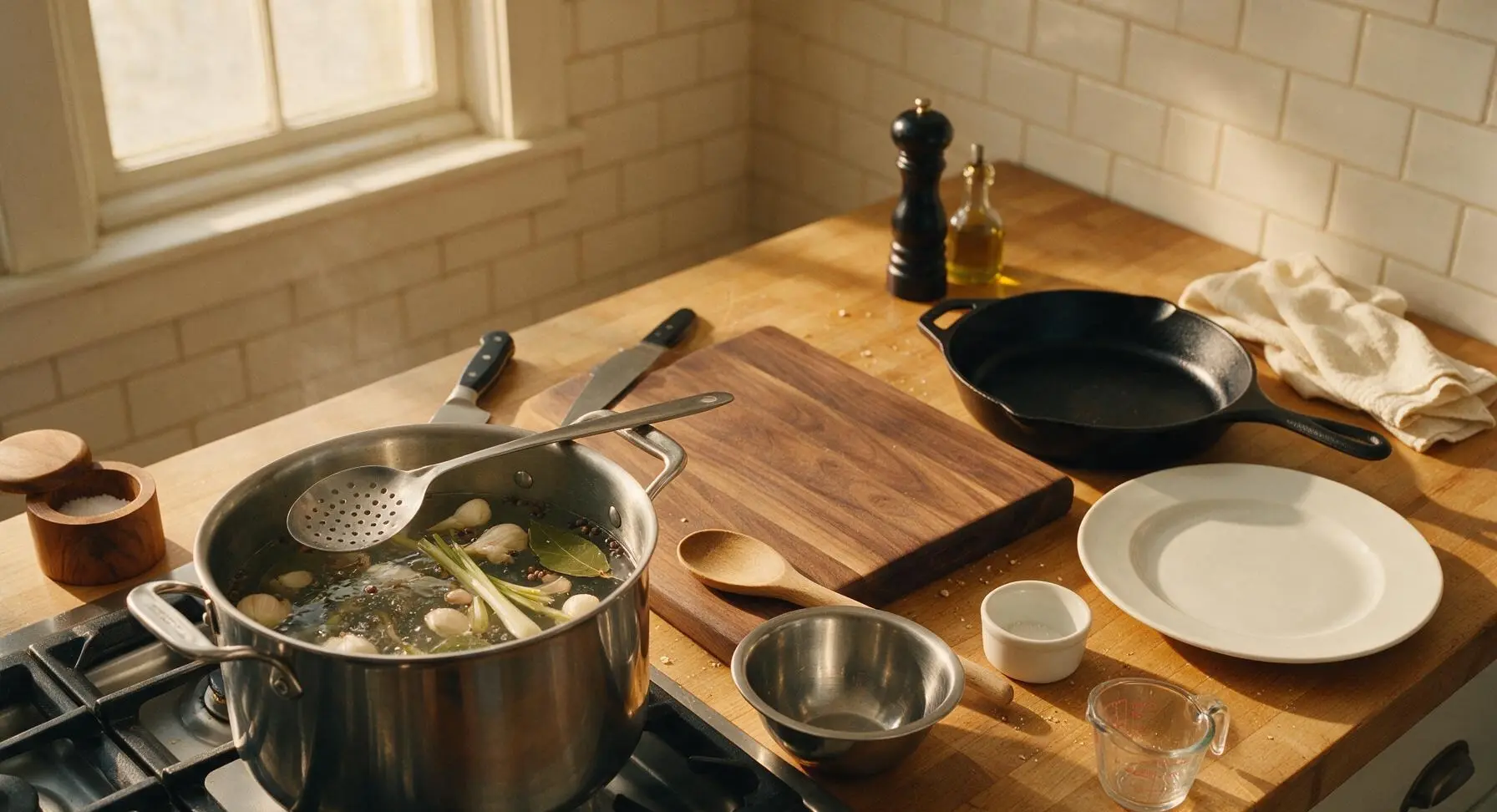
Place the 6-quart stainless steel stock pot on the left stovetop burner over medium-high heat. Add 8 cups water, crushed garlic head, bruised lemongrass stalks, dried bay leaves, whole black peppercorns, 1 tablespoon coarse sea salt, and 1/4 cup light soy sauce. Stir once with the slotted skimmer to combine, and bring the liquid to a rolling boil (visible constant bubbles breaking across the surface, approximately 10 minutes).
Step 2
step2:Build Simmering Aromatics
3

Simmer Ribs Until Tender

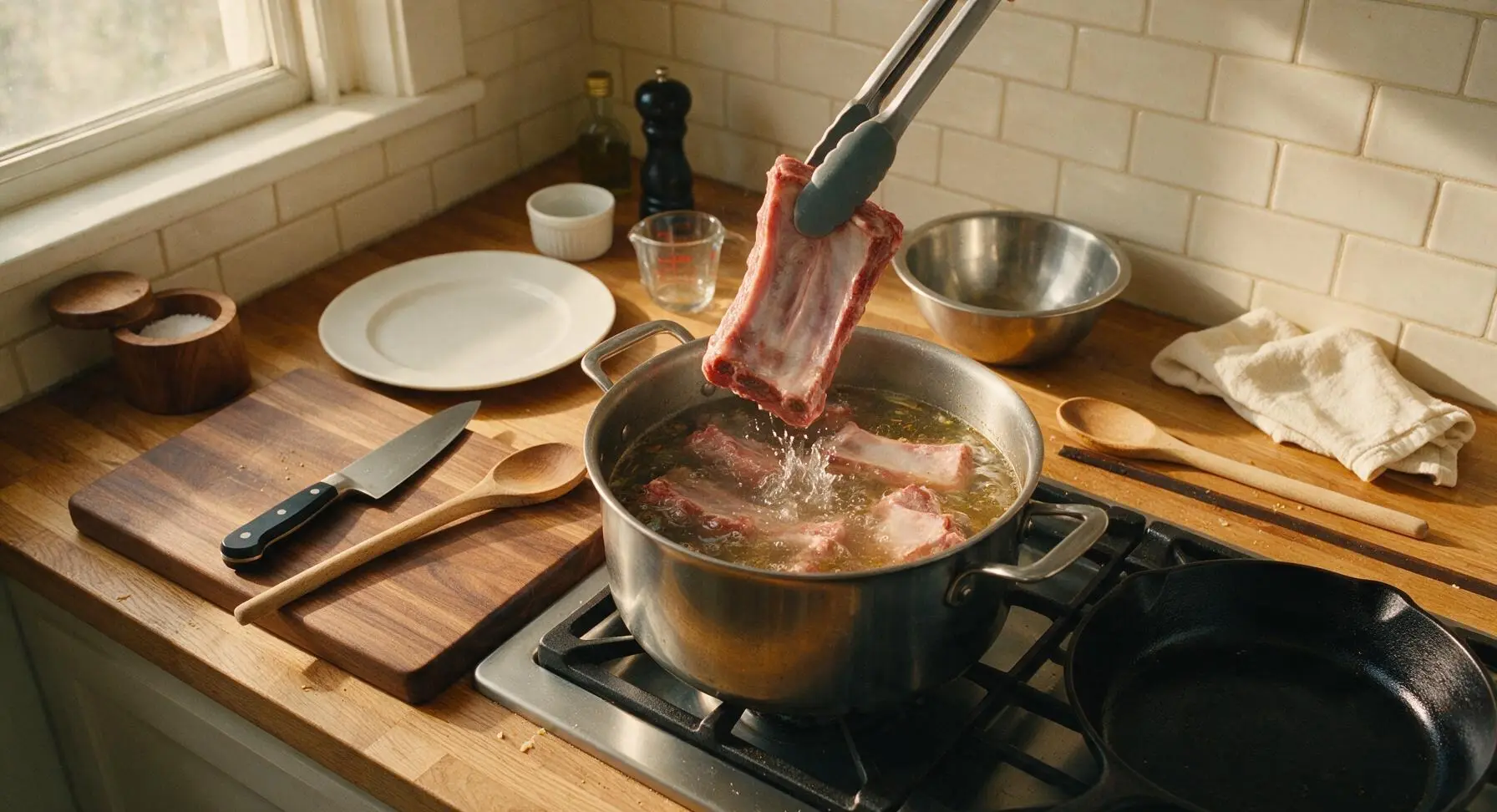
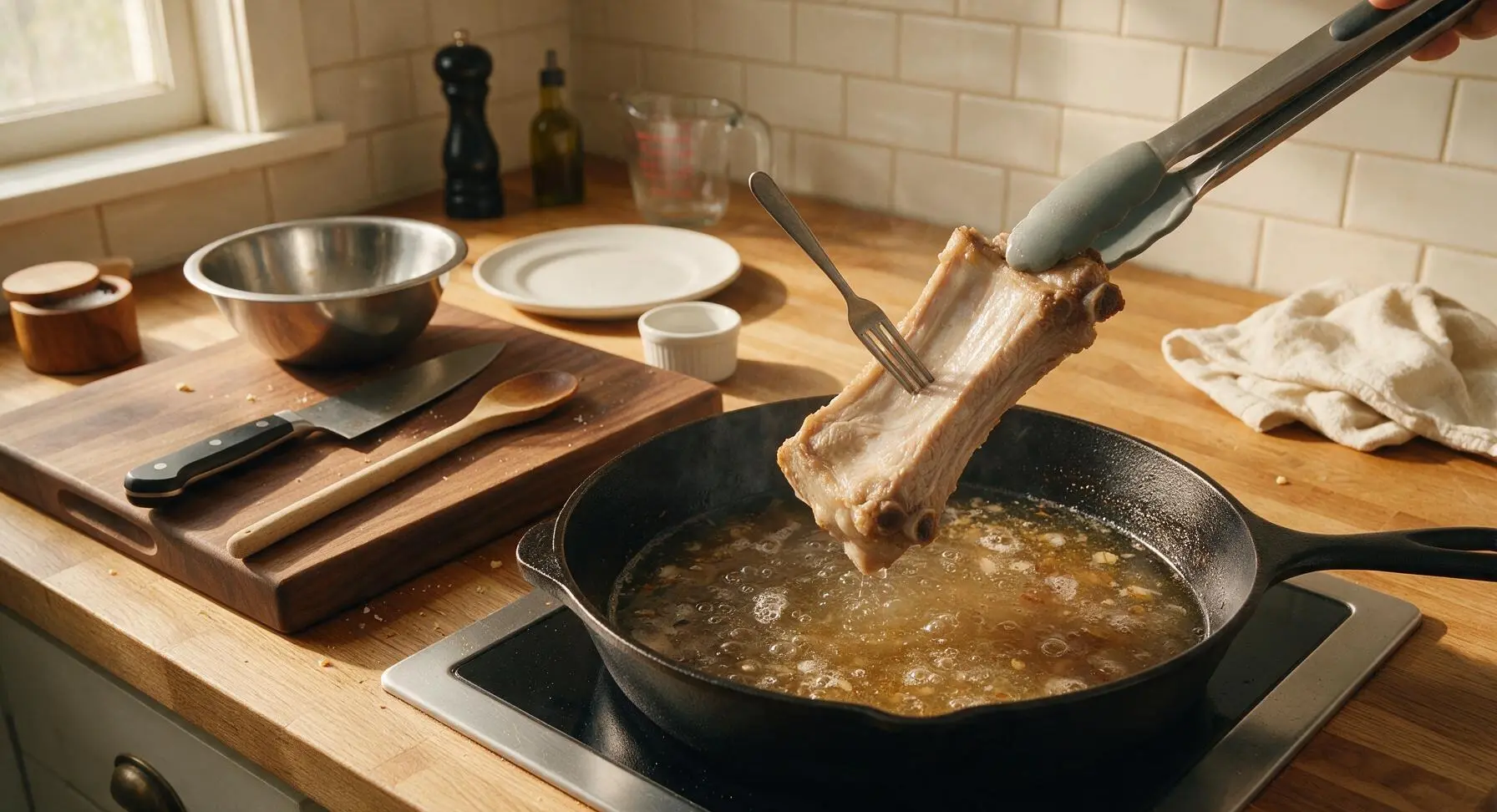
Carefully lower the cut rib portions into the boiling aromatic liquid using the silicone-tipped tongs. Reduce heat to medium-low to maintain a gentle simmer (small, steady bubbles, no violent rolling). Cook for 45 minutes, until the meat is fork-tender (a fork inserted into the thickest part of the rib slides in with no resistance) but not falling off the bone. Do not overcook, as this will cause the meat to break apart during frying.
Step 3
step3:Simmer Ribs Until Tender
Step 3
step3:Simmer Ribs Until Tender
4

Dry Ribs Thoroughly

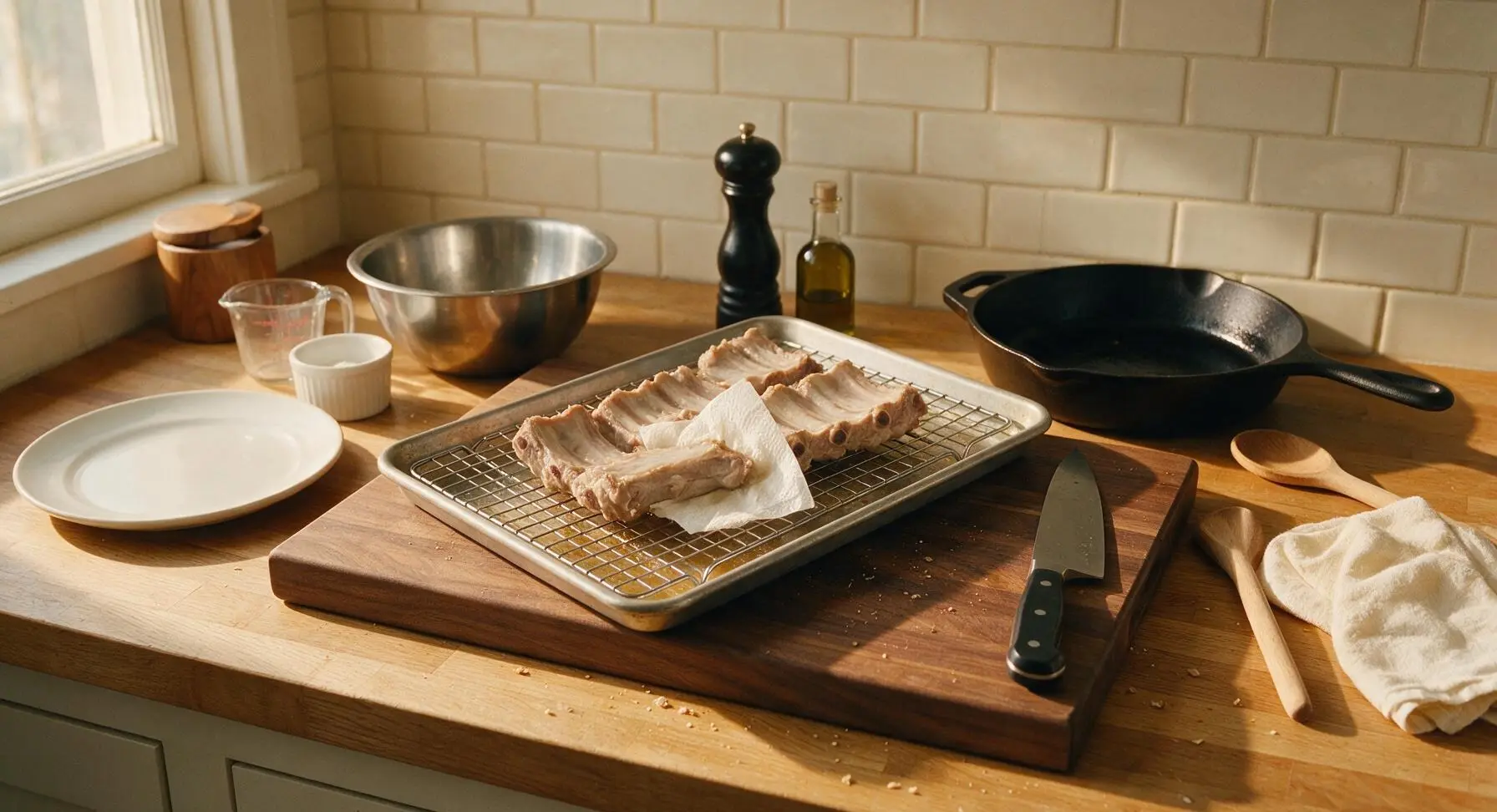
Use the slotted skimmer to lift all cooked ribs out of the simmering liquid, letting excess broth drain off for 10 seconds per piece. Arrange the ribs in a single layer, skin-side up, on the chrome wire cooling rack set inside the rimmed aluminum baking sheet. Pat the skin and meat completely dry with paper towels, then leave the ribs to air-dry at room temperature for 30 minutes. The skin must be completely dry and tacky to the touch before frying to achieve maximum crispness and prevent dangerous oil splatters.
Step 4
step4:Dry Ribs Thoroughly
5

Heat Frying Oil

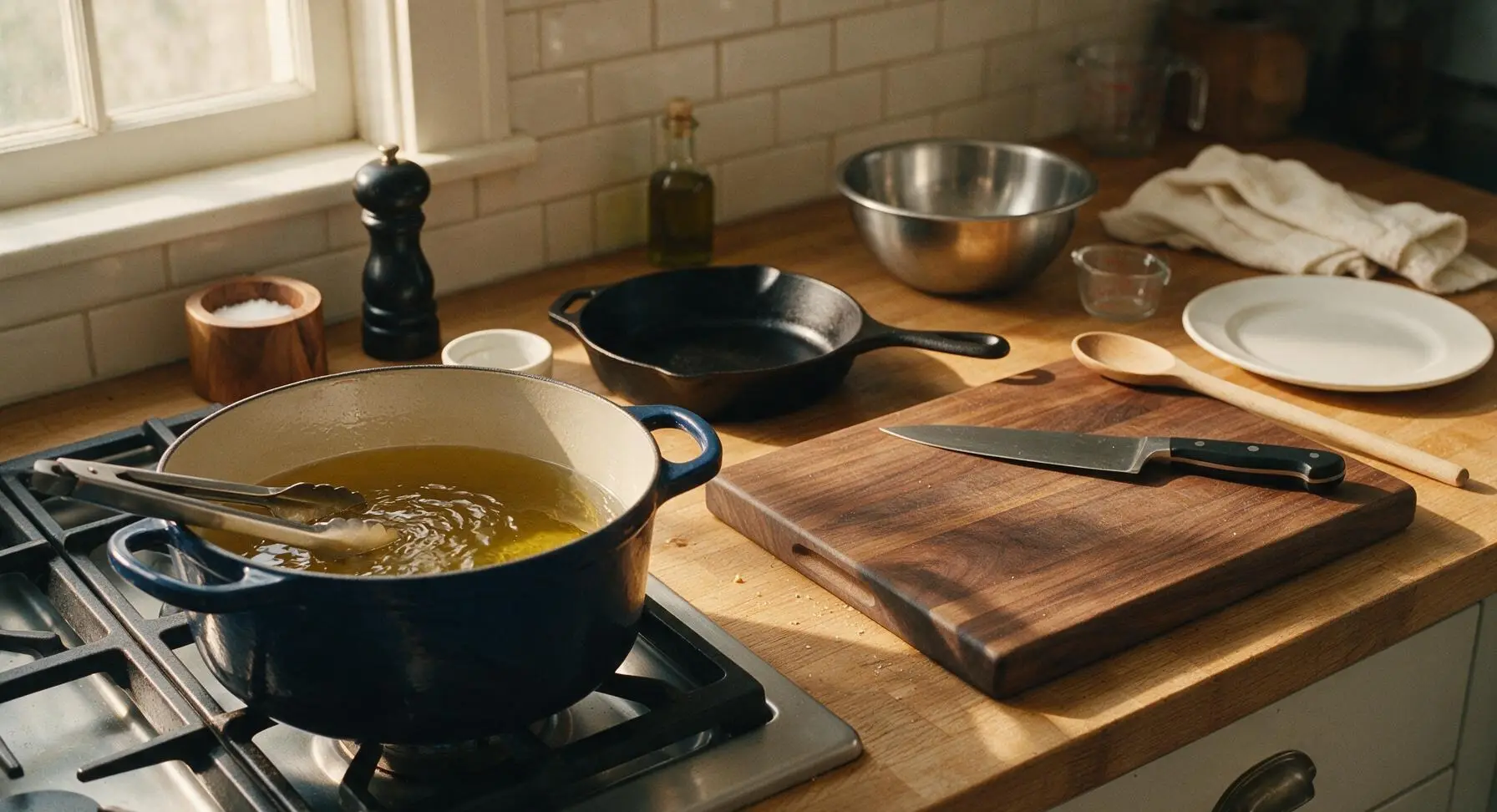
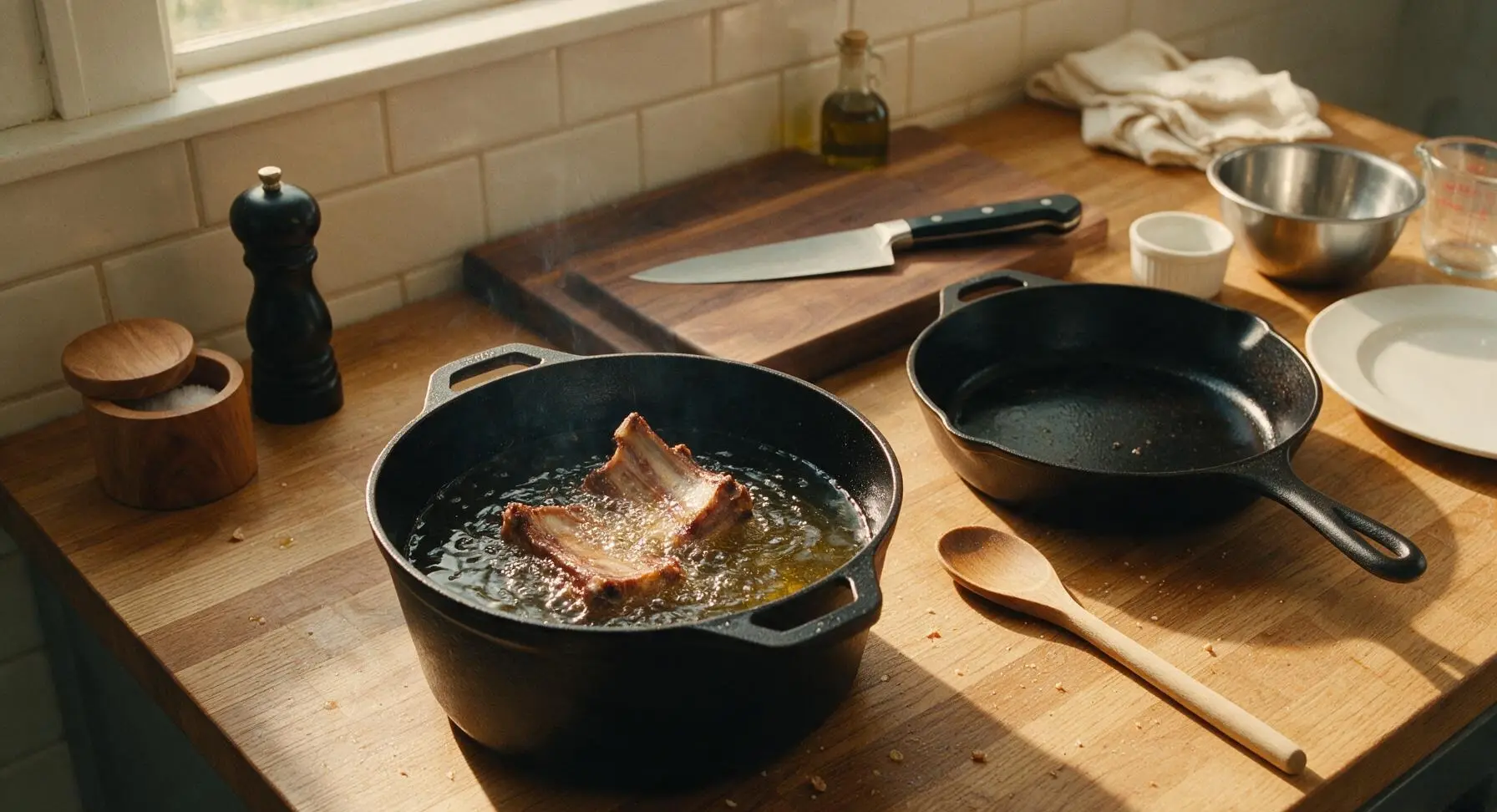
Place the deep navy enamel cast iron Dutch oven on the left stovetop burner over medium-high heat. Pour in 4 cups canola oil, and heat until the oil reaches 375°F (190°C) (oil will shimmer slightly, and a small drop of water dropped in will sizzle immediately and pop). Do not leave hot oil unattended at any point.
Step 5
step5:Heat Frying Oil
6

Fry Ribs to Crisp

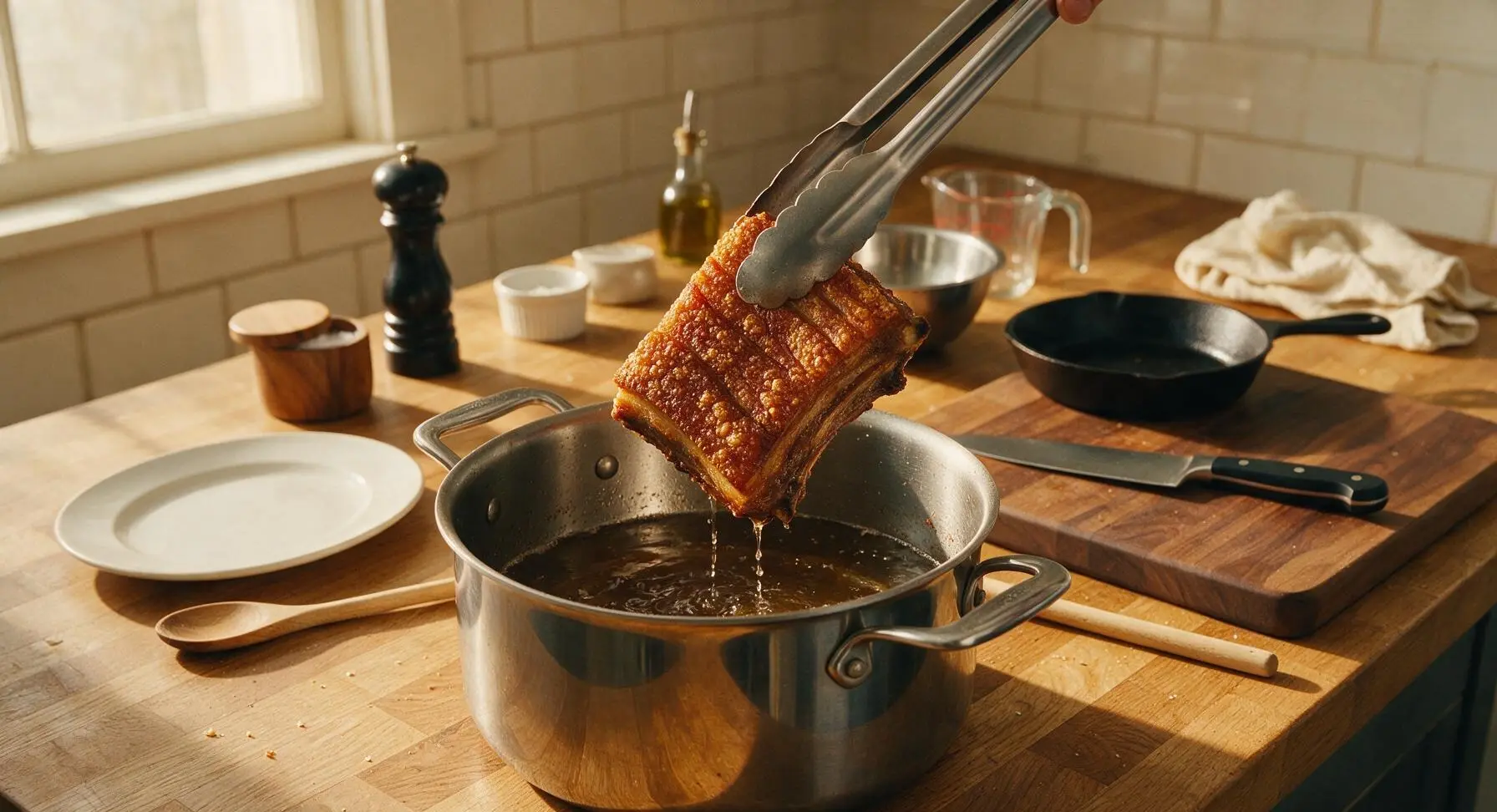
Carefully lower 2-3 rib portions into the hot oil at a time using tongs; do not overcrowd the pot, as this drops oil temperature and makes ribs greasy. Fry for 6-8 minutes per batch, turning occasionally, until the skin is deep golden brown, puffed, and shatteringly crisp across the entire surface. Use the slotted skimmer to lift finished ribs out of the oil, letting excess oil drain back into the pot.
Step 6
step6:Fry Ribs to Crisp
Step 6
step6:Fry Ribs to Crisp
7

Season and Rest Ribs

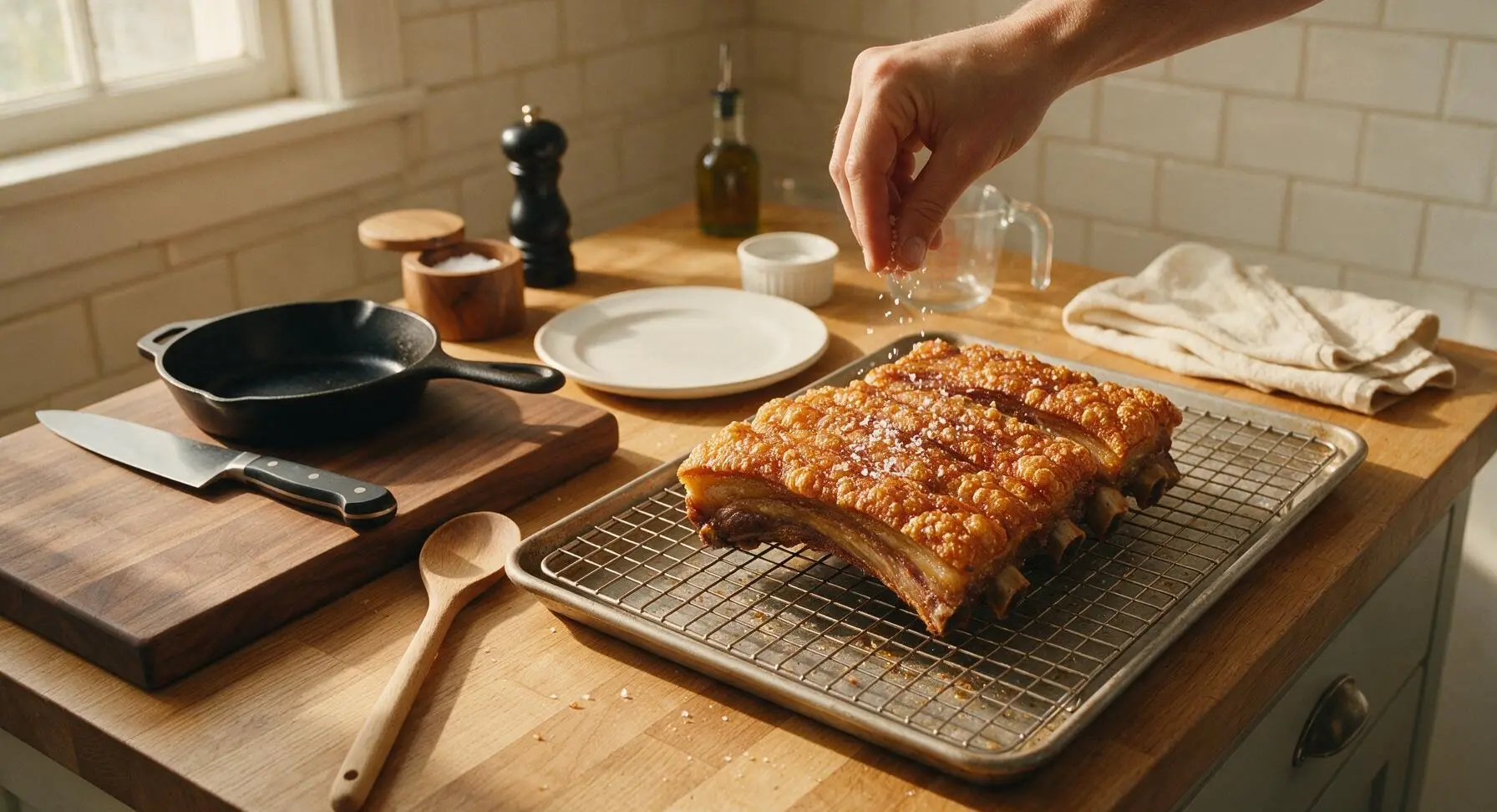
Transfer the fried crispy ribs back to the wire cooling rack set over the baking sheet. Immediately sprinkle the hot skin with the remaining 1 tablespoon coarse sea salt, lightly tapping the salt into the crisp skin. Let the ribs rest for 3 minutes to let excess oil drain, and to let the skin set fully before serving; do not cover the ribs while resting.
Step 7
step7:Season and Rest Ribs
8

Prepare Dipping Sauce

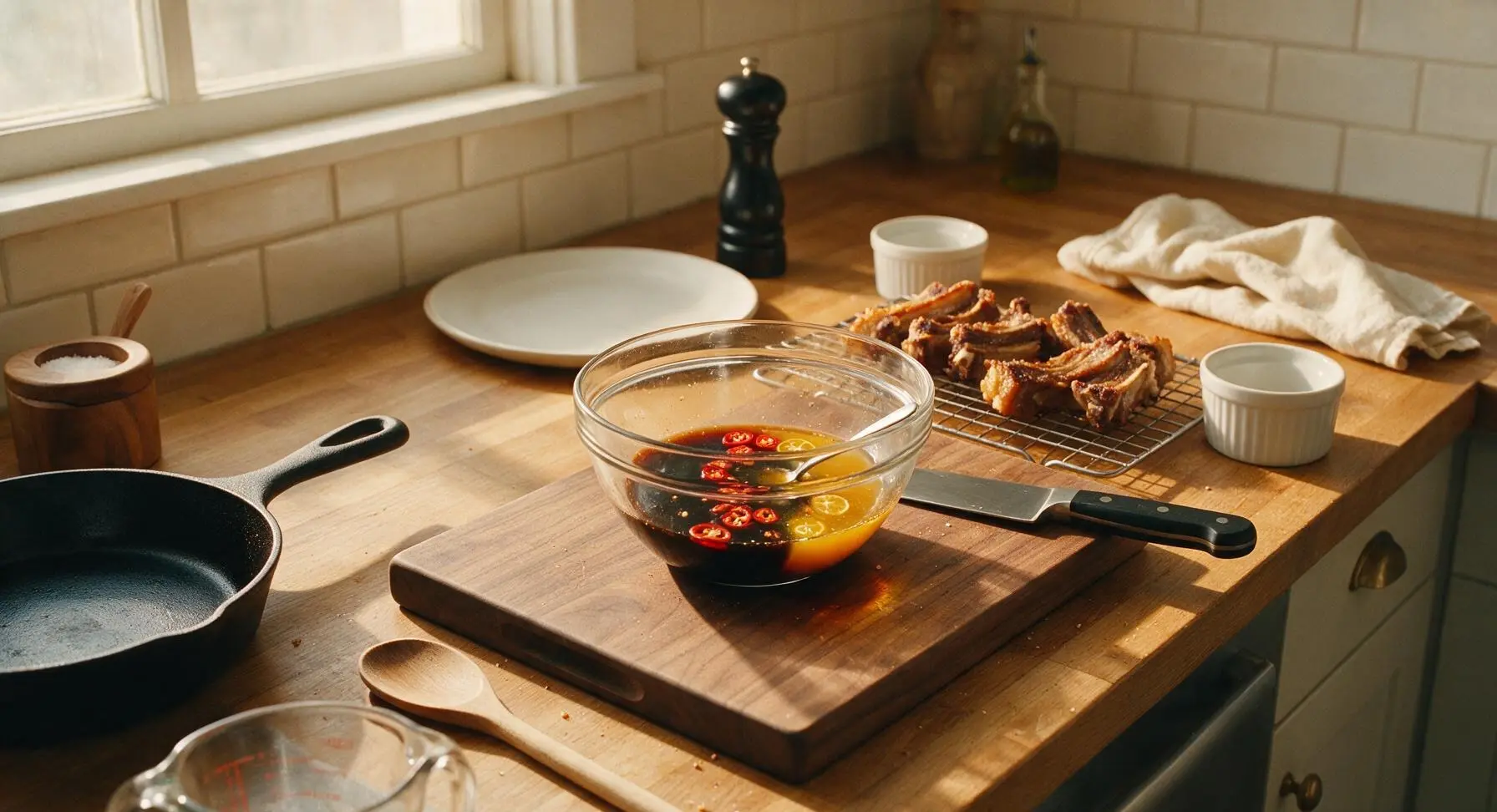
In the small clear glass mixing bowl, combine the remaining 1/4 cup light soy sauce, 1/4 cup calamansi juice, and sliced red bird's eye chili. Stir gently with a small spoon to combine, then pour the sauce into the small matte white ramekins for serving alongside the crispy ribs.
Step 8
step8:Prepare Dipping Sauce

Tips

1.Never skip the full 30-minute air-dry step for simmered ribs: any residual moisture on the skin will cause dangerous hot oil splatters and prevent the skin from puffing into light, shattery crackling, leaving it tough and chewy instead. For extra crispness, you can chill the dried ribs uncovered in the fridge for 2 hours before frying.
2.Fry in small batches of 2-3 ribs at a time: overcrowding the Dutch oven drops oil temperature below 350°F, which makes ribs absorb excess oil and turn greasy, rather than forming a light, crisp, non-greasy crust. Wait 1-2 minutes between batches to let oil return to 375°F.
3.Do not cover the ribs while they rest after frying: trapping steam under a lid or foil will soften the crisp crackling in as little as 2 minutes. Letting ribs rest uncovered on the wire rack keeps air circulating around the skin to preserve crunch for up to 20 minutes.
✨ You May Also Like

Main Course
🍜 United Kingdom

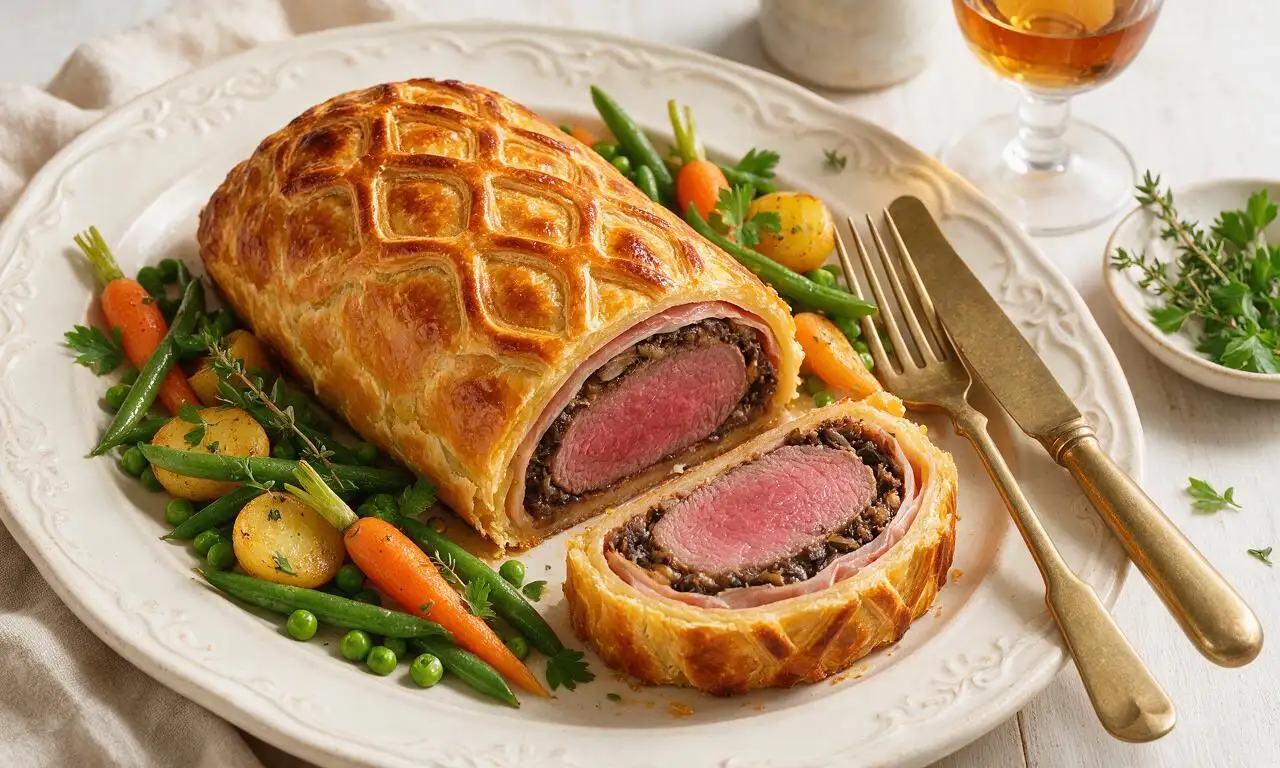
A showstopping classic of tender seared beef, savory mushroom duxelles, and crisp prosciutto wrapped in flaky golden puff pastry, baked to juicy perfection.

⏱️ 2 hours 1Main Course ★ 4.7
Main Course
🍜 India

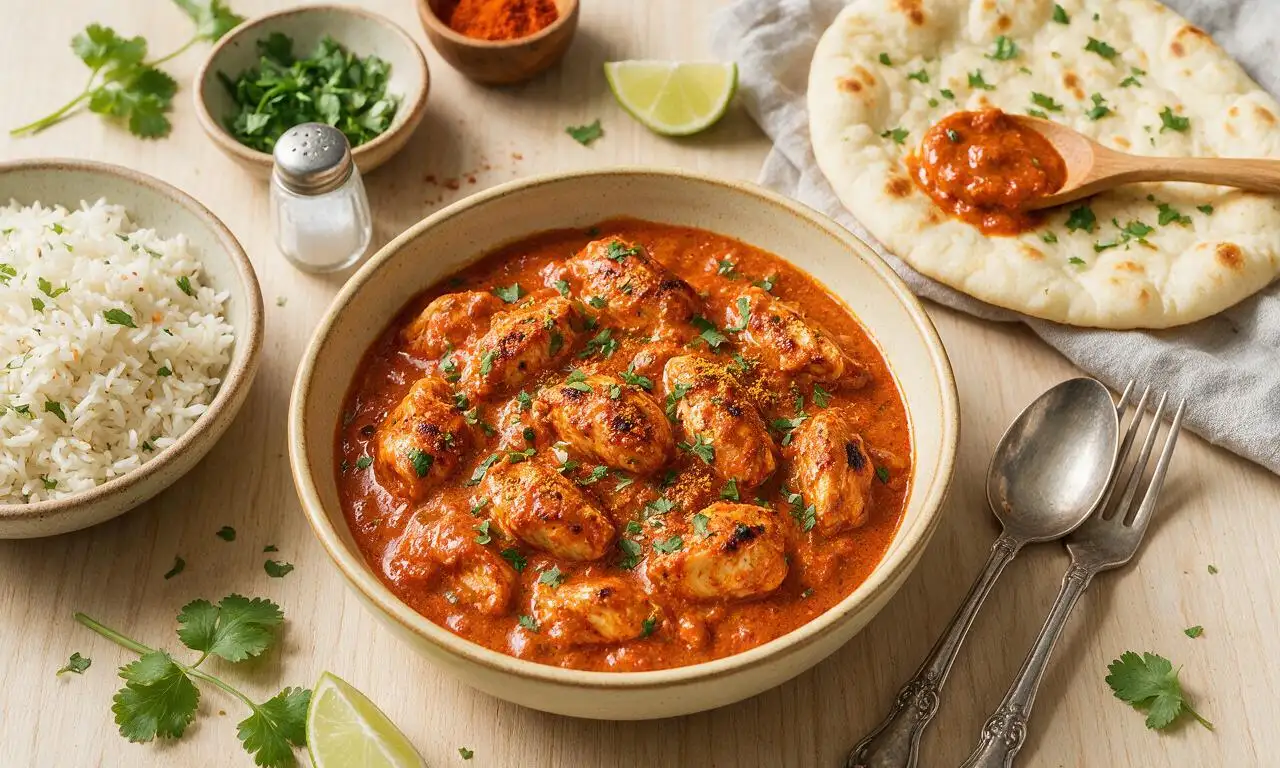
Tender charred marinated chicken simmered in a rich, spiced creamy tomato sauce, this iconic Anglo-Indian curry pairs perfectly with basmati rice or warm naan.

⏱️ 50 minuteMain Course ★ 4.6
Main Course
🍜 Thailand

Classic tangy, sweet, and savory Thai stir-fried rice noodles with shrimp, tofu, and crunchy garnishes, balancing all five core Thai flavor profiles.

⏱️ 30 minuteMain Course ★ 4.5
Main Course
🍜 United Kingdom

Crispy golden beer-battered cod and fluffy double-fried chips, served with tangy tartar sauce and malt vinegar: the timeless, beloved British pub comfort classic.

⏱️ 45 minuteMain Course ★ 4.7
Main Course
🍜 Mexico

Smoky, chile-marinated pork tacos with caramelized pineapple, fresh cilantro, and lime: a beloved classic Mexican street food perfect for casual summer gatherings.

⏱️ 1 hour 45Main Course ★ 4.8
Main Course
🍜 United States

Crunchy Fritos corn chips layered with savory beef chili and melted cheddar, topped with cool, zesty fixings for a beloved, cozy Tex-Mex comfort food.

⏱️ 35 minuteMain Course ★ 4.8

Lechon Kawali Ribs:Frequently Asked Questions

1.What cut of pork ribs should I use for authentic Lechon Kawali Ribs? ▾
Stick with skin-on pork spare ribs for the most authentic, perfect result. Unlike leaner baby back ribs, spare ribs have a generous, evenly attached skin layer and enough marbled fat to get that signature shatteringly crisp crust after frying, while staying juicy and tender through the slow simmer step.
2.Why do I need to bruise lemongrass before adding it to the simmer pot? ▾
Bruising lemongrass by bashing it firmly with the back of a knife or meat mallet breaks down its tough, fibrous outer layers. This releases its bright, citrusy, herbal aroma deep into the simmering liquid, so the ribs pick up that classic Filipino aromatic flavor instead of the lemongrass tasting flat and muted.
3.How do I get that perfectly shatteringly crisp skin instead of chewy, tough skin? ▾
The biggest secret is fully drying the rib skin completely after simmering, before you fry. Pat ribs thoroughly with paper towels, then let them rest uncovered on a wire rack in the fridge for 4 to 6 hours (or overnight) so every bit of surface moisture evaporates—moisture is the No. 1 enemy of crisp, crackly pork skin.
4.Can I skip the slow simmer step and just fry the ribs raw? ▾
I don’t recommend it. The slow simmer in garlic, lemongrass, bay leaves, and peppercorns does two critical jobs: it infuses every bite of rib with warm, aromatic flavor, and it tenderizes the tough rib meat so it pulls clean from the bone, instead of turning out chewy and under-seasoned after frying.
5.What is toyomansi dipping sauce, and can I make it if I can’t find fresh calamansi? ▾
Toyomansi is the bright, tangy, salty classic Filipino dip for fried pork, traditionally made with soy sauce, fresh calamansi juice, a little minced garlic, and a pinch of sugar. If you can’t find calamansi, mix 3 parts low-sodium soy sauce with 1 part fresh lime and 1 part fresh lemon juice for a near-identical zesty kick.
6.How long should I simmer the ribs to make sure they’re tender but not falling apart? ▾
Aim for a gentle, low simmer (not a rolling boil) for 35 to 45 minutes. You’ll know they’re ready when you can pierce the thickest part of the rib with a fork with light pressure, but the meat hasn’t started pulling away from the bone ends yet—over-simmering makes ribs fall apart when you fry them.
7.Is it safe to leave the ribs uncovered in the fridge to dry before frying? ▾
It’s completely safe, as long as your fridge is set to 40°F or below. Resting them on a wire rack set over a baking sheet lets air circulate around every inch of skin, and the dry, cold fridge environment pulls out surface moisture without spoilage, as long as you don’t leave them longer than 24 hours.
8.What kind of oil works best for frying the ribs to get that golden crust? ▾
Use a neutral, high-smoke-point oil like canola, peanut, or refined avocado oil. These oils can hold the steady 375°F temperature you need for crisping without burning, smoking, or leaving off-flavors on your ribs. Avoid olive oil or sesame oil, which have too low a smoke point for this high-heat fry step.
9.Can I make Lechon Kawali Ribs in an air fryer instead of deep frying? ▾
You absolutely can, for a lighter take. Pat your fully dried, simmered ribs lightly with a thin coat of oil, then air fry at 400°F for 18 to 22 minutes, flipping halfway, until the skin is puffed, golden, and crisp. The texture won’t be quite as uniformly shattery as deep-fried, but it’s still delicious and far less messy.
10.Why do you use whole crushed garlic instead of minced garlic for the simmer? ▾
Whole crushed garlic (skins left on, lightly smashed to break the cloves open) releases a mellow, sweet, rounded garlic flavor into the simmer liquid without turning bitter or breaking down into mushy bits that stick to the ribs. Minced garlic over-steeps during the long simmer and leaves a harsh, bitter aftertaste.
11.How do I avoid dangerous oil splatters when frying the simmered ribs? ▾
First, make absolutely sure the rib skin is totally dry—any lingering water will make oil pop violently. Second, lower the ribs into the hot oil gently with long tongs, angled away from your body, and don’t overcrowd the fry pot; fry in 2 to 3 small batches to keep oil temperature steady and cut down on splatters.
12.Can I make the ribs ahead of time for a party, and how do I reheat them to keep skin crisp? ▾
You can simmer the ribs up to 2 days ahead, keep them uncovered on a rack in the fridge, then fry them right before serving for the best crunch. If you have leftover fried ribs, reheat them on a wire rack in a 425°F oven for 8 to 10 minutes—never microwave them, as that turns crisp skin rubbery instantly.
13.Do I need to add salt to the simmer water for the ribs? ▾
Yes, add about 2 tablespoons of kosher salt to the simmer pot along with the garlic, lemongrass, bay leaves, and peppercorns. This seasons the meat all the way through, instead of just having seasoning on the outer surface. Skip this step, and your ribs will taste bland no matter how flavorful your dipping sauce is.
14.What purpose do whole black peppercorns and dried bay leaves serve in the recipe? ▾
Those two aromatics add warm, earthy, subtle depth to the simmer liquid that doesn’t overpower the pork or lemongrass. Whole peppercorns release a slow, mellow heat instead of the sharp bite of ground pepper, and bay leaves add a subtle, tea-like herbal note that makes the rib flavor feel rounded, not one-note.
15.How do I know when the ribs are done frying? ▾
You only need to fry them for 6 to 8 minutes total, since the meat is already fully cooked from the simmer. They’re done when the skin is a deep, even golden brown, puffed with small crackly bubbles across the surface, and makes a light, crisp tapping sound when nudged with tongs. Pull them immediately to drain on a wire rack.
16.Can I use boneless pork ribs for this recipe? ▾
I don’t recommend boneless ribs for classic lechon kawali, because they almost never come with the thick, attached skin layer you need for that signature crackle. Bone-in skin-on spare ribs also have more marbled, juicy flavor and stay tender better through cooking, while boneless cuts tend to dry out much faster.
17.What sides pair best with Lechon Kawali Ribs? ▾
These rich, crisp ribs pair perfectly with bright, starchy, or tangy sides to cut through the fat. Serve them with steamed white rice, fresh tomato and salted egg salad, pickled green papaya (atchara), or garlic fried rice, plus extra toyomansi on the side for dipping. The contrast of flavors and textures makes the meal feel perfectly balanced.

Comments (11)

3 days ago

OMG these lechon kawali ribs are a total game changer! I made them for our family Sunday dinner last night and even my super picky 7 year old asked for seconds. The skin got so crispy I couldn’t believe it — I was worried I’d mess up the boil step but it worked perfectly.

2 days ago

Wait did you do the ice water bath after boiling? I keep seeing mixed tips for that and I’m making these for a potluck this weekend!

2 days ago

So glad your family loved them, Mia! The ice water bath is totally key for that shatteringly crisp skin — just make sure you pat the ribs completely dry before frying to avoid oil splatters, and you’ll be all set for your potluck, Jake!

5 days ago

Solid recipe! Cook time was spot on for me, though I upped the garlic a little because I’m a garlic fiend. Only thing is my ribs came out a touch saltier than I expected — probably because I used regular soy sauce instead of low-sodium like the note said, oops.

3 days ago

Great call adjusting the garlic to your taste, Tyler! The low-sodium soy sauce note is there for exactly that reason — if you use regular next time, just cut the added salt in half during the boil step and it’ll balance out perfectly.

1 week ago

SO good. I meal prepped these on Sunday and ate them all week with a side of garlic rice and pickled papaya. The crisp held up way better than I thought it would even after reheating in the air fryer! 10/10 will make again.

5 days ago

Wait, has anyone tried making these in an air fryer instead of deep frying? I’m terrified of hot oil popping everywhere but I’ve been craving lechon kawali for months. Medium difficulty feels intimidating if I have to mess with a big pot of oil.

3 days ago

I did it! 400 degrees for 25 minutes, spritzed with a little oil, flipped halfway. The skin isn’t *quite* as crispy as deep fried but it’s 90% there and way less messy. I was scared of oil too!

2 days ago

Great tip from Zoe! Air frying is a fantastic lower-mess alternative — just make sure you don’t overcrowd the air fryer basket, and give the ribs a light spray of neutral oil to help the skin crisp up evenly.

1 week ago

Made these for my buddy’s birthday cookout and everyone was raving! People kept asking me for the recipe all night. I served them with that spicy vinegar dip the recipe links to and *chef’s kiss*.

5 days ago

Oh that vinegar dip is non-negotiable! I made the mistake of forgetting it last time I made these and it just wasn’t the same, haha.

2 weeks ago

My partner is Filipino and he said these tasted exactly like the ones his lola used to make for family parties when he was a kid. I was so nervous I’d mess up a dish he loves so much but the step by step instructions were so easy to follow! Total win.

30 minutes ago

Quick question — can I use spare ribs instead of the baby back ribs the recipe calls for? I have a huge pack of spare ribs in my freezer I need to use up this week.

just now

Absolutely, Chris! Spare ribs work great for this recipe — just add 10-15 minutes to the initial boil time to make sure they get tender enough before frying, and they’ll turn out delicious.

2 hours ago

Wait I feel like I did everything right but my skin didn’t crisp up at all? It was all chewy and rubbery even after frying for the full time. What did I do wrong? I was so excited for these :(

30 minutes ago

Oh no! Did you pat them totally dry after boiling? I made that mistake the first time I tried making lechon kawali and the moisture made the skin stay chewy. Also make sure your oil is hot enough before you put them in!

5 minutes ago

So sorry the skin didn’t turn out for you, Lily! Mia is spot on — moisture is the #1 enemy of crispy lechon skin. After boiling and the ice bath, let the ribs air dry in the fridge for 30 minutes if you have time, and make sure your oil holds steady at 375°F while frying, and that chewy skin issue should disappear next time.

yesterday

Just made these again for taco night! Chopped up the crispy ribs, tossed them in a little tangy sauce, and put them in corn tortillas with pickled red onion. Game changer twist if you want to mix it up!

2 hours ago

That sounds incredible!!! I’m making these next week for Taco Tuesday now, thanks for the idea!

5 minutes ago

Meal prep win this week! I made a double batch on Sunday, portioned them out with roasted veggies and rice, and they reheat perfectly in the air fryer for 5 minutes at lunch. Crispy, salty, savory — everything I want in a weekday meal.

2 weeks ago

Took these to my neighborhood potluck last weekend and they were the first dish gone! People kept coming up to me asking where I got the recipe, I had to send the link to like 6 different neighbors. The trick of letting them dry in the fridge for an hour before frying? *Chef’s kiss* so crispy.

1 week ago

Right?! I brought these to a cookout a couple weeks ago and had the exact same experience. Everyone loses their minds over how crunchy the skin is.

1 week ago

Love hearing that these were a potluck hit, Riley! The fridge dry step is such an easy hack for next-level crisp, I’m so glad it worked out for you.