1.Why does this recipe call for bone-in, skin-on chicken thighs instead of chicken breast?
▾
Bone-in, skin-on thighs stay juicy and tender through the longer simmer time required to build a flavorful broth, while the bone adds subtle savoriness and the skin renders light, rich fat that rounds out the bright sour tamarind flavor. Chicken breast easily turns dry and stringy here; if you use it, add it only in the last 15 minutes of cooking.
2.Can I use packaged tamarind sinigang powder instead of unsweetened tamarind pulp?
▾
You can, but unsweetened pulp gives a brighter, fresher, more complex tartness without the added preservatives, extra salt, and artificial flavor common in pre-made powdered mixes. If using powder, start with 2 tablespoons, taste as you go, and cut back on added salt to account for sodium in the packaged mix.
3.What kind of neutral cooking oil works best for this recipe?
▾
Any high-smoke-point neutral oil works perfectly here—canola, vegetable, avocado, or refined coconut oil are all great picks. Avoid strongly flavored oils like toasted sesame, extra-virgin olive oil, or unrefined coconut oil, as they will overpower the delicate, bright tang of the tamarind broth and throw off the classic flavor balance.
4.How do I properly prep unsweetened tamarind pulp for the soup?
▾
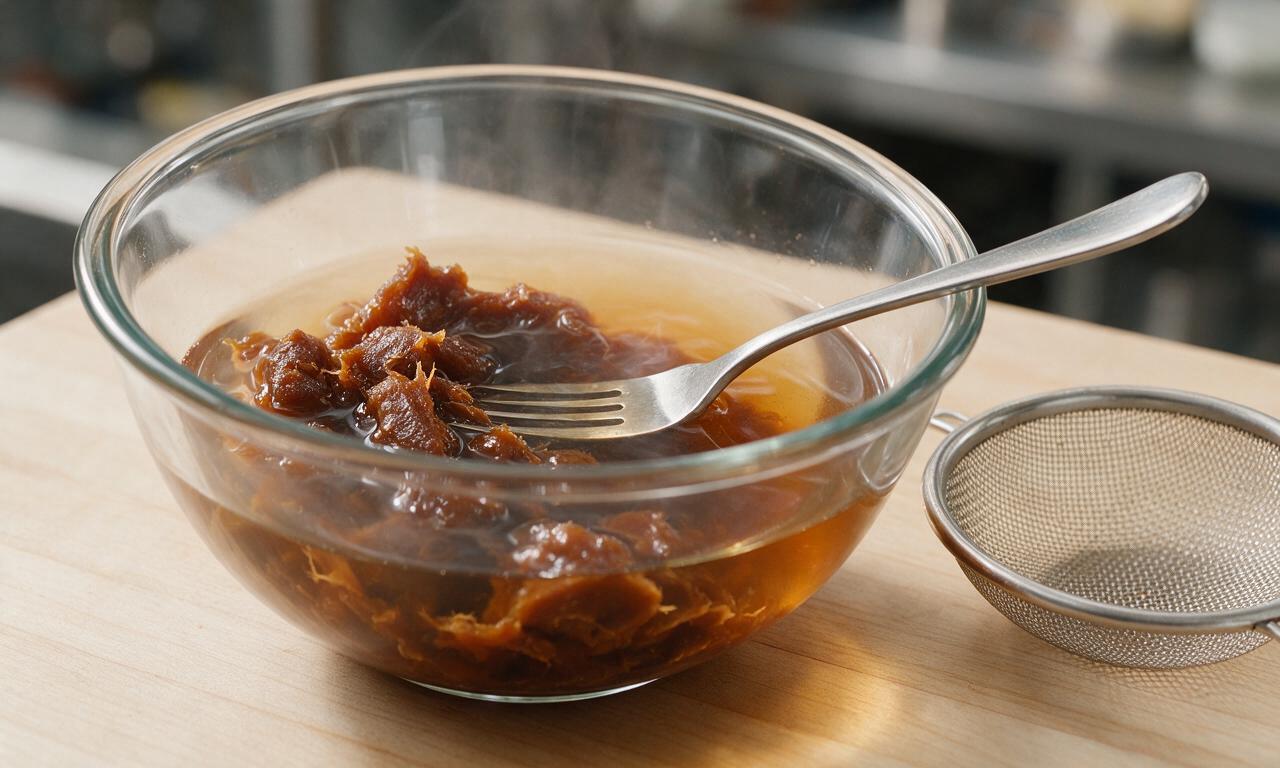
Start by soaking the block of tamarind pulp in 1 cup of hot (not boiling) water for 10 minutes to soften it. Mash the pulp with a fork, then strain out the fibrous seeds and stringy bits, pressing to extract as much thick, tangy tamarind liquid as possible to add straight to your broth, discarding the leftover solids.
5.Why cut the yellow onion into 1cm wedges instead of dicing it small?
▾
The 1cm onion wedges hold their shape through the simmer, softening into sweet, tender bites that don’t dissolve completely into the broth, which is part of the classic textural experience of sinigang. Small diced onion breaks down too quickly, making the broth murky and losing those distinct, mild sweet onion bites that balance the sour tamarind.
6.What traditional vegetables are typically added to chicken sinigang?
▾
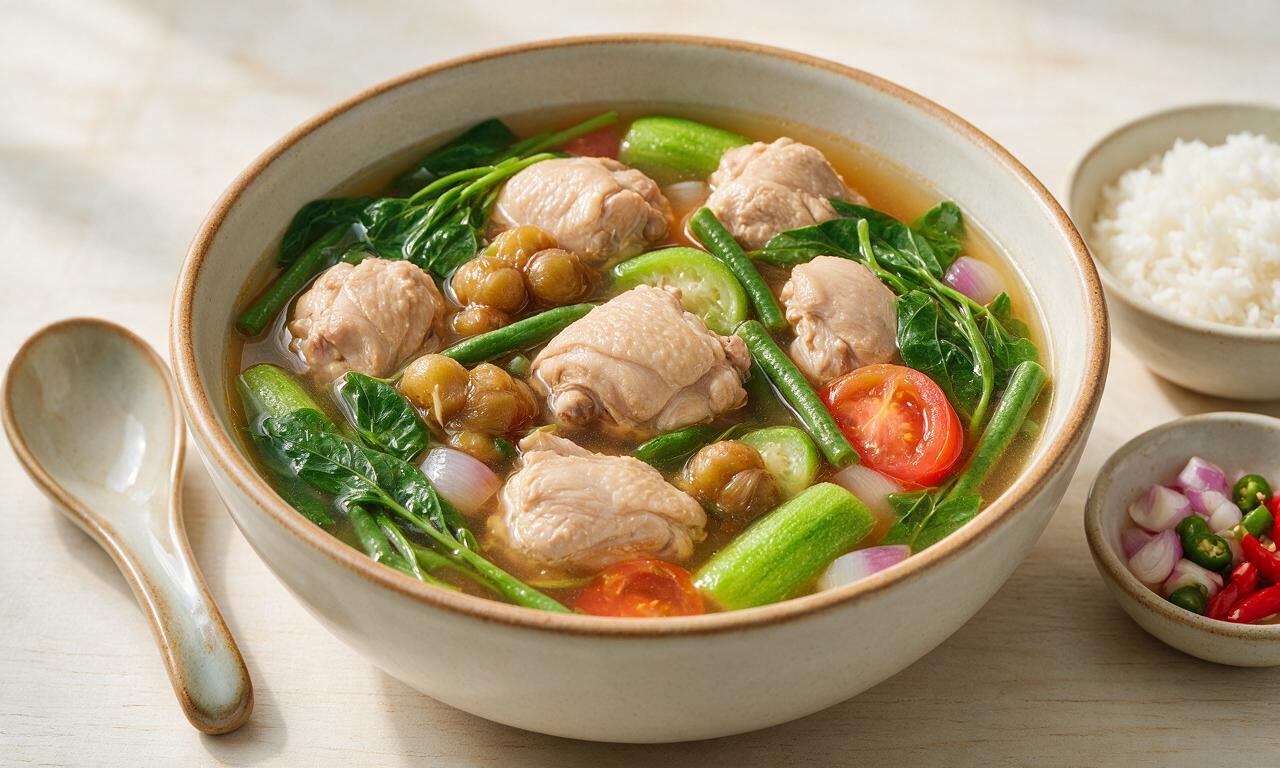
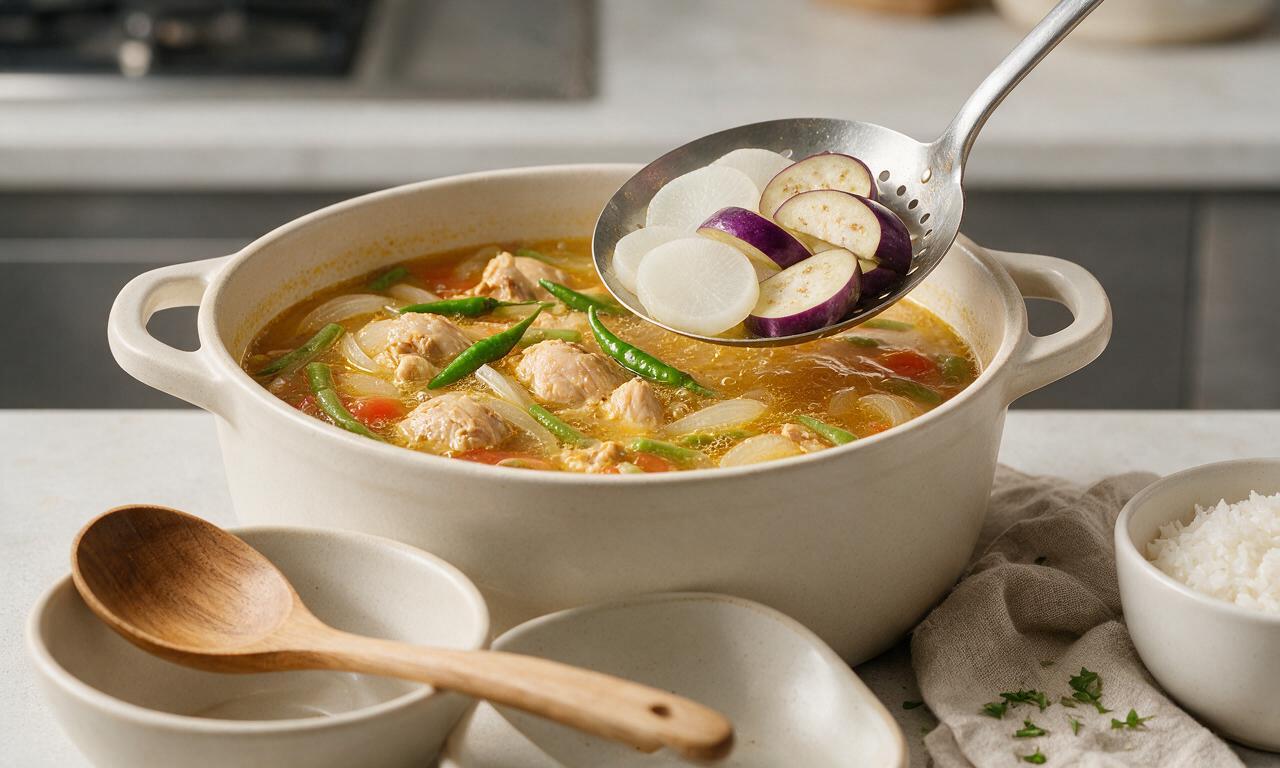
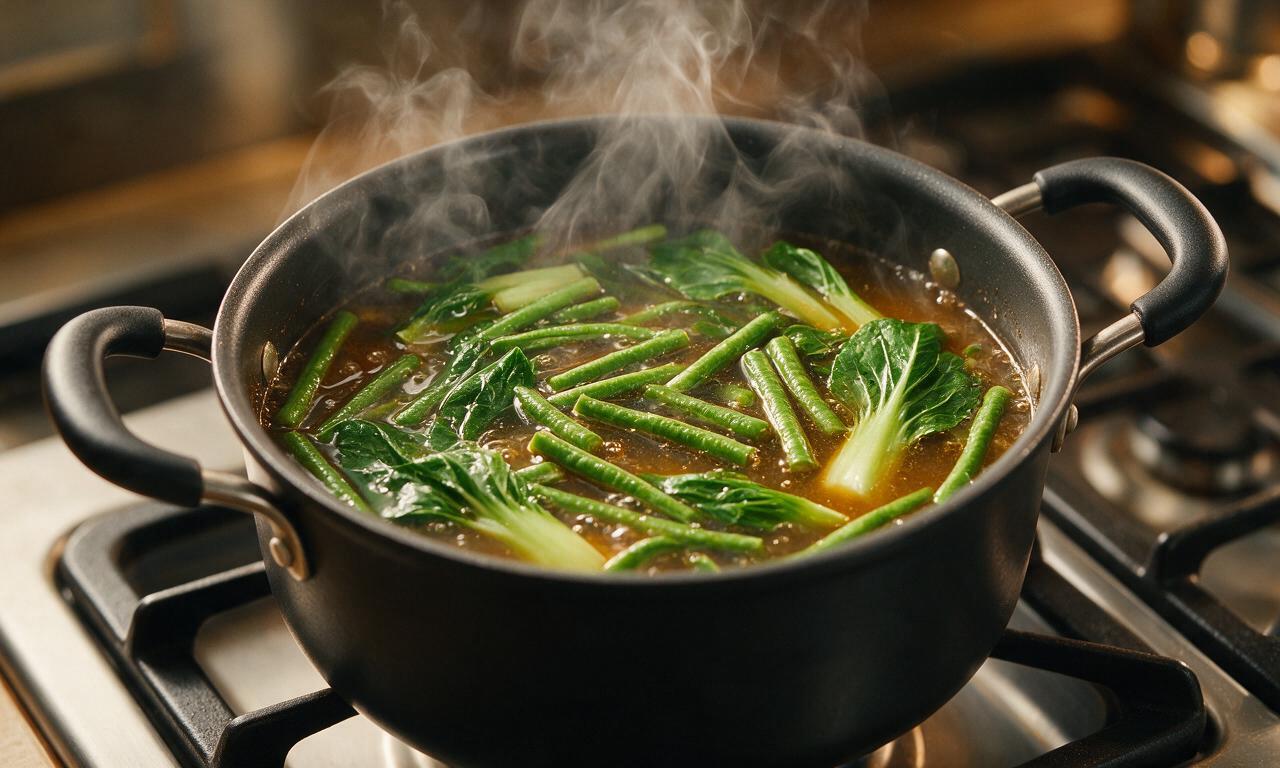
The most common add-ins are daikon radish, bok choy, long green beans, cubed taro, sliced ripe tomato, and a mild long green pepper for subtle heat. Add sturdier veggies like taro and daikon first to cook through, and delicate leafy greens in the last 3 to 5 minutes so they don’t turn mushy.
7.How sour should the finished sinigang broth taste?
▾
The ideal sinigang broth is bright, lip-puckeringly tart but well-balanced, not so sour that it makes your eyes water. Start with half your strained tamarind liquid, taste, and add more a tablespoon at a time until you hit that perfect tang, adjusting with a pinch of salt or tiny sprinkle of sugar if the sourness tastes sharp or unbalanced.
8.Can I make chicken sinigang ahead of time for meal prep?
▾
Absolutely! Sinigang actually tastes better the next day, as the tamarind, chicken, and vegetable flavors meld together as it chills. Store it in an airtight container for up to 4 days in the fridge, and reheat gently on the stovetop over medium-low heat, adding a splash of water if the broth has thickened up too much.
9.My tamarind broth tastes bitter—what went wrong, and how do I fix it?
▾
Bitter broth usually comes from either simmering tamarind seeds and fibrous solids directly in the soup instead of straining them out first, or burning the onion when you sauté it at the start. Fix it by stirring in a tiny pinch of white sugar (1/4 teaspoon at a time) to cut bitterness, and straining out any stray seed or fiber bits.
10.Can I use other cuts of chicken besides thighs for this recipe?
▾
You can! Bone-in drumsticks work just as well as thighs, delivering the same juicy, rich result. A mix of thighs and drumsticks is actually very common for home-style sinigang. Avoid boneless, skinless cuts if possible, as they won’t add the same depth of flavor to the broth and will dry out faster during simmering.
11.Do I need to sear the chicken first before adding water to make the broth?
▾
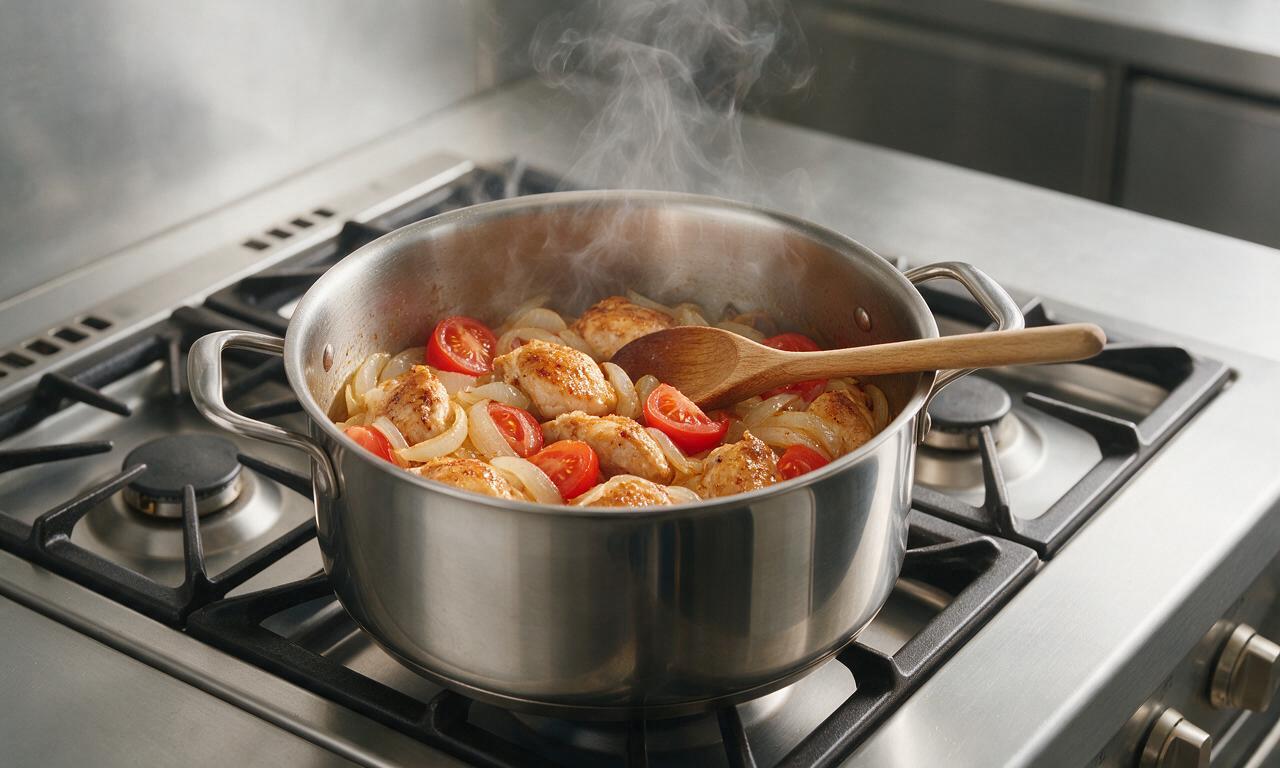
Yes, a quick light sear on the chicken thighs after sautéing the onion adds a deep, savory, toasty note to the broth that you won’t get from boiling raw chicken directly. You don’t need to crisp the skin fully—just cook each side for 2 to 3 minutes over medium heat until lightly golden before pouring in your water.
12.What can I use as a substitute if I can’t find tamarind pulp or powder?
▾
If you can’t find tamarind products, you can mimic its signature bright, fruity tartness with a mix of 3 parts fresh lime juice and 1 part unsweetened pineapple juice, added at the very end of cooking so the citrus doesn’t turn bitter from long simmering. It won’t be an exact match, but it will get you very close to the classic sinigang tang.
13.How long should I simmer the chicken to get it perfectly tender?
▾
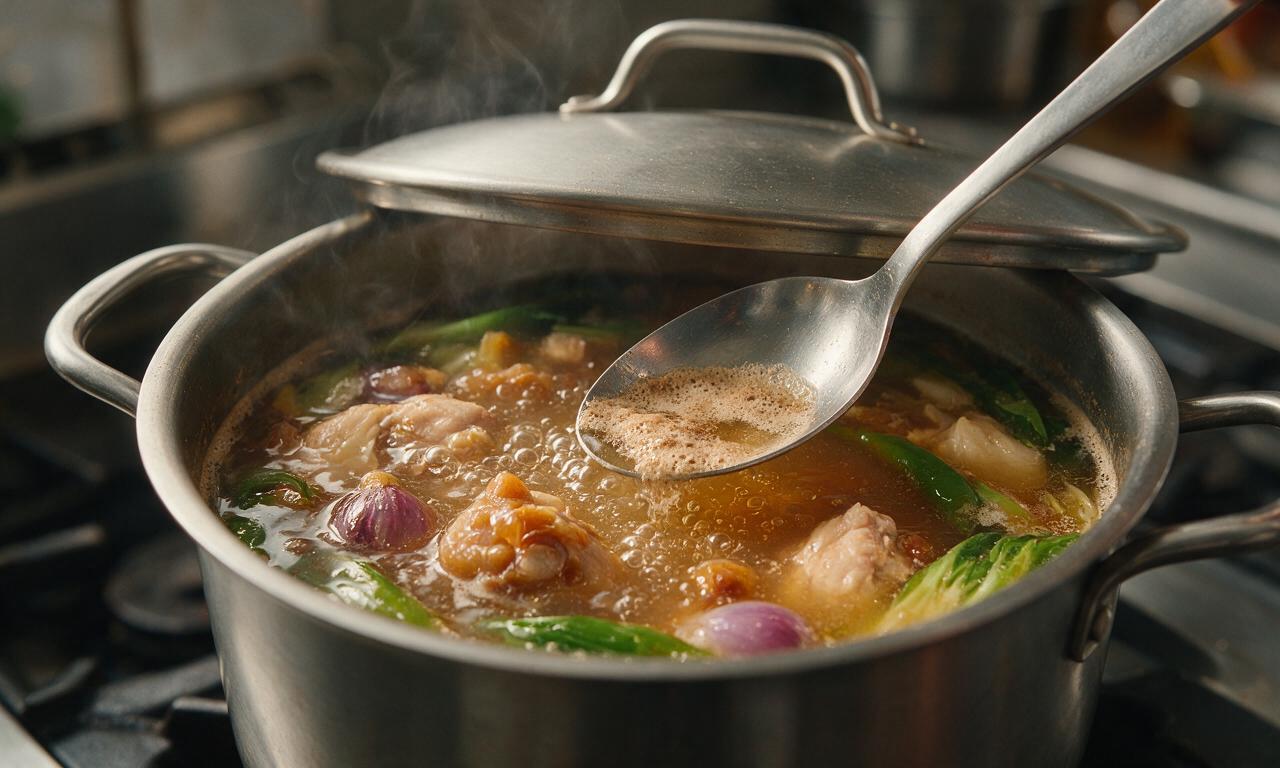
Once you add your water and bring the broth to a gentle boil, turn the heat down to a low simmer, cover the pot, and cook the chicken for 25 to 30 minutes. This is long enough for the chicken to turn fall-off-the-bone tender, and for the broth to pick up rich chicken flavor, without the meat turning tough or stringy.
14.Is it traditional to add fish sauce to chicken sinigang?
▾
Fish sauce is an extremely common, traditional seasoning for sinigang! Add 1 to 2 tablespoons of fish sauce when you add the tamarind liquid, starting small and tasting as you go, to add deep umami savoriness that balances the bright sour broth. If you don’t eat fish, you can substitute low-sodium soy sauce or coconut aminos instead.
15.Why is my chicken coming out tough even after simmering for a long time?
▾
Tough chicken is almost always caused by boiling the soup at a high, rolling boil instead of keeping it at a gentle, low simmer. Vigorous boiling makes the muscle fibers in the chicken seize up and turn tough, even with long cooking. Turn the heat down so only small bubbles break the surface, and give it another 10 minutes to tenderize gently.
16.What is typically served alongside chicken sinigang?
▾
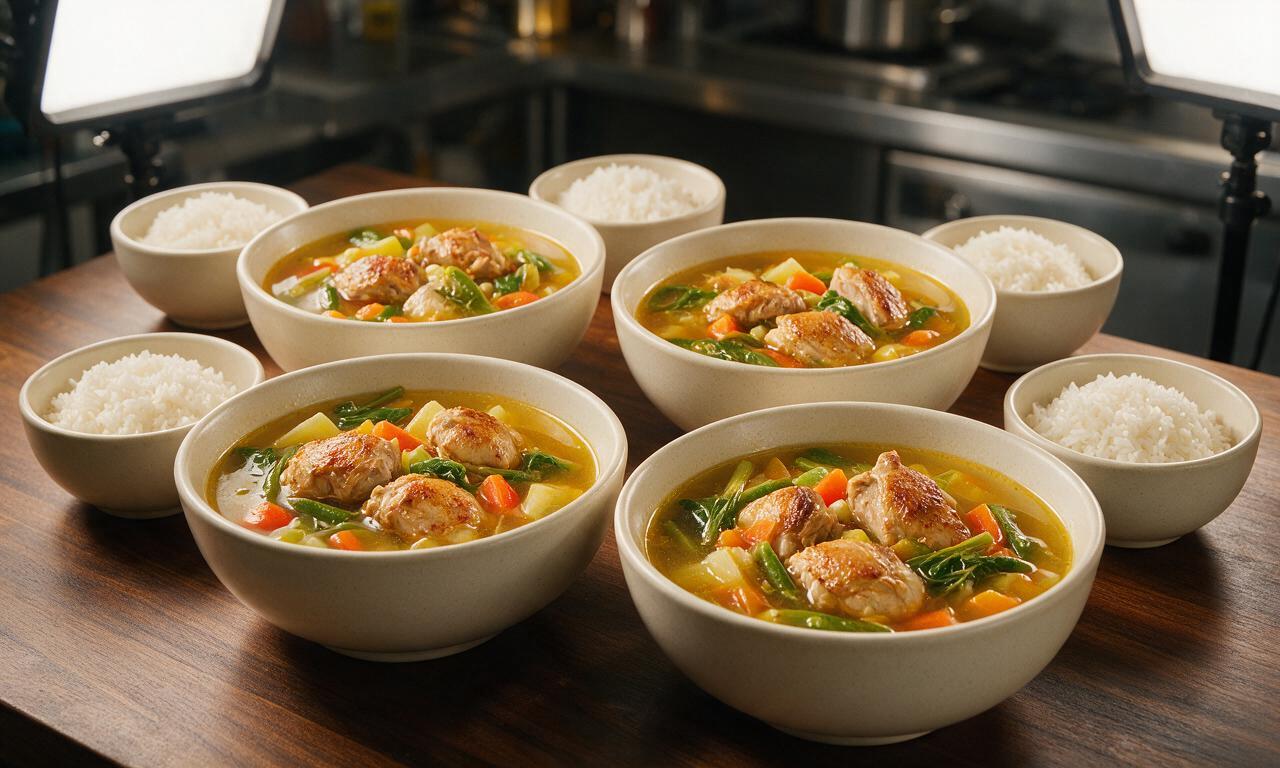
Sinigang is almost always served family-style with a big bowl of steamed white rice on the side, to soak up the tangy broth. Many people also serve it with a small ramekin of fish sauce mixed with sliced chili and lime for dipping the chicken and veggies, if you want an extra hit of salty, spicy, tangy flavor.
17.Can I freeze leftover chicken sinigang for later?
▾
You can freeze it for up to 3 months in an airtight, freezer-safe container, but leave out delicate leafy greens like bok choy if you plan to freeze it, as they will turn mushy when thawed and reheated. Thaw it in the fridge overnight, reheat gently on the stovetop, and add fresh leafy greens right before serving for the best texture.
18.Should I remove the chicken skin to make the soup lower in fat?
▾
You can, but I don’t recommend removing it before cooking! The rendered skin fat adds a rich, rounded mouthfeel that keeps the bright sour broth from tasting thin or sharp. If you prefer a lighter soup, chill the finished broth after cooking, skim off the solidified fat from the top, then reheat it to keep all the flavor without extra surface fat.
19.Can I make this recipe in a slow cooker or Instant Pot?
▾
Absolutely! For a slow cooker, sauté the onion and sear the chicken first, then add water and sturdy veggies, cooking on low for 4 to 5 hours. Stir in strained tamarind and delicate leafy greens in the last 15 minutes. For an Instant Pot, cook the chicken, onion, and sturdy veggies on high for 8 minutes, quick release, then finish with tamarind and greens.
20.How do I fix the broth if it turns out too sour for my taste?
▾
If the broth is too lip-puckeringly sour, balance it gradually instead of dumping in large amounts of sugar at once. Stir in 1/4 teaspoon of white sugar, a tiny pinch of extra salt, or a splash of water, tasting after each addition, until the tartness feels bright and balanced instead of sharp. A small splash of fish sauce also adds umami that mutes harsh sour notes.

OMG this sinigang is SO good!!! I’ve been craving Filipino food ever since my roommate made it for me last month and this recipe was so easy to follow even as a total beginner. The tamarind tang is perfectly balanced, not too sour at all. Served it over jasmine rice for my family dinner last night and my picky 7 year old asked for seconds! Total game changer for my weeknight rotation.
Made this for a potluck at work yesterday and people were going back for thirds! I was a little worried the sour flavor would be too intense for people who haven’t had Filipino food before but everyone was asking for the recipe. Cooked it in my big Dutch oven and the whole house smelled amazing for hours. Only change I made was adding a few extra Thai chilis for a little heat, chef’s kiss.
Wait, this is such a great meal prep recipe?! I made a big batch on Sunday and it held up perfectly all week for lunches. The broth actually gets more flavorful the longer it sits in the fridge, who knew? I used chicken thighs instead of breasts like the recipe suggested and they stayed so juicy, no dry chicken at all. 10/10 will be making this monthly.
Perfect cozy soup for the random cold snap we had in Phoenix last week! I’ve used the powdered sinigang mix before but using fresh tamarind per this recipe made such a huge difference, the flavor is so much brighter. It was super quick to throw together after work too, didn’t take nearly as long as I thought it would for such a flavorful dish.
As someone who grew up eating my lola’s sinigang in Manila, I was super skeptical of online recipes for this dish—so many of them cut corners! But this one is the real deal. The tamarind level is spot on, the cooking time for the chicken is perfect, I didn’t even have to adjust the seasoning. One bite brought me right back to Sunday dinners at my grandma’s house as a kid.
This was my first time ever making any kind of Filipino dish and it was so easy! I found fresh tamarind at my local Asian market no problem, followed the steps exactly, and it turned out perfectly on the first try. My boyfriend said it’s better than the sinigang he gets at the Filipino restaurant down the street. Only thing is I wish I made more, we ate the whole pot in one sitting lmao.
Obsessed with how affordable this recipe is! I already had most of the veggies at home, grabbed a pack of chicken thighs and some tamarind on my grocery run for under $10 total, and it fed my whole family of 4 for dinner. Way cheaper than takeout and tastes way better too. Only knock is I wish the recipe noted how long to prep the fresh tamarind, I added an extra 10 minutes to my cook time mashing and straining it. Still absolutely delicious though, will be adding this to my regular rotation for busy weeks when I don’t want to spend a ton on groceries.
Made this today while it was pouring outside and it was the perfect comfort food. The tangy, warm broth cleared up my sinus congestion from my cold better than any noodle soup I’ve ever had! I added some long green beans and eggplant like my friend’s Filipino mom taught me, and it was chef’s kiss. 10/10, already sent the recipe to my sister so she can make it too.
Great high protein option for my meal plan! Each serving has tons of chicken and fiber-rich veggies, it’s lower calorie, and the flavor is so bold I don’t feel like I’m eating “diet food” at all. Used bone-in chicken thighs for extra protein and the broth came out so rich and savory. Already recommended this to all my workout buddies who are sick of plain chicken and rice every week.
My mom makes sinigang all the time but she never uses a recipe, just eyeballs every ingredient, so I’ve been too intimidated to make it on my own. This recipe had such clear measurements and steps that I was able to make it for my mom when she came to visit last weekend, and she said it tasted just like hers! I almost cried, that’s the best compliment I could ever get as a home cook.
Quick hack for anyone who can’t find fresh tamarind pods at their local store! I used unsweetened tamarind concentrate from a jar for my batch last night and it still came out perfectly tangy, just adjusted the amount to taste since concentrate is a little stronger than fresh. Super forgiving, easy recipe even when you have to swap an ingredient. Already planning to make it with shrimp next time!