1.Can I use boneless, skinless chicken instead of bone-in, skin-on thighs for this recipe?
▾
You can, but bone-in, skin-on thighs deliver far deeper, savorier flavor and stay juicier through the slow simmer. If you swap for boneless, skinless thighs, cut simmer time by 8–10 minutes to avoid dry, stringy meat, and sear pieces well first to build caramelized flavor that matches the depth skin and bone add.
2.What is Filipino-style liver spread, and can I substitute it if I can’t find it?
▾
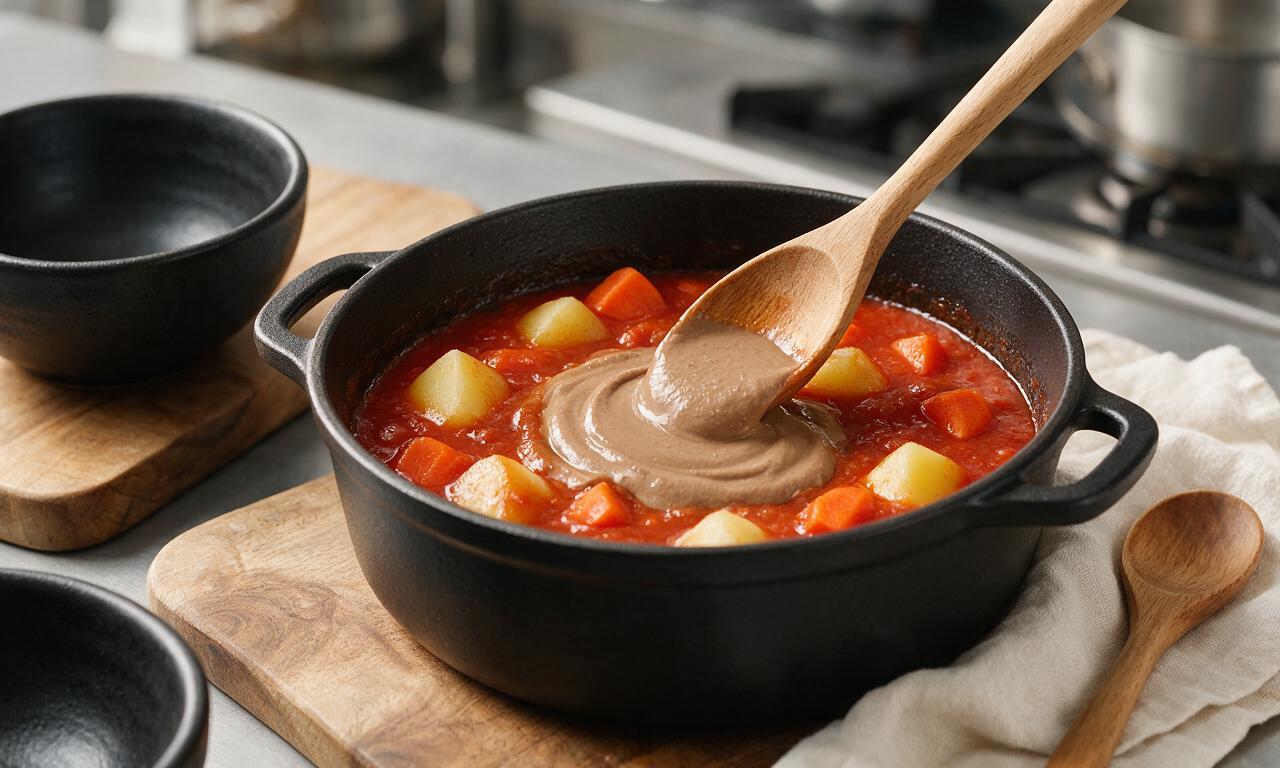
Filipino-style liver spread is a smooth, savory, slightly briny canned spread made from pork or chicken liver, often with a touch of cream and spices, that gives kaldereta its signature velvety richness. If unavailable, blend 3 oz of smooth cooked chicken liver pate with a pinch of sugar and tiny splash of vinegar to match its balanced profile; skip chunky liverwurst for the silkiest texture.
3.Why do you call for low-sodium chicken broth instead of regular?
▾
Low-sodium broth gives you full control over the final salt level of the stew, since canned crushed tomatoes, liver spread, and added seasonings already contain natural sodium. Regular broth can easily lead to an overly salty finished dish, especially as the stew simmers and reduces, concentrating flavors. Always taste and adjust salt only at the very end for best results.
4.What size should I cut potato cubes so they cook evenly in the stew?
▾
Aim for uniform 2.5cm (1-inch) russet potato cubes, as called for in the recipe. This size ensures potatoes cook fully without turning mushy or falling apart during the 15–20 minute simmer, matching the bite size of cut chicken pieces for easy eating. Too small, and they dissolve into sauce; too large, and they’ll be undercooked when the chicken is done.
5.Can I make this stew ahead of time for meal prep or a dinner party?
▾
Absolutely! Chicken kaldereta actually tastes better the next day, as flavors meld and deepen as it chills. Store it in an airtight container in the fridge for up to 4 days, or freeze for up to 3 months. Reheat gently on the stovetop over low heat, adding a splash of extra broth if the sauce thickens too much as it cools.
6.Do I need to sear the chicken first before simmering, or can I boil it directly in the sauce?
▾
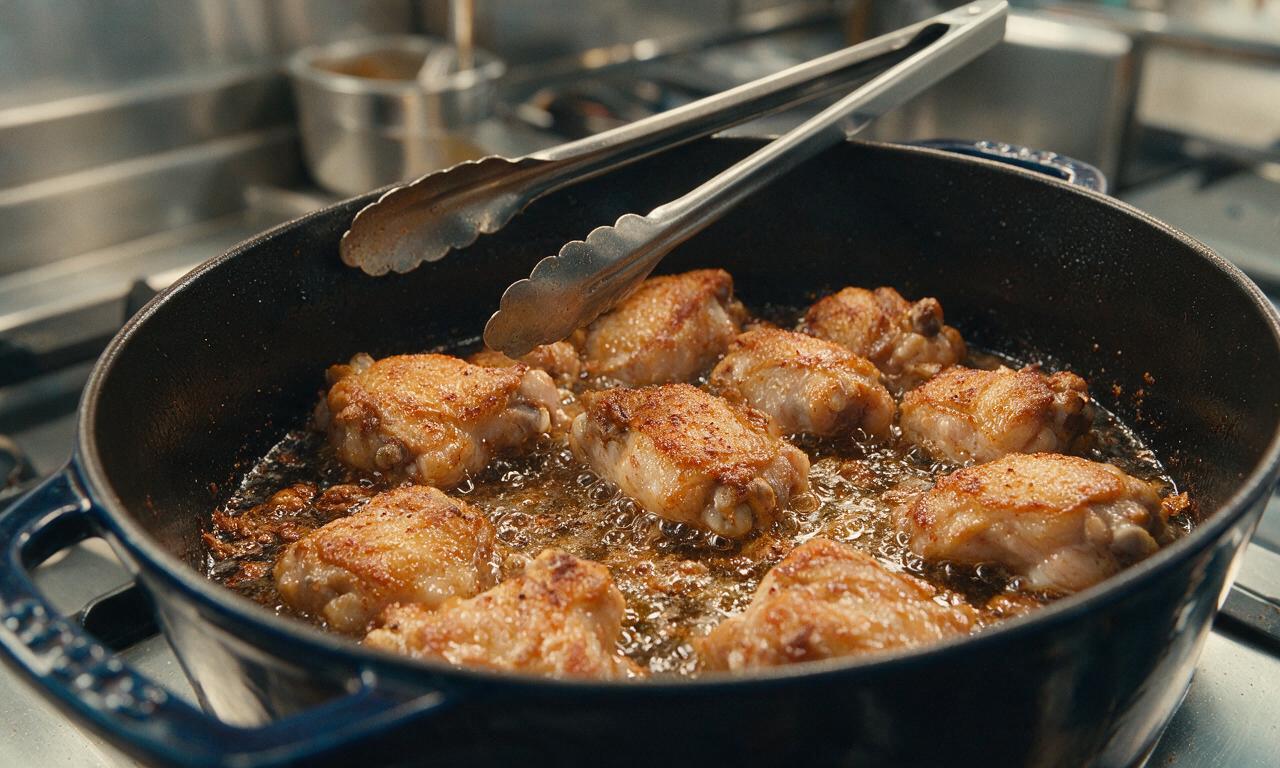
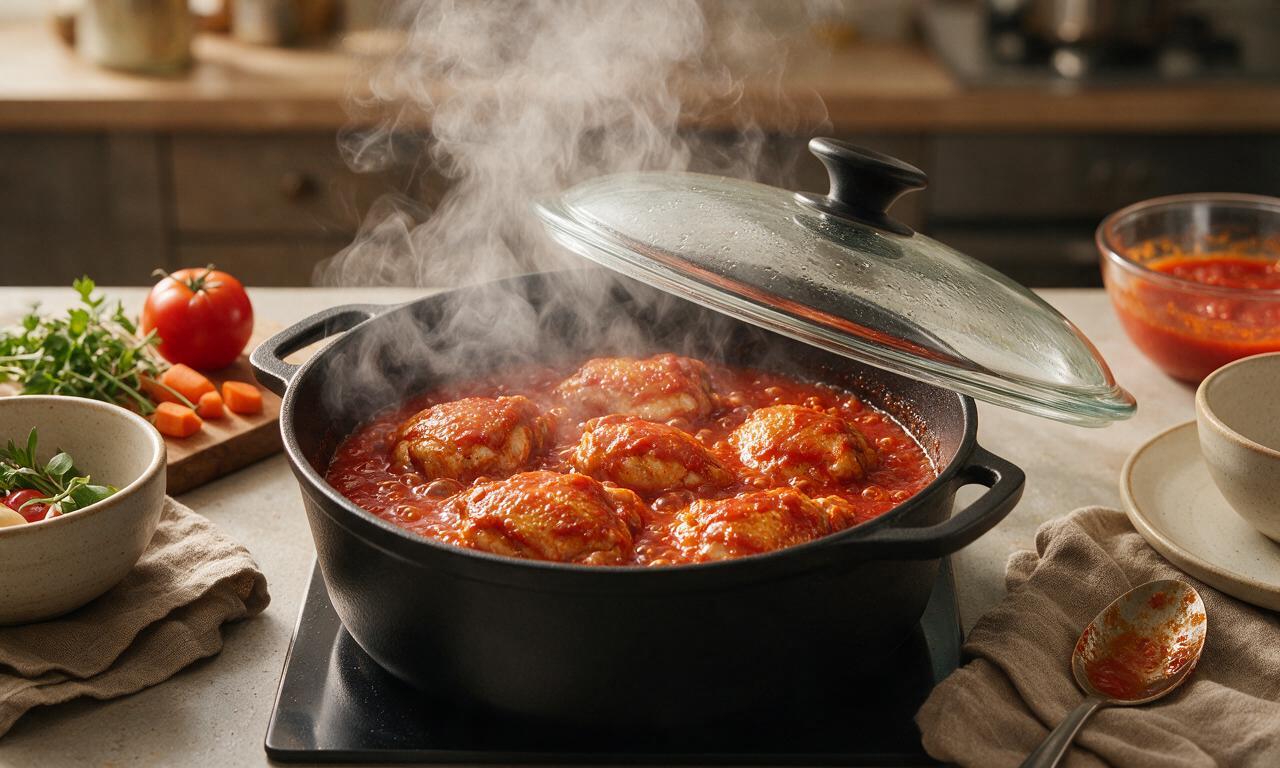
Searing chicken pieces first is non-negotiable for the richest, most complex flavor. Cooking skin-on thighs over medium-high heat until golden on all sides builds caramelized, savory fond on the pot bottom that melts into the tomato sauce, adding depth you can’t get from boiling raw chicken directly in liquid. It only takes 6–8 minutes and makes a huge difference.
7.My sauce turned out too thin—how do I get that signature velvety, thick texture?
▾
If your sauce is too thin after simmering, you have two easy fixes: First, let it simmer uncovered for 5–7 extra minutes to let excess water evaporate and concentrate. If it’s still runny, mash 2–3 of the cooked potato cubes into the sauce and stir well; starchy potato thickens sauce naturally without making it gummy, no cornstarch needed.
8.Can I add other vegetables to this chicken kaldereta besides potatoes?
▾
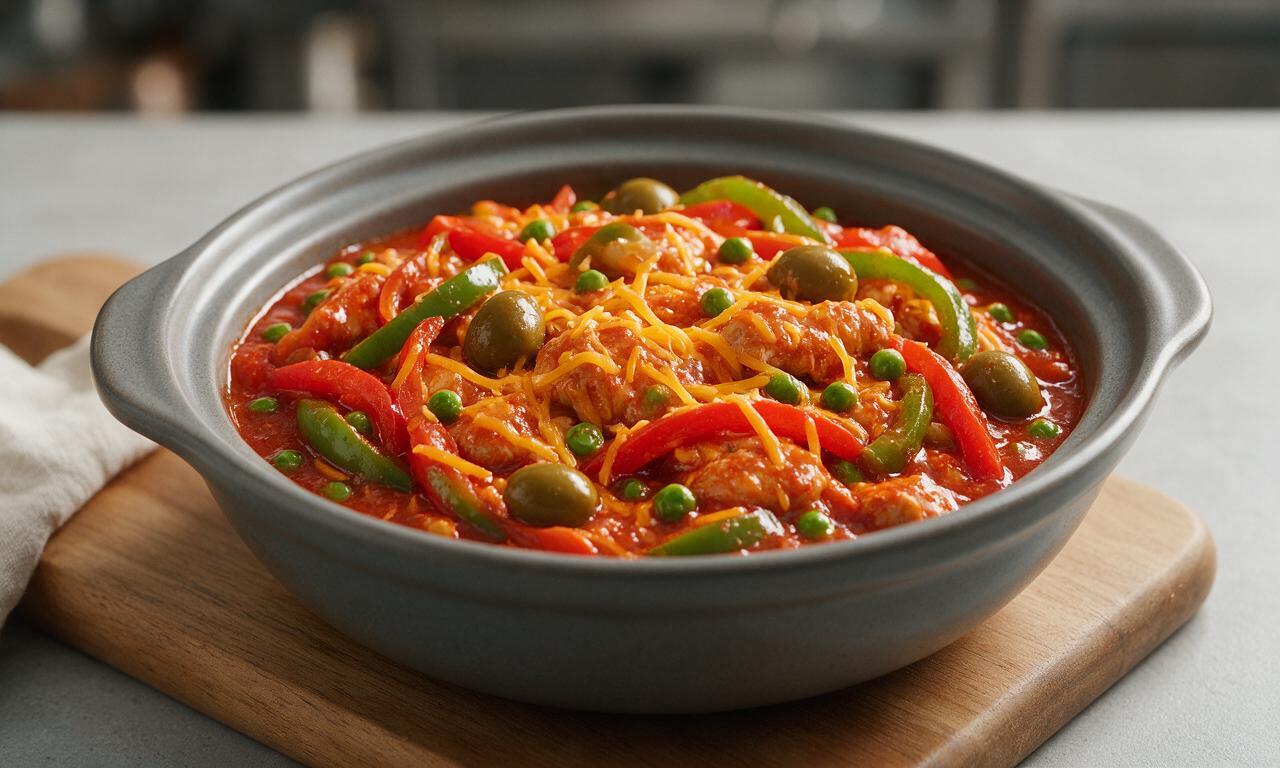
Of course! Traditional kaldereta often includes extra veggies that hold up well to slow simmering. Try adding 1-inch carrot chunks, bell pepper strips, or pitted green olives for a briny pop, adding them in the last 10 minutes of cooking so they stay tender-crisp. Skip delicate veggies like spinach or zucchini, which break down and make sauce watery.
9.What gives chicken kaldereta its signature bright tang noted in the recipe intro?
▾
That classic bright, balanced tang cuts through the rich tomato and liver spread base, and usually comes from a small splash of cane vinegar or fresh calamansi juice added at the end of cooking. If you don’t have those, a teaspoon of apple cider vinegar or squeeze of fresh lime works perfectly—add a little at a time, tasting as you go.
10.Can I use fresh tomatoes instead of canned crushed tomato sauce?
▾
You can, but canned crushed tomato sauce is actually ideal here because it has a consistent, deep, sweet cooked tomato flavor and smooth texture perfect for the velvety stew base. If using fresh tomatoes, blanch, peel, seed, and crush 2 lbs of ripe Roma tomatoes, simmering them for 10 minutes first to cook out raw, watery flavor before adding other ingredients.
11.Why does the recipe specify russet potatoes instead of waxy varieties like red potatoes?
▾
Russet potatoes have a higher starch content than waxy red or gold potatoes, which helps them hold their shape during simmering while releasing just enough starch to give the sauce that signature velvety, rich body. Waxy potatoes stay very firm and don’t contribute thickening starch, leading to a thinner sauce and less cohesive finished texture.
12.How do I prevent cut potato cubes from turning brown while I prep other ingredients?
▾
As soon as you peel and cut your russet potatoes into 2.5cm cubes, submerge them in a bowl of cold water until you’re ready to add them to the stew. This blocks exposure to oxygen, which causes that unappetizing gray-brown discoloration. Drain them well before adding to the pot so excess water doesn’t thin out your rich tomato sauce.
13.Is there a way to make this recipe less rich if I don’t love heavy, creamy stews?
▾
You can easily lighten the dish without losing core kaldereta flavor by cutting the liver spread amount in half, and using a light hand with added oil when sautéing aromatics. You can also add a handful of blanched green beans or bell peppers in the last 10 minutes of cooking for fresh, bright crunch that balances the rich tomato base.
14.What’s the best way to serve chicken kaldereta for a traditional shared meal?
▾
The classic, coziest way to serve this stew is mounded over fluffy, hot steamed white rice, served family-style in a large dish so people can scoop their own portions. It pairs perfectly with a side of crisp pickled papaya (atchara) for extra tang, and you can set out extra fish sauce or hot sauce for guests to adjust seasoning to taste.
15.Can I use chicken breast instead of thighs if I prefer white meat?
▾
Chicken breast is much leaner than thighs, so it dries out far faster during long simmers if added raw. If you strongly prefer white meat, use bone-in, skin-on chicken breast cut into 5cm pieces, adding it to the pot during the last 12–15 minutes of simmering instead of searing it first, so it cooks through just enough to stay juicy without turning tough.
16.How long should I simmer the stew to get tender chicken without overcooking it?
▾
After searing the chicken and building your tomato sauce base, simmer the stew covered over low heat for 25 minutes total, adding potato cubes after the first 10 minutes. This gives bone-in thighs enough time to turn fall-off-the-bone tender, lets liver spread fully melt into sauce, and ensures potatoes cook through without dissolving. Avoid rapid boiling, which makes chicken tough.
17.I don’t eat liver—can I leave the liver spread out entirely?
▾
Liver spread is a core flavor and texture component of classic kaldereta, but if you avoid liver, swap it for 3 oz of smooth, unsalted peanut butter mixed with a teaspoon of soy sauce to replicate that rich, nutty, savory depth and velvety texture. The flavor won’t be exactly traditional, but it will still be delicious, with a thick, luxurious sauce that coats ingredients well.
18.Should I remove the chicken skin after searing to cut down on fat, or leave it on?
▾
You can remove the skin after searing if you want to cut back on rendered fat, but I recommend leaving it on through the simmer. The skin adds deep, savory chicken flavor to the sauce as it cooks, and the rendered fat helps carry all the tomato and spice flavors so they taste richer and more balanced. Skim any excess floating fat off the top before serving.
19.Can I make this chicken kaldereta in a slow cooker instead of on the stovetop?
▾
Absolutely! Sear the chicken first as directed, then add all ingredients except potatoes to the slow cooker, cooking on LOW for 3 hours. Add drained potato cubes, turn the heat to HIGH, and cook for 45 more minutes until potatoes are tender and chicken is cooked through. Stir in the tangy vinegar or citrus right before serving to keep that bright, fresh flavor sharp.
20.My sauce tasted a little flat and metallic from canned tomatoes—how do I fix that?
▾
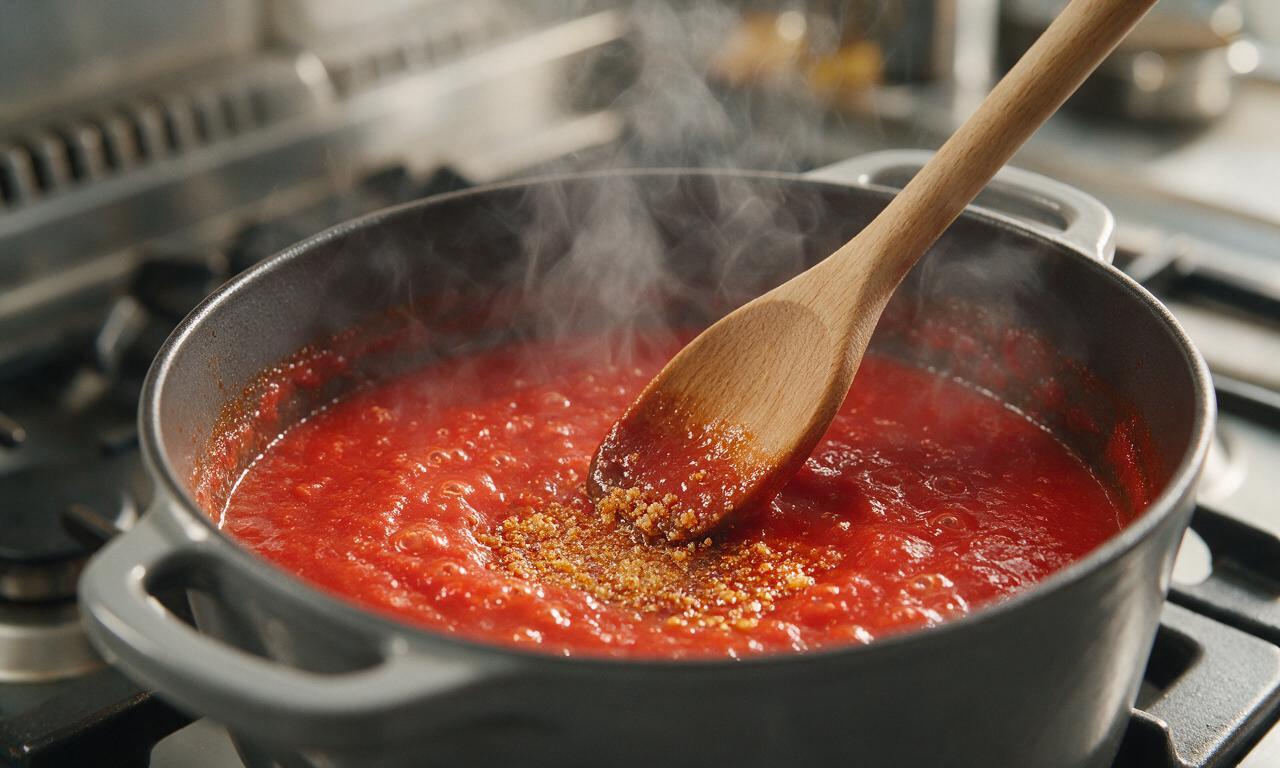
That metallic, flat canned tomato flavor is easy to fix with a couple small tweaks: First, add a pinch of sugar to balance tomato acidity, then stir in that bright splash of vinegar or citrus the recipe is known for. If it still tastes flat, a tiny dash of fish sauce adds umami depth that rounds out tomato flavor, stirring and tasting a little at a time to avoid over-seasoning.

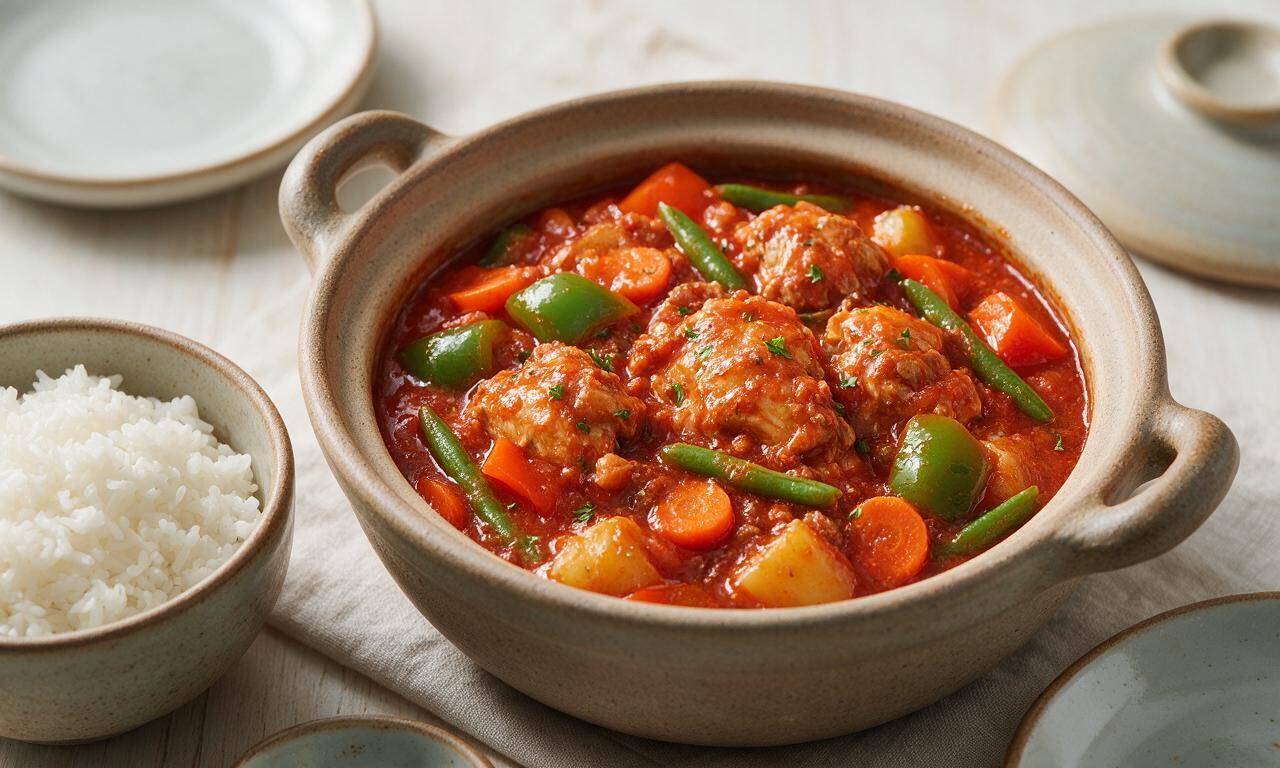
OMG this Chicken Kaldereta was such a hit at our Sunday family dinner! My kids loved it — they usually turn up their noses at anything with bell peppers but they cleaned their plates and asked for seconds. SO good, will absolutely be adding this to our weekly rotation.
Took this to my office potluck last week and people were begging me for the recipe! The liver spread adds such a deep, rich flavor I didn’t expect. Total game changer for my usual chicken recipe lineup.
Solid recipe, though I upped the chili flakes a little because my household loves extra heat. Cook time was right on 55 minutes for me, no surprises. Great weeknight meal if you prep the veggies the night before for faster assembly.
I was a little intimidated because I thought kaldereta was super complicated, but the medium difficulty rating was totally accurate. First time making any Filipino dish and my Filipino roommate said it tasted just like his lola’s! Total win in my book.
Does this hold up well for meal prep? I make 5 days of lunches every Sunday and need recipes that don’t get soggy or weird after a few days in the fridge.
Wait, I don’t eat liver — can I skip the liver spread or is there a good substitute? I really want to try this but that ingredient is a hard pass for me.
Made this for my block party potluck last weekend and I cannot believe how many people came back for thirds. I doubled the recipe and still barely had leftovers! Only thing is I forgot to add the olives, oops.
I used boneless skinless chicken thighs instead of bone-in like the recipe suggests, and it was still chef’s kiss. So much flavor, the tomato-based sauce is unreal over rice.
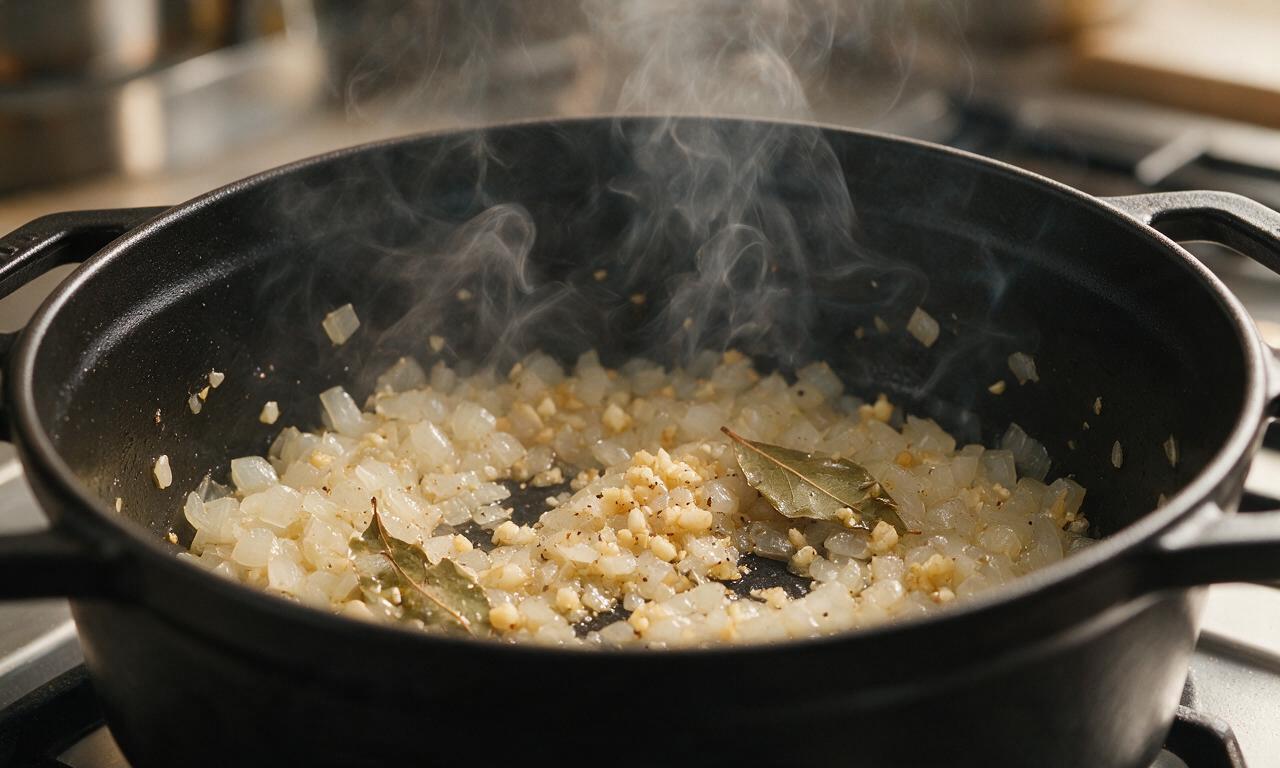
Help! I burned the garlic when I was sautéing the aromatics — did I ruin the whole dish? I’m so mad I got distracted by my dog barking at the mailman.
I added extra carrots and peas to sneak more veggies in for my toddler, and he gobbled it right up. Served it over fluffy jasmine rice, it was the perfect cozy rainy night dinner.
Wait a second, this tastes exactly like the kaldereta my Filipino best friend’s mom used to make for us after high school! I’ve been trying to find a recipe that nails that rich, savory flavor for YEARS. So nostalgic, 10/10.
Took me a little longer than 55 minutes because I was chopping veggies extra slow while catching up on my favorite show, but wow was it worth the effort. The only issue I had was my sauce was a little thinner than I expected — any tips to thicken it up next time?
Made this in my tiny dorm kitchen with just a single hot plate and it still turned out insane! I used canned potatoes and frozen mixed veggies to cut down on prep, super budget friendly and filling too.
Is there a way to make this lower carb? I’m cutting back on potatoes and white rice but I’m dying to make this, the sauce sounds absolutely incredible.
I added a little grated queso de bola on top at the end like my lola used to do, and wow, that salty, melty kick takes this to a whole other level. If you haven’t tried adding a sprinkle of cheese before serving, do it. You won’t regret it.