1.Can I use dried lo mein noodles instead of fresh ones?
▾
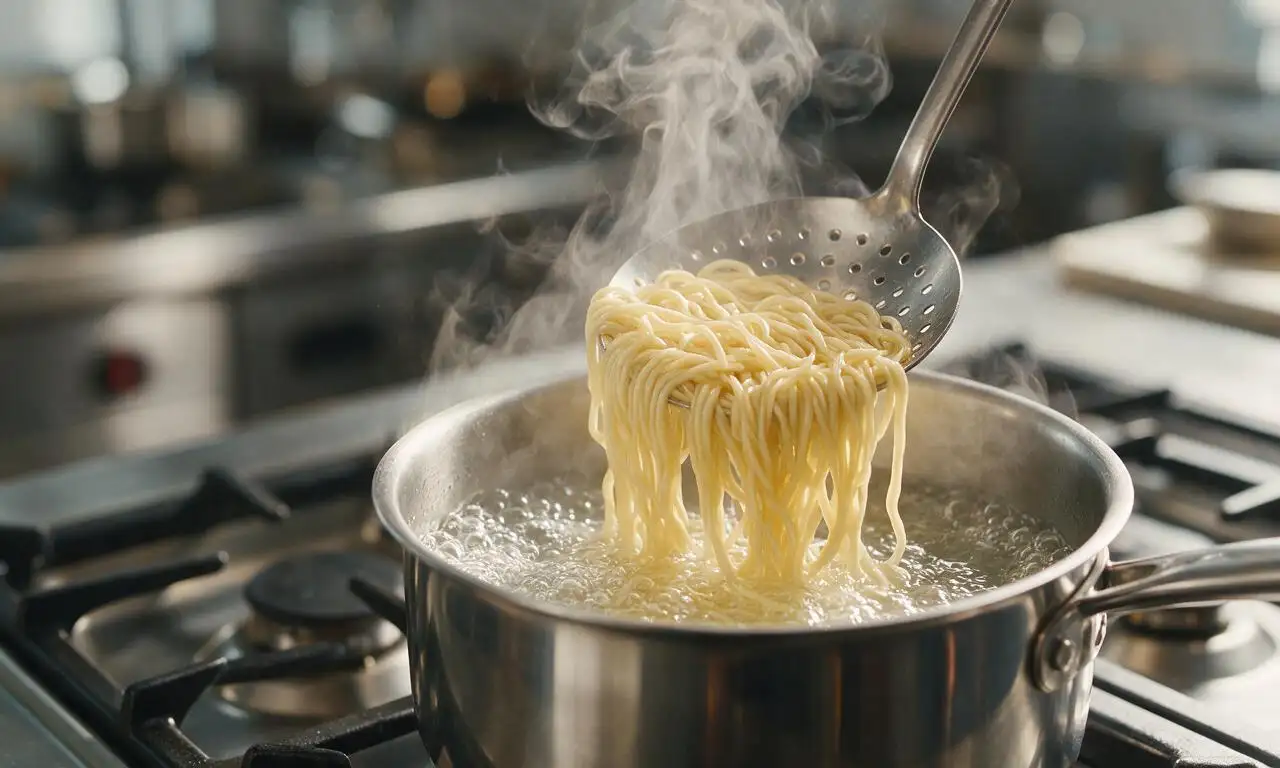
Absolutely! If fresh lo mein egg noodles are hard to track down at your local grocery store, swap in dried lo mein noodles, or even dried linguine as a last-resort backup. Cook dried noodles 1 minute less than the package directs so they stay chewy, not mushy, and toss with a tiny drizzle of oil after draining to prevent sticking before stir-frying.
2.How do I keep the chicken breast tender, not tough and rubbery?
▾
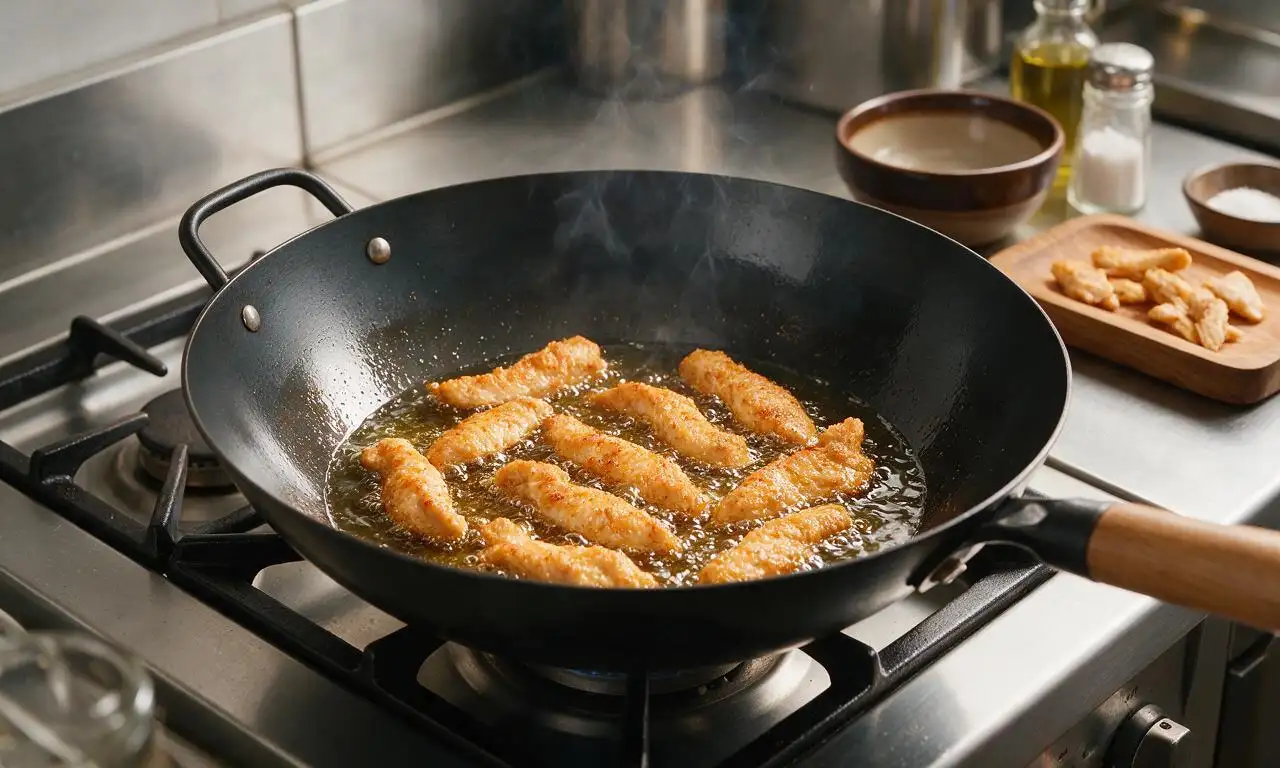
The easiest trick is to slice chicken breast against the grain into ¼-inch thick strips, then toss it with 1 teaspoon of cornstarch and a tiny splash of soy sauce 10 minutes before cooking. This creates a light, protective coating that locks in moisture, so the chicken stays juicy even over high stir-fry heat instead of seizing up and turning chewy.
3.What if I don’t own a wok to make this recipe?
▾
No wok? No problem! A large, heavy-bottomed cast iron skillet or 12-inch stainless steel sauté pan works perfectly. Just preheat it for 2-3 minutes over medium-high heat before adding oil, so ingredients sear quickly instead of steaming. This gives you that classic takeout light char and keeps veggies crisp-tender, just like restaurant versions.
4.Does this lo mein work well for weekly meal prep?
▾
Definitely! This lo mein holds up great for 3 to 4 days stored in an airtight container in the fridge. Let it cool completely before portioning into containers, and when reheating, sprinkle a teaspoon of water over top before microwaving for 60 to 90 seconds, or toss in a hot pan for 2 minutes to bring back that perfect chewy noodle texture.
5.Why do my lo mein noodles always turn out mushy?
▾
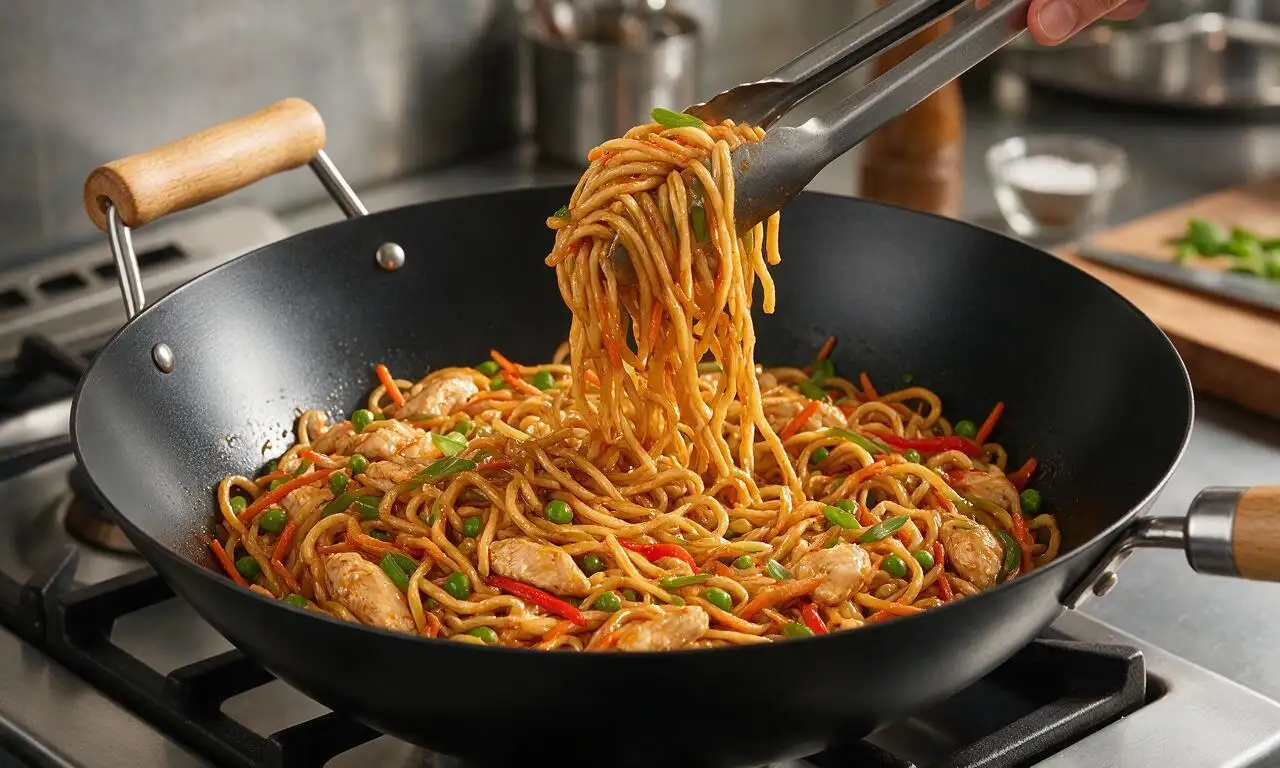
Mushy noodles almost always come from overcooking them before the stir-fry step, or stirring them too aggressively once they hit the pan. Cook fresh noodles just until al dente (usually 2 to 3 minutes max), drain well, and toss them gently with sauce and ingredients instead of mashing them around to keep their firm, slurpable texture.
6.Can I make this recipe vegetarian?
▾
Totally! For a vegetarian version, swap the chicken for pressed, pan-fried extra-firm tofu, shelled edamame, or sliced shiitake mushrooms. Swap regular oyster sauce in your base for vegetarian mushroom oyster sauce to keep that deep, rich umami flavor without animal products, for a plant-based take that tastes just as satisfying.
7.How should I cut the veggies so they cook evenly?
▾
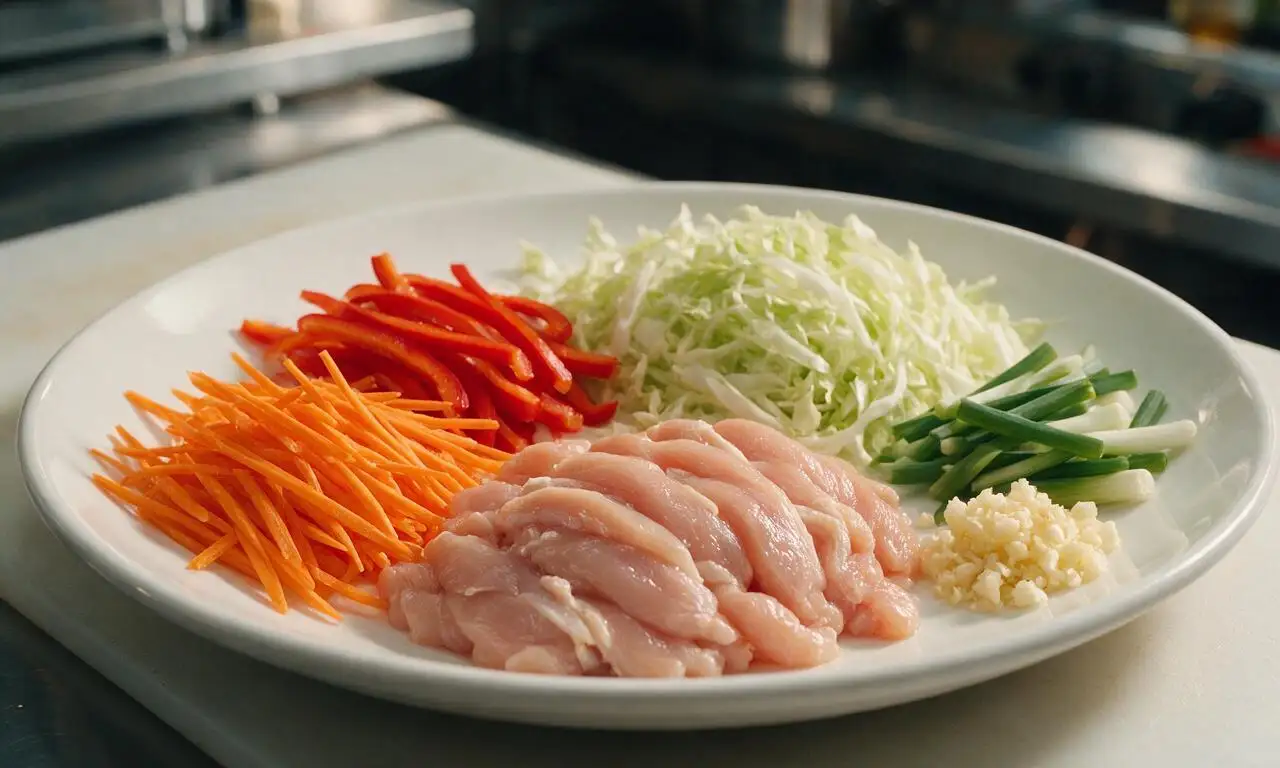
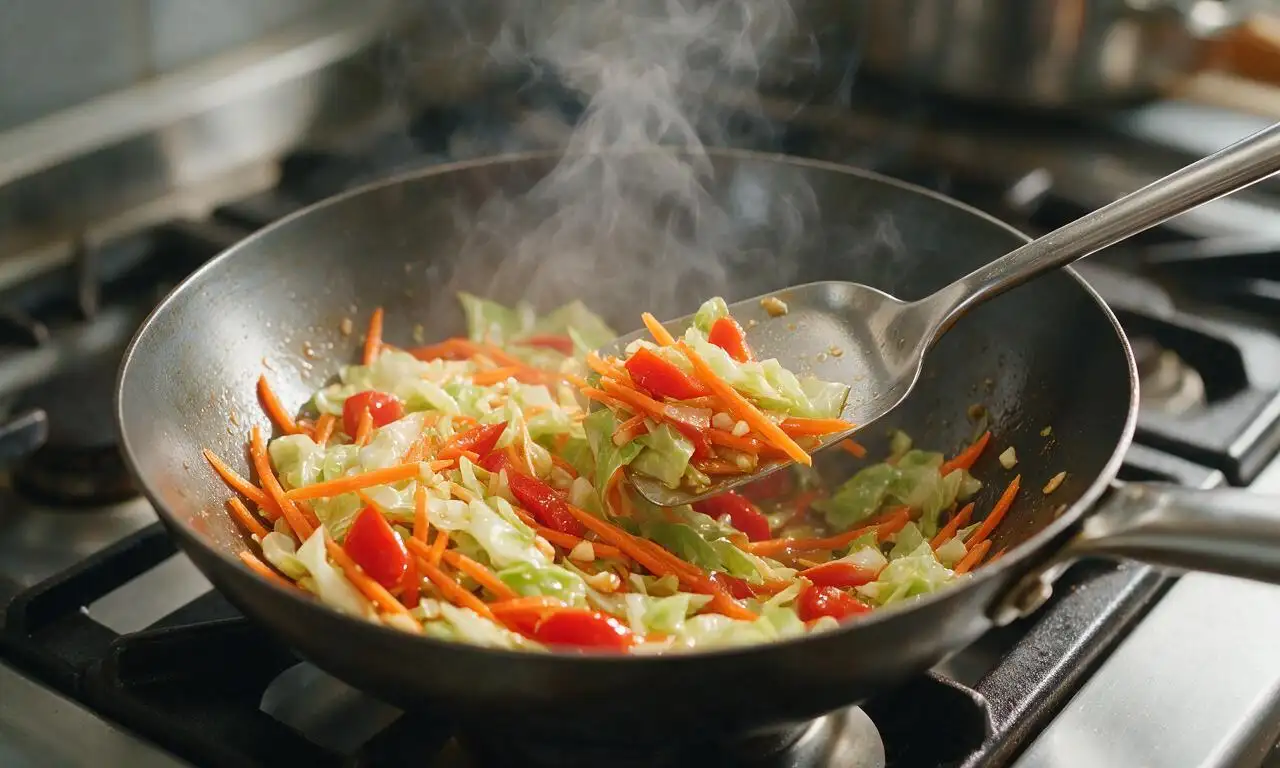
Cut all your veggies into uniform, thin, bite-sized pieces so they cook at the same rate. Shred Napa cabbage into ½-inch wide strips, julienne carrot and red bell pepper into 2-inch long thin strips, and don’t overcrowd the pan when cooking them. This keeps veggies crisp-tender, not soggy or unevenly cooked, for the perfect texture in every bite.
8.Can I use frozen mixed veggies instead of fresh as a shortcut?
▾
You absolutely can for a super quick weeknight meal! Just thaw the frozen veggies first and pat them completely dry with paper towels before adding them to the hot pan. If you toss icy, wet veggies straight into the wok, they’ll release too much water and steam instead of searing, leaving you with soggy, bland lo mein.
9.How do I get that signature takeout lo mein sauce flavor at home?
▾
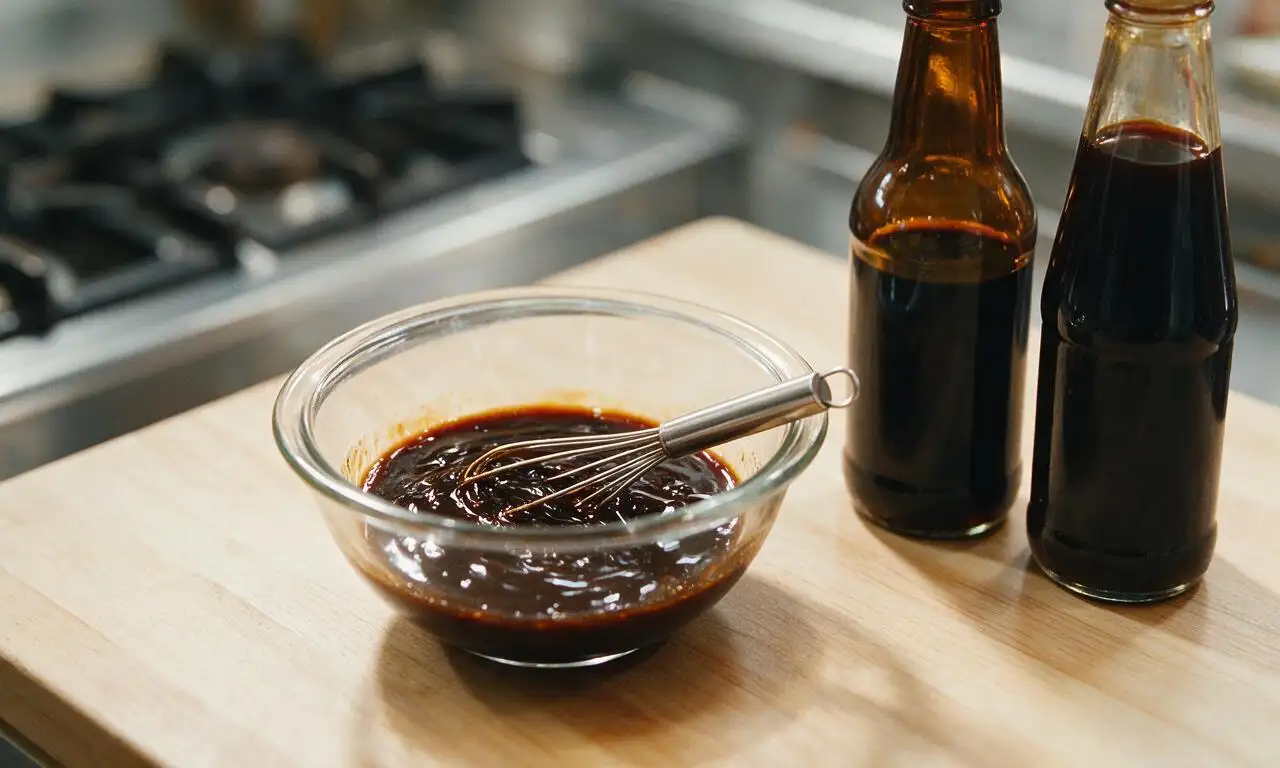
That iconic umami kick comes from balancing salty, sweet, and savory notes. Mix 3 tablespoons low-sodium soy sauce, 1 tablespoon oyster sauce, 1 teaspoon toasted sesame oil, ½ teaspoon sugar, and a pinch of white pepper for a classic base. Don’t overdo the sauce—you want just enough to coat noodles, not drown them, for authentic takeout taste.
10.My lo mein always turns out too salty—how do I fix that?
▾
Over-salting usually happens when people use full-sodium soy sauce without adjusting quantities, or add extra salt on top of the pre-mixed sauce. Stick to low-sodium soy sauce for your base, taste the sauce before tossing it with noodles, and add a tiny squeeze of lime juice or pinch more sugar to balance excess salt if you pour too much.
11.Can I add extra veggies to this lo mein without ruining the texture?
▾
Absolutely! Feel free to toss in thinly sliced snow peas, baby bok choy, mung bean sprouts, or sliced scallions for extra crunch and color. Just don’t add more than 2 total cups of extra veggies, and cook firmer veggies first before softer ones, so every bite stays crisp-tender instead of turning into a mushy, overloaded pile.
12.Do I need to rinse my lo mein noodles after cooking them?
▾
For fresh egg lo mein noodles, a quick 10-second rinse under cold water right after draining works great to stop the cooking process and wash off excess surface starch that can make noodles clump together. Don’t rinse them for too long, though—you’ll wash off the light starch that helps the sauce cling evenly to every noodle strand.
13.Can I freeze leftover lo mein for later meals?
▾
I don’t recommend freezing lo mein, honestly. The high moisture content in the egg noodles and veggies means they’ll turn mushy and grainy once thawed and reheated, and the sauce will separate and turn watery. It’s far better to store leftovers in the fridge for up to 4 days, where the texture stays much closer to fresh.
14.What kind of oil is best for stir-frying lo mein?
▾
Reach for a high smoke point oil like avocado oil, canola oil, or refined peanut oil for the searing and stir-fry steps—these can handle the high heat of your pan without burning or turning bitter. Save toasted sesame oil for finishing, since it has a low smoke point and will burn quickly if used to sear chicken and veggies over high heat.
15.Why do my chicken and veggies always stick to the pan?
▾
Sticking almost always happens because your pan isn’t hot enough before you add ingredients, or you stir too soon after adding food. Preheat your pan until a drop of water evaporates in 1 to 2 seconds when it hits the surface, add your oil, then let chicken sear for 1 full minute before flipping to create a natural nonstick surface.
16.Can I use chicken thighs instead of chicken breast for this recipe?
▾
Absolutely! Boneless, skinless chicken thighs are actually a fantastic swap if you prefer extra juicy, richly flavored chicken. Slice them to the same ¼-inch thickness against the grain, and you won’t even need the cornstarch tenderizer, since thighs have more natural fat that keeps them moist even over high stir-fry heat.
17.When should I add noodles to the pan so they don’t get overcooked?
▾
Add your drained, al dente noodles as the very last step, right after your chicken is cooked through and veggies are crisp-tender. Toss them gently with the sauce and other ingredients for 30 to 45 seconds max, just long enough to heat noodles through and coat every strand evenly, then turn off the heat immediately to avoid mush.
18.What can I add if my finished lo mein tastes bland?
▾
If your lo mein is falling flat, add a tiny splash more soy sauce for salt, a pinch of sugar to boost umami, a small grate of fresh ginger or garlic for depth, or a drizzle of chili oil for a little kick. A sprinkle of toasted sesame seeds or sliced scallions right before serving also adds a bright, fresh pop that makes the whole dish taste vibrant.
19.Is there a good gluten-free swap for this recipe?
▾
Definitely! Swap the wheat lo mein noodles for gluten-free wide rice noodles (cooked al dente, just like the wheat version), use gluten-free tamari instead of regular soy sauce, and double-check that your oyster sauce is certified gluten-free (or use vegetarian mushroom oyster sauce, which is often naturally GF) for the same great slurpable, savory result.
20.How do I keep cooked noodles from clumping together while I prep other ingredients?
▾
After draining your cooked noodles (and giving them that quick 10-second cold rinse), toss them with ¼ teaspoon of neutral oil right in the colander, and fluff them gently with a pair of tongs. This coats every strand lightly so they don’t stick together in a big clump while you cook chicken and veggies, making tossing the final dish totally hassle-free.

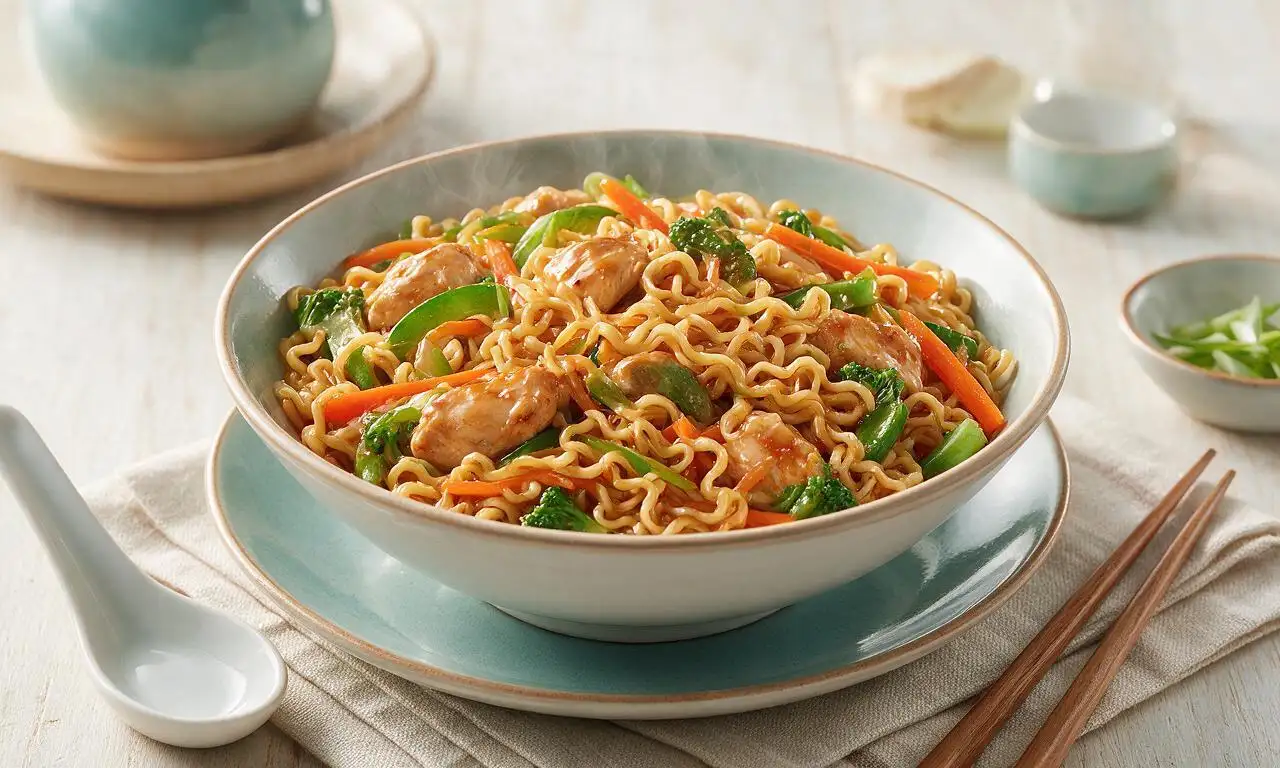

OMG this lo mein is SO good! I threw this together after work last night in literally 22 minutes (I timed it, ha) and my whole family devoured it. My 7 year old who turns his nose up at every vegetable asked for seconds! I swapped the bell peppers for sugar snap peas since that’s what I had in the fridge and it still turned out perfect. Total game changer for weeknight dinners, I’m adding this to my regular meal prep rotation for sure!
Made this for our neighborhood potluck last weekend and people were begging me for the recipe! The sauce is perfectly balanced – not too salty, not too sweet, just that classic takeout flavor I’ve been trying to nail for years. Only thing I’ll note is I used fresh egg noodles from the Asian market instead of dried and it made it even more authentic. 10/10, will make again and again.
Pretty solid easy weeknight meal. The 25 minute cook time was totally spot on, no fancy specialty ingredients needed which is a huge win for me since I don’t have time to run all over town for groceries after work. I tossed a little extra sriracha on my serving for heat and it hit the spot. Great recipe for total beginners who are intimidated by making stir fry at home.
This looks SO good, I’m already planning to make it tomorrow for family dinner! Quick question – has anyone swapped the chicken for tofu or extra veggies to make it vegetarian? My daughter recently stopped eating meat and I’m trying to find recipes that don’t require me to make two separate meals on nights we have soccer practice. The 25 minute cook time is an absolute dream for our chaotic weeknight schedule!