Lobster Bisque

title 1
Lobster Bisque
⏱️ cook time 1 hour 20 minutes
🍽️ servings 4
⚡ Difficulty medium

intro

Luxuriously velvety, briny lobster bisque made from slow-simmered lobster shells, aromatic mirepoix, and cream, delivering rich, elegant seafood flavor in every warm spoonful.

Ingredients

Raw whole lobster 1360g (2 medium, ~680g each)
Unsalted butter 57g (4 tablespoons), plus 14g (1 tablespoon) optional for finishing
Yellow onion 150g (1 medium, ½-inch dice)
Carrot 100g (1 medium, ½-inch dice)
Celery 80g (2 stalks, ½-inch dice)
Garlic 15g (3 cloves, minced)
Tomato paste 32g (2 tablespoons)
All-purpose flour 16g (2 tablespoons)
Dry white wine 120ml (½ cup, Sauvignon Blanc or Pinot Grigio)
Cognac (brandy) 45ml (3 tablespoons)
Low-sodium fish stock 960ml (4 cups)
Heavy whipping cream 180ml (¾ cup)
Sweet paprika 2g (1 teaspoon)
Cayenne pepper 0.5g (¼ teaspoon, plus extra for garnish)
Bay leaf 1 whole leaf
Fresh thyme 2 sprigs
Kosher salt 18g (1 tablespoon for boiling water, plus 3g / ½ teaspoon for seasoning)
Freshly ground black pepper 1g (¼ teaspoon, plus extra to taste)
Fresh chives 4g (1 tablespoon, finely chopped, optional garnish)

Steps

1

Cook and prep lobster

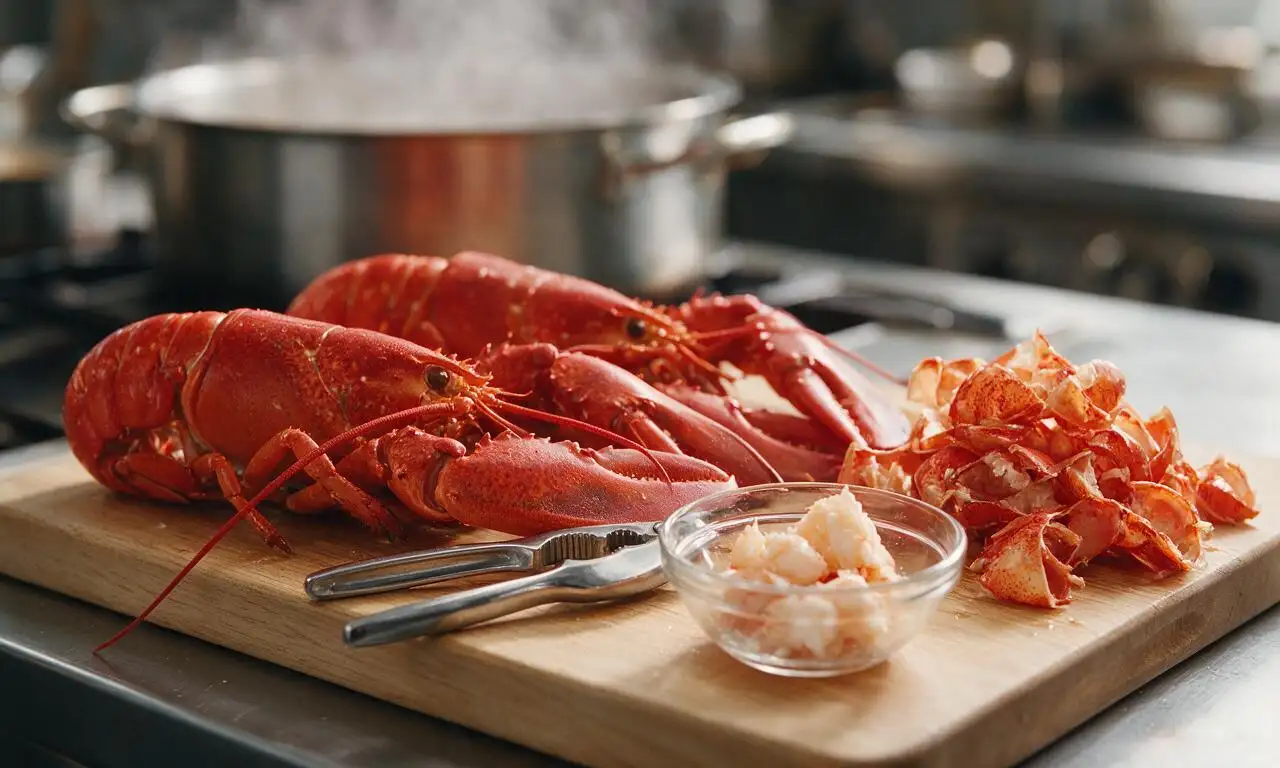
Bring a large stockpot of heavily salted water (15g / 1 tablespoon kosher salt per 4L water) to a rolling boil over high heat. Add the raw whole lobsters, cover, and cook for 8 minutes until shells are vivid bright red. Use tongs to transfer lobsters immediately to an ice water bath, and let rest 5 minutes to stop cooking and make meat easier to remove. Crack all shells to extract tail, claw, and knuckle meat, place meat in a covered container in the fridge, and reserve every piece of shell, tomalley, and roe for the stock base.
Step 1
step1:Cook and prep lobster
2

Sauté shells and aromatics

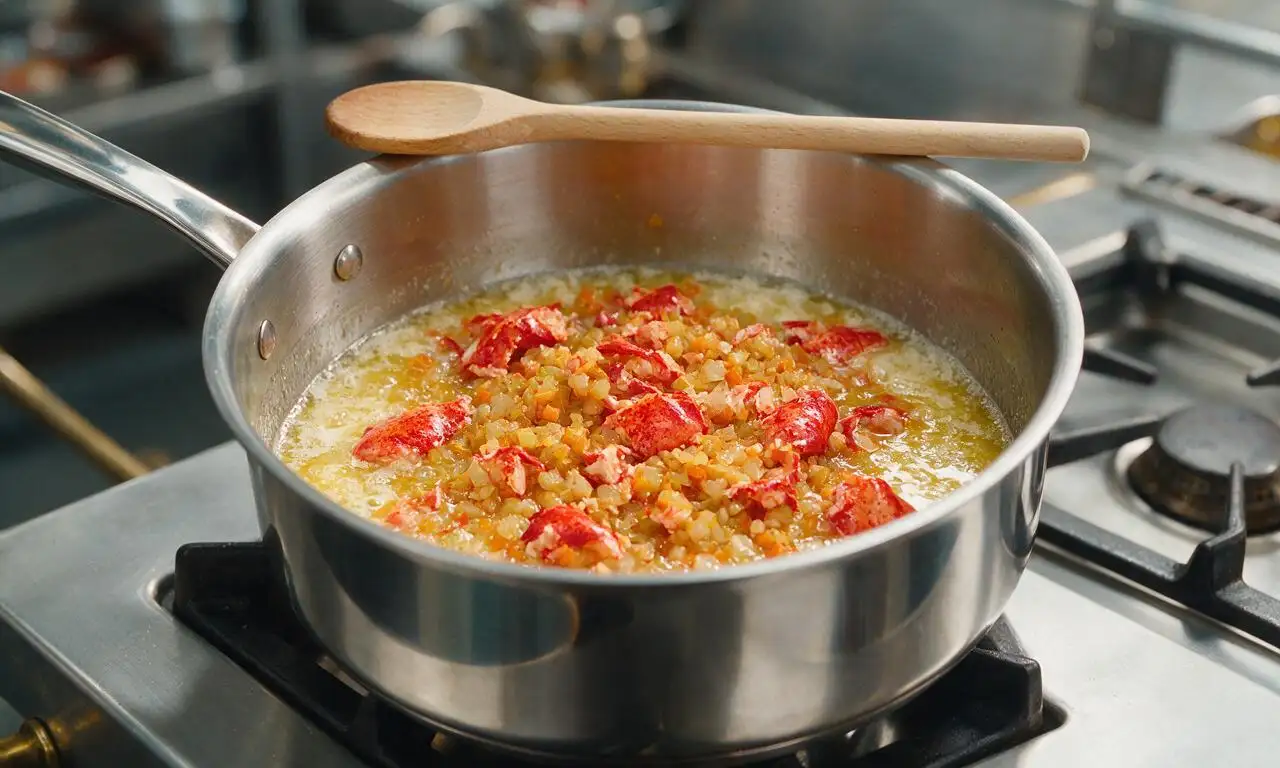
Melt 57g (4 tablespoons) unsalted butter in the cleaned stockpot over medium heat. Add diced yellow onion, carrot, and celery, and sauté for 6 minutes until vegetables are soft and translucent with no browning. Add minced garlic, tomato paste, sweet paprika, and cayenne pepper, stirring constantly for 1 minute until the mixture smells fragrant and the tomato paste darkens slightly. Toss in all reserved lobster shells, stir to fully coat in the butter and vegetable mixture, and cook for 5 minutes, stirring occasionally, until shells are lightly toasted and aromatic.
Step 2
step2:Sauté shells and aromatics
3

Simmer lobster stock

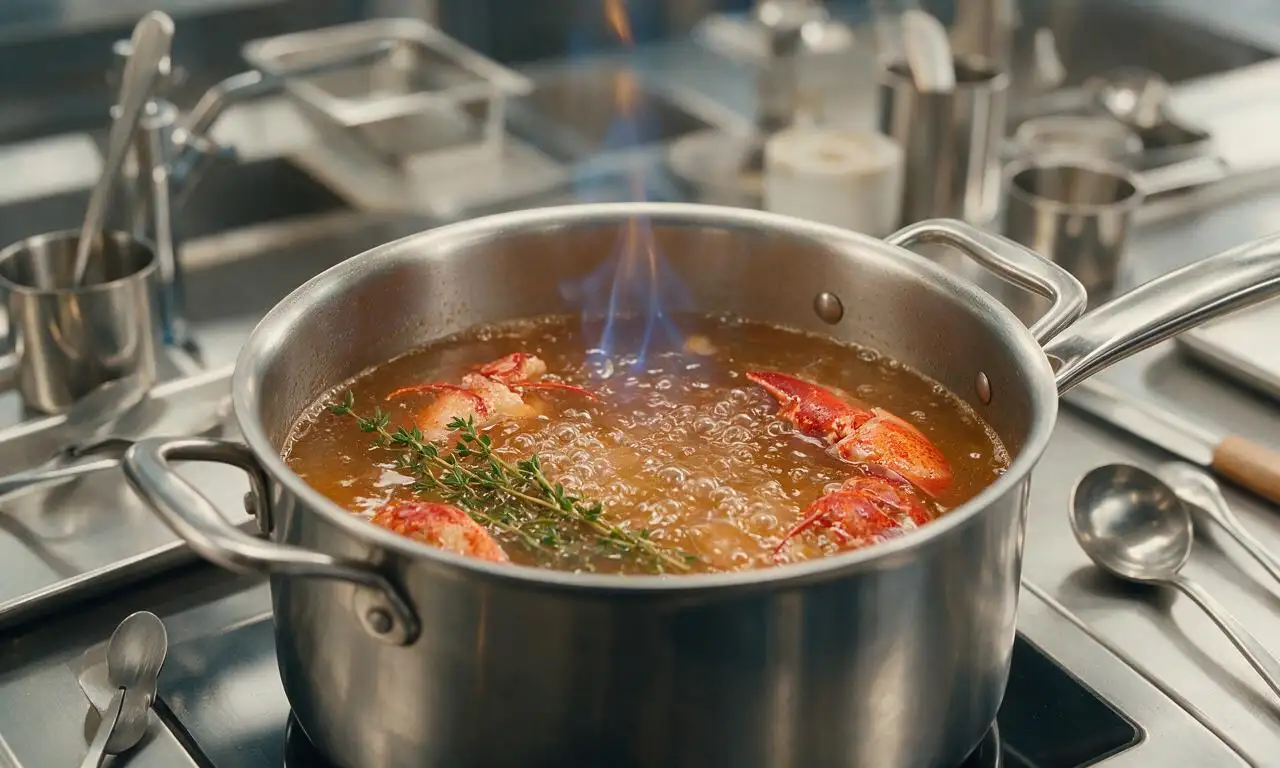
Pour Cognac into the pot, and carefully ignite with a long kitchen match to flambé; the flame will extinguish on its own in 1-2 minutes once the alcohol cooks off. Add dry white wine, use a wooden spoon to scrape all browned, flavorful fond bits from the bottom of the pot, and simmer for 3 minutes over medium heat until the wine is reduced by half. Pour in low-sodium fish stock, add bay leaf and fresh thyme sprigs, bring to a gentle simmer over medium-low heat, then reduce heat to low, cover the pot partially, and simmer for 30 minutes to draw maximum flavor from the shells.
Step 3
step3:Simmer lobster stock
4

Strain and thicken base

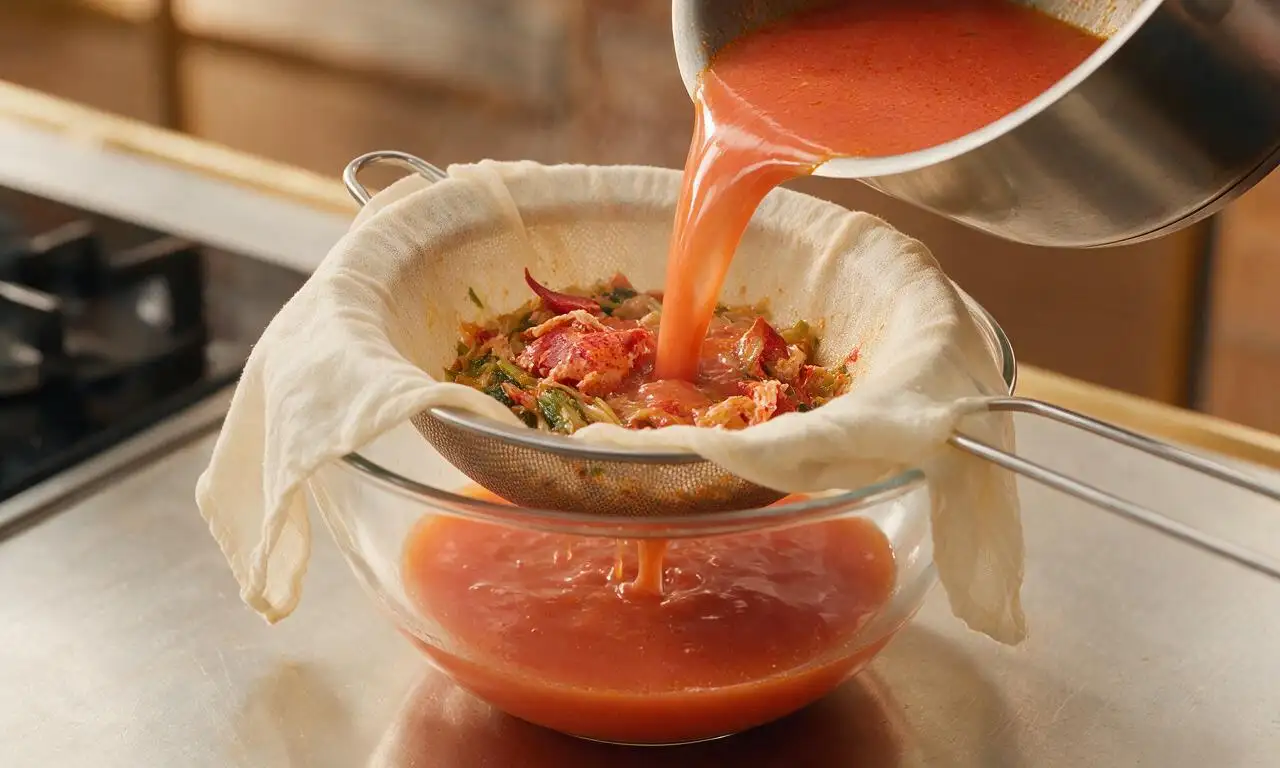
Place a fine-mesh sieve lined with 2 layers of cheesecloth over a large heatproof bowl. Pour the entire stock, shell, and vegetable mixture through the sieve, pressing firmly on the solids with a ladle to extract every drop of flavorful liquid; discard the spent shells, herbs, and vegetables. Return the strained, deep coral-colored stock to the clean stockpot set over medium-low heat. In a small bowl, whisk all-purpose flour with 60ml (¼ cup) of the warm stock to create a completely smooth, lump-free slurry, then whisk the slurry into the pot of stock. Simmer for 8 minutes, stirring occasionally, until the bisque base thickens enough to lightly coat the back of a metal spoon.
Step 4
step4:Strain and thicken base
5

Add cream and lobster

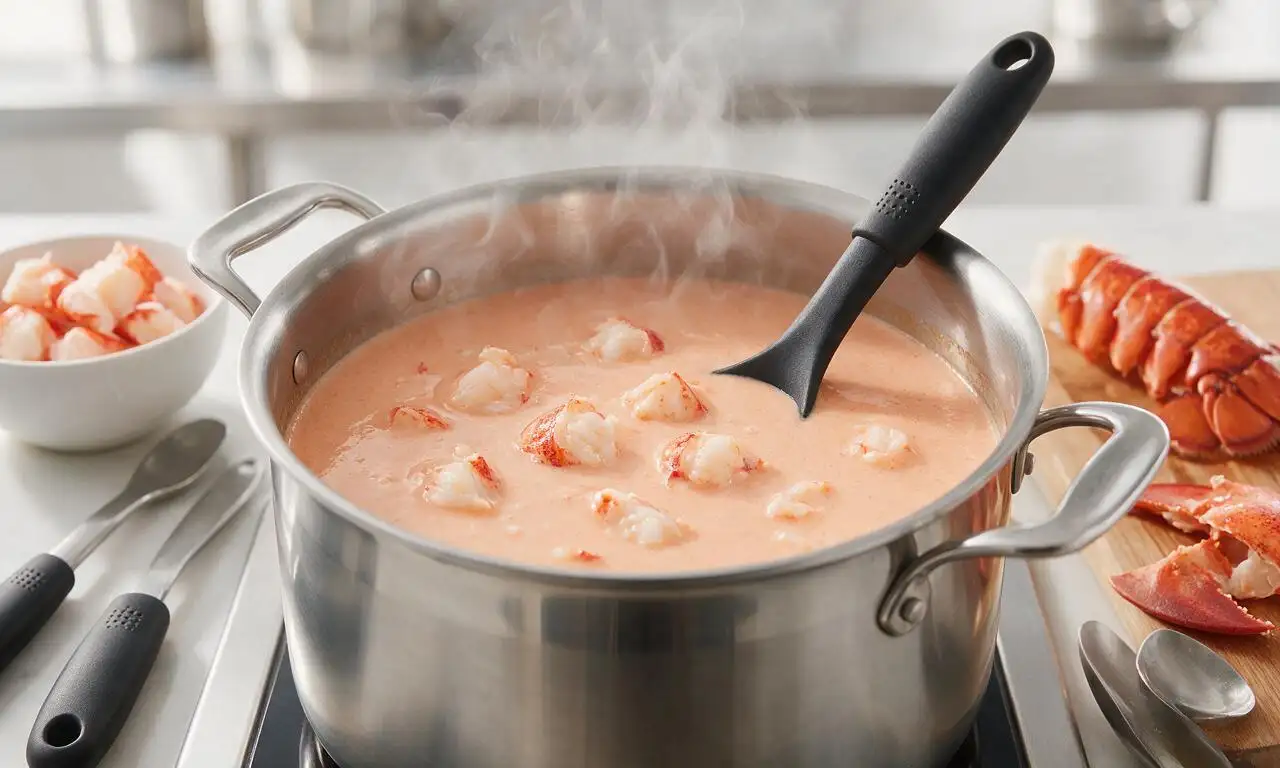
Stir heavy whipping cream into the thickened bisque base, whisking gently to fully combine, and bring to a very gentle simmer over low heat for 4 minutes, taking care not to let the soup boil (which can cause the cream to curdle). Cut ¾ of the reserved chilled lobster meat into 1cm (½-inch) chunks, add the chunks to the bisque, and cook for 2 minutes just until the lobster is warmed through. Season with 3g (½ teaspoon) kosher salt and 1g (¼ teaspoon) freshly ground black pepper, then taste and adjust seasoning if needed.
Step 5
step5:Add cream and lobster
6

Plate and garnish servings

Ladle 240ml (1 cup) of hot bisque into each of 4 pre-warmed shallow soup bowls. Garnish each bowl with the remaining reserved lobster meat (left as whole claw pieces for a premium presentation), a light sprinkle of finely chopped fresh chives if using, and a tiny pinch of extra cayenne for subtle warmth. If using the optional finishing butter, add it now, swirling gently to melt into the bisque for a glossy sheen. Serve immediately.

Step 6
step6:Plate and garnish servings

Tips

1.When straining the stock, press firmly on the shell and vegetable solids with a ladle to extract every drop of concentrated, flavorful liquid—this is key to achieving the bisque’s signature deep, briny taste and velvety body.
2.Never let the bisque come to a rolling boil after adding heavy cream, as high heat will cause the dairy to curdle and create a grainy, separated texture; keep heat on the lowest setting for the final simmer.
3.For an extra luxurious, restaurant-quality finish, stir 14g (1 tablespoon) of cold cubed unsalted butter into the bisque right before serving, swirling gently to create a glossy sheen and extra rich mouthfeel.

✨ You May Also Like

Soups & Stews
🍜 Japan

Rich, umami-dense Hokkaido-style miso ramen with chewy noodles, savory fermented broth, and classic toppings, a cozy, deeply satisfying warm meal.

⏱️ 45 minuteSoups & Stews ★ 4.5
Soups & Stews
🍜 United States

A hearty, peppery tripe and root vegetable stew with colonial Philadelphia roots, thick, warming, and packed with bold savory flavor for cold winter days.

⏱️ 2 hours 3Soups & Stews ★ 4.6
Soups & Stews
🍜 Mexico

Hearty, warming red pork posole loaded with tender hominy, slow-simmered in a rich smoky chile broth, served with zesty fresh garnishes for a deeply comforting, satisfying meal.

⏱️ 2 hours 3Soups & Stews ★ 4.7
Soups & Stews
🍜 United States

Warm, soothing classic chicken noodle soup loaded with tender chicken, soft egg noodles, and savory veggies, perfect for chasing chills and feeding the whole family.

⏱️ 40 minuteSoups & Stews ★ 4.9
Soups & Stews
🍜 France

Deeply savory caramelized onion broth topped with crusty bread and bubbly melted Gruyère, a timeless French bistro comfort food ideal for cold days.

⏱️ 1 hour 25Soups & Stews ★ 4.8
Soups & Stews
🍜 United States

Hearty, briny Maryland crab soup loaded with sweet blue crab, tender summer vegetables, and zesty Old Bay, a beloved Chesapeake Bay coastal comfort staple.

⏱️ 55 minuteSoups & Stews ★ 4.9

Lobster Bisque:Frequently Asked Questions

1.Do I have to use raw whole lobster, or can I use pre-cooked lobster tails or leftover shells? ▾
Raw whole lobster is ideal because raw shells, tomalley, and roe build that deep, briny base you can’t get from pre-cooked products. If you only have leftover cooked shells from a recent lobster boil, you can use them—just add a pinch of low-sodium seafood stock concentrate to amp up brininess, and don’t overcook the reserved meat so it stays tender.
2.Why do you simmer lobster shells instead of only using lobster meat for flavor? ▾
Lobster shells are packed with concentrated, sweet, briny flavor and natural compounds that give bisque its signature depth—meat alone will never deliver that rich, layered taste. Slow-simmering crushed shells for 45 minutes extracts every bit of that goodness, which forms the entire foundation of classic bisque, not just cream and scattered lobster chunks.
3.Can I make this bisque dairy-free without ruining the classic texture and flavor? ▾
Traditional bisque relies on cream for that luxe velvety mouthfeel, but you can swap heavy cream for full-fat unsweetened coconut cream (skip the light version!) and use olive oil instead of unsalted butter for a dairy-free take. It will have a subtle coconut note, so add a tiny squeeze of lemon to brighten it and keep flavors balanced.
4.What size should I chop the mirepoix (yellow onion, carrot, celery) for this recipe? ▾
You don’t need a perfect tiny brunoise since you’ll strain the bisque at the end, but aim for a rough ½-inch dice of yellow onion, carrot, and celery so the veggies soften and release flavor evenly as they sauté in unsalted butter. Chopping too fine leads to burning when toasting shells, while chopping too large means veggies won’t break down enough to add depth to the simmering stock.
5.How do I keep lobster meat from getting tough and rubbery in the bisque? ▾
The number one mistake is boiling tender lobster meat in the simmering stock! Pull all edible meat out after par-cooking lobsters to make the shell stock, set it aside in the fridge, and only stir chopped, bite-sized lobster pieces into the finished, warm bisque right before serving—no extra cooking needed to keep it buttery soft.
6.Do I need a fancy high-speed blender to get that perfectly smooth bisque texture? ▾
You don’t need a top-shelf blender, but you do need to blend the simmered shell and veggie base in small batches (never fill a blender more than halfway with hot liquid to avoid splatters!) then pass it through a fine-mesh sieve, pressing firmly to extract all flavorful liquid. A regular countertop blender works better than an immersion blender here for silkiness.
7.Can I make this bisque a day ahead for a dinner party? ▾
Absolutely—bisque actually tastes better the next day because flavors meld as it chills! Let it cool completely, store it in an airtight container in the fridge for up to 3 days, and reheat gently over low stovetop heat, stirring often, so cream doesn’t separate or scald. Wait to add the reserved lobster meat until right after you reheat it.
8.Do I have to add cognac or sherry like some lobster bisque recipes call for? ▾
A splash of dry sherry or cognac is a classic optional add that cuts through richness and amplifies briny seafood flavor, but it’s totally not required. If you skip it, just add a tiny extra squeeze of fresh lemon juice and a light pinch of Old Bay to brighten the creamy, briny notes so the bisque doesn’t taste flat or heavy.
9.How much whole lobster do I need per serving for a satisfying bisque? ▾
Plan for about 1 to 1 ¼ pounds of whole raw lobster per two servings, which gives you enough shells to build a deeply flavorful stock and roughly 3 to 4 ounces of tender meat per bowl. Skimping on whole lobster and relying only on a few tails will leave you with thin, weak-tasting bisque that lacks that iconic rich lobster punch.
10.Can I freeze leftover lobster bisque for later? ▾
Cream-based soups can separate a bit when frozen, but this bisque freezes well if done right: let it cool completely without added lobster meat, pour it into freezer-safe airtight containers with ½ inch of headspace for expansion, and freeze for up to 2 months. Thaw in the fridge overnight, reheat low and slow, and stir vigorously to restore the creamy texture.
11.Why does my bisque come out grainy instead of silky smooth? ▾
Grainy bisque almost always comes from skipping the straining step, or not crushing lobster shells small enough before simmering so tiny shell fragments end up in the final soup. After blending, pass the base through a fine-mesh sieve lined with cheesecloth if you have it, discarding any gritty, fibrous solids left behind for that perfectly luxe, velvety mouthfeel.
12.Is it normal to use lobster tomalley and roe in the bisque, or should I discard those? ▾
It’s not just normal—it’s the secret to that iconic deep, rich lobster flavor! The soft green tomalley (the lobster’s liver) and bright red roe (from female lobsters) add incredible briny, umami punch when sautéed with mirepoix and shells. If you’re squeamish, you can skip them, but your bisque won’t have that restaurant-worthy depth.
13.What’s the best way to serve this bisque as a fancy first course? ▾
Serve it in small, warmed shallow bowls or handled soup cups, topped with a sprinkle of fresh chopped chives, a tiny drizzle of melted salted butter, and a few pieces of reserved tender lobster meat. Keep portions to about 6 ounces per person since it’s so rich, and pair it with crusty sourdough toast points for dipping, no heavy sides needed.
14.Can I use store-bought lobster stock instead of making my own from simmered shells? ▾
Store-bought lobster stock is a fine backup if you can’t source whole raw lobsters, but pick a low-sodium version so you can control salt levels, and simmer it for 10 minutes with a handful of extra mirepoix and a pat of unsalted butter to amp up flavor before adding cream. It won’t be quite as deep as homemade shell stock, but it still makes a tasty bisque.
15.How do I keep the cream from curdling when I add it to the hot stock? ▾
Cream curdles when it hits boiling hot, acidic liquid too fast, so take the pan off the heat for a minute before adding cream, and warm the cream slightly (30 seconds in the microwave works) so it’s not ice cold going into the hot stock. Stir constantly as you add it, and never let the bisque come to a rolling boil after cream goes in—keep it at a gentle simmer.
16.What type of cream works best for that classic luxe bisque texture? ▾
Reach for heavy whipping cream (36% milkfat or higher) for the most authentic, velvety texture—half-and-half is too thin and will make the bisque taste watery, and light cream won’t give you that rich, mouth-coating feel. You only need about a cup per quart of stock, so you don’t have to drown the lobster flavor in cream to get the perfect consistency.
17.If I have a shellfish allergy, can I swap lobster for another ingredient to make a similar bisque? ▾
Lobster’s unique sweet, briny flavor is hard to replicate, but you can make a similarly rich, creamy bisque with sweet, firm head-on raw shrimp. Simmer the shrimp shells and heads just like you would lobster shells, follow the exact same mirepoix, unsalted butter, and cream steps, and you’ll get a delicious, velvety seafood bisque with a comparable profile.
18.What seasonings work best without overpowering the delicate lobster flavor? ▾
Stick to simple, complementary seasonings so lobster stays the star: a pinch of sweet paprika, a tiny grating of fresh nutmeg, kosher salt, fresh black pepper, and a squeeze of fresh lemon juice at the end to brighten everything up. Skip heavy doses of strong spices like cayenne or garlic powder, as they will cover up the sweet, briny lobster taste you worked to build.

Comments (5)

5 days ago

Meal prepped this on Sunday to have for lunches all week and it held up so much better than I thought it would! I was worried the cream would separate when I reheated it, but if you warm it low and slow on the stovetop it stays perfectly silky. Saved me so much money instead of grabbing takeout soup every day this week, will absolutely be making this again.

3 days ago

How long did it keep in the fridge for? I want to make it for my meal prep too but I’m always paranoid about seafood going bad fast!

2 days ago

Great question, Katie! This bisque will keep for up to 3 days in an airtight container in the fridge, just be sure to reheat it gently like Mike mentioned to avoid separation. I don’t recommend freezing it though, as the cream can break when thawed and change that perfect silky texture.

2 weeks ago

Tried this for a little potluck with my coworkers last weekend and it was a total hit! Only thing I will say is the cook time felt a little longer than 1 hour 20 minutes for me — probably because I was juggling making appetizers at the same time, so I’d give yourself a little buffer if you’re making this for a crowd. Flavor was 10/10 though, perfectly creamy without being too heavy, and the sherry addition is chef’s kiss.

1 week ago

Thanks for the honest feedback, Jake! You’re totally right that prep can add a little extra time if you’re multitasking, especially when prepping the lobster shells to steep for the stock. So happy your coworkers enjoyed it — that splash of sherry really does tie all those deep, savory notes together, doesn’t it?

3 days ago

OMG this is my go-to date night recipe now! My partner proposed right after we finished eating this the first time I made it — okay, fine, he was probably going to propose anyway, but I’m convinced the bisque put him over the edge. So silky, so much depth of flavor, way better than the bisque we get at the fancy steakhouse downtown. Worth every minute of cook time!

yesterday

First time making any kind of bisque ever and I was so intimidated because I thought it’d be super complicated, but the steps were way easier to follow than I expected! The only misstep I made was blending it a little too long so it was thinner than I wanted, but the flavor was still incredible. Next time I’ll blend it in shorter bursts like the recipe says, oops!

2 hours ago

Oh I did the exact same thing my first time making this! I tossed in a tiny extra spoonful of tomato paste and let it simmer uncovered for 10 minutes to thicken it up and it worked like a charm.

30 minutes ago

So proud of you for giving bisque a go, Lila! It can feel really fancy and intimidating at first, but it’s totally doable for home cooks. Jen’s thickening tip is spot on — a quick uncovered simmer will get it right back to that perfect silky consistency every time.

1 week ago

My kids loved it!!! I first tested it out for our family Sunday dinner before bringing a batch to our neighborhood fall potluck last weekend, and so many people asked for the recipe. It’s so creamy and flavorful without feeling heavy, total game changer for cool weather meals. SO good, I’ve already made it twice in the last two weeks!

5 days ago

What did you serve with it? I’m making this for my book club next week and trying to plan easy sides that pair well!