Mascarpone Scrambled Eggs

title 1
Mascarpone Scrambled Eggs
⏱️ cook time 4 minutes
🍽️ servings 2
⚡ Difficulty easy

intro

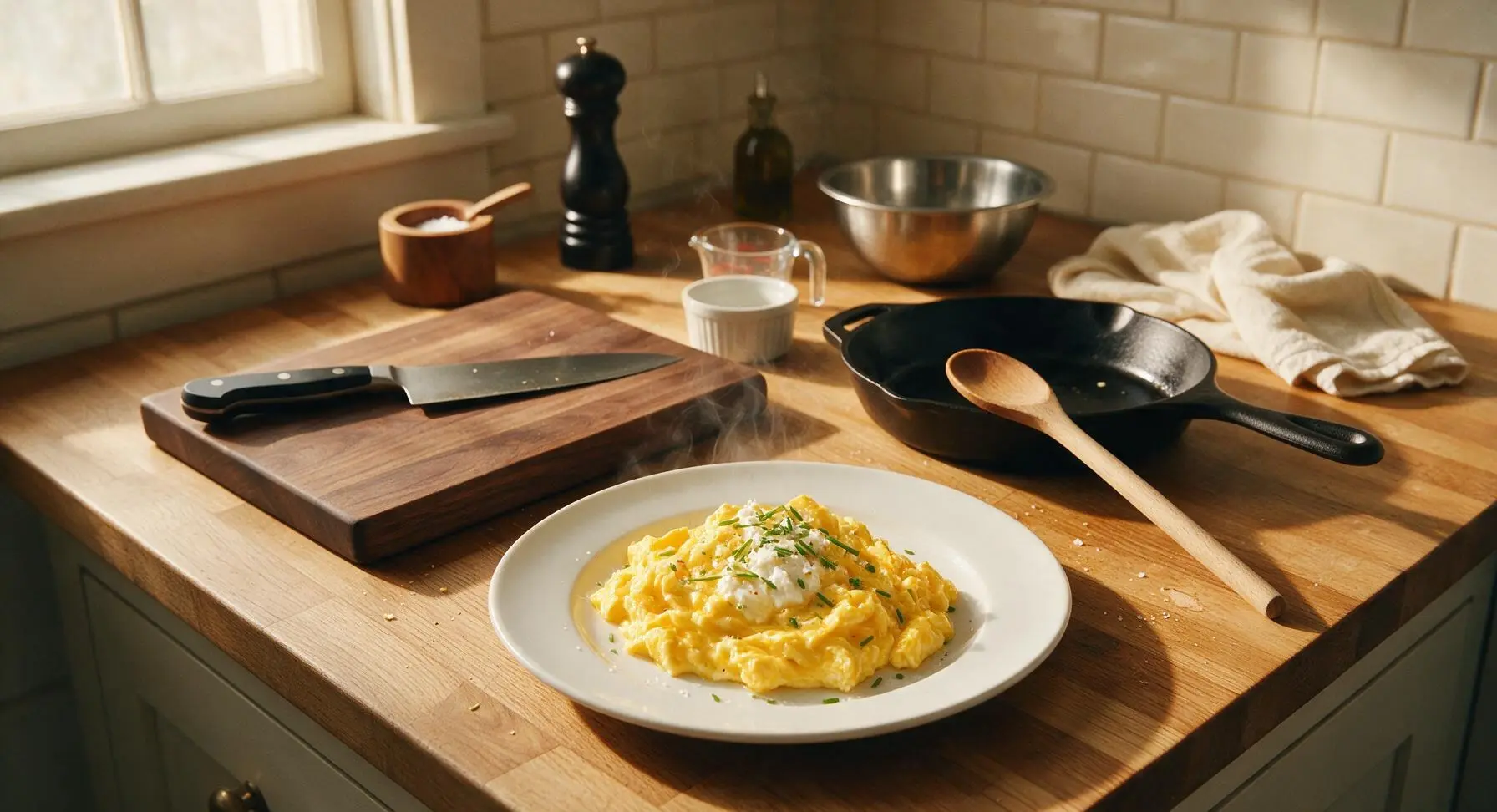
Silky, rich soft-scrambled eggs lifted with nutty mascarpone, finished with bright chives and flaky salt. Luxurious enough for a treat, fast enough for busy days.

Ingredients
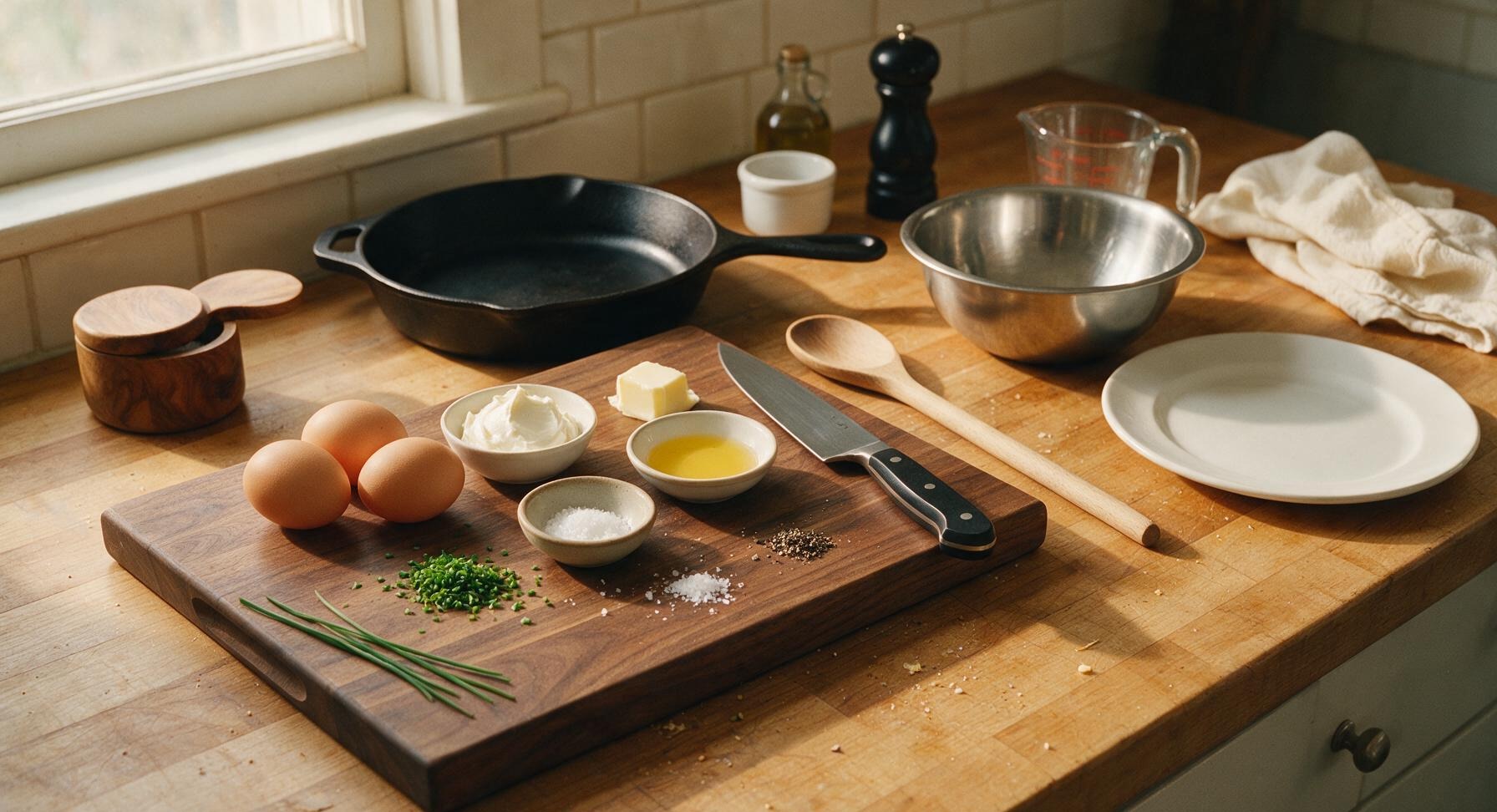
Large eggs 4 large (200g)
Mascarpone cheese, room temperature 55g (1/4 cup)
Unsalted butter 1 tbsp (14g)
Fresh chives 2 tbsp, finely chopped
Flaky sea salt 1/4 tsp, plus extra for finishing
Freshly cracked black pepper 1/8 tsp, plus extra for finishing

Steps

1

Chop fresh chives

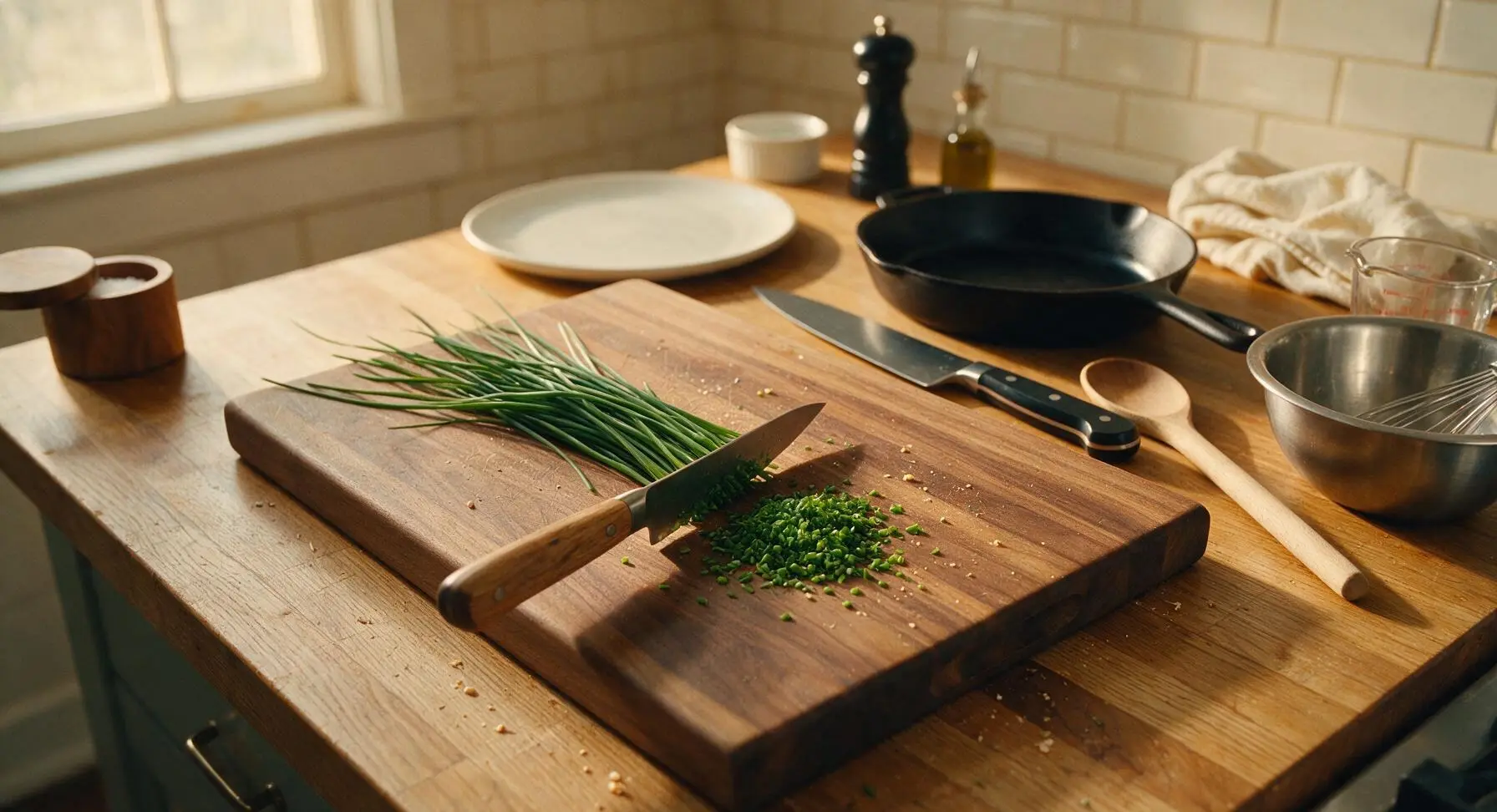
Place the fresh chive bunch on the maple cutting board. Use the paring knife to finely chop the chives into 3mm pieces, discarding any tough, woody stem ends. Set aside 2 tablespoons of chopped chives, leaving a few whole tips for garnish. This takes about 1 minute.
Step 1
step1:Chop fresh chives
2

Whisk eggs lightly

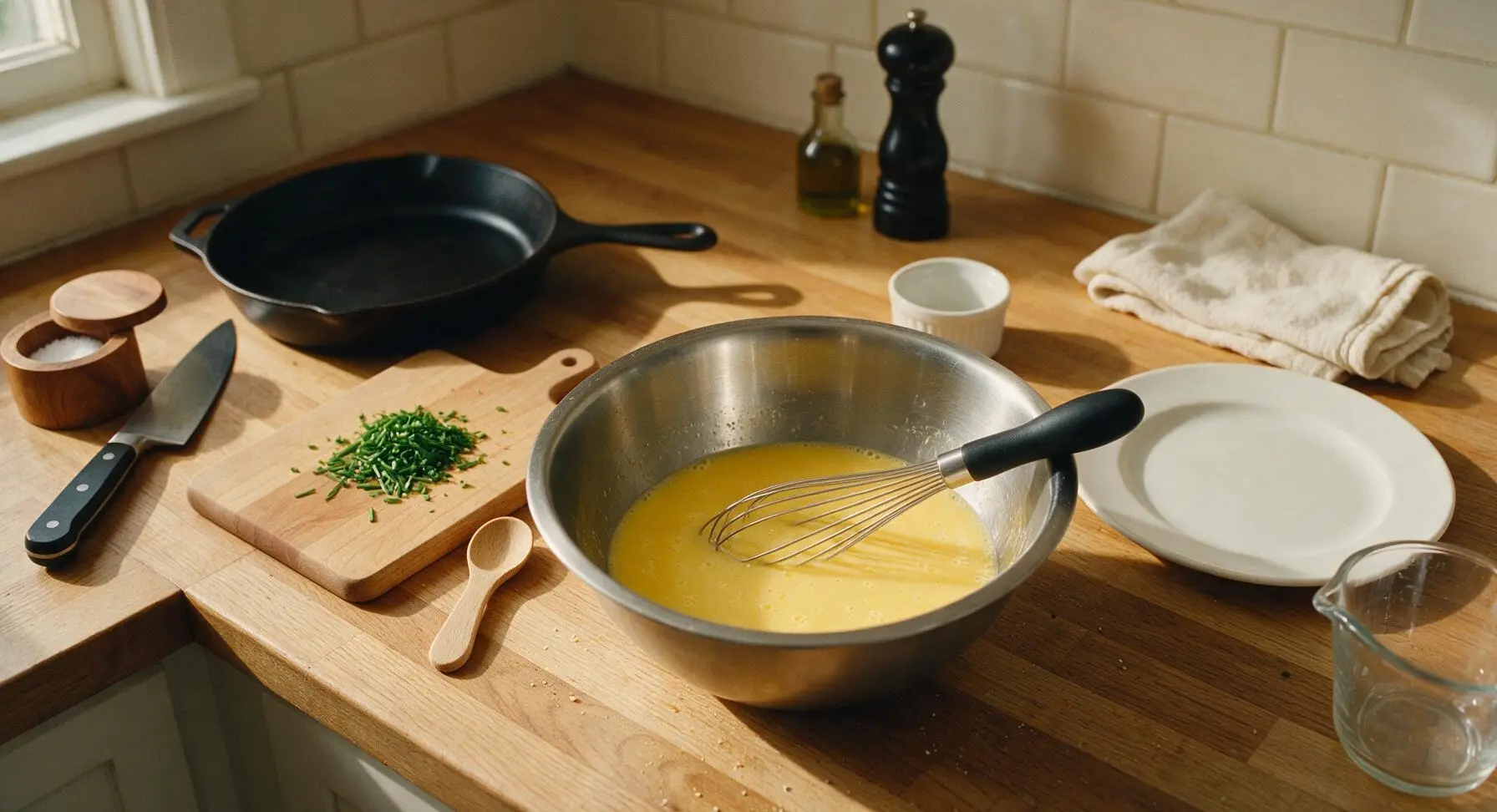
Crack the 4 large eggs into the stainless steel mixing bowl. Add 1/4 teaspoon flaky sea salt and 1/8 teaspoon cracked black pepper. Use the wire whisk to gently beat the eggs just until the yolks and whites are fully combined, about 20 seconds. Do not over-whisk to avoid incorporating too much air, which can make eggs tough and watery. The mixture should be a uniform pale yellow with no streaks of separate white remaining.
Step 2
step2:Whisk eggs lightly
3

Melt butter gently

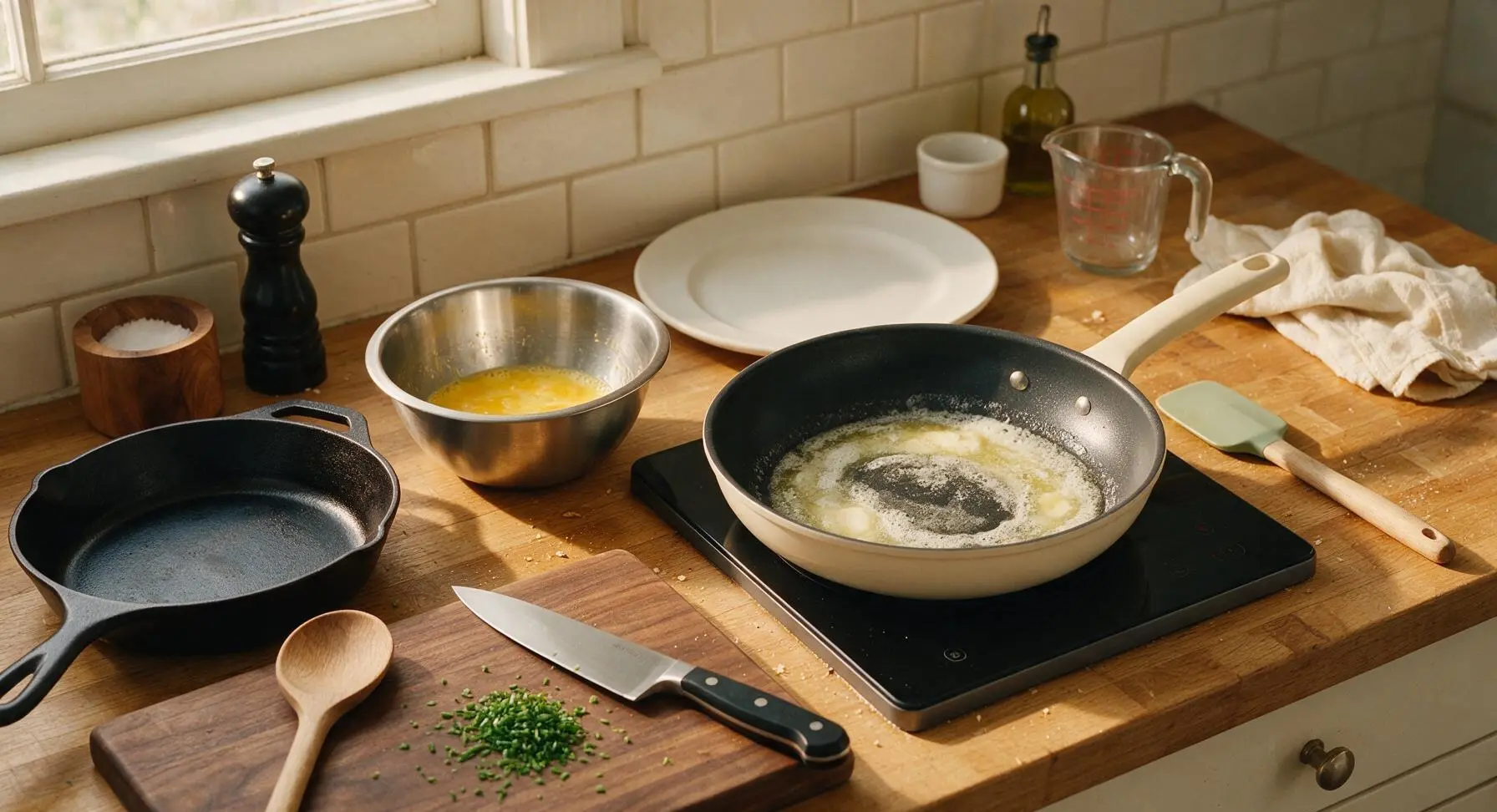
Place the 20cm non-stick skillet on the induction burner set to low heat (about 120C / 250F). Add the 1 tablespoon of unsalted butter to the pan, allowing it to melt slowly until foamy but not browned, about 1 minute. Swirl the pan to coat the entire interior surface evenly with melted butter. If the butter starts to sizzle loudly, turn the heat down slightly to avoid browning.
Step 3
step3:Melt butter gently
4

Pour eggs into pan

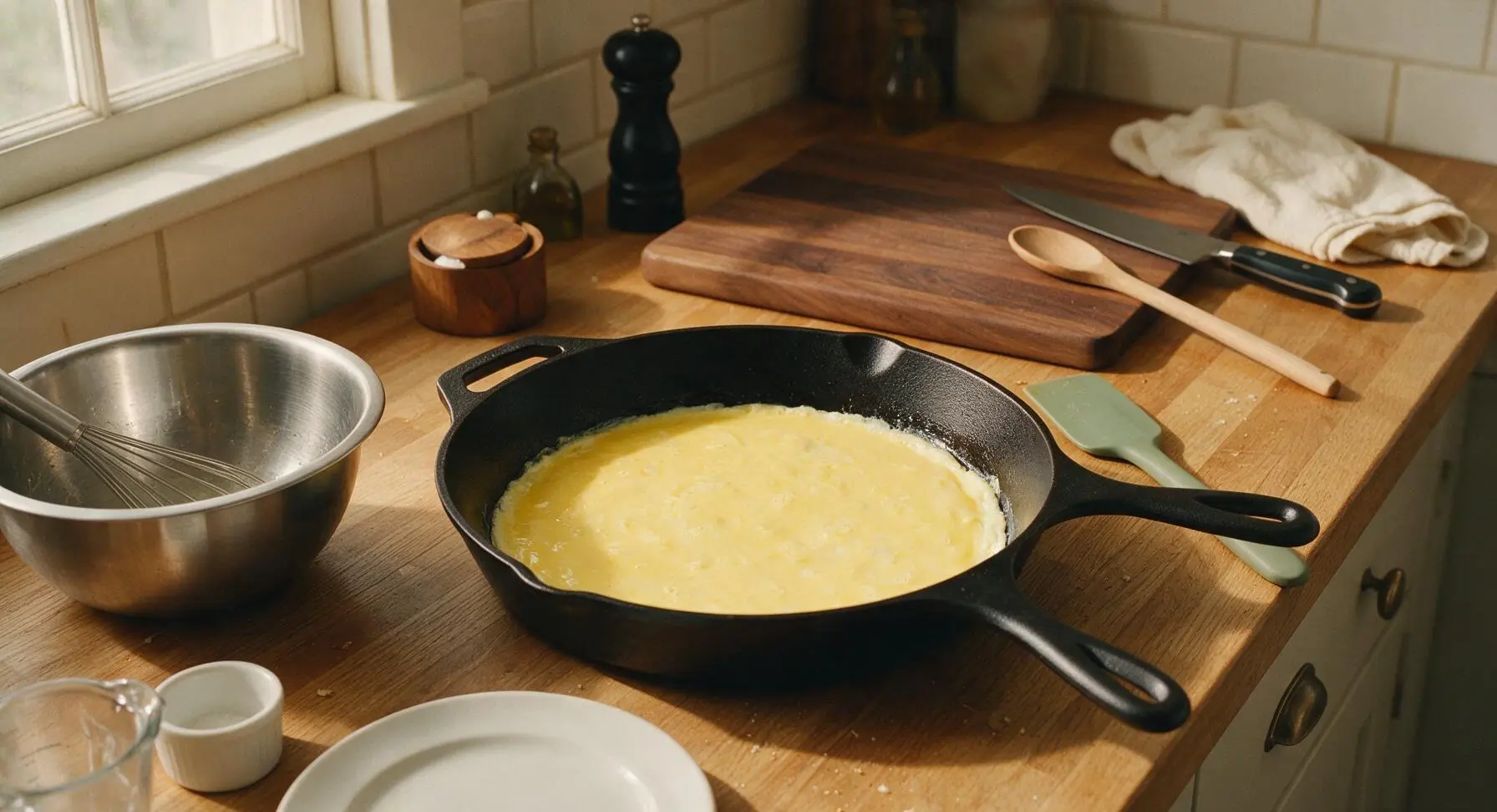
Pour the whisked egg mixture into the preheated, buttered skillet in one smooth pour. Let the eggs sit undisturbed for 15 seconds, until the very edges of the egg mixture just start to set into soft, opaque pale yellow curds.
Step 4
step4:Pour eggs into pan
5

Fold eggs slowly

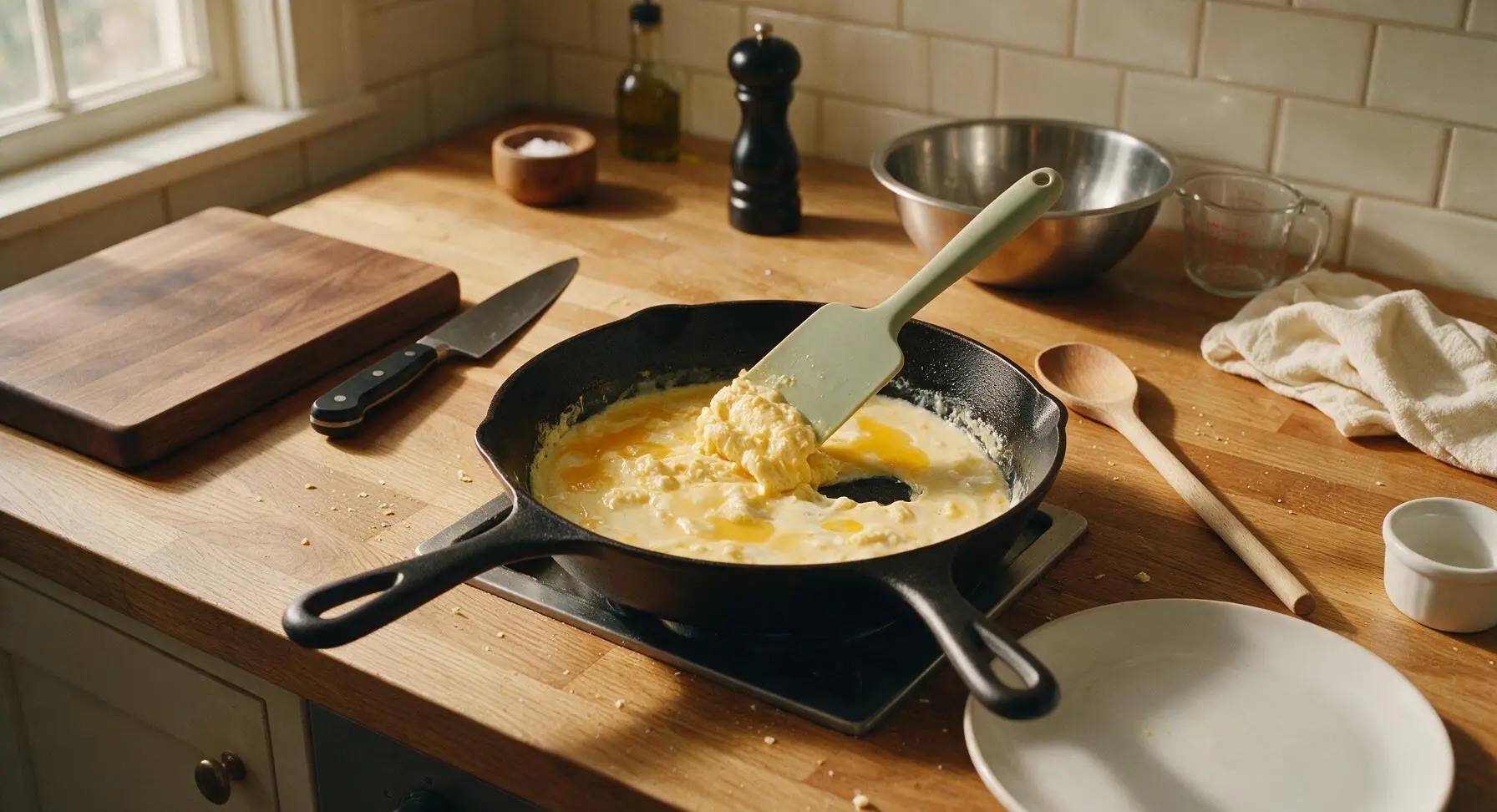
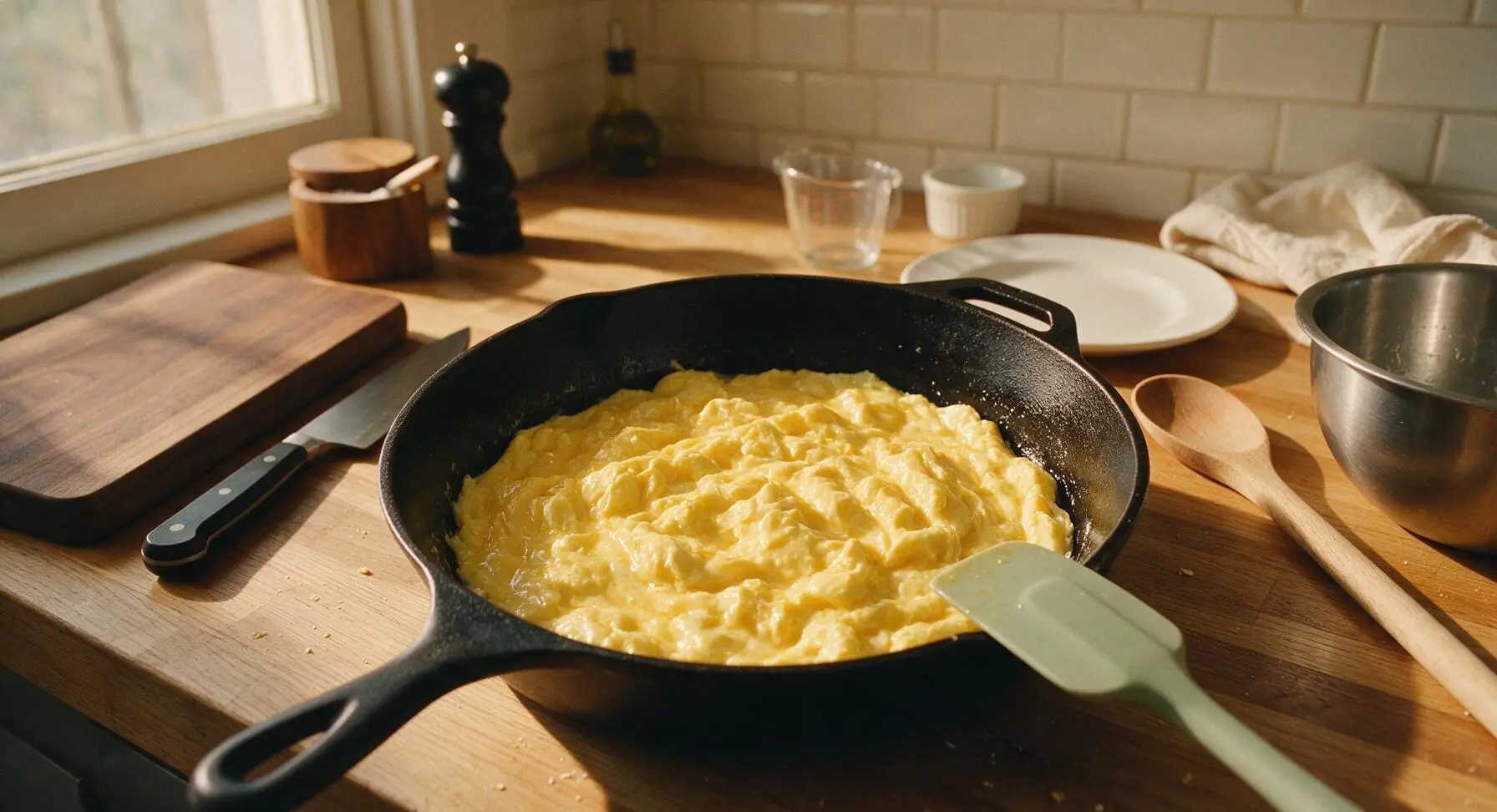
Use the pale sage green silicone spatula to gently push the set edges of the egg toward the center of the pan, tilting the pan to let uncooked egg flow into the empty spaces. Repeat this slow folding motion every 10 seconds for 2 full minutes, keeping the heat on low. The eggs will form soft, large, moist curds, and should look slightly under-set when you are ready to add the mascarpone—they will continue to cook from residual heat after you remove the pan from heat.
Step 5
step5:Fold eggs slowly
Step 5
step5:Fold eggs slowly
6

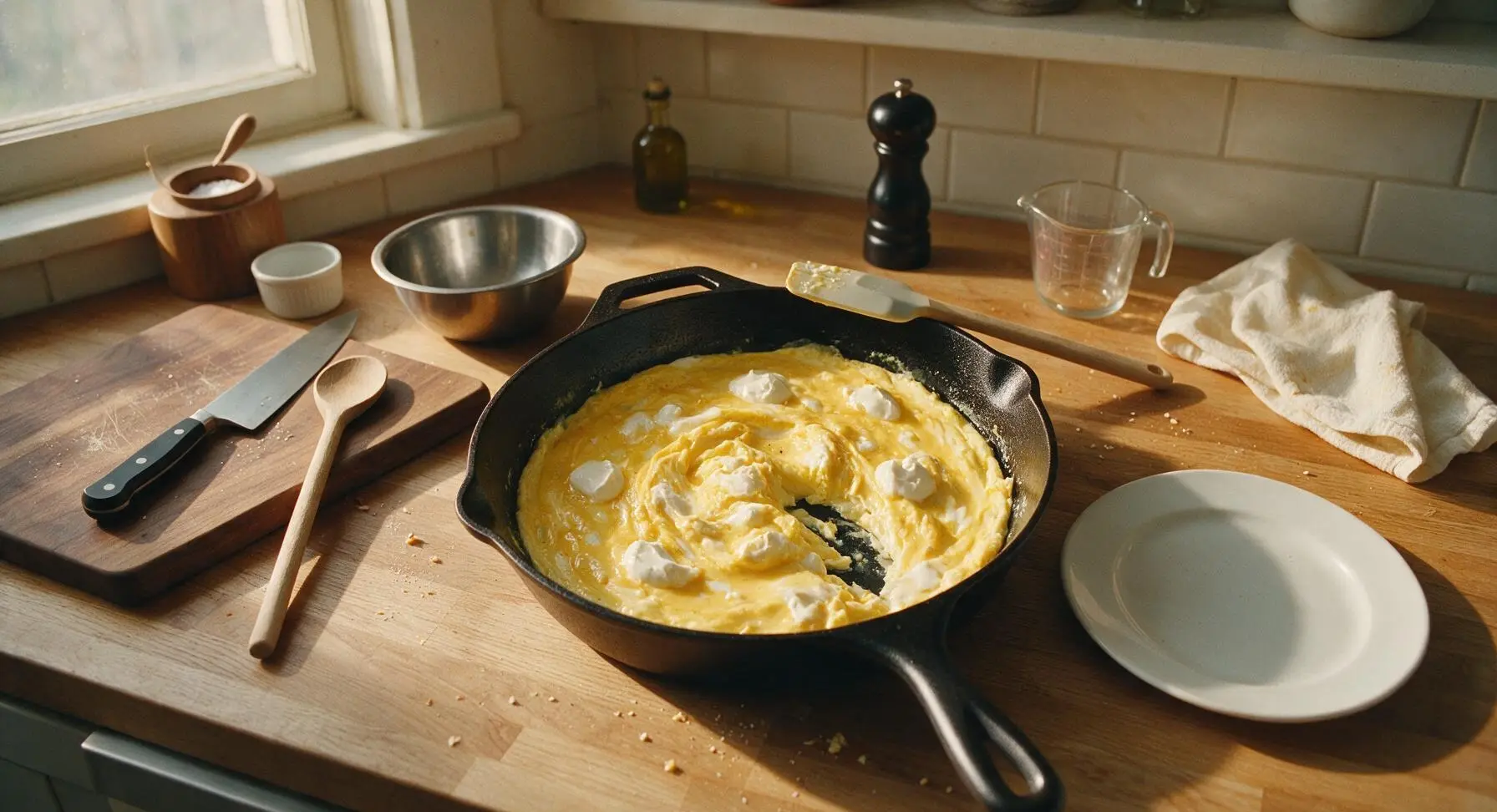
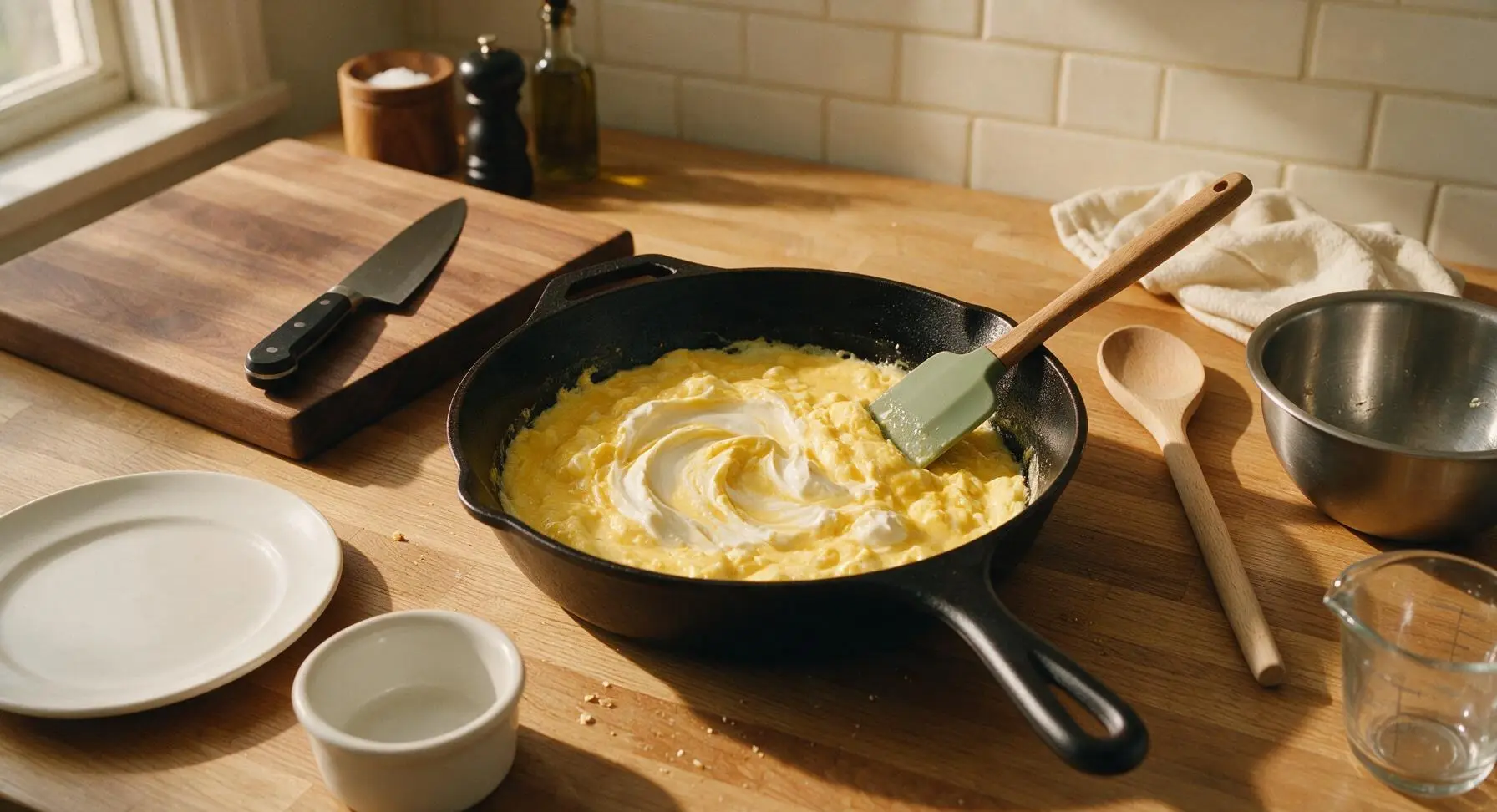
Fold in mascarpone

Remove the skillet from the heat immediately. Add the room-temperature mascarpone in small, 1/2 teaspoon-sized dollops across the surface of the half-set eggs. Use the silicone spatula to gently fold the mascarpone through the eggs 2-3 times only, leaving small visible streaks and pockets of mascarpone rather than fully mixing it in. The residual heat from the pan and eggs will melt the mascarpone into a creamy coating without making the eggs greasy.
Step 6
step6:Fold in mascarpone
Step 6
step6:Fold in mascarpone
7

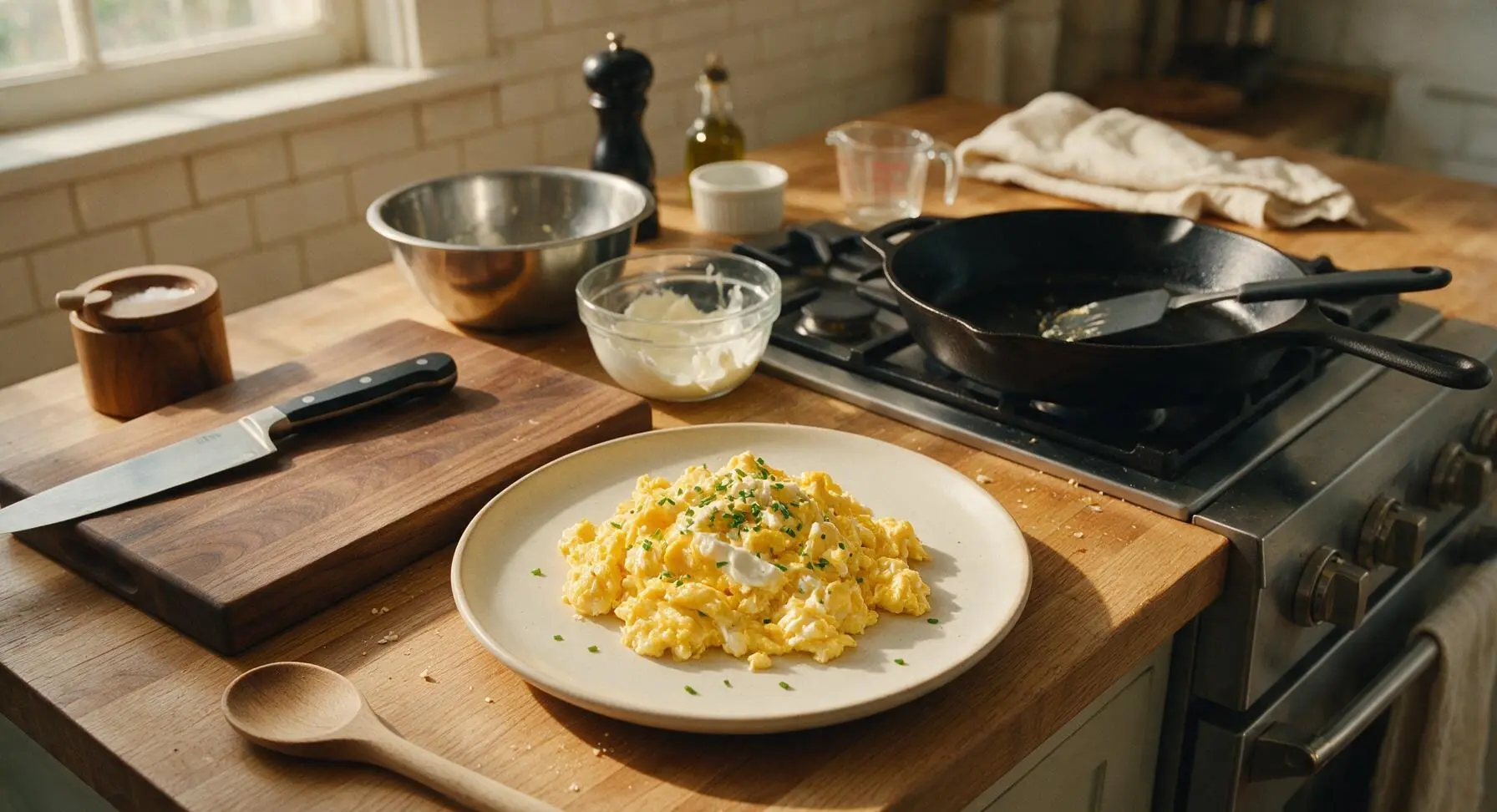
Plate and finish

Gently slide the soft scrambled eggs onto the off-white ceramic breakfast plate, piling them loosely in the center (do not press or pack the eggs down). Sprinkle the top with the reserved chopped chives, a light pinch of extra flaky sea salt, and a single crack of black pepper. Serve immediately, while the eggs are hot and the mascarpone is still melted and glossy.
Step 7
step7:Plate and finish

Tips

1.Use room-temperature mascarpone: Cold mascarpone will seize and form rubbery lumps when added to warm eggs, rather than melting into smooth, creamy pockets. Let it rest on the counter for 15 minutes before cooking for the silkiest texture.
2.Keep heat consistently low: High heat will cook eggs too quickly, creating dry, rubbery curds and causing mascarpone to separate into greasy oil. If butter sizzles loudly or eggs brown at the edges, pull the pan off the heat for 30 seconds to cool slightly before resuming.
3.Pull eggs early for perfect texture: Eggs continue to cook for 1–2 minutes after removal from heat (carryover cooking), so stop cooking when curds look soft and slightly wet. Waiting until eggs look fully set in the pan will result in dry, crumbly eggs that weep excess moisture on the plate.
✨ You May Also Like

Breakfast
🍜 United States

Crisp-edged, fluffy lard griddle cakes are a nostalgic homestyle staple, with rich savoriness from rendered lard, perfect topped with maple syrup or savory gravy.

⏱️ 25 minuteBreakfast ★ 4.8
Breakfast
🍜 United States

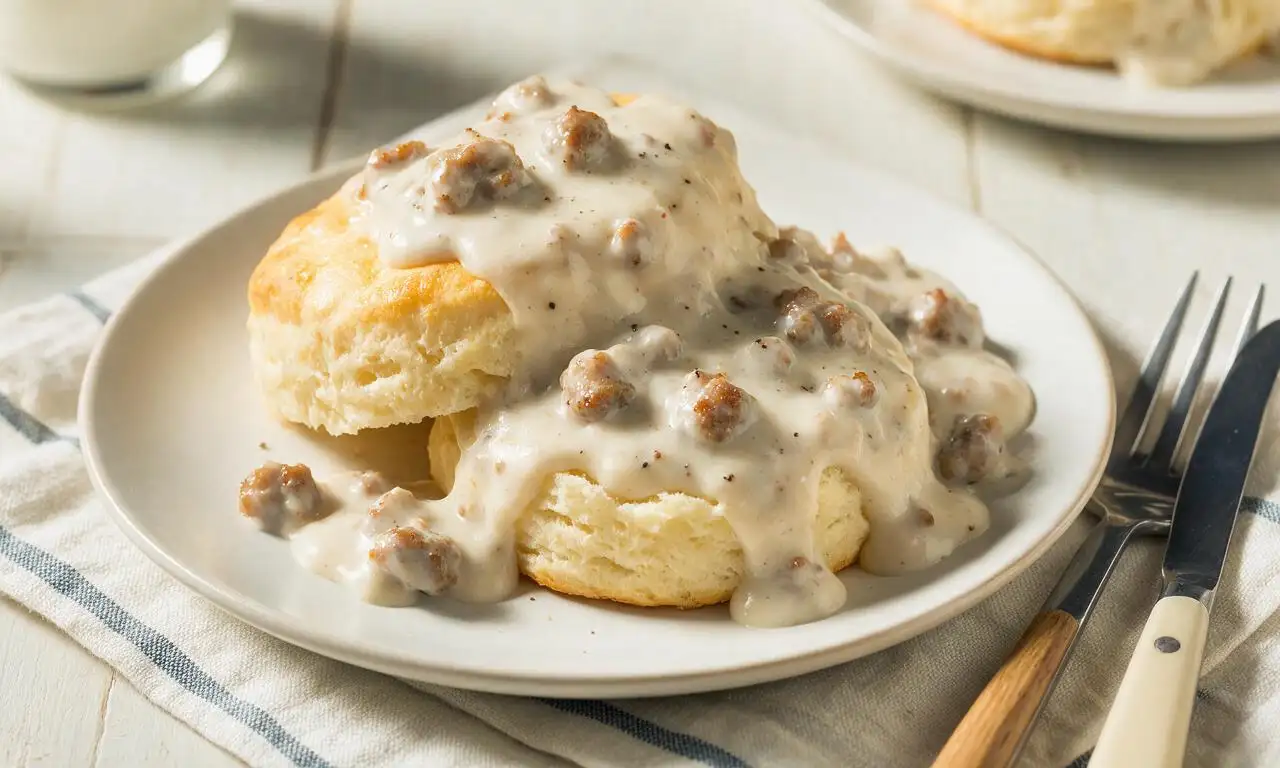
Flaky, buttery homemade buttermilk biscuits smothered in creamy, peppery pork sausage gravy: a beloved, hearty Southern American comfort food classic.

⏱️ 35 minuteBreakfast ★ 4.8
Breakfast
🍜 United States

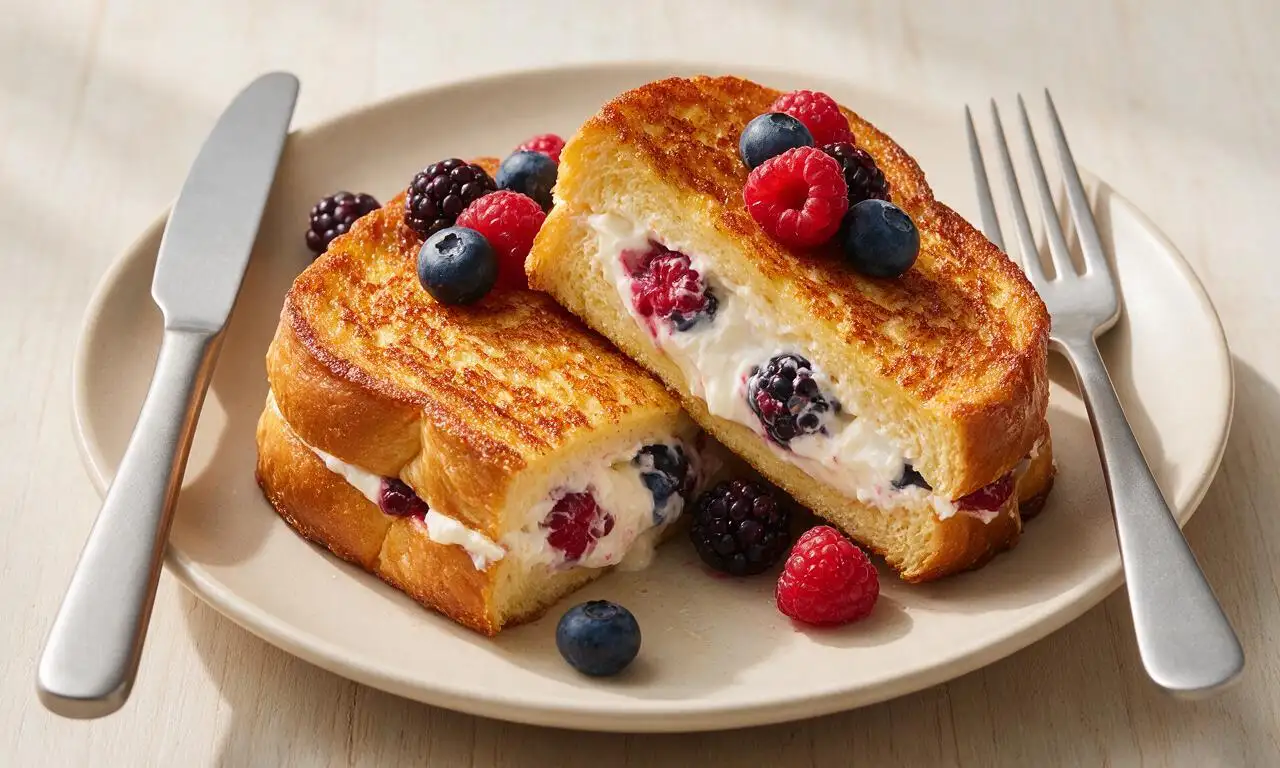
Golden, custardy brioche stuffed with sweet cream cheese and fresh berries, pan-fried to crisp perfection. An indulgent, cozy breakfast perfect for slow weekend mornings.

⏱️ 30 minuteBreakfast ★ 4.7
Breakfast
🍜 United States

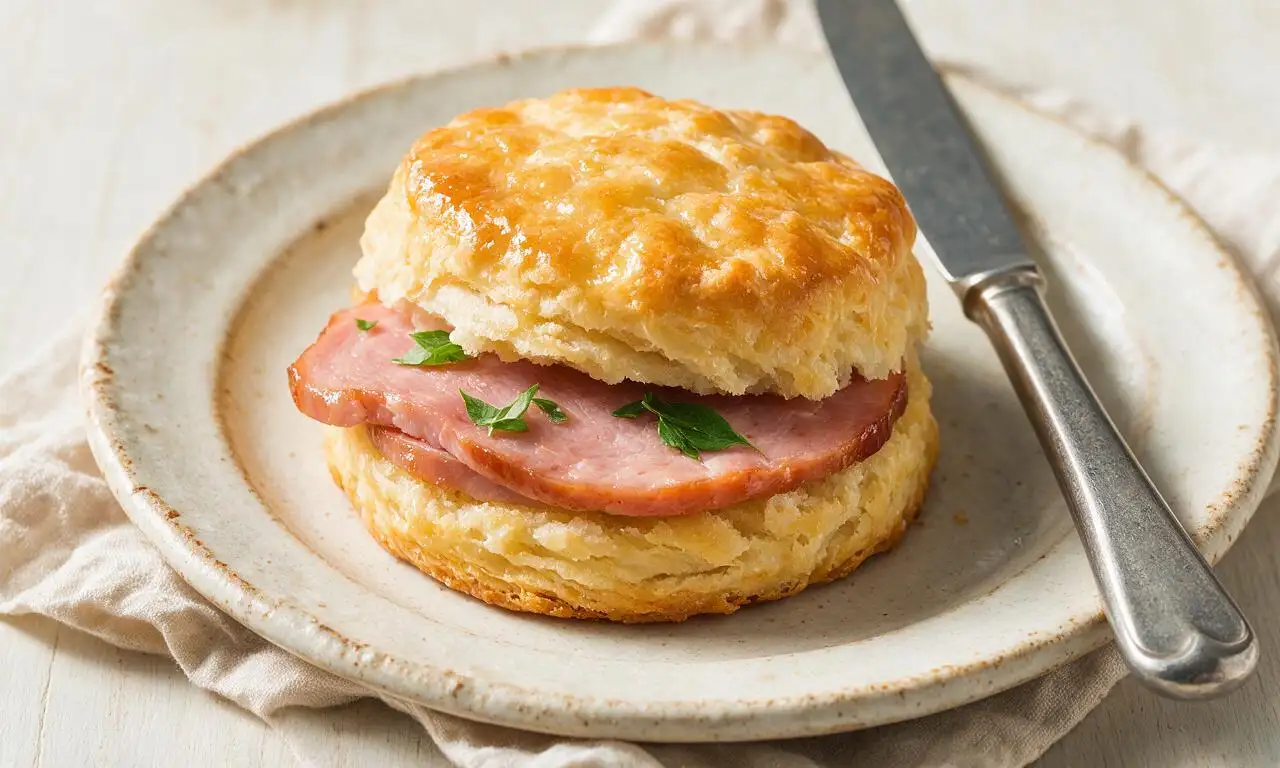
Flaky, buttery Southern-style biscuits stuffed with savory salty country ham, a portable, satisfying classic perfect for casual on-the-go meals.

⏱️ 25 minuteBreakfast ★ 4.8
Breakfast
🍜 United States

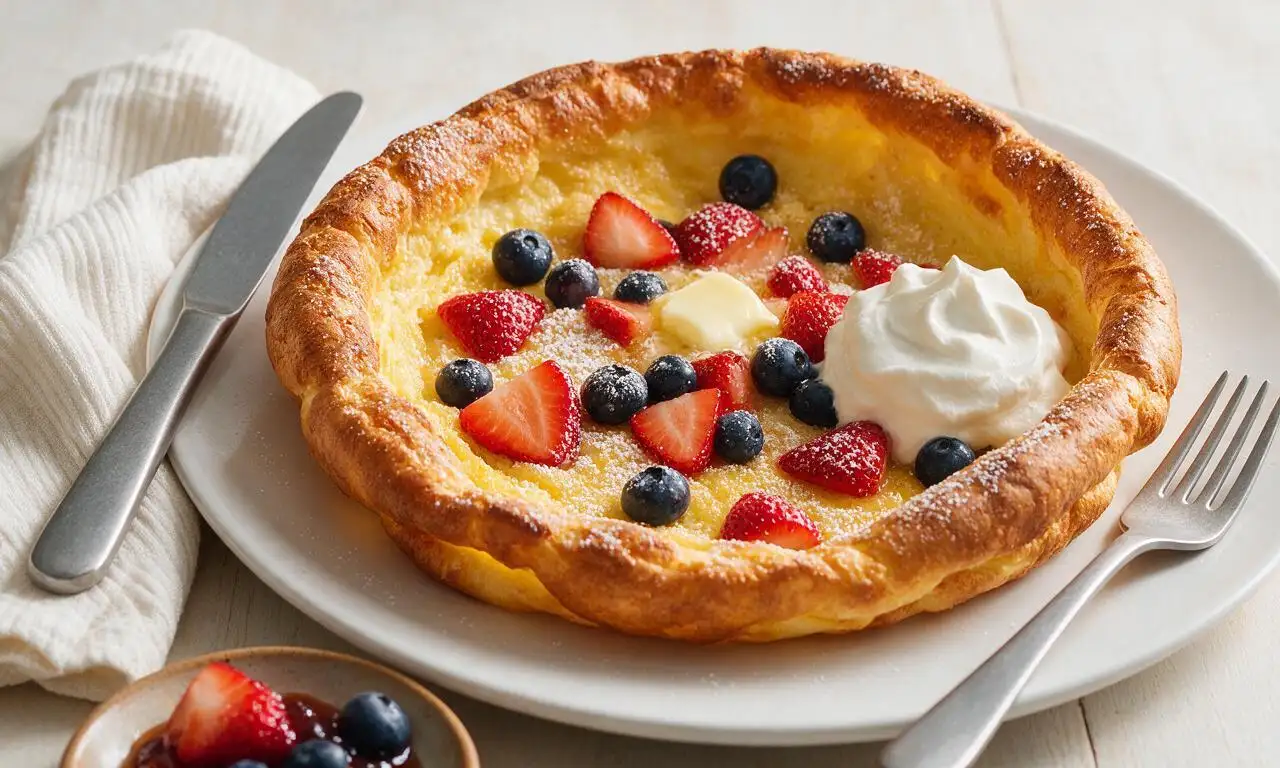
Iconic puffy baked pancake popularized in Seattle, with crisp golden edges and soft custardy center, served warm with classic sweet toppings.

⏱️ 35 minuteBreakfast ★ 4.6
Breakfast
🍜 United States

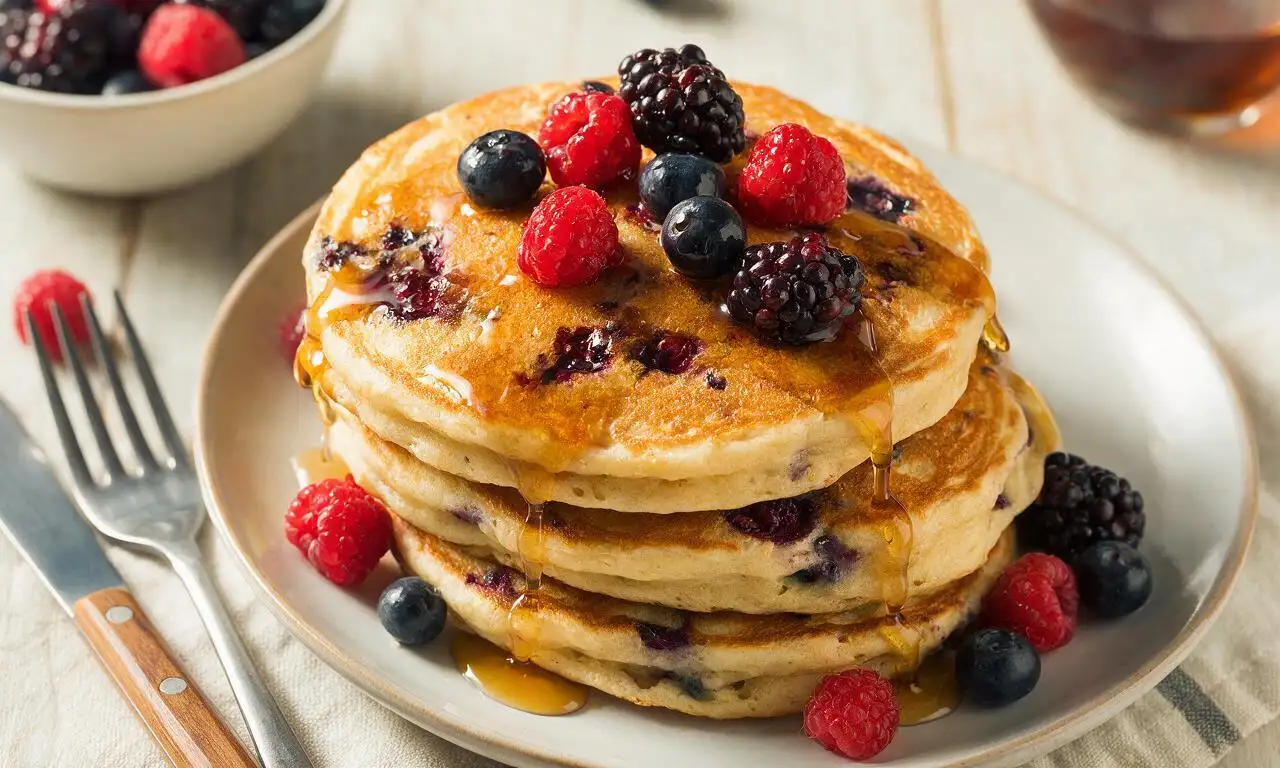
Fluffy, golden pancakes studded with juicy peak-summer mixed berries, drizzled with maple syrup for a bright, comforting, crowd-pleasing family breakfast.

⏱️ 25 minuteBreakfast ★ 4.7

Mascarpone Scrambled Eggs:Frequently Asked Questions

1.How are mascarpone scrambled eggs different from regular creamy scrambled eggs? ▾
Unlike versions made with milk, heavy cream, or cream cheese, room-temperature mascarpone adds subtle nutty, mild sweetness and an ultra-silky texture without tang or graininess. It melts evenly into low-and-slow cooked eggs for a luxe, velvety bite that feels indulgent but never overpowers the delicate, fresh egg flavor, balanced by bright chives and flaky salt.
2.Do I have to use room-temperature mascarpone, or can I use it straight from the fridge? ▾
Always use room-temperature mascarpone for this recipe! Cold mascarpone will seize up and leave small, lumpy clumps when it hits warm eggs instead of melting into a smooth, evenly distributed cream. Let it sit on the counter for 20 to 30 minutes before cooking, and give it a quick stir to loosen it before adding it to the pan.
3.How many eggs per person is a standard serving for this dish? ▾
Plan on 2 to 3 large eggs per person for a standard breakfast serving. Since this is a richer, more indulgent egg dish, 2 eggs paired with toast or fresh fruit makes a perfectly filling light meal, while 3 eggs works well for heartier appetites or if you’re serving it as the main weekend brunch centerpiece.
4.Can I use salted butter instead of unsalted butter here? ▾
You can absolutely use salted butter if that’s what you have on hand, just hold off on adding any extra fine salt during cooking. Since the finishing flaky sea salt adds a bright, salty pop, using salted butter without adjusting can make the final dish overly salty. Always taste right before serving to see if you need a tiny extra pinch.
5.What heat setting should I use to get soft, silky eggs instead of rubbery ones? ▾
Stick to low to medium-low heat the entire time you cook these eggs—high heat is the number one cause of rubbery, watery, or browned scrambled eggs. Low heat lets eggs form soft, delicate curds slowly, so they stay tender and creamy instead of seizing up the second they hit the pan. Resist the urge to crank heat to speed things up!
6.When do I add the mascarpone for the creamiest possible result? ▾
Add dollops of softened mascarpone when the eggs are about 70% set—they’ll look like soft, wet curds with just a little bit of loose, runny egg left in the pan. Gently fold the mascarpone in as you pull the pan off the heat, so it melts gently from residual warmth instead of breaking or getting greasy from too much direct heat.
7.I don’t have fresh chives—what’s a good substitute? ▾
If you don’t have fresh chives, finely sliced fresh scallion greens (the tender light green tops, not the tough white bulb) make a great, mild onion-flavored swap. You can also use a tiny pinch of finely chopped fresh tarragon or dill for a slightly different herby note, but skip dried chives—they have a flat, dusty flavor that ruins the bright finish.
8.Can I make these eggs ahead of time for weekly meal prep? ▾
These eggs are best eaten immediately right after cooking, as they don’t hold up well to reheating—they’ll turn rubbery and the mascarpone can separate if stored and rewarmed. If you want to cut down on morning work, you can whisk your eggs and measure out ingredients the night before; total cook time only takes 5 to 7 minutes anyway.
9.What kind of pan works best for making these scrambled eggs? ▾
A heavy-bottomed nonstick skillet is the most foolproof option here, as it prevents delicate egg curds from sticking and lets you stir easily without tearing. If you don’t have a nonstick pan, a well-seasoned carbon steel or cast iron skillet works too—just add a tiny extra pat of butter to create a nonstick barrier before pouring in eggs.
10.Is there a way to make this recipe lower in fat without losing the creamy texture? ▾
You can cut a little richness by using 2 tablespoons of mascarpone for every 6 eggs instead of the full standard amount, and bulk up the creaminess by folding in a tablespoon of plain whole-milk Greek yogurt at the very end. Skip low-fat or fat-free mascarpone, though—it has added stabilizers that leave a weird, gummy texture.
11.Why do you recommend flaky sea salt instead of regular table salt to finish? ▾
Flaky sea salt has large, crisp crystals that don’t dissolve instantly on warm eggs, so you get little bright, salty pops with every bite instead of uniform, flat saltiness mixed all the way through. If you only have table salt, use half the called-for amount and add it during cooking instead of sprinkling it on at the end.
12.Can I add mix-ins like bacon, cheese, or vegetables to these eggs? ▾
Absolutely, just keep mix-ins light so they don’t overpower the delicate mascarpone flavor. Crispy crumbled bacon, sautéed spinach squeezed completely dry, finely diced roasted tomatoes, or a tiny sprinkle of grated parmesan all work beautifully. Add pre-cooked mix-ins right when you fold in the mascarpone to warm them through without overcooking eggs.
13.My mascarpone got lumpy when I added it—what did I do wrong? ▾
Lumpy mascarpone almost always comes from two issues: either the cheese was straight out of the fridge and too cold when added, or you added it too early when the pan heat was too high, causing the cheese to seize. If you end up with small lumps, keep folding gently off heat for 30 extra seconds—most lumps will melt out from the residual warmth of the eggs.
14.What should I serve with these eggs to make a full, balanced meal? ▾
These rich, silky eggs pair perfectly with buttery toasted sourdough, a simple arugula salad tossed with lemon vinaigrette, crispy roasted breakfast potatoes, or fresh sliced berries to cut the richness. They also pair beautifully with a slice of smoked salmon for an extra-special weekend brunch treat.
15.Can I use pasteurized eggs for this recipe since the curds are soft? ▾
Yes, pasteurized large eggs work perfectly here if you’re concerned about food safety for young kids, pregnant people, or anyone with a compromised immune system. Since we cook the eggs to soft, set (not runny) curds over low heat, regular eggs are safe for most people, but pasteurized eggs give extra peace of mind without changing texture or flavor.
16.How do I avoid watery scrambled eggs when adding the mascarpone? ▾
Watery eggs happen for two main reasons: you cooked the eggs on too high heat, which causes them to release water as they seize, or your mascarpone had excess whey sitting on top that you didn’t drain off first. Before using room-temperature mascarpone, pour off any thin, clear liquid pooled on top, and cook low and slow to keep curds tight and creamy.

Comments (7)

2 hours ago

OMG these are the BEST scrambled eggs I’ve ever made! I tossed a tiny pinch of fresh chives on top and my whole family went crazy for them at our Sunday brunch, and we even had them for quick breakfast for dinner last night when we got home late from soccer practice. That 4 minute cook time is no joke too – it’s perfect for busy school mornings when I’m rushing to get the kids out the door. Total game changer, for real!

30 minutes ago

Wait quick question – did you use full fat or low fat mascarpone? I only have the light kind in my fridge right now and really don’t wanna make a last minute run to the grocery store!

5 minutes ago

Great question! Full fat mascarpone will give you that ultra luxe, velvety creamy texture, but light works totally fine too if that’s what you have on hand – just cut back a tiny splash on the milk or cream you mix in to keep the eggs from getting runny. Happy cooking!

yesterday

Made these for my teenage son before his early morning football practice and he said they’re better than the greasy diner eggs we get after Friday night games. Total dad win! Super easy, no fancy chef skills required, I’m gonna be making these weekly for my meal prep.

3 days ago

SO good! I was worried mascarpone would make the eggs too heavy and rich, but they’re light, fluffy, way more flavorful than regular old scrambled eggs, and naturally gluten free which is a huge win for me. I served mine with avocado toast and smoked salmon for a fancy little work from home lunch, absolute chef’s kiss.

2 days ago

So happy you loved them! That smoked salmon and avocado pairing sounds absolutely delicious – we’ll have to test that combo next time we whip up a batch in the test kitchen. Thanks for the idea!

5 minutes ago

Wait I’ve literally never thought to add mascarpone to scrambled eggs? Tried this this morning in my dorm kitchen and my roommate literally begged me for the recipe halfway through breakfast. Only knock is I slightly overcooked mine because I got distracted by a group chat text, oops. Still tasted amazing though!

just now

Pro tip: keep the heat on low the entire time! I used to burn my scrambled eggs all the time until I stopped cranking the stove up to high, it works perfectly for this recipe.

just now

That’s such a great tip from RamenNoodleRon! Low and slow is the real secret to super creamy eggs here – since mascarpone melts so fast, high heat can make the eggs curdle quicker than regular scrambled eggs. Give it another go on low heat next time, you’ve got this!

5 days ago

Made these for our neighborhood potluck brunch last weekend and people were coming up to me asking for the recipe all afternoon! I doubled the batch and it still cooked up in under 10 minutes total, zero fuss. Will absolutely be making these for every brunch event I host from now on.

2 weeks ago

First time making scrambled eggs that didn’t turn out rubbery and bland! I was so nervous to try a “fancy” recipe but this was so straightforward, even someone who burns toast as often as me can pull it off. 10/10, no notes.

1 week ago

Same here! I’m terrible at making breakfast foods but these came out perfect on my first try, my kids loved them so much they asked for seconds before they even finished their first plate!

30 minutes ago

I swapped the regular table salt for truffle salt and OH MY GOODNESS. Next level stuff. If you have truffle salt lying around in your pantry, do yourself a favor and add a pinch, it pairs so perfectly with the rich, creamy mascarpone. Will never make plain scrambled eggs again.

5 minutes ago

Truffle salt is such a genius upgrade! We usually love adding a sprinkle of fresh cracked black pepper and a tiny bit of grated parmesan on top, but truffle salt is going straight to the top of our list of must-try variations. Thanks for sharing the great tip!