
Oyakodon Ribs
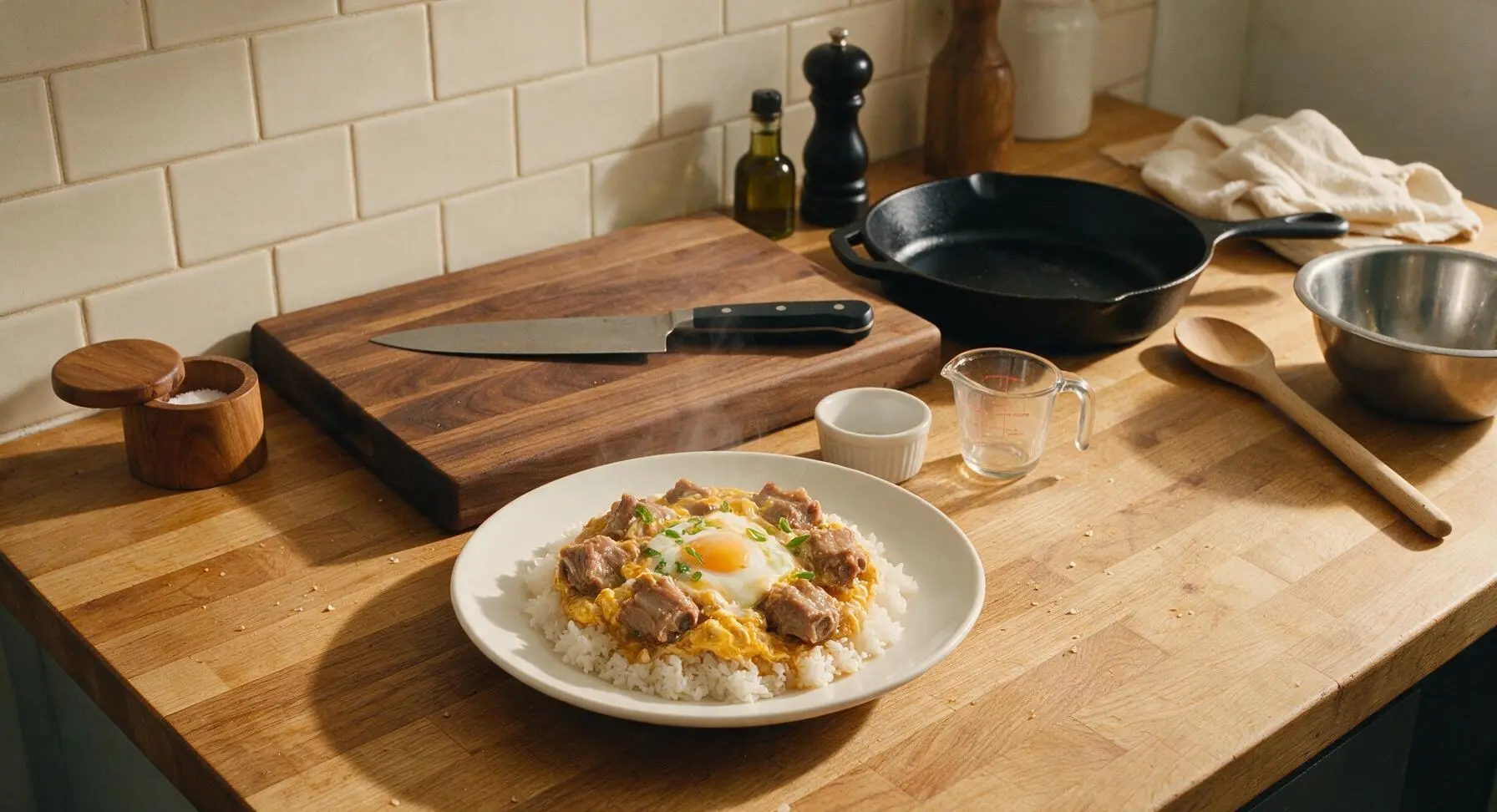
intro
A cozy, umami-rich twist on classic Japanese oyakodon, swapping chicken for tender bite-sized pork ribs, simmered in savory dashi with soft-set eggs over fluffy steamed rice.
Ingredients
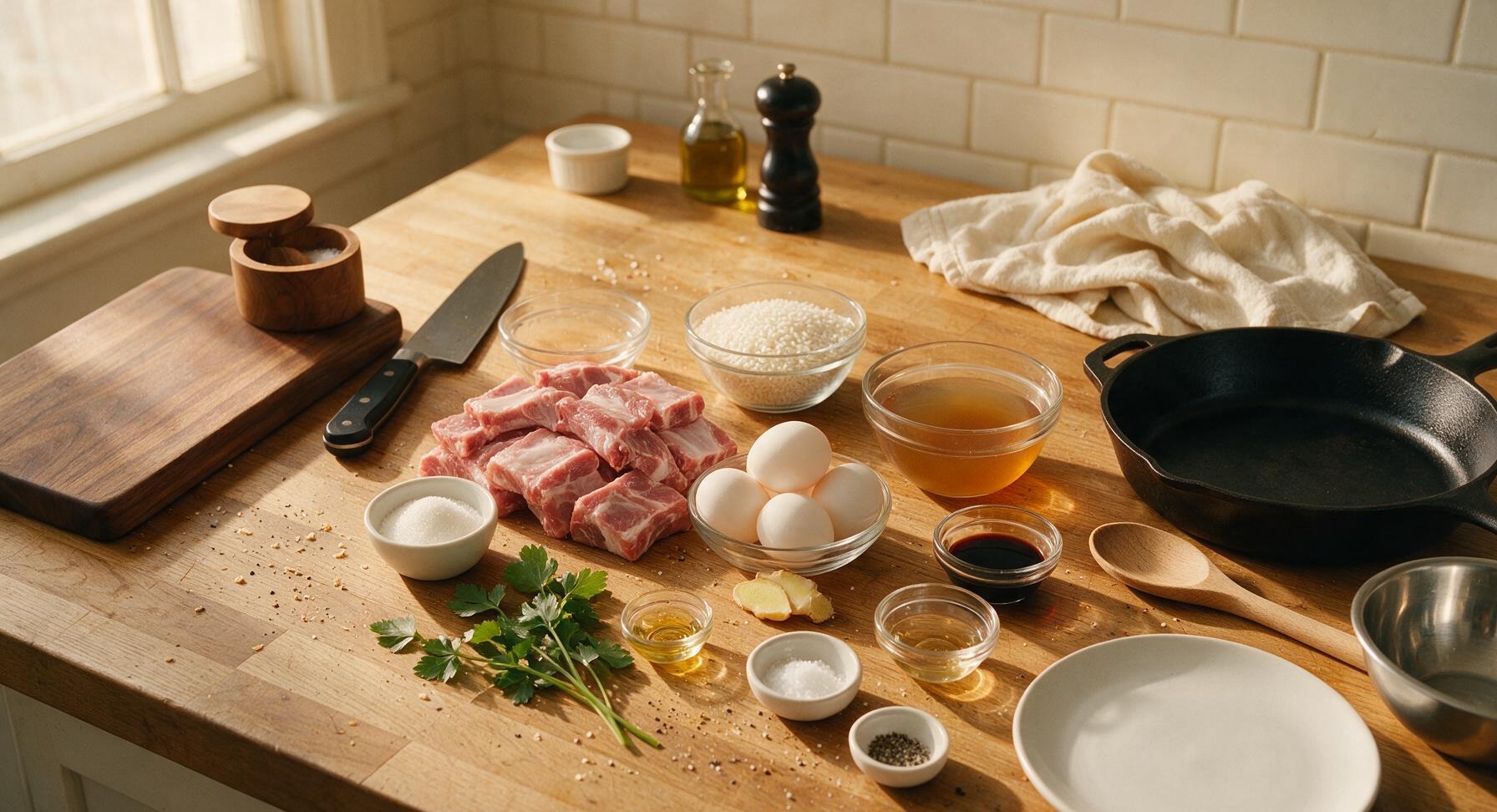
Steps
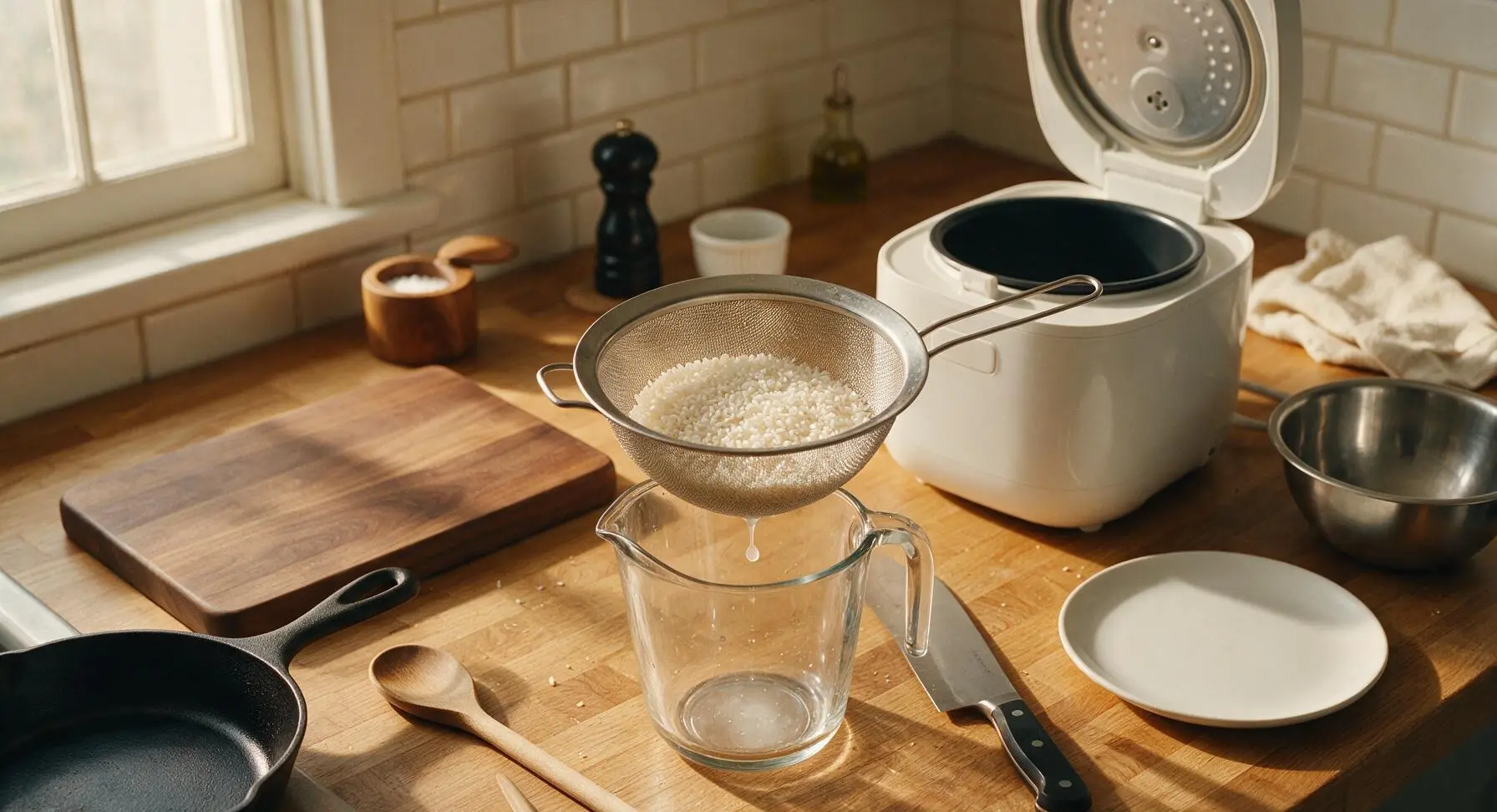
Cook Steamed Rice
Rinse 300g short-grain white rice in the stainless steel fine-mesh strainer under cold running water until runoff is almost clear, about 1 minute. Drain thoroughly, then transfer rice to the electric rice cooker, add 375ml cold water, and set to the standard white rice setting. The rice will cook in approximately 20 minutes, yielding fluffy, tender grains with no hard core.
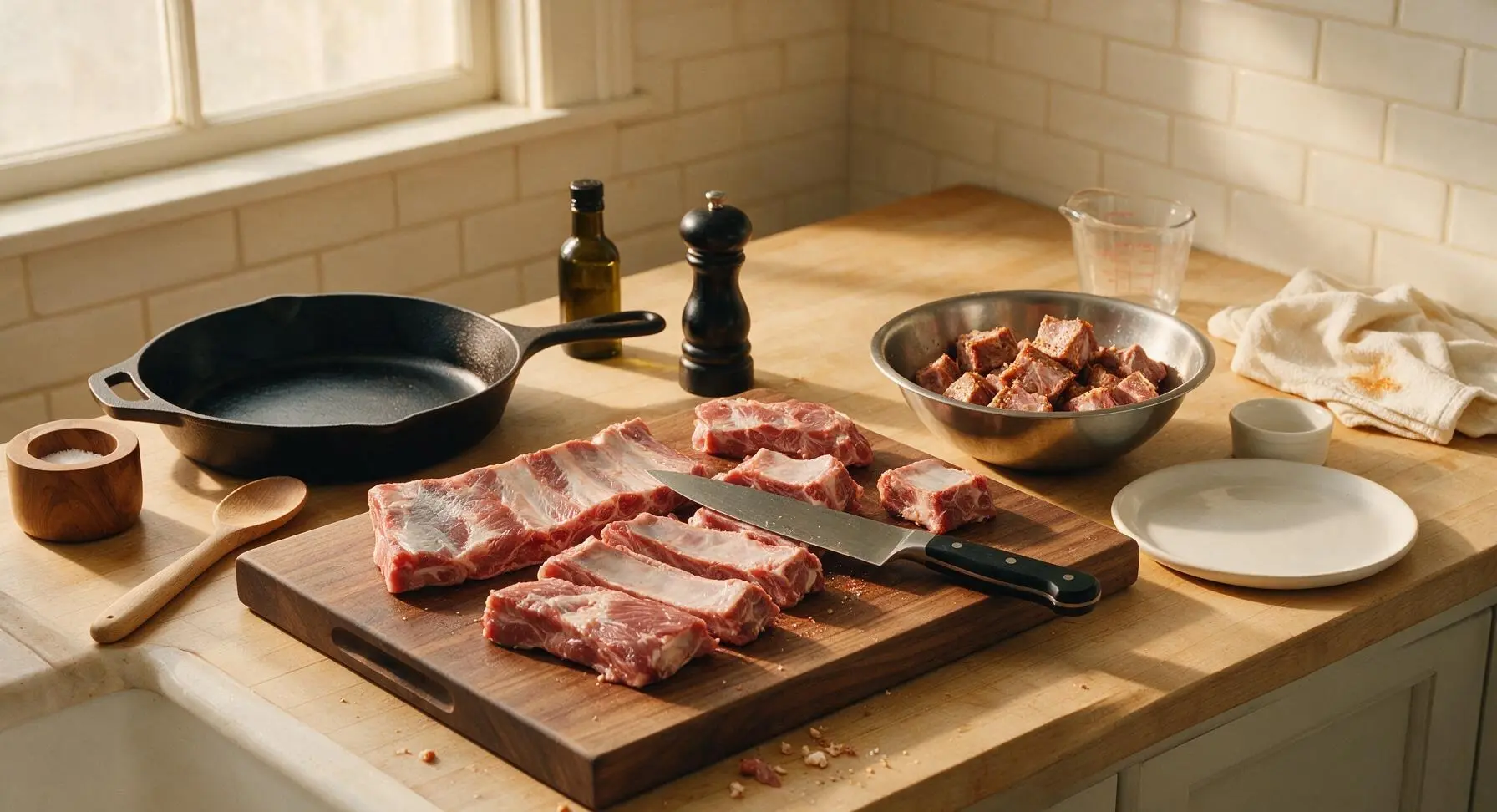
Prep Bite-Sized Ribs
Place 450g boneless pork spare ribs on the walnut cutting board. Use the chef knife to trim away thick hard fat and silver skin, then cut ribs into uniform 2cm bite-sized pieces. Pat pieces dry with the corner of the linen towel, season with 1/2 tsp coarse sea salt and 1/4 tsp ground black pepper, then transfer to the stainless steel mixing bowl to rest.
Mix Donburi Simmer Sauce
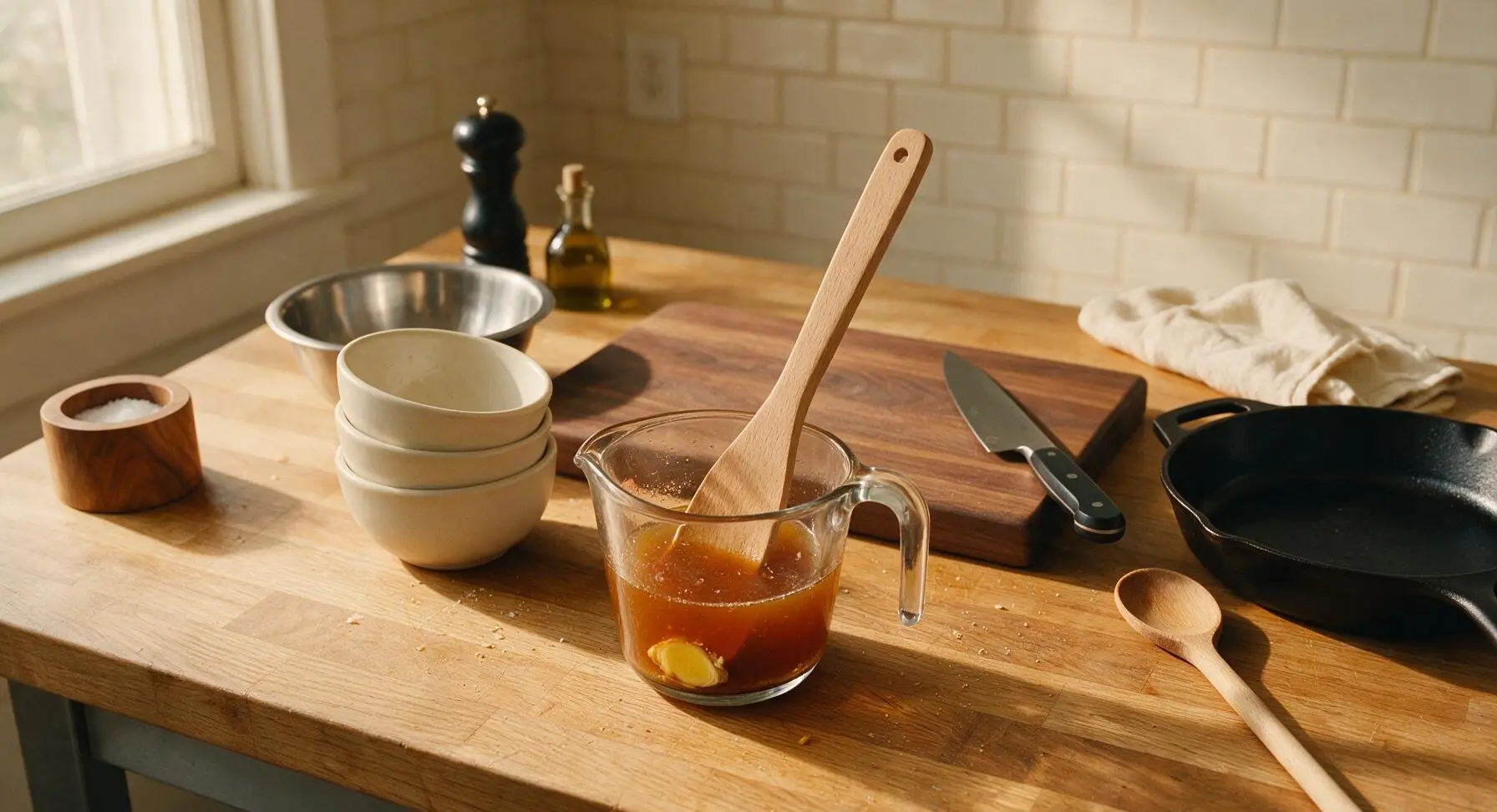
In the clear glass measuring cup, combine 240ml dashi stock, 60ml low-sodium soy sauce, 45ml mirin, 1 tbsp granulated sugar, and 1 crushed thin slice of fresh ginger. Stir gently with the beech wood spatula until sugar fully dissolves, about 30 seconds. The finished sauce should taste balanced: savory, lightly sweet, with a subtle warm ginger note.
Simmer Ribs Until Tender
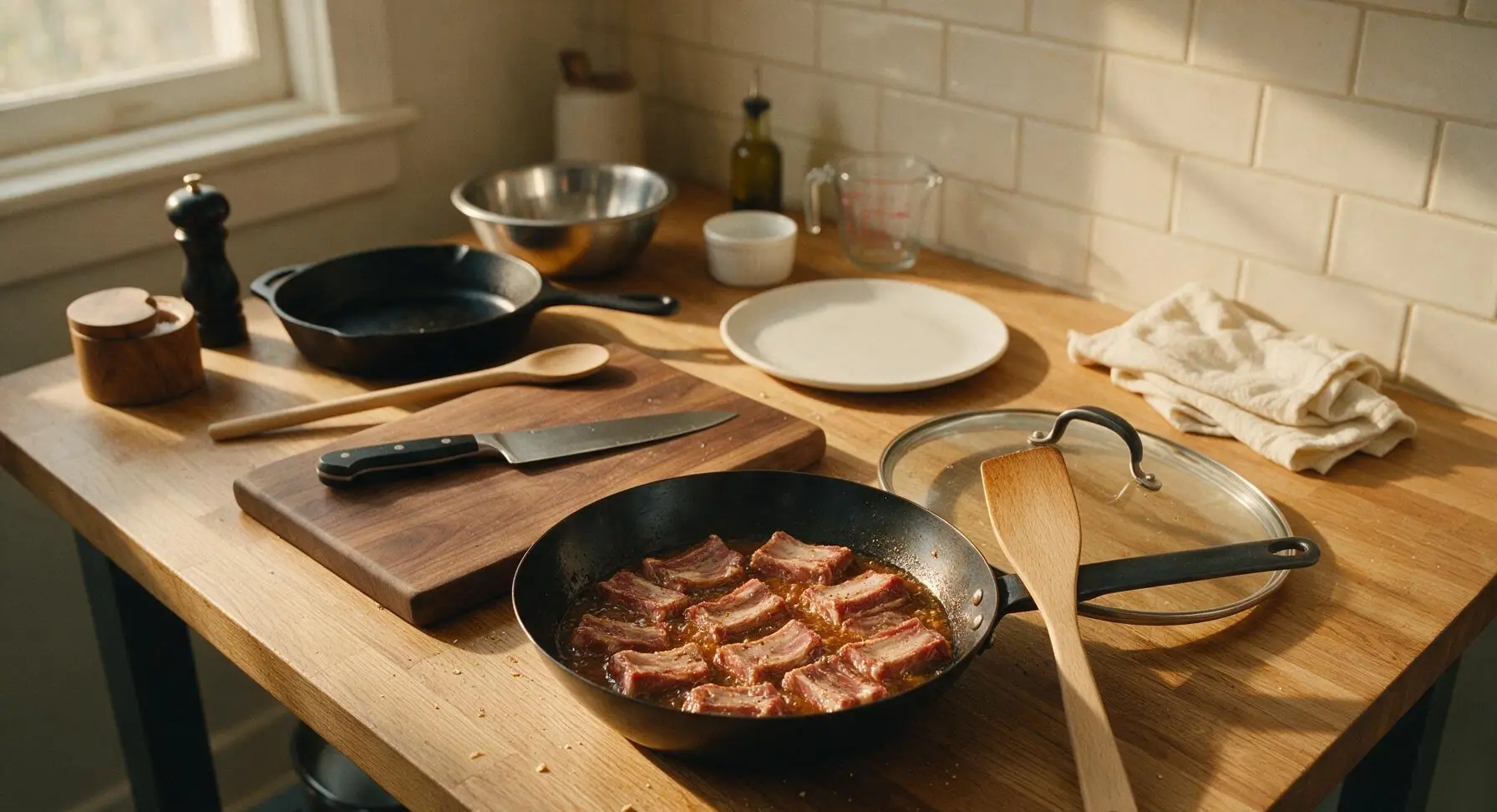
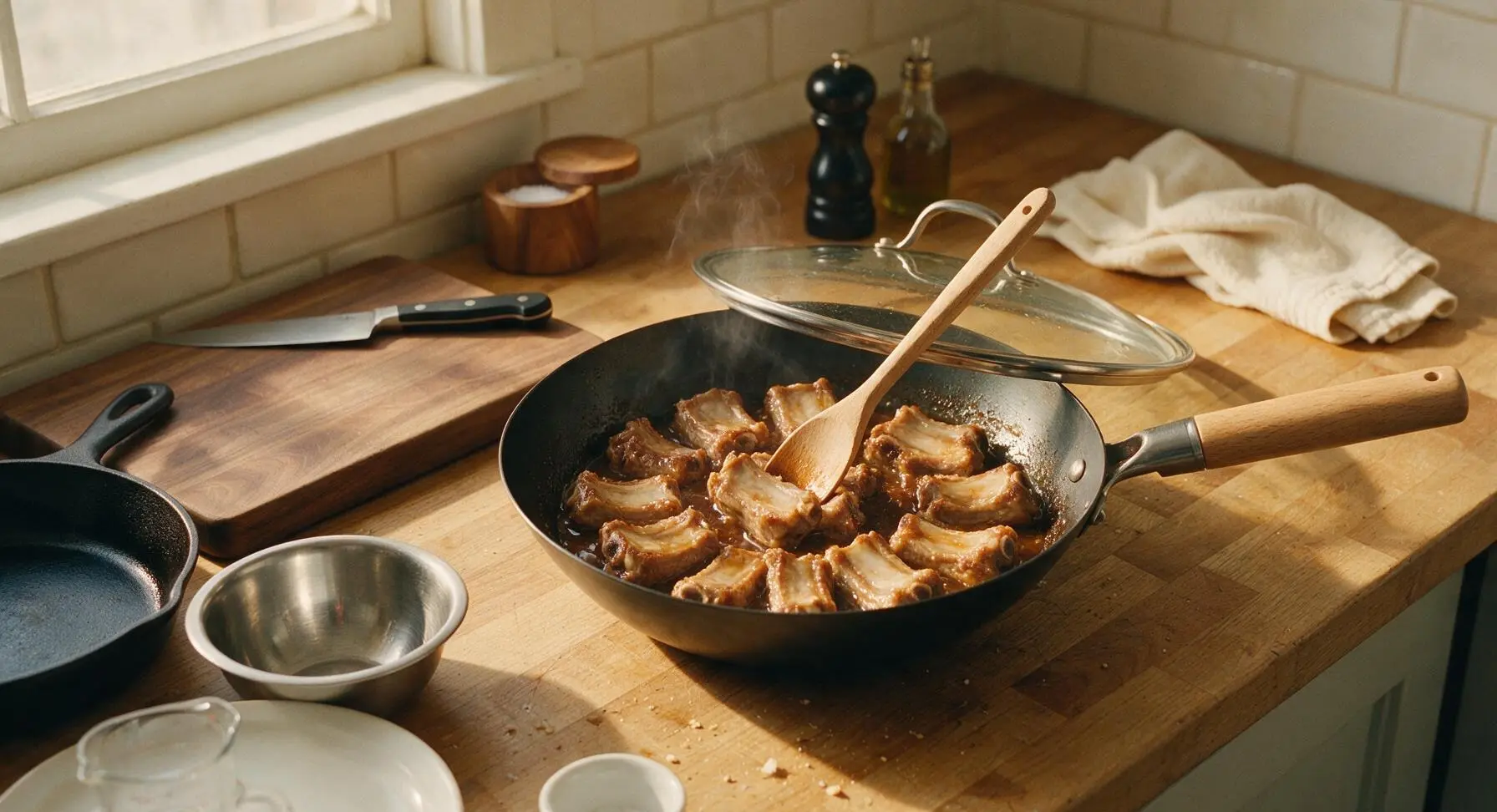
Place the 24cm carbon steel donburi pan over medium heat (160C/320F). Pour in the mixed simmer sauce, then add seasoned rib pieces in a single even layer. Bring to a gentle simmer, reduce heat to medium-low, cover with the glass lid, and cook 12 minutes, stirring once at the 6-minute mark, until ribs are pierce-tender and sauce has reduced by one third.
Pour Soft-Set Eggs
Crack 4 large eggs into one matte cream prep bowl, stir very gently with the wood chopsticks just to combine yolks and whites—do not whisk until smooth, as distinct soft curds are ideal. Turn heat to low, pour two-thirds of the egg mixture in a thin even stream over the simmering ribs, cover, and cook 1 minute. Pour remaining egg over top, cover again, and cook 45 seconds more, until eggs are just set with soft, glossy curds (avoid overcooking to tough, dry eggs).
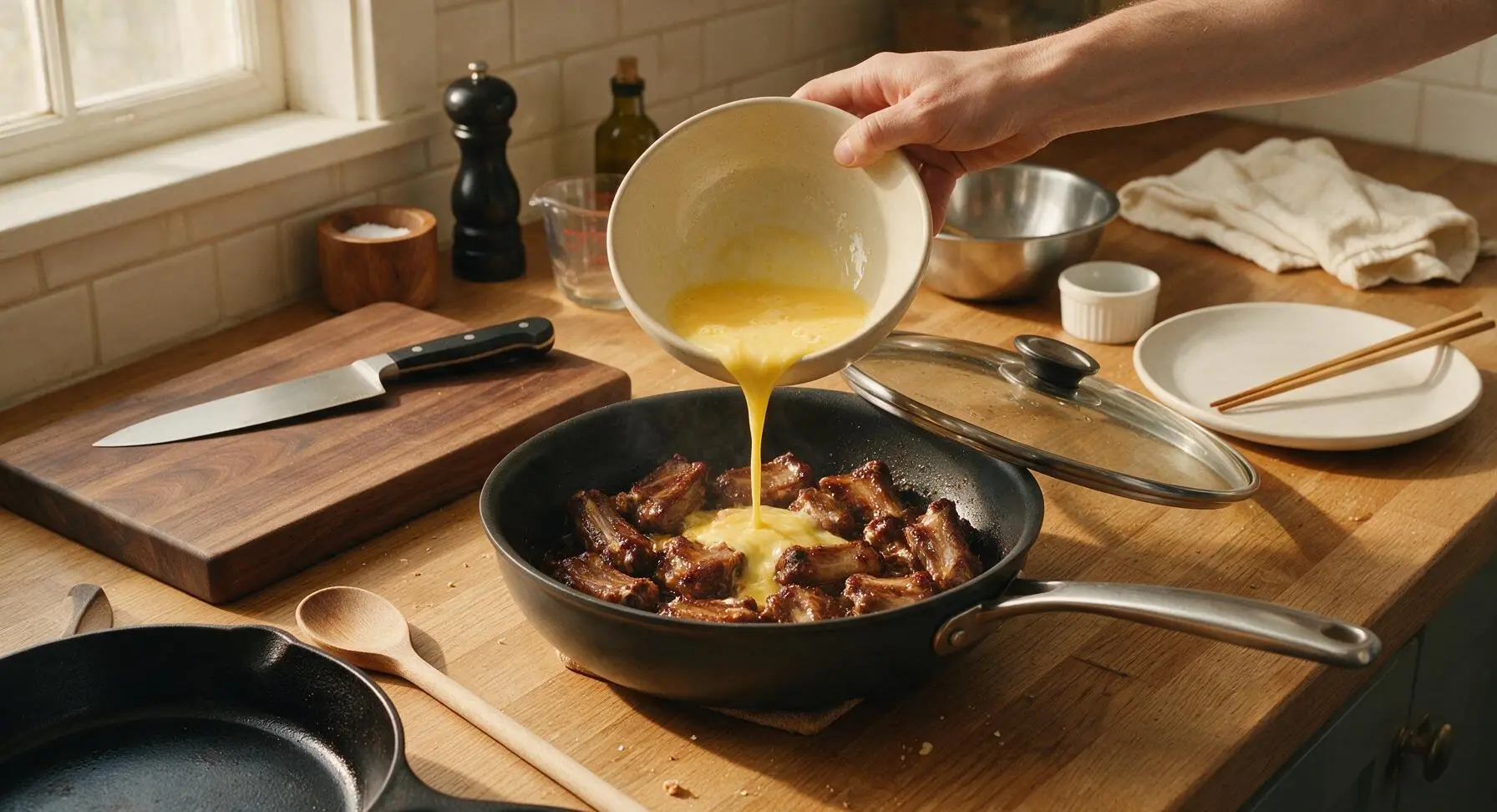
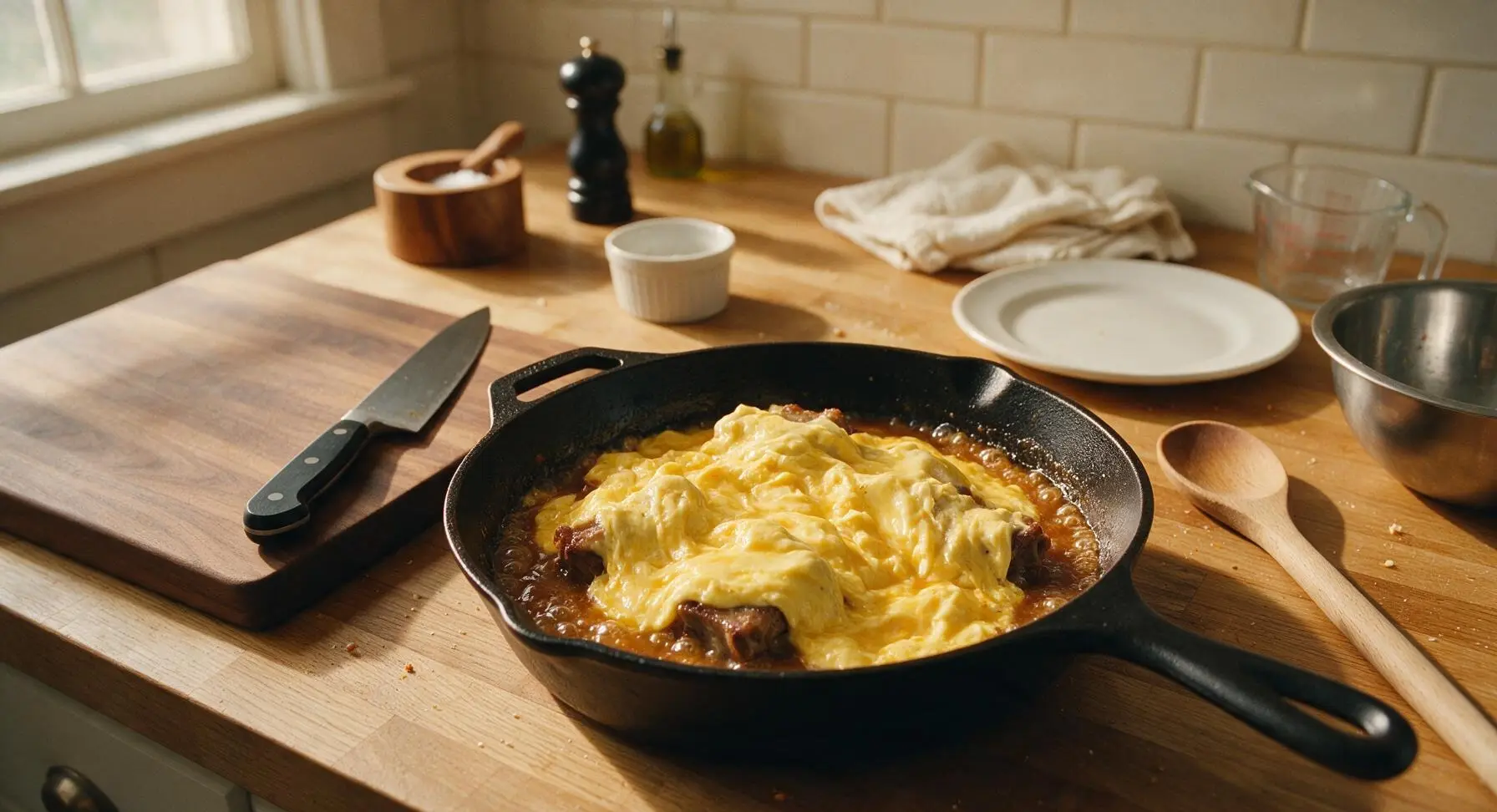
Plate the Oyakodon
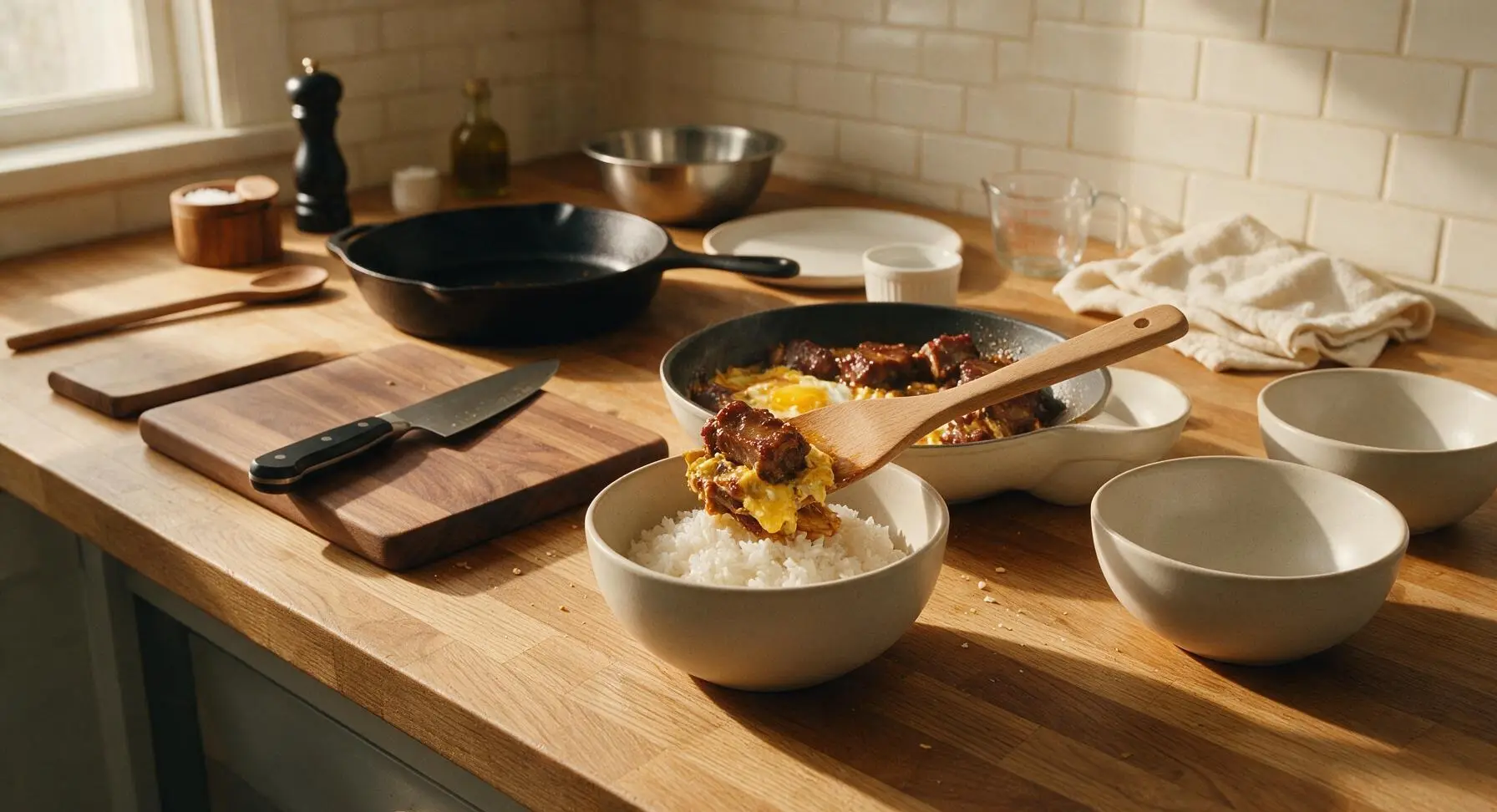
Divide freshly cooked steamed rice evenly between the four matte off-white donburi bowls, filling each to two-thirds capacity. Use the beech wood spatula to scoop rib and egg mixture, plus a generous spoonful of remaining sauce, directly over the rice mound in each bowl. Drizzle each serving with 1/4 tsp toasted sesame oil.
Garnish and Serve
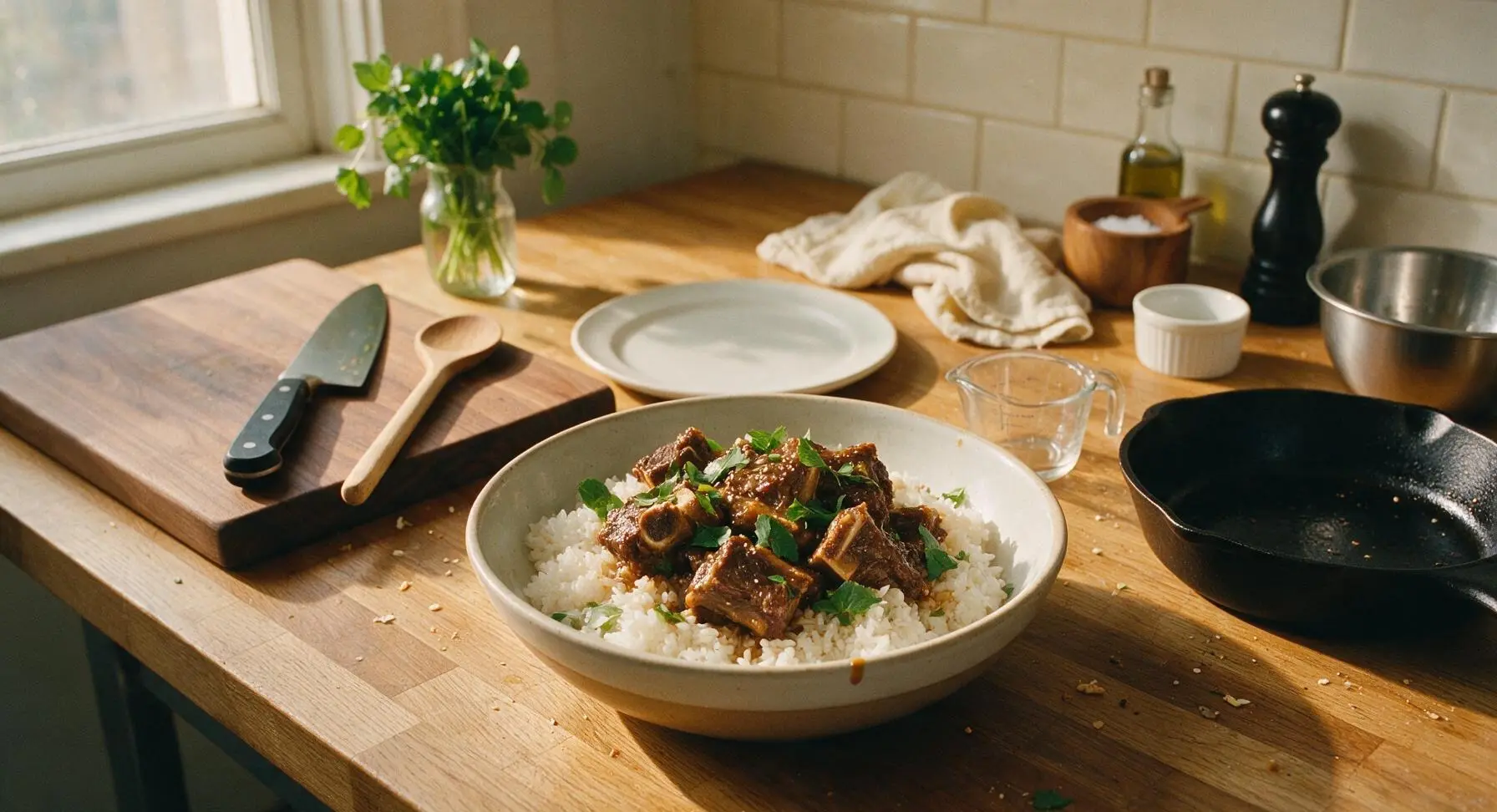
Pluck fresh mitsuba leaves from the sprigs and scatter a few leaves over the top of each bowl. Let bowls rest 1 minute to allow sauce to soak into the top rice layer, then serve immediately while warm, with extra soy sauce on the side if desired.
Tips
2.Cut ribs into uniform 2cm pieces: this ensures even cooking during the 12-minute simmer, so no pieces are undercooked or chewy, and every piece is easy to pick up with chopsticks.
3.Let assembled bowls rest 1 minute before eating: this allows the savory dashi sauce to soak 1cm into the top rice layer, so every bite has balanced flavor instead of sauce pooling only at the bowl bottom.
OMG this was SO good! I needed a quick weeknight dinner for my family after soccer practice and this 25 minute cook time was a total lifesaver. My kids picked every last rib off the bone and asked for seconds before I even sat down to eat. Total game changer for busy school nights!
Added this to my Sunday meal prep rotation! It’s so easy to throw together, holds up great in the fridge for 3 days, and the savory-sweet oyakodon flavor with fall-off-the-bone ribs? Chef’s kiss. I portion it out over rice for my work lunches and all my coworkers keep asking for the recipe.
Made this for my roommate last night and he thought I ordered takeout from our favorite Japanese spot down the street. Dead simple to make, didn’t need any fancy ingredients, and the portion sizes are huge for the price point of making it at home. Will be making this at least once a month.
Brought this to my neighborhood potluck last weekend and it was the first empty dish on the table! I was a little worried serving ribs at a potluck but everyone went crazy for the oyakodon twist, even the picky eaters. Only knock is I wish the sauce was a little thicker out the gate, but a tiny cornstarch slurry fixed that right up.
As someone who can barely boil pasta without messing it up, I was shocked how easy this was! No fancy equipment needed, cooked in 25 minutes exactly like the recipe said, and my whole dorm floor smelled incredible while I was making it. 10/10, would make again even on my tiny dorm hot plate.
I’ve made regular oyakodon a hundred times but never thought to swap the chicken for ribs? Total game changer. The fat from the ribs adds so much extra depth to the dashi broth, I’ll never go back to plain chicken oyakodon again. SO good.
Made this for Father’s Day dinner with my kids and it was perfect! They loved helping crack the eggs on top at the end, and the ribs were so tender we didn’t even need knives. Only thing I changed was adding a little extra soy sauce because we love salty food in our house.
So happy this recipe is super easy to make gluten free! I swapped regular soy sauce for tamari and it turned out absolutely perfect, no weird texture or off flavor at all. My husband who eats literally everything said he couldn’t even tell it was GF. Will be making this for our next date night in.
I was skeptical making ribs on the stovetop in 25 minutes because I usually slow smoke my ribs for hours, but wow? These were so flavorful and tender I didn’t even miss the smoker. Perfect for when it’s 100 degrees outside and I don’t want to stand over a hot grill for 3 hours.
Wait why did I never think to put oyakodon flavors on ribs? I made this last night with leftover ribs from our weekend BBQ and it was insane. I didn’t even have to adjust the cook time much since the ribs were already cooked, it came together in like 10 minutes total. Genius recipe.
First time making any kind of Japanese food at home and this was so approachable! I was worried I’d mess up the dashi but the recipe steps were super clear, no confusing jargon, and it turned out restaurant quality. My girlfriend said it’s better than the oyakodon we get at our local spot, which is the highest compliment I could get.